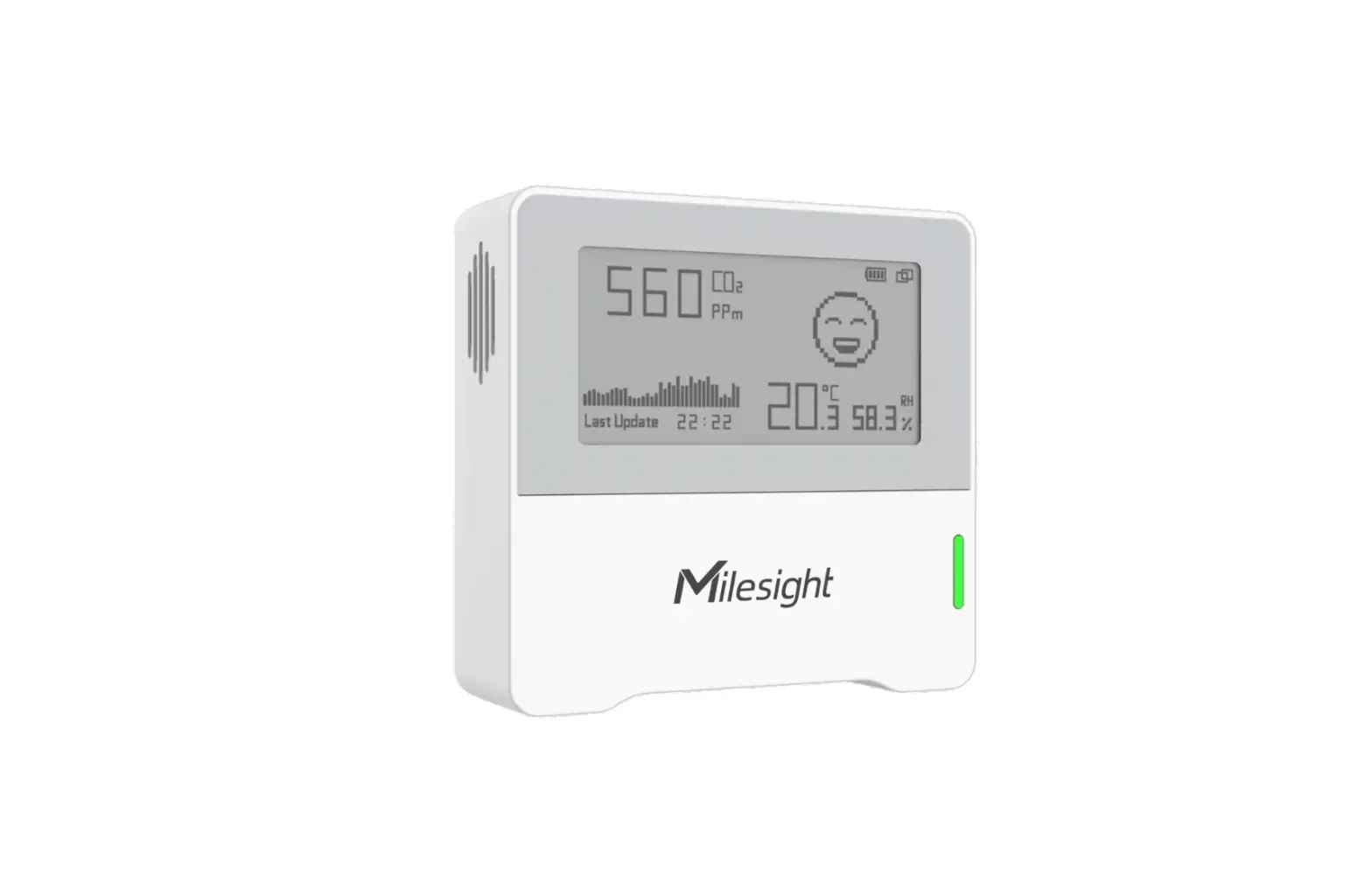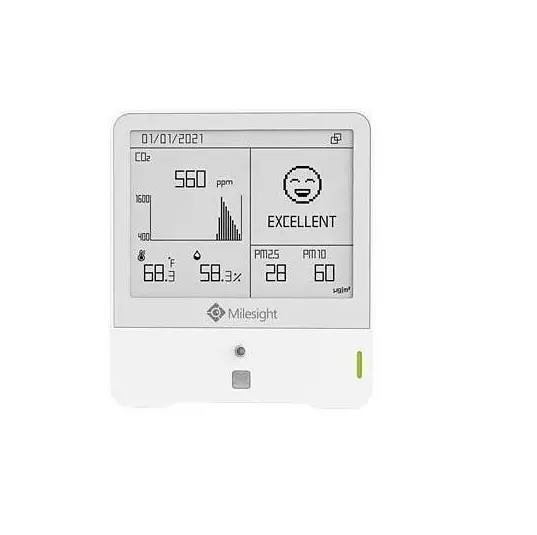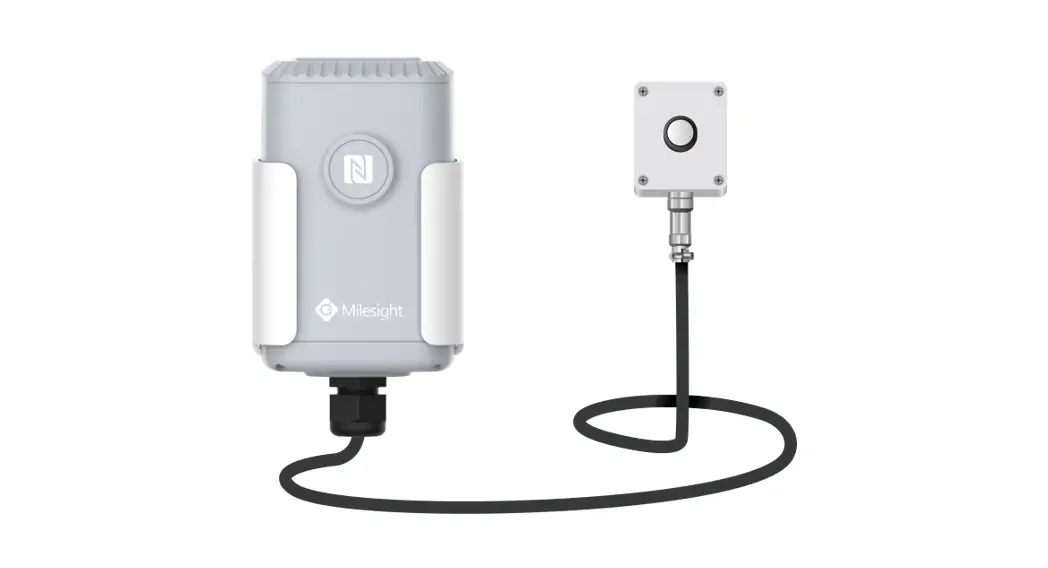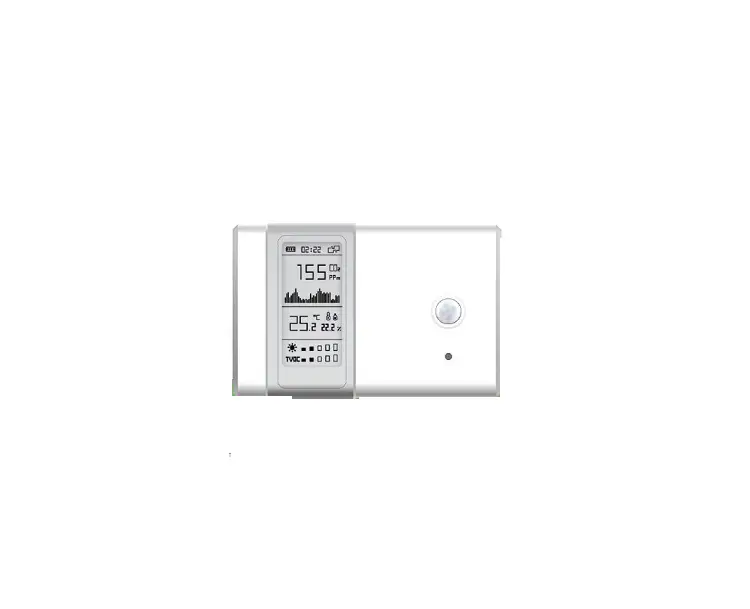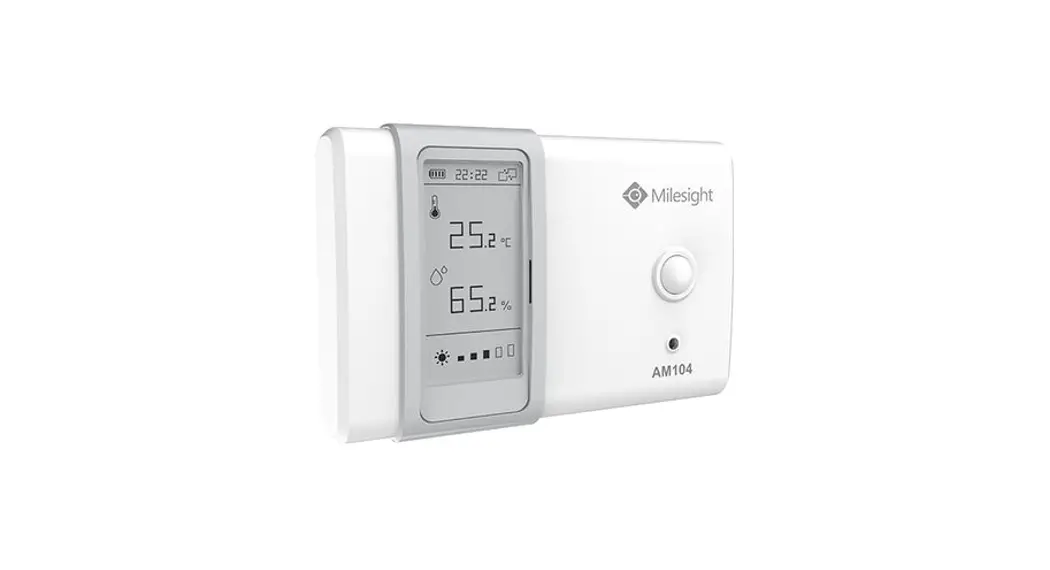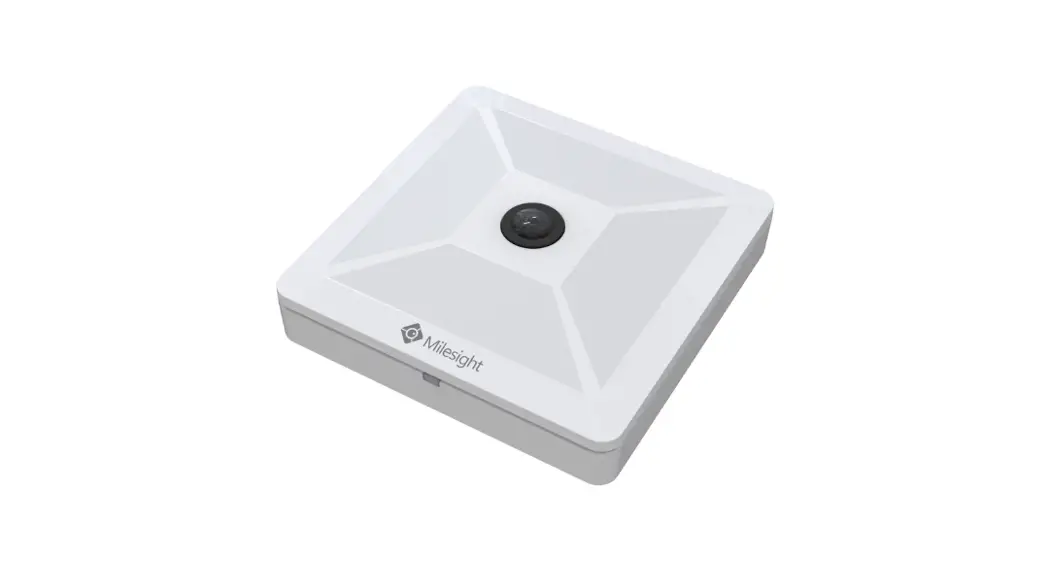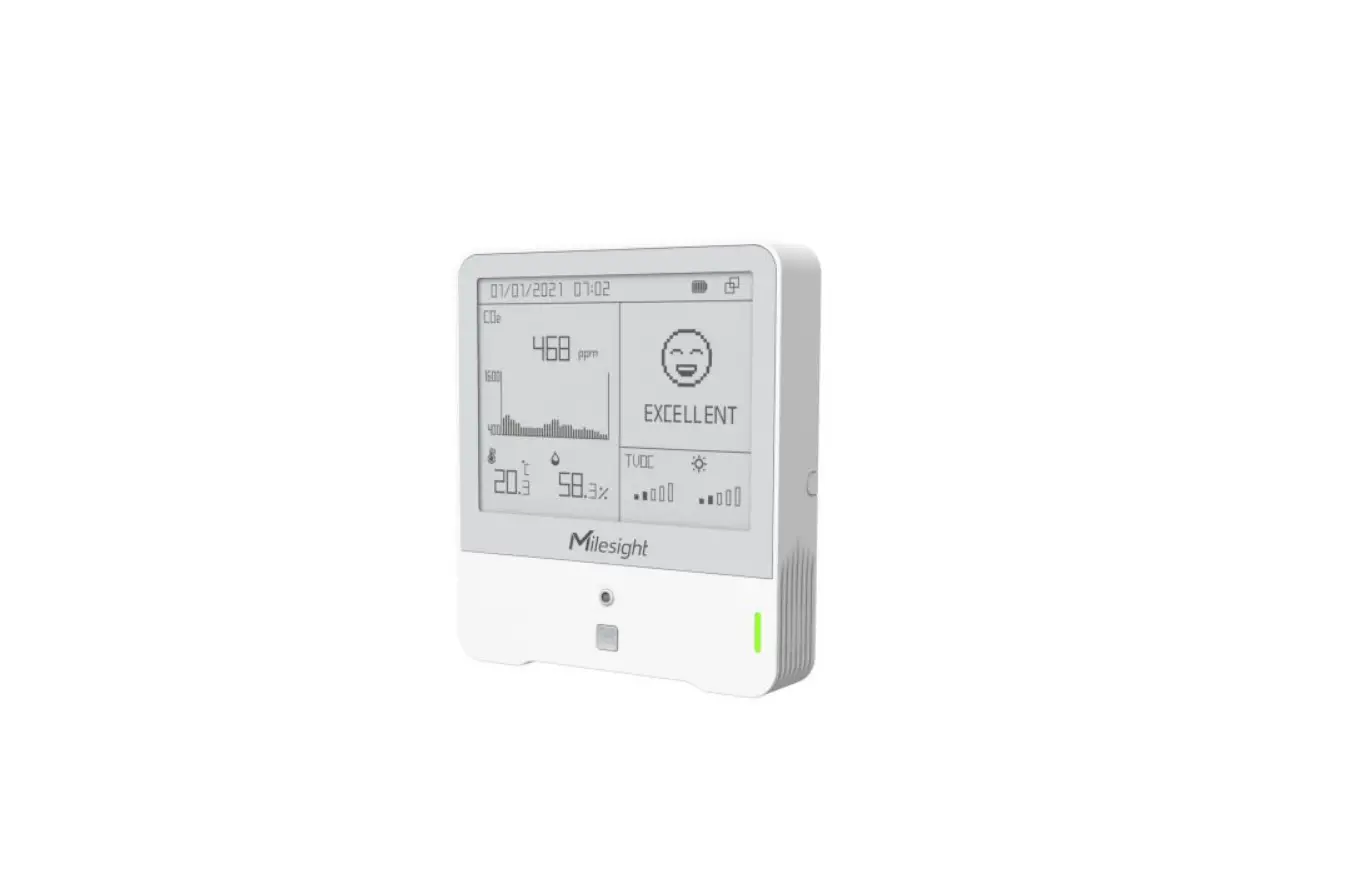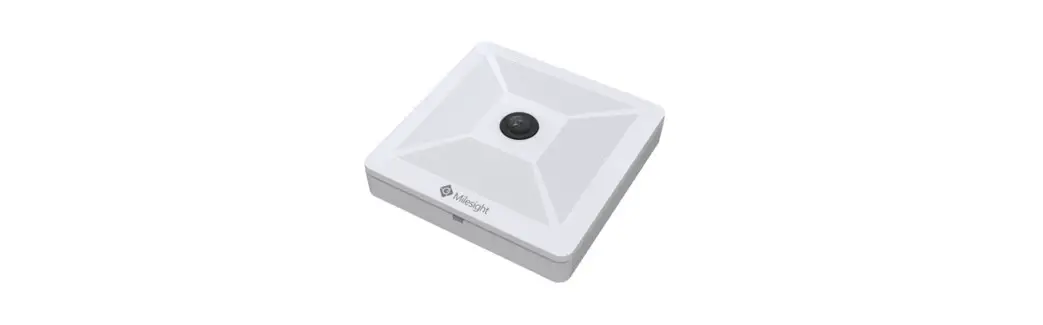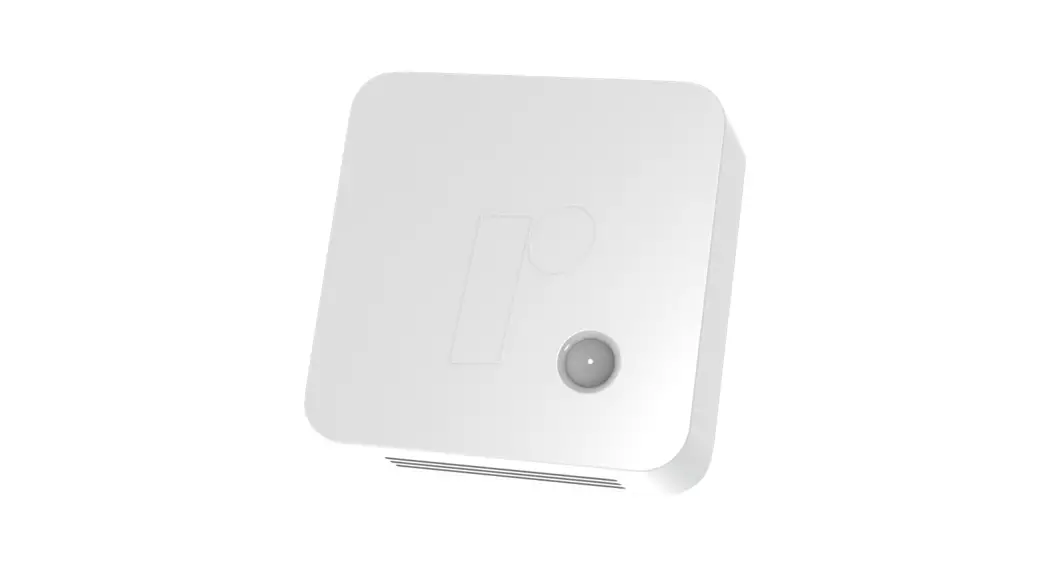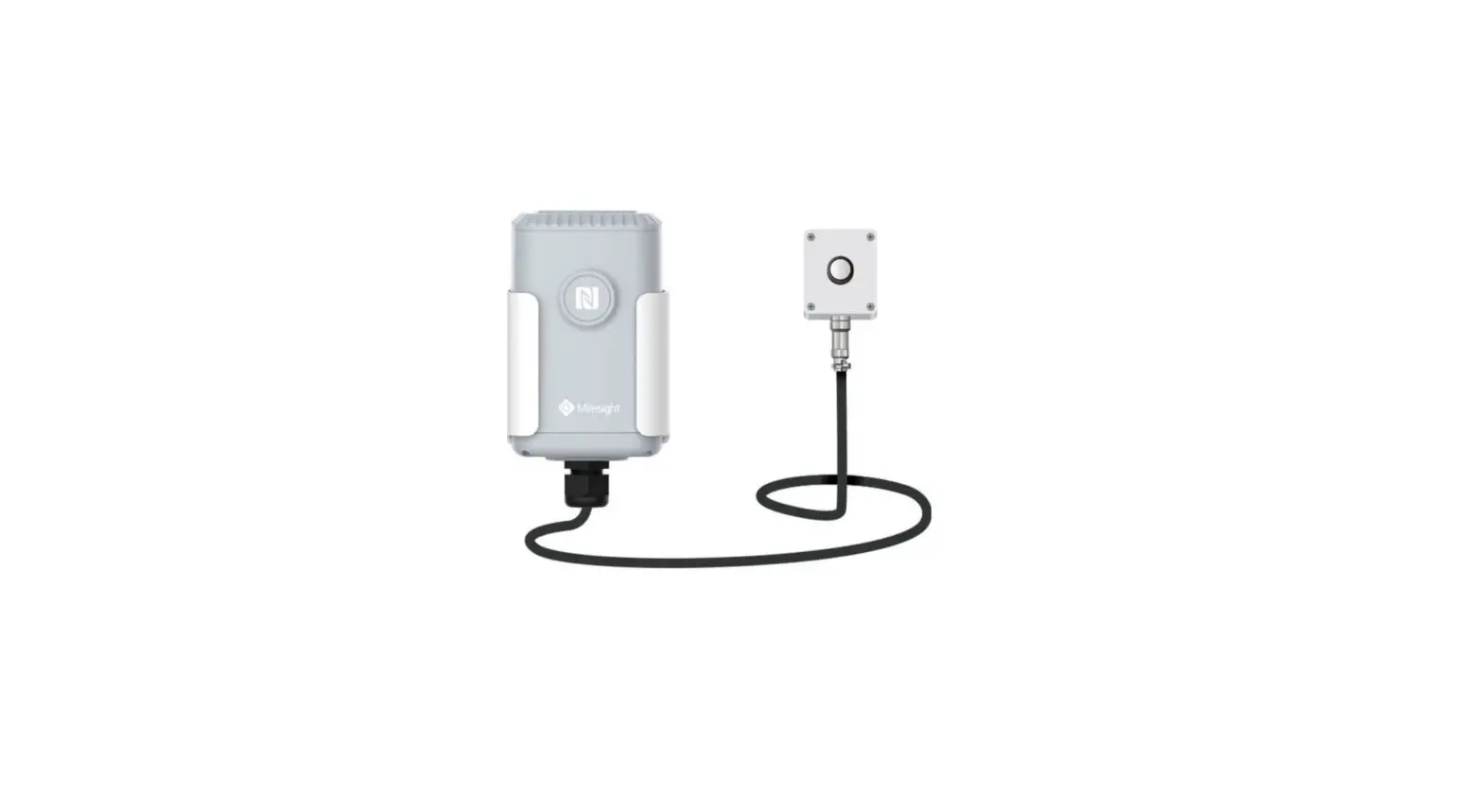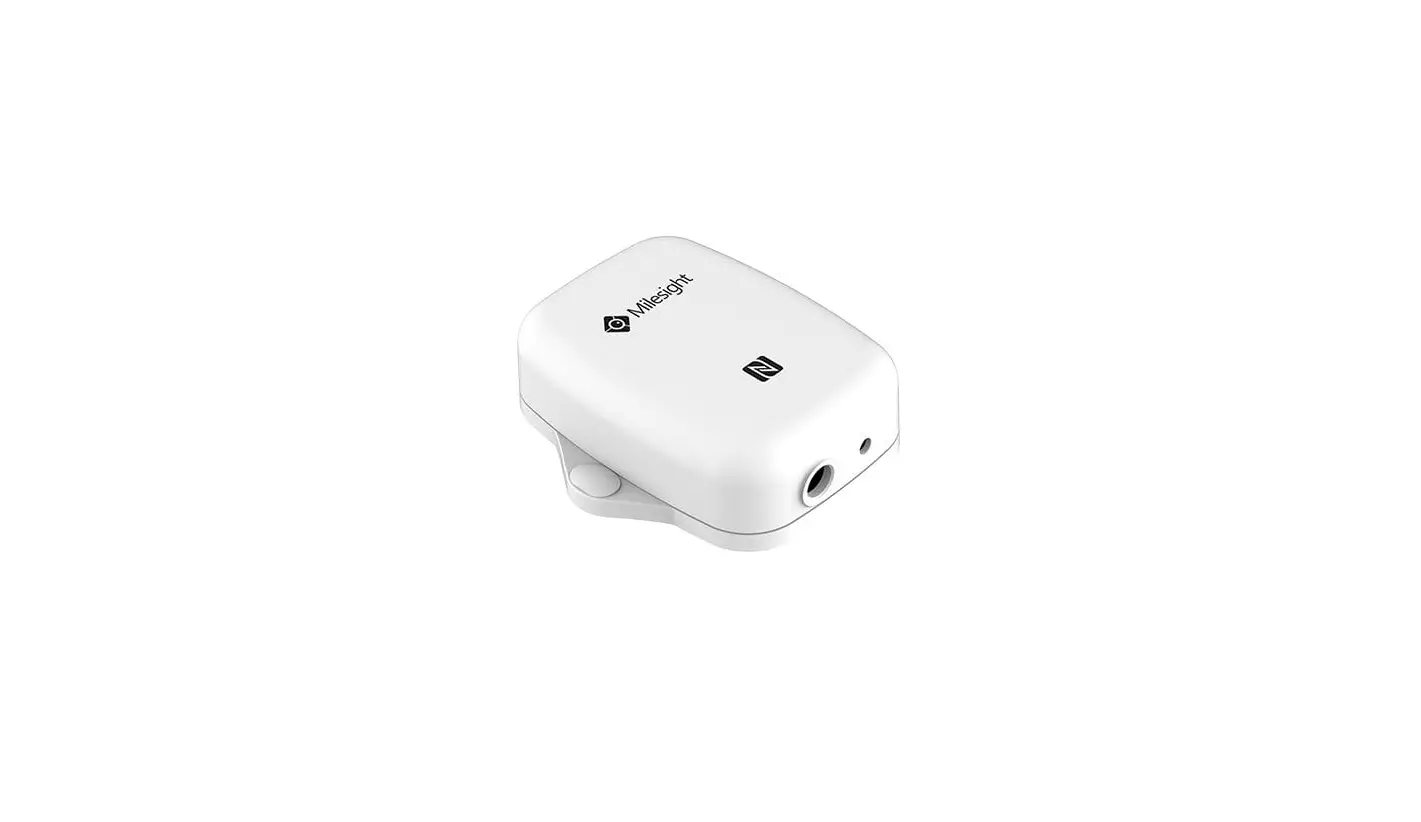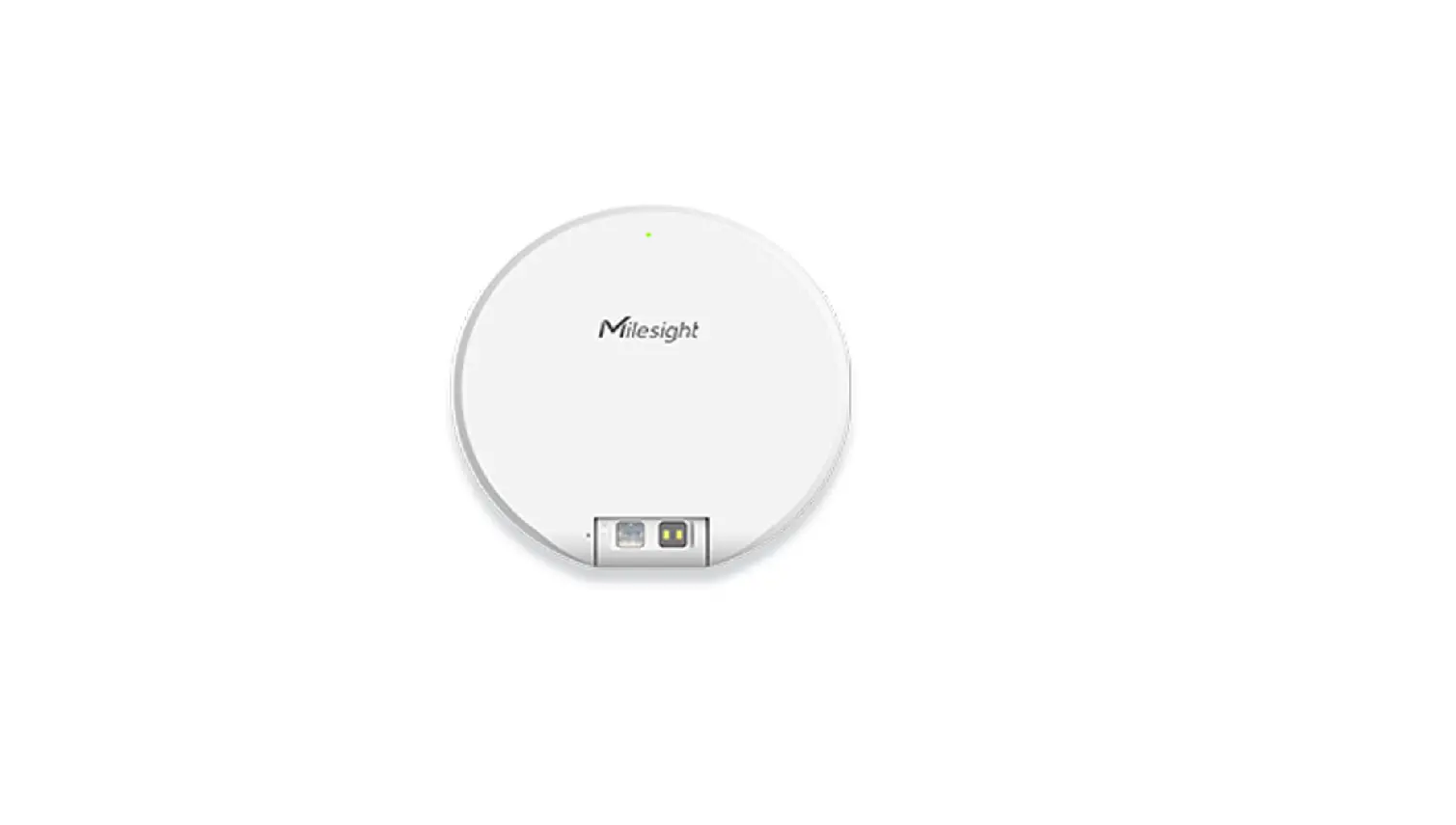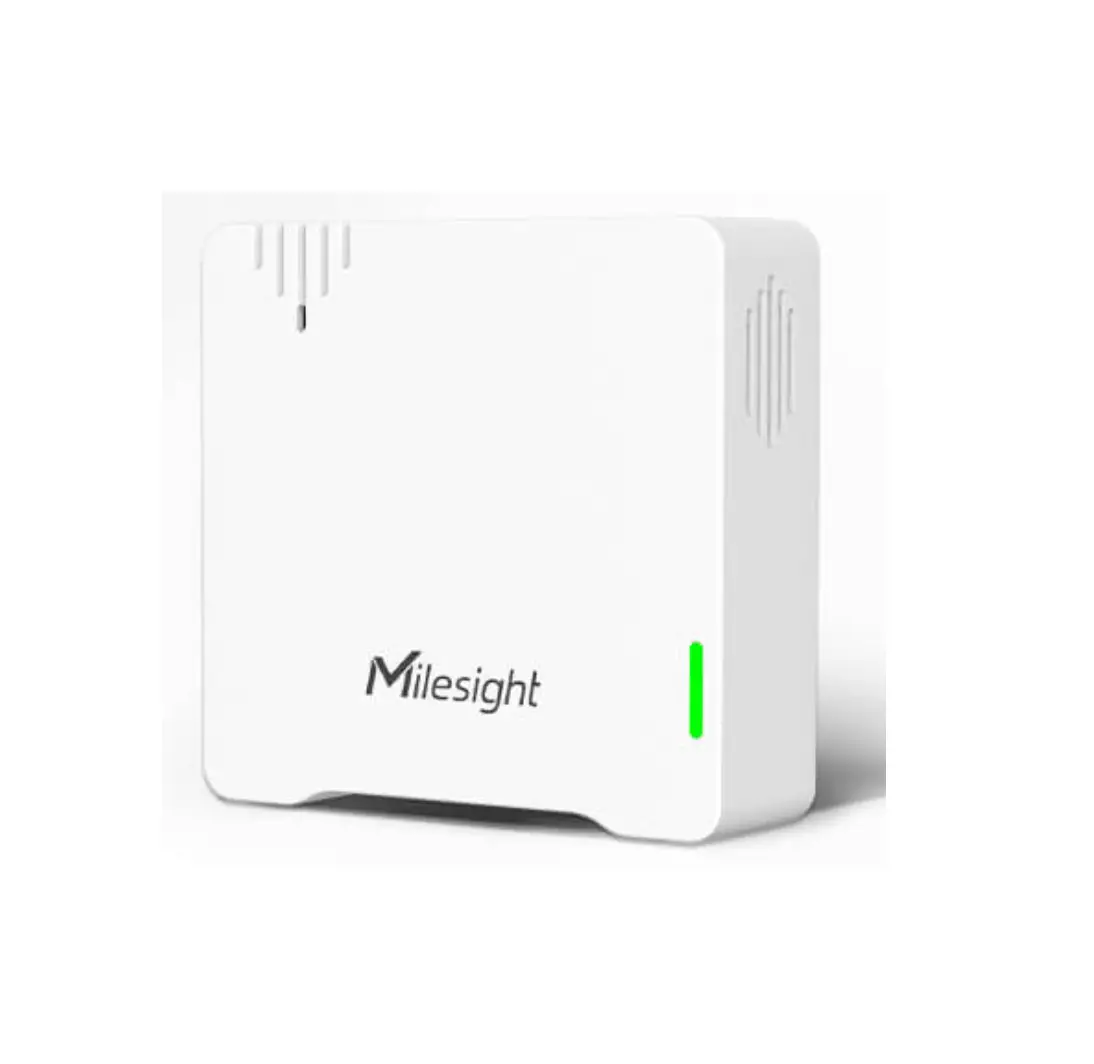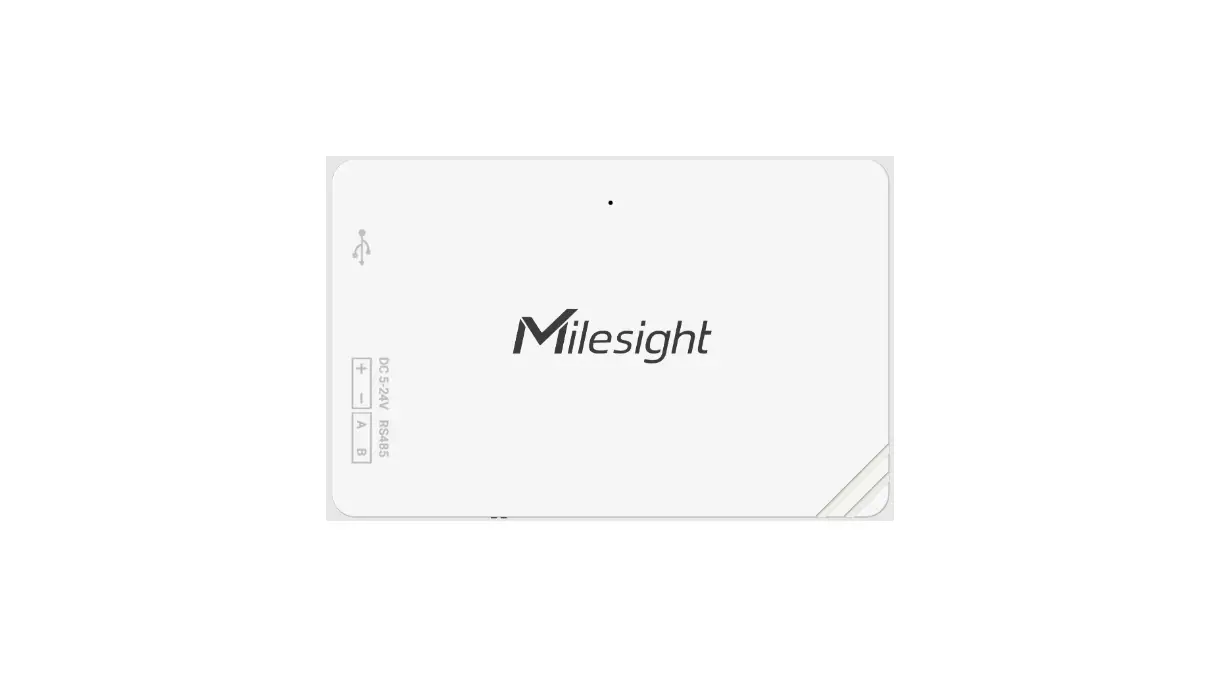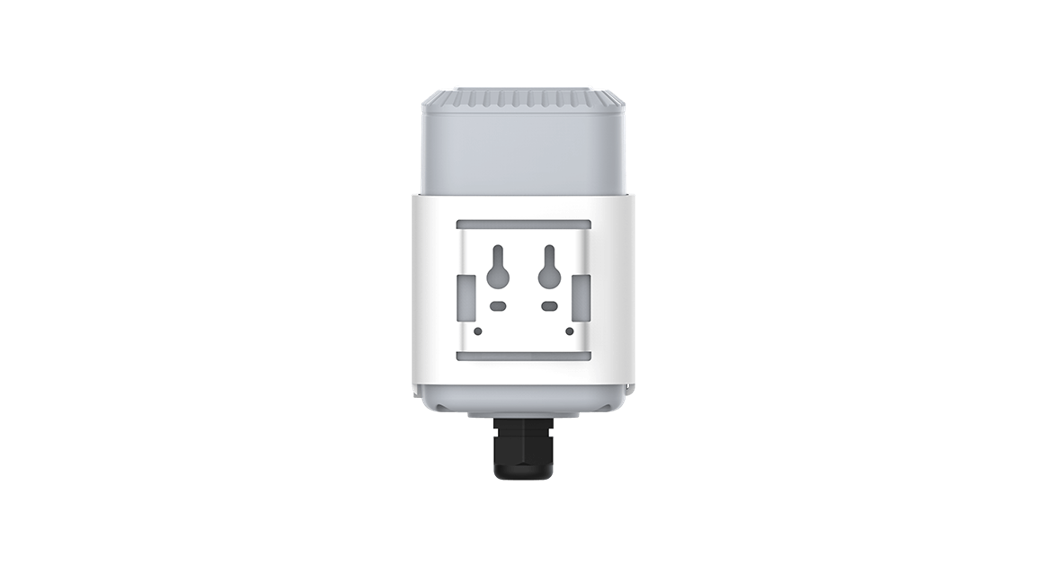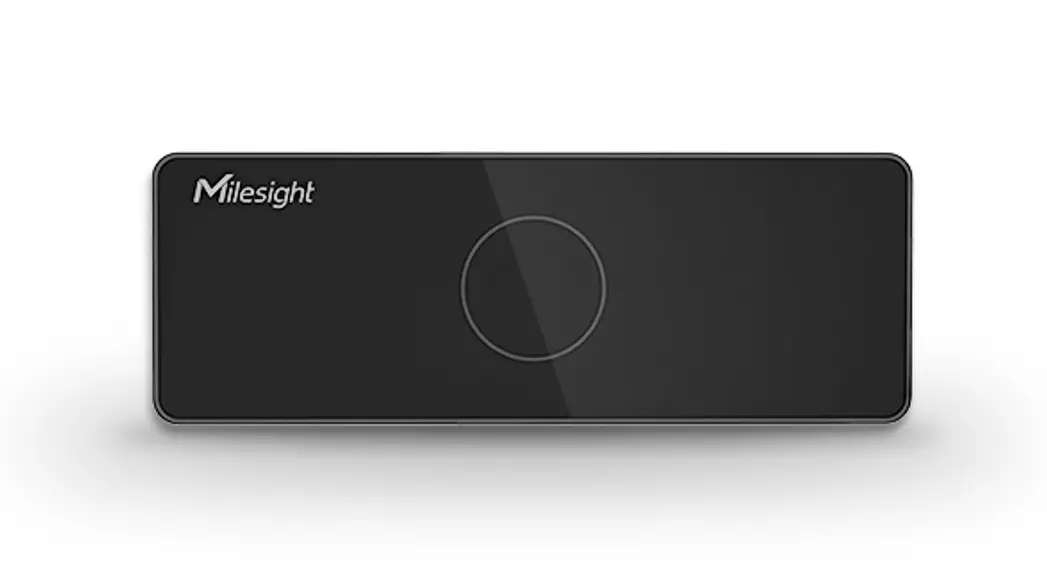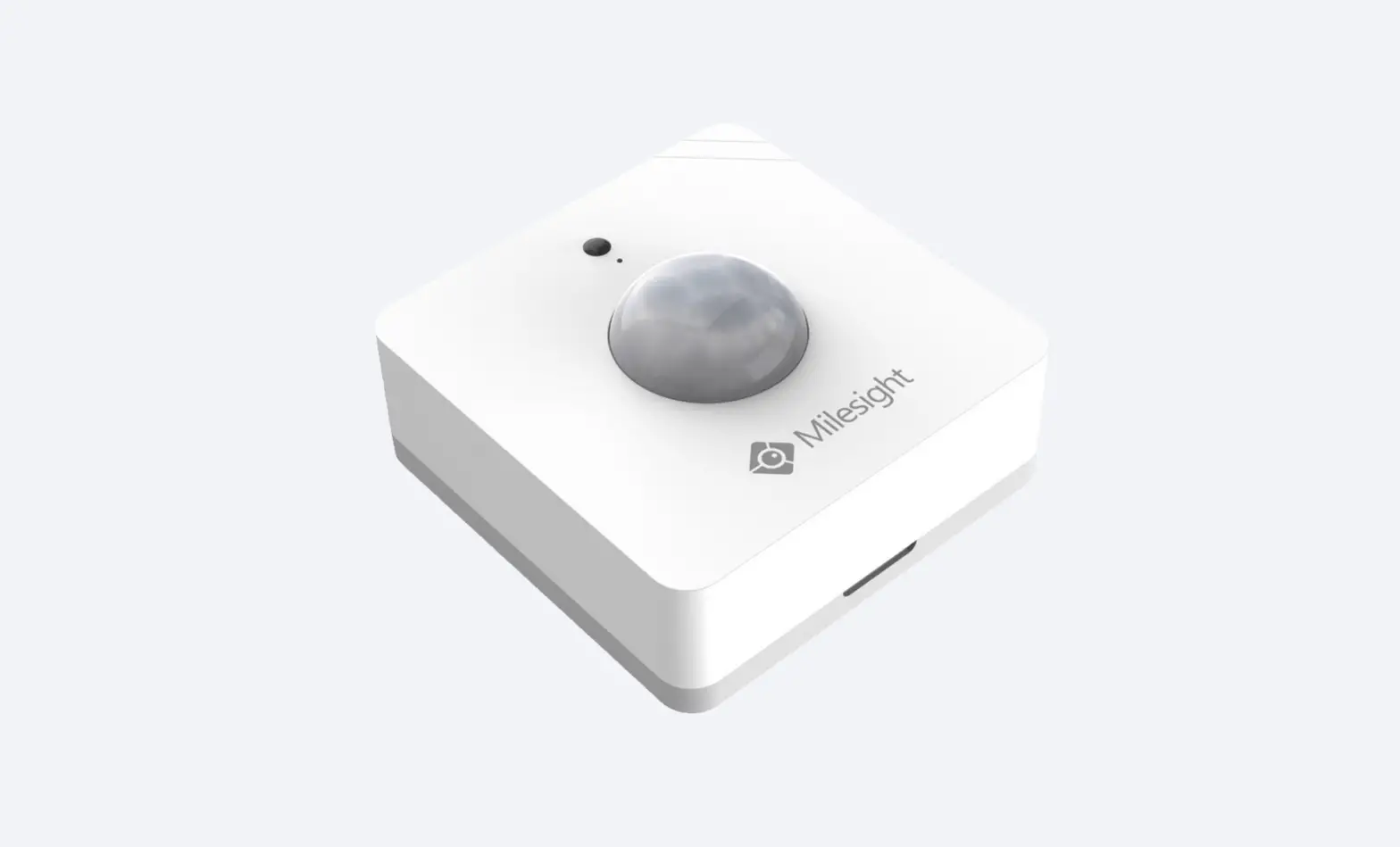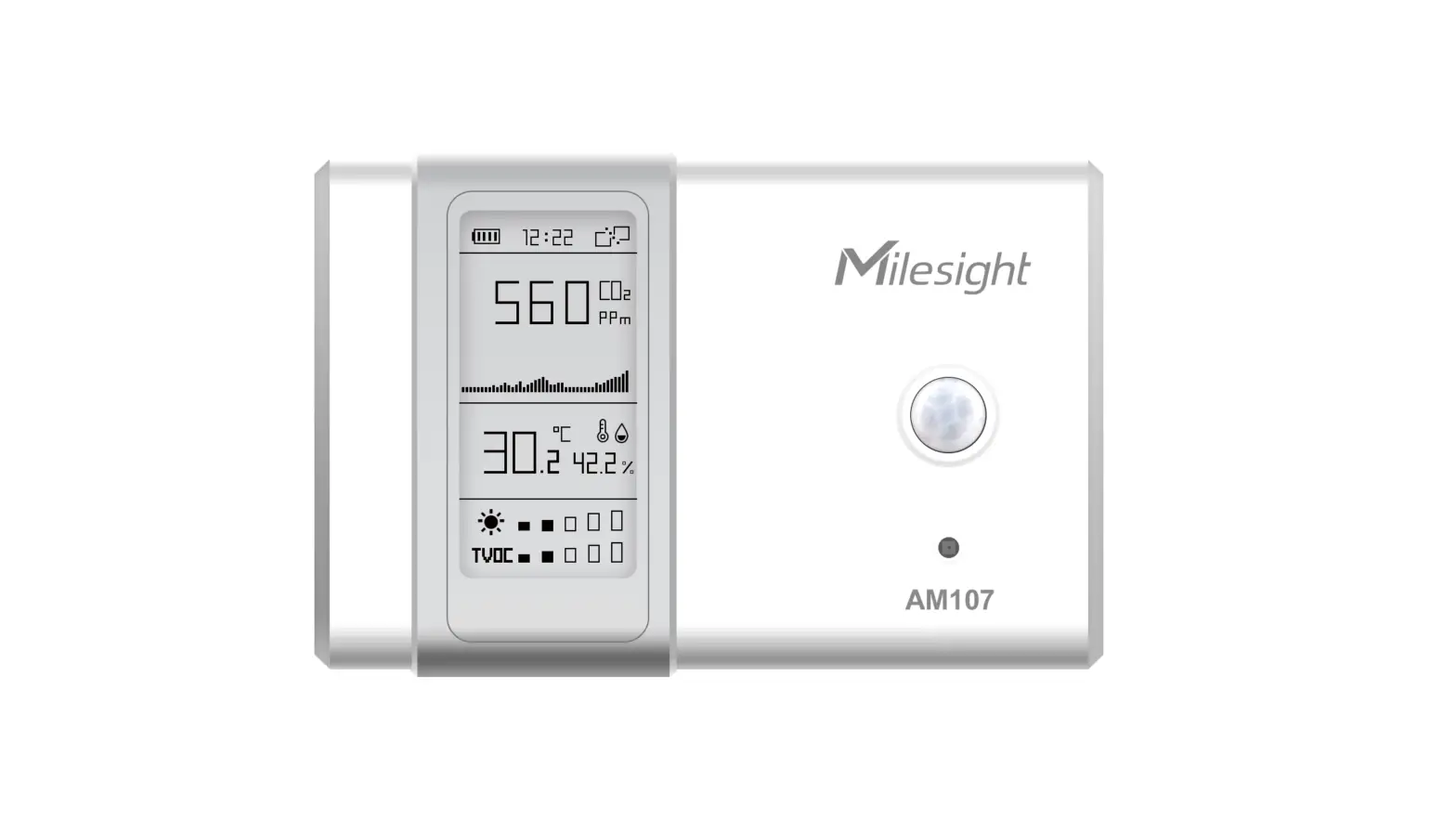
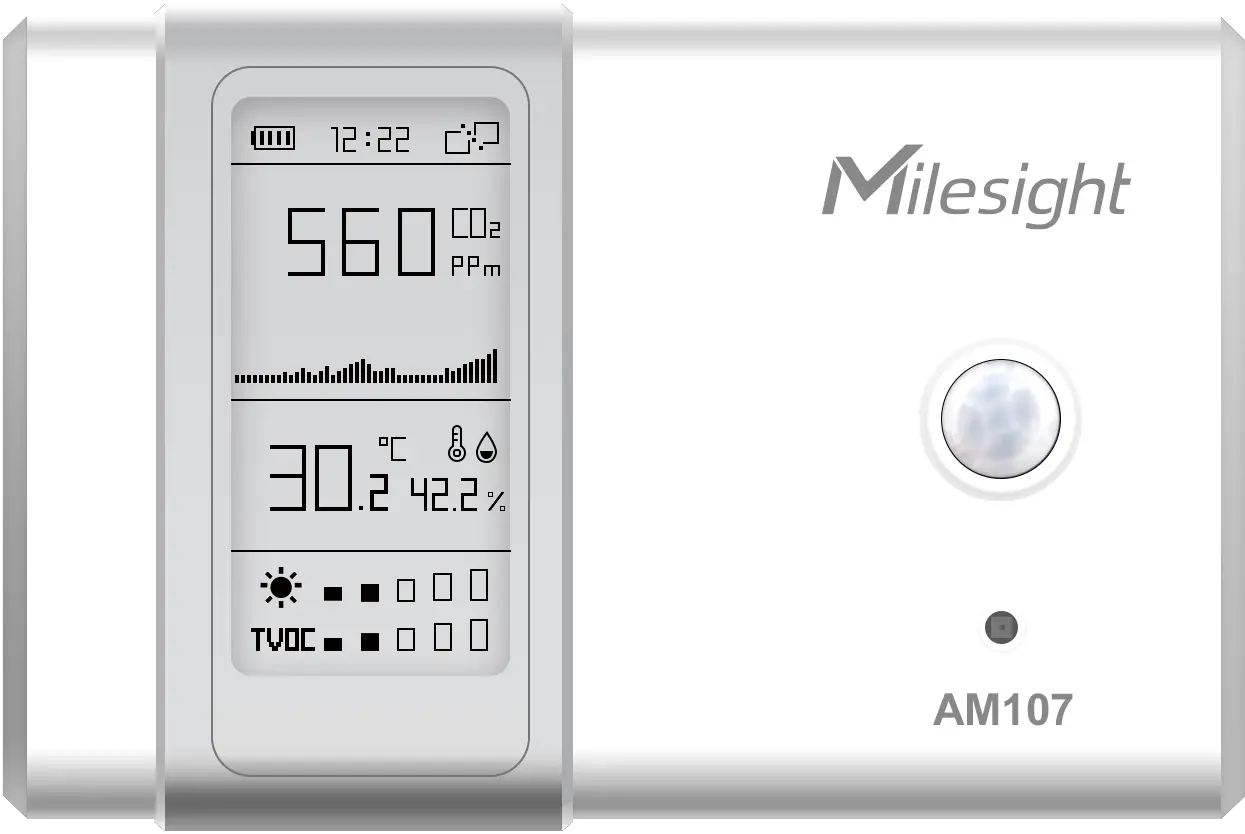
Milesight AM103 LoRaWAN Indoor Ambience Monitoring Sensor
 Safety Precautions
 Safety Precautions
Milesight will not shoulder responsibility for any loss or damage resulting from not following the instructions of this operating guide.
- The device must not be disassembled or remodeled in any way.
- In order to protect the security of the device, please change the device password when first configuring. The default password is 123456.
- Do not place the device outdoors where the temperature is below/above operating range. Do not place the device close to objects with naked flames, heat source (oven or sunlight), cold source, liquid and extreme temperature changes.
- The device is not intended to be used as a reference sensor, and Milesight will not should responsible for any damage which may result from inaccurate readings.
- The battery should be removed from the device if it is not to be used for an extended period. Otherwise, the battery might leak and damage the device.
- Never leave a discharged battery in the battery compartment.
- The device must never be subjected to shocks or impacts.
- Do not clean the device with detergents or solvents such as benzene or alcohol. To clean the device, wipe with a soft moistened cloth. Use another soft, dry cloth to wipe dry.
Declaration of Conformity
AM103/AM103L is in conformity with the essential requirements and other relevant provisions of the CE, FCC, and RoHS. 
Copyright © 2011-2022 Milesight. All rights reserved.
All information in this guide is protected by copyright law. Whereby, no organization or individual shall copy or reproduce the whole or part of this user guide by any means without written authorization from Xiamen Milesight IoT Co., Ltd.
For assistance, please contact
Milesight technical support:
Email: [email protected]
Tel: 86-592-5085280
Fax: 86-592-5023065
Address: Building C09, Software Park III, Xiamen 361024, China
Product Introduction
Overview
AM103/AM103L is a compact indoor ambience monitoring device including humidity, temperature, and CO2 sensor for wireless LoRa network. It is equipped with NFC (Near Field Communication) and can easily be configured via a smartphone or a PC software.
Sensor data are transmitted in real-time using standard LoRaWAN® protocol which enables encrypted radio transmissions over long distance while consuming very little power. The user can obtain sensor data and view the trend of data change through Milesight IoT Cloud or through the user’s own Network Server.
Features
- Robust LoRa connectivity for secure long range transmission
- Integrated temperature, humidity and CO2 sensor
- Easy configuration via NFC
- Vivid emoticon & traffic light indicator to understand the comfort level
- Standard LoRaWAN® supported
- Milesight IoT Cloud compliant
Hardware Introduction
Packing List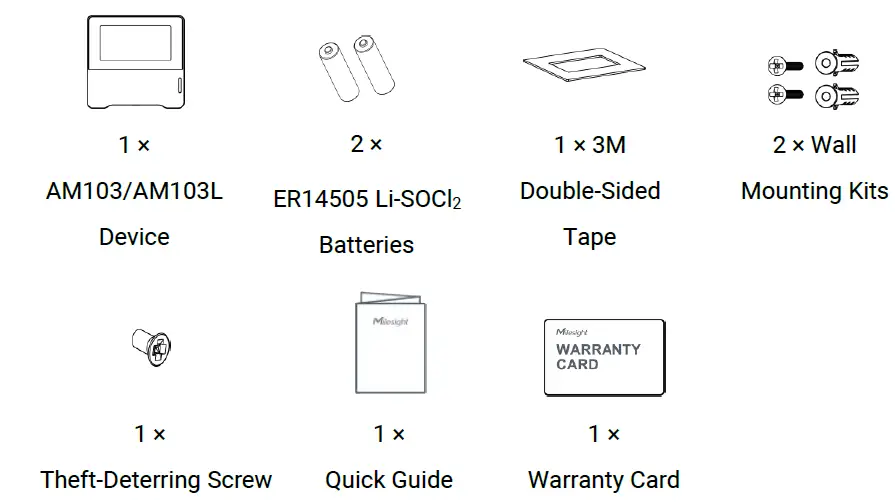
Note: If any of the above items is missing or damaged, please contact your sales representative.
Hardware Overview 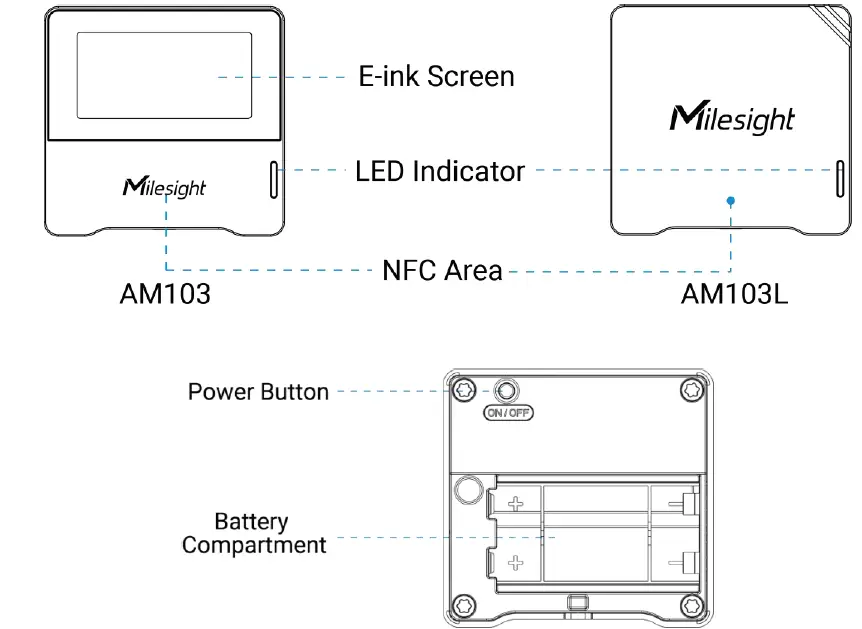
E-ink Screen (AM103 Only) 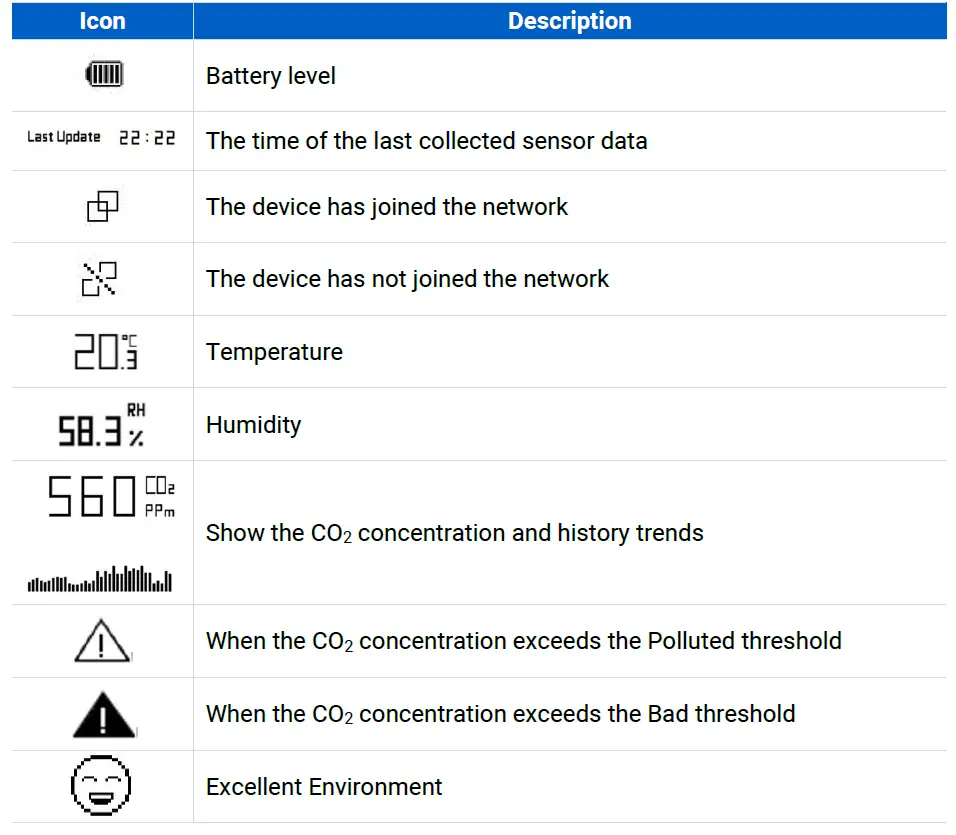

Note:
- AM103 will update data on the screen every 2 minutes if Screen Smart Mode is disabled;
- AM103 will do a full-screen refresh after 30 times update in order to remove ghosting.
- When AM103 detects the temperature beyond the range from 0°C to 40°C, the screen will close automatically.
- Please refer section 4.5.2 for Excellent/Polluted/Bad threshold settings.
Button and Traffic Light
| Function | Action | Light Status |
| Power ON/OFF | Press and hold the power button for more than 3 seconds | Power On: Off → On |
| Power Off: On → Off | ||
| Reset to Factory Default | Press and hold the power button for more than 10 seconds | Quickly Blinks |
| Check On/Off Status | Quickly press the power button | Light On: Device is on. |
| Light Off: Device is off. | ||
| CO2 Level Indication | When the CO2 concentration exceeds the threshold | Excellent: Blinks |
| Polluted: Blinks | ||
| Bad: Blinks |
Note: If the traffic light is disabled, it will not show air quality level indication.
Dimensions (mm)
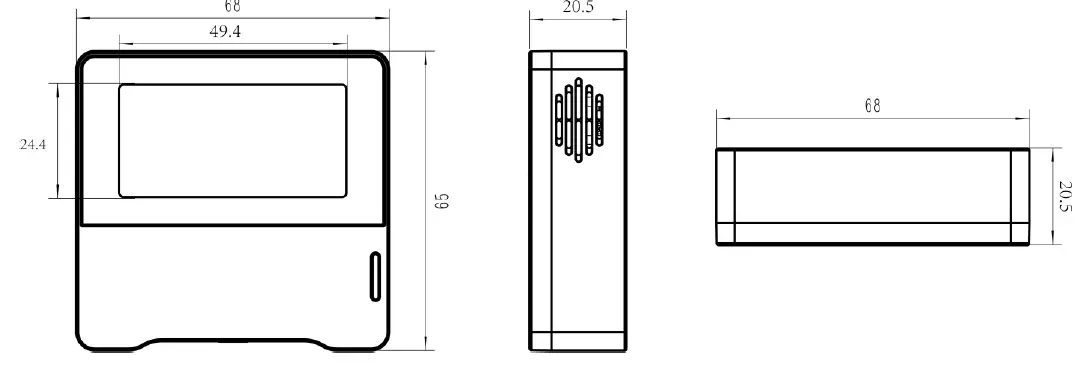
Power Supply
Remove the rear cover of device to install the batteries, do not reverse the direction of batteries when installing. 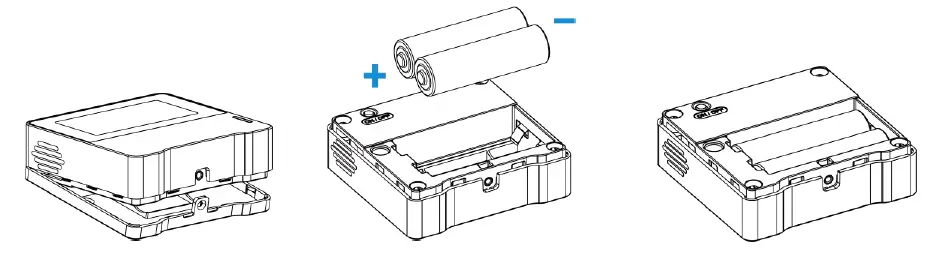
Note: The device can only be powered by ER14505 Li-SOCl2 batteries not AA batteries.
Operation Guide
Log in the ToolBox
The AM103/AM103L can be configured via a NFC supported mobile phone.
- Download and install “Milesight ToolBox” App from Google Play or Apple App Store.
- Enable NFC on the smartphone and launch Milesight ToolBox.
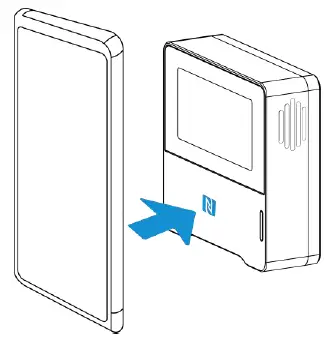
- Attach the smartphone with NFC area to the device to read device information. Basic information and settings of the device will be shown on ToolBox App if it’s recognized successfully. You can read and configure the device by tapping the Read/Write device on the App. In order to protect the security of the device, please change password when first configuration. The default password is 123456.

Note:
- Ensure the location of smartphone NFC area and it’s recommended to take off phone case.
- If the smartphone fails to read/write configurations via NFC, keep the phone away and back to try again.
- AM103/AM103L can also be configured by ToolBox software via a dedicated NFC reader provided by Milesight IoT, you can also configure it via TTL interface inside the device.
LoRaWAN Settings
LoRaWAN settings is used for configuring the transmission parameters in LoRaWAN® network.
Basic LoRaWAN Settings:
Go to “Device -> Settings -> LoRaWAN Settings” of ToolBox App to configure join type, App EUI, App Key and other information. You can also keep all settings by default. 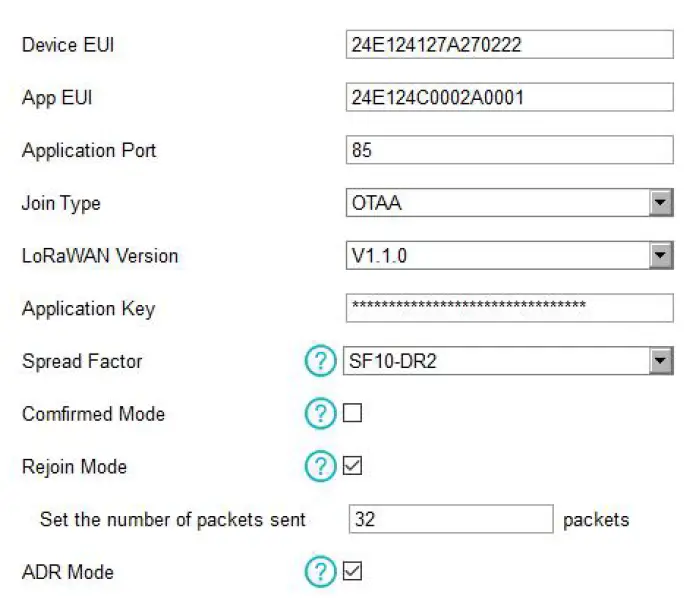
| Parameters | Description |
| Device EUI | Unique ID of the device which can also be found on the label. |
| App EUI | Default App EUI is 24E124C0002A0001. |
| Application Port | The port is used for sending and receiving data, default port is 85. |
| Join Type | OTAA and ABP mode are available. |
| LoRaWAN Version | V1.0.2, V1.0.3, V1.1 are available. |
| Application Key | Appkey for OTAA mode, default is 5572404C696E6B4C6F52613230313823. |
| Device Address | DevAddr for ABP mode, default is the 5th to 12th digits of SN. |
| Network Session Key | Nwkskey for ABP mode, default is 5572404C696E6B4C6F52613230313823. |
| Application | Appskey for ABP mode, default is 5572404C696E6B4C6F52613230313823. |
| Session Key | |
| Spread Factor | If ADR is disabled, the device will send data via this spread factor. |
| Confirmed Mode | If the device does not receive ACK packet from network server, it will resend data 3 times at most. |
|
Rejoin Mode | Reporting interval ≤ 30 mins: the device will send specific amount of LoRaMAC packets to check connection status every 30 mins; If there is no reply after specific amount of packets sent, the device will re-join. Reporting interval > 30 mins: the device will send specific amount of LoRaMAC packets to check connection status every reporting interval; If there is no reply after specific amount of packets sent, the device will re-join. |
| ADR Mode | Allow network server to adjust datarate of the device. |
| Tx Power | Transmit power of the device. |
| RX2 Data Rate | RX2 data rate to receive downlinks. |
| RX2 Frequency/MHz | RX2 frequency to receive downlink. |
Note:
- Please contact sales for device EUI list if there are many units.
- Please contact sales if you need random App keys before purchase.
- Select OTAA mode if you use Milesight IoT cloud to manage devices.
- Only OTAA mode supports rejoin mode.
LoRaWAN Frequency Settings
Go to “Settings -> LoRaWAN Settings” of ToolBox App to select supported frequency and select channels to send uplinks. Make sure the channels match the LoRaWAN® gateway. 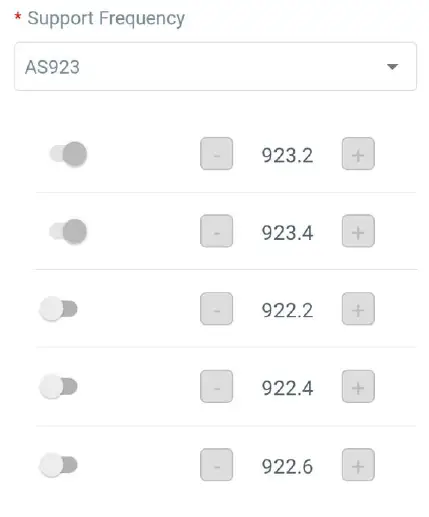
If frequency is one of CN470/AU915/US915, you can enter the index of the channel that you want to enable in the input box, making them separated by commas.
Examples:
1, 40: Enabling Channel 1 and Channel 40
1-40: Enabling Channel 1 to Channel 40
1-40, 60: Enabling Channel 1 to Channel 40 and Channel 60
All: Enabling all channels
Null: Indicates that all channels are disabled 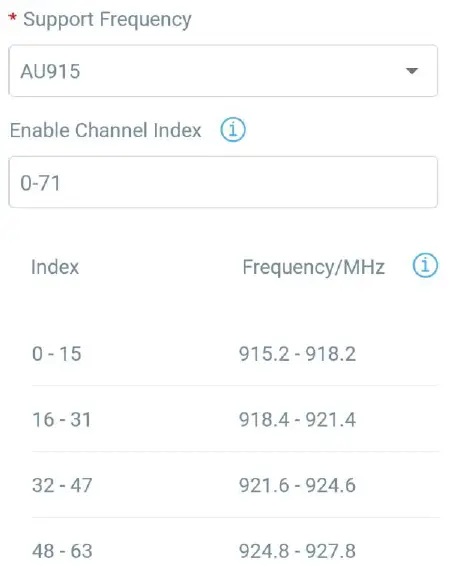
Note:
For -868M model, the default frequency is EU868;
For -915M model, the default frequency is AU915.
Time Synchronization
Go to “Device -> Status” of Toolbox App to click “Sync” to sync the time on the screen. 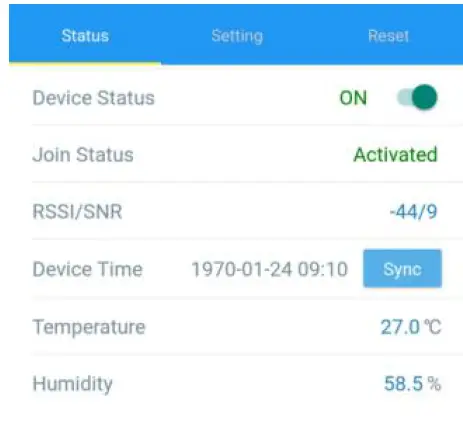
Basic Settings
Go to “Device -> Settings -> General Settings” of ToolBox App to change the reporting interval, screen mode, etc. 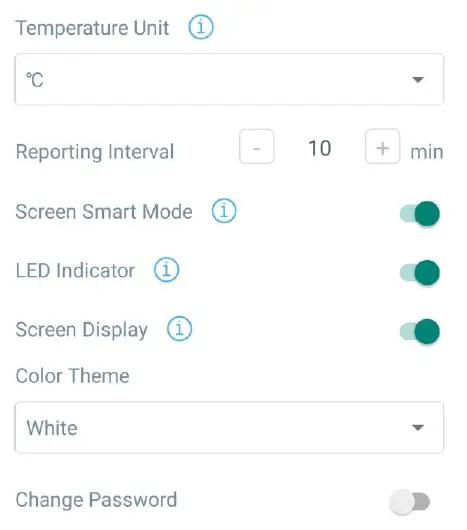
| Parameters | Description |
|
Temperature Unit | Change the temperature unit displayed on the ToolBox and screen. Note: 1) The temperature unit in the reporting package is fixed as °C. 2) Please modify the threshold settings if the unit is changed. |
| Reporting Interval | Reporting interval of transmitting current sensor values to network server. Default: 10 mins, Range: 1-1080 mins |
| LED Indicator | Enable or disable the traffic light indicator to indicate CO2 threshold. |
| Change Password | Change the password for ToolBox App or software to read/write this device. |
|
Screen Smart Mode (AM103 Only) | When the current collected value is close to the last value (tem ≤ ±0.5°C and hum ≤ ±3% and CO2 ≤ ±50 ppm), the screen will stop updating to save power. Note: if the screen stop updating for 10 minutes, it will update data automatically. |
| Screen Display (AM103 Only) | Enable or disable screen display. |
| Color Theme (AM103 Only) | Select screen display background color as White or Black. |
Advanced Settings
Calibration Settings
ToolBox supports numerical calibration for all items. Go to “Device -> Settings -> Calibration Settings” of ToolBox App to type the calibration value and save, the device will add the calibration value to raw value. 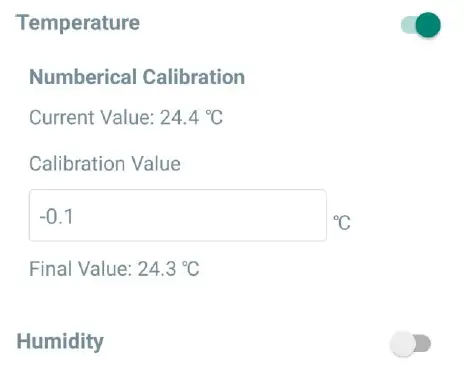
Besides numerical calibration, ToolBox provides more calibration methods for CO2:
Manual Calibration: Put the device in an open outdoor environment for more than 10 minutes and click this button to calibrate the CO2 value.
Restore Factory Calibration: Clean the manual calibration and turn back to factory calibration. Auto Background Calibration: When enabled, keep the device work in a well-ventilated environment for 7 days, then disable the calibration. 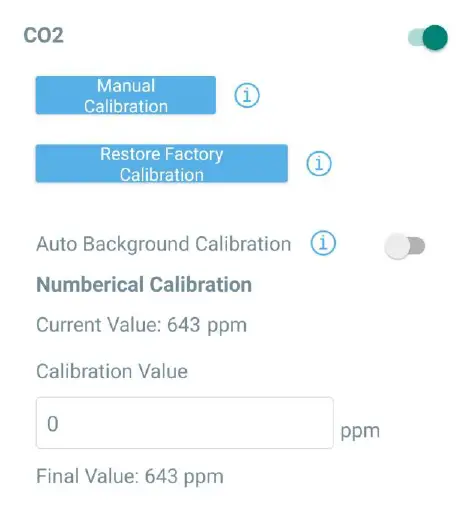
Threshold Settings
Go to “Device -> Settings -> Threshold Settings” of ToolBox App to enable the threshold settings and input the threshold.
For temperature, it will upload the current data once instantly when temperature is over or below the threshold. Note that when you change the temperature unit, please re-configure the threshold. 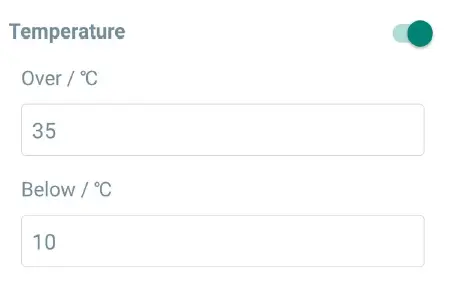
For CO2 threshold, it supports defining Excellent, Polluted and Bad threshold for traffic light and screen alarms. Besides, when it exceeds the Bad threshold, AM103/AM103L will upload the current data once instantly.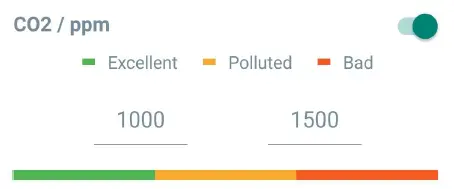
Maintenance
Upgrade
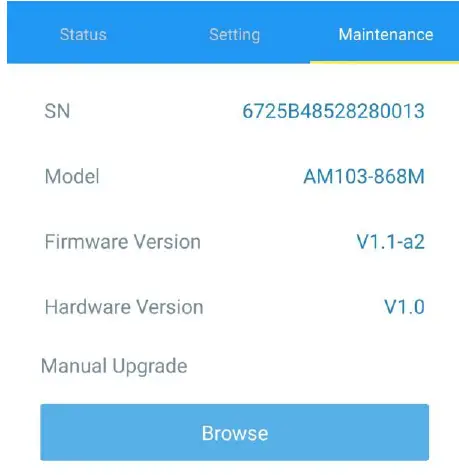
- Download firmware from www.milesight-iot.com to your smartphone.
- Open ToolBox App and click “Browse” to import firmware and upgrade the device.
Note:
- Operation on ToolBox is not supported during the upgrade.
- Only Android version ToolBox supports the upgrade feature.

Backup
AM103/AM103L supports configuration backup for easy and quick device configuration in bulk. Backup is allowed only for devices with the same model and LoRaWAN® frequency band.
- Go to “Template” page on the App and save current settings as a template. You can also edit the template file.
- Select one template file that saved in the smartphone and click “Write”, then attach it to another device to write configuration.

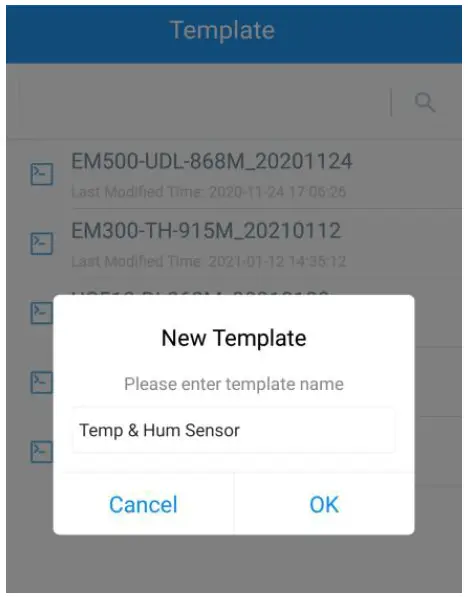
Note: Slide the template item to the left to edit or delete it. Click the template to edit the configurations. 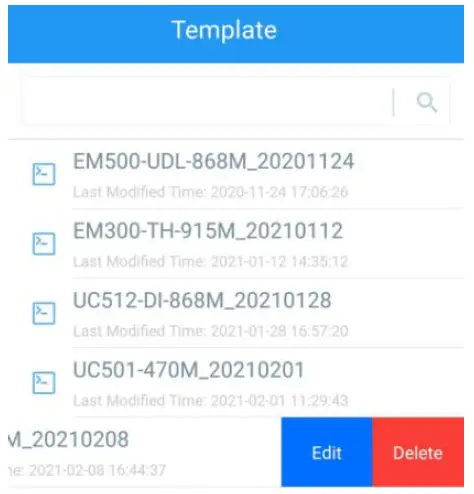
Reset to Factory Default
Please select one of following methods to reset device:
Via Hardware: Hold on power button for more than 10s.
Via ToolBox App: Go to “Device -> Maintenance” to click “Reset”, then attach smart phone with
NFC area to device to complete reset.
Installation
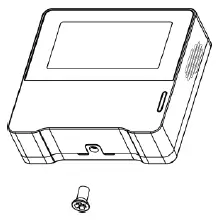
Fixed by Screws:
- Remove the rear cover of the device, screw the wall plugs into the wall and fix the rear cover with screws on it, then install back the device.

- Fix the bottom of the device to the rear cover with the theft-deterring screw.

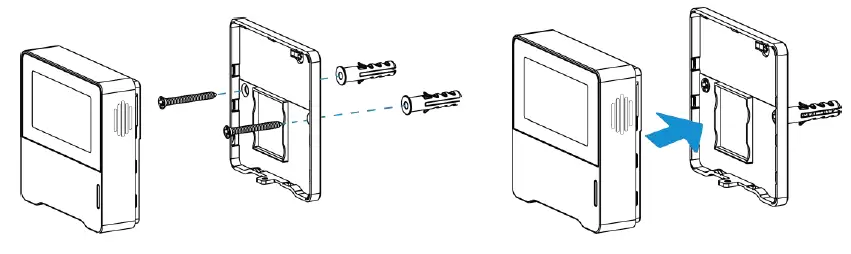
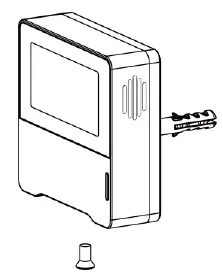
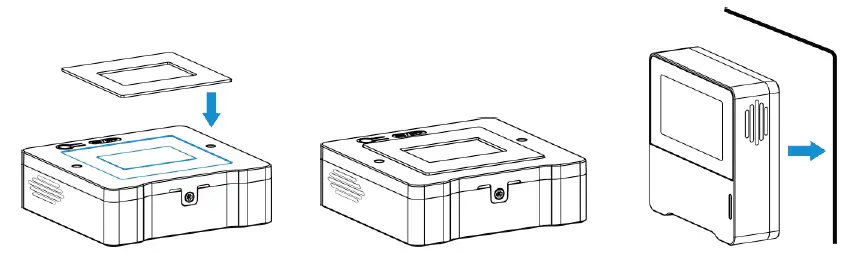
Fixed by 3M Tape
- Fix the bottom of the device to the rear cover with the theft-deterring screw.m

- Paste 3M double-sided tape to the back of the device, then tear the other side and place it on a flat surface.

Note:
In order to ensure the best detection and LoRaWAN® communication work, it is recommended to install AM103/AM103L as follows:
- Do not mount the device where the temperature is below/above operating range and temperature varies greatly.
- Stay far away from any heat source or cold source like oven, refrigerator.
- Do not mount the device close to where airflow varies greatly like windows, vent, fan and air conditioner.
- Do not mount the device upside down.
- Do not place the device right to the window or door. If you have to, you’d better pull the curtain.
- It is recommended to install at least 1.5 m high from floor.
Device Payload
All data are based on following format (HEX):
| Channel1 | Type1 | Data1 | Channel2 | Type2 | Data2 | Channel 3 | … |
| 1 Byte | 1 Byte | N Bytes | 1 Byte | 1 Byte | M Bytes | 1 Byte | … |
For decoder examples please find files on https://github.com/Milesight-IoT/SensorDecoders.
Basic Information
AM103/AM103L report basic information of sensor whenever joining the network.
| Channel | Type | Description |
|
ff | 01 (Protocol Version) | 01 => V1 |
| 09 (Hardware Version) | 01 40 => V1.4 | |
| 0a (Software Version) | 01 14 => V1.14 | |
| 0b (Power On) | Device is on | |
| 0f (Device Type) | 00: Class A, 01: Class B, 02: Class C | |
| 16 (Device SN) | 16 digits | |
| 18 (Sensor Status) | Byte 0: 00 means all sensors |
| Byte 1: 0=disabled, 1=enabled and every bit means every kind of sensor Bit 0: temp, Bit 1: hum, Bit 4: CO2 |
Example:
| ff0bff ff166710b32620711912 ff090100 ff0a0101 ff0f00 ff180013 | |||||
| Channel | Type | Value | Channel | Type | Value |
| ff | 0b (Power On) | ff (Reversed) | ff | 16 (Device SN) | 6710b32620711912 |
| Channel | Type | Value | Channel | Type | Value |
| ff | 09 (Hardware version) | 0100 (V1.0) | ff | 0a (Software version) | 0101 (V1.1) |
| Channel | Type | Value | Channel | Type | Value |
| ff | 0f (Device Type) | 00 (Class A) | ff | 18 (Sensor Status) | 00 => All Sensors 13 = 0001 0011 => All sensors are enabled |
Sensor Data
AM103/AM103L report sensor data according to reporting interval (10 mins by default).
| Item | Channel | Type | Description |
| Battery Level | 01 | 75 | UINT8, Unit: % |
| Temperature | 03 | 67 | INT16, Unit: °C, Resolution: 0.1 °C |
| Humidity | 04 | 68 | UINT8, Unit: %, Resolution: 0.5 % |
| CO2 | 07 | 7d | UINT16, Unit: ppm |
Example:
- Periodic Package
0367ff00 04684f 077d1303 Channel Type Value Channel Type Value 01
75
(Battery Level)
64 => 100%
03
67
(Temperature)
ff 00 => 00 ff = 255
Temp = 255*0.1
= 25.5°C
Channel Type Value Channel Type Value 04
68
(Humidity)
4f => 79 Hum = 79*0.5 = 39.5%
07
7d (CO2)
13 03 => 03 13
= 787 ppm
- CO2 value exceeds the Bad threshold.
Channel Type Value 07 7d 0a 06 => 06 0a = 1546 ppm
Downlink Commands
AM103/AM103L support downlink commands to configure the device. The application port is 85 by default.
| Channe l | Type | Description |
|
ff | 03 (Set Reporting Interval) | 2 Bytes, unit: s |
| 10 (Reboot) | ff (Reserved) | |
|
1a (CO2 Calibration) | 00: Factory Calibration Restored 01: Auto Background Calibration 03: Manual Calibration | |
| 2d (Screen Display) | 00: disable, 01: enable | |
| 2f (LED Indicator) | 00: disable, 01: enable | |
|
54 (Set CO2 Threshold) | Byte 1: 00: disable, 01: enable Byte 2-3: Bad threshold value Byte 4-5: Polluted threshold value Note: Polluted threshold value must lower than bad threshold value. | |
| 56 (Screen Smart Mode) | 00: disable, 01: enable |
Example:
- Set reporting interval as 20 minutes.
ff03b004 Channel Type Value ff 03 (Set Reporting Interval)
b0 04 => 04 b0 = 1200s = 20 minutes
- Reboot the device.
ff10ff Channel Type Value ff 10 (Reboot) ff (Reserved) - Disable the e-ink screen display.
ff2d00 Channel Type Value ff 2d (Screen Display) 00: Disable the display - Set CO2 bad threshold as 1500ppm and polluted threshold as 1000 ppm.
ff5401dc05e803 Channel Type Value ff
54 (Set CO2 Threshold)
Byte 1: 01 = enable Byte 2-3: dc 05 => 05 dc = 1500 ppm (Bad threshold)
Byte 4-5: e8 03 => 03 e8 = 1000 ppm (Polluted threshold)
Appendix
Carbon Dioxide Levels and Guidelines
| CO2 Level | Description |
| 400 ppm | Normal outdoor air level. |
| 400-1000 ppm | Typical level indoors with good ventilation. |
| 1000-2000 ppm | Poor air quality – requires ventilation. |
| ≥ 2000 ppm | Headaches, sleepiness and stagnant, stale, stuffy air. Poor concentration, loss of attention, increased heart rate and slight nausea may also be present. |
| 5000 ppm | Workplace exposure limit (as 8-hour TWA) in most jurisdictions. |
| > 40000 ppm | Exposure may lead to serious oxygen deprivation resulting in permanent brain damage, coma, even death. |
 Milesight IoT - LoRaWAN, 5G & AIoT
 GitHub - Milesight-IoT/SensorDecoders