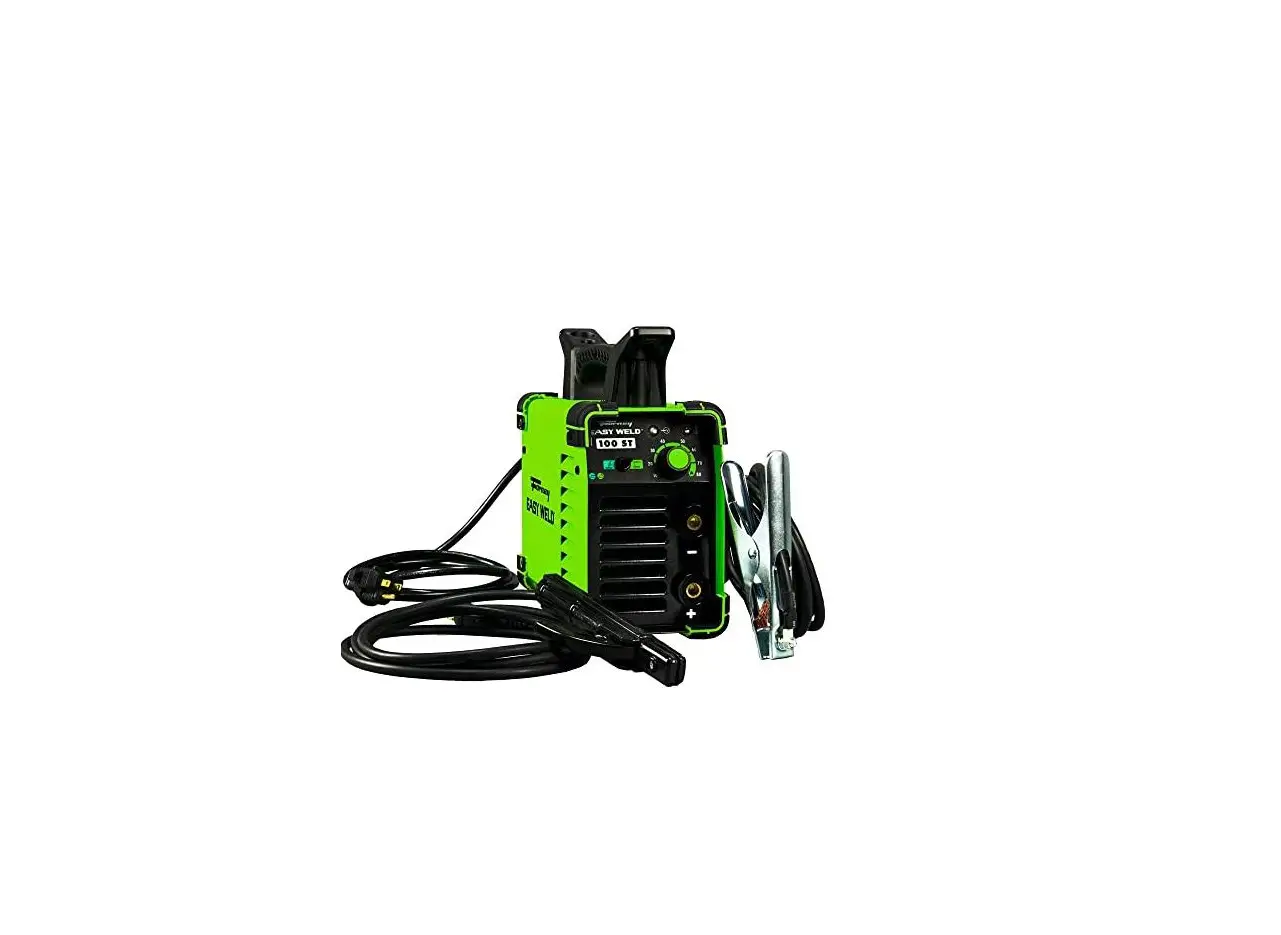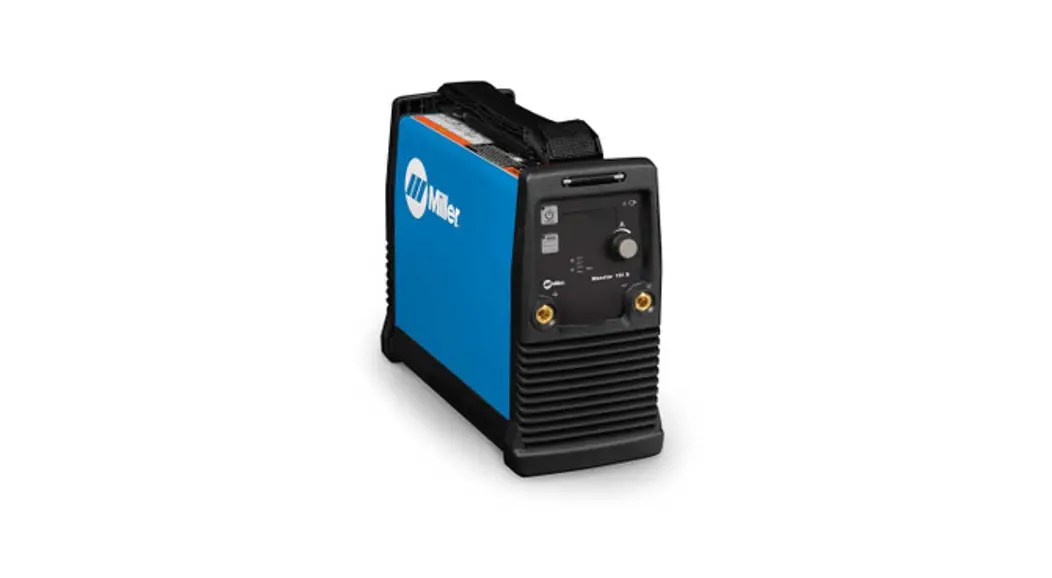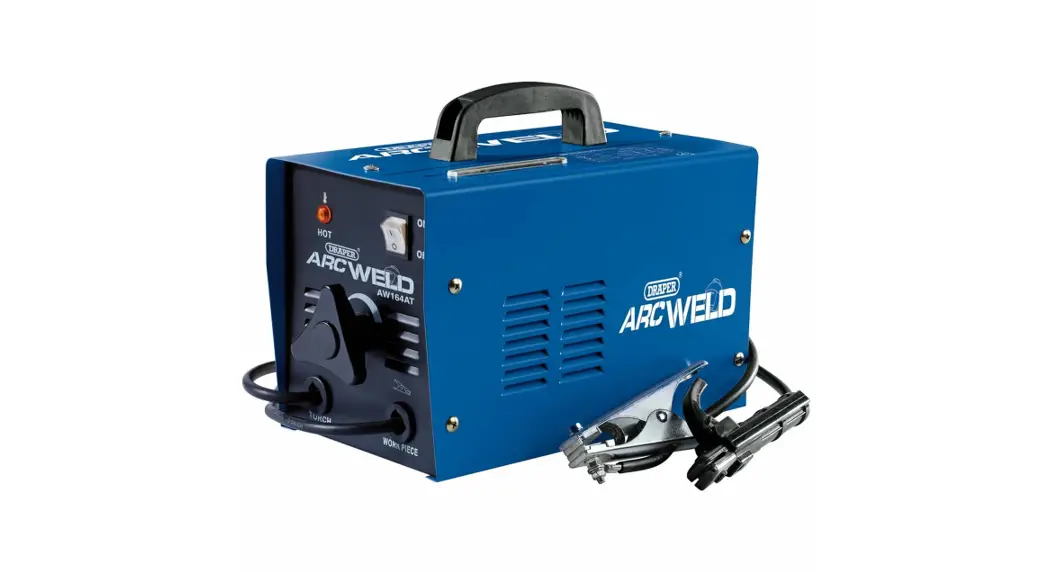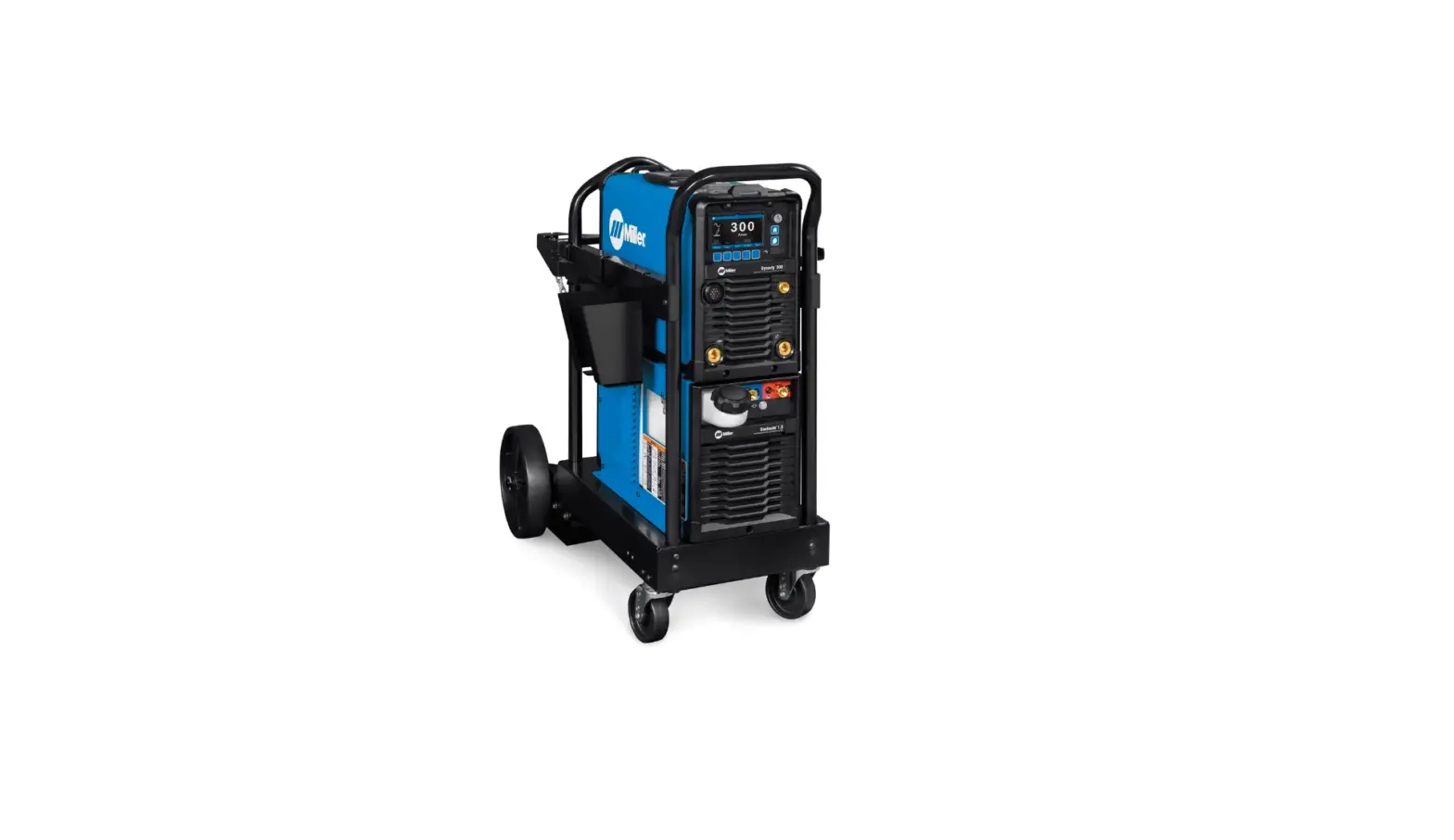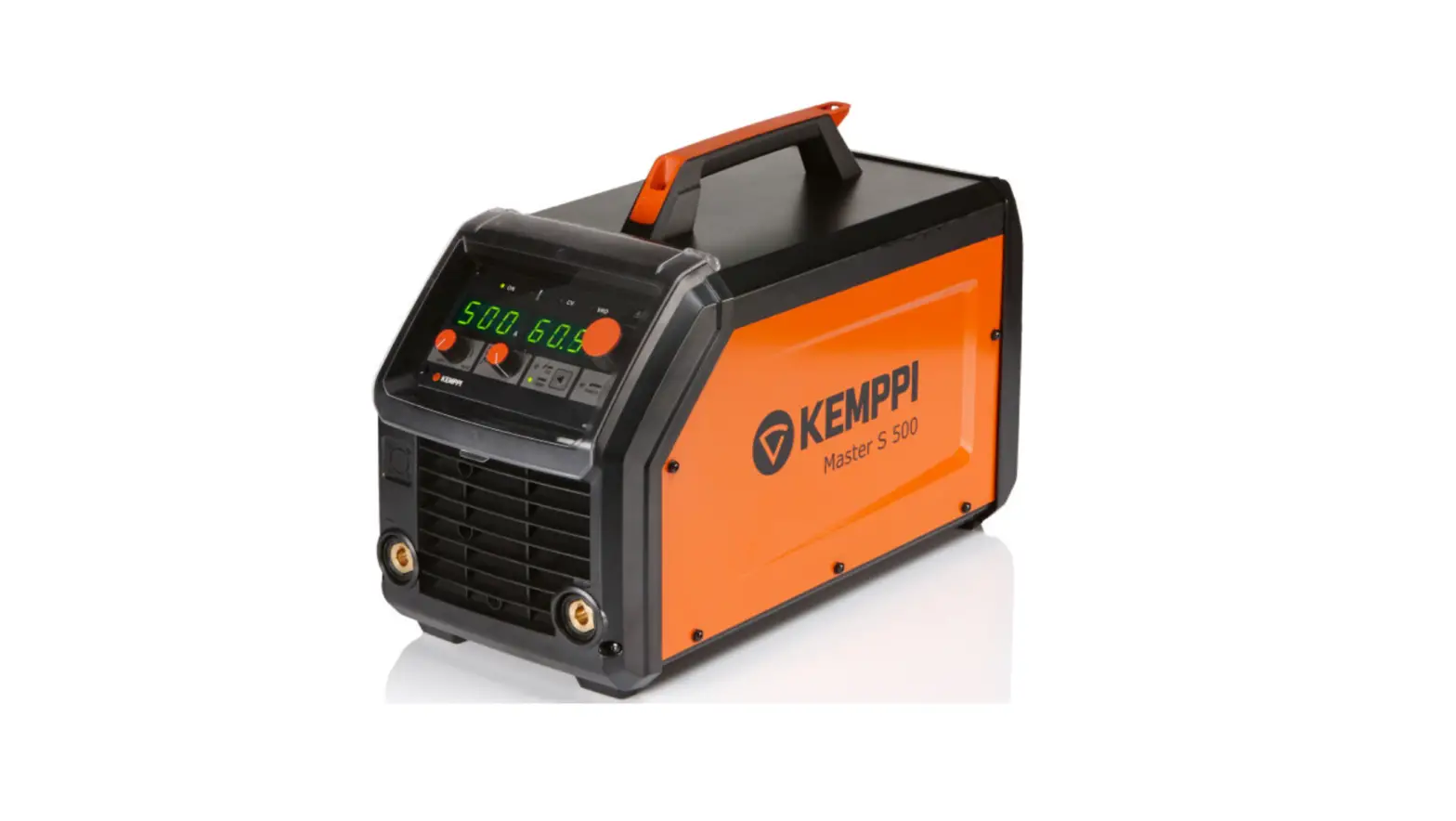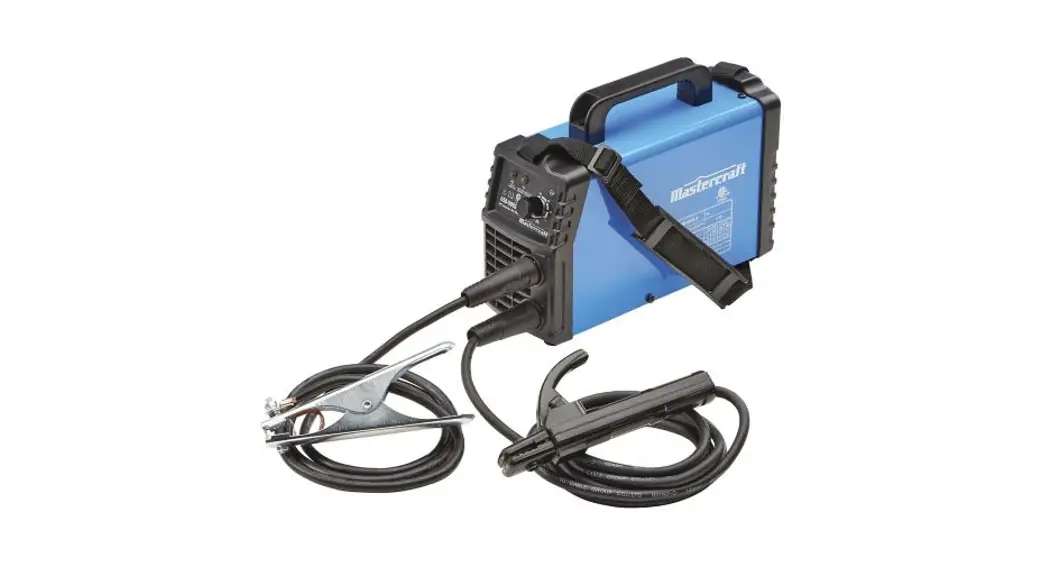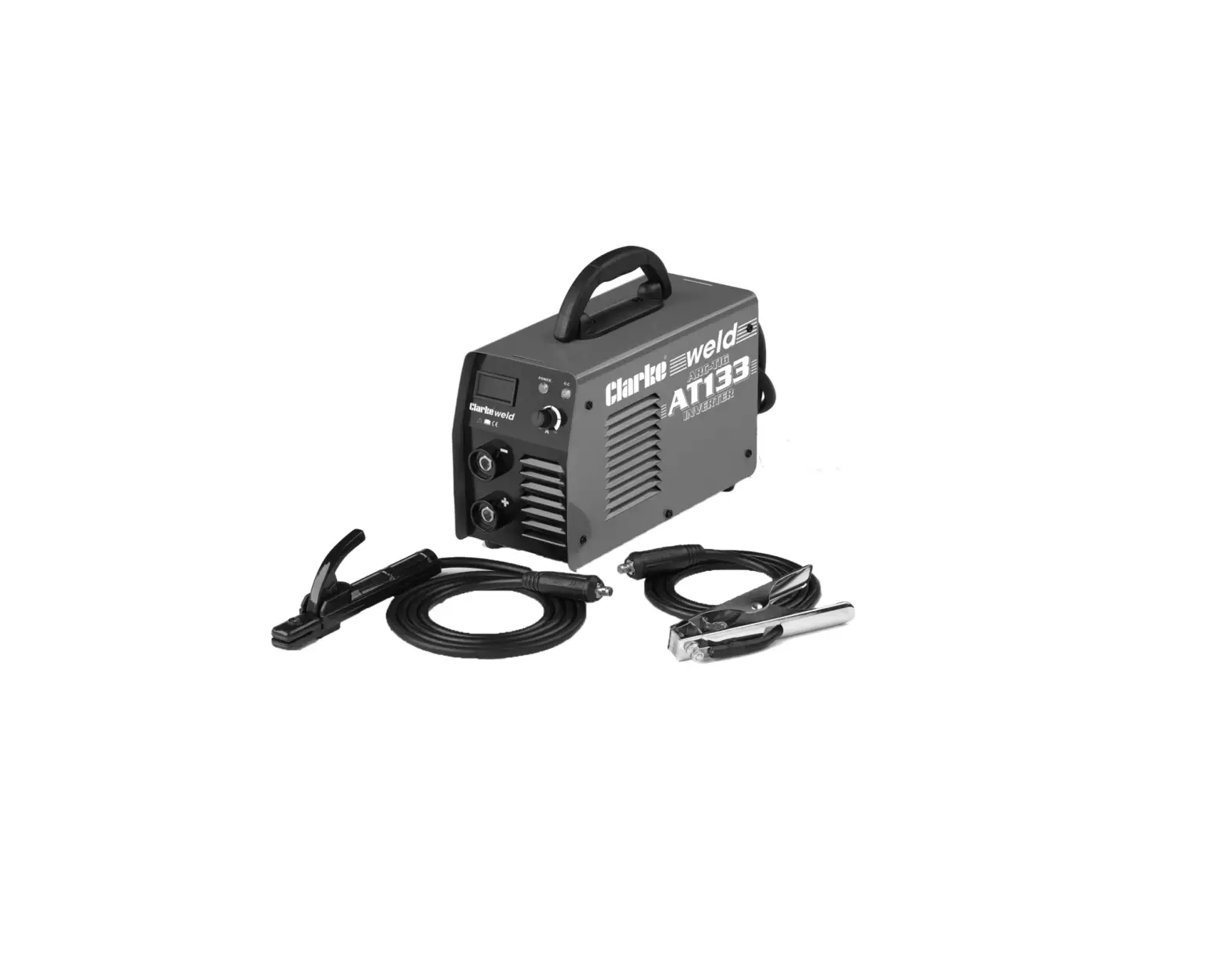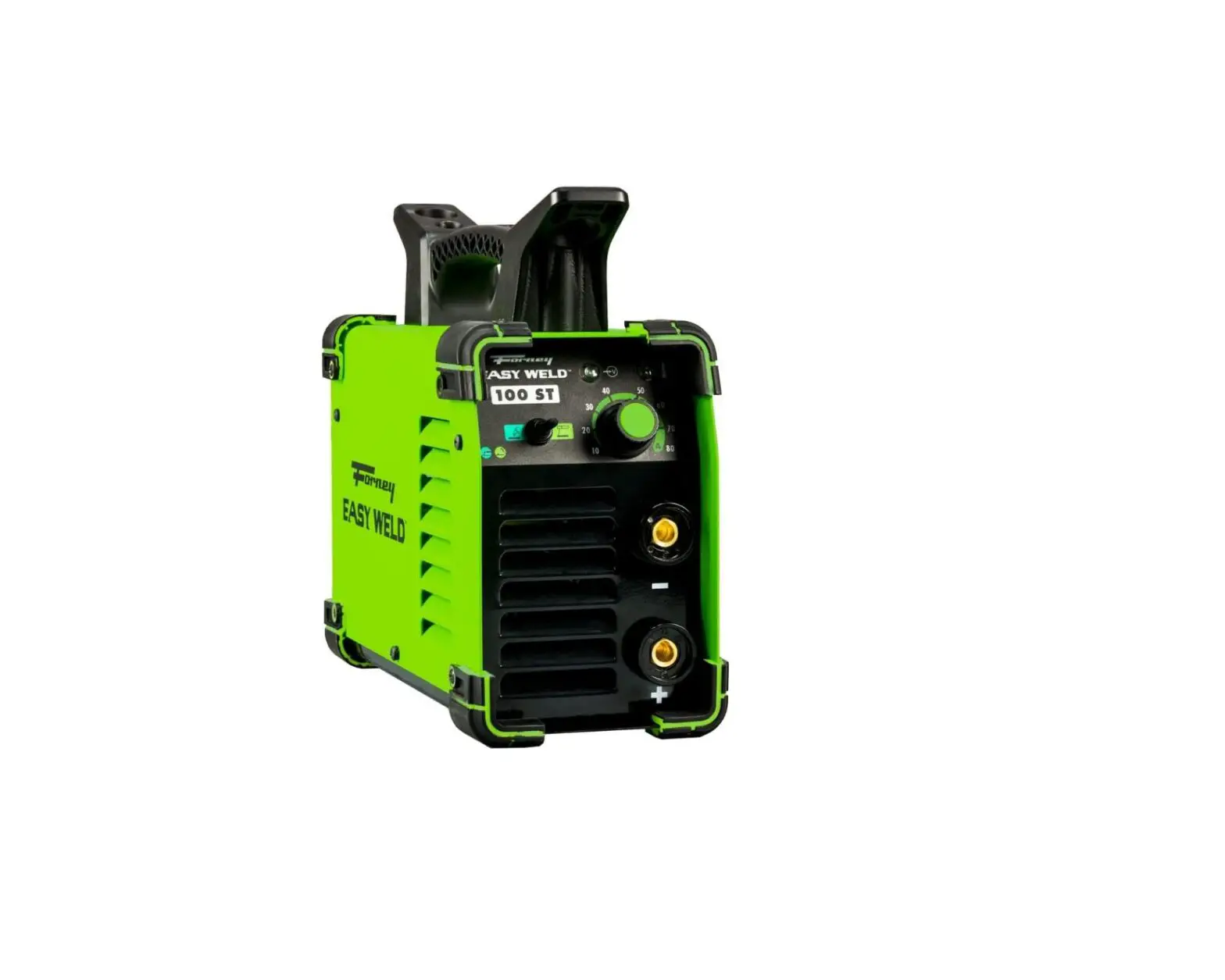

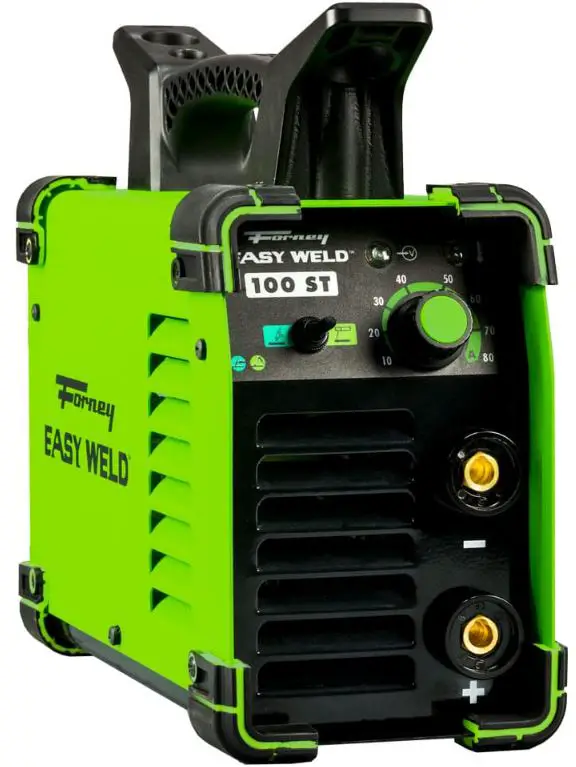
Forney 321 Easy Weld 100 ST Stick Welder
TIG WELDING SET-UP
Read user manual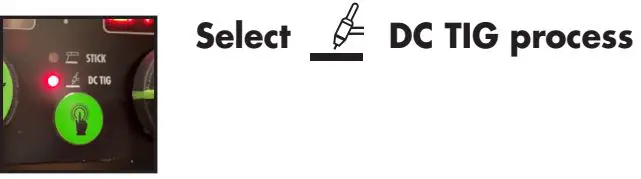
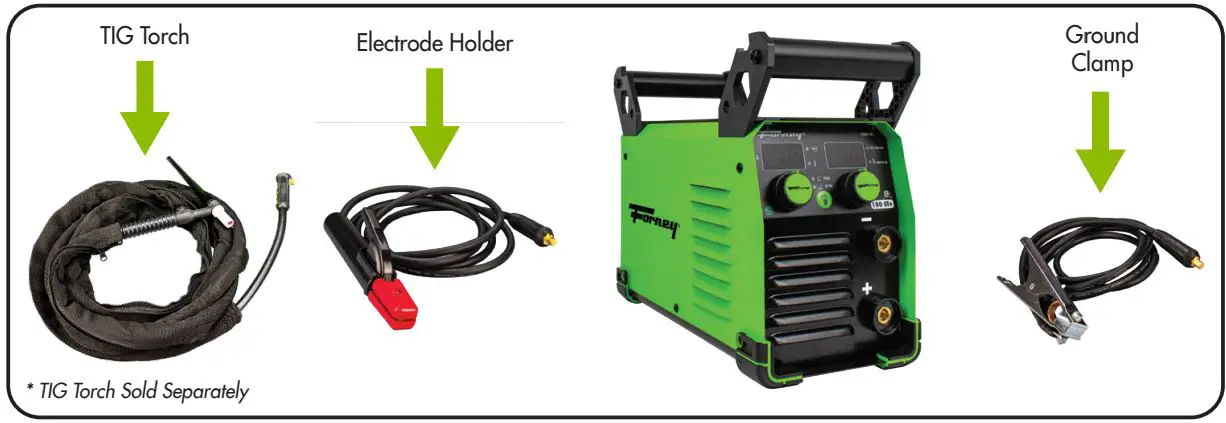
Connect TIG torch and ground clamp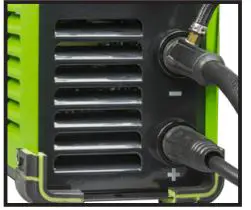
Connect TIG torch lead to gas (100% Argon)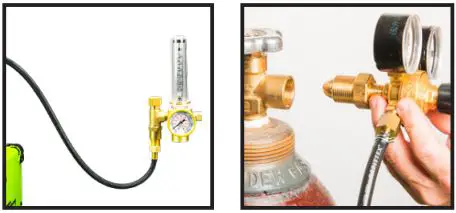
Adjust amperage per material thickness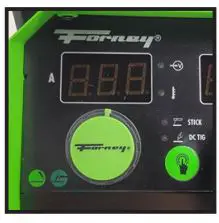
Connect to Input power
Dedicated Circuit 240VAC – 50A breaker recommended or 120VAC – 20A outlet, 30A breaker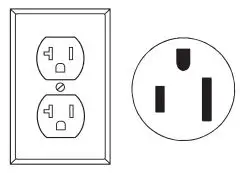
- Generator OK with continuous output > 4,000 W (120V) or 10,500 W (240V)
- Extension cord: (120V) #12 AWG or #10 AWG (240V) or larger. 25’ (8m) or shorter recommended
- Always follow local electrical codes
Use lift arc technique to initiate a welding arc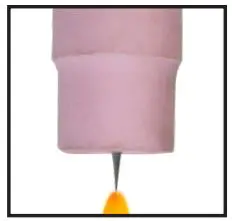
ELECTRODE IS ALWAYS ELECTRICALLY HOT WHILE IN TIG MODE
STICK WELDING SET-UP
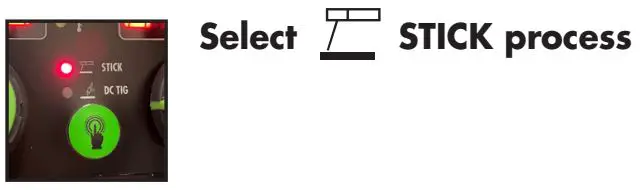
Connect electrode holder and ground clamp according to desired polarity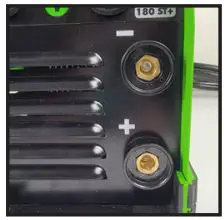
Usually DCEP – Electrode Positive
Connect to Input power
Dedicated Circuit 240VAC – 50A breaker recommended or 120VAC – 20A outlet, 30A breaker
- Generator OK with continuous output > 4,000 W (120V) or 10,500 W (240V)
- Extension cord: (120V) #12 AWG or #10 AWG (240V) or larger. 25’ (8m) or shorter recommended
- Always follow local electrical codes
Adjust amperage per settings chart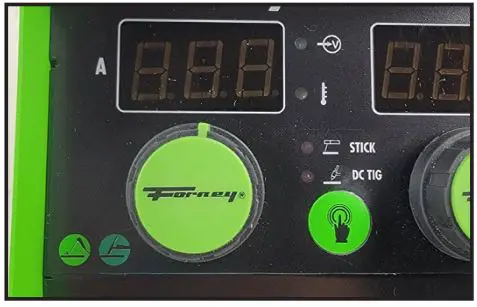
Recommended electrodes
| Electrode | Diameter | Amperage | Pulse Recommendations | ||
| Inches | MM | AMPS | Hz | % On | |
| E6010 & E6011 | 3/32 | 2,4 | 30-75 | 3.5-4.2 | 50-55% |
| 1/8 | 3,2 | 35-125 | |||
| 5/32 | 4,0 | 80-160 | |||
| E6013 | 1/16 | 1,6 | 10-50 | >5 | >50% |
| 3/32 | 2,4 | 40-90 | |||
| 1/8 | 3,2 | 50-130 | |||
| 5/32 | 4,0 | 90-180 | |||
| E7014 | 3/32 | 2,4 | 40-90 | 2-2.4 | 40-45% |
| 1/8 | 3,2 | 60-130 | |||
| 5/32 | 4,0 | 90-180 | |||
| E7018 | 3/32 | 2,4 | 50-80 | 5.5-6.5 | 50-90% |
| 1/8 | 3,2 | 80-160 | |||
| 5/32 | 4,0 | 90-180 | |||
TROUBLESHOOTING TIPS
Aluminum welding
- Not recommended for this machine.
- Output is DC only which is not suitible for TIG welding aluminum.
Workpiece grounding
Connect ground clamp to clean, bare metal. No rust, paint or other coatings. Attach the ground clamp directly to the workpiece if you are experiencing issues.
Fault Codes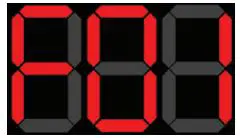
Duty-cycle exceeded or insufficient air flow. Allow machine to cool. Ensure vents are clear of obstacles. See manual.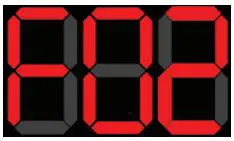
Incorrect input power. Verify machine is plugged into an appropriate power source. Use proper extension cords. See manual.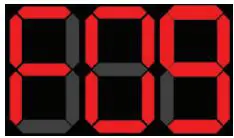
Electrode is shorted or stuck to workpiece. Separate the electrode or tungsten from the workpiece and fault will clear. See manual
Frequently tripping circuit breaker or exceeding Low weld output or poor fusion duty cycle
- Use 5/32” diameter electrodes or smaller. Some 5/32” will draw too much amperage (stick).
- Trying to weld single pass on material larger than 3/8” thick is not possible with this machine. Multi-pass recommended for thicker materials.
- Welding machine should be the only thing plugged into the circuit.
Low weld output or poor fusion
- Usually due to low input power.
- Pulse settings may be causing poor fusion. Increase the Pulse (% On) setting or set the Pulse (Hz) to 2 Hz or higher.
- Welder should be only thing plugged into circuit.
- Avoid using extension cords. If one must be used, it must be #12 AWG (120V) or #10 AWG (240V) or larger; 25’ (8m) or shorter.
- Generators must be 10,500 W (240 V) or 4,000 W (120 V) continuous output and not have a low-idle function (or have it disabled).
PULSE WELDING TIPS
Why Pulse Weld?
Pulse welding alternates between the set output amperage and a reduced amperage. This allows the weld puddle to cool and solidify during each low amp cycle. This has many benefits such as: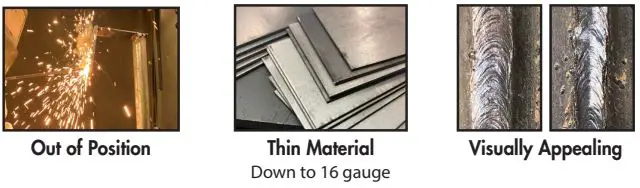
How to set up Pulse Welding:
Set pulse frequency from 0.1 up to 10 Hz changes how fast the arc pulses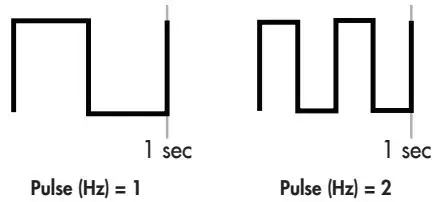
Set pulse % On from 10 to 90. Changes what percent of the pulse is at the user set output amperage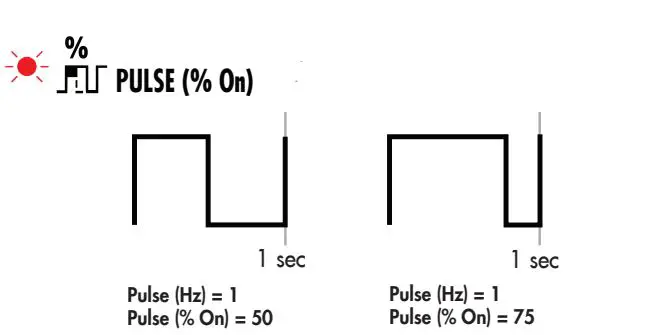
Expert-Tech Tips:
- A higher frequency creates a focused puddle and a tight ripple bead pattern. A lower frequency creates a broader puddle and unique ripple bead pattern.
- A higher setting for Pulse (% On) will increase penetration while a lower value is better for thin material.
- Keep Hz over 2 and % On over 40 when stick welding to avoid arc loss and sticking.
- Read the manual for more information.
QUESTIONS OR TROUBLE? Contact Forney Industries at 1-800-521-6038
[email protected] • askforney.com • forneyind.com
 Forney Industries | Metalworking Resources