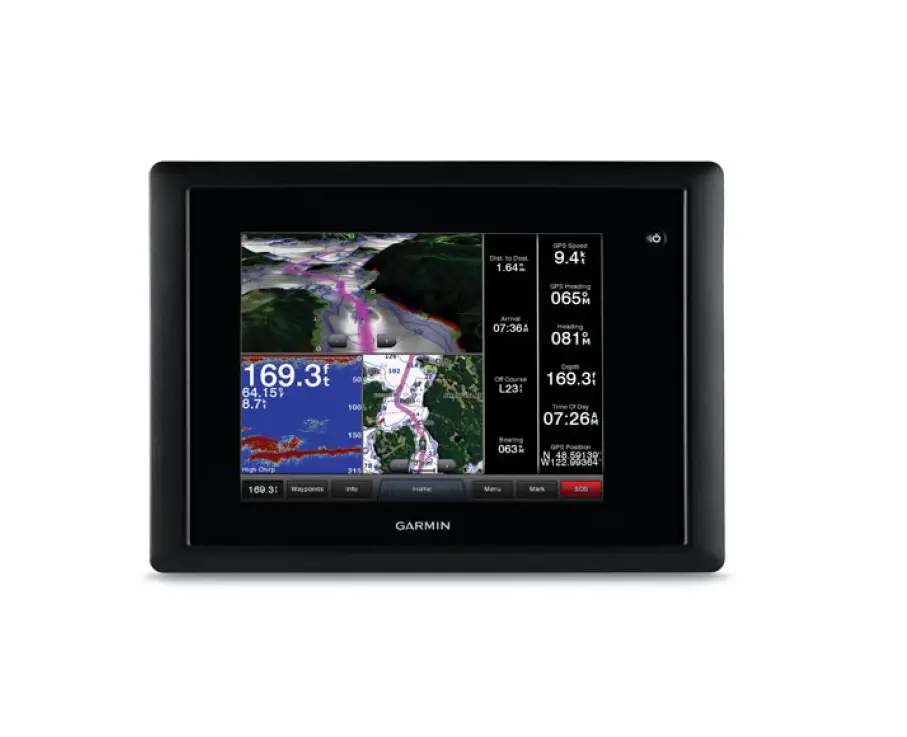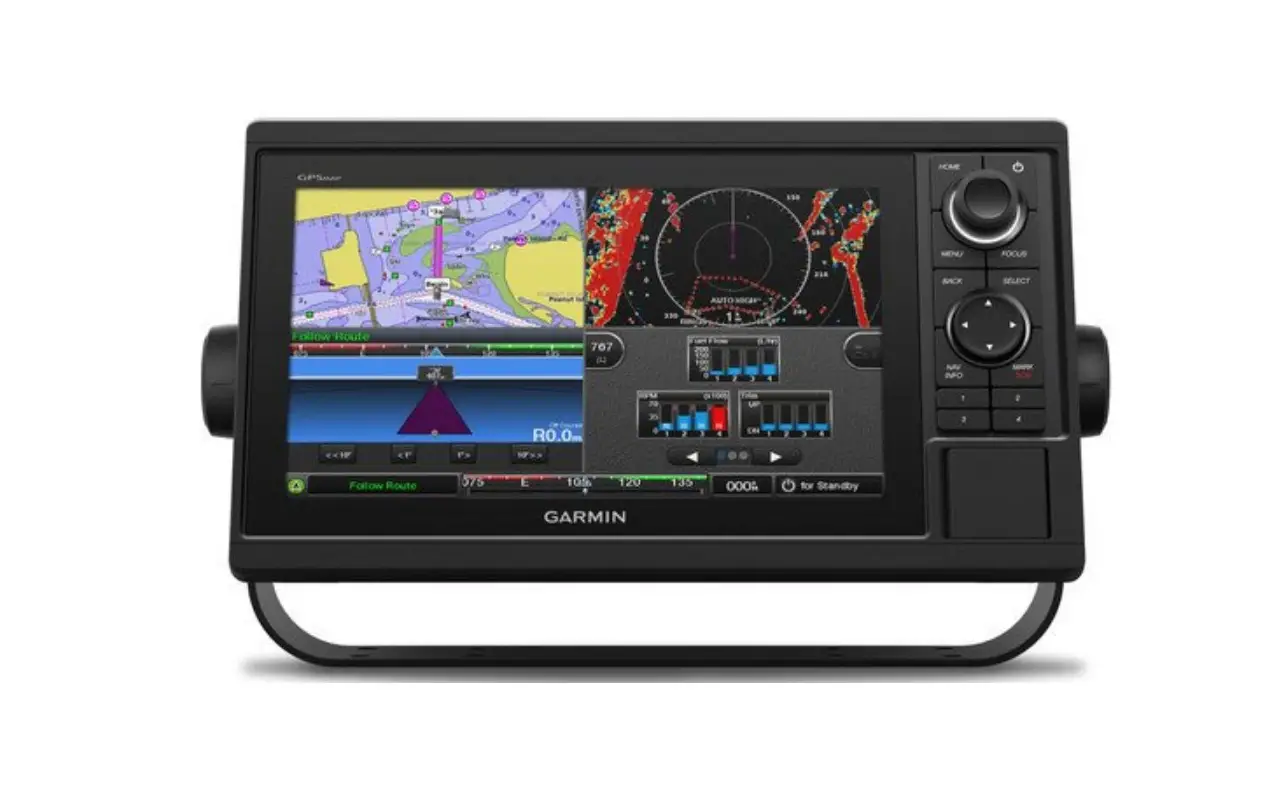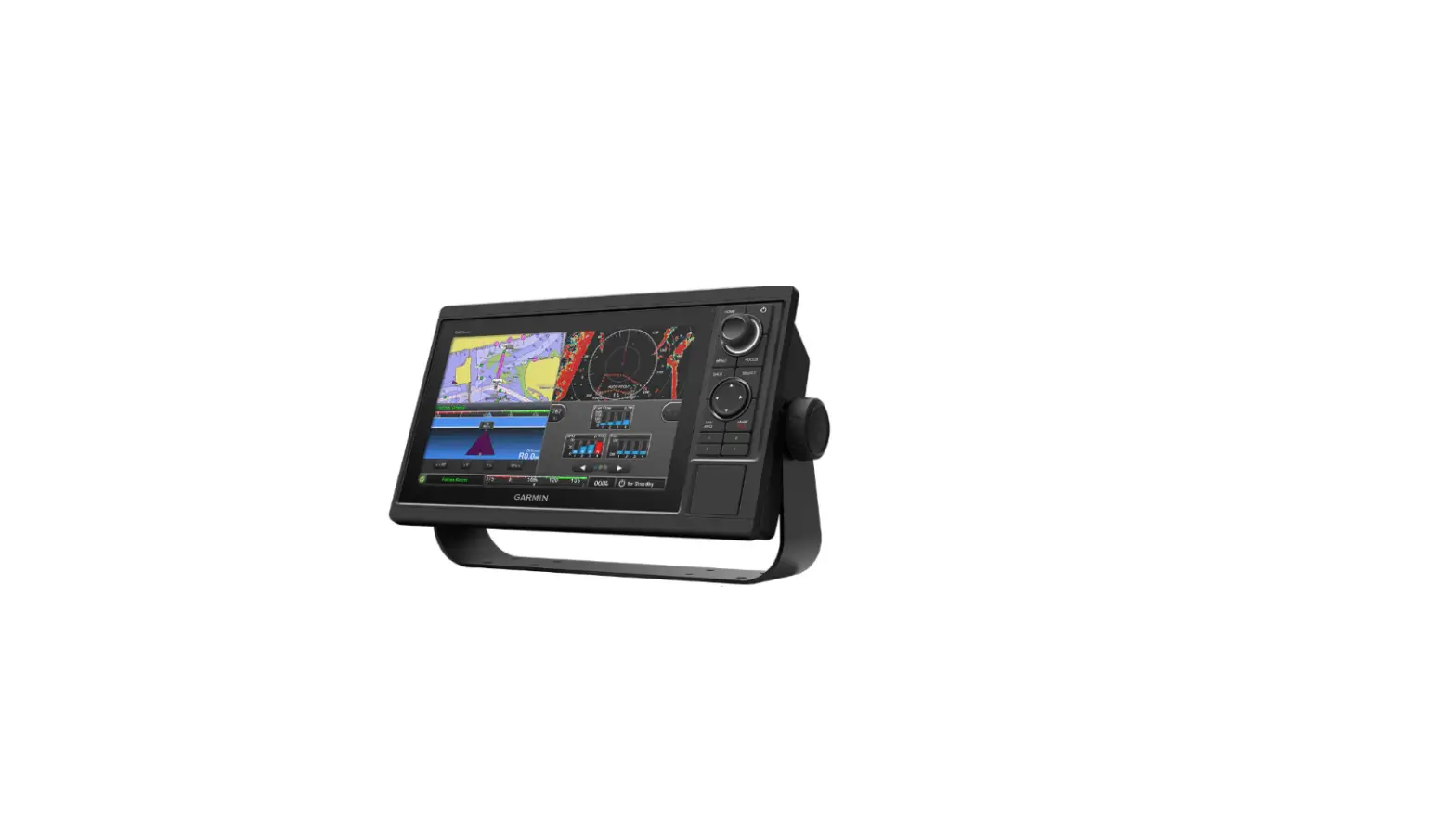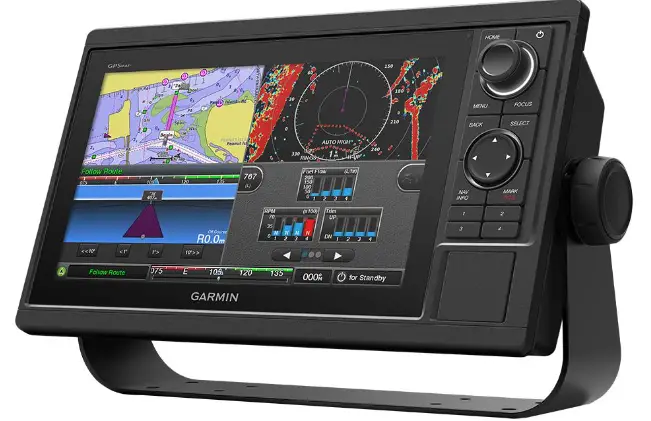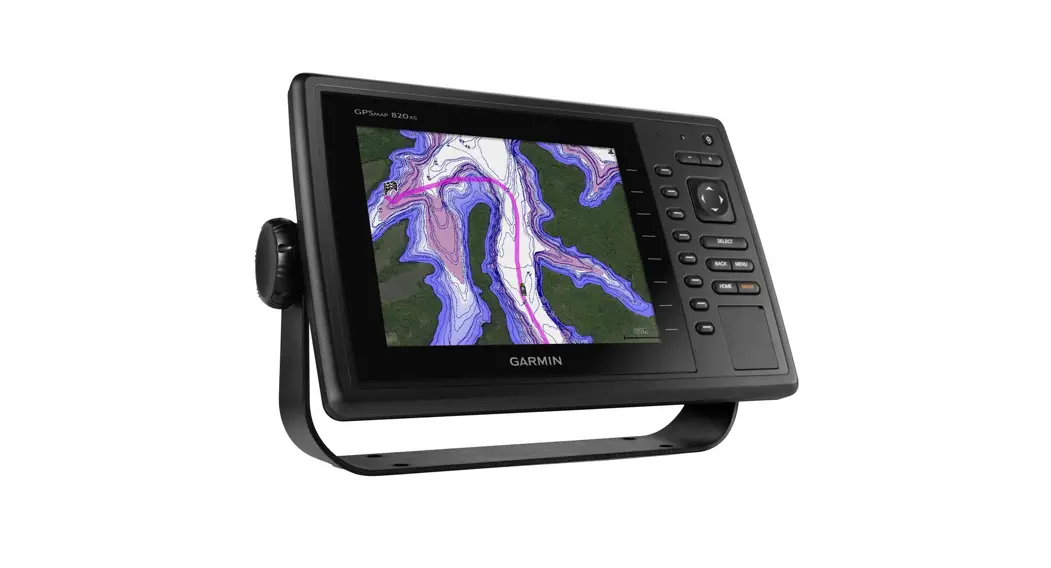

GPSMAP ® 800/1000 SERIES
INSTALLATION
INSTRUCTIONS
Important Safety Information
 WARNING
See an Important Safety and Product Information guide in the product box for product warnings and other important information.
When connecting the power cable, do not remove the in-line fuse holder. To prevent the possibility of injury or product damage caused by fire or overheating, the appropriate fuse must be in place as indicated in the product specifications. In addition, connecting the power cable without the appropriate fuse in place will void the product warranty.
 CAUTION
Always wear safety goggles, ear protection, and a dust mask when drilling, cutting, or sanding.
NOTICE
When drilling or cutting, always check what is on the opposite side of the surface.
To obtain the best performance and to avoid damage to your boat, install the device according to these instructions. Read all installation instructions before proceeding with the installation. If you experience difficulty during the installation, contact Garmin ® Product Support.
Registering Your Device
Help us better support you by completing our online registration today. Keep the original sales receipt, or a photocopy, in a safe place.
- Go to my.garmin.com/registration
- Sign in to your Garmin account.
Contacting Garmin Support
- Go to support.garmin.com for help and information, such as product manuals, frequently asked questions, videos, and customer support.
- In the USA, call 913-397-8200 or 1-800-800-1020.
- In the UK, call 0808 238 0000.
- In Europe, call +44 (0) 870 850 1241.
Tools Needed
- Drill and drill bits
- #2 Phillips screwdriver
- Jigsaw or rotary tool
- File and sandpaper
- Marine sealant (optional)
Mounting Considerations
NOTICE
This device should be mounted in a location that is not exposed to extreme temperatures or conditions. The temperature range for this device is listed in the product specifications. Extended exposure to temperatures exceeding the specified temperature range, in storage or operating conditions, may cause device failure. Extreme-temperature- induced damage and related consequences are not covered by the warranty.
Using the included hardware and template, you can mount the device using one of two methods. You can use the included bracket and hardware to bail mount the device, or you can use the included template and hardware to flush-mount the device in the dashboard.
When selecting a mounting location, you should observe these considerations.
- The location should provide optimal viewing as you operate your boat.
- The location should allow for easy access to all device interfaces, such as the keypad, touchscreen, and card reader, if applicable.
- The location must be strong enough to support the weight of the device and protect it from excessive vibration or shock.
- To avoid interference with a magnetic compass, the device should not be installed closer to a compass than the compass-safe distance value listed in the product specifications.
- The location must allow room for the routing and connection of all cables.
Bail Mounting the Device
NOTICE
If you are mounting the bracket on fiberglass with screws, it is recommended to use a countersink bit to drill a clearance counterbore through only the top gel-coat layer. This will help to avoid any cracking in the gel-coat layer when the screws are tightened.
Stainless steel screws may bind when screwed into fiberglass and overtightened. Garmin recommends applying an anti-seize lubricant to the screws before installing them.
You can use the included bracket to bail mount the device on a flat surface.
- Using the bail-mount bracket as a template, mark the pilot holes.
 Using a 3 mm ( 1 /8 in.) drill bit, drill the pilot holes.
- Using the included screws, secure the bail-mount bracket to the mounting surface.
- Install the bail-mount knobs on the sides of the device.
- Place the device in the bail-mount bracket and tighten the bail-mount knobs.
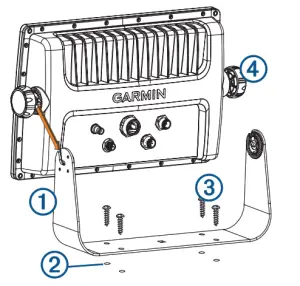 Using a 3 mm ( 1 /8 in.) drill bit, drill the pilot holes.
Flush Mounting the Device
NOTICE
Be careful when cutting the hole to flush mount the device. There is only a small amount of clearance between the case and the mounting holes, and cutting the hole too large could compromise the stability of the device after it is mounted.
If you are mounting the bracket on fiberglass with screws, it is recommended to use a countersink bit to drill a clearance counterbore through only the top gel-coat layer. This ill help to avoid any cracking in the gel-coat layer when the screws are tightened.
Stainless steel screws may bind when screwed into fiberglass and overtightened. Garmin recommends applying an anti-seize lubricant to the screws before installing them.
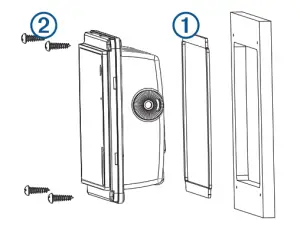
The included template and hardware can be used to mount the device in your dashboard.
- Trim the template and make sure it fits in the location where you want to mount the device.
- Remove the protective liner from the back of the template and adhere it to the location where you want to mount the device.
- Using a 9.5 mm ( 3/8 in.) drill bit, drill one or more of the holes inside the corners of the solid line on the template to prepare the mounting surface for cutting.
- Using a jigsaw or rotary tool, cut the mounting surface along the inside of the solid line indicated on the template.
- Place the device in the cutout to test the fit.
- If necessary, use a file and sandpaper to refine the size of the cutout.
- After the device fits correctly in the cutout, ensure the mounting holes on the device line up with the pilot holes on the template.
- If the mounting holes on the device do not line up, mark the new pilot-hole locations.
- Using a 3.2 mm ( 1 /8 in.) drill bit, drill the pilot holes.
- Remove the template from the mounting surface.
- If you will not have access to the back of the device after you mount it, connect all necessary cables to the device before placing it into the cutout.
- If necessary, cover unused connectors with the attached weather caps to prevent corrosion of the metal contacts.
- Install the foam gasket on the back of the device. The pieces of the rubber gasket have adhesive on the back. Make sure you remove the protective liner before installing
them on the device.
- Place the device in the cutout.
- Secure the device to the mounting surface using the included screws.
- Install the decorative bezel by snapping it in place around the edges of the device.
Connection Considerations
When connecting this device to power and to other Garmin devices, you should observe these considerations.
- The power and ground connections to the battery must be checked to make sure they are secured and cannot become loose.
- For easier routing, the cables are packaged without the locking rings installed. The cables should be routed before the locking rings are installed.
- After installing a locking ring on a cable, you should make sure the ring is securely connected and the o-ring is in place so the power or data connection remains secure.
Power/NMEA ® 0183 Cable
- The wiring harness connects the device to power, NMEA 0183 devices, and a lamp or a horn for visible or audible alerts.
- If it is necessary to extend the NMEA 0183 or alarm wires, you must use 22 AWG (.33 mm²) wires.
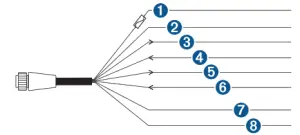
| Item | Wire Color | Wire Function |
| 1 | Red | Power |
| 2 | Black | Ground (power and NMEA 0183) |
| 3 | Blue | NMEA 0183 internal port 1 Tx (Out) |
| 4 | Brown | NMEA 0183 internal port 1 Rx (In) |
| 5 | Gray | NMEA 0183 internal port 2 Tx (Out) |
| 6 | Violet | NMEA 0183 internal port 2 Rx (In) |
| 7 | Orange | Accessory on |
| 8 | Yellow | Alarm low |
Connecting the Wiring Harness to Power
WARNING
When connecting the power cable, do not remove the in-line fuse holder. To prevent the possibility of injury or product damage caused by fire or overheating, the appropriate fuse must be in place as indicated in the product specifications. In addition, connecting the power cable without the appropriate fuse in place will void the product warranty.
If it is necessary to extend the power and ground wires, you must use 18 AWG (0.82 mm²) wires.
- Route the wiring harness to the power source and to the device.
- Connect the red wire to the positive (+) battery terminal and connect the black wire to the negative (-) battery terminal.
- Install the locking ring and o-ring on the end of the wiring harness.
- Connect the wiring harness to the device by turning the locking ring clockwise.
NMEA 0183 Connection Considerations
• The installation instructions provided with your NMEA 0183 compatible device should contain the information you need to identify the transmitting (Tx) and receiving (Rx) A (+) and B (-) wires.
• When connecting NMEA 0183 devices with two transmitting and two receiving wires, it is not necessary for the NMEA 2000 ® bus and the NMEA 0183 device to connect to a common ground.
• When connecting an NMEA 0183 device with only one transmitting (Tx) wire or with only one receiving (Rx) wire, the NMEA 2000 bus and the NMEA 0183 device must be connected to a common ground.
NMEA 0183 Connection Diagram
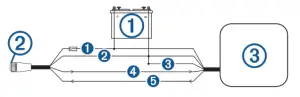
| Item | Description |
| 1 | 12 Vdc power source |
| 2 | Wiring harness |
| 3 | NMEA 0183 compliant device |
| Item | Garmin WireFunction | Garmin Wire Color | NMEA 0183 Device Wire Function |
| 1 | Power | Red | Power |
| 2 | Ground | Black | Data ground |
| 3 | Ground | ||
| 4 | Tx (Out) | Blue | Rx/A (In +) |
| 5 | Rx (In) | Brown | Tx/A (Out +) |
Lamp and Horn Connections
The device can be used with a lamp, a horn, or both, to sound or flash an alert when the chart plotter displays a message. This is optional, and the alarm wire is not necessary for the device to function normally. When connecting the device to a lamp or horn, observe these considerations.
- The alarm circuit switches to a low-voltage state when the alarm sounds.
- The maximum current is 100 mA, and a relay is needed to limit the current from the Chartplotter to 100 mA.
- To manually toggle visual and audible alerts, you can install single-pole, single-throw switches.
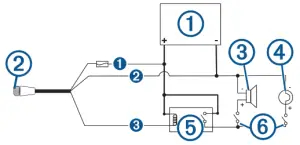
| Item | Description |
| 1 | Power source |
| 2 | Power cable |
| 3 | Horn |
| 4 | Lamp |
| 5 | Relay (100 mA coil current) |
| 6 | Toggle switches to enable and disable lamp or horn alerts |
| Item | Wire Color | Wire Function |
| 1 | Red | Power |
| 2 | Black | Ground |
| 3 | Yellow | Alarm |
Connecting the Device to a Transducer
Devices that can receive depth information from a Garmin transducer have a port labeled SONAR. Go to www.garmin.com or contact your local Garmin dealer to determine the appropriate type of transducer for your needs.
- Follow the instructions provided with your transducer to install it on your boat correctly.
- Route the transducer cable to the back of your device, away from sources of electrical interference.
- Connect the transducer cable to the SONAR port on your device.
Connecting the Device to an External Garmin Sounder Module
Devices that can receive information from an external Garmin sounder module have a port labeled ETHERNET. Go to www.garmin.com or contact your local Garmin dealer to determine the appropriate type of sonar device for your needs.
- Follow the instructions provided with your sounder module to install it on your boat correctly.
- Route the Garmin Marine Network cable from the sounder module to the back of your device, away from sources of electrical interference.
- Connect the Garmin Marine Network cable to the ETHERNET port on your device.
Connecting the Device to a Garmin Marine Radar
Devices that can receive information from a Garmin radar have a port labeled ETHERNET. Go to www.garmin.com or contact your local Garmin dealer to determine the appropriate type of radar for your needs.
- Follow the instructions provided with your Garmin radar to install it on your boat correctly.
- Route the Garmin Marine Network cable from the radar to the back of your device, away from sources of electrical interference.
- Connect the Garmin Marine Network cable to the ETHERNET port on your device.
Radar, Sonar, and Map Sharing Considerations
Devices that can share supplemental map information and view data from a single radar or sonar module at the same time have a port labeled ETHERNET. Go to www.garmin.com or contact your local Garmin dealer to determine the appropriate type of devices for your needs.
When connecting this device to compatible ETHERNET devices, you should observe these considerations.
- This device is compatible only with other Garmin ETHERNET devices and does not share data with Garmin Marine Network devices such as a GPSMAP 8000 series device.
- This device is not compatible with legacy Garmin sounder modules such as the GSD ™ 26.
- If your device receives sonar data from a transducer connected to the SONAR port, it does not share the sonar data with other ETHERNET devices.
- A Garmin Marine Network cable must be used for all ETHERNET connections.
◦ Third-party CAT5 cable and RJ45 connectors must not be used for ETHERNET connections.
◦ Additional Garmin Marine Network cables and connectors are available from your Garmin dealer. - If this device has a single ETHERNET port, you may need to use a Garmin network switch, such as a GMS ™ 10 to connect a radar or sounder module to more than one ETHERNET device.
- If this device has both a RADAR port and an ETHERNET port, you can connect an ETHERNET device to either port.
- Some sounder modules, such as the GCV ™ 10 have more than one ETHERNET port and can connect to multiple ETHERNET devices without an additional network switch.
Connecting the Device to a Remote GPS Antenna
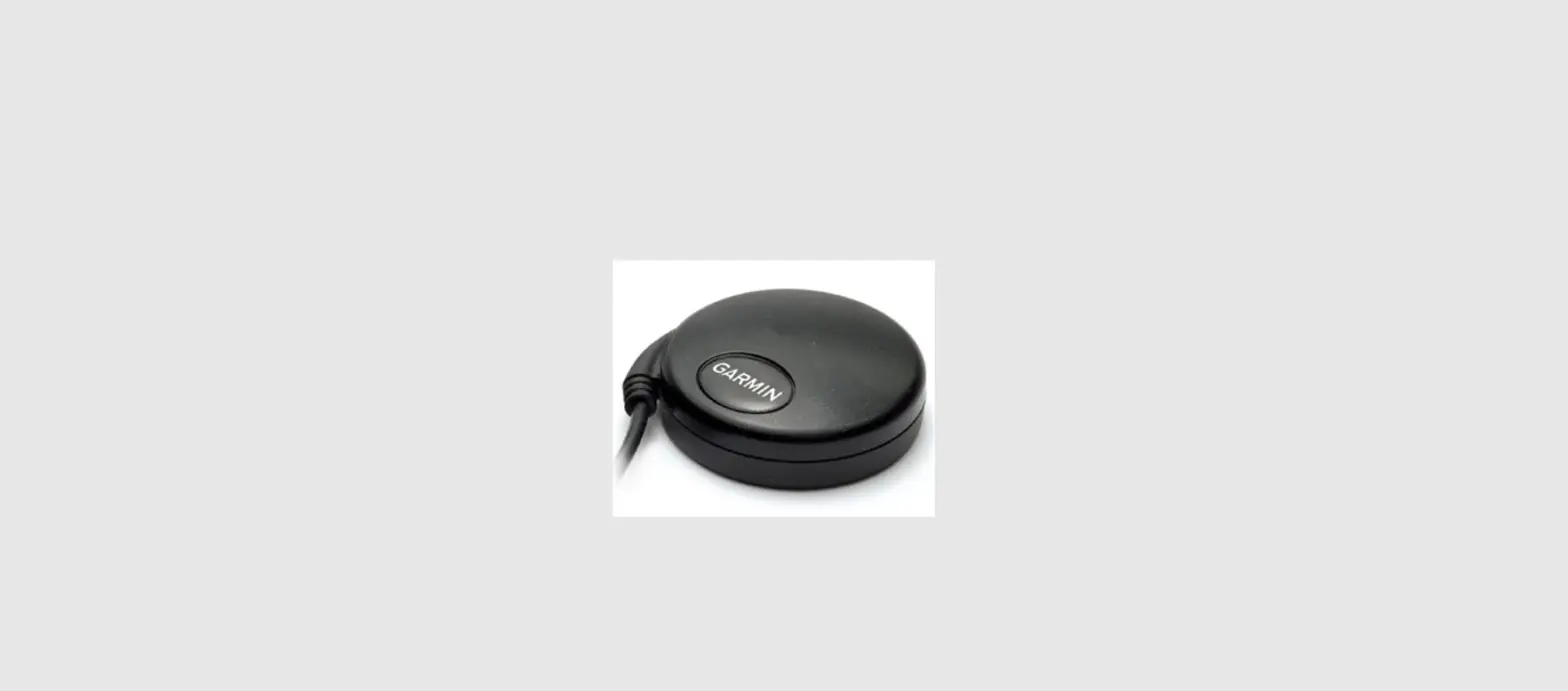
This device has an internal GPS receiver, but some installations, such as a flush-mount installation, may not allow a view of the sky needed to calculate your GPS position. In this situation, you can install a Garmin external GPS antenna and connect it to the device to provide GPS information.
Devices that can receive information from a Garmin external GPS antenna have a port labeled EXT GPS.
- Follow the instruction provided with your Garmin external GPS antenna to install it on your boat correctly.
- Route the antenna cable to the back of your device, away from sources of electrical interference.
- Connect the antenna cable to the EXT GPS port on your device.
NMEA 2000 Considerations
NOTICE
If you have an existing NMEA 2000 network on your boat, it should already be connected to power. Do not connect the NMEA 2000 power cable to an existing NMEA 2000 network, because only one power source should be connected to an NMEA 2000 network.
If you are installing an NMEA 2000 power cable, you must connect it to the boat ignition switch or through another in-line switch. NMEA 2000 devices will drain your battery if the NMEA 2000 power cable is connected to the battery directly.
NMEA 2000 compatible models can connect to an NMEA 2000 network on your boat to share data from NMEA 2000 compatible devices such as a VHF radio. The necessary NMEA 2000 cables and connectors are sold separately.
If you are unfamiliar with NMEA 2000, you should read the “NMEA 2000 Network Fundamentals” chapter of the Technical Reference for NMEA 2000 Products. To download this document, select Manuals on the product page for your device at www.garmin.com.
The port labeled NMEA 2000 on the back of the device is used to connect it to a standard NMEA 2000 network.
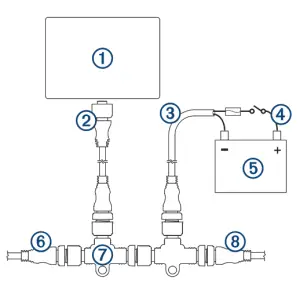
| Item | Description |
| 1 | NMEA 2000 compatible Garmin device |
| 2 | NMEA 2000 drop cable |
| 3 | NMEA 2000 power cable |
| 4 | Ignition or in-line switch |
| 5 | 12 Vdc power source |
| 6 | NMEA 2000 terminator or backbone cable |
| 7 | NMEA 2000 T-connector |
| 8 | NMEA 2000 terminator or backbone cable |
Software Update
You may need to update the device software when you install the device or add an accessory to the device. This device supports up to a 32 GB memory card, formatted to FAT32.
Loading the New Software on a Memory Card
You can copy the software update to a memory card using a computer that is running Windows ® software or a Mac ® computer.
- Insert a memory card into the card slot on the computer.
- Go to www.garmin.com/support/software/marine.html.
- Select Legacy GPSMAP Series with SD Card.
- Select Download next to Legacy GPSMAP Series with SD Card.
- Read and agree to the terms.
- If you are on a Mac computer, select Go to Mac download page.
- Select Download.
- If necessary, choose a location, and select Save.
- Double-click the downloaded file.
- If you are on a computer running Windows software, select Next, select the drive associated with the memory card, and select Next > Finish.
A Garmin folder containing the software update is created on the memory card. The software update can take several minutes to load onto the memory card. - If you are on a Mac computer, copy the Garmin folder to the root directory of the memory card. The software update can take several minutes to load onto the memory card. After loading the update onto the memory card, install the software on the chart plotter (Updating the Device Software, page 5).
Updating the Device Software
Before you can update the software, you must obtain a software-update memory card or load the latest software onto a memory card.
- Turn on the Chartplotter.
- Insert the memory card into the card slot.
- Follow the on-screen instructions.
- Wait several minutes while the software update process completes. The device returns to normal operation after the software update process is complete.
- Remove the memory card.
Specifications
Physical Specifications
Eight-Inch Models
| Specification | Measurement |
| Dimensions (W×H×D) | 294 mm (11.58 in.) × 188 mm (7.4 in) × 74 mm (2.91 in.) |
| Display size (W×H) | 162 mm (6.38 in.) × 121.5 mm (4.78 in.) |
| Weight | 1.6 kg (3.53 lb.) |
Ten-Inch Models
| Specification | Measurement |
| Dimensions (W×H×D) | 360 mm (14.17 in.) × 236 mm (9.29 in) × 75 mm (2.95 in.) |
| Display size (W×H) | 211.2 mm (8.31 in.) × 158.4 mm (6.24 in.) |
| Weight | 2.2 kg (4.85 lb.) |
All Models
| Specification | Measurement |
| Temperature range | From 5° to 131°F (from -15° to 55°C) |
| Material | Polycarbonate plastic |
Electrical Specifications
All Models
| Specification | Measurement |
| Input power | 10–32 Vdc |
| Fuse | 6 A, fast-acting |
| NMEA 2000 LEN @ 9 Vdc | 2 |
| NMEA 2000 draw | 100 mA max. |
| Compass-safe distance | 30 cm (11.8 in.) |
Eight-Inch Models
| Specification | Measurement |
| Max. power usage at 10 Vdc | 40 W |
| Typical current draw at 12 Vdc | 2.0 A |
| Max. current draw at 12 Vdc | 4.0 A |
NMEA 2000 PGN Information
Transmit and Receive
| PGN | Description |
| 059392 | ISO acknowledgment |
| 059904 | ISO request |
PGN | Description |
| 060928 | ISO address claim |
| 126208 | NMEA: Command, request, and acknowledge group function |
| 126996 | Product information |
| 127250 | Vessel heading |
| 128259 | Speed: Water referenced |
| 128267 | Water depth |
| 129539 | GNSS DOPs |
| 129799 | Radiofrequency, mode, and power |
| 130306 | Wind data |
| 130312 | Temperature |
Transmit
PGN | Description |
| 126464 | Transmit and receive PGN list group function |
| 127258 | Magnetic Variance |
| 129025 | Position: Rapid update |
| 129026 | COG and SOG: Rapid update |
| 129029 | GNSS position data |
| 129283 | Cross-track error |
| 129284 | Navigation data |
| 129285 | Navigation route and waypoint info |
| 129540 | GNSS satellites in view |
Receive
| PGN | Description |
| 127245 | Rudder |
| 127250 | Vessel heading |
| 127488 | Engine parameters: Rapid update |
| 127489 | Engine parameters: Dynamic |
| 127493 | Transmission parameters: Dynamic |
| 127498 | Engine parameters: Static |
| 127505 | Fluid level |
| 129038 | AIS class A position report |
| 129039 | AIS class B position report |
| 129040 | AIS class B extended position report |
| 129794 | AIS class A static and voyage related data |
| 129798 | AIS SAR aircraft position report |
| 128000 | Nautical leeway angle |
| 129802 | AIS safety-related broadcast message |
| 129808 | DSC call information |
| 130310 | Environmental parameters |
| 130311 | Environmental parameters (obsolete) |
| 130313 | Humidity |
| 130314 | Actual pressure |
| 130576 | Small craft status |
This data applies only to NMEA 2000-compatible products.
NMEA 0183 Information
Transmit
| Sentence | Description |
| GPAPB | APB: Heading or track controller (autopilot) sentence “B” |
| GPBOD | BOD: Bearing (origin to destination) |
| GPBWC | BWC: Bearing and distance to waypoint |
| GPGGA | GGA: Global positioning system fix data |
| GPGLL | GLL: Geographic position (latitude and longitude) |
| GPGSA | GSA: GNSS DOP and active satellites |
| GPGSV | GSV: GNSS satellites in view |
| GPRMB | RMB: Recommended minimum navigation information |
Sentence | Description |
| GPRMC | RMC: Recommended minimum specific GNSS data |
| GPRTE | RTE: Routes |
| GPVTG | VTG: Course over ground and ground speed |
| GPWPL | WPL: Waypoint location |
| GPS | XTE: Cross-track error |
| PGRME | E: Estimated error |
| PROGRAM | M: Map datum |
| PGRMZ | Z: Altitude |
| SDDBT | DBT: Depth below transducer |
| SDDPT | DPT: Depth |
| SDMTW | MTW: Water temperature |
| SDVHW | VHW: Water speed and heading |
Receive
Sentence | Description |
| DPT | Depth |
| DBT | Depth below transducer |
| MTW | Water temperature |
| VHW | Water speed and heading |
| WPL | Waypoint location |
| DSC | Digital selective calling information |
| DSE | Expanded digital selective calling |
| HDG | Heading, deviation, and variation |
| HDM | Heading, magnetic |
| MWD | Wind direction and speed |
| MDA | Meteorological composite |
| MWV | Wind speed and angle |
| VDM | AIS VHF data-link message |
You can purchase complete information about National Marine Electronics Association (NMEA) format and sentences from NMEA, Seven Riggs Avenue, Severna Park, MD 21146 USA (www.nmea.org)
© 2013 Garmin Ltd. or its subsidiaries Garmin ®, the Garmin logo, and GPSMAP® are trademarks of Garmin Ltd. or its subsidiaries, registered in the USA and other countries. GCV™, GMS™, and GSD™ are trademarks of Garmin Ltd. or its subsidiaries. These trademarks may not be used without the express permission of Garmin.
NMEA®, NMEA 2000®, and the NMEA 2000 logo are registered trademarks of the National Marine Electronics Association.
© 2013 Garmin Ltd. or its subsidiaries
support.garmin.com