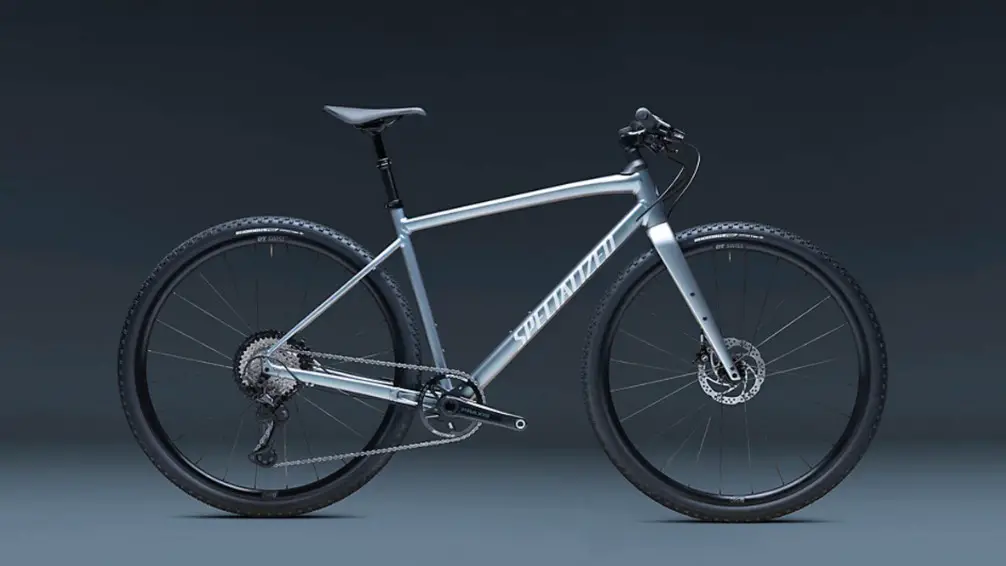
2022 S Diverge Comp Carbon Gravel Road Bike
Product Information
The product being referred to is a road or gravel bicycle. The
user manual provides important symbols, warnings, and tips for
assembly and usage. It also mentions that additional languages can
be downloaded from the website of the manufacturer,
Specialized.
Symbols:
- Grease Symbol: Indicates the application of
high-quality grease as illustrated. - Carbon Friction Paste Symbol: Indicates the
application of carbon friction paste as illustrated to increase
friction. - Tech Tips: Provides helpful tips and tricks
regarding installation and use.
Assembly Guide:
The assembly guide is provided in English, but translations into
other languages may be available for download on the Specialized
website.
Assembly Warning:
For safety reasons, it is recommended to have the bicycle
assembled by a skilled bicycle mechanic.
Bike Inspection:
Upon unpacking, it is important to check for any damage that may
have occurred during shipping. If any damage is noticed, it should
be reported to Specialized Rider Care.
Torque Specifications:
The torque specifications for the bicycle build can be found in
the user manual supplied with the bicycle or printed on the part
near the bolt being torqued. General torque specifications may also
be found in the Owner’s Manual.
Packaging:
The user is advised to keep all packaging materials as they can
be reused for transportation purposes. Proper recycling guidelines
should be followed for disposing of the packaging responsibly.
Wireless Components:
If the bicycle is equipped with wireless components, they need
to be charged before use. The user manual provided by the component
manufacturer should be referred to for more information. When
shipping the bicycle, the component batteries should be below 30%
charge level.
Required Tools:
- Scissors or cable tie cutters
- Bicycle floor pump (with gauge)
Small Parts Box Contents:
- User Manual (where applicable)
- Assembly guide
- Owner’s Manual
- Component manuals
- Pedals (optional)
- Torque wrench (1 – 10 Nm)
- 5 mm hex key/bit
- 4 mm hex key/bit
- 3 mm hex key/bit (where applicable)
- Flat wrench
Product Usage Instructions
Let’s Get Started:
- It is recommended to have another person assist with the
assembly of this bicycle. - Remove any tape from the marked side of the box and open the
box. - Locate and remove the small parts box, then take out all the
parts provided for assembling the bicycle. - Remove the front wheel brace from the box and set it
aside. - Roll the bicycle out of the box and remove the seatpost
brace.Caution: The inner packaging should not be used
as a bicycle stand. Place the bicycle into a bicycle stand or lean
it against a stable surface to support it during assembly.
Adjust the Handlebar:
The assembly process for the Tarmac SL7 may vary from other
bikes. Follow the instructions specific to the bicycle being
assembled.
Standard Bikes:
The handlebar on the bicycle is rotated to ensure a secure fit
in the box.
- Remove the zip ties securing the handlebar to the top
tube.
ASSEMBLY GUIDE
ROAD & GRAVEL ENGLISH
INTRODUCTION THIS BRIEF ASSEMBLY GUIDE CONTAINS IMPORTANT INFORMATION. PLEASE READ CAREFULLY AND STORE IN A SAFE PLACE. This Assembly Guide shows you how to build your bicycle from out of the box. The directions covered in this guide are general guidelines and apply to all Specialized drop bar (road/gravel) bicycles. If you’re unsure of the correct setup of your bicycle, contact Specialized Rider Care or visit an Authorised Specialized Retailer. This document is not intended as a use, service, repair, or maintenance guide. Please visit an Authorised Specialized Retailer for all service, repairs, or maintenance. Some bicycles come with a specific User Manual. This assembly guide is not a replacement for your bicycle’s User Manual. The user manual contains important safety, performance, and technical information specific to your bicycle, which you should read and keep for reference. You should also read the entire Specialized Bicycle Owner’s Manual (“Owner’s Manual”) as it has additional important, general information and instructions you should follow. If you don’t have a copy of the Owner’s Manual, you can download it at www.specialized.com or obtain it from Specialized Rider Care or your nearest Authorised Specialized Retailer. Additional safety, performance, and service information for specific components such as suspension or pedals on your bicycle or accessories such as helmets or lights, may also be available. In case of a conflict between the information in this assembly guide and information provided by a component manufacturer’s manuals, please contact Specialized Rider Care or an Authorised Specialized Retailer. Please note all instructions and notices are subject to changes and updates without notice. Please visit www.specialized.com for periodic tech updates.
SYMBOLS When reading this assembly guide, you will note various important symbols and warnings, which are explained below:
WARNING! The combination of this symbol and word indicates a potentially hazardous situation which, if not avoided, could result in serious injury or death. Many of the Warnings say “you may lose control and fall.” Because any fall can result in serious injury or even death, we do not always repeat the warning of possible injury or death. CAUTION: The combination of the safety alert symbol and the word CAUTION indicates a potentially hazardous situation, which, if not avoided, may result in minor or moderate injury, or is an alert against unsafe practices. The word CAUTION used without the safety alert symbol indicates a situation which, if not avoided, could result in serious damage to the bicycle or the voiding of your warranty. This symbol alerts the reader to information that is particularly important.
This symbol means that high-quality grease should be applied as illustrated.
This symbol means that carbon friction paste should be applied as illustrated to increase friction.
Tech tips are helpful tips and tricks regarding installation and use.
Refer to the Owner’s Manual supplied with your bicycle for more specific information.
Where applicable, refer to the User Manual supplied with your bicycle for more specific information.
This assembly guide was drafted in the English language and may have been translated into other languages as applicable. ADDITIONAL LANGUAGES ARE AVAILABLE FOR DOWNLOAD AT www.specialized.com.
ASSEMBLY
WARNING: IN THE INTERESTS OF SAFETY IT IS RECOMMENDED THAT YOU HAVE THIS BICYCLE ASSEMBLED BY A SKILLED BICYCLE MECHANIC.
BIKE INSPECTION When removing all the parts from the packaging, ensure nothing was damaged during shipping. Call Specialized Rider Care if you notice any damage.
TORQUE SPECIFICATIONS The torque specifications for the bicycle build can be found in the user manual supplied with the bicycle (where applicable) or printed on the part near the bolt you
are torquing. General torque specifications may also be found in the Owner’s Manual.
WARNING! Correct tightening force on fasteners (nuts, bolts, screws) on your bicycle is important for your safety. If too little force is applied, the fastener may not hold securely. If too much force is applied, the fastener can strip threads, stretch, deform or break. An incorrect tightening force can result in component failure, which can cause you to lose control and fall. Where indicated, ensure each bolt is torqued to specification. After your first ride, and consistently thereafter, recheck the tightness of each bolt to ensure secure attachment of the components.
PACKAGING Please keep all your packaging as you can reuse it to transport your bicycle.
RECYCLE: Please follow your local recycling guidelines to dispose of the packaging responsibly.
WIRELESS COMPONENTS
Bicycles equipped with wireless components must be charged before use. Please see the component manufacturer’s user manual for more information. When shipping the bicycle, ensure the component batteries are below 30% charge level.
1
REQUIRED TOOLS 1. Scissors or cable tie cutters 2. Bicycle floor pump (with gauge)
1
2
WHAT’S IN THE SMALL PARTS BOX 1. User Manual (where applicable) 2. Assembly guide 3. Owner’s Manual 4. Component manuals 5. Pedals (optional) 6. Torque wrench (1 – 10 Nm) 7. 5 mm hex key/bit 8. 4 mm hex key/bit 9. 3 mm hex key/bit (where applicable) 10. Flat wrench
1
4
COMPONENT
COMPONENT
USER MANUAL ENGLISH
ASSEMBLY GUIDE
DROP BAR BICYCLE ENGLISH
2
OWNER’S MANUAL
3
5
6
LET’S GET STARTED
1
The assembly of this bicycle is best completed with the help of another person.
1. Remove any tape from the marked side of the box then open the box.
2. Locate and remove the small parts box, then remove all the parts supplied to assemble your bicycle.
7 8 9
10
2
3. Remove the front wheel brace from the box and
3
4
set it aside.
4. Roll the bicycle out of the box and remove the seatpost brace.
CAUTION: The inner packaging is not suitable for use as a bicycle stand. Place the bicycle into a bicycle stand or lean it against a stable surface to support the bicycle during assembly.
2
ADJUST THE HANDLEBAR
5
The assembly process for the Tarmac SL7 varies from other bikes. Follow the instruction for the bicycle where indicated.
STANDARD BIKES
The handlebar on the bicycle is rotated to ensure a secure fit in the box.
5. Remove the zip ties securing the handlebar to the top tube.
6. Remove the zip ties and protective packaging from the rest of the frame.
CAUTION: Be careful not to damage the bicycle when removing zip ties.
ROTATE THE HANDLEBAR
7
7. Using the torque wrench and corresponding hex bit, loosen (counter-clockwise) the two bolts (A-B) on rear of the stem until the stem is loose enough to turn.
8. Brace the wheel between your knees and rotate the handlebar into alignment.
CAUTION: DISC BRAKE: Ensure the fork is positioned in the correct direction. The stem faces forwards with the brake caliper on the left side of the bicycle.
CAUTION: RIM BRAKE: Ensure the fork is positioned in the correct orientation. The stem faces forwards with the brake caliper on the front side of the fork.
9. Align the handlebar with the center of the bicycle.
9
10. Using the torque wrench and corresponding hex bit, torque (clockwise) the two bolts (A-B) on rear of the stem to specification.
A B
11. Using a wrench and corresponding hex bit,
loosen (counter-clockwise) the four bolts on
11
the stem faceplate until the handlebar is loose
enough to turn.
12. Rotate the handlebar to the desired position making sure it is centered.
13
42 3
6
8
10
A B
12
13. Using a torque (clockwise) wrench and
corresponding hex bit, torque each faceplate bolt
13
approximately 1/2 turn at a time in an alternating
(cross) pattern until all the bolts are torqued to
specification.
42
13
14. The gap between the stem and faceplate should
be even on the top and the bottom.
14
42
1
3
TARMAC SL7 – ASSEMBLE THE HANDLEBAR
15
(NO GAP STEM)
WARNING! The stem is designed without a gap between the stem body and the faceplate at the upper bolt area. The upper bolts must be tightened so the faceplate is flush against the stem body before being torqued. Failure to do this can result in structural damage to the handlebar.
Not all Tarmac models are equipped with the Specialized accessory mount.
15. Using the corresponding hex key, loosen (counter-clockwise) and remove the four bolts on the stem faceplate, then remove the stem faceplate from the stem.
16. Place the handlebar against the stem, then place
16
the stem faceplate over the handlebar with the
stem faceplate and stem holes aligned.
4
17. Add a washer to each bolt, then starting with the
upper bolts, thread the bolts through the stem
17
18
faceplate into the stem body making sure they
are equally finger-tightened.
18. Adjust the handlebar to the desired position making sure it is centered.
19. Using a torque wrench and the corresponding hex
bit, gradually torque the upper bolts alternating
19
from the left to the right to evenly increase the
torque until the specification is reached.
20. Using a torque wrench and the corresponding hex bit, gradually torque the lower bolts alternating from the left to the right to evenly increase the torque until the specification is reached.
INSTALL THE STEM CABLE BAT:
21
21. Insert the cable bat bolt into the stem cable bat. Push the cables towards the front of the bike, then locate the cable bat bolt into the hole on the underside of the stem.
22. Using the torque wrench and corresponding hex bit, tighten the cable bat bolt to specification.
Should you have any problems installing the cable bat, please contact Spcialized Rider Care or visit an Authorised Specialized Retailer.
INSTALL THE PEDALS
23
Depending on the type, pedals are installed using
either a flat wrench or a hex key.
CAUTION: Make sure to install the pedals correctly. The left and right pedals have opposite threads and can damage the cranks if installed on the wrong side.
When tightening, both pedal threads rotate forward toward the front of the bicycle.
23. Remove the pedals from their packaging and locate the left “L” pedal (blue sticker) and right “R” pedal (red sticker).
5
1 2
20
21
22
24. The pedals stickers correspond to the blue and
red stickers on the left and right cranks.
24
The crank threads are pre-greased.
25. Insert the “L” pedal into the left (non-drive side)
25
crank arm.
26. HEX KEY PEDALS: Using the corresponding hex key inserted from the inside of the crank arm, tighten the pedal in place (counter-clockwise rotation). When at the correct tension, the tool leaves a noticeable impression in the palm of your hand.
27. FLAT WRENCH PEDALS: Using the flat wrench,
27
tighten the pedal in place (counter-clockwise
rotation). When at the correct tension, the tool
leaves a noticeable impression in the palm of your
hand
28. Repeat these steps for the right “R” pedal on the right crank arm (drive side, clockwise rotation).
SEATPOST MINIMUM INSERTION
To prevent damage to the frame and/or seatpost, it’s
important to have a minimum amount of seatpost
insertion in the seat tube. This minimum insertion
must meet the following requirements:
29. The seatpost must be inserted into the frame
29
deep enough so the minimum insertion/maximum
extension (min/max) mark, where applicable, on
the seatpost is not visible (A).
30. The seatpost must also be inserted into the seat
tube deep enough to meet or exceed (B) the
minimum measured insertion depth required by
the frame (C).
Refer to the User Manual supplied with your bicycle (where applicable) for more specific information on the seatpost maximum and minimum insertion depths.
WARNING! Failure to follow the outlined seatpost insertion requirements may result in damage to the frame and/or seatpost, which could cause you to lose control and fall.
6
26
30
A
C
B
ADJUST THE SEATPOST HEIGHT
A
B
Determine which type of seatpost you have: seatpost
collar (A) or seatpost wedge (B). Follow the
instructions for that type.
Shimano Di2. If the battery is located in the seatpost, follow the connection instructions shown in the bicycle’s user manual (where applicable).
Refer to the Owner’s Manual for more information on setting up your saddle height.
SEATPOST COLLAR
31
32
31. Using the torque wrench and corresponding hex
key, loosen the seatpost collar bolt and set the
saddle height to your desired position, then lightly
tighten the seatpost collar bolt.
32. Align the saddle with the centerline of the bicycle.
33. Using the torque wrench and corresponding hex
bit, torque the seatpost collar bolt to the specified
33
torque setting found on the seatpost collar and/
or in the user manual, where applicable (where
applicable).
SEATPOST WEDGE
34
35
Front and rear seat wedges are adjusted the same way.
Shimano Di2. If the battery is located in the seat post, follow the connection instructions shown in the bicycle’s user manual.
34. Slide the wedge cover up the seatpost.
35. Using the wrench and corresponding hex bit, loosen the seatpost wedge bolt.
7
36. Adjust the seatpost to the desired height.
36
37
37. Once the seatpost height is set, use the torque
wrench and corresponding hex bit to torque the
wedge bolt to the specified torque setting found
on the wedge and/or in the user manual (where
applicable).
38. Slide the cover back down over the wedge.
38
PUMPING THE TYRES
39
The tyres must be inflated and periodically checked
and re-inflated using a pump with an accurate
pressure gauge.
39. Pump the tyres up to your desired pressure. Refer to the tyre’s sidewall for the pressure range. Check your wheel manual or decal on the rim itself to see if your wheels have a maximum pressure limit. Do not exceed it.
Please refer to the Tyres and Tubes section of the Specialized Bicycle Owner’s Manual for additional information.
WARNING! Never inflate a tyre beyond the maximum pressure marked on the tyre’s sidewall or the maximum pressure limit specified by the wheel manufacturer, whichever is lower. Failure to follow this warning may cause the tyre to blow off the rim and may result in serious personal injury.
8
SAFETY CHECK WARNING! Before the first ride and routinely thereafter before each ride, perform the below safety check as well as any additional safety checks outlined in the Owner’s Manual, to ensure the bicycle is safe to ride. Failure to follow this warning can result in serious personal injury. 1. Nuts, bolts, screws, and other fasteners: Ensure the seatpost, stem, and handlebar are properly tightened. You can check the tightness of the handlebar, stem, and seatpost by securing the bicycle between your legs and trying to twist, push, and pull the handlebar and saddle. The handlebar and saddle should not move. If any components move, realign the part, increase the bolt tension, and try again. Repeat as necessary until there is no movement. Periodically check all the bolts on the bicycle to ensure they are torqued to specification using a torque wrench. 2. Seatpost: Ensure the saddle height is appropriate. Adjust as necessary. 3. Tyres and wheels: Ensure the wheels spin freely and do not wobble. The wheels should be centered in the frame and fork. If the wheels wobble and are not centered, please contact Rider Care or visit an Authorised Specialized Retailer. 4. Tyre pressure: The tyres must be inflated and periodically checked and re-inflated using a pump with an accurate gauge. Please refer to the Tyres and Tubes section of the Specialized Bicycle Owner’s Manual supplied with your bicycle for additional information. 5. Brakes: The brakes are pre-adjusted and aligned out of the box. If the brake pads or arms are misaligned, please contact Rider Care or visit an Authorised Specialized Retailer. Check the brake pads periodically for wear. Brake pads should be replaced once they wear down to the wear line. If the brake pads need to be replaced, but you do not have experience replacing brake pads, please visit an Authorised Specialized Retailer. Test the brakes by lifting one end of the bicycle at a time, spinning each wheel, and squeezing the brake lever. If the brakes are not working correctly, please contact Rider Care or visit an Authorised Specialized Retailer. Regularly inspect the bicycle to ensure there is no damage to any of the components. Replace any worn or damaged components or have them replaced by an Authorised Specialized Retailer.
9
 Made for riders, by riders. | Specialized.com