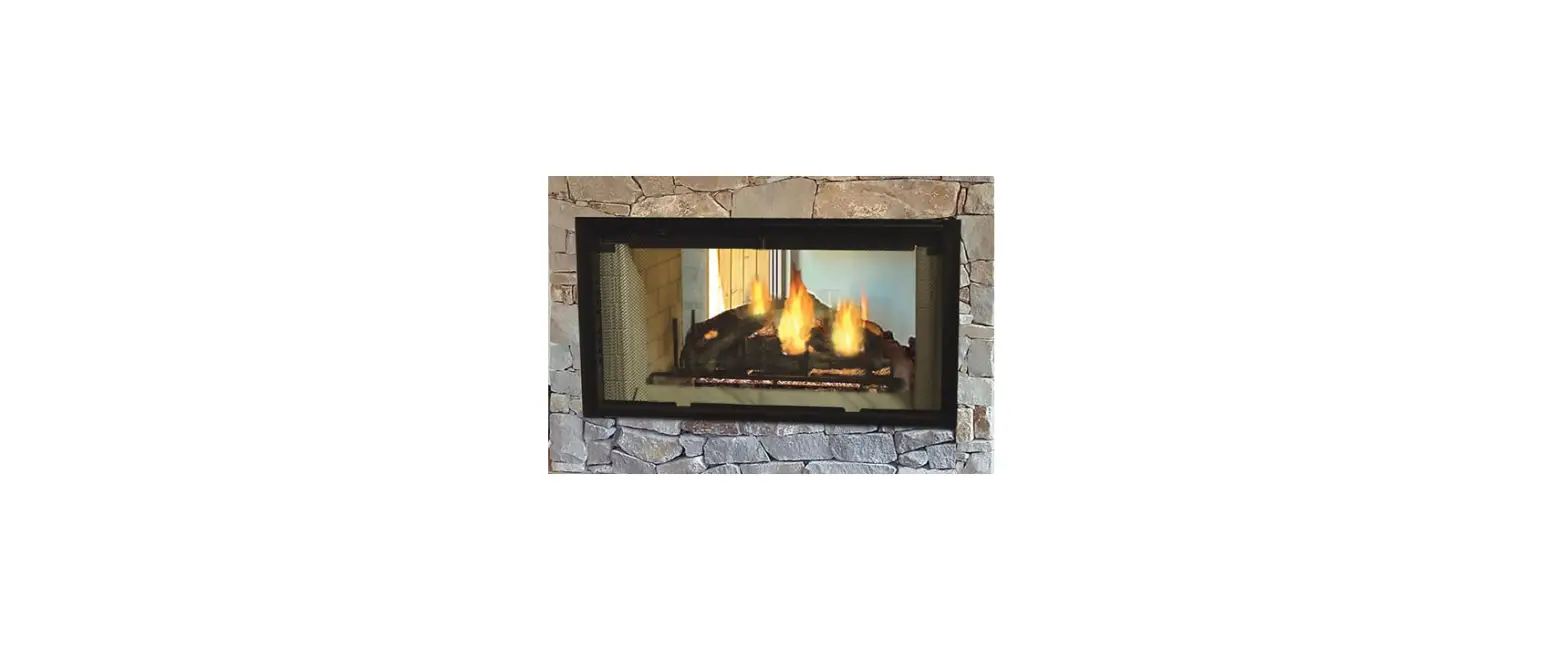
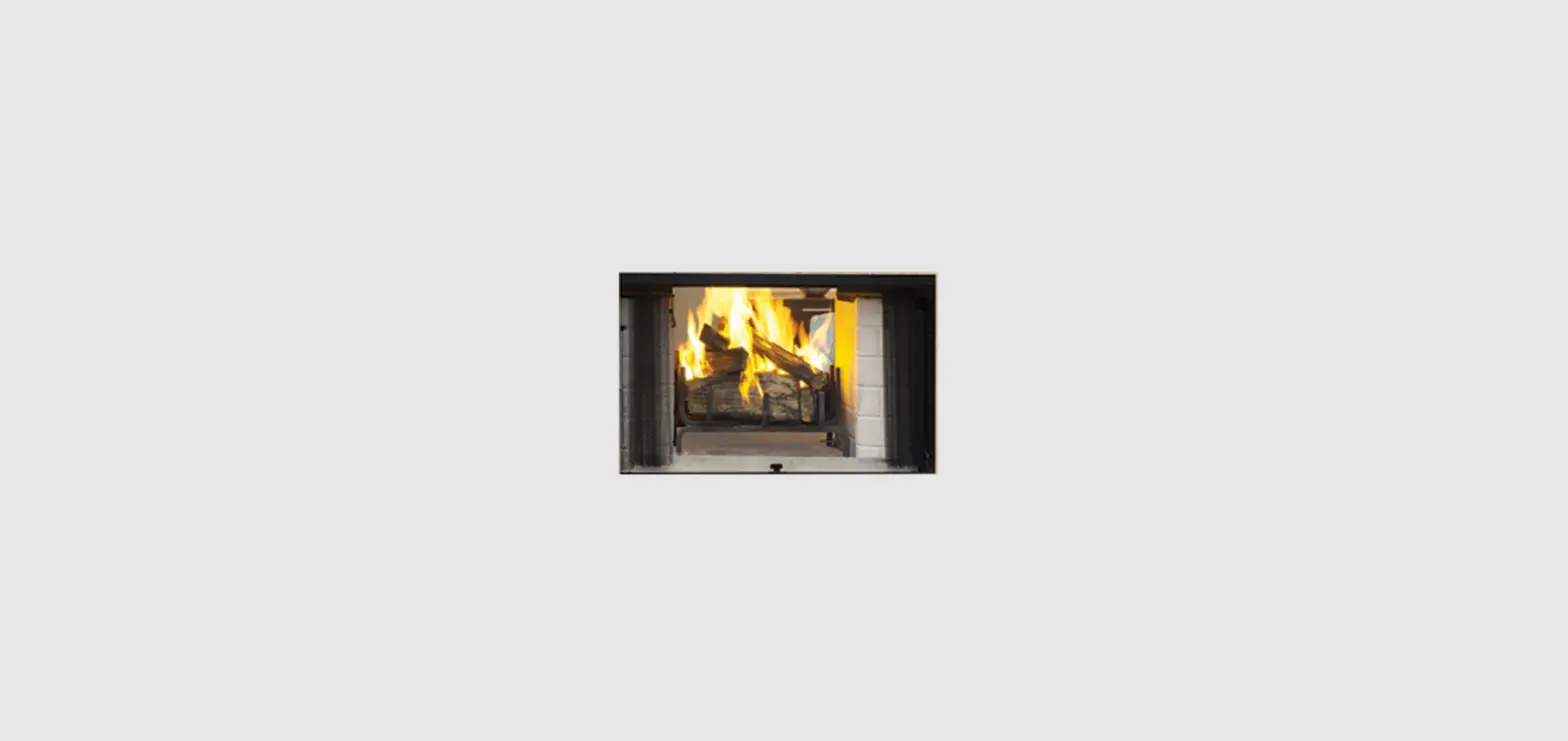
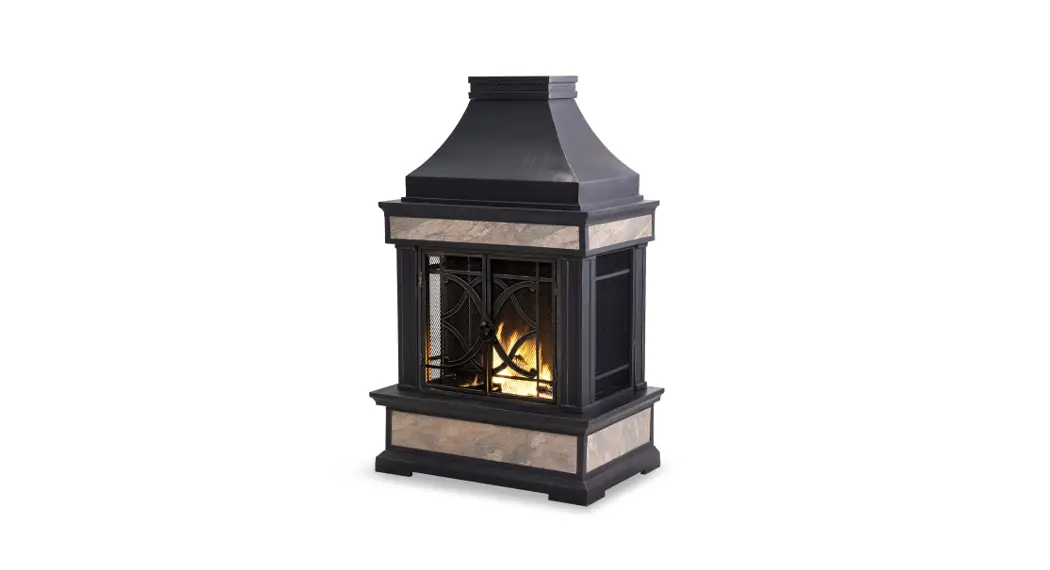
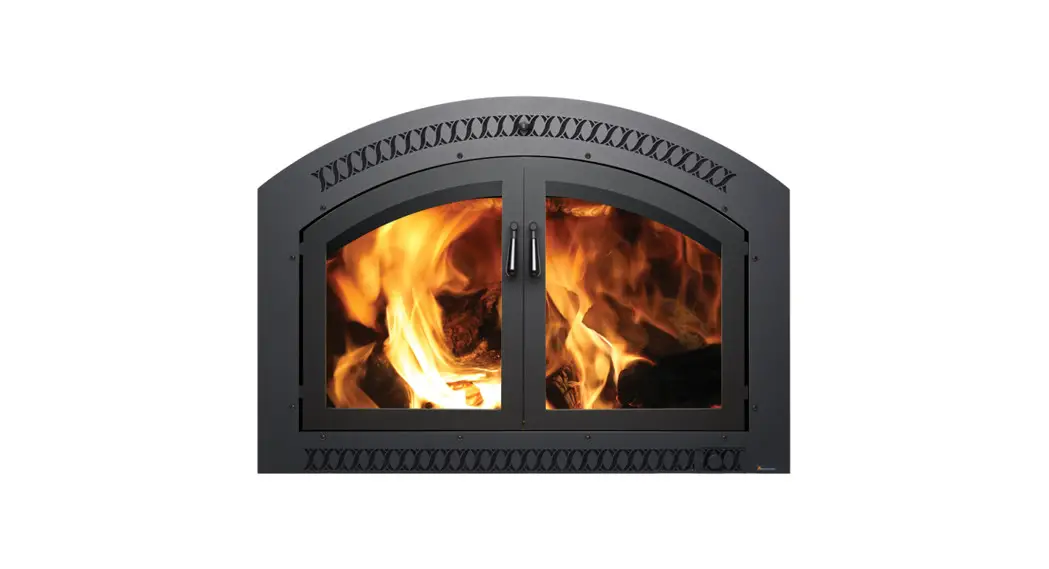
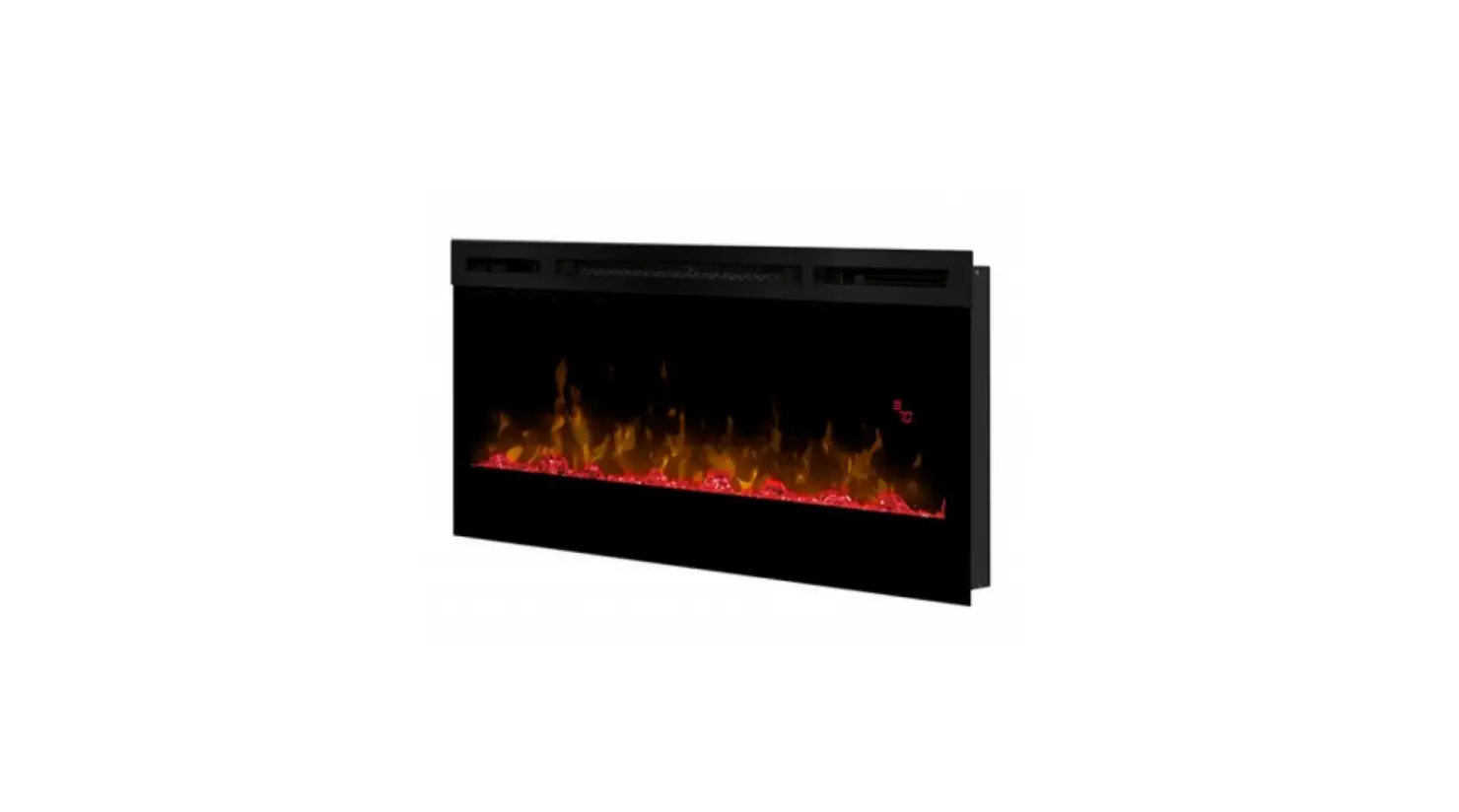
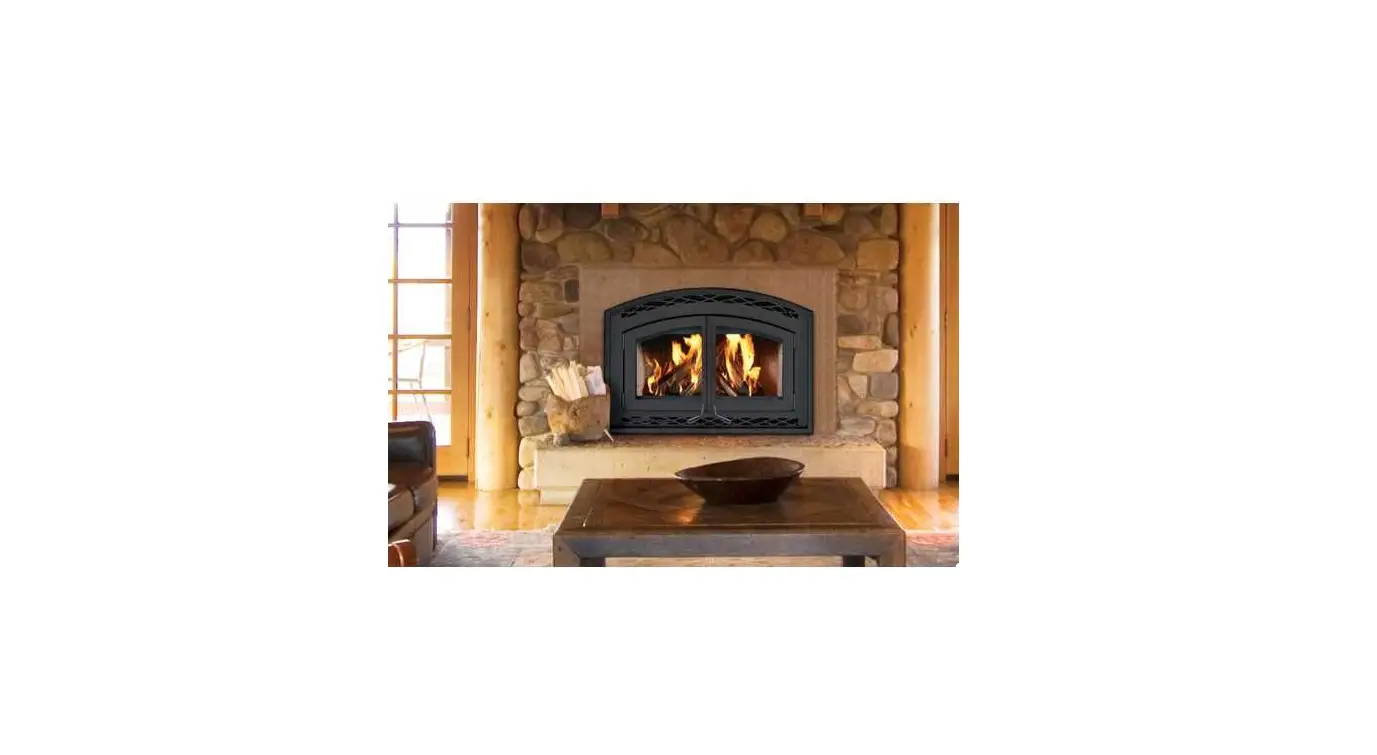
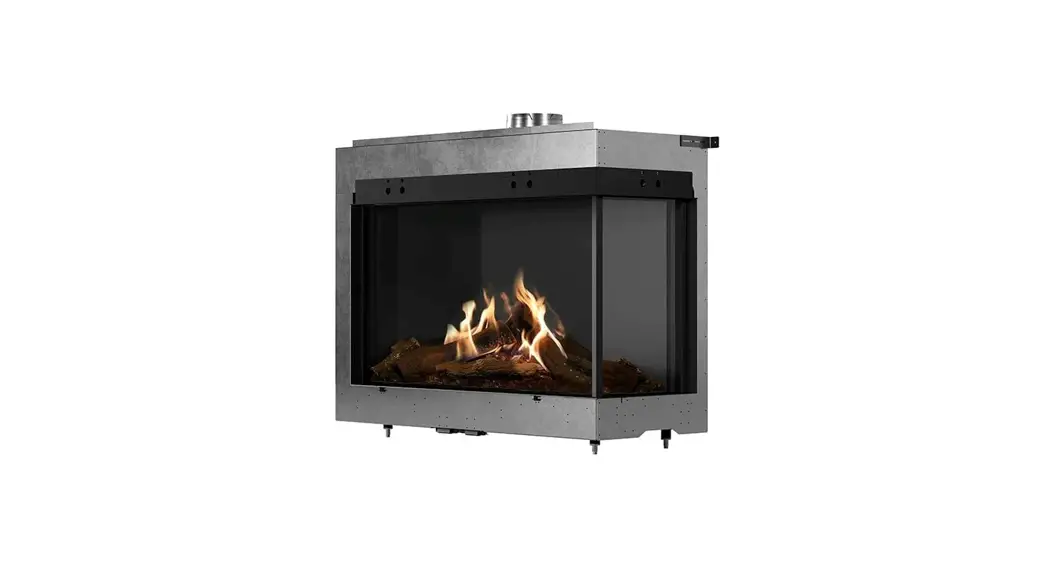
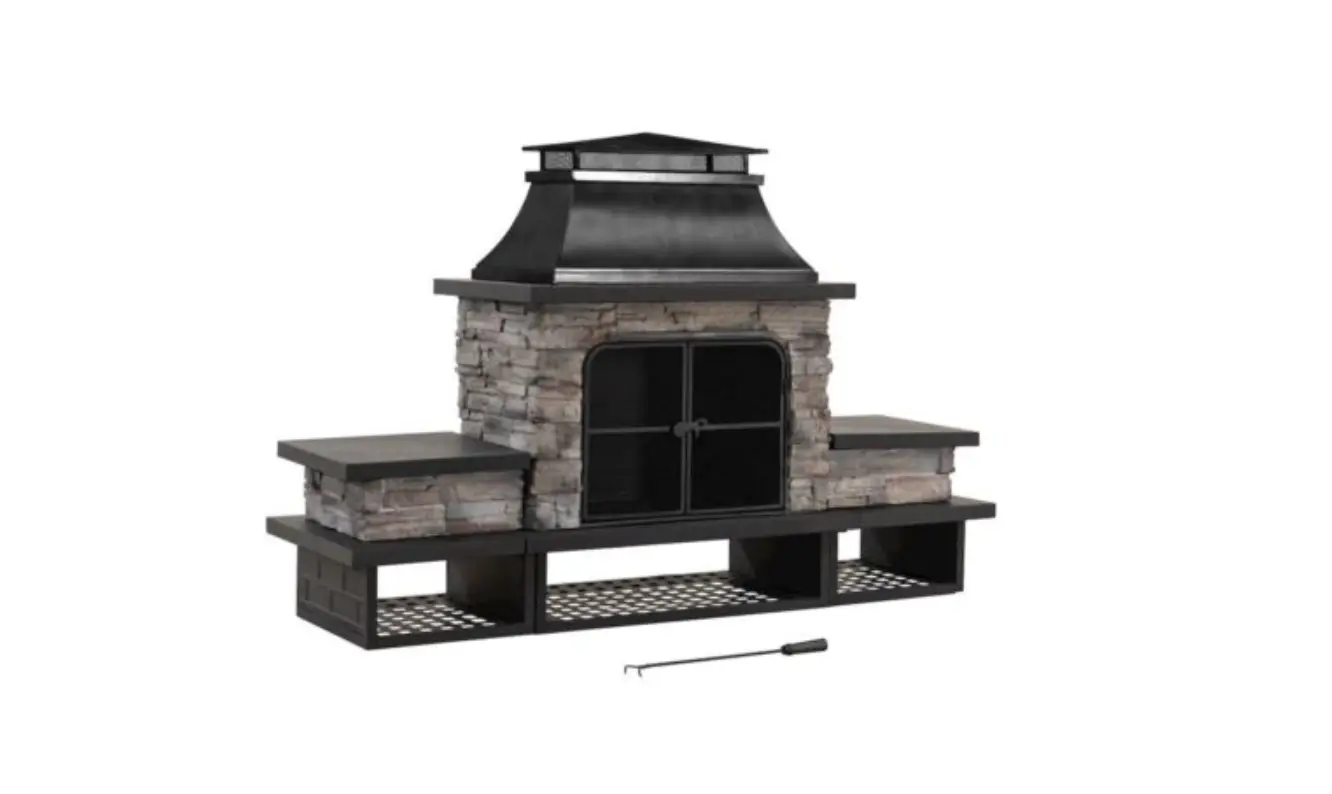
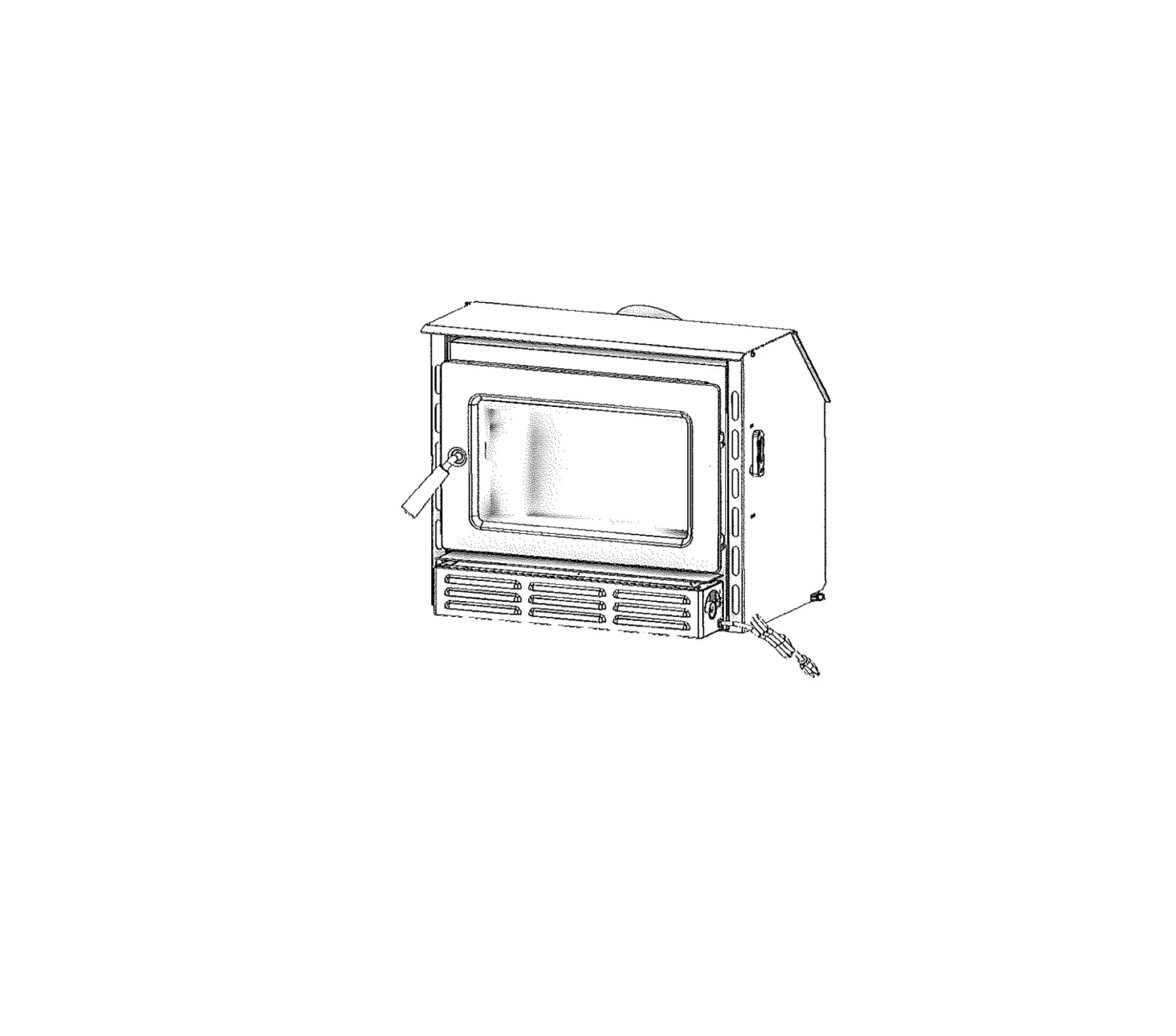
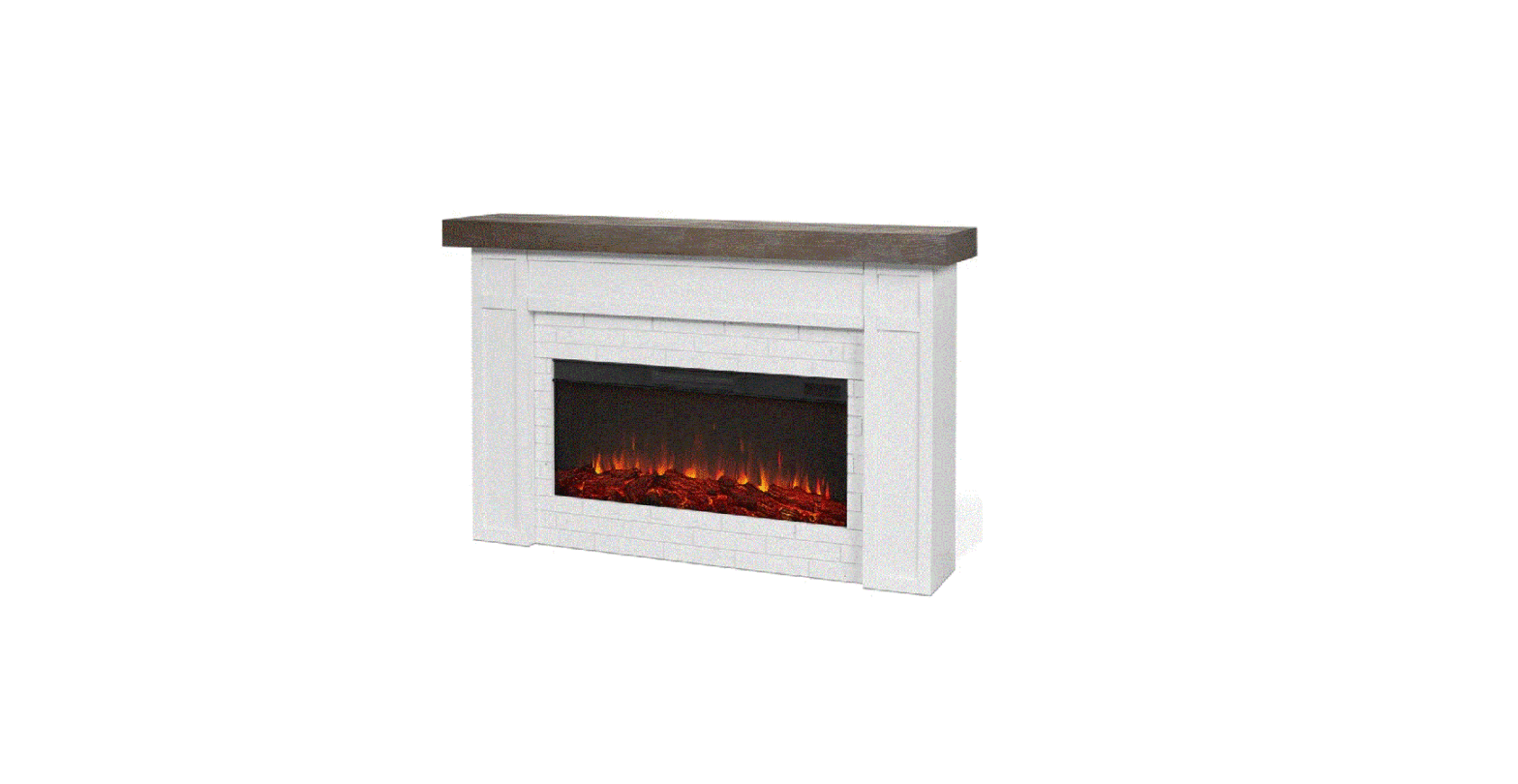
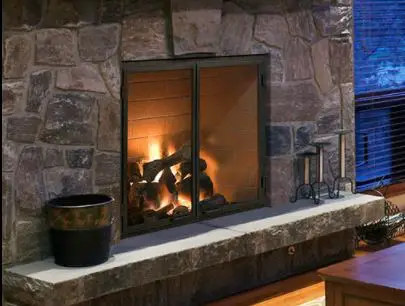
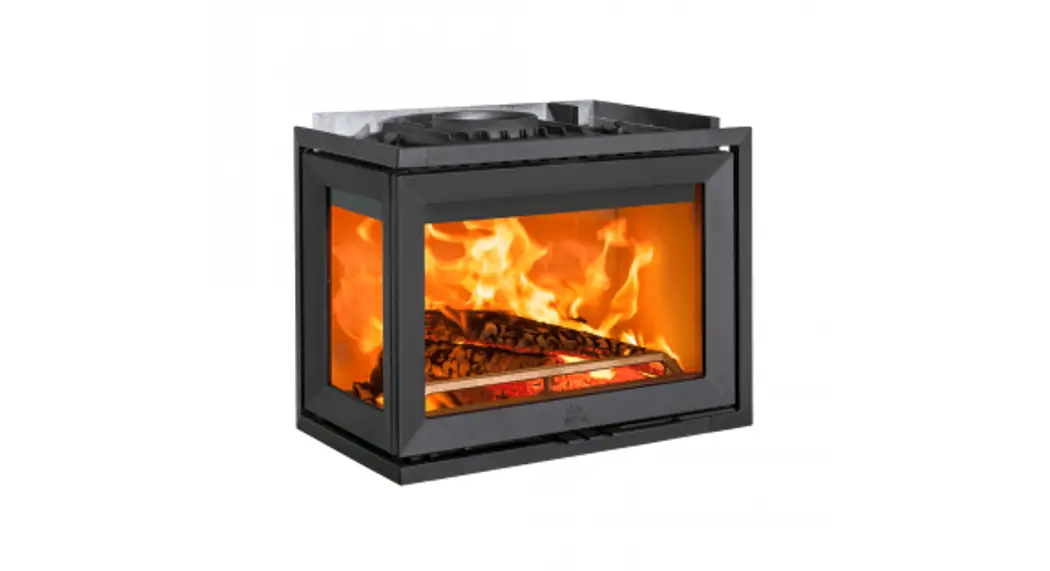
BE36 Woodburning Fireplace
Product Information
The woodburning fireplace comes in two models: BE36 and BE42. It
requires the use of SL300 Series Chimney and needs to have a 2-inch
clearance to combustibles and building insulation from the chimney.
The installation and service of this appliance should be performed
by qualified personnel. Hearth & Home Technologies recommend
HHT Factory Trained or NFI certified professionals. The fireplace
is designed for use with solid wood fuel only; other fuels may
overfire and generate poisonous gases like carbon monoxide.
Product Usage Instructions
- Read the entire installation manual before proceeding with the
installation. - Ensure that the installation is carried out by a qualified
professional. - Do not discard the manual as it contains important safety
information. - Use only solid wood fuel in the fireplace.
- Ensure that the chimney and termination requirements are
met. - Construct the chase and frame the fireplace according to the
provided instructions. - Install the chimney system as per the instructions.
- Finish the fireplace with non-combustible materials and ensure
proper clearance to combustibles. - Before usage, check all the components for any damage or
defects, and ensure that they are installed correctly. - Keep the area around the fireplace clear of any combustible
materials. - Do not leave a fire unattended, and ensure that all fires are
fully extinguished before leaving the area. - Regularly inspect and clean the chimney to prevent creosote
buildup and other potential fire hazards. - If there is any smell of gas, immediately turn off the gas
supply and contact a qualified professional for assistance.
By following these usage instructions, you can safely enjoy the
warmth and comfort of your woodburning fireplace.
Installation Manual
Installation and Fireplace Setup
INSTALLER: Leave this manual with party responsible for use and operation. OWNER: Retain this manual for future reference.
This fireplace uses SL300 Series Chimney 2″ CLEARANCE TO COMBUSTIBLES AND BUILDING INSULATION FROM CHIMNEY REQUIRED.
NOTICE: DO NOT discard this manual!
Model(s): BE36 BE42
WARNING: If the information in these instructions is not followed exactly, a fire or explosion may result causing property damage, personal injury, or death.
· DO NOT store or use gasoline or other flammable vapors and liquids in the vicinity of this or any other appliance.
· DO NOT overfire. Overfiring will void your warranty.
· Comply with all minimum clearances to combustibles as specified. Failure to comply may cause house fire.
WOODBURNING FIREPLACE
Installation and service of this appliance should be performed by qualified personnel. Hearth & Home Technologies recomends HHT Factory Trained or NFI certified professionals.
WARNING
HOT SURFACES! Glass and other surfaces are hot during operation AND cool down. Hot glass will cause burns. · DO NOT touch glass until it is cooled · NEVER allow children to touch glass · Keep children away · CAREFULLY SUPERVISE children in same room as fireplace. · Alert children and adults to hazards of high temperatures. High temperatures may ignite clothing or other flammable materials. · Keep clothing, furniture, draperies and other flammable materials away.
WARNING
Fire Risk.
For use with solid wood fuel only. Other fuels may overfire and generate poisonous gases (i.e. carbon monoxide).
Majestic Royalton Series · BE36/42 · 4044-197 Installation Manual · Rev M · 01/22
1
Safety Alert Key:
· DANGER! Indicates a hazardous situation which, if not avoided will result in death or serious injury. · WARNING! Indicates a hazardous situation which, if not avoided could result in death or serious injury. · CAUTION! Indicates a hazardous situation which, if not avoided, could result in minor or moderate injury. · NOTICE: Indicates practices which may cause damage to the fireplace or to property.
Table of Contents
1 Product Specific & Important Safety Information
A. Fireplace Certification
4
B. Non-Combustible Materials
4
C. Combustible Materials
4
2 Getting Started
A. Typical Fireplace System
5
B. Design and Installation Considerations
6
1. Selecting Fireplace Locations
6
2. Locating Fireplace & Chimney
7
C. Tools and Supplies Needed
8
D. Inspect Fireplace and Components
8
E. Fireplace System Requirements
8
3 Framing and Clearances
A. Appliance Dimensions/Weights
9
B. Clearances
10
Minimum Clearances to Combustibles
10
C. Construct the Chase
11
D. Frame the Fireplace
12
E. Secure and Level the Fireplace
12
F. Protective Metal Hearth Strips
13
G. Outside Air Kit (optional)
14
4 Chimney and Termination Requirements
A. Chimney Requirements
15
B. Offsets/Returns
16
C. Termination Requirements
17
5 Chimney Installation
A. Typical Chimney System
18
B. Assemble Chimney Sections
19
C. Install Chimney Air Kit
19
D. Secure Offset/Return
20
E. Install Ceiling Firestops
20
F. Install Attic Insulation Shield
21
G. Roof Penetration
22
H. Install Chase/Chase Top
22
I. Termination Cap Requirements
23
J. Install Termination Cap
23
6 Shrouds
A. Radiation Shield
25
B. Field Constructed Shrouds
25
1. Open Top Shroud
25
2. Mailbox Style Shroud
26
3. Roofed Style Shroud
26
7 Finishing
A. Finishing Material
27
B. Hearth Extension, Building and Finishing
28
1. Hearth Extension 4″ or more below
Fireplace Opening
29
2. Raised Hearth Extension Less Than 4″ Below
Fireplace Opening
29
3. Fireplace Opening and Hearth Extension Flush
with Floor
30
C. Non-Combustible Sealant Material
30
D. Mantel and Wall Projections
31
E. Sidewalls/Surrounds
32
8 Fireplace Setup
A. Gas Log/Lighter Provision
33
B. Wood Burning Inserts
33
9 Reference Materials
A. Chimney Components
34
B. Optional Components
38
2
Majestic Royalton Series · BE36/42 · 4044-197 Installation Manual · Rev M · 01/22
ATTENTION INSTALLER:
Follow this Standard Work Checklist
This standard work checklist is to be used by the installer in conjunction with, not instead of, the instructions contained inhtis installation manual.
Customer: Lot/Address
Model (circle one): BE36 BE42
Date Installed: Location of Fireplace: Installer: Dealer/Distributor Phone # Serial #:
WARNING! Risk of Fire or Explosion! Failure to install fireplace acording to these instructions can lead to a fire or explosion.
Fireplace Install Verified that the chase is insulated and sealed. (Pg. 11) Verified clearances to combustibles. (Pg. 10) Fireplace is leveled and secured. (Pg. 12) Protective hearth strips installed per manual requirements. (Pg. 13) Hearth extension size/height decided. (Pg. 28) Outside air kit installed. (Pg 14)
YES
IF NO, WHY?
Chimney Section 4 & 5 (Pg. 15) Chimney configuration complies with diagrams. Chimney installed, locked and secured in place with proper clearance. Chimney air kit installed. Firestops installed. Attic insulation shield installed. Roof flashing installed. Termination installed.
Shrouds Section 6 (Pg. 25) Shroud is installed properly per instructions.
Finishing Section 7 (Pg. 27) Combustible materials not installed in non-combustible areas. Verified all clearances meet installation manual requirements. Mantels and wall projections comply with installation manual requirements. Hearth extension installed per manual requirements.
Fireplace Setup Section 8 (Pg. 34) All packaging and protective materials removed. Refractory installed correctly. Grate is properly installed. Firescreen properly installed. Optional doors properly installed. Manual bag and all of its contents are removed from the fireplace and given to the party responsible for use and operation.
Hearth & Home Technologies recommends the following: · Photographing the installation and copying this checklist for your file. · That this checklist remain visible at all times on the fireplace until the installation is complete.
Comments: Further description of the issues, who is responsible (Installer/Builder/Other Trades, etc.) and corrective action needed:
Comments communicated to party responsible
__________________________ by ______________________on _________
(Builder/Gen. Contractor)
(Installer)
(Date)
4044-199 · Rev B · 3-17-16
Majestic Royalton Series · BE36/42 · 4044-197 Installation Manual · Rev M · 01/22
3
1 Product Specific & Important Safety Information
A. Fireplace Certification
This fireplace system has been tested and listed in accordance with UL 127 and ULC-S610 standards by Underwriters Laboratories Inc. for installation and operation in the United States and Canada.
This fireplace may be installed in sleeping rooms EXCEPT in manufactured homes. If installed with a gas log set, provisions for the National Fuel Gas Code must be met.
This fireplace has been tested and listed for use with the optional components specified in this manual. These optional components may be purchased separately and installed at a later date. An outside air kit, gas insert, gas log set or gas log-lighter should be installed at the time of fireplace installation.
WARNING! Risk of Fire! Hearth & Home Technologies disclaims any responsibility for, and the warranty and agency listing will be voided by the following actions.
DO NOT: · install or operate damaged fireplace · modify fireplace · install other than as instructed by Hearth & Home
Technologies · operate the fireplace without fully assembling all
components · overfire · install unvented gas log set · install any component not approved by Hearth & Home
Technologies · install parts or components not Listed or approved
Improper installation, adjustment, alteration, service or maintenance can cause injury or property damage. For assistance or additional information, consult a qualified installer, service agency or your dealer.
B. Non-Combustible Materials
· Materials which will not ignite and burn, composed of
any combination of the following:
– Steel
– Iron
– Brick
– Tile
– Concrete
– Slate
– Glass
– Plasters
· Materials reported as passing ASTM E 136, Standard Test Method for Behavior of Metals, in a Vertical Tube
Furnace at 750° C
C. Combustible Materials
· Materials made of or surfaced with any of the following
materials:
– Wood
– Compressed paper
– Plant fibers
– Plastic
– Plywood/OSB – Sheet rock (drywall)
· Any material that can ignite and burn; flame proofed or
not, plastered or un-plastered
WARNING: This product and the fuels used to operate this product (wood and wood pellets), and the products of combustion of such fuels, can expose you to chemicals including carbon black, which is known to the State of California to cause cancer and carbon monoxide, which is known to the State of California to cause birth defects or other reproductive harm. For more information go to: www. P65Warnings.ca.gov.
4
Majestic Royalton Series · BE36/42 · 4044-197 Installation Manual · Rev M · 01/22
2 Getting Started
A. Typical Fireplace System
Additional lateral support for chimney above roof (or enclosed in chase) if needed
Non-combustible roof flashing maintains minimum clearance around chimney
Support straps on rafter support chimney (not shown)
Ceiling firestop on floor of attic
Chimney system
Combustible framing/header on top of V-shaped standoffs
Chimney Air Kit Required in Canada. Outlet must be no less than 4 ft. (1.22 m) off ground level.
)))))))))))))))))))
))))))))))))))
)))) ))))))))))))))))))))))))
Outside combustion air
Protective metal hearth strip(s)
Termination cap Storm Collar
Chimney penetrates roof preferably without affecting roof rafters Offset & Return (with hanger straps) Attic insulation shield must be used here to keep insulation away from chimney if attic is insulated
Framing headed off in ceiling joists Enclosed space above and around fireplace
Mantel and surround
Decorative facing and trim Hearth extension
Factory-built fireplace
Figure 2.1 Typical Fireplace System
Majestic Royalton Series · BE36/42 · 4044-197 Installation Manual · Rev M · 01/22
5
B. Design and Installation Considerations
NOTICE: Check building codes prior to installation.
· Installation MUST comply with local, regional, state and national codes and regulations.
· Consult insurance carrier, local building inspector, fire officials or authorities having jurisdiction over restrictions, installation inspection and permits.
· Before installing, determine the following: – Where the fireplace is to be installed. – The vent system configuration to be used. – Gas supply piping. – Electrical wiring. – Framing and finishing details. Note: A raised hearth extension built flush with the fireplace opening or less than 4 in. (102 mm) below the fireplace opening requires the fireplace be installed on a noncombustible surface. – Whether optional accessories – devices such as a fan, wall switch or remote control – are desired.
1. Selecting Fireplace Locations
This fireplace may be used as a room divider, installed along a wall, across a corner or used in an exterior chase. See Figure 2.2.
Locating the fireplace in a basement should be avoided. Locating near frequently opened doors, central heat outlets or returns, or other locations of considerable air movement can affect the performance.
Consideration should be given to these factors before deciding on a location.
NOTICE: In addition to these framing dimensions, also reference the following section:
· Clearances (Section 3).
NOTICE: · Illustrations and photos reflect typical installations and
are FOR DESIGN PURPOSES ONLY. · Illustrations/diagrams are not drawn to scale. · Actual installation/appearance may vary due to individual
design preference. · Hearth & Home Technologies reserves the right to alter
its products.
NOTICE: A minimum 1/2 in. air clearance at the back and sides of the fireplace assembly must be maintained.
Chimney sections at any level require a 2 in. minimum air space clearance between the framing and chimney sections.
F E
G
A
Across a
C corner
A
B*
I In an exterior chase or projecting into a garage
H Note: 1/2 in. (13 mm) min. air space from fireplace to combustible materials.
* 8 in. (203 mm) extra space included for outside air connection. If outside air duct has no bend, this dimension may be reduced as long as minimum clearances are met.
H
As a room divider
DA 48 in. (1219 mm) minimum
Along a wall I
B
A
1/2 in. (13 mm) all configurations
H
Note: Measurements are FRAMING dimensions only and do not include drywall either in the cavity or on the interior walls.
Figure 2.2
Model BE-36 BE-42
inches mm
inches mm
A 42 1067 48 1219
Fireplace Locations
B 50 1270 56 1422
C 67 7/8 1724 73 7/8 1876
D 59 1/2 1511 65 1/2 1664
E
F
G
34
14
48
864
356
1219
37 1/4
17
52 1/4
946
432
1327
H 21 1/2
546 21 1/2
546
I 12 in. (305 mm) Minimum from FP opening to any perpendicular wall.
6
Majestic Royalton Series · BE36/42 · 4044-197 Installation Manual · Rev M · 01/22
2. Locating Fireplace & Chimney
Location of the fireplace and chimney will affect performance.
· Install within the warm airspace enclosed by the building envelope. This helps to produce more draft, especially during lighting and die-down of the fire.
· Installing the fireplace in a basement is not recommended. · Penetrate the highest part of the roof. This minimizes
the effects of wind loading. · Locate termination cap away from trees, adjacent
structures, uneven roof lines and other obstructions. · Minimize the use of chimney offsets. · Consider the fireplace location relative to floor and ceiling
and attic joists. · Take into consideration the termination requirements in
Sections 4 and 5.
· Install the outside air kit with the intake facing prevailing winds during the heating season.
· Ensure adequate outdoor air for all combustion appliances and exhaust equipment.
· Ensure furnace and air conditioning return vents are not located in the immediate vicinity of the fireplace.
· Avoid installing the fireplace near doors, walkways or small isolated spaces.
· Recessed lighting should be a “sealed can” design. · Attic hatches weather stripped or sealed. · Attic mounted duct work and air handler joints and seams
taped or sealed.
Recommended Location: · Above peak
Multi-level Roofs
Recommended Location: · Above peak · Inside heated space
Marginal Location: · Below peak
Marginal Location: · Wind loading possible
Location NOT recommended: · Not the highest point of the roof · Wind loading possible
Windward
Recommended: · Insulated exterior chase
in cooler climates
Figure 2.3 Recommended Chimney Locations
Not recommended in basement due to high negative pressure concerns that effect draft
Location NOT recommended: · Too close to tree · Below adjacent structure · Lower roof line · Avoid outside wall
Leeward
Majestic Royalton Series · BE36/42 · 4044-197 Installation Manual · Rev M · 01/22
7
C. Tools and Supplies Needed
Before beginning the installation be sure the following tools and building supplies are available:
Reciprocating saw
Framing material
Pliers
Non-combustible sealant
Hammer
Gloves
Phillips screwdriver
Framing square
Flat blade screwdriver Electric drill and bits
Plumb line
Safety glasses
Level
Tape measure
1/2-3/4 in. length, #6 or #8 self-drilling screws
Misc. screws and nails
D. Inspect Fireplace and Components
WARNING! Risk of Fire and/or Explosion! Damaged parts could impair safe operation. DO NOT install damaged, incomplete or substitute components. Keep fireplace dry.
· Remove fireplace and components from packaging and inspect for damage.
· Vent system components and doors are shipped in separate packages.
· Report to your dealer any parts damaged in shipment. · Read all the instructions before starting the
installation. Follow these instructions carefully during the installation to ensure maximum safety and benefit.
E. Fireplace System Requirements
The HHT fireplace system requirements consist of the following:
· Fireplace – Refractory (included with fireplace) – Firescreen (included with fireplace) – Grate (included with fireplace) – Hearth Extension (required, sold separately)
· Outside Air System (optional) – Air Inlet Hood – Flex
· Chimney System – Attic Insulation Shield (included with fireplace) – Chimney air kit (required in Canada, sold separately) – Chimney termination cap (required, sold separately)
· Non-combustible finish material
8
Majestic Royalton Series · BE36/42 · 4044-197 Installation Manual · Rev M · 01/22
3 Framing and Clearances
A. Appliance Dimensions/Weight
Appliance Weight Table
Model Pounds
BE36
161
BE42
175
C D
B
7-3/8 in. (187 mm)
21-3/8 in. (543 mm)
Outside Air
Gas Knockout
21 in. (533 mm)
18-3/4 in. (476 mm)
7-1/2 in. (191 mm)
21 in. (533 mm)
39-1/2 in. (1003 mm)
Gas Knockout
9-1/4 in. (235 mm)
7-1/2 in. (191 mm)
7-1/2 in. (191 mm)
A
14-1/8 in.
(359 mm)
Model #
in. BE-36
mm in. BE-42 mm
A
36 914 42 1067
B
41 1041
47 1194
C
23-3/4 603
29-3/4 756
D
11-7/8 302
14-7/8 378
7-1/2 in. (191 mm)
9-1/4 in. (235 mm)
Figure 3.1 Appliance Dimensions
Majestic Royalton Series · BE36/42 · 4044-197 Installation Manual · Rev M · 01/22
9
B. Clearances
WARNING! Risk of Fire!
You must comply with all minimum air space clearances to combustibles as specified in Figure 3.2. DO NOT pack required air spaces with insulation or other materials. Framing or finishing material used on the front of, or in front of, the fireplace closer than the minimums listed must be constructed entirely of non-combustible materials (i.e., steel studs, concrete board, etc.). Failure to comply may cause fire.
Minimum Clearances to Combustibles
WITHIN ENCLOSURE AREA Fireplace to backwall Fireplace to sidewall Top standoffs to header Door opening to sidewall MANTEL Mantel minimum height
Maximum mantel depth
1/2 in. (13 mm) 1/2 in. (13 mm) 0 in. (0 mm) 12 in. (305 mm)
12 in. (305 mm) above opening 12 in. (305 mm)
Storm Collar Roof Flashing
(attic) (insulation)
2 in. (51 mm) min. Ceiling Firestop
48 in. 1219 mm
0 in. to floor
(roof)
Shaded areas represent
2 in. (51 mm) min. air space clearance required around pipe
Attic Insulation
Shield
(ceiling)
Offset/Return (secured with hanger straps)
(ceiling)
Must have 2 in. (51 mm) minimum clearance to header
0 in. to level of standoffs
Note: Chimney air kit is not shown, but is required in Canada.
1/2 in. (13 mm) to back & sides of appliance
Combustible Object
Figure 3.2 Clearances to Combustible Materials
10
Majestic Royalton Series · BE36/42 · 4044-197 Installation Manual · Rev M · 01/22
C. Construct the Chase
A chase is a vertical boxlike structure built to enclose the fireplace and/or its vent system. Vertical chimneys that run on the outside of a building must be installed inside a chase.
In cold climates, Hearth & Home Technologies recommends that the chase be well insulated using batt type insulation between the joists.
Construction of the chase may vary with the type of building. These instructions are not substitutes for the requirements of local building codes. Local building codes MUST be checked.
Chases should be constructed in the manner of all outside walls of the home to prevent cold air drafting problems. The chase should not break the outside building envelope in any manner. All outer walls need to be insulated.
Building codes require false ceiling and ceiling firestops/ attic shields at each floor of the chase or every 10 ft (3048 mm) of clear space to control spread of fire.
Walls, ceiling, base plate and cantilever floor at the first level of the chase should be insulated (see Figure 3.3.) Vapor and air infiltration barriers should be installed in the chase as per regional codes for the rest of the home. Additionally, Hearth & Home Technologies recommends that the inside surfaces be drywalled and taped (or the use of an equivalent method) for maximum air tightness.
Holes and other openings should be caulked with high temperature caulk or stuffed with unfaced fiberglass insulation.
WARNING! You must install false ceilings and ceiling firestops at each floor of the chase or every 10 ft (3.05 m) to control spread of fire.
WARNING! Risk of Fire! DO NOT seal area between fire stop opening and chimney pipe except where they enter the attic or leave the warm air envelope of the home (use 600° F sealant).
· The chase is constructed using framing materials much the same as the walls in your home. A variety of siding materials may be used including brick, stone, veneer brick, or standard siding materials.
· In constructing the chase, several factors must be considered: – Maintain a 2 in. (51 mm) air space around the chimney. – The chase top must be constructed of noncombustible material. – In cold climates, a firestop spacer and attic insulation shield should be installed in an insulated false ceiling at the 8 ft. (2438 mm) level above the fireplace assembly. This reduces heat loss through the chase. – In cold climates, the walls of the chase should be insulated to the level of the false ceiling as shown in Figure 3.3. This will help reduce heat loss from the home around the fireplace.
Round Termination Cap
Metal Chase Top Ceiling Firestop
False Ceiling
Tabs
Insulation False Ceiling
Attic Insulation
Shield
Ceiling Firestop
Insulation False Ceiling
Chimney
Insulation in the outside walls of the chase
Figure 3.3 Chase Assembly
WARNING! Risk of Fire! You must maintain a minimum 2 in. (51 mm) air space clearance to insulation and other materials surrounding the chimney system. · Insulation and other materials must be firmly secured to
prevent accidental contact with chimney system. · The chase must be properly blocked to prevent blown
insulation or other combustibles from entering and making contact with fireplace or chimney. · Failure to prevent contact between insulation or other materials and chimney system may cause overheating and fire.
Three examples of chase applications are shown in Figure 3.4.
1. Fireplace and chimney enclosed in an exterior chase. 2. Chimney offset through exterior wall and enclosed in chase. 3. Chase constructed on roof.
Note: In cooler climates, all chase walls should be insulated.
1
2
3
Figure 3.4 Chase Constructions
Majestic Royalton Series · BE36/42 · 4044-197 Installation Manual · Rev M · 01/22
11
D. Frame the Fireplace
NOTICE: Hearth extension design must be determined before installation of fireplace.
If the fireplace is placed on the floor the maximum height of a finished raised hearth is 7 1/2″. If you want a higher raised hearth the fireplace must be placed on a platform.
WARNING! Risk of Fire. A raised hearth extension built flush with the fireplace opening or less than 4 in. (102 mm) below the fireplace opening requires the fireplace be installed on a non-combustible surface.
WARNING! Risk of Fire! Comply with all minimum clearances specified.
· A minimum 1/2 in. (13 mm) air clearance must be maintained at the back and sides of the fireplace assembly.
· Chimney sections at any level require a 2 in. (51 mm) minimum air space clearance between the framing and chimney section.
WARNING! Risk of Fire! You must comply with all minimum air space clearances to combustibles. DO NOT pack required air spaces with insulation or other materials.
Figure 3.5 shows a typical framing (using 2 x 4 lumber) of the fireplace, assuming combustible materials are used. All required clearances to combustibles around the fireplace must be adhered to. See Figure 3.2. Any framing across the top of the fireplace must be above the level of the top standoffs.
14 1/2 in. (368 mm) framing
The finished cavity depth must be no less than 21 3/8 in. (543 mm) from the finished backwall to the outside of front wall framing.
CAUTION! Risk of Cuts/Abrasions. Wear protective gloves and safety glasses during installation. Sheet metal edges are sharp.
NOTE: Before framing up the chase, consider where and how the chimney will run. If there are obstacles that might be in the way, it may be necessary to make the chase larger than shown to allow for offsets to be used. Refer to offset chart on page 16 if needed.
E. Secure and Level the Fireplace
This fireplace may be placed on either a combustible or noncombustible continuous flat surface. Follow the instructions for framing in Section 3. Slide the fireplace into position. Be sure to provide the minimum 1/2 in. air clearance at the sides and back of the fireplace.
The fireplace should be positioned so the face of the noncombustible material on the fireplace will be flush with the face of the drywall on the walls.
Level the fireplace and shim as necessary.
WARNING! Risk of Fire! Prevent contact with sagging, loose insulation.
· DO NOT install against vapor barriers or exposed insulation.
· Secure insulation and vapor barriers. · Provide minimum air space clearances at the sides and
back of the fireplace assembly.
1/2 in. (13 mm)
Fireplace must be set out 1/2 in. (13 mm) in front of the face of the framing material.
Header MUST NOT be notched!
D = extra space needed for outside air connection.
C
If outside air duct has no bend, this dimension may be
reduced as long as minimum clearances are met.
D
A
Model
A
B*
C**
D
B
BE-36
in.
42
21 1/2 39 3/4
8
mm 1067
546
1010
203
BE-42
in.
48
21 1/2 39 3/4
8
mm 1219
546
1010
203
* If interior of chase will be drywalled, add the thickness to
** Adjust header height for a raised floor under fireplace.
Figure 3.5 Framing the Fireplace
12
Majestic Royalton Series · BE36/42 · 4044-197 Installation Manual · Rev M · 01/22
F. Protective Metal Hearth Strips
WARNING! Risk of Fire! Protective metal hearth strips MUST be installed on combustible surfaces. DO NOT cover metal strips with combustible materials. Sparks or embers may ignite flooring.
WARNING! Risk of fire! High temperatures, sparks, embers or other burning material falling from the fireplace may ignite flooring or concealed combustible surfaces.
· Protective metal hearth strips MUST be installed. · Hearth extensions MUST be installed exactly as
specified.
· Locate the two protective metal hearth strips measuring approximately 26 in. x 4 in. (660 mm x 102 mm) included with this fireplace.
· Slide each metal strip 2 in. (51 mm) under front edge of fireplace.
· Overlap strips in the middle of fireplace opening by 1 in. (25 mm) minimum.
· Metal strips must extend beyond the front and sides of the fireplace opening by at least 2 in. (51 mm), Figure 3.6).
· Protect the front of a platform elevated above the hearth extension with metal strips (not included with fireplace) per Figure 3.6. See Section 7 for hearth extension instructions.
Protective metal strips are placed 2 in. (51 mm) under the front of the fireplace and must extend beyond the front and sides of fireplace opening by 2 in. (51 mm)
Figure 3.6 Position the Protective Metal Hearth Strips
Top piece must overlap bottom piece
Raised Platform
2 in. (51 mm)
2 in. (51 mm)
Floor
1 in. (25 mm) min. overlap
Figure 3.7 Protect the Front of an Elevated Platform
Majestic Royalton Series · BE36/42 · 4044-197 Installation Manual · Rev M · 01/22
13
G. Outside Air Kit (optional)
If you install an outside air kit, Hearth & Home Technologies recommends you utilize the shortest duct run to optimize the performance of the outside air kit and install a P-trap (see Figure 3.10). The outside air inlet hood should be positioned in a manner that will not allow snow, leaves, etc. to block the inlet. In some installations the air duct may need to be run vertically. In such an installation, a 3 ft (914 mm) height difference must be maintained from the top of the uppermost chimney section to the outside air inlet hood.
NOTE: The maximum length of a 4 inch diameter duct is 20 feet. The duct can be extended up to a maximum of 40 feet by using 6 inch duct. A 4 inch to 6 inch adapter will be needed. (Not included).
NOTE: The minimum cross-sectional area of the 4 inch inlet hood is 7.0 square inches.
Refer to Figures 3.8 and 3.9 when placing the outside air inlet hood.
The outside air kit is installed on the left hand side of the fireplace.
· Cut a 4-1/2 in. (114 mm) hole in outside wall to accommodate air piping.
· Use 4 in. (102 mm) flex (not supplied) to directly connect outside air to fireplace intake. Insulate the pipe to prevent frost condensation.
· Seal between the wall and the pipe with silicone to prevent moisture penetration and air leaks.
· Seal between the outside air inlet hood and the house with silicone to prevent air infiltration.
CAUTION! Risk of Fire or Asphyxiation! DO NOT draw outside combustion air from wall, floor or ceiling cavity, or enclosed spaces such as an attic or garage.
· DO NOT place outside air inlet hood close to exhaust vents or chimneys. Fumes or odor could be drawn into the room through the fireplace.
· Locate outside air inlet hood to prevent blockage from leaves, snow/ice, or other debris. Blockages could cause combustion air starvation.
CAUTION! Risk of Cuts/Abrasions. Wear protective gloves and safety glasses during installation. Sheet metal edges are sharp.
3 ft min. from top of uppermost chimney section to air inlet.
))))
)))))))))))))))))))))))))))))))))))))))))))))))))))))))))))))))
)))))) ))))))))))))))))))))))))
Note: Chimney air kit is not shown, but is required in Canada.
Figure 3.9 Outside Air Inlet Locations
NO
Outlet blocked by snow, leaves, etc.
NO
Garage or combustible liquids storage
NO Attic space
NO
Outlet placed higher than 3 ft
below the termination cap
YES
Clear area outside
house or in ventilated crawl space
Factory-built fireplace
· Use UL181 Class 1 or Class 0 rigid or flexible ducting. · Install with short run and add a P-trap which will help
prevent flow of cold air. · Secure flex duct with screws or wire ties.
Typical Outside Air Installation
Recommend around 24 inches
for a minimum bend
Figure 3.8 Outside Air Installation
Figure 3.10 Outside Air Installation with Cold Air Trap
14
Majestic Royalton Series · BE36/42 · 4044-197 Installation Manual · Rev M · 01/22
4 Chimney and Termination Requirements
A. Chimney Requirements
Vertical distances are measured from the base of the fireplace as shown in Figure 4.1.
Table 4.1 Chimney Requirements
· Minimum overall straight height
· Minimum height with offset/return
· Maximum height
· Maximum chimney length between an offset and return
· Maximum distance between chimney stabilizers
· Double offset/return minimum height
· Maximum unsupported chimney length between the offset and return
· Maximum unsupported chimney height above the fireplace
· Maximum unsupported chimney above roof
13 (3.96 m) 14.5 ft (4.42 m)
90 ft (27.43 m) 20 ft (6.1 m)
35 ft (10.67 m)
20 ft (6.1 m) 6 ft (1.83 m)
35 ft (10.67 m)
6 ft (1.83 m)
NOTICE: A maximum of two pairs of offsets and returns may be used.
WARNING! Risk of Fire! You must maintain 2 in. (51 mm) air space clearance to insulation and other combustible materials around the chimney system. Failure to do so may cause overheating and fire.
NOTICE: You must provide support for the pipe during
construction and check to be sure inadvertent loading has not dislodged the chimney section from the fireplace or at any chimney joint.
Table 4.2 Chimney Component Dimensions
HEIGHT OF CHIMNEY COMPONENTS Chimney Stabilizer
SL3 Offsets/Returns
SL315 SL330 Chimney Sections* SL306 SL312 SL318 SL324 SL336 SL348 * Dimensions reflect effective height.
in.
mm
4-3/4 121
13-3/8 340 15-1/2 394
4-3/4 10-3/4 16-3/4 22-3/4 34-3/4 46-3/4
121 273 425 578 883 1187
6 ft (1.83 m) max. unsupported chimney above roof
20 ft (6.10 m) max. pipe between an offset & return
Ceiling firestop
41-1/4 in. (1048 mm) Effective
Height
35 ft (10.7 m) max. straight unsupported chimney height
14.5 ft (5.03 m) min. height/single offset-return 20 ft. (6.10 m) min. height/double offset-return
90 ft (27.4 m) max. height
Figure 4.1 Chimney Requirements
Majestic Royalton Series · BE36/42 · 4044-197 Installation Manual · Rev M · 01/22
15
B. Offsets/Returns
· Use an offset/return to bypass overhead obstructions. · An offset and return can be used as a single entity or separated by chimney section(s).
WARNING! Risk of Fire! DO NOT use offset/returns greater than 30°. Chimney draft will be restricted and could cause overheating and fire. Secure offsets with screws ( not to exceed 1/2″ / 13 mm in length) Secure returns with strapping. Straight chimney sections may be secured with screws. Keep chimney sections from separating or twisting.
· Measure the shift needed to avoid the overhead obstruction. Refer to dimension A in Figure 4.2. · Find the appropriate A dimension listed in Table 4.3. The B dimension coinciding with the A dimension measurement in
Table 4.3 represents the required vertical clearance needed to complete the offset/return. · Read across the chart to find the number of chimney sections/model numbers needed between the offset and return.
A B
Example:
Your “A” dimension from Figure 4.2 is 14-1/2 in. (368 mm). Using Table 4.3 the dimension closest to, but not less than 14-1/2 in. (368 mm) is 14-1/2 in. (368 mm) using a 30° offset/return.
You determine from the table that you need 34-1/8 in. (867 mm) (Dimension “B”) between the offset and return.
Figure 4.2
Chimney Offset/Return
1-1/4 in. (32 mm) OVERLAP
The chimney component that best fits your application is one SL324.
Table 4.3 Offset Dimensions
15-degree
30-degree
A
B
A
B
in. mm in. mm in. mm in. mm SL306 SL312 SL318 SL324 SL336 SL348
1 5/8 41 13 3/8 340 3 5/8 92 15 1/2 394 –
–
–
–
–
–
2 7/8 73 17 3/4 451 5 1/2 140 18 5/8 473 1
–
–
–
–
–
4 1/8 102 22 3/8 568 7 1/4 184 21 3/4 552 2
–
–
–
–
–
4 1/2 114 23 5/8 600 8 1/2 216 23 3/4 603 –
1
–
–
–
–
5 3/4 146 28 1/4 718 10 1/4 260 27 686 1
1
–
–
–
–
6 152 29 3/8 746 11 1/2 292 29 737 –
–
1
–
–
–
7 1/4 184 34 864 13 1/4 337 32 1/8 816 –
2
–
–
–
–
7 3/4 197 36 1/8 918 14 1/2 368 34 1/8 867 –
–
–
1
–
–
8 3/4 222 39 3/4 1010 16 1/4 413 37 3/8 949 1
–
–
1
–
–
10 3/8 264 45 5/8 1159 19 1/4 489 42 1/2 1080 –
–
2
–
–
–
10 5/8 270 46 3/4 1187 20 1/2 521 44 5/8 1133 –
–
–
–
1
–
11 7/8 302 51 3/8 1305 22 1/4 565 47 3/4 1213 1
–
–
–
1
–
13 1/2 243 57 1/4 1454 25 1/4 641 52 7/8 1343 –
–
–
2
–
–
13 3/4 349 58 3/8 1483 26 1/2 673 55 1397 –
–
–
–
–
1
15 381 63 1600 28 1/4 718 58 1/8 1476 1
–
–
–
–
1
16 1/2 419 68 3/4 1746 31 1/4 794 63 1/4 1607 –
1
–
–
–
1
18 457 74 5/8 1895 34 1/4 870 68 1/2 1740 –
–
1
–
–
1
19 5/8 498 80 3/8 2042 37 1/4 946 73 3/4 1873 –
–
–
1
–
1
20 5/8 524 84 1/8 2137 39 1/8 994 76 7/8 1953 1
–
–
1
–
1
22 3/4 578 91 7/8 2334 43 1/4 1099 84 1/8 2137 –
–
–
–
1
1
24 610 96 1/2 2451 45 1/8 1146 87 1/4 2216 1
–
–
–
1
1
25 7/8 657 103 1/2 2629 49 1/4 1251 94 1/2 2400 –
–
–
–
–
2
Proper assembly of air-cooled chimney parts result in an overlap at chimney joints of 1-1/4 in. (32 mm). Effective length is built into this chart.
16
Majestic Royalton Series · BE36/42 · 4044-197 Installation Manual · Rev M · 01/22
C. Termination Requirements
· Install a cap approved and listed for this fireplace system. · Locate cap where it will not become plugged by snow or other materials. · Locate cap away from trees or other structures. · The bottom of the termination cap must be at least 3 ft (.91 m) above the roof AND at least 2 ft (.61 m) above any portion
of roof within 10 ft (3.05 m). · The distance required between caps is shown below.
Slanted Roofs
Chimney must extend 3 ft (.9 m) above the roof
Chimney must extend 2 ft (.6 m) above any portion of the roof or adjacent structures within 10 ft (3 m) of the chimney
Flat Roofs
Chimney must extend 3 ft (.9 m) above the roof
Chimney must extend 2 ft (.6 m) above any portion of the roof or adjacent structures within 10 ft (3 m) of the chimney
Multiple Chimney Locations
A 6 in. (minimum) up to 20 in.
152 mm/508 mm
20 in. and over
B 18 in. minimum
457 mm
0 in. minimum
Gas, Wood or Fuel Oil Termination Cap
B
Gas Termination
Cap **
Wood
Minimum
(See
A *
illustration
above)
Perpendicular Wall
Figure 4.3 Multiple Chimney Locations
* If using decorative cap cover(s), this distance may need to be increased. Refer to the installation instructions supplied with the decorative cap cover.
** In a staggered installation with both gas and wood terminations, the wood termination cap must be higher than the gas termination cap.
Majestic Royalton Series · BE36/42 · 4044-197 Installation Manual · Rev M · 01/22
17
5 Chimney Installation
A. Typical Chimney System
NOTICE: Chimney performance may vary.
· Trees, buildings, roof lines and wind conditions affect performance. · Chimney height may need adjustment if smoking or overdraft occurs.
Chimney must extend beyond combustible roof structure
Maintain minimum height of chimney above roof
Install roof flashing according to minimum requirements
Offsets/returns may not exceed 30° from vertical
Lock chimney sections together firmly to resist movement
The chimney must be enclosed from the fireplace to the attic maintaining the 2 inch clearances.
Termination Cap
Additional support for tall chimneys
Storm Collar
Maintain minimum clearances to combustibles as specified
Support straps for offsets (not shown) must be secured to adequate framing Offsets/returns must be secured with screws (outer pipe only)
Attic shield
Ceiling firestops are required where chimney passes through ceiling or floor
Figure 5.1 Typical Chimney System – Guidelines for Chimney System Installation
18
Majestic Royalton Series · BE36/42 · 4044-197 Installation Manual · Rev M · 01/22
B. Assemble Chimney Sections
Use only those components described in this manual.
Substitute or damaged chimney components could impair safe operation and cause overheating and fire.
Attach either a straight chimney section or an offset to the top of the fireplace (depending on your installation requirement). Chimney sections are locked together by pushing downward until the top section meets the stop bead on the lower section.
The inner flue is placed to the inside of the flue section below it. The outer casing is placed outside the outer casing of the chimney section below it. See Figure 5.2.
NOTICE: Chimney sections cannot be disassembled once locked together. Plan ahead!
· Lock chimney sections and/or offsets/returns together by pushing downward until the top section meets the stop bead on the lower section.
· Pull on the top section to make sure it is fully engaged and will not separate.
· You may use #6 or #8 sheet metal screws no longer than 1/2 in. (13 mm) to fasten chimney sections together. Do NOT penetrate inner flue.
WARNING! Risk of Fire! You MUST use screws to fasten offset/returns to chimney sections to keep the chimney parts from twisting. Failure to do so could cause fire. · Fasten offset/returns to chimney sections. Insert the screws (provided) through the predrilled holes. Do NOT penetrate inner flue. · Secure chimney returns with hanger straps provided; fasten to studs or joists. · Vertical straight runs of chimney must be supported every 35 ft (10.7 m).
C. Install Chimney Air Kit
· Required in Canada. · Follow instructions included with accessory.
Figure 5.2 Assembling Chimney Sections
WARNING! Risk of Fire! DO NOT install substitute or damaged chimney components.
Majestic Royalton Series · BE36/42 · 4044-197 Installation Manual · Rev M · 01/22
19
D. Secure Offset/Return
When offsets and returns are joined to straight pipe sections, they must be locked into position with screws. To prevent gravity from pulling the chimney sections apart, the returns and the chimney stabilizers have hanger straps for securing these parts to joists or rafters. See Figure 5.3.
* Use # 6 or # 8 sheet metal screw, or larger, no longer than 1/2 in. (13 mm).
WARNING! Risk of Fire! · Secure offsets with screws (not to exceed 1/2 in./13 mm
In length). · Secure returns with strapping. · Straight chimney sections may be secured with screw
(not to exceed 1/2 in./13 mm In length) at the joints. · Keep chimney sections from separating or twisting.
Straps
Optional Additional Support
Ceiling Firestop
Joint Band (Optional)
ROOM ABOVE (non-insulated ceiling)
B A
Ceilng firestop attached to bottom
of framing
2 in. (51mm) clearance
ATTIC ABOVE (insulated ceiling)
Ceiling firestop attached to top of
framing
2 in. (51mm) clearance
Note: Use same dimensional lumber for framing ceiling firestop and joists.
Catalog # FS338 FS339 FS340
A
in.
mm
14-1/2 368
14-1/2 368
14-1/2 368
B
in.
mm
14-1/2 368
18-3/8 467
23
584
Figure 5.3 Secure the Chimney
E. Install Ceiling Firestops
CAUTION! Risk of Fire! Ceiling firestops must be used whenever the chimney penetrates a ceiling/floor. · Chase construction requires ceiling firestops at each
floor or every 10 ft. (3.05 m) of clear space. · The ceiling firestop slows spread of fire and reduces
cold air infiltration.
· Install a ceiling firestop whenever chimney penetrates ceiling/floor.
· Mark and cut an opening in ceiling as shown in Figure 5.4. · Frame the opening with the same size lumber used in
the ceiling joists. · Nail the ceiling firestop to the bottom of the ceiling joists
when there is a room above. · Use an attic insulation shield if the ceiling is insulated.
The ceiling firestop may then be attached above or below the joists.
Figure 5.4 Installing the Ceiling Firestop
WARNING! Risk of Fire! DO NOT seal area between firestop opening and chimney pipe except where they enter the attic or leave the warm air envelope of the home (use 600° F sealant).
20
Majestic Royalton Series · BE36/42 · 4044-197 Installation Manual · Rev M · 01/22
F. Install Attic Insulation Shield
WARNING! Risk of Fire! You MUST install an attic insulation shield when there is any possibility of insulation or other combustible material coming into contact with the chimney.
· DO NOT pack insulation between the chimney and the attic insulation shield.
· Failure to keep insulation and other materials away from chimney pipe could cause fire.
· DO NOT offset chimney inside insulation shield. · Combustible material may come into contact with the attic
insulation shield as long as the required clearances are maintained to the chimney pipe.
Installation of a ceiling firestop is required:
Note: In Canada a CAS8 must be installed. See instructions provided with kit.
· Refer to Figures 5.5, 5.6, 5.7. · If the attic shield is pre-rolled continue. If it is a flat part,
try and roll it up to aid in wrapping it around the chimney. · Pre-bend all the tabs in at the top to 45°. · Wrap the shield (around the chimney if already installed)
until you have an overlap and the three holes on each side match up (large holes on top). · Insert three screws into the matching holes to form a tube starting at the bottom. · Bend the tabs on the bottom of the tube inward to 90° to maintain chimney air space. · Rest the insulation shield on the ceiling firestop below. · Tape off any opening around the bottom.
If you wish to make a custom shield or barrier, follow these guidelines:
· Metal is preferred, although any material stiff enough to hold back the insulation can be used.
WARNING! Risk of Fire! Use of cardboard or other materials that can deflect under humidity or other environmental conditions is not recommended.
· The shield or barrier must be tall enough to extend above the insulation and prevent blown-in insulation from spilling into the cavity and accommodate the amount of insulation as required by the National Building Code.
· Maintain specified air spaces around chimney. · Check instructions and local codes for further details.
Double-check the Chimney Assembly
Continue assembling the chimney sections up through the ceiling firestops as needed. While doing so, be aware of the height and unsupported chimney length limitations given under Section 5.
Check each section by pulling up slightly from the top to ensure proper engagement before installing the succeeding sections. If they have been connected correctly, they will not disengage when tested.
Pre-bend the tabs to rest against pipe to prevent insulation from falling in.
Insert three screws
(5)Tabs bent in 90°
Figure 5.5 Prepare Attic Insulation Shield
2 in. (51 mm) air space
Tabs bent in to rest against pipe Pipe
5 Tabs bent in 90°
Attic Insulation Shield
14-1/2 in. (368 mm) diameter
Ceiling Firestop
Insulation
Pipe
Insulation
10-1/2 in. (267 mm)
Seal with tape
Figure 5.6 Install Attic Insulation Shield (firestop above ceiling)
2 in. (51 mm) air space
Insulation 10-1/2 in. (267 mm)
Pipe
Tabs bent in to rest against pipe
5 Tabs bent in 90°
Attic Insulation Shield 14-1/2 in. (368 mm)
diameter
Insulation
Pipe
Ceiling Firestop
Seal with tape
Figure 5.7 Install Attic Insulation Shield (firestop below ceiling)
Majestic Royalton Series · BE36/42 · 4044-197 Installation Manual · Rev M · 01/22
21
G. Roof Penetration
· Refer to Figure 5.8. · Plumb from roof to center of chimney. · Drive a nail up through roof to mark center of pipe. · Measure to either side of nail and mark the 14-1/2 in. x
14-1/2 in. (368 mm x 368 mm) opening required. · Measure opening on the horizontal; actual length may
be larger depending on roof pitch. · Cut out and frame opening.
Install Flashing
· Assemble chimney so it passes through the framed opening.
· Slip the flashing over the chimney.
NOTICE: Roofing shingles must be below the flashing plate on the lower side of a sloped roof and over the flashing plate on the sides and top.
· Nail the flashing to the roof. Keep gaps between the flashing plate and the roof to a minimum.
· Caulk the flashing plate and roof junction as well as the vertical seam on the flashing. All nail heads must be caulked with a roofing sealant.
· Caulk the overlap seam of any exposed pipe sections that are located above the roof line to prevent leaks.
H. Install Chase/Chase Top
· You MUST use a chase top in a chase installation. Chase tops may be field constructed.
· Include a turndown and drip edge to prevent water from seeping into the chase.
· Include a 2 in. (51 mm) soldered, welded or spun collar around pipe opening to keep water out.
· Provide a 1/8 in. (3 mm) gap around the flue pipe. · Slope the chase top downward away from the
opening.
WARNING! Risk of Fire! DO NOT caulk the pipe to the chase top collar.
· Caulk all seams to prevent leaks.
Figure 5.8 Ceiling/Attic Construction
Slope Downward (1/4 in. per foot minimum)
2 in. (51 mm) Collar on Chase Top
Turn-down Drip Edge Chase
Figure 5.9
.018 (26 ga) min. Galvanized Chase Top
Chase Top Construction
22
Majestic Royalton Series · BE36/42 · 4044-197 Installation Manual · Rev M · 01/22
I. Termination Cap Requirements
· Install a cap approved and listed for this fireplace system. · Locate cap where it will not become plugged by snow
or other materials. · Locate cap away from trees or other structures. · The bottom of the termination cap must be at least 3 ft
(.91 m) above the roof AND at least 2 ft (.61 m) above any portion of roof within 10 ft (3.05 m).
J. Install Termination Cap
Install the chimney sections up through the chase enclosure.
· Caulk the overlap seam of any exposed pipe sections that are located above the roof line to prevent leaks.
· Refer to termination cap instructions.
WARNING! Risk of Fire! The minimum overlap of cap to pipe (as shown in the following illustrations) MUST be met or chimney may separate from cap. Separation allows sparks, heat and embers to escape.
NOTICE: Paint the termination cap with a rust-resistant paint to protect against the effects of corrosion on those parts exposed to the weather.
Assemble storm collar around extended termination cap
pipe once cap is
installed.
Caulk gaps between storm collar & pipe,
and storm collar & chase top.
Termination Cap
Storm Collar
Collar 2 in. (51 mm) Minimum Height
Chase Top
Chimney Pipe
Do NOT block air
holes 3 clip brackets. Slip over chase collar and attach with screws
provided. The last section of pipe must stop between 2 in. (51 mm) above the top of the chase and 4 3/4 in. (121 mm) below the top of the chase.
2 in. (51 mm) maximum 4 3/4 in. (121 mm) Maximum
Chase
Figure 5.11 Installing a TR342-B Round Telescoping Termination Cap
Slip storm collar around chimney pipe before termination cap pipe is snapped into the chimney
pipe.
Caulk gaps between storm collar & pipe,
and storm collar & chase top.
Collar 2 in. (51 mm) Minimum Height
Chase Top
Termination Cap
Storm Collar
Chimney Pipe
Do NOT block air holes
6 in. (153 mm) Minimum top of chase to top of chimney pipe
Chase
Termination cap pipe and chimney section must be snapped together to maintain an overlap of 1-1/2 in. (38 mm).
Figure 5.10 Installing a TR344 Round Termination Cap
Flange
Collar 2 in. (51 mm) Minimum Height
Chase Top
Termination Cap
Place waterproof caulk or sealer under each flange of the termination cap and on top of each screw to help prevent leaks.
The last section of pipe must stop between 2 in. (51 mm) above the top of the chase and 4 3/4 in. (121 mm) below the top of the chase.
Chimney Pipe
Chase
2 in. (51 mm) maximum
4 3/4 in. (121 mm) maximum
Figure 5.12 Installing an ST375 Square Termination Cap
Majestic Royalton Series · BE36/42 · 4044-197 Installation Manual · Rev M · 01/22
23
Termination Cap
Place waterproof sealer under each flange of the termination cap and on top of each screw to help prevent leaks.
Collar 2 in. (51 mm) Minimum Height
Chase Top
Chimney Pipe
The last section of pipe must stop between 2 in. (51 mm) above the top of the chase and 4 3/4 in. (121 mm) below the top of the chase.
Chase
2 in. (51 mm) maximum
4 3/4 in. (121 mm) maximum
Figure 5.13 Installing a TS345/TS345P Square Termination Cap
Remove 2 screws from front & back
to lift the top off
Termination Cap
Collar 2 in. (51 mm) Minimum Height
Chase Top
Place waterproof sealer under each flange of the termination cap and on top of each screw to help prevent leaks.
The last section of pipe must stop between 2 in. (51 mm) above top of chase and 4-3/4 in. (121 mm) below top of chase
2 in. (51 mm)
4-3/4 in. (121 mm)
Chimney Pipe
Chase
Figure 5.14 Installing a TCT375 Terra Cotta Cap
Assemble storm collar around extended termination cap
pipe once cap is
installed.
Termination Cap (not shown)
CT
Caulk gaps between storm collar & pipe,
and storm collar & chase top.
Collar 2 in. (51 mm) Minimum Height
Chase Top
Do NOT block air holes
Storm Collar 3 clip brackets. Slip over chase collar and attach with screws
provided. The last section of pipe must stop between 2 in. (51 mm) above the top of the chase and 4 3/4 in. (121 mm) below the top of the chase.
2 in. (51 mm)
4-3/4 in. (121 mm)
Chimney Pipe
Chase
Figure 5.15 Installing CT-3A-B Cap Adapter
24
Majestic Royalton Series · BE36/42 · 4044-197 Installation Manual · Rev M · 01/22
6 Shrouds
WARNING! Risk of Fire! Shrouds must be constructed as specified. Improper construction may overheat chase top. Shrouds may be field constructed where permitted by regional building codes. NOTICE: Some regional codes require an agency-Listed shroud. Consult your local building officials. The shrouds must be constructed from minimum .018 in. (26 ga) thick aluminized steel. Some shrouds require a radiation shield. Use where specified.
A. Radiation Shield
Radiation shield must be constructed of minimum 26 ga thick sheet metal.
Ø 17 1/2 in. (444.5 mm) Round Hole to fit over cap
3 in. (76 mm) tall legs
Length x Width to fit inside shroud
Figure 6.1 Radiation Shield
B. Field Constructed Shrouds
The following field constructed shroud designs have been tested for HHT fireplace systems and termination caps.
1. Open Top Shroud
TR342/344TV (top vent) caps do not require radiation shield
Min. Top Dim.
Min. Top Dim.
Radiation Shield
14 1/2 in. (368 mm) maximum height
3 in (76 mm) minimum
Min. Opening Width
Min. Base Dim.
Min. Opening Width
Min. Base Dim.
TS345
TR344 TR342B
TR342B/TR344 with TR-TVK
Min. Base Dims.
in
23 x 23
28 x 28
26 x 26
mm 584 x 584
711 x 711
660 x 660
Radiation Shield Required
Radiation Shield Not Required
Min. Top Dims.
in
20 x 20
25 x 25
23 x 23
mm 508 x 508
635 x 635
584 x 584
Min. Opening Width
in
17 x 17
22 x 22
20 x 20
mm 432 x 432
559 x 559
508 x 508
Figure 6.2 Open Top Shroud Dimensions
TR342/344 caps require radiation shield unless installed partially above the shroud. The TR cap must be raised to the minimum dimensions (or greater) above the shroud or install a TR-TVK. Refer to Figure 6.3.
(TR Series)
Maximum Height 14 1/2 in. (368 mm)
(SHROUD)
Shroud Leg
Flue Chase Top
6″ Min. Above the Shroud.
Storm Collar
Shroud Leg
3 in (76 mm) air space from bottom of shroud to top of chase.
Figure 6.3 Shroud & TR Series cap with no Radiation Shield
Majestic Royalton Series · BE36/42 · 4044-197 Installation Manual · Rev M · 01/22
25
2. Mailbox Style Shroud Radiation shield required
Minimum Opening Height
Min. Height above bottom of
termination cap
Radiation Shield
Min. Base Dim
3 in. (76 mm) Min. Opening Height
Min, Base Dim Min, Opening Width
3 in. (76 mm) Min. Radiation Shield Height
from top of Chase
Figure 6.4 Mailbox Style Shroud Dimensions
3. Roofed Style Shroud Radiation shield required
Minimum Height above Bottom of Termination Cap
3 in. (76 mm) Radiation
Shield Height
Termination Cap
Radiation Shield Chase Top
Min. Base Dimension
Minimum Opening Height
Minimum Base Dimension
Min. Opening Width
TR344 TR342-B TR344/ TR342-B with TR-TVK
Min. Base Dims.
in 26-1/2 x 28
28 x 30
mm 673 x 711
711 x 762
Min. Height Above Bottom of Termination Cap
in
28-1/4
27-1/2
mm
718
698
Min. Opening Width
in
20-1/2
22
mm
521
559
Min. Opening Height
in
18-1/4
17-1/2
mm
464
445
TR342B/344 TR442B/444
or with TR-TVK
Min. Base Dims.
in
27 x 27
mm 686 x 686
Min. Height Above Bottom of Termination Cap
in
23
mm
584
Min. Opening Width
in
21
mm
533
Min. Opening Height
in
12
mm
305
Figure 65 Roofed Style Shroud Dimensions
26
Majestic Royalton Series · BE36/42 · 4044-197 Installation Manual · Rev M · 01/22
7 Finishing
A. Finishing Material
Refer to Sections 1.B. and Sections 1.C. for combustible/ non-combustible materials. Refer to Figure 7.1 for noncombustible zone.
WARNING! Risk of Fire! You must maintain clearances.
· DO NOT cover metal fireplace front with combustible materials.
· Install combustible materials only to specified clearances on top front and side edges.
· DO NOT place header or combustible framing below top standoffs.
· Complete framing and apply drywall over framing. · Facing material can butt up to metal face and columns
of fireplace. · Only non-combustible materials may be used to cover
the metal fireplace front. · A bead of 300-deg F minimum non-combustible sealant
must be used to close off any gaps at the top and sides between the fireplace and drywall to prevent cold air leaks.
These metal surfaces may be covered with non-combustible material.
Figure 7.1 Non-combustible Facing
300° silicone sealant around edge of fireplace and drywall.
Finished combustible wall
Combustible material
Non-combustible decorative facing Continuous, non-combustible sealant Tile, stone or other non-combustible material
Flat 2 x 4 stud wall
2 x 4 header, flush with front of stand-offs
Hearth Refractory
Note:
If Lintel Bar is used make sure it does not cover combustible material.
1/2 in. Micore or equivilent insulation
Metal strips are placed 2 in. (51 mm) under the front of the fireplace and must extend beyond the front and sides of fireplace opening by 2 in. (51 mm)
Floor constructed of wood or other combustible material
Figure 7.2
Decorative Facing
Majestic Royalton Series · BE36/42 · 4044-197 Installation Manual · Rev M · 01/22
27
B. Hearth Extension, Building and Finishing
WARNING! Risk of Fire! High temperatures, sparks, embers or other burning material falling from the fireplace may ignite flooring or concealed combustible surfaces.
· Protective metal hearth strips MUST be installed. · Hearth extensions MUST be installed exactly as
specified.
A hearth extension must be installed with all fireplaces to protect the combustible floor in front of the fireplace from both radiant heat and sparks.
· You MUST use a hearth extension with this fireplace.
· Refer to Figure 7.3 for minimum dimensions. · This fireplace has been tested and approved for use
with a hearth extension insulated to a minimum R value of 1.03. · The hearth extension material MUST be covered with tile, stone or other non-combustible material. · Manufactured hearth materials will usually have a published R value (resistance to heat) or k value (conductivity of heat). Refer to the formula in Table 7.1 to convert a k value to an R value, · Refer to Table 7.2 for hearth extension insulation alternatives.
WARNING! Risk of Fire!
Hearth & Home Technologies is not responsible for discoloration, cracking or other material failures of finishing materials due to heat exposure or smoke.
· Choose finishing materials carefully.
WARNING! Risk of Fire!
· Maintain clearances. · Framing or finishing material used on the front of the fireplace
closer than the minimums listed, must be constructed entirely of non-combustible materials (i.e., steel studs, concrete board, etc.).
WARNING! Risk of Fire!
Hearth extensions are to be installed only as illustrated to prevent high temperatures from occurring on concealed combustible materials.
Table 7.1
R = 1/k x inches of thickness
Table 7.2
Hearth Extension Insulation Alternatives, R Value = 1.03
Material Hearth & Home HX3, HX4 USG Micore 300TM USG DurockTM Cement Board Cement Mortar Common Brick Ceramic Tile
k per inch r per inch
thick
thick
0.49
2.06
0.49
2.06
1.92
0.52
5.0
0.20
5.0
0.20
12.50
0.08
Minimum thickness required
1/2 in. 1/2 in. 2 in.
5 1/8 in. 5 1/8 in. 12 1/4 in.
ArmstrongTM Privacy Guard Plus Marble
0.46 14.3-20.0
2.18 0.07-0.05
1/2 in. 14 5/8 in. – 20 3/8 in.
Model #
A
B
C
D
in. 36
52
8
16
BE-36
mm 914 1321 203 406
in. 42
66
12
20
BE-42
mm 1067 1676 305 508
Figure 7.3 Hearth Extension Dimensions
C A
B
C D
28
Majestic Royalton Series · BE36/42 · 4044-197 Installation Manual · Rev M · 01/22
WARNING! Risk of Fire. A raised hearth extension built flush with the fireplace opening or less than 4 in. (102 mm) below the fireplace opening requires the fireplace be installed on a non-combustible surface.
1. Hearth Extension 4″ or more Below Fireplace Opening
Continuous, non-combustible sealant
1/2 in. Micore Hearth Extension (or
equivalent insulation)
Tile, stone or other non-combustible material
Fireplace Opening
4 in. (102 mm) min.
Floor constructed of wood or
other combustible material Note: For installations with vinyl flooring, special clearance recommendations apply.
2 in. (51 mm) of the Protective Metal Hearth Strip is required under the front of the fireplace
Figure 7.4 Hearth Extension Construction
Vinyl Flooring
Vinyl Flooring is sensitive to heat. A 48 inch minimum depth hearth extension is recommended when using
vinyl flooring up to the wall. See Figure 7.4.
Notice: Clearances that do not meet the minimum guidelines could result in damage or buckling to the vinyl flooring and is done at the installer’s risk.
Hearth and Home Technologies does not recommend adhesive based vinyl flooring due to thermal expansion. Floating-style flooring can be used, but will reach temperatures up to 110°F in a room with ambient temperatures of 70°F. Consult flooring specifications to ensure compatibility.
Note: The bottom of the fireplace opening is 7.5 in. (191 mm) above the bottom of the fireplace. Finished hearth must NOT extend above this level.
Non-combustible Finishing Material
Non-combustible Framing Material
Non-combustible material must be used under the fireplace if top of hearth is less than 4 in. (103 mm) below the fireplace opening.
1/2 in. Micore or equivalent
insulation
Protective Metal Hearth Strips
Floor or platform
Figure 7.5 Raised Hearth Extension Detail
Noncombustible Framing Material
HX4 or equivalent
Figure 7.6 Raised Platform Hearth Extension-Framing
2. Hearth Extension Less Than 4″ Below Fireplace Opening
The hearth framing must be constructed of non-combustible materials (such as metal framing or equivalent material) and placed on HX3(s), HX4(s), or equivalent material. See Figures 7.4 and 7.5.
When creating the platform, allow for the thickness of the non-combustible finishing materials.
Seal gaps between the hearth extension and the front of the fireplace with a bead of non-combustible sealant or grout.
Non-combustible Finishing Materials
Figure 7.7 Raised Platform Hearth Extension-Finishing
Majestic Royalton Series · BE36/42 · 4044-197 Installation Manual · Rev M · 01/22
29
3. Fireplace Opening and Hearth Extension Flush with the Floor
Non-combustible flooring a minimum of 20 in. (762 mm) in front of and 12 in. (305 mm) to each side of the fuel opening is required on the BE36 and BE42. The hearth framing must be constructed of noncombustible materials (such as metal framing or equivalent material) and placed on HX3(s), HX4(s), or equivalent material. When creating the platform, allow for the thickness of the non-combustible finishing materials.
Seal gaps between the hearth extension and the front of the fireplace with a bead of non-combustible sealant or grout.
C. Non-Combustible Sealant Material
After completing the framing and applying the facing materials over the framing, a bead of noncombustible sealant must be used to close off any gaps at the top and sides between the fireplace and hearth.
Non-combustible Sealant
Note: The bottom of the fireplace opening is 7 1/2 in. (191 mm) above the bottom of the fireplace. Finished hearth must NOT extend above this level.
Finished Floor 20 in. Min. Hearth Extension
Non-combustible material must be used under the fireplace if top of hearth is less than 4 in. (103 mm) below the fireplace opening.
Figure 7.9 Place Non-combustible Sealant
Micore
Noncombustible Material
Protective Metal Hearth Strip
Figure 7.8 Flush Hearth Extension Side View
30
Majestic Royalton Series · BE36/42 · 4044-197 Installation Manual · Rev M · 01/22
D. Mantel and Wall Projections
The combustible mantel may have a maximum depth of 12 in. (305 mm) positioned 12 in. (305mm) above the fireplace opening. Combustible trim pieces that project no more than 1 1/2 in. (38 mm) from the face of the fireplace can be placed no closer than 6 in. (152 mm) from the top of the decorative front. Combustible trim must not cover:
· the metal surfaces of the fireplace · where the non-combustible board is placed over the
metal surfaces · the space between the metal face of the fireplace and
framing members
WARNING! Risk of Fire! · You must seal around the finishing material to fireplace.
WARNING! Risk of Fire!
Hearth & Home Technologies is not responsible for discoloration, cracking or other material failures of finishing materials due to heat exposure or smoke. · Choose finishing materials carefully.
Combustible Wall
Grid represents 1″ scale
Combustible Decorative Facing
6 ft (1829 mm) minimum
base of fireplace to ceiling
2 x 4 stud wall Standoffs
12 in./305 mm
Seal joint with non-combustible sealant
1 1/2 in./38 mm maximum
Non-combustible Decorative Facing such as: Steel, iron, brick, tile, concrete, slate, glass, plasters. DO NOT cover any air openings in the face of the fireplace.
12 in./305 mm minimum
6 in./152 mm minimum
Measured from top of fireplace opening
WARNING: Seal joint with non-combustible sealant to prevent heat from being drawn into the wall cavity.
Figure 7.10 Mantel Specifications
Majestic Royalton Series · BE36/42 · 4044-197 Installation Manual · Rev M · 01/22
31
E. Sidewalls/Surrounds
· Locate adjacent combustible sidewalls a minimum of 12 in. (305 mm) from fireplace opening.
· Mantle leg, surround, stub wall, whether combustible or non-combustible, may be constructed as shown in Figure 7.11.
Grid represents 1″ scale
FLUSH FRONT
11 1/4 in.
A
[286 mm]
50° angle
B
BRICK 4 in. FRONT [102 mm]
39° angle
9 3/4 in. [248 mm]
12 in. [305 mm]
12 in. [305 mm]
Model #
in. BE-36
mm in. BE-42 mm
A Fireplace Opening
36 914 42 1067
B Outside Dimensions
41 1041
47 1194
Figure 7.11 Mantel Leg, Surround or Wall Projection (acceptable on both sides of opening)
32
Majestic Royalton Series · BE36/42 · 4044-197 Installation Manual · Rev M · 01/22
8 Fireplace Setup
A. Gas Log/Lighter Provision
WARNING! Fire and/or Asphyxiation Risk! Use with solid wood fuel or decorative gas appliance only. Gas fire generates fumes. · DO NOT install unvented gas logs · Damper must be locked fully open when gas logs are
installed
A certified gas log lighter or decorative gas log set can be installed in this fireplace.
· Maximum input is 100,000 BTU/hr. · Decorative gas appliance must be certified to ANSI
Z21.60/CSA 2.26 “Standard for Decorative Gas Appliances for Installation in Vented Fireplaces”. · Must be installed in accordance with the National Fuel Gas Code, ANSI Z223.1 and Natural Gas Installation Code, CAN/CGA-B149.1-M95 or the Propane
Installation Code, CAN/CGA-B149.2-M95.
· A gas log set must incorporate a gas shutoff. · Gas Log set requires the damper to be locked fully open. · A listed automatic damper system with safety interlock
may be used in this fireplace with only compatible, listed gas log sets. See damper system manufacturer’s instructions. · Knockouts are provided on both sides of the fireplace and in refractories for 1/2 in. (13 mm) iron pipe. · Seal refractory around pipe with fireplace mortar or a non-combustible sealant.
Firebox
Refractory
Seal with fireplace mortar or non-combustible sealant
Outer shell of fireplace
Maintain air clearance to combustibles.
Combustible materials
B. Wood Burning Inserts
WARNING! Risk of Fire! Improper installation of wood inserts may cause fireplace or chimney system to overheat.
If a wood burning insert is being installed in this fireplace, Hearth & Home Technologies recommends full reline of the chimney.
· Cooling air openings at the top of the chimney must not be obstructed in any manner.
· Hearth & Home Technologies recommends securing the reline at the top of the flue and using the cap certified for use with this fireplace system.
Gas line
Gas line
1 1/2 in. (38 mm) air space around pipe
Repack insulation knockout
4 in. (102 mm)
Combustible materials may be located at zero clearance to gas line beyond 4 in. (102 mm) from fireplace side.
Figure 8.1 Gas Line Installation
Majestic Royalton Series · BE36/42 · 4044-197 Installation Manual · Rev M · 01/22
33
9 Reference Materials
A. Chimney Components
Catalog # CAK4A ID4/ID6
UD4/UD6 SL306 SL312 SL318 SL324 SL336 SL348 CAS8 SL3 SL315 SL330 FS338 FS339 FS340
AS8
JB877 CB876 RF370 RF371 TR344 TR342-B ST375 TS345 TS345P TCT375 TR-TVK DTO134 DTO146 DTS134 DTS146 LDS33
LDS46
LDS-BV
CT-3A-B
Description Chimney Air Kit Insulated Duct/Outside Air Uninsulated Duct/Outside Air Chimney Section – 6 in. (152 mm) long Chimney Section – 12 in. (305 mm) long Chimney Section – 18 in. (457 mm) long Chimney Section – 24 in. (610 mm) long Chimney Section – 36 in. (914 mm) long Chimney Section – 48 in. (1219 mm) long Attic Shield Kit Chimney Stabilizer Chimney Offset/Return – 15 deg Chimney Offset/Return – 30 deg Ceiling Firestop – Straight Ceiling Firestop – 15 deg Ceiling Firestop – 30 deg SL300 Straight Attic Insulation Shield, 24 in. (610 mm) Chimney Joint Band Chimney Bracket Roof Flashing – Flat to 6/12 Pitch Roof Flashing – 6/12 to 12/12 Pitch Round Termination Cap Round Telescoping Termination Cap Square Termination Cap Square Termination Cap Square Termination Cap – Painted Terra Cotta Termination Cap TR Top Vent Kit Short Octagon Decorative Cap Tall Octagon Decorative Cap Short Square Decorative Cap Tall Square Decorative Cap
Decorative Shroud – 3 ft x 3 ft (.91 m x .91 m)
Decorative Shroud – 4 ft x 6 ft (1.22 m x 1.83 m) Decorative Shroud – 26 in. x 26 in. (660 mm x 660 mm) Field Constructed Shrouds (See “Woodburning Termination Cap”)
Adapter – May be used with the following caps
CT Series
DT Series
12 in. (305 mm) 5-1/4 in. (133 mm)
10-1/2 in. (287 mm)
12 in. (305 mm)
4 in. (102 mm)
8 in. (203 mm)
CAK4A Chimney Air Kit
A 10-1/2 in. (267 mm)
B
Chimney Sections
Catalog #
SL306 SL312 SL318 SL324 SL336 SL348
A
in
mm
6
152
12
305
18
457
24
610
36
914
48
1219
B
in
mm
4-3/4 121
10-3/4 273
16-3/4 425
22-3/4 578
34-3/4 883
46-3/4 1187
A = Actual Length B = Effective Length (length of
chimney part after it has
been snapped to another)
20-3/4 in. (527 mm)
Inside Diameter
8 in. (203 mm)
4-3/4 in. (121 mm) Effective Height
Outside Diameter 10-1/2 in.
(267 mm)
SL3 Chimney Stabilizer
Attic Shield Kit
Storm Collar Attic Collar
Attic Spacer
34
Majestic Royalton Series · BE36/42 · 4044-197 Installation Manual · Rev M · 01/22
Inside Diameter 8 in. (203 mm)
Outside Diameter 10-1/2 in. (267 mm)
SL315 Chimney Offset/Return – Effective Height 13-3/8in. (380 mm) SL330 Chimney Offset/Return – Effective Height 15-1/2in. (394 mm)
Assembled Diameter: 14 1/2 in./368 mm
Height: 24 in./610 mm
AS8 Straight Attic Insulation Shield
10-1/2 in. (267 mm)
2 in. (51 mm)
JB877 Chimney Joint Band
A
B
14-1/2 in.
(368 mm)
Ceiling Firestop
Catalog # FS338 FS339 FS340
A 0-deg. 15-deg. 30-deg.
B
14-1/2 in. 368 mm
18-3/8 in. 467 mm
23 in.
584 mm
12 in. (305 mm)
27-3/8 in. (695 mm)
24-5/8 in. (625 mm)
RF370 Roof Flashing
12 in. (305 mm)
10-1/2 in. (267 mm)
CB876 Chimney Joint Band
31 in. (787 mm)
24-5/8 in. (625 mm)
RF371 Roof Flashing
TR-TVK – Top Vent Kit
CT-3A-B
Majestic Royalton Series · BE36/42 · 4044-197 Installation Manual · Rev M · 01/22
35
15-3/4 in. (400 mm)
TR344 Round Termination Cap
TR342-B Round Telescoping Termination Cap
TS345/TS345P Square Termination Cap
ST375 Square Termination Cap
TCT375 Terra Cotta Cap
TR342 – Round Telescoping Termination Cap
36
Majestic Royalton Series · BE36/42 · 4044-197 Installation Manual · Rev M · 01/22
B
B
A A
C
C
DTS134/DTS146
DTO134/DTO146
Decorative Caps
DTO134 in mm
DTO146 in mm
A
B
C
34
20
24
864
508
610
46
22.7
26
1168
576
660
DTS134 in mm
DTS146 in mm
A
B
C
34
21.18
24
864
538
610
46
21.18
26
1168
538
660
Majestic Royalton Series · BE36/42 · 4044-197 Installation Manual · Rev M · 01/22
37
B. Optional Components
52 in. (1321 mm)
16 in. (406 mm)
1/2 in. (13 mm)
HX3 Hearth Extension
66 in. (1676 mm)
20 in. (508 mm)
HX4 Hearth Extension
1/2 in. (13 mm)
ID4 Insulated Duct
42 in. (1067 mm)
4 in. (102 mm) i.d.
UD4 Uninsulated Duct
4 in. (102 mm) i.d.
42 in. (1067 mm)
Bifold Glass Doors DM1036, DM1042
Fastener Pack
Outside Air Hood
2 Wire Ties
Outside Air Plate
Assembly
AK24
Outside Air Kit
C
D B
A
Catalog # LDS33 LDS46
LDS33/LDS46 Decorative Shroud
A
B
C
in. mm in. mm in. mm
36 914 36 914 8.5 216 48 1219 72 1829 8.5 216
D in. mm 11 279 11 279
LDSCP-M – Corner Post Kit (for custom size)
E D
C B
A
LDS-BV Decorative Shroud
Catalog #
A
B
C
D
E
in.
26 12.5 15.5 22
23
LDS-BV
mm 660 318 394 533 584
38
Majestic Royalton Series · BE36/42 · 4044-197 Installation Manual · Rev M · 01/22
Majestic, a brand of Hearth & Home Technologies 7571 215th Street West, Lakeville, MN 55044 www.majesticproducts.com
Majestic Royalton Series · BE36/42 · 4044-197 Installation Manual · Rev M · 01/22
39
 P65Warnings.ca.gov
 majesticproducts.com