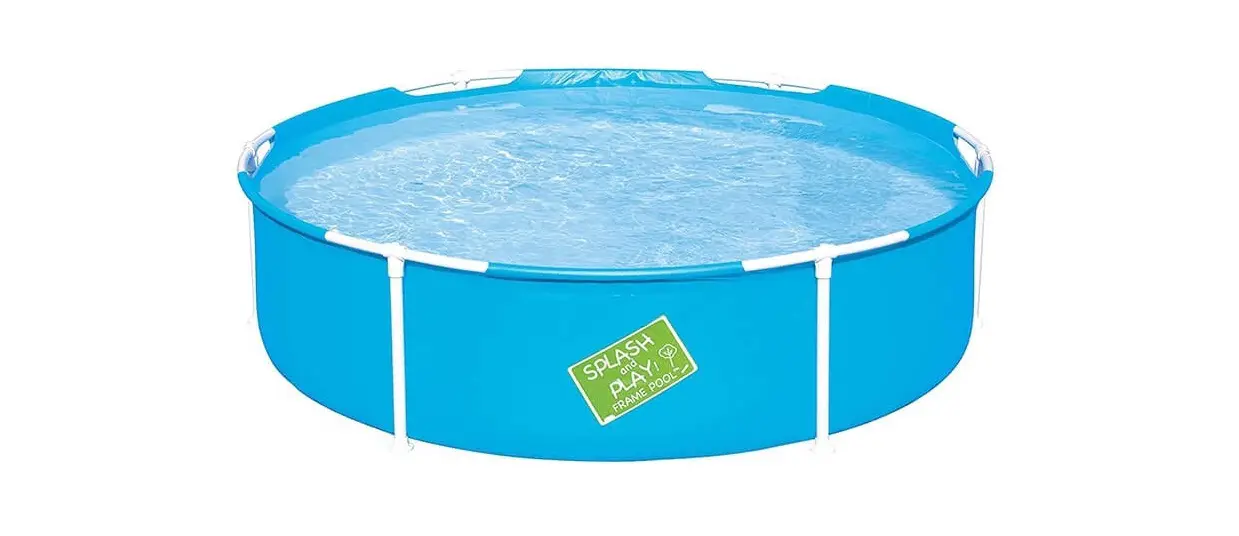
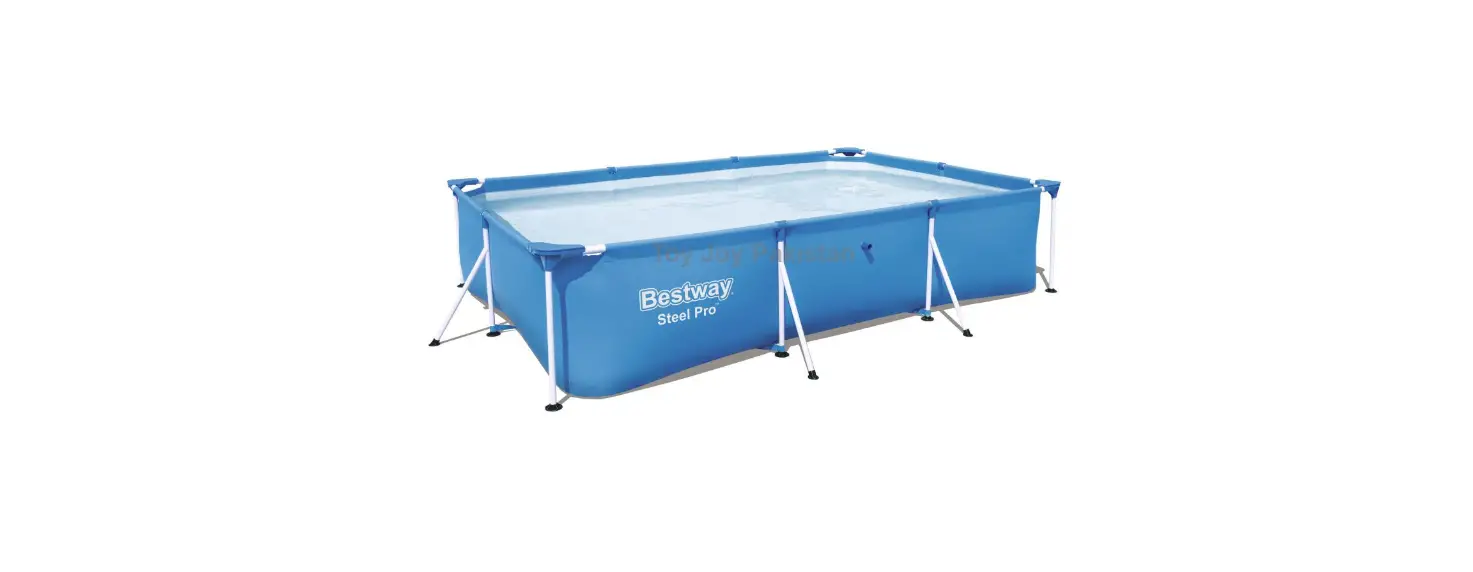
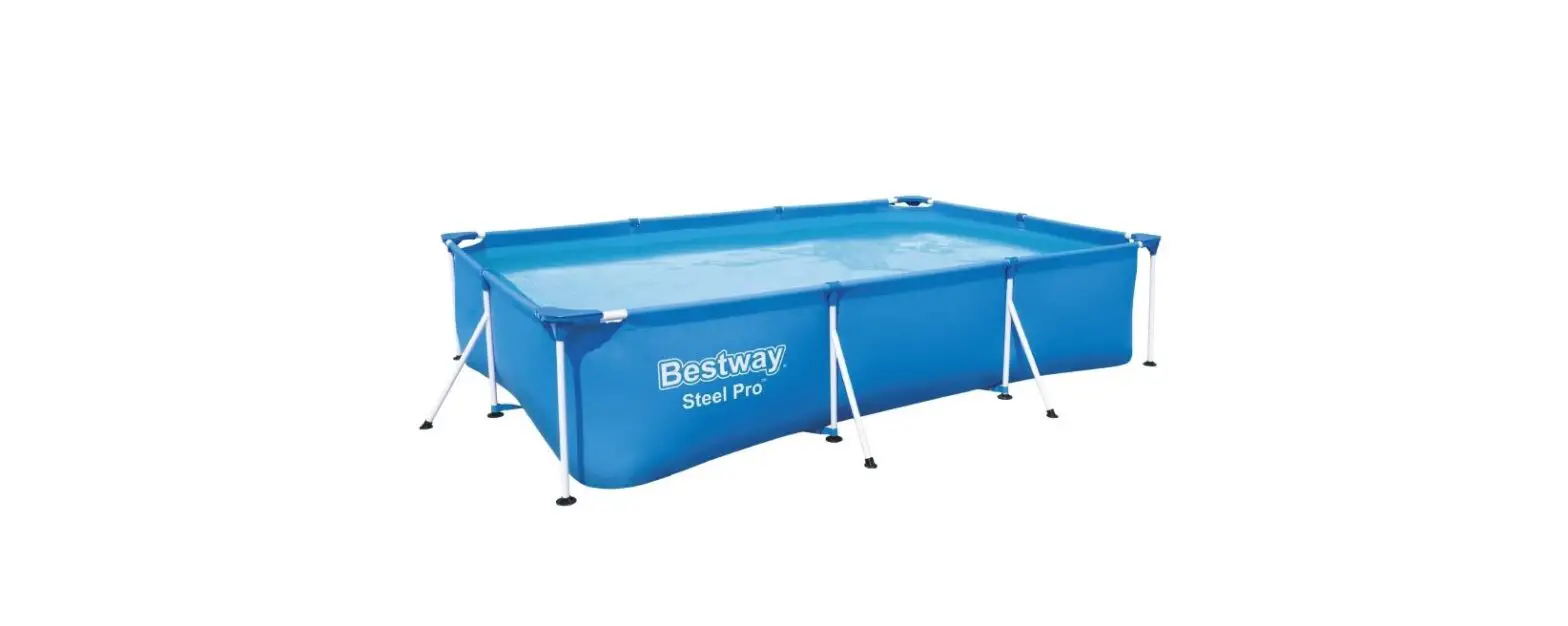
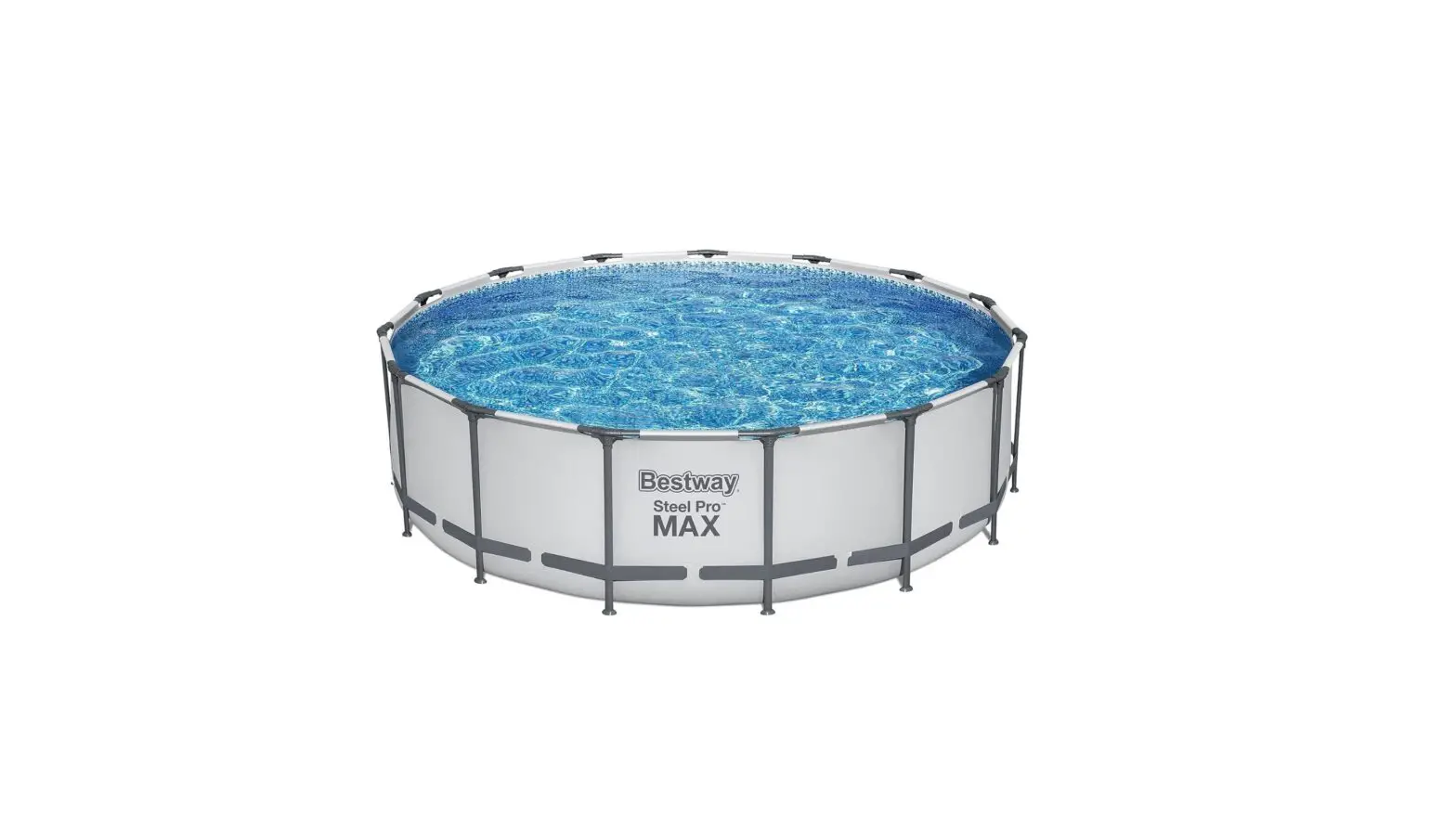
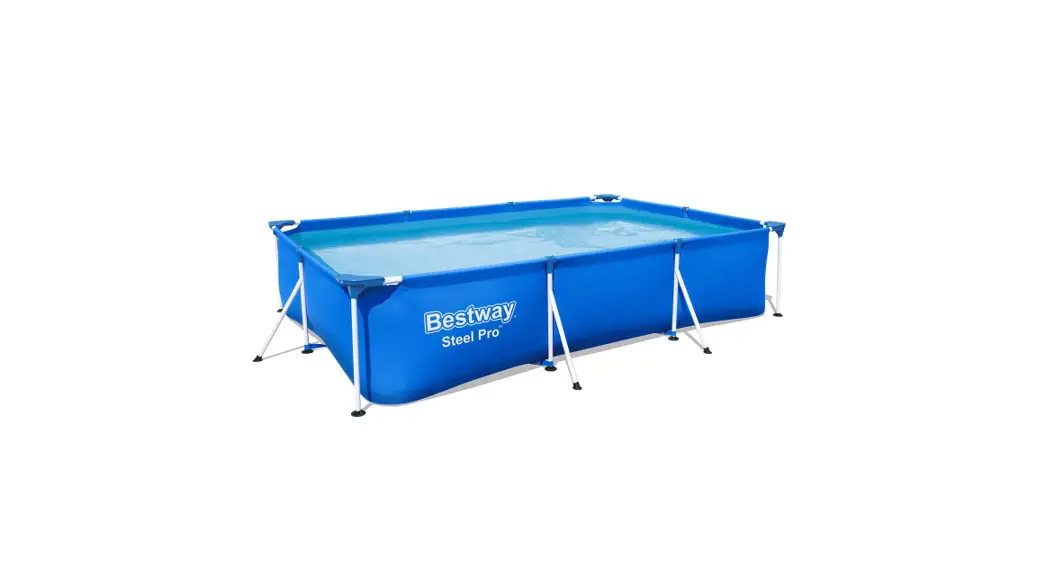
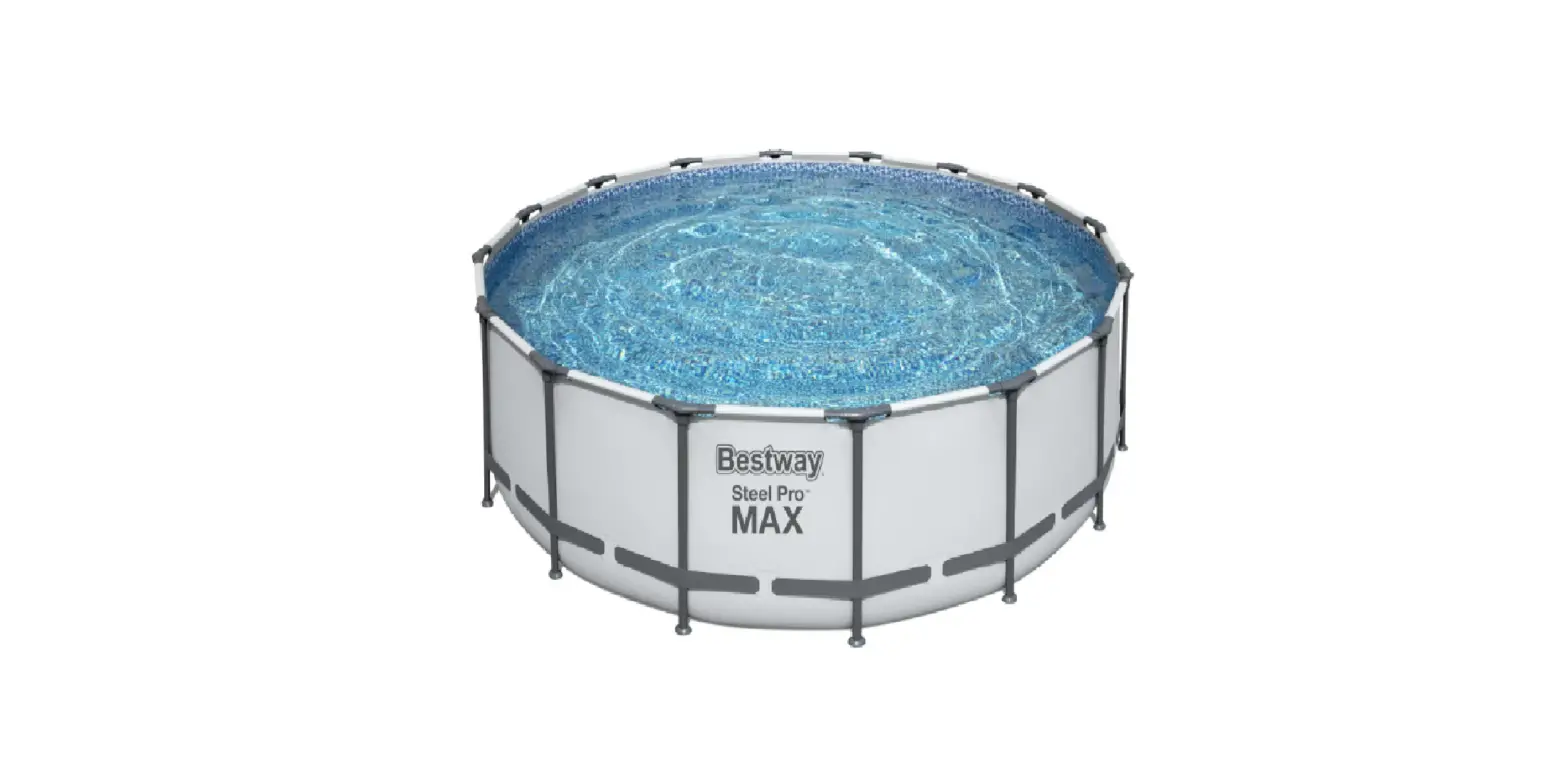
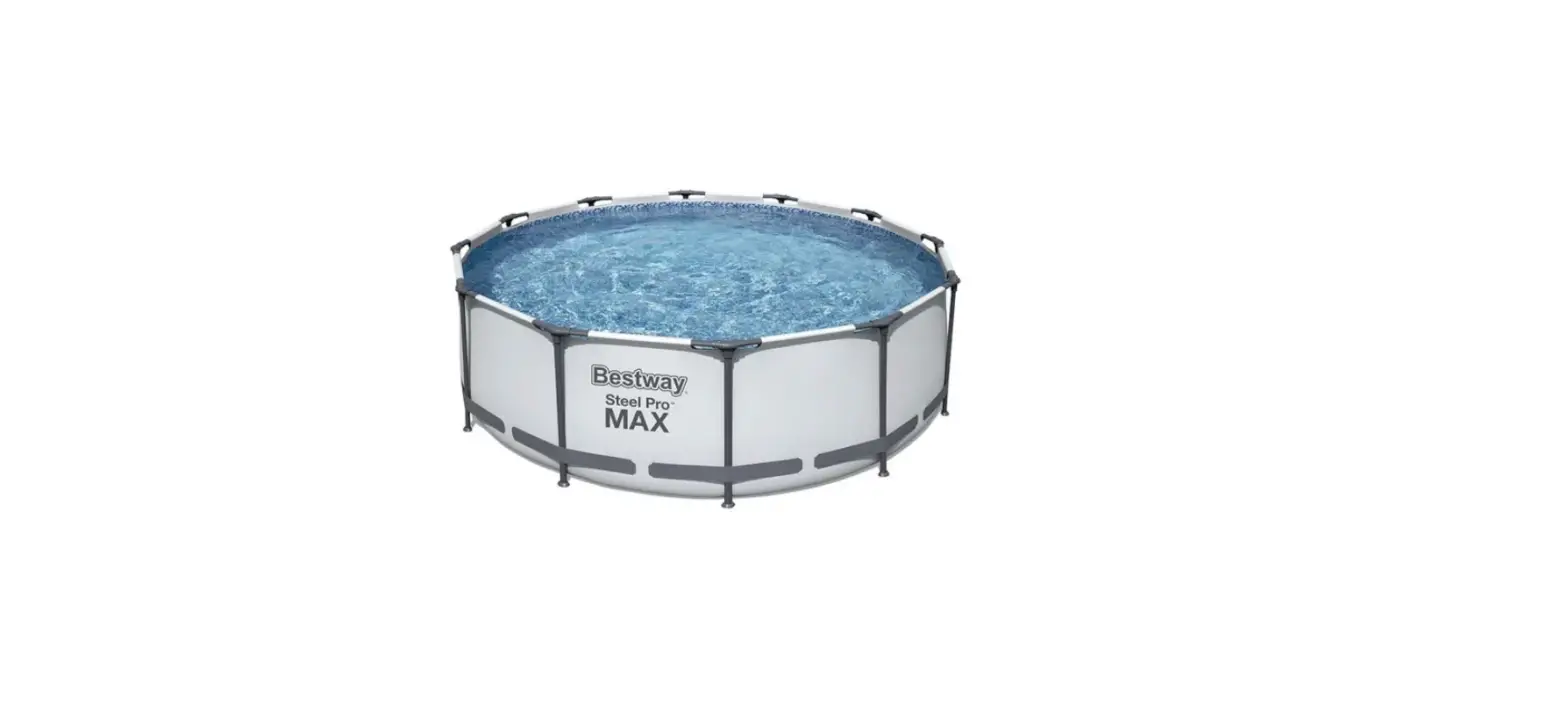
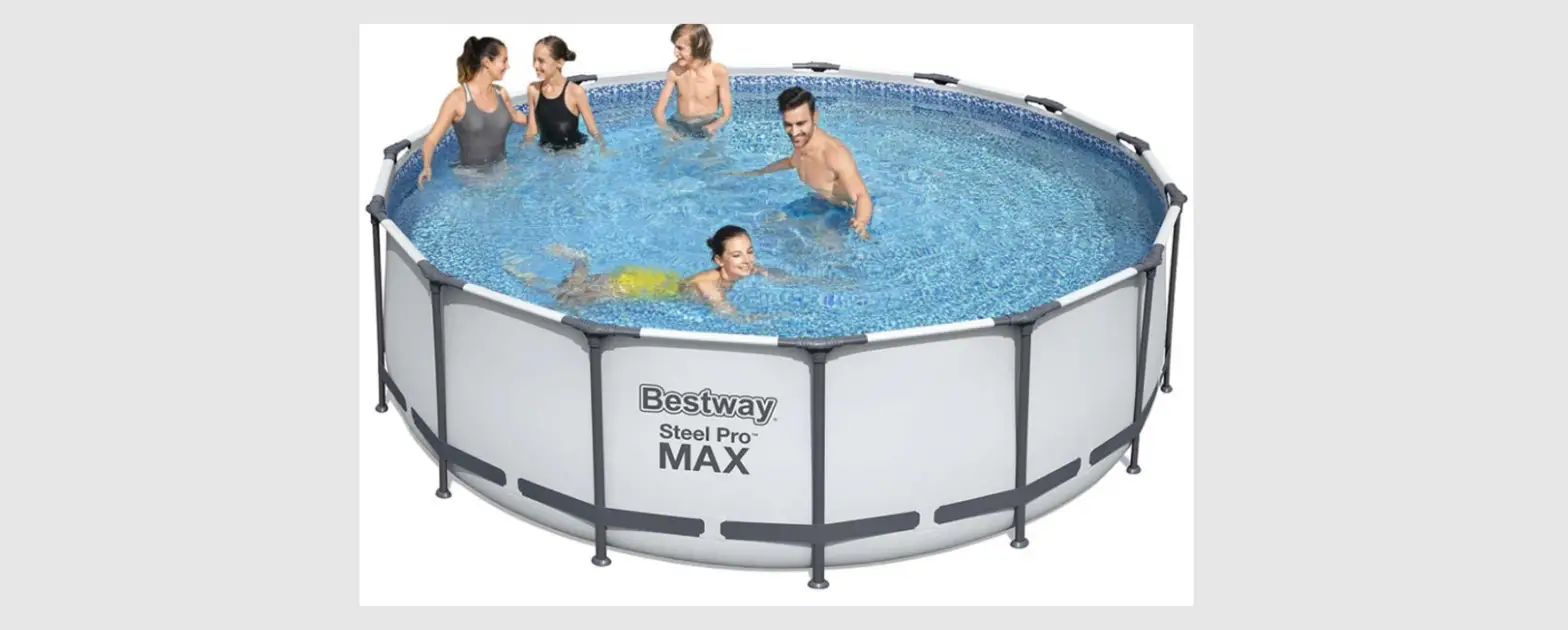
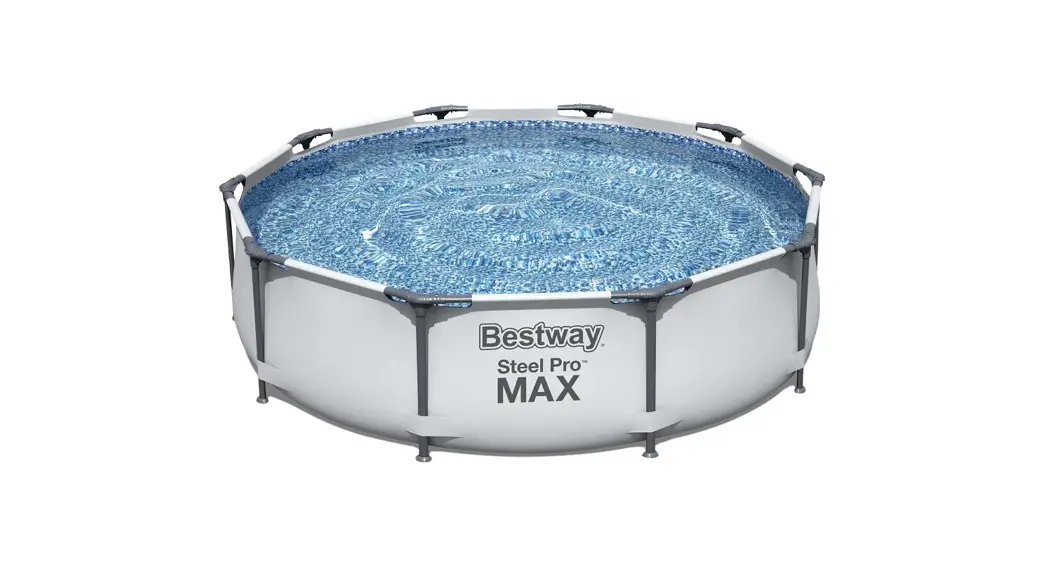
Steel Pro Pool
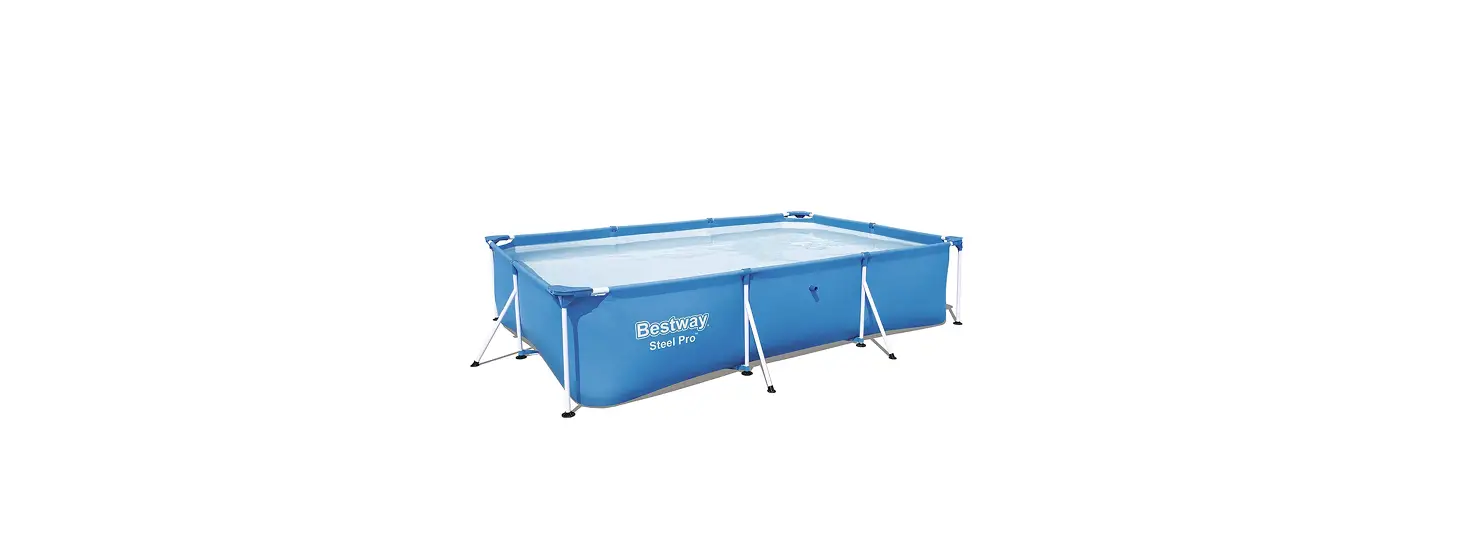
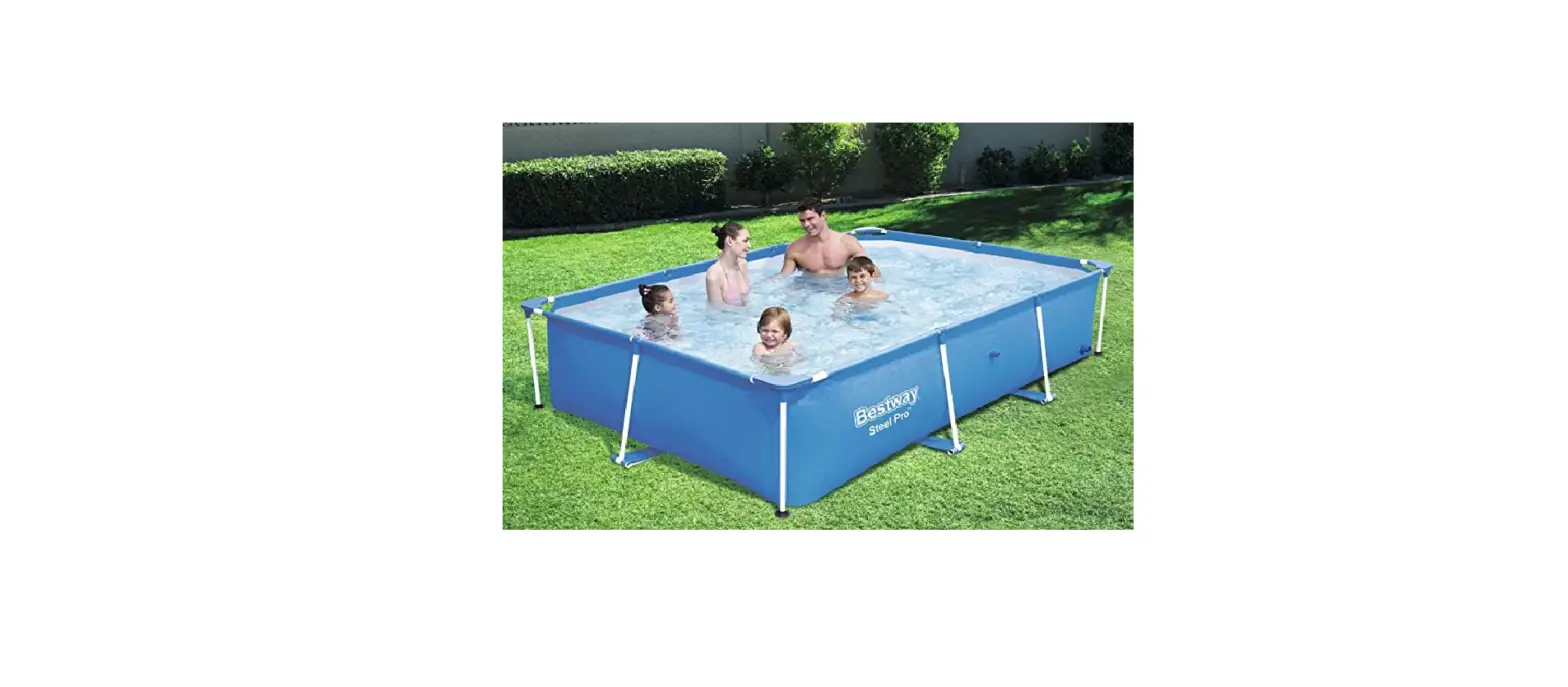
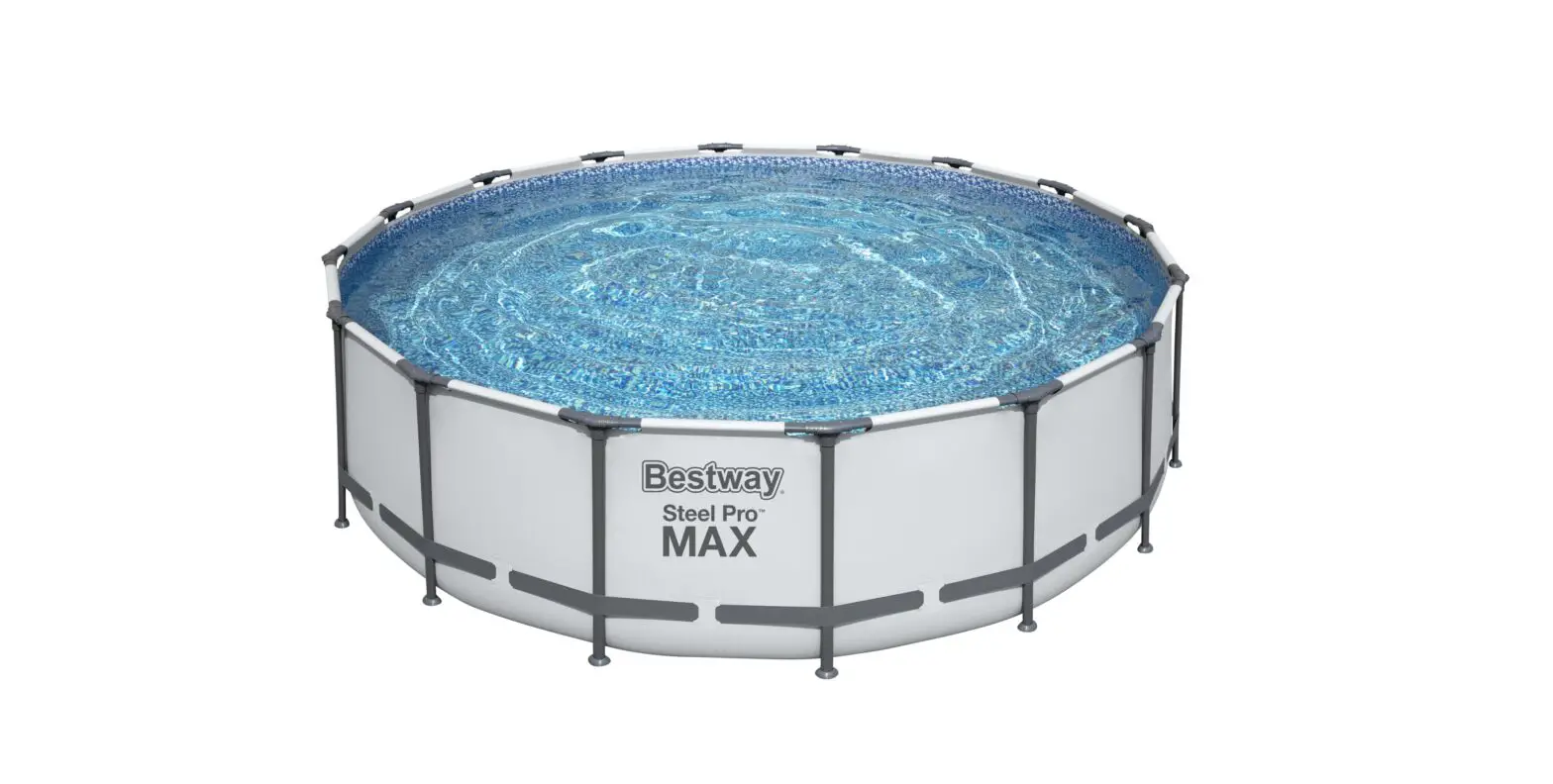
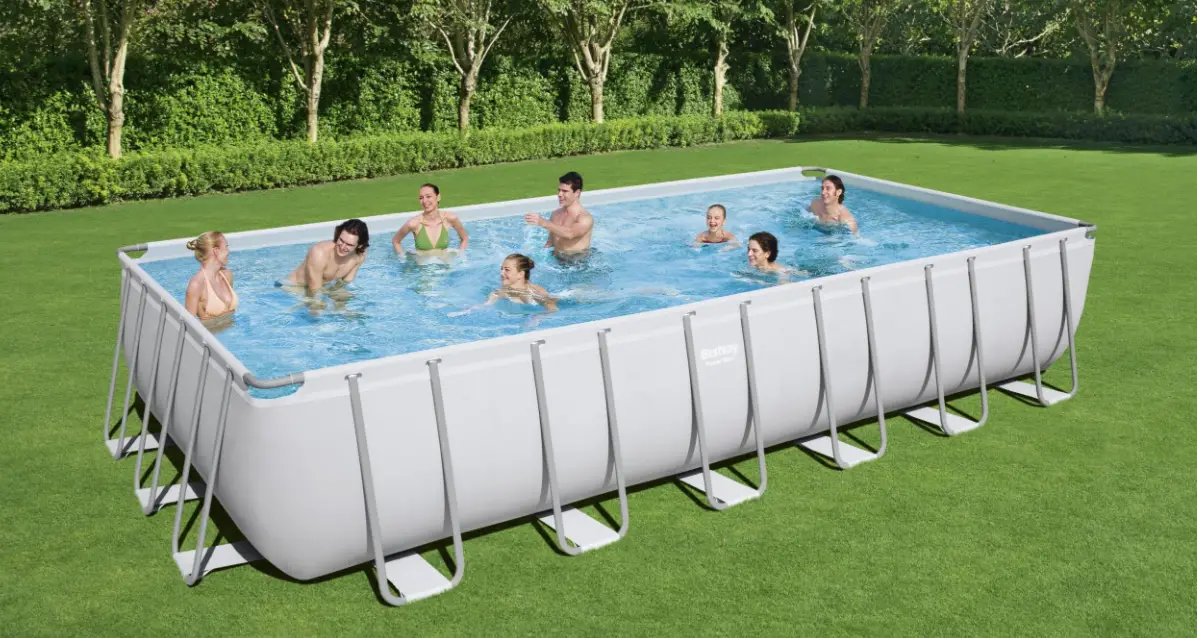
Product Information: Steel ProTM
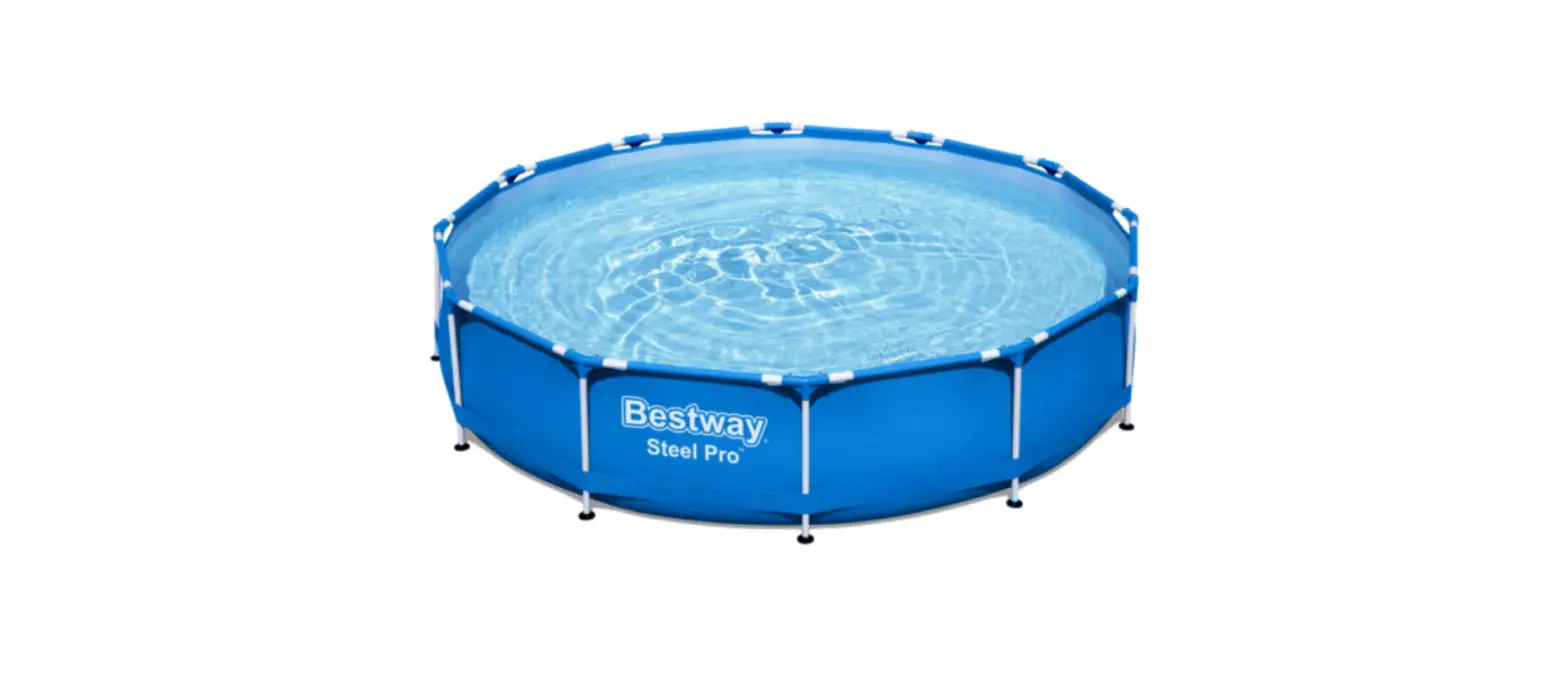
The Steel ProTM is a swimming pool made of PVC material,
available in various sizes (2.21m x 1.50m x 43 cm, 2.59m x 1.70m x
61 cm, 3.00m x 2.01m x 66 cm, 3.66m x 2.01m x 66 cm, and 4.00m x
2.11m x 81 cm). The pool comes with a liner and safety equipment to
prevent drowning or other serious injuries. It is recommended to
keep children under constant adult supervision during the bathing
period.
Product Usage Instructions:
Pre-setup Check List:
- Check the parts inside the manual.
- Verify that the equipment components represent the model that
you had intended to purchase. - In case of any damaged or missing parts at the time of
purchase, visit our website bestwaycorp.com/support.
Choose the Correct Location:
Select a flat surface that is free from sharp objects, stones,
and debris. Avoid placing the pool near electrical wires, trees, or
other objects that may interfere with pool usage.
Installation:
Follow the instructions provided in the manual for installation.
Assemble the liner according to the size of the pool you purchased.
The liner will become more flexible and easier to assemble if left
in the sun for a few hours before installation.
Assembling:
Assemble the steel frame according to the instructions provided
in the manual. Ensure that all parts are securely locked in
place.
Filling Pool with Water:
Fill the pool with water using a garden hose. Do not overfill
the pool as this may cause water spillage and/or damage to
property.
Maintenance:
It is recommended to maintain the water chemical balance as
shown in the table provided in the manual. Failure to adhere to the
maintenance guidelines may result in health risks, especially for
children.
Water:
Use chemical tablets (not included) for maintaining your water
chemical balance as shown in the below table:
| Parameters | Values |
|---|---|
| Water clarity | Clear view of the pool bottom |
| Colour of the water | No colour should be observed |
| Turbidity in FNU/NTU | Max. 1.5 (preferably less than 0.5) |
| Nitrate concentration above that of fill water in mg/l | Max. 20 |
| Total organic carbon (TOC) in mg/l | Max. 4.0 |
| Redox potential against Ag/AgCI 3,5 m KCl in mV | Min. 650 |
| pH value | 6.8 to 7.6 |
| Free active chlorine (without cyanuric acid) in mg/l | 0.3 to 1.5 |
| Free chlorine used in combination with cyanuric acid in mg/l | 1.0 to 3.0 |
| Cyanuric acid in mg/l | Max. 100 |
| Combined chlorine in mg/l | Max. 0.5 (preferably close to 0.0 mg/l) |
Important Safety Instructions:
Read and follow all instructions carefully to ensure the safe
use of the pool. Keep children under constant adult supervision
during the bathing period to prevent drowning or other serious
injuries. Visit the Bestway YouTube channel for more
information.
Warning:
Do not return the product to the store. For questions, problems,
or missing parts, visit our website bestwaycorp.com/support.
EN PT ES DE FI NL IT FR EL RU
STEEL PROTM PL HU SV
A
B
C
D
E
F
I
J
K
L
M
O
P
Q
R
S
STEEL PROTM
ABCD E F I J K LMOPQR S
2.21 m x 1.50 m x 43 cm (7’3″ x 59″ x 17″)
56401
x0 x2 x6 x2 x0 x8 x4 x4 x8 x0 x8 x1 x1 x1 x2 x0
2.59 m x 1.70 m x 61 cm (8’6″ x 67″ x 24″)
56403
x4 x2 x2 x2 x6 x4 x6 x4 x8 x0 x4 x1 x1 x1 x2 x6
3.00 m x 2.01 m x 66 cm (9’10” x 6’7″ x 26″)
56404 / 56411 56412
x4
x2
x2
x2
x6 x10 x6
x4
x8
x1 x10 x1
x1
x1
x2
x6
3.66 m x 2.01 m x 66 cm (12′ x 6’7″ x 26″)
561FT / 561FU 561FV
x6
x2
x2
x2
x8 x12 x8
x4
x8
x1 x12 x1
x1
x1
x2
x8
4.00 m x 2.11 m x 81 cm (13’1″ x 6’11” x 32″)
56405 / 56424 56425
x6
x2
x2
x2
x8 x12 x8
x4
x8
x1 x12 x1
x1
x1
x2
x8
2.21 m x 1.50 m x 43 cm (7’3″ x 59″ x 17″)
C C
C B
D JC
C D
C B
I
K F
M
2.59 m x 1.70 m x 61 cm (8’6″ x 67″ x 24″)
A B A
D
CJ
A
IB
D C
A
K
F
E
M
S
2
3.00 m x 2.01 m x 66 cm (9’10” x 6’7″ x 26″)
B A
C D
A
C
A
F F MM
IB
E S
DJ A
K
3.66 m x 2.01 m x 66 cm (12′ x 6’7″ x 26″) 4.00 m x 2.11 m x 81 cm (13’1″ x 6’11” x 32″)
A
C
B
A
A
B
C
IA
D J
A K
D
A
E
F
F
S
M
M
0º
1
2
3
4
5
6
2.21 m x 1.50 m x 43 cm (7’3″ x 59″ x 17″)
7
2.59 m x 1.70 m x 61 cm (8’6″ x 67″ x 24″)
8
2.59 m x 1.70 m x 61 cm (8’6″ x 67″ x 24″)
3
9
10
A
B
11
4 cm – 12 cm
(1.6″ – 4.7″)
1 cm (0.39”)
1
2
3
4
Visit www
.bestwaycorp.com/suppo
WE SUGGEST NOT TO RETURN THE PRODUCT TO THE STORE
QUESTIONS? PROBLEMS? MISSING PARTS?
For FAQ, Manuals, Videos Or Spare Parts, Please Visit bestwaycorp.com/support
rt for help
EN
OWNER’S MANUAL
Visit the Bestway YouTube channel
IMPORTANT SAFETY INSTRUCTIONS
WARNING
READ AND FOLLOW ALL INSTRUCTIONS.
· Carefully read, understand, and follow all information in this user manual before installing and using the swimming pool. These warnings, instructions, and safety guidelines address some common risks of water recreation, but they cannot cover all risks and dangers in all cases. Always use caution, common sense, and good judgment when enjoying any water activity. Retain this information for future use. In addition, the following information can be supplied depending on the pool type.
· Keep these instructions in a safe place. If instructions are missing, please contact the manufacturer or search it on the website www.bestwaycorp.com.
· Designate a competent adult to supervise the pool each time it is being used. · Barriers, pool covers, pool alarms, or similar safety devices are helpful aids, but they are not substitutes for continuous and competent adult
supervision.
Safe use of the pool
· Encourage all users especially children to learn how to swim. · Learn Basic Life Support (Cardiopulmonary Resuscitation CPR) and refresh this knowledge regularly. This can make a life-saving difference in the
event of an emergency. · Instruct all pool users, including children, what to do in case of an emergency. · Never dive into any shallow body of water. This can lead to serious injury or death. · Do not use the swimming pool when using alcohol or medication that may impair your ability to safely use the pool.
Safety devices
· In order to prevent children from drowning, it is recommended to secure the access to the pool with a protection device. In order to prevent children climbing from the inlet and outlet valve, it is recommended to install a barrier (and secure all doors and windows, where applicable) to prevent unauthorized access to the swimming pool.
Safety equipment
· It is recommended to keep rescue equipment (e.g. a ring buoy) by the pool. · Keep a working phone and a list of emergency phone numbers near the pool. · When pool covers are used, remove them completely from the water surface before entering the pool. · Protect pool occupants from water related illnesses, by keeping the pool water treated and practicing good hygiene. Consult the water treatment
guidelines in the user’s manual. · Store chemicals (e.g. water treatment, cleaning or disinfection products) out of the reach of children. · Use the signage as outlined below. Signage is to be displayed in a prominent position within 2m of the pool.
Keep children under supervision in the aquatic environment. No diving. · Removable ladders shall be placed on a horizontal surface. · Irrespective of materials used for swimming pool construction, accessible surfaces have to be checked regularly to avoid injuries. · Regularly monitor bolts and screws. Remove splinters or any sharp edges to avoid injuries. · Do not leave the drained pool outside. The empty pool is liable to become deformed and/or displaced due to wind. · If you have a filter pump, refer to the pump’s manual for instructions. · The pump cannot be used while people are inside the pool! · If you have a ladder, refer to the ladder’s manual for instructions. · WARNING! The use of a swimming pool implies compliance with the safety instructions described in the operating and maintenance guide. In
order to prevent drowning or other serious injuries, pay particular attention to the possibility of unexpected access to the swimming pool by children under 5 years by securing the access to it, and, during the bathing period, keep them under constant adult supervision.
Non Swimmers safety
· Continuous, active, and vigilant supervision of weak swimmers and non-swimmers by a competent adult is required at all times (remembering that children under five are at the highest risk of drowning).
· Weak swimmers or non-swimmers should wear personal protection equipment when using the pool. · When the pool is not in use, or unsupervised, remove all toys from the swimming pool and its surrounding to avoid attracting children to the pool.
PLEASE READ CAREFULLY AND KEEP FOR FUTURE REFERENCE.
5
PRE-SETUP
CHECK LIST
Check the parts inside the manual. Verify that the equipment components represent the model that you had intended to purchase. In case of any damaged or missing parts at the time of purchase, visit our website bestwaycorp.com/support.
CHOOSE THE CORRECT LOCATION
The surface chosen to install the pool on must respect the following conditions: · Because of the combined weight of the water inside the pool and the pool users, it is extremely important that the surface chosen to install the
pool on is capable of uniformly supporting the total weight for the entire time the pool is installed. When choosing the surface, take into consideration that water may come out of the pool when in use or when it rains. If the water softens the surface, it may lose its capability to support the pool weight. · Check the position of the vertical legs and/or the U-supports regularly. They must be on the same level as the bottom of the pool at all times. If the vertical leg or the U-support starts to sink into the ground, drain the pool water immediately to avoid the pool collapsing due to the uneven loading on the frame structure. Change the location of the pool or modify the surface material. · The surface must be flat and smooth. If the surface is inclined or uneven, it can create an unbalanced loading on the structure of the pool. This can damage the welding points of the liner and bend the frame. In the worst cases, the pool can collapse, causing serious personal injury and/or damage to personal property. · We recommend positioning the pool away from any objects children could use to climb into the pool. · Position the pool near an adequate drainage system to deal with overflow or to empty the pool. Ensure the pool side with the water inlet A and outlet B is located in the same direction of the power source, where the filtration system has to be connected. · The selected surface must be clear of any type of object. Due to the weight of the water, any object under the pool could damage or perforate the bottom of the pool. · The selected surface must be clear of aggressive plants and weed species. Those types of strong vegetation could grow through the liner and create water leakage. Grass or other vegetation that may cause odor or slime to develop have to be eliminated from the set-up location. · The selected location must not have overhead power lines or trees. Be sure the location does not contain underground utility pipes, lines or cables of any kind. · The selected position must be far from house entrance. Do not position any equipment or other furniture around the pool. The water that comes out of the pool during use or due to product faults can damage furniture inside the house or surrounding the pool. · The selected surface must be flat and without holes that can damage the material of the liner. · Keep at least 1.5 meters around the pool free of walls, fences or other structures to avoid damaging to the pool during use. Suggested set-up surfaces: grass, ground, concrete, and all other surfaces that respect the above set-up conditions. Surfaces to avoid: mud, sand, gravel, deck, balcony, driveway, platform, soft/loose soil or other surface that does not meet the above set-up conditions. · Check with your local city council for by-laws relating to fencing, barriers, lighting and safety requirements and ensure you comply with all laws. · If a pump and/or ladder is included in the set, refer to the pump’s and/or ladder’s manual for safety instructions and installation. The ladder must match the pool size. · If during set up it is necessary to change the position of the pool, lift up the liner and do not drag it on the ground; the friction between the PVC material and the ground can damage the pool liner. · Follow the important instructions above to choose the correct surface and location to set up your pool. Damaged parts of the pool, due to the fact that the set-up surface and location does not match the instructions, will not be considered as manufacture defect and will avoid the warranty and any service claims.
INSTALLATION
ASSEMBLING
· For installation instructions, follow the drawings inside the manual. Drawings are for illustration purposes only. May not reflect actual product. Not to scale.
· Assembly of the Frame Pool can be completed without tools. · Installation usually takes approximately 10-20 minutes with 2-3 people excluding filling. · To lengthen the life of your pool, it is important to sprinkle the top rails with the Talcum Powder before assembly. Talcum Powder is not included in
the package. · Bestway will not be responsible for damage caused to the pool due to mishandling or failure to follow these instructions. · We strongly suggest opening the package and assembling the pool when the environment temperature is above 15ºC / 59ºF; the PVC material of
the liner will become more flexible and easier to assemble.
FILLING POOL WITH WATER
· Do not leave pool unattended while filling with water. · Fill the pool with water after all assembly steps are completed and until the water reaches the welding line, which corresponds to 90% of the full
capacity. · Do not overfill as this could cause the pool to collapse. In case of heavy rainfall, we strongly recommend to reduce the water level to keep it at
90% capacity, to avoid overflowing of the water. · When the pool is completely filled, check that the distance between the water surface and the top of the rails is the same all around; if it is
different, it means that the floor is not leveled so we strongly recommend to drain the water and re-level the ground. · Keeping the pool full of water on unleveled ground can cause bursting of the welding points and/or pool collapse, causing serious personal injury
and/or damage to property.
MAINTENANCE
If you do not adhere to the maintenance guidelines below, your health might be at risk, especially that of your children.
WATER
· Keeping your pool water clean and chemically balanced is necessary. Simply cleaning the filter cartridge is not enough for proper maintenance; we recommend you use pool chemicals to maintain water chemistry and chlorine or bromine tablets (do not use granules) with the chemical dispenser.
6
· Water quality is directly related to frequency of use, number of users and overall maintenance of the pool. The water should be changed every 3 days if there is no chemical treatment being performed with the water. It is highly recommended to use tap water for filling to minimize the influence of unwanted content, such as minerals.
· We recommend that you take a shower before using your pool, as cosmetic products, lotions, and other residues on the skin can quickly degrade water quality.
· Skim pool regularly to avoid settled dirt. · Locate a bucket of water next to pool to clean users’ feet before entering pool. · The chemical maintenance must be performed with ChemConnect or chemical floater; don’t throw chemical products directly in the water, the
chemical will deposit on the bottom and damage the material and discolor the PVC.
Chemical Tablets (Not Included):
· Your purchased pool set may not include any dispensers; in this case you can purchase one by visiting our website www.bestwaycorp.com or at the nearest pool dealer.
· Remove the chemical dispenser from pool when the pool is in use. · After performing chemical maintenance and before using the pool, use a test kit (not included) to test the water chemistry. We recommend
maintaining your water chemical balance as shown in the below table.
Parameters Water clarity Colour of the water Turbidity in FNU/NTU Nitrate concentration above that of fill water in mg/l Total organic carbon (TOC) in mg/l Redox potential against Ag/AgCI 3,5 m KCl in mV pH value Free active chlorine (without cyanuric acid) in mg/l Free chlorine used in combination with cyanuric acid in mg/l Cyanuric acid in mg/l Combined chlorine in mg/l
Values clear view of the pool bottom no colour should be observed max. 1,5 (preferably less than 0,5) max. 20 max. 4,0 min. 650 6,8 to 7,6 0,3 to 1,5 1,0 to 3,0 max. 100 max. 0,5 (preferably close to 0,0 mg/l)
· Pool damage resulting from misuse of chemicals and mismanagement of pool water is not covered by the warranty. · Over usage of chemicals will discolor the printing and all points of the pool material; in worst cases, it will damage the structure of the pool liner. · Pool chemicals are potentially toxic and should be handled with care. There are serious health risks from chemical vapors and the incorrect
labeling and storage of chemical containers. · Please consult your local pool or chemical supply retailer for more information about chemical maintenance. Pay close attention to the chemical
manufacturer’s instructions. · The pump is used to circulate the water and to filter small particles. In order to keep your pool water clean and hygienic, you must also add
chemicals.
LINER
· We suggested that you buy a pool cover, if not included in the set, and cover the pool when not in use, to prevent any damage to the Duraplus material on the top rails. Gently clean any dirt deposit on the top rails with a clean cloth.
· Before attaching the pool cover, ensure the water is at the maximum level. If the water level is too low, the pool cover should not be installed.
DISASSEMBLY AND STORAGE
DRAINING
· For draining, follow the drawings inside the manual. Drawings are for illustration purposes only. May not reflect actual product. Not to scale. · To drain your pool water, check local regulations for drainage by-laws.
CLEANING
· Rinse the pool liner with tap water, to remove any residual of chemicals or dirt completely. · Leave the pool under the sunlight until it’s completely dried. · To remove the remaining water completely, wipe the pool liner with a dry cloth.
STORAGE
· Remove all accessories; be sure that pool liner and accessories are completely clean and dry before the storage. If the pool is not completely dry, mold may result and will damage the pool liner during the storage period.
· Once pool is completely dry, sprinkle with talcum powder to prevent pool from sticking together. · We strongly recommend disassembling the pool when the environment temperature is below 10ºC / 50ºF. · Fold the pool liner only if the environment temperature is above 10ºC / 50ºF. Store the pool in a dry place with a moderate temperature between
10ºC / 50ºF and 38ºC / 100ºF and position the pool liner and all accessories inside a carton box, to better protect the PVC material during the winter period.
REPAIR
In the event of a leak, patch your pool using the underwater adhesive repair patch provided. You can find the instructions in FAQs on the support section of our website, www.bestwaycorp.com/support.
7
PT
da, visite www.bestway
MANUAL DO UTILIZADOR
Se precisa de aju
corp.com/support
RECOMENDAMOS NÃO DEVOLVER O PRODUTO PARA A LOJA
Dúvidas? Problemas? Faltam peças?
Para FAQ, manuais, vídeos ou peças de reposição, visite bestwaycorp.com/support
Visite o canal da Bestway no YouTube
INSTRUÇÕES DE SEGURANÇA IMPORTANTES
ATENÇÃO
LEIA E SIGA TODAS AS INSTRUÇÕES.
· Leia cuidadosamente, compreenda e siga todas as informações deste manual do utilizador antes de instalar e utilizar a piscina. Estes avisos, instruções e diretrizes de segurança abordam alguns riscos comuns da recreação aquática, mas não podem abranger todos os riscos e perigos em todos os casos. Use sempre cautela, senso comum e bom senso ao desfrutar de qualquer atividade aquática. Guarde esta informação para uso futuro. Além disso, a seguinte informação pode ser fornecida dependendo do tipo de piscina.
· Guarde estas instruções num local seguro. Se faltarem instruções, por favor contate o fabricante ou pesquise no website www.bestwaycorp.com. · Designe um adulto competente para supervisionar a piscina cada vez que ela estiver a ser utilizada. · Barreiras, coberturas de piscina, alarmes de piscina, ou dispositivos de segurança semelhantes são ajudas úteis, mas não substituem a
supervisão contínua e competente de um adulto.
Utilização segura da piscina
· Encoraje todos os utilizadores, especialmente as crianças, a aprenderem a nadar. · Aprenda Suporte Básico de Vida (RCP de Ressuscitação Cardiopulmonar) e atualize este conhecimento regularmente. Isto pode fazer uma
diferença vital no caso de uma emergência. · Ensine a todos os utilizadores da piscina, incluindo crianças, o que fazer em caso de emergência. · Nunca mergulhe em qualquer corpo de água rasa. Isto pode levar a ferimentos graves ou à morte. · Não utilize a piscina quando consumir álcool ou medicamentos que possam prejudicar a sua capacidade de utilizar a piscina em segurança.
Dispositivos de segurança
· A fim de evitar que as crianças se afoguem, recomenda-se assegurar o acesso à piscina com um dispositivo de proteção. A fim de evitar que as crianças escalem pela válvula de entrada e saída, é recomendado instalar uma barreira (e proteger todas as portas e janelas, quando aplicável) para impedir o acesso não autorizado à piscina.
Equipamento de segurança
· É recomendado manter o equipamento de salvamento (por exemplo, uma boia de anel) junto à piscina. · Mantenha um telemóvel em funcionamento e uma lista de números de telefone de emergência perto da piscina. · Quando as coberturas da piscina são utilizadas, remova-as completamente da superfície da água antes de entrar na piscina. · Proteja os ocupantes da piscina de doenças relacionadas com a água, mantendo a água da piscina tratada e praticando uma boa higiene.
Consulte as orientações de tratamento da água no manual do utilizador. · Armazene os produtos químicos (por exemplo, produtos de tratamento, limpeza ou desinfecção da água) fora do alcance das crianças. · Use a sinalização como descrito abaixo. A sinalização deve ser exibida numa posição de destaque a menos de 2m da piscina.
Mantenha as crianças sob supervisão no ambiente aquático. Não mergulhar. · As escadas removíveis devem ser colocadas sobre uma superfície horizontal. · Independentemente dos materiais utilizados na construção da piscina, as superfícies acessíveis têm de ser verificadas regularmente para evitar
ferimentos. · Monitorize regularmente os parafusos e as cavilhas. Remova lascas ou quaisquer arestas pontiagudas para evitar ferimentos. · Não deixe a piscina vazia do lado de fora. A piscina vazia é suscetível de ficar deformada e/ou deslocada devido ao vento. · Se tiver uma bomba de filtragem, consulte o manual da bomba para obter instruções. · A bomba não pode ser utilizada enquanto as pessoas estiverem dentro da piscina! · Se você tiver uma escada, consulte o manual da escada para obter instruções. · ATENÇÃO! A utilização de uma piscina implica o cumprimento das instruções de segurança descritas no guia de funcionamento e manutenção.
A fim de evitar afogamentos ou outros ferimentos graves, preste especial atenção à possibilidade de acesso inesperado à piscina por crianças menores de 5 anos, garantindo o acesso à mesma, e, durante o período de banho, mantenha-as sob constante supervisão de adultos.
Segurança dos Não-Nadadores
· A supervisão contínua, ativa e vigilante de nadadores fracos e não-nadadores por um adulto competente é sempre necessária (lembrando que as crianças menores de cinco anos correm o maior risco de se afogarem).
· Os nadadores fracos ou não-nadadores devem utilizar equipamento de proteção pessoal quando utilizam a piscina. · Quando a piscina não estiver a ser utilizada, ou sem supervisão, retire todos os brinquedos da piscina e dos seus arredores para evitar atrair as
crianças para a piscina.
POR FAVOR, LEIA COM ATENÇÃO E GUARDE PARA REFERÊNCIA FUTURA.
8
PRÉ-MONTAGEM
LISTA DE VERIFICAÇÃO
Verifique as peças dentro do manual. Verifique se os componentes do equipamento representam o modelo que pretendia adquirir. Em caso de quaisquer peças danificadas ou em falta no momento da compra, visite o nosso website bestwaycorp.com/support.
ESCOLHA O LOCAL CORRETO
A superfície escolhida para a instalação da piscina deve respeitar as seguintes condições: · Devido ao peso combinado da água dentro da piscina e dos utilizadores da piscina, é extremamente importante que a superfície escolhida para
instalar a piscina seja capaz de suportar uniformemente o peso total durante todo o tempo em que a piscina é instalada. Ao escolher a superfície, tenha em consideração que a água pode sair da piscina quando em uso ou quando chove. Se a água suavizar a superfície, pode perder a sua capacidade de suportar o peso da piscina. · Verifique regularmente a posição das pernas verticais e/ou dos suportes em “U”. Eles devem estar sempre ao mesmo nível que o fundo da piscina. Se a perna vertical ou o suporte em “U” começar a afundar-se no solo, drene imediatamente a água da piscina para evitar o colapso da piscina devido à carga irregular na estrutura da estrutura. Mude o local da piscina ou modifique o material da superfície. · A superfície deve ser plana e lisa. Se a superfície for inclinada ou irregular, pode criar uma carga desequilibrada sobre a estrutura da piscina. Isto pode danificar os pontos de soldadura do revestimento e entortar a estrutura. Nos piores casos, a piscina pode colapsar, causando sérios danos pessoais e/ou danos a bens pessoais. · Recomendamos o posicionamento da piscina longe de quaisquer objetos que as crianças possam utilizar para entrar na piscina. · Posicione a piscina perto de um sistema de drenagem adequado para lidar com o transbordamento ou para esvaziar a piscina. Certifique-se que o lado da piscina com a entrada de água A e a saída B está localizada na mesma direção da fonte de energia, onde o sistema de filtragem tem de ser ligado. · A superfície selecionada deve estar livre de qualquer tipo de objeto. Devido ao peso da água, qualquer objeto debaixo da piscina pode danificar ou perfurar o fundo da piscina. · A superfície selecionada tem de estar livre de plantas agressivas e espécies de ervas daninhas. Estes tipos de vegetação forte podem crescer através do revestimento e criar fugas de água. A relva ou outra vegetação que possa causar odor ou lodo tem de ser eliminada do local de instalação. · O local selecionado não deve ter linhas elétricas ou árvores em cima. Certifique-se de que o local não contém tubos, linhas ou cabos de qualquer tipo subterrâneos. · A posição selecionada deve estar longe da entrada da casa. Não posicione qualquer equipamento ou outro mobiliário à volta da piscina. A água que sai da piscina durante a utilização ou devido a falhas no produto pode danificar a mobília dentro da casa ou ao redor da piscina. · A superfície selecionada deve ser plana e sem buracos que possam danificar o material do revestimento. · Mantenha pelo menos 1,5 metros à volta da piscina livre de muros, vedações ou outras estruturas para evitar danificar a piscina durante a utilização. Sugestões de superfícies de montagem: relva, solo, betão e todas as outras superfícies que respeitem as condições de montagem acima referidas. Superfícies a evitar: lama, areia, cascalho, deque, varanda, caminho de acesso, plataforma, solo macio/ solto ou outras superfícies que não respeitem as condições de montagem acima referidas. · Verifique com a sua câmara municipal local se existem estatutos relacionados com vedações, barreiras, iluminação e requisitos de segurança e assegure-se de que cumpre todas as leis. · Se uma bomba e/ou escada estiver incluída no conjunto, consulte o manual da bomba e/ou da escada para obter instruções de segurança e instalação. A escada deve corresponder ao tamanho da piscina. · Se durante a instalação for necessário mudar a posição da piscina, levante o revestimento e não o arraste pelo chão; o atrito entre o material PVC e o chão pode danificar o revestimento da piscina. · Siga as instruções importantes acima para escolher a superfície e o local corretos para montar a sua piscina. As partes danificadas da piscina, devido ao fato da superfície e do local de instalação não corresponderem às instruções, não serão consideradas como defeito de fabrico e anularão a garantia e quaisquer reivindicações de assistência técnica.
INSTALAÇÃO
MONTAGEM
· Para instruções de instalação, siga os desenhos dentro do manual. Os desenhos são apenas para fins ilustrativos. Podem não refletir o produto real. Não à escala.
· A montagem da Moldura da Piscina pode ser completada sem ferramentas. · A instalação demora normalmente cerca de 10-20 minutos com 2-3 pessoas excluindo o enchimento. · Para prolongar a vida útil da sua piscina, é importante polvilhar as calhas superiores com o Talco em Pó antes da montagem. O Talco em Pó não
está incluído no pacote. · A Bestway não será responsável por danos causados à piscina devido a manipulação incorreta ou falha em seguir estas instruções. · Sugerimos fortemente que abra a embalagem e monte a piscina quando a temperatura ambiente estiver acima dos 15ºC; o material PVC do
revestimento tornar-se-á mais flexível e mais fácil de montar.
ENCHIMENTO DA PISCINA COM ÁGUA
· Não deixe a piscina sem vigilância enquanto a encher com água. · Encha a piscina com água depois de todas as etapas de montagem estarem concluídas e até a água chegar à linha de soldadura, o que
corresponde a 90% da capacidade total. · Não encha em demasia, pois isto pode causar o colapso da piscina. Em caso de chuva intensa, recomendamos fortemente a redução do nível
da água para mantê-la a 90% da capacidade, para evitar o transbordamento da água. · Quando a piscina estiver completamente cheia, verifique se a distância entre a superfície da água e o topo dos corrimões é a mesma em toda a
volta; se for diferente, significa que o pavimento não está nivelado, por isso recomendamos fortemente que drene a água e volte a nivelar o solo. · Manter a piscina cheia de água em solo não nivelado pode causar o rebentamento dos pontos de soldadura e/ou o colapso da piscina, causando
sérios ferimentos pessoais e/ou danos materiais.
MANUTENÇÃO
Se não aderir às diretrizes de manutenção abaixo indicadas, a sua saúde pode estar em risco, especialmente a das crianças.
ÁGUA
· É necessário manter a água da sua piscina limpa e quimicamente equilibrada. A simples limpeza do cartucho filtrante não é suficiente para uma
9
manutenção adequada; recomendamos a utilização de produtos químicos da piscina para manter a química da água e pastilhas de cloro ou bromo (não utilizar grânulos) com o dispensador de produtos químicos. · A qualidade da água está diretamente relacionada com a frequência de utilização, número de utilizadores e manutenção geral da piscina. A água deve ser mudada a cada 3 dias se não houver tratamento químico a ser realizado com a água. É altamente recomendada a utilização de água da torneira para enchimento para minimizar a influência de conteúdos indesejados, tais como minerais. · Recomendamos que tome um duche antes de utilizar a sua piscina, pois os produtos cosméticos, loções e outros resíduos na pele podem degradar rapidamente a qualidade da água. · Limpe a piscina regularmente para evitar a sujidade assentada. · Coloque um balde de água junto à piscina para limpar os pés dos utilizadores antes de entrar na piscina. · A manutenção química deve ser realizada com ChemConnect ou flutuador químico; não jogue produtos químicos diretamente na água, o químico depositar-se-á no fundo e danificará o material e descolorará o PVC.
Pastilhas Químicas (Não Incluídas):
· O seu conjunto de piscina adquirido pode não incluir dispensadores; neste caso, pode adquirir um, visitando o nosso website www.bestwaycorp.com ou no revendedor de piscina mais próximo.
· Remova o dispensador de químicos da piscina quando a piscina estiver a ser utilizada. · Após efetuar a manutenção química e antes de utilizar a piscina, utilize um kit de teste (não incluído) para testar a química da água.
Recomendamos a manutenção do equilíbrio químico da água, como se mostra na tabela abaixo.
Parâmetros Clareza da água Cor da água Turbidez no FNU/NTU Concentração de nitratos acima da da água de enchimento em mg/L Carbono orgânico total (COT) em mg/L Potencial Redox contra Ag/AgCI 3,5 m KCl em mV Valor do pH Cloro ativo livre (sem ácido cianúrico) em mg/L Cloro livre usado em combinação com ácido cianúrico em mg/L Ácido cianúrico em mg/L Cloro combinado em mg/L
Valores vista clara do fundo da piscina nenhuma cor deve ser observada máx. 1,5 (de preferência menos de 0,5) máx. 20 máx. 4,0 mín. 650 6,8 a 7,6 0,3 a 1,5 1,0 a 3,0 máx. 100 máx. 0,5 (de preferência perto de 0,0 mg/L)
· Os danos da piscina resultantes do mau uso de produtos químicos e má gestão da água da piscina não estão cobertos pela garantia. · A utilização excessiva de produtos químicos irá descolorir a impressão e todos os pontos do material da piscina; nos piores casos, irá danificar a
estrutura do revestimento da piscina. · Os produtos químicos da piscina são potencialmente tóxicos e devem ser manuseados com cuidado. Existem sérios riscos para a saúde devido
aos vapores químicos e à etiquetagem e armazenamento incorretos dos recipientes químicos. · Por favor consulte a sua piscina local ou o revendedor de produtos químicos para mais informações sobre manutenção de produtos químicos.
Preste muita atenção às instruções do fabricante de produtos químicos. · A bomba é usada para fazer circular a água e para filtrar pequenas partículas. A fim de manter a água da sua piscina limpa e higiénica, deve
também adicionar produtos químicos.
REVESTIMENTO
· Sugerimos que compre uma cobertura da piscina, se não estiver incluída no conjunto, e que cubra a piscina quando não estiver a ser utilizada, para evitar qualquer dano ao material Duraplus nos corrimões superiores. Limpe suavemente qualquer depósito de sujidade nos corrimões superiores com um pano limpo.
· Antes de fixar a cobertura da piscina, certifique-se de que a água está no nível máximo. Se o nível da água for demasiado baixo, a cobertura da piscina não deve ser instalada.
DESMONTAGEM E ARMAZENAMENTO
DRENAGEM
· Para drenar, siga os desenhos dentro do manual. Os desenhos são apenas para fins ilustrativos. Podem não refletir o produto real. Não à escala. · Para drenar a água da sua piscina, verifique os regulamentos locais para a drenagem por regulamentos.
LIMPEZA
· Lave o revestimento da piscina com água da torneira, para remover completamente qualquer resíduo de produtos químicos ou sujidade. · Deixe a piscina sob a luz solar até estar completamente seca. · Para remover completamente a água restante, limpe o revestimento da piscina com um pano seco.
ARMAZENAMENTO
· Remova todos os acessórios; certifique-se de que o revestimento e os acessórios da piscina estão completamente limpos e secos antes do armazenamento. Se a piscina não estiver completamente seca, pode ocorrer bolor e danificar o revestimento da piscina durante o período de armazenamento.
· Assim que a piscina estiver completamente seca, polvilhe com pó de talco para evitar que a piscina fique grudada. · Recomendamos fortemente a desmontagem da piscina quando a temperatura ambiente for inferior a 10ºC / 50ºF. · Dobre o revestimento da piscina apenas se a temperatura ambiente for superior a 10ºC / 50ºF. Guarde a piscina num local seco com uma
temperatura moderada entre 10ºC e 38ºC e coloque o revestimento da piscina e todos os acessórios dentro de uma caixa de cartão/papelão, para melhor proteger o material PVC durante o período de Inverno.
REPARAÇÃO
No caso de uma fuga, remende a sua piscina usando o remendo de reparação adesivo subaquático fornecido. Pode encontrar as instruções nas FAQs na seção de suporte do nosso site, www.bestwaycorp.com/support.
10
da visite www.bestwayc
ES
MANUAL DEL USUARIO
Si necesitas ayu
orp.com/support
RECOMENDAMOS NO DEVOLVER EL PRODUCTO A LA TIENDA
¿Dudas? ¿Problemas? ¿Faltan piezas?
Para FAQ, manuals, videos o piezas de repuesto, por favor visita bestwaycorp.com/support
Visite el canal de YouTube de Bestway
INSTRUCCIONES IMPORTANTES DE SEGURIDAD
ADVERTENCIA
LEA Y SIGA TODAS LAS INSTRUCCIONES.
· Lea detenidamente, comprenda y siga toda la información de este manual de usuario antes de instalar y utilizar la piscina. Estas advertencias, instrucciones y directrices de seguridad abordan algunos riesgos comunes de las actividades acuáticas, pero no pueden abarcar todos los riesgos y peligros en todos los casos. Utilice siempre la precaución, el sentido común y el buen juicio cuando disfrute de cualquier actividad acuática. Conserve esta información para su uso futuro. Además, según el tipo de piscina, se puede suministrar la siguiente información.
· Mantenga estas instrucciones en un lugar seguro. Si faltan las instrucciones, póngase en contacto con el fabricante o búsquelas en la página web www.bestwaycorp.com.
· Designe a un adulto competente para que supervise la piscina cada vez que se utilice. · Las barreras, las cubiertas de la piscina, las alarmas de la piscina o dispositivos de seguridad similares son ayudas útiles, pero no sustituyen la
supervisión continua y competente de un adulto.
Uso seguro de la piscina
· Anime a todos los usuarios, especialmente a los niños, a aprender a nadar. · Aprenda el soporte vital básico (RCP de reanimación cardiopulmonar) y actualice estos conocimientos con regularidad. Esto puede suponer una
diferencia que salve vidas en caso de emergencia. · Instruya a todos los usuarios de la piscina, incluidos los niños, sobre lo que deben hacer en caso de emergencia. · No se tire nunca en ninguna masa de agua poco profunda. Esto puede provocar lesiones graves o la muerte. · No utilice la piscina cuando esté consumiendo alcohol o medicamentos que puedan afectar a su capacidad para utilizar la piscina con seguridad.
Dispositivos de seguridad
· Para prevenir que los niños se ahoguen, se recomienda asegurar el acceso a la piscina con un dispositivo de protección. Para evitar que los niños escalen por la válvula de entrada y salida, se recomienda instalar una barrera (y asegurar todas las puertas y ventanas, si procede) para prevenir el acceso no autorizado a la piscina.
Equipo de seguridad
· Se recomienda mantener el equipo de rescate (por ejemplo, una boya de anillo) junto a la piscina. · Mantenga un móvil que funcione y una lista de números de teléfono de emergencia cerca de la piscina. · Cuando se utilicen cubiertas para piscinas, quítelas completamente de la superficie del agua antes de entrar en la piscina. · Proteja a los ocupantes de la piscina de las enfermedades relacionadas con el agua, manteniendo el agua de la piscina tratada y practicando
una buena higiene. Consulte las pautas de tratamiento del agua en el manual del usuario. · Guarde los productos químicos (por ejemplo, productos de tratamiento del agua, limpieza o desinfección) fuera del alcance de los niños. · Utilice la señalización como se indica a continuación. La señalización debe colocarse en un lugar destacado a menos de 2m de la piscina.
Mantenga a los niños bajo supervisión en el medio acuático. No está permitido tirarse al agua. · Las escaleras extraíbles deberán colocarse en una superficie horizontal. · Independientemente de los materiales utilizados para la construcción de la piscina, las superficies accesibles deben ser verificadas regularmente
para evitar lesiones. · Controle regularmente los pernos y tornillos. Quite las astillas o cualquier borde afilado para evitar lesiones. · No deje la piscina drenada en el exterior. La piscina vacía puede deformarse y/o desplazarse debido al viento. · Si tiene una bomba de filtrado, consulte el manual de la bomba para obtener instrucciones. · ¡La bomba no puede utilizarse mientras haya personas dentro de la piscina! · Si tiene una escalera, consulte el manual de la misma para obtener instrucciones. · ¡ADVERTENCIA! El uso de una piscina implica el cumplimiento de las instrucciones de seguridad descritas en la guía de operación y
mantenimiento. Para prevenir ahogamientos u otras lesiones graves, preste especial atención a la posibilidad de que los niños menores de 5 años accedan de forma inesperada a la piscina asegurando el acceso a la misma y, durante el periodo de baño, manténgalos bajo la constante supervisión de un adulto.
Seguridad de los No Nadadores
· Se requiere una supervisión continua, activa y vigilante de los nadadores débiles y de los no nadadores por parte de un adulto competente en todo momento (recordando que los niños menores de cinco años presentan el mayor riesgo de ahogamiento).
· Los nadadores débiles o los que no nadan deben llevar equipo de protección personal cuando utilicen la piscina. · Cuando la piscina no esté en uso, o no esté supervisada, quite todos los juguetes de la piscina y sus alrededores para evitar atraer a los niños a
la piscina.
POR FAVOR, LEA CUIDADOSAMENTE Y GUARDE PARA FUTURA REFERENCIA.
PREMONTAJE
LISTA DE VERIFICACIÓN
Compruebe las piezas del interior del manual. Verifique que los componentes del equipo representan el modelo que pretendía comprar. En caso de que alguna pieza esté dañada o falte en el momento de la compra, visite nuestra página web bestwaycorp.com/support.
11
ELIJA LA UBICACIÓN CORRECTA
La superficie elegida para instalar la piscina debe respetar las siguientes condiciones: · Debido al peso combinado del agua dentro de la piscina y de los usuarios de la misma, es extremadamente importante que la superficie elegida
para instalar la piscina sea capaz de soportar uniformemente el peso total durante todo el tiempo que la piscina esté instalada. A la hora de elegir la superficie, tenga en cuenta que el agua puede salir de la piscina cuando se utiliza o cuando llueve. Si el agua ablanda la superficie, puede perder su capacidad de soportar el peso de la piscina. · Verifique regularmente la posición de las patas verticales y/o de los soportes en “U”. Deben estar al mismo nivel que el fondo de la piscina en todo momento. Si la pata vertical o el soporte en “U” comienza a hundirse en el suelo, drene el agua de la piscina inmediatamente para evitar que la piscina se derrumbe debido a la carga desigual en la estructura del marco. Cambie la ubicación de la piscina o modifique el material de la superficie. · La superficie debe ser plana y lisa. Si la superficie está inclinada o es irregular, puede crear una carga desequilibrada en la estructura de la piscina. Esto puede dañar los puntos de soldadura del revestimiento y doblar el marco. En el peor de los casos, la piscina puede derrumbarse, causando graves lesiones personales y/o daños materiales. · Le recomendamos que coloque la piscina lejos de cualquier objeto que los niños puedan utilizar para subir a la piscina. · Coloque la piscina cerca de un sistema de drenaje adecuado para hacer frente al desbordamiento o para vaciar la piscina. Asegúrese de que el lado de la piscina con la entrada de agua A y la salida B está situado en la misma dirección de la fuente de alimentación, donde debe conectarse el sistema de filtrado. · La superficie elegida debe estar libre de cualquier tipo de objeto. Debido al peso del agua, cualquier objeto bajo la piscina podría dañar o perforar el fondo de la misma. · La superficie seleccionada debe estar limpia de plantas agresivas y especies de malas hierbas. Ese tipo de vegetación fuerte podría crecer a través del revestimiento y crear fugas de agua. Hay que eliminar del lugar de montaje la hierba u otra vegetación que pueda provocar olores o la aparición de limo. · El lugar elegido no debe tener líneas eléctricas aéreas ni árboles. Asegúrese de que el lugar no contiene tuberías, líneas o cables de servicios públicos subterráneos de ningún tipo. · La posición seleccionada debe estar alejada de la entrada de la casa. No coloque ningún equipo ni otros muebles alrededor de la piscina. El agua que sale de la piscina durante su uso o debido a fallos del producto puede dañar el mobiliario de la casa o de los alrededores de la piscina. · La superficie seleccionada debe ser plana y sin agujeros que puedan dañar el material del revestimiento. · Mantenga al menos 1,5 metros alrededor de la piscina libres de muros, vallas u otras estructuras para evitar que se dañe la piscina durante su uso. Superficies de montaje sugeridas: césped, tierra, hormigón y cualquier otra superficie que respete las condiciones de montaje anteriores. Superficies que deben evitarse: barro, arena, grava, terraza, balcón, camino de entrada, plataforma, suelo blando/flojo u otra superficie que no cumpla las condiciones de montaje anteriores. · Verifique con el ayuntamiento de su localidad las ordenanzas relativas a vallas, barreras, iluminación y requisitos de seguridad y asegúrese de cumplir con todas las leyes. · Si el conjunto incluye una bomba y/o una escalera, consulte el manual de la bomba y/o de la escalera para conocer las instrucciones de seguridad y de instalación. La escalera debe coincidir con las dimensiones de la piscina. · Si durante el montaje es necesario cambiar la posición de la piscina, levante el revestimiento y no lo arrastre por el suelo; la fricción entre el material de PVC y el suelo puede dañar el revestimiento de la piscina. · Siga las instrucciones importantes que aparecen arriba para elegir la superficie y el lugar correctos para montar su piscina. Los daños en el conjunto de la piscina, debidos a que la superficie y la ubicación de montaje no coinciden con las instrucciones, no se considerarán como defecto de fabricación y anularán la garantía y cualquier reclamación de asistencia técnica.
INSTALACIÓN
MONTAJE
· Para las instrucciones de instalación, siga los dibujos del interior del manual. Los dibujos son sólo para fines ilustrativos. Pueden no reflejar el producto real. No están a escala.
· El montaje de la Piscina de Marco se puede realizar sin herramientas. · La instalación suele llevar unos 10-20 minutos con 2-3 personas, sin contar el llenado. · Para alargar la vida de su piscina, es importante espolvorear los raíles superiores con el Polvo de Talco antes del montaje. El polvo de talco no
está incluido en el paquete. · Bestway no se hace responsable de los daños causados a la piscina por una mala manipulación o por no seguir estas instrucciones. · Aconsejamos fuertemente abrir el paquete y montar la piscina cuando la temperatura ambiente sea superior a 15ºC / 59ºF; el material de PVC
del revestimiento se volverá más flexible y fácil de montar.
LLENADO DE LA PISCINA CON AGUA
· No deje la piscina sin vigilancia mientras se llena de agua. · Llene la piscina con agua una vez completados todos los pasos de montaje y hasta que el agua alcance la línea de soldadura, que corresponde
al 90% de la capacidad total. · No llene la piscina en exceso, ya que podría provocar el colapso de la misma. En caso de fuertes lluvias, recomendamos fuertemente reducir el
nivel de agua para mantenerlo al 90% de su capacidad, para evitar el desbordamiento del agua. · Cuando la piscina esté completamente llena, verifique que la distancia entre la superficie del agua y la parte superior de las barandillas es la
misma en todo el perímetro; si es diferente, significa que el suelo no está nivelado, por lo que recomendamos fuertemente drenar el agua y volver a nivelar el terreno. · Mantener la piscina llena de agua sobre un suelo desnivelado puede provocar la rotura de los puntos de soldadura y/o el colapso de la piscina, causando graves daños personales y/o materiales.
MANTENIMIENTO
Si no sigue las pautas de mantenimiento que se indican a continuación, su salud podría estar en peligro, especialmente la de los niños.
AGUA
· Es necesario mantener el agua de su piscina limpia y químicamente equilibrada. La simple limpieza del cartucho filtrante no es suficiente para un mantenimiento adecuado; le recomendamos que utilice productos químicos para piscinas para mantener la química del agua y tabletas de cloro o bromo (no utilice gránulos) con el dispensador de productos químicos.
· La calidad del agua está directamente relacionada con la frecuencia de uso, el número de usuarios y el mantenimiento general de la piscina. El agua debe cambiarse cada 3 días si no se realiza ningún tratamiento químico con el agua. Es muy recomendable utilizar agua del grifo para el llenado a fin de minimizar la influencia de contenidos no deseados, como los minerales.
· Le recomendamos que se duche antes de utilizar la piscina, ya que los productos cosméticos, las lociones y otros residuos en la piel pueden degradar rápidamente la calidad del agua.
· Limpie la piscina con regularidad para evitar que se deposite la suciedad. · Coloque un cubo de agua próximo a la piscina para limpiar los pies de los usuarios antes de entrar en ella. · El mantenimiento químico debe realizarse con ChemConnect o con un flotador químico; no eche productos químicos directamente al agua, el
producto químico se depositará en el fondo y dañará el material y decolorará el PVC.
12
Tabletas Químicas (No Incluidas):
· Es posible que el conjunto que ha adquirido para su piscina no incluya ningún dispensador; en este caso puede adquirir uno visitando nuestra página web www.bestwaycorp.com o en el distribuidor de piscinas más cercano.
· Quite el dispensador de productos químicos de la piscina cuando la piscina esté en uso. · Después de realizar el mantenimiento químico y antes de utilizar la piscina, utilice un kit de análisis (no incluido) para comprobar la química del
agua. Le recomendamos que mantenga el equilibrio químico del agua como se indica en la siguiente tabla.
Parámetros Claridad del agua Color del agua Turbidez en FNU/NTU Concentración de nitrato por encima de la del agua de llenado en mg/L Carbono orgánico total (COT) en mg/L Potencial redox frente a Ag/AgCI 3,5 m KCl en mV Valor del pH Cloro libre activo (sin ácido cianúrico) en mg/L Cloro libre utilizado en combinación con ácido cianúrico en mg/L Ácido cianúrico en mg/L Cloro combinado en mg/L
Valores vista clara del fondo de la piscina no debe observarse ningún color máx. 1,5 (preferiblemente menos de 0,5) máx. 20 máx. 4,0 mín. 650 6,8 a 7,6 0,3 a 1,5 1,0 a 3,0 máx. 100 máx. 0,5 (preferiblemente cerca de 0,0 mg/L)
· Los daños en la piscina resultantes del mal uso de productos químicos y de la mala gestión del agua de la piscina no están cubiertos por la garantía.
· La utilización excesiva de productos químicos decolorará el estampado y todos los puntos del material de la piscina; en el peor de los casos, dañará la estructura del revestimiento de la piscina.
· Los productos químicos para piscinas son potencialmente tóxicos y deben manipularse con cuidado. Existen graves riesgos para la salud derivados de los vapores químicos y del incorrecto etiquetado y almacenamiento de los envases de productos químicos.
· Por favor, consulte a su distribuidor local de piscinas o de productos químicos para obtener más información sobre el mantenimiento de los productos químicos. Preste mucha atención a las instrucciones del fabricante de productos químicos.
· La bomba se utiliza para hacer circular el agua y para filtrar pequeñas partículas. Para mantener el agua de su piscina limpia e higiénica, también debe añadir productos químicos.
REVESTIMIENTO
· Le sugerimos que compre una cubierta de piscina, si no está incluida en el conjunto, y que cubra la piscina cuando no la utilice, para prevenir cualquier daño al material Duraplus de las barandillas superiores. Limpie suavemente cualquier depósito de suciedad en las barandillas superiores con un paño limpio.
· Antes de colocar la cubierta de la piscina, asegúrese de que el agua está en su nivel máximo. Si el nivel del agua es demasiado bajo, la cubierta de la piscina no debe instalarse.
DESMONTAJE Y ALMACENAMIENTO
DRENAJE
· Para el drenaje, siga los dibujos del interior del manual. Los dibujos son sólo para fines ilustrativos. Pueden no reflejar el producto real. No están a escala.
· Para vaciar el agua de la piscina, compruebe las normativas locales de vaciado.
LIMPIEZA
· Enjuague el revestimiento de la piscina con agua del grifo, para quitar completamente cualquier residuo de productos químicos o suciedad. · Deje la piscina bajo la luz del sol hasta que esté completamente seca. · Para quitar el agua restante por completo, limpie el revestimiento de la piscina con un paño seco.
ALMACENAMIENTO
· Quite todos los accesorios; asegúrese de que el revestimiento de la piscina y los accesorios estén completamente limpios y secos antes de almacenarlos. Si la piscina no está completamente seca, puede aparecer moho y dañar el revestimiento de la piscina durante el periodo de almacenamiento.
· Una vez que la piscina esté completamente seca, espolvoree con polvos de talco para prevenir que la piscina se pegue. · Recomendamos fuertemente desmontar la piscina cuando la temperatura ambiente sea inferior a 10ºC / 50ºF. · Pliegue el revestimiento de la piscina sólo si la temperatura ambiente es superior a 10ºC / 50ºF. Guarde la piscina en un lugar seco con una
temperatura moderada entre 10ºC / 50ºF y 38ºC / 100ºF y coloque el revestimiento de la piscina y todos los accesorios dentro de una caja de cartón, para proteger mejor el material de PVC durante el período de invierno.
REPARACIÓN
En caso de fugas, remiende su piscina con el parche adhesivo de reparación subacuático proporcionado. Puede encontrar las instrucciones en las preguntas frecuentes de la sección de asistencia de nuestra página web, www.bestwaycorp.com/support.
13
DE
n, gehen Sie auf www.be
GEBRAUCHSANWEISUNG
Wenn Sie Hilfe benötige
stwaycorp.com/support
WIR EMPFEHLEN, DAS PRODUKT NICHT BEIM VERKÄUFER ZURÜCKZUGEBEN
FRAGEN? PROBLEME? FEHLENDE ERSATZTEILE?
Für FAQs, Handbücher, Aufbauvideos und Ersatzteile gehen Sie auf bestwaycorp.com/support
Besuchen Sie Bestway® auf YouTube
WICHTIGE SICHERHEITSHINWEISE
ACHTUNG
BITTE SORGFÄLTIG DURCHLESEN.
· Vor dem Bau und der Benutzung des Schwimmbeckens werden sämtliche Informationen in dieser Anleitung sorgfältig gelesen, verstanden und befolgt. Diese Warnhinweise, Anleitungen und Sicherheitsrichtlinien umfassen einige allgemeine Risiken in Bezug auf Freizeitbeschäftigung im Wasser, sie können jedoch nicht sämtliche Risiken und Gefährdungen in allen Fällen behandeln. Bei jeglicher Aktivität im Wasser wird Vorsicht, gesunder Menschenverstand und gutes Urteilsvermögen walten gelassen. Diese Angaben werden für die spätere Nutzung aufbewahrt. Darüber hinaus, können je nach Art des Pools die folgenden Angaben voneinander abweichen.
· Sollte keine Gebrauchsanweisung beiliegen, besuchen Sie uns unter www.bestwaycorp.com / www.bestwayservice.de (DE / A). · Es wird eine sachkundige erwachsene Person bestimmt, die das Becken überwacht, wenn es benutzt wird. · Absperrungen, Beckenabdeckungen, Alarmanlagen oder ähnliche Sicherheitsvorrichtungen sind sinnvolle Hilfsmittel, ersetzen jedoch keine
ständige und sachkundige Überwachung durch erwachsene Personen.
Sichere Nutzung des Schwimmbeckens
· Sämtliche Nutzer, insbesondere Kinder, werden dazu ermuntert, schwimmen zu lernen. · Erste Hilfe (Herz-Lungen-Wiederbelebung) erlernen und diese Kenntnisse regelmäßig auffrischen. Das kann bei einem Notfall einen
lebensrettenden Unterschied ausmachen. · Sämtliche Beckenbenutzer, einschließlich Kinder, anweisen, was in einem Notfall zu tun ist. · Niemals in flaches Wasser springen. Das kann zu schweren Verletzungen oder zum Tode führen. · Das Schwimmbecken nicht benutzen, wenn man unter dem Einfluss von Alkohol oder Medikamenten steht, welche die Fähigkeit zur sicheren
Nutzung des Beckens beeinträchtigen können.
Sicherheitsvorrichtungen
· Um das Ertrinken von Kindern zu verhindern, wird empfohlen, den Zugang zum Schwimmbecken mit einer Schutzeinrichtung zu sichern. Um zu verhindern, dass Ein- und Auslassventil den Kindern als Einstiegshilfe dienen könnten, es wird empfohlen, eine Absperrung zu errichten (und sämtliche Türen und Fenster zu sichern, sofern zutreffend), um unberechtigten Zutritt zum Schwimmbecken zu vermeiden.
Sicherheitsausrüstung
· Es wird empfohlen, Rettungsausrüstung (z. B. einen Rettungsring) in der Nähe des Beckens aufzubewahren. · Ein funktionierendes Telefon und eine Liste von Notrufnummern werden in der Nähe des Schwimmbeckens aufbewahrt. · Beckenabdeckungen vor dem Betreten des Schwimmbeckens vollständig von der Wasseroberfläche entfernen, wenn sie verwendet werden. · Die Nutzer des Schwimmbeckens werden vor durch das Wasser verbreiteten Krankheiten geschützt, indem das Wasser stets aufbereitet und
hygienisch unbedenklich gehalten wird. Die Richtlinien zur Wasseraufbereitung in der Gebrauchsanleitung werden zu Rate gezogen. · Chemikalien (z. B. Produkte für die Wasseraufbereitung, Reinigung oder Desinfektion) außerhalb der Reichweite von Kindern aufbewahren. · Die nachstehenden Zeichen werden verwendet. Die Zeichen sind an einer gut sichtbaren Stelle innerhalb von 2m in der Nähe des
Schwimmbeckens anzubringen.
Kinder im Wasser und der Wasserumgebung stets beaufsichtigen. Nicht springen. · Abnehmbare Leitern sind auf einer waagerechten Fläche anzuordnen. · Zugängliche Flächen müssen regelmäßig überprüft werden, um Verletzungen zu vermeiden, unabhängig von den für den Bau des
Schwimmbeckens verwendeten Materialien. · Kontrollieren Sie in regelmäßigen Abständen Bolzen und Schrauben und entfernen Sie dabei alle Splitter oder scharfe Kanten, um
Schnittverletzungen zu vermeiden. · Lassen Sie den Pool im entleerten Zustand nicht im Freien stehen. Durch auftretende Winde droht ein Verrutschen des Pools sowie
Verformungen des Stahlrahmens. · Wenn Sie eine Filterpumpe besitzen, lesen Sie bitte die entsprechende Gebrauchsanweisung. · Die Pumpe darf nicht benutzt werden, wenn sich Personen im Pool aufhalten! · Wenn Sie eine Sicherheitsleiter besitzen, lesen Sie bitte die entsprechende Gebrauchsanweisung. · ACHTUNG! Die Verwendung eines Schwimmbecken-Bausatzes setzt voraus, dass er mit den Sicherheitsvorschriften übereinstimmt, die in der
Betriebs- und Wartungsanleitung beschrieben sind. Um ein Ertrinken oder andere ernsthafte Verletzungen zu verhindern, wird besondere Aufmerksamkeit darauf gerichtet, den Zugang zum Schwimmbecken zu sichern, da sich Kinder unter 5 Jahren unerwartet Zugang zum Schwimmbecken verschaffen können, und beim Baden werden die Kinder ununterbrochen von einer erwachsenen Aufsichtsperson beaufsichtigt.
Sicherheit von Nichtschwimmern
· Es ist jederzeit eine ständige, aktive und wachsame Beaufsichtigung schwacher Schwimmer und Nichtschwimmer durch eine sachkundige erwachsene Aufsichtsperson erforderlich (es wird daran erinnert, dass das größte Risiko des Ertrinkens bei Kindern unter 5 Jahren besteht).
· Schwache Schwimmer oder Nichtschwimmer sollten persönliche Schutzausrüstung tragen, wenn sie ins Schwimmbecken gehen. · Wenn das Schwimmbecken nicht benutzt oder überwacht wird, werden sämtliche Spielsachen aus dem Schwimmbecken und seiner Umgebung
entfernt, um zu verhindern, dass Kinder davon angezogen werden.
BITTE SORGFÄLTIG LESEN UND FÜR SPÄTERES NACHSCHLAGEN AUFBEWAHREN.
VOR DEM AUFBAU
CHECKLISTE
Überprüfen Sie den Verpackungsinhalt mithilfe der Gebrauchsanweisung auf seine Vollständigkeit. Vergewissern Sie sich, dass die Komponenten dem von Ihnen
14
gekauften Modell entsprechen. Sollten zum Zeitpunkt des Kaufs Teile beschädigt sein oder fehlen, besuchen Sie uns unter www.bestwaycorp.com/support / www.bestwayservice.de (DE / A).
DEN RICHTIGEN STANDORT AUSWÄHLEN
Die Oberfläche, auf dem der Pool aufgebaut werden soll, muss folgende Voraussetzungen erfüllen: · Aufgrund des kombinierten Gewichts aus Wasser im Benutzer ist es äußerst wichtig, dass der gewählte Untergrund in der Lage ist, dieses
während der gesamten Badesaison vollständig tragen zu können. Dabei sind auch Einflüsse wie Regen oder überschwappendes Wasser zu beachten, da diese den Boden aufweichen können. · Überprüfen Sie regelmäßig die Position der Poolbeine Füße sowie der seitlichen U-Träger. Diese müssen sich stets auf derselben Höhe wie der Poolboden befinden. Sollten Füße und U-Träger anfangen im Boden zu versinken, lassen Sie das Wasser sofort ab, um ein Zusammenbrechen des Pools zu verhindern. Stellen Sie diesen im Anschluss einer anderen Stelle wieder auf oder verstärken Sie den Untergrund. · Die Oberfläche muss absolut eben sein. Liegt eine Unebenheit oder Gefälle vor, kann dies zu einer ungleichmäßigen Belastung des Pools führen. Die Schweißpunkte der Folie können dadurch beschädigt und der Rahmen verbogen werden. Dies kann im schlimmsten Fall zum Einsturz des Pools bis hin zu schweren Personen- und/oder Sachschäden führen. · Wir empfehlen, den Pool nicht in der Nähe von Gegenständen aufzustellen, welche Kindern das Hineinklettern ermöglichen könnten. · Platzieren Sie den Pool in der Nähe eines geeigneten Abflusssystems, um ein Überlaufen zu verhindern oder diesen zu entleeren. Stellen Sie sicher, dass die Beckenseite mit Wassereinlass A und Wasserauslass B in der gleichen Richtung wie die Stromquelle liegt, an die das Filtersystem angeschlossen werden muss. · Die gewählte Oberfläche muss frei von jeglichen Gegenständen sein. Aufgrund des Gewichts des Wassers könnte jeder Gegenstand unter dem Poolboden das Material beschädigen. · Die gewählte Oberfläche muss frei von aggressiven Pflanzen und Unkrautarten sein. Zu starker Bewuchs könnte sich durch die Folie hindurchfressen und zu einem Wasseraustritt führen. Gras oder andere Pflanzen, die zu Geruchs- oder Schleimbildung führen können, müssen vom gewählten Standort entfernt werden. · Am gewählten Standort dürfen sich keine Freileitungen oder Bäume befinden. Vergewissern Sie sich, dass der Standort keine unterirdischen Versorgungsrohre, -leitungen oder -kabel jeglicher Art enthält. · Der gewählte Standort muss sich weit genug vom Hauseingang entfernt befinden. Platzieren Sie keine Geräte oder Möbel um den Pool herum. Überlaufendes Wasser könnte diese beschädigen. · Die gewählte darf keine Löcher aufweisen. · Halten Sie beim Aufbau des Pools einen Abstand von mindestens 1,5 Metern zu Mauern, Zäunen oder anderen Hindernissen. So verhindern Sie Schäden der Poolfolie während der Benutzung. Empfohlene Oberflächen: Gras, Boden, Beton und alle anderen Oberflächen, welche die oben genannten Voraussetzungen erfüllen. Nicht empfohlene Oberflächen: Schlamm, Sand, Kies, Terrasse, Balkon, Einfahrt, Plattform, weicher/lockerer Boden und alle anderen Untergründe, welche die oben genannten nicht Voraussetzungen erfüllen. · Erkundigen Sie sich bei Ihrer örtlichen Stadtverwaltung nach den gesetzlichen Bestimmungen in Bezug auf Zäune, Absperrungen, Beleuchtung und Sicherheitsanforderungen und stellen Sie sicher, dass Sie alle Gesetze einhalten. · Wenn eine Pumpe und/oder eine Sicherheitsleiter im Set enthalten ist, lesen Sie hierfür bitte die jeweils entsprechenden Gebrauchsanweisungen. Die Sicherheitsleiter muss der Größe des Schwimmbeckens entsprechen. · Sollte es während des Aufbaus notwendig sein, die Position des Pools zu verändern, heben Sie die Poolfolie an und ziehen Sie diese nicht über den Boden. Die Reibung zwischen dem PVC und dem Boden kann die Poolfolie beschädigen. · Beschädigte Komponente des Pools, die auf einen ungeeigneten Untergrund zurückzuführen sind, können nicht als Herstellungsfehler betrachtet werden und führen zum Erlöschen jeglicher Garantieansprüche.
INSTALLATION
AUFBAU
· Befolgen Sie die Installationsanweisungen gemäß der in der Gebrauchsanweisung abgebildeten Zeichnungen. Diese dienen lediglich zur Veranschaulichung und spiegeln möglicherweise nicht das tatsächliche Produkt wider. Nicht maßstabsgetreu.
· Der Aufbau eines Stahlrahmenpools ist ohne den Einsatz von Werkzeug möglich. · Der Aufbau ohne Befüllung dauert mit 2-3 Personen in der Regel ca. 10-20 Minuten. · Um die Lebensdauer Ihres Pools zu verlängern, ist es wichtig, die oberen Schienen vor dem Aufbau mit Talkumpuder zu bestreuen (nicht im
Lieferumfang enthalten). · Bestway® übernimmt keine Verantwortung für Schäden, die auf die unsachgemäße Handhabung oder Nichtbeachtung dieser Anweisungen
zurückzuführen. · Wir empfehlen dringend, den Pool nur zu montieren, wenn die Außentemperatur mehr 15ºC beträgt; das PVC-Material der Poolfolie wird dann
flexibler und lässt sich leichter handhaben.
BEFÜLLUNG
· Lassen Sie den Pool wegen der Befüllung nicht unbeaufsichtigt. · Füllen Sie das den Pool bis zur Schweißlinie mit Wasser. Dies entspricht 90 % der maximalen Wasserkapazität. · Befüllen Sie den Pool nicht übermäßig, da dies zum Einsturz führen kann. Bei starken Regenfällen empfehlen wir dringend, den Wasserstand
vorab zu reduzieren, um ein Überlaufen zu verhindern. · Wenn das Becken vollständig gefüllt ist, überprüfen Sie, ob der Abstand zwischen der Wasseroberfläche und der Oberkante des Gestänges
überall gleich ist. Ist dies nicht der Fall, deutet das auf Unebenheiten des Untergrunds hin. · Ein mit Wasser gefüllter Pool auf unebenem Boden kann zum Bersten der Schweißpunkte und/oder zum Einsturz des Beckens führen, was
schwere Personen- und/oder Sachschäden verursachen kann.
WARTUNG
Das Nichtbefolgen der folgenden Wartungshinweise, kann birgt ernsthafte gesundheitliche Risiken für Sie und Ihre Kinder.
WASSER
· Es ist wichtig, das Wasser Ihres Pools stehts sauber und chemisch ausgewogen zu halten. Eine einfache Reinigung der Filterkartusche reicht für eine ordnungsgemäße Wartung nicht aus. Wir empfehlen Ihnen daher den ordnungsgemäßen Einsatz von Pool-Chemie in Form von Chlor- oder Bromtabletten (kein Granulat) im Zusammenhang mit dem Chemikaliendosierer zu verwenden. Die Chemietabletten sind nicht im Lieferumfang enthalten.
· Die Wasserqualität steht in direktem Zusammenhang mit der Häufigkeit der Nutzung, der Anzahl der Personen sowie der allgemeinen Pflege des Pools. Wird keine chemische Behandlung des Wassers durchgeführt wird, sollte dieses alle 3 Tage gewechselt werden. Verwenden Sie zur Befüllung in jedem Fall Leitungswasser, um den Einfluss unerwünschter Inhaltsstoffe, wie z. B. Mineralien, zu minimieren.
· Wir empfehlen Ihnen, sich vor der Benutzung des Pools abzuduschen, da Kosmetikprodukte, Lotionen und andere Rückstände auf der Haut die Wasserqualität beeinflussen können.
· Entfernen Sie regelmäßig alle Schmutzablagerungen aus dem Pool. · Stellen Sie einen Eimer mit Wasser neben Ihren Pool, um die Füße der Benutzer zu reinigen, bevor sie diesen Becken betreten. · Die chemische Aufbereitung muss mit einem ChemConnectTM Chemikaliendosierer oder einem Dosierschwimmer durchgeführt werden.
Chemikalien dürfen niemals direkt ins Wasser gegeben werden, da sich diese am Boden absetzen und das Material verfärben oder beschädigen können.
15
Chemietabletten (nicht im Lieferumfang enthalten):
· Das von Ihnen erworbene Pool-Set enthält möglicherweise keinen ChemConnectTM Chemikaliendosierer. In diesem Fall können Sie diesen unter www.bestwaycorp.com / www.bestwaystore.de (DE / A) oder beim nächsten Händler erwerben.
· Entfernen Sie den Chemikaliendosierer, wenn der Pool in Gebrauch ist. · Verwenden Sie nach dem Einsatz Poolchemie und vor der Benutzung des Pools Teststreifen (nicht im Lieferumfang enthalten), um den
Chemikaliengehalt zu überprüfen. Die folgende Tabelle dient hier als Orientierungshilfe.
Parameter Wasserklarheit Wasserfarbe Trübung in FNU/NTU Nitratkonzentration über dem Wert des Füllwassers (mg/l) Menge an organischem Kohlenstoff (TOC) (mg/l) Redoxpotential gegen Ag / AgCI 3,5 m KCl in mV PH-Wert Freies Aktivchlor (ohne Cyanursäure) (mg/l) Freies Chlor in Kombination mit Cyanursäure (mg/l) Cyanursäure (mg/l) Kombiniertes Chlor (mg/l)
Wert Klare Sicht auf Poolboden Keine Färbung Max.1,5 (optimal: < 0,5) Max. 20 Max. 4,0 Min. 650 6,8 – 7,6 0,3 – 1,5 1,0 – 3,0 Max. 100 Max. 0,5 (optimal nahe 0,0)
· Schäden am Pool, welche sich auf einen unsachgemäßen Einsatz von Pool-Chemie zurückführen lassen, sind nicht durch die Herstellergarantie abgedeckt.
· Eine übermäßige Verwendung von Chemikalien kann zu Verfärbungen des Materials führen und im schlimmsten Fall die Poolfolie beschädigen. · Chemikalien sind potenziell giftig und sollten stets mit Vorsicht gehandhabt werden. Chemische Dämpfe, sowie die falsche Kennzeichnung wie
Lagerung von Chemikalien können ernsthafte gesundheitliche Risiken darstellen. · Weitere Informationen erhalten Sie bei Ihrem örtlichen Händler. Beachten Sie dabei unbedingt die Anweisungen des Chemikalienherstellers. · Die Pumpe dient der Umwälzung des Wassers und dem Einfangen kleiner Schmutzpartikel. Um Ihr Poolwasser darüber hinaus stets sauber und
hygienisch zu halten, müssen dem Wasser zusätzlich Chemikalien hinzugefügt werden.
POOLFOLIE
· Wir empfehlen Ihnen den Kauf einer Abdeckplane, insofern diese nicht im Set enthalten ist. So können Sie Ihren Pool bei Nichtbenutzung abdecken. Entfernen Sie eventuelle Schmutzablagerungen auf den oberen Stangen vorsichtig mit einem Tuch.
· Vergewissern Sie sich vor dem Abdecken des Pools, dass der Wasserstand den Höchststand erreicht hat. Ist dies nicht der Fall, sollte keine Abdeckplane verwendet werden.
AUFBAU UND LAGERUNG
ABLASSEN
· Zum Ablassen des Wassers folgen Sie bitte den entsprechenden Abbildungen in der Gebrauchsanweisung. Diese dienen lediglich zur Veranschaulichung und spiegeln möglicherweise nicht das tatsächliche Produkt wider. Nicht maßstabsgetreu.
· Informieren Sie sich außerdem über die örtlich geltenden Vorschriften zur Wasserentsorgung.
REINIGUNG
· Spülen Sie die Poolfolie mit Leitungswasser ab, um alle Chemikalien- und Schmutzreste vollständig zu entfernen. · Lassen Sie den Pool in der Sonne vollständig trocknen. · Um das restliche Wasser vollständig zu entfernen, wischen Sie die Poolfolie mit einem trockenen Tuch ab.
LAGERUNG
· Entfernen Sie sämtliches Zubehör und stellen Sie sicher, dass die Poolfolie und das Zubehör vor der Einlagerung vollständig sauber und trocken sind. Ist dies nicht der Fall, kann sich Schimmel bilden und die Poolfolie während der Lagerung beschädigen.
· Wenn das Schwimmbecken vollständig getrocknet ist, bestreuen Sie es mit Talkumpuder, um ein Zusammenkleben zu verhindern. · Wir empfehlen dringend, den Pool bei einer Außentemperatur unter 10ºC abzubauen. · Falten Sie die Poolfolie nur zusammen, wenn die Außentemperatur über 10ºC liegt. Lagern Sie das Schwimmbecken an einem trockenen Ort mit
einer moderaten Temperatur zwischen 10 und 38ºC. Verwenden Sie für die Lagerung einen Karton, um das PVC-Material während der Winterzeit besser zu schützen.
REPARATUR
Im Falle eines Lecks reparieren Sie Ihren Pool mit dem mitgelieferten Reparaturflicken. Weitere Informationen finden Sie unter www.bestwaycorp.com/support / www.bestwayservice.de (DE / A).
VIELEN DANK FÜR IHREN KAUF EINES BESTWAY PRODUKTES!
DE
Verlängern Sie Jetzt kostenlos die Garantie Ihres Produktes! Registrieren Sie Ihr Produkt innerhalb von 30 Tagen nach Kaufdatum und in nur wenigen Minuten erhalten Sie eine
kostenlose Verlängerung der Herstellergarantie um 6 Monate! Besuchen Sie sofort WWW.BESTWAYREGISTRIERUNG.DE
und registrieren Ihr Produkt!
Diese Möglichkeit der Garantieverlängerung gilt nur in folgenden Ländern: Deutschland, Frankreich, Italien.
16
Jos tarvitset apua, k
äy osoitteessa www.bestw
FI
OMISTAJAN KÄSIKIRJA
aycorp.com/support
ÄLÄ PALAUTA TUOTETTA LIIKKEESEEN
KYSYMYKSIÄ? ONGELMIA? OSIA PUUTTUU?
Löydät usein kysyttyjä kysymyksiä, käyttöoppaita videoita ja varosia osoitteessa bestwaycorp.com/support
Käy katsomassa Bestwayn YouTube-kanavaa
TÄRKEITÄ TURVALLISUUSOHJEITA
VAROITUS
LUE JA NOUDATA KAIKKIA OHJEITA.
· Lue huolellisesti, ymmärrä ja noudata kaikkia tämän käyttöoppaan tietoja ennen uima-altaan asennusta ja käyttöä. Nämä varoitukset, ohjeet ja turvallisuusohjeet koskevat yleisiä vedessä virkistäytymisen riskejä, mutta ne eivät pysty kattamaan kaikkia riskejä ja vaaroja kaikissa tapauksissa. Ole aina varovainen, käytä tervettä järkeä ja hyvää arvostelukykyä, kun olet vedessä. Säilytä nämä tiedot myöhempää käyttöä varten. Altaan tyypistä riippuen voidaan toimittaa lisäksi seuraavat tiedot.
· Säilytä nämä ohjeet turvallisessa paikassa. Jos ohjeet puuttuvat, ota yhteyttä valmistajaan tai etsi ohjeet verkkosivustolta www.bestwaycorp.fi. · Määrää pätevä aikuinen valvomaan allasta joka kerta, kun sitä käytetään. · Reunat, allaspeitteet, allashälyttimet tai vastaavat turvalaitteet ovat hyödyllisiä apuvälineitä, mutta ne eivät korvaa jatkuvaa ja pätevää aikuisen
valvontaa.
Altaan turvallinen käyttö
· Kannusta kaikkia käyttäjiä, erityisesti lapsia, opettelemaan uimaan. · Opi perusensiapu (paineluelvytys) ja päivitä tätä osaamista säännöllisesti. Tämä voi pelastaa elämän hätätilanteessa. · Ohjeista kaikkia altaan käyttäjiä, lapset mukaan lukien, mitä tehdä hätätilanteessa. · Älä koskaan sukella altaan matalaan osaan. Tämä voi aiheuttaa vakavan vamman tai kuoleman. · Älä käytä uima-allasta, kun käytät alkoholia tai lääkitystä, jotka voivat heikentää kykyäsi käyttää allasta turvallisesti.
Turvalaitteet
· Jotta lapsia estettäisiin hukkumasta, suosittelemme sulkemaan pääsyn altaalle suojalaitteella. Jotta lapsia estettäisiin kiipeämästä sisään- ja ulostuloventtiiliin, suosittelemme asentamaan esteen (ja lukitsemaan kaikki ovet ja ikkunat, kun sovellettavissa) luvattoman pääsyn estämiseksi altaaseen.
Turvalaitteisto
· Suosittelemme säilyttämään pelastuslaitteistoa (esim. pelastusrengas) altaalla. · Pidä toimiva puhelin ja luettelo hätäpuhelinnumeroista lähellä allasta. · Kun allaspeitteitä käytetään, poista ne kokonaan altaan pinnalta ennen altaaseen menoa. · Suojaa altaan käyttäjiä veteen liittyviltä sairauksilta pitämällä altaan vesi käsiteltynä ja noudattamalla hyviä hygieniakäytäntöjä. Katso
vedenkäsittelyohjeita käyttöoppaasta. · Säilytä kemikaalit (esim. vedenkäsittely-, puhdistus- tai desinfiointituotteet) poissa lasten ulottuvilta. · Käytä alla esitettyjä opasteita. Opasteet on sijoitettava näkyvälle paikalle enintään 2 m altaasta.
Älä jätä lapsia ilman valvontaa, kun lähistöllä on vettä. Ei sukeltamista. · Irrotettavat tikkaat on sijoitettava vaakasuoralle pinnalle. · Riippumatta altaan rakentamiseen käytetyistä materiaaleista, käytettävissä olevat pinnat on tarkastettava säännöllisesti vammojen välttämiseksi. · Tarkasta pultit ja ruuvit säännöllisesti. Poista tikut tai muut terävät reunat vammojen välttämiseksi. · Älä jätä tyhjää allasta ulos. Tyhjä altaan muoto voi vääristyä ja/tai allas voi siirtyä paikaltaan tuulen vuoksi. · Jos sinulla on suodatinpumppu, noudata pumpun ohjekirjan ohjeita. · Pumppua ei saa käyttää, kun altaassa on ihmisiä! · Jos sinulla on tikkaat, noudata tikkaiden ohjekirjan ohjeita. · VAROITUS! Uima-altaan käyttö viittaa käyttö- ja huolto-oppaassa kuvattujen turvallisuusohjeiden noudattamiseen. Hukkumisen tai muiden
vakavien vammojen estämiseksi kiinnitä erityistä huomiota alle 5-vuotiaiden lasten odottamattomaan pääsyyn altaalle lukitsemalla pääsy sille, ja uinnin aikana pätevän aikuisen on valvottava heitä jatkuvasti.
Uimataidottomien turvallisuus
· Jatkuva, aktiivinen ja tarkkaavainen heikkojen uimareiden tai uimataidottomien valvonta pätevän aikuisen toimesta vaaditaan kaikkina aikoina (muistaen, että alle 5-vuotiaat lapset ovat suurimmassa hukkumisvaarassa).
· Heikkojen uimareiden tai uimataidottomien tulisi käyttää henkilönsuojauslaitteita altaassa. · Kun allas ei ole käytössä tai se on vartioimaton, poista kaikki lelut altaasta ja sen ympäristöstä, jotta lapsilla ei olisi houkutusta mennä altaalle.
LUE NÄMÄ TIEDOT HUOLELLISESTI JA SÄILYTÄ MAHDOLLISTA TULEVAA TARVETTA VARTEN.
17
ENNEN ASENNUSTA
TARKISTUSLISTA
Tarkista osat käsikirjasta. Tarkista, että laitteen osat ovat sen mallin osia, jonka halusit ostaa. Jos ostohetkellä on vahingoittuneita tai puuttuvia osia, käy verkkosivustollamme Bestwaycorp.com/support.
VALITSE SOPIVA PAIKKA
Altaan asennuspaikan pinnan on täytettävä seuraavat ominaisuudet: · Altaan sisältämän veden ja altaan käyttäjien yhteispainon vuoksi on äärimmäisen tärkeää, että altaalle valittu asennuspaikka kannattelee
tasaisesti koko painon altaan koko asennusajan. Ota huomioon paikkaa valitessasi, että altaasta voi valua pois vettä käytön tai sateen aikana. Jos vesi pehmentää pinnan, se ei ehkä enää pysty kannattelemaan altaan painoa. · Tarkasta säännöllisesti pystyjalkojen asento ja U-tuet. Niiden on oltava aina altaan pohjan tasolla. Jos pystyjalka tai U-tuki alkaa upota maahan, tyhjennä altaasta vesi välittömästi, jotta allas ei romahda runkorakenteen epätasaisen kuormituksen vuoksi. Vaihda allas toiseen paikkaan tai muokkaa maanpintaa. · Pinnan tulee olla tasainen ja sileä. Jos pinta on kalteva tai epätasainen, altaan rakenne voi kuormittua epätasapainoisesti. Tämä voi vahingoittaa vuorauksen hitsauskohtia ja taivuttaa runkoa. Pahimmassa tapauksessa allas voi romahtaa aiheuttaen vakavan henkilövahingon ja/tai omaisuusvahinkoja. · Suosittelemme sijoittamaan altaan loitolle tavaroista, joita lapset voisivat käyttää altaaseen kiipeämiseen. · Sijoita uima-allas lähelle asianmukaista poistojärjestelmää ylivuotoja tai altaan tyhjennystä varten. Varmista, että se altaan reuna, jossa on veden sisääntulo A ja ulostulo B, ovat samassa suunnassa kuin virtalähde, johon suodatusjärjestelmä on liitettävä. · Valitulla pinnalla ei saa olla mitään tavaroita. Veden painon vuoksi altaan alla olevat esineet voivat vahingoittaa tai puhkaista altaan pohjan. · Valitulla pinnalla ei saa aggressiivisia kasveja tai ruohoja. Voimakas kasvillisuus voi kasvaa vuorauksen läpi ja aiheuttaa vesivuotoja. Ruoho ja muu kasvillisuus, joka voi synnyttää hajua tai liejua, on poistettava asennuspaikalta. · Valitun kohdan yläpuolella ei saa olla voimalinjoja tai puita. Varmista, että kohteessa ei ole maanalaisia putkia, linjoja tai kaapeleita. · Valitun paikan on oltava kaukana talon sisäänkäynnistä. Älä laita altaan ympärille mitään laitteita tai muita kalusteita. Käytön aikana tai viallisesta tuotteesta pois valuva vesi voi vahingoittaa talon sisällä tai altaan ympärillä olevia kalusteita. · Valitun pinnan on oltava tasainen, eikä siinä saa olla kuoppia, jotka voivat vahingoittaa vuorauksen materiaalia. · Jätä vähintään 1,5 metriä altaan sekä sen ympärillä olevien seinien, aitojen tai muiden rakenteiden väliin, jotta allas ei vaurioidu käytön aikana. Ehdotettu asennuspinta: nurmikko, maa, betoni ja kaikki muut pinnat, jotka vastaavat yllä annettuja asennusvaatimuksia. Pinnat, joita ei suositella: muta, hiekka, sora, terassi, parveke, ajotie, taso, pehmeä/irtonainen maaperä tai muu pinta, joka ei täytä edellä mainittuja asennusolosuhteita. · Tarkista paikalliset aidoitukseen, esteisiin, valaistukseen ja turvatoimenpiteisiin liittyvät säädökset ja varmista, että noudatat kaikki asiaankuuluvia lakeja. · Jos setti sisältää pumpun ja/tai tikkaat, noudata pumpun/tikkaiden käyttöoppaan sisältämiä asennus- ja turvallisuusohjeita. Tikkaiden koon on vastattava altaan kokoa. · Jos altaan paikkaa on tarpeen muuttaa asennuksen aikana, nosta vuoraus maasta. Älä vedä vuorausta toiseen paikkaan, sillä PVC-materiaalin ja maan välinen hankaus saattaa vaurioittaa allasvuorausta. · Valitse asianmukainen pinta ja altaan asennuspaikka noudattamalla yllä annettuja tärkeitä ohjeita. Altaan osien vahingoittumista, joka johtuu siitä, että asennuspinta ja paikka ei ole ohjeiden mukainen, ei katsota valmistusviaksi, takuu kata niitä eikä niille voi esittää huoltovaateita.
ASENNUS
KOKOAMINEN
· Noudata käyttöoppaan kuvien asennusohjeita. Piirustukset ovat vain viitteeksi. Ne eivät välttämättä vastaa todellista tuotetta. Ne eivät ole mittakaavassa.
· Altaan runko voidaan koota ilman työkaluja. · Asennus kestää yleensä noin 10-20 minuuttia, kun asennuksessa on mukana 23 henkilöä. Aikaan ei lueta altaan täyttämistä. · Altaan käyttöiän pidentämiseksi on tärkeää ripotella yläkiskoihin talkkijauhetta ennen kokoonpanoa. Talkkijauhetta ei toimiteta mukana. · Bestway ei vastaa uima-altaalle koituneista vahingoista, jotka johtuvat väärästä käsittelystä tai näiden ohjeiden noudattamatta jättämisestä. · Suosittelemme vahvasti avaamaan pakkauksen ja asettamaan altaan paikalleen, kun ympäristön lämpötila on yli 15 ºC / 59ºF, koska vuorauksen
PVC-materiaali on tällöin joustavampaa ja helpompaa asentaa.
ALTAAN TÄYTTÖ VEDELLÄ
· Älä jätä uima-allasta ilman valvontaa, kun täytät sitä vedellä. · Täytä allas, kun kaikki asennustyöt on tehty. Täytä allasta, kunnes vesi yltää hitsausviivaan, mikä vastaa 90 % täyttöastetta. · Älä ylitäytä, sillä se saattaa aiheuttaa altaan romahtamisen. Erittäin sateisella säällä suosittelemme tyhjentämään altaasta vettä, jotta veden
kokonaismäärä pysyy oikeana (90 %), eikä vettä kerry altaaseen niin paljon, että sitä alkaa virrata pois. · Kun allas on täytetty vedellä, tarkista, että vedenpinnan ja kiskojen yläreunan välimatka on sama joka puolella allasta. Jos välimatka ei ole sama,
allas ei ole vaakasuorassa. Suosittelemme tässä tapauksessa tyhjentämään altaan ja tasaamaan maan pinnan. · Jos altaan annetaan olla epätasaisella maanpinnalla, altaan hitsaussaumat voivat pettää ja/tai allas voi romahtaa. Tästä voi aiheutua vakavia
henkilö- ja/tai omaisuusvahinkoja.
KUNNOSSAPITO
Jos et noudata tässä annettuja kunnossapito-ohjeita, terveytesi ja erityisesti lapsiesi terveys voi vaarantua.
VESI
· Altaan veden pitäminen puhtaana ja kemiallisesti tasapainossa on välttämätöntä. Pelkästään suodatinpatruunoiden puhdistus ei yksistään riitä. Lisäksi suosittelemme käyttämään kemikaaliannostelijassa uima-altaan veden puhdistamiseen tarkoitettuja kemikaaleja ja kloori- ja bromitabletteja (älä käytä rakeita).
· Altaan käyttötiheys, käyttäjien määrä sekä altaan huoltotoimet vaikuttavat suoraan vedenlaatuun. Jos altaan vettä ei käsitellä kemiallisesti millään tavalla, vesi tulisi vaihtaa 3 päivän välein. On erittäin suositeltavaa täyttää allas vesijohtovedellä, jotta voidaan minimoida ei-toivotun sisällön, kuten mineraalien, vaikutus.
18
· Suosittelemme suihkussa käymistä ennen altaan käyttämistä, sillä kosmeettiset tuotteet, voiteet ja muut jäämät voivat huonontaa vedenlaatua nopeasti.
· Puhdista altaan pinta säännöllisesti, jotta likaa ei pääse kertymään. · Laita vesiämpäri altaan viereen, jotta käyttäjät voivat puhdistaa jalkansa ennen altaaseen menoa. · Altaan kemiallinen huolto on tehtävä käyttämällä ChemConnectia tai kemikaalikelluketta. Älä heitä kemiallisia tuotteita suoraan veteen, kemikaali
kerääntyy pohjaan ja vahingoittaa materiaalia ja värjää PVC:n.
Kemikaalitabletit (ei sisälly toimitukseen):
· Ostamassasi altaassa ei ole välttämättä ole mukana mitään annostelijoita. Siinä tapauksessa voit ostaa niitä verkkosivustoltamme www.bestwaycorp.fi tai lähimmältä altaan jälleenmyyjältä.
· Poista kemikaaliannostelija altaasta, kun allas on käytössä. · Testaa veden kemiallinen koostumus testisarjalla (ei sisälly toimitukseen), sen jälkeen kun kemikaaleja on lisätty veteen ja ennen kuin allasta
käytetään. Suosittelemme ylläpitämään vesikemikaalien tasapainon alla näkyvän taulukon mukaisesti:
Parametrit Veden kirkkaus Veden väri Sameus FNU/NTU:ssa Nitraattipitoisuus enemmän kuin täyttövedessä mg/l Orgaanisen hiilen kokonaismäärä (TOC) mg/l Redoksipotentiaali vastaan Ag/AgCI 3,5 m KCl mV:ssä pH-arvo Vapaa aktiivinen kloori (ilman syanurihappoa) mg/l Vapaa kloori käytettynä yhdessä syanurihapon kanssa mg/l Syanurihappo mg/l Yhdistetty kloori mg/L
Arvot selkeä näkyvyys altaan pohjaan mitään väriä ei tulisi havaita maks. 1,5 (mieluiten alle 0,5) maks. 20 maks. 4,0 väh. 650 6,87,6 0,31,5 1,03,0 maks. 100 maks. 0,5 (mieluiten lähellä 0,0 mg/l)
· Takuu ei kata vahinkoja, jotka ovat aiheutuneet kemikaalien väärinkäytöstä ja altaan veden vääränlaisesta huollosta. · Kemikaalien liikakäyttö värjää altaan materiaalin painatuksen ja kaikki kohdat. Pahimmassa tapauksessa altaan vuorauksen rakenne vaurioituu. · Allaskemikaalit ovat periaatteessa myrkyllisiä ja niitä tulisi käsitellä varoen. Kemialliset kaasut ovat vakava terveysriski. Myös virheelliset etiketit ja
kemiallisia aineita sisältävien säiliöiden virheellinen varastointi voivat olla vakavia terveysriskejä. · Lisätietoja veden kemiallisen tasapainon ylläpitämisestä saat paikalliselta uima-allastuotteiden tai kemiallisten tuotteiden jälleenmyyjältä. Seuraa
tarkasti kemikaalien valmistajan ohjeita. · Pumppua käytetään kierrättämään vettä ja suodattamaan pienhiukkaset. Altaan veden pitämiseksi puhtaana ja hygieenisenä siihen on lisättävä
kemikaaleja.
VUORAUS
· Suosittelemme, että ostat allaskatteen, jos sellainen ei sisälly toimitukseen. Allas kannattaa peittää katteella, kun sitä ei käytetä, jotta yläkiskojen Duraplus-materiaali ei vahingoitu. Puhdista hellävaraisesti yläkiskoihin mahdollisesti kertynyt lika puhtaalla liinalla.
· Varmista ennen altaan kannen kiinnittämistä, että vedenpinta on maksimitasolla. Jos vedenpinta on liian alhaalla, altaan suojusta ei pidä asentaa.
PURKAMINEN JA VARASTOINTI
TYHJENNYS
· Tyhjennä noudattamalla oppaan piirustuksia. Piirustukset ovat vain viitteeksi. Ne eivät välttämättä vastaa todellista tuotetta. Ne eivät ole mittakaavassa.
· Tarkasta mahdolliset paikalliset altaan tyhjennystä koskevat määräykset.
PUHDISTUS
· Huuhtele allasvuoraus vesijohtovedellä ja poista huolellisesti kaikki kemikaalien ja lian jäänteet. · Jätä allas auringonvaloon, kunnes se on täysin kuiva. · Poista loputkin vedet vuorauksesta pyyhkimällä vuoraus kuivalla liinalla.
VARASTOINTI
· Irrota kaikki lisälaitteet ja varmista, että altaan vuoraus ja lisätarvikkeet ovat täysin puhtaat ja kuivat ennen varastointia. Jos allas ei ole täysin kuiva, hometta voi muodostua. Se vaurioittaa vuorausta varastoinnin aikana.
· Kun allas on täysin kuiva, ripottele talkkijauhetta estääksesi allasta liimautumasta yhteen. · On erittäin suositeltavaa purkaa allas osiin, kun ympäristön lämpötila on alle 10 ºC / 50ºF. · Taita altaan vuorausta vain, jos ympäristön lämpötila on yli 10 ºC / 50ºF. Varastoi allas kuivassa paikassa, jonka lämpötila on 10 ºC / 50ºF 38 ºC
/ 100ºF. Aseta altaan vuoraus ja kaikki lisätarvikkeet pahvilaatikkoon, joka suojaa PVC-materiaalia muita materiaaleja paremmin talvikuukausina.
KORJAAMINEN
Mikäli vuotoja on, paikkaa altaasi käyttämällä mukana toimitettua vedessä käytettävää korjauspaikkaa. Usein kysyttyjä kysymyksiä löytyy verkkosivustomme www.bestwaycorp.fi/support.
19
NL
stwaycorp.com/support
GEBRUIKERSHANDLEIDING
Ga naar www.be
voor assistentie
WE RADEN AAN OM HET PRODUCT NIET TERUG TE BRENGEN NAAR DE WINKEL
VRAGEN? PROBLEMEN? ONTBREKENDE DELEN?
Voor FAQ, handleidingen, video’s of reserveonderdelen: ga naar bestwaycorp.com/support
Bezoek het Bestway YouTube kanaal
BELANGRIJKE VEILIGHEIDSINSTRUCTIES
WAARSCHUWING
LEES EN VOLG ALLE INSTRUCTIES.
· Lees, begrijp en volg alle informatie in deze gebruikershandleiding zorgvuldig voordat u het zwembad opzet en gebruikt. Deze waarschuwingen, instructies en veiligheidsrichtlijnen behandelen enkele veelvoorkomende risico’s, maar ze kunnen niet alle mogelijke risico’s en gevaren dekken. Wees altijd voorzichtig en gebruik gezond verstand wanneer u van enige wateractiviteit geniet. Bewaar deze informatie voor toekomstig gebruik. Bovendien kan de volgende informatie verkregen worden, afhankelijk van het type zwembad.
· Bewaar de gebruiksaanwijzing op een veilige plaats. Als er instructies ontbreken, neem dan contact op met de fabrikant of zoek ernaar op de website www.bestwaycorp.com.
· Wijs een competente volwassene aan om toezicht te houden op het zwembad bij elk gebruik. · Barrières, zwembadafdekkingen, zwembadalarmen of soortgelijke veiligheidsvoorzieningen zijn nuttige hulpmiddelen, maar ze zijn geen vervanging voor
continu en competent toezicht van volwassenen.
Veilig gebruik van het zwembad
· Moedig alle gebruikers, vooral kinderen, aan om te leren zwemmen. · Leer eerste hulp ondersteuning (cardiopulmonale reanimatie – CPR) en vernieuw deze kennis regelmatig. Dit kan een levensreddend verschil maken in geval
van nood. · Vertel alle zwembad gebruikers, inclusief kinderen, wat ze moeten doen in geval van nood. · Duik nooit in ondiep water. Dit kan leiden tot ernstig letsel of een sterfgeval. · Gebruik het zwembad niet wanneer u alcohol of medicijnen gebruikt die het vermogen van de badgasten om het zwembad veilig te gebruiken, kunnen
aantasten.
Veiligheidstoestellen
· Om te voorkomen dat kinderen verdrinken, is het aan te raden om de toegang tot het zwembad te beveiligen met een beschermingsvoorziening. Om te voorkomen dat kinderen op de in- en uitlaatklep klimmen, wordt aanbevolen om een barrière te installeren (en indien van toepassing alle deuren en ramen te beveiligen) om onbevoegde toegang tot het zwembad te voorkomen.
Veiligheids uitrusting
· Het wordt aanbevolen om reddingsuitrusting (bijv. een ringboei) bij het zwembad te bewaren. · Houd een werkende telefoon en een lijst met noodnummers in de buurt van het zwembad. · Wanneer zwembadafdekkingen worden gebruikt, verwijder deze dan volledig van het wateroppervlak voordat u het zwembad ingaat. · Bescherm zwembadgebruikers tegen water gerelateerde ziekten door het zwembadwater te behandelen en goede hygiëne in acht te nemen. Raadpleeg de
richtlijnen voor waterbehandeling in de gebruikershandleiding. · Bewaar chemicaliën (bijv. waterbehandelings-, reinigings- of desinfectieproducten) buiten het bereik van kinderen. · Gebruik de borden zoals hieronder beschreven. Het moet op een prominente plaats binnen 2 meter van het zwembad worden weergegeven.
Houd kinderen onder toezicht in het watermilieu. Niet duiken. · Verwijderbare ladders moeten op een horizontaal oppervlak worden geplaatst. · Ongeacht de materialen die worden gebruikt voor de constructie van het zwembad, moeten toegankelijke oppervlakken regelmatig worden gecontroleerd om
verwondingen te voorkomen. · Controleer regelmatig bouten en schroeven. Verwijder splinters of scherpe randen om verwondingen te voorkomen. · Laat het leeggelopen zwembad niet buiten staan. Het lege zwembad kan door wind vervormd en/of verplaatst worden. · Als u een filterpomp heeft, raadpleeg dan de handleiding van de pomp voor instructies. · De pomp kan niet worden gebruikt als er mensen in het zwembad zijn! · Als u een ladder heeft, raadpleeg dan de handleiding van de ladder voor instructies. · WAARSCHUWING! Het gebruik van een zwembad impliceert de naleving van de veiligheidsinstructies beschreven in de gebruiks- en onderhoudsgids. Om
verdrinking of ander ernstig letsel te voorkomen, dient u bijzondere aandacht te besteden aan de mogelijkheid van onverwachte toegang tot het zwembad door kinderen jonger dan 5 jaar door de toegang tot het zwembad te beveiligen en hen tijdens het baden onder constant toezicht van een volwassene te houden.
Veiligheid voor Niet-Zwemmers
· Voortdurend, actief en waakzaam toezicht door een competente volwassene is te allen tijde vereist voor zwakke zwemmers en niet-zwemmers (onthoud dat kinderen jonger dan vijf jaar het grootste risico lopen om te verdrinken).
· Zwakke zwemmers of niet-zwemmers moeten persoonlijke beschermingsmiddelen dragen tijdens het gebruik van het zwembad. · Als het zwembad niet in gebruik is of er geen toezicht is, verwijder dan al het speelgoed uit het zwembad en de omgeving rond het zwembad om te voorkomen
dat kinderen er naar toe gaan.
LEES ZORGVULDIG EN BEWAAR VOOR TOEKOMSTIGE REFERENTIE.
PRE-SETUP
CHECK LIST
Controleer de onderdelen in de handleiding. Controleer of de apparatuurcomponenten het model vertegenwoordigen dat u van plan was te kopen. In het geval van beschadigde of ontbrekende onderdelen op het moment van aankoop; bezoek dan onze website bestwaycorp.com/support.
20
KIES DE JUISTE LOCATIE
Het oppervlak dat is gekozen om het zwembad op te installeren, moet aan de volgende voorwaarden voldoen: · Vanwege het gecombineerde gewicht van het water in het zwembad en de gebruikers van het zwembad, is het uiterst belangrijk dat het gekozen
oppervlak om het zwembad op te zetten in staat is om het totale gewicht gelijkmatig te dragen gedurende de hele tijd dat het zwembad is geïnstalleerd. Houd er bij de keuze van de ondergrond rekening mee dat er water uit het zwembad kan komen bij gebruik of bij regen. Als het water het oppervlak zachter maakt, kan het zijn vermogen verliezen om het gewicht van het zwembad te dragen. · Controleer regelmatig de stand van de verticale poten en/of de U-steunen. Ze moeten zich te allen tijde op hetzelfde niveau als de bodem van het zwembad bevinden. Als de verticale poot of de U-steun in de grond begint te zakken, laat het zwembadwater dan onmiddellijk weglopen om te voorkomen dat het zwembad bezwijkt door de ongelijkmatige belasting van de framestructuur. Verander dan de locatie van het zwembad of wijzig het oppervlaktemateriaal. · Het oppervlak moet vlak en glad zijn. Als het oppervlak schuin of oneffen is, kan dit een onevenwichtige belasting op de structuur van het zwembad veroorzaken. Dit kan de laspunten van de voering beschadigen en het frame verbuigen. In het ergste geval kan het zwembad instorten, met ernstig persoonlijk letsel en/of schade aan persoonlijke eigendommen tot gevolg. · We raden aan om het zwembad uit de buurt van voorwerpen te plaatsen die kinderen kunnen gebruiken om in het zwembad te klimmen. · Plaats het zwembad in de buurt van een geschikt afvoersysteem om overstroming op te vangen of om het zwembad te legen. Zorg ervoor dat de kant van het zwembad met de waterinlaat A en -uitlaat B zich in dezelfde richting van de stroombron bevinden, waar het filtersysteem moet worden aangesloten. · Het gekozen oppervlak moet vrij zijn van elk type object. Vanwege het gewicht van het water, kan elk object onder het zwembad de bodem beschadigen of perforeren. · Het geselecteerde oppervlak moet vrij zijn van agressieve planten en onkruidsoorten. Die soorten sterke vegetatie zouden door de voering kunnen groeien en waterlekkage creëren. Gras of andere vegetatie die geur of slijm kunnen ontwikkelen moeten worden verwijderd uit de opzetlocatie. · De geselecteerde locatie mag geen bovengrondse hoogspanningslijnen of bomen hebben. Zorg ervoor dat de locatie geen ondergrondse leidingen of kabels van welke aard dan ook bevat. · De geselecteerde positie moet ver van de ingang van het huis zijn. Plaats geen apparatuur of ander meubilair rond het zwembad. Het water dat tijdens het gebruik of door een defect uit het zwembad komt, kan het meubilair in huis of rond het zwembad beschadigen. · Het geselecteerde oppervlak moet vlak zijn en zonder gaten die het materiaal van de voering kunnen beschadigen. · Houd minimaal 1,5 meter rondom het zwembad vrij van muren, omheiningen of andere constructies om beschadiging van het zwembad tijdens gebruik te voorkomen. Aanbevolen Oppervlakten: gras, grond, beton en alle andere oppervlakken die voldoen aan de bovenstaande voorwaarden. Niet Aanbevolen Oppervlakten: modder, zand, grind, terras, balkon, oprit, zachte/losse grond of andere ondergrond die niet aan bovenstaande voorwaarden voldoet. · Neem contact op met uw plaatselijke overheid voor regelgevingen met betrekking tot omheiningen, slagbomen, verlichting en veiligheidsvereisten en zorg ervoor dat u aan alle wetten voldoet. · Als er een pomp en/of ladder in de set zit, raadpleeg dan de handleiding van de pomp en/of ladder voor veiligheidsinstructies en installatie. De ladder moet overeenkomen met de grootte van het zwembad. · Als het tijdens het opzetten nodig is om de positie van het zwembad te veranderen, til dan de voering op en sleep het niet over de grond; de wrijving tussen het PVC materiaal en de grond kan de voering van het zwembad beschadigen. · Volg de belangrijke instructies hierboven om het juiste oppervlak en de juiste locatie te kiezen om uw zwembad op te zetten. Beschadigde onderdelen van het zwembad, vanwege het feit dat het opsteloppervlak en de locatie niet overeenkomen met de instructies, zullen niet worden beschouwd als fabricagefouten en zullen geen gebruik maken van de garantie en eventuele serviceclaims.
INSTALLATIE
IN ELKAAR ZETTEN
· Volg voor installatie instructies de tekeningen in de handleiding. Tekeningen zijn alleen ter illustratie. Ze geven mogelijk niet het werkelijke product weer. Niet op schaal.
· De montage van de Frame Pool kan zonder gereedschap worden uitgevoerd. · Het opzetten duurt meestal ongeveer 10-20 minuten met 2-3 personen exclusief vulling. · Om de levensduur van uw zwembad te verlengen, is het belangrijk om voor de montage de bovenrails met talkpoeder te besprenkelen.
Talkpoeder is niet inbegrepen in de verpakking. · Bestway is niet verantwoordelijk voor schade aan het zwembad veroorzaakt door verkeerd gebruik of het niet opvolgen van deze instructies. · We raden ten zeerste aan om de verpakking te openen en het zwembad in elkaar te zetten wanneer de omgevingstemperatuur hoger is dan 15ºC
/ 59ºF; het PVC materiaal van de voering zal flexibeler worden en is dan gemakkelijker te monteren.
ZWEMBAD VULLEN MET WATER
· Laat het zwembad niet onbeheerd achter tijdens het vullen met water. · Vul het zwembad met water nadat alle stappen voor het opzetten zijn voltooid en vul totdat het water de laslijn bereikt, wat overeenkomt met 90%
van de volledige capaciteit. · Niet te vol vullen, omdat dit ertoe kan leiden dat het zwembad instort. In geval van hevige regenval raden we ten zeerste aan om het waterpeil te
verlagen om het op 90% van de capaciteit te houden, om te voorkomen dat het water overloopt. · Controleer of de afstand tussen het wateroppervlak en de bovenkant van de rails overal gelijk is wanneer het zwembad volledig gevuld is; als het
anders is, betekent dit dat de vloer niet is geëgaliseerd, dus we raden ten zeerste aan om dan het water af te voeren en de grond opnieuw te egaliseren. · Als het zwembad vol water op een ongelijke ondergrond blijft staan, kunnen de laspunten barsten en/of kan het zwembad instorten, met ernstig persoonlijk letsel en/of materiële schade tot gevolg.
ONDERHOUD
Als u zich niet aan de onderstaande onderhoudsrichtlijnen houdt, kan uw gezondheid in gevaar komen, vooral die van uw kinderen.
WATER
· Het is noodzakelijk om uw zwembadwater schoon en chemisch gebalanceerd te houden. Het reinigen van de filterpatroon op zichzelf is niet voldoende voor goed onderhoud; we raden u aan om zwembadchemicaliën te gebruiken om de waterchemie te behouden en chloor- of broomtabletten te gebruiken met de chemicaliëndispenser (gebruik geen korrels).
· De waterkwaliteit is direct gerelateerd aan de gebruiksfrequentie, het aantal gebruikers en het algehele onderhoud van het zwembad. Het water moet om de 3 dagen worden ververst als er geen chemische behandeling met het water wordt uitgevoerd. Het wordt sterk aanbevolen om kraanwater te gebruiken voor het vullen om de invloed van ongewenste inhoud, zoals mineralen, te minimaliseren.
· We raden u aan te douchen voordat u uw zwembad gebruikt, omdat cosmetische producten, lotions en andere resten op de huid de waterkwaliteit snel kunnen aantasten.
· Schuim het zwembad regelmatig af om bezonken vuil te voorkomen. · Plaats een emmer water naast het zwembad om de voeten van de gebruikers schoon te maken voordat ze het zwembad in gaan. · Het chemisch onderhoud dient te worden uitgevoerd met ChemConnect of chemische skimmer; gooi chemische producten niet direct in het water,
de chemische stof zal zich dan afzetten op de bodem en wat het materiaal beschadigt en het PVC verkleurt.
21
Chemische tabletten (niet inbegrepen):
· Uw gekochte zwembadset bevat mogelijk geen dispensers; in dit geval kunt u er een kopen door onze website www.bestwaycorp.com te bezoeken of bij de dichtstbijzijnde zwembaddealer.
· Verwijder de chemicaliëndispenser uit het zwembad wanneer het zwembad in gebruik is. · Gebruik na het uitvoeren van chemisch onderhoud en voordat u het zwembad gaat gebruiken een testkit (niet meegeleverd) om de chemische
samenstelling van het water te testen. We raden aan om de chemische balans van het water als volgt te handhaven.
Parameters Waterhelderheid Kleur van het water Troebelheid in FNU/NTU Nitraatconcentratie boven vulwater in mg/l Totaal organische koolstof (TOC) in mg/l Redoxpotentiaal tegen Ag/AgCI 3,5 m KCl in mV pH waarde Vrij actief chloor (zonder cyanuurzuur) in mg/l Vrij chloor gebruikt in combinatie met cyanuurzuur in mg/l Cyanuurzuur in mg/l Gecombineerd chloor in mg/l
Waarden Vrij zicht op de bodem van het zwembad Er mag geen kleur worden waargenomen Maximaal 1,5 (bij voorkeur minder dan 0,5) max. 20 max. 4,0 min. 650 6,8 tot 7,6 0,3 tot 1,5 1,0 tot 3,0 max. 100 max. 0,5 (Bij voorkeur dicht bij 0,0 mg/l)
· Schade aan het zwembad als gevolg van verkeerd gebruik van chemicaliën en verkeerd beheer van het water valt niet onder de garantie. · Overmatig gebruik van chemicaliën zal de bedrukking en alle punten van het materiaal van het zwembad verkleuren; in het ergste geval zal het
de structuur van de voering beschadigen. · Zwembadchemicaliën zijn potentieel giftig en moeten met zorg worden behandeld. Chemische dampen en onjuiste etikettering en opslag van
chemicaliëncontainers brengen ernstige gezondheidsrisico’s met zich mee. · Raadpleeg alstublieft uw plaatselijke zwembad of chemicaliën leverancier voor meer informatie over chemisch onderhoud. Let goed op de
instructies van de fabrikant van de chemicaliën. · De pomp wordt gebruikt om het water te laten circuleren en kleine deeltjes te filteren. Om uw zwembadwater schoon en hygiënisch te houden,
moet u ook chemicaliën toevoegen.
VOERING
· We raden u aan een zwembadafdekking te kopen indien deze niet in de set zit, en het zwembad af te dekken wanneer u het niet gebruikt, om schade aan het Duraplus materiaal op de bovenrails te voorkomen. Reinig eventuele vuilafzetting op de bovenrails voorzichtig met een schone doek.
· Alvorens de afdekking te bevestigen, moet u ervoor zorgen dat het water op het maximale niveau staat. Indien het waterpeil te laag is, mag de afdekking niet geïnstalleerd worden.
DEMONTAGE EN OPSLAG
AFVOEREN
· Volg de tekeningen in de handleiding voor het leeglopen. Tekeningen zijn alleen ter illustratie. Ze geven mogelijk niet het werkelijke product weer. Niet op schaal.
· Om uw zwembadwater af te voeren, raadpleeg de plaatselijke voorschriften voor afvoerverordeningen.
SCHOONMAKEN
· Spoel de voering af met kraanwater om eventuele resten van chemicaliën of vuil volledig te verwijderen. · Laat het zwembad in de zon liggen totdat het volledig is opgedroogd. · Om het resterende water volledig te verwijderen, veegt u de voering van het zwembad af met een droge doek.
OPSLAG
· Verwijder alle accessoires; zorg ervoor dat de voering, en de accessoires volledig schoon en droog zijn voordat u ze opbergt. Indien het zwembad niet volledig droog is, kan er schimmel ontstaan die de voering van het zwembad kan beschadigen tijdens de opslagperiode.
· Zodra het zwembad helemaal droog is, bestrooit u het met talkpoeder om te voorkomen dat het zwembad aan elkaar blijft plakken. · We raden ten zeerste aan om het zwembad te demonteren wanneer de omgevingstemperatuur lager is dan 10ºC / 50ºF. · Vouw de voering alleen op als de omgevingstemperatuur hoger is dan 10ºC / 50ºF. Bewaar het zwembad op een droge plaats met een gematigde
temperatuur tussen 10ºC / 50ºF en 38ºC / 100ºF en plaats de voering en alle accessoires in een kartonnen doos om het PVC materiaal beter te beschermen tijdens de winterperiode.
REPARATIE
In het geval van een lek, patch uw zwembad met behulp van de meegeleverde reparatiepleister voor onderwaterlijm. U kunt de instructies vinden in de veelgestelde vragen in het ondersteuningsgedeelte van onze website, www.bestwaycorp.com/support.
22
ita il sito www.bestway
IT
MANUALE D’USO
Per assistenza vis
corp.com/support
SI CONSIGLIA DI NON RESTITUIRE IL PRODOTTO AL FORNITORE
DOMANDE? PROBLEMI? PARTI MANCANTI?
Per FAQ, manuali, video o pezzi di ricambio, si prega di visitare il sito
bestwaycorp.com/support
Visita il canale YouTube Bestway
ISTRUZIONI DI SICUREZZA IMPORTANTI
AVVERTENZA
SI PREGA DI LEGGERE E SEGUIRE TUTTE LE ISTRUZIONI RIPORTATE DI SEGUITO.
· Si prega di leggere e attenersi a tutte le informazioni contenute in questo manuale utente prima di installare e utilizzare la piscina. Queste avvertenze, istruzioni e linee guida di sicurezza riguardano alcuni dei rischi più comuni, ma non possono necessariamente includere tutti i possibili rischi e pericoli. E’ opportuno usare sempre cautela e buon senso nello svolgere qualsiasi attività in acqua. Si prega di conservare queste istruzioni per l’uso futuro, tenendo inoltre presente che le informazioni possono variare a seconda del modello di piscina acquistato.
· Conservare queste istruzioni in un luogo sicuro. In mancanza delle stesse, rivolgersi al produttore o effettuare una ricerca sul sito Web www.bestwaycorp.com.
· Affidare a un adulto competente la supervisione della piscina ogni volta che la stessa viene utilizzata. · Barriere, coperture per la piscina, allarmi o simili dispositivi di sicurezza sono ausili utili, ma non sostituiscono la supervisione continua e
competente di un adulto.
Utilizzo sicuro della piscina
· Incoraggiare tutti gli utenti, in particolare i bambini, a imparare a nuotare. · Imparare le tecniche basilari di supporto vitale (rianimazione cardiopolmonare – RCP) e rinfrescare regolarmente le proprie conoscenze: in
situazioni di emergenza, tali conoscenze possono fare la differenza fra la vita e la morte. · Spiegare a tutti coloro che useranno la piscina, compresi i bambini, cosa fare in caso di emergenza. · Non tuffarsi mai in specchi d’acqua poco profondi, in quanto ciò potrebbe portare a lesioni gravi o morte. · Non usare la piscina contestualmente all’assunzione di alcol o farmaci che potrebbero compromettere la capacità di utilizzarla in sicurezza.
Dispositivi di sicurezza
· Per prevenire il pericolo di annegamento nei bambini, si raccomanda di proteggere l’accesso alla piscina con un dispositivo di protezione. Si consiglia di installare una barriera (e bloccare porte e finestre, ove applicabile) per impedire qualsiasi accesso non autorizzato ed evitare che i bambini si arrampichino sulla piscina usando le valvole di ingresso e di uscita.
Equipaggiamento di sicurezza
· Si consiglia di predisporre nelle vicinanze della piscina dispositivi di soccorso (ad es. un salvagente) adeguati. · Tenere un telefono funzionante e un elenco di numeri di telefono di emergenza nelle vicinanze. · Quando si utilizzano coperture, rimuoverle completamente dalla superficie dell’acqua prima di immergersi. · Al fine di proteggere gli utenti dalle possibili malattie causate da acque contaminate, si consiglia di trattare regolarmente l’acqua della piscina e
praticare una buona igiene. Consultare le linee guida per il trattamento dell’acqua nel manuale d’uso. · Conservare i prodotti chimici (ad es. prodotti per il trattamento dell’acqua, la pulizia o la disinfezione) fuori dalla portata dei bambini. · Utilizzare la segnaletica come indicato di seguito. La segnaletica deve essere esposta in una posizione ben visibile entro 2 m dalla piscina.
Sorvegliare costantemente i bambini quando sono in acqua. Vietato tuffarsi. · Le scalette rimovibili devono essere posizionate su una superficie orizzontale. · Indipendentemente dai materiali utilizzati per la realizzazione della piscina, tutte le superfici accessibili devono essere ispezionate regolarmente
per prevenire il rischio di lesioni. · Controllare regolarmente la tenuta di bulloni e viti. Rimuovere schegge o bordi taglienti per evitare lesioni. · Non lasciare all’esterno la piscina svuotata: potrebbe deformarsi e/o spostarsi a causa del vento. · Se si dispone di una pompa filtro, fare riferimento al manuale della pompa per tutte le istruzioni. · Attenzione: la pompa non può essere azionata mentre la piscina è in uso! · Se si dispone di una scaletta, fare riferimento all’apposito manuale per tutte le istruzioni. · AVVERTENZA! L’utilizzo di una piscina implica il rispetto delle indicazioni di sicurezza descritte nella guida all’uso e alla manutenzione. Al fine di
prevenire annegamenti o altre lesioni gravi, prestare particolare attenzione alla possibilità di accesso imprevisto alla piscina da parte di bambini di età inferiore a 5 anni; durante il periodo di balneazione, mantenere i bambini sotto la costante sorveglianza di un adulto.
Sicurezza di chi non nuota
· È necessario che i nuotatori principianti/ chi non sa nuotare rimangano sotto la supervisione costante di un adulto esperto quando usano la piscina. Tenere presente che il più alto rischio di annegamento si riscontra nei bambini di età inferiore ai cinque anni.
· I nuotatori principianti e coloro che non sono in grado di nuotare dovrebbero indossare dispositivi di protezione personale quando utilizzano la piscina.
· Quando piscina non è in uso o non è sorvegliata, rimuovere tutti i giocattoli dalla vasca e dall’area circostante per evitare di attirare i bambini.
SI PREGA DI LEGGERE ATTENTAMENTE E CONSERVARE PER RIFERIMENTI FUTURI.
PRIMA DELL’ALLESTIMENTO
ELENCO DI CONTROLLO
Controllare i vari componenti facendo riferimento al manuale. Accertarsi che corrispondano al modello che si intendeva acquistare. In caso di parti danneggiate o mancanti al momento dell’acquisto, visitare il nostro sito Web bestwaycorp.com/support.
23
SCELTA DELLA POSIZIONE ADATTA
La superficie scelta per installare la piscina deve rispettare i seguenti requisiti: · A causa del peso dell’acqua all’interno della piscina combinato al peso degli utenti, è estremamente importante che la superficie scelta sia in
grado di sostenere uniformemente tale peso fintanto che la piscina rimane installata. Tenere in considerazione, nel scegliere la superficie adatta, che una certa quantità d’acqua può tracimare quando la piscina è in uso o in caso di pioggia. E’ pertanto di fondamentale importanza assicurarsi che la superficie prescelta non possa essere resa meno solida o stabile dall’azione dell’acqua, in quanto potrebbe non sostenere più il peso della piscina. · Controllare regolarmente la posizione dei supporti verticali del telaio e/o dei supporti a U, devono essere sempre al livello con la base della piscina. Se uno dei supporti verticali o a U inizia a sprofondare nel terreno, drenare immediatamente l’acqua della piscina per evitare il crollo a causa del carico irregolare sulla struttura del telaio. Cambiare la posizione della piscina o il materiale della superficie. · La superficie selezionata deve essere piana e liscia. Qualora la superficie risultasse irregolare o in pendenza, si verrebbe a creare un carico sbilanciato sulla struttura della piscina. Ciò potrebbe danneggiare i punti di saldatura del rivestimento e piegare il telaio. Nei casi peggiori, la piscina potrebbe collassare, causando gravi lesioni alle persone e/o danni ai beni di proprietà delle stesse. · Si consiglia di posizionare la piscina lontano da oggetti che i bambini potrebbero utilizzare per arrampicarvisi. · Posizionare la piscina vicino ad un sistema di drenaggio adeguato per far fronte a tracimazioni o per svuotare la piscina. Assicurarsi che il lato della piscina con l’ingresso dell’acqua A e l’uscita B si trovi nella stessa direzione della presa di corrente alla quale verrà collegato il sistema di filtrazione. · La superficie selezionata deve essere sgombra da qualsiasi tipo di oggetto. A causa del peso dell’acqua, qualsiasi oggetto sotto la piscina potrebbe danneggiarne o perforarne la base. · La superficie scelta deve essere priva di piante aggressive e specie infestanti. Questi tipi di vegetazione potrebbero crescere attraverso il rivestimento e causare perdite d’acqua. Eliminare dall’area prescelta erba o altra vegetazione che possa causare la formazione di cattivi odori o melma. · L’area scelta per allestire la piscina deve essere priva di linee elettriche aeree o alberi; accertarsi inoltre che sia sgombra da tubature o linee elettriche interrate e cavi di qualsiasi tipo. · La posizione scelta deve essere lontana dall’ingresso della casa. Non posizionare apparecchiature o mobilia intorno alla piscina. Un’eventuale tracimazione d’acqua causata da un uso improprio della piscina o da un guasto in uno dei prodotti potrebbe danneggiare i mobili. · La superficie scelta deve essere livellata e senza buche che possano causare danni al rivestimento. · Assicurarsi che l’area circostante sia priva di muretti, recinzioni o altre strutture per almeno 1,5 m dalla piscina, onde evitare danni alla stessa durante il suo utilizzo. Superfici di allestimento consigliate: erba, terra, cemento e tutte le altre superfici che rispettano le condizioni di allestimento sopra indicate. Superfici sconsigliate: fango, sabbia, ghiaia, pedane in legno, balconi, vialetti, piattaforme, terreno soffice/sciolto o altra superficie che non soddisfi i prerequisiti di cui sopra. · Verificare presso il proprio comune i regolamenti locali relativi a recinzioni, barriere, illuminazione e requisiti di sicurezza e assicurarsi di rispettare tutte le normative. · Se nel set è inclusa una pompa e/o una scaletta, fare riferimento ai rispettivi manuali per le istruzioni di sicurezza e installazione. La scaletta deve essere adeguata alle dimensioni della piscina. · Se durante l’allestimento si rende necessario cambiare la posizione della piscina, sollevare il rivestimento invece di trascinarlo, in quanto l’attrito con il terreno potrebbe danneggiare il PVC. · Seguire le istruzioni di cui sopra per selezionare una superficie e posizione adeguata all’allestimento della piscina. Eventuali danni ai componenti della piscina che siano stati causati da una superficie di allestimento priva dei requisiti di cui sopra, non saranno considerati come difetti di fabbricazione e comporteranno l’annullamento della garanzia e qualsiasi richiesta di assistenza.
INSTALLAZIONE
ASSEMBLAGGIO
· Per le istruzioni di installazione, fare riferimento alle illustrazioni contenute nel manuale. Le immagini sono unicamente a scopo illustrativo e potrebbero differire dall’originale. Non in scala.
· L’assemblaggio di una piscina a telaio portante può essere completato senza bisogno di attrezzi. · Con l’aiuto di 2-3 persone, l’installazione richiede solitamente circa 10-20 minuti, escluso il riempimento. · Per prolungare la longevità della piscina, è importante cospargere le ringhiere superiori con del talco prima del montaggio. Il talco non è incluso
nella confezione. · Bestway non si riterrà responsabile per eventuali danni alla piscina causati da un uso improprio della stessa o dalla mancata osservanza di
queste istruzioni. · Si raccomanda di aprire la confezione e montare la piscina a una temperatura ambiente superiore ai 15ºC / 59ºF; in tal modo, il PVC del
rivestimento diventerà più flessibile e più facile da montare.
RIEMPIMENTO DELLA PISCINA
· Non lasciare la piscina incustodita durante le operazioni di riempimento. · Riempire la piscina dopo aver completato tutte le fasi di montaggio e fino a quando l’acqua non raggiunge la linea di saldatura, che corrisponde al
90% della piena capacità. · Non riempire eccessivamente, poiché ciò potrebbe causare il collasso della piscina. In caso di forti piogge, si consiglia vivamente di ridurre il
livello dell’acqua per mantenerlo al 90% della capacità, onde evitare tracimazioni. · A piscina completamente riempita, verificare che la distanza tra la superficie dell’acqua e la parte superiore delle ringhiere sia la stessa
tutt’intorno; se così non fosse vorrebbe dire che la superficie su cui poggia la piscina non è livellata, quindi sarà necessario drenare l’acqua e livellare il terreno. · Mantenere la piscina piena d’acqua su un terreno non livellato può causare il cedimento dei punti di saldatura e/o il collasso della piscina, provocando gravi lesioni alle persone e/o danni materiali.
MANUTENZIONE
Il mancato rispetto delle linee guida sulla manutenzione qui descritte comporta rischi per la salute, in special modo quella dei bambini.
TRATTAMENTO DELL’ACQUA
· È necessario mantenere la pulizia e il corretto bilanciamento chimico dell’acqua della piscina. La semplice pulizia della cartuccia filtrante non è
sufficiente a una corretta manutenzione: si consiglia di utilizzare prodotti chimici per piscine per mantenere il corretto bilanciamento dell’acqua, in
combinazione a compresse di cloro o bromo (non utilizzare granuli) erogate tramite apposito dispenser.
· La qualità dell’acqua sarà direttamente correlata alla frequenza di utilizzo, al numero di utenti e alla manutenzione complessiva della piscina.
L’acqua dovrebbe essere cambiata ogni 3 giorni se non viene sottoposta ad alcun trattamento chimico. Si consiglia vivamente di utilizzare l’acqua
del rubinetto per riempire la piscina; ciò al fine di ridurre al minimo l’impatto di sostanze indesiderate (ad es. sali minerali).
· E’ consigliabile fare una doccia prima di utilizzare la piscina, poiché cosmetici, lozioni e altri residui di prodotti sulla pelle possono degradare
rapidamente la qualità dell’acqua.
· Rimuovere lo sporco regolarmente usando uno skimmer per evitare depositi.
· Lasciare a disposizione un secchio d’acqua accanto alla piscina per consentire ai bagnanti di pulirsi i piedi prima di immergersi.
· La manutenzione chimica dell’acqua deve essere eseguita tramite ChemConnect o dispenser chimico flottante; non gettare i prodotti direttamente
in acqua, le sostanze di cui sono composti si depositerebbero sul fondo della piscina, danneggiando il rivestimento e causando lo scolorimento
del PVC.
24
Pastiglie chimiche (non incluse):
· Il set da piscina acquistato potrebbe non includere erogatori; in tal caso sarà possibile acquistarne uno visitando il sito www.bestwaycorp.com o rivolgendosi al rivenditore più vicino.
· Rimuovere l’erogatore chimico dalla piscina quando la stessa è in uso. · Dopo aver eseguito il trattamento chimico e prima di utilizzare la piscina, utilizzare un test kit (non incluso) per l’analisi dei valori dell’acqua. Si
consiglia di mantenere il bilanciamento chimico dell’acqua come illustrato nella tabella sottostante.
Parametri Trasparenza dell’acqua Colore dell’acqua Torbidità in FNU/NTU Concentrazione di nitrati superiore a quella dell’acqua di riempimento in mg/l Carbonio organico totale (TOC) in mg/l Potenziale redox per Ag/AgCI 3,5 m KCl in mV Parametri pH Cloro attivo libero (senza acido cianurico) in mg/l Cloro libero in combinazione con acido cianurico in mg/l Acido cianurico in mg/l Cloro combinato in mg/l
Valori Fondale della piscina chiaramente visibile Non dovrebbe essere visibile alcun colore massimo 1,5 (preferibilmente inferiore a 0,5) Massimo 20 massimo 4,0 min. 650 da 6,8 a 7,6 da 0,3 a 1,5 da 1,0 a 3,0 massimo 100 massimo 0,5 (meglio se 0,0 mg/l)
· I danni alla piscina derivanti dall’uso improprio di prodotti chimici e un non corretto mantenimento dell’acqua della spa non sono coperti da garanzia.
· L ‘uso eccessivo di prodotti chimici può causare lo scolorimento della stampa e del materiale della piscina in ogni suo punto e nel peggiore dei casi, danneggiare la struttura stessa del rivestimento.
· Le sostanze chimiche utilizzate per la manutenzione delle piscine sono potenzialmente tossiche e devono essere maneggiate con cautela. L’esposizione a gas o vapori e l’errata etichettatura e/o stoccaggio dei contenitori di tali sostanze comportano seri rischi per la salute umana e animale.
· Rivolgersi al proprio rivenditore locale per maggiori informazioni sul trattamento delle acque. Prestare estrema attenzione alle istruzioni del produttore.
· La pompa viene utilizzata per far circolare l’acqua e filtrare piccole particelle. Per mantenere pulita l’acqua della piscina è necessario aggiungere anche specifici prodotti per il trattamento chimico.
RIVESTIMENTO
· E’ consigliabile acquistare una copertura per piscina, se non inclusa nel set, e coprire sempre la piscina quando non viene utilizzata, per evitare danni al materiale in Duraplus sulle ringhiere superiori. Eliminare eventuali depositi di sporco sulle ringhiere superiori con un panno pulito.
· Prima di montare la copertura della piscina, accertarsi che l’acqua abbia raggiunto il livello massimo. La copertura non dovrebbe essere usata in caso il livello sia troppo basso.
SMONTAGGIO E CONSERVAZIONE
SVUOTARE LA PISCINA
· Per le istruzioni relative al drenaggio fare riferimento alle illustrazioni contenute nel manuale. Le immagini sono unicamente a scopo illustrativo e potrebbero differire dall’originale. Non in scala.
· Controllare le normative locali in merito al drenaggio e allo smaltimento dell’acqua della piscina.
PULIZIA
· Sciacquare il rivestimento con acqua di rubinetto, in modo da rimuovere completamente ogni residuo di prodotti chimici o sporco. · Lasciare la piscina al sole fino a completa asciugatura. · Per rimuovere completamente l’acqua residua, passare un panno asciutto sul rivestimento.
CONSERVAZIONE
· Rimuovere tutti gli accessori; assicurarsi che il rivestimento della piscina e gli accessori siano completamente puliti e asciutti prima di riporli. In presenza di umidità residua potrebbero formarsi muffe che danneggerebbero il rivestimento della piscina durante il periodo di rimessaggio.
· Una volta che la piscina è completamente asciutta, cospargere di talco per evitare che il rivestimento si incolli. · Si consiglia vivamente di smontare la piscina a una temperatura ambiente inferiore ai 10ºC / 50ºF. · Ripiegare il rivestimento della spa solo se la temperatura ambiente è superiore a 10ºC / 50ºF. Conservare la piscina in un luogo asciutto ad una
temperatura moderata compresa tra 10ºC / 50ºF e i 38ºC / 100ºF e riporre il suo rivestimento e tutti gli accessori all’interno di una scatola in cartone, per proteggere meglio il materiale in PVC durante il periodo invernale.
RIPARAZIONI
In caso di perdite, riparare il rivestimento utilizzando la toppa di riparazione adesiva fornita insieme al set. È possibile trovare le istruzioni nelle FAQ della sezione di supporto del sito Web, www.bestwaycorp.com/support.
GRAZIE PER AVER SCELTO BESTWAY
IT
Estendi subito gratuitamente la garanzia del tuo acquisto! Registra il tuo prodotto entro 30 giorni dall’acquisto e regalati
6 mesi di estensione gratuita della garanzia. Visita:
WWW.REGISTRAZIONEBESTWAY.IT e registra subito il tuo prodotto.
La promozione è valida solo nei territori di Italia, Francia, Germania.
25
FR
aycorp.com/support po
MANUEL DE L’UTILISATEUR
Visitez www.bestw
ur obtenir de l’aide
NOUS SUGGÉRONS DE NE PAS RAMENER LE PRODUIT AU MAGASIN
DES QUESTIONS ? DES PROBLÈMES ? DES PIÈCES MANQUANTES ?
Pour les FAQ, les notices, les vidéos ou les pièces détachées, veuillez visiter bestwaycorp.com/support
Visitez la chaîne YouTube de Bestway
CONSIGNES DE SÉCURITÉ IMPORTANTES
ATTENTION
LISEZ ET SUIVEZ TOUTES LES INSTRUCTIONS.
· Avant d’installer et d’utiliser, la piscine, veuillez lire attentivement, assimiler et respecter toutes les informations contenues dans cette notice d’utilisation. Ces avertissements, instructions et consignes de sécurité portent sur certains des risques usuels associés aux loisirs aquatiques, mais ils ne peuvent pas couvrir la totalité des risques et dangers dans tous les cas. Faites toujours preuve de prudence, de discernement et de bon sens lors des activités aquatiques. Conservez ces informations afin de pouvoir vous y référer ultérieurement. De plus, les informations suivantes peuvent être fournies en fonction du type de piscine.
· Conservez ces instructions dans un endroit sûr. Si des instructions manquent, veuillez contacter le fabricant ou les rechercher sur le site www.bestwaycorp.com. · Désignez un adulte compétent pour surveiller le bassin à chaque fois qu’il est utilisé. · Les barrières, couvertures, alarmes de piscines ou dispositifs de sécurité similaires sont des aides utiles, mais ils ne remplacent pas la surveillance continue par un adulte
compétent.
Sécurité d’emploi de la piscine
· Incitez tous les utilisateurs, en particulier les enfants, à apprendre à nager. · Apprenez les gestes qui sauvent (réanimation cardiopulmonaire) et remettez régulièrement à jour vos connaissances. Ces gestes peuvent sauver une vie en cas d’urgence. · Expliquez aux utilisateurs de la piscine, enfants inclus, la procédure à suivre en cas d’urgence. · Ne plongez jamais dans un plan d’eau peu profond, sous peine de blessures graves ou mortelles. · N’utilisez pas la piscine sous l’emprise d’alcool ou de médicaments susceptibles de réduire votre capacité à utiliser la piscine en toute sécurité.
Dispositifs de sécurité
· Pour éviter toute noyade d’enfant, il est recommandé de sécuriser l’accès au bassin par un dispositif de protection. Pour empêcher les enfants de grimper sur la vanne d’entrée et de sortie, il est recommandé d’installer une barrière (et de sécuriser toutes les portes et fenêtres, le cas échéant) afin d’empêcher tout accès non autorisé à la piscine.
Équipements de sécurité
· Il est recommandé de garder du matériel de sauvetage (une bouée, par exemple) près du bassin. · Gardez un téléphone en parfait état de marche et une liste de numéros d’urgence à proximité du bassin. · Si la piscine est recouverte d’une couverture, retirez-la entièrement de la surface de l’eau avant d’entrer dans le bassin. · Traitez l’eau de votre piscine et instaurez de bonnes pratiques d’hygiène afin de protéger les utilisateurs des maladies liée à l’eau. Consultez les consignes de traitement de
l’eau données dans la notice d’utilisation. · Stockez les produits chimiques (produits de traitement de l’eau, de nettoyage ou de désinfection, par exemple) hors de portée des enfants. · Utilisez les pictogrammes décrits ci-dessous. Les pictogrammes doivent être affichés dans une position visible à moins de 2m de la piscine.
Garder les enfants sous surveillance dans l’environnement aquatique. Ne pas plonger. · Placez les échelles amovibles sur une surface horizontale. · Quels que soient les matériaux utilisés pour la construction de la piscine, les surfaces accessibles doivent être régulièrement contrôlées afin d’éviter les blessures. · Contrôlez régulièrement les boulons et les vis. Enlevez les échardes ou tout bord tranchant pour éviter les blessures. · Ne laissez pas la piscine vidée à l’extérieur. La piscine vide est susceptible de se déformer et/ou de se déplacer sous l’effet du vent. · Si vous avez une pompe de filtration, consultez le manuel de la pompe pour les instructions. · La pompe ne peut pas être utilisée lorsque des personnes se trouvent dans la piscine ! · Si vous avez une échelle, consultez le manuel de l’échelle pour les instructions. · ATTENTION ! L’utilisation d’une piscine implique le respect des consignes de sécurité décrites dans la notice d’entretien et d’utilisation. Pour prévenir toute noyade ou
autres blessures graves, accorder une attention particulière à la sécurisation de l’accès à la piscine pour les enfants de moins de 5 ans et, pendant la période de baignade, les maintenir en permanence sous la surveillance d’un adulte.
Sécurité des non-nageurs
· Une surveillance attentive, active et continue par un adulte compétent des enfants qui ne savent pas bien nager et des non-nageurs est requise en permanence (en gardant à l’esprit que le risque de noyade est le plus élevé pour les enfants de moins de cinq ans).
· Il convient que les enfants qui ne savent pas bien nager ou les non-nageurs portent des équipements de protection individuelle lorsqu’ils utilisent la piscine. · Lorsque le bassin n’est pas utilisé ou est sans surveillance, retirez tous les jouets de la piscine et ses abords afin de ne pas attirer les enfants vers le bassin.
À LIRE ATTENTIVEMENT ET A CONSERVER POUR CONSULTATION ULTERIEURE.
AVANT L’INSTALLATION
LISTE DE VÉRIFICATION
Vérifiez les pièces présentées dans le manuel. Vérifiez que les pièces de l’équipement correspondent au modèle que vous avez acheté. En cas de pièces endommagées ou manquantes au moment de l’achat, consultez notre site Internet bestwaycorp.com/support.
CHOISIR LE BON EMPLACEMENT
La surface choisie pour installer la piscine doit respecter les conditions suivantes : · Compte tenu du poids total de la piscine, de l’eau et des utilisateurs, il est extrêmement important que la surface sur laquelle la piscine est installée soit lisse, plate, de niveau et
capable de supporter le poids pendant toute la durée de l’installation de la piscine. Lorsque vous choisissez la surface, tenez compte du fait que de l’eau peut sortir de la piscine lorsqu’elle est utilisée ou lorsqu’il pleut. Si l’eau ramollit la surface, elle peut perdre sa capacité à supporter le poids de la piscine.
26
· Vérifiez régulièrement la position des pieds verticaux et/ou des supports en U. Ils doivent être au même niveau que le fond de la piscine à tout moment. Si le pied vertical ou le support en U commence à s’enfoncer dans le sol, videz immédiatement l’eau de la piscine pour éviter que la piscine ne soit détruite en raison de la charge inégale sur la structure. Changer l’emplacement de la piscine ou modifier le matériau de surface.
· La surface doit être plane et lisse. Si la surface est inclinée ou irrégulière, la structure de la piscine peut être déséquilibrée. Cela peut endommager les points de soudure du liner et déformer le cadre. Dans les cas les plus extrêmes, la piscine peut éclater, en occasionnant des blessures graves et/ou des dommages aux biens personnels.
· Nous recommandons de placer la piscine loin de tout objet que les enfants pourraient utiliser pour grimper dans le bassin. · Placez la piscine à proximité d’un système de drainage adéquat pour gérer le débordement ou pour vider la piscine. Assurez-vous que le côté de la piscine avec l’entrée d’eau
A et la sortie B est situé dans la même direction que la source d’énergie, à laquelle le système de filtration doit être connecté. · La surface sélectionnée doit être exempte de tout type d’objet. En raison du poids de l’eau, tout objet placé sous la piscine pourrait endommager ou perforer le fond du bassin. · La surface choisie doit être exempte de plantes agressives et d’espèces de mauvaises herbes. Ces types de végétation forte pourraient se développer à travers le liner et créer
des fuites d’eau. L’herbe ou toute autre végétation susceptible de provoquer des odeurs ou de la boue doit être éliminée du lieu d’installation. · L’emplacement choisi ne doit pas comporter de lignes électriques aériennes ni d’arbres. Assurez-vous que l’emplacement ne comporte pas de tuyaux, de lignes ou de câbles
de services publics souterrains de quelque nature que ce soit. · La position choisie doit être éloignée de l’entrée de la maison. Ne placez pas d’équipement ou d’autres meubles autour de la piscine. L’eau qui sort de la piscine pendant
l’utilisation ou en raison de défauts du produit peut endommager les meubles à l’intérieur de la maison ou autour de la piscine. · La surface choisie doit être plane et sans trous susceptibles d’endommager le matériau du liner. · Gardez au moins 1,5 mètre autour de la piscine sans murs, clôtures ou autres structures pour éviter d’endommager la piscine pendant son utilisation. Surfaces d’installation suggérées : herbe, sol, béton, et toute autre surface respectant les conditions d’installation ci-dessus. Surfaces déconseillées : terre, sable, gravier, terrasse, balcon, allée, plateforme, sol mou/terre meuble ou toute autre surface qui ne répond pas aux conditions de mise en
place ci-dessus. · Vérifiez auprès de votre conseil municipal les règlements relatifs aux clôtures, aux barrières, à l’éclairage et aux exigences de sécurité et assurez-vous de respecter toutes les
réglementations. · Si une pompe et/ou une échelle sont incluses dans le kit, consultez le manuel de la pompe et/ou de l’échelle pour les instructions de sécurité et l’installation. L’échelle doit
correspondre à la taille de la piscine. · Si, au cours de l’installation, il est nécessaire de changer la position de la piscine, soulevez le liner et ne le traînez pas sur le sol ; la friction entre le PVC et le sol peut
endommager le liner de la piscine. · Suivez les instructions importantes ci-dessus pour choisir la surface et l’emplacement adéquats pour installer votre piscine. Les parties endommagées de la
piscine, dues au fait que la surface et l’emplacement de montage ne correspondent pas aux instructions, ne seront pas considérées comme un défaut de fabrication et annuleront la garantie et toute demande de service.
INSTALLATION
ASSEMBLAGE
· Pour les instructions d’installation, suivez les dessins à l’intérieur du manuel. Les dessins ne sont donnés qu’à titre d’illustration. Ils sont susceptibles de ne pas refléter le produit réel. Pas à l’échelle.
· L’assemblage de la piscine hors sol peut être réalisé sans outils. · L’installation prend généralement environ 10 à 20 minutes avec 2 à 3 personnes, sans compter le remplissage. · Pour prolonger la durée de vie de votre piscine, il est important de saupoudrer les structures supérieures de talc avant le montage. Le talc n’est pas inclus dans le kit. · Bestway n’est pas responsable des dommages causés à la piscine en raison d’une mauvaise manipulation ou du non-respect de ces instructions. · Nous vous conseillons vivement d’ouvrir l’emballage et d’assembler la piscine lorsque la température ambiante est supérieure à 15 °C ; le matériau PVC du liner deviendra plus
souple et plus facile à assembler.
REMPLISSAGE DE LA PISCINE AVEC DE L’EAU
· Ne laissez pas la piscine sans surveillance pendant le remplissage. · Remplissez la piscine d’eau une fois toutes les étapes de montage terminées et jusqu’à ce que l’eau atteigne
 Customer Support
 Home Page
 Bestway - Your Fun is Our Business
 Bestway Deutschland Kundenservice
 Der offizielle Bestwaystore - Bestway Produkte Online | Bestwaystore.de
 ENREGISTREMENTBESTWAY.FR