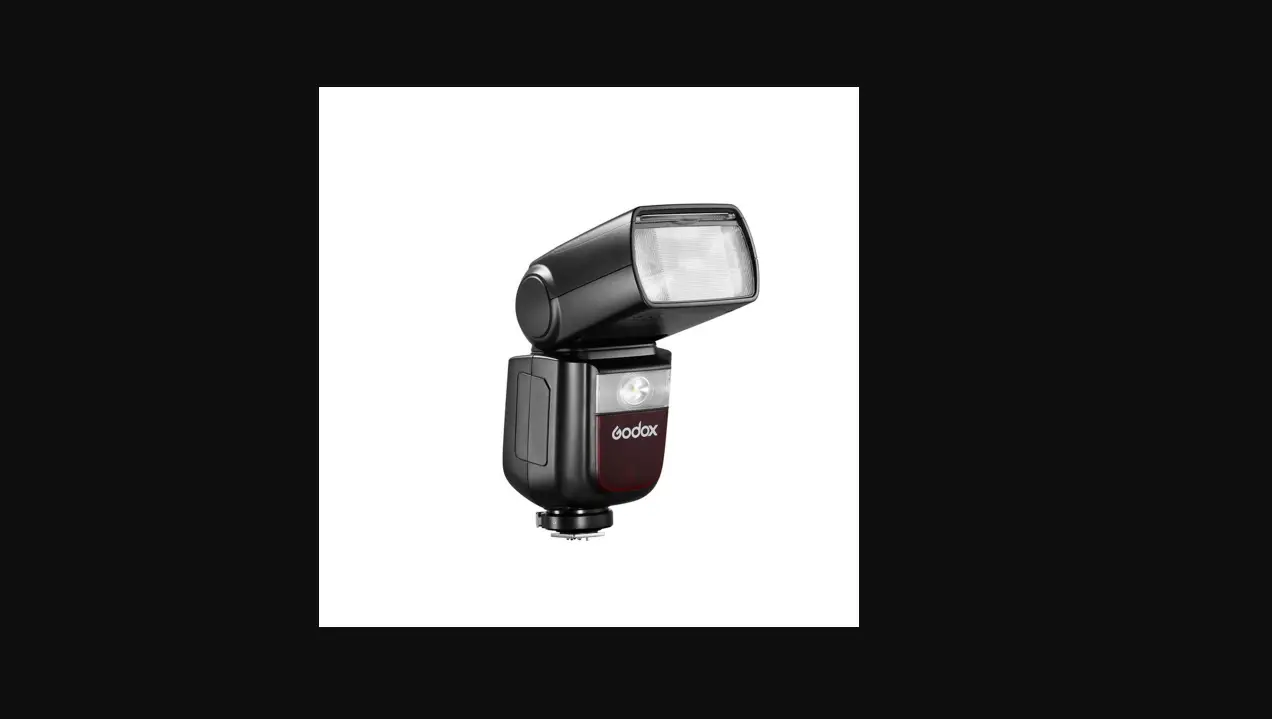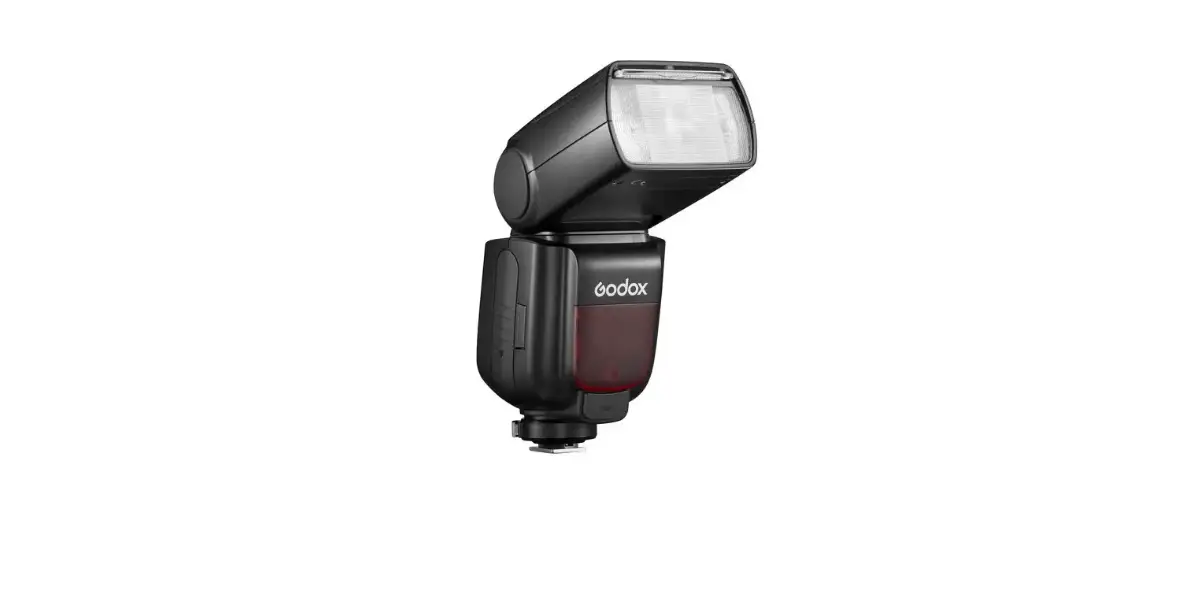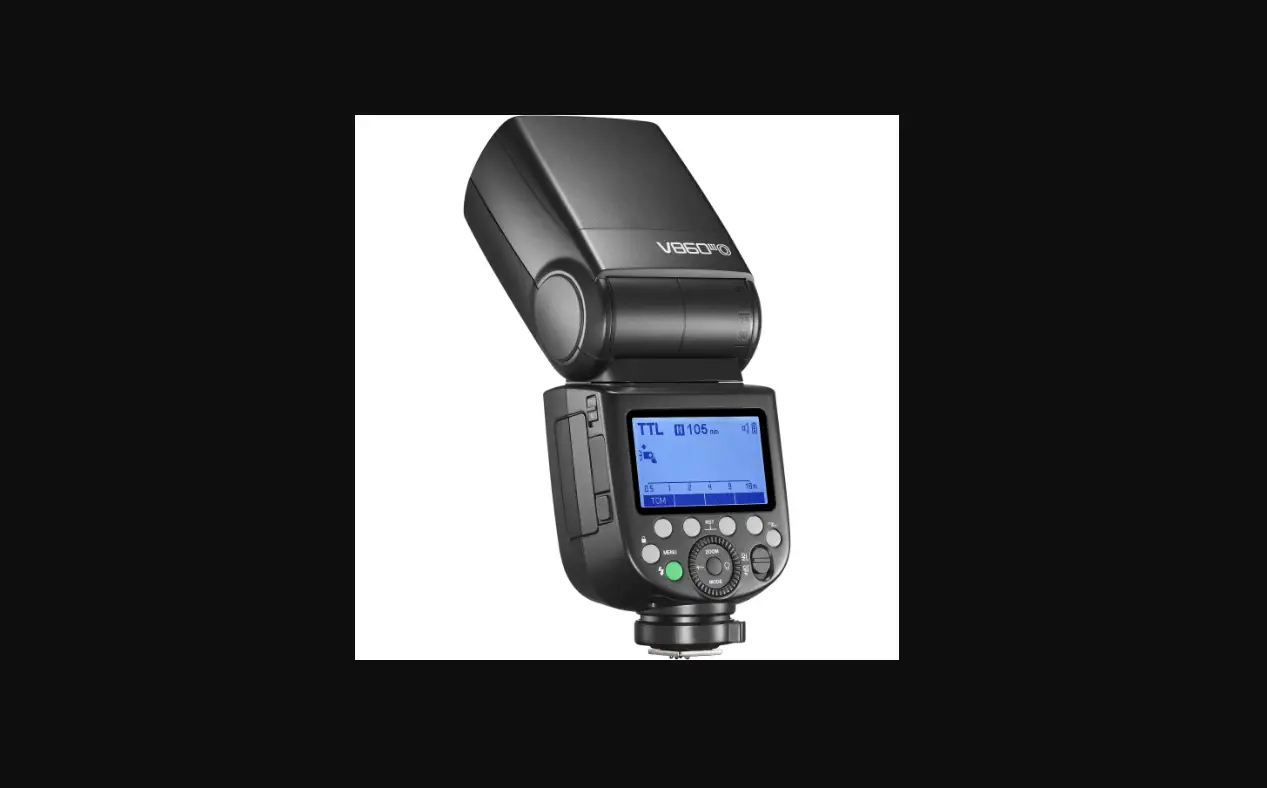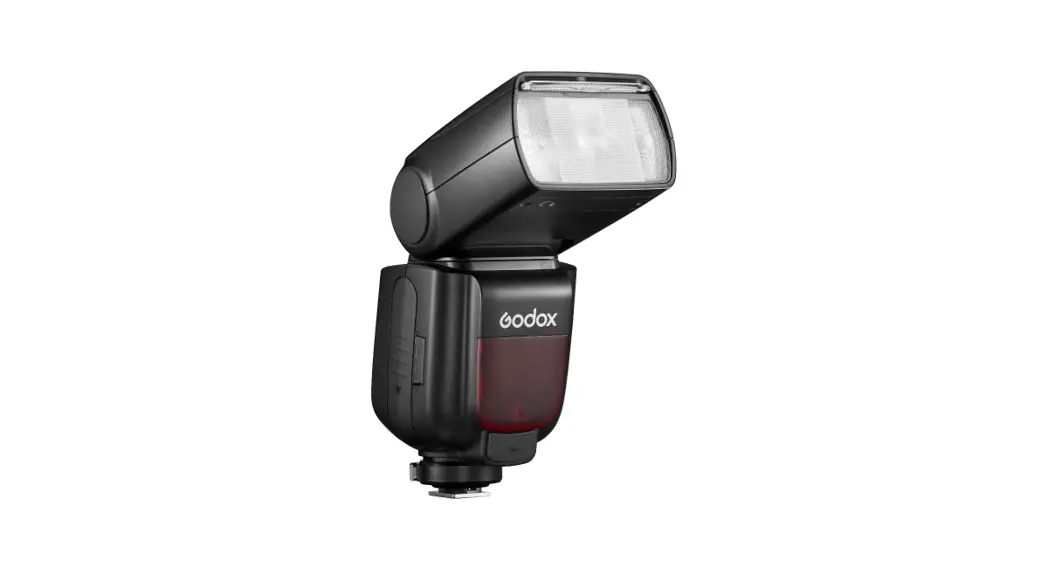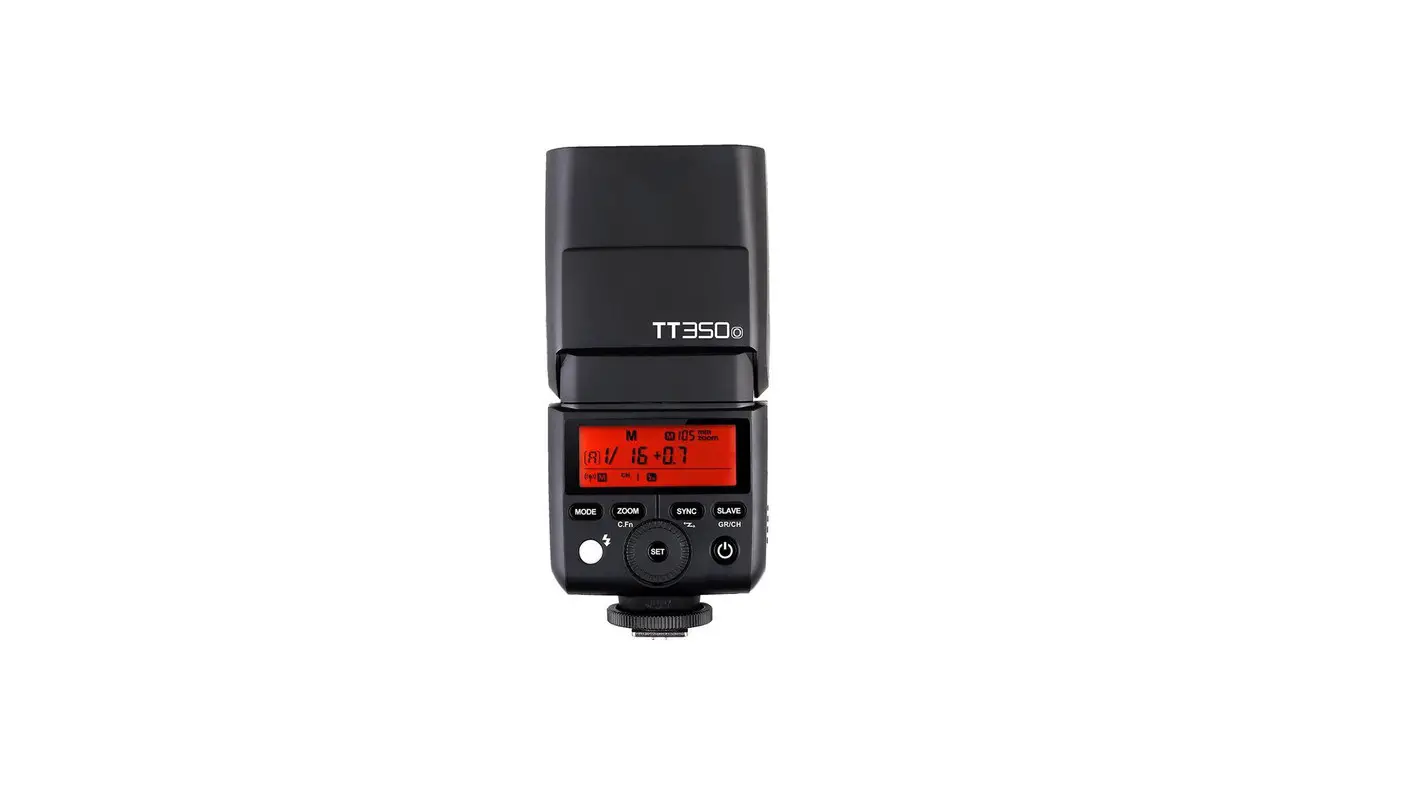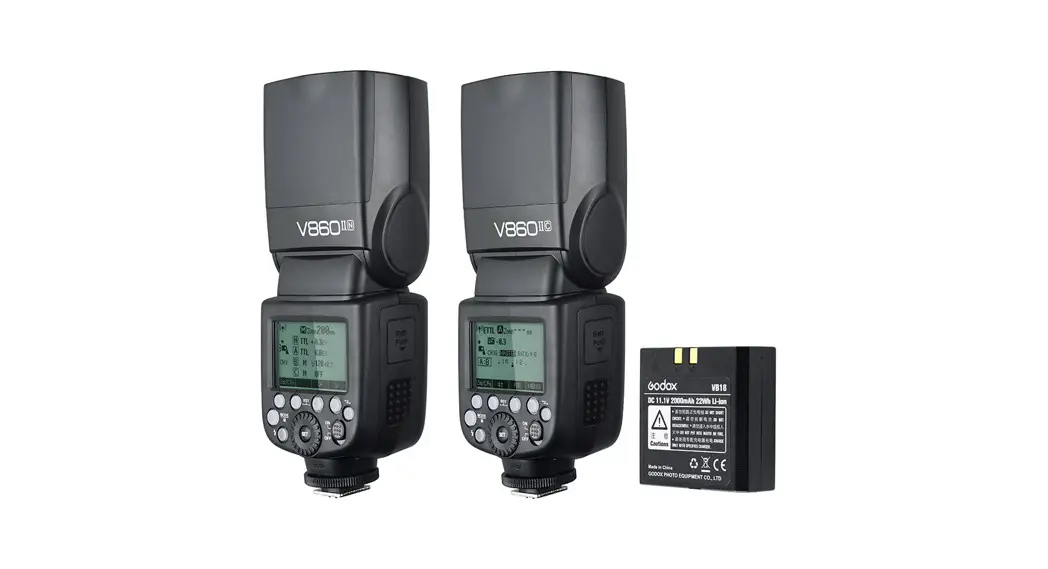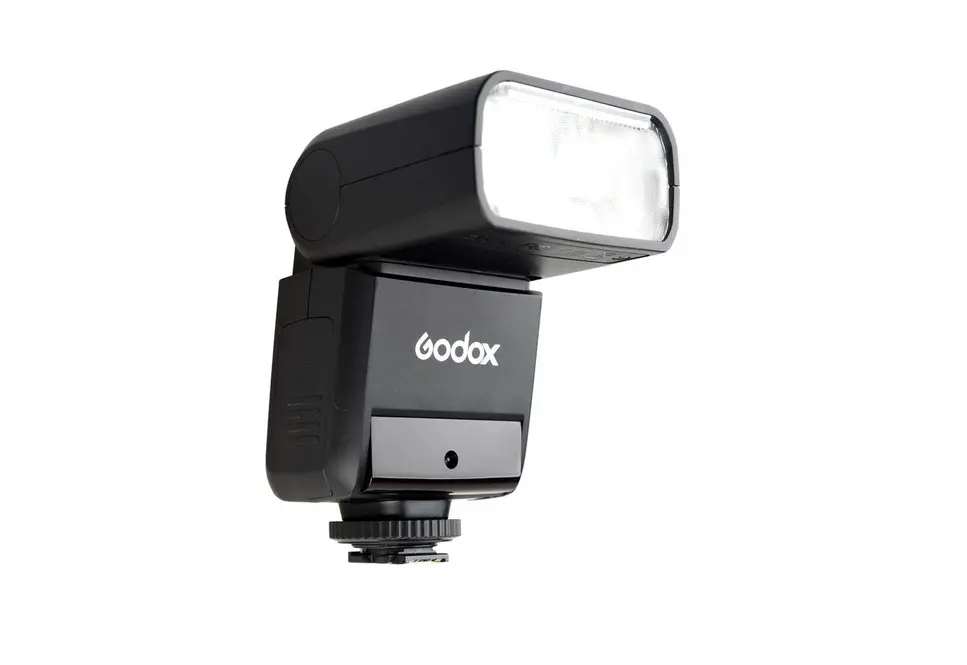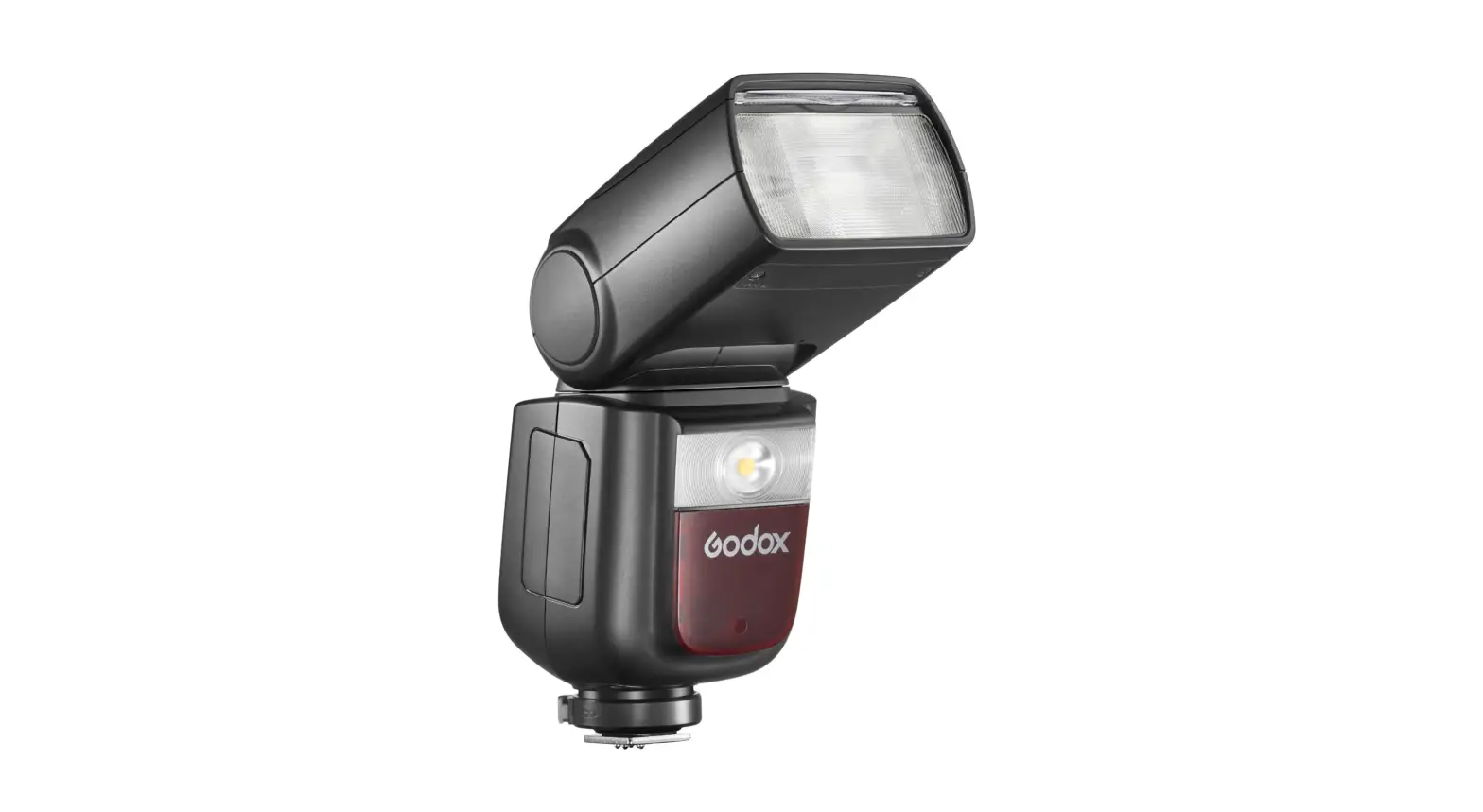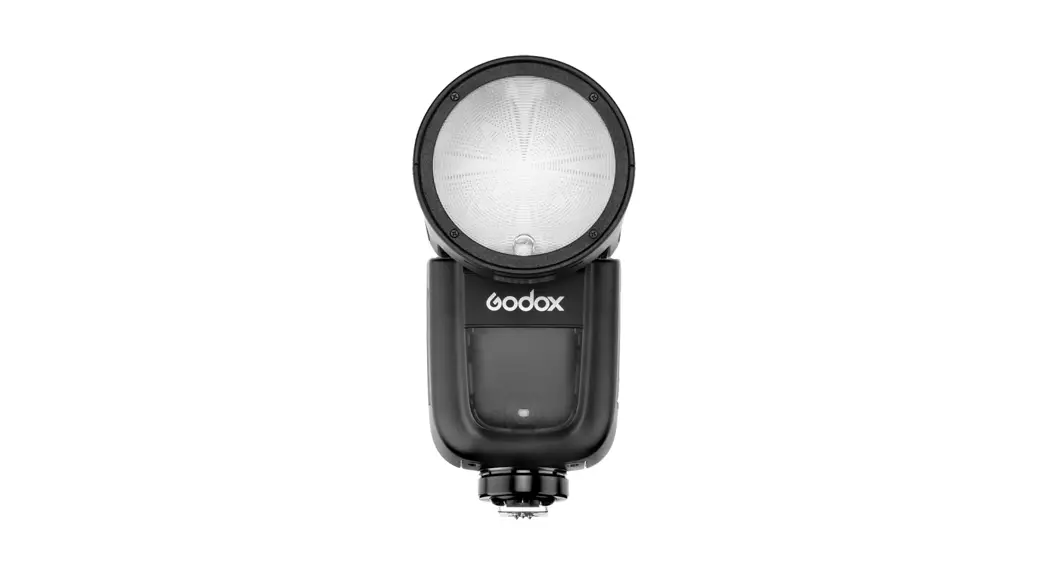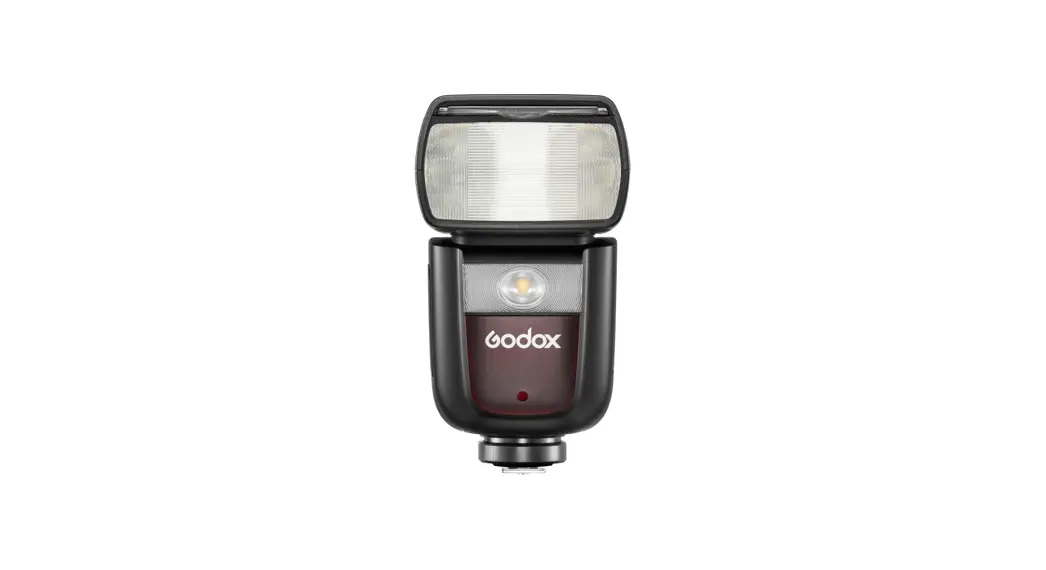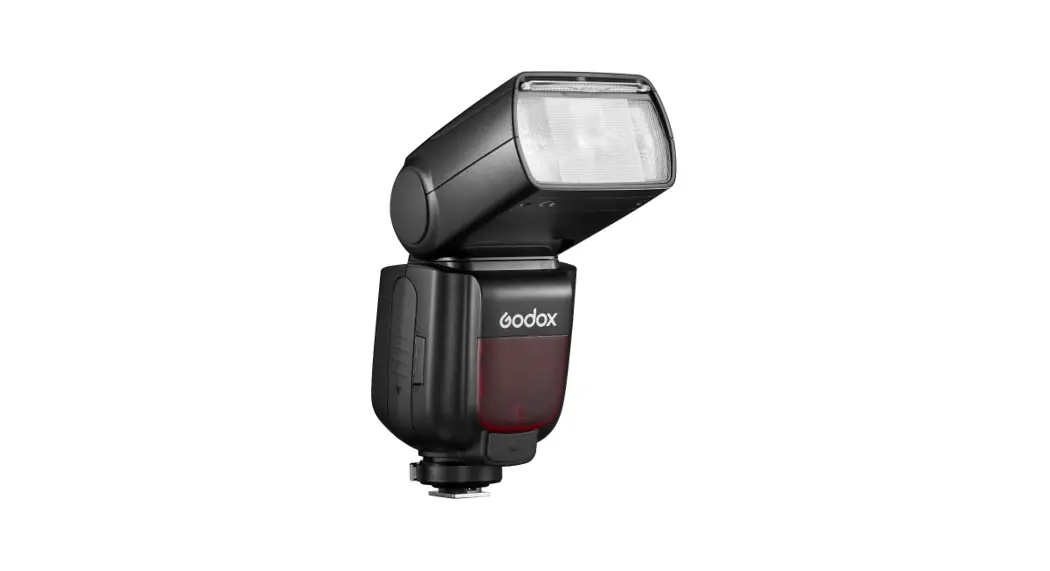

 THINK LIKE TTL CAMERA FLASH
Before using this product:
lease read this user manual carefully in order to ensure your safety and the proper operation of this product Keep for future reference.
Foreword
Thank you for purchasing this product.
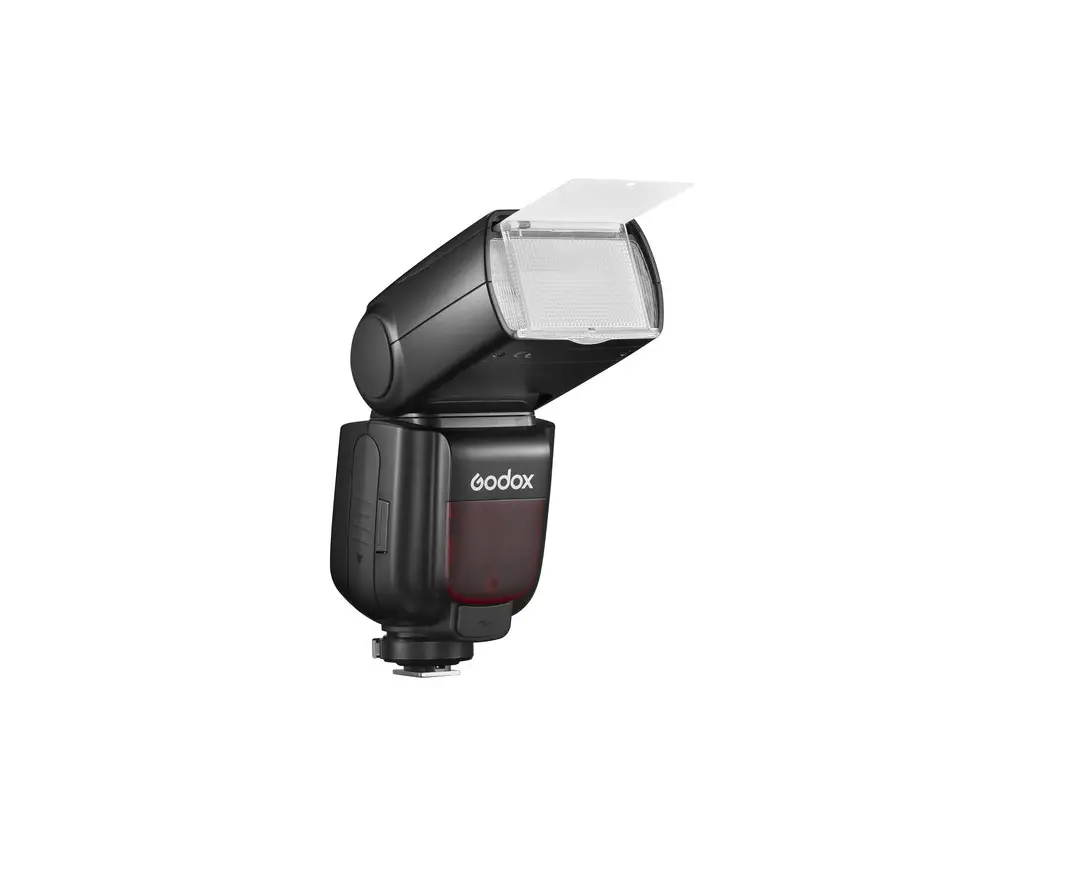
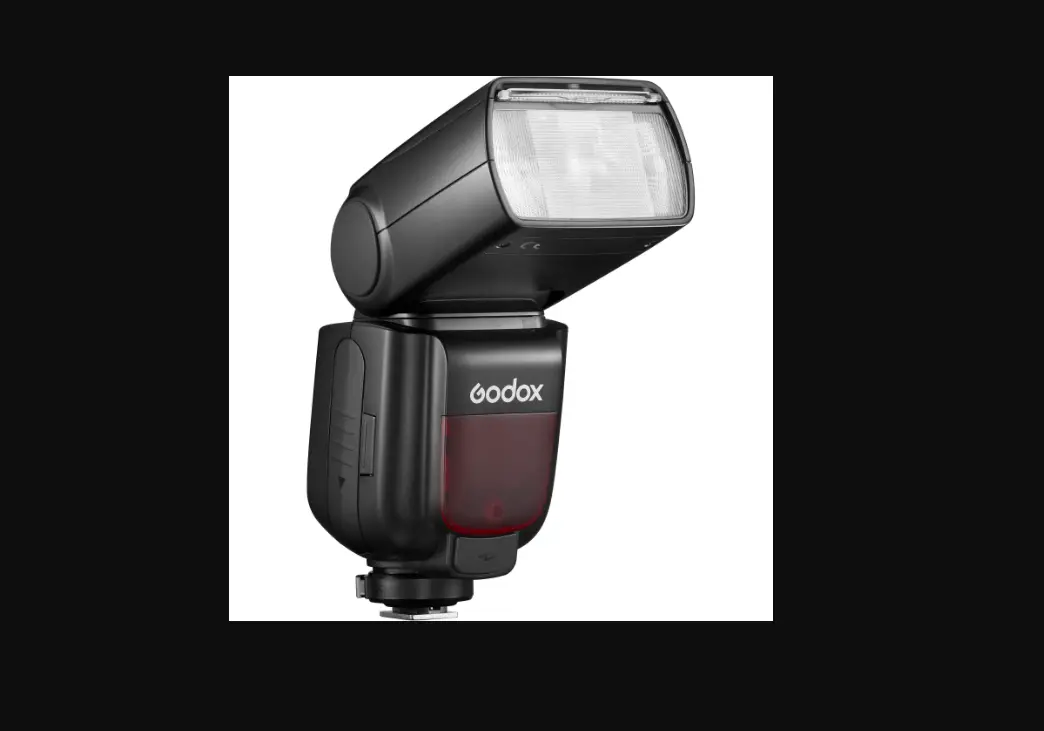
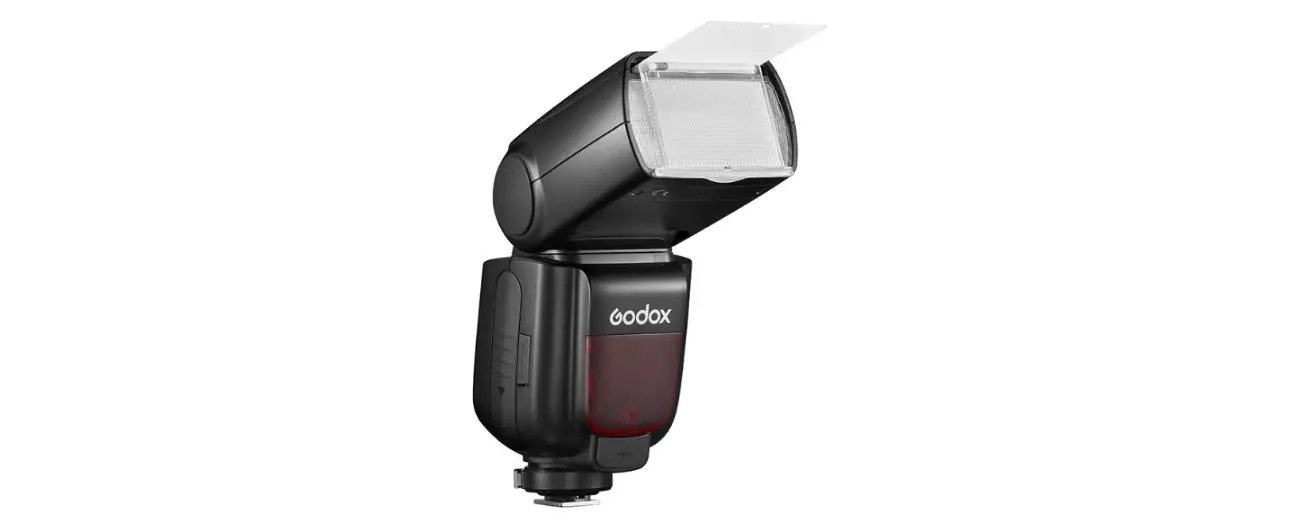
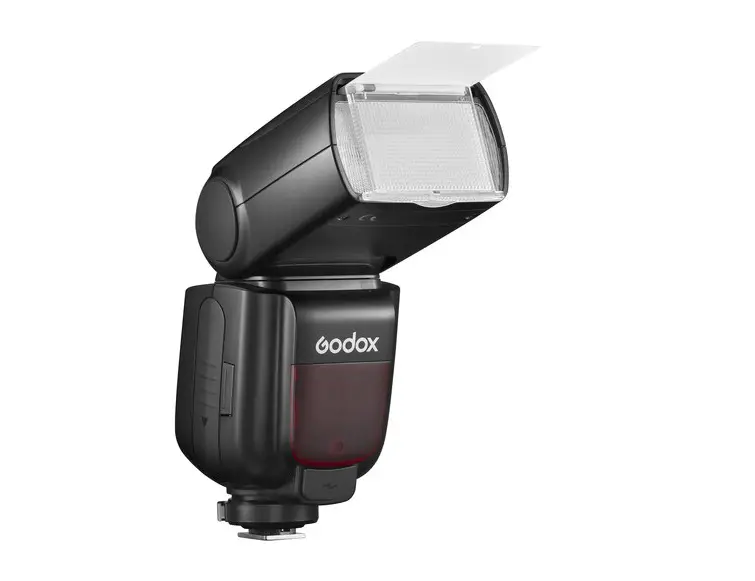
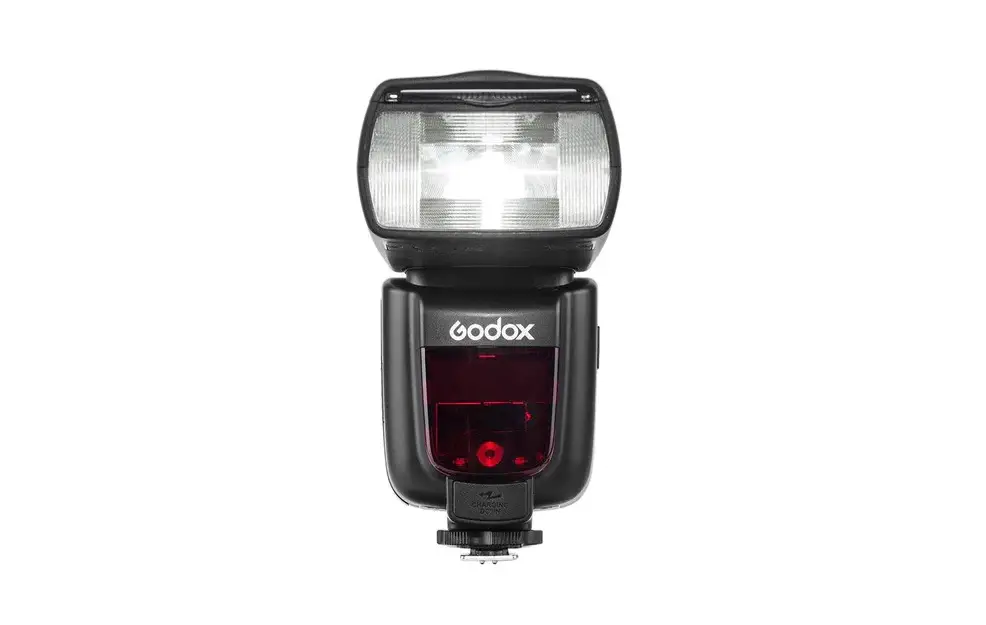
This TT68511C camera flash applies to Canon EOS series cameras and is compatible with E-TTL II autoflash. With this E-TTL II compati ble flash, your shooting will become simpler. You can easily achieve correct flash exposure even in complex light-changing environments. This camera flash features:
- Approx. GN60 (1SO 100, @200mm), 81 steps from 1/1 to 1/256.
- Fully support Canon E-TTL II camera flash. Workable as Transmitter or Receiver unit in a wireless flash group.
- Use dot-matrix LCD panel to make clear and convenient operations.
- With built-in 2.4GHz wireless remote system to support transmit ting and receiving.
- Provided multiple functions, including HSS (up to 1/8000s), FEC, FEB, etc.
- Stable consistency and color temperature with good even lighting.
- Support with a firmware upgrade.
 Warning
 Always keep this product dry. Do not use in rain or in damp conditions.Do not disassemble. Should repairs become necessary, this product must be sent to an authorized maintenance center.Keep out of reach of children.
Stop using this product if it breaks open due to extrusion, falling, or strong hit. Otherwise, an electric shock may occur if you touch the electronic parts inside it.Do not fire the flash directly into the eyes (especially those of babies) within short distances. Otherwise, visual impairment may occur.Do not use the flash unit in the presence of flammable gases, chemicals, and other similar materials. In certain circumstances, these materials may be sensitive to the strong light emitting from this flash unit, and fire or electromagnetic interference may result.Do not leave or store the flash unit if the ambient temperature reads over 50C. Otherwise, the electronic parts may be damaged.Turn off the flash unit immediately in the event of a malfunction.
Conventions Used in this Manual
- This manual is based on the assumption that both the camera and camera flash’s power switches are powered on.
- Reference page numbers are indicated by “p.
- The following alert symbols are used in this manual:The Caution symbol indicates a warning to prevent shooting problems.
 The Note symbol gives supplemental information.
Name of Parts
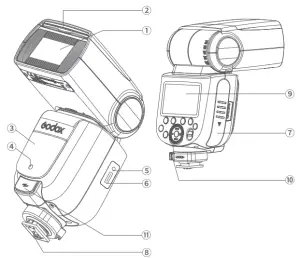
Body
| 01. Flash Head 02. Built-in Wide Panel 03. Wireless Sensor 04. Focus Assist Beam 05. Sync Cord Jack 06. Type-C USB Port | 07. Battery Cover 08. Hotshoe 09. LCD Panel 10. Hotshoe Fixing Buckle 11. External Charging Port |
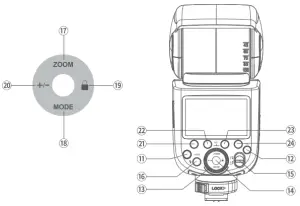
Control Panel
| 11.<MENU>Flash Menu Button/Locking Button 12.  Wireless Selection Button Wireless Selection Button13. Select Dial 14. Set Button 15. ON/OFF Power Switch 16.  Test Button /Flash Ready Indicator Test Button /Flash Ready Indicator | 17. <ZOOM> Focus Length Setting 18. <MODE>Mode Selection Button 19.<  >Lock Setting >Lock Setting20. <+/->Power Output 21. Function Button 1 22. Function Button 2 23. Function Button 3 24. Function Button 4 |
LCD Panel
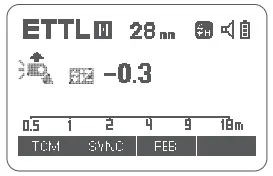
(1)E-TTL Autoflash
Zoom: zoom display (Page 45)
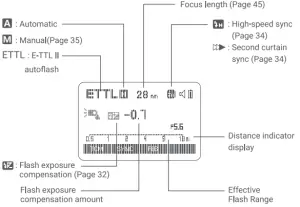

- The display will only show the settings currently applied.
- The functions displayed above function buttons 1 to 4, such as Etzel and <A/B/C/D>, change according to settings’ status.
- The LCD panel will lighten on when buttons and dials are operated.
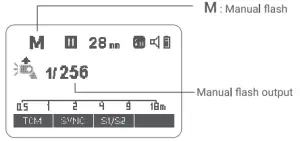
(2)M Manual Flash
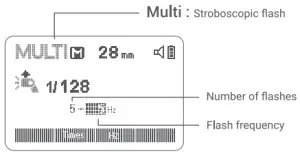
(3)Multi Flash
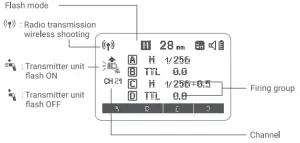
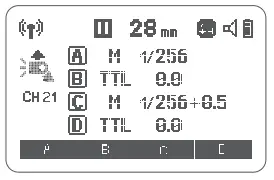
(4) Radio Transmission Shooting
Transmitter Unit (TX)
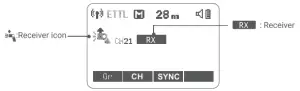
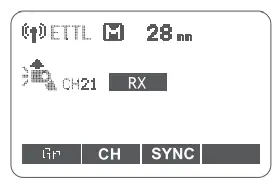
Receiver Unit (RX)
- LCD Panel in Three Modes
- Attached to the Camera

- 2.4G Radio Transmission: As a Transmitter Unit

- 2.4G Radio Transmission: As a Receiver Unit
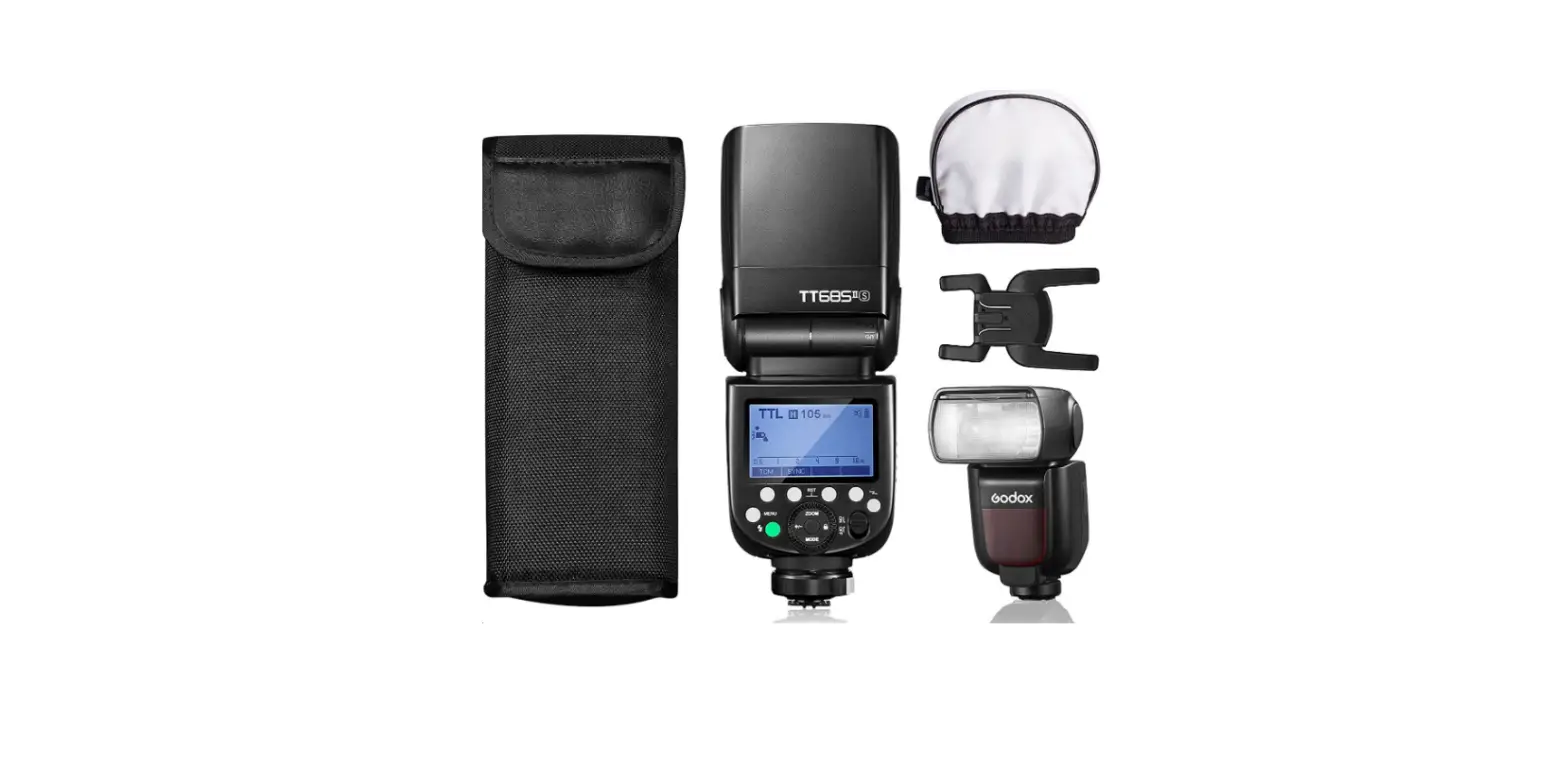
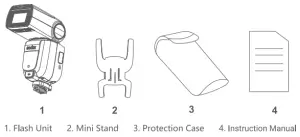
What’s in the Box of TT6851 IC Kit?
Separately Sold Accessories
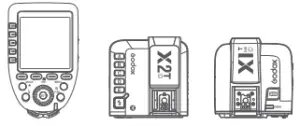
The product can be used in combination with the following accessories sold separately, so as to achieve the best photography effects: XProC, X2TC & Xl C TTL wireless flash trigger, etc.
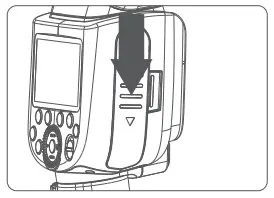
Loading and Unloading the Battery
- To unload the battery, hold down the battery and press the compartment, and push the battery downward to take it out.

- Put 4 batteries in with the correct polarity after opening the battery compartment, then close and push it to the top.

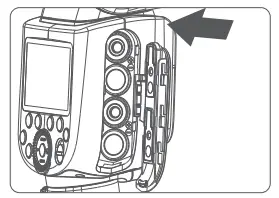
Tips: When collocated with the optional Godox Flash Power Box PB960, TT685IIC will have more flash times, shorter recycle time and longer duration.
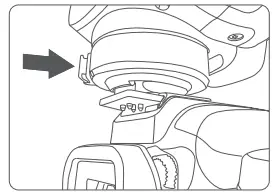
Attaching to a Camera
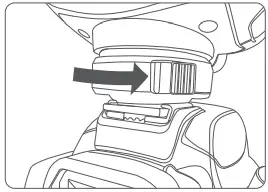
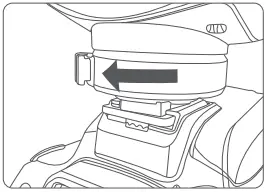
- Attach the Camera Flash.
• Rotate the Hotshoe fixing buckle to the left and insert the camera flash into the camera’s hot shoe.
- Secure the Camera Flash.
• Rotate the Hotshoe fixing buckle to the right until it locks up.
- Detach the Camera Flash.
• Press the button and rotate the Hotshoe fixing buckle to the left until it is loosened.
Power Management
Use ON/OFF Power Switch to power the flash unit on or off. Turn off if it will not be used for an extended period of time. Setting as a transmitter flash, it will turn the power off automatically after a certain period (approx. 90 seconds) of idle use. Pressing the camera shutter halfway or pressing any flash button will wake up the flash unit. Setting as a receiver flash, it will enter sleep mode after a certain period (adjustable, 60 minutes by default) of idle use. Pressing any flash button will wake it up.c.Fn Disabling Auto Power Off function is recommended when the flash is used off-camera. (C. Fn-STBY, Page 46)
c.Fn Receiver Auto Power Off Timer is set to 60 minutes by default. Another option “30 minutes” is available. (C. Fn-RX STBY, Page 46)
Flash Mode–E-TTL Autoflash
This flash has three flash modes: E-TTL, Manual (M), and Multi (Stroboscopic). In E-TTL mode, the camera and the flash will work together to calculate the correct exposure for the subject and the background. In this mode, multiple TTL functions are available: FEC, FEB, FEL, HSS, second curtain sync, modeling flash, control with the camera’s menu screen.
Press <MODE > Mode Selection Button and three flash modes will display on the LCD panel one by one with each pressing.
ETTL Mode
Press < MODE > Mode Selection Button to enter E-TTL mode. The LCD panel will display.
- Press the camera release button halfway to focus. The aperture and effective flash range will be displayed on the viewfinder.
- When the shutter button is fully pressed, the flash will fire a pre-flash that the camera will use to calculate exposure and flash output the instant before the photo is taken.
 EH FEC: Flash Exposure compensation
With the FEC function, this flash can adjust from -3 to +3 in 1/3rd stops.
It is useful in situations where minor adjusting of the TTL system is needed based on the environment.
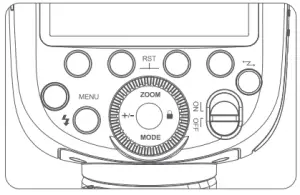
FEC Setting:
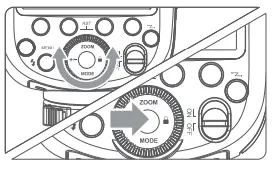
- Press the <+/-> button. The icon <
 > and flash exposure compensation amount will be highlighted on the LCD panel.
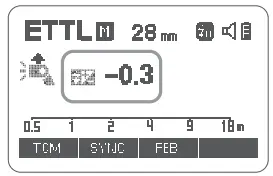
- Set the flash exposure compensation amount.
• Turn the Select Dial to set the amount.
• “0.3” means 1 /3 step, “0.7” means 2/3 step.
• To cancel the flash exposure compensation, set the amount to “+0”. - Press Set Button again to confirm the setting.
 FEB: Flash Exposure Bracketing
You can take three flash shots while automatically changing the flash output for each shot from -3 to +3 in 113th stops. The camera will record three images with different exposures: one exposed according to camera calculations, one over-exposed, and another under-exposed. Over and underexposure amount is user adjustable. This function helps get correct exposure especially in shooting moving objects or when environmental rights are complex.
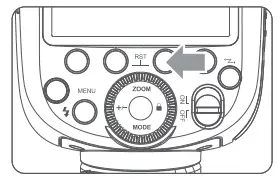
- Press function button 3 >FEBicon < >
 The exposure bracketing amount will be highlighted on the LCD panel.
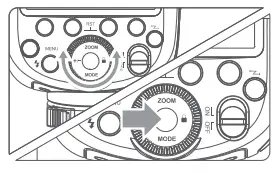
- Set the flash exposure compensation amount.
• Turn the Select Dial to set the amount.
•”0.3″ means 1/3 step, “0.7” means 2/3 step.
- Press Set Button again to confirm the setting. Then your FEC and FEB settings are displayed on the LCD panel.
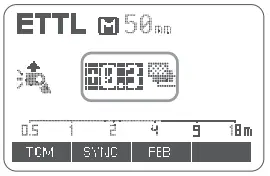
- FEB will be canceled after three photos are taken.
- For best results, set the camera drive mode to “single” and ensure the flash is ready before shooting.
- FEB can be used with FEC and FEL.
C.FnYou can prevent the FEB from being canceled automatically after three photos are taken. (C. Fn-FEB ACL, Page 46)
FEL: Flash Exposure Lock
FEL can lock the correct flash exposure setting for any part of the scene.
With <ETTL> displayed on the LCD panel, press the camera’s <FEL>button. If the camera does not have the <FEL> button, press the < > button.
- Focus on the subject.

- Press the <FEL> button.
• Aim the subject at the center of the viewfinder and press <FEL> button.
• The camera flash will fire a preflash and the required flash output for the subject is retained in memory.
• “FEL” will display on the viewfinder for 0.5s.
• The camera flash will fire a preflash and lock the flash exposure setting once the <FEL> button is pressed.

- If the subject is too far away and underexposure, the
 icon will blink in the viewfinder. Move closer to the subject and try the FE lock again.
 - If <ETTL> is not displayed on the LCD panel, the FE lock cannot be set.
- If the subject is too small, the FE lock might not be very effective.
 High-speed sync
High-Speed Sync (FP flash) enables the flash to synchronize with all camera shutter speeds. This is convenient when you want to use aperture priority for fill-flash portraits.
- Press Function Button 2 < SYNC> so that <
 > is displayed.
- Check that <> is displayed in the viewfinder.
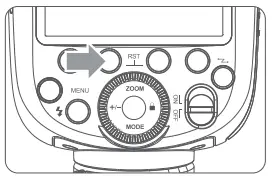
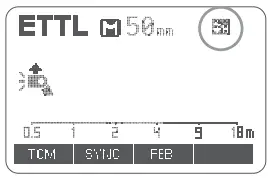
- If you set a shutter speed that is the same as or lower than the camera’s maximum flash sync speed, < > will not be displayed in the viewfinder.
- With high-speed sync, the faster the shutter speed, the shorter the effective flash range.
- To return to normal flash, press <SYNC> button again.Then < > will disappear.
- Multiflash mode cannot be set in high-speed sync mode.
- Over-temperature protection may be activated after 30 consecutive high-speed sync flashes.
 Second-Curtain Sync
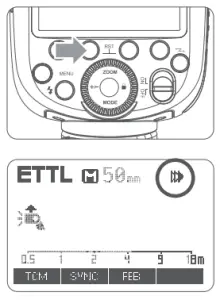
With a slow shutter speed, you can create a light trail following the subject. The flash fires right before the shutter close.
Press function button 2 < SYNC> button so that < > is displayed on the LCD panel.
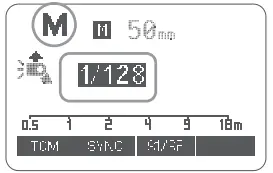
M: Manual Flash
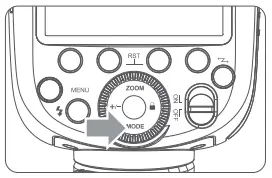
The flash output is adjustable from 1 /1 full power to 11256th power in 1/10th stop increments. To obtain a correct flash exposure, use a hand-held flash meter to determine the required flash output.
- Press < MODE > button so that < M > is displayed.

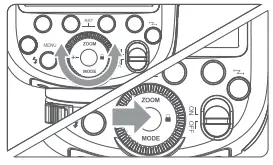
- Turn the Select Dial to choose a desired flash output amount.

- Press Set Button again to confirm the setting.
Optic Sl Secondary Unit Setting
In M manual flash mode, press <S1/S2> button so that this flash can function as an optic S1 secondary flash with optic sensor. With this function, the flash will fire synchronously when the main flash fires, the same effect as that by the use of radio triggers. This helps create multiple lighting effects.
Optic S2 Secondary Unit Setting
Press <S1/S2> button so that this flash can also function as an optic S2 secondary flash with the optic sensor in M manual flash mode. This is useful when cameras have a pre-flash function. With this function, the flash will ignore a single “preflash” from the main flash and will only fire in response to the second, actual flash from the main unit.• Sl and S2 optic triggering is only available in M manual flash mode.
Multi: Stroboscopic Flash
With stroboscopic flash, a rapid series of flashes is fired. It can be used to capture multiple images of a moving subject in a single photograph.
You can set the firing frequency (number of flashes per sec. expressed as Hz), the number of flashes, and the flash output.
- Press <MODE> button so that <MULTI> is displayed.

- Set the flash frequency and flash times.
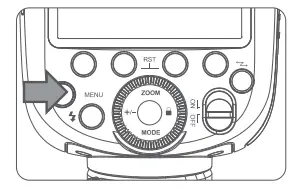
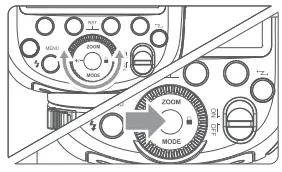
• Press the Function Button 2 2<Times> to select the flash times. Turn the Select Dial to set the number.
• Press the Function Button 3 <Hz> to select the flash frequency. Turn the Select Dial to set the number.
- Turn the Select Dial to choose the desired flash output. After you finish the setting, press Set Button and all the settings will be displayed.
Calculating the Shutter Speed
During the stroboscopic flash, the shutter remains open until the firing stops. Use the formula below to calculate the shutter speed and set it with the camera.
Number of Flashes / Flash Frequency = Shutter Speed
For example, if the number of flashes is 10 and the firing frequency is 5 Hz, the shutter speed should be at least 2 seconds.To avoid overheating and deteriorating the flash head, do not use stroboscopic flash more than 1 O times in succession. After 1 O time, allow the camera lash to rest for at least 15 minutes. If you try to use the stroboscopic flash more than 10 times in succession, the firing might stop automatically to protect the flash head. If this happens, allow at least 15 minutes’ rest for the camera flash.
- stroboscopic flash is most effective with a highly reflective subject against a dark background.
- using a tripod and remote control is recommended.
- A flash output of 1/1 and 1/2 cannot be set for stroboscopic flash.
- Stroboscopic flash can be used with”buLb”.
- If the number of flashes is displayed as”-“, the firing will continue until the shutter closes or the battery is exhausted. The number of flashes will be limited as shown by the following table.
Maximum Stroboscopic Flashes:
| Flash output/ Hz | 1 | 2 | 3 | 4 | 5 | 6-7 | 8-9 |
| 1/4 | 8 | 6 | 4 | 3 | 3 | 2 | 2 |
| 1/8 | 14 | 14 | 12 | 10 | 8 | 6 | 5 |
| 1/16 | 30 | 30 | 30 | 20 | 20 | 20 | 10 |
| 1/32 | 60 | 60 | 60 | 50 | 50 | 40 | 30 |
| 1/64 | 90 | 90 | 90 | 80 | 80 | 70 | 60 |
| 1/128 | 100 | 100 | 100 | 100 | 100 | 90 | 80 |
| 1/256 | 100 | 100 | 100 | 100 | 100 | 90 | 80 |
| Flash output/ Hz | 10 | 11 | 12-14 | 15-19 | 20-50 | 60-199 |
| 1/4 | 2 | 2 | 2 | 2 | 2 | 2 |
| 1/8 | 4 | 4 | 4 | 4 | 4 | 4 |
| 1/16 | 8 | 8 | 8 | 8 | 8 | 8 |
| 1/32 | 20 | 20 | 20 | 18 | 16 | 12 |
| 1/64 | 50 | 40 | 40 | 35 | 30 | 20 |
| 1/128 | 70 | 70 | 60 | 50 | 40 | 40 |
| 1/256 | 70 | 70 | 60 | 50 | 40 | 40 |
Wireless Flash Shooting: Radio (2.4G) Transmission
- When the camera’s shooting mode is set to a fully automatic mode or an Image Zone mode, the operations in this chapter are not available. Set the camera’s shooting mode to P/Tv/Av/M/B (Creative Zone Mode).
- The TT685IIC attached to the camera is called the transmitter unit, and a TT685IIC that is wirelessly controlled is called the receiver unit.
- You can also wirelessly control the TT685IIC set as the receiver unit with the transmitter X1T-C (sold separately). For details on setting the transmitter unit functions, see the transmitter’s instructions.
Using a flash (transmitter/receiver) with a radio transmission wireless shooting function makes it easy to shoot with advanced wireless multiple flashes lighting, in the same way as E-TTL I autoflash shooting.
The basic relative position and operation range is as shown in the picture. You can then perform wireless E-TTL II autoflash shooting just by setting the transmitter unit to <ETTL>.
Positioning and Operation Range (Example of wireless flash shooting)
- Autoflash Shooting with One Receiver Unit
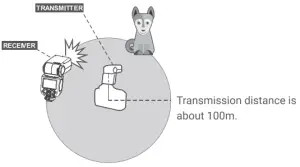
- Use the supplied mini stand to position the Receiver unit.
- Before shooting, perform a test flash and test shooting.
- The transmission distance might be shorter depending on the conditions such as positioning of Receiver units, the surrounding environment, and weather conditions.
Wireless Multiple Flash Shooting
You can divide the Receiver units into two or three groups and perform an E-TTL II autoflash while changing the flash ratio (factor). In addition, you can set and shoot with a different flash mode for each firing group, for up to 4 groups.
- Auto Shooting with Two Receiver Groups

- Auto Shooting with Three Receiver Groups

- Shooting with a Different Flash Mode set for Each Group

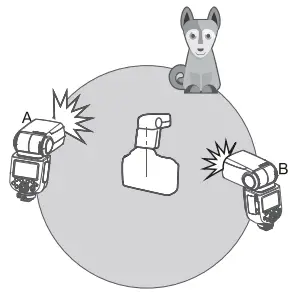
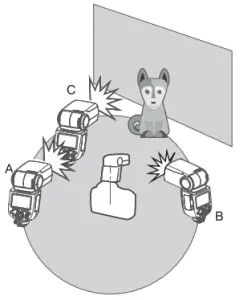
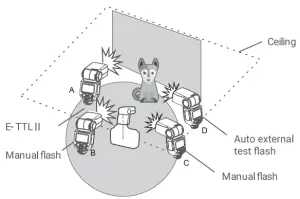
The flash mode settings are indicated only as an example
Wireless Settings
You can switch between normal flash and wireless flash. For normal flash shooting, be sure to set the wireless setting to OFF.
Transmitter Unit Settin
Press the button so that <  > is displayed on the LCD panel.
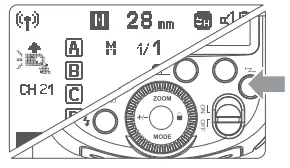
Receiver Unit Setting
Press <“z, > button so that << RX> played on the LCD panel.
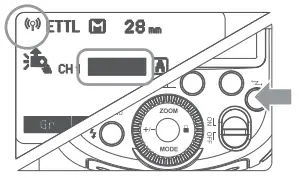
Transmitter Unit’s Flash OFF
When the Transmitter unit is set to OFF, only the Receiver units will fire a flash.
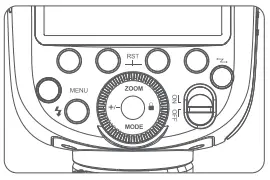
- Press <MENU> Button to enter C.Fn Transmitter setting.

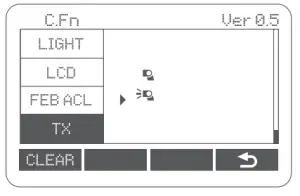
- Set Transmitter to ON/OFF to control the On/Off of the Transmitter unit.
< >: The Transmitter unit flash firing is ON.
< >: The Transmitter unit flash firing is OFF.
 • Even if the Transmitter unit flash firing is disabled, it still fires a preflash to transmit wireless signals.
 • Even if the Transmitter unit flash firing is disabled, it still fires a preflash to transmit wireless signals.
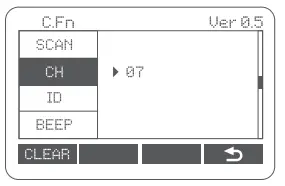
Setting the Communication Channel
If there are other wireless flash systems nearby, you can change the channel IDs to prevent signal interference. The channel IDs of the Transmitter unit and the Receiver unit(s) must be set to the same.
- Press <MENU> Button to enter the C.Fn CH setting.
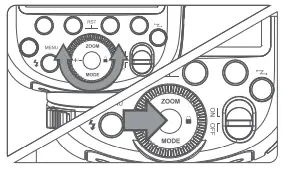
- In C.Fn CH, turn the Select Dial to choose channel ID from 1 to Manual flash 32.

- Press the Set button to confirm
Wireless ID Settings
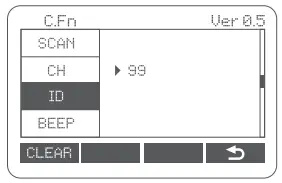
Change the wireless channels and wireless ID to avoid interference for it can only be triggered after the wireless IDs and channels of the Transmitter unit and the Receiver unit are set to the same. Press the <MENU> button to enter C.Fn ID. Press the Set Button to choose OFF channel expansion shutdown, and choose any figure from 01 to 99.
Scan the Spare Channel
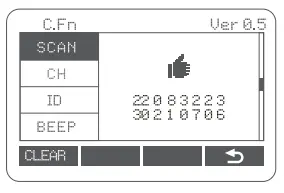
To avoid the interference of using the same channel by others, this function can be used: enter the C.Fn settings and find the SCAN option. When setting it to START, it will scan from 1% to 100%. And the 8 spare channels will be displayed after the scan is completed.
ETTL: Fully Automatic Wireless Flash Shooting
- Using Automatic Wireless Flash with a Single Receiver Unit
Transmitter Unit Setting
•Attach a TT685IIC camera flash on the camera and set it as the Transmitter unit.
•X1TC can also be used as a Transmitter unit. X1T-C can control TT685IIC ‘s ZOOM value when the ZOOM is adjusted to auto (A) mode.
- Receiver Unit Setting
•Set wireless controlled TT685IIC as the wireless Receiver Unit.(Page 39)
- Check the communication channel.
• If the Transmitter unit and Receiver unit(s) are set to a different channel, set them to the same channel. (Page 40) - Position the camera and flash.
• Position the camera and flash as the picture shows. (Page 38) - Set the Transmitter unit’s flash mode to <ETTL>.
•Set the Transmitter unit’s flash mode to <ETTL>
•For shooting, <ETTL> will automatically be set for the Receiver unit.
•Set the Transmitter unit flash firing as ON to fire a flash.(Page 39) - Check that the flash is ready.
•Check that the Transmitter flash-ready indicator is lightened.
•When the Receiver flash ready indicator is ready, the AF-assist beam lighting area will blink at 1-second intervals. - Check the flash operation.
• Press the Transmitter unit’s Test Button.
• Then, the Receiver unit will fire. If not, adjust the Receiver unit’s angle toward the Transmitter unit and distance from the Transmitter unit.
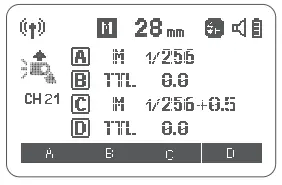
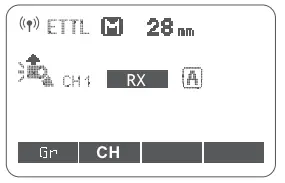
Using Automatic Wireless Flash with Multiple Receiver Units
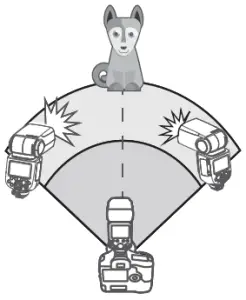
When stronger flash output or more convenient lighting operation is needed, increase the number of Receiver units and set it as a single Receiver unit.
To add Receiver units, use the same steps as setting”automatic wireless flash with a single Receiver unit”. Any flash group can be set (A/B/C/D/E). When the number of Receiver units is increased and the Transmitter unit flash firing is ON, automatic control is implemented to make all groups of flashes fire the
same flash output and ensure the total flash output up is to standard exposure.
- Press the depth-of-field preview button on the camera to fire a modeling flash.
- If the Receiver unit’s auto power-off function is workable, press the Transmitter unit’s test button to power it on. Please note that test firing is unavailable during the camera’s regular metering time.
- The effective time of the Receiver auto power-off is changeable. (C. Fn-RX STBY Page 46)
- By making some settings, the auto AF-assist transmitter will not blink after the Receiver unit’s flash-ready indicator is lightened. (C. Fn-AF Page 46)
Using Fully Automatic Wireless Flash
The FEC and other settings that are set on the Transmitter unit will also appear on the Receiver unit automatically. The Receiver unit does not need any operation. Use the following settings to make wireless flashes according to the same methods as normal flash shooting.
- Flash Exposure Compensation ( Page 32)
- Flash Exposure Lock (Page 33)
- Manual Flash (Page 35)
- Stroboscopic Flash (Page 36)
About the Transmitter Unit
Use two or more Transmitter units. By preparing several cameras that with Transmitter units flash attached, cameras can be changed in shooting while keeping the same lighting source (Receiver unit).
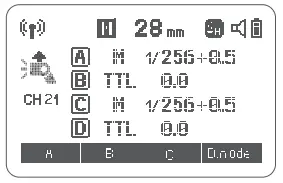
M: Wireless Flash Shooting with Manual Flash
This describes wireless (multiple shooting) using manual flash. You can shoot with a different flash output setting for each Receiver unit (firing group). Set all parameters on the Transmitter unit.
- Setting the flash mode to <M>.

- Setting flash output.
•Press function button 1/2/3/4<A/B/C/D>. Turn the Select Dial to set the flash output of the groups. Press the Set button to confirm.
- Taking the picture.
• Each group fires at the set flash ratio.
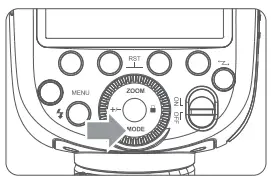
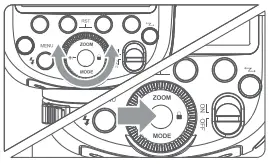
Setting <M> Flash Mode
You can directly operate the Receiver unit to manually set the manual flash or stroboscopic flash.
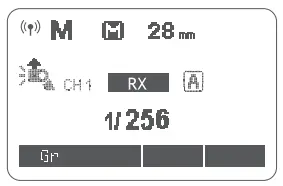
- Setting the Receiver unit.
- Setting flash mode to <M>.
•Press <MODE> button so that <M> is displayed.
•Set the manual flash output. (Page 35)
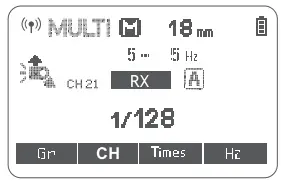
Multi: Wireless Flash Shooting with Manual Flash
- Setting <MULTI> stroboscopic flash.
• Press <MODE> button so that <MULTI> is displayed.
• Setting the stroboscopic flash. (Page 36)
The Reason & Solution of Not Triggering in Godox 2.4G Wireless
- Disturbed by the 2.4G signal in the outer environment (e.g. wireless base station, 2.4G wifi router, Bluetooth, etc.)
→ To adjust the channel CH setting on the flash trigger (add 10+ channels) and use the channel which is not disturbed. Or turn off the other 2.4G equipment in working. - Please make sure that whether the flash has finished its recycling or caught up with the continuous shooting speed or not(the flash ready indicator is lightened) and the flash is not under the state of over-heat protection or other abnormal situation.
→Please downgrade the flash power output. If the flash is in TTL mode, please try to change it to M mode(a preflash is needed in TTL mode). - Whether the distance between the flash trigger and the flash is too close or not (<0.5m)
→ Please turn on the “close distance wireless mode” on the lash trigger X2 & X1 series: press the test button and hold on, then turn it on until the flash-ready indicator blinks 2 times. XPro series: Set the C.Fn-DIST to 0-30m. - Whether the flash trigger and the receiver end equipment are in the low battery states or not
→Please replace the battery(the flash trigger is recommended to use a 1.5V disposable alkaline battery).
Other Applications
Sync Triggering
The Sync Cord Jack is a C!>2.5mm plug. Insert a trigger plug here and the flash will be fired synchronously with the camera shutter.
Auto Focus Assist Beam
In poorly-lit or low-contrast shooting environments, the built-in autofocus assist beam will automatically light on to make it easier for autofocus. The beam will light up only when autofocus is difficult and get out as soon as the autofocus becomes correct. If you want to turn off the autofocus assist beam, set the “AF” to “OFF” on the C.Fn settings.
• If you find the autofocus assist beam does not light up, this is because the camera has got the correct autofocus.
| Position | Effective Range |
| Center | 0.6-10m/2.0~32.8 feet |
| Periphery | 0.65m/2.0-16.4 feet |
Bounce Flash
By pointing the flash head toward a wall or ceiling, the flash will bounce off the surface before illuminating the subject. This can soften shadows behind the subject for a more natural-looking shot. This is called bounce flash.
To set the bounce direction, hold the flash head and turn it to a satisfying angle.
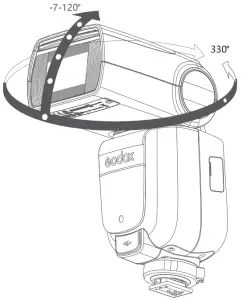
- If the wall or ceiling is too far away, the bounced flash might be too weak and result in underexposure.
- The wall or ceiling should be a plain, white color for high reflectance. If the bounce surface is not white, a color cast may appear in the picture.
Creating a Catchlight
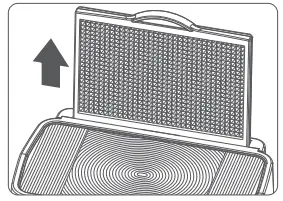
With the catchlight panel, you can create a catchlight in the subject’s eyes to add life to the facial expression.
- Point the flash head upward by 90°.

- Pull out the wide panel.
The catchlight panel will come out at the same time.
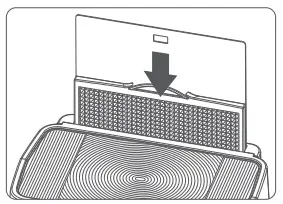
- Push the side panel back in.
• Push in only the wide panel.
• Follow the same procedures as for bounce flash.
Notes:
- Point the flash head straight ahead and then upward by 90°. The catchlight will not appear if you swing the flash head left or right.
- For maximum catchlight effect, stay 1.5m/4.9ft away from the subject.
ZOOM: Setting the Flash Coverage
The flash coverage can be set automatically or manually. It can be set to match the lens focal length from 20mm to 200mm.
In Manual Zoom mode, press the <ZOOM> button.
- Turn the Select Dial to change the flash coverage.
- If<A> is displayed, the flash coverage will be set automatical ly.
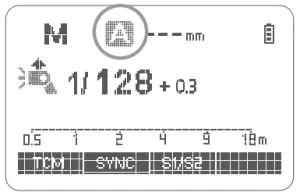
If you set the flash coverage manually, make sure it covers the lens focal length so that the picture will not have a dark periphery.
Low Battery Warning
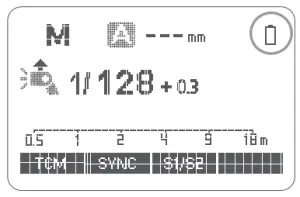
If the battery power is low, < ] > will appear and blink on the LCD panel. Please replace the battery immediately.
C.Fn: Setting Custom Functions
The following table lists the available and unavailable custom functions of this flash.
C.Fn Custom Functions
| Custom Function Signs | Function | Setting No. | Settings & Description |
| mat | Distance indicator | m | m |
| ft | feet | ||
| AF | AF-assist beam RX | ON | ON |
| OFF | OFF | ||
| STAY | Auto sleep setting | ON | ON |
| OFF | OFF | ||
| RX STAY | Receiver auto power-off timer | 60min | 60min |
| 30min | 30min | ||
| SCAN | Scan the spare channel | OFF | OFF |
| START | Start to find the spare channel | ||
| CH | Channel setting | 01-32 | Choose channels from 01-32 |
| ID | Wireless ID | OFF | Off |
| 01-99 | Choose any figure from 01-99 | ||
| BEEP | Beeper | ON | ON |
| OFF | OFF | ||
| LIGHT | Backlighting time | 12sec | Off in 12 sec. |
| OFF | Always off | ||
| ON | Always lighting | ||
| LCD | LCD contrast ratio | -3—+ 3 | 7 levels |
| FEB ACL | FEB auto cancel | ON | ON |
| OFF | OFF | ||
| TX | Transmitter unit control |  | OFF |
 | ON | ||
| TX DIST | Firing distance | 1-100m 0-30m | 1-100m firing 0-30m firing |
- Press<MENU> Button until C.Fn menu is displayed. The “Ver x.x” in the top-right corner refers to the software version.
- Select the Custom Function No.
• Turn the Select Dial to select the Custom Function No. - Change the Setting.
• Press Set Button and the Setting No. blinks.
• Turn the Select Dial to set the desired number. Pressing Set Button will confirm the settings.
After you set the Custom Function and press the <MENU> button, the camera will be ready to shoot. - In the C.Fn states, long-press the “Clear” button for 2 seconds until “OK” is displayed on the panel, which means the values in C.Fn can be reset.
If the camera flash is attached to an EOS camera that has a Speedlite control function, the flash can be controlled using the camera’s menu screen. For the menu operation procedure, refer to your camera’s instruction manual.
• Setting Camera Flash Functions
The following flash functions are settable according to different flash modes.
- Flash mode
- Shutter sync (1st/2nd curtain, high-speed sync)
- FEB
- Flash exposure compensation
- Flash firing
- Clear camera flash’s settings
• Custom Functions of Camera Flash
C.Fn-00, C.Fn-01, C.Fn-03, C.Fn-08, C.Fn-10, C.Fn-20, C.Fn-22.
Clear All-Flash Custom Functions
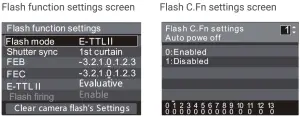
* Screens from the EOS-1D Mark 111.
- If flash exposure compensation has already been set with the camera flash, flash exposure compensation cannot be set with the camera. To set it with the camera, the camera flash’s flash exposure compensation must be set to zero.
- If any Flash Custom Functions and flash settings other than flash exposure compensation have been set by both the camera and the flash, the latest settings will take effect.
Protection Function
- Over-Temperature Protection
• To avoid overheating and deteriorating the flash head, do not fire more than 40 continuous flashes in fast succession at 1 /1 full power. After 40 continuous flashes, allow a rest time of at least 1 O minutes.
• If you fire more than 40 continuous flashes and then fire more flashes in short intervals, the inner over-temperature protection function may be activated. If this occurs, allow a rest time of about 1 O minutes, and the flash unit will then return to normal.
•When the over-temperature protection is startedis shown on the LCD display.
A number of flashes that will activate over-temperature protection:
| Number of flashes/Power output Level /ZOOM(mm) | 20 | 24 | 28 | 35 | 50 | 70 | 80 | 105 | 135 | 200 |
| 1/1 | 40 | 50 | 50 | 60 | 60 | 70 | 70 | 80 | 80 | 80 |
| 1/2 | 50 | 60 | 60 | 75 | 75 | 100 | 100 | 100 | 100 | 100 |
| 1/4 | 100 | 100 | 100 | 100 | 120 | 150 | 150 | 150 | 150 | 150 |
| 1/8 | 200 | 200 | 200 | 200 | 200 | 200 | 200 | 200 | 200 | 200 |
| 1/16 | 300 | 300 | 300 | 300 | 300 | 300 | 300 | 300 | 300 | 300 |
| 1/32 | 500 | 500 | 500 | 500 | 500 | 500 | 500 | 500 | 500 | 500 |
| 1/64 | 1000 | 1000 | 1000 | 1000 | 1000 | 1000 | 1000 | 1000 | 1000 | 1000 |
| 1/128 | 2000 | 2000 | 2000 | 2000 | 2000 | 2000 | 2000 | 2000 | 2000 | 2000 |
A number of flashes that will activate over-temperature protection in high-speed sync triggering mode:
| Number of flashes/Power output Level /ZOOM(mm) | 20-200 |
| 1/1 | 30 |
| 1/2 | 30 |
| 1/4 | 34 |
| 1/8 | 40 |
| 1 /1 6 | 50 |
| 1/32 | 50 |
| 1/64 | 60 |
| 1/128 | 60 |
Other Protections
The system provides real-time protection to secure the device and your safety. The following list prompts for your reference:
| Prompts on LCD Panel | Meaning |
| E1 | A failure occurs on the recycling system so that the flash cannot fire. Please restart the flash unit. If the problem still exists, please send this product to a maintenance center. |
| E2 | The system gets excessive heat. Please allow a rest time of 10 minutes. |
| E3 | The voltage on two outlets of the flash tube is too high. Please send this product to a maintenance center. |
| E9 | There are some errors that occurred during the upgrading process. Please use the correct firmware upgrade method. |
Technical Data
| Model | TT685IIC |
| Compatible Cameras | Canon EOS cameras (E-TTL 11 autoflash) |
| Guide No.(1/1 output. 200mm) | GN.–60 (m IS0100) |
| Flash Coverage | 20 to 200mm |
| •Auto zoom (Flash coverage set automatically to match the lens focal length and image size) | |
| Manual zoom •Swinging/tilting flash head (bounce flash): 0 to 330° horizontally and -7° to 120° vertically | |
| Flash Duration | 1/300 to 1/20000 seconds |
| •Exposure Control | |
| Exposure control system | E-TTL II autoflash and manual flash |
| Flash exposure compensation (FEC) | Manual. FEB: t3 stops in 1/3 stop increments (Manual FEC and FEB can be combined.) |
| FE lock | With <FEL> button ON * > button |
| Sync mode | High-speed sync (up to 1/8000 seconds), first-curtain sync, and second-curtain sync |
| Multiflash | Provided (up to 100 times, 199Hz) |
| •Wireless Flash (2.4G Radio Transmission) | |
| Wireless flash function | Transmitter, Receiver, Off |
| Transmitter groups | A, B, C, D |
| Controllable Receiver groups | A, B, C, D, E (E group can be controlled by X series flash trigger) |
| Transmission range (approx.) | 100m |
| Channels | 32 (1-32) |
| ID | 01-99 |
| Modeling flash | Fired with camera’s depth-of-field preview button |
| •Auto Focus Assist Beam | |
| Effective range (approx.) | Center: 0.6-10m |
| Periphery: 0.6-5m | |
| •Power Supply | |
| Power source | NI-MH battery(recommended) or LR6 alkaline battery*4 |
| Recycle time | 0.1-2.6s (Rechargeable Ni-MH Battery) |
| Full power flashes | About 290 times |
| Power saving | Power off automatically after approx. 90 seconds of idle operation. (60 minutes if set as Receiver) |
| •Sync Triggering Mode | Hotshoe, 2.5mm syncline |
| Working temperature | -10C-50C |
| • Dimensions | |
| WxHxD | 64’76’190 mm |
| Weight without battery | 405g |
| Weight with battery | 489g |
| 2.4G Frequency Range | 2413.0MHz-2465.0MHz |
| Max. Transmitting Power | 5dbm |
Troubleshooting
If there is a problem, refer to this Troubleshooting Guide.
The Camera Flash does not fire.
- The camera flash is not attached securely to the camera.
→Attach the camera’s mounting foot securely to the camera. - The electrical contacts of the Camera Flash and camera are dirty.
→Clean the contacts.  is not displayed in the viewfinder of the camera.
→Wait until the flash is fully recycled and the flash-ready indicator lights up.
→If the flash-ready indicator lights up but is not displayed in the viewfinder, check whether this flash unit is securely attached to the camera hot shoe.
→If the flash-ready indicator does not light up after a long wait, check whether the battery power is enough. If the battery power is low, < > will appear and blink on the LCD panel. Please replace the battery immediately.
 is not displayed in the viewfinder of the camera.
The power turns off by itself.
- After 90 seconds of idle operation, auto power-off took effect if the flash is set as Transmitter.
→Press the shutter button halfway or press any flash button to wake up. - After 60 minutes (or 30 minutes) of idle operation, the flash unit will enter sleep mode if it is set as Receiver.
→Press any flash button to wake up.
Auto-zoom does not work.
- The camera flash is not attached securely to the camera.
→Attach the camera flash’s mounting foot to the camera.
The flash exposure is underexposed or overexposed.
- There was a highly reflective object (e.g. glass window) in the picture.
→Use FE lock (FEL). - You used high-speed sync.
→With high-speed sync, the effective flash range will be shorter.
Make sure the subject is within the effective flash range displayed. - You used Manual Flash mode.
→Set the flash mode to ETTL or modify the flash output.
Photos have dark corners or only parts of the target subject are illuminated.
- The focal length of the lens exceeds the flash coverage.
→Check the flash coverage you set. This flash unit has a flash coverage between 20 and 200mm, which fits medium-format cameras.
Firmware Upgrade
- The USB port is a Type-C USB socket. The Type-C USB connection line is applicable.
- As the firmware upgrade needs the support of Godox G3 software, please download and install the “Godox G3 firmware upgrade software” before upgrading. Then, choose the related firmware file.
- As the product needs to do a firmware upgrade, please refer to the instruction manual of the newest electric version as final.
Compatible Camera Models
This flash unit can be used on the following Canon EOS series camera models:
This table only lists the tested camera models, not all Canon EOS series cameras. For the compatibility of other camera models, a self-test is recommended.
Rights to modify this table are retained.
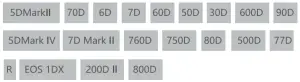
This table only lists the tested camera models, not all Canon EOS series cameras. For the compatibility of other camera models, a self-test is recommended.
Rights to modify this table are retained.
Maintenance
- Shut down the device immediately should the abnormal operation be detected.
- Avoid sudden impacts and the product should be deducted regularly.
- It is normal for the flash tube to be warm when in use. Avoid continuous flashes if unnecessary.
- Maintenance of the flash must be performed by our authorized maintenance department which can provide original accessories.
- This product, except consumables e.g. flash tube, is supported with a one-year warranty.
- Unauthorized service will void the warranty.
- If the product had failures or was wetted, do not use it until it is repaired by professionals.
- Changes made to the specifications or designs may not be reflected in this manual.
FCC Statement
This device complies with part 15 of the FCC Rules. Operation is subject to the following two conditions: (1) This device may not cause harmful interference, and (2) this device must accept any interference received, including interference that may cause undesired operation.
Any changes or modifications not expressly approved by the party responsible for compliance could void the user’s authority to operate the equipment.
Note: This equipment has been tested and found to comply with the limits for a Class B digital device, pursuant to part 15 of the FCC Rules. These limits are designed to provide reasonable protection against harmful interference in a residential installation. This equipment generates uses and can radiate radio frequency energy and, if not installed and used in accordance with the instructions, may cause harmful interference to radio communications. However, there is no guarantee that interference will not occur in a particular installation. If this equipment does cause harmful interference to radio or television reception, which can be determined by turning the equipment off and on, the user is encouraged to try to correct the interference by one or more of the following measures:
– Reorient or relocate the receiving antenna.
– Increase the separation between the equipment and receiver.
– Connect the equipment into an outlet on a circuit different from that to which the receiver is connected.
– Consult the dealer or an experienced radio/TV technician for help. The device has been evaluated to meet general RF exposure requirements.
The device can be used in portable exposure conditions without restriction.
Declaration of Conformity:
GODOX Photo Equipment Co, Ltd. hereby declares that This equipment is in compliance with the essential requirements and other relevant provisions of the EU
Directive 2014/53/EU. They are allowed to be used in all EU member states.
For more information on DoC, Please click this weblink: http://www.godox.com/DOC/Godox_ TT685II_Series_DOC.pdf
Warranty
Dear customers, as this warranty card is an important certificate to apply for our maintenance service, please fill in the following form in coordination with the seller and safely keep it. Thank you!
| Product Information | Model | Product Code Number |
| Customer Information | Name | Contact Number |
| Address | ||
| Seller Information | Name | |
| Contact Number | ||
| Address | ||
| Date of Sale | ||
| Note: | ||
Note: This form shall be sealed by the seller.
Applicable Products
The document applies to the products listed on the Product Maintenance Information (see below for further information). Other products or accessories
(e.g. promotional items, giveaways, and additional accessories attached, etc.) are not included in this warranty scope.
Warranty Period
The warranty period of products and accessories is implemented according to the relevant Product Maintenancelnformation. The warranty period is calculated from the day(purchase date) when the product is bought for the first time, And the purchase date is considered as the date registered on the warranty card when buying the product.
How to Get the Maintenance Service
If maintenance service is needed, you can directly contact the product distributor or authorized service institutions. You can also contact the Godox after-sale service call and we will offer you service. When applying for maintenance service, you should provide a valid warranty card. If you cannot provide a valid warranty card, we may offer you maintenance service once confirmed that the product or accessory is involved in the maintenance scope, but that shall not be considered as our obligation.
Maintenance and Service Support Information
The warranty period and service types of products are implemented according to the following Product Maintenance Information:
| Product Type | Name | Maintenance Period(month) | Warranty Service Type |
| Parts | Circuit Board | 12 | The customer sends the product to the designated site |
| Battery | 3 | Customer sends the product to the designated site | |
| Electrical parts e.g.battery charger, power cord, sync cable, etc. | 12 | Customer sends the product to the designated site | |
| Other Items | Flash tube, modeling lamp, lamp body, lamp cover, locking device, package, etc. | No | Without warranty |
Godox After-sale Service Call 0755-29609320-8062
GODOX Photo Equipment Co., Ltd.
Add: Building 2, Yaochuan Industrial Zone, Tangwei Community, Fuhai Street, Baoan
District, Shenzhen, 518103 China Tel: +86-755-29609320(8062)
Fax: +86-755-25723423 E-mail: [email protected]
godox.com
Made in China