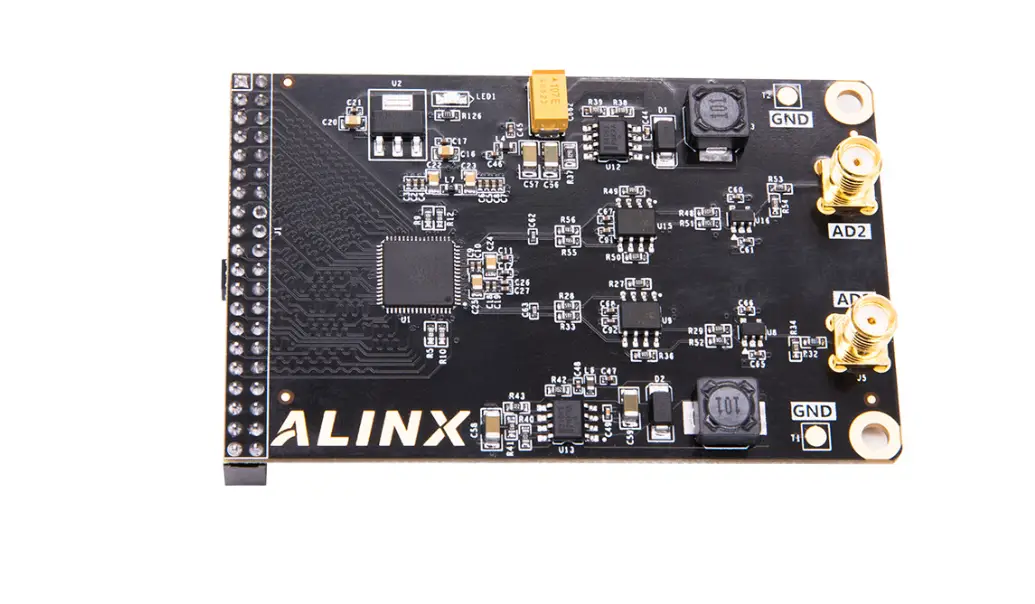
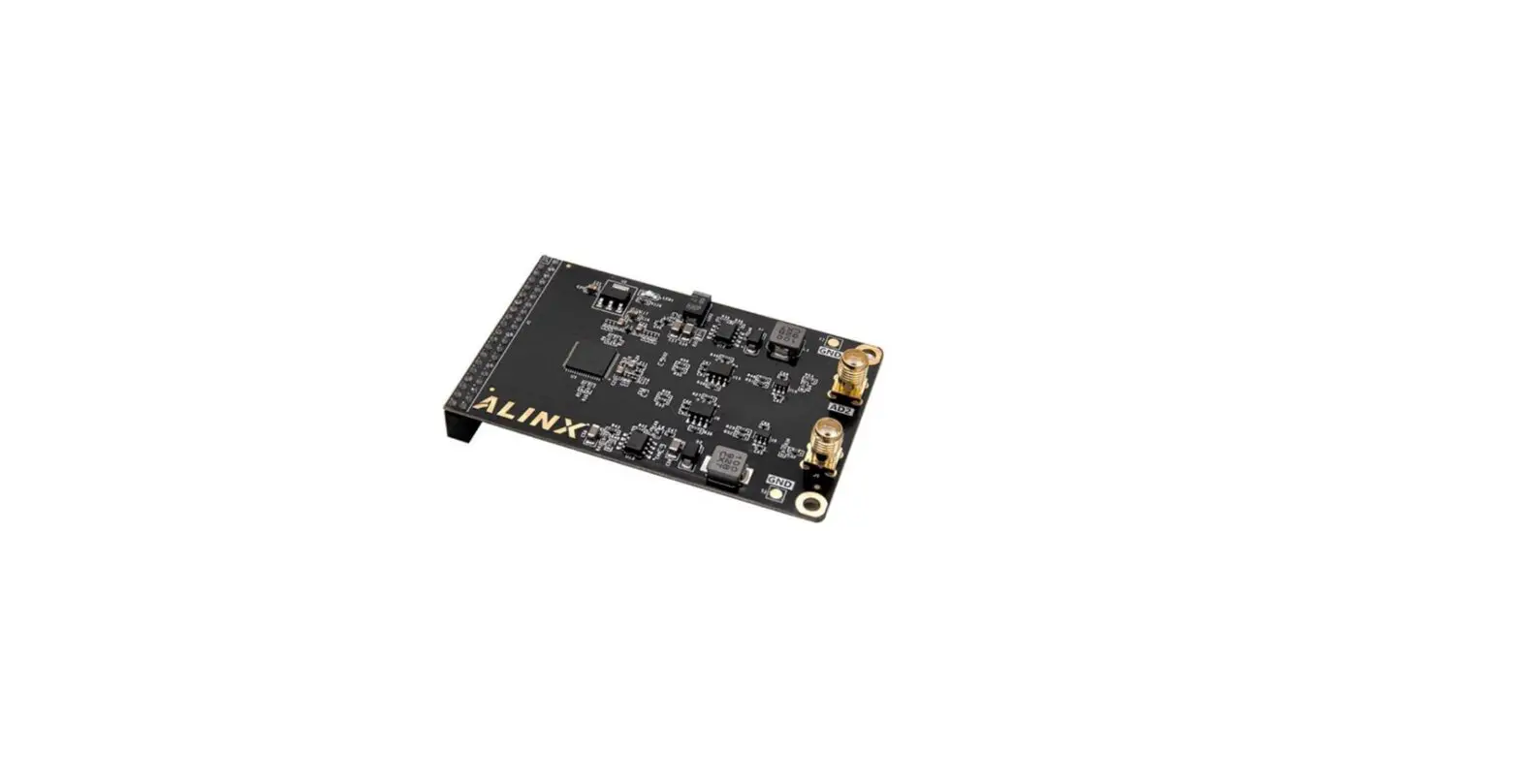
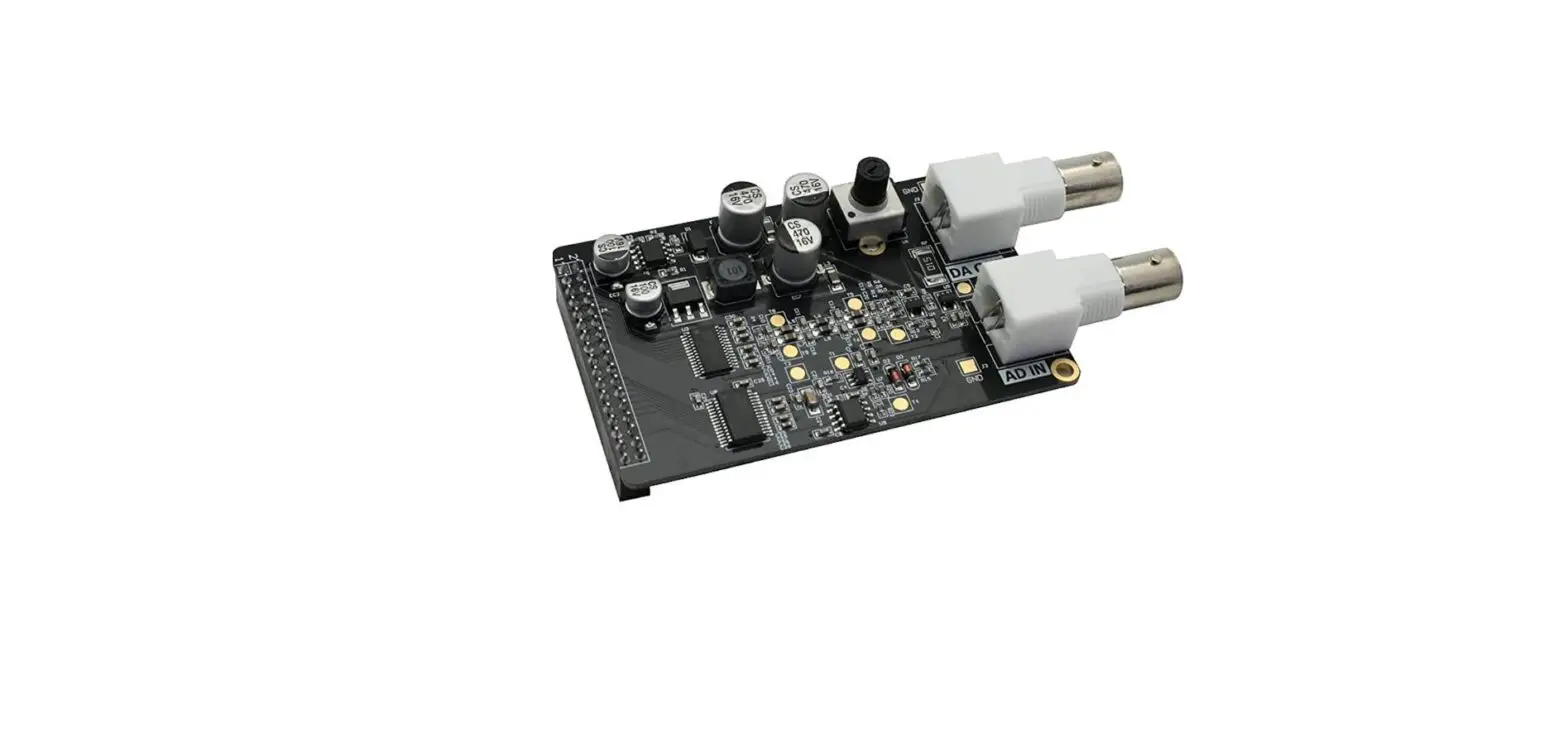
AN706 Simultaneous Sampling Multi-Channels 16-Bits AD Module
8-Channel AD Acquisition Module
AN706 User Manual
Part 1: 8-Channel AD Acquisition Module Parameters
- Module VPN: AN706
- AD Chip: AD7606
- Channel: 8-channel
- AD bits: 16-bit
- Max Sample Rate: 200KSPS
- Input Voltage Rate: -5V~+5V
- PCB layers of Module: 4-Layer independent power layer and GND
layer - Module Interface: 40-pin 0.1 inch spacing female header,
download module to meet the industrial requirements - Input interface: 8 SMA interfaces and 16-pin headers with 2.54
pitch (Pin Each channel has positive and negative two Pin) - Measurement accuracy: Within 0.5mV
Part 2: Module structure
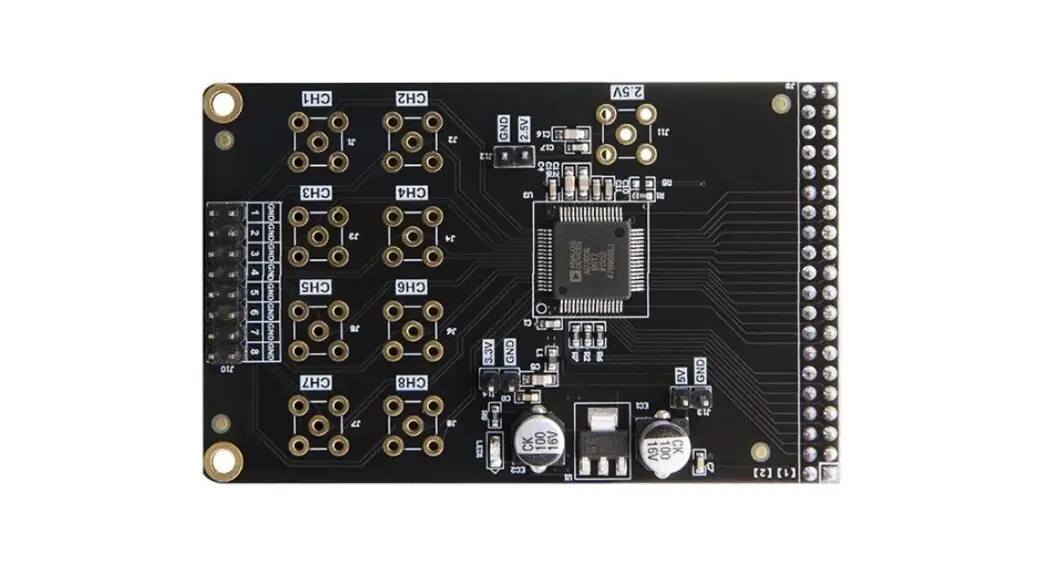
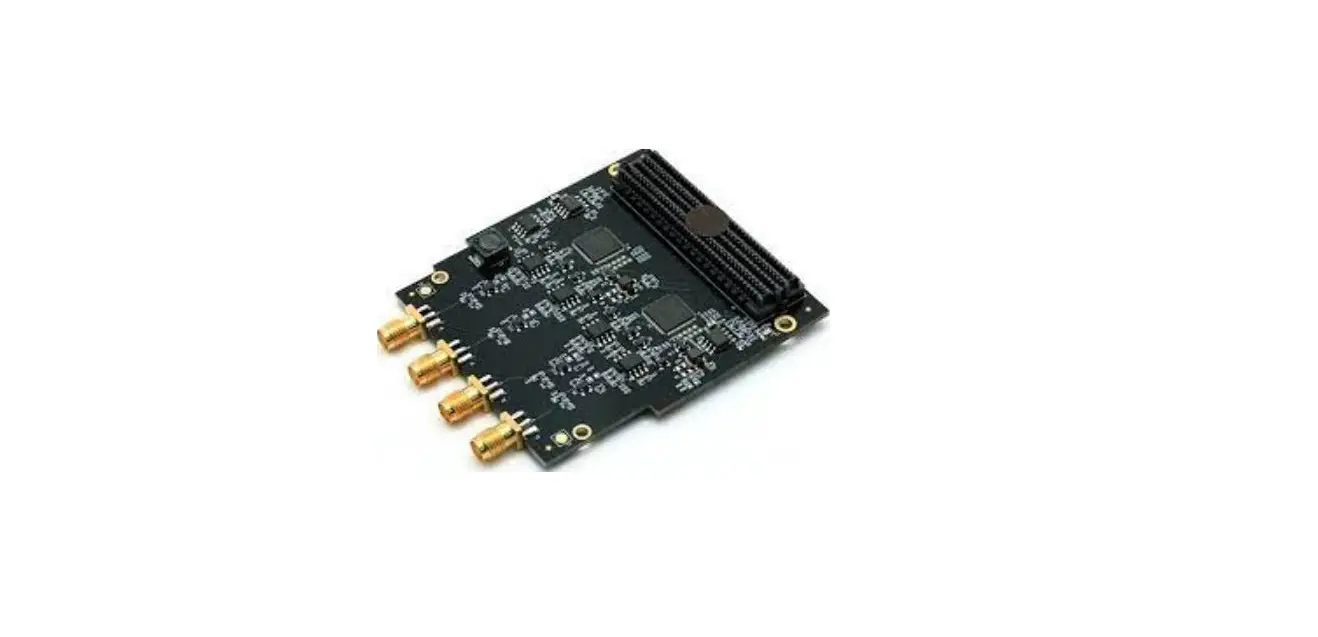
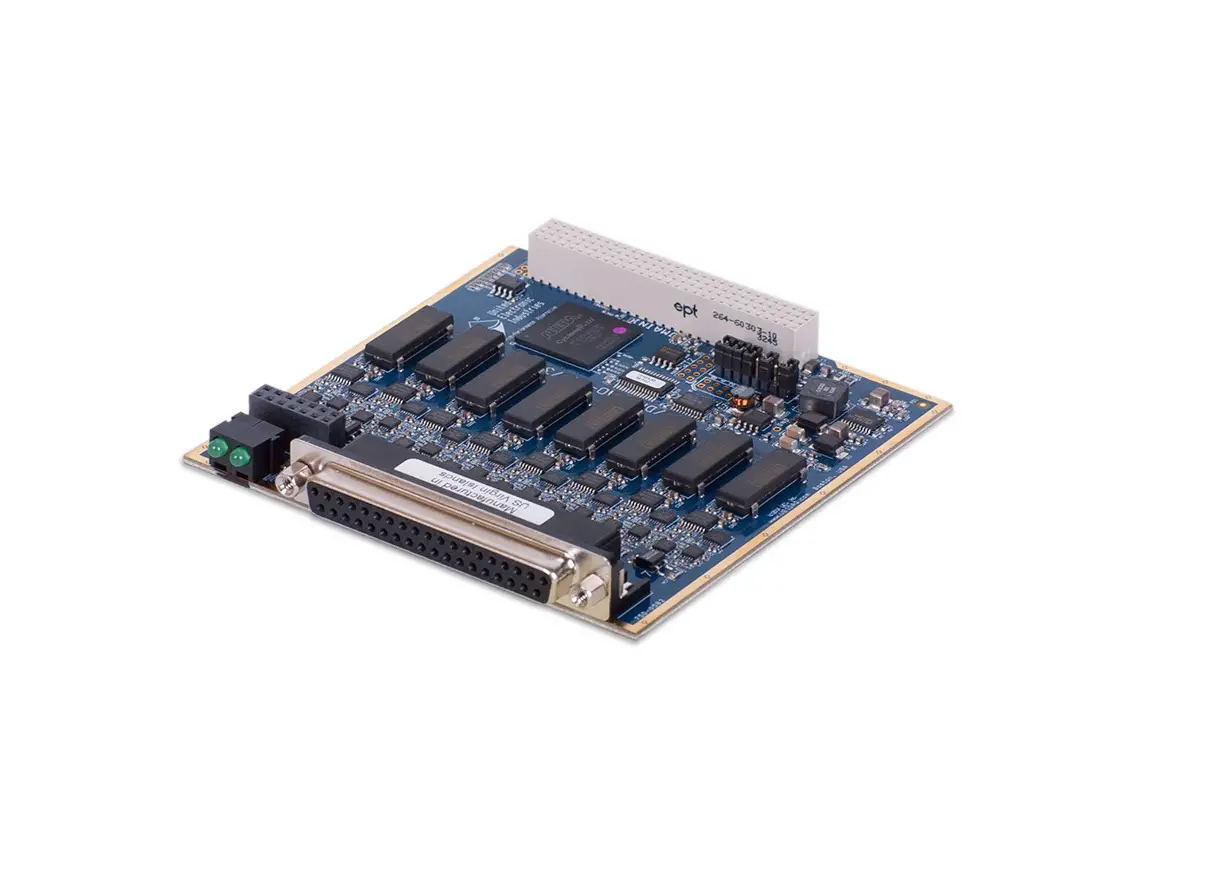
Figure 2-1 shows the structure of the module.
Part 3: AD7606 Chip Introduction
The AD76061 is a 16-bit, simultaneous sampling,
analog-to-digital data acquisition systems (DAS) with eight, six,
and four channels, respectively. Each part contains analog input
clamp protection, a second-order antialiasing filter, a
track-and-hold amplifier, a 16-bit charge redistribution successive
approximation analog-to-digital converter (ADC), a flexible digital
filter, a 2.5 V reference and reference.
The AD7606 has 1 M analog input impedance regardless of sampling
frequency. The single supply operation, on-chip filtering, and high
input impedance eliminate the need for driver op amps and external
bipolar supplies. The AD7606/AD7606-6/AD7606-4 antialiasing filter
has a 3 dB cutoff frequency of 22 kHz and provides 40 dB antialias
rejection when sampling at 200 kSPS. The flexible digital filter is
pin driven, yields improvements in SNR, and reduces the 3 dB
bandwidth.
Part 4: AD7606 Chip Functional Block Diagram
Figure 4-1 shows the functional block diagram of the AD7606
chip.
Part 5: AD7606 Chip Timing Specification
The AD7606 allow simultaneous sampling of all eight analog input
channels. All channels are sampled simultaneously when both CONVST
pins (CONVST A, CONVST B) are tied together. A single CONVST signal
is used to control both CONVST x inputs. The rising edge of this
common CONVST signal initiates simultaneous sampling on all analog
input channels (V1 to V8).
Part 6: AD7606 Chip Pin Configuration
In the AN706 8-channel AD module hardware circuit design, we set
the AD7606’s operating mode by adding pull-up or pull-down
resistors to the three configuration pins of the AD7606.
- The AD7606 supports an external reference input or an internal
reference. If an external reference is used, the REFIN/REFOUT of
the chip requires an external 2.5V reference. If using an internal
reference voltage. The REFIN/REFOUT pin is an internal 2.5V
reference. The REF SELECT pin is used to select the internal
reference or external reference. In this module, because the
accuracy of the internal reference voltage of the AD7606 is also
very high (2.49V~2.505V), the circuit design chooses to use the
internal reference.
Product Usage Instructions
- Connect the 8 SMA interfaces and 16-pin headers with 2.54 pitch
to the input devices that you want to monitor. - Ensure that the input voltage rate is between -5V~+5V.
- Connect the module interface to a power source and download
module to meet the industrial requirements. - Set the AD7606’s operating mode by adding pull-up or pull-down
resistors to the three configuration pins of the AD7606. Choose
either an internal or external reference voltage using the REF
SELECT pin. - Use a single CONVST signal to control both CONVST x inputs. The
rising edge of this common CONVST signal initiates simultaneous
sampling on all analog input channels (V1 to V8). - The collected data can be analyzed using appropriate
software.
8-Channel AD Acquisition Module
AN706 User Manual
8-Channel AD Acquisition Module User Manual
Table of Contents
Part 1: 8-Channel AD Acquisition Module Parameters……………………………… 3 Part 2: Module structure…………………………………………………………………………… 3 Part 3: AD7606 Chip Introduction………………………………………………………………4 Part 4: AD7606 Chip Functional Block Diagram……………………………………….. 5 Part 5: AD7606 Chip Timing Specification………………………………………………… 6 Part 6: AD7606 Chip Pin Configuration……………………………………………………..7 Part 7: AD7606 Chip ADC TRANSFER FUNCTION…………………………………. 8 Part 8: Interface definition (The labeled pin on the PCB is pin 1)……………… 9 Part 9: AN706 Module Experimental procedure……………………………………… 10 Part 10: AN706 Module Measurement Accuracy……………………………………..13 Part 11: AN706 Module test program description…………………………………….13
2/14
www.alinx.com
8-Channel AD Acquisition Module User Manual
Part 1: 8-Channel AD Acquisition Module Parameters
Module VPN: AN706 AD Chip: AD7606 Channel: 8-channel AD bits: 16-bit Max Sample Rate: 200KSPS Input Voltage Rate: -5V~+5V PCB layers of Module: 4-Layerindependent power layer and GND
layer Module Interface: 40-pin 0.1 inch spacing female header, download
direction Ambient Temperature (with power applied: -40°~85°, all the chips on
module to meet the industrial requirements Input interface: 8 SMA interfaces and 16-pin headers with 2.54 pitch
(Pin Each channel has positive and negative two Pin) Measurement accuracy: Within 0.5mV
Part 2: Module structure
3/14
www.alinx.com
8-Channel AD Acquisition Module User Manual
Figure 2-1: The 8-channel AD module structure
Part 3: AD7606 Chip Introduction
The AD76061 is 16-bit, simultaneous sampling, analog-to-digital data acquisition systems (DAS) with eight, six, and four channels, respectively. Each part contains analog input clamp protection, a second-order antialiasing filter, a track-and-hold amplifier, a 16-bit charge redistribution successive approximation analog-to-digital converter (ADC), a flexible digital filter, a 2.5 V reference and reference
The input clamp protection circuitry can tolerate voltages up to ±16.5 V. The AD7606/AD7606-6/AD7606-4 operate from a single 5 V supply and can accommodate ±10 V and ±5 V true bipolar input signals while sampling at throughput rates up to 200 kSPS for all channels. The input clamp protection circuitry can tolerate voltages up to ±16.5 V.
The AD7606 has 1 M analog input impedance regardless of sampling frequency. The single supply operation, on-chip filtering, and high input
4/14
www.alinx.com
8-Channel AD Acquisition Module User Manual
impedance eliminate the need for driver op amps and external bipolar supplies. The AD7606/AD7606-6/AD7606-4 antialiasing filter has a 3 dB cutoff frequency of 22 kHz and provides 40 dB antialias rejection when sampling at 200 kSPS. The flexible digital filter is pin driven, yields improvements in SNR, and reduces the 3 dB bandwidth.
Part 4: AD7606 Chip Functional Block Diagram
Figure 4-1: AD7606 Functional Block Diagram
5/14
www.alinx.com
8-Channel AD Acquisition Module User Manual
Part 5: AD7606 Chip Timing Specification
Figure5-1: AD7606 Timing Diagrams
The AD7606 allow simultaneous sampling of all eight analog input channels. All channels are sampled simul-taneously when both CONVST pins (CONVST A, CONVST B) are tied together. A single CONVST signal is used to control both CONVST x inputs. The rising edge of this common CONVST signal initiates simultaneous sampling on all analog input channels (V1 to V8).
The AD7606 contains an on-chip oscillator that is used to perform the conversions. The conversion time for all ADC channels is t . CONV The BUSY signal indicates to the user when conversions are in progress, so when the rising edge of CONVST is applied, BUSY goes logic high and transitions low at the end of the entire conversion process. The falling edge of the BUSY signal is used to place all eight track-and-hold amplifiers back into track mode. The falling edge of BUSY also indicates that the new data can now be read from the parallel bus (DB[15:0]), the DOUTA and DOUTB serial data lines, or the parallel byte bus, DB[7:0].
6/14
www.alinx.com
8-Channel AD Acquisition Module User Manual
Part 6: AD7606 Chip Pin Configuration
In the AN706 8-channel AD module hardware circuit design, we set the
AD7606’s operating mode by adding pull-up or pull-down resistors to the three
configuration pins of the AD7606.
1. The AD7606 supports an external reference input or an internal
reference. If an external reference is used, the REFIN/REFOUT of
the chip requires an external 2.5V reference. If using an internal
reference voltage. The REFIN/REFOUT pin is an internal 2.5V
reference. The REF SELECT pin is used to select the internal
reference or external reference. In this module, because the
accuracy of the internal reference voltage of the AD7606 is also
very high (2.49V~2.505V), the circuit design chooses to use the
internal reference voltage.
Pin Name
Set level
Description
REF SELECT High Level
Use internal reference voltage 2.5V
2. The AD7606’s AD conversion data acquisition can be in parallel
mode or serial mode. The user can set the communication mode by
setting the PAR/SER/BYTE SEL pin level. in the AN706 module
design, select parallel mode to read AD data of AD7606
Pin Name
Set level
Description
PAR/SER/BYTE SEL Low Level Select parallel interface
3. The RANGE pin is used to select either ±10 V or ±5 V as the input range in AD9767. In the ±5 V range, 1LSB=152.58uV. In the ±10 V range, 1LSB=305.175 uV. In the circuit design of AN706 module, select ±5V analog voltage input range
7/14
www.alinx.com
8-Channel AD Acquisition Module User Manual
Pin Name RANGE
Set level Low Level
Description Analog signal input range selection±5V
4. The AD7606 contains an optional digital first-order sinc filter that should be used in applications where slower throughput rates are used or where higher signal-to-noise ratio or dynamic range is desirable. The oversampling ratio of the digital filter is controlled using the oversampling pins, OS [2:0] (see Table below). OS 2 is the MSB control bit, and OS 0 is the LSB control bit. Table below provides the oversampling bit decoding to select the different oversample rates. The OS pins are latched on the falling edge of BUSY.
In the hardware design of the AN706 module, OS[2:0] leads to the external interface, and the FPGA or CPU can select whether to use the filter by controlling the pin level of OS[2:0] to achieve higher measurement accuracy.
Part 7: AD7606 Chip ADC TRANSFER FUNCTION
The output coding of the AD7606 is two’s complement. The designed code transitions occur midway between successive integer LSB values, that is, 1/2 LSB and 3/2 LSB. The LSB size is FSR/65,536 for the AD7606. The ideal transfer characteristic for the AD7606 is shown in Figure 7-1.
8/14
www.alinx.com
8-Channel AD Acquisition Module User Manual
Figure 7-1: AD7606 Transfer Characteristics
Part 8: Interface definition (The labeled pin on the PCB is pin 1)
Pin
Signal Name
Description
Pin Signal Name Description
1
GND
Ground
2
Oversampling
3
OS1
4
Select
5
CONVSTAB Data conversion
6
7
RD
Read
8
VCC OS0 OS2 RESET
+5V Oversampling
Select Oversampling
Select Reset
9
BUSY
Busy
10
CS
Chip Select
9/14
www.alinx.com
8-Channel AD Acquisition Module User Manual
11
12
FIRSTDATA
First data
13
14
15
DB0
AD Data Bus
16
DB1
AD Data Bus
17
DB2
AD Data Bus
18
DB3
AD Data Bus
19
DB4
AD Data Bus
20
DB5
AD Data Bus
21
DB6
AD Data Bus
22
DB7
AD Data Bus
23
DB8
AD Data Bus
24
DB9
AD Data Bus
25
DB10
AD Data Bus
26
DB11
AD Data Bus
Part 9: AN706 Module Experimental procedure
1) First, connect the AN706 module to the 34-pin standard expansion port of the ALINX FPGA Development Board (In case the development board is powered off).
2) Connect your signal source to the AN706 Module input connector (Note: AD port input range: -5V~+5V).
3) Download the program to the FPGA using the Quartus II or ISE software (if you need the testing programs, send email to [email protected]).
4) Open the serial debugging assistant tool and set the communication baud rate of the serial port as follows
10/14
www.alinx.com
8-Channel AD Acquisition Module User Manual
Figure 9-1: The Serial Debugging Assistant Tool
5) The voltage value of the 8-channel signal input of the AN706 module will appear in the serial communication. (Because the 8-way data is displayed in one line in the serial debugging assistant, we need to enlarge the interface.)
11/14
Figure 9-2: Serial Communication
www.alinx.com
8-Channel AD Acquisition Module User Manual
The above data is 8 channels of data without signal input, because the AD signal input is in a floating state, and the AD conversion output data is about 1.75V.
Example: If you connect the input of channel 1 with the 3.3V test pin on the AN706 module with a DuPont line to test the voltage of 3.3V on the module.
Figure 9-3: Channel 1 with 3.3V test pin
At this time, the measurement data of AD1 displayed on the serial interface is about +3.3074.
Figure 9-4: Test pin voltage display on the serial interface
12/14
www.alinx.com
8-Channel AD Acquisition Module User Manual
Part 10: AN706 Module Measurement Accuracy
By measuring the applied voltage and the high-precision voltmeter, the actual measurement accuracy of the AD706 module is within 0.5mV within the -5V to +5V voltage input range.
The following table shows the results of eight channels for four analog voltages. The first column is the data measured by the high-precision digital multimeter, and the last eight columns are the results of the AD module’s AD module measurement.
Table 10-1: Testing Voltage
In this test routine, the oversampling override enable filter is not used to improve the accuracy of the AN706 module. For users who want to further improve the accuracy of sampling and the sampling speed is not high, it can be set in the program. Method of sampling magnification, you can set the oversampling ratio in the program.
Part 11: AN706 Module test program description
The following is a brief description of the ideas for each Verilog test programs, and users can also refer to the note description in the code.
1. Top level program: ad706_test.v Define the FPGA and AN706 modules and the serial port to receive and send the signal input and output, and instantiate three subroutines (ad7606.v, volt_cal.v and uart.v).
2. AD data acquisition program: ad7606.v
13/14
www.alinx.com
8-Channel AD Acquisition Module User Manual
According to the timing of the AD7606, sample 16 analog signals AD converted 16-bit data. The program first sends the CONVSTAB signal to the AD7606 to start AD data conversion, and waits for the Busy signal to go low to read the data of AD channel 1 to channel 16 in sequence. AD Voltage Conversion (1 LSB)=5V/ 32758=0.15 mV
3. Voltage conversion program for AD data: volt_cal.v The program converts the 16-bit data collected from ad7606.v, Bit[15] into positive and negative signs, and Bit[14:0] first converts it into a voltage value by the following formula, and then converts the hexadecimal voltage value into 20-digit BCD code.
4. Serial port sending program: uart.v Timing sends 8 channels of voltage data to the PC through uart. The serial port’s transmit clock is obtained by dividing the frequency by 50Mhz, and the baud rate is 9600bps.
14/14
www.alinx.com
 ALINX 芯驿电子科技(上海)有限公司