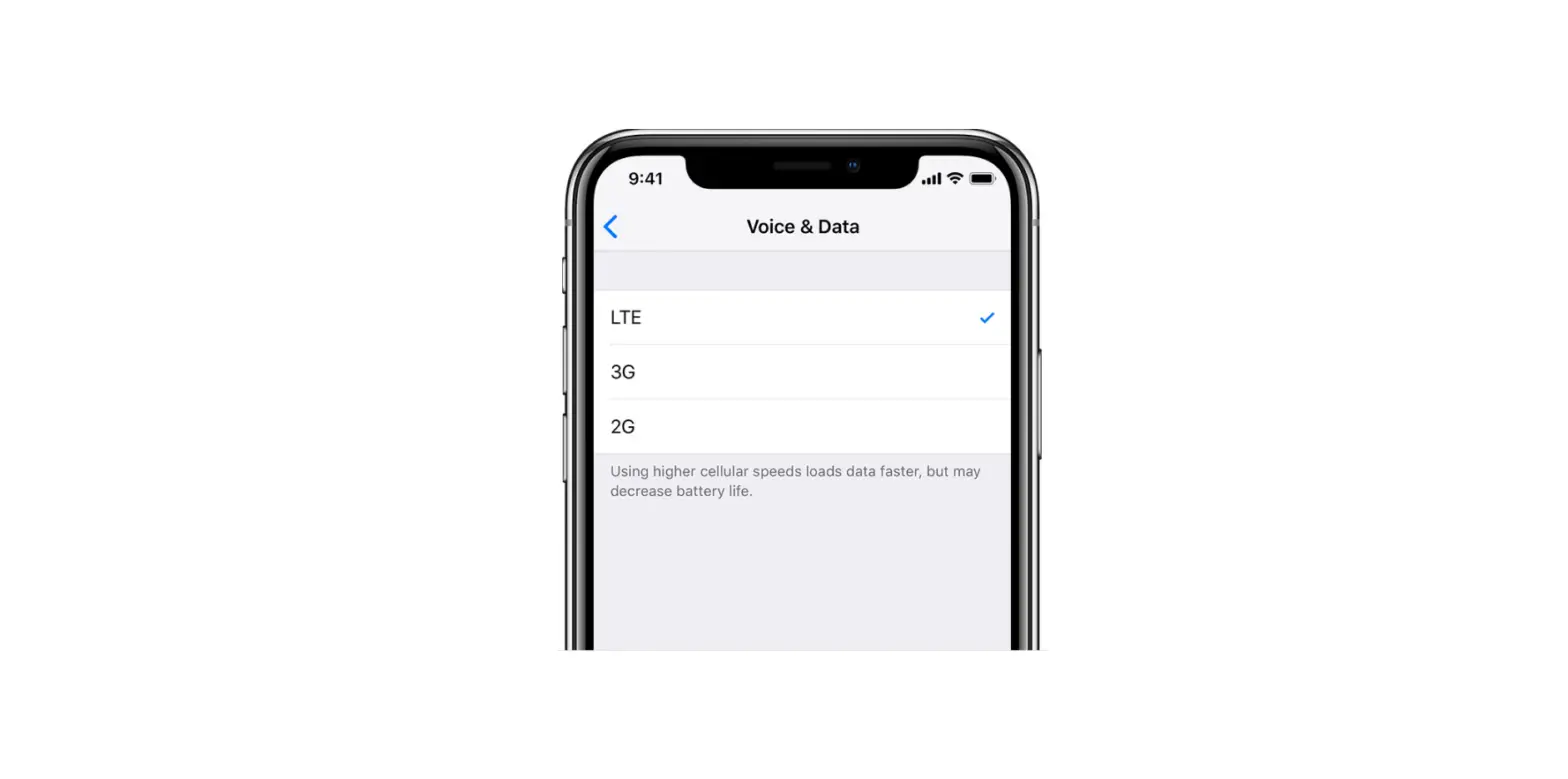

Apple iOS Set up Voice over LTE Calling
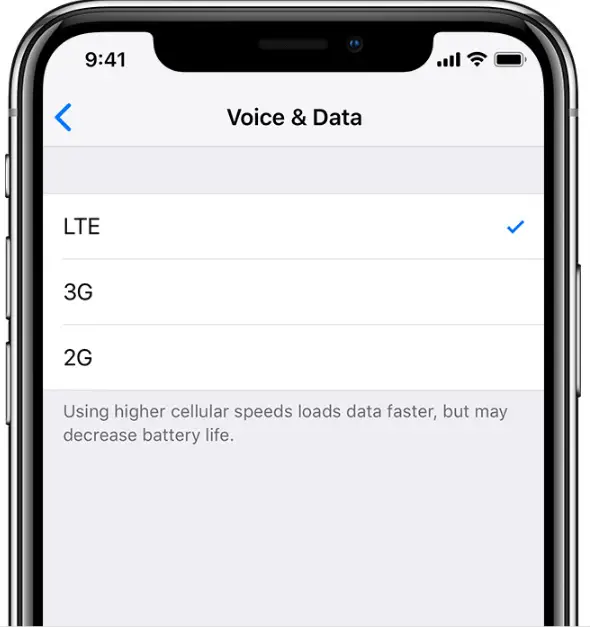
Voice over LTE (VoLTE) Originating Call
Voice over LTE (VoLTE) is the standard for voice call setup in LTE networks. When VoLTE is deployed, phones will not need to fallback to 3G for voice calls. VoLTE uses IMS signaling to setup voice calls. The following VoLTE call flow describes the IMS call setup and release. An example of sending an SMS over IMS is also included. Sample RTP and RTCP messages are also shown in the flow. EventHelix.com Inc, 2014.Generated with EventStudio (http://www.eventhelix.com/eventstudio/) and VisualEther (http://www.eventhelix.com/visualether/)
Note: You can click on IMS, RTP and RTCP message titles in this flow to see complete field level details.
Preconditions
The iPhone is attached to the LTE network. The PDP context has also been activated.
Learn more: http://www.eventhelix.com/lte/
Register with the IP Multimedia Subsystem (IMS) The iPhone has already registered with the IMS.
Learn more: http://www.eventhelix.com/ims/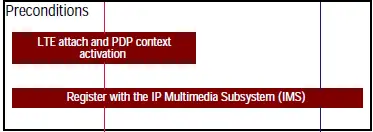
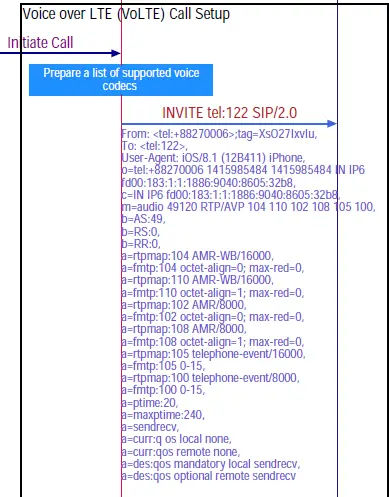
Voice over LTE (VoLTE) Call Setup
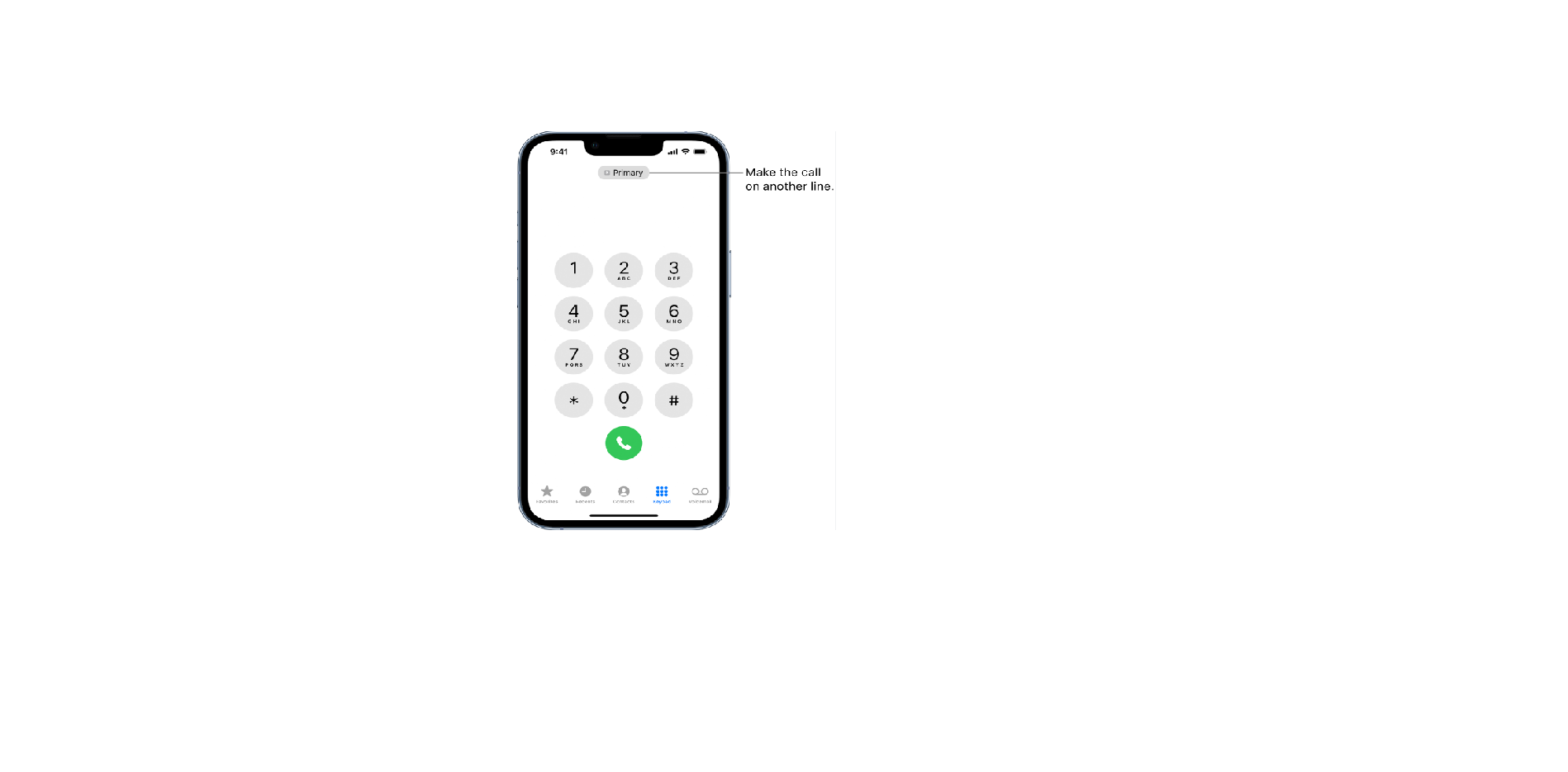
- The subscriber initiates a voice call.
- The iPhone initiates that call with a SIP Invite message. The QoS information signaled in the message is:
- o=tel:+88270006 1415985484 1415985484 IN IP6 fd00:183:1:1:1886:9040:8605:32b8
- Specifies that the caller is +88270006 with 1415985484 session id. The caller uses the Internet (IN). The IPv6 address for the caller is also included.
- c=IN IP6 fd00:183:1:1:1886:9040:8605:32b8
- The connection is being initiated from the specified address.
- m=audio 49120 RTP/AVP 104 110 102 108 105 100
- Specifies that port number 49120 is assigned for audio with a list of supported media type formats (104, 110, 102, 108, 105, and 100).
- b=AS:49
- Specifies maximum Application Specific bandwidth as 49 Kbps.
- a=rtpmap:104 AMR-WB/16000
- Specifies a AMR-WB codec with 16000 bps. The media type of the codec is 104.
- a=fmtp:104 octet-align=0; max-red=0
- Specifies additional parameters for format code 104.
- a=sendrecv
- Specifies that the session will be sending and receiving media.
- a=ptime:20
- Specifies that 20ms of media is being carried in each RTP packet.
- a=curr:qos local none
- a=curr:qos remote none
- Specifies that the the QoS for the caller (local) and the called (remote) ends are not currently met.
- a=des:qos mandatory local sendrecv
- a=des:qos optional remote sendrecv
- Specifies that the caller (local) requires QoS for the session. QoS setup is optional for the called (remote) subscriber

iPhone/ IMS
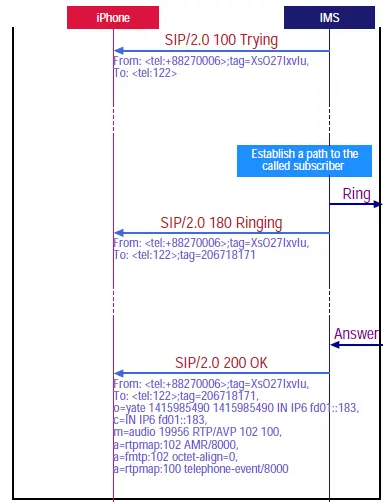
- The IMS acknowledges that the SIP INVITE was received.
- IMS call signaling established the call.
- Learn more: http://www.eventhelix.com/ims/
- Ringing the called subscriber.
- Notify the iPhone that the called subscriber is being rung.
- The caller answers the call.
- The SIP 200 OK signals that the call has been answered. The codec selections for the remote subscriber are communicated in this message. The SDP fields used here are similar to the SDP fields we examined in the SIP INVITE.

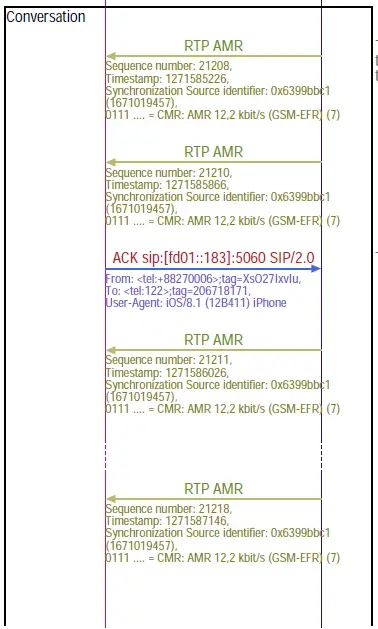
- The speech path from the remote to the iPhone has been switched through. RTP packets encoded with the selected encoder are being transmitted.
- The iPhone acknowledges the SIP 200 OK message.

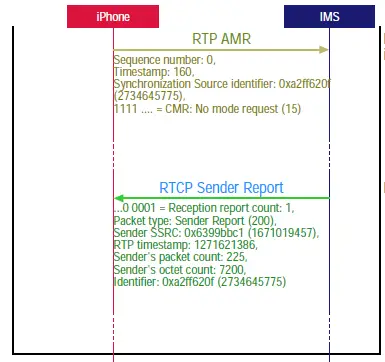
- Now the iPhone starts sending RTP packets. The voice codec information is not being sent.
- Periodic RTCP packets keep track of the session health.

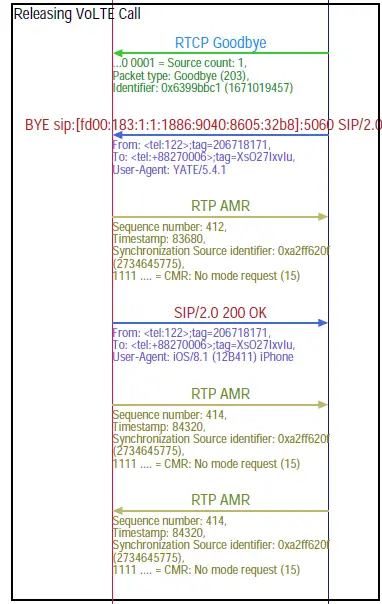
- RTCP signals that the media path is being released.
- The remote end initiates the session release with a SIP BYE.
- The iPhone is still sending RTP packets.
- The iPhone acknowledges the SIP BYE. The session is being released.
- The iPhone is still sending RTP packets with no codec data.

- Residual RTP packet from the remote end. Notice that the packet has no codec data.
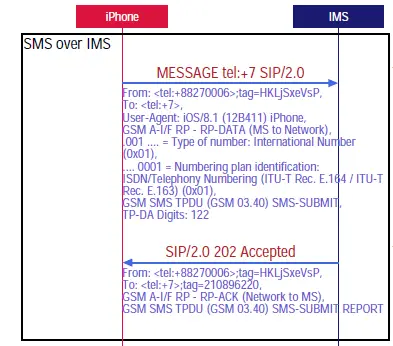
- The iPhone sends an SMS at the end of the session
- The IMS acknowledges the receipt of the SMS.

Generated with EventStudio: (http://www.eventhelix.com/eventstudio/) and VisualEther (http://www.eventhelix.com/visualether/).
EXPLORE MORE