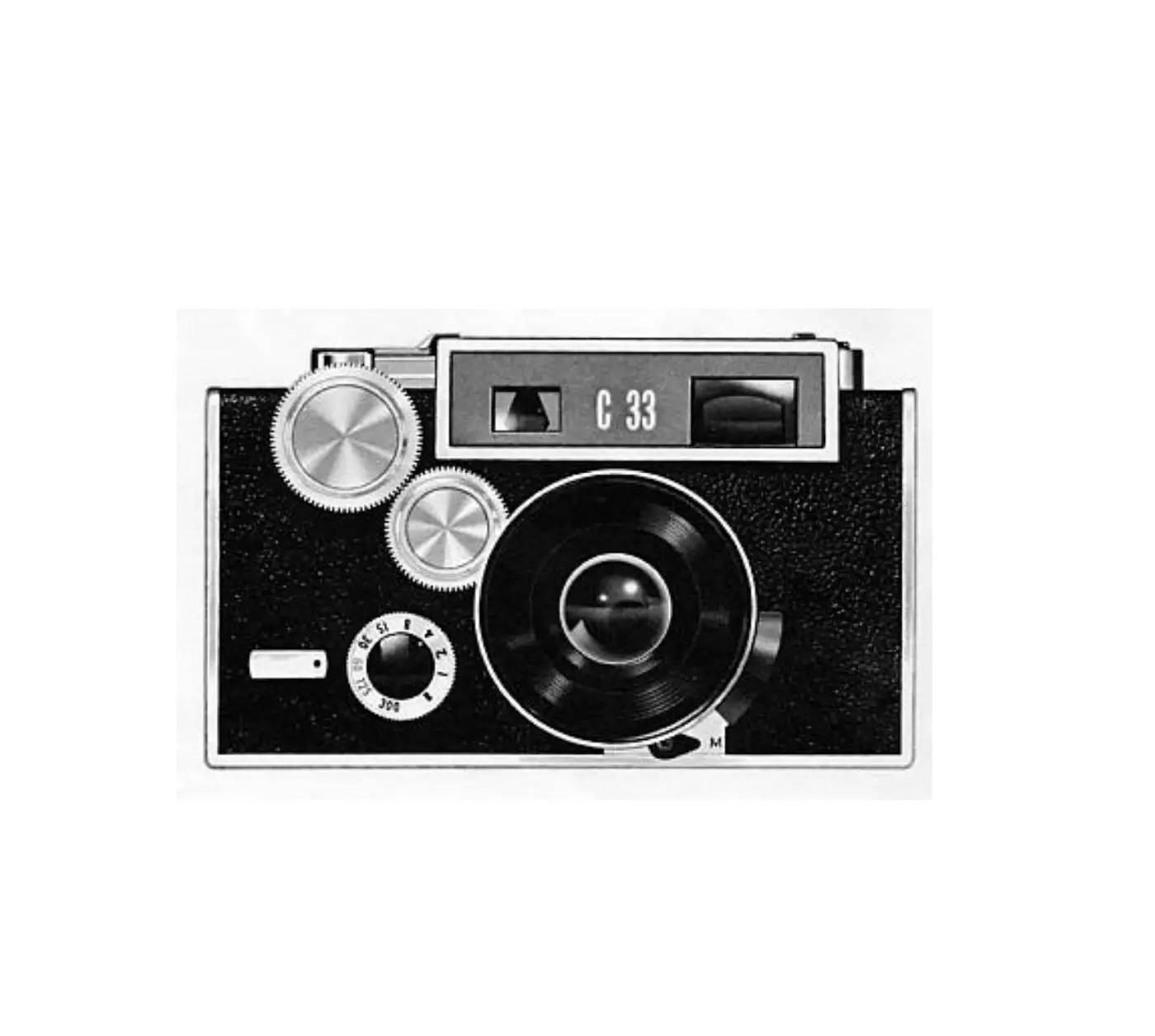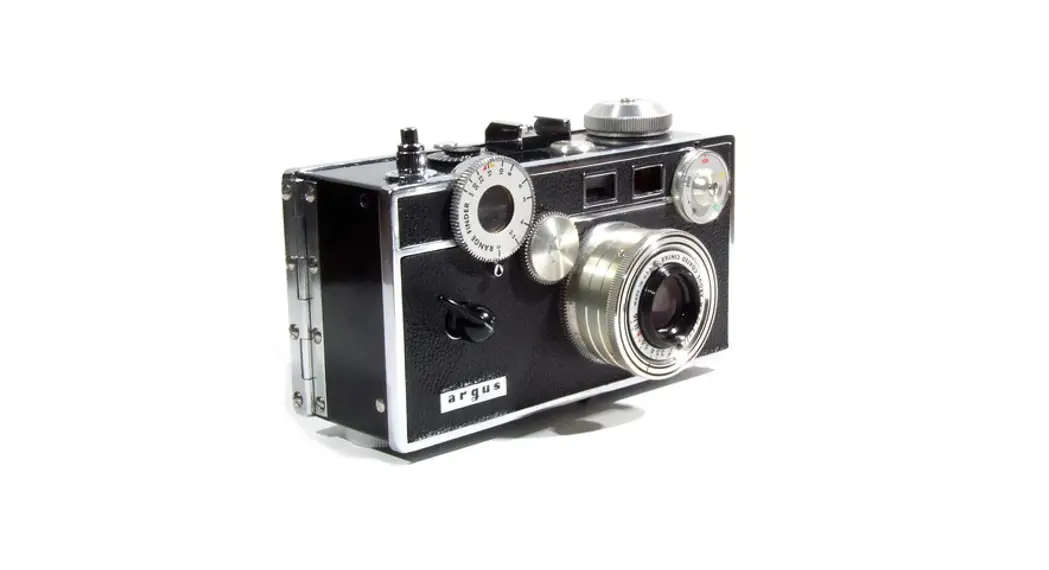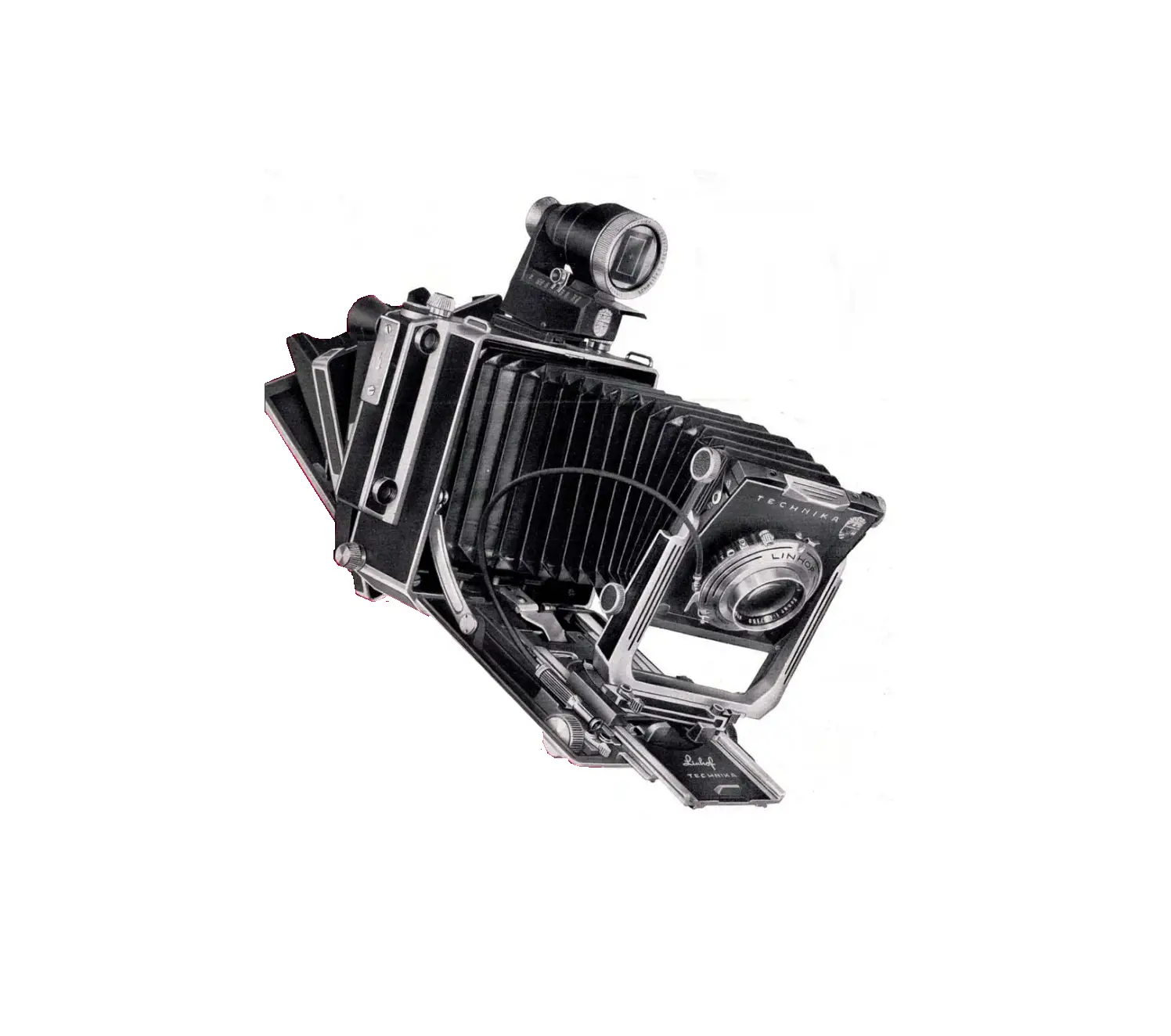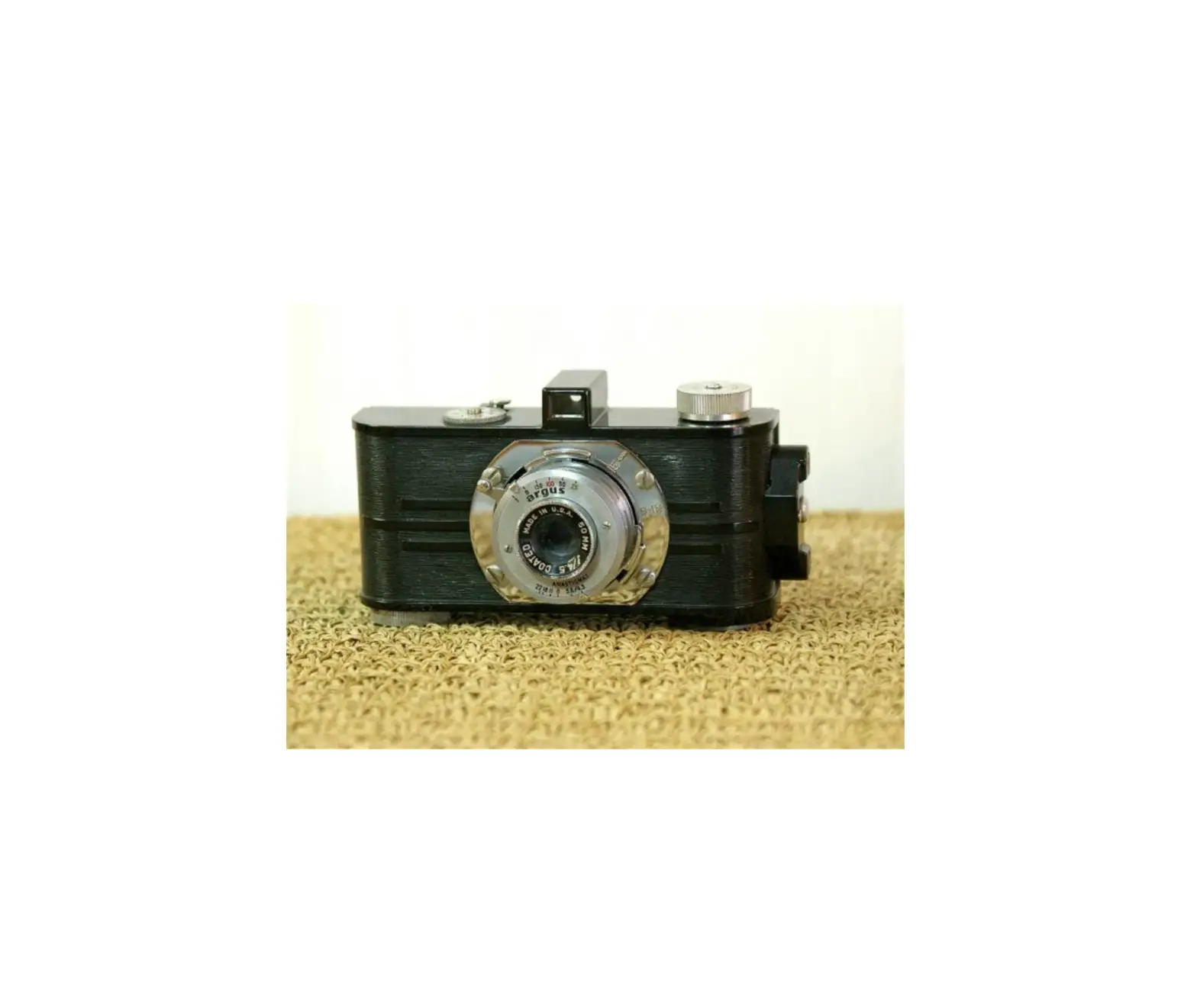
argus FA Classic Camera
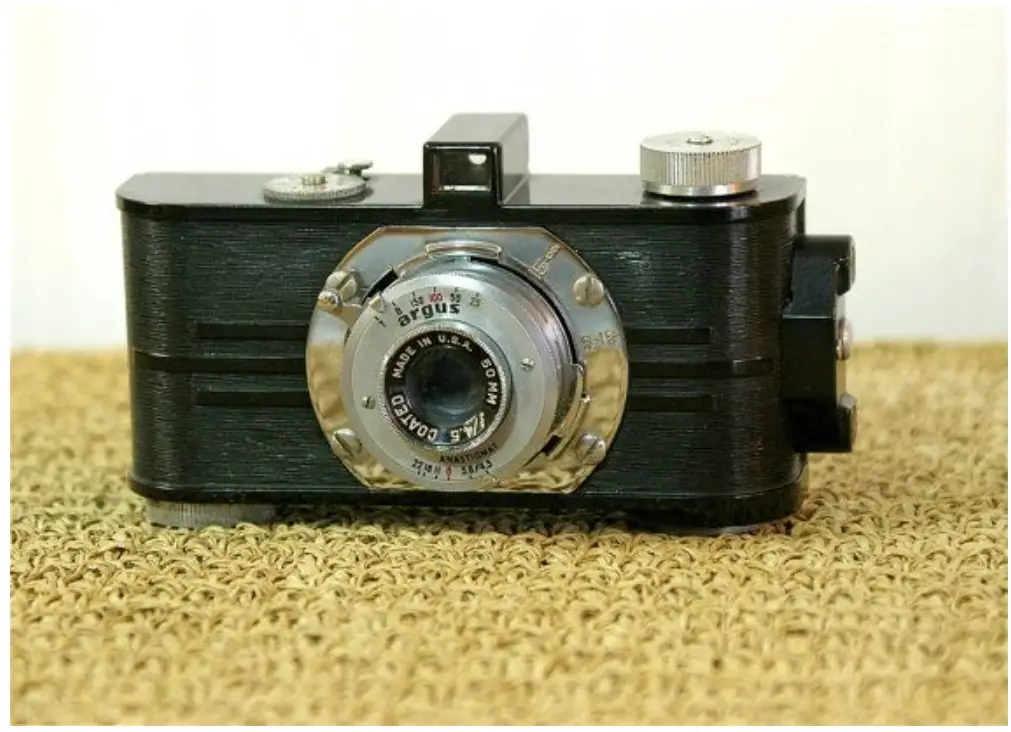
Argus FA is the low-cost 35mm. camera for color slides. It· also makes excellent black-and-white negatives which are readily enlarged to almost any desired size. The colorcorrected, hard-coated f :4.5 lens makes it an all-weather, year ’round camera and built-in flash simplifies picturetaking indoors.
It is a precision instrument and should receive the care accorded a fine watch, though it is rugged in construction and will give you years of picture-making enjoyment. To obtain the utmost in results from your Argus FA read this instruction book carefully so you will thoroughly understand its operation.
LEGEND
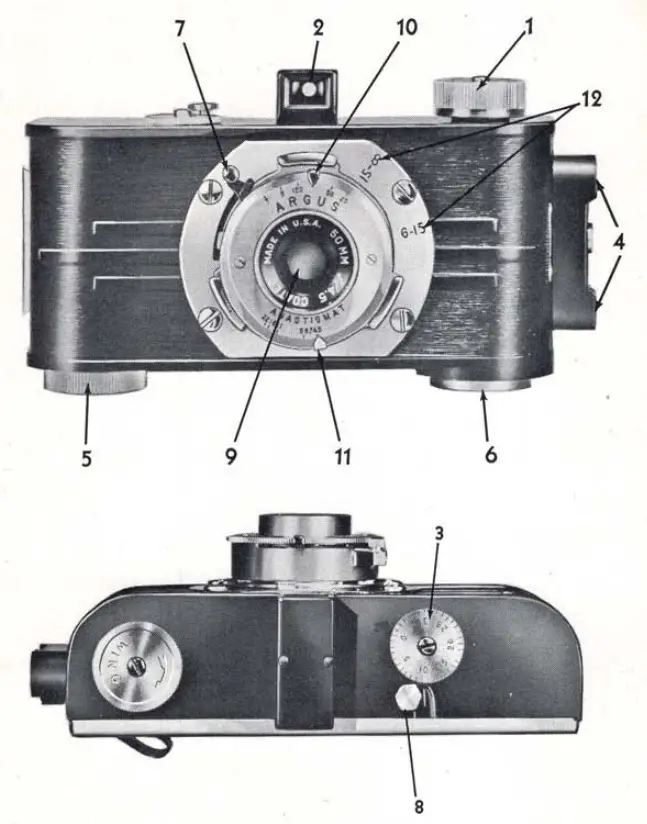
- Winding Knob
- Viewfinder
- Film Counter
- Flash Contacts
- Rewind Knob
- Tripod Bushing
- Shutter Release
- Film Release
- Lens
- Shutter Adjustment Lever
- Aperture Adjustment Lever
- Focus Markings
LOADING
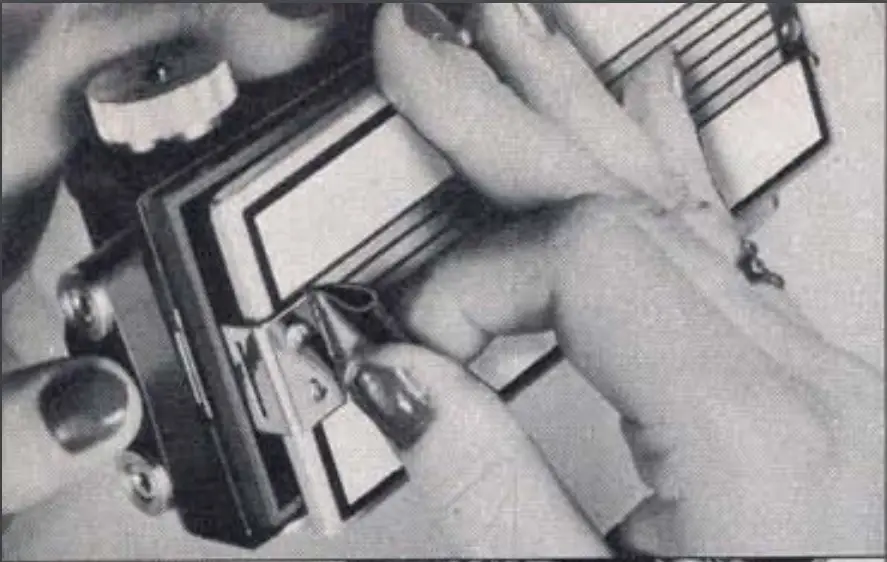
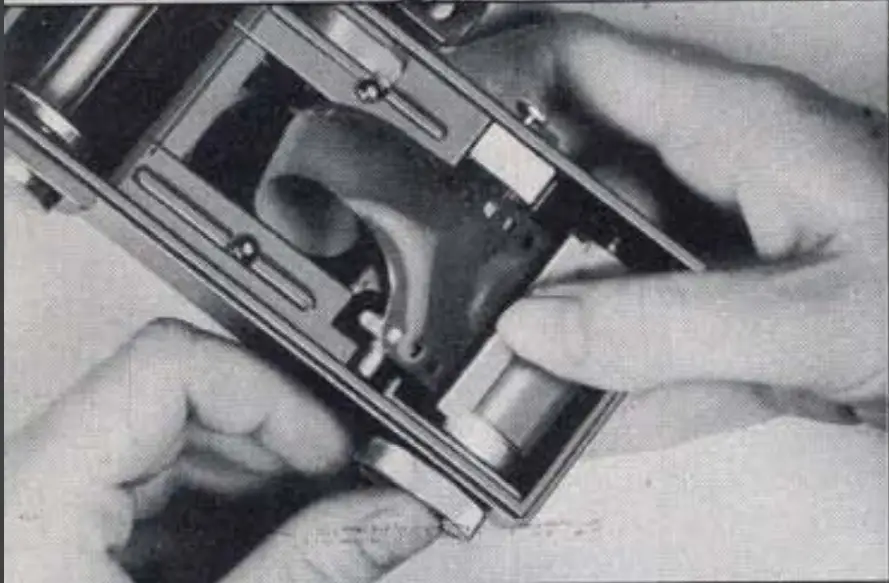
- Open the camera by depressing catch at one end of the camera.

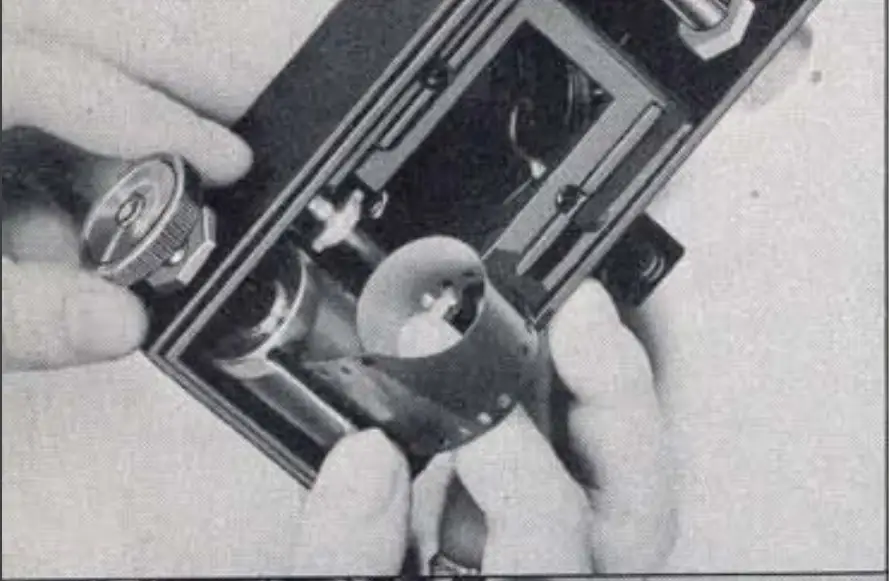
- Pull out rewind knob on the bottom of the camera and in ~ ert the 35mm. film cartridge.

- Push rewind knob in (it may be necessary to turn it slighcly) .

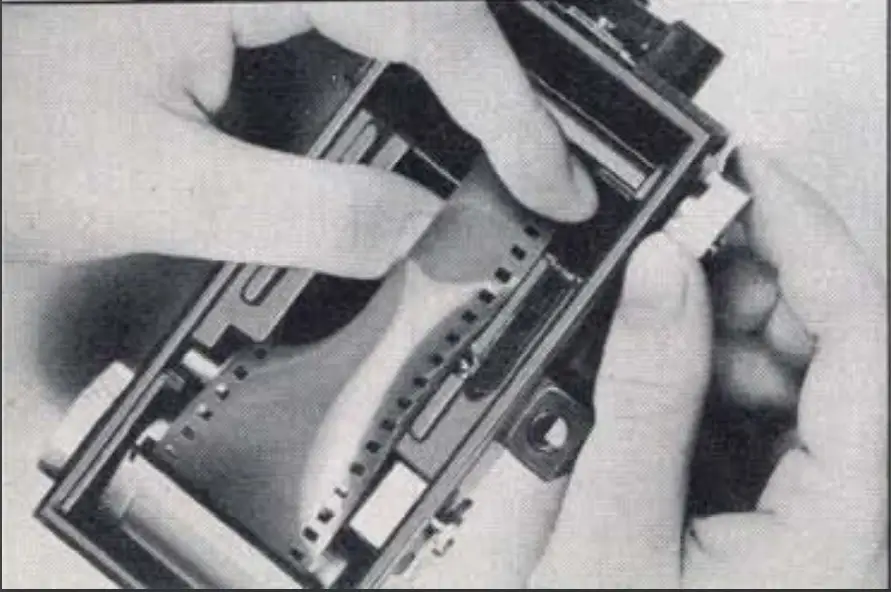
- Thread end of film in the slot on the take-up spindle.

Use Standard 35mm. Film Blackand-White or Color - Give the winding knob a couple of turns co make sure film is secure on take-up spindle.

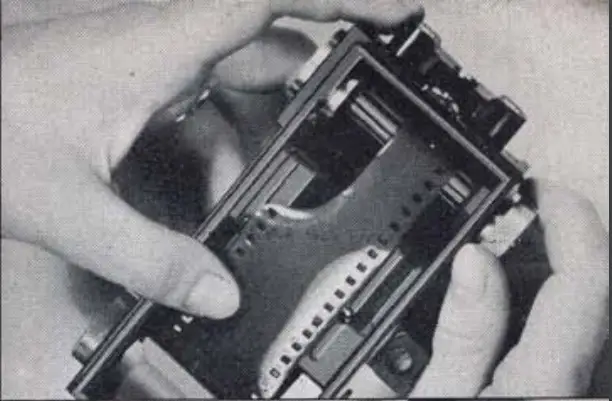
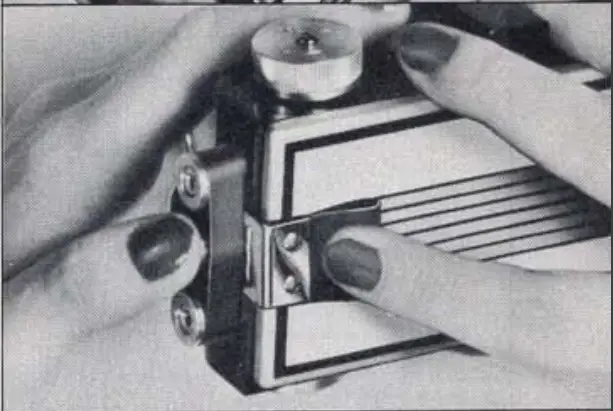
- Replace back of camera, making sure the locking catch is securely fastened.

- Turn winding knob as far as it will go without forcing. Hold down film catch, and turn winding knob slighcly. ‘Release film catch and wind as far as knob will turn. Repeat this operation twice to take up film leader.

- Set exposure counter dial by turning it counter-clockwise (co the left) until “0” is opposite index line. The camera is now ready for the first picture.

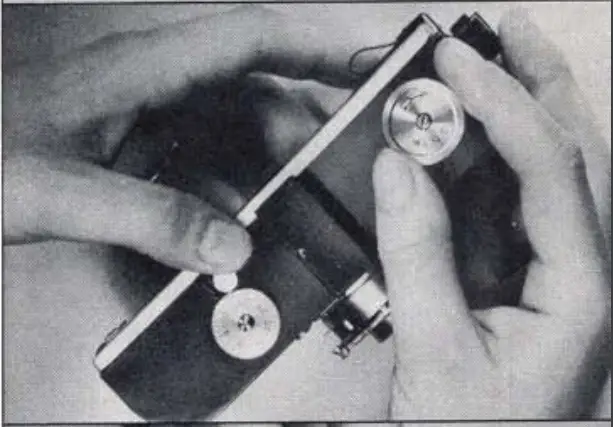
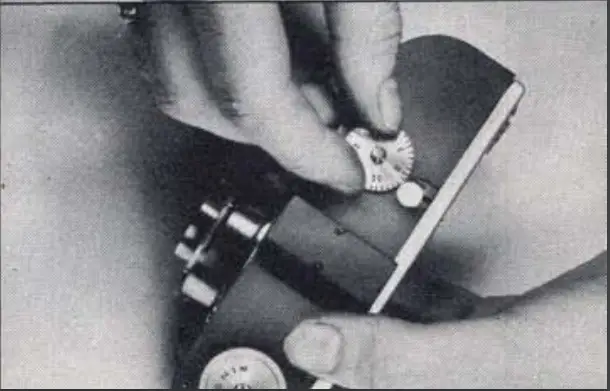
THREE SIMPLE ADJUSTMENTS
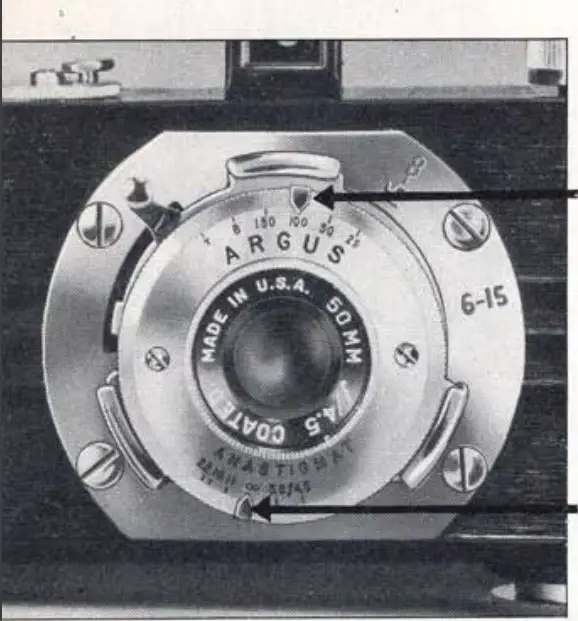 | SELECT SHUTTER SPEED To adjust the shutter, set pointer opposite selected speed. Refer to exposure guide below. SELECt LENS OPENING To adjust the aperture (lens opening) set pointer opposite the correct f number. Refer to exposure guide below. |
To adjust the aperture (lens opening) set pointer opposite the correct f number. Refer to exposure guide below.
OUTDOOR EXPOSURE GUIDE | |||
For Average Fast Film Like Kodak Plus X, ANSCO Supreme, etc. | |||
| SubJeot | Brilliant | Bright | CloullY-Brighl |
| Beach, Water and Snow Scenes; Distant Land- scapes. | Shutter 1/100 Lens f/16 | 1/100 f/11 | 1/100 f/8 |
| Close-ups in Beach, Water and Snow Scenes; Landscapes with Fore- ground. | 1/100 f/11 | 1/100 f/8 | 1/100 f/5.6 |
| P ict ur t:s of People, Children at Play, Gar· dens, Houses, Screec Scenes. | 1/100 f/8 | 1/100 f/5.6 | 1/100 f/4.5 |
| All Subjeccs in Open Shade; Noc Under Trees or Porches. | 1/100 f/5.6 | 1/ 100 f/4.5 | 1/50 f/4.5 |
For color- see instruction supplied with film | |||
MAKE PICTURE TAKING EASY
UNIVERSAL -SETTINGS
Shutter speed 100 and aperture f:8 are marked in red. When these markings are used, Argus FA is correctly set for all average outdoor pictures in sunlight, using an average speed film like Kodak Plus X or Ansco Supreme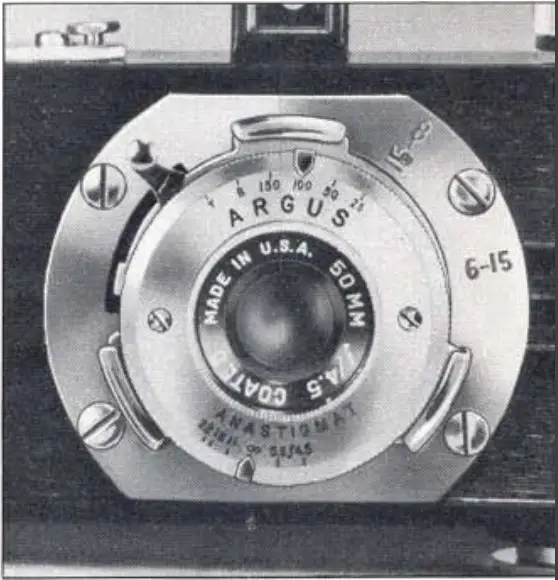
FOCUS THE CAMERA
Argus FA has a simple zonefocusing arrangement requiring a minimum of adjustment.
Three lens positions are provided:
With lens completely telescoped, Argus FA is compact, easy-to-carry.
Pictures cannot be taken with lens in this position. A quarter turn, and lens mount automatically adjusts to normal picture-taking position for pictures 15 feet and beyond.
Another turn, and lens is adjusted for close-ups at 6 to 15 feet.
Be sure index arrow is opposite desired position.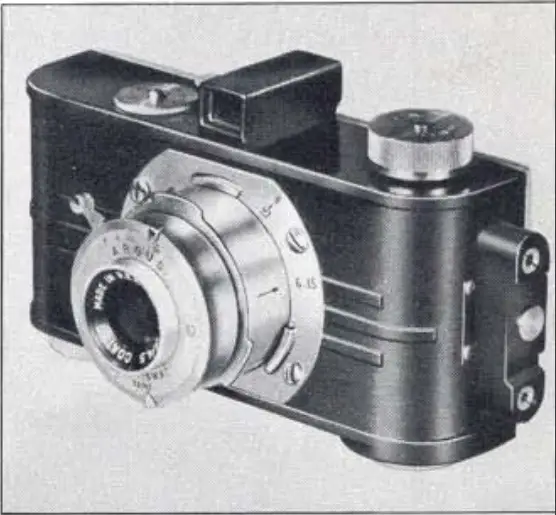
TAKING THE PICTURE
Hold the Argus FA as shown at lefr, taking care to avoid movement at the moment the picture is taken.
Press the shutter -release smoothly.
Close-Ups
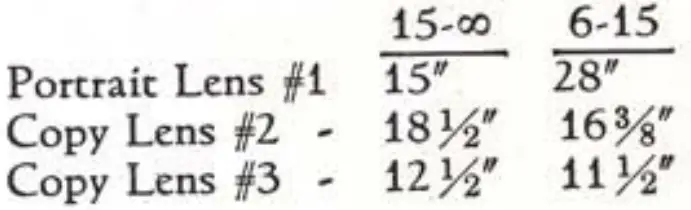
For close-ups, Argus portrait or copy lenses are necessary, and provide reasonably sharp focus at the distances indicated below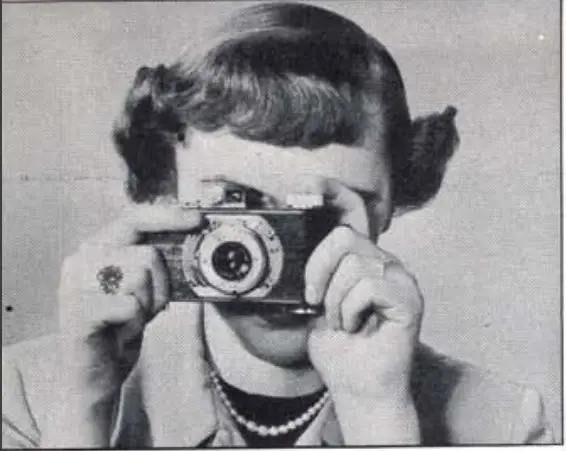
WINDING THE FILM
After each picture is taken, make it a practice to wind the film immediately so the camera will be ready for the next picture. Hold down film catch, and turn winding knob slightly. Release film catch and continue to wind as far as knob will turn without forcing .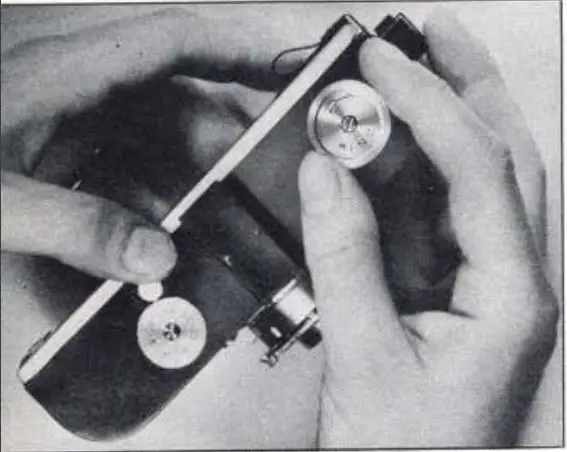
UNLOADING
When all pictures have been taken, rewind the film (using knob marked “rewind”) back into the film cartridge. Open back of camera as in loading, and remove film carrridge.
To use a tripod wirh Argus FA, attach it to rhe rhreaded bushing on the base of the camera.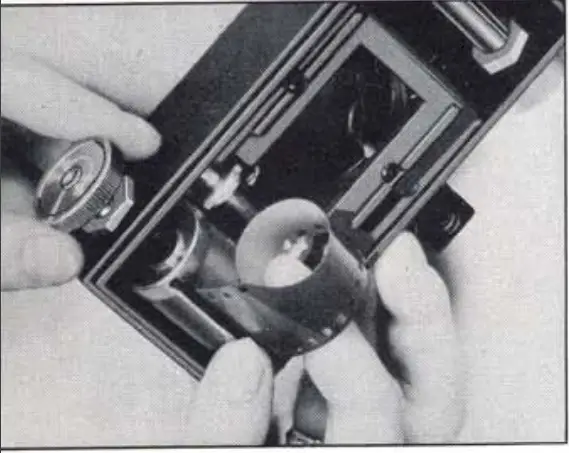
CABLE RELEASE
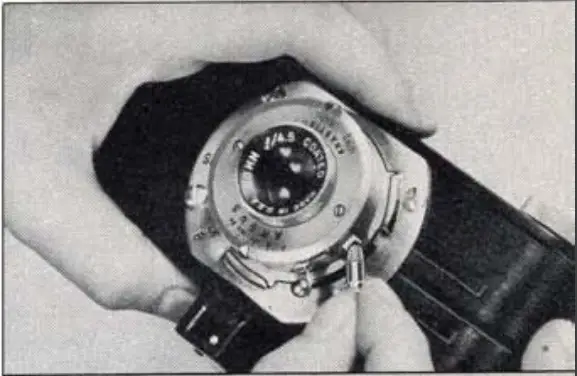
Provision is made for using a cable rdease, if desired. Your Argus
Dealer can supply one. The cable release screws into a bushing on cop of the camera. It is useful for taking pictures when the “bulb” setting is used.
CARRYING CASE
For added protection against accidental hard knocks, keep your Argus FA in the genuine leather evereadytype case. Camera need not be removed for use, even for Hash pictures.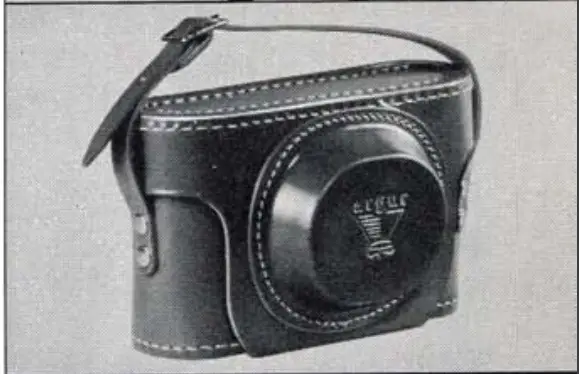
FILTERS AND CLOSE-UP LENSES
Argus filters bring out clouds, make your pictures more interesting. Argus portrait and copy lenses permit “close-up” pictures at 1172 to 28 inches. Argus FA takes 24 mm. adapter ring and 30mm. filters, etc.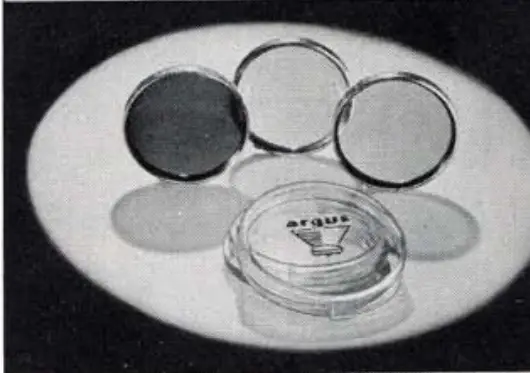
PROJECT YOUR COLOR SLIDES
Your color slides will look their best when projected with an Argus projector. There’s a model for every purse and purpose. Ask your Argus Dealer to show chern to you.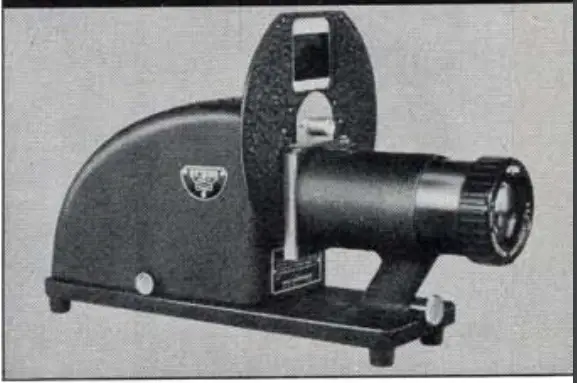
TAKING FLASH PICTURES
Taking flash pictures with Argus FA is as simple as taking outdoor pictures. The detachable flash unit plugs into the side of -the camera . No flash adjustment is necessary.
Caution: Do not place flash bulb in flash unit, until the latter is attached to the camera.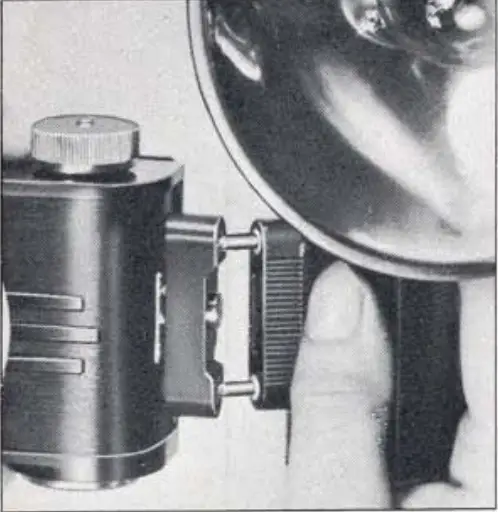
Best results will be obtained if General Electric “SM” orSylvania (Wabash) “SF” flash bulbs are used. Any ‘ shutter speed may be used with either of these flash bulbs. When more light is necessary, midget base wire-filled flash bulbs may be used with the shutter at 25 (1/25) only. As a reminder, the figure 25 is colored green. After taking flash picture, press ejector to discard used bulb and avoid -burned fingers.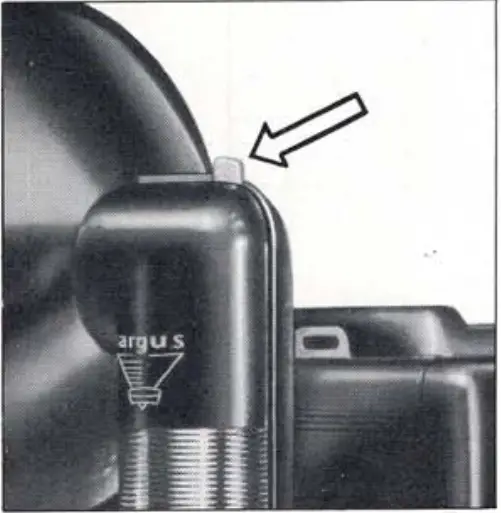
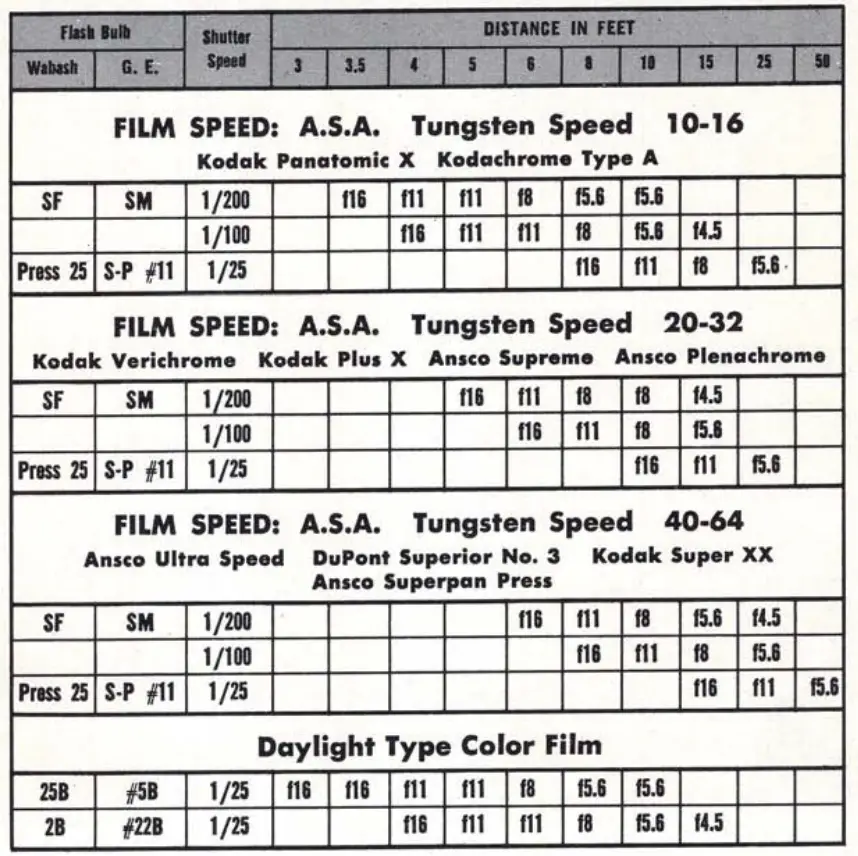
INDOOR FLASH EXPOSURE TABLES
The tables below have proved satisfactory for average subjects in average rooms . . . medi!,1m light colored walls. With light-colored subjects, set the lens at the next smaller opening; with dark-colored subjects, set the lens at the next larger opening. For example: If average setting is f :8, use f :11 for light-colored subject, f:5 .6 for dark-colored subject. A portrait lens is necessary for close ups (see page 7).
|