QBY Series Pockels Cell Drivers
Product Information: QBY-series Pockels Cell Drivers
User Manual (Preliminary)
Revision: 1.03 / 2023 07 18
Warning: This equipment produces high voltages
that can be very dangerous. Please read the user manual before
starting operations.
Important Note: Please measure the output with
symmetrical (differential) high voltage probe only. Measurement
made with inappropriate equipment is a common cause of driver’s
failure.
Overview
The QBY-series Pockels cell driver is a novel device based on
GaN transistors. It is designed to produce high voltage pulses with
high repetition rates, fast rise and fall times, and adjustable
pulse width and pulse amplitude. The main parameters of the driver
are as follows:
- 10kHz @ 4kV with forced air cooling (higher frequencies
possible at smaller voltages)
Appearance
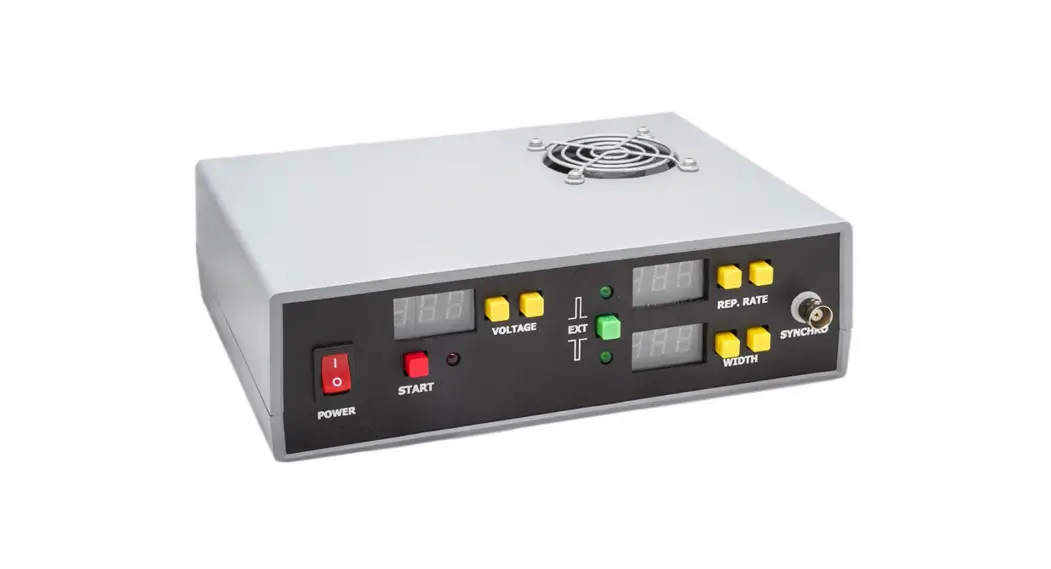
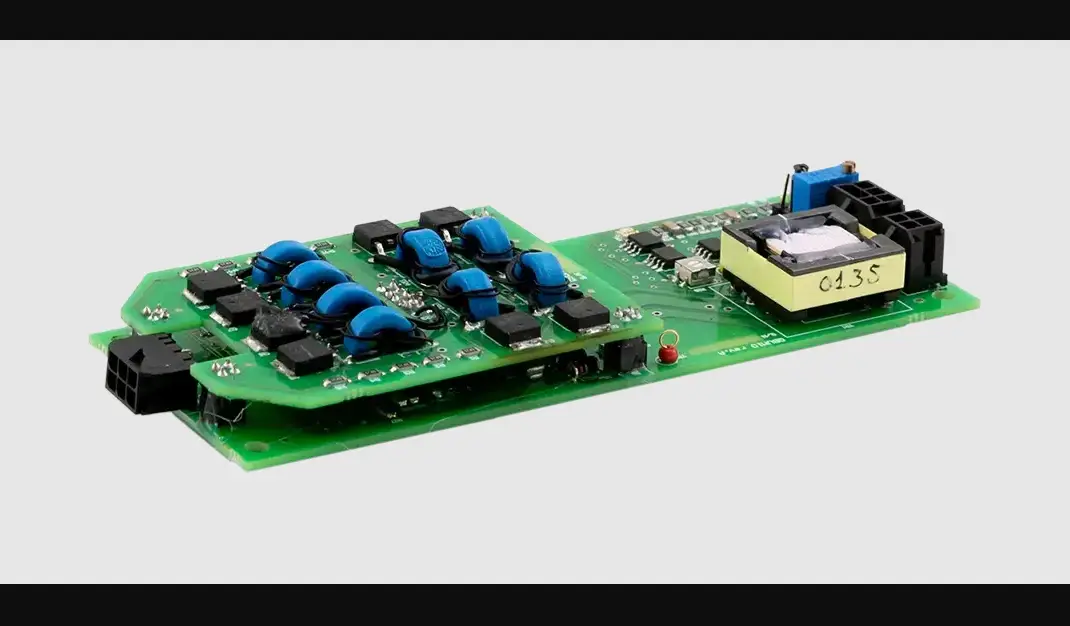
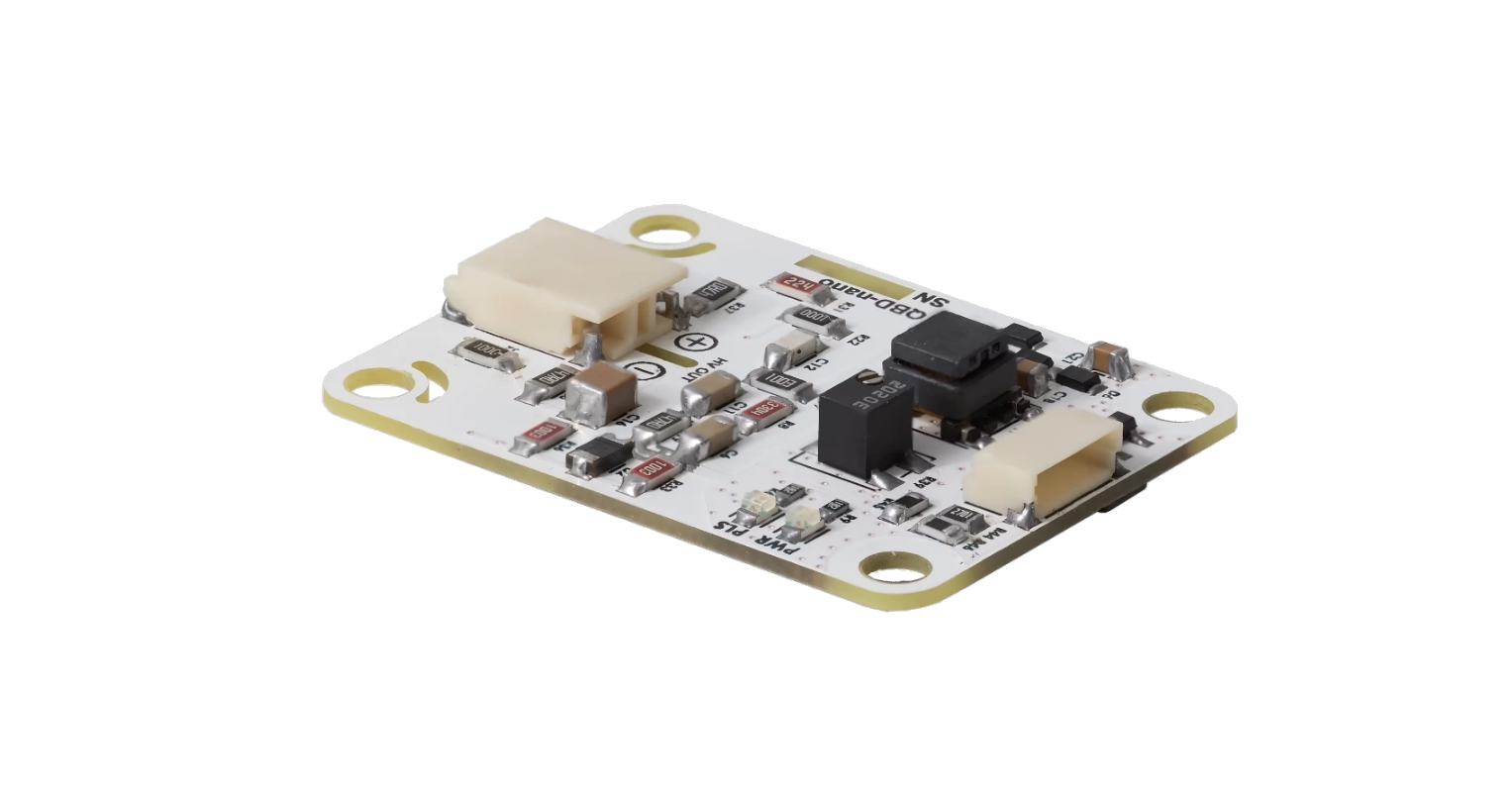
The QBY-series Pockels cell driver has a compact and sleek
design, ensuring easy integration into various setups.
Connections, Signals, Signal Descriptions
- TRIGGER 1 (J1) and TRIGGER 2 (J2): SMA
connectors (TE connectivity 5-1814400-2)
Product Usage Instructions
- Before operating the QBY-series Pockels cell driver, it is
essential to read the user manual carefully to understand the
potential hazards and safety precautions. - Always use a symmetrical (differential) high voltage probe to
measure the output. Using inappropriate equipment for measurement
can lead to driver failure. - Ensure that the QBY-series Pockels cell driver is connected to
an appropriate power source and follow the recommended voltage
specifications for safe operation. - For optimal performance, utilize forced air cooling when
operating at higher voltages or frequencies. - When connecting external devices or triggering sources, use SMA
connectors (TE connectivity 5-1814400-2) for TRIGGER 1 (J1) and
TRIGGER 2 (J2). - Adjust the pulse width and pulse amplitude settings as required
for your specific application. Refer to the user manual for
detailed instructions on adjusting these parameters. - During operation, monitor the device for any abnormal behavior
or signs of malfunction. If any issues arise, refer to the
troubleshooting section of the user manual or contact customer
support for assistance. - When not in use, store the QBY-series Pockels cell driver in a
safe and dry location, away from moisture and extreme
temperatures.
QBY-series Pockels cell drivers
User manual (preliminary)
rev 1.03 / 2023 07 18
Warning! This equipment produces high voltages that can be very dangerous. Please read user manual before starting operations.
Important note: please measure the output with symmetrical (differential) high voltage probe only. Measurement made with inappropriate equipment
is a common cause of driver’s failure.
Overview
QBY is a novel Pockels cell driver based on GaN transistors and producing high voltage pulses with high repetition rates, fast rise and fall times and adjustable pulse width and pulse amplitude. Main parameters are as below:
· Input 24VDC · Output bipolar pulses of high voltage · Pulse amplitude adjustable up to 4000V (other on request) · Pulse width adjustable from 10ns to 1000ns (other on request) · Rise and fall times 3-4ns (also depend on load capacitance and pulse amplitude) · Maximal repetition rate up to 1kHz @ 4kV with convective cooling and up to
10kHz @ 4kV with forced air cooling (and higher at smaller voltages)
At the moment QBY-series includes two models QBY-4001 base model and QBY4010 enhanced model equipped with cooling fans, which made it possible to increase the maximal repetition rate up to 10kHz @ 4kV and up to 100kHz at smaller voltages.
Appearance
2
Connections, signals, signal descriptions
TRIGGER 1 (J1) and TRIGGER 2 (J2): SMA (TE connectivity 5-1814400-2)
Trigger pulse inputs 5 V TTL; input impedance 50 ; trailing edge is active; fast transition (<2ns) is highly recommended.
TRIGGER 1 trailing edge determines the beginning of HV pulse at driver’s output. TRIGGER 2 trailing edge determines the end of HV pulse at driver’s output.
Important note! TRIGGER 2 pulse must be applied at least 10ns later than TRIGGER 1 pulse. Simultaneous applying of TRIGGER 1 and TRIGGER 2 can
lead to driver’s failure.
INTERFACE (X2): Molex Micro-Fit (43045-0602)
PIN (color) 1 (red) 2 (black) 3 (black)
DESIGNATION
DESCRIPTION
+24VDC 24VDC RETURN
+24VDC power supply is to be connected here. Power consumption 0.5A max.
GND
Common ground of interface signals (Enable, Ready, Voltage Program).
3
4 (green)
5 (blue) 6 (orange)
Voltage Program
Enable Ready
Pin 3 is galvanically connected to Pin 2 (via inductor).
Analog signal 0-3V determining the amplitude of high voltage pulses at driver’s output.
Calibration table is given below:
UIN, VDC < 1.77 1.80 1.83 1.90 2.02 2.21 2.39 2.57 2.69 2.88 3.00
UOUT, kVDC 0.00 0.08 0.19 0.40 0.80 1.40 2.00 2.61 3.00 3.60 4.02
Turns driver’s output on and off.
5V TTL, 10 kOhm input impedance.
Output signal returning driver’s ready status (driver is enabled, there is no internal fault or overheating and driver is ready to work).
HV OUTPUT (X3): JST SM02B-BHSS-1-TB
PIN (color) 1 (red)
2 (red)
DESIGNATION
HV OUTPUT POSITIVE
HV OUTPUT NEGATIVE
DESCRIPTION
High voltage output of the driver.
HV OUTPUT POSITIVE varies from 0V to +2kV relative to the ground.
HV OUTPUT NEGATIVE varies from 0V to -2kV relative to the ground.
Voltage difference between HV OUTPUT POSITIVE and HV OUTPUT NEGATIVE varies from 0V to 4kV relative to the ground.
Mating part (JST BHSR-02VS-1) is supplied together with the driver.
Jumpers and LEDs
In stand-alone mode driver can be controlled manually without applying most of interface signals from the controlling device.
ENABLE JUMPER (X1)
ON (Pins 1 & 2)
Driver will be enabled only when Enable signal is applied to Pin 5 of INTERFACE connector.
4
VOLTAGE PROGRAM JUMPER (X4)
VOLTAGE PROGRAM TRIMPOT (R131)
ON (Pins 2 & 3) OFF ON OFF
–
Driver is enabled.
Driver is permanently disabled.
Output voltage is determined by the state of VOLTAGE PROGRAM TRIMPOT (R131 on PCB).
Output voltage is determined by Voltage Program signal applied to Pin 4 of INTERFACE connector.
Determines the driver’s output voltage when VOLTAGE PROGRAM JUMPER (X4) is on. Clockwise rotation increases the output voltage.
There is an ENABLE LED onboard indication the driver is enabled and ready to deliver HV pulses to the output.
Grounding and mounting
Grounding All the driver’s circuits (HV OUTPUT central point, 24VDC negative, INTEFACE common ground and trigger pulse returns) are galvanically interconnected to each other, although some
via inductors.
Driver is to be mounted with four M3 screws.
5
Operations (in stand-alone mode) 1. Connect 24VDC power supply, pulse generator and Pockels cell to the driver 2. Ensure that power is off and driver is disabled (i.e. ENABLE JUMPER X1 is removed) 3. Turn on 24VDC power supply 4. Set VOLTAGE PROGRAM JUMPER (X4) on, then set VOLTAGE PROGRAM TRIMPOT accordingly to the desired output voltage (minimal, maximal, other) 5. Short Pins 2 and 3 of ENABLE JUMPER (X1) to enable the driver 6. Turn on pulse generator and apply pulses to TRIGGER 1 and TRIGGER 2. Keep minimal distance between trigger pulses (10ns).
Typical output
Polarity of the output Please note, driver’s output is bipolar. HV OUTPUT positive has positive voltage potential
relative to the ground (from 0V to +2kV), HV OUTPUT negative has negative voltage potential relative to the ground (from 0V to -2kV), their difference varies from 0V to 4kV.
Examples of waveforms:
4kV, 10ns pulse
6
4kV, 100ns pulse
4kV, 1000ns pulse
Typical performance
Table below contains maximal repetition rate in dependence on output voltage and cooling conditions. Other setup parameters total load capacitance 5pF, ambient temperature 25C:
4.0kV
3.0kV
2.0kV
1.5kV
1.0kV <0.7kV
QBY-4001, conductive cooling
1kHz
5kHz
15kHz 25kHz 40kHz 50kHz
QBY-4010, forced air cooling
10kHz
15kHz
30kHz
40kHz
80kHz 100kHz
Higher load capacitance and higher ambient temperature result in derated performance.
7
Specifications
ELECTRICAL SPECIFICATION
Input Power 24VDC, 0.5A max HV Output Output type/polarity Bipolar Amplitude 0-4kV adjustable (other on request) Pulse width 10-1000ns adjustable (other on
request) Repetition rate Load and cooling dependent
· >1kHz @ 4kV, 5pF for QBY-4001 · >10kHz @ 4kV, 5pF for QBY-4010
See also Performance section above Rise/fall time 3-4ns
Delay time <10ns Jitter <0.2ns
Load requirements Load type Capacitive
Load capacitance <5pF recommended, 10pF max Protections From overheating (~80C) Cooling QBY-4001: convective cooling or forced air cooling with external fan QBY-4010: forced air cooling with integrated fans
Environmental Operating temperature -30…+60C
MECHANICAL SPECIFICATION
Size (LxWxH)
80x50x20 mm3 (see also the dimensional drawings below)
Weight Approx. 0.05 kg
8
DIMENSIONAL DRAWINGS
QBY-4001 (bare PCB without fans) QBY-4010 (enclosed PCB with fans)
9
Bench-top version Bench-top version (QBY-BT) with embedded pulse generator is available.
10