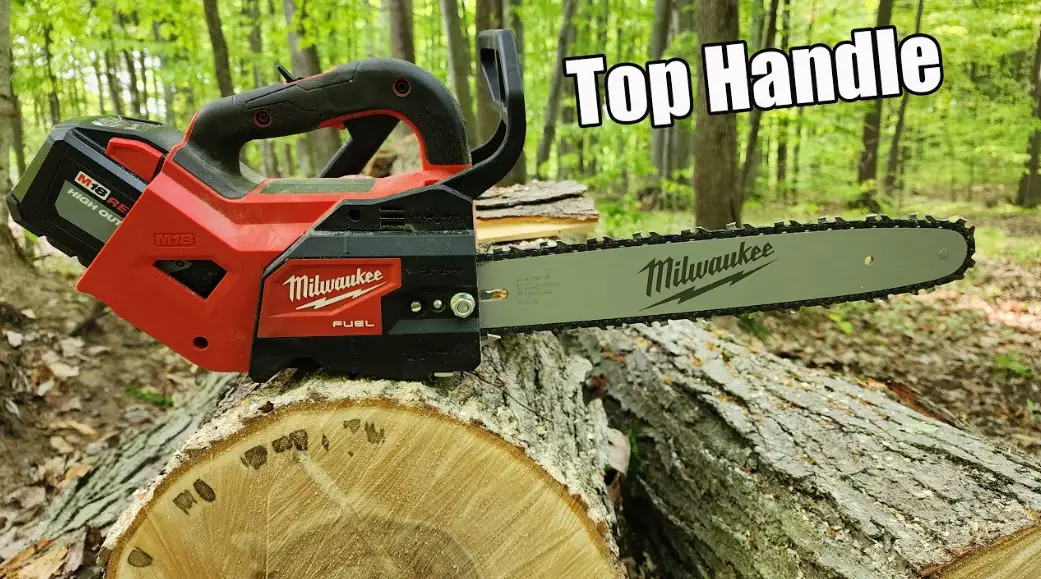
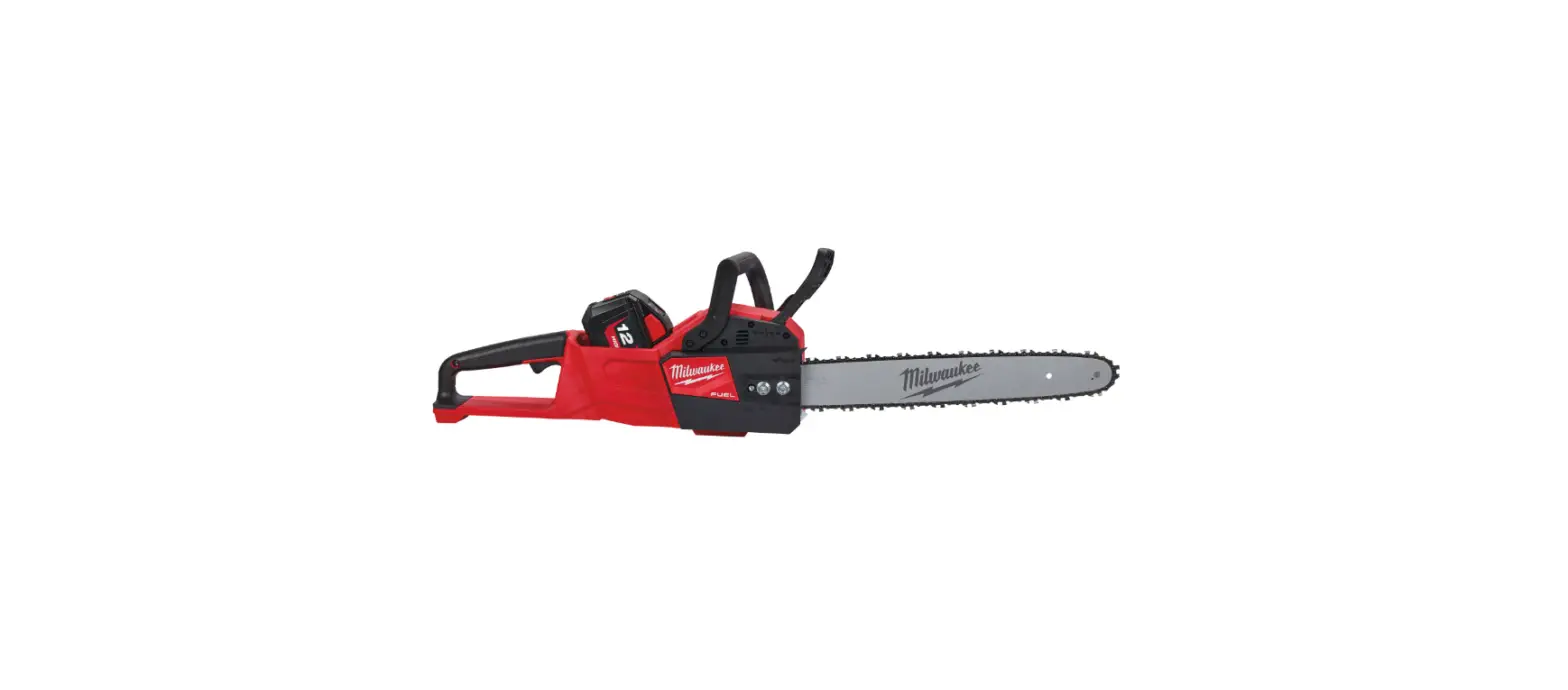
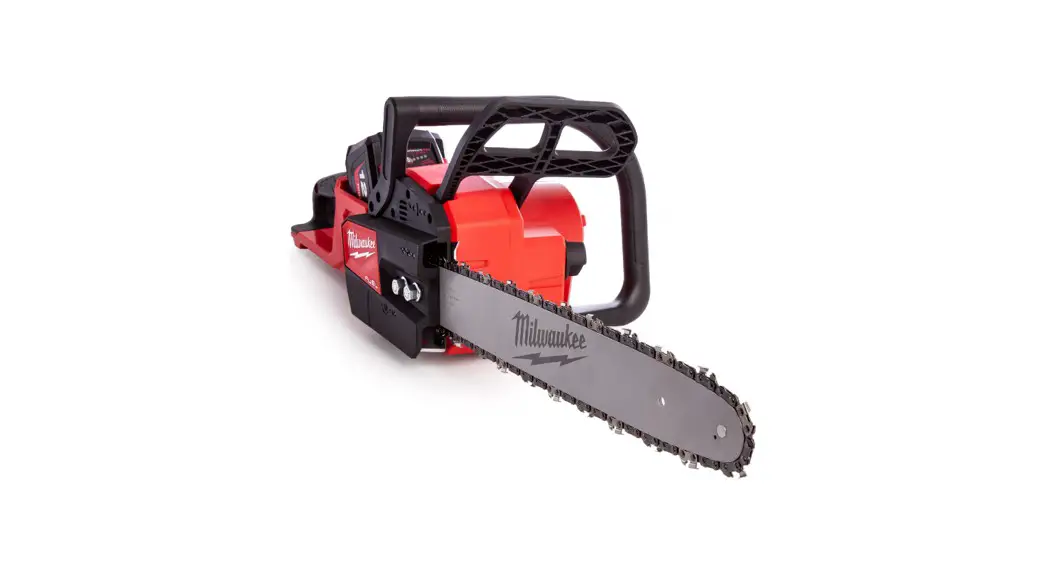
M18 FUEL Top Handle Chainsaw
Product Information
Product Name: M18 FTHCHS35
User Manual Language: English
Product Usage Instructions
- Before starting any work on the product, remove the battery
pack. - To start the product, click the START button.
- To stop the product, click the STOP button.
- For battery level indication, refer to the following
percentages:- M14: 75-100%
- M18: 50-75%
- M28: 25-50%
- To perform a test cut, follow these steps:
- Press the TEST button.
- Click the START button to begin the test cut.
- Click the STOP button to stop the test cut.
- For oiling the product, use OIL and follow these steps:
- Add oil to the product.
- Ensure that the product is properly lubricated with oil.
- Wear ear protectors and take necessary precautions for
vibration and noise exposure. Refer to the provided information
about vibration and noise emission values. - Read all safety warnings, instructions, illustrations, and
specifications provided with the product before usage. - Keep all warnings and instructions for future reference.
- Follow general chainsaw safety warnings, including keeping body
parts away from the saw chain, holding the chainsaw with the
correct hand configuration, and avoiding inattentiveness while
operating the chainsaw.
M18 FTHCHS35
EN User Manual
ZH ZH KO
TH ID Buku Petunjuk Pengguna VI Cm nang hng dn s dng JA
13 START STOP
6
20
15
19
2
9
22
8
10
18
3
M18 FTHCHS35
EN User Manual ZH ZH KO TH ID Buku Petunjuk Pengguna VI Cm nang hng dn s dng JA
4
1
3
4
2
6
578
9
10
12
20 19
16 17
18
11 13
14 15
5
1
Remove the battery pack before starting any work on the product.
, . .
Lepaskan paket baterai sebelum memulai pekerjaan apa pun pada produk.
Tháo pin trc khi bt u thao tác vi sn phm.
2
Click Klik Ting tách
click
1
2
6
M14 M18 M28
75-100 % 50-75 % 25-50 % 10-25 % < 10 %
7
1
2
–
+
3
3 mm
4
8
1
10 min
2
3
4
9
1
2x TX20
2
3
1
24
10
TEST
Test TES Kim tra
Start Mulai Khi ng
Stop Berhenti Dng
START STOP
11
TEST
START
12
START
Carry out a test cut GGU Lakukan tes pemotongan Thc hin ct th nghim
STOP
2
1 2
1
13
Insulated gripping surface GG Permukaan genggam berinsulasi B mt tay cm c cách in
14
1 2
15
1
1/3 2/3
1/3 2/3
2
2/3 1/3
1 2
2/3 1/3
16
1
2
3
17
1 2 3
18
1
2
3
4
19
1 2 3 4
20
2 1
2
5
6
7
3 mm
21
1 2 3
22
4 5 6
23
7 8
9
OIL
10
Oil
Oli
Du
24
3 mm
11 12a 12b
25
1 2
26
TECHNICAL DATA Type Battery voltage No-load chain speed Max bar length Usable cutting length Chain teeth (Drive length) Chain pitch (Low profile) Bar groove width (Gauge) Sprocket number of teeth Sprocket pitch Chain type Chain oil tank capacity Weight according EPTA-Procedure 01/2014 (Li-ion 2.0 Ah – 12.0 Ah) Weight without guiderail, chain, and oil Recommended ambient operating temperature Recommended battery types Recommended charger Noise information Noise emission values determined according to EN 62841.
A-weighted sound pressure level Uncertainty K A-weighted sound power level Uncertainty K Wear ear protectors. Vibration information Total vibration values (vector sum in the three axes) determined according to EN 62841. Vibration emission value ah Uncertainty K
M18 FTHCHS35 Chainsaw 18 V 15 m/s 14 in. / 356 mm 13.5 in. / 343 mm 59 8.3 mm (0.325 in.) 1.1 mm (0.043 in.) 7 8.3 mm (0.325 in.) Low kickback 150 ml 3.6 4.7 kg 3.2 kg -18 – +50 °C M18B…, M18HB… M12-18…, M18 DFC, M18 PC6
76.5 dB (A) 3.0 dB (A) 96.5 dB (A) 3.0 dB (A)
2.56 m/s2 1.5 m/s2
WARNING!
The declared vibration total values and the declared noise emission values given in this instruction manual have been measured in accordance with a standardised test given in EN 62841 and may be used to compare one tool with another. They may be used for a preliminary assessment of exposure.
The declared vibration and noise emission values represent the main applications of the tool. However, if the tool is used for different applications, used with different accessories, or poorly maintained, the vibration and noise emission may differ. These conditions may significantly increase the exposure levels over the total working period.
An estimation of the level of exposure to vibration and noise should take into account the times when the tool is turned off or when it is running idle. These conditions may significantly reduce the exposure level over the total working period.
Identify additional safety measures to protect the operator from the effects of vibration and noise, such as maintaining the tool and the accessories, keeping the hands warm, and organising work patterns.
WARNING! Read all safety warnings, instructions, illustrations, and specifications provided with the product. Failure to follow all instructions listed below may result in electric shock, fire, and/or serious injury.
Save all warnings and instructions for future reference.
GENERAL CHAINSAW SAFETY WARNINGS
Keep all parts of the body away from the saw chain when the chainsaw is operating. Before you start the chainsaw, make sure the saw chain is not contacting anything. A moment of inattention while operating chainsaws may cause entanglement of your clothing or body with the saw chain.
Always hold the chainsaw with your right hand on the rear handle and your left hand on the front handle. Holding the chainsaw with a reversed hand configuration increases the risk of personal injury and should never be done.
Hold the chainsaw by insulated gripping surfaces only, because the saw chain may contact hidden wiring. Saw chains contacting a “live” wire may make exposed metal parts of the chainsaw “live” and could give the operator an electric shock.
Wear eye protection. Further protective equipment for hearing, head, hands, legs and feet is recommended. Adequate protective equipment will reduce personal injury from flying debris or accidental contact with the saw chain.
ENGLISH
27
Do not operate a chainsaw in a tree, on a ladder, from a rooftop, or any unstable support. Operation of a chainsaw in this manner could result in serious personal injury.
Always keep proper footing and operate the chainsaw only when standing on fixed, secure and level surface. Slippery or unstable surfaces may cause a loss of balance or control of the chainsaw.
When cutting a limb that is under tension, be alert for spring back. When the tension in the wood fibres is released, the spring loaded limb may strike the operator and /or throw the chainsaw out of control.
Use extreme caution when cutting brush and saplings. The slender material may catch the saw chain and be whipped toward you or pull you off balance.
Carry the chainsaw by the front handle with the chainsaw switched off and away from your body. When transporting or storing the chainsaw, always fit the guide bar cover. Proper handling of the chainsaw will reduce the likelihood of accidental contact with the moving saw chain.
Follow instructions for lubricating, chain tensioning and changing the bar and chain. Improperly tensioned or lubricated chain may either break or increase the chance for kickback.
Cut wood only. Do not use chainsaw for purposes not intended. For example: do not use chainsaw for cutting metal, plastic, masonry, or non-wood building materials. Use of the chainsaw for operations different than intended could result in a hazardous situation.
This chain saw is not intended for tree felling. Use of the chain saw for operations different than intended could result in serious injury to the operator or bystanders.
Keep handles dry, clean, and free from oil and grease. Greasy, oily handles are slippery causing loss of control.
CAUSES AND OPERATOR PREVENTION OF KICKBACK:
Kickback may occur when the nose or tip of the guide bar touches an object, or when the wood closes in and pinches the saw chain in the cut.
Tip contact in some cases may cause a sudden reverse reaction, kicking the guide bar up and back towards the operator.
Pinching the saw chain along the top of the guide bar may push the guide bar rapidly back towards the operator.
Either of these reactions may cause you to lose control of the saw which could result in serious personal injury. Do not rely exclusively upon the safety devices built into your saw. As a chainsaw user, you should take several steps to keep your cutting jobs free from accident or injury.
Kickback is the result of tool misuse and/or incorrect operating procedures or conditions and can be avoided by taking proper precautions as given below:
Maintain a firm grip, with thumbs and fingers encircling the chainsaw handles, with both hands on the saw and position your body and arm to allow you to resist kickback forces. Kickback forces can be controlled by the operator, if proper precautions are taken. Do not let go of the chainsaw.
Do not overreach and do not cut above shoulder height. This helps prevent unintended tip contact and enables better control of the chainsaw in unexpected situations.
Only use replacement bars and chains specified by the manufacturer. Incorrect replacement guide bars and chains may cause chain breakage and/or kickback.
Follow the manufacturer’s sharpening and maintenance instructions for the saw chain. Decreasing the depth gauge height can lead to increased kickback.
Follow all instructions when clearing jammed material, storing, or servicing the chainsaw. Make sure the switch is off and the battery pack is removed. Unexpected actuation of the chainsaw while clearing jammed material or servicing may result in serious personal injury.
ADDITIONAL SAFETY AND WORKING INSTRUCTIONS
The product is for use by trained tree service operators only. Use without proper training can result in severe injuries.
Stay alert, watch what you are doing and use common sense when operating a power tool. Do not use a power tool while you are tired or under the influence of drugs, alcohol, or medication.
It is recommended to cut logs on a sawhorse or cradle when operating the product for the first time.
Ensure that all the guards, handles, and spiked bumper are properly fitted and are in good condition.
Persons using the product should be in good health. The product is heavy, so the operator must be physically fit.
The operator should be alert, have a good vision, mobility, balance, and manual dexterity. If there is any doubt, do not operate the product.
Do not start using the product until you have a clear work area, secure footing, and a planned retreat path away from a falling tree. Beware of the emission of the lubricant mist and saw dust. Wear a mask or respirator, if required.
Do not cut vines or small undergrowth.
Always hold the product with both hands during operation. Use a firm grip with thumbs and fingers encircling the handles. The right hand must be on the rear handle and the left hand on the front handle.
Before starting the product, make sure that the saw chain is not contacting any object.
Do not modify the product in any way or use it to power any attachments or devices not recommended by the manufacturer.
There should be a first-aid kit containing large wound dressings and a means to summon attention (e.g., whistle) close to the operator. A larger more comprehensive kit should be reasonably nearby.
An incorrectly tensioned chain can jump off the guide bar and could result in serious injury or fatality. The length of the chain depends on the temperature. Check the tension frequently.
Get used to the product by making simple cuts on securely supported wood. Do this whenever you have not operated the product for some time.
To reduce the risk of injury associated with contacting moving parts, always turn off the motor, apply the chain brake, remove the battery pack, and make sure all moving parts have come to a stop:
· before cleaning or clearing a blockage
· before leaving the product unattended
· before installing or removing attachments
· before checking, conducting maintenance, or working on the product
The size of the work area depends on the job being performed as well as the size of the tree or workpiece involved. For example, felling a tree requires a larger work area than making other cuts, i.e., bucking cuts, etc. The operator needs to be aware and in control of everything happening in the work area.
Do not cut with your body in line with the guide bar and chain. If you experience kickback, this helps prevent the chain coming into contact with your head or body.
28
ENGLISH
Do not use a back-and-forward sawing motion, let the chain do the work. Keep the chain sharp and do not try to push the chain through the cut.
Do not put pressure on the saw at the end of the cut. Be ready to take on the weight of the product as it cuts free from the wood. Failure to do so could result in possible serious personal injury.
Do not stop the product in the middle of a cutting operation.
Keep the product running until it is already removed from the cut. Do not fix the on/off switch in the on position when using the product hand-held.
Remove the battery pack before starting any work on the product.
TETHERING
For tethering, use a dynamic climbing rope or energy absorbing lanyards only. Do not hang the product from the guide bar cover.
PUSH AND PULL
The reaction force is always opposite to the direction the chain is moving. Thus, the operator must be ready to control the tendency for the product to pull away (forward motion) when cutting on the bottom edge of the bar and the push backwards (towards the operator) when cutting along the top edge.
SAW JAMMED IN THE CUT
Turn off the product, engage the chain brake, and remove the battery pack. Do not try to force the chain and bar out of the cut as this likely to breaks the chain, which may swing back and strike the operator. This situation normally occurs because the wood is incorrectly supported which forces the cut to close under compression, thereby pinching the blade. If adjusting the support does not release the bar and chain, use wooden wedges or a lever to open the cut and release the saw. Never try to start the product when the guide bar is already in a cut or kerf.
SKATING/BOUNCING
When the product fails to dig in during a cut, the guide bar can begin hopping or dangerously skidding along the surface of the log or branch, possibly resulting in the loss of control of the product. To prevent or reduce skating or bouncing, always use the product with both hands and make sure that the saw chain establishes a groove for cutting. Never cut small, flexible branches or brushes with the product. Their size and flexibility can easily cause the saw to bounce towards you or bind up with enough force to cause a kickback. The best tool for that kind of work is a hand saw, pruning shears, an axe, or other hand tools.
PERSONAL PROTECTIVE EQUIPMENT
Wear a helmet at all times when operating the product. A helmet, equipped with mesh visor, can help reduce the risk of injury to the face and the head if kickback occurs. Wear ear protectors.
Good quality personal protective equipment, as used by professionals, helps reduce the risk of injury to the operator. The following items should be used when operating the product:
SAFETY HELMET Should comply with EN 397 and be CE marked.
HEARING PROTECTION Should comply with EN 352-1 and be CE marked.
EYE AND FACE PROTECTION Should be CE marked and comply with EN 166 (for safety glasses) or EN 1731 (for mesh visors).
GLOVES Should comply with EN381-7 and be CE marked.
LEG PROTECTION (CHAPS) Should comply with EN 381-5, be CE marked, and provide all-round protection
CHAINSAW SAFETY BOOTS Should comply with EN ISO 20345:2004 and be marked with a shield depicting a chainsaw to show compliance with EN 381-3. (Occasional users may use steel toe-cap safety boots with protective gaiters, that conform to EN 381-9, if the ground is even and there is little risk of tripping or catching on undergrowth)
CHAINSAW JACKETS FOR UPPER BODY PROTECTION Should comply with EN 381-11 and be CE marked.
KNOW YOUR CHAINSAW
1. Trigger release 2. Throttle trigger 3. Chain drive 4. Bar groove 5. Rear handle 6. Battery pack 7. Front handle 8. Chain brake 9. Chain lubricant cap 10. Saw chain 11. Guide bar 12. Drive sprocket cover 13. Guide bar cover 14. Bar mounting nuts 15. Spiked bumper 16. Combination wrench 17. Chain catcher 18. Chain tension screw
ENGLISH
29
19. Brake band (internal) 20. Lanyard loop
WARNING! Consequences of improper maintenance, removal, or modification of the safety features like the chain brake, ignition switch, hand guard (front and back), spiked bumper, chain catcher, guide bar, and low kickback saw chain may cause the safety features to not function correctly, thus increasing the potential for serious injury.
LOW KICKBACK SAW CHAIN
A low kickback saw chain helps to reduce the possibility of a kickback event. The rakers (depth gauges) ahead of each cutter can minimize the force of a kickback reaction by preventing the cutters from digging in too deeply. Use only replacement guide bar and chain combinations recommended by the manufacturer. As saw chains are sharpened, they lose some of the low kickback qualities and extra caution is required. For your safety, replace saw chains when cutting performance decreases.
SPIKED BUMPER
The integral bumper spike may be used as a pivot when making a cut. It helps to keep the body of the product steady while cutting. When cutting, push the product forward until the spikes dig into the edge of the wood, then by moving the rear handle up or down in the direction of the cutting line it can help ease the physical strain of cutting.
GUIDE BAR
Generally, guide bars with small radius tips have somewhat lower potential for kickback. Use a guide bar and matching chain which is just long enough for the job. Longer bars increase the risk of loss of control during sawing. Regularly check the chain tension. When cutting smaller branches (less than the full length of the guide bar) the chain is more likely to be thrown off if the tension is not correct.
CHAIN BRAKE
Chain brakes are designed to quickly stop the chain from rotating. When the chain brake lever/hand guard is pushed towards the bar, the chain should stop immediately. A chain brake does not prevent kickback. It only lowers the risk of injury should the chain bar contact the operator’s body during a kickback event. The chain brake should be tested before each use for the correct operation in both the run and brake positions.
CHAIN CATCHER
A chain catcher prevents the saw chain from being thrown back towards the operator if the saw chain comes loose or breaks.
INSTRUCTIONS CONCERNING THE PROPER TECHNIQUES FOR BASIC LIMBING, AND CROSS-CUTTING
UNDERSTANDING THE FORCES WITHIN THE WOOD
When you understand the directional pressures and stresses inside the wood you can reduce the pinches or at least expect them during your cutting. Tension in the wood means the fibres are being pulled apart and if you cut in this area, the kerf or cut tends to open as the saw goes through. If a log is being supported on a sawhorse and the end is hanging unsupported over the end, tension is created on the upper surface due to the weight of the overhanging log stretching the fibres. Likewise, the underside of the log will be in compression and the fibres are being pushed together. If a cut is made in this area, the kerf will have the tendency to close up during the cut. This would pinch the blade.
BLOCKING TREES
Hazardous conditions
When blocking (removing sections from a standing tree) a tree, it is important to follow these warnings and instructions to prevent possible serious injury.
WARNING! Do not block the trees during periods of high wind or heavy precipitation. Wait until the hazardous weather has ended. Closely check for broken or dead branches that could fall while cutting and do not cut near buildings or electrical wires if you do not know the direction of tree fall. Do not cut at night or during bad weather conditions, such as rain, snow, or strong winds, that can reduce visibility and control of the product. If the tree you are blocking makes contact with any utility line, discontinue use of the product and immediately notify the utility company. Failure to follow these instructions could result in death or serious personal injury.
These basic blocking techniques are not intended to substitute for the judgment of an experienced professional. Your circumstance may require a different type of notch or technique. Always exercise good professional judgment and discretion when evaluating how to safely complete a cutting task.
· Do not cut down trees having an extreme lean or large trees with rotten limbs, loose bark, or hollow trunks. Have these trees pushed or dragged down with heavy equipment, then cut them up.
· Do not cut trees near electrical wires or buildings.
· Periodically glance at the top of the tree during the backcut to ensure that the tree is going to fall in the preferred direction.
· If the tree starts to fall in the wrong direction, or if the product gets caught or hung up during the fall, leave the product and save yourself.
· Blocking a tree – When bucking and blocking operations are being performed by two or more persons, at the same time, the blocking operation should be separated from the bucking operation by a distance of at least twice the height of the tree being blocked. Trees should not be blocked in a manner that would endanger any person, strike any utility line or cause any property damage. If the tree makes contact with any utility line, the utility company should be notified immediately.
· Notched undercut (a notch cut in a tree that directs the tree’s fall). Cut a notch about 1/3 the diameter of the tree, perpendicular to the direction of fall. Make the cuts of the notch so that they intersect at a right angle to the line of fall. The notch should be cleaned out to leave a straight line. To keep the weight of the wood off the saw, always make the lower cut of the notch before the upper cut.
Direction of fall
Hinge 2 in.or 1/10 diameter
Back cut 2 in.
Notch Approximately 1/3 diameter of the trunk
30
ENGLISH
Back Cut
Notch
Hinge
WARNING! Never cut through the notch when making a backcut. The hinge controls the fall of the tree, this is the section of wood between the notch and backcut. Never position yourself directly behind the trunk of a falling tree. There is a risk that the trunk may split and come back towards the operator.
· Backcut (the final cut in a tree blocking operation made on the opposite side of the tree from the notching undercut). The backcut is always made level and horizontal, and at a minimum of 2 in. above the horizontal cut of the notch.
· Never cut through to the notch. Always leave a band of wood between the notch and backcut (approximately 2 in. or 1/10 the diameter of the tree). This is called hinge or hingewood. It controls the fall of the tree and prevents slipping or twisting or shootback of the tree off the stump.
· On large diameter trees, stop the back cut before it is deep enough for the tree to either fall or settle back on the stump. Then insert soft wooden or plastic wedges into the cut so they do not touch the chain. The wedges can be driven in, little by little, to help jack the tree over.
· As the tree starts to fall, turn off the product and put it down immediately. Be alert for overhead limbs or branches that may fall and watch your footing.
PRUNING
WARNING! Do not overreach and do not cut above shoulder
height. Failure to do so could result in serious personal injury. If you are unable to follow these instructions, use a different tool, such as a pole pruner.
Load
Second cut
First cut 1/3 diameter
Finishing cut
· Pruning is trimming limbs from a live tree. · Work slowly, keeping both hands on the chainsaw with a firm grip.
Always make sure that your footing is secure and that your weight is distributed evenly on both feet. · Do not cut from a ladder, this is extremely dangerous. Leave this operation for professionals. · Do not cut above shoulder height as a saw held higher is difficult to control against kickback. · Never position yourself under the branch you are cutting and watch out for falling branches.
· When pruning trees it is important not to make the finishing cut next to the main limb or trunk until you have cut off the limb further out to reduce the weight. This prevents stripping the bark from the main member.
· Underbuck the branch 1/3 through for your first cut. · The second cut should overbuck to drop the branch off. · Make the finishing cut smoothly and neatly against the main
member so that the bark grows back to seal the wound.
CUTTING SPRINGPOLES A springpole is any log, branch, rooted stump, or sapling that is bent under tension by other wood so that it springs back if the wood holding it is cut or removed. On a fallen tree, a rooted stump has a high potential of springing back to the upright position during the bucking cut to separate the log from the stump. Watch out for springpoles, they are dangerous.
WARNING! Springpoles are dangerous and could strike the operator, causing the operator to lose control of the product. This could result in severe or fatal injury to the operator. This should be done by trained users.
SPECIFIED CONDITIONS OF USE The cordless chainsaw is only intended for use outdoors. For safety reasons, the product must be adequately controlled by using two-handed operation at all times. The product is designed for cutting branches, trunks, logs, and beams of a diameter determined by the cutting length of the guide bar. It is only designed to cut wood. It is only to be used by adults who have received adequate training on the hazards and preventative measures/actions to be taken while using the product. Do not use the product for any purpose not listed in the specified conditions of use. The product is not to be used by children or by persons not wearing adequate personal protective equipment and clothing.
WARNING! When using the product, the safety rules must be followed. For your safety and that of bystanders, read and fully understand these instructions before operating the product. Attend a professionally organized safety course in the use, preventative actions, first-aid, and maintenance of chainsaws. Keep these instructions safe for later use.
WARNING! Chainsaws are potentially dangerous tools. Accidents involving the use of chainsaws often result in loss of limbs or death. It is not just the chainsaw that is the hazard. Falling branches, toppling trees, and rolling logs can all kill. Diseased or rotting timber poses additional hazards. Assess your capability of completing the task safely. If there is any doubt, leave it to a professional tree surgeon. The product is to be used only by trained tree surgeons. Use without proper training can result in serious injury. Do not use the product for any other purpose.
ENGLISH
31
RESIDUAL RISK
Even when the product is used as prescribed, it is still impossible to completely eliminate certain residual risk factors. The following hazards may arise in use and the operator should pay special attention to avoid the following:
· hearing injury caused by exposure to noise
– Wear hearing protection and limit exposure. · injury caused by contact with exposed saw teeth of the chain
· injury caused by thrown-out pieces of the workpiece (wood chips, splinters)
· injury caused by dust and particles
· injury to the skin caused by contact with lubricants
· injury caused by parts ejected from the saw chain (cutting/injection hazards)
· injury caused by unforseen, abrupt movement, or kickback of the guide bar (cutting hazards)
RISK REDUCTION
It has been reported that vibrations from handheld tools may contribute to a condition called Raynaud’s syndrome in certain individuals. Symptoms may include tingling, numbness, and blanching of the fingers, usually apparent upon exposure to cold. Hereditary factors, exposure to cold and dampness, diet, smoking, and work practices are all thought to contribute to the development of these symptoms. There are measures that can be taken by the operator to possibly reduce the effects of vibration: · Keep your body warm in cold weather. When operating the
product wear gloves to keep the hands and wrists warm.
· After each period of operation, exercise to increase blood circulation.
· Take frequent work breaks. Limit the amount of exposure per day.
· Protective gloves available from professional chainsaw retailers are designed specifically for chainsaw use which give protection, good grip and also reduce the effect of handle vibration. These gloves should comply with EN 381-7.
· If you experience any of the symptoms of this condition, immediately discontinue use and see your doctor.
WARNING! Injuries may be caused, or aggravated, by prolonged use of a tool. When using any tool for prolonged periods, ensure you take regular breaks.
BATTERIES
Battery packs that have not been used for some time should be recharged before use.
Temperatures in excess of 50°C reduce the performance of the battery pack. Avoid extended exposure to heat or sunshine (risk of overheating).
The contacts of the chargers and battery packs must be kept clean.
For an optimum lifetime, the battery packs have to be fully charged after use.
To obtain the longest possible battery life, remove the battery pack from the charger once it is fully charged.
For battery pack storage longer than 30 days:
· Store the battery pack where the temperature is below 27°C and away from moisture.
· Store the battery packs in a 30% 50% charged condition.
· Every six months of storage, charge the pack as normal.
Do not dispose of used battery packs in the household refuse or by burning them. MILWAUKEE distributors offer to retrieve old batteries to protect our environment.
Do not store the battery pack together with metal objects (short circuit risk).
Use only M18 System chargers for charging M18 System battery packs. Do not use battery packs from other systems.
Never break open battery packs and chargers, and store them only in dry rooms. Keep the battery packs and chargers dry at all times.
Battery acid may leak from damaged batteries under extreme load or extreme temperatures. In case of contact with battery acid, wash it off immediately with soap and water. In case of eye contact, rinse thoroughly for at least 10 minutes and immediately seek medical attention.
No metal parts must be allowed to enter the battery section of the charger (short circuit risk).
ADDITIONAL BATTERY SAFETY WARNINGS
WARNING! To reduce the risk of fire, personal injury, and product damage due to a short circuit, never immerse the product, battery pack, or charger in fluid or allow fluid to flow inside them. Corrosive or conductive fluids, such as seawater, certain industrial chemicals, and bleach or bleach-containing products, etc., can cause a short circuit.
BATTERY PACK PROTECTION
In extremely high torque, binding, stalling and short circuit situations that cause high current draw, the tool vibrates for about 5 seconds, the fuel gauge flashes, and then the product turns off. To reset, release the trigger. Under extreme circumstances, the internal temperature of the battery pack could raise too much. If this happens, the fuel gauge flashes until the battery pack cools down. After the lights go off, continue working.
TRANSPORTING LITHIUM BATTERIES
Lithium-ion batteries are subject to the Dangerous Goods Legislation requirements.
Transportation of those batteries has to be done in accordance with local, national, and international provisions and regulations.
· Batteries can be transported by road without further requirements. · Commercial transport of lithium-ion batteries by third parties is
subject to Dangerous Goods Regulations. Transport preparation and transport are exclusively to be carried out by appropriately trained persons and the process has to be accompanied by corresponding experts. When transporting batteries:
· Ensure that the battery contact terminals are protected and insulated to prevent short circuit.
· Ensure that the battery pack is secured against movement within the packaging.
· Do not transport batteries that are cracked or leaking. · Check with the forwarding company for further advice.
WORKING INSTRUCTIONS
ASSEMBLY Assembling the saw chain and guide bar
WARNING! If any parts are damaged or missing do not operate the product until the parts are replaced. Failure to heed this warning could result in serious personal injury.
Make sure to remove the battery pack. Wear gloves.
1. Remove the bar mounting nuts using the combination wrench provided.
2. Remove the drive sprocket cover.
32
ENGLISH
3. Place the chain in the correct direction onto the bar and make sure that the drive links are aligned in the bar groove.
4. Attach the bar to the chainsaw and loop the chain around the drive sprocket.
5. Reinstall the drive sprocket cover and bar mounting nuts. 6. Finger-tighten the bar mounting nuts. The bar must be free to
move for chain tension adjustment. 7. Adjust the chain tension. Refer to the “Adjusting chain tension”
section. 8. Hold the tip of the guide bar up and tighten the bar mounting nuts
securely.
WARNING! The saw chain is sharp. Always wear protective gloves when performing maintenance to the chain.
lever toward the front handle.
CHECKING AND OPERATING THE CHAIN BRAKE
Engage the chain brake by rotating your left hand around the front handle. Allow the back of your hand to push the chain brake lever toward the bar while the chain is rotating rapidly. Make sure to maintain both hands on the saw handles at all times.
Reset the chain brake back into the run position by grasping the top of the chain brake lever and pulling toward the front handle until you hear a click.
WARNING! If the chain brake does not stop the chain immediately, or if the chain brake does not stay in the run position without assistance, bring the product to a MILWAUKEE service centre for repair before use.
ADJUSTING THE CHAIN TENSION
1. Remove the battery pack before you do any work on the product. 2. To increase the chain tension, turn the chain tensioning screw
clockwise and check the chain tension frequently. To reduce the chain tension, turn the chain tensioning screw counterclockwise and check the chain tension frequently. 3. The chain tension is correct when the gap between the cutter in the chain and the bar is about 6.8 mm. Pull the chain in the middle of the lower side of the bar downwards (away from the bar) and measure the distance between the bar and the chain cutters. Tighten the bar mounting nuts by turning it counterclockwise.
NOTE: Do not over-tension the chain. Excess tension causes excessive wear and will reduce the life of the chain and could damage the bar. New chains could stretch and loosen during initial use. Remove the battery pack and check the chain tension frequently during the first 2 hours of use. The temperature of the chain increases during normal operation causing the chain to stretch. Check the chain tension frequently and adjust as required. A chain tensioned while warm may be too tight upon cooling. Make sure that the chain tension is correctly adjusted as specified in these instructions.
OPERATION
ADDING THE CHAIN LUBRICATING OIL
WARNING! Never work without a chain lubricant. If the saw chain is running without a lubricant, the guide bar and the saw chain can be damaged. It is essential to frequently check the oil level in the oil level gauge and before starting to use the product.
Keep the reservoir more than ¼ full to ensure that sufficient oil is available for the job.
NOTE: It is recommended to use a vegetable-based chain oil when pruning trees. Mineral oil may harm trees. Never use waste oil, automotive oil, or very thick oils. These could damage the product. Clear the surface around the oil cap to prevent contamination.
1. Loosen and remove the cap from the oil tank. 2. Pour the oil into the oil tank and monitor the oil level gauge. 3. Put the oil cap back on and tighten it up. Wipe away any spillage. 4. Perform a functional test of the chain brake, trigger release, and
throttle trigger.
HOLDING THE PRODUCT
Always hold the product with your right hand on the rear handle and your left hand on the front handle. Grip both handles with the thumbs and fingers encircling the handles.
STARTING THE PRODUCT
Before starting the product, install the battery pack and make sure that the chain brake is in run position by pulling the chain brake
BEFORE CUTTING
1. Perform a functional test of the chain brake, trigger release, and throttle trigger.
2. Inspect the chain catcher. 3. Check the oil level, chain tension and sharpness, and guide bar.
TRANSPORTATION AND STORAGE
Always lightly oil the chain when storing to prevent rust. Always empty the oil tank when storing to prevent leakage.
Turn off the product, remove the battery, and allow it to cool before storing or transporting.
Remove all foreign materials from the product. Store the product in a cool, dry, and well-ventilated place that is inaccessible to children. Keep the product away from corrosive agents, such as garden chemicals and de-icing salts. Do not store the product outdoors.
Fit the guide bar cover before storing the product or during transportation.
For transportation in vehicles, secure the product against movement or falling to prevent injury to persons or damage to the product.
CLEANING
Clean dust and debris from openings. Keep the handle clean, dry, and free of oil or grease. Use only mild soap and a damp cloth to clean, since certain cleaning agents and solvents are harmful to plastics and other insulated parts. Some of these include gasoline, turpentine, lacquer thinner, paint thinner, chlorinated cleaning solvents, ammonia, and household detergents containing ammonia.
Never use flammable or combustible solvents around tools.
After every few hours of use: · Remove the drive cover, guide bar, and chain, and clean the
product thoroughly using a soft bristle brush. · Ensure that the oiling holes on the bar is clear of debris. · Blow air through the chain brake cleanout to remove debris from
under the brake cover. · Inspect the brake band. Replace it if damaged. · When replacing dull chains with sharp chains, it is a good practice
to flip the guide bar from bottom to top. · Remove dust and debris from the vents.
· Keep handles clean, dry, and free of oil or grease.
MAINTENANCE
WARNING! Use only MILWAUKEE accessories and MILWAUKEE spare parts. Failure to do so can cause possible injury, can contribute to poor performance, and may void your warranty.
Should components that have not been described need to be replaced, contact one of our MILWAUKEE service centres (see our list of guarantee or service addresses).
ENGLISH
33
WARNING! Servicing requires extreme care and knowledge and should be performed only be a qualified service technician. For service, we suggest you bring the product to your nearest MILWAUKEE service centre for repair. When servicing, use only identical replacement parts.
WARNING! Remove the battery pack before adjustment, maintenance, or cleaning. Failure to do so could result in serious personal injury. Make adjustments or repairs described in this manual only. For other repairs, contact the authorised service centre.
Consequences of improper maintenance may cause the chain brake and other safety features to not function correctly, thus increasing the potential for serious injury.
Keep the product professionally maintained and safe. Sharpening the chain safely is a skilled task. Therefore, the manufacturer strongly recommends that a worn or dull chain is replaced with a new one, available at your MILWAUKEE service agent. The part number is available in the product specification table in this manual.
Follow instructions for lubricating and chain tension checking and adjustment.
After each use, clean the product with a soft dry cloth.
Remove any chips, dirt, and debris in the battery bay.
Check all nuts, bolts, and screws at frequent intervals for security to ensure that the product is in a safe working condition. Any part that is damaged should be properly repaired or replaced in a MILWAUKEE service centre.
Perform a daily functional test of the chain brake, ensuring that:
· the trigger release springs back and prevents the trigger from being pressed
· the hand guard/chain brake snaps into position with an audible click
· the product does not turn on when the chain brake is locked, and the throttle trigger is pressed
Inspect the brake band, drive sprocket, and chain catcher for damage.
REPLACING THE GUIDE BAR AND SAW CHAIN
Wear protective gloves.
1. Remove the bar mounting nuts using the combination wrench provided.
2. Remove the drive sprocket cover. 3. Put the new chain in the correct direction onto the bar and make
sure that the drive links are aligned in the bar groove 4. Attach the bar to the product and loop the chain around
the drive sprocket. 5. Reinstall the drive sprocket cover and bar mounting nuts. 6. Finger-tighten the bar mounting nuts. The bar must be free to
move for chain tension adjustment. 7. Adjust the chain tension. Refer to the “Adjusting chain tension”
section. 8. Hold the tip of the guide bar up and tighten the bar mounting nuts
securely.
WARNING! A dull or improperly sharpened chain can cause excessive motor speed during cutting that may result in severe motor damage.
WARNING! Improper chain sharpening increases the potential of kickback.
WARNING! Failure to replace or repair a damaged chain can cause serious injury.
WARNING! The saw chain is sharp. Always wear protective gloves when performing maintenance to the chain.
INSPECTING AND CLEANING THE CHAIN BRAKE Always keep the chain brake mechanism clean by lightly brushing the linkage free from dirt.
Always test the chain brake performance after cleaning.
Refer to “Checking and operating the chain brake” section in this manual for additional information.
GUIDE BAR MAINTENANCE
When the guide bar shows signs of wear, flip the guide bar from bottom to top on the saw to distribute the wear for maximum bar life. The bar should be cleaned every day of use and checked for wear and damage. Feathering or burring of the bar rails is a normal process of bar wear. Such faults should be smoothed with a file as soon as they occur.
Bar rails
A bar with any of the following faults should be replaced:
· wear inside the bar rails that permits the chain to lay over sideways
· bent guide bar
· cracked or broken rails
· spread rails
Lubricate the guide bars with a sprocket at their tip weekly. Using a grease syringe, lubricate weekly in the lubricating hole. Turn the guide bar and check that the lubrication holes and bar rails are free from impurities.
MAINTENANCE SCHEDULE
Daily check
Bar lubrication
Before each use
Chain tension
Before each use and frequently
Chain sharpness
Before each use, visual check
For damaged parts
Before each use
For loose fasteners
Before each use
Chain brake function
Before each use, inspect and clean
Guide bar
Before each use
Guide bar
After each use
Chain brake
Every 5 hours of operation
REPLACEMENT PARTS (BAR AND CHAIN)
M18 FTHCHS35 Manufacturer Chain Guide bar
MILWAUKEE 4932480178 4932480173
The chain must be fitted with the bar from the same manufacturer according to the above combinations.
EXPLODED VIEW
If needed, an exploded view of the product can be ordered. State the product type and the serial number on the label, and order the drawing at your local service centres.
34
ENGLISH
SYMBOLS CAUTION! WARNING! DANGER!
Read the instructions carefully before starting the product. Remove the battery pack before starting any work on the product. The product should only be used by persons who are specifically trained in tree maintenance work.
Never expose the product to rain.
Do not use the product one-handed.
Always use the product two-handed.
Wear safety shoes with cut protection, grippy sole, and steel toe.
Wear gloves.
Always wear protective clothing and footwear.
Wear a protective helmet Wear ear protectors Use safety glasses
Set the chain brake to the run position.
Chain running direction
Accessory – Not included in standard equipment, available as an accessory.
104
Guaranteed sound power level
v0
No-load chain speed
V
Voltage
Direct current
Do not dispose of waste batteries, waste electrical and electronic equipment as unsorted municipal waste. Waste batteries and waste electrical and electronic equipment must be collected separately. Waste batteries, waste accumulators and light sources have to be removed from equipment. Check with your local authority or retailer for recycling advice and collection point. According to local regulations retailers may have an obligation to take back waste batteries and Waste electrical and electronic equipment free of charge. Your contribution to re-use and recycling of waste batteries and waste electrical and electronic equipment helps to reduce the demand of raw materials. Waste batteries, in particular containing lithium and waste Electrical and electronic equipment contain valuable, recyclable materials, which can adversely impact the environment and the human health, if not disposed of in an environmentally compatible manner. Delete personal data from waste equipment, if any.
Set the chain brake to the brake position.
Beware of the chainsaw kickback and avoid contact with the bar tip.
Keep bystanders at least 50 ft. away during use.
Chain brake unlocked/locked Chain oil reservoir Rotate to adjust the chain tension.
ENGLISH
35
(37$3URFHGXUH/LLRQ$K$K (1
$ . $ . (1 DK .
0)7+&+6 9 PV PP PP PP PP PP PO NJ NJ 0%0+% 00′)&03&
G%$ G%$ G%$ G%$
PV PV
(1
36
· · · ·
RQ
37
(1&(
(1
(1(1
(1&(
(1
(1,62 (1 (1
(1&(
·
·
·
·
·
38
· · ·
· · ·
·
·
·
·
· ·
·
·
· · · ·
39
·
·
5DQDXGV6QGURPH ·
· · ·
(1 ·
· · · 0,/:$8.(( 00
· ·
· · · ·
40
0,/:$8.((
· · · · · · ·
0,/:$8.(( 0,/:$8.(( · · ·
0,/:$8.((
0,/:$8.((
0,/:$8.((
· · · ·
41
0)7+&+6
0,/:$8.((
581
%5$.(
104
v0
V
42
EPTA-Procedure 01/2014 (Li-ion 2.0 Ah – 12.0 Ah) EN 62841
A- K A- K EN 62841 ah K
M18 FTHCHS35 18 V 15 m/s 356 mm14″) 343 mm(13.5″) 59 8.3 mm (0.325″) 1.1 mm (0.043″) 7 8.3 mm (0.325″) 150 ml 3.6 4.7 kg 3.2 kg -18 – +50 °C M18B…, M18HB… M12-18…, M18 DFC, M18 PC6
76.5 dB (A) 3.0 dB (A) 96.5 dB (A) 3.0 dB (A)
2.56 m/s2 1.5 m/s2
EN 62841
/
/
43
,
/ :
/
/
·
·
·
·
(on)
/
44
EN 397CE
EN 352-1
EN 166EN 1731
EN 381-7CE
EN 381-5
EN ISO 203452004 EN 381-3 EN 381-9
EN 381-11CE
1. 2. 3. 4. 5. 6. 7. 8. 9. 10. 11. 12. 13. 14. 15. 16. 17. 18. 19. 20.
/
·
·
·
·
· —
45
· 1/3
2 1/10
2
– 1/3
· ·
·
· · ·
· 1/3 · ·
·
2 · 2 1/10 · ·
1/3
/
·
46
– · · · · · / ·
Raynaud’s Syndrome ·
·
·
· EN 381-7
·
50 °C 30
· 27 · 30% – 50% · 61 M18 M18 10
.
5
· ·
· · · ·
1. 2. 3.
4. 5. 6. 7. 8.
1. 2.
3. 6.8 2
1/4
47
1. 2. 3. 4.
/
/
/
1. 2. 3.
· · · · · · ·
/
· · / ·
1. 2. 3.
4. 5. 6. 7. 8.
48
· · · ·
5
M18 FTHCHS35
4932480178 4932480173
RUN
BRAKE
50 /
–
104
v0
V
49
GGG G GG GG GGG GOGP GOGP GGOP GG G G GGG lw{hGGWXVYWX[OTGYUWh¥XYUWhPGG OSGGGGP GGG GG G G luG]Y_[XGGGGG
GG Gr GGG Gr GH G luG]Y_[XGGGGGOZGGGPU GGG Gr
tX_Gm{ojozZ X_G}G XGV X[GUGVGZ]G XZUGUGVGZ[ZG ` _UZGGOWUZYGUP XUXGGOWUW[ZGUP ^ _UZGGOWUZYGUP G XWG ZU]GG[U^G ZUYG TX_GTGRWG¶j tX_iUUUSGtX_oiUUU tXYTX_UUUSGtX_Gkmj
^]UGiGOhP ZUWGiGOhP `]UGiGOhP ZUWGiGOhP
YU]GVY XUGVY
GH
GGGGGGGGGGGluG]Y_[XGGGGGGGG GGGGGUGGGGGGU
GGGGGGGGGGGGGUGGGGGSGG GGSGGGGGGGGGGGUGGGGGGG GGGGGU
GGGGGGGGGGGGGUGGGGGGGG GGGGU
GGSGGGGSGGGGSGGGGGGGGGG U
GHGGGGGGSGSGGG GGUGGGGGGSG GGGGGGU
GGGGGGGGGU
GGGG
GGGGGGGGGG UGGGGGGGGG GGUGGGGGG GGGGGGU
GGGGGGGGG GGUGGGGG GGGGGGGU
GGGGGGGGG GGGUGIGIGGG GIGIGGGGGG GGU
GGGUGSGSGSGGGG GGGGGGUGG GGGGGGG GGGGGU
50
SGSGGGGGGGG UGGGGGGG GGU
GGGSGGGGG GGUGGGGG GGGGGGGU
GGGGGGGGUG GGGGGGGGG GGGGGGGU
GGGGGGGUGG GGGGGGGGG GU
GGGGGGGGG GUGGGGGG GGGUGGGG GGGGGGGGU
SGGGSGGGGGGGUG GGGGGGG GGGGGGGU
GUGGGGGG UGGSGSGSGGGGGG GGGUGGGGG GGGGGGGGG U
GGGGGGGUGGG GGGGGGGG GGU
GGGGGGGG UGGGGGGGG GGU
GGGGG
GGGGGGGGGG GGGGGGGGGGG U
GGGGGGGG GGGGGGGGU
GGGGGGGGG GGGU
GGGGGGGGGGG GGGUGGGGGG GUGGGGGGG GGGGGGU
GGGGGGGGG GSGGGGGG GGGU
GGGGGGG GGGGGGGGUG GGGGGGGGGG UGGGU
GGGGGGGGUGG GGGGGGGGG GGGGGU
GGGGGGUGG GGGGGGGVGGGG GU
GGGGGGGUGG GGGGGGGU
GGGGGGGGGG GGUGGGGGG UGGGGGGGG GGGGGGGU
GGGG
GGGGGUGGG GGGGGGGGGG U
GGGGGGGGGG GGGGUGGGGG GGGGGGGGG GU
GGGGGGGGGU
GSGGGGGGGG GU
GGGGGGUGG GGGGU
GGGSGSGSGGGG GGUGGGGG GU
GGSGGGGGGG GGGGGGGUGG GGGUGGGGGG GU
GGGGU
GGGGGUGG GGGGGUGG GSGGGGGU
GGGGGGGGG U
GGGGGGG GGGGGGGU
GGGGGGGGGG GOGaGPGGUGGGG GGGGU
GGGGGGGG GGGGUGGGGG UGGGU
GGGGGGG UGGGGGGGG U
GGGGGGGGG GGGGGGGSGGG GGGU
G GGGGG
G GG
G GGGG
G GSGGGGG
GGGGGGGGG GGGUGGSGGGG GVGGGGGGGGG UGGGGGGG GGU
GGGGGGGGGUG GGGGGGGGU
GGGGGGGGG GUGGGGGG GGGU
GGGGGGUGGGG GGGGUGGGGG GGGGU
GGGGGU
GGGGGUGGG GSGVGGIIGGGU
51
GGSGGGU
GGGGGGGGGUG GGGGGU
G
GGGGGUGG GGGGGGGOGPG GGGGGGOGPG GGGGGU
GG
GGGGGGGG UGGGGGGGG GGGUGGGGGG GGGGGUGGG GGGGGGGG GGGUGGGG GGGGGGGG GGUGGGGGGOPG GGGGGU
V
GGGGGGSGGG GGGGGGGGGG GGGGGUGGGG GGGGGGGG GGGGUGGGGG GGUGGGGGG GGGGGGGG GGUGGGGGGGSG GSGGGGGU
GG
GGGGGUGGG GGGGGGGGGG GGGUGGU
GGGGGGGGG GGGUGGGGGGG GU
GGG jlGGGGluGX]]OPGGluGX^ZXOG PGGU
luZ_XT^GGjlGGG
GOP luGZ_XTGSGjlGGGSGGG GGU
G luGpzvGYWZ[aYWW[GGGluGZ_XTZGG GGGUGOGGGG GGGGGGGGSGluG Z_XT`GGGGGGGG GGUP
GGG luGZ_XTXXGGjlGGGU
GG
XUG GG YUG G ZUG G [UG G UG G ]UG G ^UG G _UG G `UG GG XWUGG XXUGG XYUGGG XZUGGG X[UGGG XUGG X]UGG X^UGG X_UGGG X`UGGOP YWUGG
luGZ`^GGjlGGG
GG luGZYTXGGjlGGGU
GHGGSGGSGGOGPSG GSGGSGGSGGGGG GGGGSGGGGGG GGGGGGGG U
GGG
GGGGGGGGGGG UGGGGGOGPGGG GGGGGGGGG UGGGGGGGGG UGGGGGGGGG GGGUGGGGG GGGGU
G
GGGGGGGGUG GGGGGGGG GGGUGGGGGG GGGGGGGGG GGGGGGGGGU
52
G
GGGGGGGGG GUGGGGGGGGG GUGGGGGGG GUGGGGUGG OGGGGGPGGSGG GGGGGGU
G
GGGGGGUG GGVGGGGGG GGUGGGGGG UGGGGGGGGG GGGGUGGGG GGGGGGGG GU
G
GGGGGGGGGG GGGGGU
GGGGGGG
GGGGUGGGG SGGGGGU
G GOGGGGGPUG GGGGGGXVZGGG UGGGGGUGG GGGUGGGGG GGGGGGGG U
YG GXVXWG
G
G
GTGG GG GXVZ
GGG
GGGGGGGGIGI GGGGGUGGGG GGGGGGGGG GGGGGGGUGGG GGGGGGGGGGSG GGGGGGG GUGGSGGGGG GGGUGGGGG GGGGGGUGGG GGGU
GG
G
GGOGGGGPGGGG GGGGGGU
GHGGGGGGGGGG GGUGGGGGG UGGGGGGGG GGGGGGGGG GGGUGGSGSGGG GGGGGGUGGG GGGGUGGGG GGGGGGGG GGGUGGGGGG GGGGGU
GGGGGGGG GGGUGGGGGG GGGUGGGGGG GGGGGGGU
G GGGGSGGSGGGG GGGUGGGGGG UG
G GGGGGGU
G GGGGGGGGG GGU
G GGGGGGG GGGGSGGGGG GGU
G GGGTGGGGGGGGG GSGGGGGGGGG GGGGUGGGG SGGSGGGGGG
GHGGGGGGUGG GGUGGGGGGG UGGGGGGUGG GGGGGUG G OGGGGGGG
GGGPUGGGGGG GGGGGGYGGGG U G GGGGUGGGGG GGOGGGYGGXVXWG PUGGGGGUGGGG GGGGGG GGU G GGSGGGGGG GGGGGGUGGG GGGGGGGG UGGGGGGGG U G GGGGGGUG GGGGGGGGGGG U
OP
GHGGGGGGGGG UGGGGGGGGG UGGGGGGGGGG GU
53
YG
GGGGGGGG UGGGGGGGGG GGGGGU
XG XVZG
GHGGGGGGGUG GGGGGGGGG GGGGGUGGSGG SGGGGGGGGGG GUGGGGGGG U
G
G GGGGGGU G GGGGGGG
UGGGGGGG GGGU G GGGGUGGGUG GGGU G GGGGGGGGGG GGU G GGGGGGG U G GGGSGGGGGGG GGGGGGGGGG UGGGGGGGG U G GGGGGXVZGGU G GGGGGGGGU G GGGGGGGGG GGGU G OPGGGGGGG GGGGGGGG GGSGSGGGGGU GSGGGGGG GGGGGGGGG UGGGU
GHGGGGGGGG GGGGGUGGG GGGGGUGGGG GGU
GG GGGU GGGGGGGGGG GU GSGGSGGGGGGG GGGGGGUGG GGGGUGGGG GGGGGVGGGG GGGGGGU
GHGGGGUGGGG GGGGGGGGGUG GGGGUGGGSGG GGGGGGGGUGG GGGGGUGGG GGGGGGUGGG GGGGGU
GGGGUGGGGG GGGGGGGGU
GGGGU
G
GGGGGGG GGUGGGGGGG GSGGGGGGGG U
G GGGGGGU
-G GGGGGGU G GGGGG
G GGOSGPGG
G GGGG
G GGGGG
G GGOVGPGG
G GGGGGGGOGP GG
G
GGGGGGOy NG z PGGGGGGUG GSGGGGGG GGGGGGGGGUG GSGGGSGSGGGGGG GGGGGUGGG GGGGGGGGGU
G GGGGGUGGGG GGGGGU
G GGGGGGG U
G GGUGGGGU
G GGGGGGGG GGGGGGGG GGGUGGGluGZ_XT^G GU
G GGGGGSGGGG GU
GHGGGGGGGGG UGGGGGGGU
GGGGGGGGG U
W¶jGGGGGGUGG
54
GGGOGPU
GGGGGGGGU
GGGGGGGG GU
GGGGGGGG GGU
ZWGGGGGa
G GY^¶jGGGGGGG U
G GGZWLGTGWLGGGU G G]GGGGGU GGGGGGSGG UGGGGGGGG U
GGGGGGOGGPU
tX_GGGGGtX_GGG UGGGGGGU
GGGGSGGGUG GGGGGGU
GGGGGGGG GGGGUGGGGSG GGUGGGSGGXWGG GGGGGGU
GGGGGGGO GGPU
GGGG
GHGGGGSGGGGGGG GSGGGGGGG GGGGGUGSGG GGGGGGGGGGG GGGGGGGGU
GG
GGSGSGGGGGGG SGGGGGGGGGSG GGU
GGUGGGSG GGGGGGGUGGG GGGGGGGUG GGGGGU
GG
GGGGGGGU
GGSGGGGGGGG U
G GGGGGGGGGU G GGGGGGGGUG
GGGGGGGGGG GGGGGGU GGGa
G GGGGGGGU G GGGGGGU G GGGGGGU G GGGGU
G
GGGGG
GHGGGGGGGG GGGUGGGGGG GGGU
GUGGH
XUG GGGGGGG U
YUG GGGU ZUG GGGGGGGGG
GGU [UG GGGGGGGGU UG GGGGGGGGU ]UG GGGGGUGGGG
GGGGGGU ^UG GGUGIGGIGG
U _UG GGGGGGGGG
U
GHGGGUGGGGGGG GU
GG
XUG GGGGGU YUG GGGGGGGGG
GGGGUGGGG GGGGGGGGGG GU ZUG GGGGGG]U_GGGG GUGGGGGGG GOGGPGGGGG GUGGGGGGGG U
aGGGGGUGGG GUGGGGGGG GGGGGGUGGGG GGGGGGUGGGYG GGGGGGGGUGG GGGGGGGGUG GGGGGGGUGG GGGGGGGGGG GUGGGGGGGG GU
GG
GHGGGGGGG UGGGGGGGGG GGGGGUGGGGGG GGGGGU
GGGGGGXV[GGG U
aGGGGGGGGGUG GGGGGUGGGG GGGUGGGGGG UGGGGGGGGG U
XUG GGGGGU YUG GGGGGGGU ZUG GGGGUGGGU [UG GSGGGGGGG
U
55
G
GGGGGGGGG GGUGGGGG GGU
G
GGGGGGGGG GGGGGGGGU
GGGG
GGGGGGGGUG GGGGGGGGG GUGGGGGGU
GGGGGGGGG GGGGGGGGG U
GHGGGGGGGG GGGGGGGG GGtps~h|rllGGGGU
GGG
XUG GSGGGGGGG U
YUG GGU ZUG GSGGGGSGGGU
GG
GGGGGGGGG GUGGGGGGGG U
GGGGGGGGG U
GGGGUGGGG SGGGGGGGUG GGGGGGGG GGUGGGGU
GGGGGGGGG U
GGGGGGG GGGGGGU
GGGUGGGG GGGGGGUGG GGGGGGGGGGG GGGGGUGGG GGSGSGGSGGSGG GGSGGGGGGGG GU
GGGGGU
GGGa
G GSGGGGGGGG GGU
G GGGGGGU
G GGGGGGG GGU
G GGUGGGU
G GGGGGGGG GGGGU
G GGGU
G GGGGGGG U
G
GHGGtps~h|rllGGtps~h|rllGG UGGGGGGGG GGGGGGGU
GGGGGGGtps~h|rllG GGGGGOVGGGPU
GHGGGGGGGG SGGGGGGUGG GGtps~h|rllGGGGGG UGGGGGGU
GHGSGGGGGGGG GUGGGGGGG GGUGGGGGGGG GGGGUGGGGGG GGU
GGGGGGGGGGG GGGGGGGGU
GGGGGGG UGGGGGGGG GUGGGtps~h|rllGG GGGGGGGGG GUGGGGGGG GGU
GGGGGGGGGU
GGGGGGGU
GGSGGGGU
GGGGGGGGSGGG GGGGGUGGG tps~h|rllGGGGGGU
GGGGGGGG U
G GGGGGGGGG
G GVGGGGGG
G GGGGGGG GGG
GSGGGGGGGG U
GGGGG
GGU
XUG GGGGGGG U
YUG GGGU ZUG GGGGGGGGGG
GGU [UGGGGGGGG
U UG GGGGGGGGU ]UG GGGGGUGGGG
GGGGGGU ^UG GGUGIGGIGG
U _UG GGGGGGGGG
U
GHGGGGGGGG GGGGGGGU
GHGGGGSGGGU
56
GHGGGGGGG GGGU
GHGGGUGGGGGGG GU
GGGG GGGGGGGG GGU
GGGGGGU
GGGGIGGGGIGG U
GG
GGGGSGGGGGG GGGGGGGG GUGGGGGGGG GGGUGGGGGG GGGUGGGGGG GGGU
G
GSGGGGGGUGG GGGG]GGGGG GGU
HGHGH
GGSGGGU
GGSGGGU
GGGGGGG GGGU
GGGU
GGGGGGGU
G GGGGGG
G GG
G GGG
G G
GGGGGGGUG GGGGGGGG UGGGGGGGGG GU
GG
G G G GG GGG GGG GGG G G G G
G GG GSGG G
G
GGGG
G G GGG
GOGGP
tX_Gm{ojozZ G
tps~h|rll [`ZY[_WX^_ [`ZY[_WX^Z
GGGGGGGG GU
GGGGU
GGGGGGU
GSGGGGGGGG GH
GH
GGGU
GGU GH GU
GGOy|uPGGU
GGOiyhrlPGG U
GGGGGGGG GGU GGGGWGG GU GVGGG
57
GG
GGGU GG
GTGGGGGSG GG
104
GGG
v0
GG
V
GSGGGGGGGG GGGUGGGG GGGGGGU GSGGGGGG GU GGGGGGG GGU GGGGGGGG GGGGGGGG U GGGGGGGG GGGGGGU GGGGGGGGG GGGGGGG GGGGGG GGGGGGU GSGGGGG U
58
( ) ( ) () / EPTA 01/2014 ( 2.0 Ah – 12.0 Ah) EN 62841
A K A K ( ) EN 62841 ah K
M18 FTHCHS35 14″ 18 V 15 m/s 14 / 356 . 13.5 / 343 . 59 8.3 . (0.325 ) 1.1 . (0.043 ) 7 / 8 (0.325 .) 150 . 3.6 4.7 . 3.2 . -18 – +50 °C M18B…, M18HB… M12-18…, M18 DFC
76.5 dB (A) 3.0 dB (A) 96.5 dB (A) 3.0 dB (A)
2.56 m/s2 1.5 m/s2
! EN 62841
! /
” ” ” ”
59
/
/ /
( ) : · · · · ( ) / “”
( ) ( )
60
/ :
EN 397 CE EN 352-1 CE CE EN 166 ( ) EN 1731 ( ) EN381-7 CE ( ) EN 381-5 CE EN ISO 20345:2004 EN 381-3 ( EN 381-9 ) EN 381-11 CE
1. 2. 3. 4. 5. 6. 7. 8. 9. 10. 11. 12. 13. 14. 15. 16. 17. 18. 19. () 20.
! , , ( ), , , ,
( )
( )
/
” ”
61
” ”
( )
! ·
· · · · · ( ) 1/3
2 1/10
2
– 1/3
! · (
) 2 · ( 2 1/10 ) · ·
!
1/3
· ·
· · · · · 1/3 ·
62
·
!
/
!
! ·
– · · ( ) · · · (
/ ) ·
( )
Raynaud’s Syndrome , , , : ·
·
· ·
EN 381-7 ·
!
50°C ( ) 30 : · 27°C · 30% – 50% · MILWAUKEE ( ) System M18 System M18 10 ( )
!
5
63
· ·
: · · · ·
!
1. 2. 3.
4. 5. 6.
7. ”
” 8.
!
1. 2.
3. 6.8 . ( ) :
! 1/4 : (waste oil) 1. 2. 3. 4.
! MILWAUKEE
1. 2. 3.
64
: ·
· ·
· ·
· ·
! MILWAUKEE MILWAUKEE ( / )
! MILWAUKEE
!
!
!
! ” ”
!
MILWUAKEE
MILWAUKEE
:
· · / ·
1. 2. 3.
4. 5. 6.
7. ”
” 8.
: · · · ·
5
( )
M18 FTHCHS35
MILWAUKEE
4932480178
4932480173
65
! ! !
!
– ;
104
v0
V
15 /
66
DATA TEKNIS Tipe Tegangan baterai Kecepatan rantai tanpa beban Panjang bar maksimum Panjang pemotongan yang dapat digunakan Gerigi Rantai (Panjang Penggerak) Pitch Rantai (Profil Rendah) Lebar Batang Alur (Pengukur) Jumlah gigi sprocket Jarak sprocket Jenis Rantai Kapasitas tangki oli rantai Berat berdasarkan EPTA-Procedure 01/2014 (Li-ion 2.0 Ah – 12.0 Ah) Berat tanpa rel pemandu, rantai, dan oli Suhu pengoperasian sekitar yang direkomendasikan Paket baterai yang direkomendasikan Pengisi daya yang direkomendasikan Informasi kebisingan Nilai emisi derau ditentukan menurut EN 62841
Tingkat tekanan suara tertimbang A K Ketidakpastian Tingkat daya suara tertimbang A K Ketidakpastian Pakai pelindung telinga. Informasi vibrasi Total nilai vibrasi (jumlah vektor di ketiga aksis) ditentukan sesuai EN 62841. Nilai ah emisi getaran K Ketidakpastian
M18 FTHCHS35 Gergaji rantai 18 V 15 m/s 14 in. / 356 mm 13.5 in. / 343 mm 59 8,3 mm (0,325 in.) 1,1 mm (0,043 in.) 7 8,3 mm (0,325 in.) Sentakan Rendah 150 ml 3,6 4,7 kg 3,2 kg -18 – +50 °C M18B…, M18HB… M12-18…, M18 DFC
76,5 dB (A) 3,0 dB (A) 96,5 dB (A) 3,0 dB (A)
2.56 m/s2 1.5 m/s2
PERINGATAN!
Tingkat getaran total yang dinyatakan dan tingkat emisi derau yang dinyatakan dalam lembaran informasi ini telah diukur sesuai dengan uji standar yang ditentukan dalam EN 62841 dan dapat digunakan untuk membandingkan satu alat dengan alat lainnya. Dapat digunakan untuk penilaian awal keterpaparan.
Tingkat getaran dan emisi derau yang dinyatakan menggambarkan aplikasi utama alat ini. Namun jika alat ini digunakan untuk aplikasi yang berbeda, dengan aksesori yang berbeda atau tidak dirawat dengan baik, getaran dan emisi kebisingan yang timbul mungkin berbeda. Kondisi ini dapat meningkatkan tingkat paparan secara signifikan sepanjang periode kerja keseluruhan.
Perkiraan tingkat paparan terhadap getaran dan derau juga harus memperhitungkan saat-saat ketika alat dimatikan atau ketika produk sedang dinyalakan tetapi tidak digunakan. Kondisi ini dapat menurunkan tingkat paparan secara signifikan selama periode kerja total.
Identifikasi langkah-langkah keselamatan tambahan untuk melindungi operator dari efek getaran dan derau, seperti merawat peralatan dan aksesorinya, menjaga tangan tetap hangat, dan mengatur pola kerja.
PERINGATAN! Baca semua peringatan keselamatan, petunjuk, ilustrasi, dan spesifikasi yang disertakan bersama produk. Tidak dipatuhinya semua petunjuk di bawah ini, dapat berakibat sengatan listrik, kebakaran, dan/atau cedera parah.
Simpan semua peringatan dan petunjuk sebagai referensi sewaktu-waktu.
PERINGATAN KESELAMATAN UMUM GERGAJI RANTAI
Jauhkan semua bagian tubuh dari rantai gergaji ketika gergaji rantai sedang menyala. Sebelum Anda menyalakan gergaji rantai, pastikan rantai gergaji tidak menyentuh apa pun.
Lengah walau sesaat ketika mengoperasikan gergaji rantai dapat menyebabkan pakaian atau tubuh Anda terbelit rantai gergaji.
Selalu pegang gergaji dengan tangan kanan pada gagang belakang dan tangan kiri pada gagang depan. Memegang gergaji dengan konfigurasi tangan sebaliknya meningkatkan risiko cedera dan sama sekali tidak boleh dilakukan.
Pegang gergaji hanya pada permukaan genggam berinsulasi, karena rantai gergaji dapat menyentuh kabel tersembunyi. Rantai gergaji yang menyentuh kabel yang ‘teraliri’ dapat membuat bagian logam gergaji yang terekspos menjadi ‘teraliri’ dan menyebabkan operator tersengat listrik.
BAHASA INDONESIA
67
Gunakan pelindung mata. Peralatan perlindungan pelengkap untuk pendengaran, kepala, tangan, betis, dan kaki dianjurkan. Alat pelindung yang memadai akan mengurangi cedera pribadi dari puing-puing yang beterbangan atau kontak yang tidak disengaja dengan rantai gergaji.
Jangan mengoperasikan gergaji rantai dalam sebuah pohon, pada tangga, dari atap, atau pijakan yang tidak stabil. Pengoperasian gergaji dengan cara ini dapat mengakibatkan cedera pribadi yang serius.
Selalu gunakan pijakan yang layak dan operasikan gergaji hanya ketika berdiri di permukaan yang tak bergerak, aman, dan rata. Permukaan yang licin atau tidak stabil dapat menyebabkan hilangnya keseimbangan atau kendali atas gergaji.
Saat memotong dahan yang sedang ditarik, waspadai gaya balik. Ketika tegangan dalam serat kayu dilepaskan, dahan yang berisi gaya balik dapat menyerang operator dan/atau membuat gergaji potong kayu lepas dari kendali.
Lebih berhati-hatilah saat memotong semak dan anakan pohon. Bahan yang lembut dapat menangkap rantai gergaji dan menyentak ke arah Anda atau menarik Anda hingga kehilangan keseimbangan.
Angkat gergaji dengan memegang gagang depan, dalam kondisi gergaji dimatikan dan menjauh dari tubuh Anda. Saat mengangkut atau menyimpan gergaji rantai ini, selalu pasang penutup bar pemandu. Penanganan yang tepat akan mengurangi kemungkinan kontak dengan rantai gergaji yang bergerak yang tidak disengaja.
Ikuti instruksi pelumasan, peregangan rantai, dan penggantian bar dan rantai. Rantai yang tidak dikencangkan atau dilumasi dengan baik dapat merusak atau meningkatkan peluang terjadinya sentakan.
Hanya untuk memotong kayu. Jangan gunakan gergaji rantai ini untuk tujuan yang tidak dimaksudkan. Misalnya, jangan gunakan gergaji rantai untuk memotong logam, plastik, batu, atau bahan bangunan non-kayu. Penggunaan gergaji rantai untuk pengoperasian selain dari yang dimaksudkan dapat menyebabkan situasi yang berbahaya.
Gergaji rantai ini tidak dimaksudkan untuk menebang pohon. Penggunaan gergaji rantai untuk pengoperasian selain dari tujuan yang dimaksudkan dapat mengakibatkan cedera parah pada operator atau pengamat di sekitarnya.
Jaga gagang tetap bersih, kering, dan bebas dari minyak atau lemak. Gagang yang berminyak, berlemak licin, menyebabkan hilangnya kendali.
PENYEBAB DAN PENCEGAHAN OPERATOR DARI SENTAKAN
Sentakan dapat terjadi ketika hidung atau ujung bar pemandu menyentuh objek, atau ketika kayu menutup dan menjepit rantai gergaji dalam potongan.
Kontak tip dalam beberapa kasus dapat menyebabkan reaksi balik mendadak, menyentak bar pemandu ke atas dan kembali ke arah operator.
Menjepit rantai gergaji di sepanjang bagian atas bar pemandu dapat mendorong bar pemandu dengan cepat kembali ke arah operator.
Salah satu dari reaksi-reaksi ini dapat menyebabkan Anda kehilangan kendali atas gergaji yang dapat mengakibatkan cedera pribadi yang parah. Jangan hanya mengandalkan perangkat keamanan yang terpasang dalam gergaji Anda. Sebagai pengguna gergaji, Anda harus melakukan beberapa langkah untuk menjaga pekerjaan Anda bebas dari kecelakaan atau cedera.
Kickback merupakan akibat dari penyalahgunaan alat listrik dan/ atau prosedur atau kondisi pengoperasian yang salah dan dapat dihindari dengan mengambil tindakan pencegahan seperti di bawah ini.
Pertahankan genggaman yang kuat, dengan jempol dan jari melingkari gagang gergaji rantai, dengan kedua tangan pada gergaji, dan posisikan tubuh dan lengan Anda yang memungkinkan Anda menahan gaya sentakan. Daya sentakan dapat dikendalikan oleh operator, jika tindakan pencegahan yang sesuai dilakukan. Jangan lepaskan gergaji rantai.
Jangan menjangkau terlalu tinggi, dan jangan memotong di atas ketinggian bahu. Cara ini membantu mencegah kontak pucuk (tip contact) yang tidak diinginkan dan memungkinkan kendali yang lebih baik atas gergaji dalam situasi yang tidak terduga.
Hanya gunakan bar dan rantai pengganti sebagaimana ditentukan oleh produsen. Penggantian bar pemandu dan rantai yang salah dapat menyebabkan kerusakan rantai dan/atau sentakan.
Ikuti petunjuk pengasahan dan pemeliharaan rantai gergaji dari produsen. Mengurangi tinggi pengukur kedalaman dapat menyebabkan meningkatnya sentakan.
Ikuti semua instruksi saat membersihkan bahan yang tersangkut, menyimpan, atau menservis gergaji rantai. Pastikan sakelar dimatikan dan baterai dilepaskan. Pergerakan rantai gergaji yang tidak terduga saat membersihkan material yang tersangkut atau saat memperbaiki dapat mengakibatkan cedera parah.
PETUNJUK KESELAMATAN DAN KERJA TAMBAHAN
Produk ini hanya untuk digunakan oleh operator layanan pemangkas pohon yang terlatih. Penggunaan tanpa pelatihan yang tepat dapat mengakibatkan cedera parah.
Tetap waspada, perhatikan apa yang Anda lakukan dan gunakan akal sehat saat mengoperasikan alat listrik. Jangan menggunakan produk ketika Anda sedang lelah, sakit, atau di bawah pengaruh alkohol, obat-obatan atau dalam pengobatan.
Dianjurkan untuk memotong kayu gelondongan pada kuda-kuda atau dudukan saat mengoperasikan produk untuk pertama kalinya.
Pastikan semua pelindung, gagang, dan bumper bergerigi terpasang dengan benar dan dalam kondisi baik.
Orang yang menggunakan produk harus dalam kondisi kesehatan yang optimal. Produk ini berat, sehingga operator harus sehat secara fisik.
Operator harus waspada, memiliki penglihatan, mobilitas, keseimbangan, dan ketangkasan manual yang baik. Jika ada keraguan, jangan mengoperasikan gergaji rantai.
Jangan mulai menggunakan produk hingga Anda memiliki area kerja yang bersih, pijakan yang aman, dan rencana jalur mundur menjauh dari pohon yang tumbang. Waspadai semburan kabut pelumas dan serbuk gergaji. Gunakan masker atau respirator, jika diperlukan.
Jangan memotong tanaman merambat atau semak kecil.
Selalu pegang produk dengan kedua tangan selama pengoperasian. Gunakan cengkeraman yang kuat dengan jempol dan jari-jari melingkari gagang. Tangan kanan harus berada pada gagang belakang dan tangan kiri pada gagang depan.
Sebelum menyalakan produk, pastikan gergaji tidak menyentuh benda apa pun.
Jangan memodifikasi produk dengan cara apa pun atau menggunakannya untuk memberi daya pada alat tambahan atau perangkat yang tidak direkomendasikan oleh produsen.
Harus ada kotak P3K yang berisi balutan luka besar dan sarana untuk menarik perhatian (misalnya, peluit) di dekat operator. Kotak P3K yang lebih besar dan lebih lengkap harus berada cukup dekat.
Rantai yang tidak dikencangkan dengan baik dapat melompat keluar bar pemandu dan dapat menyebabkan cedera serius atau
68
BAHASA INDONESIA
kematian. Panjang rantai dipengaruhi suhu. Periksa ketegangannya berkali-kali.
Anda harus membiasakan diri dengan produk dengan membuat potongan-potongan sederhana pada kayu yang ditopang dengan aman. Lakukan latihan ini setiap kali Anda tidak mengoperasikan produk selama beberapa waktu.
Untuk mengurangi risiko cedera terkait dengan pengaktifan komponen gergaji yang bergerak, selalu hentikan mesin, pasang rem rantai, keluarkan baterai, dan pastikan semua bagian yang bergerak telah berhenti:
· sebelum membersihkan atau mengeluarkan sumbatan
· sebelum meninggalkan produk tanpa pengawasan
· sebelum memasang atau melepaskan alat tambahan
· sebelum memeriksa, melakukan pemeliharaan, atau mengerjakan sesuatu pada produk
Ukuran area kerja tergantung pada pekerjaan yang dilakukan serta ukuran pohon atau benda kerja yang terlibat. Misalnya, penebangan pohon membutuhkan area kerja yang lebih besar daripada membuat potongan lain seperti pembagian batang, dll. Operator perlu mengawasi dan mengendalikan segala sesuatu yang terjadi di area kerja.
Jangan memotong dengan posisi tubuh Anda sejajar dengan bar pemandu dan rantai. Jika Anda mengalami sentakan, langkah ini akan membantu mencegah rantai menyentuh kepala atau tubuh Anda.
Jangan gunakan gerakan mengayun ke depan dan ke belakang, biarkan rantainya yang bekerja. Jagalah agar rantai tetap tajam, dan jangan mencoba mendorong rantai melalui potongan.
Jangan memberi tekanan pada gergaji di ujung potongan. Bersiapsiaplah untuk menahan berat hasil potongan saat potongan terbebas dari kayu. Gagal melakukan demikian akan menyebabkan cedera.
Jangan menghentikan produk di tengah operasi pemotongan.
Biarkan produk beroperasi sampai ia terlepas dari potongan. Jangan membuat tombol on/off terpasang terus pada posisi “on” saat menggunakan gergaji dengan tangan.
Lepaskan paket baterai sebelum memulai pekerjaan apa pun pada produk.
SKATING/BOUNCING
Ketika produk gagal terdorong masuk selama pemotongan, bar pemandu dapat meloncat atau tergelincir di sepanjang permukaan batang kayu atau dahan secara berbahaya, dan dapat menyebabkan hilangnya kendali atas produk. Untuk mencegah atau mengurangi meluncurnya atau memantulnya produk, selalu gunakan produk dengan kedua tangan untuk memastikan gergaji rantai membentuk ceruk pemotongan. Jangan memotong dahan kecil, lentur atau semak dengan produk Anda. Ukuran dan kelenturan material tersebut dapat dengan mudah menyebabkan gergaji melambung ke arah Anda atau membelitnya dengan kekuatan yang cukup untuk menyebabkan sentakan. Produk terbaik untuk jenis pekerjaan itu adalah gergaji tangan, gunting pemangkas, kapak, atau produk manual lainnya.
ALAT PELINDUNG DIRI
Selalu gunakan helm selama mengoperasikan produk ini. Helm yang dilengkapi dengan pelindung wajah, dapat membantu mengurangi risiko cedera pada wajah dan kepala jika terjadi sentakan. Pakai pelindung telinga.
Alat pelindung diri yang berkualitas baik, seperti yang digunakan oleh para profesional, membantu mengurangi risiko cedera pada operator. Item-item berikut harus digunakan saat mengoperasikan produk:
PENAMBATAN
Untuk penambatan, hanya gunakan tali panjat dinamis atau lanyard penyerap energi. Jangan menggantung produk dari penutup bilah pemandu.
HELM KESELAMATAN harus sesuai dengan EN 397 dan bertanda CE
TARIK DAN DORONG
Gaya reaksi selalu berlawanan dengan arah gerak rantai. Dengan demikian, operator harus siap untuk mengendalikan kecenderungan produk untuk menarik (gerakan maju) ketika memotong di tepi bawah bar dan menekan ke belakang (ke arah operator) ketika memotong sepanjang tepi atas.
PELINDUNG PENDENGARAN Harus sesuai dengan EN 352-1 dan bertanda CE.
PELINDUNG MATA DAN WAJAH Harus bertanda CE dan sesuai dengan EN 166 (untuk pelindung mata) atau EN 1731 (untuk pelindung wajah).
GERGAJI TERSANGKUT DALAM POTONGAN
Matikan produk, pasang rem rantai, dan lepaskan baterai. Jangan mencoba untuk memaksa rantai dan bar keluar dari potongan karena akan memutuskan rantai, rantai dapat berayun balik dan menghantam operator. Situasi ini biasanya terjadi karena kayu tidak ditunjang dengan benar yang memaksa potongan menutup di bawah tekanan, sehingga menjepit mata gergaji. Jika menyesuaikan penunjang tidak melepaskan bar dan rantai, gunakan irisan kayu atau tuas untuk membuka potongan dan melepaskan gergaji. Jangan pernah mencoba menyalakan produk ketika bar pemandu berada dalam potongan atau garitan.
SARUNG TANGAN
harus sesuai dengan EN 381-7 dan bertanda CE
PELINDUNG BETIS (CHAPS)
Harus sesuai dengan EN 381-5, bertanda CE, dan memberikan perlindungan menyeluruh
SEPATU KESELAMATAN GERGAJI RANTAI
Harus sesuai dengan EN ISO 20345:2004 dan bertanda perisai yang menggambarkan gergaji rantai untuk menunjukkan kesesuaian dengan EN 381-3. (Kadang-kadang pengguna dapat menggunakan sepatu pengaman bertempurung baja dengan selubung pelindung yang sesuai dengan EN 381-9 jika tanahnya rata, meski ada sedikit risiko tersandung atau tertimpa semak belukar.)
BAHASA INDONESIA
69
JAKET GERGAJI RANTAI UNTUK PELINDUNG TUBUH BAGIAN ATAS
Harus sesuai dengan EN 381-11 dan bertanda CE.
KENALI GERGAJI RANTAI ANDA
1. Pelepas pelatuk 2. Pelatuk trotel 3. Penggerak rantai 4. Garit bar 5. Gagang belakang 6. Baterai 7. Tuas depan 8. Rem rantai 9. Tutup pelumas rantai 10. Rantai gergaji 11. Bar pemandu 12. Tutup Sprocket Penggerak 13. Tutup bar pemandu 14. Mur pemasangan bar 15. Bamper bergerigi 16. Kunci kombinasi 17. Penangkap rantai 18. Sekrup tegangan rantai 19. Sabuk rem (internal) 20. Lup lanyard
PERINGATAN! Konsekuensi dari perawatan yang tidak baik, pemindahan, atau modifikasi fitur keselamatan seperti rem rantai, sakelar pengapian, pelindung tangan (depan dan belakang), bamper bergerigi, penangkap rantai, bar pemandu, rantai gergaji sentakanrendah dapat menyebabkan fitur keselamatan tidak berfungsi dengan semestinya, sehingga meningkatkan potensi cedera serius.
RANTAI GERGAJI SENTAKAN-RENDAH
Rantai gergaji sentakan-rendah membantu mengurangi kemungkinan terjadinya sentakan. Penggaruk (pengukur kedalaman) di depan setiap pemotong dapat meminimalkan gaya reaksi sentakan dengan cara menahan pemotong masuk terlalu dalam. Hanya gunakan bar pemandu pengganti dan kombinasi rantai yang direkomendasikan oleh produsen. Saat gergaji gergaji diasah, gergaji kehilangan sebagian sifat sentakan rendahnya sehingga diperlukan kehati-hatian ekstra. Demi keselamatan Anda, ganti gergaji saat kinerja pemotongan menurun.
BAMPER BERGERIGI
Gerigi bamper integral dapat digunakan sebagai poros saat membuat potongan. Cara ini membantu menjaga badan produk tetap stabil saat memotong. Saat memotong, dorong produk ke depan sampai geriginya masuk ke tepi kayu, kemudian dengan menggerakkan gagang belakang ke atas atau ke bawah dalam arah garis potong, cara ini bisa membantu meringankan ketegangan fisik pemotongan.
BAR PEMANDU
Umumnya, bar pemandu dengan ujung jari-jari kecil memiliki potensi sentakan yang lebih rendah. Anda harus menggunakan bar pemandu dan rantai yang sesuai, yang panjangnya cukup untuk pekerjaan tersebut. Bar yang lebih panjang meningkatkan risiko hilangnya kendali saat menggergaji. Periksa ketegangan rantai secara teratur. Ketika memotong cabang yang lebih kecil (kurang dari panjang bar pemandu), rantai lebih mungkin terlempar jika ketegangannya tidak pas.
REM RANTAI
Rem rantai dirancang untuk menghentikan putaran rantai dengan
cepat. Ketika tuas rem rantai/pelindung tangan didorong ke arah bar, rantai akan segera berhenti. Rem rantai tidak mencegah sentakan. Rem hanya menurunkan risiko cedera jika bar rantai menyentuh badan operator saat terjadi sentakan. Rem rantai harus diuji sebelum digunakan untuk pengoperasian yang benar baik dalam posisi dijalankan dan direm.
PENANGKAP RANTAI
Penangkap rantai mencegah rantai gergaji agar tidak terlempar kembali ke arah operator jika rantai tersebut lepas atau patah.
INSTRUKSI MENGENAI TEKNIK YANG TEPAT UNTUK PEMOTONGAN DAHAN, DAN PEMOTONGAN MELINTANG
PAHAMI DAYA DI DALAM KAYU
Ketika Anda memahami tekanan dan tegangan terarah di dalam kayu, Anda dapat mengurangi “jepitan” atau setidaknya dapat memperkirakannya selama pemotongan. Ketegangan dalam kayu berarti seratnya sedang dipisahkan, dan jika Anda memotong di daerah ini, “goresan” atau potongan akan cenderung terbuka saat gergaji melaluinya. Jika batang kayu tersebut diganjal dengan kudakuda dan ujungnya tergantung tidak diganjal, tegangan terbentuk pada permukaan bagian atas yang ditimbulkan berat batang kayu yang bergantung dan merentangkan serat tersebut. Demikian juga, bagian bawah batang akan berada dalam tekanan dan seratnya disatukan. Jika potongan dibuat di area ini, goresan akan cenderung menutup selama pemotongan. Dan menjepit mata gergaji.
MEMANGKAS POHON
Kondisi berbahaya
Saat memangkas pohon (membuang bagian dari pohon yang masih hidup), penting untuk mematuhi peringatan dan instruksi ini untuk mencegah kemungkinan cedera parah.
PERINGATAN! Jangan memangkas pohon saat ada angin kencang atau hujan deras. Tunggu sampai cuaca yang berbahaya tersebut berakhir. Periksa dengan cermat apakah ada cabang pohon yang patah atau mati yang bisa ambruk saat melakukan pemotongan dan jangan memotong pohon di dekat bangunan atau kabel listrik jika Anda tidak mengetahui arah rebah pohon. Jangan memotong pohon pada malam hari atau saat kondisi cuaca buruk, seperti hujan, salju, atau angin kencang, yang dapat mengurangi visibilitas dan kendali atas produk. Jika pohon yang Anda pangkas menyentuh saluran utilitas, hentikan penggunaan produk dan segera beri tahu perusahaan utilitas. Gagal mematuhi peringatan ini dapat mengakibatkan kematian atau cedera parah.
Teknik dasar pemangkasan ini tidak dimaksudkan untuk menggantikan penilaian profesional yang berpengalaman. Keadaan Anda mungkin memerlukan jenis takik atau teknik yang berbeda. Selalu gunakan pertimbangan dan arahan profesional yang baik saat mengevaluasi cara menyelesaikan tugas pemotongan dengan aman.
· Jangan menebang pohon yang sangat kurus atau pohon besar dengan cabang yang busuk, kulit batang yang mengelupas, atau batang yang keropos. Robohkan pohon-pohon semacam ini atau seret dengan alat berat, lalu ditebang.
· Jangan menebang pohon di dekat kabel listrik atau bangunan.
· Lihat bagian atas pohon secara berkala selama pemotongan belakang untuk memastikan pohon akan tumbang ke arah yang diinginkan.
· Jika pohon mulai tumbang ke arah yang salah, atau jika produk tersangkut atau tergantung saat pohon roboh, tinggalkan produk dan selamatkan diri Anda.
· Pemangkasan pohon – ketika operasi pemangkasan dan penebangan dilakukan oleh dua orang atau lebih pada saat yang sama, operasi pemangkasan harus berjarak dari operasi penebangan setidaknya sejauh dua kali tinggi pohon yang
70
BAHASA INDONESIA
dipangkas. Pohon tidak boleh dipangkas dengan cara yang akan membahayakan siapa pun, menghantam jalur utilitas, atau menyebabkan kerusakan properti. Jika pohon menyentuh saluran utilitas, perusahaan utilitas tersebut harus segera diberitahu.
· Potongan bawah bertakik (potongan takik pada pohon yang mengarahkan tumbangnya pohon). Buat takik sekitar 1/3 diameter pohon, tegak lurus dengan arah rebah pohon. Buat potongan takik sehingga potongan-potongan tersebut berpotongan tegak lurus dengan jalur tumbangnya pohon. Takik ini harus bersih untuk menghasilkan garis lurus. Untuk menjaga berat kayu terbebas dari gergaji, selalu buat potongan takik yang lebih rendah terlebih dahulu sebelum membuat potongan atas.
Engsel 2 inci atau 1/10 diameter
Arah tumbang
Takik balas 2 inci
Takik – Sekitar 1/3 diameter batang
Takik balas
Takik
Engsel
PERINGATAN! Jangan pernah memotong menembus takik saat membuat takik balas (backcut). Kayu engsel mengontrol jatuhnya pohon, engsel ini adalah bagian kayu antara takik dan takik balas. Jangan pernah memosisikan diri Anda tepat di belakang batang pohon yang tumbang. Ada risiko batang pohon dapat terbelah dan berbalik ke arah operator.
· Takik balas (potongan terakhir dalam operasi pemangkasan pohon yang dilakukan pada sisi berlawanan dari pohon dari potongan bawah takik). Takik balas selalu dibuat rata dan horizontal, dan minimal 2 inci di atas potongan horizontal takik.
· Jangan pernah memotong menembus takik. Selalu sisakan berkas kayu di antara takik dan takik balas (kira-kira 2 inci atau 1/10 diameter pohon). Bagian ini disebut engsel atau kayu engsel. engsel ini mengontrol jatuhnya pohon dan mencegahnya tergelincir atau terpilin atau menghentam balik dari tunggul.
· Pada pohon berdiameter besar, hentikan takik balas sebelum potongan cukup dalam untuk menumbangkan pohon atau terduduk kembali di tunggul. Kemudian masukkan potongan kayu atau plastik lunak ke dalam potongan agar tidak menyentuh rantai. Potongan kayu atau plastik ini dapat didorong, sedikit demi sedikit, untuk membantu mendongkrak pohon.
· Saat pohon mulai tumbang, matikan produk dan segera letakkan. Waspadai dahan atau cabang atas yang dapat jatuh dan perhatikan pijakan Anda.
PEMANGKASAN
PERINGATAN! Jangan menjangkau terlalu tinggi, dan jangan memotong di atas ketinggian bahu. Gagal melakukan demikian akan menyebabkan cedera pribadi yang serius. Jika Anda tidak dapat mengikuti petunjuk ini, gunakan alat lain, seperti pemangkas bergagang panjang (pole pruner).
Beban Pemotongan kedua
Pemotongan pertama 1/3 diameter
Pemotongan akhir
· Pemangkasan adalah pemotongan dapohon hidup. · Bekerjalah dengan perlahan, jaga kedua tangan berada pada
gergaji rantai dengan genggaman yang kuat. Pastikan pijakan Anda kokoh dan berat badan Anda terdistribusi secara merata pada kedua kaki. · Jangan melakukan pemotongan dengan berdiri di atas tangga; cara ini sangat berbahaya. Pengoperasian seperti ini harus dilakukan oleh tenaga profesional. · Jangan memotong di atas ketinggian bahu karena gergaji yang dipegang lebih tinggi akan sulit dikendalikan dari hentakan. · Jangan pernah memposisikan diri Anda di bawah cabang yang Anda potong dan berhati-hatilah akan cabang yang jatuh. · Ketika memangkas pohon, penting untuk tidak melakukan pemotongan akhir di sebelah dahan atau pokok batang utama, hingga Anda memotong dahan lain untuk mengurangi bobot. Cara ini akan mencegah pengelupasan kulit kayu dari batang utama. · Lakukan pemotongan dari atas (underbuck) 1/3 bagian dahan untuk pemotongan pertama Anda. · Pemotongan kedua harus dilakukan dari bawah (overbuck) untuk menjatuhkan dahan tersebut. · Buat potongan akhir Anda dengan halus dan rapi terhadap batang utama sehingga kulit akan tumbuh kembali untuk menutup luka.
MEMOTONG SPRINGPOLES Springpole adalah batang kayu, dahan, batang yang berakar, atau pancang yang tertekuk oleh kayu lain yang melenting kembali jika kayu yang menahannya dipotong atau dibuang.
Pada pohon yang tumbang, tunggul yang berakar berpotensi besar untuk kembali ke posisi tegak selama pemotongan bucking untuk memisahkan batang kayu dari tunggul pohon. Berhati-hatilah akan springpoles-mereka berbahaya.
PERINGATAN! Batang yang melengkung berbahaya dan dapat menghantam operator, menyebabkan operator kehilangan kendali atas produk. Kondisi ini dapat menyebabkan cedera parah atau fatal pada operator. Springpoles harus ditangani oleh pengguna yang terlatih.
BAHASA INDONESIA
71
KONDISI PENGGUNAAN KHUSUS
Gergaji rantai tanpa kabel hanya dimaksudkan untuk digunakan di luar ruangan.
Untuk alasan keamanan, produk harus dikendalikan dengan menggunakan kedua tangan sepanjang waktu.
Produk ini dirancang untuk memotong dahan, batang, kayu gelondongan, dan balok dengan diameter yang ditentukan oleh panjang pemotongan bar pemandu. Produk hanya dirancang untuk memotong kayu. Hanya untuk digunakan oleh orang dewasa yang telah menerima pelatihan yang memadai tentang bahaya dan tindakan pencegahan/tindakan yang harus dilakukan saat menggunakan produk ini.
Jangan menggunakan produk untuk tujuan apa pun yang tidak tercantum dalam kondisi penggunaan yang ditentukan. Produk tidak boleh digunakan oleh anak-anak atau oleh orang-orang yang tidak memakai perlengkapan dan pakaian pelindung diri yang memadai.
PERINGATAN! Saat menggunakan produk, aturan keamanan harus diikuti. Untuk keselamatan Anda dan orang-orang yang ada di sekitar Anda, Anda harus membaca dan memahami petunjuk ini sepenuhnya sebelum mengoperasikan produk. Ikuti pelatihan keselamatan yang dikelola secara profesional terkait penggunaan, tindakan pencegahan, pertolongan pertama, dan perawatan gergaji rantai. Simpan instruksi ini dengan baik untuk digunakan di kemudian hari.
PERINGATAN! Gergaji rantai adalah produk yang berpotensi berbahaya. Kecelakaan yang melibatkan penggunaan gergaji rantai sering mengakibatkan hilangnya anggota tubuh atau kematian. Bukan hanya gergaji rantai yang merupakan bahaya. Ranting yang berjatuhan, pohon yang tumbang, dan batang kayu yang menggelinding dapat membunuh. Kayu yang sakit atau membusuk menimbulkan bahaya ekstra. Nilai kemampuan Anda menyelesaikan tugas ini dengan aman. Jika ada keraguan, serahkan kepada ahli penanganan pohon profesional.
Produk ini hanya boleh digunakan oleh ahli pangkas pohon yang terlatih. Penggunaan tanpa pelatihan yang tepat dapat mengakibatkan cedera parah.
Jangan menggunakan produk untuk tujuan lain.
RISIKO RESIDUAL
Bahkan ketika produk digunakan seperti yang ditentukan, masih tidak mungkin untuk sepenuhnya menghilangkan faktor risiko residual tertentu. Bahaya berikut mungkin timbul dalam penggunaan dan operator harus memberikan perhatian khusus untuk menghindari hal-hal berikut:
· cedera pendengaran yang disebabkan paparan terhadap suara
– Gunakan pelindung telinga dan batasi paparan. · Cedera yang disebabkan oleh kontak dengan gigi gergaji rantai
yang terbuka
· Cedera yang disebabkan oleh potongan benda kerja yang terlempar (serpihan kayu, kepingan kayu)
· Cedera yang disebabkan oleh debu dan partikel
· Cedera pada kulit yang disebabkan oleh kontak dengan pelumas
· Cedera yang disebebkan komponen yang terlontar dari rantai gergaji (bahaya pemotongan/injeksi)
· Cedera yang disebabkan gerakan yang tidak terduga, tiba-tiba, atau sentakan bar pemandu (bahaya pemotongan)
PENGURANGAN RISIKO
Telah dilaporkan bahwa getaran dari alat genggam dapat menyebabkan kondisi yang disebut Sindrom Raynaud pada orangorang tertentu. Gejalanya bisa meliputi kesemutan, mati rasa dan jari yang memucat, yang biasanya terlihat saat terpapar dingin. Faktor keturunan, paparan dingin dan kelembaban, makanan, kebiasaan merokok dan cara bekerja diperkirakan berkontribusi pada memburuknya gejala ini. Ada beberapa tindakan yang bisa dilakukan oleh operator untuk mengurangi efek getaran:
· Jaga agar tubuh Anda tetap hangat dalam cuaca dingin. Saat mengoperasikan produk ini, gunakan sarung tangan untuk menjaga tangan dan pergelangan tangan tetap hangat.
· Setelah mengoperasikan alat selama satu periode waktu, gerakkan badan untuk memperlancar sirkulasi darah.
· Sering-seringlah beristirahat bekerja. Batasi jumlah paparan per hari.
· Sarung tangan pelindung yang tersedia pada toko pengecer rantai gergaji profesional dirancang khusus untuk penggunaan gergaji ini akan memberikan perlindungan, genggaman yang baik serta mengurangi efek getaran gagang gergaji. Sarung tangan ini harus sesuai dengan EN 381-7.
· Jika Anda mengalami gejala kondisi ini, segera hentikan penggunaan dan kunjungi dokter Anda.
PERINGATAN! Cedera dapat disebabkan, atau diperburuk oleh penggunaan produk yang berkepanjangan. Saat menggunakan produk untuk waktu yang lama, pastikan Anda beristirahat secara teratur.
BATERAI
Paket baterai yang belum digunakan selama beberapa waktu harus diisi kembali dayanya sebelum digunakan.
Suhu yang melebihi 50°C akan mengurangi kinerja paket baterai. Hindari paparan berkepanjangan terhadap panas atau sinar matahari (risiko panas berlebihan).
Kontak pengisi daya dan paket baterai harus dijaga kebersihannya.
Untuk masa pemakaian optimal, paket baterai harus diisi dayanya hingga penuh setelah digunakan.
Untuk memaksimalkan masa pemakaian baterai, lepaskan paket baterai dari pengisi daya setelah terisi sepenuhnya.
Untuk penyimpanan paket baterai lebih dari 30 hari:
· Simpan paket baterai jika suhu berada di bawah 27°C dan jauhkan dari kelembapan.
· Simpan paket baterai dalam kondisi terisi dayanya 30% – 50%.
· Jika penyimpanan paket baterai mencapai enam bulan, isi daya baterai seperti biasa.
Jangan membuang unit baterai bekas dalam sampah rumah tangga atau membakarnya. Distributor MILWAUKEE menawarkan untuk mengambil baterai lama guna melindungi lingkungan kita.
Jangan menyimpan paket baterai bersama benda logam (risiko arus pendek).
Hanya gunakan pengisi daya System M18 untuk mengisi daya paket baterai System M18. Jangan menggunakan unit baterai dari sistem lain.
Jangan sekali-kali membuka unit baterai dan pengisi daya serta hanya simpan di tempat kering. Jaga kemasan baterai dan pengisi
72
BAHASA INDONESIA
daya tetap kering di sepanjang waktu.
Asam baterai dapat merembes dari baterai yang rusak akibat beban atau suhu yang ekstrem. Jika asam baterai mengenai Anda, segera cuci dengan sabun dan air Jika mengenai mata, bilas sebanyakbanyaknya selama setidaknya 10 menit dan segera dapatkan penanganan medis.
Tidak ada komponen logam yang diperbolehkan memasuki kompartemen baterai pada pengisi daya (risiko arus pendek).
PERINGATAN KESELAMATAN BATERAI TAMBAHAN
PERINGATAN! Untuk mengurangi risiko kebakaran, cedera pribadi, dan kerusakan produk akibat hubungan arus pendek, jangan pernah merendam alat, baterai atau charger Anda dalam cairan atau membiarkan cairan mengalir di dalamnya. Cairan korosif atau konduktif, seperti air laut, bahan kimia industri tertentu, dan produk pemutih atau yang mengandung pemutih, dan sebagainya, dapat menyebabkan hubungan arus pendek.
PERLINDUNGAN KEMASAN BATERAI
Dalam kondisi torsi yang sangat tinggi, tersangkut, macet, dan korsleting yang menyebabkan arus tinggi, produk akan bergetar selama sekitar 5 detik, pengukur daya akan berkedip, dan produk kemudian akan padam.
Untuk menyetel ulang, lepaskan pemicu. Dalam kondisi ekstrem, suhu dalam baterai dapat meningkat. Jika hal ini terjadi, pengukur bahan bakar akan berkedip hingga paket baterai menjadi lebih dingin. Ketika lampu padam, lanjutkan pekerjaan.
MENGANGKUT BATERAI LITIUM
Baterai litium-ion tunduk pada persyaratan Legislasi Barang Berbahaya.
Pengangkutan baterai ini harus dilakukan sesuai regulasi dan peraturan daerah, nasional, dan internasional.
· Baterai dapat diangkut melalui jalan darat tanpa persyaratan khusus.
· Pengangkutan komersial baterai lithium-ion oleh pihak ketiga harus tunduk pada Peraturan terkait Barang Berbahaya. Persiapan pengangkutan dan pengangkutan harus dilakukan oleh orang yang terlatih dan prosesnya harus didampingi oleh pakar yang terkait.
Ketika mengangkut baterai:
· Pastikan terminal kontak baterai terlindungi dan terinsulasi untuk mencegah terjadinya korsleting.
· Pastikan bahwa unit baterai aman dari gerakan dalam pengemasan.
· Jangan mengangkut baterai yang retak atau bocor. · Tanyakan kepada perusahaan ekspedisi untuk mendapatkan
saran lebih lanjut.
PETUNJUK KERJA
PERAKITAN Perakitan rantai gergaji dan bar pemandu
PERINGATAN! Jika ada bagian yang rusak atau hilang, jangan mengoperasikan produk sampai bagian tersebut diganti. Gagal memperhatikan peringatan ini dapat mengakibatkan cedera pribadi yang serius.
Pastikan baterai dilepaskan. Pakai sarung tangan.
1. Lepaskan mur pemasangan bar menggunakan kunci kombinasi yang disediakan.
2. Lepaskan tutup sprocket penggerak. 3. Letakkan rantai dalam arah yang benar pada bar dan pastikan
mata rantai penggerak selaras dalam garitan bar. 4. Pasang bar ke gergaji dan lingkarkan rantai di sekitar penggerak
gerigi. 5. Pasang kembali tutup sprocket penggerak dan baut pemasangan
bar. 6. Kencangkan mur pemasangan batang dengan jari. Bar harus
bebas bergerak untuk penyesuaian tegangan rantai. 7. Sesuaikan tegangan rantai. Lihat bagian “Menyesuaikan
tegangan rantai”. 8. Pegang ujung bar pemandu dan kencangkan mur pemasangan
bar dengan aman.
PERINGATAN! Gergaji rantai ini tajam. Selalu kenakan sarung tangan pelindung saat melakukan perawatan pada rantai.
MENYESUAIKAN TEGANGAN RANTAI.
1. Lepaskan baterai sebelum Anda melakukan pekerjaan apa pun pada produk.
2. Untuk meningkatkan ketegangan berantai, putar sekrup penegang rantai searah jarum jam dan sering-seringlah periksa ketegangan rantai. Untuk mengurangi ketegangan berantai, putar sekrup penegang rantai berlawanan arah jarum jam dan seringseringlah periksa ketegangan rantai.
3. Ketegangan rantai berukuran tepat ketika celah antara pemotong dalam rantai dan bar adalah sekitar 6,8 mm. Tarik rantai di tengah sisi bawah bar ke bawah (menjauh dari bar) dan ukur jarak antara bar dan pemotong rantai. Kencangkan mur pemasangan bar dengan memutarnya berlawanan arah jarum jam.
CATATAN: Jangan memberikan tekanan berlebih pada rantai. Tekanan berlebih menyebabkan keausan dan akan mengurangi masa pakai rantai serta dapat merusak bar. Rantai baru dapat meregang dan mengendur selama penggunaan awal. Keluarkan baterai dan sering-seringlah memeriksa tegangan rantai selama dua jam pertama penggunaan. Suhu rantai meningkat selama operasi normal, menyebabkan rantai meregang. Periksa ketegangan rantai secara teratur dan sesuaikan sesuai kebutuhan. Rantai yang tegang saat hangat mungkin berubah terlalu kencang setelah dingin. Pastikan tegangan rantai diatur dengan tepat seperti yang ditentukan dalam instruksi ini.
PENGOPERASIAN
MENAMBAH OLI PELUMAS RANTAI
PERINGATAN! Jangan pernah bekerja tanpa oli rantai. Jika rantai gergaji digunakan tanpa oli, bar pemandu dan rantai gergaji dapat rusak. Sangat penting untuk sering memeriksa level oli pada alat pengukur ketinggian oli dan sebelum mulai menggunakan produk.
Jaga tempat penyimpan berisi lebih dari 1/4 penuh untuk memastikan oli yang cukup tersedia untuk pekerjaan tersebut.
CATATAN: Disarankan untuk menggunakan oli rantai nabati saat memangkas pohon. Oli mineral dapat membahayakan pohon. Jangan pernah menggunakan oli otomotif, oli bekas atau oli yang sangat kental. Langkah ini dapat merusak produk. Bersihkan permukaan di sekeliling tutup oli untuk mencegah kontaminasi.
1. Longgarkan dan lepaskan tutup dari tangki oli. 2. Tuangkan oli ke dalam tangki dan monitor pengukur ketinggian
oli. 3. Pasang kembali tutup oli dan kencangkan. Bersihkan semua
tumpahan. 4. Lakukan tes fungsional rem rantai, pelepas pelatuk, dan pelatuk
katup penutup (throttle).
BAHASA INDONESIA
73
MEMEGANG PRODUK
Selalu pegang produk dengan tangan kanan pada gagang belakang dan tangan kiri pada gagang depan. Cengkeram kedua gagang dengan jempol dan jari melingkari gagang tersebut.
MENYALAKAN PRODUK
Sebelum menyalakan produk, Anda harus memasang baterai dalam gergaji dan memastikan rem rantai dalam posisi ‘run’ dengan menarik tuas rem rantai ke arah gagang depan.
MEMERIKSA DAN MENGOPERASIKAN REM RANTAI
Gunakan rem rantai dengan memutar tangan kiri Anda di sekitar gagang depan. Biarkan punggung tangan Anda mendorong tuas rem ke arah bar sementara rantai berputar dengan cepat. Pastikan untuk menahan kedua tangan pada gagang gergaji setiap saat.
Reset rem rantai kembali ke posisi ‘run’ dengan memegang bagian atas tuas rem dan menarik ke arah gagang depan sampai Anda mendengar bunyi klik.
PERINGATAN! Jika rem rantai tidak segera menghentikan rantai, atau jika rem rantai tidak tetap dalam posisi run tanpa bantuan, bawalah gergaji rantai ini ke pusat servis MILWAUKEE untuk diperbaiki sebelum digunakan.
SEBELUM PEMOTONGAN
1. Lakukan tes fungsional rem rantai, pelepas pelatuk, dan pelatuk katup penutup (throttle).
2. Periksa penangkap rantai. 3. Periksa sisa oli, tegangan dan ketajaman rantai, dan batang
pemandu.
PENGANGKUTAN DAN PENYIMPANAN
Selalu olesi rantai dengan sedikit oli saat menyimpan untuk mencegah karat. Selalu kosongkan tangki oli saat menyimpan untuk mencegah kebocoran.
Matikan produk, lepaskan baterai, dan biarkan dingin sebelum menyimpan atau mengangkutnya.
Bersihkan semua material asing dari produk. Simpanlah di dalam tempat yang sejuk dan berventilasi baik yang tidak dapat dijangkau oleh anak-anak. Jauhkan produk dari bahan-bahan korosif seperti bahan kimia untuk berkebun dan garam peluruh es. Jangan menyimpan produk di luar ruangan.
Pasang penutup bar pemandu sebelum menyimpan produk atau selama pengangkutan.
Untuk pengangkutan dengan kendaraan, amankan produk dari pergerakan atau kejatuhan agar tidak menyebabkan cedera terhadap seseorang atau produk itu sendiri.
PEMBERSIHAN
Bersihkan debu dan kotoran dari bukaan. Jaga agar pegangan tetap bersih, kering, dan bebas dari minyak atau lemak. Gunakan hanya sabun ringan dan lap basah untuk membersihkannya, karena zat pembersih dan pelarut tertentu berbahaya bagi plastik dan bagian terinsulasi lainnya. Beberapa di antaranya adalah bensin, terpentin, tiner pernis, tiner cat, pelarut pembersih berklorin, amonia dan detergen rumah tangga yang mengandung amonia.
Jangan sekali-kali menggunakan bahan pelarut yang mudah terbakar di sekitar peralatan ini.
Setelah penggunaan selama beberapa jam:
· Lepaskan penutup penggerak, bar pemandu, dan rantai dan bersihkan produk secara menyeluruh menggunakan sikat berbulu halus.
· Pastikan lubang minyak pada bar tersebut bersih dari serpihan.
· Embuskan udara melalui rem rantai untuk membersihkan serpihan
dari bawah penutup rantai.
· Periksa sabuk rem. Ganti jika rusak.
· Saat mengganti rantai yang tumpul dengan yang tajam, sebaiknya balik bar pemandu dari bawah ke atas.
· Bersihkan debu dan kotoran dari ventilasi.
· Jaga agar pegangan tetap bersih, kering, dan bebas dari minyak atau lemak.
PEMELIHARAAN
PERINGATAN! Gunakan hanya aksesori MILWAUKEE dan suku cadang MILWAUKEE. Gagal melakukan demikian dapat menyebabkan cedera, menambah kinerja yang buruk, dan dapat membatalkan garansi Anda.
Jika komponen yang belum dijelaskan harus diganti, hubungi salah satu dari pusat layanan MILWAUKEE kami (lihat daftar alamat layanan/garansi kami).
PERINGATAN! Perbaikan membutuhkan kehati-hatian ekstra dan pengetahuan, dan harus dilakukan hanya oleh seorang teknisi yang memenuhi syarat. Untuk servis, kami sarankan agar Anda membawa produk ke pusat servis MILWAUKEE terdekat. Ketika memperbaiki, gunakan hanya suku cadang yang benar-benar identik/serupa.
PERINGATAN! Lepaskan baterai sebelum melakukan penyesuaian, perawatan atau membersihkan. Gagal melakukan demikian akan menyebabkan cedera pribadi yang serius. Anda hanya dapat melakukan penyesuaian atau perbaikan seperti dijelaskan dalam manual ini. Untuk perbaikan lain, hubungi agen layanan resmi.
Konsekuensi pemeliharaan yang tidak tepat dapat menyebabkan rem rantai dan fitur keselamatan lainnya tidak berfungsi dengan baik, sehingga meningkatkan potensi cedera serius.
Pastikan produk dirawat secara profesional dan aman. Mempertajam rantai dengan aman adalah tugas yang membutuhkan keterampilan. Oleh karena itu, produsen menyarankan dengan sangat agar rantai yang aus atau tumpul diganti dengan yang baru, tersedia di agen servis MILWUAKEE Anda. Nomor komponen tersedia dalam tabel spesifikasi produk pada manual ini.
Ikuti instruksi pelumasan, dan pengaturan serta pemeriksaan tegangan rantai.
Setelah penggunaan, bersihkan produk dengan kain yang halus dan kering.
Bersihkan semua kepingan, kotoran, dan serpihan dalam ruang baterai.
Sering-seringlah memeriksa keamanan semua mur, baut, dan sekrup untuk memastikan produk dalam kondisi kerja yang aman. Setiap bagian yang rusak harus diperbaiki sebagaimana mestinya atau diganti oleh pusat layanan resmi MILWAUKEE.
Lakukan uji fungsi harian pada rem rantai, dengan memastikan bahwa:
· pelepasan pelatuk memantul kembali dan mencegah pelatuk ditekan
· pelindung tangan/rem rantai terkunci pada posisinya dengan bunyi klik yang terdengar
· produk tidak menyala saat rem rantai dikunci, dan pemicu throttle ditekan
Periksa sabuk rem, sprocket penggerak, dan penangkap rantai (chain catcher) akan adanya kerusakan.
MENGGANTI BAR PEMANDU DAN RANTAI GERGAJI
Gunakan sarung tangan pelindung.
1. Lepaskan mur pemasangan bar menggunakan kunci kombinasi
74
BAHASA INDONESIA
yang disediakan. 2. Lepaskan tutup sprocket penggerak. 3. Letakkan rantai baru dalam arah yang benar pada bar dan
pastikan mata rantai penggerak selaras dalam garitan bar. 4. Pasang bar ke produk dan lingkarkan rantai di sekitar
penggerak gerigi (sprocket). 5. Pasang kembali tutup sprocket penggerak dan baut pemasangan
bar. 6. Kencangkan mur pemasangan batang dengan jari. Bar harus
bebas bergerak untuk penyesuaian tegangan rantai. 7. Sesuaikan tegangan rantai. Lihat bagian “Menyesuaikan
tegangan rantai”. 8. Pegang ujung bar pemandu dan kencangkan mur pemasangan
bar dengan aman.
PERINGATAN! Rantai yang tumpul atau diasah dengan tidak sepatutnya dapat menyebabkan kecepatan mesin berlebih selama pemotongan sehingga dapat menyebabkan kerusakan mesin yang parah.
PERINGATAN! Penajaman rantai yang tidak tepat meningkatkan potensi sentakan.
PERINGATAN! Kegagalan untuk mengganti atau memperbaiki rantai yang rusak dapat menyebabkan cedera serius.
PERINGATAN! Gergaji rantai ini tajam. Selalu kenakan sarung tangan pelindung saat melakukan perawatan pada rantai.
MEMERIKSA DAN MEMBERSIHKAN REM RANTAI Selalu jaga mekanisme rem rantai tetap bersih dengan menyikat ringan rangkaiannya agar bebas dari kotoran.
Selalu uji kinerja rem rantai setelah dibersihkan.
Lihat bagian “Memeriksa dan mengoperasikan rem rantai” dalam manual ini untuk informasi tambahan.
PEMELIHARAAN BILAH PEMANDU
Saat bilah pemandu menunjukkan tanda-tanda keausan, balikkan bilah pemandu dari bawah ke atas pada gergaji untuk mendistribusikan keausan untuk masa pakai batang maksimum. Bilah harus dibersihkan setiap hari penggunaan dan diperiksa akan adanya keausan dan kerusakan. Rel bilah yang menyerabut atau mengalami burring adalah proses normal dari keausan bilah. Kerusakan semacam ini harus dihaluskan dengan kikir segera setelah terjadi.
Rel bilah
JADWAL PERAWATAN Pemeriksaan harian Pelumasan bar Tegangan rantai
Ketajaman rantai
Bagian-bagian yang rusak Pengencang yang longgar Fungsi rem rantai
Bar pemandu Bar pemandu Rem rantai
Sebelum tiap penggunaan Sebelum tiap penggunaan dan sering kali Sebelum tiap penggunaan, pemeriksaan secara visual Sebelum tiap penggunaan Sebelum tiap penggunaan Sebelum tiap penggunaan, periksa dan bersihkan Sebelum tiap penggunaan Setelah tiap penggunaan Tiap 5 jam pengoperasian
SUKU CADANG PENGGANTI (BAR DAN RANTAI)
M18 FTHCHS35 Produsen Rantai Bar pemandu
MILWAUKEE 4932480178 4932480173
Rantai harus dipasangkan dengan bar dari produsen yang sama sesuai dengan kombinasi di atas.
PENAMPANG DALAM Jika diperlukan, gambar pecahan komponen dapat dipesan. Sebutkan tipe produk dan enam digit angka yang tertera pada label dan pesanlah gambarnya pada agen layanan setempat.
SIMBOL
PERHATIAN! PERINGATAN! BAHAYA!
Baca petunjuk dengan cermat sebelum memulai menggunakan produk.
Lepaskan paket baterai sebelum memulai pekerjaan apa pun pada produk.
Produk hanya boleh digunakan oleh orang yang terlatih secara khusus dalam pekerjaan pemeliharaan pohon.
Sebuah bilah dengan salah satu kerusakan berikut harus diganti:
· keausan di dalam rel bilah yang memungkinkan rantai diletakkan menyamping
· Bilah pemandu yang bengkok
· rel yang retak atau patah
· rel melebar
Lumasi bilah pemandu dengan sproket di ujungnya setiap minggu. Dengan menggunakan spuit gemuk, lumasi setiap minggu di lubang pelumas. Putar bilah pemandu dan periksa apakah lubang pelumasan dan rel bilah bebas dari kotoran.
Alat ini tidak boleh terkena hujan sama sekali.
Jangan gunakan produk dengan satu tangan.
Selalu gunakan dua tangan saat menggunakan produk.
Pakailah sepatu keselamatan dengan pelindung luka, sol khusus, dan tempurung pelindung jari dari baja!
BAHASA INDONESIA
75
Pakai sarung tangan.
Selalu gunakan pakaian dan sepatu pelindung.
Gunakan helm keselamatan. Pakai pelindung telinga. Gunakan kacamata pelindung.
Setel rem rantai ke posisi RUN.
Setel rem rantai ke posisi BRAKE.
Waspadai sentakan gergaji dan hindari kontak dengan ujung bar.
Jaga jarak pengamat setidaknya 15m selama penggunaan.
Rem rantai terbuka/terkunci
Reservoir Minyak Rantai
Putar untuk menyesuaikan tegangan rantai.
Arah putaran rantai
Aksesori – Tidak termasuk di dalam peralatan standar; tersedia sebagai aksesori.
104
Tingkat daya suara terjamin
v0
Kecepatan rantai tanpa beban
V
Voltase
Arus Searah
Jangan membuang limbah baterai, limbah peralatan listrik dan elektronik sebagai limbah kota yang tidak disortir. Limbah baterai dan limbah peralatan listrik dan elektronik harus dikumpulkan secara terpisah. Baterai limbah, akumulator limbah, dan sumber cahaya harus disingkirkan dari peralatan. Tanyakan kepada pihak berwenang atau peritel setempat mengenai daur ulang dan titik pengumpulan. Menurut peraturan setempat, penjual dapat diwajibkan untuk menerima kembali baterai bekas dan limbah peralatan listrik dan elektronik tanpa mengenakan biaya. Kontribusi Anda untuk menggunakan kembali dan mendaur ulang limbah baterai dan limbah peralatan listrik dan elektronik membantu mengurangi permintaan bahan baku. Baterai bekas, khususnya yang mengandung litium dan limbah peralatan listrik dan elektronik mengandung material berharga yang dapat didaur ulang, yang dapat berdampak buruk pada lingkungan dan kesehatan manusia, jika tidak dibuang dengan cara yang ramah lingkungan. Hapus data pribadi dari peralatan limbah, jika ada.
76
BAHASA INDONESIA
THÔNG S K THUT Loi in áp pin Tc xích không ti Chiu dài thanh ti a Chiu dài ct có th s dng Rng xích (Chiu dài dn ng) Bc rng xích (Mc thp) Chiu rng rãnh thanh (Khong cách) S rng ca a xích Bc rng ca a xích Loi xích Dung tích bình cha du xích Trng lng theo Quy Trình EPTA 01/2014 (Li-ion 2,0 Ah – 12,0 Ah) Trng lng không có thanh dn hng, xích và du Nhit môi trng khuyn ngh khi vn hành Loi pin c khuyn ngh B sc c khuyn ngh Thông tin v ting n Giá tr phát sinh ting n c xác nh theo tiêu chun EN 62841.
Cp áp sut âm thanh trng s A bt nh K Cp công sut âm thanh trng s A bt nh K eo thit b bo v tai. Thông tin v rung Tng giá tr rung chn (tng véc-t theo ba trc) c xác nh theo tiêu chun EN 62841. Giá tr phát thi rung chn ah bt nh K
M18 FTHCHS35 Ca xích 18 V 15 m/s 14 in. / 356 mm 13,5 in. / 343 mm 59 8,3 mm (0,325 in.) 1,1 mm (0,043 in.) 7 8,3 mm (0,325 in.) Git ngc thp 150 ml 3,6 4,7 kg 3,2 kg -18 – +50 °C M18B…, M18HB… M12-18…, M18 DFC
76,5 dB (A) 3,0 dB (A) 96,5 dB (A) 3,0 dB (A)
2.56 m/s2 1.5 m/s2
CNH BÁO!
Tng giá tr mc rung chn và giá tr phát thi ting n c công b c a ra trong hng dn s dng này ã c o theo th nghim chun hóa ã cho mc EN 62841 và có th c s dng so sánh vi công c khác. Có th s dng chúng ánh giá s b v mc tip xúc.
Các giá tr phát thi ting n và rung chn c công b th hin cho ng dng chính ca công c. Tuy nhiên, nu sn phm c s dng cho các ng dng khác nhau, vi các ph kin khác nhau hoc c bo dng kém, thì mc phát rung chn và ting n có th khác nhau. Nhng iu kin này có th làm tng áng k mc tip xúc trong tng thi gian làm vic.
Vic c tính mc tip xúc vi ting n và rung chn cn tính n s ln công c c tt hoc khi nó ang chy không ti. Nhng iu kin này có th làm gim áng k mc tip xúc trong tng thi gian làm vic.
Xác nh các bin pháp an toàn b sung bo v ngi vn hành khi các tác ng ca rung chn và ting n, nh bo trì công c và các ph kin, gi cho tay m, sp xp các quy trình làm vic.
CNH BÁO! Hãy c tt c các cnh báo an toàn, hng dn, hình minh ha và thông s k thut i kèm sn phm này. Không tuân th nhng cnh báo và ch dn có th dn n git in, ha hon và/hoc chn thng nghiêm trng.
Gi li tt c nhng cnh báo và ch dn tham kho sau này.
CNH BÁO AN TOÀN CHUNG DÀNH CHO CA XÍCH
Gi tt c các b phn c th cách xa xích ca khi ca xích ang hot ng. Trc khi khi ng ca xích, hãy chc chn rng xích ca không tip xúc vi bt c th gì. Ch cn mt
khonh khc không tp trung trong khi vn hành ca xích cng có th khin qun áo hoc c th bn vng mc vào xích ca.
Luôn luôn cm ca xích t th tay phi nm tay cm sau và tay trái nm tay cm trc. Cm ca xích tay ngc vi quy nh trên s làm tng nguy c chn thng cá nhân và ng bao gi nên làm nh vy.
Ch gi ca xích bng các b mt kp cách in, vì xích ca có th tip xúc vi dây n. Xích ca tip xúc vi dây “có in” có th dn in cho các b phn kim loi “b h” ca ca xích và khin ngi vn hành b in git.
TING VIT
77
Hãy eo kính bo h. Khuyn khích nên s dng thêm thit b bo h cho thính giác, u, tay, chân và bàn chân. Thit b bo h y s làm gim thng tích cá nhân do các mnh v bay hoc vô tình tip xúc vi xích ca.
Không vn hành ca xích trên cây, trên thang, t nóc hoc bt k b không n nh nào. Vn hành ca xích trong iu kin nh vy có th dn n thng tích cá nhân nghiêm trng.
Luôn luôn chân úng cách và ch vn hành ca xích khi ng trên b mt c nh, an toàn và bng phng. B mt trn hoc không n nh có th gây mt cân bng hoc không th kim soát ca xích.
Khi ct cành cây to ang chu lc cng, hãy cnh giác vi tình hung lò xo b bt li. Khi sc cng trong các si g c gii phóng, cành cây chu ti lò xo có th p vào ngi vn hành và/ hoc vng ca xích ra khi tm kim soát.
Hãy ht sc thn trng khi ct bi cây và cây non. Vt liu mnh có th gi xích ca và qut v phía bn hoc kéo bn mt thng bng.
Mang ca xích bng tay cm phía trc khi ca ã tt và cách xa c th ca bn. Khi vn chuyn hoc lu tr ca xích, luôn luôn lp v thanh dn. Cm ca xích úng cách s làm gim kh nng tip xúc ngu nhiên vi xích ca ang di chuyn.
Làm theo các hng dn v bôi trn, cng xích và thay thanh và xích. Xích c cng hoc bôi trn không úng cách có th phá v hoc tng kh nng to phn lc.
Ch dùng ct g. Không s dng ca xích cho các mc ích không c d nh. Ví d: không s dng ca xích ct các vt liu xây dng bng kim loi, nha, khi xây hoc vt liu không phi g. Nu s dng ca xích cho các hot ng khác vi d nh thì có th dn n tình hung nguy him.
Máy ca xích này không dùng cht cây. Vic s dng máy ca xích cho các hot ng khác vi d nh có th dn n thng tích nghiêm trng cho ngi vn hành hoc ngi xung quanh.
Gi tay cm khô, sch và không có du m. Tay cm có du m b trn trt gây mt kim soát.
NGUYÊN NHÂN VÀ PHÒNG NGA GIT NGC VÀO NGI VN HÀNH
Có th xy ra phn lc khi mi hoc u ca thanh dn chm vào mt vt th, hoc khi g gn sát và kp vào xích ca khi ct.
Trong mt s trng hp, tip xúc u có th gây ra phn ng di li t ngt, y thanh dn lên và quay v phía ngi vn hành.
Kp xích ca dc theo nh ca thanh dn có th làm y thanh dn hng nhanh v phía ngi vn hành.
Mt trong nhng phn ng này có th khin bn mt kim soát ca, có th dn n thng tích cá nhân nghiêm trng. ng ph thuc hoàn toàn vào các thit b an toàn c tích hp trong ca. Khi s dng ca xích, bn nên thc hin mt s bc m bo công vic ct ca bn không xy ra s c tai nn hoc chn thng.
Phn lc là kt qu ca vic s dng sai công c và/hoc quy trình hay iu kin vn hành không úng và có th c tránh bng cách thc hin các bin pháp phòng an toàn di ây.
Cm cht c hai tay lên ca, sao cho ngón tay cái và các ngón tay khác bao quanh tay cm ca xích, và iu chnh v trí c th và cánh tay cho phép bn chu phn lc. Ngi vn hành có th kim soát phn lc, nu áp dng các bin pháp phòng nga an toàn. Không buông tay ra khi ca xích.
Không c vi quá cao và không ct trên chiu cao vai. Nh vy s giúp ngn chn tình hung vô tình tip xúc vi u và cho phép kim soát ca xích tt hn trong các tình hung bt ng.
Ch s dng các thanh và xích thay th do nhà sn xut ch nh. Các thanh dn và xích thay th không chính xác có th gây
t xích và/hoc to phn lc.
Làm theo các hng dn bo trì và mài sc dành cho xích ca ca phía nhà sn xut. Gim chiu cao o sâu có th dn n tng phn lc.
Làm theo tt c các hng dn khi loi b vt liu b kt, lu tr hoc bo dng ca xích. Hãy chc chn rng ã tt công tc và tháo b pin ra. Nu ca xích hot ng bt ng trong khi loi b vt liu b kt hoc bo dng thì có th dn n thng tích cá nhân nghiêm trng.
HNG DN AN TOÀN VÀ HOT NG B SUNG
Sn phm ch dành cho nhng ngi vn hành chm sóc cây xanh c ào to s dng. Nu s dng mà không c ào to thích hp thì có th dn n các chn thng nghiêm trng.
Luôn cnh giác, theo dõi nhng gì bn ang làm và suy xét khi vn hành dng c có ng c. Không s dng dng c có ng c trong khi bn ang mt mi hoc chu nh hng t ma túy, ru hoc thuc.
Khuyn cáo nên ct các khúc g ã c t trên giá ca hoc giá khi vn hành sn phm ln u tiên.
m bo rng tt c các b phn bo v, tay cm và cn hãm có u nhn c trang b phù hp và trong tình trng tt.
Nhng ngi s dng sn phm phi có sc khe tt. Sn phm nng, cho nên ngi vn hành phi có sc khe.
Ngi vn hành cn cnh giác, có th lc, kh nng di chuyn, cân bng tt và thun dùng tay phi. Nu có bt k nghi ng gì, thì không vn hành sn phm.
Không khi ng s dng sn phm cho n khi bn có khu vc làm vic thông thoáng, bc i an toàn và ng lùi theo k hoch so vi cây . Cn thn vi s phát tán ca sng mù t cht bôi trn và bi ca. eo khu trang hoc mt n phòng c, nu cn.
Không ct dây leo hoc cây phát trin nh.
Luôn cm sn phm bng c hai tay trong khi vn hành. S dng mt tay cm chc chn sao cho ngón tay cái và các ngón tay khác bao quanh tay cm ca xích. Tay phi nm tay cm sau và tay trái nm tay cm trc.
Trc khi khi ng sn phm, m bo rng xích ca không tip xúc vi bt k vt th nào.
Không sa i sn phm di bt k hình thc nào hoc s dng sn phm cp ngun cho bt k ph tùng hoc thit b nào không c nhà sn xut khuyn ngh.
Cn trang b mt b dng c s cu có cha bng bó vt thng ln và phng tin tp trung s chú ý (ví d: còi) gn vi ngi vn hành. Nên mt b dng c ln hn y hn gn ó.
Xích c cng không úng có th nhy ra khi thanh dn và có th dn n thng tích nghiêm trng hoc t vong. dài ca xích ph thuc vào nhit . Hãy thng xuyên kim tra cng.
Làm quen vi sn phm bng cách thc hin các vt ct n gin trên g c h tr an toàn. Hãy làm nh vy bt c khi nào bn không vn hành sn phm trong thi gian dài.
gim nguy c b thng liên quan n vic tip xúc vi các b phn chuyn ng, luôn tt ng c, áp dng phanh xích, tháo b pin và m bo rng tt c các b phn chuyn ng ã dng li:
· trc khi v sinh hoc x lý kt máy
· trc khi ri mt khi sn phm
· trc khi lp hoc tháo ph tùng
· trc khi kim tra, tin hành bo trì hoc làm vic trên sn phm
Kích thc ca khu vc làm vic ph thuc vào công vic ang c thc hin và kích thc ca cây hoc tm vt liu liên quan. Ví d, vic cht h cây òi hi khu vc làm vic ln hn so vi
78
TING VIT
thc hin các công vic ct khác, chng hn nh: ct khúc g, v.v. Ngi vn hành cn phi nm bt và kim soát mi th xy ra trong khu vc làm vic.
Không ct khi c th bn thng hàng vi thanh dn và xích. Nu bn gp phi tình hung b phn lc, thì vic làm nh vy s giúp tránh tình trng xích tip xúc vi u hoc c th ca bn.
Không s dng chuyn ng ca lùi và tin, mà hãy xích thc hin công vic này. Gi cho xích sc và không c gng y xích qua vt ct.
Không gây áp lc lên ca vào cui lúc ct. Hãy sn sàng tip nhn trng lng ca sn phm khi ca ct ht g. Nu không, có th dn n thng tích cá nhân nghiêm trng.
Không dng sn phm gia chng khi ang ct.
C sn phm chy cho n khi i ht ng ct. Không c nh công tc bt/tt v trí “bt” khi s dng sn phm ch cm tay.
Tháo pin trc khi bt u thao tác vi sn phm.
BUC DÂY
buc dây, ch s dng dây leo ng hoc dây buc hp th nng lng. Không treo sn phm lên np thanh dn hng.
Y VÀ KÉO
Phn lc luôn ngc vi hng di chuyn ca xích. Do ó, ngi vn hành phi sn sàng kim soát xu hng kéo sn phm ra (chuyn ng v phía trc) khi ct cnh di ca thanh và y lùi (v phía ngi vn hành) khi ct dc theo cnh trên.
CA B KT CH CT
Tt sn phm, lp phanh xích và tháo b pin. ng c ép buc xích và thanh ra khi ch ct vì nu làm nh th s có kh nng làm t xích, khin xích xoay ngc li và p vào ngi vn hành. Tình hung này thng xy ra do g c chng không úng cách, bt buc ch ct khép li khi nén, t ó chèn ép li ca. Nu iu chnh giá không nh thanh và xích, hãy s dng nêm g hoc òn by m ch ct và nh ca. ng bao gi th khi ng sn phm khi thanh dn ã trong ch ct hoc mch ca.
TRT / NY
Khi sn phm không i sâu c trong quá trình ct, thanh dn có th bt u nhy hoc trt ra rt nguy him dc theo b mt ca khúc g hoc nhánh cây, có th dn n mt kim soát sn phm. ngn nga hoc gim bt tình trng trt hoc ny, luôn luôn s dng sn phm bng c hai tay và phi m bo rng xích ca to c mt rãnh ct. Không bao gi dùng sn phm ct bi cây hoc cành nh, mm. Kích thc và mm ca chúng có th d dàng khin ca bt v phía bn hoc liên kt vi lc mnh gây ra phn lc. Công c tt nht cho loi công vic ó là ca tay, kéo ct ta, rìu hoc các dng c cm tay khác.
THIT B BO H CÁ NHÂN.
Luôn i m bo him khi vn hành sn phm. M bo him, c trang b tm kính che mt có li, có th giúp gim nguy c chn thng cho mt và u nu xy ra phn lc. eo thit b bo v tai.
Thit b bo h cá nhân cht lng tt, c các chuyên gia s dng, giúp gim nguy c chn thng cho ngi vn hành. Nên s dng các vt dng sau ây khi vn hành sn phm:
M BO HIM Phi tuân th EN 397 và phi c ánh du CE.
BO V THÍNH GIÁC Phi tuân th EN EN 352-1 và phi c ánh du CE.
BO V MT VÀ MT Phi c ánh du CE và tuân th EN 166 (i vi kính bo h) hoc EN 1731 (i vi tm kính che mt có li)
GANG TAY
Phi tuân th EN 381-7 và phi c ánh du CE.
BO V CHÂN (RN NT) Phi tuân th EN 381-5, phi c ánh du CE và cung cp tt c bo v hình tròn
GIÀY BO H CA MÁY Phi tuân th EN ISO 20345:2004 và c ánh du bng hình v cái khiên mô t ca xích biu th tuân th EN 381-3. (Ngi thnh thong dùng có th s dng ng bo h có phn mi ng làm bng thép vi phn ght bo v tuân th EN 381-9 nu mt t bng phng và có rt ít nguy c vp ngã hoc vp phi bi cây thp)
ÁO KHOÁC DÀNH CHO CA XÍCH BO V PHN THÂN TRÊN
Phi tuân th EN 381-11 và phi c ánh du CE.
HIU CA XÍCH CA BN
1. Cò kích hot 2. Kích hot bm ga 3. Truyn ng bng xích 4. Rãnh thanh 5. Tay Cm Sau 6. B pin 7. Tay Cm Trc 8. Phanh xích 9. Np Cht Bôi Trn Xích 10. Xích Ca 11. Thanh Dn 12. V bánh xích ch ng 13. V Thanh Dn 14. ai c gn thanh 15. Cn Hãm Có u Nhn 16. C-lê Mt u M Mt u Chòng 17. Khoá dng xích
TING VIT
79
18. Vít Cng Xích 19. ai phanh (bên trong) 20. Ni móc dây eo
CNH BÁO! Hu qu ca vic bo trì, tháo hoc sa i các tính nng an toàn không úng nh phanh xích, khoá in, b phn bo v tay (trc và sau), cn hãm có u nhn, khoá dng xích, thanh dn, và xích ca phn lc thp có th khin các tính nng an toàn không hot ng chính xác, do ó làm tng kh nng xy ra chn thng nghiêm trng.
XÍCH CA GIT NGC THP
Xích ca git ngc thp giúp gim thiu kh nng xy ra hin tng phn lc. B phn cào (máy o sâu) phía trc mi máy ct có th gim thiu lc phn lc bng cách ngn máy ct ào quá sâu. Ch s dng kt hp thanh dn hng và xích thay th do nhà sn xut khuyn ngh. Khi xích ca c mài sc, chúng mt i mt s c tính git ngc thp và cn phi thn trng hn. m bo an toàn, hãy thay xích ca khi hiu sut ct gim.
CN HÃM CÓ U NHN
Có th s dng toàn b u nhn ca cn hãm làm trc khi thc hin ct. Làm th s giúp n nh phn thân sn phm trong khi ct. Khi ct, y sn phm v phía trc cho n khi u nhn cm sâu vào cnh g, sau ó bng cách di chuyn tay cm sau lên hoc xung theo hng ca ng ct, s có th giúp gim ng sut vt lý ca ng ct.
THANH DN
Nói chung, các thanh dn có u bán kính nh có kh nng to phn lc thp hn. Phi s dng mt thanh dn và xích phù hp dài cho công vic. Các thanh dài hn làm tng nguy c mt kim soát trong quá trình ca. Thng xuyên kim tra cng xích. Khi ct các cành cây nh hn (nh hn toàn b chiu dài ca thanh dn), xích có nhiu kh nng b chuyn hng nu cng không úng.
PHANH XÍCH
Phanh xích c thit k nhanh chóng dng xích khi ang quay. Khi y cn phanh xích/b phn bo v tay v phía thanh, phi dng xích li ngay lp tc. Phanh xích không ngn c hin tng git ngc. Nó ch làm gim nguy c b thng nu thanh xích tip xúc vi c th ca ngi vn hành trong trng hp có hin tng git ngc. Nên kim tra phanh xích trc mi ln s dng hot ng chính xác c v trí chy và phanh.
KHOÁ DNG XÍCH
Máy bt xích s giúp tránh tình trng xích ca b bt ngc v phía ngi vn hành nu xích ca b lng hoc t.
HNG DN LIÊN QUAN N CÁC K THUT PHÙ HP CT CÀNH VÀ CT NGANG C BN
HIU CÁC LC TRONG G
Khi bn hiu c áp lc nh hng và ng sut bên trong g, bn có th gim bt các ln kp hoc ít nht là d oán c chúng trong quá trình bn ct. cng trong g có ngha là các si b kéo ra và nu bn ct khu vc này, thì mch ca hoc ch ct s có xu hng m ra khi ca i qua. Nu khúc g ang c trên giá ca và u ang treo không c cui, thì cng c to ra b mt trên do trng lng ca khúc g nhô ra kéo dài các si. Tng t nh vy, mt di ca khúc g s b nén và các si c y li vi nhau. Nu thc hin ct trong khu vc này, mch ca s có xu hng óng li trong quá trình ct. Nh vy li ca s b kp.
CA CÂY THÀNH KHI
iu kin nguy him
Khi ca cây thành khi (loi b các phn khi cây ng), iu quan trng là phi tuân theo các cnh báo và hng dn này ngn nga thng tích nghiêm trng có th xy ra.
CNH BÁO! Không ca cây thành khi vào thi im có gió ln hoc lng ma ln. Ch cho n khi thi tit nguy him qua i. Kim tra cht ch các cành b gãy hoc cht có th ri khi ct và không ct gn các tòa nhà hoc dây in nu bn không bit hng cây . Không ct vào ban êm hoc trong iu kin thi tit xu, chng hn nh ma, tuyt hoc gió mnh, có th làm gim kh nng nhìn thy và kim soát sn phm. Nu cây bn ang ct thành khi tip xúc vi bt k ng dây tin ích nào, hãy ngng s dng sn phm và thông báo ngay cho công ty tin ích. Nu không tuân theo nhng hng dn này có th dn n t vong hoc thng tích cá nhân nghiêm trng.
Nhng k thut ct thành khi c bn này không nhm thay th cho nhn nh ca chuyên gia có kinh nghim. Trng hp ca bn có th òi hi to mt loi rãnh khía khác hoc áp dng k thut khác. Luôn luôn a ra phán oán chuyên môn phù hp và thn trng khi ánh giá cách hoàn thành nhim v ct mt cách an toàn.
· Không cht nhng cây quá nghiêng hoc cây to, có các cành b thi, v sn sùi hoc thân rng. Dùng thit b nng y hoc kéo nhng cây này xung, sau ó cht chúng i.
· Không cht cây gn dây in hoc tòa nhà.
· nh k ngc nhìn ngn cây trong quá trình ct ta m bo rng cây s theo hng yêu thích.
· Nu cây bt u sai hng, hoc nu sn phm b vng hoc treo lên trong quá trình n h, hãy b sn phm li và t cu mình.
· Ca cây thành khi – Khi hot ng ct và ca cây thành khi c thc hin bi hai hoc nhiu ngi cùng mt lúc, hot ng ca cây thành khi phi tách bit vi hot ng ct cây mt khong cách ít nht bng hai ln chiu cao ca cây c ca thành khi. Không c ca cây thành khi nu vic n h ó có th gây nguy him cho bt k ngi nào, âm vào bt k ng dây in nào hoc gây ra bt k thit hi nào v tài sn. Nu cây chm vào vi bt k ng dây in nào, phi thông báo ngay cho công ty tin ích.
· Vt ct di có khía rãnh (vt ct có khía rãnh trên cây nh hng cho cây ). Ct khía rãnh có rng bng khong 1/3 ng kính ca cây, vuông góc vi hng cây . Ct các vt khía rãnh sao cho chúng giao nhau góc vuông vi hng . Nên làm sch vt khía rãnh này li mt ng thng. gim bt trng lng ca g lên ca, luôn luôn thc hin ct khía rãnh bên di trc khi ct bên trên.
Ch khc 2 inch
hoc 1/10 ng kính
Hng
n 2 inch
Khía rãnh –
Khong 1/3 ng kính ca thân cây
80
TING VIT
cnh cành hoc thân chính cho n khi ct b phn cành xa hn gim trng lng. Làm vy tránh tình trng phn chính b tc v.
· Ln u thì ct 1/3 cành t di lên.
Khía
· Ln hai thì ct t trên xung cành ri xung.
n
rãnh
· Ct phn hoàn thin tht u và gn vào phn chính v cây
mc li bt kín vt ct.
Ch khc
CNH BÁO! Không bao gi ct qua rãnh khi n. Ch khc kim soát quá trình cây, ây là phn g nm gia khía rãnh và ch n. Không bao gi ng ngay sau ch thân cây . Có nguy c thân cây có th tách ra và ngc li phía ngi iu khin.
· n (ln ct cui cùng trong hot ng ca cây thành khi c thc hin phía i din ca cây t vt ct di có khía rãnh). Thao tác n luôn c to ngang bng và nm ngang, và ti thiu dài 2 inch trên ng ct ngang ca khía rãnh.
· Không bao gi ct qua rãnh. Luôn mt di g gia khía rãnh và ch n (khong 2 inch hoc 1/10 ng kính ca cây). ây c gi là ch khc hoc khc g. V trí này kim soát quá trình cây và tránh tình trng trt hoc xon hoc bn ngc cây khi gc cây.
· i vi nhng cây có ng kính ln, hãy dng n trc khi vt ct sâu cây hoc nm yên trên gc cây. Sau ó, chèn các nêm bng g hoc nha mm vào vt ct chúng không chm vào dây xích. Các nêm có th c chèn vào, tng chút mt, by cây lên.
· Khi cây bt u , hãy tt và t ngay sn phm xung. Hãy cnh giác không b ngã khi tay chân ang vi lên cao hoc cành có th ri xung và quan sát bc chân ca bn.
CT TA CÀNH
CNH BÁO! Không c vi quá cao và không ct trên chiu cao vai. Không làm nh vy có th dn n thng tích cá nhân nghiêm trng. Nu bn không th làm theo các hng dn này, hãy s dng công c khác, chng hn nh máy ct ta cành.
Ti Ln ct th hai
Ln ct th nht
1/3 ng kính
Ln ct hoàn thin
· Ct ta cành là ct b các cành ca cây còn sng. · Làm vic chm rãi, gi cht c hai tay trên ca xích. Luôn m
bo rng chân bn t vng chc và trng lng ca bn c phân b u trên c hai chân. · Không ct khi ang ng trên thang, iu này cc k nguy him. Hãy nhng ngi có chuyên môn làm công vic này. · Không ct cao quá vai vì ca c gi v trí cao hn s khó kim soát chng git ngc. · ng bao gi ng di cành cây bn ang ct và hãy coi chng cành cây ri xung. · Khi ct ta cành cây, iu quan trng là không ct hoàn thin bên
CT CÀNH CONG D BT Cành cong d bt là bt k khúc g, cành cây, gc cây hoc cây non b un cong di sc cng ca g khác khin nó bt tr li nu g gi nó b cht hoc ct b. cây b , gc cây có kh nng cao s bt tr li v trí thng ng trong quá trình ct khúc g tách khúc g ra khi gc cây. Phi coi chng cành cong d bt, chúng rt nguy him.
CNH BÁO! Cành cong d bt rt nguy him và có th p vào ngi vn hành, khin ngi vn hành mt kim soát sn phm. Nh th có th dn n thng tích nghiêm trng hoc gây t vong cho ngi vn hành. Vic này có th c thc hin bi ngi dùng ã c ào to.
IU KIN S DNG C TH Ca xích không dây ch dành cho s dng ngoài tri. Vì lý do an toàn, phi kim soát y sn phm bng cách luôn s dng thao tác bng hai tay. Sn phm c thit k ct cành, thân cây, khúc g và thanh có ng kính c xác nh theo chiu dài ct ca thanh dn. Sn phm c thit k ch ct g. Ch nhng ngi trng thành ã c ào to y v các mi nguy him và các bin pháp/hành ng phòng nga c thc hin trong khi s dng sn phm mi c s dng sn phm này. Không s dng sn phm cho bt k mc ích nào không c lit kê trong các iu kin s dng c ch nh. Không c tr em hoc ngi không eo, mc y thit b và trang phc bo h cá nhân s dng sn phm.
CNH BÁO! Khi s dng sn phm, phi tuân th các quy tc an toàn. Vì s an toàn ca bn và ca nhng ngi khác, bn phi c và hiu y các hng dn này trc khi vn hành sn phm. Phi tham gia mt khóa hc an toàn c t chc chuyên nghip v s dng, các hành ng phòng nga, s cu và bo trì ca xích. Hãy gi hng dn cn thn s dng sau này.
CNH BÁO! Ca xích là công c có nguy him tim tàng. Nhng tai nn liên quan n vic s dng ca xích thng dn n mt chân tay hoc t vong. Sn phm không ch là ca xích mà còn là mi nguy him. Cành ri, cây , và khúc g ln u có th dn n tai nn cht ngi. G b sâu bnh hoc mc nát càng gây thêm nguy him. ánh giá kh nng hoàn thành nhim v mt cách an toàn. Nu có bt k nghi ng nào, hãy ngi x lý cây chuyên nghip thc hin công vic. Ch các chuyên gia bo v thc vt c ào to mi c s dng thit b. Nu s dng mà không c ào to thích hp thì có th dn n chn thng nghiêm trng. Không s dng sn phm cho bt k mc ích nào khác.
TING VIT
81
RI RO C HU
Ngay c khi s dng sn phm theo ch nh, thì vn không th