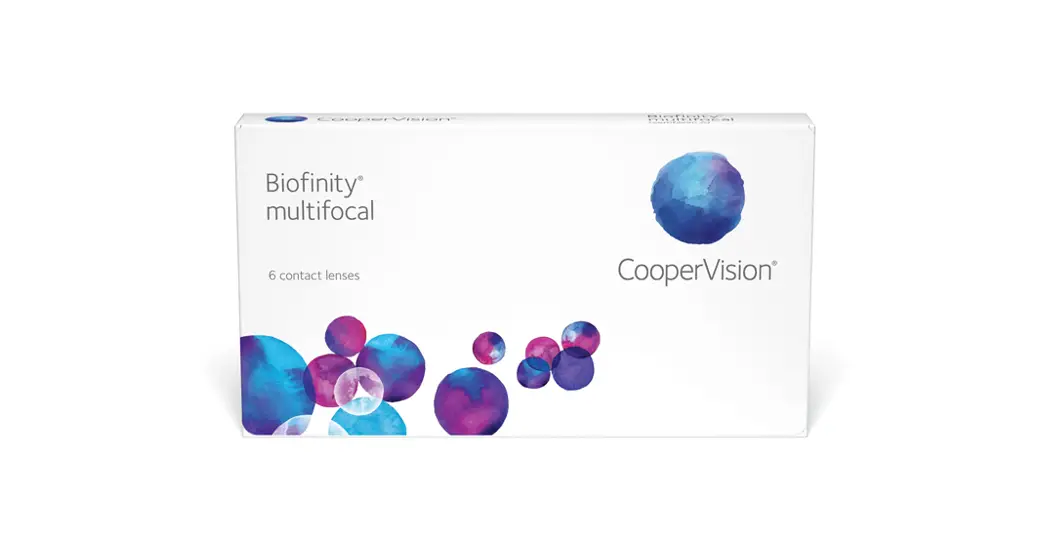
 Biofinity® multifocal lens fitting guidelines
User Guide
A simplified fitting philosophy
Our new fitting process is based on eye care professionals’ real-world experiences.
- Fitting lower ADD powers are now simpler than ever, by using the same D lens design for both eyes
- Fitting higher ADD powers continues to be flexible, giving you more options for exceptional vision performance

Initial visit
Step 1 Start with new refraction and verification of eye dominance (fogging technique).
Step 2 Select the distance prescription based on spherical equivalent corrected for the vertex distance. Choose D or N lens design based on needed ADD power:
| ADD | Dominant eye | Non-Dominant eye |
| +1.00 | D | D |
| +1.50 | D | D |
| +2.00 | D | D |
| +2.50 | D | D |
Visual acuity expectations when using the D and N lens combination
| Lens | Distance | Near |
| Binocularly | 20/20 | 20/20 |
| D Lens | 20/20 | 20/40 better |
| N Lens | 20/40 better | 20/20 |
Step 3 Although the lens will equilibrate quickly, allow patients to adapt to lenses for a minimum of 15 minutes before assessing vision. If binocular vision is unacceptable, perform a monocular over-refraction, using hand-held trial lenses, to determine which eye needs improvement.
To improve distance vision add +/-0.25D (up to +/-0.50D) to the eye that needs improvement.
To improve near vision add +/-0.25D (up to +/-0.50D) to the eye that needs improvement.
Clinical Tips Prescribe maximum plus power for distance vision (Do not over minus)
Choose the lower ADD power when possible; not necessary to overprescribe the ADD power
Test patient’s near function vision with their cell phone
Check visual acuity with room lights on
A unique multifocal lens for unique eyes
Balanced Progressive” Technology
- Optimized for exceptional vision at all distances: near, intermediate, and far
- Allows for personalized fitting for each wearer and each eye
- The streamlined fitting process helps ensure success for presbyopic patients
Follow-up visits one week later
If the patient requires further enhancement to distance or near visual acuity.
Step 1 Evaluate binocular visual acuity.
Step 2 Check monocular visual acuity.
Step 3 Perform over-refraction using hand-held trial lenses (avoid using a phoropter).
FIRST OPTION: To improve either distance or near vision, modify distance vision by +/- 0.25D in the eye that needs improvement.
SECOND OPTION: To improve near vision add +0.50D to the ADD power of the eye that needs improvement.
Product specifications
| Biofinity® multifocal | ||
| Base Curve | 8.6 mm | |
| Diameter | 14.0mm | |
| Sphere Power | +6.00D to -10.00D (0.50D after -6.00D) | |
| ADD Power | +1.00, +1.50, +2.00, +2.50 | |
| Lens Design | D Lens. N Lens | |
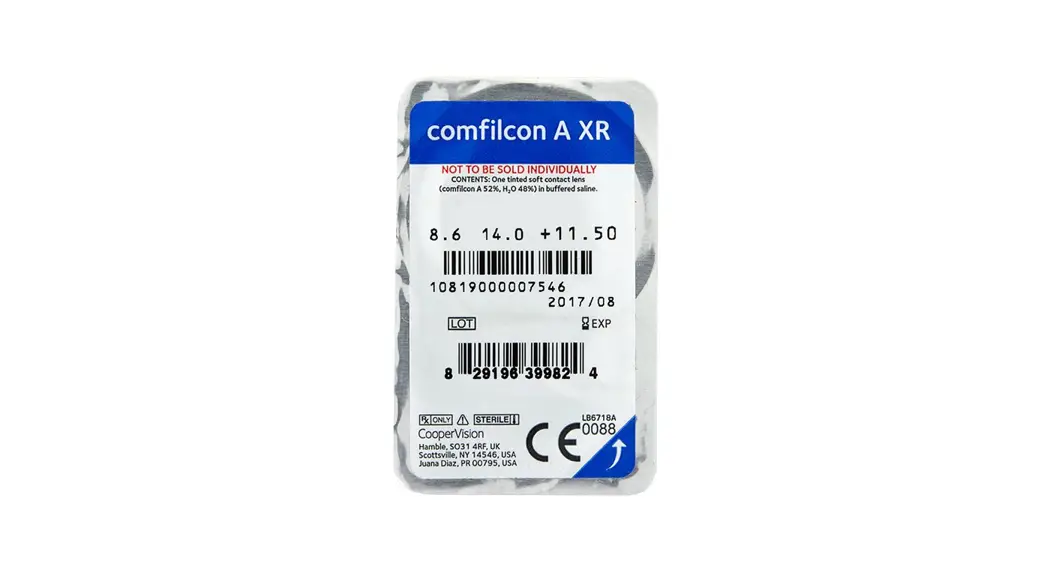
| Material | con’ ‘Icon A | |
| Water content | 48% | |
| Dk | 128 | |
| Wearing schedule |
| |
 800 341 2020
For additional fitting tips, tutorials, and more information on Biofinity multifocal, visit
www.coopervision.com/biofinity-multifocal
The eye care professional retains the independent clinical judgment on how to fit and prescribe lenses.
432015 CooperVision. Inc. 1131 04/15 XLITERAKIT210
 Biofinity® multifocal | Practitioner