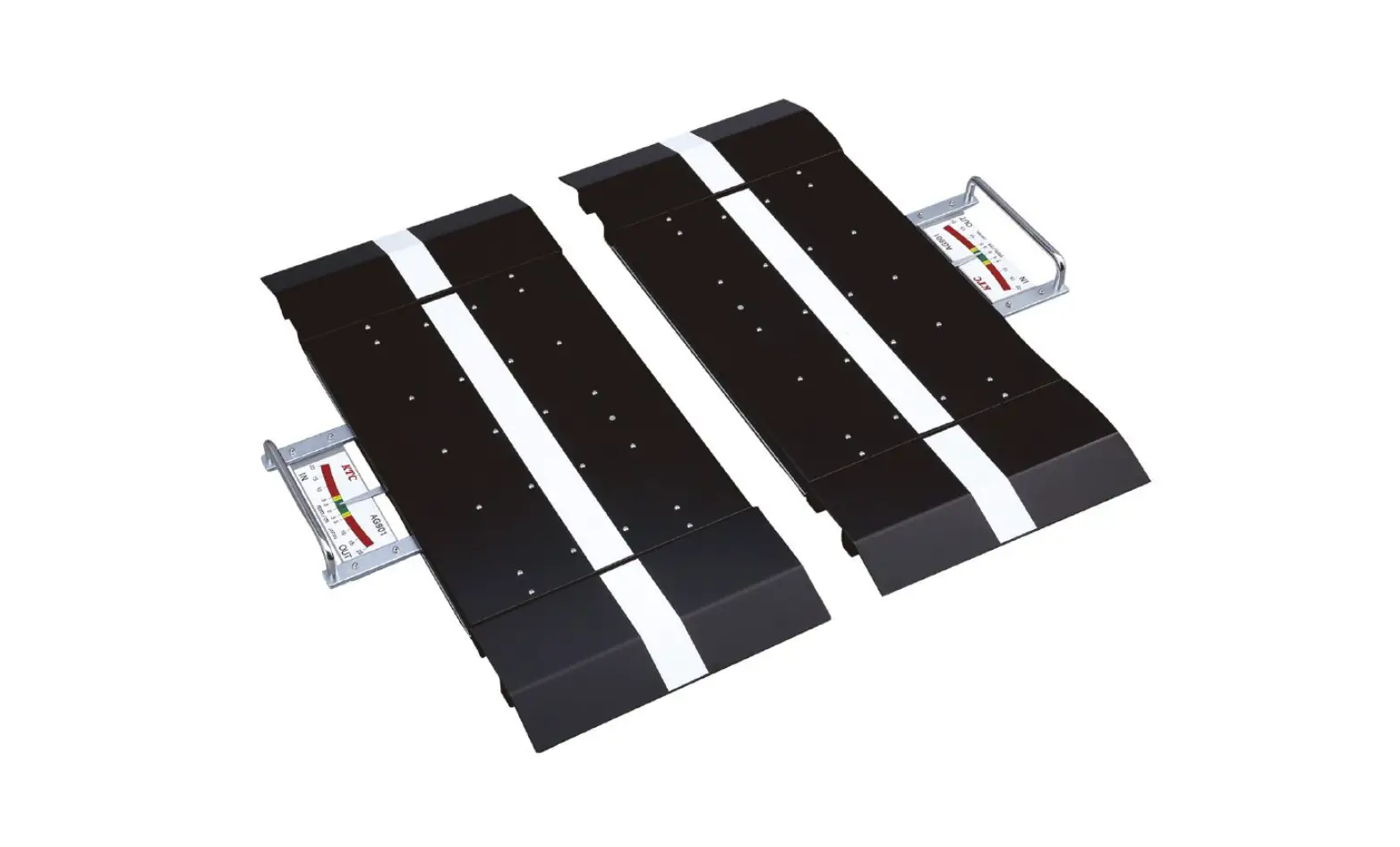
W1.0 x 610 BOX and Panbrake
BOX & PAN BRAKE OPERATION MANUAL
Product Information
The Box & Pan Brake is a tool used to bend mild steel and
other sheet metals of equal yield strength. This pan and box brake
is designed to fold sheet metal into boxes, pans, or trays. It can
bend 16 gauge and 20 gauge mild steel. The product comes in two
models: W1.0 x 610 and W1.5 x 1220A, with maximum working lengths
of 610mm and 1220mm respectively.
Technical Specifications
Model Max. Working Length Weight
- 610mm 20 Gauge
- 1220mm 16 Gauge
Installation and Caution
Installation
- Please check whether all parts of this machine are fully
equipped and not damaged according to the parts list or part
figure. - This machine should be mounted on a workbench or specific stand
(not supplied). - Please leave plenty of room around the machine for easy
operation to avoid injury. - Please remove the anti-rust grease on processing surfaces and
some parts included kerosene.
Caution
- Please read the manual before operation and make yourself
understand its structure and principle completely. - Please do not operate the material width and thickness than
table list max. Range. - Always wear industrial standard approved eye protection, using
safety equipment such as dust mask, non-skid safety shoes, hard
hat, etc.
Product Usage Instructions
Work Area
- Operate in a safe work environment, Keep your work area clean,
well-lit, and free of distractions. Place lights so you are not
working in a shadow. - Keep anyone not wearing the appropriate safety equipment away
from the work area. - Store unused tools properly in a safe and dry location to
prevent rust or damage. Lock tools away and keep out of the reach
of children.
Operation
To use the Box & Pan Brake:
- Make sure the machine is properly installed and all parts are
in good condition. - Select the appropriate working length and material thickness
for your project. - Insert the sheet metal into the brake dies and align it with
the desired bend line. - Lower the upper die onto the sheet metal and apply pressure to
bend the metal into the desired shape. - Repeat steps 3-4 as necessary to achieve the desired
shape.
Maintenance
Lubricate the rotating parts of the machine with #32
lubricating-oil regularly to ensure proper function and
longevity.
BOX & PAN BRAKE OPERATION MANUAL
W1.0 x 610 W1.5 x 1220A
WARNING
Read and understand all instructions before using this tool. The operator must follow basic precautions to reduce the risk of personal injury and/or damage to the equipment.
HAZARD DEFINITIONS
Please familiarize yourself with the hazard notices found in this manual. A notice is an alert that there is a possibility of property damage, injury or loss of life if certain instructions are not followed. DANGER! This notice indicates an immediate and specific hazard that will result in
severe personal injury or loss of life if the proper precautions are not taken. WARNING! This notice indicates a specific hazard or unsafe practice that could result in
severe personal injury or loss of life if the proper precautions are not taken. CAUTION! This notice indicates a potentially hazardous situation that may result in minor
or moderate injury if proper practices are not taken. NOTICE! This notice indicates that a specific hazard or unsafe practice will result in
equipment or property damage, but not personal injury.
WORK AREA
1. Operate in a safe work environment, Keep your work area clean, well-lit and free of distractions. Place lights so you are not working in a shadow.
2. Keep anyone not wearing the appropriate safety equipment away from the work area. 3. Store unused tools properly in a safe and dry location to prevent rust or damage. Lock
tools away and keep out of the reach of children.
1
Usage
1. This machine can be used to bend mild steel and other sheet metals of equal yield strength. This pan and box brake is designed to fold sheet metal into boxes, pans, or trays. It can bend 16 gauge and 20 gauge mild steel.
2. Main technical specification
Model Max. Working Length
Max. Sheet Metal Thickness Folding Angle Finger Width Packing Size (L × W × H)
Weight
W1.0 × 610A 24″
610mm 20 Gauge
1mm 0- 135° 1″, 2″, 3″, 8″, 10″ 33-7/8″ × 13-3/4″ ×19- 11/16″ 860 × 350 × 500mm 138.9 lbs. 63 kg
W1.5 × 1220A 48″
1220mm 16 Gauge
1.5mm 0- 135° Five 2″, Six 3″, Five 4″ 63-3/8″ × 18-7/8″ × 26-3/4″ 1610 × 480 × 680mm 474.1 lbs. 215 kg
3. Installation and caution
3.1 Installation 3.1.1 Please check whether the part of this machine are fully equipped and not damaged according to the parts list or part figure. 3.1.2 This machine should be mounted on workbench or specific stand (not supplied) 3.1.3 Please leave plenty room around the machine for your easy operating, in order to avoid injury. 3.1.4 Please remove the anti-rust grease on processing surfaces and some parts included kerosene.
3.2 Caution 3 .2.1 Please read the manual before operation and make yourself understand its structure and
principle completely. 3 .2.2 Please don’t operate the material width and thickness than table list max. Range. 3.2.3 Always wear industrial standard approved eye protection, using safety equipment such as dust
mask, non- skid safety shoes, a helmet and hearing protection will reduce the chances of serious injuries. 3.2.4 Do not expose the device to the rain or wet conditions. 3 .2.5 Dress appropriately do not wear loose clothing or jewelry. Keep your hair, clothing and gloves away from the moving parts to avoid getting caught in the moving parts. Failure to pay attention could cause serious injury or even death. 3 .2.6 It is forbidden to use the extending case to cover the handle for the purpose of lever function.
2
4. Operation
4.1 By turning the pin (#15) at the back of the frame, the eccentric case (#17) is driven to backwards. Meanwhile, the right and left eccentric handles (#07, #11) should be loosened. Therefore, the desired bending clearance can be decided. If the thickness of blank to be bent is in the range of the rated value 16(20) gauge for mild steel, the upper die frame (#01) should be moved backwards, to ensure that the clearance is the twice of the thickness of the blank (from the out edge of the frame Pattern plate). The clearance may be decreased appropriately according to the bending angle, in the bending operation of non-ferrous metals. 4.2 The magnitude of pressure, which clamps down on the blank can be changed by adjusting appropriately the nuts (#13) on the right and left connecting rods (#9, #12). 4.3 If the bank is blocked when it is bent in the allowance magnitude it is may be loosened turning the eccentric handles (#07, #11) on the blocked end. The clearance can be changed by running the eccentric case (#17), which is located at the back of the frame and then, the upper die frame(#01) can be moved appropriately. After that. Clamping down again the eccentric handle on the blocked end. Therefore, the bending operation can be performed right now. 4.4 After the utilization of the machine to a long time, the mobile pattern plate (#03) may be deflected to a convex or a concave. This deflection can be overcome by adjusting the nut (M12) on the mobile pattern plate (#03). Therefore, the mobile pattern plate (03#) can be drawn. The adjustment does not stop unless the edge of the mobile pattern is in the same plane of the bending center. 4.5 Please check up the edge of upper die frame (#01) before bending operation, in order to find there is any convex or winding. If winding edge is found, please adjust as the followings; clamps the right and the left eccentric handles (#07,#11) tight, turn the mobile pattern plate(#03) to 90 degrees, then place with another straight convex plate after that, tighten the nuts (#13) on the right and left connection rods (#09, #12).
5. Maintenance
Lubricate the rotating parts of the machine. (#32 lubricating-oil)
6. ACCESSORIES
The inner-hexagon spanner M41 piece The two-head spanner 17X19 1 piece
3
7. Parts list
NO 1 2 3 4 5 6 7 8 9 10 11
Name Upper Die Framework
Frame Mobile Pattern
Case Nut Handle Case Left Eccentric Handle Case Left Connecting Rod Washer Right Eccentric Handle
8. Assembly diagram
NO
Name
12
Right Eccentric Rod
13
Nut
14
Clevis
15
Pin
16
Washer
17
Eccentric case
18
Position-fixing Shaft
19
Shaft
20
Clamp plate
21
Brake Dies
4