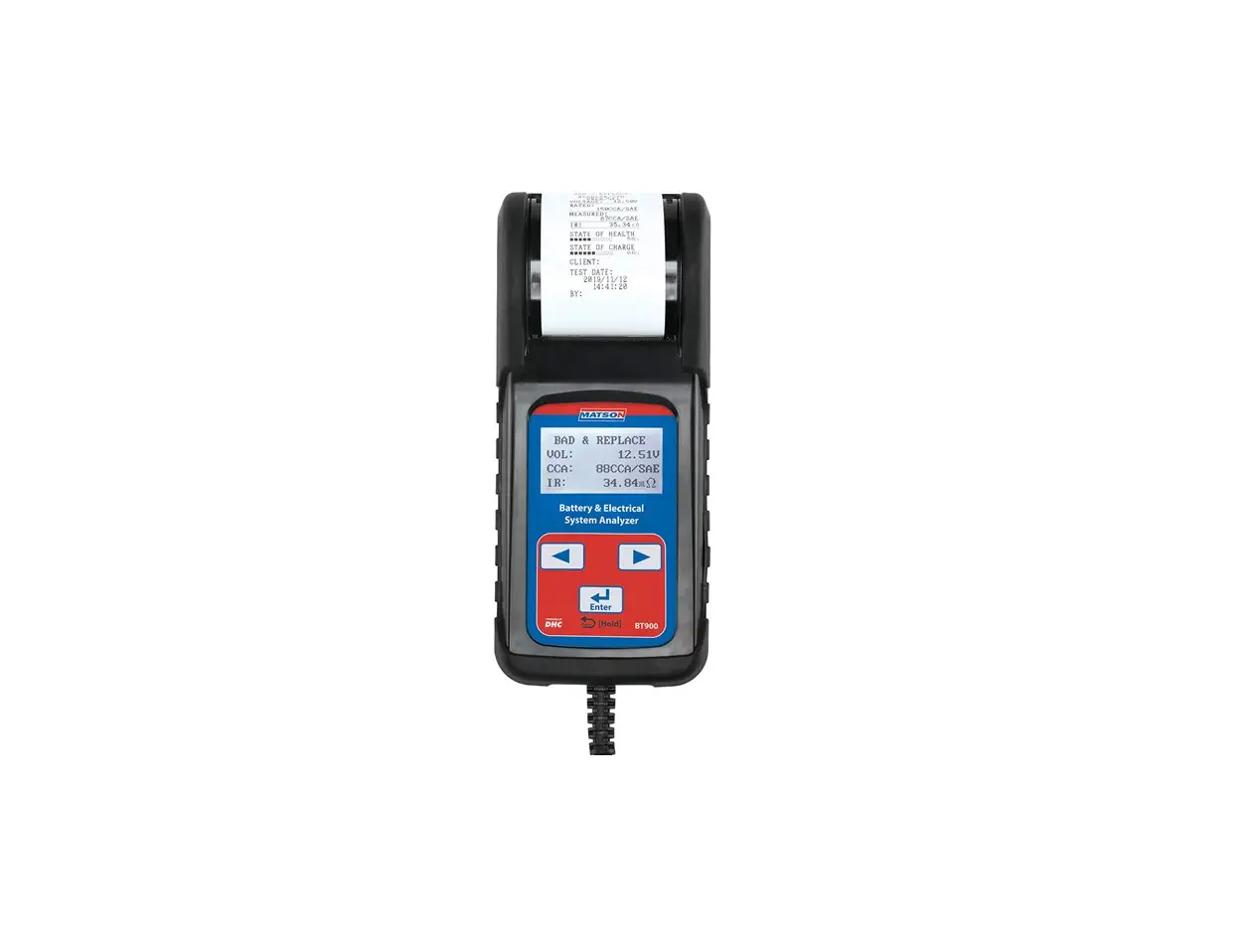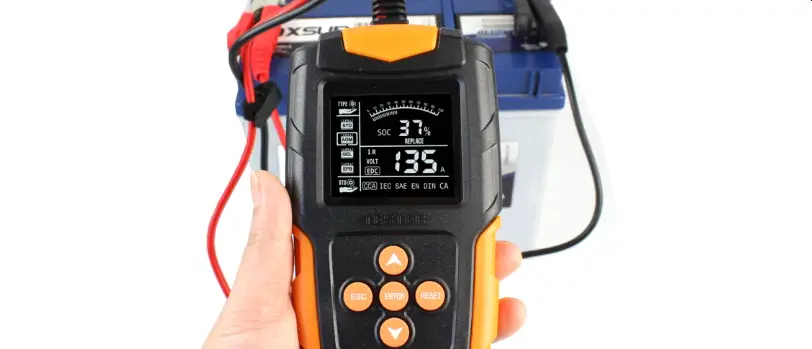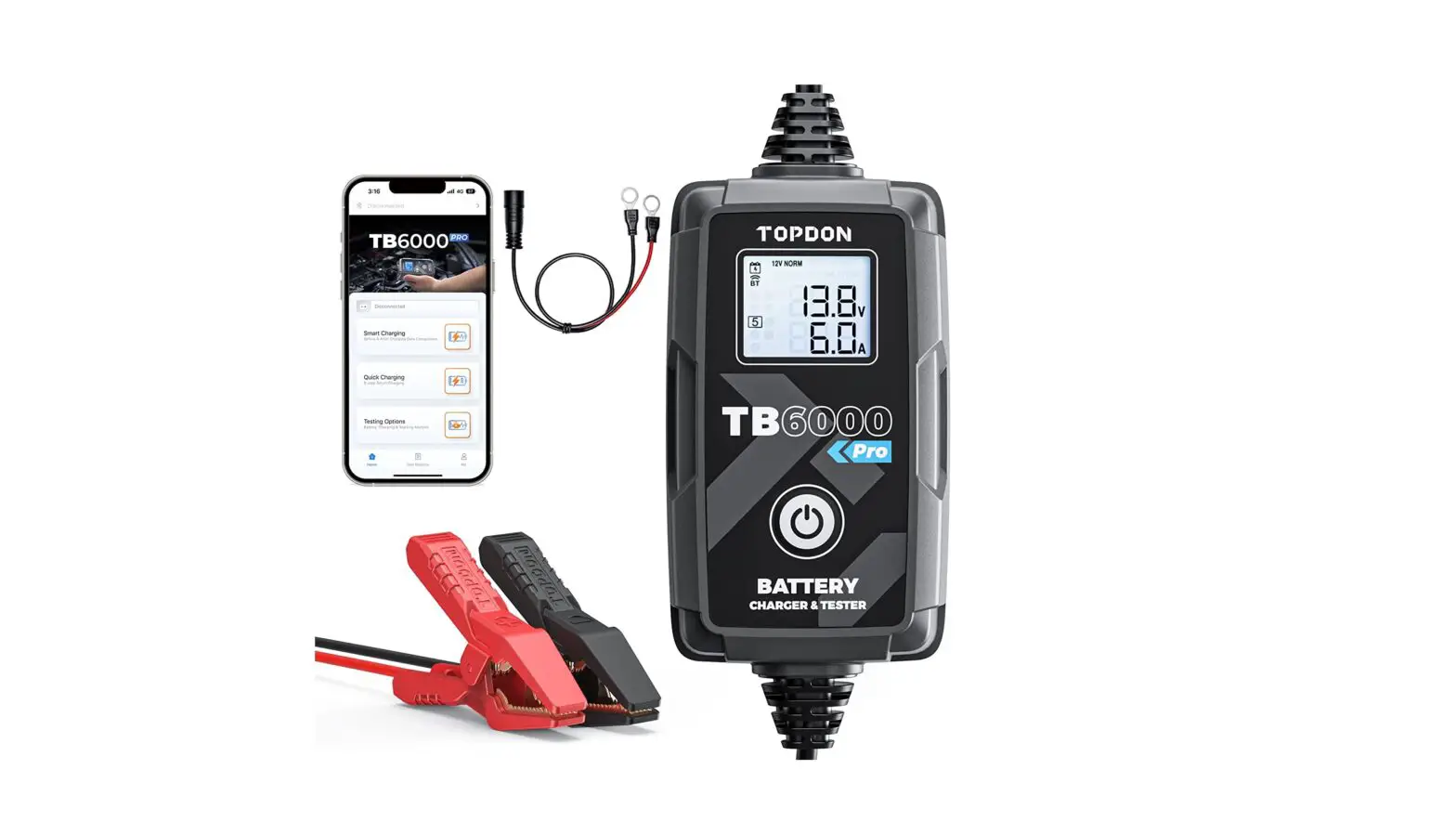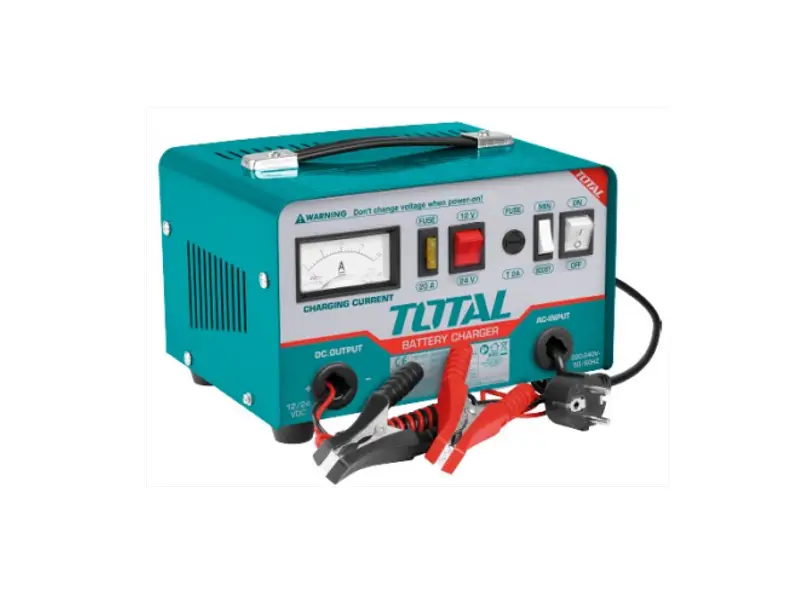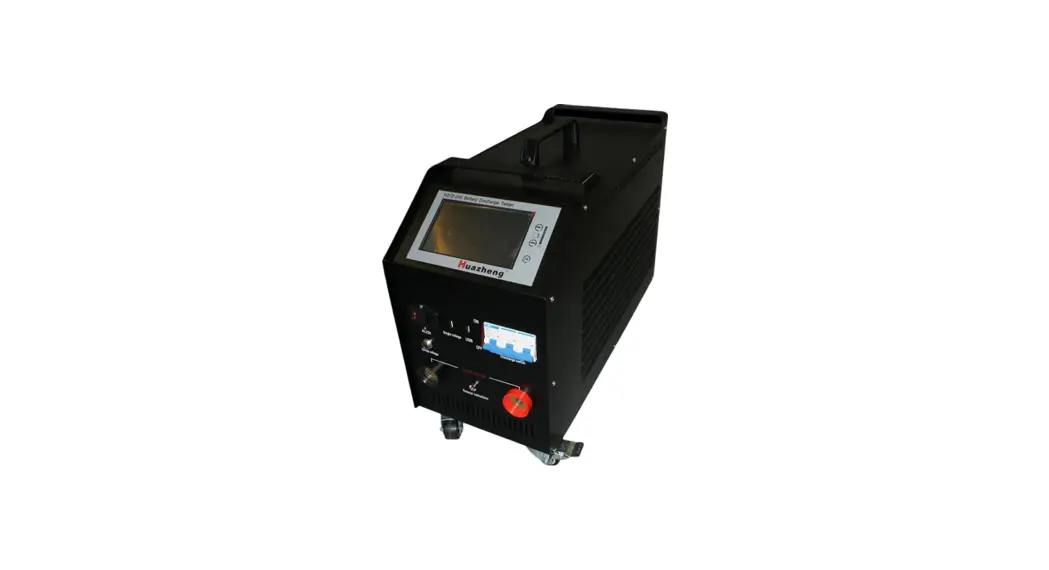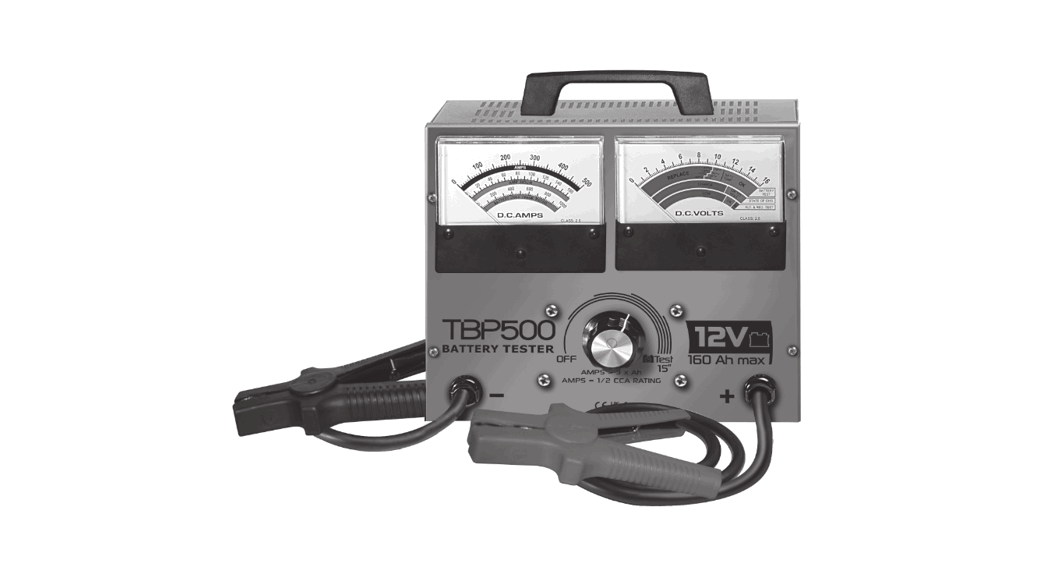

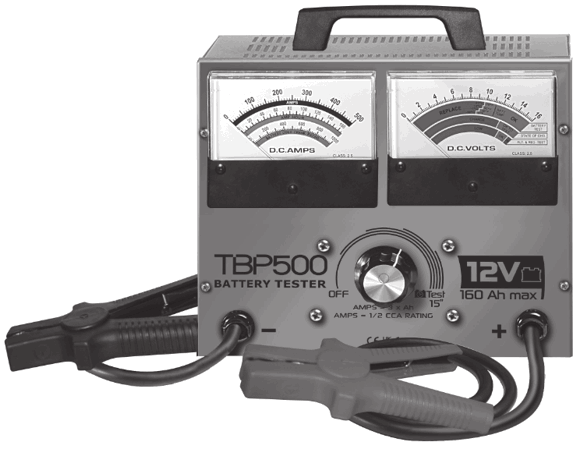
 TBP 500 Battery Tester
Instruction Manual

SAFETY INSTRUCTIONS
This manual includes guidelines on the operation of your device and the precautions to follow for your own safety. Ensure it is read carefully before first use and keep it handy for future reference.
 Risk of explosion and fire!
A battery being charged can emit explosive gas.
The battery tester should only be connected to batteries with a rated output voltage of 12 V.
CAUTION: Reverse polarity will cause the fuse to blow and could cause permanent damage. Damage due to reverse polarity is not covered by our warranty.
CAUTION: If the car’s battery is disconnected, some management systems may be disabled.
Consult your vehicle manual for more information on installation.
Do not use the battery tester if the cord or terminals are damaged.
Do not use the battery tester if it has received a severe shock or has been damaged in any way.
Do not disassemble the device. Incorrect reassembly may result in a risk of electric shock or fire. Acid projection hazard!
 Wear appropriate safety glasses and clothing.
 If your eyes or skin come into contact with battery acid, rinse the affected part of the body with plenty of water and seek immediate medical assistance.
- Avoid flames and sparks. Do not smoke.
 Protect the electrical contacts of the battery against shortcircuiting.
 The device complies with European Directive.
- The certificate of compliance is available on our website.
 EAC conformity mark (Eurasian Economic Commission)
 Material conforms to UK requirements. The UK Declaration of Conformity is available on our website (see cover page).
 Device compliant with Moroccan standards.
- The C م (CMIM) declaration of conformity is available on our website.
 This product should be disposed of at an appropriate recycling facility. Do not dispose of in domestic waste.
 Recyclable product that falls within waste sorting recommendations
 Wear appropriate safety glasses and clothing.
 If your eyes or skin come into contact with battery acid, rinse the affected part of the body with plenty of water and seek immediate medical assistance.
 Protect the electrical contacts of the battery against shortcircuiting.
 The device complies with European Directive.
 EAC conformity mark (Eurasian Economic Commission)
 Material conforms to UK requirements. The UK Declaration of Conformity is available on our website (see cover page).
 Device compliant with Moroccan standards.
 This product should be disposed of at an appropriate recycling facility. Do not dispose of in domestic waste.
 Recyclable product that falls within waste sorting recommendations
CONNECTING THE BATTERY TESTER
- Make sure that the area is well ventilated before performing a test.
- Tester for 12 V batteries.
- Before running a test on the battery, ensure that the ignition and the consumers are switched off. Close all doors and the boot.
- Make sure that the battery connections are clean. If necessary, clean them with a wire brush.
 TAny presence of oxidation between the tester terminals and the battery connectors or between the battery connectors and the battery terminals reduces the effectiveness of the tester.
 - Connect the negative (black) terminal to the negative terminal of the battery. Connect the positive terminal (red) to the positive terminal of the battery.
BATTERY VOLTAGE
The battery must be tested when ≤ 12.6 V.
Reading the battery voltage:
- Turn the knob several times to the left « OFF » until the voltmeter needle reach 0 « DCAMPS ».
- Connect the negative (black) terminal to the negative terminal of the battery. Connect the positive terminal (red) to the positive terminal of the battery.
- Read the result:
| Examples | Analysis |
| The needle displays less than 12.4 V | Recharge the battery and test again. If the result remains the same after charging, replace the battery. |
| The needle displays more than 12.4 V | The battery is OK |
BATTERY TEST
For the test to be accurate, the battery must be charged at least 75%.
| Steps | Settings |
| 1 | Turn the knob several turns to the left “OFF” to set the “DC-Amps” needle on 0. |
| 2 | Connect the red clamp to the (+) of the battery and the black clamp to the (-). |
| 3 | Ampere/hour (green area) |
| CCA starting current (blue zone) | |
| Discharge current “Amps” (black area) | |
| 4 | Keep the power on for 15 seconds. A sound is heard |
| 5 | Read the result on the “DC-Volts” screen in the “Battery test” section. |
TBP 500
| Examples | Analysis |
| Batterie OK (green line) | The battery is operational. |
| Battery to be replaced (red line) | A problem at the cell level is observed (short circuit…..). Replace the battery. Or the battery is nearing the end of its life. Replacement required. |
 The TBP 500 produces heat when in use. Wait 15 minutes between tests for it to cool down.
START TEST
- Make sure all vehicle consumers are switched off (lights, air conditioning, radio etc.).
- Start the engine, one of the two results is displayed on the «DC-VOLTS» screen:
| Examples | Analysis |
| The indicator displays a voltage below 9.6 V | The starting voltage is not correct. The battery must be replaced. |
| The indicator shows a voltage higher than 9.6 V | The starting voltage is normal. |
ALTERNATOR TEST
- Start the engine
- Run the engine between 1200 and 1500 rpm..
- Read the results on the «ALT®.TEST» scale on the right display.
| Results displayed | Examples | Analysis |
| HI | High starting voltage when the test is performed with the engine at idle | Check that the connections are good. If eve-rything is properly connected, replace the alternator. |
| OK | Normal starting voltage when the test is performed with the engine at idle | No problem detected. Normal operation of the alternator. |
| LOW | Low starting voltage when the test is performed with the engine at idle | The alternator does not provide enough power to the battery. Check the alternator belts, and make sure the alternator is running when the engine is running. If the belts slip or are broken, replace them and re-test. Check the connection between the alternator and the battery. If the connection is bad, clean or replace the cable and re-test. If the alternator belts and connection are in good condition, replace the alternator. |
WARRANTY
The warranty covers faulty workmanship for 2 years from the date of purchase (parts and labour).
The warranty does not cover:
- Transit damage.
- Normal wear of parts (eg. : cables, clamps, etc..).
- Damages due to misuse (power supply error, dropping of equipment, disassembling).
- Environment related failures (pollution, rust, dust).
In case of failure, return the unit to your distributor together with:
- The proof of purchase (receipt etc …)
- A description of the fault reported
JBDC
1, rue de la Croix de Landes – CS54159
53941 Saint-Berthevin Cedex
France
 Arc Welding, Battery Chargers & Body Repair | GYS