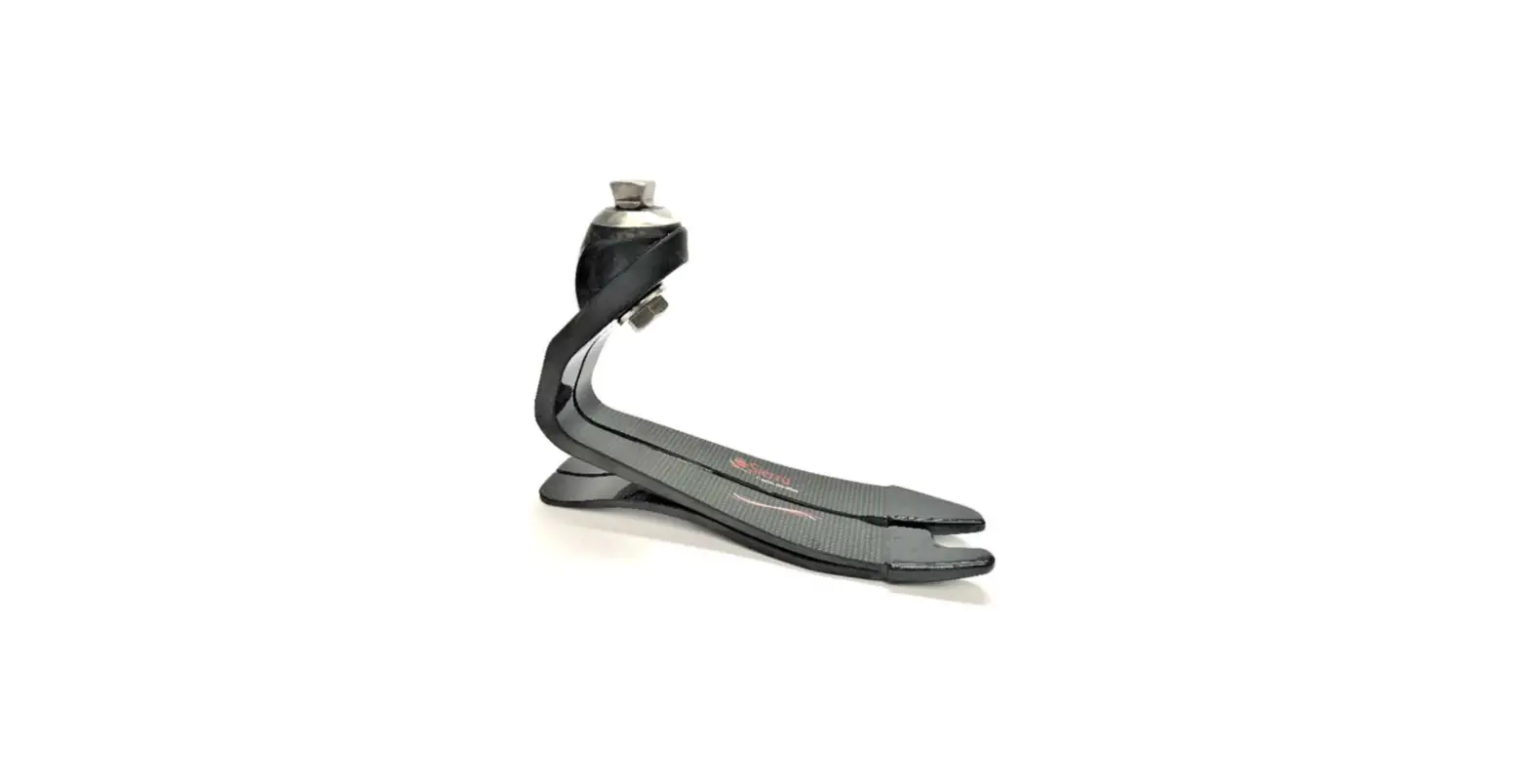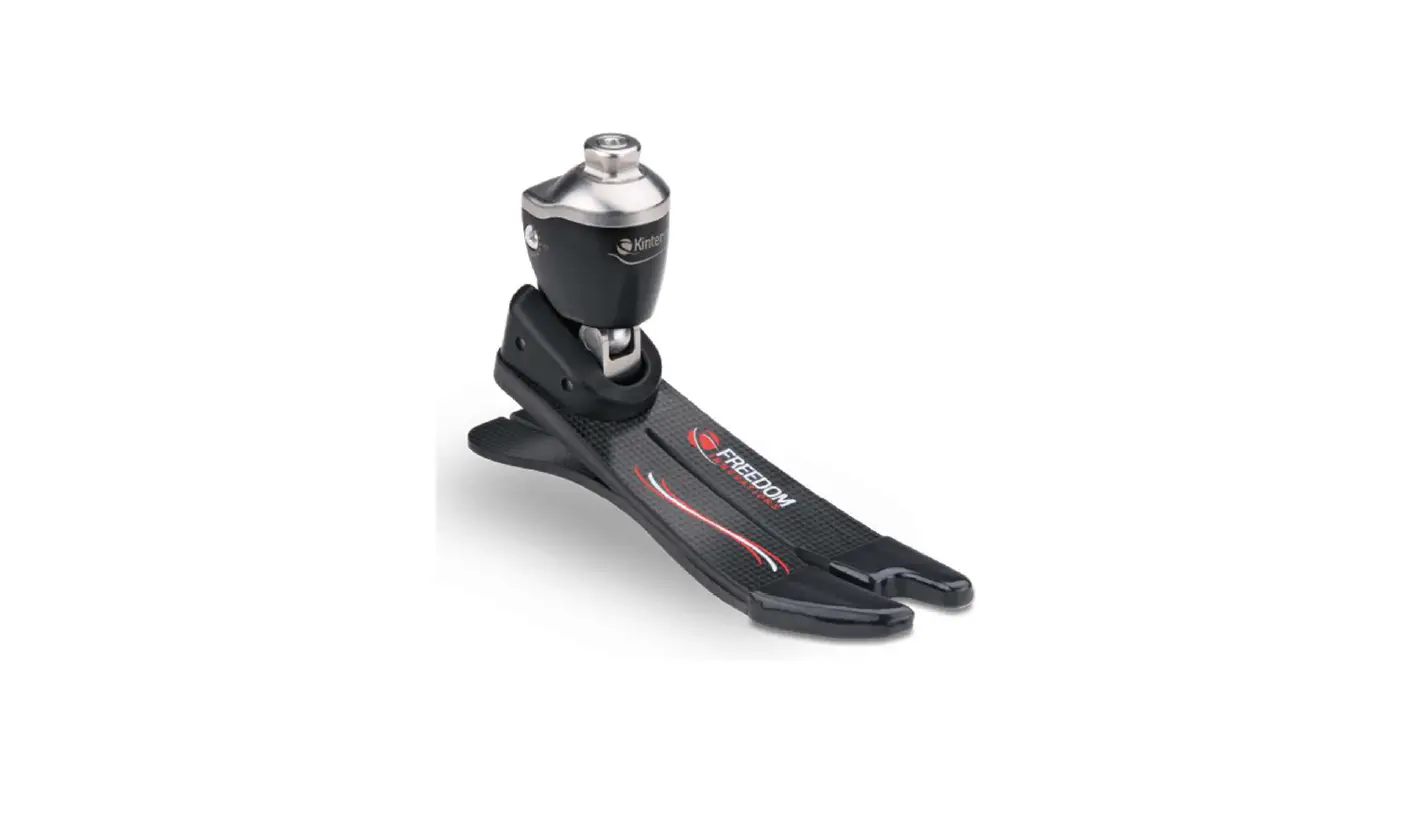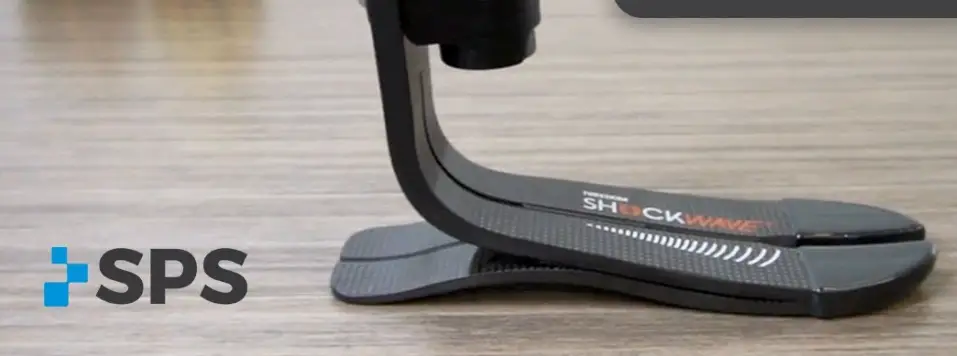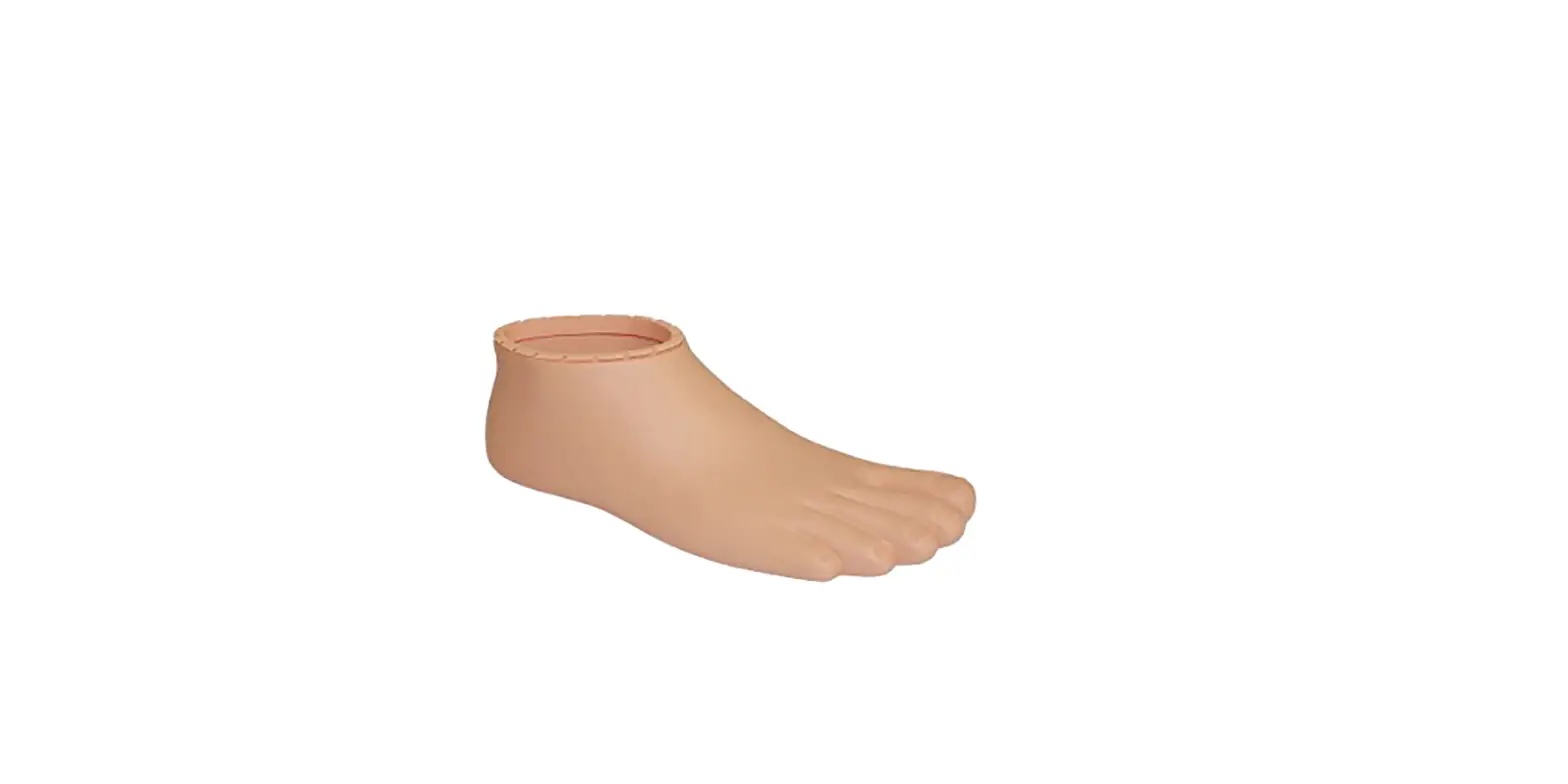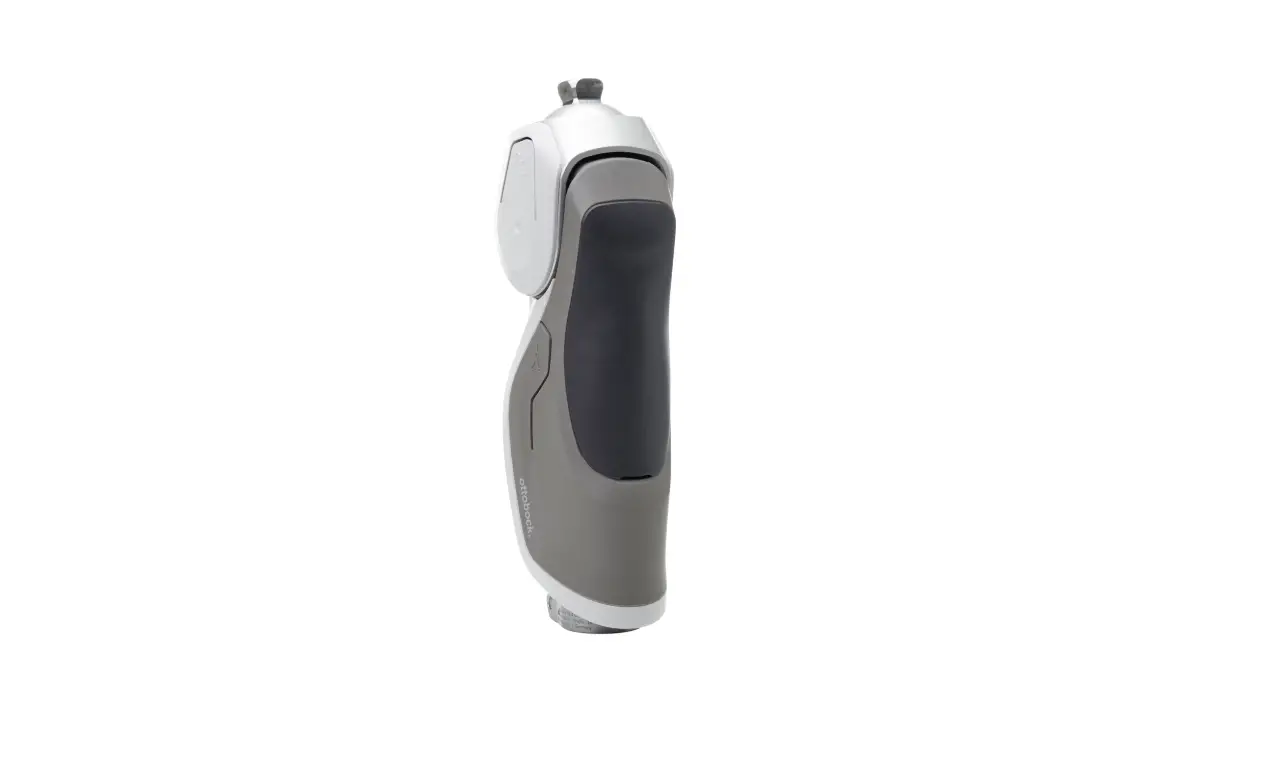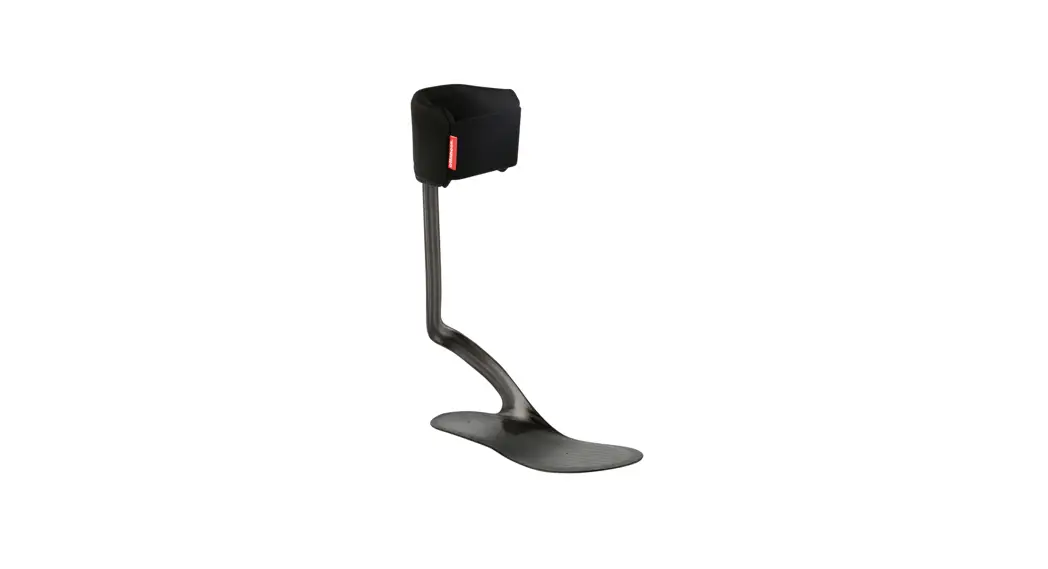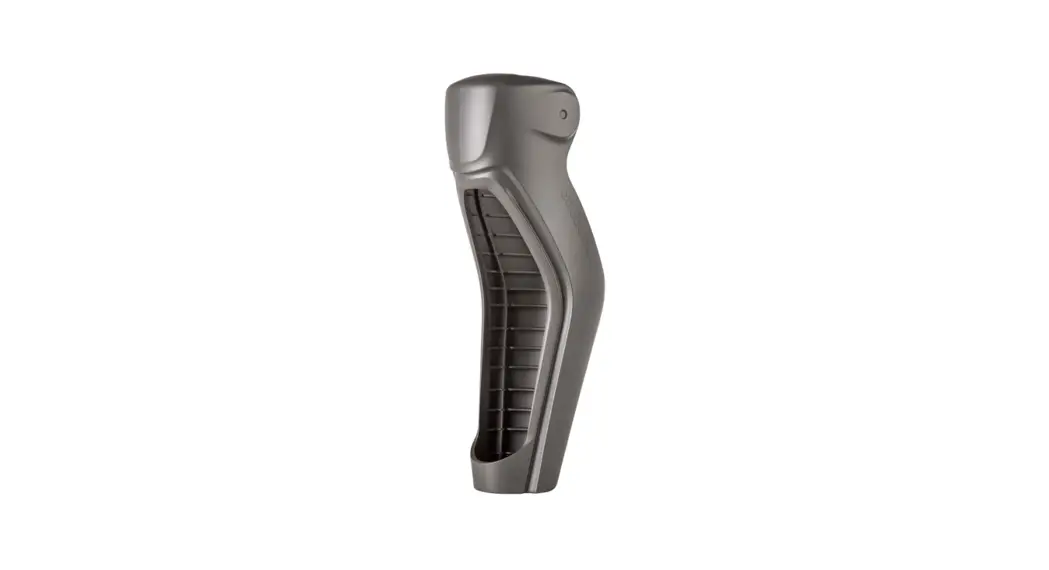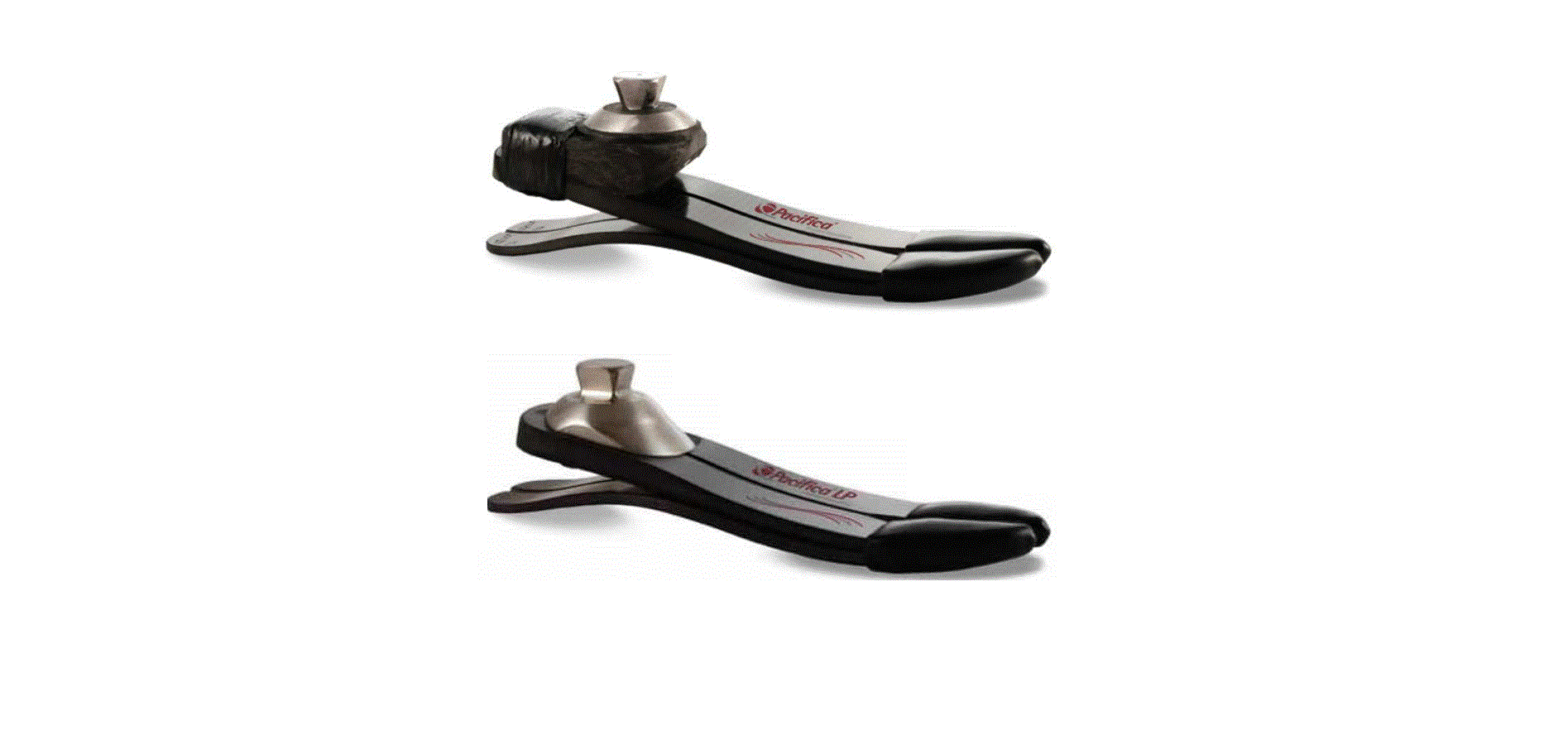

PROTECTOR FS2 Pacifica LP Class 4 Amputated Foot Prosthesis
Product Information
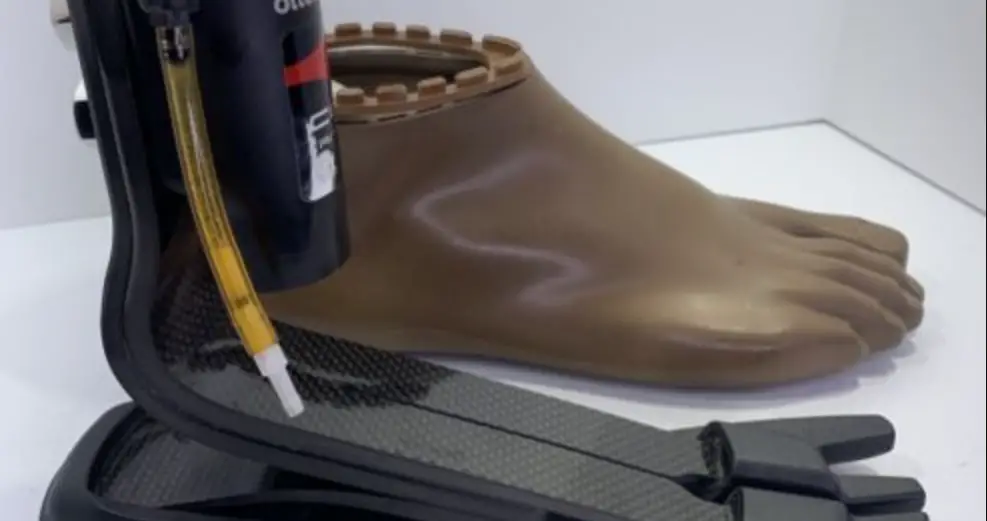
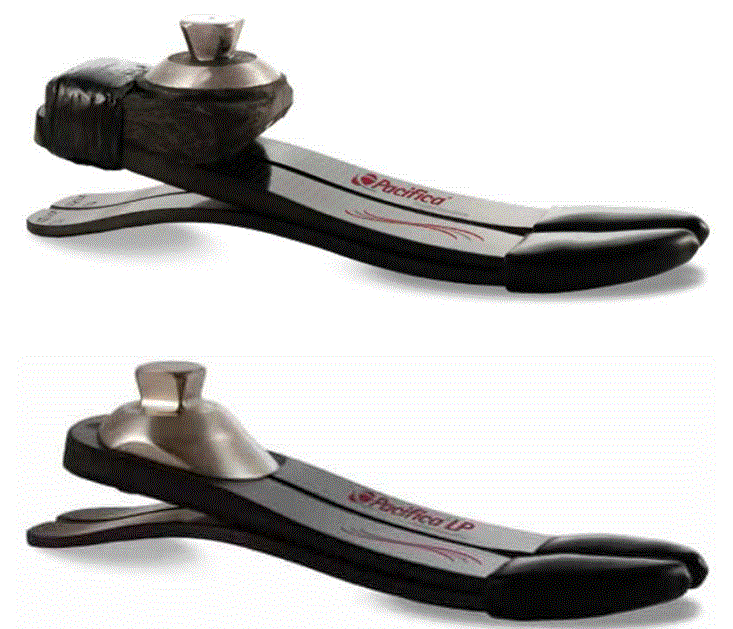
The product is a prosthetic foot called Pacifica and Pacifica LP. It is available in different variations, including regular toe and sandal toe options for both the right and left sides. The package includes the Pacifica foot, Pacifica LP foot, stiffening bumpers, foot shell removal tool, and foot shells with regular toe or sandal toe. The product is designed for use by prosthetists.
Properties
- Foot Side: Right or Left Size:
- Regular Toe: 24 to 25 cm, 26 to 28 cm, 29 to 31 cm
- Sandal Toe: 22 to 25 cm, 26 to 28 cm, 29 to 31 cm
- Sandal Toe Option: Yes (for regular toe variations)
- Weight:
- Regular Toe: 454 g / 1.0 lbs, 545 g / 1.2 lbs, 705 g / 1.6 lbs
- Sandal Toe: 395 g / 0.9 lbs, 537 g / 1.2 lbs, 746 g / 1.6 lbs
- Build Height:
- Regular Toe: 65mm, 66mm, 70mm
- Sandal Toe: 48mm, 54mm, 58mm
- Heel Height: 10 mm
- Weight Range (kg): 44-52, 53-59, 60-68, 69-77, 78-88, 89-100, 101-116, 117-130, 131-147, 148-166
Product Usage Instructions
- Do not manually pull the foot out of the envelope to avoid damage.
- To attach the stiffening bumpers, use cyanoacrylate adhesive.
- For Pacifica foot (A) and Pacifica LP foot:
- Pacifica Foot with Regular Toe:
- Size: 24-25cm
- Toes: 25 mm
- Pacifica Foot with Sandal Toe (Right):
- Size: 26-28cm
- Toes: 32mm
- Pacifica Foot with Sandal Toe (Left):
- Size: 29-31cm
- Toes: 41mm
- Pacifica Foot with Regular Toe:
- Detection of Malfunctions:
- Too Soft Heel
- Too Stiff Heel
- Too Stiff Foot
- Too Soft Foot
INCLUDED ITEMS
| Part description | Part number | Included / Sold separately |
| Pacifica Foot with regular toe | FS2-00-0xAyy-RU* |
Included |
| Pacifica Foot with sandal toe, right | FS2-00-0xAyy-SR* | |
| Pacifica Foot with sandal toe, left | FS2-00-0xAyy-SL* | |
| Pacifica LP Foot with regular toe | FS4-00-0xAyy-RU* | |
| Pacifica LP Foot with sandal toe, right | FS4-00-0xAyy-SR* | |
| Pacifica LP Foot with sandal toe, left | FS4-00-0xAyy-SL* | |
| Black Spectra® sock | S0-NPS-200zz-00* | Suitable sock included |
| Stiffening bumpers for Pacifica | KIT-00-1134U-00 | Included |
| Stiffening bumpers for Pacifica LP | KIT-00-1132U-00 | |
| Foot Shell Removal Tool | ACC-00-10300-00 | Sold separately |
| Foot shell with regular toe (no cap) | FTC-3M-1 | Sold separately (see catalogue) |
| Foot shell with sandal toe (no cap) | FTC-2M-1 |
x = Category, yy = Size (see table §3), zz = Size
DESCRIPTION
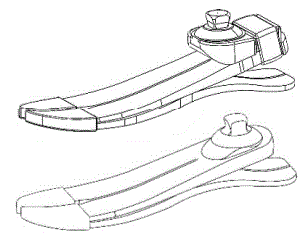
- Pacifica® and Pacifica® LP are energy-return prosthetic feet consisting of:
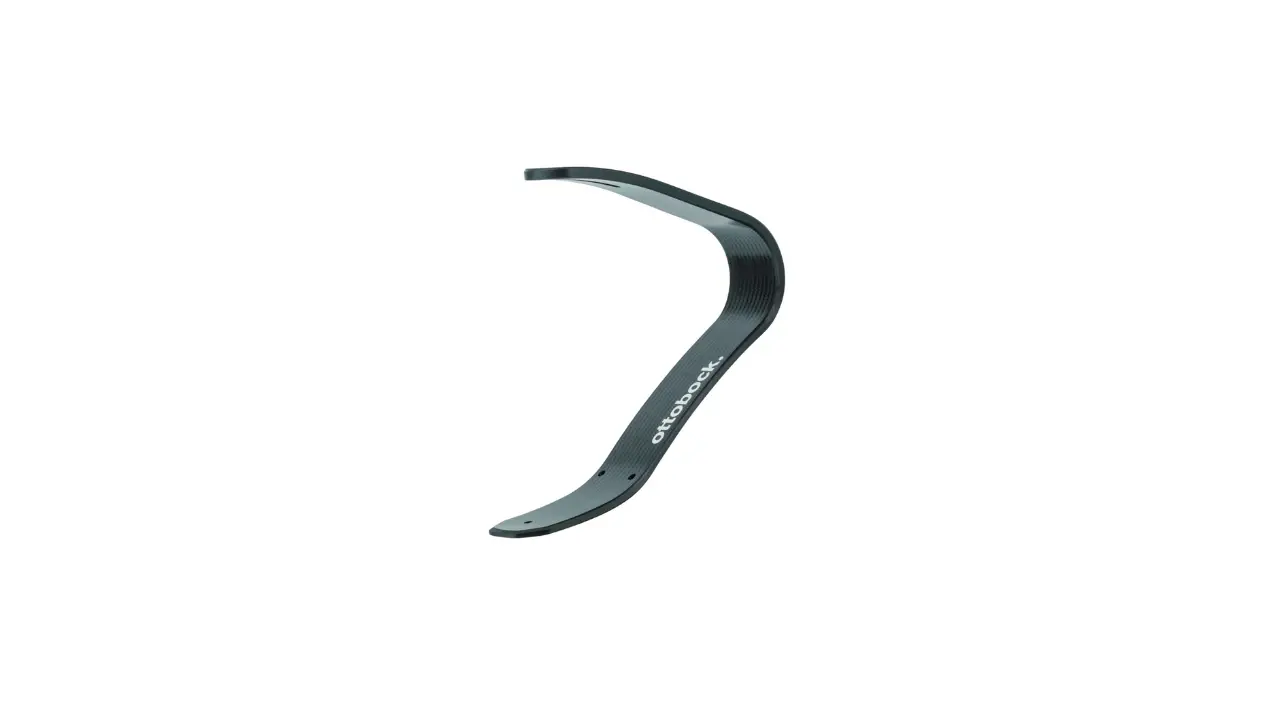
- A carbon keel
- A carbon sole plate
- A male pyramid connection
- A Spectra® sock
- Available with regular toe or right or left sandal toe and delivered with a set of elastomer stiffening bumpers.

PROPERTIES
| Foot | Pacifica – FS2 | Pacifica LP – FS4 | ||||
| Side | Right or Left | |||||
| Size | 24 to 25 cm | 26 to 28 cm | 29 to 31 cm | 22 to 25 cm | 26 to 28 cm | 29 to 31 cm |
| Sandal toe option | Yes | Yes | No | Yes | Yes | No |
| Weight* | 454 g / 1.0 lbs | 545 g / 1.2 lbs | 705 g / 1.6 lbs | 395 g / 0.9 lbs | 537 g / 1.2 lbs | 746 g / 1.6 lbs |
| Build height* | 65 mm / 2.6‘’ | 66 mm / 2.6’’ | 70 mm / 2.8‘’ | 48 mm / 1.9’’ | 54 mm / 2.1’’ | 58 mm / 2.3’’ |
| Heel height | 10 mm / 3⁄8” | |||||
- Based on sizes 23 (Pacifica LP), 24 (Pacifica), 26, 29, cat. 4, with foot shell, Spectra sock and 10 mm heel height
- These devices have been tested according to ISO 10328 for a maximum patient weight up to 166 kg for 2 million cycles.
| Selection of foot category based on patient’s weight and activity level | |||||||||||
| Weight*) | lbs | 100-115 | 116-130 | 131-150 | 151-170 | 171-195 | 196-220 | 221-255 | 256-285 | 286-325 | 326-365 |
| kg | 44-52 | 53-59 | 60-68 | 69-77 | 78-88 | 89-100 | 101-116 | 117-130 | 131-147 | 148-166 | |
| Activity level | Low | 1 | 1 | 2 | 3 | 4 | 5 | 6 | 7 | 8 | 9 |
| Moderate | 1 | 2 | 3 | 4 | 5 | 6 | 7 | 8 | 9 | – | |
| High | 2 | 3 | 4 | 5 | 6 | 7 | 8 | 9 | – | – | |
Body mass limit not to be exceeded (ISO 10328)
MECHANISM OF ACTION
- During the strike phase, the sole and heel store energy, which they return in the middle of the stance phase. This property creates the impetus enabling the forefoot to accumulate energy and return it upon the step completion.
INTENDED USE/INDICATIONS
- These medical devices are supplied to healthcare professionals (prosthetists), who will train the patient in their use. The prescription is drawn up by a doctor who assess the patient’s ability to use the device.
- These devices are for multiple use on a SINGLE PATIENT. They must not be used on another patient.
- The Pacifica is intended to be integrated in a custom-made external lower limb prosthesis to ensure the function of the foot in patients with unilateral or bilateral lower limb amputation and/or congenital limb deficiency. The Pacifica is particularly suitable for patients with a long residual limb.
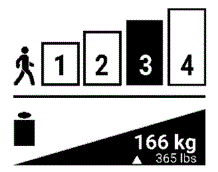
- This device is indicated for patients with moderate activity levels (K3) for walking and physical activities without excessive overload.
- Maximum weight (load carrying included): 166 kg / 365 lbs

CLINICAL BENEFITS
- Walking comfort
Reduction of joint impacts
ACCESSORIES AND COMPATIBILITY
- Stability on variable terrain
- Possible walking on uneven ground
- An appropriate foot shell must be mounted on the foot module (refer to our catalogue).
- The foot includes a male pyramid connection designed to be compatible with standard female pyramid connectors (see our catalogue).
ALIGNMENTS
Bench alignment
Before installing the prosthesis on the patient:
- Align the foot module in plantar/dorsal flexion, by inserting the foot (with foot shell) into the shoe to account for the heel height
- Align the socket in adduction/abduction, to ensure an appropriate angle in the frontal plane
- Align the socket in flexion/extension, to ensure an appropriate angle in the sagittal plane
- Adjust the position of the socket so that the load line falls to the anterior dome of the pyramid (see illustrations)
Dynamic alignment
- To optimize roll-over from heel to forefoot, adjust the following variables:
- Foot position in the anterior/posterior plane
- Plantar/dorsal flexion
- Heel flexibility
- The dynamic alignment is performed in accordance with good professional practices.
ASSEMBLY
The Pacifica is pre-assembled and consists of a foot module, a Spectra sock, and a foot shell. After dynamic alignment, tighten the pyramid adjustment screws according to the specifications of the connector manufacturer. Secure pyramid adjustment screws with a thread-locking adhesive (i.e., Loctite 242).
Spectra® sock
- A Spectra sock is included to protect the foot shell and minimize noise. It must be placed on the foot module before mounting the foot shell.
Foot shell
- To install and remove the foot shell, use the foot shell removal tool to prevent damage of the foot module.
- Never remove the foot from the foot shell by pulling manually. This could damage the foot.
ADJUSTMENTS
- The heel stiffness at foot loading can be adjusted using the stiffening bumpers. The bumpers may be temporarily attached using the pre-applied adhesive in the location indicated in the table below.
- The recommended location will stiffen the heel of about 1 category. If necessary, move the bumpers anteriorly (stiffer) or posteriorly (softer) to get the desired stiffness.
- For permanent placement, clean off the pre-applied adhesive with acetone and adhere bumpers using cyanoacrylate glue.
| Foot size (A) | Distance from the rear end of the sole (B) | 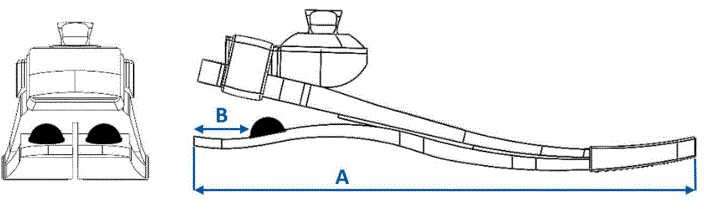 |
| Pacifica | ||
| 24-25 cm | 25 mm / 1’’ | |
| 26-28 cm | 32 mm / 1,25’’ | |
| 29-31 cm | 41 mm / 1,6’’ | |
| Pacifica LP | 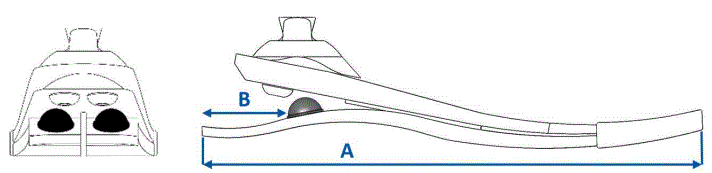
| |
| 22-25 cm | 32 mm / 1,25’’ | |
| 26-28 cm | 38 mm / 1,5’’ | |
| 29-31 cm | 41 mm / 1,6’’ | |
TROUBLESHOOTING
| CONCERN | SYMPTOM | SOLUTION |
| Heel too soft | · Foot flat occurs too rapidly · Toe feels excessively stiff · Knee hyperextension | · Shift socket anteriorly in relation to the foot · Attach stiffening bumpers. See section 10 above for installation details |
| Heel too hard | · Rapid knee flexion, instability · Heel to toe progression too fast · Lack of energy return sensation | · Shift socket posteriorly in relation to the foot · Verify appropriate foot module category |
| Foot module too stiff | · Flat spot in rollover motion at slow cadences | · Consider a lower category foot module |
| Foot module too soft | · Clicking noise at initial contact · Excessive toe deflection with high impact activity | · Consider a higher category foot module |
WARNINGS
- In case of damaged packaging, check the integrity of the device.
- Never use the foot without a foot shell.
- Never loosen the pyramid fastening screws.
- The patient must inform their prosthetist if they gain or lose significant weight.
- Always use the foot with a sock and shoe. Failure to adhere to this advice may cause product failure, as well as serious injury.
- Make sure that the foot and inside of the foot shell are free of impurities (e.g., sand). The presence of impurities causes the graphite parts to wear out. Clean the foot according to the instructions (see §16).
- After swimming, using in water or if splashed by a liquid, the foot must be cleaned (see §16).
- If the patient notices any abnormal behavior or feel any changes in the characteristics of the device (noise, play, excessive wear…), or if the device has received a severe impact, they should stop using the device and consult their prosthetist.
- Failure to follow the instructions for use is dangerous and will void the warranty.
CONTRAINDICATIONS
- Use for a patient whose maximum weight (load carrying included) may exceed 166 kg / 365 lbs Use for activities associated with a risk of significant impact or excessive overloading
SIDE EFFECTS
- There are no known side effects directly associated with the devices.
- Any serious incident that has occurred in relation to the devices should be reported to the manufacturer and to the competent authority of the Member State in which the user is established.
MAINTENANCE AND CONTROL
- The foot module must be inspected by the prosthetist at least every six months. Inspections at shorter intervals are required if the user is more active.
- The Spectra sock and the foot shell must be replaced by the prosthetist at regular intervals, depending on the patient’s level of activity. If these parts are damaged, it can lead to premature foot wear.
- The lifetime of the foot depends upon the patient’s level of activity.
CLEANING
- Remove the foot shell and the Spectra sock, clean the foot with clear water and neutral soap and dry carefully. The foot shell can be cleaned with a damp cloth or sponge.
ENVIRONMENTAL CONDITIONS
- Temperature range for use and storage: -20 to 60°C
- Relative air humidity: no restrictions
- Water-resistant: the device is resistant to occasional immersion and splashes.
DISPOSAL
- The feet are made of carbon fiber composite, epoxy, PU polymers, titanium, and stainless steel. The devices and their packaging must be disposed of in accordance with local or national environmental regulations.
 Home - Proteor
 Spark Inspiration - Proteor USA