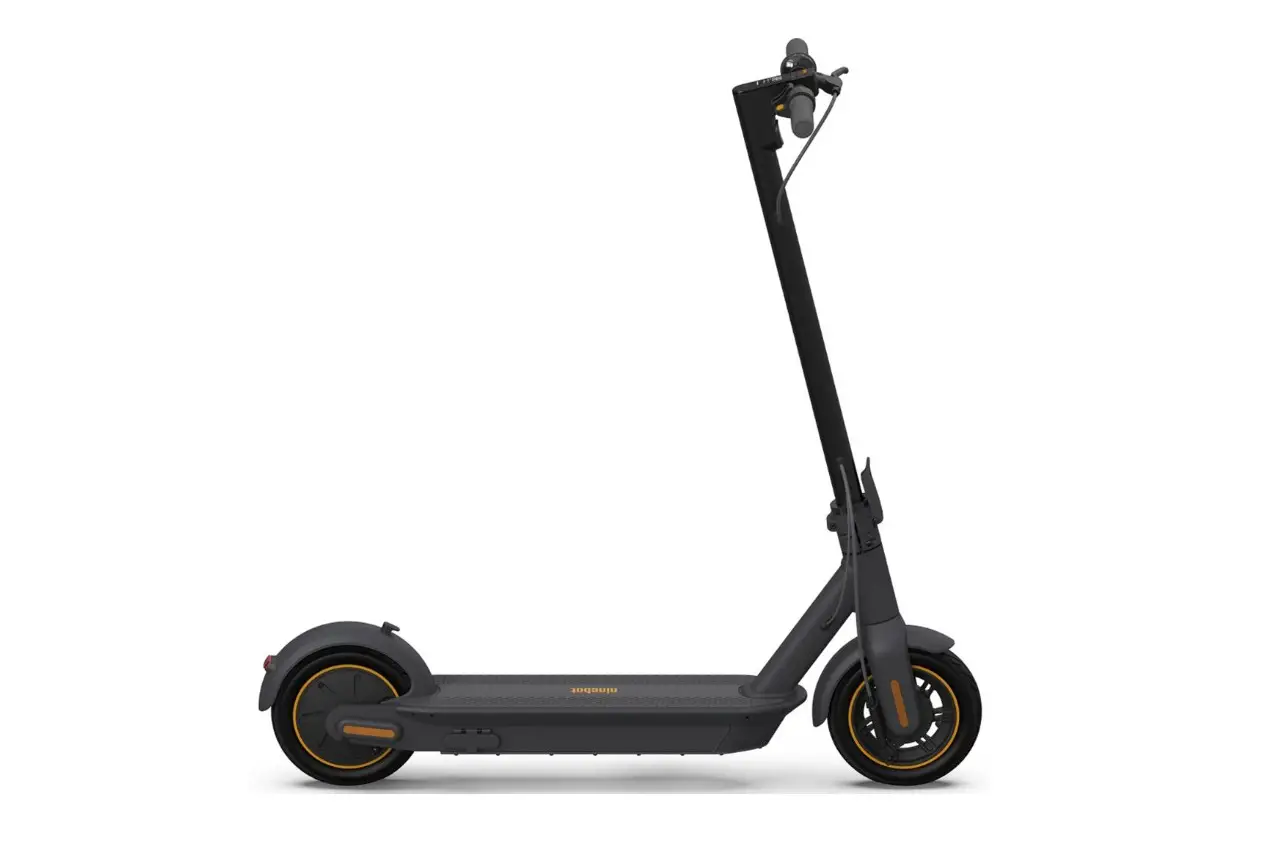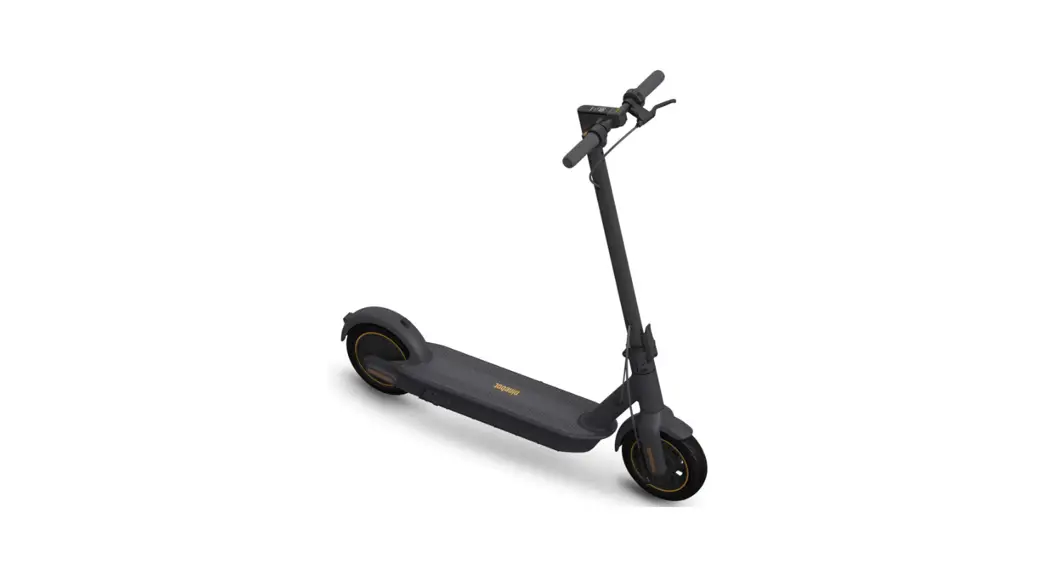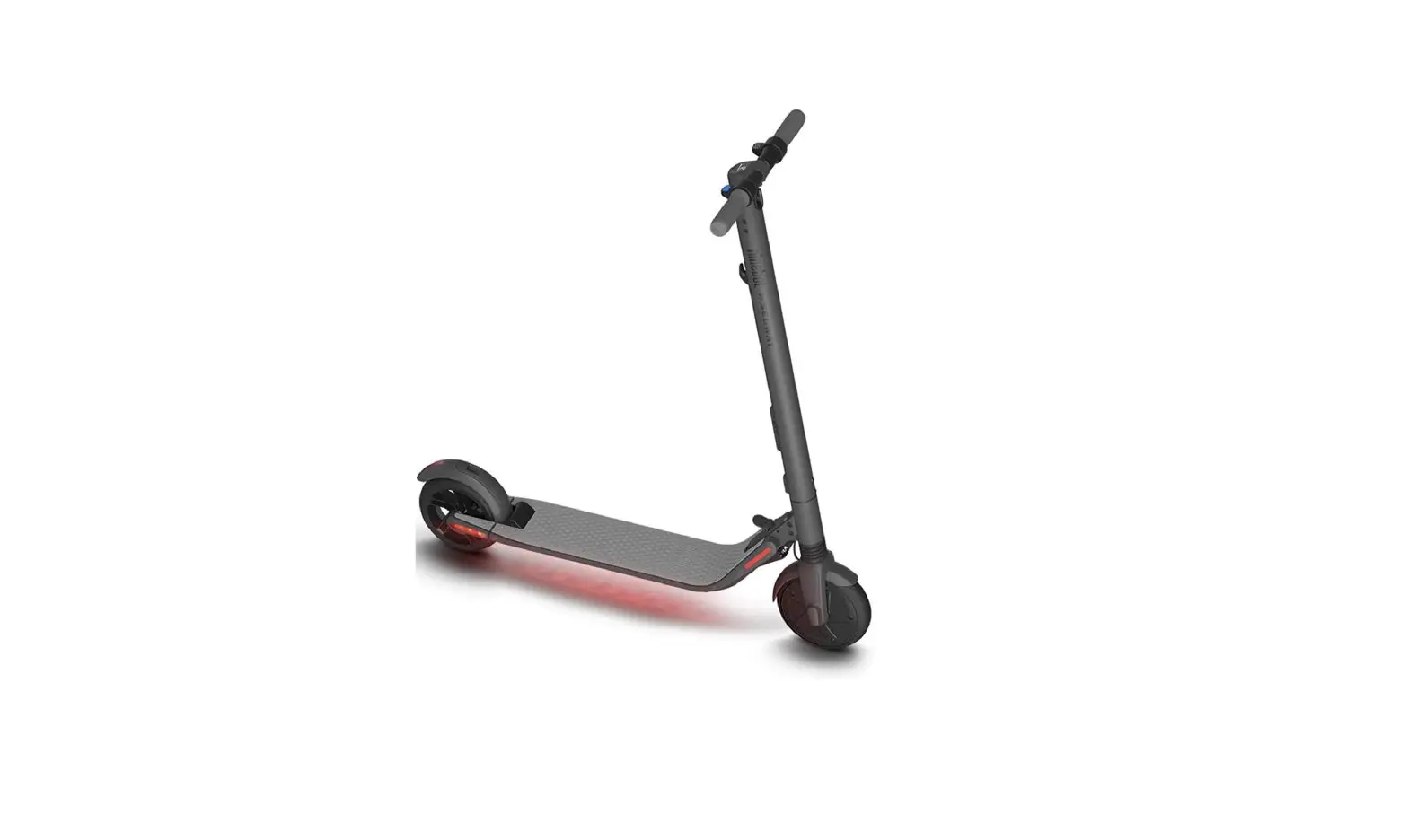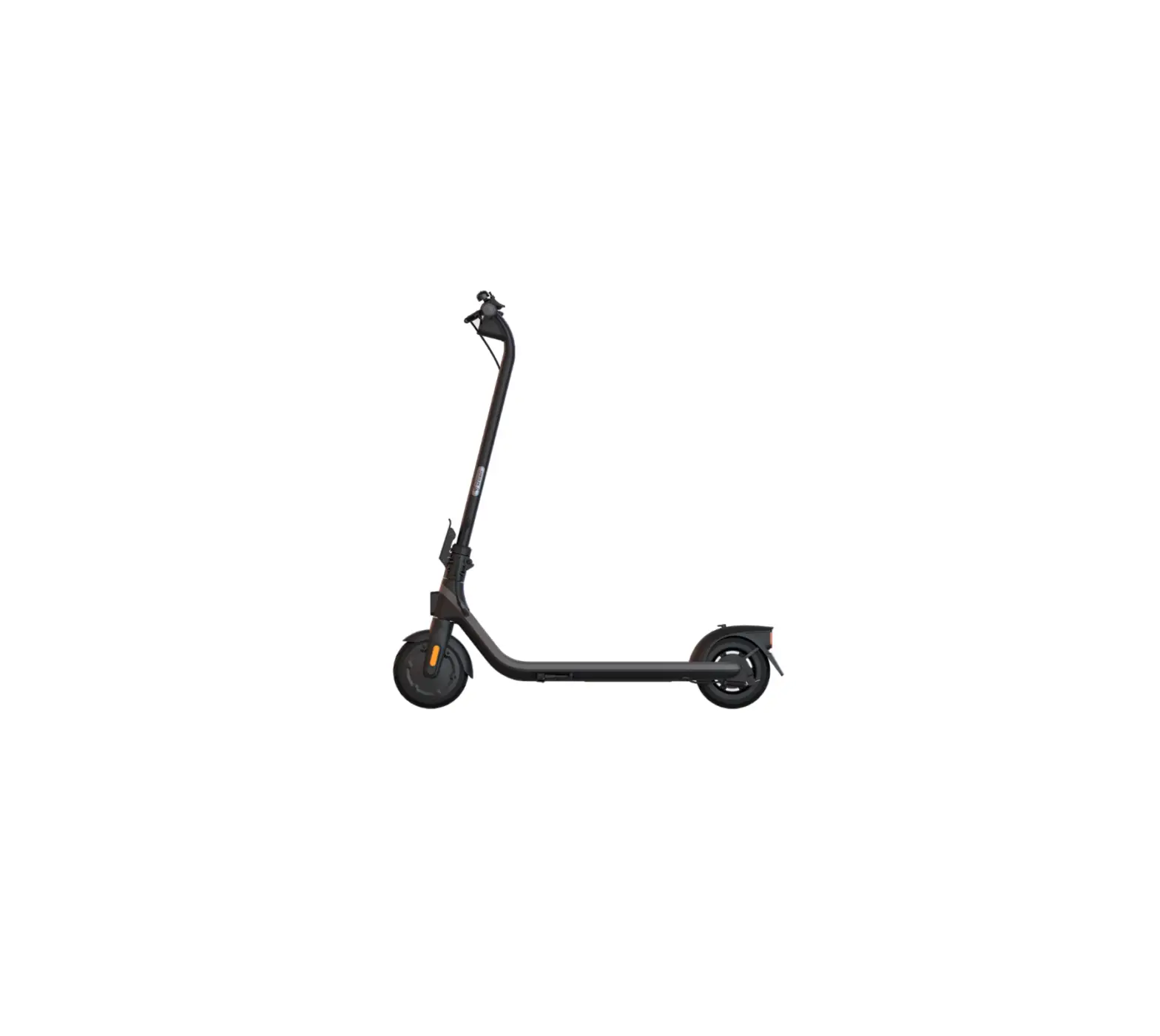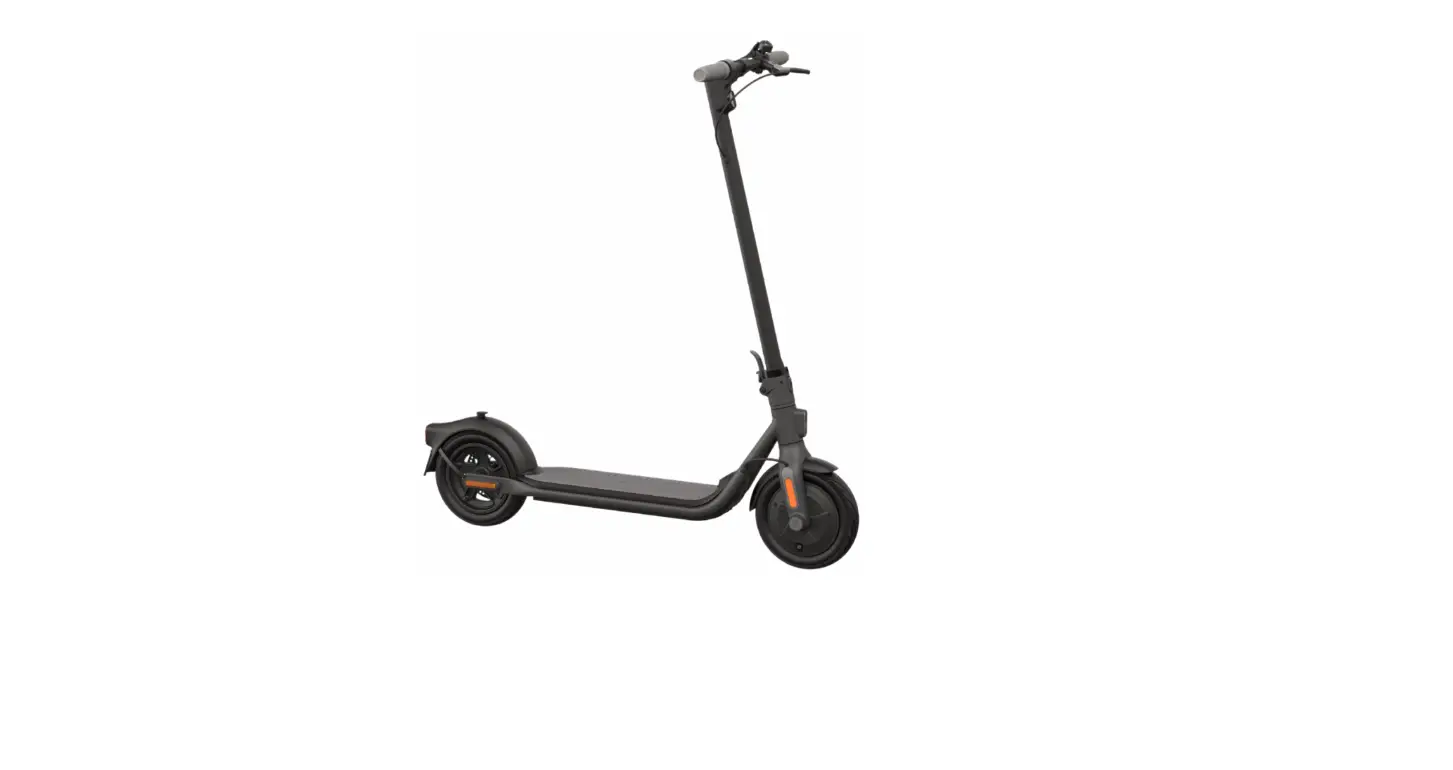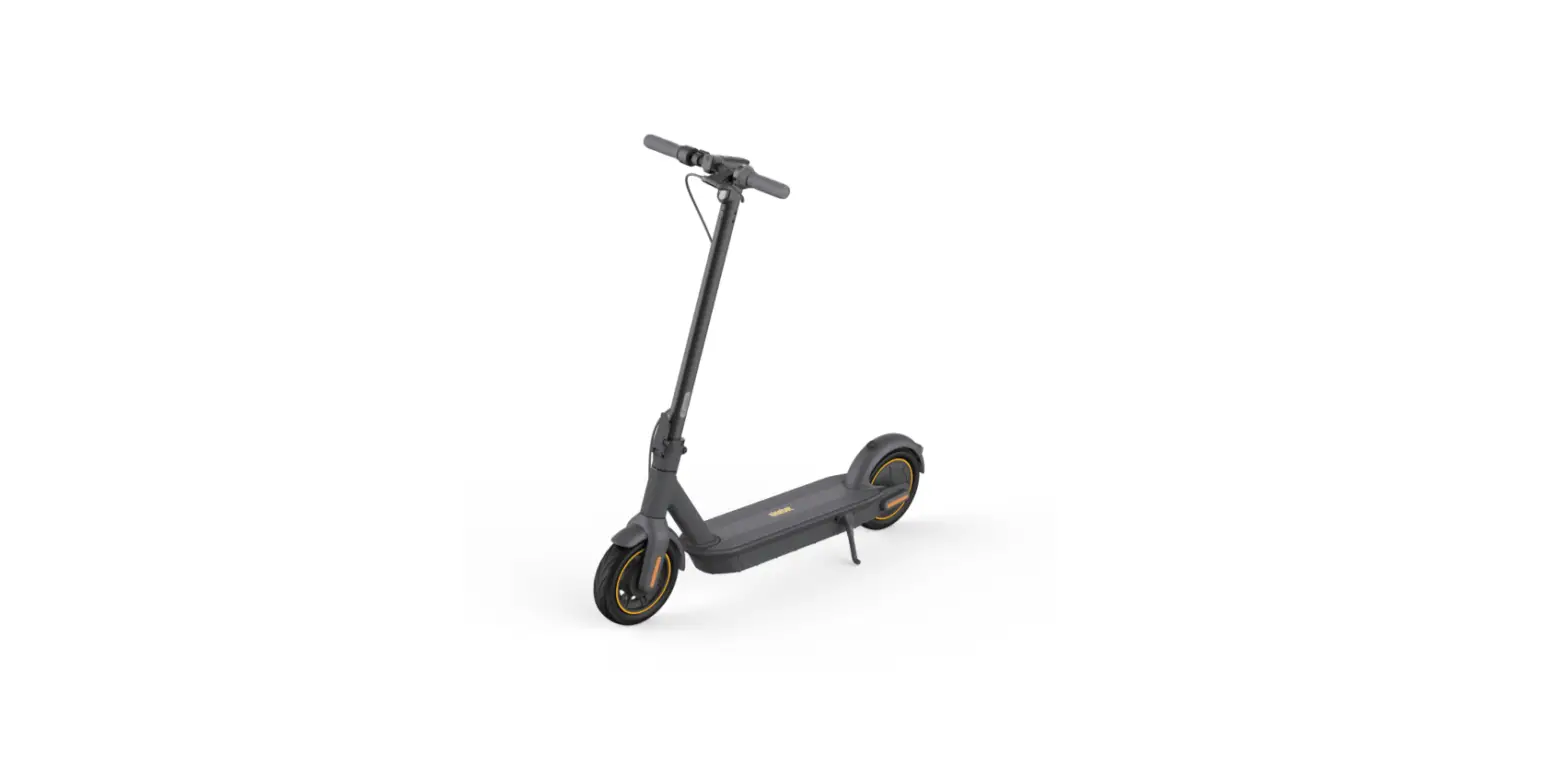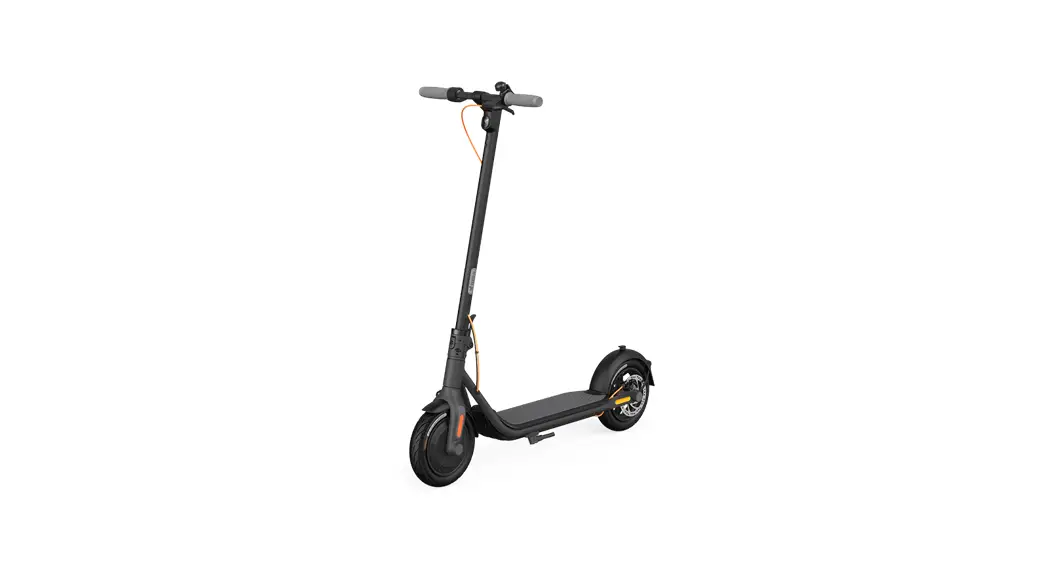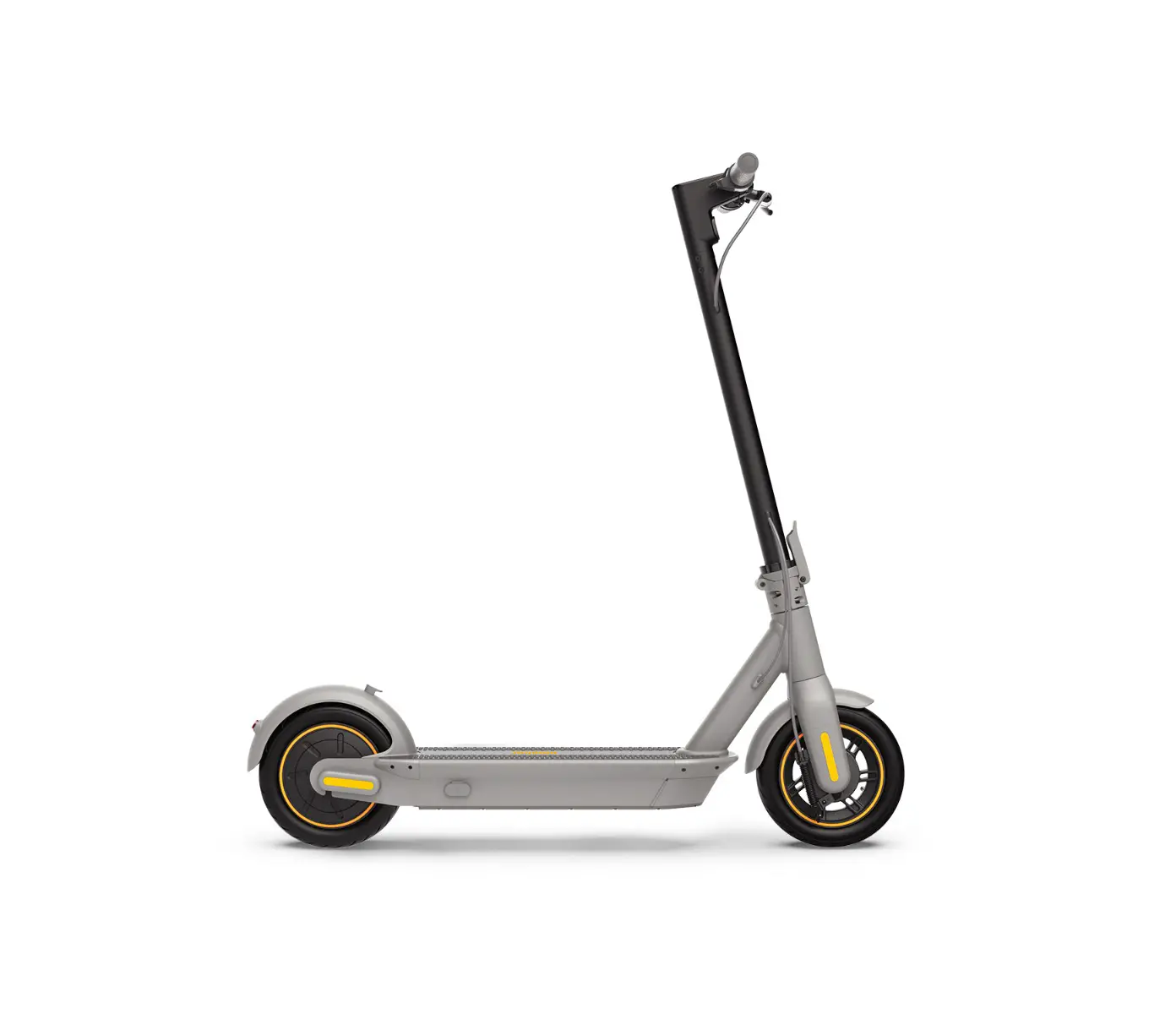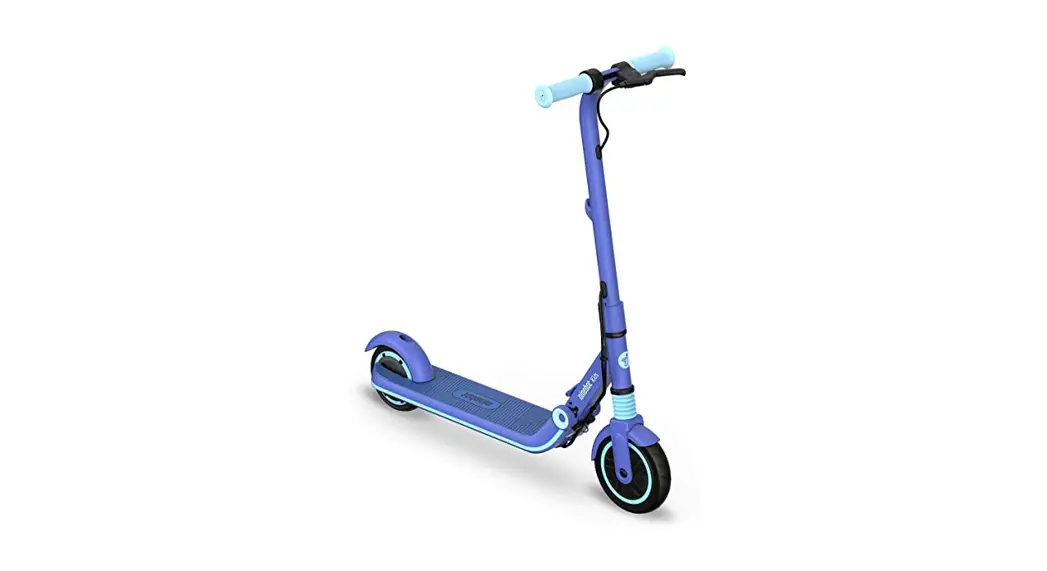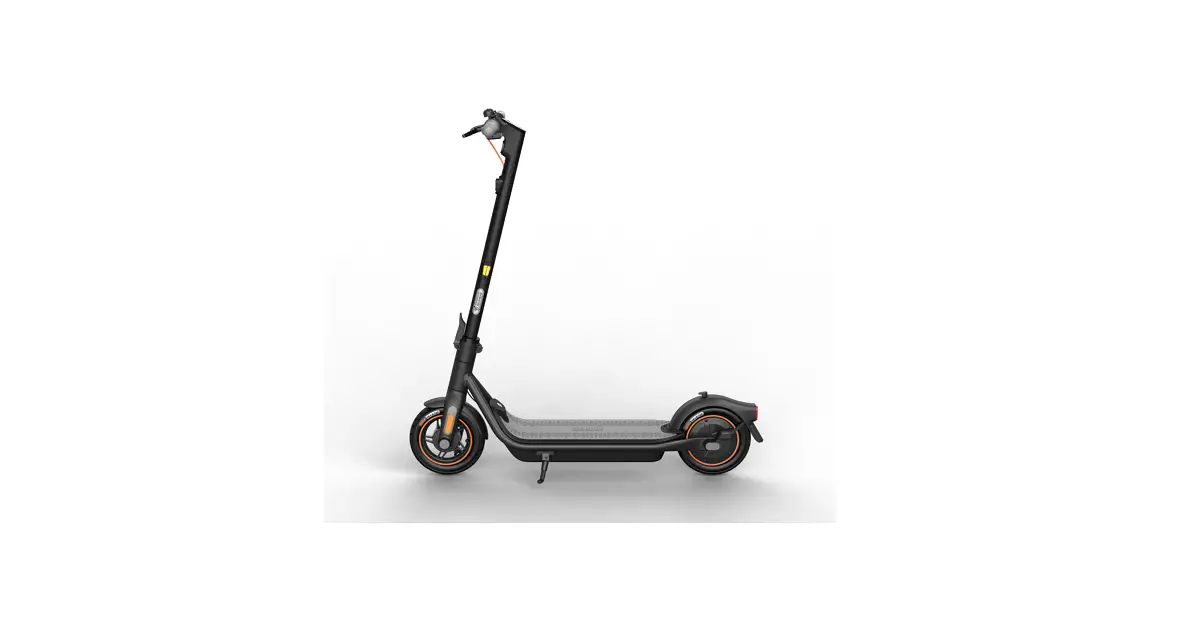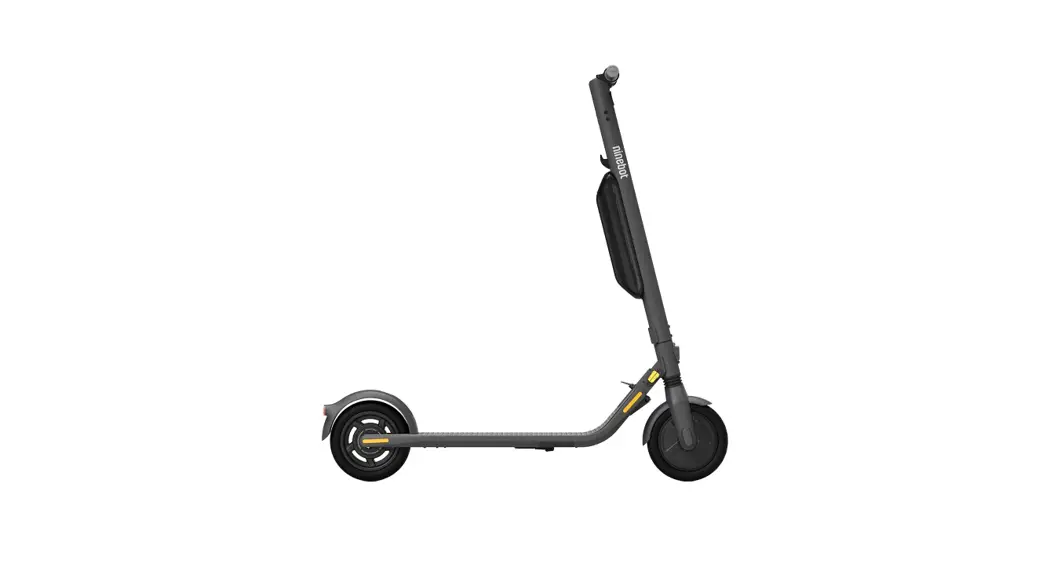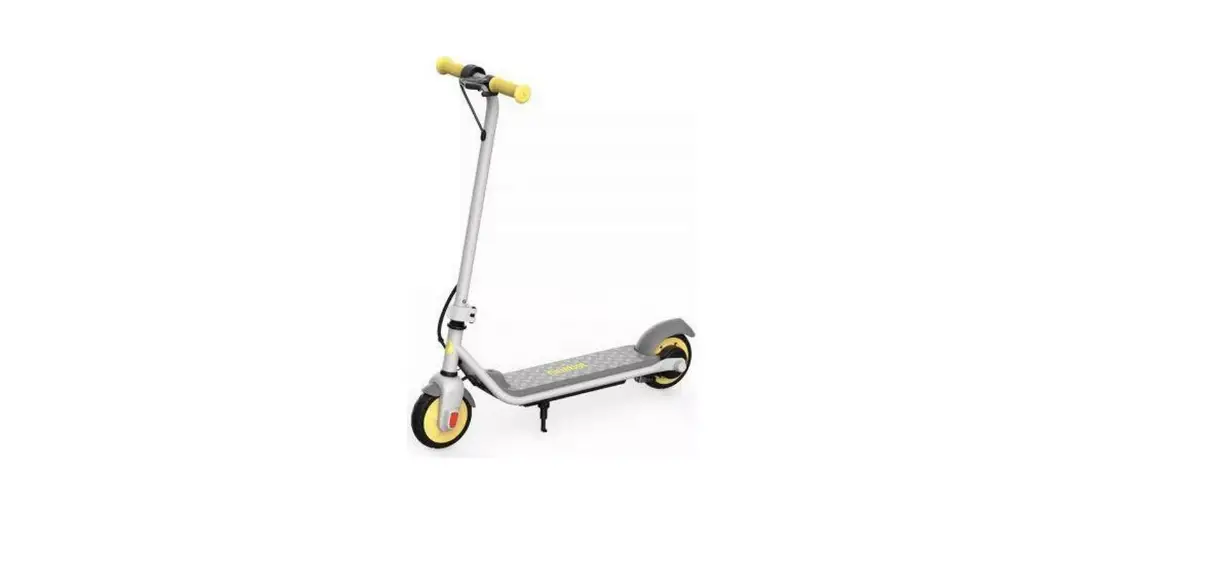
ninebot KickScooter
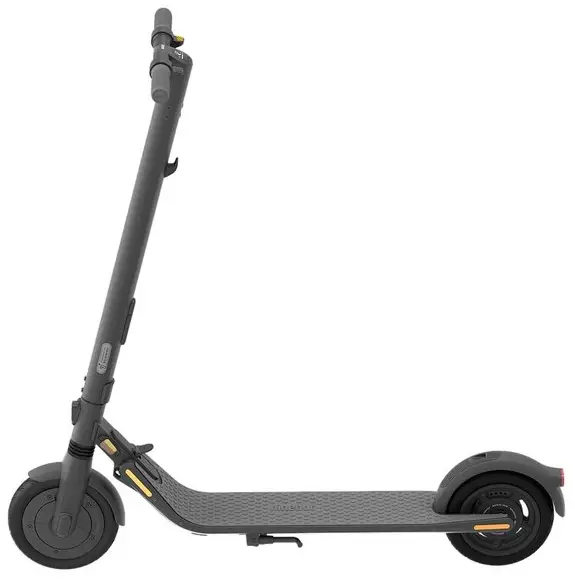
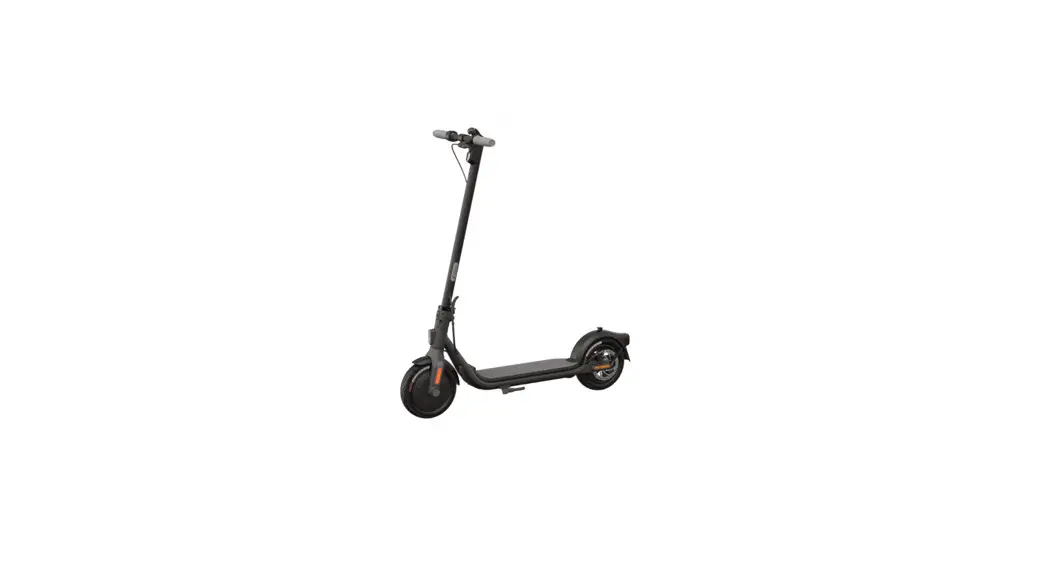
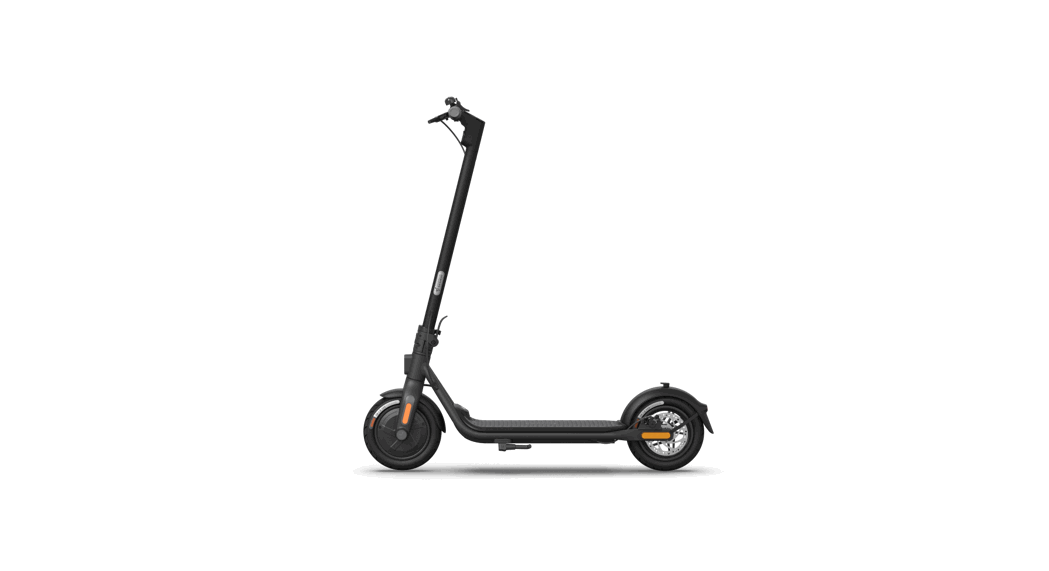
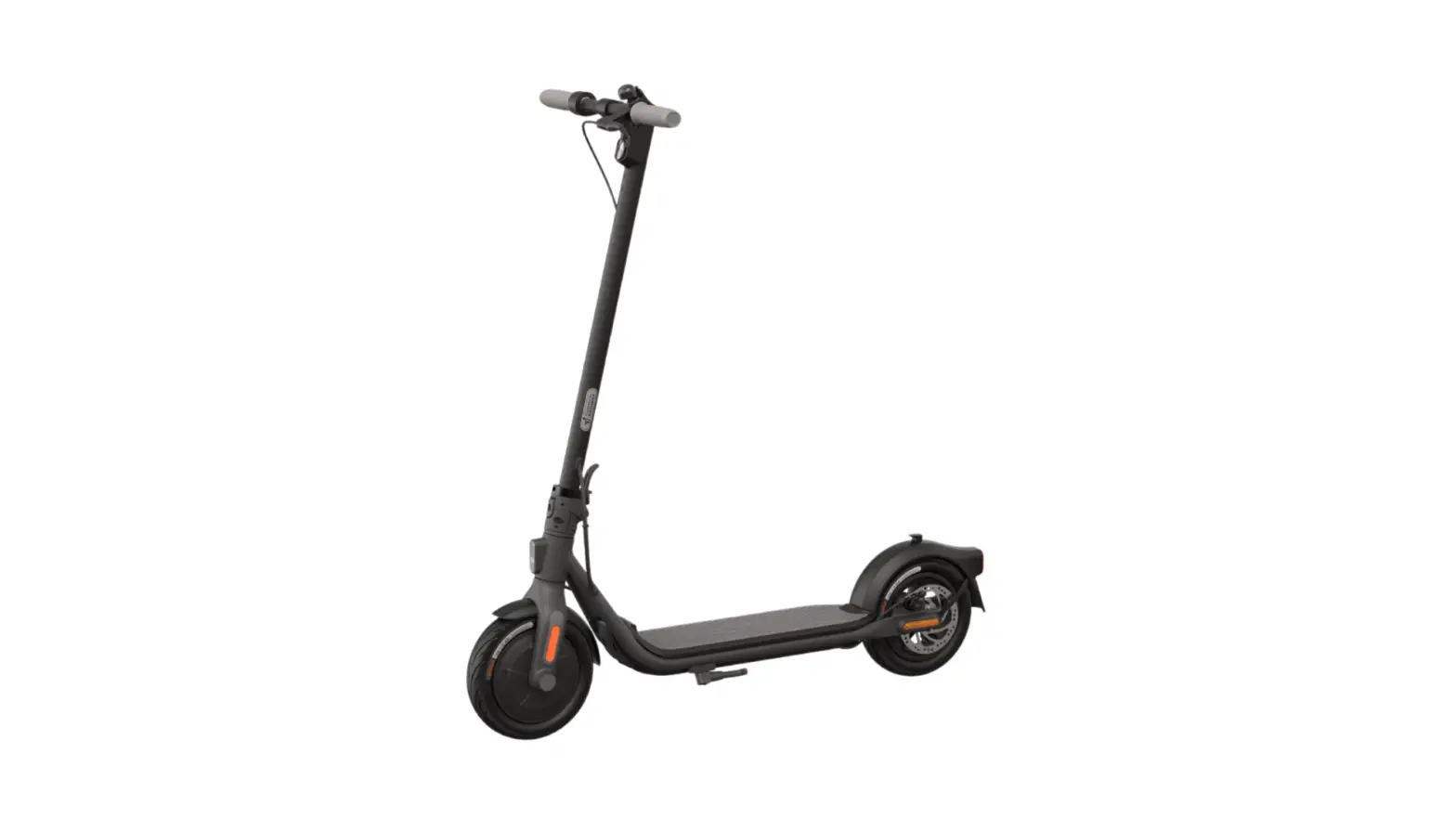
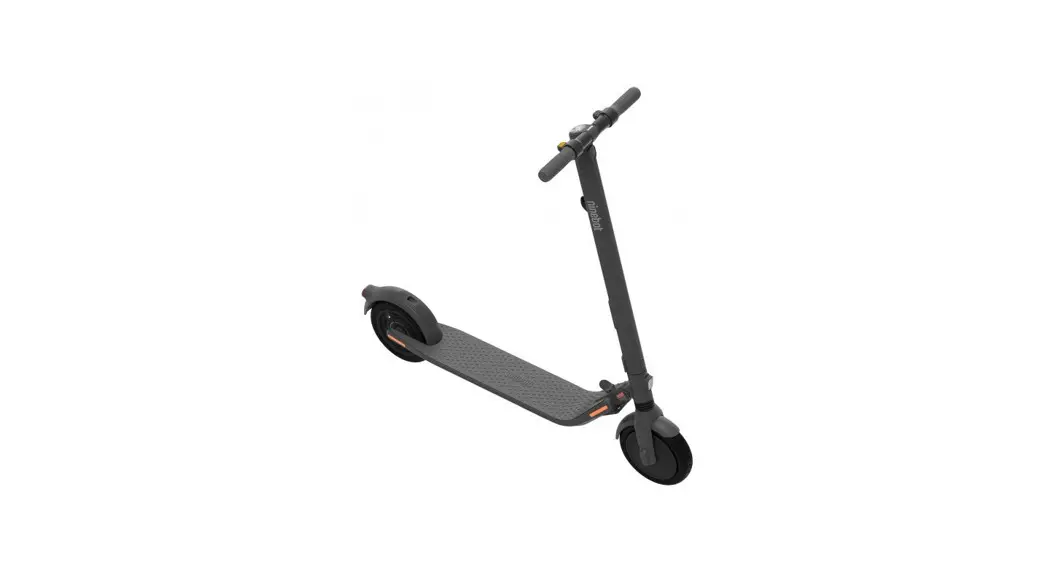
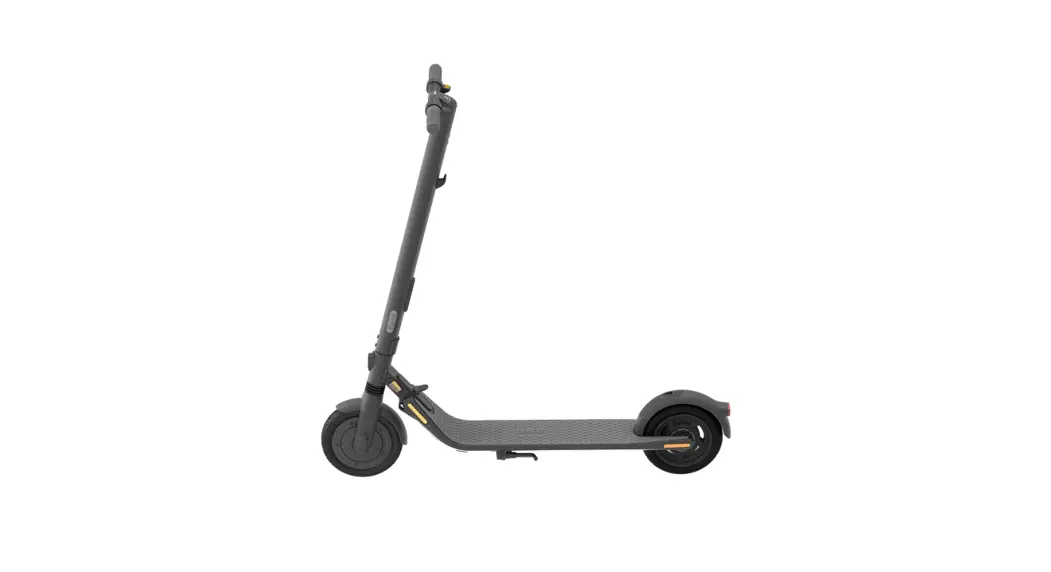
Diagram
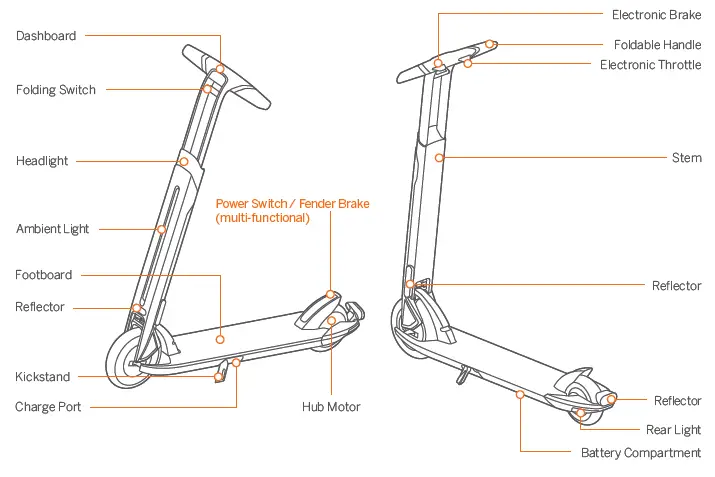
Power Switch / Fender Brake:
- Step on the Power Switch / Fender Brake to power on.
- When power-on and speed is less than 1.9 mph (3 km/h), step on to turn on/off the headlight and rear light.
- When power-on, step on twice to switch speed modes.
- Step on the Power Switch / Fender Brake 3 secs to power off.
The rear fender can be used as a brake when riding. It is recommended to use together with the electronic brake.
Ambient Light:
The color of ambient light can be customized via the Segway-Ninebot App.
Electric Honk:
Press the electronic throttle and electronic brake together to honk.
Dashboard
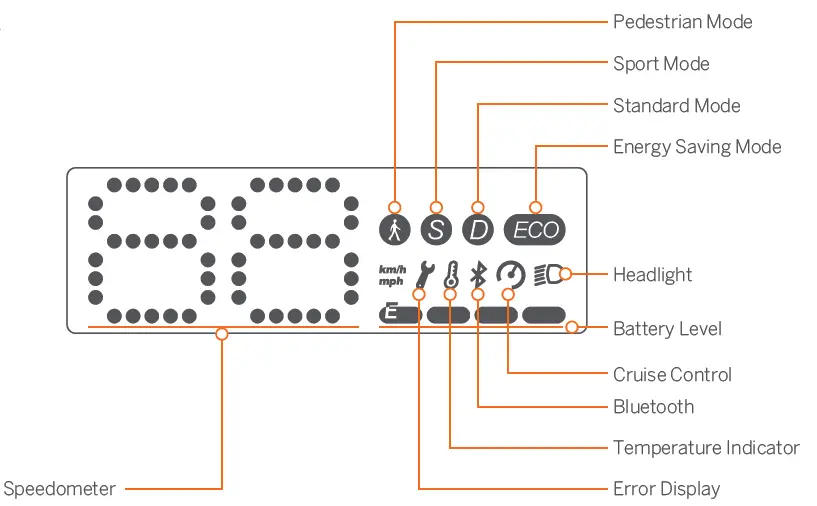
Speedometer: Display the current speed of the KickScooter, as well as error codes.
Speed Modes: Step on the Power Switch / Fender Brake twice to switch between the modes.
- Energy saving mode [Max speed is 6.2 mph (10 km/h) with smooth acceleration, suitable for beginners];
- Standard mode [Max speed is 9.3 mph (15 km/h)];
- Sport mode [Max speed is 12.4 mph (20 km/h), powerful, only recommended for skilled riders].
Pedestrian Mode: Max. speed is 3.7 mph (6 km/h) with flashing rear light.
How to enable in App: Tap the slide menu > Settings > Pedestrian Mode.
Error Display: The lit wrench icon indicates the KickScooter error.
Cruise Control: Enabled when riding at a constant speed for 5 secs. Exit the mode by braking.
This feature is off by default. Please turn it on via the Segway-Ninebot App.
Temperature Indicator: The thermometer icon blinking indicates that the battery temperature has reached 122°F (50°C) or is below 32°F (0°C), or motor temperature has reached 194°F (90°C).
At this point, the vehicle cannot accelerate normally and may not be charged.
Bluetooth: A solid Bluetooth icon indicates that the vehicle is connected to a mobile device.
Battery Level: The total battery level equals to 4 bars.
The battery power is very low when the first battery bar is red. Please charge your KickScooter immediately.
Specifications
| Item | Parameter | |
| Product | Name | Ninebot KickScooter |
| Model | Air T15E | |
| Net Weight | Approx. 23.2 lbs (10.5 kg) | |
| Dimensions | Length x Width x Height | Approx. 40.1 × 15.7 × 36.9 in (1019 × 398 × 936 mm) |
| Folded: Length x Width x Height | Approx. 40.5 × 8.0 × 8.8 in (1028 × 202 × 223 mm) | |
| Rider | Payload | 66.1–220.5 lbs (30.0–100.0 kg) |
| Recommended Age | 14–60 years | |
| Required Height | 4’3”–6’6” (130–200 cm) | |
|
Machine | Max. Speed | Approx. 12.4 mph (20 km/h) |
| Typical Range [1] | Approx. 7.5 miles (12 km) | |
| Max. Slope | Approx. 15% | |
| Traversable Terrain | Asphalt/flat pavement | |
| Operating Temperature | 14–104°F (-10–40°C) | |
| Storage Temperature | 14–122°F (-10–50°C) | |
| IP Rating | IPX4 | |
| Duration of Charging | Approx. 4 h | |
|
Battery | Nominal Voltage | 36 V |
| Max. Charging Voltage | 42 V | |
| Charging Temperature | 32–104°F (0–40°C) | |
| Nominal Capacity | 4650 mAh | |
| Nominal Energy | 167 Wh | |
| Battery Management System | Over-heating, short circuit, over-current, over-discharge, and over-charge protection | |
| Motor | Nominal Power | 0.25 kW, 250 W |
|
Charger | Output Power | 0.071 kW, 71 W |
| Input Voltage | 100–240 V ~ | |
| Output Voltage | 42 V | |
| Output Current | 1.7 A | |
| Features | Brake Light | LED rear light |
| Riding Modes | Pedestrian mode, Energy saving mode, Standard mode and Sport mode | |
| Tire | Front Tire | Hollow tires. Material: NR + SBR + SILICA+C.B. Size: 6 inches. Without nozzle. |
| Rear Tire | Hollow tires. Material: NR + SBR + SILICA+C.B. Size: 7.5 inches. Without nozzle. |
Certifications
WEEE Disposal and Recycling Information Correct Disposal of this product. This marking indicates that this product should not be disposal with other household wastes throughout the EU.
To prevent possible harm to the environment or human health from uncontrolled waste disposal, recycle it responsible to promote the sustainable reuse of materials resources. To return your used device, please use the return and collection systems or contact the retailer where the product was purchased. They can take this product for environmental safe recycling.
Battery recycling information for the European Union
Batteries or packaging for batteries are labeled in accordance with European Directive 2006/66/EC and amendment 2013/56/EU concerning batteries and accumulators and waste batteries and accumulators. The Directive determines the framework for the return and recycling of used batteries and accumulators as applicable throughout the European Union. This label is applied to various batteries to indicate that the battery is not to be thrown away, but rather reclaimed upon end of life per this Directive.
In accordance with the European Directive 2006/66/EC and amendment 2013/56/EU, batteries and accumulators are labeled to indicate that they are to be collected separately and recycled at end of life. The label on the battery may also include a chemical symbol for the metal concerned in the battery (Pb for lead, Hg for mercury, and Cd for cadmium). Users of batteries and accumulators must not dispose of batteries and accumulators as unsorted municipal waste, but use the collection framework available to customers for the return, recycling, and treatment of batteries and accumulators. Customer participation is important to minimize any potential effects of batteries and accumulators on the environment and human health due to the potential presence of hazardous substances.
Before placing electrical and electronic equipment (EEE) in the waste collection stream or in waste collection facilities, the end user of equipment containing batteries and/or accumulators must remove those batteries and accumulators for separate collection.
Restriction of Hazardous Substances (RoHS) Directive
This Ninebot (Changzhou) Tech Co., Ltd. product, with included parts (cables, cords, and so on) meets the requirements of Directive 2011/65/EU on the restriction of the use of certain hazardous substances in electrical and electronic equipment (“RoHS recast” or “RoHS 2”).

 Home | Segway
 Group 23