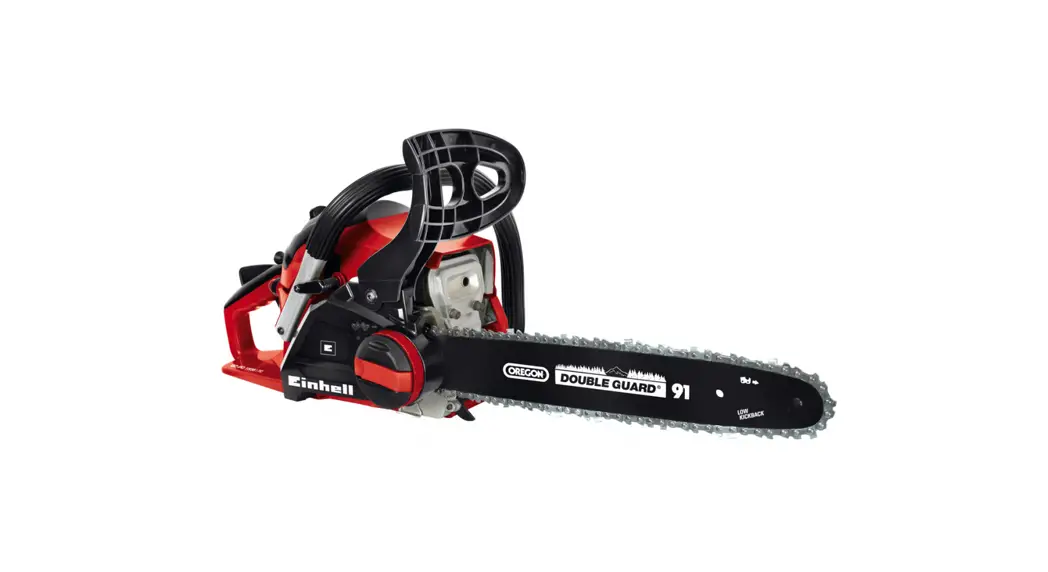
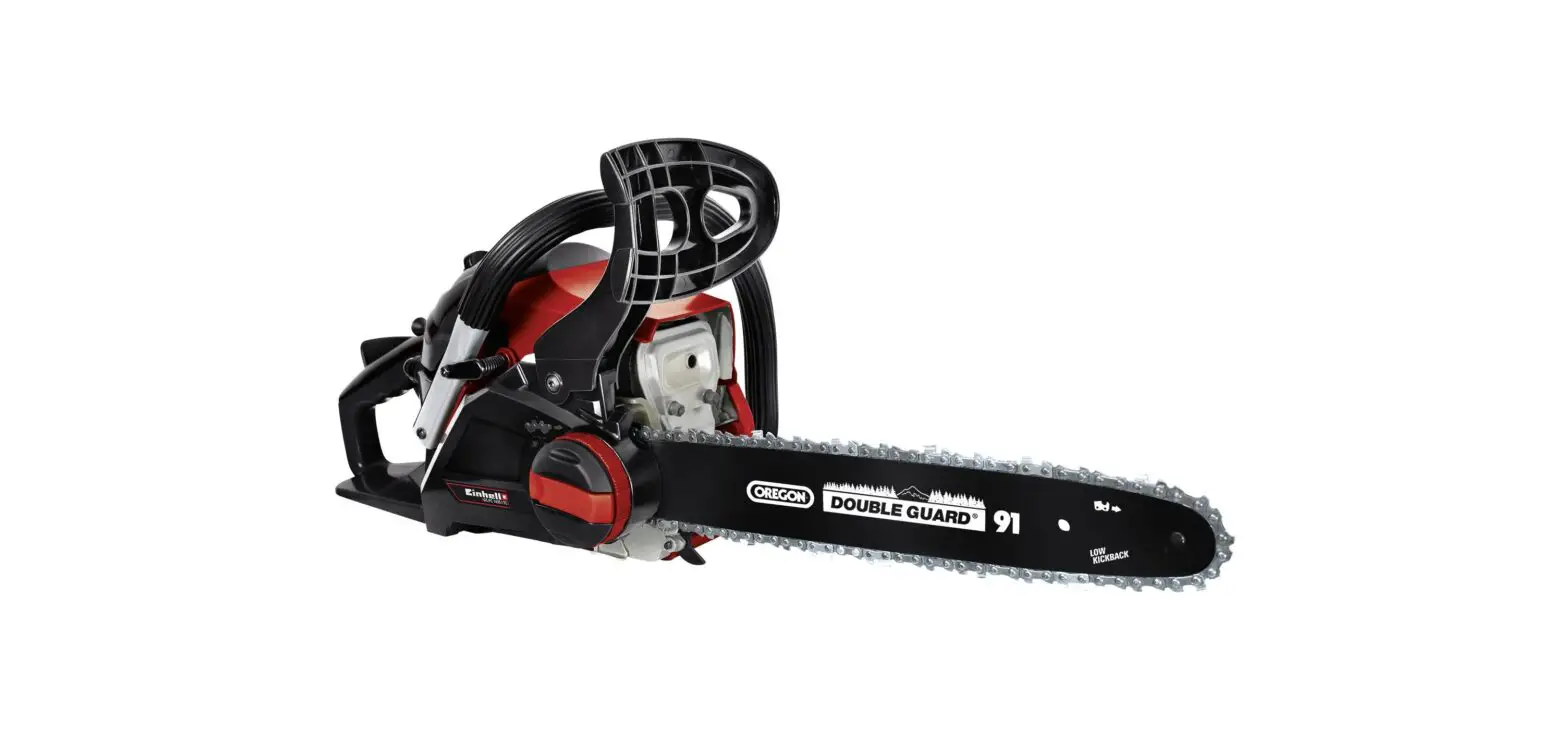
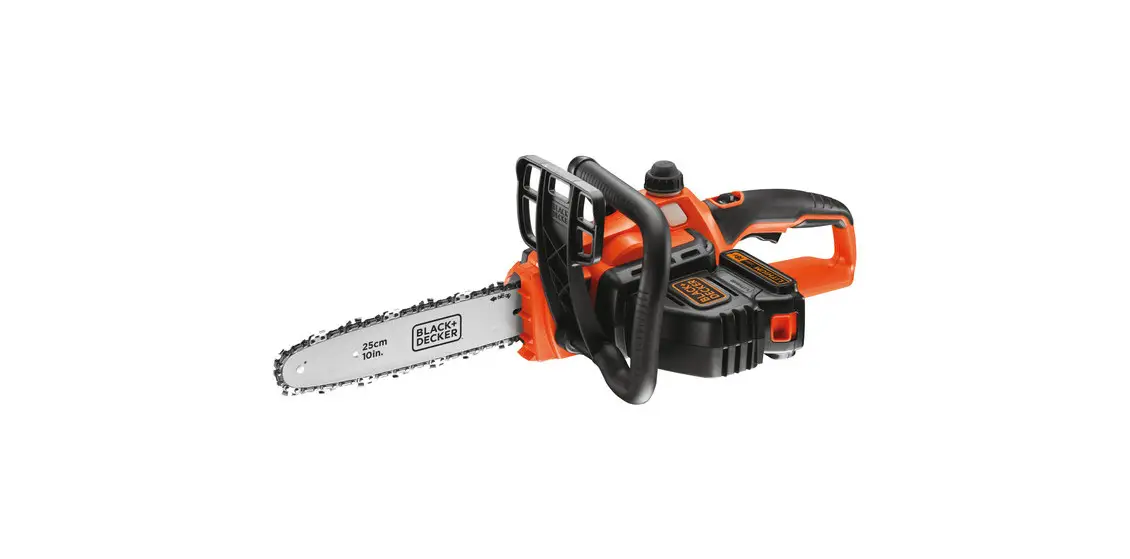
GC-PC 730 I Chainsaw for Tree Care
Product Information: Product Name: GC-PC 730 I Chainsaw for Tree
Care Model Number: Art.-Nr.: 45.018.42 Instruction Manual Language:
English (GB), Italian (I), Dutch (NL), Greek (GR) Product Usage
Instructions: 1. Safety Precautions: – This chainsaw is intended
for use only by fully trained tree care personnel. Using the
chainsaw without proper training can result in serious injuries. –
Before using the chainsaw, remove all packaging and transportation
safety devices (if present). 2. Technical Specifications: –
Detailed technical specifications are provided in the user manual.
3. Before Starting: – Check that the chainsaw is in good working
condition. – Ensure that the chain is properly tensioned and
lubricated. – Make sure the bar and chain are securely attached. 4.
Starting the Chainsaw: – Place the chainsaw on a stable surface. –
Engage the chain brake by pulling the front handguard towards the
front handle. – Pull the starter grip several times until the
engine starts. 5. Operation: – Always activate the chain brake
before starting the engine. – The chain should come to an abrupt
stop when the throttle trigger is released. – Use both hands to
grip the chainsaw firmly during operation. – Avoid cutting with the
tip of the guide bar, as it can cause kickback. 6. Stopping the
Chainsaw: – Release the throttle trigger and wait for the chain to
stop moving. – Set the engine switch to the “Stop” position (0) to
turn off the engine. 7. Cleaning, Maintenance, Storage, and Spare
Parts Ordering: – Clean the chainsaw after each use. – Remove the
top cover of the air filter and clean it regularly. – Refer to the
user manual for detailed instructions on cleaning, maintenance, and
ordering spare parts. Please refer to the complete user manual for
additional information and instructions.
GC-PC 730 I
D Originalbetriebsanleitung Kettensäge für die Baumpflege
WARNUNG: DIESE KETTENSÄGE DARF NUR VON AUSGEBILDETEN BAUMPFLEGEARBEITSKRÄFTEN EINGESETZT WERDEN. VERWENDUNG OHNE SCHULUNG KANN ZU SCHWEREN VERLETZUNGEN FÜHREN.
GB Original operating instructions Chainsaw for Tree Care
WARNING: THIS CHAINSAW MAY ONLY BE USED BY FULLY TRAINED TREE CARE PERSONNEL. USE WITHOUT TRAINING COULD LEAD TO SERIOUS INJURIES.
F Instructions d’origine Tronçonneuse pour l`entretien des arbres
AVERTISSEMENT : CETTE TRONCONNEUSE DOIT ÊTRE UNIQUEMENT UTILISÉE PAR DU PERSONNEL D`ENTRETIEN DES ARBRES DUMENT QUALIFIE. TOUTE UTILISATION DE LA TRONÇONNEUSE SANS FORMATION PEUT ENTRAÎNER DES BLESSURES GRAVES.
I Istruzioni per l’uso originali Motosega per arboricoltura
AVVERTIMENTO: QUESTA MOTOSEGA DEVE ESSERE USATA SOLO DA ESPERTI DI ARBORICOLTURA ADEGUATAMENTE ISTRUITI. L`UTILIZZO DA PARTE DI PERSONE NON ISTRUITE IN MERITO PUÒ CAUSARE LESIONI GRAVI.
7
NL Originele handleiding Kettingzaag voor het verzorgen van bomen
WAARSCHUWING: DEZE KETTINGZAAG MAG ALLEEN WORDEN INGEZET DOOR VOOR HET VERZORGEN VAN BOMEN OPGELEIDE ARBEIDSKRACHTEN. GEBRUIK ZONDER SCHOLING KAN TOT ERNSTIGE VERWONDINGEN LEIDEN.
E Manual de instrucciones original Motosierra para el cuidado de los árboles
AVISO: ESTA MOTOSIERRA SOLO PODRÁ SER EMPLEADA POR PERSONAL FORMADO DESTINADO AL CUIDADO DE LOS ÁRBOLES. RECIBIR UNA FORMACIÓN ANTES DE UTILIZARLO PARA EVITAR SUFRIR LESIONES.
P Manual de instruções original Serra de corrente para a poda de árvores
AVISO: ESTA SERRA DE CORRENTE SÓ PODE SER UTILIZADA POR PESSOAL QUALIFICADO PARA A PODA DE ÁRVORES. A UTILIZAÇÃO SEM INSTRUÇÃO PODE RESULTAR EM FERIMENTOS GRAVES.
GR
: .
Art.-Nr.: 45.018.42
I.-Nr.: 11018
Anl_GC_PC_730_I_SPK7.indb 1
05.06.2019 08:26:27
1A
67
8
9
2
3
14
17 21 22 23
1B
12 11 10
19
13
27 1 20 18
1C
5
26 25
24
4 – 2 –
Anl_GC_PC_730_I_SPK7.indb 2
05.06.2019 08:26:27
2A
7
6
2B
2C
2
2D
B
A 20 19
2E
3D
2F
E
C
2G
3A
G
2
20 19 3
3B
4
A
C
Anl_GC_PC_730_I_SPK7.indb 3
B – 3 –
AB
05.06.2019 08:26:29
5A 7
6
5B
23
6
6
23
6 2
7A
10
7B
23
7D
7E
11
8B
9
15
C – 4 –
Anl_GC_PC_730_I_SPK7.indb 4
7C
9 13
8A
14 A
10A
05.06.2019 08:26:32
10B
11
12
13
14
A
– 5 Anl_GC_PC_730_I_SPK7.indb 5
05.06.2019 08:26:36
D
Inhaltsverzeichnis
1. Sicherheitshinweise 2. Gerätebeschreibung und Lieferumfang 3. Bestimmungsgemäße Verwendung 4. Technische Daten 5. Vor Inbetriebnahme 6. Bedienung 7. Reinigung, Wartung, Lagerung und Ersatzteilbestellung 8. Entsorgung und Wiederverwertung 9. Fehlersuchplan
– 6 Anl_GC_PC_730_I_SPK7.indb 6
05.06.2019 08:26:38
D
Gefahr! Beim Benutzen von Geräten müssen einige Sicherheitsvorkehrungen eingehalten werden, um Verletzungen und Schäden zu verhindern. Lesen Sie diese Bedienungsanleitung / Sicherheitshinweise deshalb sorgfältig durch. Bewahren Sie diese gut auf, damit Ihnen die Informationen jederzeit zur Verfügung stehen. Falls Sie das Gerät an andere Personen übergeben sollten, händigen Sie diese Bedienungsanleitung / Sicherheitshinweise bitte mit aus. Wir übernehmen keine Haftung für Unfälle oder Schäden, die durch Nichtbeachten dieser Anleitung und den Sicherheitshinweisen entstehen.
1. Sicherheitshinweise
Die entsprechenden Sicherheitshinweise finden Sie im beiliegenden Heftchen! Gefahr! Lesen Sie alle Sicherheitshinweise und Anweisungen. Versäumnisse bei der Einhaltung der Sicherheitshinweise und Anweisungen können elektrischen Schlag, Brand und/oder schwere Verletzungen verursachen. Bewahren Sie alle Sicherheitshinweise und Anweisungen für die Zukunft auf.
2. Gerätebeschreibung und Lieferumfang
2.1 Gerätebeschreibung (Abb. 1A-1C) 1. Motoreinheit 2. Führungsschiene 3. Sägekette 4. Kettenschutz 5. Zündkerzenschlüssel 6. Vorderer Handschutz (Kettenbremshebel) 7. Vorderer Handgriff 8. Hinterer Handgriff 9. Startergriff 10. Ein-/Aus-Schalter 11. Gashebel 12. Gashebelsperre 13. Choke-Hebel 14. Luftfilterabdeckung 15. Luftfilter 16. Zündkerze 17. Krallenanschlag 18. Kettenfänger 19. Mutter Führungsschienenbefestigung 20. Kettenspannschraube
21. Treibstofftankkappe 22. Öltankkappe 23. Kraftstoffpumpe (Primer) 24. Mischflasche 25. Schraubendreher 26. Sechskantschlüssel 27. Aufhängevorrichtung für Halteschlinge
Sicherheitsfunktionen (Abb.1A/1B) 3 SÄGEKETTE MIT GERINGEM RÜCK-
SCHLAG hilft Ihnen mit speziell entwickelten Sicherheitseinrichtungen Rückschlagkräfte zu reduzieren und diese besser abzufangen. 6 KETTENBREMSHEBEL / HANDSCHUTZ schützt die linke Hand der Bedienungsperson, sollte sie bei laufender Säge vom vorderen Griff abrutschen. Die KETTENBREMSE ist eine Sicherheitsfunktion zur Minderung von Verletzungen auf Grund von Rückschlägen, indem eine laufende Sägekette im Millisekunden angehalten wird. Sie wird vom KETTENBREMSHEBEL aktiviert. 10 EIN- /AUSSCHALTER hält den Motor sofort an, wenn er ausgeschaltet wird. Der Stoppschalter muss auf EIN gesetzt werden, um den Motor (erneut) zu starten. 12 GASHEBELSPERRE verhindert eine zufällige Beschleunigung des Motors. Der Gashebel kann nur gedrückt werden, wenn die Gashebelsperre gedrückt ist. 18 KETTENFÄNGER mindert die Gefahr von Verletzungen, sollte die Sägekette bei laufendem Motor reißen oder entgleiten. Der Kettenauffänger soll eine um sich schlagende Kette auffangen.
Hinweis: Machen Sie sich mit der Säge und ihren Teilen vertraut.
2.2 Lieferumfang Bitte überprüfen Sie die Vollständigkeit des Artikels anhand des beschriebenen Lieferumfangs. Bei Fehlteilen wenden Sie sich bitte spätestens innerhalb von 5 Arbeitstagen nach Kauf des Artikels unter Vorlage eines gültigen Kaufbeleges an unser Service Center oder an die Verkaufstelle, bei der Sie das Gerät erworben haben. Bitte beachten Sie hierzu die Gewährleistungstabelle in den Service-Informationen am Ende der Anleitung.
· Öffnen Sie die Verpackung und nehmen Sie
das Gerät vorsichtig aus der Verpackung.
· Entfernen Sie das Verpackungsmaterial so-
wie Verpackungs-/ und Transportsicherungen (falls vorhanden).
– 7 –
Anl_GC_PC_730_I_SPK7.indb 7
05.06.2019 08:26:38
D
· Überprüfen Sie, ob der Lieferumfang vollstän-
dig ist.
· Kontrollieren Sie das Gerät und die Zubehör-
teile auf Transportschäden.
· Bewahren Sie die Verpackung nach Möglich-
keit bis zum Ablauf der Garantiezeit auf.
Gefahr! Gerät und Verpackungsmaterial sind kein Kinderspielzeug! Kinder dürfen nicht mit Kunststoffbeuteln, Folien und Kleinteilen spielen! Es besteht Verschluckungs- und Erstickungsgefahr!
· Originalbetriebsanleitung · Sicherheitshinweise
3. Bestimmungsgemäße Verwendung
Gefahr! Bei der Kettensäge handelt es sich um einen besonderen Kettensägentyp für die Baumpflege, die für die Benutzung mit der rechten Hand am hinteren Griff und der linken Hand am vorderen Griff, durch einen in der Anwendung ausgebildeten Benutzer zum Entasten und Absägen stehender Baumkronen und durch Personen, die die mitgelieferten Sicherheitsanforderungen in der Betriebsanleitung gelesen und verstanden haben sowie angemessene persönliche Schutzausrüstung tragen (PSA), vorgesehen sind. Die Kettensäge darf nur von einem für diesen Kettensägentyp ausgebildeten Benutzer bedient werden. Der Benutzer muss in allen Arbeitstechniken manueller Kettensägen geschult sein. Bestimmungsgemäß ist diese Säge nicht für den Einsatz in anderen Anwendungsbereichen vorgesehen.
Das Gerät darf nur nach ihrer Bestimmung verwendet werden. Jede weitere darüber hinausgehende Verwendung ist nicht bestimmungsgemäß. Für daraus hervorgerufene Schäden oder Verletzungen aller Art haftet der Benutzer/Bediener und nicht der Hersteller.
4. Technische Daten
Motorhubraum ………………………………… 25,4 cm3 Maximale Motorleistung………………………. 0,7 kW Schneidlänge……………………………………….24 cm Führungsschienenlänge …………….. 12″ (30,5 cm) Kettenteilung…………………….. (0,375″), 9,525 mm Kettenstärke…………………………. (0,05″), 1,27 mm Leerlaufdrehzahl …………………… 3300 ± 300 min-1 Maximaldrehzahl mit Schneidgarnitur……………………….11000 min-1 Kettengeschwindigkeit max……………………21 m/s Tankinhalt………………………………………… 230 cm3 Öltankinhalt……………………………………… 160 cm3 Antivibrierfunktion ……………………………………….ja Zahnung Kettenrad …………..6 Zähne x 9,525 mm Nettogewicht ohne Kette und Führungsschiene ……………………………3,5 kg Schalldruckpegel LPA (ISO 22868) am Ort des Bedieners……………………. 99,2 dB(A) Unsicherheit KPA………………………………… 3 dB(A) Schallleistungspegel LWA gemessen (ISO 22868) ………………………………. 108,7 dB(A) Unsicherheit KWA ……………………………….. 3 dB(A) Schallleistungspegel LWA garantiert (ISO 2000/14/EC) …………………………. 113 dB(A) Vibration ahv (vorderer Handgriff) (ISO 22867) ……………………………. max. 8,98 m/s2 Unsicherheit Khv …………………………………1,5 m/s2 Vibration ahv (hinterer Handgriff) (ISO 22867) ……………………………. max. 8,03 m/s2 Unsicherheit Khv …………………………………1,5 m/s2 Zündkerze …………………………………………..L8RTF Elektrodenabstand…………………………….. 0,6 mm Typ Kette…………………………… Kangxin 3/8 LP-44 ………………………………………Carlton N1C-BL-44E …………………………………………Oregon 91PX044X Typ Schwert ……………….. Kangxin AP12-44-509P
Bitte beachten Sie, dass unsere Geräte bestimmungsgemäß nicht für den gewerblichen, handwerklichen oder industriellen Einsatz konstruiert wurden. Wir übernehmen keine Gewährleistung, wenn das Gerät in Gewerbe-, Handwerks- oder Industriebetrieben sowie bei gleichzusetzenden Tätigkeiten eingesetzt wird.
– 8 –
Anl_GC_PC_730_I_SPK7.indb 8
05.06.2019 08:26:38
D
Beschränken Sie die Geräuschentwicklung und Vibration auf ein Minimum!
· Verwenden Sie nur einwandfreie Geräte. · Warten und reinigen Sie das Gerät regelmä-
ßig.
· Passen Sie Ihre Arbeitsweise dem Gerät an. · Überlasten Sie das Gerät nicht. · Lassen Sie das Gerät gegebenenfalls über-
prüfen.
· Schalten Sie das Gerät aus, wenn es nicht
benutzt wird.
· Tragen Sie Handschuhe.
5. Vor Inbetriebnahme
Gefahr: Starten Sie den Motor erst, wenn die Säge fertig montiert ist. Vorsicht: Tragen Sie beim Umgang mit der Kette stets Schutzhandschuhe.
5.1 Führungsschiene und Sägekette montieren (Abb. 2A-2G)
1. Kettenbremse entriegeln, dazu vorderen Handschutz (6) in Richtung des vorderen Handgriffs (7) drücken. (Abb. 2A)
2. Entfernen Sie die Führungsschienenabdeckung (A) durch Lösen der Mutter (19) (Abb. 2B)
3. Legen Sie die Führungsschiene (2) in die Aufnahme an der Kettensäge (Abb. 2C).
4. Legen Sie die Kette (3) um das Antriebsrad (C) (Abb. 2E). Achten Sie auf die Drehrichtung der Kette (3). Die Schneidglieder (B) müssen wie in Abb. 2D ausgerichtet sein.
5. Legen Sie die Kette um die Führungsschiene. (Abb. 2E)
6. Die Antriebsglieder der Kette (3) müssen vollständig in die umlaufende Nut (D), sowie zwischen die Zähne des Antriebsrads (C) gleiten. (Abb. 2E)
7. Drehen sie die Kettenspannschraube (20) entgegen dem Uhrzeigersinn bis sich der Bolzen (E) am Ende seiner Schiebestrecke befindet. (Abb. 2B/2F)
8. Montieren Sie die Schienenabdeckung (A).
Hinweis! Der Bolzen (E) der Kettenspannvorrichtung muss in die Bohrung (G) der Führungsschiene einrasten. (Abb. 2G) Schieben Sie dazu die Führungsschiene (2) ein wenig vor und zurück während Sie die Schienenabdeckung (A) anbringen. Ziehen Sie die Mutter (19) handfest an.
5.2 Kettenspannung einstellen (3A/3B) Führen Sie das Einstellen der Kettenspannung nur bei ausgeschaltetem Motor durch. 1. Drücken Sie die die Spitze der Führungs-
schiene (2) leicht nach oben und stellen Sie die Kettenspannung mit Hilfe der Kettenspannschraube (20) ein. (Abb. 3A) Eine optimale Kettenspannung liegt vor, wenn die Kette (3) an der Unterseite, in der Mitte der Führungsschiene (2) wie in Abb. 3B (B) anliegt. 2. Halten Sie leichten Druck auf die Schienenspitze aufrecht und ziehen Sie die Mutter (19) fest. 3. Führen Sie eine Funktionsprüfung durch. Ziehen Sie die Kette (3) von Hand 1x um die Führungsschiene (2). Wenn sich die Kette (3) nur schwer um die Führungsschiene (2) drehen lässt oder blockiert, ist sie zu straff gespannt.
Ist das der Fall, nehmen Sie folgende kleine Einstellung vor: 1. Lösen Sie die Mutter (19) und ziehen Sie die-
se wieder handfest an. 2. Verringern Sie die Kettenspannung, indem
Sie die Kettenspannschraube (20) entgegen dem Uhrzeigersinn drehen. Machen Sie nur kleine Einstellschritte und ziehen Sie immer wieder die Kette (3) auf der Führungsschiene (2) vor und zurück um zu prüfen ob sich die Kette (3) reibungslos bewegen lässt aber dennoch eng anliegt. Hinweis: Ist die Kette (3) zu locker drehen Sie die Kettenspannschraube (20) im Uhrzeigersinn. 3. Ist die Kettenspannung optimal eingestellt, geben Sie leichten Druck auf die Schienenspitze und ziehen Sie die Mutter (19) fest.
Eine neue Sägekette dehnt sich, daher ist es wichtig bei Erstinbetriebnahme die Kette in kurzen Zeitabständen (ca. 5 Schnitte) nachzustellen. Diese Zeitabstände verlängern sich mit zunehmender Betriebsdauer.
Hinweis: Wenn die Sägekette (3) ZU LOCKER oder ZU STRAFF ist, nutzen sich Antriebsrad, Führungsschiene, Kette und das Kurbelwellenlager schneller ab. Abb. 3B informiert über die richtige Spannung A (kalter Zustand) und Spannung B (warmer Zustand). C zeigt eine zu lockere Kette.
– 9 –
Anl_GC_PC_730_I_SPK7.indb 9
05.06.2019 08:26:38
D
5.3 Treibstoff und Öl Treibstoff Verwenden Sie für optimale Ergebnisse normalen, bleifreien Treibstoff gemischt mit speziellem 2-Takt-Öl.
Treibstoffmischung Mischen Sie den Treibstoff mit 2-Takt-Öl in einem geeigneten Behälter. Schütteln Sie den Behälter, um alles sorgfältig zu mischen.
Hinweis: Verwenden Sie für diese Säge nie reines Benzin. Der Motor wird hierdurch beschädigt und Sie verlieren den Garantieanspruch für dieses Produkt. Verwenden Sie kein Treibstoffgemisch, das länger als 90 Tage gelagert wurde.
Hinweis: Es muss spezielles 2-Takt-Öl, für luftgekühlte 2-Takt-Motoren mit einem Mischungs-verhältnis von 1:40 verwendet werden. Verwenden Sie kein 2-Takt-Ölprodukt mit einem Mischungsverhältnis von 1:100. Unzureichendes Ölen beschädigt den Motor und Sie verlieren in diesem Fall den Garantieanspruch für den Motor.
Empfohlene Treibstoffe Einige herkömmliche Benzine sind mit Beimischungen wie Alkohol- oder Ätherverbindungen gemischt, um den Normen für saubere Abgase zu entsprechen. Der Motor läuft zufriedenstellend mit allen Benzinarten zum Zweck des Eigenantriebs, auch mit sauerstoffangereicherten Benzinen. Verwenden Sie am besten bleifreies Normalbenzin.
Ölen von Kette und Führungsschiene Jedesmal wenn der Treibstofftank mit Benzin aufgefüllt wird muss auch der Kettenöltank nachgefüllt werden. Es wird empfohlen hierzu handelsübliches Kettenöl zu verwenden.
Motoröl und Benzin
I Sägekette
Prüfungen vor dem Anlassen des Motors Gefahr: Starten oder bedienen Sie die Säge nie, wenn die Schiene und die Kette nicht richtig montiert sind. 1. Füllen Sie den Treibstofftank (A) mit der richti-
gen Treibstoffmischung auf (Abb. 4). 2. Füllen Sie den Öltank (B) mit Kettenöl (Abb.
4).
Nach dem Befüllen von Ketten- und Öltank die Tankdeckel mit der Hand festziehen. Verwenden Sie hierfür kein Werkzeug.
6. Bedienung
Prüfen Sie das Gerät vor dem Gebrauch auf eventuelle Schäden und verwenden Sie es nicht wenn Schäden vorhanden sind. Das Gerät darf nur mit aktivierter Kettenbremse gestartet werden. Die Kettenbremse ist aktiviert, wenn der Bremshebel (6) nach vorne gedrückt ist.
Erklärung der Funktionsweise, siehe – Prüfen der Kettenbremse – Statische Prüfung.
6.1 Kettenbremse Die Kettensäge ist mit einer Kettenbremse versehen, welche die Verletzungsgefahr auf Grund von Rückschlaggefahr mindert. Die Bremse wird aktiviert, wenn Druck auf den Handschutz (6) ausgeübt wird. Z.B. wenn bei einem Rückschlag, die Hand der Bedienungsperson auf den Handschutz (6) schlägt. Bei Aktivierung der Bremse hält die Kette (3) abrupt an.
Warnung: Die Kettenbremse hat zwar den Zweck, eine Verletzungsgefahr auf Grund von Rückschlag zu mindern; sie kann jedoch keinen angemessenen Schutz bieten, wenn mit der Säge sorglos gearbeitet wird. Prüfen Sie regelmäßig, ob die Kettenbremse ordnungsgemäß funktioniert. Testen Sie die Kettenbremse vor dem ersten Schnitt, nach mehrmaligem Schneiden, nach Wartungsarbeiten und wenn die Kettensäge starken Stößen ausgesetzt oder fallen gelassen wurde.
Benzin- und Ölmischung 1:40 I Nur Öl
Anl_GC_PC_730_I_SPK7.indb 10
– 10 –
05.06.2019 08:26:38
D
6.1.1 Prüfen der Kettenbremse (Abb. 5A/5B/6) Statische Prüfung (bei abgestelltem Motor)
Gefahr: Wenn die Kette (3) nicht stoppt, schalten Sie den Motor aus und bringen Sie die Säge zur Instandsetzung zum autorisierten Kundendienst.
Kettenbremse deaktiviert (Kette (3) frei verschiebbar) 1. Ziehen Sie den vorderen Handschutz (6) in
Richtung des vorderen Handgriffs (7). Der vordere Handschutz (6) muss hörbar einrasten. (Abb. 5A) 2. Die Kette (3) muss sich auf der Führungsschiene (2) verschieben lassen.
Kettenbremse aktiviert (Kette (3) blockiert) 1. Drücken Sie den vorderen Handschutz (6) in
Richtung Führungsschiene (2). Der vordere Handschutz (6) muss hörbar einrasten. (Abb. 5B) 2. Die Kette (3) darf sich auf der Führungsschiene (2) nicht verschieben lassen. Hinweis: Der vordere Handschutz (6) sollte in beiden Positionen einrasten. Wenn Sie einen starken Widerstand spüren, oder der vordere Handschutz (6) nicht einrastet, verwenden Sie die Säge nicht. Bringen Sie sie zur Reparatur zum autorisierten Kundendienst.
6.1.2 Prüfen der Kupplung Führen Sie regelmäßige Funktionskontrollen der Kupplung durch. Prüfen Sie die Kupplung vor dem ersten Schnitt, nach mehrmaligem Schneiden, nach Wartungsarbeiten und wenn die Kettensäge starken Stößen ausgesetzt oder fallen gelassen wurde. 1. Starten Sie die Kettensäge, nach Startanwei-
sung. (siehe 6.2 bzw. 6.3) 2. Betätigen Sie kurz den Gashebel (11) und
lassen ihn wieder los um sicherzustellen, dass die Arretierung der Drosselklappe gelöst wurde und der Motor im Leerlauf läuft. 3. Die Kette (3) muss im Leerlauf stoppen.
Die Kupplung ist so ausgelegt, dass beim Anheben der Leerlaufdrehzahl um das 1,25 fache, keine Kettenbewegung festgestellt werden darf.
Gefahr: Wenn die Kette (3) nicht stoppt, schalten Sie den Motor aus und bringen Sie die Säge zur Instandsetzung zum autorisierten Kundendienst.
Dynamische Prüfung (Motor wird gestartet) 1. Stellen Sie die Säge auf eine harte, ebene
Fläche. 2. Mit der linken Hand halten Sie den vorderen
Handgriff (7) fest. 3. Starten Sie die Kettensäge nach Startanwei-
sung. (siehe 6.2 bzw. 6.3) 4. Deaktivieren Sie die Kettenbremse (Ziehen
Sie den vorderen Handschutz (6) in Richtung des vorderen Handgriffs (7)). (Abb. 5A) 5. Greifen Sie den hinteren Handgriff (8) mit der rechten Hand. 6. Geben Sie nach einer kurzen Aufwärmphase Vollgas. Drücken Sie mit dem Handrücken der linken Hand den vorderen Handschutz (6) in Richtung Führungsschiene (2). Dadurch wird die Kettenbremse aktiviert. (Abb. 6)
Gefahr: Aktivieren Sie immer die Kettenbremse (6) bevor Sie den Motor starten.
6.2 Starten bei kaltem Motor (Abb. 7A-7E) Füllen Sie den Tank mit einer angemessenen Menge Benzin/Öl-Gemisch. (Siehe Punkt 5.3) 1. Gerät auf eine harte, ebene Fläche stellen. 2. Ein-/ Aus-Schalter (10) auf ,,I” schalten. (Abb.
7A) 3. Kraftstoffpumpe (23) 10x drücken. (Abb. 7B) 4. Choke-Hebel (13) herausziehen (Abb. 7C)
Hinweis: Durch Betätigen des Choke-Hebels (13) wird auch die Drosselklappe leicht geöffnet und in dieser Stellung arretiert. Dies hat eine Anhebung der Leerlaufdrehzahl zur Folge, die Säge startet schneller.
Gefahr: Aktivieren Sie die Kettenbremse langsam und mit Bedacht. Halten Sie die Säge mit beiden Händen fest und achten Sie auf einen guten Griff. Die Säge darf keine Gegenstände berühren.
7. Die Kette (3) muss abrupt stoppen. Lassen Sie sofort den Gashebel (11) los, wenn die Kette (3) still steht.
5. Das Gerät gut festhalten und den Startergriff (9) bis zum ersten Widerstand herausziehen. Jetzt den Startergriff (9) 3x rasch anziehen. (Abb. 7C/7D)
6. Choke-Hebel (13) hineindrücken. 7. Das Gerät gut festhalten und den Startergriff
(9) bis zum ersten Widerstand herausziehen. Jetzt den Startergriff (9) mehrmals schnell anziehen, bis der Motor startet. (Abb. 7D)
– 11 –
Anl_GC_PC_730_I_SPK7.indb 11
05.06.2019 08:26:38
D
Hinweis: Den Startergriff (9) nicht zurückschleudern lassen. Dies kann zu Beschädigungen führen. Ist der Motor gestartet, das Gerät ca. 10 Sek. warmlaufen lassen.
Warnung: Aufgrund der leicht geöffneten Drosselklappe beginnt das Schneidwerkzeug bei gestartetem Motor zu arbeiten. Betätigen Sie kurz den Gashebel (11). Die Arretierung der Drosselklappe wird gelöst und der Motor kehrt in den Leerlauf zurück. (Abb. 7E)
8. Sollte der Motor nach 8 Zügen am Startergriff nicht starten, wiederholen Sie die Schritte 1-7.
Zur Beachtung: Springt der Motor auch nach mehreren Versuchen nicht an, lesen Sie den Abschnitt ,,Fehlerbehebung am Motor”. Zur Beachtung: Ziehen Sie die Schnur des Startergriffs stets gerade heraus. Wird sie in einem Winkel herausgezogen, entsteht Reibung an der Öse. Durch diese Reibung wird die Schnur durchgescheuert und nutzt sich schneller ab. Halten Sie stets den Startergriff, wenn sich die Schnur wieder einzieht. Lassen Sie den Startergriff nie aus dem ausgezogenen Zustand zurückschnellen.
6.3 Starten bei warmem Motor (Abb. 7A-7D) (Das Gerät stand für weniger als 15-20min still) 1. Gerät auf harte, ebene Fläche stellen. 2. Ein-/ Aus-Schalter (10) auf ,,I” schalten. (Abb.
7A) 3. Kraftstoffpumpe (23) 10x drücken. (Abb. 7B) 4. Das Gerät gut festhalten und den Startergriff
(9) bis zum ersten Widerstand herausziehen. Jetzt den Startergriff (9) mehrmals schnell anziehen, bis der Motor startet. Das Gerät sollte nach 1-2 Zügen starten. Falls die Maschine nach 6 Zügen immer noch nicht startet, wiederholen Sie die Schritte 1-7 unter 6.2. (Abb. 7D)
6.4 Anhalten des Motors 1. Lassen Sie den Gashebel los, und warten
Sie, bis der Motor im Leerlauf läuft. 2. Stellen Sie den Ein-/Ausschalter auf “Stop
(0)”, um den Motor zu stoppen.
Hinweis: Um den Motor im Notfall anzuhalten, aktivieren Sie die Kettenbremse und stellen Sie den Ein-/ Ausschalter auf “Stop (0)”
7. Reinigung, Wartung, Lagerung und Ersatzteilbestellung
Ziehen Sie vor allen Reinigungs- und Wartungsarbeiten den Zündkerzenstecker.
7.1 Reinigung
· Halten Sie Schutzvorrichtungen, Luftschlitze
und Motorengehäuse so staub- und schmutzfrei wie möglich. Reiben Sie das Gerät mit einem sauberen Tuch ab oder blasen Sie es mit Druckluft bei niedrigem Druck aus.
· Wir empfehlen, dass Sie das Gerät direkt
nach jeder Benutzung reinigen.
· Reinigen Sie das Gerät regelmäßig mit ei-
nem feuchten Tuch und etwas Schmierseife. Verwenden Sie keine Reinigungs- oder Lösungsmittel; diese könnten die Kunststoffteile des Gerätes angreifen. Achten Sie darauf, dass kein Wasser in das Geräteinnere gelangen kann.
7.2 Wartung Warnung: Alle Wartungsarbeiten an der Kettensäge abgesehen der in dieser Anleitung aufgelisteten Punkte dürfen nur vom autorisierten Kundendienst durchgeführt werden
7.2.1 Luftfilter Hinweis: Bedienen Sie die Säge nie ohne den Luftfilter. Staub und Schmutz wird ansonsten in den Motor gezogen und beschädigt ihn. Halten Sie den Luftfilter sauber! Der Luftfilter muss alle 20 Betriebsstunden gereinigt bzw. ersetzt werden.
Reinigung des Luftfilters (Abb. 8A/8B) 1. Entfernen Sie die obere Luftfilterabdeckung
(14), indem Sie die Befestigungsschraube (A) der Abdeckung entfernen. Die Abdeckung lässt sich dann abnehmen (Abb. 8A). 2. Heben Sie den Luftfilter (15) heraus (Abb. 8B). 3. Reinigen Sie den Luftfilter. Waschen Sie den Filter in sauberer, warmer Seifenlauge. Lassen Sie ihn an der Luft vollständig trocken werden.
Hinweis: Es ist ratsam, Ersatzfilter vorrätig zu haben. 4. Setzen Sie den Luftfilter ein. Setzen Sie die
Luftfilterabdeckung (14) auf. Achten Sie darauf, dass die Abdeckung passgenau aufgesetzt ist. Ziehen Sie die Befestigungsschraube der Abdeckung an.
– 12 –
Anl_GC_PC_730_I_SPK7.indb 12
05.06.2019 08:26:39
D
7.2.2 Treibstofffilter Hinweis: Betreiben Sie die Säge nie ohne den Treibstofffilter. Nach jeweils 100 Betriebsstunden muss der Treibstofffilter gereinigt oder bei Beschädigung ersetzt werden. Entleeren Sie den Treibstofftank ganz, bevor Sie den Filter auswechseln. 1. Nehmen Sie die Treibstofftankkappe ab. 2. Biegen Sie einen weichen Draht zurecht. 3. Stecken Sie ihn in die Öffnung des Treibstoff-
tanks und haken Sie den Treibstoffschlauch ein. Ziehen Sie den Treibstoffschlauch behutsam zur Öffnung, bis Sie ihn mit Ihren Fingern ergreifen können.
Hinweis: Ziehen Sie den Schlauch nicht ganz aus dem Tank heraus.
4. Heben Sie den Filter aus dem Tank heraus. 5. Ziehen Sie den Filter mit einer Drehbewe-
gung ab und reinigen Sie ihn. Wenn er beschädigt ist, entsorgen Sie den Filter. 6. Setzen Sie einen neuen oder den gereinigten Filter ein. Stecken Sie ein Ende des Filters in die Tanköffnung. Vergewissern Sie sich, dass der Filter in der unteren Tankecke sitzt. Rücken Sie den Filter mit einem langen Schraubenzieher auf seinen richtigen Platz. 7. Füllen Sie den Tank mit frischem Treibstoffgemisch auf. Siehe Abschnitt TREIBSTOFF UND ÖL. Setzen Sie die Kappe des Tanks auf.
7.2.3 Zündkerze (Abb. 8A/8B) Hinweis: Damit der Sägemotor leistungsfähig bleibt, muss die Zündkerze sauber sein und den richtigen Elektrodenabstand (0,6 mm) haben. Die Zündkerze muss alle 20 Betriebsstunden gereinigt bzw. ersetzt werden.
1. Stellen Sie den Ein-/Ausschalter auf “Stop (0)”.
2. Entfernen Sie die Luftfilterabdeckung (14), indem Sie die Befestigungsschraube (A) der Abdeckung entfernen. Die Abdeckung lässt sich dann abnehmen (Abb. 8A)
3. Ziehen Sie das Zündkabel (C) durch Ziehen und gleichzeitiges Drehen von der Zündkerze ab (Abb. 8B).
4. Entfernen Sie die Zündkerze mit einem Zündkerzenschlüssel Abb. 1C/5).
5. Reinigen Sie die Zündkerze mit einer Kupferdrahtbürste oder setzen Sie eine neue ein.
7.2.4 Vergasereinstellung Der Vergaser wurde werkseitig auf optimale Leistung voreingestellt. Sollten Nacheinstellungen erforderlich werden, bringen Sie die Säge zum autorisierten Kundendienst.
Hinweis: Sie dürfen keinerlei Einstellungen am Vergaser selbst vornehmen!
7.2.5 Führungsschiene
· Fetten Sie den Stern der Führungsschiene
alle 10 Betriebsstunden. Dies ist erforderlich, damit ihre Kettensäge die optimale Leistung erzielen kann. (Abb. 9) Reinigen Sie das Ölungsloch, setzen Sie die Fettpresse (nicht im Lieferumfang enthalten) an und pumpen Sie Fett in das Lager, bis es auf der Außenseite herausgedrückt wird.
· Reinigen Sie die Nut, in der die Kette läuft,
und die Öleintrittsbohrung regelmäßig mit einem im Handel erhältlichen Reinigungswerkzeug. (Abb. 10A) Dies ist wichtig um eine optimale Schmierung von Führungsschiene und Kette während des Betriebs zu gewährleisten.
· Entfernen Sie Grate und scharfe Kanten an
der Führungsschiene (2), durch vorsichtiges Feilen mit einer Flachfeile. (Abb. 10B)
· Wenden Sie die Führungsschiene (2) alle 8
Arbeitsstunden, damit sich diese an Oberund Unterseite gleichmäßig abnutzt.
Öldurchlässe Öldurchlässe auf der Schiene sollten gereinigt werden, um ein ordnungsgemäßes Ölen der Schiene und der Kette während des Betriebs zu gewährleisten.
Hinweis: Der Zustand der Öldurchlässe lässt sich leicht überprüfen. Wenn die Durchlässe sauber sind, sprüht die Kette wenige Sekunden nach Anlassen der Säge automatisch Öl ab. Die Säge besitzt ein automatisches Ölsystem.
Automatische Kettenschmierung Die Kettensäge ist mit einem automatischen Ölsystem mit Zahnradantrieb ausgestattet. Es versorgt die Schiene und die Kette automatisch mit der richtigen Ölmenge. Sobald der Motor beschleunigt wird, fließt auch das Öl schneller zur Schienenplatte. Die Kettenschmierung wurde werkseitig optimal eingestellt. Sollten Nacheinstellungen erforderlich werden, bringen Sie die Säge zum autorisierten Kundendienst.
– 13 –
Anl_GC_PC_730_I_SPK7.indb 13
05.06.2019 08:26:39
D
Auf der Unterseite der Kettensäge befindet sich die Einstellschraube (A) für die Kettenschmierung (Abb. 14). Linksdrehen verringert die Kettenschmierung Rechtsdrehen erhöht die Kettenschmierung.
Zum Überprüfen der Kettenschmierung die Kettensäge mit der Kette über ein Blatt Papier halten und ein paar Sekunden Vollgas geben. Auf dem Papier kann die jeweils eingestellte Ölmenge überprüft werden.
Prüfen Sie regelmäßig, ob die Kettenschmierung ordnungsgemäß funktioniert. Testen Sie die Kettenschmierung vor dem ersten Schnitt, nach mehrmaligem Schneiden und auf jeden Fall nach Wartungsarbeiten.
Kette schärfen (Abb. 11) Schärfen Sie die Kette mit Schutzhandschuhen und einer runden Feile. Schärfen Sie die Spitzen nur mit nach außen gerichteten Bewegungen (Abb. 12) und beachten Sie die Werte gemäß Abb. 11. Nach dem Schärfen müssen die Schneidglieder alle gleich breit und lang sein.
Nach 3-4 maligem Schärfen der Schneidglieder müssen Sie die Höhe der Tiefenbegrenzer prüfen, und diese ggf. mit einer flachen Feile kürzen, und dann die vordere Ecke abrunden (Abb. 13).
Die vorderen Kanten feilen Sie rund.
7.3 Lagerung und Transport
Ölen der Kette Vergewissern Sie sich stets, dass das automatische Ölsystem richtig funktioniert. Achten Sie auf einen stets gefüllten Öltank. Während der Sägearbeiten müssen die Schiene und die Kette stets ausreichend geölt sein, um Reibung mit der Leitschiene zu verringern. Die Schiene und die Kette darf nie ohne Öl sein. Betreiben Sie die Säge trocken oder mit zu wenig Öl, nimmt die Schnittleistung ab, die Lebenszeit der Sägekette wird kürzer, die Kette wird schnell stumpf und die Schiene nutzt sich auf Grund von Überhitzung sehr stark ab. Zu wenig Öl erkennt man an Rauchentwicklung oder Verfärbung der Schiene.
7.2.6 Wartung der Kette
Schärfen der Kette Hinweis: Eine scharfe Kette erzeugt wohlgeformte Späne. Wenn die Kette Sägemehl erzeugt, muss sie geschärft werden.
Zum Schärfen der Kette sind Spezialwerkzeuge erforderlich, die gewährleisten, dass die Messer im richtigen Winkel und der richtigen Tiefe geschärft sind. Für den unerfahrenen Benutzer von Kettensägen empfehlen wir, die Sägekette von einem Fachmann des entsprechenden Kundendienstes vor Ort schärfen zu lassen. Wenn Sie sich das Schärfen Ihrer eigenen Sägekette zutrauen, erwerben Sie die Spezialwerkzeuge beim professionellen Kundendienst.
Bringen Sie vor Transport und Lagerung der Kettensäge den Kettenschutz (4) an.
Hinweis: Verstauen Sie eine Kettensäge nie länger als 30 Tage, ohne folgende Schritte zu durchlaufen.
Verstauen der Kettensäge Wenn Sie eine Kettensäge länger als 30 Tage verstauen, muss sie hierfür vorbereitet werden. Andernfalls verdunstet der im Vergaser befindliche, restliche Treibstoff und lässt einen gummiartigen Bodensatz zurück. Dies könnte den Start erschweren und teure Reparaturarbeiten zur Folge haben. 1. Nehmen Sie die Treibstofftankkappe langsam
ab, um eventuellen Druck im Tank abzulassen. Entleeren Sie vorsichtig den Tank. 2. Starten Sie den Motor und lassen Sie ihn laufen, bis die Säge anhält, um den Treibstoff aus dem Vergaser zu entfernen. 3. Lassen Sie den Motor abkühlen (ca. 5 Minuten). 4. Reinigen Sie die Maschine gründlich.
Hinweis: Verstauen Sie die Säge an einem trockenen Ort und weit entfernt von möglichen Entzündungsquellen, z.B. Ofen, Heißwasserboiler mit Gas, Gastrockner, etc.
Führen Sie die Inbetriebnahme nach Lagerung wie im Absatz ,,5. Vor Inbetriebnahme” beschrieben durch.
Anl_GC_PC_730_I_SPK7.indb 14
– 14 –
05.06.2019 08:26:39
D
Transport
· Betätigen Sie die Kettenbremse. · Sichern Sie die Kettensäge gegen Verrut-
schen um Kraftstoffverlust, Schäden oder Verletzungen zu vermeiden.
7.4 Ersatzteilbestellung: Bei der Ersatzteilbestellung sollten folgende Angaben gemacht werden;
· Typ des Gerätes · Artikelnummer des Gerätes · Ident-Nummer des Gerätes · Ersatzteilnummer des erforderlichen Ersatz-
teils Aktuelle Preise und Infos finden Sie unter www.isc-gmbh.info
8. Entsorgung und Wiederverwertung
Das Gerät befindet sich in einer Verpackung um Transportschäden zu verhindern. Diese Verpackung ist Rohstoff und ist somit wieder verwendbar oder kann dem Rohstoffkreislauf zurückgeführt werden. Das Gerät und dessen Zubehör bestehen aus verschiedenen Materialien, wie z.B. Metall und Kunststoffe. Defekte Geräte gehören nicht in den Hausmüll. Zur fachgerechten Entsorgung sollte das Gerät an einer geeigneten Sammelstellen abgegeben werden. Wenn Ihnen keine Sammelstelle bekannt ist, sollten Sie bei der Gemeindeverwaltung nachfragen.
Anl_GC_PC_730_I_SPK7.indb 15
– 15 –
05.06.2019 08:26:39
D
9. Fehlersuchplan
Problem Der Motor startet nicht, oder er startet, aber läuft nicht weiter.
Der Motor startet, aber er läuft nicht mit voller Leistung.
Motor stottert
Keine Leistung bei Belastung Motor läuft sprunghaft Übermäßig viel Rauch. Keine Leistung bei Belastung
Motor stirbt ab
Ungenügend Kettenschmierung (Schwert und Kette werden heiß)
Mögliche Ursache – Falscher Startverlauf.
– Zu viel Kraftstoff im Brennraum durch fehlgeschlagene Startversuche.
– Falsch eingestellter Vergaser.
– Verrußte Zündkerze.
– Verstopfter Treibstoff-Filter. – Falsche Hebelposition am Choke.
– Verschmutzter Luftfilter
– Falsch eingestellte Vergasermischung.
– Falsch eingestellte Vergasermischung.
– Falsch eingestellte Zündkerze.
– Falsch eingestellte Vergasermischung.
– Falsche Treibstoffmischung.
– Kette stumpf
– Kette locker – Benzintank leer – Kraftstofffilter im Tank falsch positi-
oniert
– Kettenöltank leer – Öleintrittsbohrung verstopft
Korrektur
– Beachten Sie die Anweisungen in dieser Anleitung.
– Warten Sie ca. 30 Minuten bis sich der Kraftstoff im Brennraum verflüchtigt hat, bevor Sie einen weiteren Startvorgang durchführen.
– Lassen Sie den Vergaser vom autorisierten Kundendienst einstellen.
– Zündkerze reinigen/Elektrodenabstand einstellen oder ersetzen.
– Ersetzen Sie den Treibstoff-Filter.
– Hebel auf korrekte Position bringen.
– Filter entfernen, reinigen und erneut einsetzen.
– Lassen Sie den Vergaser vom autorisierten Kundendienst einstellen.
– Lassen Sie den Vergaser vom autorisierten Kundendienst einstellen.
– Zündkerze reinigen/Elektrodenabstand einstellen oder ersetzen.
– Lassen Sie den Vergaser vom autorisierten Kundendienst einstellen.
– Verwenden Sie die richtige Treibstoffmischung.
– Kette schärfen oder neue Kette einlegen
– Kette spannen
– Benzintank füllen – Benzintank komplett auffüllen oder
Kraftstofffilter im Benzintank anders positionieren
– Kettenöltank auffüllen – Öleintrittsbohrung reinigen/Nut der
Führungsschiene reinigen
Der Nachdruck oder sonstige Vervielfältigung von Dokumentation und Begleitpapieren der Produkte, auch auszugsweise, ist nur mit ausdrücklicher Zustimmung der iSC GmbH zulässig.
Technische Änderungen vorbehalten
Anl_GC_PC_730_I_SPK7.indb 16
– 16 –
05.06.2019 08:26:39
D
Nur für EU-Länder Werfen Sie Elektrowerkzeuge nicht in den Hausmüll! Gemäß europäischer Richtlinie 2012/19/EU über Elektro- und Elektronik-Altgeräte und Umsetzung in nationales Recht müssen verbrauchte Elektrowerkzeuge getrennt gesammelt werden und einer umweltgerechten Wiederverwertung zugeführt werden. Recycling-Alternative zur Rücksendeaufforderung: Der Eigentümer des Elektrogerätes ist alternativ anstelle Rücksendung zur Mitwirkung bei der sachgerechten Verwertung im Falle der Eigentumsaufgabe verpflichtet. Das Altgerät kann hierfür auch einer Rücknahmestelle überlassen werden, die eine Beseitigung im Sinne der nationalen Kreislaufwirtschafts- und Abfallgesetze durchführt. Nicht betroffen sind den Altgeräten beigefügte Zubehörteile und Hilfsmittel ohne Elektrobestandteile.
Der Nachdruck oder sonstige Vervielfältigung von Dokumentation und Begleitpapieren der Produkte, auch auszugsweise, ist nur mit ausdrücklicher Zustimmung der iSC GmbH zulässig. Technische Änderungen vorbehalten
Anl_GC_PC_730_I_SPK7.indb 17
– 17 –
05.06.2019 08:26:39
D
Service-Informationen
Wir unterhalten in allen Ländern, welche in der Garantieurkunde benannt sind, kompetente ServicePartner, deren Kontakte Sie der Garantieurkunde entnehmen. Diese stehen Ihnen für alle ServiceBelange wie Reparatur, Ersatzteil- und Verschleißteil-Versorgung oder den Bezug von Verbrauchsmaterialien zur Verfügung.
Es ist zu beachten, dass bei diesem Produkt folgende Teile einem gebrauchsgemäßen oder natürlichen Verschleiß unterliegen bzw. folgende Teile als Verbrauchsmaterialien benötigt werden.
Kategorie Verschleißteile* Verbrauchsmaterial/ Verbrauchsteile* Fehlteile
Beispiel Schwert, Zündkerze, Luftfilter, Benzinfilter Sägekette
* nicht zwingend im Lieferumfang enthalten!
Bei Mängel oder Fehlern bitten wir Sie, den Fehlerfall im Internet unter www.isc-gmbh.info anzumelden. Bitte achten Sie auf eine genaue Fehlerbeschreibung und beantworten Sie dazu in jedem Fall folgende Fragen:
· Hat das Gerät bereits einmal funktioniert oder war es von Anfang an defekt? · Ist Ihnen vor dem Auftreten des Defektes etwas aufgefallen (Symptom vor Defekt)? · Welche Fehlfunktion weist das Gerät Ihrer Meinung nach auf (Hauptsymptom)?
Beschreiben Sie diese Fehlfunktion.
Anl_GC_PC_730_I_SPK7.indb 18
– 18 –
05.06.2019 08:26:39
D
Garantieurkunde
Sehr geehrte Kundin, sehr geehrter Kunde, unsere Produkte unterliegen einer strengen Qualitätskontrolle. Sollte dieses Gerät dennoch einmal nicht einwandfrei funktionieren, bedauern wir dies sehr und bitten Sie, sich an unseren Servicedienst unter der auf dieser Garantiekarte angegebenen Adresse zu wenden. Gerne stehen wir Ihnen auch telefonisch über die angegebene Servicerufnummer zur Verfügung. Für die Geltendmachung von Garantieansprüchen gilt folgendes: 1. Diese Garantiebedingungen richten sich ausschließlich an Verbraucher, d. h. natürliche Personen,
die dieses Produkt weder im Rahmen ihrer gewerblichen noch anderen selbständigen Tätigkeit nutzen wollen. Diese Garantiebedingungen regeln zusätzliche Garantieleistungen, die der u. g. Hersteller zusätzlich zur gesetzlichen Gewährleistung Käufern seiner Neugeräte verspricht. Ihre gesetzlichen Gewährleistungsansprüche werden von dieser Garantie nicht berührt. Unsere Garantieleistung ist für Sie kostenlos. 2. Die Garantieleistung erstreckt sich ausschließlich auf Mängel an einem von Ihnen erworbenen neuen Gerät des u. g. Herstellers, die auf einem Material- oder Herstellungsfehler beruhen und ist nach unserer Wahl auf die Behebung solcher Mängel am Gerät oder den Austausch des Gerätes beschränkt. Bitte beachten Sie, dass unsere Geräte bestimmungsgemäß nicht für den gewerblichen, handwerklichen oder beruflichen Einsatz konstruiert wurden. Ein Garantievertrag kommt daher nicht zustande, wenn das Gerät innerhalb der Garantiezeit in Gewerbe-, Handwerks- oder Industriebetrieben verwendet wurde oder einer gleichzusetzenden Beanspruchung ausgesetzt war. 3. Von unserer Garantie ausgenommen sind: – Schäden am Gerät, die durch Nichtbeachtung der Montageanleitung oder aufgrund nicht fachgerechter Installation, Nichtbeachtung der Gebrauchsanleitung (wie durch z.B. Anschluss an eine falsche Netzspannung oder Stromart) oder Nichtbeachtung der Wartungs- und Sicherheitsbestimmungen oder durch Aussetzen des Geräts an anomale Umweltbedingungen oder durch mangelnde Pflege und Wartung entstanden sind. – Schäden am Gerät, die durch missbräuchliche oder unsachgemäße Anwendungen (wie z.B. Überlastung des Gerätes oder Verwendung von nicht zugelassenen Einsatzwerkzeugen oder Zubehör), Eindringen von Fremdkörpern in das Gerät (wie z.B. Sand, Steine oder Staub, Transportschäden), Gewaltanwendung oder Fremdeinwirkungen (wie z. B. Schäden durch Herunterfallen) entstanden sind. – Schäden am Gerät oder an Teilen des Geräts, die auf einen gebrauchsgemäßen, üblichen oder sonstigen natürlichen Verschleiß zurückzuführen sind. 4. Die Garantiezeit beträgt 24 Monate und beginnt mit dem Kaufdatum des Gerätes. Garantieansprüche sind vor Ablauf der Garantiezeit innerhalb von zwei Wochen, nachdem Sie den Defekt erkannt haben, geltend zu machen. Die Geltendmachung von Garantieansprüchen nach Ablauf der Garantiezeit ist ausgeschlossen. Die Reparatur oder der Austausch des Gerätes führt weder zu einer Verlängerung der Garantiezeit noch wird eine neue Garantiezeit durch diese Leistung für das Gerät oder für etwaige eingebaute Ersatzteile in Gang gesetzt. Dies gilt auch bei Einsatz eines Vor-OrtServices. 5. Für die Geltendmachung Ihres Garantieanspruches melden Sie bitte das defekte Gerät an unter: www.isc-gmbh.info. Halten Sie bitte den Kaufbeleg oder andere Nachweise Ihres Kaufs des Neugeräts bereit. Geräte, die ohne entsprechende Nachweise oder ohne Typenschild eingesendet werden, sind von der Garantieleistung aufgrund mangelnder Zuordnungsmöglichkeit ausgeschlossen. Ist der Defekt des Gerätes von unserer Garantieleistung erfasst, erhalten Sie umgehend ein repariertes oder neues Gerät zurück. Selbstverständlich beheben wir gegen Erstattung der Kosten auch gerne Defekte am Gerät, die vom Garantieumfang nicht oder nicht mehr erfasst sind. Dazu senden Sie das Gerät bitte an unsere Serviceadresse. Für Verschleiß-, Verbrauchs- und Fehlteile verweisen wir auf die Einschränkungen dieser Garantie gemäß den Service-Informationen dieser Bedienungsanleitung.
iSC GmbH · Eschenstraße 6 · 94405 Landau/Isar (Deutschland)
– 19 –
Anl_GC_PC_730_I_SPK7.indb 19
05.06.2019 08:26:39
D
Sehr geehrte Kundin, sehr geehrter Kunde, um Ihnen noch mehr Service zu bieten, haben Sie die Möglichkeit auf unserem Onlineportal weitere Informationen abzurufen.
Sollten einmal Probleme oder Fragen zu Ihrem Produkt auftreten, können Sie schnell und einfach unter www.isc-gmbh.info viele Aktionen durchführen. Hier einige Beispiele:
· Ersatzteile bestellen · Aktuelle Preisauskünfte · Verfügbarkeiten der Ersatzteile · Servicestellen Vorort für Benzingeräte · Defekte Geräte anmelden · Garantieverlängerungen (nur bei bestimmten Geräten) · Bestellverfolgung
Wir freuen uns auf Ihren Besuch online unter www.isc-gmbh.info!
Telefon: 09951 / 95 920 00 ·Telefax: 09951/95 917 00 E-Mail: [email protected] · Internet: www.isc-gmbh.info iSC GmbH · Eschenstraße 6 · 94405 Landau/Isar (Deutschland)
– 20 –
Anl_GC_PC_730_I_SPK7.indb 20
05.06.2019 08:26:39
GB
Table of contents
1. Safety regulations 2. Layout and items supplied 3. Proper use 4. Technical data 5. Before starting the equipment 6. Operation 7. Cleaning, maintenance, storage and ordering of spare parts 8. Disposal and recycling 9. Troubleshooting guide
Anl_GC_PC_730_I_SPK7.indb 21
– 21 –
05.06.2019 08:26:40
GB
Danger! When using the equipment, a few safety precautions must be observed to avoid injuries and damage. Please read the complete operating instructions and safety regulations with due care. Keep this manual in a safe place, so that the information is available at all times. If you give the equipment to any other person, hand over these operating instructions and safety regulations as well. We cannot accept any liability for damage or accidents which arise due to a failure to follow these instructions and the safety instructions.
1. Safety regulations
The corresponding safety information can be found in the enclosed booklet. Danger! Read all safety regulations and instructions. Any errors made in following the safety regulations and instructions may result in an electric shock, fire and/or serious injury. Keep all safety regulations and instructions in a safe place for future use.
2. Layout and items supplied
2.1 Layout (Fig. 1A-1C) 1. Motor unit 2. Chain bar 3. Saw chain 4. Chain guard 5. Spark plug wrench 6. Front hand guard (chain brake lever) 7. Front handle 8. Rear handle 9. Starter handle 10. On/Off switch 11. Throttle lever 12. Throttle lever safety lock 13. Choke lever 14. Air filter cover 15. Air filter 16. Spark plug 17. Stop claw 18. Chain catch 19. Chain bar fastening nut 20. Chain tensioning screw 21. Fuel tank cap 22. Oil tank cap 23. Fuel pump (primer) 24. Mixing container
25. Screwdriver 26. Hexagon key 27. Sling attachment fixture
Safety features (fig.1A/1B) 3 LOW KICKBACK SAW CHAIN helps signi-
ficantly reduce kickback, or the intensity of kickback, due to specially designed depth gauges and guard links. 6 CHAIN BRAKE LEVER / HAND GUARD protects the operator’s left hand in the event it slips off the front handle while saw is running. CHAIN BRAKE is a safety feature designed to reduce the possibility of injury due to kickback by stopping a moving saw chain in milliseconds. It is activated by the CHAIN BRAKE lever. 10 STOP SWITCH immediately stops the engine when tripped. Stop switch must be pushed to ON position to start or restart engine. 12 SAFETY TRIGGER prevents accidental acceleration of the engine. Throttle trigger cannot be squeezed unless the safety latch is depressed. 18 CHAIN CATCHER reduces the danger of injury in the event saw chain breaks or derails during operation. The chain catcher is designed to intercept a whipping chain.
Note: Study your saw and be familiar with its parts.
2.2 Items supplied Please check that the article is complete as specified in the scope of delivery. If parts are missing, please contact our service center or the sales outlet where you made your purchase at the latest within 5 working days after purchasing the product and upon presentation of a valid bill of purchase. Also, refer to the warranty table in the service information at the end of the operating instructions.
· Open the packaging and take out the equip-
ment with care.
· Remove the packaging material and any
packaging and/or transportation braces (if available).
· Check to see if all items are supplied. · Inspect the equipment and accessories for
transport damage.
· If possible, please keep the packaging until
the end of the guarantee period.
– 22 –
Anl_GC_PC_730_I_SPK7.indb 22
05.06.2019 08:26:40
GB
Danger! The equipment and packaging material are not toys. Do not let children play with plastic bags, foils or small parts. There is a danger of swallowing or suffocating!
· Original operating instructions · Safety instructions
3. Proper use
Danger! This chainsaw is a special type of chainsaw intended specifically for tree care. During use, the rear handle should be held in the right hand and the front handle should be held in the left hand. It should only be operated by fully trained users to remove branches and to cut off the tops of standing trees. Persons using the chainsaw must have read and understood the safety requirements contained in the operating instructions, and they must wear appropriate personal protective equipment (PPE). The chainsaw may be operated only by persons who are fully trained for this type of chainsaw. The user must be trained in all manual chainsaw work skills. This chainsaw is not intended for use in other types of applications.
The equipment is to be used only for its prescribed purpose. Any other use is deemed to be a case of misuse. The user / operator and not the manufacturer will be liable for any damage or injuries of any kind caused as a result of this.
Please note that our equipment has not been designed for use in commercial, trade or industrial applications. Our warranty will be voided if the machine is used in commercial, trade or industrial businesses or for equivalent purposes.
4. Technical data
Engine displacement ………………………. 25.4 cm3 Maximum engine capacity ………………….. 0.7 kW Cutting length ………………………………………24 cm Chain bar length ……………………….. 12″ (30.5 cm) Chain pitch ……………………….. (0.375″) 9.525 mm Chain thickness ……………………. (0.05″) 1.27 mm Idling speed ………………………… 3300 ± 300 min-1 Maximum speed with cutting equipment ……………………….11,000 min-1 Max. chain speed ………………………………..21 m/s Tank capacity …………………………………… 230 cm3 Oil tank capacity ………………………………. 160 cm3 Anti-vibration function ………………………………Yes Sprocket teeth ………………….. 6 teeth x 9.525 mm Net weight without chain and chain bar ……3.5 kg LPA sound pressure level (ISO 22868) at the operator`s position ……………….. 99.2 dB(A) KPA uncertainty …………………………………. 3 dB(A) LWA sound power level measured (ISO 22868) ………………………………. 108.7 dB(A) KWA uncertainty …………………………………. 3 dB(A) LWA sound power level guaranteed (ISO 2000/14/EC) …………………………. 113 dB(A) Vibration ahv (front handle ) (ISO 22867) …………………………… max. 8.98 m/s2 Uncertainty Khv ………………………………….1.5 m/s2 Vibration ahv (rear handle ) (ISO 22867) …………………………… max. 8.03 m/s2 Uncertainty Khv ………………………………….1.5 m/s2 Spark plug ………………………………………….L8RTF Electrode gap …………………………………… 0.6 mm Chain type ………………………… Kangxin 3/8 LP-44 ………………………………………Carlton N1C-BL-44E …………………………………………Oregon 91PX044X Bar type ……………………. Kangxin AP12-44-509P
Keep the noise emissions and vibrations to a
minimum.
· Only use appliances which are in perfect wor-
king order.
· Service and clean the appliance regularly. · Adapt your working style to suit the appliance. · Do not overload the appliance. · Have the appliance serviced whenever ne-
cessary.
· Switch the appliance off when it is not in use. · Wear protective gloves.
Anl_GC_PC_730_I_SPK7.indb 23
– 23 –
05.06.2019 08:26:40
GB
5. Before starting the equipment
Danger: Do not start the engine until the saw is fully assembled. Caution: Wear protective gloves at all times when handling the chain.
5.1 Installing the guide rail and saw chain (Fig. 2A-2G)
1. Disengage the chain brake by pushing the front hand guard (6) towards the front handle (7). (Fig. 2A)
2. Remove the chain bar cover (A) by loosening the nut (19) (Fig. 2B)
3. Place the guide rail (2) into the mounting on the chainsaw (Fig. 2C).
4. Place the chain (3) around the drive wheel (C) (Fig. 2E). Check that the direction of rotation of the chain (3) is correct. The cutter links (B) must be aligned as shown in Fig. 2D.
5. Place the chain around the chain bar. (Fig. 2E)
6. The chain drive links (3) must slide fully into the groove which runs around the cutter bar (D) and also between the teeth on the drive wheel (C). (Fig. 2E)
7. Turn the chain tensioning screw (20) counterclockwise until the bolt (E) is at the end of its travel. (Fig. 2B/2F)
8. Install the bar cover (A).
Important! The bolt (E) on the chain tensioning mechanism must snap into place in the hole (G) in the guide rail. (Fig. 2G) To ensure that happens, slide the guide rail (2) forwards and backwards slightly when you mount the bar cover (A). Hand tighten the nut (19).
5.2 Adjusting the chain tension (3A/3B) Before adjusting the chain tension, make sure that the engine is switched off. 1. Push the tip of the guide rail (2) upwards
slightly and adjust the chain tension using the chain tensioning screw (20). (Fig. 3A) The chain is set to the optimal tension when the chain (3) on the underside at the middle of the guide rail (2) is as shown in Fig. 3B. 2. Tighten the nut (19) while applying slight pressure to the tip of the bar. 3. Carry out a functional check. Pull the chain (3) by hand once all the way around the guide rail (2). If the chain (3) is hard to pull around the guide rail (2) or if it jams, the tension is too tight.
If that is the case, make the following slight adjustment: 1. Loosen the nut (19) and hand tighten it again. 2. Reduce the chain tension by turning the chain
tensioning screw (20) counterclockwise. Only make small adjustments at a time and always pull the chain (3) backwards and forwards on the guide rail (2) to see if the chain moves smoothly (3) but still fits tightly. Note: If the chain (3) is too loose, turn the chain tensioning screw (20) clockwise. 3. If the chain tension is adjusted to the optimal setting, tighten the nut (19) while applying slight pressure to the tip of the bar.
A new saw chain will stretch, so it is important to readjust the chain at short intervals (around 5 cuts) when you first start using it. The intervals get longer as operating time increases.
Note: If the saw chain (3) is TOO LOOSE or TOO TAUT, the drive wheel, chain bar, chain and crank shaft bearing will suffer premature wear. Fig. 3B shows the correct tension A (when cold) and tension B (when warm). Fig. C shows a chain that is too loose.
5.3 Fuel and lubrication Fuel Use regular grade unleaded gasoline mixed with 1:40 custom 2-cycle engine oil for best results.
Mixing fuel Mix fuel with 2 cycle oil in an approved container. Shake container to ensure thorough mix.
Note: Never use straight gasoline in your unit. This will cause permanent engine damage and void the manufacturer’s warranty for that product. Never use a fuel mixture that has been stored for over 90 days.
Note: If 2-cycle lubricant is to be used, it must be a premium grade oil for 2-cycle air cooled engines mixed at a 1:40 ratio. Do not use any 2-cycle oil product with a recommended mixing ratio of 1:100. If insufficient lubrication is the cause of engine damage, it voids the manufacturer’s engine warranty for that occurrence.
Recommended fuels Some conventional gasolines are being blended with oxygenates such as alcohol or an ether compound to meet clean air standards. Your engine is
– 24 –
Anl_GC_PC_730_I_SPK7.indb 24
05.06.2019 08:26:40
GB
designed to operate satisfactorily on any gasoline intended for automotive use including oxygenated gasolines. It is recommended to use unleaded petrol as fuel.
Lubrication of chain and chain bar Whenever you refill the fuel tank with petrol you must also top up the level of chain oil in the chain oil tank. It is recommended to use standard chain oil.
Engine oil and gasoline
I Saw chain
Warning: The chain brake is intended to reduce the risk of injury due to kickback; however, it is unable to provide adequate protection if the saw is used carelessly. You must check the operation of the chain brake on a regular basis. Test the chain brake before the first cut, after several cuts, after maintenance is done on the chainsaw and if the chainsaw has been subjected to strong impact or if it has been dropped.
6.1.1 Checking the chain brake (Fig. 5A/5B/6)
Static check (engine switched off)
Gasoline and Oil Mix 1:40 I Oil Only
Chain brake disengaged (chain (3) is free to move) 1. Pull the front hand guard (6) towards the front
handle (7). The front hand guard (6) must make an audible click when it snaps into place. (Fig. 5A) 2. It must be possible to move the chain (3) on the guide rail (2).
Engine pre-start checks Danger: Never start or operate the saw unless the bar and chain are properly installed. 1. Fill the fuel tank (A) with correct fuel mixture
(Fig. 4). 2. Fill the oil tank (B) with chain oil (Fig. 4).
Once you have filled the chain and oil tank, tighten the tank cover securely by hand. Do not use any tools to do so.
6. Operation
Chain brake engaged (chain (3) is blocked) 1. Push the front hand guard (6) towards the
guide rail (2). The front hand guard (6) must make an audible click when it snaps into place. (Fig. 5B) 2. It must not be possible to move the chain (3) on the guide rail (2). Note: The front hand guard (6) must snap into place in both positions. If you feel strong resistance or if the front hand guard (6) does not snap into place, do not use the chainsaw. Take your chainsaw to an authorized service center for repair.
Before you use the saw, check it for damage. If you discover any damage, do not use it. The chainsaw may be started only when the chain brake is engaged. The chain brake is engaged when the brake lever (6) is pushed forward.
Explanation of how it works: refer to Checking the chain brake – Static check.
6.1 Chain brake The chainsaw is fitted with a chain brake which reduces the risk of injury caused by the danger of kickback. The brake is engaged when pressure is applied to the hand guard (6), e.g. when the hand of the person operating the chainsaw strikes the hand guard (6) if kickback occurs. When the brake is engaged, the chain (3) stops abruptly.
Dynamic check (engine is started) 1. Place the saw on a firm and level surface. 2. Hold the front handle (7) with your left hand. 3. Start the chain saw by following the starting
instructions. (refer to 6.2 and 6.3) 4. Disengage the chain brake (pull the front
hand guard (6) towards the front handle (7)). (Fig. 5A) 5. Grasp the rear handle (8) with your right hand. 6. After a brief warmup period, run the engine at full speed. With the back of your left hand, push the front hand guard (6) towards the guide rail (2). This will engage the chain brake. (Fig. 6)
– 25 –
Anl_GC_PC_730_I_SPK7.indb 25
05.06.2019 08:26:40
GB
Danger: Engage the chain brake slowly and carefully. Hold the saw firmly with both hands, and make sure you have a good grip. The saw must not touch any objects.
7. The chain (3) must stop abruptly. Immediately release the throttle lever (11) when the chain (3) has come to a stop.
Danger: If the chain (3) does not stop, shut off the engine and take the saw to an authorized service center for repair.
6.1.2 Checking the clutch Carry out a functional check on the clutch on a regular basis. Test the clutch before the first cut, after several cuts, after maintenance is done on the chainsaw and if the chainsaw has been subjected to strong impact or if it has been dropped. 1. Start the chain saw by following the starting
instructions. (refer to 6.2 and 6.3) 2. Briefly actuate the throttle lever and release
it to ensure that the throttle valve has been released and the engine is idling. 3. The chain (3) must stop when the engine is idling. The clutch has been designed so that when the idling speed is increased by a factor of 1.25 no chain movement can be detected.
Danger: If the chain (3) does not stop, shut off the engine and take the saw to an authorized service center for repair.
Danger: Always engage the chain brake (6) before you start the engine.
6.2 Starting a cold engine (Fig. 7A-7E) Fill the tank with an adequate amount of gasoline/ oil mix. (refer to Paragraph 5.3) 1. Set the equipment down on a hard, level sur-
face. 2. Move the On/Off switch (10) to the ,,I” positi-
on. (Fig. 7A) 3. Press the fuel pump primer (23) 10 times.
(Fig. 7B) 4. Pull out the choke lever (13) (Fig. 7C)
Note: Pulling out the choke lever (13) opens the throttle valve slightly and locks it in that position. This increases the idle speed, and the saw starts faster.
5. Hold the saw firmly and pull out the starter handle (9) until you feel it start to resist. Then sharply pull the starter handle 3 times. (Fig. 7C/7D)
6. Push in the choke lever (13). 7. Hold the saw firmly and pull out the starter
handle (9) until you feel it start to resist. Then quickly pull the starter handle (9) several times until the engine starts. (Fig. 7D)
Note: Do not allow the starter handle (9) to snap back. This may result in damage. Once the engine has started, allow the saw to warm up for 10 seconds.
Warning: Since the throttle lever is slightly open, the cutter starts to operate when the engine is started. Briefly actuate the throttle lever (11). This releases the throttle valve and the engine returns to idle mode. (Fig. 7E)
8. If the engine does not start up after the starter handle is pulled 8 times, repeat steps 1-7.
Please note: If the engine does not start up even after several attempts, read the Engine troubleshooting section. Please note: Always pull the starter handle out straight. If it is pulled out at an angle, friction will occur on the eyelet. As a result of this friction, the cable will become frayed and will wear faster. Always hold onto the starter handle when the cable retracts. Never allow the starter handle to snap back when it has been pulled out.
6.3 Starting a warm engine (Fig. 7A-7D) (The chainsaw has been idle for less than 15-20 min.) 1. Set the equipment down on a hard, level sur-
face. 2. Move the On/Off switch (10) to the ,,I” positi-
on. (Fig. 7A) 3. Press the fuel pump primer (23) 10 times.
(Fig. 7B) 4. Hold the saw firmly and pull out the starter
handle (9) until you feel it start to resist. Then quickly pull the starter handle (9) several times until the engine starts. The equipment should start after 1-2 tugs. If the saw does not start after 6 pulls, repeat steps 1 – 7 of Paragraph 6.2. (Fig. 7D)
Anl_GC_PC_730_I_SPK7.indb 26
– 26 –
05.06.2019 08:26:41
GB
6.4 To stop engine 1. Release trigger and allow engine to return to
idle speed. 2. Move STOP switch down to stop engine.
Note: To stop the engine in an emergency, activate the chain brake and switch the ON/OFF switch to “Stop (0)”.
7. Cleaning, maintenance, storage and ordering of spare parts
Disconnect the spark plug boot before doing any cleaning and maintenance work!
7.1 Cleaning
· Keep all safety devices, air vents and the
motor housing free of dirt and dust as far as possible. Wipe the equipment with a clean cloth or blow it with compressed air at low pressure.
· We recommend that you clean the device
immediately each time you have finished using it.
· Clean the equipment regularly with a moist
cloth and some soft soap. Do not use cleaning agents or solvents; these could attack the plastic parts of the equipment. Ensure that no water can seep into the device.
7.2 Maintenance Warning: All maintenance work on the chainsaw apart from the work described in this manual may only be carried out by authorized after-sales service personnel.
7.2.1 Air filter Note: Never operate saw without the air filter. Dust and dirt will be drawn into engine and damage it. Keep the air filter clean! The air filter must be cleaned or replaced after every 20 hours of service.
Cleaning the air filter (Fig. 8A/8B) 1. Remove the top cover (14) by undoing the co-
ver fastening screw (A) on the cover. You can then remove the cover (Fig. 8A). 2. Lift out the air filter (15) (Fig. 8B). 3. Clean air filter. Wash filter in clean, warm, soapy water. Rinse in clear, cool water. Air dry completely.
Note: It is advisable to have a supply of spare filters.
4. Insert the air filter. Install the air filter cover (14). Make sure that the cover fits perfectly when you do so. Tighten the cover fastening screw.
7.2.2 Fuel filter Note:Never use the saw without a fuel filter. After 100 hours in operation the fuel filter should be cleaned or, in case of damage, replaced. Be sure to empty the fuel tank before changing the filter.
1. Remove the fuel tank cap. 2. Bend a piece of soft wire. 3. Reach into fuel tank opening and hook fuel
line. Carefully pull the fuel line toward the opening until you can reach it with your fingers.
Note: Do not pull hose completely out of tank.
4. Lift filter out of tank . 5. Pull off the filter with a twist and clean it; if the
filter is damaged, dispose of it. 6. Insert a new filter. Place one end of the filter
into the tank opening. Make sure that the filter is seated in the lower corner of the tank. If necessary, use a long screwdriver to move the filter to its correct position, taking care not to damage in the process. 7. Fill tank with fresh fuel / oil mixture. See Section Fuel and Lubrication. Install fuel cap.
7.2.3 Spark plug (Fig. 8A/8B) Note: To ensure that the saw’s engine retains its power, the spark plug must be clean and have the correct electrode gap (0.6 mm). The spark plug must be cleaned or replaced after every 20 hours of service. 1. Set the On/Off switch to Stop (0)”. 2. Remove the top cover (14) by undoing the co-
ver fastening screw (A) on the cover. You can then remove the cover (Fig. 8A). 3. Disconnect the ignition cable (C) from the spark plug by pulling and twisting it simultaneously (Fig. 8B). 4. Remove the spark plug using a spark plug wrench (Fig. 1C/5). 5. Clean the spark plug with a copper wire brush or fit a new one.
Anl_GC_PC_730_I_SPK7.indb 27
– 27 –
05.06.2019 08:26:41
GB
7.2.4 Carburetor setting The carburetor has been set to its perfect adjustment at the factory. If it requires adjusting, take the saw to your nearest authorized after-sales service outlet.
7.2.5 Chain bar
· Grease the guide rail starwheel after every 10
hours of operation. This is necessary to get the best performance from your chainsaw. (Fig. 9) Clean the lube hole, then place the lube gun (not included) at the hole and pump grease into the bearing until grease is forced out.
· Clean the groove which the chain runs in as
well as the oil entry hole on a regular basis using a commercially available cleaning tool. (Fig. 10A) This is important to ensure optimal lubrication of the guide rail and chain during operation.
· Remove burrs and sharp edges on the guide
rail (2) by carefully filing them down with a flat file. (Fig. 10B)
· Turn the guide rail (2) around after every 8
hours of operation so that it wears evenly on the top and bottom.
Oil passages Oil passages on the bar should be cleaned to ensure proper lubrication of the bar and chain during operation.
Note: The condition of the oil passages can be easily checked. If the passages are clear, the chain will automatically give off a spray of oil within seconds of starting the saw. Your saw is equipped with an automatic oiler system.
Automatic chain lubrication. The chain saw is equipped with an automatic oil lubrication system with a toothed wheel drive. It automatically supplies the bar and the chain with the right quantity of oil. The moment the engine is accelerated, the oil also starts to flow through the bar plate more quickly as well. The chain lubrication system has been set to its perfect adjustment at the factory. If it requires adjusting, take the saw to your nearest authorized after-sales service outlet.
A setting screw for adjusting the chain lubrication (Fig. 14/ Item A) is located on the underside of the chain saw. Turning the screw counter-clockwise increases the chain lubrication, turning it clockwise decreases the chain lubrication.
To check the chain lubrication, hold the chain saw, with the chain, over a piece of paper and run it at full speed for a few seconds. You will be able to judge the set amount of oil from the paper.
On a regular basis, check that the chain lubrication is working correctly. Test chain lubrication before the first cut, after several cuts and always after any maintenance.
Chain lubrication Always make sure the automatic oiler system is working properly. Keep the oil tank filled with Chain, Bar and Sprocket Oil. Adequate lubrication of the bar and chain during cutting operations is essential to minimize friction with the guide bar. Never starve the bar and chain of lubricating oil. Running the saw dry or with too little oil will decrease cutting efficiency, shorten saw chain life, cause rapid dulling of chain, and lead to excessive wear of bar from overheating. Too little oil is evidenced by smoke or bar discoloration.
7.2.6 Chain maintenance
Chain sharpening Note: A sharp chain produces well-defined chips. When your chain starts to produce sawdust, it is time to sharpen.
Chain sharpening requires special tools to ensure that cutters are sharpened at the correct angle and depth. For the inexperienced chain saw user, we recommend that the saw chain be professionally sharpened by the nearest professional Service Center. If you feel comfortable sharpening your own saw chain, special tools are available from the professional Service Center.
Chain sharpening (Fig. 11) Sharpen the chain using protective gloves and a round file of. Always sharpen the cutters only with outward strokes (Fig. 12) observing the values given in Fig. 11. After sharpening, the cutting links must all have the same width and length.
After the blades have been sharpened 3-4 times, check the height of the depth limiter and if necessary lower it with a flat file and then round off the front corner (Fig. 13).
Round off the front edges with a file.
– 28 –
Anl_GC_PC_730_I_SPK7.indb 28
05.06.2019 08:26:41
GB
7.3 Storage and transportation Install the chain guard (4) before transporting or storing the chainsaw.
Note: Never put a chain saw into storage for longer than 30 days without carrying out the following steps.
Storing a chain saw Storing a chain saw for longer than 30 days requires storage maintenance. Unless the storage instructions are followed, fuel remaining in the carburetor will evaporate, leaving gum-like deposits. This could lead to difficult starting and result in costly repairs. 1. Remove the fuel tank cap slowly to release
any pressure in tank. Carefully drain the fuel tank. 2. Start the engine and let it run until the unit stops to remove fuel from carburetor. 3. Allow the engine to cool (approx. 5 minutes). 4. Thoroughly clean the saw.
8. Disposal and recycling
The equipment is supplied in packaging to prevent it from being damaged in transit. The raw materials in this packaging can be reused or recycled. The equipment and its accessories are made of various types of material, such as metal and plastic. Never place defective equipment in your household refuse. The equipment should be taken to a suitable collection center for proper disposal. If you do not know the whereabouts of such a collection point, you should ask in your local council offices.
Note: Store the unit in a dry place and away from possible sources of ignition such as a furnace, gas hot water heater, gas dryer, etc.
After the saw has been in storage, perform the steps listed in Paragraph 5 before starting the chainsaw.
Transportation
· Engage the chain brake. · Make sure the chainsaw cannot shift position
in order to prevent fuel loss, damage or injury.
7.4 Ordering replacement parts:
Please quote the following data when ordering
replacement parts:
· Type of machine · Article number of the machine · Identification number of the machine · Replacement part number of the part required
For our latest prices and information please go to
www.isc-gmbh.info
Anl_GC_PC_730_I_SPK7.indb 29
– 29 –
05.06.2019 08:26:41
GB
9. Troubleshooting guide
Problem Unit won’t start or starts but will not run.
Unit starts, but engine has low power.
Engine hesitates.
No power under load. Runs erratically.
Smokes excessively. Poor performance when operated Engine dies
Insufficient chain lubrication (the cutter rail and chain get hot)
Probable cause – Incorrect starting procedures.
– Too much fuel in the combustion chamber following failed attempts to start the saw.
– Incorrect carburetor mixture adjustment setting.
– Fouled spark plug. – Fuel filter plugged. – Incorrect lever position on choke.
– Dirty air filter. – Incorrect carburetor mixture adjust-
ment setting. – Incorrect carburetor mixture adjust-
ment setting. – Incorrectly gapped spark plug.
– Incorrect carburetor mixture adjustment setting.
– Incorrect fuel mixture.
– Blunt chain – Loose chain – Empty petrol tank – Fuel filter in the wrong position in
the tank
– Empty oil tank for the chain – Oil lubrication openings moved
Corrective Action
– Follow instructions in the User Manual.
– Wait about 30 minutes until the fuel in the combustion chamber has evaporated before trying again to start the chainsaw.
– Have carburetor adjusted by an Authorized Service Center.
– Clean / gap or replace plug. – Replace fuel filter.
– Move the lever to the correct position.
– Remove, clean and reinstall filter. – Have carburetor adjusted by an Au-
thorized Service Center.
– Have carburetor adjusted by an Authorized Service Center.
– Clean / gap or replace plug.
– Have carburetor adjusted by an Authorized Service Center.
– Use properly mixed fuel (40:1 mixture).
– Sharpen or replace the chain – Tension the chain
– Fill up the petrol tank – Completely fill the petrol tank or or
re-position the fuel filter in the petrol tank
– Top up the oil tank for the chain – Clean the oil entry hole/groove on
the guide rail.
The reprinting or reproduction by any other means, in whole or in part, of documentation and papers accompanying products is permitted only with the express consent of the iSC GmbH.
Subject to technical changes
Anl_GC_PC_730_I_SPK7.indb 30
– 30 –
05.06.2019 08:26:41
GB
For EU countries only Never place any electric power tools in your household refuse. To comply with European Directive 2012/19/EC concerning old electric and electronic equipment and its implementation in national laws, old electric power tools have to be separated from other waste and disposed of in an environment-friendly fashion, e.g. by taking to a recycling depot. Recycling alternative to the return request: As an alternative to returning the equipment to the manufacturer, the owner of the electrical equipment must make sure that the equipment is properly disposed of if he no longer wants to keep the equipment. The old equipment can be returned to a suitable collection point that will dispose of the equipment in accordance with the national recycling and waste disposal regulations. This does not apply to any accessories or aids without electrical components supplied with the old equipment.
The reprinting or reproduction by any other means, in whole or in part, of documentation and papers accompanying products is permitted only with the express consent of the iSC GmbH. Subject to technical changes
Anl_GC_PC_730_I_SPK7.indb 31
– 31 –
05.06.2019 08:26:41
GB
Service information
We have competent service partners in all countries named on the guarantee certificate whose contact details can also be found on the guarantee certificate. These partners will help you with all service requests such as repairs, spare and wearing part orders or the purchase of consumables.
Please note that the following parts of this product are subject to normal or natural wear and that the following parts are therefore also required for use as consumables.
Wear parts* Consumables* Missing parts
Category
Example Cutter bar, spark plug, air filter, petrol filter Saw chain
* Not necessarily included in the scope of delivery!
In the effect of defects or faults, please register the problem on the internet at www.isc-gmbh.info. Please ensure that you provide a precise description of the problem and answer the following questions in all cases:
· Did the equipment work at all or was it defective from the beginning? · Did you notice anything (symptom or defect) prior to the failure? · What malfunction does the equipment have in your opinion (main symptom)?
Describe this malfunction.
Anl_GC_PC_730_I_SPK7.indb 32
– 32 –
05.06.2019 08:26:41
GB
Warranty certificate
Dear Customer, All of our products undergo strict quality checks to ensure that they reach you in perfect condition. In the unlikely event that your device develops a fault, please contact our service department at the address shown on this guarantee card. You can also contact us by telephone using the service number shown. Please note the following terms under which guarantee claims can be made: 1. These guarantee terms apply to consumers only, i.e. natural persons intending to use this product
neither for their commercial activities nor for any other self-employed activities. These warranty terms regulate additional warranty services, which the manufacturer mentioned below promises to buyers of its new products in addition to their statutory rights of guarantee. Your statutory guarantee claims are not affected by this guarantee. Our guarantee is free of charge to you. 2. The warranty services cover only defects due to material or manufacturing faults on a product which you have bought from the manufacturer mentioned below and are limited to either the rectification of said defects on the product or the replacement of the product, whichever we prefer. Please note that our devices are not designed for use in commercial, trade or professional applications. A guarantee contract will not be created if the device has been used by commercial, trade or industrial business or has been exposed to similar stresses during the guarantee period. 3. The following are not covered by our guarantee: – Damage to the device caused by a failure to follow the assembly instructions or due to incorrect installation, a failure to follow the operating instructions (for example connecting it to an incorrect mains voltage or current type) or a failure to follow the maintenance and safety instructions or by exposing the device to abnormal environmental conditions or by lack of care and maintenance. – Damage to the device caused by abuse or incorrect use (for example overloading the device or the use or unapproved tools or accessories), ingress of foreign bodies into the device (such as sand, stones or dust, transport damage), the use of force or damage caused by external forces (for example by dropping it). – Damage to the device or parts of the device caused by normal or natural wear or tear or by normal use of the device. 4. The guarantee is valid for a period of 24 months starting from the purchase date of the device. Guarantee claims should be submitted before the end of the guarantee period within two weeks of the defect being noticed. No guarantee claims will be accepted after the end of the guarantee period. The original guarantee period remains applicable to the device even if repairs are carried out or parts are replaced. In such cases, the work performed or parts fitted will not result in an extension of the guarantee period, and no new guarantee will become active for the work performed or parts fitted. This also applies if an on-site service is used. 5. To make a claim under the guarantee, please register the defective device at: www.isc-gmbh.info. Please keep your bill of purchase or other proof of purchase for the new device. Devices that are returned without proof of purchase or without a rating plate shall not be covered by the guarantee, because appropriate identification will not be possible. If the defect is covered by our guarantee, then the item in question will either be repaired immediately and returned to you or we will send you a new replacement.
Of course, we are also happy offer a chargeable repair service for any defects which are not covered by the scope of this guarantee or for units which are no longer covered. To take advantage of this service, please send the device to our service address.
Also refer to the restrictions of this warranty concerning wear parts, consumables and missing parts as set out in the service information in these operating instructions.
Anl_GC_PC_730_I_SPK7.indb 33
– 33 –
05.06.2019 08:26:41
F
Sommaire
1. Consignes de sécurité 2. Description de l’appareil et volume de livraison 3. Utilisation conforme à l’affectation 4. Données techniques 5. Avant la mise en service 6. Commande 7. Nettoyage, maintenance, stockage et commande de pièces de rechange 8. Mise au rebut et recyclage 9. Plan de recherche des erreurs
Anl_GC_PC_730_I_SPK7.indb 34
– 34 –
05.06.2019 08:26:42
F
Danger ! Lors de l’utilisation d’appareils, il faut respecter certaines mesures de sécurité afin d’éviter des blessures et dommages. Veuillez donc lire attentivement ce mode d’emploi/ces consignes de sécurité. Veillez à le conserver en bon état pour pouvoir accéder aux informations à tout moment. Si l’appareil doit être remis à d’autres personnes, veillez à leur remettre aussi ce mode d’emploi/ ces consignes de sécurité. Nous déclinons toute responsabilité pour les accidents et dommages dus au non-respect de ce mode d’emploi et des consignes de sécurité.
1. Consignes de sécurité
Vous trouverez les consignes de sécurité correspondantes dans le cahier en annexe. Danger ! Veuillez lire toutes les consignes de sécurité et instructions. Tout non-respect des consignes de sécurité et instructions peut provoquer une décharge électrique, un incendie et/ou des blessures graves. Conservez toutes les consignes de sécurité et instructions pour une consultation ultérieure.
2. Description de l’appareil et volume de livraison
2.1 Description de l’appareil (figure 1A-1C) 1. Unité du moteur 2. Rail de guidage 3. Chaîne de tronçonneuse 4. Protection de la chaîne 5. Clé à bougie 6. Protection des mains avant (levier de frein de
chaîne) 7. Poignée avant 8. Poignée arrière 9. Poignée de démarrage 10. Interrupteur marche/arrêt 11. Accélérateur 12. Blocage de l`accélérateur 13. Levier étrangleur 14. Recouvrement de filtre à air 15. Filtre à air 16. Bougie d`allumage 17. Butée à mâchoires 18. Attrape-chaîne 19. Écrou fixation de rail de guidage
20. Vis de serrage chaîne 21. Bouchon de réservoir carburant 22. Bouchon de réservoir d`huile 23. Pompe à carburant (Primer) 24. Flacon mélangeur 25. Tournevis 26. Clé allen 27. Dispositif d`accrochage pour boucle de main-
tien
Dispositifs de securite (fig.1A/1B) 3 Grâce aux limiteurs de profondeur spécia-
lement conçus et aux maillons UNE TRONCONNEUSE A «REBONDS REDUITS» aide à réduire les rebonds et leur intensité. 6 LE LEVIER DU CHAIN BRAKE (FREIN DE CHAINE) /ARCEAU PROTECTEUR protège la main gauche de l’utilisateur si elle glisse de la poignée avant, pendant que la tronçonneuse est en opération. CHAIN BRAKE est un dispositif de sécurité conçu pour minimiser la possibilité de blessures causées par un rebond; le levier du CHAIN BRAKE arrête la tronçonneuse instantanément. 10 Déclanché, L’INTERRUPTEUR D ARRET stoppe immédiatement le moteur. Pour faire redémarrer le moteur, il est nécessaire de mettre l’interrupteur sur la position «mise en marche» ON. 12 LA MANETTE DE SECURITE empêche l’accélération involontaire du moteur. Il n’est pas possible d’appuyer sur la gâchette d’accélération (19) à moins que la gâchette de sécurité ne soit enclenchée. 18 LE CAPTEUR DE CHAINE réduit le danger de blessures en cas de rupture ou de sortie de la chaîne. Le capteur de chaîne est conçu de manière à intercepter la chaîne.
Remarque ! Examinez votre tronçonneuse et chacun de ses éléments.
2.2 Volume de livraison Veuillez contrôler si l`article est complet à l`aide de la description du volume de livraison. S`il manque des pièces, adressez-vous dans un délai de 5 jours maximum après votre achat à notre service après-vente ou au magasin où vous avez acheté l`appareil muni d`une preuve d`achat valable. Veuillez consulter pour cela le tableau des garanties dans les informations service aprèsvente à la fin du mode d`emploi.
· Ouvrez l’emballage et prenez l’appareil en le
sortant avec précaution de l’emballage.
– 35 –
Anl_GC_PC_730_I_SPK7.indb 35
05.06.2019 08:26:42
F
· Retirez le matériel d’emballage tout comme
les sécurités d’emballage et de transport (s’il y en a).
· Vérifiez si la livraison est bien complète. · Contrôlez si l’appareil et ses accessoires ne
sont pas endommagés par le transport.
· Conservez l’emballage autant que possible
jusqu’à la fin de la période de garantie.
Danger ! L’appareil et le matériel d’emballage ne sont pas des jouets ! Il est interdit de laisser des enfants jouer avec des sacs et des films en plastique et avec des pièces de petite taille. Ils risquent de les avaler et de s’étouffer !
· Mode d’emploi d’origine · Consignes de sécurité
3. Utilisation conforme à l’affectation
Danger ! En ce qui concerne la tronçonneuse, il s`agit d`un type de tronçonneuse particulier pour l`entretien des arbres conçu pour l`utilisation avec la main droite sur la poignée arrière et la main gauche sur la poignée avant, par un utilisateur formé à son utilisation pour la coupe de branches et le sciage des cimes d`arbres et par des personnes qui ont lu et compris les exigences de sécurité ci-jointes et qui portent un équipement de protection individuel (EPI). La tronçonneuse doit uniquement être utilisée par un utilisateur formé pour ce type de tronçonneuse. L`utilisateur doit être formé dans toutes les techniques de travail des tronçonneuses manuelles. Dans son utilisation conforme, cette tronçonneuse n`est pas conçue pour une utilisation dans d`autres domaines d`application.
La machine doit exclusivement être employée conformément à son affectation. Chaque utilisation allant au-delà de cette affectation est considérée comme non conforme. Pour les dommages en résultant ou les blessures de tout genre, le producteur décline toute responsabilité et l’opérateur/l’exploitant est responsable.
Veillez au fait que nos appareils, conformément à leur affectation, n’ont pas été construits, pour être utilisés dans un environnement professionnel, industriel ou artisanal. Nous déclinons toute responsabilité si l’appareil est utilisé profession-
nellement, artisanalement ou dans des sociétés industrielles, tout comme pour toute activité équivalente.
4. Données techniques
Cylindrée du moteur ………………………… 25,4 cm3 Puissance maximale du moteur …………… 0,7 kW Longueur de coupe ………………………………24 cm Longueur de rail de guidage ………. 12″ (30,5 cm) Écartement de la chaîne ……. (0,375″), 9,525 mm Épaisseur de la chaîne ………….. (0,05″), 1,27 mm Vitesse de rotation à vide ………3300 ± 300 tr/min Vitesse de rotation maximale avec dispositif de coupe ……………….11000 tr/min Vitesse max. de la chaîne …………………….21 m/s Contenu du réservoir ………………………… 230 cm3 Conteneur du réservoir d`huile …………… 160 cm3 Fonction antivibration ………………………………..oui Denture roue à chaîne ……… 6 dents x 9,525 mm Poids net sans chaîne et rail de guidage ….3,5 kg Niveau de pression acoustique LPA (ISO 22868)à proximité de l`utilisateur ………………………………. 99,2 dB(A) Imprécision KPA ………………………………… 3 dB(A) Niveau de puissance acoustique LWA mesuré (ISO 22868) ………………. 108,7 dB(A) Imprécision KWA ………………………………… 3 dB(A) Niveau de puissance acoustique LWA garanti (ISO 2000/14/EC) ………….. 113 dB(A) Vibration ahv (poignée avant) (ISO 22867) …………………………… max. 8,98 m/s2 Imprécision Khv ………………………………….1,5 m/s2 Vibration ahv (poignée arrière) (ISO 22867) …………………………… max. 8,03 m/s2 Imprécision Khv ………………………………….1,5 m/s2 Bougie d`allumage ………………………………L8RTF Distance des électrodes ……………………. 0,6 mm Type chaîne ……………………… Kangxin 3/8 LP-44 ………………………………………Carlton N1C-BL-44E …………………………………………Oregon 91PX044X Type lame …………………. Kangxin AP12-44-509P
Limitez le niveau sonore et les vibrations à un minimum !
· Utilisez exclusivement des appareils en ex-
cellent état.
· Entretenez et nettoyez l’appareil régulière-
ment.
– 36 –
Anl_GC_PC_730_I_SPK7.indb 36
05.06.2019 08:26:42
F
· Adaptez votre façon de travailler à l’appareil. · Ne surchargez pas l’appareil. · Faites contrôler l’appareil le cas échéant. · Mettez l’appareil hors circuit lorsque vous ne
l’utilisez pas.
· Portez des gants.
5. Avant la mise en service
Danger ! faites démarrer le moteur que lorsque la scie est entièrement montée. Prudence ! portez toujours de gants de protection lorsque vous manipulez la chaîne.
5.1 Montage du rail de guidage et de la chaîne de tronçonneuse (fig. 2A-2G)
1. Déverrouillez le frein de chaîne, pour ce faire enfoncez la protection des mains avant (6) vers la poignée avant (7). (fig. 2A)
2. Retirez le recouvrement du rail de guidage (A) en desserrant l`écrou (19) (fig. 2B)
3. Placez le rail de guidage (2) dans le logement de la tronçonneuse (fig. 2C).
4. Placez la chaîne (3) autour de la roue d`entraînement (C) (fig. 2E). Veillez au sens de rotation de la chaîne (3). Les maillons de coupe (B) doivent être orientés comme sur l`illustration 2D.
5. Placez la chaîne autour du rail de guidage. (fig. 2E)
6. Les maillons d`entraînement de la chaîne (3) doivent glisser entièrement dans la rainure faisant tout le pourtour (D) ainsi qu`entre les dents de la roue d`entraînement (C). (fig. 2E)
7. Tournez la vis destinée à tendre la chaîne (20) dans le sens contraire des aiguilles d`une montre jusqu`à ce que le boulon (E) se trouve à l`extrémité du parcours de déplacement. (fig. 2B/2F)
8. Montez le recouvrement du rail (A).
Remarque ! Le boulon (E) du dispositif de serrage de la chaîne doit s`enclencher dans le trou (G) du rail de guidage. (fig. 2G) Avancez et reculez légèrement le rail de guidage (2) vers l`avant et vers l`arrière pendant que vous positionnez le recouvrement du rail (A). Serrez l`écrou (19) à la main.
5.2 Réglage de la tension de la chaîne (3A/3B)
Effectuez le réglage de la tension de la chaîne uniquement lorsque le moteur est éteint. 1. Poussez légèrement vers le haut la pointe du
rail de guidage (2) et réglez la tension de la chaîne à l`aide de la vis de serrage de chaîne (20). (fig. 3A) La tension de chaîne est optimale lorsque la chaîne (3) est positionnée sur le côté inférieur, au milieu du rail de guidage (2) comme sur la figure 3B (B). 2. Maintenez une légère pression sur la pointe du rail et serrez l`écrou (19). 3. Faites une vérification du fonctionnement. Tirez la chaîne à la main (3) 1x autour du rail de guidage (2). Lorsque la chaîne (3) tourne difficilement autour du rail de guidage (2) ou qu’elle est bloquée, c`est qu`elle est trop tendue.
Si c`est le cas, procédez aux petits réglages suivants : 1. Desserrez l`écrou (19) et serrez celui-ci à la
force du poignet. 2. Réduisez la tension de la chaîne, en tournant
la vis de serrage de la chaîne (20) dans le sens contraire des aiguilles d`une montre. Effectuez le réglage uniquement par petites étapes et tirez la chaîne (3) d`avant en arrière sur le rail de guidage à plusieurs reprises afin de vérifier si la chaîne (3) se déplace sans frottement tout en étant cependant serrée contre le rail. Remarque : si la chaîne (3) est trop lâche, tournez la vis de serrage de la chaîne (20) dans le sens des aiguilles d`une montre. 3. Si la tension de la chaîne est réglée de façon optimale, faites légèrement pression sur la pointe du rail et serrez l`écrou (19).
Une nouvelle chaîne de scie s`allonge, c`est pourquoi il est important d`ajuster la chaîne par petites intervalles de temps (env. toutes les 5 coupes) lors de la première mise en service. Ces intervalles se rallongent au fur et à mesure que la durée de fonctionnement augmente.
Remarque ! lorsque la chaîne de scie (3) est TROP LACHE ou TROP SERREE, la roue de commande, le rail de guidage, la chaîne et le palier du vilebrequin s’usent plus rapidement. La fig. 3B indique la tension A correcte (état froid) et la tension B (état chaud). La fig. C montre une chaîne trop lâche.
– 37 –
Anl_GC_PC_730_I_SPK7.indb 37
05.06.2019 08:26:42
F
5.3 Carburant et lubrification Carburant Pour une performance optimale, utiliser de l’essence ordinaire sans plomb mélangée à de l’huile spéciale 2 temps dans une proportion de 1:40.
Melange du carburant Mélanger le carburant avec de l’huile 2 temps dans un récipient approprié. Agiter pour obtenir un mélange homogène.
Remarque ! Ne jamais utiliser d’essence pure dans cet outil. Ceci causerait des dommages irréparables et entraînerait l’annulation de la garantie du fabricant. Ne jamais utiliser un mélange entreposé depuis plus de 90 jours.
Remarque ! Si un lubrifiant 2 temps est utilisé, le produit doit être une huile de bonne qualité pour moteur 2 temps refroidi par air dans une proportion de 1:40. N utiliser aucune huile 2 temps recommandant un mélange de proportion 1:100. La garantie du moteur est nullifiée pour cette occurrence si les dommages sont dus à une lubrification insuffisante.
Carburants recommandes Certains carburants conventionnels sont mélangés avec des oxydisants tels l’acool ou l’éther afin de se conformer aux standards pour la pureté de l’air. Votre moteur est conçu de manière à pouvoir utiliser toute essence pour automobile carburants avec oxydisants inclus, tout en vous procurant un fonctionnement satisfaisant.Utilisez de préférence de l’essence normale sans plomb.
Huiler les chaînes et rails de guidage A chaque fois que l’on remplit le réservoir de carburant avec de l’essence, on doit également remplir le réservoir d’huile à chaîne. Il est conseillé d’utiliser de l’huile à chaîne courante sur le marché.
Huile moteur et essence
I Chaîne
Verification du moteur Attention : Ne jamais mettre en marche ou utiliser la tronçonneuse à moins que la chaîne et le guide-chaîne ne soient correctement installés. 1. Remplir le réservoir à essence (A) avec le
mélange de carburants approprié. (Fig. 4) 2. Remplissez le réservoir d’huile (B) d’huile à
chaîne (Fig. 4).
Après remplissage du réservoir d’huile et de chaîne, serrez à fond le bouchon de réservoir à la main. N’utilisez aucun outil.
6. Commande
Vérifier avant l`utilisation si l`appareil n`est pas endommagé et ne l`utilisez pas s`il comporte des dommages. L`appareil doit uniquement être démarré avec le frein de chaîne activé. Le frein de chaîne est activé lorsque le levier de frein (6) est enfoncé vers l`avant.
Explication du mode de fonctionnement, voir vérification du frein de chaîne, contrôle statique.
6.1 Frein de chaîne La tronçonneuse est dotée d`un frein de chaîne qui réduit le risque de blessure due au recul. Le frein est activé lorsque de la pression s`exerce sur la protection des mains (6). Par ex. lorsque lors d`un recul, la main de l`utilisateur heurte la protection des mains (6). Lors de l`activation du frein, la chaîne s`arrête brusquement (3).
Avertissement : Le frein de chaîne a certes pour objectif de réduire le risque de blessure en raison d`un recul ; elle n`offre cependant pas de protection suffisante lorsqu`on se sert de la tronçonneuse avec insouciance. Contrôlez régulièrement si le frein de chaîne fonctionne dans les règles de l`art. Testez le frein de chaîne avant la première coupe, après plusieurs coupes, après des travaux de maintenance et lorsque la tronçonneuse est soumise à des chocs intenses ou lorsqu’elle est tombée.
Mélange Essence Huile 1:40 I Huile Seule – 38 –
Anl_GC_PC_730_I_SPK7.indb 38
05.06.2019 08:26:42
F
6.1.1 Contrôle du frein de chaîne (fig. 5A/5B/6)
Contrôle statique (lorsque le moteur est éteint)
Désactiver le frein de chaîne (chaîne (3) librement déplaçable) 1. Tirez la protection des mains (6) avant vers
la poignée avant (7). La protection des mains (6) avant doit s`enclencher de façon audible. (fig. 5A) 2. La chaîne (3) doit pouvoir être déplacée sur le rail de guidage (2).
Frein de chaîne activé (chaîne (3) bloquée) 1. Enfoncez la protection des mains (6) avant
vers le rail de guidage (2). La protection des mains (6) avant doit s`enclencher de façon audible. (fig. 5B) 2. La chaîne (3) ne doit pas pouvoir être déplacée sur le rail de guidage (2). Remarque : la protection des mains (6) avant devrait s`enclencher dans les deux positions. Lorsque vous sentez une forte résistance, ou lorsque la protection des mains (6) avant ne s`enclenche pas, n`utilisez pas la tronçonneuse. Apportez-la à réparer auprès du service aprèsvente autorisé.
Contrôle dynamique (démarrage du moteur) 1. Placez la tronçonneuse sur une surface dure
et plate. 2. Tenez fermement la poignée avant (7) de la
main gauche. 3. Démarrez la tronçonneuse selon les instruc-
tions de démarrage. (voir 6.2 ou 6.3) 4. Désactivez le frein de chaîne (tirez la protec-
tion des mains avant (6) vers la poignée avant (7)). (fig. 5A) 5. Attrapez la poignée arrière (8) de la main droite. 6. Accélérez à fond après une courte phase de chauffe. Enfoncez avec le dos de la main de la main gauche, la protection des mains (6) avant vers le rail de guidage (2). Cela active le frein de chaîne. (fig. 6)
Danger : activez le frein de chaîne lentement et avec précaution. Maintenez la tronçonneuse des deux mains et veillez à la tenir solidement. La tronçonneuse ne doit pas toucher d`objets.
7. La chaîne (3) doit s`arrêter immédiatement. Relâchez immédiatement le levier de l`accélérateur (11) lorsque la chaîne (3) est à l`arrêt.
Danger : si la chaîne (3) ne s`arrête pas, éteignez le moteur et apportez la tronçonneuse à réparer auprès d`un service après-vente autorisé.
6.1.2 Contrôle de l`embrayage Contrôlez régulièrement si l`embrayage fonctionne correctement. Testez l`embrayage avant la première coupe, après plusieurs coupes, après des travaux de maintenance et lorsque la tronçonneuse est soumise à des chocs intenses ou lorsqu’elle est tombée. 1. Démarrez la tronçonneuse selon les instruc-
tions de démarrage. (voir 6.2 ou 6.3) 2. Actionnez brièvement le levier de
l`accélérateur (11) et relâchez-le à nouveau afin de vous assurer que le verrouillage du clapet d`étranglement a été déverrouillé et que le moteur tourne en marche à vide. 3. La chaîne (3) doit s`arrêter en marche à vide. L`embrayage est conçu de telle façon que lorsque la vitesse augmente de 1,25 fois, on ne peut constater aucun mouvement de chaîne.
Danger : si la chaîne (3) ne s`arrête pas, éteignez le moteur et apportez la tronçonneuse à réparer auprès d`un service après-vente autorisé.
Danger : activez toujours le frein de chaîne (6) avant de démarrer le moteur.
6.2 Démarrage avec moteur froid (fig. 7A-7E) Remplissez le réservoir de la quantité correcte de mélange essence/huile. (voir point 5.3) 1. Placez l`appareil sur une surface dure et pla-
ne. 2. Positionnez l`interrupteur marche/arrêt (10)
sur « I ». (fig. 7A) 3. Appuyez 10x sur la pompe à carburant (23).
(fig. 7B) 4. Tirez sur le levier étrangleur (13) (fig. 7C)
Remarque : lorsqu`on actionne le levier étrangleur (13), le clapet d`étranglement s`ouvre légèrement et se bloque dans cette position. Cela augmente la vitesse de rotation, la tronçonneuse démarre plus rapidement.
Anl_GC_PC_730_I_SPK7.indb 39
– 39 –
05.06.2019 08:26:42
F
5. Tenez fermement l`appareil et tirez sur la poignée de démarrage (9) jusqu`à la première résistance. Tirez à présent 3x la poignée de démarrage (9) rapidement. (fig. 7C/7D)
6. Enfoncez le levier étrangleur (13). 7. Tenez fermement l`appareil et tirez sur la
poignée de démarrage (9) jusqu`à la première résistance. Tirez à présent la poignée de démarrage (9) plusieurs fois rapidement jusqu`à ce que le moteur démarre. (fig. 7D)
Remarque : ne pas laisser revenir la poignée de démarrage (9). Ceci peut entraîner des dommages. Lorsque le moteur est démarré, le faire chauffer env. 10 sec.
Avertissement : en raison du clapet d`étranglement légèrement ouvert, l`outil de coupe commence à fonctionner lorsque le moteur est démarré. Actionnez brièvement le levier de l`accélérateur (11). Le verrouillage du clapet d`étranglement se déverrouille et le moteur revient en marche à vide. (fig. 7E)
8. Si le moteur ne démarre pas au bout de 8 essais de démarrage, répétez les étapes 1 à 7.
Observations : si le moteur ne démarre toujours pas au bout de plusieurs essais, veuillez lire le paragraphe « élimination des erreurs ». Observations : tirez la corde de la poignée de démarrage toujours de façon droite. Si vous la tirez en lui faisant faire un angle, une friction aura lieu au niveau de l’oeillet. Ce frottement écorche le cordon qui s`use plus vite. Maintenez toujours la poignée de démarrage lorsque la corde retourne à sa place. Ne laissez jamais la corde retourner rapidement de son état tiré.
6.3 Démarrage avec moteur chaud (fig. 7A-7D)
(L`appareil a été arrêté pendant moins de 15-20 min) 1. Placez l`appareil sur une surface dure et pla-
ne. 2. Positionnez l`interrupteur marche/arrêt (10)
sur « I ». (fig. 7A) 3. Appuyez 10x sur la pompe à carburant (23).
(fig. 7B) 4. Tenez fermement l`appareil et tirez sur la
poignée de démarrage (9) jusqu`à la première résistance. Tirez à présent la poignée de démarrage (9) plusieurs fois rapidement jusqu`à ce que le moteur démarre. L`appareil doit démarrer au bout de 1 à 2 essais. Si la machine
ne démarre toujours pas au bout de 6 essais, recommencez les étapes 1 à 7 du point 6.2. (fig. 7D)
6.4 Arret du moteur 1. Relâcher la gâchette et laisser le moteur tour-
ner au ralenti. 2. Pousser l’interrupteur vers la position ARRET
(STOP).
Remarque : Pour arrêter le moteur en situation d’urgence, activez le frein à chaîne et placez l’interrupteur marche/arrêt sur « Stop (0) »
7. Nettoyage, maintenance, stockage et commande de pièces de rechange
Retirez la cosse de bougie d’allumage pour chaque travail de réglage et de maintenance.
7.1 Nettoyage
· Maintenez les dispositifs de protection, les
fentes à air et le carter de moteur aussi propres (sans poussière) que possible. Frottez l’appareil avec un chiffon propre ou soufflez dessus avec de l’air comprimé à basse pression.
· Nous recommandons de nettoyer l’appareil
directement après chaque utilisation.
· Nettoyez l’appareil régulièrement à l’aide d’un
chiffon humide et un peu de savon. N’utilisez aucun produit de nettoyage ni détergeant ; ils pourraient endommager les pièces en matières plastiques de l’appareil. Veillez à ce qu’aucune eau n’entre à l’intérieur de l’appareil.
7.2 Maintenance Avertissement ! tous les travaux d’entretien de la scie à chaîne -à part les points cités dans ce mode d’emploi- doivent exclusivement être réalisés par un service après vente dûment homologué.
– 40 –
Anl_GC_PC_730_I_SPK7.indb 40
05.06.2019 08:26:42
F
7.2.1 Filtre a air Remarque ! Ne jamais utiliser la tronçonneuse sans filtre à air. Terre et poussières seraient aspirées à l’intérieur du moteur et l’abîmeraient. Garder le filtre à air propre! Le filtre à air doit être nettoyé ou remplacé toutes les 20 heures de service.
Nettoyage du filtre (fig. 8A/8B) 1. Enlevez le recouvrement supérieur (14) en
ôtant la vis de fixation (A) du recouvrement. On peut alors enlever le recouvrement (fig. 8A). 2. Sortez le filtre à air (15) (fig. 8B). 3. Nettoyer le filtre a air. Laver le filtre à l’eau propre savonneuse. Rinser à l’eau fraîche.
Remarque : Il est recommandé d’avoir des filtres de rechange.
4. Insérez le filtre à air. Placez le recouvrement du filtre à air (14). Veillez à ce que le recouvrement soit placé correctement. Serrez la vis de fixation du recouvrement.
7.2.2 Filtre a essence Remarque ! N’utilisez jamais la scie sans filtre á carburant. Au bout de 100 heures de service à chaque fois, nettoyez le filtre à carburant ou remplacez-le s’il est endommagé. Videz complètement le réservoir de carburant avant de remplacer le filtre. 1. Enlever le bouchon du réservoir à essence. 2. Tordre un morceau de fil métallique souple
comme indiqué. 3. Plonger le fil métallique à l’intérieur du réser-
voir d’essence, accrocher et remonter délicatement le tuyau d’essence vers l’ouverture jusqu’à ce que vous puissiez le tenir entre les doigts. Remarque : Ne pas entièrement retirer le tuyau du réservoir.
4. Sortir le filtre du réservoir. 5. Tirer avec un mouvement rotatif. Jeter le filtre. 6. Introduisez un nouveau filtre. Enfichez une
extrémité du filtre dans l’orifice du réservoir. Assurez-vous que le filtre est bien placé dans le coin de filtre inférieur. Déplacez le filtre avec un tournevis, si nécessaire, jusqu’à ce qu’il se trouve au bon endroit mais ne l’abîmez pas 7. Remplir le réservoir d’un nouveau mélange huile / carburant. Voir Section Carburant et Lubrification. Replacer le bouchon d’essence.
7.2.3 Bougie d’allumage (Fig. 8A/8B) Remarque ! pour que le moteur de la scie reste performant, la bougie d’allumage doit être propre et avoir la bonne distance entre électrodes (0,6 mm). La bougie d’allumage doit être nettoyée ou remplacée toutes les 20 heures de service.
1. Mettez l’interrupteur Marche / Arrêt sur “Stop (0)”.
2. Enlevez le recouvrement supérieur (14), en ôtant la vis de fixation (A) du recouvrement. On peut alors enlever le recouvrement (fig. 8A)
3. Retirez le câble d’allumage (C) en tirant et en tournant simultanément la bougie d’allumage (fig. 8B).
4. Retirez la bougie d’allumage avec une clé à cosse (fig. 1C/5).
5. Nettoyez la bougie d’allumage avec une brosse à fils de cuivre ou mettez en une nouvelle.
7.2.4 Régulation du carburateur Le carburateur a été préréglé à l’usine sur une puissance optimale. Si des réglages ultérieurs sont nécessaires, apportez la scie à un service après vente homologué.
7.2.5 Rail de guidage
· Graissez l`étoile du rail de guidage toutes les
10 heures de service. Cela est nécessaire afin que votre tronçonneuse puisse atteindre la puissance optimale. (fig. 9) Nettoyez le trou d`huile, installez la pompe à graisse (non comprise dans la livraison) et pompez la graisse dans le roulement jusqu`à ce qu`elle sorte sur le côté externe.
· Nettoyez la rainure dans laquelle la chaîne
est insérée et le trou pour l`huile régulièrement avec un outil de nettoyage disponible dans le commerce. (fig. 10A). C`est important car cela assure un graissage optimal du rail de guidage et de la chaîne pendant le fonctionnement.
· Retirez les bavures et les arêtes acérées du
rail de guidage (2) en limant avec précaution à l`aide d`une lime plate. (fig. 10B)
· Tournez le rail de guidage (2) toutes les 8
heures de travail afin que celui-ci s`use régulièrement sur les côtés supérieurs et inférieurs.
Passages d’huile Les passages d’huile sur le guide-chaîne doivent être nettoyés pour assurer une lubrification adéquate du guide-chaîne et de la chaîne pendant leur fonctionnement.
– 41 –
Anl_GC_PC_730_I_SPK7.indb 41
05.06.2019 08:26:42
F
Remarque : Les passages d’huile peuvent facilement être contrôlés. Si les passages sont propres, la chaîne fera automatiquement gicler un peu d’huile quelques secondes après la mise en marche de la tronçonneuse. Votre tronçonneuse est équipée d’un système de graissage automatique.
Graissage de chaînes automatique La scie à chaîne est dotée d’un système d’huilage automatique avec commande par engrenage. Il alimente automatiquement le rail et la chaîne avec la bonne quantité d’huile. Dès que le moteur accélère, l’huile s’écoule également plus vite vers la plaque de rail. La lubrification de chaîne a été réglée de façon optimale à l’usine. Si des réglages ultérieurs sont nécessaires, apportez la scie à un service après vente homologué.
Sur la face inférieure de la scie à chaîne se trouve la vis de réglage pour la lubrification de chaîne (fig. 14/pos. A). En tournant à gauche, vous augmentez la lubrification de chaîne. En tournant à droite, vous réduisez la lubrification de chaîne.
Pour vérifier la lubrification de chaîne, tenez la scie à chaîne avec la chaîne au-dessus d’une feuille de papier et mettez la pleine vitesse pendant quelques secondes. On peut vérifier la quantité d’huile réglée sur le papier.
Contrôlez régulièrement si le graissage de la chaîne fonctionne correctement. Testez le graissage de la chaîne avant la première coupe, après plusieurs coupes et dans tous les cas après chaque travail de maintenance.
Lubrification de la chaîne S’assurer toujours que le système de graissage automatique fonctionne correctement. Garder le réservoir d’huile rempli d’huile pour chaîne, guide-chaîne et roulette. Une lubrification adéquate du guide-chaîne et chaîne pendant toute coupe est essentielle pour minimiser la friction. Ne jamais laisser la chaîne et le guide-chaîne sans aucune huile. Le fonctionnement de la tronçonneuse à sec ou avec peu d huile décroîtrait sa performance et sa longétivité, rendrait la chaîne émoussée et userait rapidement le guide-chaîne à cause du surchauffage. Une décoloration du guide-chaîne et de la fumée sont des signes de manque d huile.
7.2.6 Maintenance de la chaîne
Aiguiser la chaîne Remarque ! Une chaîne aiguisée produit des copeaux bien formés. Lorsque la chaîne produit des sciures de bois, il faut l’aiguiser.
Pour affûter la chaîne, il est nécessaire d’utiliser des outils spéciaux qui garantissent que les lames sont aiguisées au bon angle et à la bonne profondeur. Nous recommandons à l’utilisateur n’ayant pas d’expérience avec des tronçonneuses à chaîne de faire aiguiser la chaîne de scie par un spécialiste du service après-vente correspondant sur place. Si vous vous sentez en mesure d’aiguiser votre chaîne de scie, achetez les outils spéciaux auprès du service après-vente professionnel.
Aiguiser la chaîne (fig. 11) Aiguisez la chaîne avec des gants de protection et avec une lime arrondie. Aiguisez les pointes uniquement avec des mouvements dirigés vers l’extérieur (fig. 12) et respectez les valeurs conformément à la fig. 11. Après aiguisage, tous les maillons de coupe doivent avoir la même longueur et la même largeur.
Après avoir aiguisé 3 à 4 fois les lames, vous devez vérifier la hauteur des limiteurs de profondeur et, le cas échéant, les placer plus profondément avec une lime plate pour ensuite arrondir les coins avant (Fig. 13).
Les arêtes avant doivent être limées en arrondi.
7.3 Stockage et transport Installez la protection de la chaîne (4) sur la tronçonneuse avant le transport et le stockage.
Remarque ! ne rangez jamais votre scie à chaîne pour plus de 30 jours sans avoir auparavant réalisé les étapes suivantes.
Entreposage d’une tronconneuse Entreposer une tronçonneuse pour plus de 30 jours exige un certain entretien. Si ces conseils ne sont pas suivis, le restant d’essence se trouvant dans le carburateur s’évaporera, laissant un résidu similaire à du chewing gum. Ceci pourrait causer des difficultés de démarrage entrainant des réparations onéreuses. 1. Enlever doucement le bouchon du réservoir à
essence afin de laisser sortir toute pression. Vidanger avec soin le réservoir de carburant.
– 42 –
Anl_GC_PC_730_I_SPK7.indb 42
05.06.2019 08:26:42
F
2. Faire démarrer le moteur et le laisser tourner jusqu’à ce qu’il s’arrête afin de purger le carburateur de carburant.
3. Laisser refroidir le moteur (environ 5mn). 4. Nettoyez soigneusement la machine.
Remarque : Mettre l’outil dans un abri sec et loin de toutes sources de combustion telles chaudière, chauffe-eau à gaz, sèche-linge à gaz, etc.
Effectuez la mise en marche selon le stockage comme décrit au paragraphe « 5. Avant la mise en service ».
Transport
· Actionnez le frein de chaîne. · Sécurisez la tronçonneuse contre le glisse-
ment afin d`éviter toute perte de carburant, tous dommages ou blessures.
7.4 Commande de pièces de rechange : Pour les commandes de pièces de rechange, veuillez indiquer les références suivantes:
· Type de l’appareil · No. d’article de l’appareil · No. d’identification de l’appareil · No. de pièce de rechange de la pièce requise
Vous trouverez les prix et informations actuelles à l’adresse www.isc-gmbh.info
8. Mise au rebut et recyclage
L`appareil se trouve dans un emballage permettant d`éviter les dommages dus au transport. Cet emballage est une matière première et peut donc être réutilisé ultérieurement ou être réintroduit dans le circuit des matières premières. L`appareil et ses accessoires sont en matériaux divers, comme par ex. des métaux et matières plastiques. Les appareils défectueux ne doivent pas être jetés dans les poubelles domestiques. Pour une mise au rebut conforme à la réglementation, l`appareil doit être déposé dans un centre de collecte approprié. Si vous ne connaissez pas de centre de collecte, veuillez vous renseigner auprès de l`administration de votre commune.
Anl_GC_PC_730_I_SPK7.indb 43
– 43 –
05.06.2019 08:26:43
F
9. Plan de recherche des erreurs
Probleme l’outil ne démarre pas ou démarre et cale.
Le moteur démarre mais manque de puissance.
Le moteur a des ratés. Manque de puissance sous la charge Ne tourne pas régulièrement. Fumée excessive. Pas de puissance en cas d’effort
Le moteur cale
Lubrification de chaîne insuffisante (lame et chaîne devient brûlantes)
Cause probable – Procédure de démarrage incorrec-
te. – Trop de carburant dans la chambre
de combustion en raison de tentatives de démarrage échouées.
– Mauvais reglagle du carbureteur. – Bougie noyée.
– Filtre à carburant colmaté. – Position du starter incorrecte. – Filtre à air encrassé. – Mauvais réglage du carburateur.
– Mauvais réglage du carburateur.
– Mauvais écartement des électrodes de la bougie.
– Mauvais réglage du carburateur.
– Mélange huile / essence incorrect. – Chaîne émoussée – Chaîne lâche – Réservoir à essence vide – Filtre à carburant mal positionné
dans le réservoir
– Réservoir d’huile de chaîne épuisé – Sorties d’huile posées
Solution
– Voir les instructions du manuel d’utilisation.
– Attendez env. 30 minutes jusqu`à ce que le carburant de la chambre de combustion se soit évaporé avant d`effectuer une nouvelle tentative de démarrage.
– Faire régler le carburateur par un service agréé.
– Nettoyer la bougie, réglar l’écartement des électrodes ou remplacer la bougie.
– Remplacer le filtre à carburant
– Placez le levier dans la position correcte.
– Retirer le filtre, le nettoyer et el replacer.
– Faire régler le carburateur par un service agréé.
– Faire régler le carburateur par un service agréé.
– Nettoyer la bougie, réglar l’écartement des électrodes ou remplacer la bougie.
– Faire régler le carburateur par un service agréé.
– Utiliser un mélange adéquat (40:1)
– Aiguisez la chaîne ou insérez une nouvelle chaîne
– Tendez a chaîne
– Remplissez le réservoir à essence – Remplissez complètement le ré-
servoir à essence ou positionnez le filtre à carburant dans le réservoir à essence
– Remplissez le réservoir d’huile de chaîne
– Nettoyez le trou d`entrée d`huile/la rainure du rail de guidage.
Toute réimpression ou autre reproduction de la documentation et des papiers joints aux produits, même sous forme d’extraits, est uniquement permise une fois l’accord explicite de l’ISC GmbH obtenu.
Sous réserve de modifications techniques
Anl_GC_PC_730_I_SPK7.indb 44
– 44 –
05.06.2019 08:26:43
F
Uniquement pour les pays de l’Union Européenne Ne jetez pas les outils électriques dans les ordures ménagères! Selon la norme européenne 2012/19/CE relative aux appareils électriques et systèmes électroniques usés et selon son application dans le droit national, les outils électriques usés doivent être récoltés à part et apportés à un recyclage respectueux de l’environnement. Possibilité de recyclage en alternative à la demande de renvoi : Le propriétaire de l’appareil électrique est obligé, en guise d’alternative à un envoi en retour, à contribuer à un recyclage effectué dans les règles de l’art en cas de cessation de la propriété. L’ancien appareil peut être remis à un point de collecte dans ce but. Cet organisme devra l’éliminer dans le sens de la Loi sur le cycle des matières et les déchets. Ne sont pas concernés les accessoires et ressources fournies sans composants électroniques.
Toute réimpression ou autre reproduction de la documentation et des papiers joints aux produits, même sous forme d’extraits, est uniquement permise une fois l’accord explicite de l’ISC GmbH obtenu. Sous réserve de modifications techniques
Anl_GC_PC_730_I_SPK7.indb 45
– 45 –
05.06.2019 08:26:43
F
Informations service après-vente
Nous disposons dans tous les pays mentionnés dans le bon de garantie de partenaires de service après-vente compétents dont vous trouverez les coordonnées dans le bon de garantie. Ceux-ci se tiennent à votre disposition pour tout ce qui concerne le service après-vente comme les réparations, l`approvisionnement en pièces de rechange et d`usure ou l`achat de pièces de consommation.
Il faut tenir compte du fait que pour ce produit les pièces suivantes sont soumises à une usure liée à l`utilisation ou à une usure naturelle ou que les pièces suivantes sont nécessaires en tant que consommables.
Catégorie Pièces d`usure* Matériel de consommation/ pièces de consommation* Pièces manquantes
Exemple lame, bougie, filtre à air, filtre à essence chaîne de tronçonneuse
*Pas obligatoirement compris dans la livraison !
En cas de vices ou de défauts, nous vous prions d`enregistrer le cas du défaut sur internet à l`adresse www.isc-gmbh.info. Veuillez donner une description précise du défaut et répondre dans tous les cas aux questions suivantes :
· est-ce que l`appareil a fonctionné une fois ou était-il défectueux dés le départ ? · avez-vous remarqué quelque chose avant la panne (symptôme avant la panne) ? · quel est le défaut de fonctionnement de l`appareil à votre avis (symptôme principal) ?
Décrivez ce défaut de fonctionnement.
Anl_GC_PC_730_I_SPK7.indb 46
– 46 –
05.06.2019 08:26:43
F
Bon de garantie
Chère cliente, cher client, nos produits sont soumis à un contrôle de qualité très strict. Si toutefois, il arrivait que cet appareil ne fonctionne pas parfaitement, nous en sommes désolés et nous vous prions de vous adresser à notre service après-vente à l`adresse indiquée sur le bon de garantie. Nous nous tenons également volontiers à votre disposition par téléphone au numéro de service après-vente indiqué. La garantie est valable dans les conditions suivantes : 1. Ces conditions de garantie s`adressent uniquement à des consommateurs, c`est à dire à des per-
sonnes physiques qui ne souhaitent ni utiliser ce produit dans le cadre de leur activité industrielle ou artisanale, ni dans le cadre de toute autre activité indépendante. Les conditions de garantie réglementent les prestations de garantie supplémentaires que le fabricant mentionné ci-dessous promet aux acheteurs de ses appareils en supplément de la prestation de garantie légale. Vos droits légaux en matière de garantie restent inchangés. Notre prestation de garanti est gratuite pour vous. 2. La prestation de garantie s`étend exclusivement aux défauts résultant d`une erreur de fabrication ou de matériau d`un appareil neuf du fabricant mentionné ci-dessous et acheté par vos soins. La prestation de garantie se limite selon notre décision soit à la résolution de tels défauts sur l`appareil, soit à l`échange de l`appareil. Veillez au fait que nos appareils, conformément au règlement, n`ont pas été conçus pour être utilisés dans un environnement professionnel, industriel ou artisanal. Il n`y a donc pas de contrat de garantie quand l`appareil a été utilisé professionnellement, artisanalement ou par des sociétés industrielles ou exposé à une sollicitation semblable pendant la durée de la garantie. 3. Sont exclus de notre garantie : – les dommages liés au non-respect des instructions de montage ou en raison d`une installation incorrecte, au non-respect du mode d`emploi (en raison par ex. du branchement de l`appareil sur la tension de réseau ou le type de courant incorrect), au non-respect des dispositions de maintenance et de sécurité ou résultant d`une exposition de l`appareil à des conditions environnementales anormales ou d`un manque d`entretien et de maintenance. – les dommages résultant d`une utilisation abusive ou non conforme (comme par ex. une surcharge de l`appareil ou une utilisation d`outils ou d`accessoires non autorisés), de la pénétration d`objets étrangers dans l`appareil (comme par ex. du sable, des pierres ou de la poussière), de l`utilisation de la force ou de la violence (comme par ex. les dommages liés aux chutes). – les dommages sur l`appareil ou des parties de l`appareil résultant de l`usure normale liée à l`utilisation de l`appareil ou de toute autre usure naturelle. 4. La durée de garantie est de 24 mois et débute à la date d`achat de l`appareil. Les droits à la garantie doivent être revendiqués avant l`expiration de la durée de garantie dans un délai de deux semaines après avoir constaté le défaut. La revendication de droits à la garantie après expiration de la durée de garantie est exclue. La réparation ou l`échange de l`appareil n`entraîne ni une extension de la durée de garantie ni le début d`une nouvelle durée de garantie pour cet appareil ou toute autre pièce de rechange installée sur l`appareil. Cela est valable également dans le cas d`une intervention du service après-vente à domicile. 5. Pour faire valoir vos droits à la garantie, veuillez enregistrer l`appareil défectueux à l`adresse suivante : www.isc-gmbh.info. Veuillez garder à disposition la preuve d`achat ou tout autre justificatif de l`achat de votre nouvel appareil. Les appareils envoyés sans les justificatifs correspondants ou sans plaque signalétique sont exclus de la prestation de garantie en raison de l`impossibilité de les enregistrer. Si le défaut de l`appareil est inclut dans la garantie, vous recevrez sans délai un appareil réparé ou un nouvel appareil.
Bien entendu, nous réparons volontiers les défauts de votre appareil qui ne sont pas ou plus compris dans l`étendue de la garantie contre le remboursement des frais de réparation. Pour cela, veuillez envoyer l`appareil à notre adresse de service après-vente.
Pour les pièces d`usure, de consommation et manquantes, nous renvoyons aux restrictions de cette garantie conformément aux informations du service après-vente de ce mode d`emploi.
– 47 –
Anl_GC_PC_730_I_SPK7.indb 47
05.06.2019 08:26:43
I
Indice
1. Avvertenze sulla sicurezza 2. Descrizione dell’apparecchio ed elementi forniti 3. Utilizzo proprio 4. Caratteristiche tecniche 5. Prima della messa in esercizio 6. Uso 7. Pulizia, manutenzione, conservazione e ordinazione dei pezzi di ricambio 8. Smaltimento e riciclaggio 9. Tabella per l’eliminazione delle anomalie
Anl_GC_PC_730_I_SPK7.indb 48
– 48 –
05.06.2019 08:26:43
I
Pericolo! Nell’usare gli apparecchi si devono rispettare diverse avvertenze di sicurezza per evitare lesioni e danni. Quindi leggete attentamente queste istruzioni per l’uso/le avvertenze di sicurezza. Conservate bene le informazioni per averle a disposizione in qualsiasi momento. Se date l’apparecchio ad altre persone, consegnate queste istruzioni per l’uso/le avvertenze di sicurezza insieme all’apparecchio. Non ci assumiamo alcuna responsabilità per incidenti o danni causati dal mancato rispetto di queste istruzioni e delle avvertenze di sicurezza.
1. Avvertenze sulla sicurezza
Le relative avvertenze di sicurezza si trovano nell’opuscolo allegato. Pericolo! Leggete tutte le avvertenze di sicurezza e le istruzioni. Dimenticanze nel rispetto delle avvertenze di sicurezza e delle istruzioni possono causare scosse elettriche, incendi e/o gravi lesioni. Conservate tutte le avvertenze e le istruzioni per eventuali necessità future.
2. Descrizione dell’apparecchio ed elementi forniti
2.1 Descrizione dell’apparecchio (Fig. 1A-1C) 1. Unità motore 2. Barra di guida 3. Catena della sega 4. Protezione della catena 5. Chiave per candela di accensione 6. Salvamano anteriore (leva del freno della ca-
tena) 7. Impugnatura anteriore 8. Impugnatura posteriore 9. Impugnatura dello starter 10. Interruttore ON/OFF 11. Leva dell`acceleratore 12. Blocco della leva dell`acceleratore 13. Levetta dell`aria 14. Copertura del filtro dell`aria 15. Filtro dell`aria 16. Candela di accensione 17. Battuta dentata 18. Fermacatena 19. Dado di fissaggio della barra di guida 20. Vite tendicatena 21. Tappo del serbatoio del carburante
22. Tappo del serbatoio dell`olio 23. Pompa del carburante (arricchitore) 24. Recipiente di miscela 25. Cacciavite 26. Chiave a brugola 27. Dispositivo di aggancio per cinghia di fissag-
gio
Funzioni di sicurezza (Fig. 1A/1B) 3 LA MOTOSEGA CON CONTRACCOLPO
RIDOTTO vi aiuta con dei dispositivi di sicurezza creati appositamente ad assorbire la sua forza. 6 LA LEVA DEL FRENO DELLA CATENA / DISPO-SITIVO SALVAMANO protegge la mano sinistra dell’utilizzatore, se con la motosega in funzione dovesse scivolare dall’impugnatura anteriore. IL FRENO DELLA CATENA è una funzione di sicurezza per ridurre le lesioni a causa dei contraccolpi che arresta la catena in movimento nell’ambito di millisecondi. Essa viene attivata dalla LEVA DEL FRENO DELLA CATENA. 10 L’NTERRUTTORE DI ARRESTO ferma subito il motore quando viene spento. L’interruttore di arresto deve essere posto su ON per avviare (di nuovo) il motore. 12 BLOCCO DI SICUREZZA DELL’ACCELERATORE impedisce un’accelerazione accidentale del motore. La leva del gas può essere premuta solo se il dispositivo di sicurezza è premuto. 18 IL FERMACATENA riduce il pericolo di lesioni, se la catena della sega con il motore in funzione dovesse strapparsi o fuoriuscire. Il fermacatena ha il compito di trattenere la catena se questa si rompe e salta all’indietro.
Avviso! familiarizzatevi con la sega e le sue parti.
2.2 Elementi forniti Verificate che l`articolo sia completo sulla base degli elementi forniti descritti. In caso di parti mancanti, rivolgetevi al nostro Centro Servizio Assistenza o al punto vendita in cui avete acquistato l`apparecchio presentando un documento di acquisto valido entro e non oltre i 5 giorni lavorativi dall`acquisto dell`articolo. Al riguardo fate attenzione alla Tabella Garanzia nelle informazioni sul Servizio Assistenza alla fine delle istruzioni.
· Aprite l’imballaggio e togliete con cautela
l’apparecchio dalla confezione.
· Togliete il materiale d’imballaggio e anche i
fermi di trasporto / imballo (se presenti).
– 49 –
Anl_GC_PC_730_I_SPK7.indb 49
05.06.2019 08:26:43
I
· Controllate che siano presenti tutti gli elemen-
ti forniti.
· Verificate che l’apparecchio e gli accessori
non presentino danni dovuti al trasporto.
· Se possibile, conservate l’imballaggio fino
alla scadenza della garanzia.
Pericolo! L’apparecchio e il materiale d’imballaggio non sono giocattoli! I bambini non devono giocare con sacchetti di plastica, film e piccoli pezzi! Sussiste pericolo di ingerimento e soffocamento!
· Istruzioni per l’uso originali · Avvertenze di sicurezza
3. Utilizzo proprio
Pericolo! Nel caso specifico si tratta di un tipo particolare tipo di motosega per l`alboricoltura che secondo l`uso previsto va usata da utilizzatori istruiti al riguardo, con la mano destra sull`impugnatura posteriore e con la mano sinistra su quella anteriore, per la sramatura e il taglio di chiome di alberi non abbattuti e da persone che abbiano letto e capito i requisiti di sicurezza nelle istruzioni per l`uso fornite e che portino i dispositivi individuali di protezione (DIP). La motosega deve essere usata da un utilizzatore istruito su questo tipo di apparecchio. L`utilizzatore deve essere istruito su tutte le tecniche di lavoro nell`uso manuale della motosega. L`uso previsto di questa sega non comprende l`impiego in altri settori di applicazione.
L’apparecchio deve venire usato solamente per lo scopo a cui è destinato. Ogni altro tipo di uso che esuli da quello previsto non è un uso conforme. L’utilizzatore/l’operatore, e non il costruttore, è responsabile dei danni e delle lesioni di ogni tipo che ne risultino.
Tenete presente che i nostri apparecchi non sono stati costruiti per l’impiego professionale, artigianale o industriale. Non ci assumiamo alcuna garanzia quando l’apparecchio viene usato in imprese commerciali, artigianali o industriali, o in attività equivalenti.
4. Caratteristiche tecniche
Cilindrata del motore ……………………….. 25,4 cm3 Max. potenza del motore …………………….. 0,7 kW Lunghezza di taglio ………………………………24 cm Lunghezza barra di guida …………… 12″ (30,5 cm) Passo della catena ……………. (0,375″), 9,525 mm Spessore della catena ………….. (0,05″), 1,27 mm Numero di giri in folle …………….. 3300 ± 300 min-1 Numero massimo di giri con utensili da taglio ……………………11.000 min-1 Velocità catena max. ……………………………21 m/s Capacità del serbatoio ………………………. 230 cm3 Capacità serbatoio olio …………………….. 160 cm3 Funzione antivibrazione …………………………….. Sì Dentellatura rocchetto ……….. 6 denti x 9,525 mm Peso netto senza catena e barra di guida ..3,5 kg Livello di pressione acustica LPA (ISO 22868) nella posizione dell`utilizzatore ………. 99,2 dB (A) Incertezza KPA …………………………………. 3 dB (A) Livello di potenza acustica LWA misurato (ISO 22868) ……………. 108,7 dB (A) Incertezza KWA …………………………………. 3 dB (A) Livello di potenza acustica LWA garantito (ISO 2000/14/CE) ………………………… 113 dB (A) Vibrazione ahv (impugnatura anteriore): (ISO 22867) …………………………… max. 8,98 m/s2 Incertezza Khv ……………………………………1,5 m/s2 Vibrazione ahv (impugnatura posteriore): (ISO 22867) …………………………… max. 8,03 m/s2 Incertezza Khv ……………………………………1,5 m/s2 Candela di accensione ………………………..L8RTF Distanza degli elettrodi ………………………. 0,6 mm Tipo di catena …………………… Kangxin 3/8 LP-44 ………………………………………Carlton N1C-BL-44E …………………………………………Oregon 91PX044X Tipo di braccio …………… Kangxin AP12-44-509P
Limitate al minimo lo sviluppo di rumore e le vibrazioni!
· Utilizzate soltanto apparecchi in perfetto sta-
to.
· Eseguite regolarmente la manutenzione e la
pulizia dell’apparecchio.
· Adattate il vostro modo di lavorare
all’apparecchio.
· Non sovraccaricate l’apparecchio. · Fate eventualmente controllare l’apparecchio. · Spegnete l’apparecchio se non lo utilizzate. · Indossate i guanti.
– 50 –
Anl_GC_PC_730_I_SPK7.indb 50
05.06.2019 08:26:43
I
5. Prima della messa in esercizio
Pericolo! mettete in moto il motore solo quando la sega è completamente montata. Attenzione: nel maneggiare la catena portate sempre guanti protettivi.
5.1 Montare la barra di guida e la catena della sega (Fig. 2A-2G)
1. Sbloccate il freno della catena premendo il salvamano anteriore (6) in direzione dell`impugnatura anteriore (7). (Fig. 2A)
2. Togliete la copertura della barra di guida (A) svitando il dado (19) (Fig. 2B)
3. Mettete la barra di guida (2) nella sede della motosega (Fig. 2C).
4. Avvolgete la catena (3) intorno alla ruota motrice (C) (Fig. 2E). Fate attenzione al senso di rotazione della catena (3). Gli elementi della catena (B) devono essere orientati come nella Fig. 2D.
5. Avvolgete la catena intorno alla barra di guida. (Fig. 2E)
6. Gli elementi di azionamento della catena (3) devono scivolare completamente nella scanalatura perimetrale (D) e tra i denti della ruota conduttrice (C). (Fig. 2E)
7. Ruotate la vite tendicatena (20) in senso antiorario fino a quando il perno (E) si trova alla fine del suo tratto di scorrimento. (Fig. 2B/2F)
8. Montate la copertura della barra (A).
Avvertenza! Il perno (E) del tendicatena deve scattare in posizione nel foro (G) della barra di guida. (Fig. 2G) A tale scopo spingete un po` avanti e indietro la barra di guida (2) mentre montate la copertura della barra (A). Avvitate il dado (19) a mano.
5.2 Regolare la tensione della catena (3A/3B) Eseguite la regolazione della tensione della catena solo a motore spento. 1. Premete la punta della barra di guida (2) leg-
germente verso l`alto e regolate la tensi
 iSC GmbH Spareparts for Tools and Gardenequipment