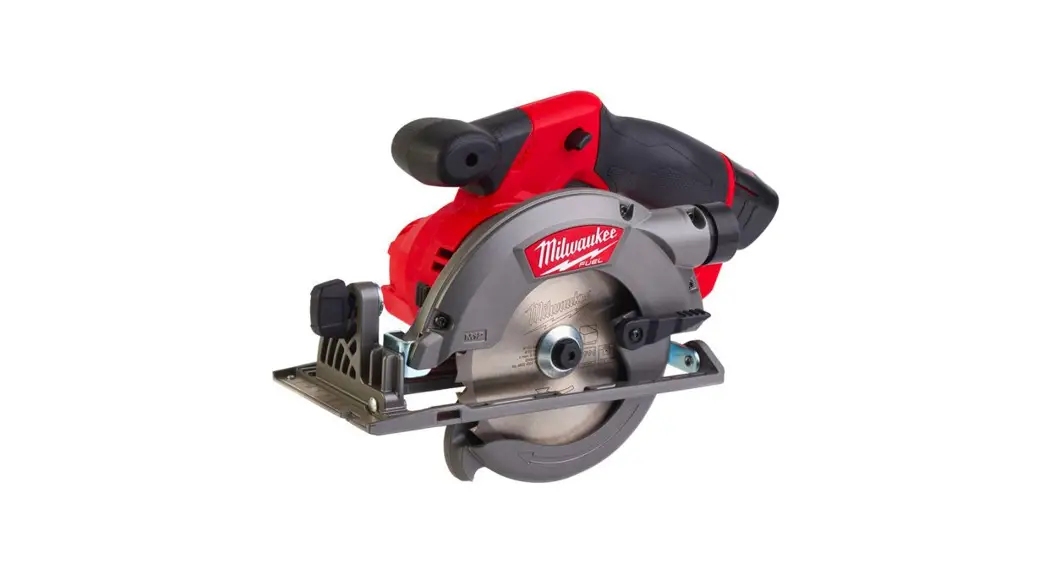
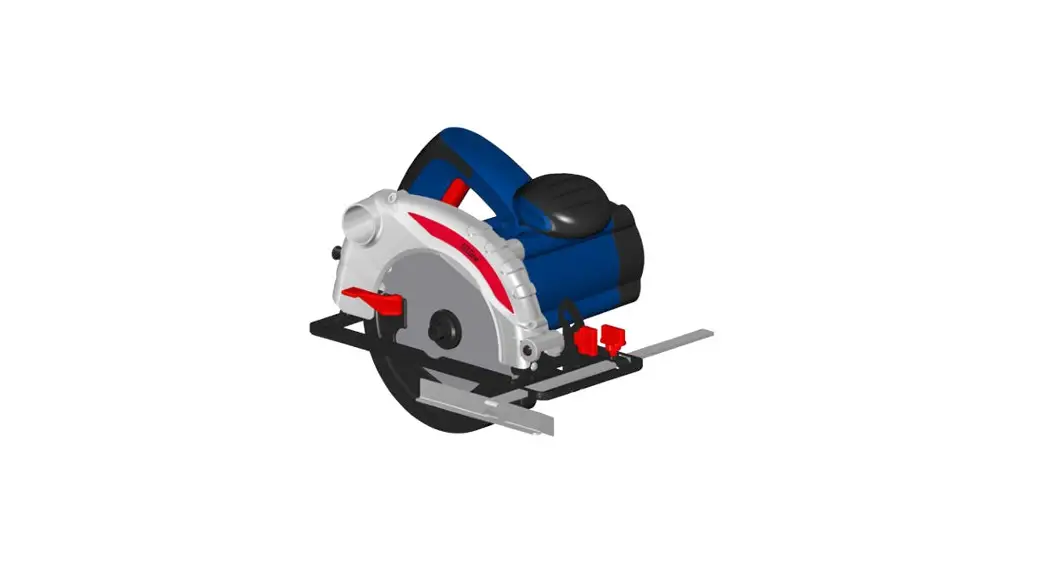
58G492 1500W Circular Saw
Product Information
Product Name: PILARKA TARCZOWA 58G492
Model Number: G.0820
Manufacturer: Unknown
Product Usage Instructions
- Before using the power tool, carefully read and keep the
original instruction manual for future reference. - To prevent kickback, hold the saw firmly with both hands and
position your arms to withstand rearward force. - Stand to one side of the saw, but ensure that kickback can be
controlled by the operator if proper precautions are taken. - Release the switch button and keep the saw away from the
material being cut, do not pull the saw backward, and check if the
cutting blade is not blocked in the material. - If the cutting blade gets jammed when the saw is restarted, it
may protrude or cause kickback in relation to the workpiece. - Additional safety instructions and precautions are necessary
when working with wood-derived materials. - Do not use a laser light as the device does not allow for laser
light usage. - The device is designed for indoor use only.
- The laser device used in the saw construction is Class 2 with a
maximum power output.
G.0820
58G492
* Czci zamienne do tego produktu kupisz w gtxservice.pl przez min. 10 lat od jego zakupu. Sklep gtxservice.pl realizuje min. 95% zamówie w skali roku.
1
PL INSTRUKCJA ORYGINALNA (OBSLUGI) …………………………………………………………………………………………………………………………………….. 5 EN TRANSLATION (USER) MANUAL………………………………………………………………………………………………………………………………………………….. 5 DE ÜBERSETZUNG (BENUTZERHANDBUCH) ……………………………………………………………………………………………………………………………………. 9 RU () …………………………………………………………………………………………………………………… 13 HU FORDÍTÁSI (FELHASZNÁLÓI) KÉZIKÖNYV …………………………………………………………………………………………………………………………………. 18 RO MANUAL DE TRADUCERE (UTILIZATOR) …………………………………………………………………………………………………………………………………… 22 UA () ………………………………………………………………………………………………………………………………. 26 CZ PEKLAD (UZIVATELSKÉ) PÍRUCKY ……………………………………………………………………………………………………………………………………….. 30 SK PREKLAD (POUZÍVATESKEJ) PRÍRUCKY …………………………………………………………………………………………………………………………………. 34 SL PREVOD (UPORABNISKI) PRIROCNIK………………………………………………………………………………………………………………………………………… 38 LT VERTIMO (NAUDOTOJO) VADOVAS …………………………………………………………………………………………………………………………………………… 42 LV TULKOSANAS (LIETOTJA) ROKASGRMATA ……………………………………………………………………………………………………………………………. 46 EE TÕLKIMISE (KASUTAJA) KÄSIRAAMAT ………………………………………………………………………………………………………………………………………. 49 BG ( )………………………………………………………………………………………………………………………….. 53 HR PRIRUCNIK ZA PRIJEVOD (KORISNIK) ………………………………………………………………………………………………………………………………………. 58 SR ()……………………………………………………………………………………………………………………………… 62 GR () ……………………………………………………………………………………………………………………………………….. 66 ES MANUAL DE TRADUCCIÓN (USUARIO) ………………………………………………………………………………………………………………………………………. 71 IT MANUALE DI TRADUZIONE (UTENTE) …………………………………………………………………………………………………………………………………………. 75 NL VERTALING (GEBRUIKERSHANDLEIDING)…………………………………………………………………………………………………………………………………. 79 FR MANUEL DE TRADUCTION (UTILISATEUR) ………………………………………………………………………………………………………………………………… 83
2
1
2
21 3 4
13 12 11
10
22
5 6
7 8 9
3
A
B
18
C
16
PRESS
15
23
D
E 4
19
12 11 9
6
5 9
0
PL INSTRUKCJA ORYGINALNA (OBSLUGI)
PILARKA TARCZOWA 58G492
UWAGA: PRZED PRZYSTPIENIEM DO UYTKOWANIA ELEKTRONARZDZIA NALEY UWANIE PRZECZYTA NINIEJSZ INSTRUKCJ I ZACHOWA J DO DALSZEGO WYKORZYSTANIA.
SZCZEGÓLOWE PRZEPISY BEZPIECZESTWA
SZCZEGÓLOWE BEZPIECZESTWO UYTKOWANIA PILAREK TARCZOWYCH WRZYNAJCYCH BEZ KLINA ROZSZCZEPIA- JCEGO
Procedura cicia · ZAGROENIE: Trzyma rce z dala od obszaru cicia i tarczy
tncej. Trzyma drug rk na rkojeci pomocniczej lub na obudowie silnika. Jeli obiema rkami trzyma si pilark, to zmniejsza si ryzyko zranienia tarcz tnc. · Nie siga rk pod spód przedmiotu obrabianego. Oslona nie moe ochroni ci przed obracajc si tarcz tnc poniej przedmiotu obrabianego
· Nastawi glboko cicia odpowiedni do gruboci przedmiotu obrabianego. Zaleca si, aby tarcza tnca wystawala poniej citego materialu mniej ni na wysoko zba.
· Nigdy nie trzyma przedmiotu przecinanego w rkach lub na nodze. Zamocowa przedmiot obrabiany do solidnej podstawy. Dobre zamocowanie przedmiotu obrabianego jest wane, aby unikn niebezpieczestwa kontaktu z cialem, zakleszczenia obracajcej si tarczy tncej lub utraty kontroli cicia.
· Trzyma pilark za izolowane powierzchnie przeznaczone do tego celu podczas pracy, przy której obracajca si tarcza tnca moe mie styczno z przewodami bdcymi pod napiciem lub z przewodem zasilajcym pilark. Zetknicie si z ,,przewodami pod napiciem” metalowych czci elektronarzdzia moe spowodowa poraenie prdem operatora.
· Podczas cicia wzdlunego zawsze uywa prowadnicy do cicia wzdlunego lub prowadnicy do krawdzi. Polepsza to dokladno cicia i zmniejsza moliwo zakleszczenia obracajcej si tarczy tncej.
· Zawsze uywa tarczy tncej o prawidlowych wymiarach otworów osadczych. Tarcze tnce, które nie pasuj do gniazda mocujcego mog pracowa mimorodowo, powodujc utrat kontroli pracy.
· Nigdy nie stosowa do zamocowania tarczy tncej uszkodzonych lub niewlaciwych podkladek lub rub. Podkladki i ruby mocujce tarcz tnc zostaly specjalnie zaprojektowane dla pilarki, aby zapewni optymalne funkcjonowanie i bezpieczestwo uytkowania.
Przyczyny odrzutu i zapobieganie odrzutowi.
· Odrzut tylny to nagle podniesienie i wycofanie pilarki w kierunku do operatora w linii cicia, spowodowane zacinit lub niewlaciwie prowadzon tarcz tnc.
· Kiedy tarcza tnca pilarki jest zahaczona lub zacinita w szczelinie, tarcza tnca zatrzymuje si i reakcja silnika powoduje gwaltowny ruch pilarki do tylu w kierunku do operatora.
· Jeli tarcza tnca jest zwichrowana lub le ustawiona w przecinanym elemencie, zby tarczy tncej po wyjciu z materialu mog uderzy górn powierzchni citego materialu powodujc podniesienie tarczy tncej a zarazem pilarki i odrzut w kierunku operatora.
Odrzut tylny jest skutkiem niewlaciwego uywania pilarki lub
nieprawidlowych procedur lub warunków eksploatacji i mona go
unikn przyjmujc stosowne rodki ostronoci.
·
Trzyma pilark obydwoma rkami mocno, z
ramionami ustawionymi tak, aby wytrzyma sil odrzutu
tylnego. Przyj pozycj ciala z jednej strony pilarki, ale
nie w linii cicia. · Odrzut tylny moe spowodowa gwaltowny ruch pilarki do tylu, ale sila
odrzutu tylnego moe by kontrolowana przez operatora, jeli zachowano odpowiednie rodki ostronoci.
· Kiedy tarcza tnca zacina si lub kiedy przerywa cicie z
jakiego powodu naley zwolni przycisk lcznika i trzyma
pilark nieruchomo w materiale dopóki tarcza tnca nie
zatrzyma si calkowicie. Nigdy nie próbowa usunicia tarczy
tncej z materialu citego, ani nie cign pilarki do tylu,
dopóki tarcza tnca porusza si moe spowodowa odrzut tylny. Zbada i podejmowa czynnoci korygujce, w celu eliminacji przyczyny zacierania si tarczy tncej.
· W przypadku ponownego uruchomienia pilarki w elemencie
obrabianym wyrodkowa tarcz tnc w rzazie i sprawdzi, czy zby tarczy tncej nie s zablokowane w materiale. Jeli tarcza tnca zacina si, kiedy pilarka jest ponownie uruchamiana, moe
5
si ona wysun lub spowodowa odrzut tylny w stosunku do elementu obrabianego.
· Podtrzymywa due plyty, aby zminimalizowa ryzyko zacinicia i odrzutu tylnego pilarki. Due plyty maj tendencj do uginania si pod ich wlasnym ciarem. Podpory powinny by umieszczone pod plyt po obydwu stronach, w pobliu linii cicia i pobliu krawdzi plyty.
· Nie uywa tpych lub uszkodzonych tarcz tncych. Nieostre lub niewlaciwie ustawione zby tarczy tncej tworz wski rzaz powodujcy nadmierne tarcie, zacicie tarczy tncej i odrzut tylny.
· Nastawi pewnie zaciski glbokoci cicia i kta pochylenia, przed wykonaniem cicia. Jeli nastawy pilarki zmieniaj si podczas cicia moe to spowodowa zakleszczenie i odrzut tylny
· Szczególnie uwaa podczas wykonywania cicia wglbnego w ciankach dzialowych. Tarcza tnca moe ci inne przedmioty niewidoczne z zewntrz, powodujc odrzut tylny.
Funkcje oslony dolnej · Sprawdzi przed kadym uyciem oslon doln, czy jest
prawidlowo nasunita. Nie uywa pilarki, jeli oslona dolna nie porusza si swobodnie i nie zmyka si natychmiast. Nigdy nie przytwierdza lub nie pozostawia oslony dolnej w otwartym poloeniu. Jeli pilarka zostanie przypadkowo upuszczona, oslona dolna moe zosta zgita. Podnosi oslon doln za pomoc uchwytu odcigajcego i upewni si czy porusza si ona swobodnie i nie dotyka do tarczy tncej lub innej czci urzdzenia dla kadego nastawienia kta i glbokoci cicia. · Sprawdzi dzialanie spryny oslony dolnej. Jeli oslona i spryna nie dzialaj wlaciwie, powinny by naprawione przed uyciem. Zadzialanie oslony dolnej moe zosta spowolnione wskutek uszkodzonych czci, lepkich osadów, lub nawarstwienia odpadów. · Dopuszcza si rczne wycofanie oslony dolej tylko przy specjalnych ciciach jak ,,cicie wglbne” i ,,cicie zloone”. Podnosi oslon doln za pomoc uchwytu odcigajcego i kiedy tarcza tnca zaglbi si w material, oslona dolna powinna by zwolniona. W przypadku wszystkich innych ci zaleca si, aby oslona dolna dzialala samoczynnie. · Zawsze obserwowa, czy oslona dolna zakrywa tarcz tnc przed odloeniem pilarki na stól warsztatowy lub podlog. Nieoslonita obracajca si tarcza tnca bdzie powodowala, e pilarka bdzie cofala si do tylu tnc cokolwiek na swej drodze. Naley wzi pod uwag czas potrzebny do zatrzymania si tarczy tncej po wylczeniu.
Dodatkowe instrukcje bezpieczestwa rodki ostronoci
· Nie uywaj uszkodzonych lub zdeformowanych tarcz tncych. · Nie uywaj ciernic. · Stosuj tylko tarcze tnce zalecane przez producenta, które
spelniaj wymagania normy EN 847-1. · Nie stosowa tarcz tncych nie posiadajcych zbów z
zakoczeniem z wglików spiekanych. · Pyl pochodzcy z niektórych rodzajów drewna moe by
niebezpieczny dla zdrowia. Bezporedni kontakt fizyczny z pylami moe powodowa reakcje alergiczne i/lub choroby ukladu oddechowego u operatora lub osób postronnych. Pyly dbu i buku s uwaane za rakotwórcze, zwlaszcza w zwizku z substancjami do obróbki drewna (impregnaty do drewna). · Stosuj rodki ochrony osobistej takie jak: · ochronniki sluchu, aby zredukowa ryzyko utraty sluchu; · oslon oczu; · ochron dróg oddechowych, aby zredukowa ryzyko wdychania szkodliwych pylów; · rkawice do obslugi tarcz tncych oraz innych chropowatych i ostrych materialów (tarcze tnce powinny by trzymane za otwór gdy tylko to jest moliwe); · Podlczy system odcigu pylów podczas cicia drewna. · Bezpieczna praca
· Naley dobra tarcz tnc do rodzaju materialu, który ma by city. · Nie wolno uywa pilarki do cicia materialów innych ni drewno lub
drewnopochodne.
· Nie wolno uywa pilarki bez oslony lub gdy jest ona zablokowana. · Podloga w okolicy pracy maszyn powinna by dobrze utrzymana bez
lunych materialów i wystajcych elementów. · Naley zapewni odpowiednie owietlenie miejsca pracy. · Pracownik obslugujcy maszyn powinien by odpowiednio
przeszkolony w zakresie uytkowania, obslugi i pracy maszyn. · Stosowa jedynie ostre tarcze tnce. · Zwraca uwag na maksymaln prdko zaznaczon na tarczy
tncej. · Upewni si, e zastosowane czci s zgodne z zaleceniami
wytwórcy. · Blyszczca blacha stalowa (lub inne materialy z powierzchni
odbijajc wiatlo) nie pozwala na stosowanie wiatla laserowego, gdy
mogloby wówczas doj do niebezpiecznego odbicia wiatla w kierunku operatora, osób trzecich lub zwierzt. · Nie wolno wymienia zespolu laserowego na urzdzenie innego typu. Wszelkie naprawy powinny by wykonywane przez producenta lub osob autoryzowan.
UWAGA: Regulacje inne ni wymienione w niniejszej instrukcji gro niebezpieczestwem naraenia si na promieniowanie laserowe!
UWAGA! Urzdzenie sluy do pracy wewntrz pomieszcze.
Mimo zastosowania konstrukcji bezpiecznej z samego zaloenia, stosowania rodków zabezpieczajcych i dodatkowych rodków ochronnych, zawsze istnieje ryzyko szcztkowe doznania urazów podczas pracy.
Objanienie zastosowanych piktogramów:
· Odlcz pilark od zasilania podczas wykonywania czynnoci konserwacyjnych.
· Jeli przewód zasilajcy ulegnie uszkodzeniu podczas pracy, natychmiast odlcz zasilanie. NIE NALEY DOTYKA PRZEWODU ZASILAJCEGO PRZED ODLCZENIEM ZASILANIA.
· Jeli pila jest wyposaona w laser, nie wolno wymienia lasera na inny typ, a wszelkie naprawy musz by wykonywane przez
· serwis. Nie kieruj wizki lasera na ludzi ani zwierzta. · Nie uywaj tego narzdzia w trybie stacjonarnym. Nie jest · przeznaczony do uytku ze stolem do cicia. · Zamocuj obrabiany material na stabilnej powierzchni i zabezpiecz
zaciskiem lub imadlem, aby wyeliminowa przesuwanie. Ten rodzaj mocowania przedmiotu obrabianego jest bezpieczniejszy · ni trzymanie przedmiotu w rku. · Poczekaj, a ostrze zatrzyma si calkowicie, zanim odloysz narzdzie. Ostrze tnce moe si zaci i spowodowa utrat kontroli nad narzdziem.
ZASADY BEZPIECZESTWA DLA URZDZENIA LASEROWEGO Urzdzenie laserowe zastosowane w konstrukcji pilarki jest klasy 2, o maksymalnej mocy <1 mW, przy dlugoci fali promieniowania = 650 nm. Takie urzdzenie nie jest niebezpieczne dla wzroku, jednak nie wolno patrze bezporednio w kierunku ródla promieniowania (zagroenie chwilow lepot).
OSTRZEENIE. Nie wolno patrze bezporednio na wizk wiatla laserowego. Grozi to niebezpieczestwem. Naley przestrzega niej podanych zasad bezpieczestwa. · Urzdzenie laserowe naley uytkowa zgodnie z zaleceniami
producenta. · Nigdy nie wolno umylnie i nieumylnie kierowa wizki laserowej w
kierunku ludzi, zwierzt lub obiektowi innemu ni material obrabiany. · Nie wolno doprowadzi do przypadkowego skierowania wizki wiatla laserowego ku oczom osób postronnych i zwierzt przez okres dluszy ni 0,25 s na przyklad kierujc wizk wiatla poprzez lusterka. · Zawsze trzeba upewni si czy wiatlo lasera jest skierowane na material, który nie ma powierzchni odbijajcych. · · Dlugo fali: 650 nm; Moc: < 1 mW EN 60825-1:2014
2. Urzdzenie z izolacj klasy drugiej 3. Uywaj rodki ochrony osobistej (gogle ochronne,
ochronniki sluchu, mask przeciwpylow) 4. Odlcz przewód zasilajcy przed rozpoczciem
czynnoci obslugowych lub naprawczych. 5. Chroni przed deszczem. 6. Nie dopuszcza dzieci do urzdzenia. 7. Nie zbliaj koczyn do elementów tncych! 8. Zagroenie na skutek odrzutu. 9. Uwaga ryzyko skaleczenia dloni, odcicia palców. 10. Uwaga: Promieniowanie laserowe.
BUDOWA I ZASTOSOWANIE
Pilarka tarczowa jest elektronarzdziem typu rcznego z izolacj II klasy. Jest ona napdzana jednofazowym silnikiem komutatorowym. Tego typu elektronarzdzie jest szeroko stosowane do przecinania drewna i materialów drewnopochodnych. Nie naley stosowa jej do przecinania drewna opalowego. Próby uycia pilarki do innych celów ni podano bdzie traktowane jako uytkowanie niewlaciwe. Pilark naley wykorzystywa wylcznie z odpowiednimi tarczami tncymi z zbami z nakladkami z wglików spiekanych. Pilarka tarczowa zostala zaprojektowana do lekkich prac w warsztatach uslugowych oraz wszelkich prac z zakresu samodzielnej dzialalnoci amatorskiej (majsterkowanie).
Nie wolno uywa elektronarzdzia niezgodnie z jego przeznaczeniem.
OPIS STRON GRAFICZNYCH
Ponisza numeracja odnosi si do elementów urzdzenia
przedstawionych na stronach graficznych niniejszej instrukcji.
1. Króciec odprowadzania pylu
2. Oslona górna
3. Kontrolka sygnalizujca podlczenie napicia
4. Dwignia oslony dolnej
5. Pokrtlo blokady ustawienia stopy
6. Pokrtlo blokady prowadnicy równoleglej
7. Wskanik linii cicia dla 45°
8.
Wskanik linii cicia dla 0°
9. Stopa
10. Tarcza tnca
11. Podkladka kolnierzowa
12. ruba mocujca tarcz tnc
13. Oslona dolna
14. Rkoje przednia
15. Wlcznik
16. Przycisk blokady wlcznika
17. Rkoje zasadnicza
18. Dwignia blokady glbokoci cicia
19. Przycisk blokady wrzeciona
21. Wlcznik lasera
22. Laser
23. Prowadnica równolegla
* Mog wystpowa rónice midzy rysunkiem a wyrobem.
WYPOSAENIE I AKCESORIA 1. Prowadnica równolegla 2. Klucz szecioktny
PRZYGOTOWANIE DO PRACY
– 1 szt. – 1 szt.
1. Przeczytaj instrukcj obslugi, przestrzegaj ostrzee i warunków bezpieczestwa w niej zawartych.
USTAWIENIE GLBOKOCI CICIA
Glboko cicia pod ktem prostym mona regulowa w zakresie od 0 do 65 mm · Poluzowa dwigni blokady glbokoci cicia (18). · Ustawi podan glboko cicia (wykorzystujc podzialk).
Zablokowa dwigni blokady glbokoci cicia (18) (rys. A). MONTA PROWADNICY DO CICIA RÓWNOLEGLEGO Przy ciciu materialu na wskie kawalki naley poslugiwa si prowadnic równolegl. Prowadnica moe by mocowana z prawej lub lewej strony elektronarzdzia. · Poluzowa pokrtlo blokady prowadnicy równoleglej (6). · Wloy listw prowadnicy równoleglej (23) w dwa otwory w
stopie pilarki (9). · Ustawi podan odleglo (wykorzystujc podzialk). · Zamocowa prowadnic równolegl (23) za pomoc pokrtla
blokady prowadnicy równoleglej (6) (rys. B).
Prowadnica równolegla (23) moe by wykorzystywana równie do
2
cicia pod skosem w zakresie od 00 do 450.
Nigdy nie wolno dopuci, aby za pracujc pilark znajdowala si rka czy palce. W przypadku wystpienia zjawiska odrzutu pilarka moe opa na rk, co moe by przyczyn powanego uszkodzenia ciala.
ODCHYLANIE OSLONY DOLNEJ
Oslona dolna (13) tarczy tncej (10) ulega automatycznemu odsuwaniu w miar styku z przecinanym materialem. Aby odsun j rcznie naley przesun dwigni oslony dolnej (4).
ODPROWADZANIE PYLU
Pilarka tarczowa wyposaona jest w króciec odprowadzania pylu (1) umoliwiajcy odprowadzanie powstajcych przy ciciu wiórów i pylu.
PRACA / USTAWIENIA
WLCZANIE / WYLCZANIE
Napicie sieci musi odpowiada wielkoci napicia podanego na tabliczce znamionowej pilarki. Podczas uruchamiania pilark naley trzyma obiema rkami, gdy moment obrotowy silnika moe spowodowa nie kontrolowany obrót elektronarzdzia.
Naley pamita, e po wylczeniu pilarki jej elementy ruchome jeszcze przez jaki czas wiruj.
Pilarka jest wyposaona w przycisk blokady wlcznika (16), zabezpieczajcy przed przypadkowym uruchomieniem.
Wlczanie: · Wcisn przycisk blokady wlcznika (16) (rys. C). · Wcisn przycisk wlcznika (15).
Wylczanie: · Zwolni nacisk na przycisk wlcznika (15).
KONTROLKA SYGNALIZUJCA PODLCZENIE NAPICIA W momencie podlczenia pilarki do gniazda zasilajcego kontrolka sygnalizujca podlczenie napicia (3) zostaje podwietlona.
DZIALANIE LASERA
Nigdy nie wolno patrze bezporednio w promie lasera lub jego odbicie od powierzchni lustrzanej i nie wolno promienia lasera kierowa ku jakiejkolwiek osobie.
wiatlo promienia lasera pozwala na lepsz kontrol linii uzyskiwanego cicia. Generator lasera (22) stanowicy wyposaenie pilarki przewidziany jest do uytku przy ciciu precyzyjnym. Zespól urzdzenia laserowego naley wylcza jeli laser nie jest wykorzystywany. · Wcisn przycisk wlcznika lasera (21) w pozycj wlczony. · Laser zacznie emitowa czerwon lini, widoczn na materiale. · Cicie naley wykonywa wzdlu tej linii. · Po zakoczeniu cicia wylczy laser.
Pyl powstaly przy ciciu moe przytlumi wiatlo lasera dlatego te, co jaki czas trzeba oczyci soczewk projektora laser.
CICIE
Lini cicia wyznacza wskanik linii cicia (7) lub (8). · Przy rozpoczynaniu pracy zawsze naley trzyma pilark pewnie,
obiema rkami z wykorzystaniem obu rkojeci. · Pilark mona wlcza tylko wtedy, gdy jest ona odsunita od
materialu przewidzianego do cicia. · Nie wolno naciska pilarki z nadmiern sil, wywiera na ni
nacisk umiarkowany, cigly. · Po zakoczeniu cicia zezwoli, aby tarcza tnca calkowicie si
zatrzymala. · Jeli cicie zostanie przerwane przed zamierzonym zakoczeniem,
podejmujc kontynuacj naley najpierw po uruchomieniu pilarki odczeka, a osignie ona swoj maksymaln prdko obrotow i nastpnie ostronie wprowadzi tarcz tnc w rzaz w przecinanym materiale. · Przy ciciu w poprzek wlókien materialu (drewna) niekiedy wlókna maj tendencj do unoszenia si ku górze i odrywania (przesuw pilarki z mal prdkoci minimalizuje wystpowanie tej tendencji).
· Upewni si czy oslona dolna w swoim ruchu dochodzi do poloenia skrajnego.
· Przed przystpieniem do cicia zawsze naley si upewni czy pokrtlo blokady glbokoci cicia i pokrtla blokady ustawienia stopy pilarki s wlaciwie dokrcone.
· Do wspólpracy z pilark naley stosowa wylcznie tarcze tnce o wlaciwej rednicy zewntrznej i rednicy otworu osadzenia tarczy tncej.
· Material przecinany powinien by unieruchomiony w sposób pewny.
· Szersz cz stopy pilarki naley umieszcza na tej czci materialu, która nie jest odcinana.
Jeli wymiary materialu s niewielkie, material naley unieruchomi za pomoc cisków stolarskich. Jeli stopa pilarki nie przesuwa si po obrabianym materiale, lecz jest uniesiona to zachodzi niebezpieczestwo zjawiska odrzutu.
Odpowiednie unieruchomienie przecinanego materialu i
pewne trzymanie pilarki zapewniaj peln kontrol pracy
elektronarzdziem,
co
pozwala
na
uniknicie
niebezpieczestwa uszkodzenia ciala. Nie wolno podejmowa
próby podtrzymywania krótkich kawalków materialu rk.
CICIE POD SKOSEM
· Poluzowa pokrtlo blokady ustawienia stopy (5) (rys. D). · Ustawi stop (9) pod podanym ktem (od 00 do 450) korzystajc z
podzialki. · Dokrci pokrtlo blokady ustawienia stopy (5).
Naley pamita, e przy ciciu pod skosem wystpuje wiksze niebezpieczestwo zaistnienia zjawiska odrzutu (wiksza moliwo zakleszczenia tarczy tncej), dlatego szczególnie naley zwraca uwag, aby stopa pilarki przylegala cal powierzchni do obrabianego materialu. Cicie wykonywa ruchem plynnym.
CICIE POPRZEZ WCINANIE SI W MATERIAL
Przed przystpieniem do regulacji odlczy pilark od zasilania.
·
Ustawi podan glboko cicia odpowiadajc
gruboci przecinanego materialu.
· Nachyli pilark tak, aby przednia krawd stopy (9) pilarki byla oparta
o material przewidziany do cicia a znacznik 00 do cicia
prostopadlego znajdowal si na linii przewidywanego cicia.
· Po ustawieniu pilarki w miejscu rozpoczcia cicia podnie
oslon doln (13) za pomoc dwigni oslony dolnej (4) (tarcza
tnca pilarki uniesiona nad materialem).
· Uruchomi elektronarzdzie i odczeka, a tarcza tnca osignie peln
prdko obrotow.
· Stopniowo opuszcza pilark wglbiajc si tarcz tnc w
material (podczas tego ruchu przednia krawd stopy pilarki
powinna styka si z powierzchni materialu).
· Gdy tarcza tnca rozpocznie cicie, zwolni oslon doln.
· Gdy stopa pilarki cal powierzchni spocznie na materiale
kontynuowa cicie, przesuwajc pilark do przodu.
· Nigdy nie wolno cofa pilarki z wirujc tarcz tnc, gdy grozi to
zaistnieniem zjawiska odrzutu tylnego.
· Wcinanie zakoczy w sposób odwrotny do jego rozpoczynania
obracajc pilark wokól linii styku przedniej krawdzi stopy pilarki z
obrabianym materialem.
· Zezwoli, aby po wylczeniu pilarki jej tarcza tnca calkowicie
zatrzymala si przed wysuniciem pilarki z materialu.
· Jeli wystpuje taka potrzeba, to zaoblenia naroy naley
wykoczy za pomoc pilarki brzeszczotowej lub pily rcznej.
CICIE LUB ODCINANIE DUYCH KAWALKÓW MATERIALU
Podczas przecinania wikszych plyt lub desek naley je odpowiednio podeprze, w celu uniknicia ewentualnego szarpnicia tarczy tncej (zjawisko odrzutu), wskutek zakleszczenia tarczy tncej, w rzazie materialu.
OBSLUGA I KONSERWACJA
Przed przystpieniem do jakichkolwiek czynnoci zwizanych z instalowaniem, regulacj, napraw, lub obslug naley wyj wtyczk przewodu zasilajcego z gniazdka sieciowego.
KONSERWACJA I PRZECHOWYWANIE
3
· Zaleca si czyszczenie urzdzenia bezporednio po kadorazowym uyciu.
· Do czyszczenia nie naley stosowa wody lub innych cieczy. · Urzdzenie naley czyci za pomoc pdzla lub przedmucha
spronym powietrzem o niskim cinieniu. · Nie uywa adnych rodków czyszczcych ani rozpuszczalników, gdy
mog one uszkodzi czci wykonane z tworzywa sztucznego. · Regularnie naley czyci szczeliny wentylacyjne w obudowie
silnika, aby nie dopuci do przegrzania urzdzenia. Nie wolno czyci szczelin wentylacyjnych wsuwajc do nich elementy ostre jak wkrtaki czy tym podobne przedmioty. · W przypadku uszkodzenia przewodu zasilajcego, naley go wymieni na przewód o takich samych parametrach. Czynno t naley powierzy wykwalifikowanemu specjalicie lub odda urzdzenie do serwisu. · W przypadku wystpowania nadmiernego iskrzenia na komutatorze zleci sprawdzenie stanu szczotek wglowych silnika osobie wykwalifikowanej.
· Podczas normalnej eksploatacji tarcza tnca ulega po jakim czasie stpieniu. Oznak stpienia tarczy tncej jest konieczno zwikszenia nacisku przy przesuwaniu pilarki podczas cicia.
· Jeli zostanie stwierdzone uszkodzenie tarczy tncej to naley j bezzwlocznie wymieni.
· Tarcza tnca powinna by zawsze ostra. · Urzdzenie zawsze naley przechowywa w miejscu suchym,
niedostpnym dla dzieci.
WYMIANA TARCZY TNCEJ · Za pomoc dolczonego klucza odkrci rub mocujc tarcz
tnc (12) pokrcajc w lewo. · Aby zapobiec obracaniu si wrzeciona pilarki, w czasie odkrcania
ruby mocujcej tarcz tnc naley zablokowa wrzeciono przyciskiem blokady wrzeciona (19) (rys. E).
· Zdemontowa zewntrzn podkladk kolnierzow (11). · Za pomoc dwigni oslony dolnej (4) przesun oslon doln (13) tak,
aby maksymalnie schowala si w oslonie górnej (2) (w tym czasie naley sprawdzi stan i dzialanie spryny odcigajcej oslon doln). · Wysun tarcz tnc (10) poprzez szczelin w stopie pilarki (9). · Ustawi now tarcz tnc w poloeniu, w którym bdzie pelna zgodno ustawienia zbów tarczy tncej i umieszczonej na niej strzalki z kierunkiem pokazywanym przez strzalk umieszczon na oslonie górnej. · Wsun tarcz tnc poprzez szczelin w stopie pilarki i zamontowa j na wrzecionie tak, aby byla docinita do powierzchni kolnierza wewntrznego i centrycznie osadzona na jego podtoczeniu.
· Zamontowa zewntrzn podkladk kolnierzow (11) i dokrci rub mocujc tarcz tnc (12) pokrcajc w prawo.
Naley zwróci uwag, aby zamontowa tarcz tnc zbami ustawionymi we wlaciwym kierunku. Kierunek obrotu wrzeciona elektronarzdzia pokazuje strzalka na obudowie pilarki.
Naley zachowa szczególn uwag przy chwytaniu tarczy tncej. Trzeba korzysta z rkawic ochronnych w celu zapewnienia ochrony rkom, przed kontaktem z ostrymi zbami tarczy tncej.
WYMIANA SZCZOTEK WGLOWYCH
Zuyte (krótsze ni 5 mm), spalone lub pknite szczotki wglowe silnika naley natychmiast wymieni. Zawsze dokonuje si jednoczenie wymiany obu szczotek wglowych.
Czynno wymiany szczotek wglowych naley powierzy wylcznie osobie wykwalifikowanej wykorzystujc czci oryginalne.
Wszelkiego rodzaju usterki powinny by usuwane przez autoryzowany serwis producenta.
PARAMETRY TECHNICZNE
DANE ZNAMIONOWE
Pilarka tarczowa 58G492 Parametr Napicie zasilania Czstotliwo zasilania Moc znamionowa
Warto 230 V AC
50 Hz 1500 W
Prdko obrotowa tarczy tncej
(bez obcienia)
rednica zewntrzna tarczy tncej
rednica wewntrzna tarczy tncej
Maksymalna
Pod
glboko cicia
ktem
90°
Pod
ktem 45°
Klasa lasera
Moc lasera
Dlugo fali promieniowania
Klasa ochronnoci
Stopie ochronnoci IP
Masa
Rok produkcji
5800 min-1
185 mm 20 mm 65 mm
43 mm
2 < 1 mW = 650 nm
II IPX0 4,3 kg
DANE DOTYCZCE HALASU I DRGA
Poziom
cisnienia
akustycznego
Poziom mocy akustycznej
Warto przypiesze drga (uchwyt przedni)
Warto przypiesze drga (uchwyt tylny)
LpA= 98,99 dB(A) K= 3
dB(A)
LwA= 109,99 dB(A) K= 3
dB(A) ah= 3,372 m/s2 K= 1,5
m/s2 ah= 4,553 m/s2 K=
1,5 m/s2
Informacje na temat halasu i wibracji Poziom emitowanego halasu przez urzdzenie opisano poprzez: poziom emitowanego cinienia akustycznego LpA oraz poziom mocy akustycznej LwA (gdzie K oznacza niepewno pomiaru). Drgania emitowane przez urzdzenie opisano poprzez warto przypiesze drga ah (gdzie K oznacza niepewno pomiaru). Podane w niniejszej instrukcji: poziom emitowanego cinienia akustycznego LpA, poziom mocy akustycznej LwA oraz warto przypiesze drga ah zostaly zmierzone zgodnie z norm EN 62841-1:2015. Podany poziom drga ah moe zosta uyty do porównywania urzdze oraz do wstpnej oceny ekspozycji na drgania.
Podany poziom drga jest reprezentatywny jedynie dla podstawowych zastosowa urzdzenia. Jeeli urzdzenie zostanie uyte do innych zastosowa lub z innymi narzdziami roboczymi, poziom drga moe ulec zmianie. Na wyszy poziom drga bdzie wplywa niewystarczajca czy zbyt rzadka konserwacja urzdzenia. Podane powyej przyczyny mog spowodowa zwikszenie ekspozycji na drgania podczas calego okresu pracy.
Aby dokladnie oszacowa ekspozycj na drgania, naley uwzgldni okresy kiedy urzdzenie jest wylczone lub kiedy jest wlczone ale nie jest uywane do pracy. Po dokladnym oszacowaniu wszystkich czynników lczna ekspozycja na drgania moe okaza si znacznie nisza. W celu ochrony uytkownika przed skutkami drga naley wprowadzi dodatkowe rodki bezpieczestwa, takie jak: cykliczna konserwacja urzdzenia i narzdzi roboczych, zabezpieczenie odpowiedniej temperatury rk oraz wlaciwa organizacja pracy.
OCHRONA RODOWISKA Produktów zasilanych elektrycznie nie naley wyrzuca wraz z domowymi odpadkami, lecz odda je do utylizacji w odpowiednich zakladach. Informacji na temat utylizacji udzieli sprzedawca produktu lub miejscowe wladze. Zuyty sprzt elektryczny i elektroniczny zawiera substancje nieobojtne dla rodowiska naturalnego. Sprzt nie poddany recyclingowi stanowi potencjalne zagroenie dla rodowiska i zdrowia ludzi.
,,Grupa Topex Spólka z ograniczon odpowiedzialnoci” Spólka komandytowa z siedzib w Warszawie, ul. Pograniczna 2/4 (dalej: ,,Grupa Topex”) informuje, i wszelkie prawa autorskie do treci niniejszej instrukcji (dalej: ,,Instrukcja”), w tym m.in. jej tekstu, zamieszczonych fotografii, schematów, rysunków, a take jej kompozycji, nale wylcznie do Grupy Topex i podlegaj ochronie prawnej zgodnie z ustaw z dnia 4 lutego 1994 roku, o prawie autorskim i prawach pokrewnych (tj. Dz. U. 2006 Nr
90 Poz 631 z pón. zm.). Kopiowanie, przetwarzanie, publikowanie, modyfikowanie w celach komercyjnych caloci Instrukcji jak i poszczególnych jej elementów, bez zgody Grupy Topex wyraonej na pimie, jest surowo zabronione i moe spowodowa pocignicie do odpowiedzialnoci cywilnej i karnej.
GWARANCJA I SERWIS
4
Serwis Centralny GTX Service Sp. z o.o. Sp.k.
is important to avoid the danger of contact with the body, jamming of
ul. Pograniczna 2/4 tel. +48 22 364 53 50 02-285 Warszawa e-mail
the rotating cutting disc or loss of cutting control.
· Hold the saw by the insulated surfaces intended for this
Sie Punktów Serwisowych do napraw gwarancyjnych i pogwarancyjnych dostpna na platformie internetowej gtxservice.pl Zeskanuj QR kod i wejd na gtxservice.pl
purpose during work where the rotating cutting wheel may come into contact with live wires or the saw’s power cord. Contact with “live wires” of metal parts of the power tool may cause the operator to receive an electric shock.
· Always use a slitting guide or edge guide when slitting. This
improves cutting accuracy and reduces the possibility of jamming of the
rotating cutting disc.
· Always use a cutting disc with the correct size of mounting holes.
Cutting discs that do not fit into the mounting slot may run
eccentrically, causing a loss of work control.
Deklaracja zgodnoci WE Producent: Grupa Topex Sp. Z o.o. Sp.k., ul. Pograniczna 2/4 02-285
Warszawa
Wyrób: Pilarka tarczowa Model: 58G492
Nazwa handlowa: GRAPHITE
Numer seryjny: 00001 ÷ 99999 Niniejsza deklaracja zgodnoci wydana zostaje na wylczn odpowiedzialno producenta. Opisany wyej wyrób jest zgodny z nastpujcymi dokumentami: Dyrektywa Maszynowa 2006/42/WE
· Never use damaged or inappropriate washers or screws to attach the cutting disc. The washers and bolts securing the cutting disc have been specially designed for the saw to ensure optimum function and safety in use.
Causes of discard and prevention of discard.
· Rear kickback is the sudden lifting and withdrawal of the saw towards the operator in the line of cut, caused by a jammed or improperly guided cutting blade.
· When the saw blade is snagged or clamped in a slot, the cutting disc stops and the motor reaction causes the saw to move rapidly backwards towards the operator.
Dyrektywa o Kompatybilnoci Elektromagnetycznej 2014/30/UE Dyrektywa RoHS 2011/65/UE zmieniona Dyrektyw 2015/863/UE Oraz spelnia wymagania norm:
EN 62841-1:2015; EN 62841-2-5:2014;
· If the cutting disc is twisted or misaligned in the workpiece being cut, the teeth of the cutting disc, on exiting the material, may strike the upper surface of the material being cut, causing the cutting disc and therefore the saw to lift and kick back towards the operator.
EN 55014-1:2017; EN 55014-2:2015; EN IEC 61000-3-2:2019; EN
Rear kickback is the result of improper use of the chainsaw or
61000-3-3:2013+A1;
incorrect operating procedures or conditions and can be avoided by
IEC 62321-3-1:2013; IEC 62321-4:2013+AMD1:2017; IEC 62321-
taking appropriate precautions.
5:2013;
·
Hold the saw with both hands firmly, with the arms
IEC 62321-6:2015; IEC 62321-7-1:2015; IEC 62321-7-2:2017; IEC
positioned to withstand the force of rear kickback. Assume a
62321-8:2017
body position on one side of the saw, but not in the line of cut.
Deklaracja ta odnosi si wylcznie do maszyny w stanie, w jakim zostal·a Rear kickback can cause the saw to move rapidly backwards, but the
wprowadzona do obrotu i nie obejmuje czci skladowych
force of the rear kickback can be controlled by the operator if appropriate
dodanych przez uytkownika kocowego lub przeprowadzonych przez niego precautions are taken.
póniejszych dziala.
· When the cutting disc jams or when it stops cutting for any
Nazwisko i adres osoby majcej miejsce zamieszkania lub siedzib w UE reason, release the switch button and hold the saw stationary in
upowanionej do przygotowania dokumentacji technicznej:
the material until the cutting disc stops completely. Never attempt
Podpisano w imieniu:
to remove the cutting disc from the cut material, or pull the saw
Grupa Topex Sp. Z o.o. Sp.k.
backwards as long as the cutting disc is moving can cause rear
Ul. Pograniczna 2/4
kickback. Investigate and take corrective action to eliminate the cause of
02-285 Warszawa
the cutting disc seizing.
· When restarting the saw in the workpiece, centre the cutting disc
in the cut and check that the teeth of the cutting disc are not
jammed in the material. If the cutting disc jams when the saw is
Pawel Kowalski
restarted, it may slide out or cause backlash against the workpiece.
Pelnomocnik ds. jakoci firmy GRUPA TOPEX
· Support large plates to minimise the risk of clamping and rear kickback of the saw. Large slabs tend to bow under their own
Warszawa, 2020-06-18
weight. Supports should be placed under the slab on both sides, near the cutting line and close to the edge of the slab.
EN TRANSLATION (USER) MANUAL
· Do not use dull or damaged c u t t i n g discs. Unsharpened or misaligned cutting disc teeth create a narrow cut causing excessive friction, jamming of the cutting disc and back recoil.
CIRCULAR SAW 58G492
NOTE: READ THIS MANUAL CAREFULLY BEFORE USING THE POWER TOOL AND KEEP IT FOR FUTURE REFERENCE.
· Set the cutting depth and tilt angle clamps securely before making the cut. If the saw settings change during cutting this can cause jamming and back kickback
· Be particularly careful when making plunge cuts in partitions. The
SPECIFIC SAFETY PROVISIONS
cutting disc may cut other objects not visible from the outside, causing rear recoil.
SPECIFIC SAFETY FOR CIRCULAR SAWS WITHOUT RIVING KNIFE
Cutting procedure
· DANGER: Keep hands away from the cutting area and the cutting disc. Keep the other hand on the auxiliary handle or on the motor housing. If you hold the saw with both hands, you reduce the risk of injury from the cutting disc.
· Do not reach under the underside of the workpiece with your hand. The guard cannot protect you from the rotating cutting disc below the workpiece.
· Set the depth of cut appropriate to the thickness of the workpiece. It is recommended that the cutting disc extends below the material to be cut to less than tooth height.
· Never hold the workpiece to be cut in your hands or on your leg. Fix the workpiece to a solid base. Good clamping of the workpiece
Bottom cover functions
· Check the bottom guard before each use to ensure that it is correctly retracted. Do not use the saw if the bottom guard does not move freely and does not come off immediately. Never attach or leave the bottom guard in the open position. If the saw is accidentally dropped, the bottom guard may be bent. Lift the bottom guard using the pull-back handle and ensure that it moves freely and does not touch the cutting blade or any other part of the machine for each angle and depth of cut setting.
· Check the function of the bottom guard spring. If the guard and spring are not working properly, they should be repaired before use. Triggering of the bottom guard can be slowed down by damaged parts, sticky deposits, or build-up of waste.
· Manual withdrawal of the bottom guard is only permitted for special cuts such as “plunge cuts” and “compound cuts”. Raise the bottom guard with the pull-back handle and when the
5
cutting disc penetrates the material, the bottom guard should be released. For all other cuts, it is recommended that the bottom guard operates automatically. · Always observe that the bottom guard covers the cutting disc before putting the saw down on the workbench or floor. An uncovered rotating cutting disc will cause the saw to reverse cutting anything in its path. Consider the time it takes for the cutting disc to stop after switching off.
Additional safety instructions Precautions · Do not use damaged or deformed cutting discs. · Do not use grinding wheels. · Only use cutting discs recommended by the manufacturer that
meet the requirements of EN 847-1. · Do not use cutting discs that do not have carbide-tipped teeth. · Dust from certain types of wood can be hazardous to health.
Direct physical contact with dust may cause allergic reactions and/or illnesses respiratory system in the operator or bystanders. Oak and beech dusts are considered carcinogenic, especially in connection with wood treatment substances (wood preservatives). · Use personal protective equipment such as: · hearing protectors to reduce the risk of hearing loss; · eye protection; · respiratory protection to reduce the risk of inhaling harmful dust; · gloves for handling cutting discs and other rough and sharp materials (cutting discs should be held by the hole whenever possible); · Connect a dust extraction system when cutting wood.
Safe working · It is important to select a cutting disc according to the type of material
to be cut. · Do not use the chainsaw to cut materials other than wood or wood-
based materials. · Do not use the chainsaw without the guard or when it is blocked. · The floor in the area where the machine is working should be well
maintained with no loose material or protrusions. · Adequate lighting of the work area must be provided. · The employee operating the machine should be properly trained in
the use, operation and handling of the machine. · Use only sharp cutting discs. · Pay attention to the maximum speed marked on the cutting disc. · Ensure that the parts used comply with the manufacturer’s
recommendations. · Shiny sheet steel (or other materials with a reflective surface) does
not allow the use of laser light, as this could then result in dangerous reflections towards the operator, third parties or animals. · Do not replace the laser unit with another type. All repairs should be carried out by the manufacturer or an authorised person.
ATTENTION: Adjustments other than those specified in this manual involve a risk of exposure to laser radiation!
ATTENTION: The device is designed for indoor operation.
Despite the use of an inherently safe design, the use of safety measures and additional protective measures, there is always a residual risk of injury during work.
Explanation of the pictograms used:
· Disconnect the saw from the power supply when carrying out maintenance.
· If the power cord becomes damaged during operation, immediately disconnect the power supply. DO NOT TOUCH THE POWER CORD BEFORE DISCONNECTING THE POWER SUPPLY.
· If the saw is fitted with a laser, the laser must not be replaced with another type and any repairs must be carried out by a
· service. Do not point the laser beam at people or animals. · Do not use this tool in stationary mode. It is not · designed for use with a cutting table. · Fix the workpiece on a stable surface and secure it with a clamp or vise
to eliminate movement. This type of workpiece clamping is safer · than holding an object in your hand. · Wait until the blade stops completely before putting the tool down.
The cutting blade may jam and cause you to lose control of the tool.
SAFETY RULES FOR THE LASER DEVICE The laser device used in the construction of the saw is Class 2, with a
maximum power of <1 mW, at a radiation wavelength of = 650 nm. Such a device is not dangerous to the eyesight, but one must not look directly in the direction of the radiation source (risk of temporary blindness).
WARNING. Do not look directly into the laser light beam. This poses a risk of danger. Observe the following safety rules.
· Use the laser device in accordance with the manufacturer’s recommendations.
· Never intentionally or unintentionally direct the laser beam towards people, animals or an object other than the work material.
· The laser beam must not be accidentally directed towards the eyes of bystanders and animals for more than 0.25 seconds, for example by directing the light beam through mirrors.
· It is always necessary to ensure that the laser light is directed at a material that has no reflective surfaces.
· · Wavelength: 650 nm; Power: < 1 mW EN 60825-1:2014
1. Read the operating instructions and observe the warnings and safety conditions contained therein.
2. Second class isolation device 3. Wear personal protective equipment (safety goggles,
ear protection, dust mask) 4. Disconnect the power cord before servicing or
repairing. 5. Protect from rain. 6. Keep children away from the appliance. 7. Keep your limbs away from the cutting elements! 8. Hazard due to recoil. 9. Caution risk of cutting hands, cutting fingers. 10. Note: Laser radiation.
CONSTRUCTION AND APPLICATION
The circular saw is a hand-held type power tool with Class II insulation. It is driven by a single-phase commutator motor. This type of power tool is widely used for sawing wood and woodbased materials. It should not be used for sawing firewood. Attempts to use the saw for purposes other than those specified will be considered inappropriate use. Use the circular saw only with suitable carbide-tipped saw blades. The circular saw is designed for light work in service workshops and for all work in the area of independent amateur activity (DIY).
Do not misuse the power tool.
DESCRIPTION OF THE GRAPHIC PAGES
The numbering below refers to the components of the unit shown on
the graphic pages of this manual.
1. Dust discharge nozzle
2. Top cover
3. Indicator light for voltage connection
4. Lower guard lever
5. Foot setting lock knob
6. Parallel guide lock knob
7. Cutting line indicator for 45°
8.
Cutting line indicator for 0°
9. Rate
10. Cutting disc
11. Flange washer
12. Cut-off wheel fixing screw
13. Bottom cover
14. Front handle
15. Switch
6
16. Switch lock button 17. Basic handle 18. Cutting depth lock lever 19. Spindle lock button 20. Laser switch 21. Laser 22. Parallel guide
* There may be differences between the drawing and the product.
EQUIPMENT AND ACCESSORIES 1. Parallel guide 2. Hexagonal spanner
PREPARATION FOR WORK
– 1 pc. – 1 pc.
SETTING THE CUTTING DEPTH
Cutting depth at right angles can be adjusted from 0 to 65 mm · Loosen the cutting depth lock lever (18). · Set the desired cutting depth (using the scale).
Lock the cutting depth lock lever (18) (fig. A). FITTING THE PARALLEL CUTTING GUIDE Use a parallel guide when cutting the material into narrow pieces. The guide can be mounted on the right or left side of the power tool. · Loosen the parallel guide lock knob (6). · Insert the parallel guide bar (23) into the two holes in the saw foot
(9). · Set the desired distance (using the scale). · Fix the parallel guide (23) with the parallel guide lock knob (6) (fig.
B).
The parallel guide (23) can also be used for mitre cuts from 00 to 450.
Never allow your hand or fingers to be behind the running saw. If recoil occurs, the saw may fall on your hand, causing serious injury.
HINGING BOTTOM COVER
The bottom guard (13) of the cutting disc (10) automatically pushes back as it comes into contact with the material to be cut. To push it back manually, move the lower guard lever (4).
DUST EXTRACTION
The circular saw is equipped with a dust extraction port (1) for extracting the chips and dust generated during cutting.
OPERATION / SETTINGS
ON/OFF
The mains voltage must correspond to the voltage rating on the saw’s rating plate. Hold the chainsaw with both hands when starting, as the torque of the motor may cause the power tool to rotate uncontrollably.
It is important to bear in mind that when the saw is switched off, its moving parts are still spinning for some time.
The saw is equipped with a switch lock button (16) to prevent accidental starting.
Switching on: · Press the switch lock button (16) (Fig. C). · Press the on/off button (15).
Switching off: · Release pressure on the switch button (15).
INDICATOR LIGHT FOR VOLTAGE CONNECTION When the chainsaw is connected to the power socket, the voltage connection indicator light (3) is illuminated.
LASER ACTION
Never look directly into the laser beam or its reflection from a mirrored surface and never point the laser beam towards any person.
The light of the laser beam allows better control of the line of cut achieved. The laser generator (22) which is an accessory for the saw is intended for use in precision cutting. The laser unit should be switched off when the laser is not in use. · Press the laser switch button (21) into the on position. · The laser will begin to emit a red line, visible on the material.
· The cut should be made along this line. · Switch off the laser when cutting is complete.
Dust from cutting can dull the laser light, which is why the laser projector lens needs to be cleaned from time to time.
CUTTING
The cutting line is indicated by the cutting line indicator (7) or (8). · When starting work, always hold the saw securely with both hands using
both handles. · The saw must only be switched on when it is away from the material
to be cut. · Do not push the saw with excessive force, apply moderate,
continuous pressure. · Allow the cutting disc to come to a complete stop when cutting is
complete. · If the cut is interrupted before it is intended to be completed, when
continuing, first wait until the saw has reached its maximum speed after starting and then carefully guide the cutting disc into the cut material. · When cutting across the fibres of the material (wood), sometimes the fibres tend to rise upwards and tear off (moving the saw at low speed minimises the occurrence of this tendency). · Ensure that the bottom guard reaches the end position in its movement. · Always ensure that the depth of cut lock knob and saw foot setting lock knob are properly tightened before cutting. · Only cutting discs w i t h t h e correct outer diameter and bore diameter of the cuttingdisc seat must be used with the saw. · The material to be cut should be immobilised securely. · The wider part of the saw foot should be placed on the part of the material that is not being cut.
If the dimensions of the material are small, the material must be restrained with a carpenter’s clamp. There is a risk of kickback if the saw blade does not slide over the material but is raised.
Adequate restraint of the material to be cut and a firm hold on the saw ensure that you have full control of the power tool, thus avoiding the danger of injury. Do not attempt to support short pieces of material by hand.
MITRE CUTS · Loosen the foot setting lock knob (5) (fig. D). · Adjust the foot (9) to the desired angle (from 00 to 450) using the scale. · Tighten the foot setting lock knob (5).
Remember that there is a greater risk of kickback (greater possibility of jamming the saw blade) when cutting at an incline, so make sure the saw blade is fully engaged with the workpiece. Cut in a smooth motion.
CUTTING BY CUTTING INTO THE MATERIAL
Disconnect the saw from the power supply before making
adjustments.
·
Set the desired depth of cut corresponding to the
thickness of the material to be cut.
· Tilt the saw so that the front edge of the saw foot (9) is against the
material to be cut and the 00 mark for perpendicular cuts is on the line
of the intended cut.
· Once the saw has been positioned at the start of cutting, raise the
bottom guard (13) using t h e bottom guard lever (4) (saw blade
raised above the material).
· Start the power tool and wait for the cutting disc to reach full speed.
· Gradually lower the saw by plunging the cutting disc into the
material (during this movement, the front edge of the saw foot
should be in contact with the surface of the material).
· When the cutting disc starts cutting, release the bottom guard.
· When the saw foot rests on the material with its entire surface,
continue cutting by moving the saw forward.
· Never reverse the saw with a rotating cut-off wheel as there is a risk of
back kickback.
· Complete the cut in the reverse manner to its start by rotating the saw
around the line of contact between the front edge of the saw foot and the
workpiece.
· Allow its cutting disc to come to a complete stop before pulling the
saw out of the material when the saw is switched off.
· If necessary, the corner bevels should be finished off with a saw
blade or handsaw.
7
CUTTING OR SEVERING LARGE PIECES OF MATERIAL
When cutting larger boards or planks, they must be properly supported in order to avoid possible jerking of the cutting disc (recoil phenomenon) due to the disc jamming in the cut.
OPERATION AND MAINTENANCE
Unplug the power cord from the mains socket before c a r r y i n g out any installation, adjustment, repair, or operation.
MAINTENANCE AND STORAGE · It is recommended to clean the device immediately after each use. · Do not use water or other liquids for cleaning. · The unit should be cleaned with a brush or blown with low-pressure
compressed air. · Do not use any cleaning agents or solvents, as these may damage the
plastic parts. · Clean the ventilation slots in the motor housing regularly to prevent
the unit from overheating. Do not clean the ventilation slots by inserting sharp items such as screwdrivers or similar objects into the slots. · If the power cable is damaged, it must be replaced with a cable of the same characteristics. This operation should be entrusted to a qualified specialist or have the appliance serviced. · If excessive sparking occurs on the commutator, have the condition of the motor’s carbon brushes checked by a qualified person. · During normal operation, the cutting disc becomes dull after some time. A sign of dulling of the cutting disc is the need to increase the pressure when moving the saw during cutting. · If the cutting disc is found to be damaged, it must be replaced immediately. · The cutting disc should always be sharp. · Always store the device in a dry place out of the reach of children.
REPLACEMENT OF THE CUTTING DISC · Using the spanner provided, unscrew the screw holding the cutting
disc (12) by turning counterclockwise. · To prevent the saw spindle from rotating, lock the spindle with the
spindle lock button (19) (fig. E) when unscrewing the cut-off wheel fixing screw. · Remove the outer flange washer (11). · Using the lower guard lever (4), move the lower guard (13) so that it retracts as far as possible into the upper guard (2) (at this time, check the condition and function of the lower guard retraction spring). · Extend the cutting disc (10) through the slot in the saw foot (9). · Place the new cutting disc in a position where the alignment of the teeth of the cutting disc and the arrow on it are fully in line with the direction shown by the arrow on the top guard. · Insert the cutting disc through the slot in the saw foot and mount it on the spindle so that it is pressed against the surface of the inner flange and centred on its undercut. · Fit the outer flange washer (11) and tighten the cutting disc fixing screw (12) by turning clockwise.
Ensure that the cutting disc is mounted with the teeth aligned in the correct direction. The direction of rotation of the power tool spindle is shown by an arrow on the saw housing.
Special care must be taken when gripping the cutting disc. Protective gloves must be used to ensure that your hands are protected from contact with the sharp teeth of the cutting disc.
REPLACEMENT OF CARBON BRUSHES
Worn (shorter than 5 mm), burnt or cracked motor carbon brushes must be replaced immediately. Always replace both carbon brushes at the same time.
Only a qualified person should replace the carbon brushes using original parts.
Any defects should be rectified by the manufacturer’s authorised service department.
TECHNICAL SPECIFICATIONS
RATING DATA Circular saw 58G492
Parameter Supply voltage
Value 230 V AC
Supply frequency
Rated power
Cutting disc speed (no load)
Outer diameter of the cutting disc
Inner diameter of the cutting disc
Maximum depth of cut
At a
90° angle
At a
45° angle
Laser class
Laser power
Radiation wavelength
Protection class
IP degree of protection
Mass
Year of production
50 Hz 1500 W 5800 min-1 185 mm 20 mm 65 mm
43 mm
2 < 1 mW = 650 nm
II IPX0 4.3 kg
NOISE AND VIBRATION DATA
Sound pressure level
Sound power level
Vibration acceleration value (front handle)
Vibration acceleration value (rear handle)
LpA = 98.99 dB(A) K= 3
dB(A)
LwA = 109.99 dB(A) K= 3
dB(A) ah = 3.372 m/s2 K= 1.5
m/s2 ah = 4.553 m/s2
K= 1.5 m/s2
Information on noise and vibration The noise emission level of the equipment is described by: the emitted sound pressure level LpA and the sound power level LwA (where K denotes measurement uncertainty). The vibrations emitted by the equipment are described by the vibration acceleration value ah (where K is the measurement uncertainty). The sound pressure emission level LpA , the sound power level LwA and the vibration acceleration value ah given in these instructions have been measured in accordance with EN 62841-1:2015. The vibration level ah given can be used to compare equipment and to make a preliminary assessment of vibration exposure. The vibration level quoted is only representative of the basic use of the unit. If the unit is used for other applications or with other work tools, the vibration level may change. A higher vibration level will be influenced by insufficient or too infrequent maintenance of the unit. The reasons given above may result in increased vibration exposure during the entire working period.
In order to accurately estimate vibration exposure, it is necessary to take into account periods when the device is switched off or when it is switched on but not used for work. When all factors are accurately estimated, the total vibration exposure may be significantly lower. In order to protect the user from the effects of vibration, additional safety measures should be implemented, such as cyclical maintenance of the machine and working tools, securing an adequate hand temperature and proper work organisation.
ENVIRONMENTAL PROTECTION
Electrically-powered products should not be disposed of with household waste, but should be taken to appropriate facilities for disposal. Contact your product dealer or local authority for information on disposal. Waste electrical and electronic equipment contains substances that are not environmentally friendly. Equipment that is not recycled poses a potential risk to the environment and human health.
“Grupa Topex Spólka z ograniczon odpowiedzialnoci” Spólka komandytowa with its registered office in Warsaw, ul. Pograniczna 2/4 (hereinafter: “Grupa Topex”) informs that all copyrights to the content of this manual (hereinafter: “Manual”), including, among others. Its text, photographs, diagrams, drawings, as well as its composition, belong exclusively to Grupa Topex and are subject to legal protection under the Act of 4 February 1994 on Copyright and Related Rights (ie Journal of Laws 2006 No. 90 Poz. 631, as amended). Copying, processing, publishing, modifying for commercial purposes the entire Manual and its individual elements, without the consent of Grupa Topex expressed in writing, is strictly prohibited and may result in civil and criminal liability. EC declaration of conformity Manufacturer: Grupa Topex Sp. Z o.o. Sp.k., Pograniczna 2/4 02-285 Warsaw
8
Product: Circular saw
Aufnahmeschlitz passen, können exzentrisch laufen und einen
Product No.: 58G492
Verlust der Arbeitskontrolle verursachen.
Trade name: GRAPHITE
· Verwenden Sie niemals beschädigte oder ungeeignete
Serial number: 00001 ÷ 99999
Unterlegscheiben oder Schrauben zur Befestigung der
This declaration of conformity is issued under the sole responsibility of the manufacturer.
Trennscheibe. Die Unterlegscheiben und Schrauben zur Befestigung der Trennscheibe wurden speziell für die Säge
The product described above complies with the following documents: Machinery Directive 2006/42/EC
entwickelt, um eine optimale Funktion und Sicherheit bei der Verwendung zu gewährleisten.
Electromagnetic Compatibility Directive 2014/30/EU RoHS Directive 2011/65/EU as amended by Directive 2015/863/EU And meets the requirements of the following standards: EN 62841-1:2015; EN 62841-2-5:2014; EN 55014-1:2017; EN 55014-2:2015; EN IEC 61000-3-2:2019; EN 61000-3-3:2013+A1; IEC 62321-3-1:2013; IEC 62321-4:2013+AMD1:2017; IEC 62321-
Ursachen für Rückwürfe und Verhinderung von Rückwürfen.
· Rückschlag ist das plötzliche Anheben und Zurückziehen der Säge in Richtung des Bedieners in der Schnittlinie, verursacht durch ein
verklemmtes oder nicht richtig geführtes Sägeblatt. · Wenn das Sägeblatt in einem Schlitz eingeklemmt wird, stoppt die
Trennscheibe und die Motorreaktion bewirkt, dass sich die Säge schnell rückwärts in Richtung des Bedieners bewegt.
5:2013;
· Wenn die Trennscheibe im zu schneidenden Werkstück verdreht
IEC 62321-6:2015; IEC 62321-7-1:2015; IEC 62321-7-2:2017; IEC
oder falsch ausgerichtet ist, können die Zähne der Trennscheibe beim
62321-8:2017
Austritt aus dem Material auf die Oberseite des zu schneidenden
This declaration refers only to the machinery in the state in which it was placed Materials treffen, wodurch sich die Trennscheibe und damit die Säge
on the market and does not cover components
anhebt und zum Bediener zurückschlägt.
added by the end-user or subsequent actions carried out by the end user.
Ein Rückschlag ist das Ergebnis einer unsachgemäßen
Name and address of the person resident or prepare the technical documentation: Signed on behalf of: Grupa Topex Sp. Z o.o. Sp.k. Hive. Borderland 2/4 02-285 Warsaw
established in the
EU
authorised to
Verwendung der Kettensäge oder falscher Betriebsverfahren oder –
bedingungen und kann durch entsprechende Vorsichtsmaßnahmen
vermieden werden.
·
Halten Sie die Säge mit beiden Händen fest, wobei
die Arme so positioniert sein müssen, dass sie der Kraft des
Rückschlags standhalten. Nehmen Sie eine Körperposition auf
Pawel Kowalski
einer Seite der Säge ein, aber nicht in der Schnittlinie. · Der Rückschlag kann dazu führen, dass sich die Säge schnell nach
hinten bewegt, aber die Stärke des Rückschlags kann vom Bediener kontrolliert werden, wenn entsprechende Vorsichtsmaßnahmen
Quality Representative of GRUPA TOPEX
getroffen werden. · Wenn die Trennscheibe klemmt oder aus irgendeinem Grund
Warsaw, 2020-0 6-18
aufhört zu schneiden, lassen Sie den Schaltknopf los und halten Sie die Säge im Material fest, bis die Trennscheibe vollständig
DE ÜBERSETZUNG (BENUTZERHANDBUCH)
KREISSÄGE 58G492
HINWEIS: LESEN SIE DIESES HANDBUCH VOR DER VERWENDUNG DES ELEKTROWERKZEUGS SORGFÄLTIG DURCH UND BEWAHREN SIE ES ZUM SPÄTEREN NACHSCHLAGEN AUF.
BESONDERE SICHERHEITSBESTIMMUNGEN
zum Stillstand kommt. Versuchen Sie niemals, die Trennscheibe
aus dem geschnittenen Material zu entfernen, und ziehen Sie die
Säge nicht rückwärts, solange sich die Trennscheibe bewegt, da dies einen Rückschlag verursachen kann. Untersuchen Sie die Ursache für das Festfressen der Trennscheibe und ergreifen Sie entsprechende Gegenmaßnahmen. · Wenn Sie die Säge im Werkstück neu starten, zentrieren Sie die Trennscheibe im Schnitt und prüfen Sie, dass die Zähne der Trennscheibe nicht im Material eingeklemmt sind. Wenn sich die Trennscheibe beim erneuten Starten der Säge verklemmt, kann sie herausrutschen oder Spiel zum Werkstück verursachen.
SPEZIFISCHE SICHERHEIT SPALTKEIL
Verfahren zum Schneiden
FÜR
KREISSÄGEN
OHNE
· Stützen Sie große Platten ab, um die Gefahr des Einklemmens und des Rückschlags der Säge zu minimieren. Große Platten neigen dazu, sich unter ihrem eigenen Gewicht durchzubiegen. Unterstützen Sie die Platte auf beiden Seiten, in der Nähe der
· GEFAHR: Halten Sie die Hände vom Schneidbereich und der
Schnittlinie und nahe am Rand der Platte.
Schneidscheibe fern. Halten Sie die andere Hand am Hilfsgriff oder am Motorgehäuse. Wenn Sie die Säge mit beiden Händen halten, verringern Sie das Risiko von Verletzungen durch die
Trennscheibe.
· Verwenden Sie keine stumpfen oder beschädigten Mähscheiben. Ungeschliffene oder falsch ausgerichtete Mähscheibenzähne erzeugen einen schmalen Schnitt, der zu übermäßiger Reibung, zum Verklemmen der Mähscheibe und zum Rückschlag führt.
· Greifen Sie nicht mit der Hand unter die Unterseite des Werkstücks. Der Schutz kann Sie nicht vor der rotierenden Trennscheibe unterhalb des Werkstücks schützen.
· Stellen Sie die Schnitttiefe entsprechend der Dicke des
· Stellen Sie die Schnitttiefen- und Neigungswinkelklemmen sicher ein, bevor Sie den Schnitt ausführen. Wenn sich die Einstellungen der Säge während des Schnitts ändern, kann dies zu Verklemmungen und Rückschlag führen.
Werkstücks ein. Es wird empfohlen, dass die Trennscheibe bis auf weniger als die Zahnhöhe unter das zu schneidende Material reicht. · Halten Sie das zu schneidende Werkstück niemals in der Hand
· Seien Sie besonders vorsichtig, wenn Sie Einstiche in Trennwände machen. Die Trennscheibe kann andere, von außen nicht sichtbare Gegenstände schneiden und einen Rückstoß verursachen.
oder auf dem Bein. Befestigen Sie das Werkstück auf einer festen Unterlage. Ein gutes Einspannen des Werkstücks ist wichtig, um die Gefahr eines Kontakts mit dem Körper, eines Verklemmens der rotierenden Trennscheibe oder eines Verlusts der Schneidkontrolle zu
vermeiden.
· Halten Sie die Säge bei Arbeiten, bei denen das rotierende Schneidrad mit stromführenden Drähten oder dem Netzkabel der Säge in Berührung kommen kann, an den dafür vorgesehenen isolierten Flächen. Der Kontakt mit “stromführenden Drähten” oder Metallteilen des Elektrowerkzeugs kann zu einem Stromschlag führen.
· Verwenden Sie beim Schneiden immer eine Schlitzführung oder Kantenführung. Dies verbessert die Schnittgenauigkeit und verringert die Möglichkeit des Verklemmens der rotierenden Schneidscheibe.
· Verwenden Sie immer eine Trennscheibe mit der richtigen Größe der Befestigungslöcher. Trennscheiben, die nicht in den
Funktionen der unteren Abdeckung
· Prüfen Sie vor jedem Gebrauch, ob die untere Schutzvorrichtung richtig eingefahren ist. Verwenden Sie die Säge nicht, wenn sich der Bodenschutz nicht frei bewegen lässt und sich nicht sofort löst. Bringen Sie den Bodenschutz niemals in geöffneter Position an oder lassen Sie ihn dort. Wenn die Säge versehentlich fallen gelassen wird, kann die untere Schutzvorrichtung verbogen werden. Heben Sie den unteren Schutz mit dem Rückziehgriff an und vergewissern Sie sich, dass er sich frei bewegt und weder das Sägeblatt noch einen anderen Teil der Maschine berührt, und zwar für jeden Winkel und jede Schnitttiefeneinstellung.
· Überprüfen Sie die Funktion der Feder der unteren Schutzvorrichtung. Wenn die Schutzvorrichtung und die Feder
nicht richtig funktionieren, sollten sie vor der Verwendung repariert werden. Das Auslösen der unteren Schutzvorrichtung kann durch
9
beschädigte Teile, klebrige Ablagerungen oder Ansammlungen von Abfällen verlangsamt werden. · Das manuelle Herausziehen des Unterschutzes ist nur für spezielle Schnitte wie “Eintauchschnitte” und “Verbundschnitte” zulässig. Heben Sie den unteren Schutz mit dem Rückziehgriff an, und wenn die Trennscheibe in das Material eindringt, sollte der untere Schutz freigegeben werden. Für alle anderen Schnitte wird empfohlen, dass die untere Schutzvorrichtung automatisch funktioniert.
· Achten Sie immer darauf, dass der untere Schutz die Trennscheibe abdeckt, bevor Sie die Säge auf der Werkbank oder dem Boden abstellen. Eine unbedeckte rotierende Trennscheibe führt dazu, dass die Säge rückwärts läuft und alles in ihrem Weg schneidet. Beachten Sie die Zeit, die die Trennscheibe benötigt, um nach dem Ausschalten zum Stillstand zu kommen.
Zusätzliche Sicherheitshinweise Vorsichtshinweise · Verwenden Sie keine beschädigten oder verformten Trennscheiben. · Verwenden Sie keine Schleifscheiben.
· Verwenden Sie nur vom Hersteller empfohlene Trennscheiben, die die Anforderungen der EN 847-1 erfüllen.
· Verwenden Sie keine Trennscheiben, die nicht mit Hartmetallzähnen versehen sind.
· Staub von bestimmten Holzarten kann gesundheitsgefährdend sein. Der direkte physische Kontakt mit Staub kann allergische Reaktionen und/oder Krankheiten verursachen Atemwege des Bedieners oder umstehender Personen. Eichenund Buchenstäube gelten als krebserregend, insbesondere in Verbindung mit Holzbehandlungsstoffen (Holzschutzmitteln).
· Verwenden Sie persönliche Schutzausrüstung wie z. B: · Gehörschutz, um das Risiko eines Gehörverlusts zu verringern; · Augenschutz;
· Atemschutz, um das Risiko des Einatmens schädlicher Stäube zu verringern;
· Handschuhe für den Umgang mit Trennscheiben und anderen rauen und scharfen Materialien (Trennscheiben sollten nach Möglichkeit an der Bohrung gehalten werden);
· Schließen Sie beim Schneiden von Holz eine Staubabsaugung an.
Sicheres Arbeiten
· Es ist wichtig, die Trennscheibe entsprechend der Art des zu schneidenden Materials auszuwählen.
· Verwenden Sie die Kettensäge nicht zum Schneiden von anderen Materialien als Holz oder Holzwerkstoffen.
· Verwenden Sie die Kettensäge nicht ohne Schutzvorrichtung oder wenn diese blockiert ist.
· Der Boden in dem Bereich, in dem die Maschine arbeitet, sollte gut gepflegt sein und kein loses Material oder hervorstehende Teile aufweisen.
· Der Arbeitsbereich muss ausreichend beleuchtet sein.
· Der Mitarbeiter, der die Maschine bedient, sollte in der Verwendung, Bedienung und Handhabung der Maschine entsprechend geschult sein.
· Verwenden Sie nur scharfe Trennscheiben.
· Achten Sie auf die auf der Mähscheibe angegebene Höchstgeschwindigkeit.
· Stellen Sie sicher, dass die verwendeten Teile den Empfehlungen des Herstellers entsprechen.
· Glänzendes Stahlblech (oder andere Materialien mit spiegelnder Oberfläche) lässt die Verwendung von Laserlicht nicht zu, da dies zu gefährlichen Reflexionen in Richtung des Bedieners, Dritter oder Tiere führen kann.
· Ersetzen Sie das Lasergerät nicht durch einen anderen Typ. Alle Reparaturen sollten vom Hersteller oder einer autorisierten Person durchgeführt werden.
ACHTUNG: Bei anderen als den in dieser Anleitung beschriebenen Einstellungen besteht die Gefahr, dass Sie sich der Laserstrahlung aussetzen!
ACHTUNG: Das Gerät ist für den Betrieb in Innenräumen konzipiert.
Trotz einer inhärent sicheren Konstruktion, der Anwendung
von
Sicherheitsmaßnahmen
und
zusätzlichen
Schutzmaßnahmen besteht bei der Arbeit immer ein Restrisiko
für Verletzungen.
Erläuterung der verwendeten Piktogramme:
· Trennen Sie die Säge vom Stromnetz, wenn Sie Wartungsarbeiten durchführen.
· Wenn das Netzkabel während des Betriebs beschädigt wird, ziehen Sie sofort den Netzstecker. BERÜHREN SIE DAS NETZKABEL NICHT, BEVOR SIE DEN NETZSTECKER GEZOGEN HABEN.
· Wenn die Säge mit einem Laser ausgestattet ist, darf der Laser nicht durch einen anderen Typ ersetzt werden, und alle Reparaturen müssen von einem
· Bedienung. Richten Sie den Laserstrahl nicht auf Menschen oder Tiere. · Verwenden Sie dieses Gerät nicht im stationären Modus. Es ist nicht · konzipiert für die Verwendung mit einem Schneidetisch. · Fixieren Sie das Werkstück auf einer stabilen Unterlage und sichern Sie
es mit einer Klemme oder einem Schraubstock, um Bewegungen zu vermeiden. Diese Art der Werkstückspannung ist sicherer · als einen Gegenstand in der Hand zu halten. · Warten Sie, bis das Messer vollständig zum Stillstand gekommen ist, bevor Sie das Werkzeug absetzen. Das Schneidemesser könnte sich verklemmen und Sie könnten die Kontrolle über das Werkzeug verlieren.
SICHERHEITSVORSCHRIFTEN FÜR DAS LASERGERÄT Das beim Bau der Säge verwendete Lasergerät ist ein Gerät der Klasse 2, mit einer maximalen Leistung von <1 mW, bei einer Strahlungswellenlänge von = 650 nm. Ein solches Gerät ist nicht gefährlich für das Augenlicht, aber man darf nicht direkt in die Richtung der Strahlungsquelle schauen (Gefahr der vorübergehenden Erblindung). WARNUNG! Schauen Sie nicht direkt in den Laserlichtstrahl. Dies birgt ein Gefahrenrisiko. Beachten Sie die folgenden Sicherheitsregeln. · Verwenden Sie das Lasergerät in Übereinstimmung mit den
Empfehlungen des Herstellers. · Richten Sie den Laserstrahl niemals absichtlich oder unabsichtlich auf
Menschen, Tiere oder ein anderes Objekt als das Arbeitsmaterial. · Der Laserstrahl darf nicht länger als 0,25 Sekunden unbeabsichtigt
auf die Augen von Umstehenden und Tieren gerichtet werden, z. B. indem der Lichtstrahl durch Spiegel geleitet wird. · Es ist immer darauf zu achten, dass das Laserlicht auf ein Material gerichtet wird, das keine reflektierenden Oberflächen aufweist. · · Wellenlänge: 650 nm; Leistung: < 1 mW EN 60825-1:2014
1. Lesen Sie die Betriebsanleitung und beachten Sie die darin enthaltenen Warn- und Sicherheitshinweise.
2. Isoliervorrichtung zweiter Klasse 3. Tragen Sie eine persönliche Schutzausrüstung
(Schutzbrille, Gehörschutz, Staubmaske) 4. Ziehen Sie das Netzkabel ab, bevor Sie das Gerät
warten oder reparieren. 5. Vor Regen schützen. 6. Halten Sie Kinder von dem Gerät fern. 7. Halten Sie Ihre Gliedmaßen von den Schneidelementen fern! 8. Gefahr durch Rückstoß. 9. Vorsicht Schnittgefahr für Hände und Finger. 10. Hinweis: Laserstrahlung.
KONSTRUKTION UND ANWENDUNG
Die Kreissäge ist ein handgehaltenes Elektrowerkzeug der Isolierstoffklasse II. Sie wird von einem einphasigen Kommutatormotor angetrieben. Diese Art von Elektrowerkzeug wird häufig zum Sägen von Holz und Holzwerkstoffen verwendet. Sie sollte nicht zum Sägen von Brennholz verwendet werden. Der
10
Versuch, die Säge für andere als die angegebenen Zwecke zu verwenden, wird als unsachgemäße Verwendung betrachtet. Verwenden Sie die Kreissäge nur mit geeigneten hartmetallbestückten Sägeblättern. Die Kreissäge ist für leichte Arbeiten in Servicewerkstätten und für alle Arbeiten im Bereich der selbständigen Hobbyarbeit (DIY) bestimmt.
Verwenden Sie das Elektrowerkzeug nicht falsch.
BESCHREIBUNG DER GRAFISCHEN SEITEN
Die nachstehende Nummerierung bezieht sich auf die Komponenten
des Geräts, die auf den grafischen Seiten dieses Handbuchs dargestellt
sind.
1. Staubaustragsdüse
2. Obere Abdeckung
3. Anzeigelampe für Spannungsanschluss
4. Unterer Sicherungshebel
5. Feststellknopf für die Fußeinstellung
6. Verriegelungsknopf der Parallelführung
7. Schnittlinienanzeige für 45°
8.
Schnittlinienanzeige für 0°
9. Bewerten Sie
10. Trennscheibe
11. Flansch-Unterlegscheibe
12. Befestigungsschraube der Trennscheibe
13. Unterer Deckel
14. Vorderer Griff
15. Schalter
16. Schalter Sperrtaste
17. Basis-Griff
18. Hebel für Schnitttiefensperre
19. Knopf für Spindelarretierung
20. Laser-Schalter
21. Laser
22. Parallele Führung
* Es kann zu Abweichungen zwischen der Zeichnung und dem Produkt kommen.
AUSRÜSTUNG UND ZUBEHÖR 1. Parallele Führung 2. Sechskant-Schlüssel
VORBEREITUNG AUF DIE ARBEIT
– 1 Stk. – 1 St.
EINSTELLUNG DER SCHNITTTIEFE
Die Schnitttiefe im rechten Winkel kann von 0 bis 65 mm eingestellt werden · Lösen Sie den Hebel für die Schnitttiefensperre (18). · Stellen Sie die gewünschte Schnitttiefe ein (mit Hilfe der Skala).
Verriegeln Sie den Hebel für die Schnitttiefensperre (18) (Abb. A). MONTAGE DER PARALLELSCHNITTFÜHRUNG Verwenden Sie eine Parallelführung, wenn Sie das Material in schmale Stücke schneiden. Die Führung kann auf der rechten oder linken Seite des Elektrowerkzeugs montiert werden. · Lösen Sie den Feststellknopf der Parallelführung (6). · Führen Sie die Parallelführungsschiene (23) in die beiden Löcher
im Sägefuß (9) ein. · Stellen Sie die gewünschte Entfernung ein (mit Hilfe der Skala). · Befestigen Sie die Parallelführung (23) mit dem Feststellknopf der
Parallelführung (6) (Abb. B).
Die Parallelführung (23) kann auch für Gehrungsschnitte von 00 bis 450 verwendet werden.
Achten Sie darauf, dass sich Ihre Hand oder Finger nicht hinter der laufenden Säge befinden. Bei einem Rückstoß kann die Säge auf Ihre Hand fallen und schwere Verletzungen verursachen.
KLAPPBARER BODENDECKEL
Die untere Schutzvorrichtung (13) der Trennscheibe (10) schiebt sich automatisch zurück, wenn sie mit dem zu schneidenden Material in Berührung kommt. Um sie manuell zurückzuschieben, bewegen Sie den unteren Schutzhebel (4).
ENTSTAUBUNG
Die Kreissäge ist mit einer Staubabsaugung (1) ausgestattet, um die beim Schneiden entstehenden Späne und den Staub abzusaugen.
BEDIENUNG / EINSTELLUNGEN
EIN/AUS
Die Netzspannung muss mit der Spannungsangabe auf dem Typenschild der Säge übereinstimmen. Halten Sie die Kettensäge beim Starten mit beiden Händen fest, da das Drehmoment des Motors ein unkontrolliertes Drehen des Elektrowerkzeugs verursachen kann.
Es ist wichtig zu bedenken, dass sich die beweglichen Teile der Säge nach dem Ausschalten noch einige Zeit drehen.
Die Säge ist mit einer Schaltersperrtaste (16) ausgestattet, um ein versehentliches Einschalten zu verhindern.
Einschalten: · Drücken Sie den Schalterverriegelungsknopf (16) (Abb. C). · Drücken Sie die Ein/Aus-Taste (15).
Abschalten: · Lassen Sie den Druck auf den Schaltknopf (15) los.
KONTROLLLEUCHTE FÜR SPANNUNGSANSCHLUSS Wenn die Kettensäge an die Steckdose angeschlossen ist, leuchtet die Spannungsanschluss-Kontrollleuchte (3) auf.
LASER-AKTION
Schauen Sie niemals direkt in den Laserstrahl oder seine
Reflexion auf einer spiegelnden Oberfläche und richten Sie den Laserstrahl niemals auf eine Person.
Das Licht des Laserstrahls ermöglicht eine bessere Kontrolle über die erzielte Schnittlinie.
Der Lasergenerator (22), der als Zubehör zur Säge gehört, ist für Präzisionsschnitte vorgesehen. Die Lasereinheit sollte ausgeschaltet werden, wenn der Laser nicht verwendet wird.
· Drücken Sie die Taste des Laserschalters (21) in die Position “Ein”. · Der Laser beginnt, eine rote Linie zu emittieren, die auf dem Material
sichtbar ist.
· Der Schnitt sollte entlang dieser Linie ausgeführt werden. · Schalten Sie den Laser aus, wenn das Schneiden abgeschlossen ist.
Staub vom Schneiden kann das Laserlicht trüben, weshalb die Linse des Laserprojektors von Zeit zu Zeit gereinigt werden
muss.
CUTTING
Die Schnittlinie wird durch den Schnittlinienanzeiger (7) oder (8) angezeigt.
· Halten Sie die Säge bei Arbeitsbeginn immer mit beiden Händen an
beiden Griffen fest.
· Die Säge darf nur eingeschaltet werden, wenn sie vom zu
schneidenden Material entfernt ist.
· Drücken Sie die Säge nicht mit übermäßiger Kraft, sondern mit
mäßigem, kontinuierlichem Druck.
· Lassen Sie die Trennscheibe zum Stillstand kommen, wenn der
Schnitt beendet ist.
· Wenn der Schnitt unterbrochen wird, bevor er beendet werden soll,
warten Sie beim Fortsetzen zunächst, bis die Säge nach dem Start
ihre Höchstgeschwindigkeit erreicht hat, und führen Sie dann die
Trennscheibe vorsichtig in das Schnittgut.
· Beim Schneiden durch die Fasern des Materials (Holz) neigen die
Fasern manchmal dazu, nach oben zu steigen und abzureißen
(wenn Sie die Säge mit niedriger Geschwindigkeit führen, wird das
Auftreten dieser Tendenz minimiert).
· Vergewissern Sie sich, dass die untere Schutzvorrichtung in ihrer
Bewegung die Endposition erreicht.
· Vergewissern Sie sich vor dem Schneiden immer, dass der
Feststellknopf für die Schnitttiefe und der Feststellknopf für die
Sägefußeinstellung richtig angezogen sind.
· Für die Säge dürfen nur Trennscheiben m i t d e m richtigen
Außendurchmesser
und
Bohrungsdurchmesser
des
Trennscheibensitzes verwendet werden.
· Das zu schneidende Material sollte sicher fixiert werden.
· Der breitere Teil des Sägefußes sollte auf den Teil des Materials
gelegt werden, der nicht geschnitten wird.
Wenn das Material klein ist, muss es mit einer Tischlerzwinge
fixiert werden. Es besteht die Gefahr eines Rückschlags, wenn das Sägeblatt nicht über das Material gleitet, sondern angehoben wird.
Halten Sie das zu schneidende Material ausreichend fest und halten Sie die Säge gut fest, damit Sie die volle Kontrolle über
11
das Elektrowerkzeug haben und die Gefahr von Verletzungen
vermieden wird. Versuchen Sie nicht, kurze Materialstücke mit der Hand zu halten.
MITRE KÜRZUNGEN · Lösen Sie den Drehknopf für die Fußeinstellung (5) (Abb. D). · Stellen Sie den Fuß (9) anhand der Skala auf den gewünschten
Winkel (von 00 bis 450) ein.
· Ziehen Sie den Feststellknopf für die Fußeinstellung (5) fest.
Denken Sie daran, dass beim Schneiden in einer Schräglage ein größeres Rückschlagrisiko (größere Möglichkeit, das Sägeblatt zu blockieren) besteht, stellen Sie also sicher, dass das Sägeblatt vollständig am Werkstück anliegt. Schneiden Sie in einer gleichmäßigen Bewegung.
SCHNEIDEN DURCH EINSCHNEIDEN IN DAS MATERIAL
Trennen Sie die Säge von der Stromzufuhr, bevor Sie
Einstellungen vornehmen.
·
Stellen Sie die gewünschte Schnitttiefe entsprechend
der Dicke des zu schneidenden Materials ein.
· Neigen Sie die Säge so, dass die Vorderkante des Sägefußes (9) am zu schneidenden Material anliegt und die Markierung 00 für senkrechte Schnitte auf der Linie des beabsichtigten Schnitts liegt.
· Wenn die Säge zu Beginn des Schnittes positioniert ist, heben Sie
den unteren Schutz (13) mit d e m unteren Schutzhebel (4) an
(das Sägeblatt befindet sich über dem Material).
· Starten Sie das Elektrowerkzeug und warten Sie, bis die Trennscheibe
ihre volle Drehzahl erreicht hat.
· Senken Sie die Säge allmählich ab, indem Sie die Trennscheibe in das Material eintauchen (während dieser Bewegung sollte die Vorderkante des Sägefußes die Oberfläche des Materials berühren).
· Wenn die Mähscheibe zu schneiden beginnt, lassen Sie den unteren Schutz los.
· Wenn der Sägefuß mit der gesamten Fläche auf dem Material aufliegt, setzen Sie den Schnitt fort, indem Sie die Säge vorwärts bewegen.
· Drehen Sie die Säge niemals mit einer rotierenden Trennscheibe rückwärts, da die Gefahr eines Rückschlags besteht.
· Beenden Sie den Schnitt in umgekehrter Weise, indem Sie die Säge um die Berührungslinie zwischen der Vorderkante des Sägefußes und dem Werkstück drehen.
· Lassen Sie die Trennscheibe vollständig zum Stillstand kommen, bevor Sie die Säge aus dem Material ziehen, wenn die Säge ausgeschaltet ist.
· Falls erforderlich, sollten die Eckschrägen mit einem Sägeblatt oder einer Handsäge nachbearbeitet werden.
SCHNEIDEN ODER TRENNEN GROSSER MATERIALSTÜCKE
Beim Schneiden größerer Bretter oder Bohlen müssen diese gut abgestützt werden, um ein mögliches Ruckeln der Trennscheibe (Rückschlagphänomen) durch das Verklemmen der Scheibe im Schnitt zu vermeiden.
BETRIEB UND WARTUNG
Ziehen Sie das Netzkabel aus der Steckdose, bevor S i e
d a s G e r ä t installieren, einstellen, reparieren oder bedienen.
WARTUNG UND LAGERUNG
· Es wird empfohlen, das Gerät sofort nach jedem Gebrauch zu reinigen.
· Verwenden Sie kein Wasser oder andere Flüssigkeiten zur Reinigung. · Das Gerät sollte mit einer Bürste gereinigt oder mit Niederdruck-
Druckluft ausgeblasen werden.
· Verwenden Sie keine Reinigungs- oder Lösungsmittel, da diese die Kunststoffteile beschädigen können.
· Reinigen Sie die Lüftungsschlitze im Motorgehäuse regelmäßig, um eine Überhitzung des Geräts zu vermeiden. Reinigen Sie die Lüftungsschlitze nicht, indem Sie scharfe Gegenstände wie Schraubendreher oder Ähnliches in die Schlitze stecken.
· Wenn das Netzkabel beschädigt ist, muss es durch ein Kabel mit den gleichen Eigenschaften ersetzt werden. Überlassen Sie diesen Vorgang einem qualifizierten Fachmann oder lassen Sie das Gerät reparieren.
· Wenn übermäßige Funkenbildung am Kommutator auftritt, lassen Sie den Zustand der Kohlebürsten des Motors von einer qualifizierten Person überprüfen.
· Bei normalem Betrieb wird die Trennscheibe nach einiger Zeit stumpf. Ein Anzeichen dafür, dass die Trennscheibe stumpf wird, ist die Notwendigkeit, den Druck zu erhöhen, wenn die Säge beim Schneiden bewegt wird.
· Wenn die Trennscheibe beschädigt ist, muss sie sofort ausgetauscht werden.
· Die Trennscheibe sollte immer scharf sein. · Bewahren Sie das Gerät immer an einem trockenen Ort und
außerhalb der Reichweite von Kindern auf.
AUSTAUSCH DER TRENNSCHEIBE
· Lösen Sie die Schraube, die die Trennscheibe (12) hält, mit dem mitgelieferten Schraubenschlüssel gegen den Uhrzeigersinn.
· Um ein Drehen der Sägespindel zu verhindern, blockieren Sie die Spindel mit dem Spindelarretierknopf (19) (Abb. E), wenn Sie die Befestigungsschraube der Trennscheibe lösen.
· Entfernen Sie die äußere Flanschunterlegscheibe (11). · Bewegen Sie die untere Schutzeinrichtung (13) mit Hilfe des Hebels
für die untere Schutzeinrichtung (4) so weit wie möglich in die obere Schutzeinrichtung (2) hinein (überprüfen Sie bei dieser Gelegenheit den Zustand und die Funktion der Feder zum Zurückziehen der unteren Schutzeinrichtung). · Führen Sie die Trennscheibe (10) durch den Schlitz im Sägefuß (9). · Legen Sie die neue Mähscheibe so ein, dass die Ausrichtung der Zähne der Mähscheibe und der Pfeil auf der Mähscheibe mit der Richtung des Pfeils auf dem oberen Schutz vollständig übereinstimmen. · Führen Sie die Trennscheibe durch den Schlitz im Sägefuß und montieren Sie sie so auf die Spindel, daß sie gegen die Oberfläche des inneren Flansches gedrückt und auf dessen Hinterschnitt zentriert wird. · Setzen Sie die äußere Flanschscheibe (11) ein und ziehen Sie die Befestigungsschraube (12) der Trennscheibe im Uhrzeigersinn fest.
Achten Sie darauf, dass die Trennscheibe so montiert ist, dass die Zähne in der richtigen Richtung ausgerichtet sind. Die Drehrichtung der Spindel des Elektrowerkzeugs ist durch einen Pfeil auf dem Sägegehäuse angegeben.
Beim Greifen der Trennscheibe ist besondere Vorsicht geboten. Verwenden Sie Schutzhandschuhe, um Ihre Hände vor dem Kontakt mit den scharfen Zähnen der Mähscheibe zu schützen.
AUSTAUSCH VON KOHLEBÜRSTEN
Abgenutzte (kürzer als 5 mm), verbrannte oder gerissene Motorkohlebürsten müssen sofort ersetzt werden. Tauschen Sie immer beide Kohlebürsten gleichzeitig aus.
Der Austausch der Kohlebürsten sollte nur von einer qualifizierten Person unter Verwendung von Originalteilen
vorgenommen werden.
Etwaige Mängel sollten von der autorisierten Kundendienststelle des Herstellers behoben werden.
TECHNISCHE DATEN
RATING-DATEN
Kreissäge 58G492 Parameter
Versorgungsspannung
Netzfrequenz
Nennleistung
Drehzahl der Trennscheibe (ohne
Last)
Außendurchmesser der Trennscheibe
Innendurchmesser der Trennscheibe
Maximale Schnitttiefe
In
einem
90°Winkel
In einem Winkel
Wert 230 V AC
50 Hz 1500 W 5800 min-1
185 mm
20 mm
65 mm
43 mm
12
von 45° Laser-Klasse Laserleistung Wellenlänge der Strahlung Schutzklasse IP-Schutzgrad Masse Jahr der Herstellung
2 < 1 mW = 650 nm
II IPX0 4,3 kg
LÄRM- UND VIBRATIONSDATEN Schalldruckpegel
Schallleistungspegel
Schwingungsbeschleunigungswert (vorderer Griff)
Schwingungsbeschleunigungswert (hinterer Griff)
LpA = 98,99
dB(A) K= 3 dB(A)
LwA = 109,99 dB(A) K= 3
dB(A) ah = 3,372 m/s2
K= 1,5 m/s2
ah = 4,553 m/s2 K= 1,5 m/s2
Informationen über Lärm und Vibrationen
Der Geräuschemissionspegel des Geräts wird beschrieben durch:
den emittierten Schalldruckpegel LpA und den Schallleistungspegel
LwA (wobei K die Messunsicherheit bezeichnet). Die von der
Maschine ausgehenden Vibrationen werden durch den Wert der
Vibrationsbeschleunigung ah beschrieben (wobei K die
Messunsicherheit bezeichnet).
Der in dieser Anleitung angegebene Schalldruck-Emissionspegel LpA
,
der
Schallleistungspegel
LwA
und
der
Schwingungsbeschleunigungswert ah wurden gemäß EN 62841-
1:2015 gemessen. Der angegebene Schwingungspegel ah kann zum
Vergleich von Geräten und für eine vorläufige Bewertung der
Schwingungsbelastung verwendet werden.
Das angegebene Vibrationsniveau ist nur repräsentativ für die
grundlegende Verwendung des Geräts. Wenn das Gerät für andere
Anwendungen oder mit anderen Arbeitsgeräten verwendet wird, kann
sich der Vibrationspegel ändern. Ein höheres Vibrationsniveau wird
durch unzureichende oder zu seltene Wartung des Geräts
beeinflusst. Die oben genannten Gründe können zu einer erhöhten
Vibrationsbelastung während der gesamten Arbeitsdauer führen.
Um die Vibrationsexposition genau abzuschätzen, müssen die Zeiten berücksichtigt werden, in denen das Gerät ausgeschaltet ist oder wenn es zwar eingeschaltet ist, aber nicht für die Arbeit verwendet wird. Wenn alle Faktoren genau abgeschätzt werden, kann die Gesamtvibrationsexposition deutlich niedriger sein.
Um den Benutzer vor den Auswirkungen von Vibrationen zu
schützen, sollten zusätzliche Sicherheitsmaßnahmen ergriffen werden, wie z. B. die zyklische Wartung der Maschine und der
Arbeitsgeräte, die Gewährleistung einer angemessenen Handtemperatur und eine angemessene Arbeitsorganisation.
SCHUTZ DER UMWELT
Elektrisch betriebene Produkte dürfen nicht mit dem Hausmüll entsorgt werden, sondern müssen einer geeigneten Einrichtung zur Entsorgung zugeführt werden. Wenden Sie sich an Ihren Händler oder die örtlichen Behörden, um Informationen zur Entsorgung zu erhalten. Elektro- und Elektronik-Altgeräte enthalten Stoffe, die nicht umweltverträglich sind. Geräte, die nicht recycelt werden, stellen eine potenzielle Gefahr für die Umwelt und die menschliche Gesundheit dar.
“Grupa Topex Spólka z ograniczon odpowiedzialnoci”. Spólka komandytowa mit Sitz in Warschau, ul. Pograniczna 2/4 (im Folgenden: “Grupa Topex”) teilt mit, dass alle
Urheberrechte am Inhalt dieses Handbuchs (im Folgenden: “Handbuch”),
einschließlich, unter anderem. Der Text, die Fotografien, die Diagramme, die Zeichnungen sowie die Zusammensetzung des Handbuchs gehören ausschließlich der Grupa Topex und unterliegen dem gesetzlichen Schutz gemäß dem Gesetz vom 4. Februar 1994 über das Urheberrecht und verwandte Schutzrechte (d.h. Gesetzblatt 2006 Nr. 90 Poz. 631, in der geänderten Fassung). Das Kopieren, Verarbeiten, Veröffentlichen, Verändern des gesamten Handbuchs und seiner einzelnen Elemente zu kommerziellen Zwecken ist ohne schriftliche Zustimmung von Grupa Topex
strengstens untersagt und kann zivil- und strafrechtliche Folgen haben.
EG-Konformitätserklärung
Hersteller: Grupa Topex Sp. Z o.o. Sp.k., Pograniczna 2/4 02-285 Warschau Produkt: Kreissäge Art.Nr.: 58G492 Handelsname: GRAPHITE Seriennummer: 00001 ÷ 99999 Diese Konformitätserklärung wird unter der alleinigen Verantwortung des Herstellers ausgestellt. Das oben beschriebene Produkt entspricht den folgenden Dokumenten: Maschinenrichtlinie 2006/42/EG
Richtlinie zur elektromagnetischen Verträglichkeit 2014/30/EU RoHS-Richtlinie 2011/65/EU in der durch die Richtlinie 2015/863/EU
geänderten Fassung Und erfüllt die Anforderungen der folgenden Normen: EN 62841-1:2015; EN 62841-2-5:2014;
EN 55014-1:2017; EN 55014-2:2015; EN IEC 61000-3-2:2019; EN
61000-3-3:2013+A1;
IEC 62321-3-1:2013; IEC 62321-4:2013+AMD1:2017; IEC 62321-
5:2013;
IEC 62321-6:2015; IEC 62321-7-1:2015; IEC 62321-7-2:2017; IEC
62321-8:2017
Diese Erklärung bezieht sich nur auf die Maschine in dem Zustand, in dem sie in Verkehr gebracht wurde, und erstreckt sich nicht auf Bauteile. vom Endbenutzer oder nachfolgende Aktionen des Endbenutzers hinzugefügt werden. Name und Anschrift der in der EU ansässigen oder niedergelassenen Person, die zur Erstellung der technischen Unterlagen befugt ist: Unterzeichnet im Namen von: Grupa Topex Sp. Z o.o. Sp.k. Bienenkorb. Grenzland 2/4 02-285 Warschau
Pawel Kowalski Qualitätsbeauftragter von GRUPA TOPEX Warschau, 202 0-0 6-18
RU ()
58G492
:
.
· :
. . , . · . . · . , . · . . , . · , . ” ” .
13
· . .
· . , , , .
· . , , , .
.
· – , .
· , , .
· , , , , .
.
·
,
,
.
, . · ,
, .
·
.
,
, . .
·
, . , .
· , . . , .
· . , , .
· . , .
· . , , .
· , , . , . . , . , .
· . , . – , .
· , ” ” ” “. , , . , .
· , , . , . , .
·
. · . ·
, EN 8471.
· . ·
. / . , ( ). · , : · , ; · ; · ; · ( ); · .
·
. · ,
. ·
. · ,
. · . · , ,
, . · . · , . · , . · ( ) , , . · . .
: , , !
: .
,
14
, . :
· .
· , . .
· , , .
· . .
· . · . ·
, . · . · , . . , , 2, <1 , = 650 . , ( ). . . . . · . · , , . · 0,25 , , . · , , . · · : 650 ; : < 1 EN 60825-1:2014
1. .
2. 3.
( , , ) 4. . 5. . 6. . 7. ! 8. – .
9. , , . 10. : .
– II. . . . . . (DIY).
.
,
.
1.
2.
3.
4.
5.
6.
7. 45°
8.
0°
9.
10.
11.
12.
13.
14.
15.
16.
17.
18.
19.
20.
21.
22.
* .
1. 2.
– 1 . – 1 .
0 65 · (18). · ( ).
(18) (. A). . . · (6). · (23)
(9). · ( ). · (23)
(6) (. B).
(23) 00 450.
. , , .
(13) (10)
15
. , (4).
(1) , .
/
/
. , .
, .
(16) .
: · (16) (. C). · / (15).
: · (15).
, (3).
.
. (22), , . , . · (21) “”. · , . · . · .
, .
(7) (8). · ,
. · ,
. · , ,
. ·
. · ,
, , . · () ( ). · , . · , . · . · .
· , .
, . , , .
, . .
MITRE
· (5) (. D). · (9) ( 00 450)
.
· (5).
, ( ), , . .
.
·
,
.
· , (9)
, 00
.
· ,
(13)
(4) (
).
· ,
.
· ,
(
).
· ,
.
·
, , .
·
, .
· , ,
.
·
.
·
.
, ( ) – .
, , .
·
. · . ·
. · ,
. ·
, .
16
,
, .
· ,
.
.
· ,
.
·
.
.
·
.
· .
· ,
.
· , , (12), .
· , (19) (. E) .
· (11).
· (4) (13) , (2) ( ).
· (10) (9).
· , , .
· , .
· (11) (12), .
, , . .
. , .
( 5 ), . .
,
.
.
58G492
230
50
1500 W
5800 -1
( )
185
90°
45°
IP
20
65
43
2 < 1 = 650
II IPX0 4,3
( )
( )
LpA = 98,99 (A) K= 3 (A)
LwA = 109,99 (A) K= 3 (A)
ah = 3,372 /2 K= 1,5 /2
ah = 4,553 /2 K= 1,5 /2
, , : LpA LwA ( K ). , , ah ( K ). LpA , LwA ah , , EN 628411:2015. ah . . , . . .
, , . . , , .
, . . , . , , .
” Topex Spólka z ograniczon odpowiedzialnoci” Spólka komandytowa , . Pograniczna 2/4 (: “Grupa Topex”) , (: “”), , . , , , , , Grupa Topex 4 1994 (.. 2006
17
90 . 631, ). , , , Grupa Topex, , .
HU FORDÍTÁSI (FELHASZNÁLÓI) KÉZIKÖNYV
KÖRFRÉSZ 58G492
MEGJEGYZÉS: AZ ELEKTROMOS SZERSZÁM HASZNÁLATA ELTT FIGYELMESEN OLVASSA EL EZT A KÉZIKÖNYVET, ÉS RIZZE MEG A KÉSBBI HASZNÁLATRA.
KÜLÖNLEGES BIZTONSÁGI RENDELKEZÉSEK
SPECIÁLIS BIZTONSÁG KÖRFRÉSZEKHEZ BOZÓTVÁGÓ KÉS NÉLKÜL
Vágási eljárás
· VESZÉLY: Tartsa távol a kezét a vágási területtl és a vágótárcsától. A másik kezét tartsa a segédfogantyún vagy a motorházon. Ha mindkét kezével tartja a frészt, csökkenti a vágótárcsa okozta sérülés veszélyét.
· Ne nyúljon kézzel a munkadarab alja alá. A védburkolat nem tudja megvédeni Önt a munkadarab alatt forgó vágótárcsától.
· Állítsa be a vágási mélységet a munkadarab vastagságának megfelelen. Javasoljuk, hogy a vágótárcsa a vágandó anyag alá a fog magasságánál kisebb mértékben nyúljon be.
· Soha ne tartsa a kezében vagy a lábán a vágandó munkadarabot. A munkadarabot szilárd alapra rögzítse. A munkadarab jó rögzítése fontos a testtel való érintkezés, a forgó vágótárcsa elakadásának vagy a vágásvezérlés elvesztésének veszélye miatt.
· Tartsa a frészt az erre a célra szolgáló szigetelt felületeknél olyan munkák során, ahol a forgó vágókorong érintkezhet feszültség alatt álló vezetékekkel vagy a frész tápkábelével. Az elektromos szerszám fém részeinek “feszültség alatt álló vezetékeivel” való érintkezés áramütést okozhat a kezelnek.
· Hasításkor mindig használjon hasítóvezett vagy élvezett. Ez javítja a vágási pontosságot és csökkenti a forgó vágótárcsa elakadásának lehetségét.
· Mindig a megfelel méret rögzítfuratokkal rendelkez vágókorongot használjon. A rögzítfuratba nem illeszked vágókorongok excentrikusan futhatnak, ami a munka irányíthatóságának elvesztését okozhatja.
· Soha ne használjon sérült vagy nem megfelel alátéteket vagy csavarokat a vágótárcsa rögzítéséhez. A vágótárcsát rögzít alátéteket és csavarokat kifejezetten a frészhez tervezték, hogy biztosítsák az optimális mködést és a használat biztonságát.
A selejtezés okai és a selejtezés megelzése.
· A hátsó visszarúgás a frész hirtelen felemelkedése és visszahúzódása a kezel felé a vágási vonalban, amelyet az elakadt vagy nem megfelelen vezetett vágólap okoz.
· Amikor a frészlap megakad vagy beszorul egy résbe, a vágótárcsa megáll, és a motor reakciója hatására a frész gyorsan hátrafelé mozog a kezel felé.
· Ha a vágótárcsa el van csavarodva vagy rosszul van beállítva a vágandó munkadarabba, a vágótárcsa fogai az anyagból kilépve a vágandó anyag fels felületéhez ütközhetnek, ami a vágótárcsa és ezáltal a frész felemelkedését és visszarúgását okozza a kezel felé.
A hátsó visszarúgás a láncfrész nem megfelel használatának
vagy a nem megfelel üzemeltetési eljárásoknak vagy
körülményeknek az eredménye, és megfelel óvintézkedések
megtételével elkerülhet.
·
Tartsa a frészt mindkét kezével ersen, úgy, hogy a
karok úgy helyezkedjenek el, hogy ellenálljanak a hátsó
visszarúgás erejének. Vegyen testhelyzetet a frész egyik
oldalán, de ne a vágási vonalban. · A hátsó visszarúgás hatására a frész gyorsan hátrafelé mozdulhat, de a
hátsó visszarúgás ereje a kezel által szabályozható, ha megfelel óvintézkedéseket tesz.
· Ha a vágótárcsa elakad, vagy ha bármilyen okból leáll a vágás,
engedje fel a kapcsológombot, és tartsa a frészt az anyagban,
amíg a vágótárcsa teljesen meg nem áll. Soha ne próbálja meg
kivenni a vágótárcsát a vágott anyagból, vagy hátrafelé húzni a frészt, amíg a vágótárcsa mozog visszarúgást okozhat. Vizsgálja ki és tegyen korrekciós intézkedéseket a vágótárcsa megakadásának okának megszüntetése érdekében.
· Amikor újraindítja a frészt a munkadarabban, a vágótárcsát a vágásban központosítsa, és ellenrizze, hogy a vágótárcsa fogai nem akadtak-e el az anyagban. Ha a frész újraindításakor a vágótárcsa elakad, kicsúszhat, vagy a munkadarabhoz képest holtjátékot okozhat.
· Nagyméret lemezek alátámasztása a frész beszorulásának és hátsó visszarúgásának kockázatának minimalizálása érdekében. A nagyméret lemezek hajlamosak meghajolni saját súlyuk alatt. A lemez alatt mindkét oldalon, a vágási vonal közelében és a lemez széléhez közel támasztékokat kell elhelyezni.
· Ne használjon tompa vagy sérült vágókorongokat. Az élezetlen vagy rosszul beállított vágótárcsa fogai keskeny vágást eredményeznek, ami túlzott súrlódást, a vágótárcsa elakadását és visszapattanást okoz.
· A vágás eltt állítsa be biztonságosan a vágási mélység és a dlésszög rögzítit. Ha a frész beállításai vágás közben változnak, ez elakadást és visszarúgást okozhat.
· Különösen óvatosnak kell lennie, amikor a válaszfalakon merleges vágásokat végez. A vágótárcsa más, kívülrl nem látható tárgyakat is elvághat, ami hátsó visszapattanást okozhat.
Alsó fedél funkciók · Minden használat eltt ellenrizze az alsó védburkolatot, hogy
az megfelelen behúzva legyen. Ne használja a frészt, ha az alsó véd nem mozog szabadon és nem jön le azonnal. Soha ne rögzítse vagy hagyja nyitott helyzetben az alsó védburkolatot. Ha a frészt véletlenül leejtik, az alsó véd elhajolhat. Emelje fel az alsó védburkolatot a visszahúzó fogantyú segítségével, és gyzdjön meg arról, hogy az szabadon mozog, és nem ér hozzá a vágólaphoz vagy a gép más részéhez minden egyes szög- és vágási mélységbeállításnál. · Ellenrizze az alsó védrugó mködését. Ha a véd és a rugó nem mködik megfelelen, használat eltt meg kell javítani. A fenékvéd kioldását lassíthatják sérült alkatrészek, ragadós lerakódások vagy felgyülemlett hulladékok. · A fenékvéd kézi kivétele csak speciális vágásoknál, például “merül vágások” és “összetett vágások” esetén megengedett. Emelje fel az alsó védt a visszahúzó fogantyúval, és amikor a vágótárcsa behatol az anyagba, az alsó védt ki kell engedni. Minden más vágásnál ajánlott, hogy az alsó véd automatikusan mködjön. · Mindig ügyeljen arra, hogy az alsó védburkolat fedje a vágótárcsát, mieltt a frészt leteszi a munkapadra vagy a padlóra. A fedetlenül forgó vágótárcsa miatt a frész visszafordul, és mindent elvág, ami az útjába kerül. Vegye figyelembe azt az idt, amíg a vágótárcsa kikapcsolás után megáll.
További biztonsági utasítások Óvintézkedések · Ne használjon sérült vagy deformált vágókorongokat. · Ne használjon csiszolókorongokat. · Csak a gyártó által ajánlott, az EN 847-1 szabvány
követelményeinek megfelel vágókorongokat használjon. · Ne használjon olyan vágókorongokat, amelyek nem rendelkeznek
karbidfogakkal.
· Bizonyos fafajtákból származó por veszélyes lehet az egészségre. A porral való közvetlen fizikai érintkezés allergiás reakciókat és/vagy betegségeket okozhat. a kezel vagy a közelben tartózkodók légzrendszerét. A tölgy- és bükkfa porok rákkeltnek minsülnek, különösen a fakezel anyagokkal (faanyagvéd szerekkel) összefüggésben.
· Használjon egyéni védfelszerelést, például: · hallásvédk a halláskárosodás kockázatának csökkentése érdekében; · szemvédelem; · légzésvédelem a káros por belégzésének kockázatának
csökkentése érdekében; · keszty a vágókorongok és más durva és éles anyagok kezeléséhez
(a vágókorongokat lehetleg a lyuknál fogva kell tartani); · Fakivágáskor csatlakoztasson porelszívó rendszert.
Biztonságos munkavégzés · Fontos, hogy a vágótárcsát a vágandó anyag típusának megfelelen
válassza ki. · Ne használja a láncfrészt fától vagy faalapú anyagoktól eltér
anyagok vágására. · Ne használja a láncfrészt a védburkolat nélkül, vagy ha az el van zárva. · A padlónak a gép munkaterületén jól karbantartottnak kell lennie, és
nem szabad, hogy laza anyagok vagy kiálló részek legyenek rajta. · A munkaterület megfelel megvilágításáról gondoskodni kell. · A gépet kezel munkavállalót megfelelen ki kell képezni a gép
használatára, mködtetésére és kezelésére. · Csak éles vágókorongokat használjon.
18
· Figyeljen a vágókorongon feltüntetett maximális sebességre.
· Gyzdjön meg arról, hogy a felhasznált alkatrészek megfelelnek a gyártó ajánlásainak.
· A fényes acéllemez (vagy más, fényvisszaver felület anyagok) nem teszik lehetvé a lézerfény használatát, mivel ez veszélyes visszaverdéseket eredményezhet a kezel, harmadik személyek vagy állatok felé.
· Ne cserélje ki a lézeregységet más típusra. Minden javítást a gyártónak vagy felhatalmazott személynek kell elvégeznie.
fülvéd, porvéd maszk). 4. A szervizelés vagy javítás eltt húzza ki a tápkábelt. 5. Véd az estl. 6. Tartsa távol a gyermekeket a készüléktl. 7. Tartsa távol végtagjait a vágóelemektl! 8. Visszarúgás miatti veszély. 9. Vigyázat, kézvágás, ujjvágás veszélye. 10. Megjegyzés: Lézersugárzás.
FELÉPÍTÉS ÉS ALKALMAZÁS
FIGYELEM: A jelen kézikönyvben megadottaktól eltér beállítások lézersugárzásnak való kitettség kockázatával járnak!
FIGYELEM: A készüléket beltéri használatra tervezték.
Az eredenden biztonságos kialakítás, a biztonsági intézkedések és a további védintézkedések alkalmazása ellenére a munkavégzés során mindig fennáll a sérülés kockázata.
A használt piktogramok magyarázata:
A körfrész egy kézi típusú, II. osztályú szigeteléssel ellátott elektromos szerszám. Egyfázisú kommutátoros motor hajtja. Ezt a típusú elektromos szerszámot széles körben használják fa és faalapú anyagok frészelésére. Tzifa frészelésére nem használható. A frésznek a megadottaktól eltér célokra történ felhasználására tett kísérletek nem megfelel használatnak minsülnek. A körfrészt csak megfelel keményfémhegy frészlapokkal használja. A körfrészt a szervizmhelyekben végzett könny munkákhoz és az önálló amatr tevékenység (barkácsolás) területén végzett valamennyi munkához tervezték.
Ne használja vissza az elektromos szerszámot.
· Karbantartás közben válassza le a frészt a tápellátásról. · Ha a tápkábel mködés közben megsérül, azonnal húzza ki a
tápegységet. NE NYÚLJON A TÁPKÁBELHEZ A TÁPEGYSÉG LEVÁLASZTÁSA ELTT. · Ha a frész lézerrel van felszerelve, a lézert nem szabad más típusra cserélni, és minden javítást csak egy szakember végezhet.
· szolgáltatás. Ne irányítsa a lézersugarat emberekre vagy állatokra. · Ne használja ezt a szerszámot álló üzemmódban. Ez nem · vágóasztallal való használatra tervezték. · Rögzítse a munkadarabot egy stabil felületen, és rögzítse azt egy
bilinccsel vagy csvázzal, hogy kiküszöbölje a mozgást. Ez a fajta munkadarab-feszítés biztonságosabb · mintha egy tárgyat tartanál a kezedben. · Várja meg, amíg a penge teljesen megáll, mieltt leteszi a szerszámot. A vágókés elakadhat, és elveszítheti a szerszám feletti uralmát.
A LÉZERKÉSZÜLÉKRE VONATKOZÓ BIZTONSÁGI SZABÁLYOK A frész gyártásához használt lézerkészülék 2. osztályú, maximális teljesítménye <1 mW, a sugárzás hullámhossza = 650 nm. Az ilyen eszköz nem veszélyes a látásra, de nem szabad közvetlenül a sugárforrás irányába nézni (átmeneti vakság veszélye).
FIGYELEM. Ne nézzen közvetlenül a lézerfénysugárba. Ez veszélyt jelent. Tartsa be a következ biztonsági szabályokat. · A lézerkészüléket a gyártó ajánlásainak megfelelen használja. · Soha ne irányítsa a lézersugarat szándékosan vagy akaratlanul
emberek, állatok vagy a munkaanyagtól eltér tárgyak felé. · A lézersugarat nem szabad véletlenül 0,25 másodpercnél hosszabb
ideig a járókelk és állatok szeme felé irányítani, például a fénysugár tükrökön keresztül történ irányításával. · Mindig biztosítani kell, hogy a lézerfény olyan anyagra irányuljon, amely nem rendelkezik tükrözd felületekkel. ·
· Hullámhossz: 650 nm; Teljesítmény: < 1 mW EN 60825-1:2014
A GRAFIKUS OLDALAK LEÍRÁSA
Az alábbi számozás a készüléknek a jelen kézikönyv grafikus oldalain
látható elemeire utal.
1. Porelszívó fúvóka
2. Fels borító
3. Jelzlámpa a feszültségcsatlakozáshoz
4. Alsó védkar
5. Lábbeállítási reteszelgomb
6. Párhuzamos vezérlés zárógombja
7. 45°-os vágási vonaljelz
8.
Vágási vonaljelz 0°-hoz
9. Rate
10. Vágótárcsa
11. Karima alátét
12. Vágókorong rögzít csavar
13. Alsó fedél
14. Els fogantyú
15. Switch
16. Kapcsoló reteszel gomb
17. Alap fogantyú
18. Vágási mélység reteszel kar
19. Orsó reteszel gomb
20. Lézerkapcsoló
21. Lézer
22. Párhuzamos útmutató
* A rajz és a termék között eltérések lehetnek.
BERENDEZÉSEK ÉS TARTOZÉKOK 1. Párhuzamos útmutató 2. Hatszöglet csavarkulcs
FELKÉSZÜLÉS A MUNKÁRA
– 1 db. – 1 db.
VÁGÁSI MÉLYSÉG BEÁLLÍTÁSA
A vágási mélység derékszögben 0 és 65 mm között állítható be · Lazítsa meg a vágási mélység reteszel kart (18). · Állítsa be a kívánt vágási mélységet (a skála segítségével).
Zárja be a vágási mélység reteszel kart (18) (A ábra). A PÁRHUZAMOS VÁGÁSVEZET FELSZERELÉSE Használjon párhuzamos vezett, amikor keskeny darabokra vágja az anyagot. A vezett az elektromos szerszám jobb vagy bal oldalára lehet felszerelni.
· Lazítsa meg a párhuzamos vezetés reteszelgombját (6). · Helyezze be a párhuzamos vezetrudat (23) a frészláb (9) két
furatába. · Állítsa be a kívánt távolságot (a skála segítségével). · Rögzítse a párhuzamos vezett (23) a párhuzamos vezet
rögzítgombjával (6) (B ábra).
A párhuzamos vezet (23) 00 és 450 közötti gérvágásokhoz is használható.
1. Olvassa el a használati utasítást, és tartsa be az abban szerepl figyelmeztetéseket és biztonsági feltételeket.
2. Másodosztályú szigetelberendezés 3. viseljen egyéni védfelszerelést (védszemüveg,
Soha ne hagyja, hogy keze vagy ujjai a futó frész mögé kerüljenek. Visszapattanás esetén a frész a kezére eshet, ami súlyos sérülést okozhat.
CSUKLÓS ALSÓ FEDÉL
19
A vágótárcsa (10) alsó védburkolata (13) automatikusan visszatolódik, amikor a vágandó anyaggal érintkezik. Ha manuálisan szeretné visszatolni, mozgassa az alsó védkart (4).
Ha az anyag méretei kicsik, az anyagot asztalos szorítóval kell rögzíteni. Visszarúgás veszélye áll fenn, ha a frészlap nem az anyagon csúszik, hanem megemelkedik.
PORELSZÍVÁS
A körfrész porelszívó nyílással (1) van felszerelve a vágás során keletkez forgács és por elszívására.
MKÖDÉS / BEÁLLÍTÁSOK
ON/OFF
A hálózati feszültségnek meg kell felelnie a frész teljesítménytábláján feltüntetett feszültségnek. Indításkor mindkét kezével fogja meg a láncfrészt, mivel a motor nyomatéka miatt az elektromos szerszám irányíthatatlanul foroghat.
Fontos szem eltt tartani, hogy a frész kikapcsolt állapotában a mozgó alkatrészek még egy ideig forognak.
A vágandó anyag megfelel lefogása és a frész szilárd tartása biztosítja, hogy Ön teljes mértékben uralja az elektromos szerszámot, és így elkerülhet a sérülésveszély. Ne próbáljon rövid anyagdarabokat kézzel megtámasztani.
MITRE CUTS
· Lazítsa meg a lábbeállító reteszelgombot (5) (D ábra). · Állítsa a lábat (9) a kívánt szögre (00 és 450 között) a skála
segítségével. · Húzza meg a lábbeállító reteszelgombot (5).
Ne feledje, hogy ferde vágásnál nagyobb a visszarúgás veszélye (nagyobb a frészlap elakadásának lehetsége), ezért gyzdjön meg arról, hogy a frészlap teljesen a munkadarabhoz illeszkedik. Vágjon egyenletes mozgással.
A frész a véletlen indítás megakadályozására kapcsoló reteszelgombbal (16) van felszerelve.
Bekapcsolás: · Nyomja meg a kapcsoló reteszel gombját (16) (C ábra). · Nyomja meg a be/ki gombot (15).
Kikapcsolás: · Engedje fel a nyomást a kapcsológombon (15).
JELZLÁMPA A FESZÜLTSÉGCSATLAKOZÁSHOZ Amikor a láncfrész csatlakoztatva van a hálózati aljzathoz, a feszültségcsatlakozás jelzfénye (3) világít.
LASER ACTION
Soha ne nézzen közvetlenül a lézersugárba vagy annak tükörfelületrl történ visszaverdésébe, és soha ne irányítsa a lézersugarat egyetlen személy felé sem.
A lézersugár fénye lehetvé teszi az elért vágási vonal jobb ellenrzését. A lézergenerátor (22), amely a frész tartozéka, precíziós vágásra szolgál. A lézeregységet ki kell kapcsolni, ha a lézer nincs használatban. · Nyomja a lézerkapcsoló gombot (21) bekapcsolt állásba. · A lézer elkezd egy vörös vonalat kibocsátani, amely látható az anyagon. · A vágást ezen a vonalon kell elvégezni. · A vágás befejeztével kapcsolja ki a lézert.
A vágásból származó por tompíthatja a lézerfényt, ezért a lézerprojektor lencséjét idrl idre meg kell tisztítani.
VÁGÁS
A vágási vonalat a vágási vonaljelz (7) vagy (8) jelzi. · A munka megkezdésekor a frészt mindig mindkét kézzel, mindkét
fogantyú segítségével tartsa biztonságosan. · A frészt csak akkor szabad bekapcsolni, ha az távol van a vágandó
anyagtól. · Ne tolja a frészt túlzott ervel, mérsékelt, folyamatos nyomást
gyakoroljon. · Hagyja, hogy a vágótárcsa teljesen megálljon, amikor a vágás
befejezdött. · Ha a vágás a tervezett befejezés eltt megszakad, a folytatáskor
elször várjon, amíg a frész az indítás után eléri a maximális sebességet, majd óvatosan vezesse a vágótárcsát a vágott anyagba. · Az anyag (fa) rostjain való vágáskor a szálak néha hajlamosak felfelé emelkedni és leszakadni (a frész alacsony sebességgel történ mozgatása minimalizálja ennek a tendenciának az elfordulását). · Gyzdjön meg arról, hogy az alsó védszerkezet a mozgása során eléri a véghelyzetet. · Vágás eltt mindig gyzdjön meg arról, hogy a vágási mélység reteszelgombja és a frészláb állító reteszelgombja megfelelen meg van-e húzva. · A frésszel csak olyan vágókorongokat szabad használni, a m e l y e k küls átmérje és furatátmérje megfelel a vágókorong-ülésnek. · A vágandó anyagot biztonságosan rögzíteni kell. · A frészláb szélesebb részét az anyag nem vágott részére kell helyezni.
VÁGÁS AZ ANYAGBA VÁGÁSSAL
A beállítások elvégzése eltt válassza le a frészt a
tápegységrl.
·
Állítsa be a kívánt vágási mélységet a vágandó anyag
vastagságának megfelelen.
· Döntse a frészt úgy, hogy a frészláb (9) elüls széle a vágandó
anyaghoz érjen, és a 00 jel a merleges vágásokhoz a tervezett vágás
vonalán legyen.
· Miután a frész a vágás kezdeténél elhelyezkedett, emelje fel az
alsó védkart (13) a z alsó védkar (4) segítségével (a
frészlapot az anyag fölé emelve).
· Indítsa el az elektromos szerszámot, és várja meg, amíg a vágótárcsa
eléri a teljes sebességet.
· Fokozatosan engedje le a frészt úgy, hogy a vágótárcsát
belemártja az anyagba (e mozgás során a frészláb els élének
érintkeznie kell az anyag felületével).
· Amikor a vágótárcsa elkezd vágni, engedje ki az alsó védt.
· Amikor a frészláb teljes felületével az anyagon áll, folytassa a
vágást a frész elre mozgatásával.
· Forgó vágókoronggal soha ne fordítsa vissza a frészt, mert fennáll a
visszarúgás veszélye.
· Fejezze be a vágást az indításhoz képest fordított módon, a frészt a
frészláb elüls éle és a munkadarab közötti érintkezési vonal körül
forgatva.
· Hagyja, hogy a vágótárcsa teljesen megálljon, mieltt a frészt
kikapcsolt állapotban kihúzza az anyagból.
· Ha szükséges, a sarokcsúcsokat frészlappal vagy kézifrésszel
kell befejezni.
NAGY ANYAGDARABOK VÁGÁSA VAGY LEVÁGÁSA
Nagyobb deszkák vagy deszkák vágásakor azokat megfelelen meg kell támasztani, hogy elkerülhet legyen a vágótárcsa esetleges rángása (visszapattanás jelensége) a vágótárcsa elakadása miatt a vágásban.
ÜZEMELTETÉS ÉS KARBANTARTÁS
Bármilyen telepítés, beállítás, javítás vagy mködtetés e l t t húzza ki a hálózati kábelt a hálózati aljzatból.
KARBANTARTÁS ÉS TÁROLÁS
· Javasoljuk, hogy a készüléket minden használat után azonnal tisztítsa meg.
· Ne használjon vizet vagy más folyadékot a tisztításhoz. · A készüléket kefével kell tisztítani, vagy alacsony nyomású srített
levegvel kell fújni. · Ne használjon semmilyen tisztítószert vagy oldószert, mert ezek
károsíthatják a manyag alkatrészeket. · A motorház szellznyílásait rendszeresen tisztítsa meg, hogy
megakadályozza a készülék túlmelegedését. Ne tisztítsa a szellznyílásokat éles tárgyak, például csavarhúzó vagy hasonló tárgyak behelyezésével. · Ha a tápkábel megsérül, azt egy azonos tulajdonságokkal rendelkez kábellel kell kicserélni. Ezt a mveletet szakképzett szakemberre kell bízni, vagy a készüléket szervizelni kell. · Ha a kommutátoron túlzott szikrázás jelentkezik, vizsgáltassa meg a motor szénkeféinek állapotát egy szakképzett szakemberrel. · Normál mködés közben a vágótárcsa egy id után tompa lesz. A vágótárcsa tompulásának jele, hogy a frész mozgatásakor, vágás közben növelni kell a nyomást.
20
· Ha a vágótárcsa sérültnek bizonyul, azonnal ki kell cserélni. · A vágókorongnak mindig élesnek kell lennie. · A készüléket mindig száraz, gyermekek ell elzárt helyen tárolja.
A VÁGÓTÁRCSA CSERÉJE · A mellékelt villáskulccsal az óramutató járásával ellentétes irányban
elforgatva csavarja ki a vágótárcsát (12) tartó csavart. · A frészorsó forgásának megakadályozása érdekében a vágókorong
rögzítcsavarjának kicsavarásakor a frészorsót az orsó reteszelgombbal (19) (E ábra) rögzítse. · Távolítsa el a küls perem alátétet (11). · Az alsó védkar (4) segítségével mozgassa az alsó védt (13) úgy, hogy az a lehet legjobban visszahúzódjon a fels védbe (2) (ekkor ellenrizze az alsó véd visszahúzó rugó állapotát és mködését). · Nyújtsa ki a vágótárcsát (10) a frészláb (9) nyílásán keresztül. · Helyezze az új vágótárcsát olyan pozícióba, ahol a vágótárcsa fogainak és a rajta lév nyílnak az igazítása teljesen egy vonalban van a fels védburkolaton lév nyíl által mutatott irányban. · Helyezze be a vágótárcsát a frészláb nyílásán keresztül, és szerelje fel az orsóra úgy, hogy a bels perem felületéhez nyomódjon, és az alulvágáson legyen központosítva. · Szerelje fel a küls perem alátétet (11), és az óramutató járásával megegyez irányban elforgatva húzza meg a vágótárcsa rögzít csavart (12).
Gyzdjön meg róla, hogy a vágótárcsa a fogakkal a megfelel irányba van felszerelve. Az elektromos szerszám tengelyének forgásirányát a frészházon lév nyíl mutatja.
A vágótárcsa megfogásakor különös gondossággal kell eljárni. Védkesztyt kell használni, hogy a keze védve legyen a vágótárcsa éles fogaival való érintkezéstl.
SZÉNKEFÉK CSERÉJE
Az elhasználódott (5 mm-nél rövidebb), megégett vagy megrepedt motorszénkeféket azonnal ki kell cserélni. Mindig mindkét szénkefét egyszerre cserélje ki.
A szénkeféket csak szakképzett személy cserélheti ki eredeti alkatrészek felhasználásával.
Minden hibát a gyártó által felhatalmazott szerviznek kell kijavítania.
MSZAKI ELÍRÁSOK
ÉRTÉKELÉSI ADATOK
Körfrész 58G492
Paraméter
Tápfeszültség
Ellátási frekvencia
Névleges teljesítmény
Vágótárcsa sebessége (terhelés
nélkül)
A vágótárcsa küls átmérje
A vágótárcsa bels átmérje
Maximális vágási
90°-os
mélység
szögben
45°-os
szögben
Lézer osztály
Lézer teljesítmény
Sugárzás hullámhossza
Védelmi osztály
IP védelmi fok
Tömeg
A gyártás éve
Érték 230 V AC
50 Hz 1500 W 5800 perc-1
185 mm 20 mm 65 mm
43 mm
2 < 1 mW = 650 nm
II IPX0 4,3 kg
ZAJ- ÉS REZGÉSI ADATOK
Hangnyomásszint
Hangteljesítményszint
Rezgésgyorsulás
értéke
(els fogantyú)
Rezgésgyorsulási
érték
(hátsó
fogantyú)
LpA = 98,99 dB(A) K= 3
dB(A)
LwA = 109,99 dB(A) K= 3
dB(A) ah = 3,372 m/s2 K= 1,5
m/s2 ah = 4,553 m/s2
K= 1,5 m/s2
A zajjal és rezgéssel kapcsolatos információk A berendezés zajkibocsátási szintjét a következkkel írják le: a kibocsátott hangnyomásszint LpA és a hangteljesítményszint LwA (ahol K a mérési bizonytalanságot jelöli). A berendezés által kibocsátott rezgéseket a rezgésgyorsulás ah értékével írják le (ahol K a mérési bizonytalanságot jelöli). A jelen útmutatóban megadott LpA hangnyomás-kibocsátási szintet, az LwA hangteljesítményszintet és ah rezgésgyorsulási értéket az EN 62841-1:2015 szabvány szerint mértük. Ah megadott a rezgésszint használható a berendezések összehasonlítására és a rezgésexpozíció elzetes értékelésére. A megadott rezgésszint csak a készülék alapvet használatára jellemz. Ha a készüléket más alkalmazásokhoz vagy más munkaeszközökkel együtt használják, a rezgésszint változhat. A magasabb rezgésszintet befolyásolja az egység elégtelen vagy túl ritkán végzett karbantartása. A fent említett okok a teljes munkaid alatt megnövekedett rezgéskitettséget eredményezhetnek.
A rezgésexpozíció pontos becsléséhez figyelembe kell venni azokat az idszakokat, amikor a készülék ki van kapcsolva, vagy amikor be van kapcsolva, de nem használják munkára. Ha minden tényezt pontosan becsülünk, a teljes rezgésexpozíció jelentsen alacsonyabb lehet.
A vibráció hatásaitól való védelem érdekében további biztonsági intézkedéseket kell bevezetni, mint például a gép és a munkaeszközök ciklikus karbantartása, a megfelel kézhmérséklet biztosítása és a megfelel munkaszervezés.
KÖRNYEZETVÉDELEM Az elektromos meghajtású termékeket nem szabad a háztartási hulladékkal együtt ártalmatlanítani, hanem megfelel létesítményekbe kell vinni ártalmatlanításra. Az ártalmatlanítással kapcsolatos információkért forduljon a termék kereskedjéhez vagy a helyi hatósághoz. Az elektromos és elektronikus berendezések hulladékai olyan anyagokat tartalmaznak, amelyek nem környezetbarátok. Az újrahasznosításra nem kerül berendezések potenciális veszélyt jelentenek a környezetre és az emberi egészségre.
“Grupa Topex Spólka z ograniczon odpowiedzialnoci” Spólka komandytowa, székhelye Varsó, ul. Pograniczna 2/4 (a továbbiakban: “Grupa Topex”) tájékoztat, hogy a jelen kézikönyv (a továbbiakban: “kézikönyv”) tartalmának valamennyi szerzi joga, beleértve többek között. A kézikönyv szövege, fényképei, ábrái, rajzai, valamint a kézikönyv összetétele kizárólag a Grupa Topex tulajdonát képezik, és a szerzi és szomszédos jogokról szóló, 1994. február 4-i törvény (azaz a 2006. évi 90. sz. törvénycikk 631. Poz. 631. szám, módosított változat) értelmében jogi védelem alatt állnak. A teljes Kézikönyv és annak egyes elemeinek kereskedelmi célú másolása, feldolgozása, közzététele, módosítása a Grupa Topex írásban kifejezett hozzájárulása nélkül szigorúan tilos, és polgári és büntetjogi felelsségre vonást vonhat maga után.
EK-megfelelségi nyilatkozat Gyártó: Grupa Topex Sp. Z o.o. Sp.k., Pograniczna 2/4 02-285 Varsó Termék: Körfrész Termékszám: 58G492 Kereskedelmi név: GRAPHITE Sorozatszám: 00001 ÷ 99999 Ezt a megfelelségi nyilatkozatot a gyártó kizárólagos felelsségére adják ki. A fent leírt termék megfelel a következ dokumentumoknak: A gépekrl szóló 2006/42/EK irányelv Az elektromágneses összeférhetségrl szóló 2014/30/EU irányelv A veszélyes anyagok alkalmazását korlátozó irányelv 2015/863/EU irányelvvel módosított 2011/65/EU irányelv És megfelel az alábbi szabványok követelményeinek: EN 62841-1:2015; EN 62841-2-5:2014;
EN 55014-1:2017; EN 55014-2:2015; EN IEC 61000-3-2:2019; EN
61000-3-3:2013+A1;
IEC 62321-3-1:2013; IEC 62321-4:2013+AMD1:2017; IEC 62321-
5:2013;
IEC 62321-6:2015; IEC 62321-7-1:2015; IEC 62321-7-2:2017; IEC
62321-8:2017
Ez a nyilatkozat csak azokra a gépekre vonatkozik, amelyek abban az állapotban vannak, amelyben azt forgalomba hozták, és nem terjed ki az alkatrészekre a végfelhasználó által hozzáadott vagy a végfelhasználó által végrehajtott késbbi mveletek. A mszaki dokumentáció elkészítésére jogosult, az EU-ban lakóhellyel rendelkez vagy letelepedett személy neve és címe: Aláírás nevében: Grupa Topex Sp. Z o.o. Sp.k.
Kaptár. Határvidék 2/4 02-285 Varsó
21
Pawel Kowalski
· Recululul din spate poate face ca ferstrul s se deplaseze rapid înapoi, dar fora reculului din spate poate fi controlat de ctre operator dac se iau msurile de precauie corespunztoare.
· Când discul de tiere se blocheaz sau când se oprete din tiat
A GRUPA TOPEX minségügyi képviselje
din orice motiv, eliberai butonul de comutare i meninei ferstrul fixat în material pân când discul de tiere se oprete
Varsó, 2020-0 6-18
complet. Nu încercai niciodat s scoatei discul de tiere din materialul tiat i nu tragei ferstrul înapoi atâta timp cât discul
RO MANUAL DE TRADUCERE (UTILIZATOR)
de tiere este în micare, poate provoca reculul din spate. Investigai i luai msuri corective pentru a elimina cauza griprii discului de tiere.
FERSTRU CIRCULAR 58G492
NOT: CITII CU ATENIE ACEST MANUAL ÎNAINTE DE A UTILIZA SCULA ELECTRIC I PSTRAI-L PENTRU REFERINE ULTERIOARE.
· Când repornii ferstrul în piesa de lucru, centrai discul de tiere în tiere i verificai dac dinii discului de tiere nu sunt blocai în material. Dac discul de tiere se blocheaz la repornirea ferstrului, acesta poate aluneca sau poate provoca un joc de recul fa de piesa de prelucrat.
DISPOZIII SPECIFICE DE SIGURAN
SIGURAN
SPECIFIC
PENTRU
CIRCULARE FR CUIT DE TIERE
FERSTRAIE
Procedura de tiere
· PERICOL: inei mâinile departe de zona de tiere i de discul de tiere. inei cealalt mân pe mânerul auxiliar sau pe carcasa motorului. Dac inei ferstrul cu ambele mâini, reducei riscul de rnire din cauza discului de tiere.
· Nu introducei mâna sub partea inferioar a piesei de prelucrat. Aprtoarea nu v poate proteja de discul de tiere în rotaie de sub piesa de lucru.
· Reglai adâncimea de tiere corespunztoare grosimii piesei de prelucrat. Se recomand ca discul de tiere s se extind sub materialul care urmeaz s fie tiat la o înlime mai mic decât cea a dinilor.
· Nu inei niciodat piesa de lucru care urmeaz s fie tiat în mâini sau pe picior. Fixai piesa de lucru pe o baz solid. O bun prindere a piesei de prelucrat este important pentru a evita pericolul de contact cu corpul, blocarea discului de tiere rotativ sau pierderea controlului de tiere.
· inei ferstrul de suprafeele izolate prevzute în acest scop în timpul lucrrilor în care roata de tiere rotativ poate intra în contact cu firele sub tensiune sau cu cablul de alimentare al ferstrului. Contactul cu “firele sub tensiune” ale prilor metalice ale sculei electrice poate provoca ocuri electrice pentru operator.
· Folosii întotdeauna un ghid de tiere sau un ghid de margine atunci când tiai. Acest lucru îmbuntete precizia de tiere i reduce posibilitatea de blocare a discului de tiere rotativ.
· Folosii întotdeauna un disc de tiere cu dimensiunea corect a gurilor de montare. Discurile de tiere care nu se potrivesc în fanta de montare pot rula excentric, provocând o pierdere a controlului asupra lucrului.
· Nu utilizai niciodat aibe sau uruburi deteriorate sau necorespunztoare pentru a fixa discul de tiere. aibele i uruburile care fixeaz discul de tiere au fost proiectate special pentru ferstru pentru a asigura o funcionare optim i siguran în utilizare.
Cauzele i prevenirea aruncrii deeurilor. · Reculul din spate este ridicarea i retragerea brusc a ferstrului spre
· Susinei plcile mari pentru a reduce la minimum riscul de strângere i de recul al ferstrului din spate. Plcile mari au tendina de a se îndoi sub propria greutate. Suporturile trebuie plasate sub plac pe ambele pri, în apropierea liniei de tiere i aproape de marginea plcii.
· Nu utilizai discuri de t i e r e tocite sau deteriorate. Dinii discurilor de tiere neafilate sau nealiniate creeaz o tiere îngust, cauzând o frecare excesiv, blocarea discului de tiere i reculul.
· Reglai bine clemele de adâncime de tiere i de unghi de înclinare înainte de a efectua tierea. Dac setrile ferstrului se modific în timpul tierii, acest lucru poate cauza blocaje i recul înapoi
· Fii deosebit de ateni atunci când efectuai tieturi înfundate în perei despritori. Discul de tiere poate tia alte obiecte care nu sunt vizibile din exterior, provocând reculul din spate.
Funciile capacului inferior
· Verificai garda inferioar înainte de fiecare utilizare pentru a v asigura c este corect retras. Nu utilizai ferstrul dac aprtoarea inferioar nu se mic liber i nu se desprinde imediat. Nu ataai i nu lsai niciodat aprtoarea inferioar în poziie deschis. Dac ferstrul este scpat accidental, garda inferioar poate fi îndoit. Ridicai aprtoarea inferioar cu ajutorul mânerului de retragere i asigurai-v c se mic liber i nu atinge lama de tiere sau orice alt parte a mainii pentru fiecare setare a unghiului i a adâncimii de tiere.
· Verificai funcionarea arcului de protecie inferioar. Dac garda i resortul nu funcioneaz corect, acestea trebuie reparate înainte de utilizare. Declanarea grzii de jos poate fi încetinit de piese deteriorate, depozite lipicioase sau acumularea de deeuri.
· Retragerea manual a aprtorii inferioare este permis numai pentru tieturi speciale, cum ar fi “tieturile înfundate” i “tieturile compuse”. Ridicai aprtoarea inferioar cu ajutorul mânerului de retragere i, atunci când discul de tiere ptrunde în material, aprtoarea inferioar trebuie eliberat. Pentru toate celelalte tieturi, se recomand ca protecia inferioar s funcioneze automat.
· Asigurai-v întotdeauna c aprtoarea inferioar acoper discul de tiere înainte de a aeza ferstrul pe masa de lucru sau pe podea. Un disc de tiere rotativ neacoperit va face ca ferstrul s se inverseze i s taie orice se afl în calea sa. Luai în considerare timpul necesar pentru ca discul de tiere s se opreasc dup ce îl oprii.
operator în linia de tiere, cauzat de o lam de tiere blocat sau ghidat necorespunztor. · Atunci când lama de ferstru este agat sau prins într-o fant, discul de tiere se oprete, iar reacia motorului face ca ferstrul s se deplaseze rapid înapoi spre operator. · În cazul în care discul de tiere este rsucit sau nealiniat în piesa de prelucrat, dinii discului de tiere, la ieirea din material, pot lovi suprafaa superioar a materialului tiat, ceea ce face ca discul de tiere i, prin urmare, ferstrul s se ridice i s loveasc înapoi spre operator.
Reperarea din spate este rezultatul utilizrii necorespunztoare a ferstrului cu lan sau a procedurilor sau condiiilor de operare incorecte i poate fi evitat prin luarea unor msuri de precauie adecvate.
Instruciuni suplimentare de siguran Precauii
· Nu utilizai discuri de tiere deteriorate sau deformate. · Nu folosii discuri de rectificat. · Folosii numai discuri de tiere recomandate de productor care
îndeplinesc cerinele EN 847-1. · Nu utilizai discuri de tiere care nu au dini cu vârfuri din carbur. · Praful de la anumite tipuri de lemn poate fi periculos pentru
sntate. Contactul fizic direct cu praful poate provoca reacii alergice i/sau boli sistemul respirator la operator sau la persoanele aflate în apropiere. Pulberile de stejar i fag sunt considerate cancerigene, în special în legtur cu substanele de tratare a lemnului (conservani pentru lemn).
· Folosii echipamente de protecie personal, cum ar fi:
·
inei ferstrul cu ambele mâini ferm, cu braele
poziionate astfel încât s reziste la fora de recul din spate.
Adoptai o poziie a corpului pe o parte a ferstrului, dar nu în
linia de tiere.
· protectoare auditive pentru a reduce riscul de pierdere a auzului;
· protecia ochilor; · protecie respiratorie pentru a reduce riscul de inhalare a prafului
nociv;
· mnui pentru manipularea discurilor de tiere i a altor materiale
aspre i ascuite (discurile de tiere trebuie inute de orificiu ori de
câte ori este posibil);
22
· Conectai un sistem de aspirare a prafului atunci când tiai lemnul.
Lucrul în siguran · Este important s selectai un disc de tiere în funcie de tipul de
material care urmeaz s fie tiat. · Nu utilizai ferstrul cu lan pentru a tia alte materiale decât lemnul
sau materialele pe baz de lemn. · Nu utilizai ferstrul cu lan fr aprtoare sau când aceasta este
blocat. · Podeaua din zona în care lucreaz maina trebuie s fie bine
întreinut, fr materiale libere sau proeminene. · Trebuie s se asigure o iluminare adecvat a zonei de lucru. · Angajatul care opereaz maina trebuie s fie instruit în mod
corespunztor cu privire la utilizarea, funcionarea i manipularea mainii. · Utilizai numai discuri de tiere ascuite. · Fii ateni la viteza maxim marcat pe discul de tiere. · Asigurai-v c piesele utilizate sunt conforme cu recomandrile productorului. · O tabl de oel lucioas (sau alte materiale cu o suprafa reflectorizant) nu permite utilizarea luminii laser, deoarece aceasta ar putea duce la reflexii periculoase ctre operator, teri sau animale. · Nu înlocuii unitatea laser cu un alt tip. Toate reparaiile trebuie efectuate de ctre productor sau de ctre o persoan autorizat.
ATENIE: Alte reglaje decât cele specificate în acest manual implic un risc de expunere la radiaii laser!
ATENIE: Aparatul este proiectat pentru funcionarea în interior.
În ciuda utilizrii unui design intrinsec sigur, a utilizrii msurilor de siguran i a msurilor de protecie suplimentare, exist întotdeauna un risc rezidual de accidentare în timpul lucrului.
Explicarea pictogramelor utilizate:
· Deconectai ferstrul de la sursa de alimentare atunci când efectuai lucrri de întreinere.
· Dac cablul de alimentare se deterioreaz în timpul funcionrii, deconectai imediat sursa de alimentare. NU ATINGEI CABLUL DE ALIMENTARE ÎNAINTE DE A DECONECTA SURSA DE ALIMENTARE.
· În cazul în care ferstrul este echipat cu un laser, laserul nu trebuie înlocuit cu un alt tip, iar orice reparaie trebuie efectuat de ctre un specialist.
· serviciu. Nu îndreptai fasciculul laser spre oameni sau animale. · Nu utilizai acest instrument în modul staionar. Acesta nu este · concepute pentru a fi utilizate cu o mas de tiere. · Fixai piesa de lucru pe o suprafa stabil i fixai-o cu o clem sau o
menghin pentru a elimina micrile. Acest tip de fixare a piesei de prelucrat este mai sigur · decât s inei un obiect în mân. · Ateptai pân când lama se oprete complet înainte de a lsa scula jos. Lama de tiere se poate bloca i v poate face s pierdei controlul sculei.
REGULI DE SIGURAN PENTRU DISPOZITIVUL LASER Dispozitivul laser utilizat în construcia ferstrului este din clasa 2, cu o putere maxim de <1 mW, la o lungime de und de radiaie de = 650 nm. Un astfel de
 GTX Service Stacja Obsługi Narzędzi - Części zamienne, serwis, naprawa pogwarancyjna, wypożyczalnia elektronarzędzi