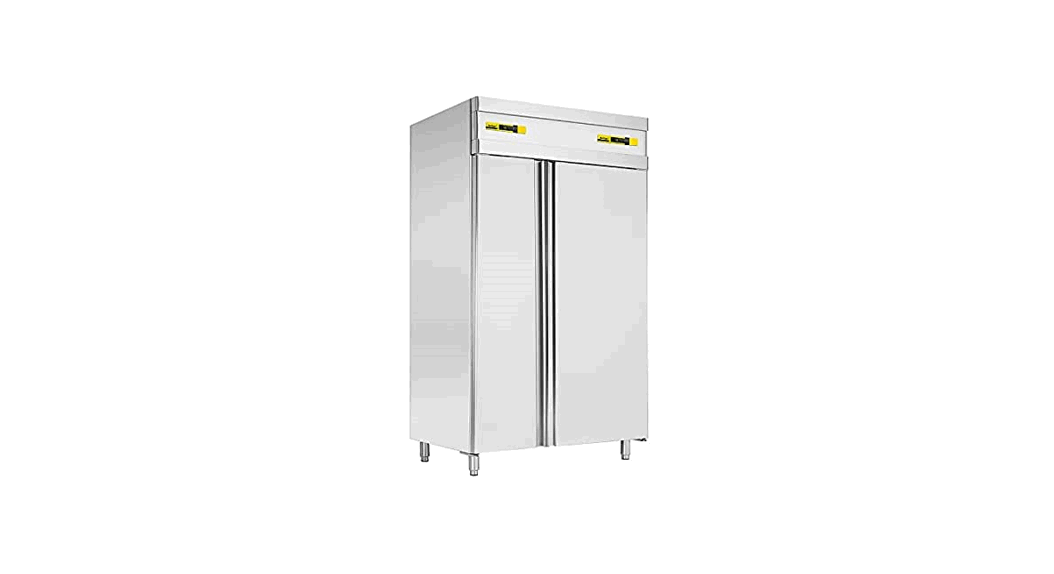
 Instructions for use
Refrigerated equipment
This equipment should be operated safely, in accordance with the manufacturer’s original instructions, and solely for the designated use. Misuse can cause damage to the equipment and possible injury to the user. Do not store explosive substances, such as aerosol products containing flammable propellant. Do not exceed the limits of the maximum permissible load (20 kg per shelf, 40 kg per drawer). If the supply cord is damaged, it must be replaced by the manufacturer, its service agent, or similarly qualified persons in order to avoid a hazard. Time-weighted equipment noise emissions, in the workplace, do not exceed 70 dB(A). Climatic class 4: 30ºC, 55% RH / climatic class 5: 40ºC, 40% RH.
SAFETY AND ENERGY EFFICIENCY OPTIMISATION GUIDELINES
INSTALLATION | STORAGE | CLEANING |
 |  |  |
1. Note from the Manufacturer
Thank you for choosing our refrigerated equipment. We designed it in compliance with the applicable European directives and standards and developed it to provide the best cold storage conditions for each type of food, with the aim of providing a safe and practical use that will meet your needs and expectations.
Rating Plate
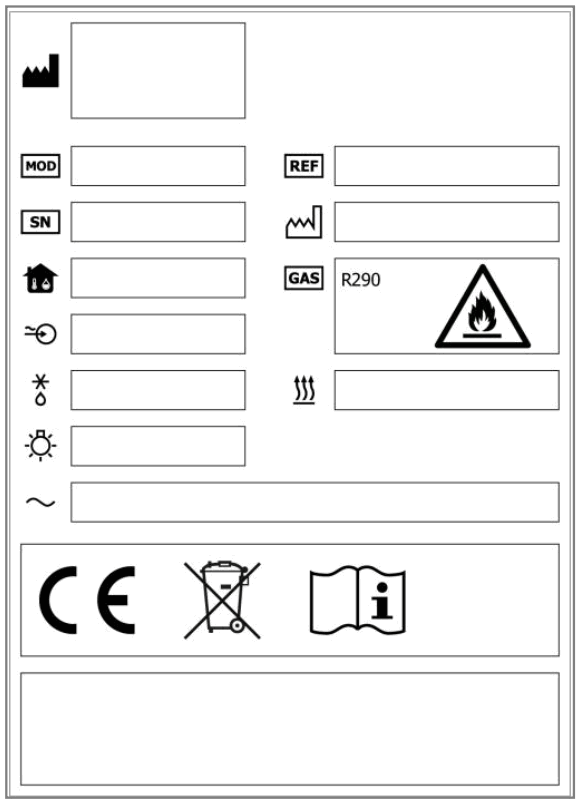
The rating plate on our equipment is located inside the equipment, on the left side panel. It includes the main technical data about the equipment and it identifies the MODEL and SERIAL NUMBER, which are vital pieces of information for any queries to the manufacturer.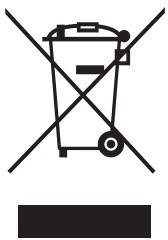 The European directive on Waste Electrical and Electronic Equipment (WEEE) specifies that, at the end of its life cycle, this equipment and all of its components, subassemblies, and consumable materials should be sent separately for treatment for it to be destroyed, recycled or reused. Do not dispose of it together with undifferentiated waste.
3. Receipt
The construction and operation of each piece of equipment are rigorously checked at the factory, as shown in the attached test report. In case damage has occurred in transit, carefully check the general condition of the equipment after unpacking. Then, confirm that the features match the specifications of the purchase order. We remind you that our constant search for technological improvements implies that changes to the equipment described in this manual may be effective without prior notification.
Installation
The equipment installation should be carried out in accordance with building regulations, rules, and best practices for accident prevention, fire prevention standards, and existing local standards. Technical maintenance, installation, and other actions should be carried out by authorized specialized technicians only, using original spare parts. The manufacturer assumes no responsibility resulting from the incorrect use of the product or the noncompliance with the instructions contained in this manual.
4.1. Preparation
To avoid scratches, spots and fingerprints, remove the plastic protective film with gloves without using sharp tools.
4.2. Electrical connection
The unit is supplied with a plug in accordance with current standards of practice and with a power cord whose length is sufficient to allow connection to the mains. The mains should be easily accessible and sized for the maximum consumption (see rating plate) and should have an EARTH CABLE.
Never use sockets or plugs without earth cable, nor use adapters or extension cords. For direct connections to the network, always install an interrupting device (circuit breaker) in accordance with international standards.
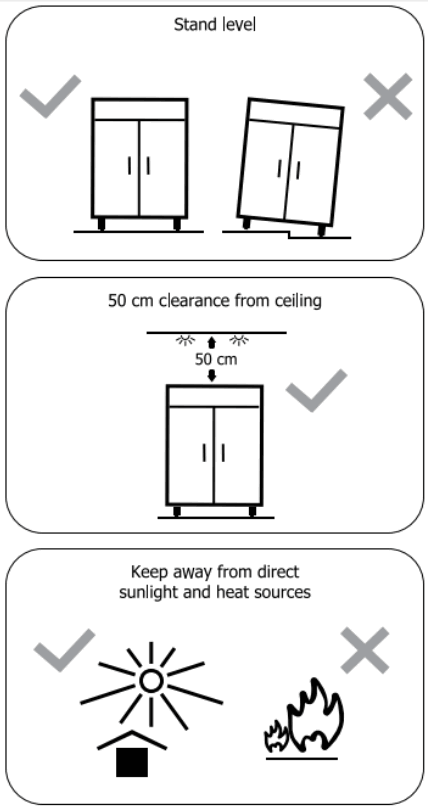
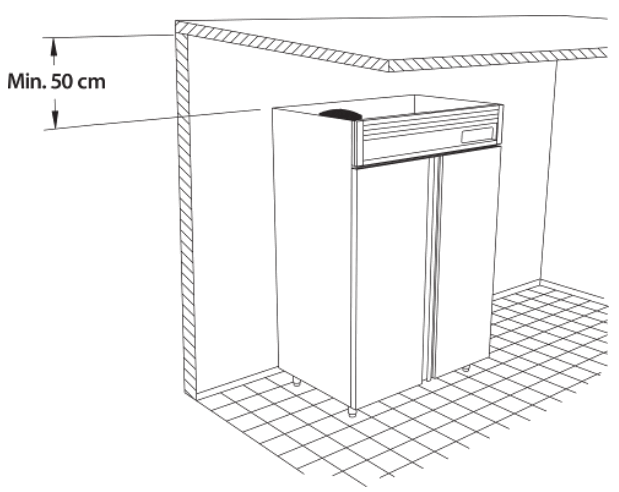
4.3. Placement The equipment must be installed on a flat and sturdy surface, ensure 4-point support stability, and away from possible sources of heat (like ovens or stoves), and away from direct sunlight. Ensure good air circulation around the equipment, respect the recommended distances and never obstruct the air vents grids: the lack of ventilation seriously affects the operation and can lead to severe damage to the equipment.
4.4. Set-up up a topping shelf
4.4.1. Assembling the topping shelf on the worktop of a pizza prep table
For a safe adjustment between the topping shelf and the pizza table, the U-shaped adaptor must be correctly fitted. Please center the holes of the adaptor with those on the underside of the topping shelf before fastening the blind rivets.

4.4.2. Assembling the sneeze guard
Place the side glasses (1), and place the back glass (2) on the back panel fasteners of the topping shelf. Fasten the glasses double and triple-linked clip (3) into the holes, place the top glass (4), and screw.

Usage
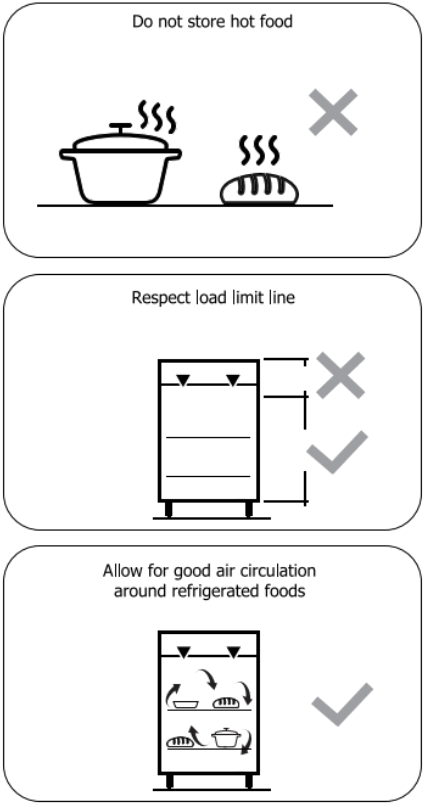
 Reduce the doors and/or drawers’ opening frequency and duration; Do not put hot food inside the refrigerated equipment; Ensure that all food is covered or wrapped; Space food to allow for good airflow; Do not exceed the load height limit line
The defrosting is carried out automatically with electronic control, which can also be triggered manually. In any case, do not use sharp objects (such as knives, screwdrivers, etc.) to remove a possible excess of ice. In models with automatic defrost water evaporation, water is drained to the condensing unit. In other models, it is drained to a tray underneath the equipment which must be poured regularly. After defrosting, keep the doors and/or drawers closed to accelerate the temperature recovery.
To ensure proper hygiene and maintenance, perform regular cleaning as indicated:
Switch off the appliance, unplug it and place the plug in a visible place so that it is visible from any point to verify that it remains switched off; Clean the surfaces using a dampened cloth with a mild soap warm water solution; then rinse with a dampened cloth with clean water and finally wipe with a soft, dry cloth; Do not use aggressive cleaning products containing corrosive chemicals or chlorine (such as bleach), abrasive materials (such as pads), or pressurized water (such as hoses).5.4. Condenser Cleaning
To ensure long life and correct operation of the refrigeration system, clean the condenser coil regularly as indicated:
Switch off the appliance, unplug it and place the plug in a visible place so that it is visible from any point to verify that it remains switched off; Unscrew and open the air vents grid; be careful with the cable holder, do not stretch the cables; Carefully vacuum (preferably) or brush the condenser coils;Finally, screw back the air vents grid. 5.5. Extended Period of Inactivity
Where there is a foreseeable extended period of inactivity, remove all foodstuff from the appliance and clean it as described. In the end, switch it off from the mains and leave the doors open to prevent bad odor.
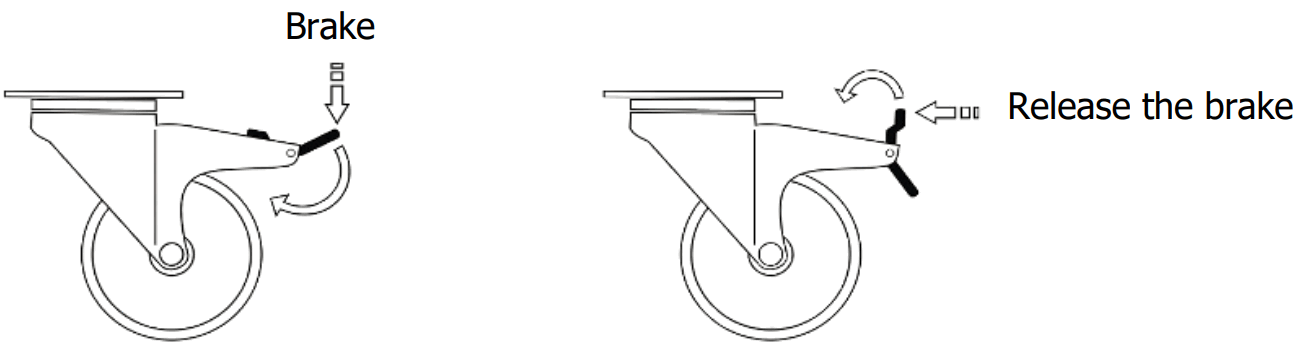
5.6. Use of swivel castors brake
 5.7. Troubleshooting
If you notice any malfunction, refer to the checklist below to identify the problem and its possible solutions. If the problem still persists, please contact the after-sales service.
| Symptom | Check |
| The equipment does not run and the display does not work | Make sure the plug is inserted into the socket |
| Check for a blown fuse or tripped circuit breaker | |
| Test the power outlet for current | |
| Inspect the electrical cord for damage | |
| Remove any extension cord | |
| The equipment does not run but the display works | Check the temperature setting |
| Assure that there is enough airflow inside the equipment | |
| Clean the condenser coils | |
| The equipment is not cold enough | Check the temperature setting |
| Assure that there is enough airflow inside the equipment | |
| Check for airflow restrictions in vents | |
| Clean the condenser coils | |
| Clean the door seals | |
| Check for a clogged drain pipe | |
| The equipment is too cold | Check the temperature setting |
| Equipment runs continuously | Clean the condenser coils |
| Clean the door seals | |
| Equipment starts and stops frequently | Clean the condenser coils |