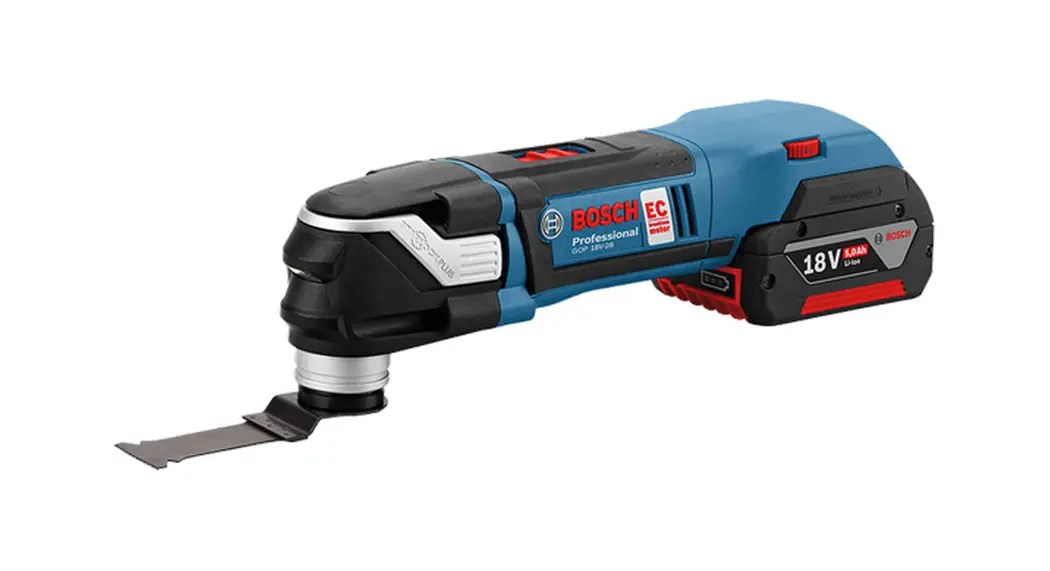
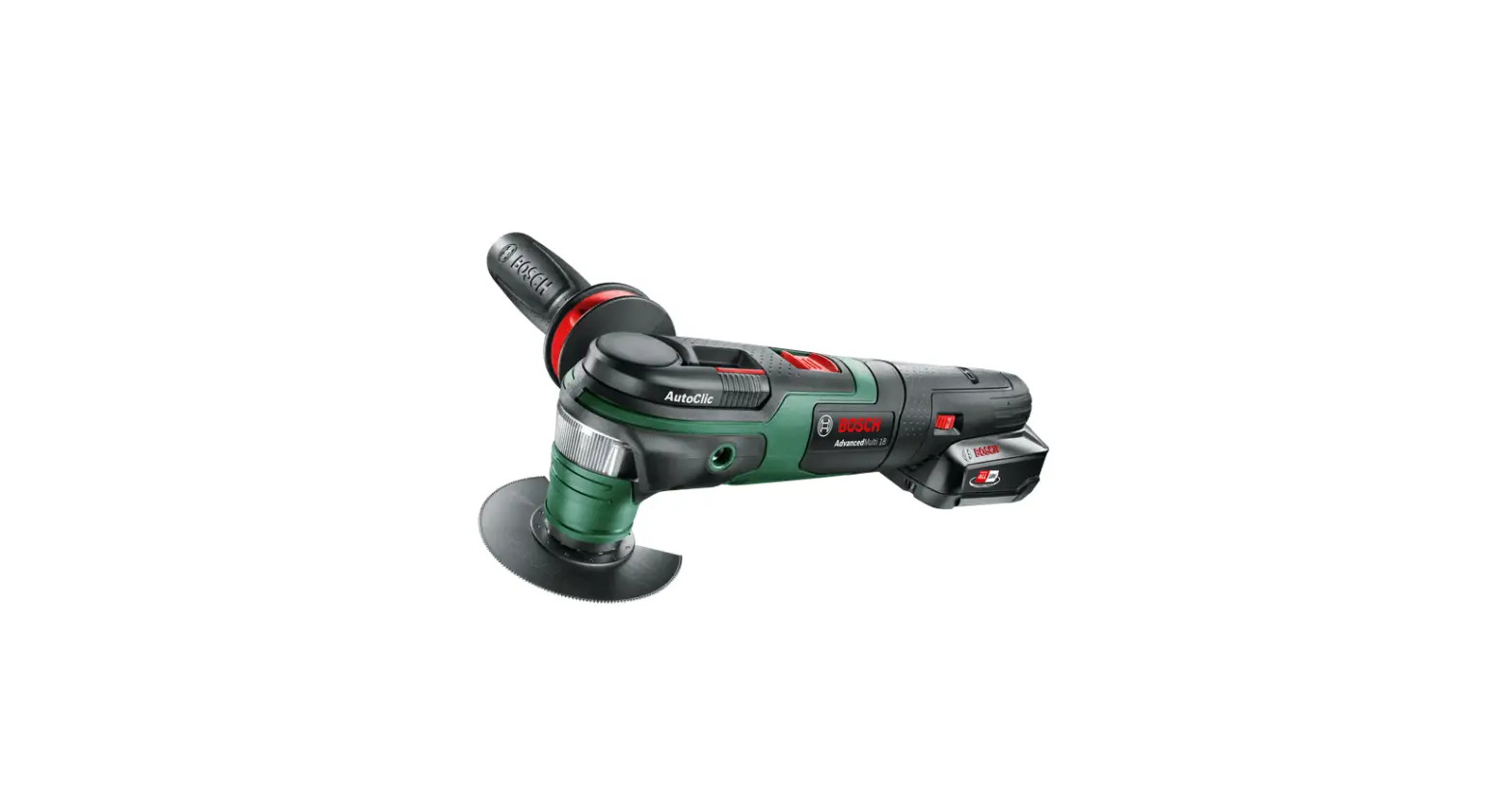
GOP 185-LI Professional Cordless Multi Cutter
Product Information
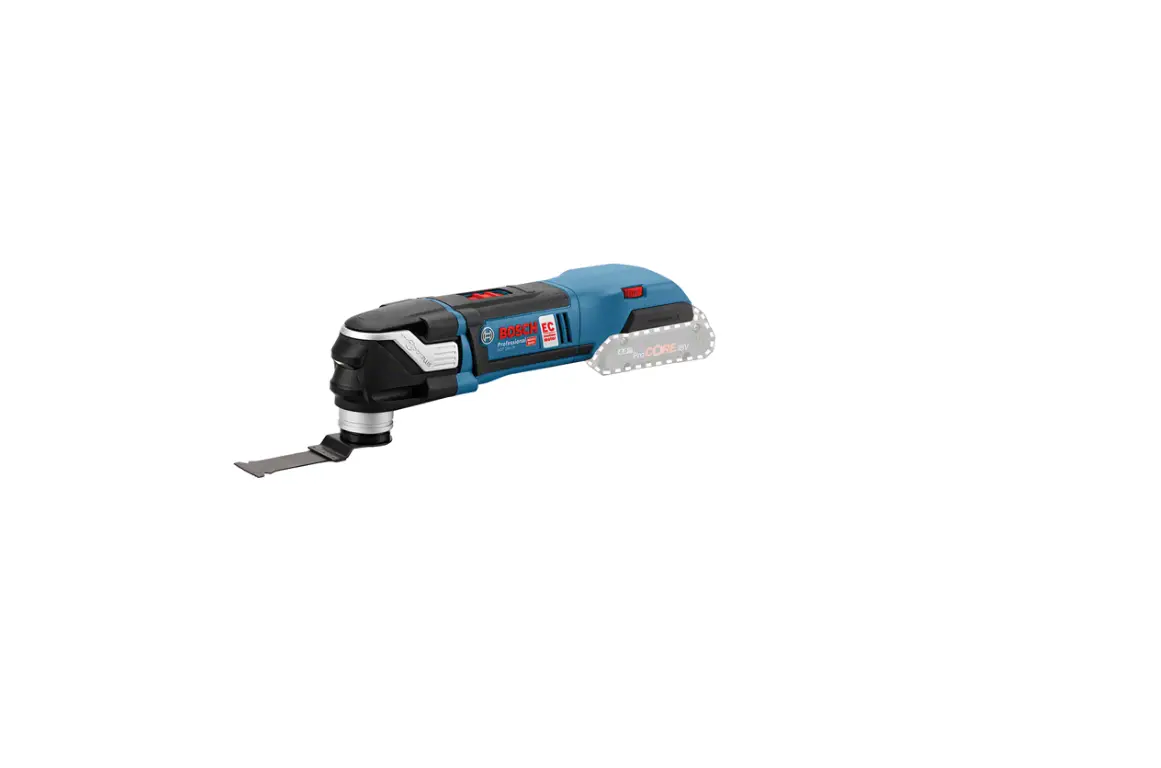
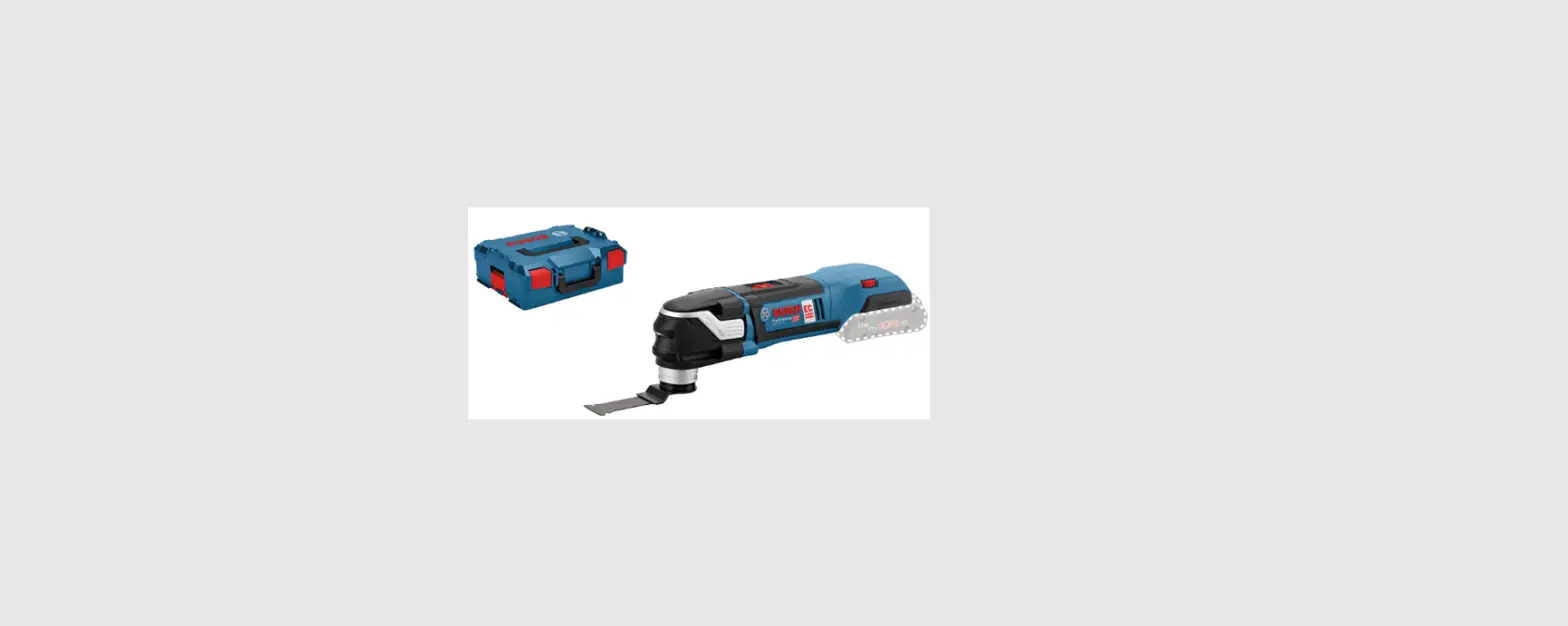
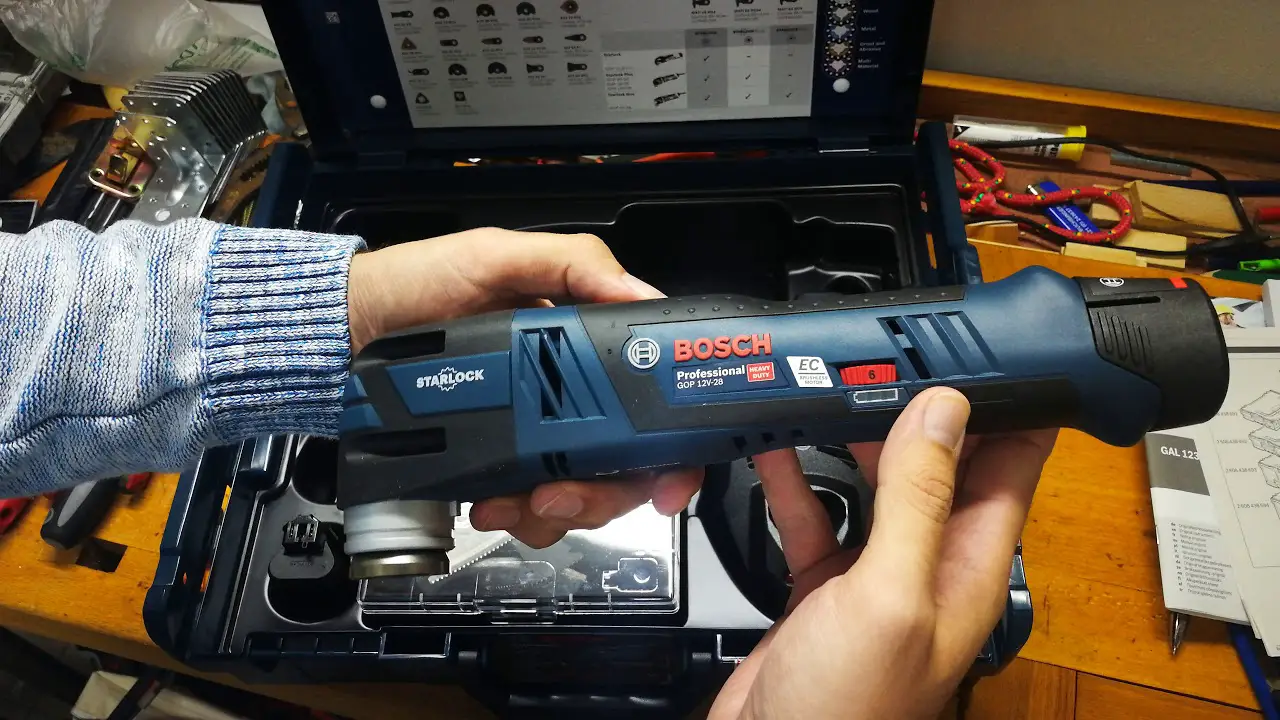
The Bosch GOP 185-LI Professional is an 18V cordless
multi-cutter tool suitable for cutting and sanding various
materials such as wood, plastic, and metal. It has an oscillation
angle of 1.7 degrees, a maximum no-load speed of 20,000
oscillations per minute (OPM), and a weight of 1.5-2.6 kg depending
on the attached battery. The tool features a tool-less blade change
system, speed control, and an ergonomic design for comfortable
use.
Product Usage Instructions
Safety Precautions
Before using the tool, read and understand all safety
instructions in the user manual. The term “power tool” refers to
corded and cordless power tools. Here are some safety precautions
to follow:
- Use a residual current device (RCD) when working in damp or wet
conditions to reduce the risk of electric shock. - Do not touch the blade or accessory while it is still moving or
immediately after use as it may be hot and cause injury. - Do not use the tool if the switch is faulty or damaged.
- Wear appropriate personal protective equipment (PPE) such as
safety glasses, hearing protection, and gloves.
Battery Usage
The GOP 185-LI Professional comes with an 18V lithium-ion
battery that can be charged using a compatible charger such as the
GAL 18V-160 C or GAL 1880 CV. Follow these steps to use the
battery:
- Insert the fully charged battery into the tool’s battery
compartment until it clicks into place. - Check the battery indicator to monitor the battery level.
Replace the battery when it is low to avoid damaging the tool. - When not in use, store the battery in a cool and dry place away
from direct sunlight and heat sources.
Tool Usage
Here are the steps to follow when using the GOP 185-LI
Professional:
- Choose the appropriate accessory for the material you are
working on (refer to the product manual for a list of compatible
accessories). - Insert the accessory into the tool’s blade holder and secure it
in place. - Adjust the speed control dial to set the desired oscillation
speed. - Turn on the tool using the on/off switch.
- Hold the tool firmly and start cutting or sanding at a slow
speed until you get comfortable with the tool’s operation. - Use a sweeping motion to cut or sand the material, and avoid
applying too much pressure on the tool. - Turn off the tool and wait for the accessory to stop moving
before removing it from the blade holder.
Robert Bosch Power Tools GmbH 70538 Stuttgart GERMANY www.bosch-pt.com
1 609 92A 8AY (2022.12) T / 361
1 609 92A 8AY
GOP 185-LI Professional
de Originalbetriebsanleitung en Original instructions fr Notice originale es Manual original pt Manual original it Istruzioni originali nl Oorspronkelijke gebruiksaanwijzing da Original brugsanvisning sv Bruksanvisning i original no Original driftsinstruks fi Alkuperäiset ohjeet el tr Orijinal iletme talimati pl Instrukcja oryginalna cs Pvodní návod k pouzívání sk Pôvodný návod na pouzitie hu Eredeti használati utasítás
ru
uk
kk
ro Instruciuni originale bg mk sr Originalno uputstvo za rad sl Izvirna navodila hr Originalne upute za rad et Algupärane kasutusjuhend lv Instrukcijas oriinlvalod
lt Originali instrukcija ko ar fa
2 |
Deutsch ………………………………………….. Seite 5 English …………………………………………… Page 16 Français ………………………………………….. Page 26 Español ………………………………………… Página 37 Português ………………………………………. Página 49 Italiano …………………………………………. Pagina 60 Nederlands ……………………………………… Pagina 71 Dansk ……………………………………………. Side 81 Svensk ………………………………………….. Sidan 91 Norsk…………………………………………….. Side 101 Suomi ……………………………………………..Sivu 111 ………………………………………… 121 Türkçe…………………………………………… Sayfa 132 Polski ………………………………………….. Strona 143 Cestina ………………………………………… Stránka 155 Slovencina …………………………………….. Stránka 165 Magyar ……………………………………………Oldal 176 ……………………………………… 187 ……………………………………. 201 …………………………………………….. 213 Român ………………………………………… Pagina 226 …………………………………… 238 ………………………………….. 250 Srpski ………………………………………….. Strana 261 Slovenscina ……………………………………….Stran 271 Hrvatski ………………………………………..Stranica 282 Eesti………………………………………….. Lehekülg 292 Latviesu ………………………………………. Lappuse 302 Lietuvi k. ………………………………………Puslapis 314 ……………………………………….. 324 ………………………………………….. 334 ………………………………………….. 345
…………………………………………………. I
1 609 92A 8AY | (09.12.2022)
Bosch Power Tools
(9)
Bosch Power Tools
| 3
(2)
(1)
(7) (4) (8)
(5) (4)
(3)
(6)
(10) (13) (11) (12) (14)
(15)
1 609 92A 8AY | (09.12.2022)
4 |
A
(16)
(19)
(18)
(13) (17)
1 609 92A 8AY | (09.12.2022)
Bosch Power Tools
Deutsch
Sicherheitshinweise
Allgemeine Sicherheitshinweise für Elektrowerkzeuge
WARNUNG Lesen Sie alle Sicherheitshinwei-
se, Anweisungen, Bebilderungen und technischen Daten, mit denen dieses Elektrowerkzeug versehen ist. Versäumnisse bei der Einhaltung der Sicherheitshinweise und nachfolgenden Anweisungen können elektrischen Schlag, Brand und/oder schwere Verletzungen verursachen.
Bewahren Sie alle Sicherheitshinweise und Anweisungen für die Zukunft auf.
Der in den Sicherheitshinweisen verwendete Begriff ,,Elektrowerkzeug” bezieht sich auf netzbetriebene Elektrowerkzeuge (mit Netzleitung) und auf akkubetriebene Elektrowerkzeuge (ohne Netzleitung).
Arbeitsplatzsicherheit
u Halten Sie Ihren Arbeitsbereich sauber und gut beleuchtet. Unordnung oder unbeleuchtete Arbeitsbereiche können zu Unfällen führen.
u Arbeiten Sie mit dem Elektrowerkzeug nicht in explosionsgefährdeter Umgebung, in der sich brennbare Flüssigkeiten, Gase oder Stäube befinden. Elektrowerkzeuge erzeugen Funken, die den Staub oder die Dämpfe entzünden können.
u Halten Sie Kinder und andere Personen während der Benutzung des Elektrowerkzeugs fern. Bei Ablenkung können Sie die Kontrolle über das Elektrowerkzeug verlieren.
Elektrische Sicherheit
u Der Anschlussstecker des Elektrowerkzeuges muss in die Steckdose passen. Der Stecker darf in keiner Weise verändert werden. Verwenden Sie keine Adapterstecker gemeinsam mit schutzgeerdeten Elektrowerkzeugen. Unveränderte Stecker und passende Steckdosen verringern das Risiko eines elektrischen Schlages.
u Vermeiden Sie Körperkontakt mit geerdeten Oberflächen wie von Rohren, Heizungen, Herden und Kühlschränken. Es besteht ein erhöhtes Risiko durch elektrischen Schlag, wenn Ihr Körper geerdet ist.
u Halten Sie Elektrowerkzeuge von Regen oder Nässe fern. Das Eindringen von Wasser in ein Elektrowerkzeug erhöht das Risiko eines elektrischen Schlages.
u Zweckentfremden Sie die Anschlussleitung nicht, um das Elektrowerkzeug zu tragen, aufzuhängen oder um den Stecker aus der Steckdose zu ziehen. Halten Sie die Anschlussleitung fern von Hitze, Öl, scharfen Kanten oder sich bewegenden Teilen. Beschädigte oder verwickelte Anschlussleitungen erhöhen das Risiko eines elektrischen Schlages.
Deutsch | 5
u Wenn Sie mit einem Elektrowerkzeug im Freien arbeiten, verwenden Sie nur Verlängerungskabel, die auch für den Außenbereich geeignet sind. Die Anwendung einer für den Außenbereich geeigneten Verlängerungsleitung verringert das Risiko eines elektrischen Schlages.
u Wenn der Betrieb des Elektrowerkzeuges in feuchter Umgebung nicht vermeidbar ist, verwenden Sie einen Fehlerstromschutzschalter. Der Einsatz eines Fehlerstromschutzschalters vermindert das Risiko eines elektrischen Schlages.
Sicherheit von Personen
u Seien Sie aufmerksam, achten Sie darauf, was Sie tun, und gehen Sie mit Vernunft an die Arbeit mit einem Elektrowerkzeug. Benutzen Sie kein Elektrowerkzeug, wenn Sie müde sind oder unter dem Einfluss von Drogen, Alkohol oder Medikamenten stehen. Ein Moment der Unachtsamkeit beim Gebrauch des Elektrowerkzeuges kann zu ernsthaften Verletzungen führen.
u Tragen Sie persönliche Schutzausrüstung und immer eine Schutzbrille. Das Tragen persönlicher Schutzausrüstung, wie Staubmaske, rutschfeste Sicherheitsschuhe, Schutzhelm oder Gehörschutz, je nach Art und Einsatz des Elektrowerkzeuges, verringert das Risiko von Verletzungen.
u Vermeiden Sie eine unbeabsichtigte Inbetriebnahme. Vergewissern Sie sich, dass das Elektrowerkzeug ausgeschaltet ist, bevor Sie es an die Stromversorgung und/oder den Akku anschließen, es aufnehmen oder tragen. Wenn Sie beim Tragen des Elektrowerkzeuges den Finger am Schalter haben oder das Gerät eingeschaltet an die Stromversorgung anschließen, kann dies zu Unfällen führen.
u Entfernen Sie Einstellwerkzeuge oder Schraubenschlüssel, bevor Sie das Elektrowerkzeug einschalten. Ein Werkzeug oder Schlüssel, der sich in einem drehenden Geräteteil befindet, kann zu Verletzungen führen.
u Vermeiden Sie eine abnormale Körperhaltung. Sorgen Sie für einen sicheren Stand und halten Sie jederzeit das Gleichgewicht. Dadurch können Sie das Elektrowerkzeug in unerwarteten Situationen besser kontrollieren.
u Tragen Sie geeignete Kleidung. Tragen Sie keine weite Kleidung oder Schmuck. Halten Sie Haare und Kleidung fern von sich bewegenden Teilen. Lockere Kleidung, Schmuck oder lange Haare können von sich bewegenden Teilen erfasst werden.
u Wenn Staubabsaug- und -auffangeinrichtungen montiert werden können, sind diese anzuschließen und richtig zu verwenden. Verwendung einer Staubabsaugung kann Gefährdungen durch Staub verringern.
u Wiegen Sie sich nicht in falscher Sicherheit und setzen Sie sich nicht über die Sicherheitsregeln für Elektrowerkzeuge hinweg, auch wenn Sie nach vielfachem Gebrauch mit dem Elektrowerkzeug vertraut sind. Achtloses Handeln kann binnen Sekundenbruchteilen zu schweren Verletzungen führen.
Bosch Power Tools
1 609 92A 8AY | (09.12.2022)
6 | Deutsch
Verwendung und Behandlung des Elektrowerkzeugs
u Überlasten Sie das Elektrowerkzeug nicht. Verwenden Sie für Ihre Arbeit das dafür bestimmte Elektrowerkzeug. Mit dem passenden Elektrowerkzeug arbeiten Sie besser und sicherer im angegebenen Leistungsbereich.
u Benutzen Sie kein Elektrowerkzeug, dessen Schalter defekt ist. Ein Elektrowerkzeug, das sich nicht mehr einoder ausschalten lässt, ist gefährlich und muss repariert werden.
u Ziehen Sie den Stecker aus der Steckdose und/oder entfernen Sie einen abnehmbaren Akku, bevor Sie Geräteeinstellungen vornehmen, Einsatzwerkzeugteile wechseln oder das Elektrowerkzeug weglegen. Diese Vorsichtsmaßnahme verhindert den unbeabsichtigten Start des Elektrowerkzeuges.
u Bewahren Sie unbenutzte Elektrowerkzeuge außerhalb der Reichweite von Kindern auf. Lassen Sie keine Personen das Elektrowerkzeug benutzen, die mit diesem nicht vertraut sind oder diese Anweisungen nicht gelesen haben. Elektrowerkzeuge sind gefährlich, wenn sie von unerfahrenen Personen benutzt werden.
u Pflegen Sie Elektrowerkzeuge und Einsatzwerkzeug mit Sorgfalt. Kontrollieren Sie, ob bewegliche Teile einwandfrei funktionieren und nicht klemmen, ob Teile gebrochen oder so beschädigt sind, dass die Funktion des Elektrowerkzeuges beeinträchtigt ist. Lassen Sie beschädigte Teile vor dem Einsatz des Gerätes reparieren. Viele Unfälle haben ihre Ursache in schlecht gewarteten Elektrowerkzeugen.
u Halten Sie Schneidwerkzeuge scharf und sauber. Sorgfältig gepflegte Schneidwerkzeuge mit scharfen Schneidkanten verklemmen sich weniger und sind leichter zu führen.
u Verwenden Sie Elektrowerkzeug, Zubehör, Einsatzwerkzeuge usw. entsprechend diesen Anweisungen. Berücksichtigen Sie dabei die Arbeitsbedingungen und die auszuführende Tätigkeit. Der Gebrauch von Elektrowerkzeugen für andere als die vorgesehenen Anwendungen kann zu gefährlichen Situationen führen.
u Halten Sie Griffe und Griffflächen trocken, sauber und frei von Öl und Fett. Rutschige Griffe und Griffflächen erlauben keine sichere Bedienung und Kontrolle des Elektrowerkzeugs in unvorhergesehenen Situationen.
Verwendung und Behandlung des Akkuwerkzeugs
u Laden Sie die Akkus nur mit Ladegeräten auf, die vom Hersteller empfohlen werden. Durch ein Ladegerät, das für eine bestimmte Art von Akkus geeignet ist, besteht Brandgefahr, wenn es mit anderen Akkus verwendet wird.
u Verwenden Sie nur die dafür vorgesehenen Akkus in den Elektrowerkzeugen. Der Gebrauch von anderen Akkus kann zu Verletzungen und Brandgefahr führen.
u Halten Sie den nicht benutzten Akku fern von Büroklammern, Münzen, Schlüsseln, Nägeln, Schrauben oder anderen kleinen Metallgegenständen, die eine Überbrückung der Kontakte verursachen könnten. Ein
Kurzschluss zwischen den Akkukontakten kann Verbrennungen oder Feuer zur Folge haben.
u Bei falscher Anwendung kann Flüssigkeit aus dem Akku austreten. Vermeiden Sie den Kontakt damit. Bei zufälligem Kontakt mit Wasser abspülen. Wenn die Flüssigkeit in die Augen kommt, nehmen Sie zusätzliche ärztliche Hilfe in Anspruch. Austretende Akkuflüssigkeit kann zu Hautreizungen oder Verbrennungen führen.
u Benutzen Sie keinen beschädigten oder veränderten Akku. Beschädigte oder veränderte Akkus können sich unvorhersehbar verhalten und zu Feuer, Explosion oder Verletzungsgefahr führen.
u Setzen Sie einen Akku keinem Feuer oder zu hohen Temperaturen aus. Feuer oder Temperaturen über 130°C können eine Explosion hervorrufen.
u Befolgen Sie alle Anweisungen zum Laden und laden Sie den Akku oder das Akkuwerkzeug niemals außerhalb des in der Betriebsanleitung angegebenen Temperaturbereichs. Falsches Laden oder Laden außerhalb des zugelassenen Temperaturbereichs kann den Akku zerstören und die Brandgefahr erhöhen.
Service
u Lassen Sie Ihr Elektrowerkzeug nur von qualifiziertem Fachpersonal und nur mit Original-Ersatzteilen reparieren. Damit wird sichergestellt, dass die Sicherheit des Elektrowerkzeuges erhalten bleibt.
u Warten Sie niemals beschädigte Akkus. Sämtliche Wartung von Akkus sollte nur durch den Hersteller oder bevollmächtigte Kundendienststellen erfolgen.
Sicherheitshinweise für Multi-Cutter
u Halten Sie das Elektrowerkzeug an den isolierten Griffflächen, wenn Sie Arbeiten ausführen, bei denen das Einsatzwerkzeug verborgene Stromleitungen treffen kann. Der Kontakt mit einer spannungsführenden Leitung kann auch metallene Geräteteile unter Spannung setzen und zu einem elektrischen Schlag führen.
u Befestigen und sichern Sie das Werkstück mittels Zwingen oder auf andere Art und Weise an einer stabilen Unterlage. Wenn Sie das Werkstück nur mit der Hand oder gegen Ihren Körper halten, bleibt es labil, was zum Verlust der Kontrolle führen kann.
u Verwenden Sie das Elektrowerkzeug nur für Trockenschliff. Das Eindringen von Wasser in ein Elektrowerkzeug erhöht das Risiko eines elektrischen Schlages.
u Achtung Brandgefahr! Vermeiden Sie eine Überhitzung des Schleifgutes und des Schleifers. Entleeren Sie vor Arbeitspausen stets den Staubbehälter. Schleifstaub im Staubsack, Microfilter, Papiersack (oder im Filtersack bzw. Filter des Staubsaugers) kann sich unter ungünstigen Bedingungen, wie Funkenflug beim Schleifen von Metallen, selbst entzünden. Besondere Gefahr besteht, wenn der Schleifstaub mit Lack-, Polyurethanresten oder anderen chemischen Stoffen ver-
1 609 92A 8AY | (09.12.2022)
Bosch Power Tools
mischt ist und das Schleifgut nach langem Arbeiten heiß ist.
u Halten Sie die Hände vom Sägebereich fern. Greifen Sie nicht unter das Werkstück. Bei Kontakt mit dem Sägeblatt besteht Verletzungsgefahr.
u Reinigen Sie regelmäßig die Lüftungsschlitze Ihres Elektrowerkzeugs. Das Motorgebläse zieht Staub in das Gehäuse, und eine starke Ansammlung von Metallstaub kann elektrische Gefahren verursachen.
u Verwenden Sie geeignete Suchgeräte, um verborgene Versorgungsleitungen aufzuspüren, oder ziehen Sie die örtliche Versorgungsgesellschaft hinzu. Kontakt mit Elektroleitungen kann zu Feuer und elektrischem Schlag führen. Beschädigung einer Gasleitung kann zur Explosion führen. Eindringen in eine Wasserleitung verursacht Sachbeschädigung.
u Halten Sie das Elektrowerkzeug beim Arbeiten fest mit beiden Händen und sorgen Sie für einen sicheren Stand. Das Elektrowerkzeug wird mit zwei Händen sicherer geführt.
u Tragen Sie beim Wechsel der Einsatzwerkzeuge Schutzhandschuhe. Einsatzwerkzeuge werden bei längerem Gebrauch warm.
u Schaben Sie keine angefeuchteten Materialien (z.B. Tapeten) und nicht auf feuchtem Untergrund. Das Eindringen von Wasser in ein Elektrowerkzeug erhöht das Risiko eines elektrischen Schlages.
u Behandeln Sie die zu bearbeitende Fläche nicht mit lösungsmittelhaltigen Flüssigkeiten. Durch die Erwärmung der Werkstoffe beim Schaben können giftige Dämpfe entstehen.
u Seien Sie beim Umgang mit Schaber und Messer besonders vorsichtig. Die Werkzeuge sind sehr scharf, es besteht Verletzungsgefahr.
u Bei Beschädigung und unsachgemäßem Gebrauch des Akkus können Dämpfe austreten. Der Akku kann brennen oder explodieren. Führen Sie Frischluft zu und suchen Sie bei Beschwerden einen Arzt auf. Die Dämpfe können die Atemwege reizen.
u Öffnen Sie den Akku nicht. Es besteht die Gefahr eines Kurzschlusses.
u Durch spitze Gegenstände wie z. B. Nagel oder Schraubenzieher oder durch äußere Krafteinwirkung kann der Akku beschädigt werden. Es kann zu einem internen Kurzschluss kommen und der Akku brennen, rauchen, explodieren oder überhitzen.
u Verwenden Sie den Akku nur in Produkten des Herstellers. Nur so wird der Akku vor gefährlicher Überlastung geschützt.
Schützen Sie den Akku vor Hitze, z. B. auch vor dauernder Sonneneinstrahlung, Feuer, Schmutz, Wasser und Feuchtigkeit. Es besteht Explosions- und Kurzschlussgefahr.
Deutsch | 7
Produkt- und Leistungsbeschreibung
Lesen Sie alle Sicherheitshinweise und Anweisungen. Versäumnisse bei der Einhaltung der Sicherheitshinweise und Anweisungen können elektrischen Schlag, Brand und/oder schwere Verletzungen verursachen. Bitte beachten Sie die Abbildungen im vorderen Teil der Betriebsanleitung.
Bestimmungsgemäßer Gebrauch
Das Elektrowerkzeug ist bestimmt zum Sägen und Trennen von Holzwerkstoffen, Kunststoff, Gips, Nichteisen-Metallen und Befestigungselementen (z.B. ungehärteten Nägeln, Klammern). Es ist ebenso geeignet zum Bearbeiten von weichen Wandfliesen sowie zum trockenen Schleifen und Schaben kleiner Flächen. Es ist besonders zum randnahen und bündigen Arbeiten geeignet. Das Elektrowerkzeug darf ausschließlich mit Bosch-Zubehör betrieben werden.
Abgebildete Komponenten
Die Nummerierung der abgebildeten Komponenten bezieht sich auf die Darstellung des Elektrowerkzeugs auf der Grafikseite.
(1) Ein-/Ausschalter (2) Akkua) (3) Akku-Entriegelungstastea)
(4) Lüftungsschlitze
(5) Stellrad Schwingzahlvorwahl
(6) Handgriff (isolierte Grifffläche)
(7) SDS-Hebel für Werkzeugentriegelung
(8) Werkzeugaufnahme
(9) Arbeitslicht (10) Spannhebel des Tiefenanschlagsa) (11) Tiefenanschlaga) (12) Tauchsägeblatta) (13) Staubabsaugunga) (14) Schleifplattea) (15) Schleifblatta) (16) Spannhebel der Staubabsaugunga) (17) Absaugstutzena) (18) Absaugadaptera) (19) Absaugschlaucha) a) Abgebildetes oder beschriebenes Zubehör gehört nicht zum
Standard-Lieferumfang. Das vollständige Zubehör finden Sie in unserem Zubehörprogramm.
Technische Daten
Akku-Multi-Cutter Sachnummer Nennspannung
GOP 185LI
3 601 HG2 0..
V=
18
Bosch Power Tools
1 609 92A 8AY | (09.12.2022)
8 | Deutsch
Akku-Multi-Cutter
GOP 185LI
Leerlaufdrehzahl n
min-1 1000020000
Oszillationswinkel links/rechts
°
1,7
Gewicht entsprechend EPTAProcedure 01:2014
kg
1,5-2,6A)
empfohlene Umgebungstempe-
°C
ratur beim Laden
0 … +35
erlaubte Umgebungstemperatur beim BetriebB) und bei Lagerung
°C -20 … +50
empfohlene Akkus
GBA 18V… ProCORE18V…
empfohlene Ladegeräte
GAL 18… GAX 18… GAL 36…
A) abhängig vom verwendeten Akku
B) eingeschränkte Leistung bei Temperaturen < 0 °C
Geräusch-/Vibrationsinformation
Geräuschemissionswerte ermittelt entsprechend EN 6284124.
Der A-bewertete Schalldruckpegel des Elektrowerkzeugs beträgt typischerweise 80 dB(A). Unsicherheit K = 3 dB. Der Geräuschpegel beim Arbeiten kann die angegebenen Werte überschreiten. Gehörschutz tragen!
Schwingungsgesamtwerte ah (Vektorsumme dreier Richtungen) und Unsicherheit K ermittelt entsprechend EN 6284124: Schleifen: ah = 3,4 m/s2, K = 1,5 m/s2, Sägen mit Tauchsägeblatt: ah = 2,9 m/s2, K = 1,5 m/s2, Sägen mit Segmentsägeblatt: ah = 3 m/s2, K = 1,5 m/s2.
Der in diesen Anweisungen angegebene Schwingungspegel und der Geräuschemissionswert sind entsprechend einem genormten Messverfahren gemessen worden und können für den Vergleich von Elektrowerkzeugen miteinander verwendet werden. Sie eignen sich auch für eine vorläufige Einschätzung der Schwingungs- und Geräuschemission.
Der angegebene Schwingungspegel und der Geräuschemissionswert repräsentieren die hauptsächlichen Anwendungen des Elektrowerkzeugs. Wenn allerdings das Elektrowerkzeug für andere Anwendungen, mit abweichenden Einsatzwerkzeugen oder ungenügender Wartung eingesetzt wird, können der Schwingungspegel und der Geräuschemissionswert abweichen. Dies kann die Schwingungs- und Geräuschemission über den gesamten Arbeitszeitraum deutlich erhöhen.
Für eine genaue Abschätzung der Schwingungs- und Geräuschemissionen sollten auch die Zeiten berücksichtigt werden, in denen das Gerät abgeschaltet ist oder zwar läuft, aber nicht tatsächlich im Einsatz ist. Dies kann die Schwingungs- und Geräuschemissionen über den gesamten Arbeitszeitraum deutlich reduzieren.
Legen Sie zusätzliche Sicherheitsmaßnahmen zum Schutz des Bedieners vor der Wirkung von Schwingungen fest wie zum Beispiel: Wartung von Elektrowerkzeug und Einsatz-
werkzeugen, Warmhalten der Hände, Organisation der Arbeitsabläufe.
Akku
Bosch verkauft Akku-Elektrowerkzeuge auch ohne Akku. Ob im Lieferumfang Ihres Elektrowerkzeugs ein Akku enthalten ist, können Sie der Verpackung entnehmen.
Akku laden
u Benutzen Sie nur die in den technischen Daten aufgeführten Ladegeräte. Nur diese Ladegeräte sind auf den bei Ihrem Elektrowerkzeug verwendeten Li-Ionen-Akku abgestimmt.
Hinweis: Li-Ionen-Akkus werden aufgrund internationaler Transportvorschriften teilgeladen ausgeliefert. Um die volle Leistung des Akkus zu gewährleisten, laden Sie vor dem ersten Einsatz den Akku vollständig auf.
Akku einsetzen
Schieben Sie den geladenen Akku in die Akku-Aufnahme, bis dieser eingerastet ist.
Akku entnehmen
Zur Entnahme des Akkus drücken Sie die Akku-Entriegelungstaste und ziehen den Akku heraus. Wenden Sie dabei keine Gewalt an. Der Akku verfügt über 2 Verriegelungsstufen, die verhindern sollen, dass der Akku beim unbeabsichtigten Drücken der Akku-Entriegelungstaste herausfällt. Solange der Akku im Elektrowerkzeug eingesetzt ist, wird er durch eine Feder in Position gehalten.
Akku-Ladezustandsanzeige
Die grünen LEDs der Akku-Ladezustandsanzeige zeigen den Ladezustand des Akkus an. Aus Sicherheitsgründen ist die Abfrage des Ladezustands nur bei Stillstand des Elektrowerkzeuges möglich. Drücken Sie die Taste für die Ladezustandsanzeige oder
, um den Ladezustand anzuzeigen. Dies ist auch bei abgenommenem Akku möglich. Leuchtet nach dem Drücken der Taste für die Ladezustandsanzeige keine LED, ist der Akku defekt und muss ausgetauscht werden. Akku-Typ GBA 18V…
LED Dauerlicht 3 × grün Dauerlicht 2 × grün Dauerlicht 1 × grün Blinklicht 1 × grün
Kapazität 60100 % 3060 % 530 % 05 %
1 609 92A 8AY | (09.12.2022)
Bosch Power Tools
Akku-Typ ProCORE18V…
LED Dauerlicht 5 × grün Dauerlicht 4 × grün Dauerlicht 3 × grün Dauerlicht 2 × grün Dauerlicht 1 × grün Blinklicht 1 × grün
Kapazität 80100 % 6080 % 4060 % 2040 % 520 % 05 %
Hinweise für den optimalen Umgang mit dem Akku
Schützen Sie den Akku vor Feuchtigkeit und Wasser.
Lagern Sie den Akku nur im Temperaturbereich von 20 °C bis 50 °C. Lassen Sie den Akku z.B. im Sommer nicht im Auto liegen.
Reinigen Sie gelegentlich die Lüftungsschlitze des Akkus mit einem weichen, sauberen und trockenen Pinsel.
Eine wesentlich verkürzte Betriebszeit nach der Aufladung zeigt an, dass der Akku verbraucht ist und ersetzt werden muss.
Beachten Sie die Hinweise zur Entsorgung.
Deutsch | 9
Montage
u Nehmen Sie den Akku vor allen Arbeiten am Elektrowerkzeug (z.B. Wartung, Werkzeugwechsel etc.) sowie bei dessen Transport und Aufbewahrung aus dem Elektrowerkzeug. Bei unbeabsichtigtem Betätigen des Ein-/Ausschalters besteht Verletzungsgefahr.
Werkzeugwechsel
u Tragen Sie beim Werkzeugwechsel Schutzhandschuhe. Bei Berührung der Einsatzwerkzeuge besteht Verletzungsgefahr.
Einsatzwerkzeug auswählen
Bitte beachten Sie die für Ihr Elektrowerkzeug vorgesehenen Einsatzwerkzeuge.
Einsatzwerkzeug
GOP 185LI
Die nachfolgende Tabelle zeigt Beispiele für Einsatzwerkzeuge. Weitere Einsatzwerkzeuge finden Sie im umfangreichen BoschZubehörprogramm.
Einsatzwerkzeug
Material
Anwendung
AIZ 10 AB
Weichholz, weiche Kunst- Kleinere Trenn- und Tauchschnitte; filigrane Anpassarbei-
Starlock
stoffe, Gipskarton, dünn- ten in Holz;
10×20 mm Bi-Me- wandige Aluminium- und Beispiel: Aussparung für Kabel schneiden, Tauchschnitte
tall-Tauchsägeblatt Buntmetallprofile, dünne in Gipskartonplatten, Aussparungen für Schlösser und Be-
für Holz und Metall Bleche, nicht gehärtete schläge nachsägen
Nägel und Schrauben
AIZ 32 EPC
Weichholz
Starlock
32×50 mm HCS-
Tauchsägeblatt für
Holz
Ausrissfreie Trenn- und Tauchsägeschnitte dank runder Sägekante (Curved-Tec); auch zum randnahen Sägen, in Ecken und schwer zugänglichen Bereichen; Beispiel: Tauchschnitt für den Einbau eines Lüftungsgitters oder Aussparung für Steckdosen
AIZ 32 APB/
Verbundwerkstoffe aus Ausrissfreie, bündige Schnitte und Tauchschnitte in Holz,
AIZ 32 APIB
Holz und weiche nicht ei- weiche nicht eisenhaltige Metalle und Kunststoff dank
Starlock
senhaltige Metalle, unge- runder Sägekante (Curved-Tec);
32×50 mm Bi-Me- härtete Nägel und Schrau- Beispiel: Aussparung für Steckdosen und Rohre, flächen-
tall-Tauchsägeblatt ben, Rohre aus Nichtei- bündiges Schneiden durch nicht gehärtete Nägel und
für Holz und Metall senmetall und Profile klei- Schrauben
nerer Abmessungen
PAIZ 32 APB
Verbundwerkstoffe aus Schnelle und tiefe Tauchschnitte in Holz, abrasive Holz-
StarlockPlus
Holz und weiche nicht ei- werkstoffe und Kunststoffe, ausrissfreies Arbeiten dank
32×60 mm Bi-Me- senhaltige Metalle, unge- runder Schneidekante (Curved-Tec);
tall-Tauchsägeblatt härtete Nägel und Schrau- Beispiel: schnelles Trennen von Nichteisenrohren und Pro-
für Holz und Metall ben, Rohre aus Nichtei- filen kleinerer Abmessungen, einfaches Schneiden durch
senmetall und Profile klei- nicht gehärtete Nägel, Schrauben und Stahlprofilen kleine-
nerer Abmessungen
rer Abmessungen
Bosch Power Tools
1 609 92A 8AY | (09.12.2022)
10 | Deutsch
Einsatzwerkzeug
Material
Anwendung
AIZ 32 BSPB/ Hartholz, beschichtete AIZ 32 BSPIB Platten Starlock 32×50 mm Bi-Metall-Tauchsägeblatt für Hartholz
Ausrissfreie Trenn- und Tauchschnitte in beschichtete Platten oder Hartholz dank runder Sägekante (CurvedTec), Japanverzahnung speziell geeignet für Hartholz; Beispiel: Einbau von Dachfenstern, Aussparung für Steckdosen
AIZ 32 AT/
Harte eisenhaltige Metal- Sägen von stark abrasiven Werkstoffen oder harten eisen-
AIZ 32 AIT
le, stark abrasive Werk- haltigen Metallen; lange Lebensdauer dank BOSCH Carbi-
Starlock
stoffe, Fiberglas, Gipskar- de-Technology;
32×40 mm Carbi- ton, zementgebundene Beispiel: Schneiden von Küchenfrontabdeckungen, einfa-
de-Tauchsägeblatt Faserplatten, gehärtete ches Sägen durch gehärtete Schrauben und rostfreien
für Metall
Nägel und Schrauben Stahl
AIZ 32 APT/
Harte eisenhaltige Metall- Ausrissfreie Trenn- und Tauchschnitte in Metallblech auf-
AIZ 32 APIT
bleche, Epoxid, Gipskar- grund runder Sägekante (Curved-Tec); lange Lebensdauer
Starlock
tonplatten, GFK, CFK, Ze- dank BOSCH Carbide-Technology;
32×40 mm Carbi- mentfaserplatten
Beispiel: Sägen durch Metallbleche, Durchtrennen der
de-Tauchsägeblatt
Schrauben in Fensterrahmen
für Multimaterial
PAIZ 45 AT/ PAIZ 45 AIT StarlockPlus 45×50 mm Carbide-Tauchsägeblatt für Metall
Harte eisenhaltige Metal- Breites Sägeblatt zum Sägen von stark abrasiven Werkle, stark abrasive Werk- stoffen oder harten eisenhaltigen Metallen; lange Lebensstoffe, Fiberglas, Gipskar- dauer dank BOSCH Carbide-Technology; ton, zementgebundene Beispiel: Schneiden von Küchenfrontabdeckungen, einfaFaserplatten, gehärtete ches Sägen durch gehärtete Schrauben und rostfreien Nägel und Schrauben Stahl
PAII 52 APT/
Harte eisenhaltige Metall- Langes Sägeblatt für ausrissfreie Trenn- und Tauchschnit-
PAII 52 APIT
bleche, Epoxid, Gipskar- te in Metallblech dank runder Sägekante (Curved-Tec);
StarlockPlus
tonplatten, GFK, CFK, Ze- lange Lebensdauer dank BOSCH Carbide-Technology;
52×50 mm Car- mentfaserplatten
Beispiel: Schneiden durch Metallbleche, Durchtrennen
bide-Tauchsäge-
der Schrauben in Fensterrahmen
blatt für Multimate-
rial
AYZ 53 BPB
Gipskartonplatten, Span- Optimiert für Tauchsägeschnitte mit anschließendem län-
Starlock
platten, Sandwich-Materi- gerem Trennschnitt; die Dual-Tec-Form stellt sowohl einen
53×40 mm Tauch- al, Holz
sauberen und vollständigen Schnitt in den Ecken als auch
sägeblatt für Multi-
während eines längeren Trennschnittes sicher;
material
Beispiel: Steckdosenaussparungen in Gipskartonplatten
oder Holzwänden
AII 65 APB/
Weichholz, Hartholz, fur- Ausrissfreie Trenn- und Tauchschnitte dank runder Säge-
AII 65 APIB
nierte Platten, kunststoff- kante (Curved-Tec) in beschichteten Platten oder Hart-
Starlock
belegte Platten, nicht ge- holz;
65×40 mm Bi-Me- härtete Nägel und Schrau- Beispiel: Türzargen kürzen, Aussparungen in Laminatbö-
tall-Tauchsägeblatt ben
den für ein Tablar oder eingebaute Möbel, flächenbündi-
für Holz und Metall
ges Schneiden durch nicht gehärtete Nägel und Schrau-
ben
ACZ 85 EB/ ACZ 85 EIB Starlock 85 mm Durchmesser Bi-Metall-Segmentsägeblatt für Holz und Metall
Holzwerkstoffe, Kunststoff, weiche nicht eisenhaltige Metalle
Trenn- und Tauchsägeschnitte; auch zum randnahen Sägen in schwer zugänglichen Bereichen; Beispiel: bereits installierte Fußbodenleisten oder Türzargen kürzen, Tauchschnitte beim Anpassen von Bodenpaneelen
ACZ 100 SWB Starlock 100 mm Durchmesser Bi-Metall-
Isolationsmaterial, Dämm- Präzises Schneiden von weichen Materialien; platten, Bodenplatten, Beispiel: Zuschneiden von Dämmplatten, flächenbündiges Trittschall-Dämmplatten, Ablängen von überstehendem Isolationsmaterial
1 609 92A 8AY | (09.12.2022)
Bosch Power Tools
Deutsch | 11
Einsatzwerkzeug
Material
Anwendung
Segmentwellenschliffmesser für Multimaterial
Karton, Teppiche, Gummi, Leder
ACZ 105 ET Starlock 105 mm Durchmesser CarbideSegmentsägeblatt für Multimaterial
Fiberzementplatten, Flie- Trenn- und Tauchsägeschnitte; auch zum randnahen Sä-
senfugen, Backstein, glas- gen in schwer zugänglichen Bereichen; lange Lebensdauer
faserverstärkte Kunststof- dank BOSCH Carbide-Technology;
fe, Laminat
Beispiel: bereits installierte Fußbodenleisten oder Türzar-
gen kürzen, Kabelkanäle in Backstein fräsen, schnelles
und staubarmes Heraustrennen von Fliesenfugen, Zu-
schneiden von Glasfaserplatten für Armaturen, Anpassar-
beiten in Laminat; verfügbar ab Mitte 2021
ACZ 70 RT5
Dünne Fliesenfugen, Po-
Starlock
renbeton, weicher Back-
70 mm Durchmes- stein, Zementfaserplat-
ser Carbide-Riff- ten, glasfaserverstärkte
Segmentsägeblatt Kunststoffe, Epoxid
für Mörtel und ab-
rasive Materialien
Schneiden und Trennen mit besonders dünnem Blatt (1,6 mm) in randnahen oder schwer zugänglichen Bereichen und Ecken, lange Lebensdauer dank Carbide-Riff; Beispiel: Fugen zwischen Wandfliesen für Ausbesserungsarbeiten entfernen, Aussparungen in Fliesen; auch verfügbar als Version für normale Fugen: ACZ 85 RT3
ACZ 85 RD4
Zementfugen, weiche
Starlock
Wandfliesen, glasfaser-
85 mm Durchmes- verstärkte Kunststoffe,
ser Diamant-Riff- Epoxid, GKF
Segmentsägeblatt
für Mörtel und ab-
rasive Materialien
Schneiden und Trennen in randnahen oder schwer zugänglichen Bereichen und Ecken, extra lange Lebensdauer dank Diamant-Riff; Beispiel: Fugen zwischen Wandfliesen für Ausbesserungsarbeiten entfernen, Aussparungen in Fliesen; auch verfügbar als Carbide-Riff-Version: ACZ 85 RT3 für normale Fugen, ACZ 70 RT5 für dünne Fugen
AVZ 70 RT4
Mörtel, Fugen, Epoxid- Ausfräsen und Trennen von Fugen- und Fliesenmaterial so-
Starlock
harz, glasfaserverstärkte wie Raspeln und Schleifen auf hartem Untergrund; lange
70 mm breiter Car- Kunststoffe, abrasive Ma- Lebensdauer dank BOSCH Carbide-Technology;
bide-Riff-Mörtel- terialien
Beispiel: Fliesenkleber und Fugenmörtel entfernen
entferner
AVZ 90 RT2
Mörtel, Betonreste, Holz, Raspeln und Schleifen auf hartem Untergrund;
Starlock
abrasive Materialien, Far- Beispiel: Mörtel oder Fliesenkleber entfernen (z.B. beim
90 mm breite Car- be
Austausch beschädigter Fliesen), Entfernen von Teppich-
bide-Riff-Deltaplat-
kleberresten, Entfernen von Farbresten;
te für Mörtel und
verfügbar in Korngrößen 20 (RT2), 40 (RT4), 60 (RT6)
abrasive Materiali-
oder 100 (RT10)
en
AVZ 93 G
abhängig vom Schleifblatt Schleifen an Rändern, in Ecken oder schwer zugänglichen
Starlock
Bereichen;
93 mm breite
je nach Schleifblatt z.B. zum Schleifen von Holz, Farbe,
Schleifplatte für
Lack, Stein;
Schleifblätter Serie
Vliese zum Reinigen und für das Strukturieren von Holz,
Delta 93 mm
Entrosten von Metall und zum Anschleifen von Lacken,
Polierfilz für das Vorpolieren
AUZ 70 G
Holz, Rohre/Profile, Far-
Starlock
be, Lacke, Füller, Metall
70 mm breiter Pro-
filschleifer für
Schleifblätter
70×125 mm
Komfortables und effizientes Schleifen von Profilen und gerundeten, auch unebenen Materialoberflächen bis zu einem Durchmesser von 55 mm; Schleifblätter zum Schleifen von Holz, Rohren/Profilen, Lacken, Füller und Metall
AVZ 32 RT4 Starlock 32×50 mm Carbide-Riff-Schleif-
Holz, Farbe
Schleifen von Holz oder Farbe an schwer zugänglichen Stellen ohne Schleifpapier; lange Lebensdauer dank BOSCH Carbide-Technology; Beispiel: Abschleifen von Farbe zwischen Fensterladen-
Bosch Power Tools
1 609 92A 8AY | (09.12.2022)
12 | Deutsch
Einsatzwerkzeug
Material
Anwendung
finger für Holz und Farbe
lamellen, Schleifen von Holzböden in Ecken; Verfügbar in Korngröße 40 (RT4) und 100 (RT10)
AIZ 28 SC Starlock 28×40 mm HCSUniversalfugenschneider
Dehnfugen, Fensterkitt, Schneiden und Trennen von weichen Materialien; Dämmstoffe (Steinwolle) Beispiel: Schneiden von Silikon-Dehnfugen oder Fenster-
kitt
ASZ 32 SC
Dachpappe, Teppiche, Schnelles und präzises Schneiden von weichem Material
Starlock
Kunstrasen, Karton, PVC- und flexiblen abrasiven Werkstoffen;
24 mm breite HCS- Boden
Beispiel: Schneiden von Teppichen, Karton, PVC-Boden,
Zugschneide,
Aussparungen in Dachpappe
11 mm breite HCS-
Druckschneide
ATZ 52 SC Starlock 52 mm Schaber, starr
Teppiche, Mörtel, Beton, Fliesenkleber
Schaben auf hartem Untergrund; Beispiel: Entfernen von Mörtel, Fliesenkleber, Beton- und Teppichkleberresten; verfügbar als flexibler Schaber ATZ 52 SFC (weicher Teppichkleber/Farbreste)
Einsatzwerkzeug montieren/wechseln
Entnehmen Sie gegebenenfalls ein bereits montiertes Einsatzwerkzeug.
Öffnen Sie dazu den SDS-Hebel (7) bis zum Anschlag. Das Einsatzwerkzeug wird abgeworfen.
Setzen Sie das gewünschte Einsatzwerkzeug (z.B. Tauchsägeblatt (12)) so auf die Werkzeugaufnahme (8), dass die Kröpfung nach unten zeigt (siehe Abbildung auf der Grafikseite, Beschriftung des Einsatzwerkzeugs von oben lesbar).
Legen Sie das Einsatzwerkzeug dabei in einer für die jeweilige Arbeit günstigen Position auf. Es sind zwölf um 30° versetzte Positionen möglich.
Drücken Sie das Einsatzwerkzeug in der gewünschten Position fest auf die Spannbacken der Werkzeugaufnahme, bis es automatisch verriegelt wird.
u Prüfen Sie das Einsatzwerkzeug auf festen Sitz. Falsch oder nicht sicher befestigte Einsatzwerkzeuge können sich während des Betriebs lösen und Sie gefährden.
Tiefenanschlag montieren und einstellen
Der Tiefenanschlag (11) kann bei der Arbeit mit Segmentund Tauchsägeblättern verwendet werden.
Entnehmen Sie gegebenenfalls ein bereits montiertes Einsatzwerkzeug.
Schieben Sie den Tiefenanschlag (11) in der gewünschten Arbeitsposition bis zum Anschlag über die Werkzeugaufnahme (8) hinweg auf den Spannhals des Elektrowerkzeugs. Lassen Sie den Tiefenanschlag einrasten. Es sind zwölf um 30° versetzte Positionen möglich.
Stellen Sie die gewünschte Arbeitstiefe ein. Drücken Sie den Spannhebel (10) des Tiefenanschlags zu, um den Tiefenanschlag zu fixieren.
Wahl des Schleifblattes
Entsprechend dem zu bearbeitenden Material und dem gewünschten Abtrag der Oberfläche sind unterschiedliche Schleifblätter verfügbar:
Schleifblatt Material
Anwendung
Körnung
Sämtliche Holzwerkstoffe Zum Vorschleifen, z.B. von rauen, ungehobelten Balken grob
40
(z.B. Hartholz, Weichholz, und Brettern
60
Spanplatten, Bauplatten) Zum Planschleifen und zum Ebnen kleinerer Unebenhei- mittel
80
Metallwerkstoffe
ten
100
120
Zum Fertig- und Feinschleifen von Holz
fein
180
240
320
400
1 609 92A 8AY | (09.12.2022)
Bosch Power Tools
Schleifblatt
Material
Farbe Lack Füller Spachtel
Deutsch | 13
Anwendung
Körnung
Zum Abschleifen von Farbe
grob
40
60
Zum Schleifen von Vorstreichfarbe (z.B. Entfernen von mittel
80
Pinselstrichen, Farbtropfen und Laufnasen)
100
120
Zum Endschliff von Grundierungen vor der Lackierung fein
180
240
320
400
Schleifblatt auf die Schleifplatte aufsetzen/wechseln
Die Schleifplatte (14) ist mit einem Klettgewebe ausgestattet, damit Sie Schleifblätter mit Kletthaftung schnell und einfach befestigen können.
Klopfen Sie das Klettgewebe der Schleifplatte (14) vor dem Aufsetzen des Schleifblattes (15) aus, um eine optimale Haftung zu ermöglichen.
Setzen Sie das Schleifblatt (15) an einer Seite der Schleifplatte (14) bündig an, legen Sie das Schleifblatt anschließend auf die Schleifplatte auf und drücken Sie es gut fest.
Achten Sie zur Gewährleistung einer optimalen Staubabsaugung darauf, dass die Ausstanzungen im Schleifblatt mit den Bohrungen an der Schleifplatte übereinstimmen.
Zum Abnehmen des Schleifblattes (15) fassen Sie es an einer Spitze und ziehen Sie es von der Schleifplatte (14) ab.
Sie können alle Schleifblätter, Polier- und Reinigungsvliese der Serie Delta 93 mm des Bosch-Zubehörprogramms benutzen.
Schleifzubehöre wie Vlies/Polierfilz werden in gleicher Weise auf der Schleifplatte befestigt.
Staub-/Späneabsaugung
Stäube von Materialien wie bleihaltigem Anstrich, einigen Holzarten, Mineralien und Metall können gesundheitsschädlich sein. Berühren oder Einatmen der Stäube können allergische Reaktionen und/oder Atemwegserkrankungen des Benutzers oder in der Nähe befindlicher Personen hervorrufen. Bestimmte Stäube wie Eichen- oder Buchenstaub gelten als krebserzeugend, besonders in Verbindung mit Zusatzstoffen zur Holzbehandlung (Chromat, Holzschutzmittel). Asbesthaltiges Material darf nur von Fachleuten bearbeitet werden.
Benutzen Sie möglichst eine für das Material geeignete Staubabsaugung.
Sorgen Sie für gute Belüftung des Arbeitsplatzes.
Es wird empfohlen, eine Atemschutzmaske mit Filterklasse P2 zu tragen.
Beachten Sie in Ihrem Land gültige Vorschriften für die zu bearbeitenden Materialien.
u Vermeiden Sie Staubansammlungen am Arbeitsplatz. Stäube können sich leicht entzünden.
Staubabsaugung anschließen (siehe Bild A) Die Staubabsaugung (13) ist nur für Arbeiten mit der Schleifplatte (14) bestimmt, in Kombination mit anderen Einsatzwerkzeugen ist sie nicht von Nutzen. Schließen Sie zum Schleifen immer eine Staubabsaugung an. Nehmen Sie für die Montage der Staubabsaugung (13) (Zubehör) das Einsatzwerkzeug und den Tiefenanschlag (11) ab. Schieben Sie die Staubabsaugung (13) bis zum Anschlag über die Werkzeugaufnahme (8) hinweg auf den Spannhals des Elektrowerkzeugs. Drehen Sie die Staubabsaugung in die gewünschte Position (nicht direkt unter das Elektrowerkzeug). Drücken Sie den Spannhebel (16) zu, um die Staubabsaugung zu fixieren. Stecken Sie den Absaugadapter (18) des Absaugschlauchs (19) auf den Absaugstutzen (17). Verbinden Sie den Absaugschlauch (19) mit einem Staubsauger (Zubehör). Eine Übersicht zum Anschluss an verschiedene Staubsauger finden Sie am Ende dieser Anleitung. Der Staubsauger muss für den zu bearbeitenden Werkstoff geeignet sein. Verwenden Sie beim Absaugen von besonders gesundheitsgefährdenden, krebserzeugenden oder trockenen Stäuben einen Spezialsauger.
Betrieb
Inbetriebnahme
Ein-/Ausschalten u Stellen Sie sicher, dass Sie den Ein-/Ausschalter betä-
tigen können, ohne den Handgriff loszulassen. Zum Einschalten des Arbeitslichts schieben Sie den Ein-/ Ausschalter (1) nach vorn, sodass am Schalter erscheint. Das Arbeitslicht verbessert die Sichtverhältnisse im unmittelbaren Arbeitsbereich. u Blicken Sie nicht direkt in das Arbeitslicht, es kann Sie
blenden. Zum Einschalten des Elektrowerkzeugs schieben Sie den Ein-/Ausschalter (1) weiter nach vorn, sodass am Schalter “I” erscheint.
Bosch Power Tools
1 609 92A 8AY | (09.12.2022)
14 | Deutsch
Zum Ausschalten des Elektrowerkzeugs und des Arbeitslichts schieben Sie den Ein-/Ausschalter (1) nach hinten, sodass am Schalter “0” erscheint. Hinweis: Schaltet das Elektrowerkzeug automatisch wegen des entladenen oder überhitzten Akkus ab, dann schalten Sie das Elektrowerkzeug mit dem Ein-/Ausschalter (1) aus. Laden Sie den Akku bzw. lassen Sie ihn abkühlen, bevor Sie das Elektrowerkzeug wieder einschalten. Der Akku kann sonst beschädigt werden.
Schwingzahl vorwählen Mit dem Stellrad Schwingzahlvorwahl (5) können Sie die benötigte Schwingzahl auch während des Betriebes vorwählen. Die erforderliche Schwingzahl ist vom Werkstoff und den Arbeitsbedingungen abhängig und kann durch praktischen Versuch ermittelt werden. Beim Sägen, Trennen und Schleifen von härteren Materialien wie z.B. Holz oder Metall wird die Schwingzahlstufe ,,6″ empfohlen, bei weicheren Materialien wie z.B. Kunststoff die Schwingzahlstufe ,,4″. Hinweis: Bei bestimmten Einsatzwerkzeugen (z.B. Schleifund Riff-Einsatzwerkzeugen) sollte die Schwingzahl auf maximal 2/3 reduziert werden. Eine zu hohe Schwingzahl erhöht den Verschleiß der Einsatzwerkzeuge erheblich oder kann zu vorzeitigem Ausfall der Einsatzwerkzeuge führen. Bitte beachten Sie die Angaben auf den Einsatzwerkzeugen oder der Verpackung der Einsatzwerkzeuge.
Arbeitshinweise
u Nehmen Sie den Akku vor allen Arbeiten am Elektrowerkzeug (z.B. Wartung, Werkzeugwechsel etc.) sowie bei dessen Transport und Aufbewahrung aus dem Elektrowerkzeug. Bei unbeabsichtigtem Betätigen des Ein-/Ausschalters besteht Verletzungsgefahr.
u Warten Sie, bis das Elektrowerkzeug zum Stillstand gekommen ist, bevor Sie es ablegen.
Hinweis: Halten Sie die Lüftungsschlitze (4) des Elektrowerkzeugs beim Arbeiten nicht zu, da sonst die Lebensdauer des Elektrowerkzeugs verringert wird.
Arbeitsprinzip Durch den oszillierenden Antrieb schwingt das Einsatzwerkzeug bis zu 20000 mal pro Minute hin und her. Das ermöglicht präzises Arbeiten auf engstem Raum.
Arbeiten Sie mit geringem und gleichmäßigem Anpressdruck, sonst verschlechtert sich die Arbeitsleistung und das Einsatzwerkzeug kann blockieren.
Bewegen Sie während des Arbeitens das Elektrowerkzeug hin und her, damit das Einsatzwerkzeug sich nicht zu stark erwärmt und nicht blockiert.
Sägen u Verwenden Sie nur unbeschädigte, einwandfreie Sä-
geblätter. Verbogene oder unscharfe Sägeblätter können brechen, den Schnitt negativ beeinflussen oder einen Rückschlag verursachen.
u Beachten Sie beim Sägen von Leichtbaustoffen die gesetzlichen Bestimmungen und Empfehlungen der Materialhersteller.
u Es dürfen nur weiche Werkstoffe wie Holz, Gipskarton o.Ä. im Tauchsägeverfahren bearbeitet werden!
Prüfen Sie vor dem Sägen mit HCS-Sägeblättern in Holz, Spanplatten, Baustoffen etc. diese auf Fremdkörper wie Nägel, Schrauben o.Ä. Entfernen Sie die Fremdkörper gegebenenfalls oder verwenden Sie Bi-Metall-Sägeblätter.
Trennen
Hinweis: Beachten Sie beim Trennen von Wandfliesen, dass die Einsatzwerkzeuge bei längerem Gebrauch einem hohen Verschleiß unterliegen.
Schleifen Die Abtragsleistung und das Schliffbild werden im Wesentlichen durch die Wahl des Schleifblattes, die vorgewählte Schwingzahlstufe und den Anpressdruck bestimmt.
Nur einwandfreie Schleifblätter bringen gute Schleifleistung und schonen das Elektrowerkzeug.
Achten Sie auf gleichmäßigen Anpressdruck, um die Lebensdauer der Schleifblätter zu erhöhen.
Eine übermäßige Erhöhung des Anpressdruckes führt nicht zu einer höheren Schleifleistung, sondern zu stärkerem Verschleiß des Elektrowerkzeuges und des Schleifblattes.
Zum punktgenauen Schleifen von Ecken, Kanten und schwer zugänglichen Bereichen können Sie auch allein mit der Spitze oder einer Kante der Schleifplatte arbeiten.
Beim punktuellen Schleifen kann sich das Schleifblatt stark erwärmen. Reduzieren Sie Schwingzahl und Anpressdruck, und lassen Sie das Schleifblatt regelmäßig abkühlen.
Benutzen Sie ein Schleifblatt, mit dem Metall bearbeitet wurde, nicht mehr für andere Materialien.
Verwenden Sie nur original Bosch-Schleifzubehör.
Schließen Sie zum Schleifen immer eine Staubabsaugung an.
Schaben Wählen Sie beim Schaben eine hohe Schwingzahlstufe.
Arbeiten Sie auf weichem Untergrund (z.B. Holz) in flachem Winkel und mit geringem Anpressdruck. Der Spachtel kann sonst in den Untergrund schneiden.
Temperaturabhängiger Überlastschutz Bei bestimmungsgemäßem Gebrauch kann das Elektrowerkzeug nicht überlastet werden. Bei zu starker Belastung oder Verlassen des zulässigen Akkutemperaturbereiches wird die Drehzahl reduziert oder das Elektrowerkzeug schaltet ab. Bei reduzierter Drehzahl läuft das Elektrowerkzeug erst nach Erreichen der zulässigen Akkutemperatur oder bei verringerter Belastung wieder mit voller Drehzahl. Bei automatischer Abschaltung schalten Sie das Elektrowerkzeug aus, lassen den Akku abkühlen und schalten das Elektrowerkzeug wieder ein.
1 609 92A 8AY | (09.12.2022)
Bosch Power Tools
Wartung und Service
Wartung und Reinigung
u Nehmen Sie den Akku vor allen Arbeiten am Elektrowerkzeug (z.B. Wartung, Werkzeugwechsel etc.) sowie bei dessen Transport und Aufbewahrung aus dem Elektrowerkzeug. Bei unbeabsichtigtem Betätigen des Ein-/Ausschalters besteht Verletzungsgefahr.
u Halten Sie das Elektrowerkzeug und die Lüftungsschlitze sauber, um gut und sicher zu arbeiten.
Reinigen Sie Riff-Einsatzwerkzeuge (Zubehör) regelmäßig mit einer Drahtbürste.
Kundendienst und Anwendungsberatung
Der Kundendienst beantwortet Ihre Fragen zu Reparatur und Wartung Ihres Produkts sowie zu Ersatzteilen. Explosionszeichnungen und Informationen zu Ersatzteilen finden Sie auch unter: www.bosch-pt.com Das Bosch-Anwendungsberatungs-Team hilft Ihnen gerne bei Fragen zu unseren Produkten und deren Zubehör. Geben Sie bei allen Rückfragen und Ersatzteilbestellungen bitte unbedingt die 10-stellige Sachnummer laut Typenschild des Produkts an.
Deutschland Robert Bosch Power Tools GmbH Servicezentrum Elektrowerkzeuge Zur Luhne 2 37589 Kalefeld Willershausen Kundendienst: Tel.: (0711) 400 40 460 E-Mail: [email protected] Unter www.bosch-pt.de können Sie online Ersatzteile bestellen oder Reparaturen anmelden. Anwendungsberatung: Tel.: (0711) 400 40 460 Fax: (0711) 400 40 462 E-Mail: [email protected]
Weitere Serviceadressen finden Sie unter: www.bosch-pt.com/serviceaddresses
Transport
Die empfohlenen Li-Ionen-Akkus unterliegen den Anforderungen des Gefahrgutrechts. Die Akkus können durch den Benutzer ohne weitere Auflagen auf der Straße transportiert werden. Beim Versand durch Dritte (z.B.: Lufttransport oder Spedition) sind besondere Anforderungen an Verpackung und Kennzeichnung zu beachten. Hier muss bei der Vorbereitung des Versandstückes ein Gefahrgut-Experte hinzugezogen werden. Versenden Sie Akkus nur, wenn das Gehäuse unbeschädigt ist. Kleben Sie offene Kontakte ab und verpacken Sie den Akku so, dass er sich nicht in der Verpackung bewegt. Bitte beachten Sie auch eventuelle weiterführende nationale Vorschriften.
Deutsch | 15
Entsorgung
Elektrowerkzeuge, Akkus, Zubehör und Verpackungen sollen einer umweltgerechten Wiederverwertung zugeführt werden.
Werfen Sie Elektrowerkzeuge und Akkus/Batterien nicht in den Hausmüll!
Nur für EU-Länder: Gemäß der europäischen Richtlinie 2012/19/EU über Elektro- und Elektronik-Altgeräte und ihrer Umsetzung in nationales Recht müssen nicht mehr gebrauchsfähige Elektrowerkzeuge und gemäß der europäischen Richtlinie 2006/66/EG müssen defekte oder verbrauchte Akkus/Batterien getrennt gesammelt und einer umweltgerechten Wiederverwendung zugeführt werden. Bei unsachgemäßer Entsorgung können Elektro- und Elektronik-Altgeräte aufgrund des möglichen Vorhandenseins gefährlicher Stoffe schädliche Auswirkungen auf die Umwelt und die menschliche Gesundheit haben.
Nur für Deutschland:
Informationen zur Rücknahme von Elektro-Altgeräten für private Haushalte Wie im Folgenden näher beschrieben, sind bestimmte Vertreiber zur unentgeltlichen Rücknahme von Altgeräten verpflichtet.
Vertreiber mit einer Verkaufsfläche für Elektro- und Elektronikgeräte von mindestens 400 m² sowie Vertreiber von Lebensmitteln mit einer Gesamtverkaufsfläche von mindestens 800 m², die mehrmals im Kalenderjahr oder dauerhaft Elektro- und Elektronikgeräte anbieten und auf dem Markt bereitstellen, sind verpflichtet, 1. bei der Abgabe eines neuen Elektro- oder Elektronikge-
räts an einen Endnutzer ein Altgerät des Endnutzers der gleichen Geräteart, das im Wesentlichen die gleichen Funktionen wie das neue Gerät erfüllt, am Ort der Abgabe oder in unmittelbarer Nähe hierzu unentgeltlich zurückzunehmen; Ort der Abgabe ist auch der private Haushalt, sofern dort durch Auslieferung die Abgabe erfolgt: In diesem Fall ist die Abholung des Altgeräts für den Endnutzer unentgeltlich; und 2. auf Verlangen des Endnutzers Altgeräte, die in keiner äußeren Abmessung größer als 25 cm sind, im Einzelhandelsgeschäft oder in unmittelbarer Nähe hierzu unentgeltlich zurückzunehmen; die Rücknahme darf nicht an den Kauf eines Elektro- oder Elektronikgerätes geknüpft werden und ist auf drei Altgeräte pro Geräteart beschränkt. Der Vertreiber hat beim Abschluss des Kaufvertrags für das neue Elektro- oder Elektronikgerät den Endnutzer über die Möglichkeit zur unentgeltlichen Rückgabe bzw. Abholung des Altgeräts zu informieren und den Endnutzer nach seiner Absicht zu befragen, ob bei der Auslieferung des neuen Geräts ein Altgerät zurückgegeben wird.
Bosch Power Tools
1 609 92A 8AY | (09.12.2022)
16 | English
Dies gilt auch bei Vertrieb unter Verwendung von Fernkommunikationsmitteln, wenn die Lager- und Versandflächen für Elektro- und Elektronikgeräte mindestens 400 m² betragen oder die gesamten Lager- und Versandflächen mindestens 800 m² betragen, wobei die unentgeltliche Abholung auf Elektro- und Elektronikgeräte der Kategorien 1 (Wärmeüberträger), 2 (Bildschirmgeräte) und 4 (Großgeräte mit mindestens einer äußeren Abmessung über 50 cm) beschränkt ist. Für alle übrigen Elektro- und Elektronikgeräte muss der Vertreiber geeignete Rückgabemöglichkeiten in zumutbarer Entfernung zum jeweiligen Endnutzer gewährleisten; das gilt auch für Altgeräte, die in keiner äußeren Abmessung größer als 25 cm sind, die der Endnutzer zurückgeben will, ohne ein neues Gerät zu kaufen.
Akkus/Batterien: Li-Ion: Bitte beachten Sie die Hinweise im Abschnitt Transport (siehe ,,Transport”, Seite 15).
English
Safety Instructions
General Power Tool Safety Warnings
WARNING
Read all safety warnings, instructions, illustrations and specifica-
tions provided with this power tool. Failure to follow all in-
structions listed below may result in electric shock, fire and/ or serious injury.
Save all warnings and instructions for future reference.
The term “power tool” in the warnings refers to your mains-
operated (corded) power tool or battery-operated (cord-
less) power tool.
Work area safety
u Keep work area clean and well lit. Cluttered or dark areas invite accidents.
u Do not operate power tools in explosive atmospheres, such as in the presence of flammable liquids, gases or dust. Power tools create sparks which may ignite the dust or fumes.
u Keep children and bystanders away while operating a power tool. Distractions can cause you to lose control.
Electrical safety
u Power tool plugs must match the outlet. Never modify the plug in any way. Do not use any adapter plugs with earthed (grounded) power tools. Unmodified plugs and matching outlets will reduce risk of electric shock.
u Avoid body contact with earthed or grounded surfaces, such as pipes, radiators, ranges and refrigerators. There is an increased risk of electric shock if your body is earthed or grounded.
u Do not expose power tools to rain or wet conditions. Water entering a power tool will increase the risk of electric shock.
u Do not abuse the cord. Never use the cord for carrying, pulling or unplugging the power tool. Keep cord away from heat, oil, sharp edges or moving parts. Damaged or entangled cords increase the risk of electric shock.
u When operating a power tool outdoors, use an extension cord suitable for outdoor use. Use of a cord suitable for outdoor use reduces the risk of electric shock.
u If operating a power tool in a damp location is unavoidable, use a residual current device (RCD) protected supply. Use of an RCD reduces the risk of electric shock.
Personal safety
u Stay alert, watch what you are doing and use common sense when operating a power tool. Do not use a power tool while you are tired or under the influence of drugs, alcohol or medication. A moment of inattention while operating power tools may result in serious personal injury.
u Use personal protective equipment. Always wear eye protection. Protective equipment such as a dust mask, non-skid safety shoes, hard hat or hearing protection used for appropriate conditions will reduce personal injuries.
u Prevent unintentional starting. Ensure the switch is in the off-position before connecting to power source and/or battery pack, picking up or carrying the tool. Carrying power tools with your finger on the switch or energising power tools that have the switch on invites accidents.
u Remove any adjusting key or wrench before turning the power tool on. A wrench or a key left attached to a rotating part of the power tool may result in personal injury.
u Do not overreach. Keep proper footing and balance at all times. This enables better control of the power tool in unexpected situations.
u Dress properly. Do not wear loose clothing or jewellery. Keep your hair and clothing away from moving parts. Loose clothes, jewellery or long hair can be caught in moving parts.
u If devices are provided for the connection of dust extraction and collection facilities, ensure these are connected and properly used. Use of dust collection can reduce dust-related hazards.
u Do not let familiarity gained from frequent use of tools allow you to become complacent and ignore tool safety principles. A careless action can cause severe injury within a fraction of a second.
Power tool use and care
u Do not force the power tool. Use the correct power tool for your application. The correct power tool will do
1 609 92A 8AY | (09.12.2022)
Bosch Power Tools
the job better and safer at the rate for which it was designed.
u Do not use the power tool if the switch does not turn it on and off. Any power tool that cannot be controlled with the switch is dangerous and must be repaired.
u Disconnect the plug from the power source and/or remove the battery pack, if detachable, from the power tool before making any adjustments, changing accessories, or storing power tools. Such preventive safety measures reduce the risk of starting the power tool accidentally.
u Store idle power tools out of the reach of children and do not allow persons unfamiliar with the power tool or these instructions to operate the power tool. Power tools are dangerous in the hands of untrained users.
u Maintain power tools and accessories. Check for misalignment or binding of moving parts, breakage of parts and any other condition that may affect the power tool’s operation. If damaged, have the power tool repaired before use. Many accidents are caused by poorly maintained power tools.
u Keep cutting tools sharp and clean. Properly maintained cutting tools with sharp cutting edges are less likely to bind and are easier to control.
u Use the power tool, accessories and tool bits etc. in accordance with these instructions, taking into account the working conditions and the work to be performed. Use of the power tool for operations different from those intended could result in a hazardous situation.
u Keep handles and grasping surfaces dry, clean and free from oil and grease. Slippery handles and grasping surfaces do not allow for safe handling and control of the tool in unexpected situations.
Battery tool use and care
u Recharge only with the charger specified by the manufacturer. A charger that is suitable for one type of battery pack may create a risk of fire when used with another battery pack.
u Use power tools only with specifically designated battery packs. Use of any other battery packs may create a risk of injury and fire.
u When battery pack is not in use, keep it away from other metal objects, like paper clips, coins, keys, nails, screws or other small metal objects, that can make a connection from one terminal to another. Shorting the battery terminals together may cause burns or a fire.
u Under abusive conditions, liquid may be ejected from the battery; avoid contact. If contact accidentally occurs, flush with water. If liquid contacts eyes, additionally seek medical help. Liquid ejected from the battery may cause irritation or burns.
u Do not use a battery pack or tool that is damaged or modified. Damaged or modified batteries may exhibit unpredictable behaviour resulting in fire, explosion or risk of injury.
English | 17
u Do not expose a battery pack or tool to fire or excessive temperature. Exposure to fire or temperature above 130°C may cause explosion.
u Follow all charging instructions and do not charge the battery pack or tool outside the temperature range specified in the instructions. Charging improperly or at temperatures outside the specified range may damage the battery and increase the risk of fire.
Service
u Have your power tool serviced by a qualified repair person using only identical replacement parts. This will ensure that the safety of the power tool is maintained.
u Never service damaged battery packs. Service of battery packs should only be performed by the manufacturer or authorized service providers.
Safety information for multi-cutters
u Hold power tool by insulated gripping surfaces, when performing an operation where the cutting accessory may contact hidden wiring. Cutting accessory contacting a “live” wire may make exposed metal parts of the power tool “live” and could give the operator an electric shock.
u Use clamps or another practical way to secure and support the workpiece to a stable platform. Holding the workpiece by hand or against your body leaves it unstable and may lead to loss of control.
u Only use the power tool for dry sanding. Water entering a power tool will increase the risk of electric shock.
u Warning: Danger of fire! Avoid overheating the workpiece and the sander. Always empty the dust collector before taking a break from work. Sanding dust in the dust bag, microfilter, paper bag (or in the filter bag or vacuum cleaner filter) can spontaneously combust under certain conditions, for example if flying sparks are created when sanding metals. This risk is increased if the sanding dust is mixed with paint or polyurethane residue or with other chemical substances and if the workpiece is hot as a result of prolonged work.
u Keep hands away from the sawing area. Do not reach under the workpiece. Contact with the saw blade can lead to injuries.
u Clean the air vents on your power tool regularly. The motor’s fan will draw the dust inside the housing and excessive accumulation of powdered metal may cause electrical hazards.
u Use suitable detectors to determine if there are hidden supply lines or contact the local utility company for assistance. Contact with electric cables can cause fire and electric shock. Damaging gas lines can lead to explosion. Breaking water pipes causes property damage.
u Hold the power tool firmly with both hands and make sure you have a stable footing. The power tool can be more securely guided with both hands.
Bosch Power Tools
1 609 92A 8AY | (09.12.2022)
18 | English
u When changing the application tool, wear protective gloves.Application tools can become hot when used for prolonged periods of time.
u Do not scrape any dampened materials (e.g. wallpaper) or on damp surfaces. Water entering a power tool increases the risk of electric shock.
u Do not treat the surface you will be working on with any fluids that contain solvents. Poisonous vapours may develop due to the materials heating up when being scraped.
u Take particular care when handling scrapers and blades. The application tools are very sharp. Danger of injury.
u In case of damage and improper use of the battery, vapours may be emitted. The battery can set alight or explode. Ensure the area is well ventilated and seek medical attention should you experience any adverse effects. The vapours may irritate the respiratory system.
u Do not open the battery. There is a risk of short-circuiting.
u The battery can be damaged by pointed objects such as nails or screwdrivers or by force applied externally. An internal short circuit may occur, causing the battery to burn, smoke, explode or overheat.
u Only use the battery with products from the manufacturer. This is the only way in which you can protect the battery against dangerous overload.
Protect the battery against heat, e.g. against continuous intense sunlight, fire, dirt, water and moisture. There is a risk of explosion and short-circuiting.
Product Description and Specifications
Read all the safety and general instructions. Failure to observe the safety and general instructions may result in electric shock, fire and/or serious injury. Please observe the illustrations at the beginning of this operating manual.
Intended use
The power tool is intended for sawing and cutting woodbased materials, plastic, plasterboard, non-ferrous metals and mounting elements (e.g. non-hardened nails, clamps). It is also suitable for working on soft wall tiles and for dry sanding and scraping of small areas. It is ideal for working close to edges and flush with surfaces. The power tool must only be operated using Bosch accessories.
Product features
The numbering of the product features refers to the diagram of the power tool on the graphics page.
(1) On/off switch
(2) Batterya) (3) Battery release buttona)
(4) Ventilation slots
(5) Orbital stroke rate preselection thumbwheel
(6) Handle (insulated gripping surface)
(7) SDS lever for unlocking tools
(8) Tool holder
(9) Worklight (10) Clamping lever for depth stopa) (11) Depth stopa) (12) Plunge cut saw bladea) (13) Dust extraction systema) (14) Sanding platea) (15) Sanding sheeta) (16) Clamping lever for dust extraction systema) (17) Dust extraction outleta) (18) Dust extraction adaptera) (19) Dust extraction hosea) a) Accessories shown or described are not included with the
product as standard. You can find the complete selection of accessories in our accessories range.
Technical data
Cordless multi-cutter
GOP 185LI
Article number
3 601 HG2 0..
Rated voltage
V=
18
No-load speed n
min-1 1000020000
Oscillation angle on left/right
°
1.7
Weight according to EPTA-Pro-
kg
1.5-2.6A)
cedure 01:2014
Recommended ambient temperature during charging
°C
0 to +35
Permitted ambient temperature during operationB) and during
storage
°C -20 to +50
Recommended rechargeable batteries
GBA 18V… ProCORE18V…
Recommended chargers
GAL 18… GAX 18… GAL 36…
A) Depends on battery in use
B) Limited performance at temperatures < 0 °C
Noise/Vibration Information
Noise emission values determined according to EN 6284124.
Typically, the A-weighted sound pressure level of the power tool is 80 dB(A). Uncertainty K = 3 dB. The noise level when working can exceed the volume stated. Wear hearing protection!
1 609 92A 8AY | (09.12.2022)
Bosch Power Tools
Vibration total values ah (triax vector sum) and uncertainty K determined according to EN 6284124: Sanding: ah = 3.4 m/s2, K = 1.5 m/s2, Cutting with plunge cut saw blade: ah = 2.9 m/s2, K = 1.5 m/s2, Cutting with segmential saw blade: ah = 3 m/s2, K = 1.5 m/s2.
The vibration level and noise emission value given in these instructions have been measured in accordance with a standardised measuring procedure and may be used to compare power tools. They may also be used for a preliminary estimation of vibration and noise emissions.
The stated vibration level and noise emission value represent the main applications of the power tool. However, if the power tool is used for other applications, with different application tools or is poorly maintained, the vibration level and noise emission value may differ. This may significantly increase the vibration and noise emissions over the total working period.
To estimate vibration and noise emissions accurately, the times when the tool is switched off or when it is running but not actually being used should also be taken into account. This may significantly reduce vibration and noise emissions over the total working period.
Implement additional safety measures to protect the operator from the effects of vibration, such as servicing the power tool and application tools, keeping their hands warm, and organising workflows correctly.
English | 19
pressed unintentionally. The rechargeable battery is held in place by a spring when fitted in the power tool.
Battery charge indicator
The green LEDs on the battery charge indicator indicate the state of charge of the battery. For safety reasons, it is only possible to check the state of charge when the power tool is not in operation. Press the button for the battery charge indicator or to show the state of charge. This is also possible when the battery is removed. If no LED lights up after pressing the button for the battery charge indicator, then the battery is defective and must be replaced. Battery model GBA 18V…
LED 3× continuous green light 2× continuous green light 1× continuous green light 1× flashing green light
Capacity 60100 % 3060 % 530 % 05 %
Battery model ProCORE18V…
Rechargeable battery
Bosch sells some cordless power tools without a rechargeable battery. You can tell whether a rechargeable battery is included with the power tool by looking at the packaging.
Charging the battery
u Use only the chargers listed in the technical data. Only these chargers are matched to the lithium-ion battery of your power tool.
Note: Lithium-ion rechargeable batteries are supplied partially charged according to international transport regulations. To ensure full rechargeable battery capacity, fully charge the rechargeable battery before using your tool for the first time.
Inserting the Battery
Push the charged battery into the battery holder until it clicks into place.
Removing the Battery
To remove the rechargeable battery, press the battery release button and pull the battery out. Do not use force to do this. The rechargeable battery has two locking levels to prevent the battery from falling out if the battery release button is
LED 5 × continuous green light 4 × continuous green light 3 × continuous green light 2 × continuous green light 1 × continuous green light 1 × flashing green light
Capacity 80100 % 6080 % 4060 % 2040 % 520 % 05 %
Recommendations for Optimal Handling of the Battery
Protect the battery against moisture and water.
Only store the battery within a temperature range of -20 to 50 °C. Do not leave the battery in your car in the summer, for example.
Occasionally clean the ventilation slots on the battery using a soft brush that is clean and dry.
A significantly reduced operating time after charging indicates that the battery has deteriorated and must be replaced.
Follow the instructions on correct disposal.
Assembly
u Remove the battery from the power tool before carrying out work on the power tool (e.g. maintenance, changing tool, etc.). The battery should also be re-
Bosch Power Tools
1 609 92A 8AY | (09.12.2022)
20 | English
moved for transport and storage. There is risk of injury from unintentionally pressing the on/off switch.
Changing the tool
u Wear protective gloves when changing tools. There is a risk of injury when touching the application tools.
Selecting an application tool Please observe the application tools intended for your power tool.
Application tool
GOP 185LI
The following table shows examples of application tools. You can find additional application tools in Bosch’s extensive range of accessories.
Application tool
Material
Application
AIZ 10 AB
Softwood, soft plastics,
Starlock
gypsum, thin-walled alu-
10 × 20 mm bi- minium and non-ferrous
metal plunge cut metal profiles, thin metal
saw blade for wood sheets, non-hardened
and metal
nails and bolts
Smaller separation and plunge cuts; delicate adjustment work in wood; Example: Cutting recess for cable, plunge cuts in gypsum boards, resawing recesses for locks and fittings
AIZ 32 EPC Starlock 32 × 50 mm HCS plunge cut saw blade for wood
Softwood
Splinter-free separation and plunge saw cuts thanks to round sawing edge (Curved-Tec); also for sawing close to the edge, in corners and difficult-to-access areas; Example: Plunge cut for the installation of a ventilation grille or recess for plug sockets
AIZ 32 APB/
Composite materials Tear-free flush cuts and plunge cuts in wood, soft non-fer-
AIZ 32 APIB
made from wood and soft rous metals and plastic thanks to round sawing edge
Starlock
non-ferrous metals, un- (Curved-Tec);
32 × 50 mm bi- hardened nails and
Example: Recess for plug sockets and pipes, flush cuts
metal plunge cut screws, pipes made from through unhardened nails and screws
saw blade for wood non-ferrous metal and
and metal
profiles with small dimen-
sions
PAIZ 32 APB
Composite materials
Quick and deep plunge cuts in wood, abrasive wooden ma-
StarlockPlus
made from wood and soft, terials and plastics, splinter-free work thanks to round cut-
32 × 60 mm bi- non-ferrous metals, un- ting edge (Curved-Tec);
metal plunge cut hardened nails and bolts, Example: Quick separation of non-ferrous pipes and pro-
saw blade for wood pipes made from non-fer- files of smaller dimensions, easy cutting through non-
and metal
rous metal and profiles of hardened nails, bolts and steel profiles of smaller dimen-
smaller dimensions
sions
AIZ 32 BSPB/ Hardwood, laminated AIZ 32 BSPIB boards Starlock 32 × 50 mm bimetal plunge cut saw blade for hardwood
Splinter-free separation and plunge cuts in coated boards or hardwood thanks to round sawing edge (Curved-Tec), Japan toothing specially suited for hardwood; Example: Installation of skylights, recess for plug sockets
AIZ 32 AT/
Hard ferrous metals, ex-
AIZ 32 AIT
tremely abrasive materi-
Starlock
als, fibreglass, plaster-
32 × 40 mm
board, cement-bonded
carbide plunge cut fibreboards, hardened
saw blade for metal nails and screws
Sawing extremely abrasive materials or hard ferrous metals; long service life thanks to BOSCH carbide technology; Example: Cutting of kitchen front covers, simple sawing through hardened nails and stainless steel
1 609 92A 8AY | (09.12.2022)
Bosch Power Tools
English | 21
Application tool
Material
Application
AIZ 32 APT/
Hard ferrous sheet metal, Splinter-free separating cuts and plunge cuts in sheet
AIZ 32 APIT
epoxy, plasterboard, metal thanks to round sawing edge (Curved-Tec); long ser-
Starlock
GFRP, CFRP, cement vice life thanks to BOSCH carbide technology;
32 × 40 mm
fibreboard
Example: Sawing through sheet metal, cutting through
carbide plunge cut
screws in window frames
saw blade for
multi-material
PAIZ 45 AT/
Hard ferrous metals, ex-
PAIZ 45 AIT
tremely abrasive materi-
StarlockPlus
als, fibreglass, plaster-
45 × 50 mm
board, cement-bonded
carbide plunge cut fibreboards, hardened
saw blade for metal nails and screws
Wide saw blade for sawing highly abrasive materials or hard ferrous metals; long service life thanks to BOSCH carbide technology; Example: Cutting kitchen front covers, easy sawing through hardened screws and stainless steel
PAII 52 APT/
Hard ferrous sheet metal, Long saw blade for splinter-free separation and plunge
PAII 52 APIT
epoxy, plasterboard, cuts in sheet metal thanks to round sawing edge (Curved-
StarlockPlus
GFRP, CFRP, cement Tec); long service life thanks to BOSCH carbide techno-
52 × 50 mm
fibreboard
logy;
carbide plunge cut
Example: Cutting through sheet metal, cutting through
saw blade for
screws in window frames
multi-material
AYZ 53 BPB Starlock 53 × 40 mm plunge cut saw blade for multimaterial
Gypsum boards, chipboards, sandwich material, wood
Optimised for plunge saw cuts with a subsequent longer separation cut; the Dual-Tec shape ensures a clean and complete cut both in the corners and during a longer separation cut; Example: Plug socket recesses in gypsum boards or wooden walls
AII 65 APB/
Softwood, hardwood, Splinter-free separation and plunge cuts thanks to round
AII 65 APIB
veneered boards, plastic- sawing edge (Curved-Tec) in coated boards or hardwood;
Starlock
coated boards, non-
Example: Shortening door frames, recesses in laminate
65 × 40 mm bi- hardened nails and bolts flooring for a tray or built-in furniture, cutting through non-
metal plunge cut
hardened nails and bolts when flush with the surface
saw blade for wood
and metal
ACZ 85 EB/
Wooden materials,
ACZ 85 EIB
plastic, soft and non-fer-
Starlock
rous metals
85 mm diameter
bimetal segment
saw blade for wood
and metal
Separation and plunge saw cuts; also for sawing close to the edge in difficult-to-access areas; Example: Shortening already installed skirting boards or door frames, plunge cuts when adapting floor panels
ACZ 100 SWB Starlock 100 mm diameter bimetal segment serrated knife for multi-material
Insulation material, insula- Precise cutting of soft materials; tion boards, floor panels, example: Cutting insulation boards to size, cutting proimpact sound insulation truding insulation material to length so that it is flush with boards, cardboard, car- the surface pets, rubber, leather
ACZ 105 ET Starlock 105 mm diameter carbide segment saw blade for multi-material
Fibre cement boards, tile Separation and plunge saw cuts; also for sawing close to
joints, brick, fibreglass-re- the edge in difficult-to-access areas; long service life
inforced plastics, lamin- thanks to BOSCH carbide technology;
ate
Example: Shortening already installed skirting boards or
door frames, milling cable ducts in brick, quick and low-
dust cutting out of tile joints, cutting fibreglass boards to
size for fittings, adjustment work in laminate; available
from mid-2021
Bosch Power Tools
1 609 92A 8AY | (09.12.2022)
22 | English
Application tool
Material
Application
ACZ 70 RD4
Thin tile joints, porous
Starlock
concrete, soft brick, ce-
70 mm diameter ment fibreboards, fibre-
Carbide-RIFF seg- glass-reinforced plastics,
ment saw blade for epoxy
mortar and abras-
ive materials
Cutting and separating with a particularly thin blade (1.6 mm) in areas and corners that are close to the edge or difficult to access, long service life thanks to CarbideRIFF; Example: Removing joints between wall tiles for repair work, recesses in tiles; also available as a version for normal joints: ACZ 85 RT3
ACZ 85 RD4
Cement joints, soft wall Cutting and separating in areas and corners that are close
Starlock
tiles, fibreglass-reinforced to the edge or difficult to access, extra long service life
85 mm diameter plastics, epoxy, GKF
thanks to Diamond-RIFF;
Diamond-RIFF seg-
Example: Removing joints between wall tiles for repair
ment saw blade for
work, recesses in tiles;
mortar and abras-
also available as Carbide-RIFF version: ACZ 85 RT3 for
ive materials
normal joints, ACZ 70 RT5 for thin joints
AVZ 70 RT4 Starlock 70 mm wide carbide-RIFF mortar remover
Mortar, joints, epoxy resin, fibreglass-reinforced plastics, abrasive materials
Reaming and separating joint and tile material, as well as rasping and sanding on a hard substrate; long service life thanks to BOSCH carbide technology; Example: Removing tile adhesive and grout
AVZ 90 RT2
Mortar, concrete residue, Rasping and sanding on a hard substrate;
Starlock
wood, abrasive materials, Example: Removing mortar or tile adhesive (e.g. when re-
90 mm wide
paint
placing damaged tiles), removing carpet adhesive
carbide-RIFF delta
residues, removing paint residues;
plate for mortar
available in grain sizes 20 (RT2), 40 (RT4), 60 (RT6) or
and abrasive ma-
100 (RT10)
terials
AVZ 93 G
Depends on the sanding
Starlock
sheet
93 mm-wide sand-
ing plate for sand-
ing sheets of the
Delta 93 mm series
Sanding on edges, in corners or in difficult-to-access areas; depending on sanding sheet, e.g. for sanding wood, paint, lacquer, stone; non-woven materials for cleaning and for structuring wood, removing rust from metal and for abrading lacquers, polishing felt for pre-polishing
AUZ 70 G
Wood, pipes/profiles, Convenient and efficient sanding of profiles and curved,
Starlock
paint, varnish, filler, metal uneven material surfaces up to a diameter of 55 mm;
70 mm wide profile
sanding sheets for sanding wood, pipes/profiles, varnish,
sander for
filler and metal
70 × 125 mm
sanding sheets
AVZ 32 RT4
Wood, paint
Starlock
32 × 50 mm
carbide-RIFF sand-
ing finger for wood
and paint
Sanding wood or paint in difficult-to-access places without sanding paper; long service life thanks to BOSCH carbide technology; Example: Sanding down paint between window shutter slats, sanding wooden flooring in corners; available in grain sizes 40 (RT4) and 100 (RT10)
AIZ 28 SC
Expansion joints, window Cutting soft materials;
Starlock
putty, insulation materials example: Cutting silicone expansion joints or window
28 × 40 mm HCS (rock wool)
putty
universal joint cut-
ter
ASZ 32 SC Starlock 24 mm-wide HCS pull cutting edge,
Roofing felt, carpets, arti- Quick and precise cutting of soft material and flexible, ab-
ficial turf, cardboard, PVC rasive materials;
flooring
Example: Cutting carpets, cardboard, PVC flooring, re-
cesses in roofing felt
1 609 92A 8AY | (09.12.2022)
Bosch Power Tools
English | 23
Application tool
Material
11 mm-wide HCS push cutting edge
ATZ 52 SC
Carpets, mortar, con-
Starlock
crete, tile adhesive
52 mm scraper, ri-
gid
Application
Scraping on a hard substrate; Example: Removing mortar, tile adhesive and concrete and carpet adhesive residues; available as flexible scraper ATZ 52 SFC (soft carpet adhesive/paint residues)
Fitting/changing the application tool
Remove the application tool if one has already been fitted.
To do so, open the SDS lever (7) all the way. The application tool/accessory will be ejected.
Position the required application tool (e.g. plunge cut saw blade (12)) on the tool holder (8) so that the depressed centre is facing downwards (see figure on the graphics page, text on the application tool should be legible from above).
When doing so, place the application tool/accessory in a position which is convenient for the job at hand. Twelve positions offset by 30° are possible for this.
Press the application tool in the required position firmly onto the clamping jaws of the tool holder until it locks automatically.
u Check that the application tool is seated securely. Application tools that are attached incorrectly or are not securely fixed in place may come loose during operation, thereby putting you at risk.
Mounting and adjusting the depth stop
The depth stop (11) can be used when working with segment and plunge cut saw blades.
Remove the application tool if one has already been fitted.
Slide the depth stop (11) into the required working position over the tool holder (8) and onto the collar of the power tool as far as it will go. Allow the depth stop to engage. Twelve positions offset by 30° are possible for this.
Set the depth you wish to work at. Push the clamping lever (10) of the depth stop shut to fix the depth stop in position.
Selecting a sanding sheet Different sanding sheets are available, depending on the material you are working with and the required surface removal rate:
Sanding sheet Material
Application
Grit
All wood and wood-based For pre-sanding, e.g. of rough and uneven beams and Coarse
40
materials (e.g. hardwood, boards
60
softwood, chipboard, con- For surface sanding and levelling of slight irregularities Medium
80
struction boards)
100
Metal materials
120
For finish-sanding and fine sanding of wood
Fine
180
240
320
400
Paint Varnish Filler Bodyfiller
For sanding down paint
Coarse
40
60
For sanding undercoats (e.g. removing brushstrokes, Medium
80
paint drips and paint runs)
100
120
For final sanding of primers prior to painting
Fine
180
240
320
400
Attaching/changing the sanding sheet on the sanding plate The sanding plate (14) is fitted with a hook-and-loop fastening, allowing sanding sheets with a hook-and-loop backing to be secured quickly and easily. Tap the hook-and-loop fastening of the sanding plate (14) before fitting the sanding sheet (15) to facilitate maximum adhesion.
Bosch Power Tools
Position the sanding sheet (15) so that it is flush with one side of the sanding plate (14), then place the sanding sheet on the sanding plate and press it on firmly. To ensure optimum dust extraction, make sure that the punched holes in the sanding sheet are aligned with the drilled holes in the sanding plate.
1 609 92A 8AY | (09.12.2022)
24 | English
To remove the sanding sheet (15), take hold of it by an edge and pull it away from the sanding plate (14). You can use all sanding sheets, polishing and cleaning fleeces from the Delta 93 mm series in the Bosch range of accessories. Sanding accessories such as fleece/polishing felt are attached to the sanding plate in the same way.
Dust/Chip Extraction
The dust from materials such as lead paint, some types of wood, minerals and metal can be harmful to human health. Touching or breathing in this dust can trigger allergic reactions and/or cause respiratory illnesses in the user or in people in the near vicinity. Certain dusts, such as oak or beech dust, are classified as carcinogenic, especially in conjunction with wood treatment additives (chromate, wood preservative). Materials containing asbestos may only be machined by specialists. Use a dust extraction system that is suitable for the ma-
terial wherever possible. Provide good ventilation at the workplace. It is advisable to wear a P2 filter class breathing mask. The regulations on the material being machined that apply in the country of use must be observed. u Avoid dust accumulation at the workplace. Dust can
easily ignite.
Connecting the dust extraction system (see figure A) The dust extraction system (13) is only designed for use with the sanding plate (14); it serves no purpose when used together with other application tools. Always connect a dust extraction system for sanding. Remove the application tool and the depth stop (11) for fitting the dust extraction system (13) (accessory). Slide the dust extraction system (13) as far as it will go over the tool holder (8) onto the collar of the power tool. Turn the dust extraction system to the required position (not directly under the power tool). Push the clamping lever (16) shut to fix the dust extraction system in position. Attach the dust extraction adapter (18) of the dust extraction hose (19) to the dust extraction outlet (17). Connect the dust extraction hose (19) to a dust extractor (accessory). You will find an overview of how to connect various dust extractors at the end of these operating instructions. The dust extractor must be suitable for the material being worked. When extracting dry dust that is especially detrimental to health or carcinogenic, use a special dust extractor.
Operation
Starting Operation
Switching on/off u Make sure that you are able to press the On/Off switch
without releasing the handle.
To switch on the worklight, slide the on/off switch (1) forwards so that appears on the switch. The worklight improves visibility in the immediate work area.
u Do not look directly into the worklight; it can blind you.
To switch on the power tool, slide the on/off switch (1) further forwards so that “I” appears on the switch.
To switch off the power tool and the worklight, slide the on/ off switch (1) backwards so that “0” appears on the switch.
Note: If the power tool shuts down automatically because the battery is flat or overheated, switch the power tool off using the on/off switch (1). Charge the battery or let it cool down before switching the power tool on again. Failure to do so can damage the battery.
Preselecting the orbital stroke rate
You can even preselect the required orbital stroke rate during operation using the orbital stroke rate preselection thumbwheel (5).
The required orbital stroke rate is dependent on the material and the work conditions and can be determined using practical tests.
Orbital stroke rate level “6” is recommended for sawing, cutting and sanding harder materials, such as wood or metal; orbital stroke rate level “4” is recommended for softer materials, such as plastic.
Note: For certain application tools (e.g. sanding and RIFF application tools) the orbital stroke rate should be limited to a maximum of 2/3. If the orbital stroke rate is too high, this will considerably increase the wear on the application tool and can also lead to premature breakdown. Please take note of the information on the application tools or on the packaging of the application tool.
Working Advice
u Remove the battery from the power tool before carrying out work on the power tool (e.g. maintenance, changing tool, etc.). The battery should also be removed for transport and storage. There is risk of injury from unintentionally pressing the on/off switch.
u Always wait until the power tool has come to a complete stop before placing it down.
Note: Do not keep the ventilation slots (4) on the power tool closed when working as this will reduce the service life of the power tool.
Operating principle
The oscillating drive causes the application tool to oscillate back and forth up to 20000 times per minute. This enables precise work in the tightest of spaces.
Use a consistent, low contact pressure when performing work; otherwise, the performance will be impaired and the application tool may jam.
1 609 92A 8AY | (09.12.2022)
Bosch Power Tools
While working, move the power tool back and forth to prevent the application tool overheating and jamming.
English | 25
temperature is reached or the load is reduced. If it automatically shuts down, switch the power tool off, allow the battery to cool down, then switch the power tool back on.
Sawing
u Use only undamaged saw blades that are in perfect condition. Bent or dull saw blades can break, negatively influence the cut, or lead to kickback.
u When sawing lightweight materials, take into account the statutory provisions and recommendations of the material manufacturers.
u Plunge cuts may only be applied to soft materials, such as wood, gypsum board, etc.
Before using HCS saw blades to saw into wood, chipboard, building materials, etc., check these saw blades for foreign objects, such as nails, screws, etc. Remove the foreign objects as required or use bi-metal saw blades.
Cutting Note: When cutting wall tiles, please bear in mind that the application tools are subject to high wear if used for extended periods.
Sanding The material removal rate and sanding result are primarily determined by the choice of sanding sheet, the preselected orbital stroke rate level and the contact pressure.
Only immaculate sanding sheets achieve good sanding performance and make the power tool last longer.
Be sure to apply consistent contact pressure in order to increase the lifetime of the sanding sheets.
Excessively increasing the contact pressure will not lead to increased sanding performance, rather it will cause more severe wear of the power tool and of the sanding sheet.
To sand corners, edges and hard-to-reach areas accurately, you can also work with the tips alone or with an edge of the sanding plate.
The sanding sheet may heat up significantly when used to sand specific points rather than entire surfaces. Reduce the orbital stroke rate and contact pressure and allow the sanding sheet to cool down at regular intervals.
Do not use a sanding sheet for other materials after it has been used to work on metal.
Use only original Bosch-sanding accessories.
Always connect a dust extraction system for sanding.
Scraping Select a high orbital stroke rate level for scraping.
Work on a soft surface (e.g. wood) at a flat angle and with low contact pressure. Failure to do so may cause the scraper to cut into the surface underneath.
Temperature-dependent overload protection In normal conditions of use, the power tool cannot be overloaded. If the power tool is overloaded or not kept within the permitted battery temperature range, the speed is reduced or the power tool switches off. At reduced speed, the power tool will run again at full speed once the permitted battery
Maintenance and Service
Maintenance and Cleaning
u Remove the battery from the power tool before carrying out work on the power tool (e.g. maintenance, changing tool, etc.). The battery should also be removed for transport and storage. There is risk of injury from unintentionally pressing the on/off switch.
u To ensure safe and efficient operation, always keep the power tool and the ventilation slots clean.
Regularly clean Riff application tools (accessories) using a wire brush.
After-Sales Service and Application Service
Our after-sales service responds to your questions concerning maintenance and repair of your product as well as spare parts. You can find explosion drawings and information on spare parts at: www.bosch-pt.com The Bosch product use advice team will be happy to help you with any questions about our products and their accessories. In all correspondence and spare parts orders, please always include the 10digit article number given on the nameplate of the product.
Great Britain Robert Bosch Ltd. (B.S.C.) P.O. Box 98 Broadwater Park North Orbital Road Denham Uxbridge UB 9 5HJ At www.bosch-pt.co.uk you can order spare parts or arrange the collection of a product in need of servicing or repair. Tel. Service: (0344) 7360109 E-Mail: [email protected]
You can find further service addresses at: www.bosch-pt.com/serviceaddresses
Transport
The recommended lithium-ion batteries are subject to legislation on the transport of dangerous goods. The user can transport the batteries by road without further requirements. When shipping by third parties (e.g.: by air transport or forwarding agency), special requirements on packaging and labelling must be observed. For preparation of the item being shipped, consulting an expert for hazardous material is required. Dispatch battery packs only when the housing is undamaged. Tape or mask off open contacts and pack up the battery in such a manner that it cannot move around in the
Bosch Power Tools
1 609 92A 8AY | (09.12.2022)
26 | Français
packaging. Please also observe the possibility of more detailed national regulations.
Disposal
Power tools, rechargeable batteries, accessories and packaging should be sorted for environmental-friendly recycling.
Do not dispose of power tools and batteries/rechargeable batteries into household waste!
Only for EU countries:
According to the Directive 2012/19/EU on waste electrical and electronic equipment and its transposition into national law, power tools that are no longer usable, and, according to the Directive 2006/66/EC, defective or drained batteries must be collected separately and disposed of in an environmentally correct manner.
If disposed incorrectly, waste electrical and electronic equipment may have harmful effects on the environment and human health, due to the potential presence of hazardous substances.
Only for United Kingdom:
According to The Waste Electrical and Electronic Equipment Regulations 2013 (SI 2013/3113) (as amended) and the Waste Batteries and Accumulators Regulations 2009 (SI 2009/890) (as amended), products that are no longer usable must be collected separately and disposed of in an environmentally friendly manner.
Battery packs/batteries:
Li-ion:
Please observe the notes in the section on transport (see “Transport”, page 25).
Français
Consignes de sécurité
Avertissements de sécurité généraux pour l’outil électrique
AVERTISSE- Lire tous les avertissements de sé-
MENT
curité, les instructions, les illustrations et les spécifications fournis
avec cet outil électrique. Ne pas suivre les instructions
énumérées ci-dessous peut provoquer un choc électrique,
un incendie et/ou une blessure sérieuse.
Conserver tous les avertissements et toutes les instruc-
tions pour pouvoir s’y reporter ultérieurement.
Le terme “outil électrique” dans les avertissements fait réfé-
rence à votre outil électrique alimenté par le secteur (avec
cordon d’alimentation) ou votre outil électrique fonctionnant sur batterie (sans cordon d’alimentation).
Sécurité de la zone de travail
u Conserver la zone de travail propre et bien éclairée. Les zones en désordre ou sombres sont propices aux accidents.
u Ne pas faire fonctionner les outils électriques en atmosphère explosive, par exemple en présence de liquides inflammables, de gaz ou de poussières. Les outils électriques produisent des étincelles qui peuvent enflammer les poussières ou les fumées.
u Maintenir les enfants et les personnes présentes à l’écart pendant l’utilisation de l’outil électrique. Les distractions peuvent vous faire perdre le contrôle de l’outil.
Sécurité électrique
u Il faut que les fiches de l’outil électrique soient adaptées au socle. Ne jamais modifier la fiche de quelque façon que ce soit. Ne pas utiliser d’adaptateurs avec des outils électriques à branchement de terre. Des fiches non modifiées et des socles adaptés réduisent le risque de choc électrique.
u Éviter tout contact du corps avec des surfaces reliées à la terre telles que les tuyaux, les radiateurs, les cuisinières et les réfrigérateurs. Il existe un risque accru de choc électrique si votre corps est relié à la terre.
u Ne pas exposer les outils électriques à la pluie ou à des conditions humides. La pénétration d`eau à l’intérieur d’un outil électrique augmente le risque de choc électrique.
u Ne pas maltraiter le cordon. Ne jamais utiliser le cordon pour porter, tirer ou débrancher l’outil électrique. Maintenir le cordon à l’écart de la chaleur, du lubrifiant, des arêtes vives ou des parties en mouvement. Des cordons endommagés ou emmêlés augmentent le risque de choc électrique.
u Lorsqu’on utilise un outil électrique à l’extérieur, utiliser un prolongateur adapté à l’utilisation extérieure. L’utilisation d’un cordon adapté à l’utilisation extérieure réduit le risque de choc électrique.
u Si l’usage d’un outil électrique dans un emplacement humide est inévitable, utiliser une alimentation protégée par un dispositif à courant différentiel résiduel (RCD). L’usage d’un RCD réduit le risque de choc électrique.
Sécurité des personnes
u Rester vigilant, regarder ce que vous êtes en train de faire et faire preuve de bon sens dans votre utilisation de l’outil électrique. Ne pas utiliser un outil électrique lorsque vous êtes fatigué ou sous l’emprise de drogues, de l’alcool ou de médicaments. Un moment d’inattention en cours d’utilisation d’un outil électrique peut entraîner des blessures graves.
u Utiliser un équipement de protection individuelle. Toujours porter une protection pour les yeux. Les
1 609 92A 8AY | (09.12.2022)
Bosch Power Tools
équipements de protection individuelle tels que les masques contre les poussières, les chaussures de sécurité antidérapantes, les casques ou les protections auditives utilisés pour les conditions appropriées réduisent les blessures.
u Éviter tout démarrage intempestif. S’assurer que l’interrupteur est en position arrêt avant de brancher l’outil au secteur et/ou au bloc de batteries, de le ramasser ou de le porter. Porter les outils électriques en ayant le doigt sur l’interrupteur ou brancher des outils électriques dont l’interrupteur est en position marche est source d’accidents.
u Retirer toute clé de réglage avant de mettre l’outil électrique en marche. Une clé laissée fixée sur une partie tournante de l’outil électrique peut donner lieu à des blessures.
u Ne pas se précipiter. Garder une position et un équilibre adaptés à tout moment. Cela permet un meilleur contrôle de l’outil électrique dans des situations inattendues.
u S’habiller de manière adaptée. Ne pas porter de vêtements amples ou de bijoux. Garder les cheveux et les vêtements à distance des parties en mouvement. Des vêtements amples, des bijoux ou les cheveux longs peuvent être pris dans des parties en mouvement.
u Si des dispositifs sont fournis pour le raccordement d’équipements pour l’extraction et la récupération des poussières, s’assurer qu’ils sont connectés et correctement utilisés. Utiliser des collecteurs de poussière peut réduire les risques dus aux poussières.
u Rester vigilant et ne pas négliger les principes de sécurité de l’outil sous prétexte que vous avez l’habitude de l’utiliser. Une fraction de seconde d’inattention peut provoquer une blessure grave.
Utilisation et entretien de l’outil électrique
u Ne pas forcer l’outil électrique. Utiliser l’outil électrique adapté à votre application. L’outil électrique adapté réalise mieux le travail et de manière plus sûre au régime pour lequel il a été construit.
u Ne pas utiliser l’outil électrique si l’interrupteur ne permet pas de passer de l’état de marche à arrêt et inversement. Tout outil électrique qui ne peut pas être commandé par l’interrupteur est dangereux et il faut le réparer.
u Débrancher la fiche de la source d’alimentation et/ou enlever le bloc de batteries, s’il est amovible, avant tout réglage, changement d’accessoires ou avant de ranger l’outil électrique. De telles mesures de sécurité préventives réduisent le risque de démarrage accidentel de l’outil électrique.
u Conserver les outils électriques à l’arrêt hors de la portée des enfants et ne pas permettre à des personnes ne connaissant pas l’outil électrique ou les présentes instructions de le faire fonctionner. Les outils électriques sont dangereux entre les mains d’utilisateurs novices.
Français | 27
u Observer la maintenance des outils électriques et des accessoires. Vérifier qu’il n’y a pas de mauvais alignement ou de blocage des parties mobiles, des pièces cassées ou toute autre condition pouvant affecter le fonctionnement de l’outil électrique. En cas de dommages, faire réparer l’outil électrique avant de l’utiliser. De nombreux accidents sont dus à des outils électriques mal entretenus.
u Garder affûtés et propres les outils permettant de couper. Des outils destinés à couper correctement entretenus avec des pièces coupantes tranchantes sont moins susceptibles de bloquer et sont plus faciles à contrôler.
u Utiliser l’outil électrique, les accessoires et les lames etc., conformément à ces instructions, en tenant compte des conditions de travail et du travail à réaliser. L’utilisation de l’outil électrique pour des opérations différentes de celles prévues peut donner lieu à des situations dangereuses.
u Il faut que les poignées et les surfaces de préhension restent sèches, propres et dépourvues d’huiles et de graisses. Des poignées et des surfaces de préhension glissantes rendent impossibles la manipulation et le contrôle en toute sécurité de l’outil dans les situations inattendues.
Utilisation des outils fonctionnant sur batteries et précautions d’emploi
u Ne recharger qu’avec le chargeur spécifié par le fabricant. Un chargeur qui est adapté à un type de bloc de batteries peut créer un risque de feu lorsqu’il est utilisé avec un autre type de bloc de batteries.
u N’utiliser les outils électriques qu’avec des blocs de batteries spécifiquement désignés. L’utilisation de tout autre bloc de batteries peut créer un risque de blessure et de feu.
u Lorsqu’un bloc de batteries n’est pas utilisé, le maintenir à l’écart de tout autre objet métallique, par exemple trombones, pièces de monnaie, clés, clous, vis ou autres objets de petite taille qui peuvent donner lieu à une connexion d’une borne à une autre. Le courtcircuitage des bornes d’une batterie entre elles peut causer des brûlures ou un feu.
u Dans de mauvaises conditions, du liquide peut être éjecté de la batterie; éviter tout contact. En cas de contact accidentel, nettoyer à l’eau. Si le liquide entre en contact avec les yeux, rechercher en plus une aide médicale. Le liquide éjecté des batteries peut causer des irritations ou des brûlures.
u Ne pas utiliser un bloc de batteries ou un outil fonctionnant sur batteries qui a été endommagé ou modifié. Les batteries endommagées ou modifiées peuvent avoir un comportement imprévisible provoquant un feu, une explosion ou un risque de blessure.
u Ne pas exposer un bloc de batteries ou un outil fonctionnant sur batteries au feu ou à une température ex-
Bosch Power Tools
1 609 92A 8AY | (09.12.2022)
28 | Français
cessive. Une exposition au feu ou à une température supérieure à 130°C peut provoquer une explosion.
u Suivre toutes les instructions de charge et ne pas charger le bloc de batteries ou l’outil fonctionnant sur batteries hors de la plage de températures spécifiée dans les instructions. Un chargement incorrect ou à des températures hors de la plage spécifiée de températures peut endommager la batterie et augmenter le risque de feu.
Maintenance et entretien
u Faire entretenir l’outil électrique par un réparateur qualifié utilisant uniquement des pièces de rechange identiques. Cela assure le maintien de la sécurité de l’outil électrique.
u Ne jamais effectuer d’opération d’entretien sur des blocs de batteries endommagés. Il convient que l’entretien des blocs de batteries ne soit effectué que par le fabricant ou les fournisseurs de service autorisés.
Consignes de sécurité pour outils multifonctions
u Tenir l’outil électrique par des surfaces de préhension isolées au cours d’une opération où l’accessoire de coupe peut être en contact avec des fils dissimulés. Des accessoires de coupe en contact avec un fil “sous tension” peuvent mettre des parties métalliques exposées de l’outil électrique “sous tension” et provoquer un choc électrique chez l’opérateur.
u Utiliser des pinces ou autre moyen pratique pour fixer et soutenir la pièce à usiner sur une plateforme stable.Tenir la pièce à usiner par la main ou contre le corps la rend instable et peut conduire à une perte de contrôle.
u N’utilisez l’outil électroportatif que pour effectuer des ponçages à sec. La pénétration d’eau à l’intérieur d’un outil électroportatif augmente le risque de choc électrique.
u Attention risque d’incendie ! Évitez tout échauffement du matériau poncé et de la ponceuse. Videz toujours le bac à poussière avant de faire une pause de travail. Les particules de poussière se trouvant dans le sac à poussières, le microfiltre, le sac en papier (ou dans le sac à poussières en tissu ou le filtre de l’aspirateur) peuvent s’enflammer d’elles-mêmes dans des conditions défavorables, par exemple en cas de projection d’étincelles lors du ponçage de pièces en métal. Ceci notamment lorsque des particules de poussières sont mélangées à des résidus de vernis, de polyuréthane ou d’autres substances chimiques et que les matériaux travaillés sont très chauds après avoir été travaillés pendant une période assez longue.
u N’approchez pas les mains de la zone de travail. Ne saisissez pas la pièce par en dessous dans la zone de travail. Il y a risque de blessure grave en cas de contact avec la lame de scie.
u Nettoyez régulièrement les ouïes d’aération de l’outil électroportatif. Le ventilateur du moteur attire la poussière à l’intérieur du carter et une accumulation excessive
1 609 92A 8AY | (09.12.2022)
de poussière de métal accroît le risque de choc électrique.
u Utilisez un détecteur approprié pour vérifier s’il n’y a pas de conduites cachées ou contactez votre société de distribution d’eau locale. Tout contact avec des câbles électriques peut provoquer un incendie ou un choc électrique. Tout endommagement d’une conduite de gaz peut provoquer une explosion. La perforation d’une conduite d’eau provoque des dégâts matériels.
u Lors du travail, tenez fermement l’outil électroportatif des deux mains et veillez à toujours garder une position de travail stable. Avec les deux mains, l’outil électroportatif est guidé en toute sécurité.
u Portez des gants de protection pour remplacer les accessoires de travail. Les accessoires de travail s’échauffent fortement lors d’une utilisation prolongée.
u Ne grattez pas de matériaux humidifiés (parex. des papiers peints) ni des surfaces humides. La pénétration d’eau à l’intérieur d’un outil électroportatif accroît le risque de choc électrique.
u Ne traitez pas la surface à travailler avec des liquides contenant des solvants. Des vapeurs nuisibles à la santé pourraient sinon être générées si les matériaux s’échauffent lors du grattage.
u Soyez tout particulièrement vigilant lors de la manipulation du racloir et des lames. Ils sont très tranchants, vous risquez de vous blesser.
u Si l’accu est endommagé ou utilisé de manière non conforme, des vapeurs peuvent s’échapper. L’accu peut brûler ou exploser. Ventilez le local et consultez un médecin en cas de malaise. Les vapeurs peuvent entraîner des irritations des voies respiratoires.
u N’ouvrez pas l’accu. Risque de court-circuit.
u Les objets pointus comme un clou ou un tournevis et le fait d’exercer une force extérieure sur le boîtier risque d’endommager l’accu. Il peut en résulter un court-circuit interne et l’accu risque de s’enflammer, de dégager des fumées, d’exploser ou de surchauffer.
u N’utilisez l’accu qu’avec des produits du fabricant. Tout risque de surcharge dangereuse sera alors exclu.
Conservez la batterie à l’abri de la chaleur, en la protégeant p. ex. de l’ensoleillement direct, du feu, de la saleté, de l’eau et de l’humidité. Il existe un risque d’explosion et de courts-circuits.
Description des prestations et du produit
Lisez attentivement toutes les instructions et consignes de sécurité. Le non-respect des instructions et consignes de sécurité peut provoquer un choc électrique, un incendie et/ou entraîner de graves blessures.
Référez-vous aux illustrations qui se trouvent à l’avant de la notice d’utilisation.
Bosch Power Tools
Utilisation conforme
L’outil électroportatif est conçu pour scier et tronçonner le bois et dérivés, les plastiques, le plâtre, les métaux non ferreux et les éléments de fixation (par ex. clous en acier non trempé, agrafes). Il convient également pour le découpage/ déjointement de carrelages muraux et faïences, pour le ponçage à sec et le grattage de petites surfaces. Il se prête particulièrement bien aux travaux près des bords, à ras et dans les coins. N’utilisez l’outil électroportatif qu’avec des accessoires Bosch.
Éléments constitutifs
La numérotation des éléments se réfère à la représentation de l’outil électroportatif sur la page graphique.
(1) Interrupteur Marche/Arrêt (2) Accua) (3) Bouton de déverrouillage d’accua)
(4) Ouïes de ventilation
(5) Molette de présélection de vitesse d’oscillation
(6) Poignée (surface de préhension isolée)
(7) Levier SDS pour déverrouillage de l’outil
(8) Porte-outil
(9) LED d’éclairage (10) Levier de serrage de la butée de profondeura) (11) Butée de profondeura) (12) Lame plongeantea) (13) Dispositif d’aspirationa) (14) Plateau de ponçagea) (15) Feuille abrasivea) (16) Levier de serrage du dispositif d’aspirationa) (17) Tubulure d’aspirationa) (18) Adaptateur d’aspirationa) (19) Tuyau d’aspirationa) a) Les accessoires décrits ou illustrés ne sont pas tous compris
dans la fourniture. Vous trouverez l’ensemble des accessoires dans notre gamme d’accessoires.
Caractéristiques techniques
Découpeur-ponceur sans-fil
Référence
Tension nominale
Régime à vide n
Angle d’oscillation gauche/ droite
Poids selon EPTA-Procedure 01:2014
Températures ambiantes recommandées pour la charge
Températures ambiantes admissibles pendant l’utilisationB) et pour le stockage
GOP 185LI
3 601 HG2 0..
V=
18
tr/min 10 00020 000
°
1,7
kg
1,5-2,6A)
°C
0 … +35
°C 20 … +50
Français | 29
Découpeur-ponceur sans-fil
GOP 185LI
Accus recommandés
GBA 18V… ProCORE18V…
Chargeurs recommandés
GAL 18… GAX 18… GAL 36…
A) Dépend de l’accu utilisé B) Performances réduites à des températures < 0 °C
Informations sur le niveau sonore/les vibrations
Valeurs d’émissions sonores déterminées conformément à EN 6284124.
Le niveau de pression acoustique en dB(A) typique de l’outil électroportatif est de 80 dB(A). Incertitude K = 3 dB. Le niveau sonore peut dépasser les valeurs indiquées pendant l’utilisation de l’outil. Portez un casque antibruit !
Valeurs totales des vibrations ah somme vectorielle sur trois axes directionnels) et incertitude K déterminée conformément à EN 6284124 : Ponçage : ah = 3,4 m/s2, K = 1,5 m/s2, Sciage avec lame plongeante : ah = 2,9 m/s2, K = 1,5 m/s2, Sciage avec lame segment : ah = 3 m/s2, K = 1,5 m/s2.
Le niveau de vibration et la valeur d’émission sonore indiqués dans cette notice d’utilisation ont été mesurés selon une procédure de mesure normalisée et peuvent être utilisés pour établir une comparaison entre différents outils électroportatifs. Ils peuvent aussi servir de base à une estimation préliminaire du taux de vibration et du niveau sonore.
Le niveau de vibration et la valeur d’émission sonore indiqués s’appliquent pour les utilisations principales de l’outil électroportatif. Si l’outil électroportatif est utilisé pour d’autres applications, avec d’autres accessoires de travail ou sans avoir fait l’objet d’un entretien régulier, le niveau de vibration et la valeur d’émission sonore peuvent différer. Il peut en résulter des vibrations et un niveau sonore nettement plus élevés pendant toute la durée de travail.
Pour une estimation précise du niveau de vibration et du niveau sonore, il faut aussi prendre en considération les périodes pendant lesquelles l’outil est éteint ou bien en marche sans être vraiment en action. Il peut en résulter au final un niveau de vibration et un niveau sonore nettement plus faibles pendant toute la durée de travail.
Prévoyez des mesures de protection supplémentaires permettant de protéger l’utilisateur de l’effet des vibrations, par exemple : maintenance de l’outil électroportatif et des accessoires de travail, maintien des mains au chaud, organisation des procédures de travail.
Accu
Bosch vend ses outils électroportatifs sans-fil aussi sans accu. Il est indiqué sur l’emballage si un accu est fourni ou non avec l’outil électroportatif.
Bosch Power Tools
1 609 92A 8AY | (09.12.2022)
30 | Français
Recharge de l’accu
u N’utilisez que les chargeurs indiqués dans les Caractéristiques techniques. Seuls ces chargeurs sont adaptés à l’accu Lithium-Ion de votre outil électroportatif.
Remarque : Les dispositions internationales en vigueur pour le transport de marchandises obligent à livrer les accus Lithium-Ion partiellement chargés. Pour que les accus soient pleinement performants, chargez-les complètement avant leur première utilisation.
Mise en place de l’accu
Insérez l’accu dans le compartiment à accu jusqu’à ce qu’il s’enclenche.
Retrait de l’accu
Pour retirer l’accu, appuyez sur le bouton de déverrouillage de l’accu et sortez l’accu de l’outil électroportatif. Ne forcez pas. L’accu dispose d’un double verrouillage permettant d’éviter qu’il tombe si vous appuyez par mégarde sur le bouton de déverrouillage d’accu. Tant que l’accu est en place dans l’outil électroportatif, un ressort le maintient en position.
Indicateur de niveau de charge de l’accu
Les LED vertes de l’indicateur d’état de charge indiquent le niveau de charge de la batterie. Pour des raisons de sécurité, il n’est possible d’afficher l’état de charge que quand l’outil électroportatif est à l’arrêt. Pour afficher le niveau de charge, appuyez sur le bouton de l’indicateur de niveau de charge ou . L’affichage du niveau de charge est également possible après retrait de l’accu. Si aucune LED ne s’allume après avoir appuyé sur le bouton de l’indicateur de niveau de charge, la batterie est défectueuse et doit être remplacée. Batterie de type GBA 18V…
LED Allumage permanent en vert de 3 LED Allumage permanent en vert de 2 LED Allumage permanent en vert de 1 LED Clignotement en vert de 1 LED
Capacité 60100 % 3060 % 530 % 05 %
Batterie de type ProCORE18V…
LED Allumage permanent en vert de 5 LED Allumage permanent en vert de 4 LED Allumage permanent en vert de 3 LED Allumage permanent en vert de 2 LED Allumage permanent en vert de 1 LED Clignotement en vert de 1 LED
Capacité 80100 % 6080 % 4060 % 2040 % 520 % 05 %
Indications pour une utilisation optimale de la batterie
Protégez l’accu de l’humidité et de l’eau.
Ne stockez l’accu que dans la plage de températures de 20 à 50 °C. Ne laissez par ex. pas l’accu dans une voiture en plein été.
Nettoyez de temps en temps les orifices de ventilation de l’accu à l’aide d’un pinceau doux, propre et sec.
Une baisse notable de l’autonomie de l’accu au fil des recharges effectuées indique que l’accu est arrivé en fin de vie et qu’il doit être remplacé.
Respectez les indications concernant l’élimination.
Montage
u Retirez l’accu de l’appareil électroportatif avant toute intervention (opérations d’entretien/de maintenance, changement d’accessoire, etc.) ainsi que lors de son transport et rangement. Il y a sinon risque de blessure lorsqu’on appuie par mégarde sur l’interrupteur Marche/ Arrêt.
Changement d’accessoire
u Portez des gants de protection lors d’un changement d’accessoire. En touchant les accessoires de travail, vous risquez de vous blesser.
Choix de l’accessoire de travail
Prenez soin de n’utiliser que les accessoires prévus pour votre outil électroportatif.
Accessoire de travail
GOP 185LI
Le tableau suivant donne des exemples d’accessoires de travail. Vous trouverez d’autres accessoires de travail dans la gamme très fournie d’accessoires Bosch.
1 609 92A 8AY | (09.12.2022)
Bosch Power Tools
Accessoire
Français | 31
Matériaux
Application
AIZ 10 AB
Bois tendres, plastiques Petites découpes et coupes plongeantes ; travaux d’ajuste-
Starlock
tendres, plaques de
ment et de précision dans le bois ;
10×20 mm Lame plâtre, profilés à paroi Exemples : découpe d’évidements pour le passage de
plongeante bi-mé- mince en aluminium et câbles, coupes plongeantes dans les plaques de plâtre,
tal pour bois et mé- métaux non ferreux, tôles découpe d’évidements pour serrures et ferrures
tal
peu épaisses, clous et vis
en acier non trempé
AIZ 32 EPC Starlock 32×50 mm Lame plongeante HCS pour bois
Bois tendre
Découpes et coupes plongeantes sans éclats grâce au bord de coupe arrondi (Curved-Tec) ; aussi pour le sciage à ras dans les coins et dans les endroits difficiles d’accès ; Exemple : coupes plongeantes pour l’encastrement d’une grille d’aération ou la réalisation d’évidements pour prises électriques
AIZ 32 APB/
Matériaux composites à Découpes et coupes plongeantes, affleurantes et sans
AIZ 32 APIB
base de bois et métaux éclats dans le bois, les métaux non ferreux tendres et les
Starlock
tendres non ferreux, clous plastiques grâce au bord de coupe arrondi (Curved-Tec) ;
32×50 mm Lame et vis en acier non trempé, Exemples : réalisation d’évidements pour prises élec-
plongeante bi-mé- tubes en métal non fer- triques et tuyaux, coupes affleurantes de clous et vis en
tal pour bois et mé- reux et profilés de petites acier non trempé
tal
dimensions
PAIZ 32 APB
Matériaux composites à Coupes plongeantes rapides et profondes dans des maté-
StarlockPlus
base de bois et métaux riaux en bois abrasifs et dans des plastiques ; coupes sans
32×60 mm Lame tendres non ferreux, clous éclats grâce au bord de coupe arrondi (Curved-Tec) ;
plongeante bi-mé- et vis en acier non trempé, Exemples : découpe rapide de tubes en métaux non fer-
tal pour bois et mé- tubes en métaux non fer- reux et de profilés de petites dimensions, sectionnement
tal
reux et profilés de petites facile de clous et vis en acier non trempé et de profilés en
dimensions
acier de petites dimensions
AIZ 32 BSPB/ AIZ 32 BSPIB Starlock 32×50 mm Lame plongeante bi-métal pour bois durs
Bois dur, panneaux repla- Découpes et coupes plongeantes sans éclats dans des
qués
panneaux replaqués grâce au bord de coupe arrondi (Cur-
ved-Tec), denture japonaise parfaitement adaptée aux
bois durs ;
Exemples : montage de fenêtres de toit, réalisation d’évi-
dements pour prises électriques
AIZ 32 AT/
Métaux ferreux durs, ma- Coupe de matériaux fortement abrasifs ou de métaux fer-
AIZ 32 AIT
tériaux fortement abra- reux durs ; longévité élevée grâce à la BOSCH Carbide
Starlock
sifs, fibre de verre,
Technology ;
32×40 mm Lame plaques de plâtre, pan- Exemples : découpe de crédences de cuisine, sectionne-
plongeante au car- neaux de fibres à liant ci- ment facile de vis en acier trempé et en acier inoxydable
bure pour métal ment, clous et vis en acier
trempé
AIZ 32 APT/ AIZ 32 APIT Starlock 32×40 mm Lame plongeante au carbure pour matériaux multiples
Tôles en métaux ferreux durs , époxy, plaques de plâtre, PRFV, PRFC, panneaux en fibrociment
Découpes et coupes plongeantes sans éclats dans les tôles métalliques grâce au bord de coupe arrondi (CurvedTec) ; longévité élevée grâce à la BOSCH Carbide Technology ; Exemples : découpe de tôles métalliques, sectionnement de vis dans des encadrements de fenêtres
PAIZ 45 AT/
Métaux ferreux durs, ma- Lame large pour la coupe de matériaux fortement abrasifs
PAIZ 45 AIT
tériaux fortement abra- ou de métaux ferreux durs ; longévité élevée grâce à la
StarlockPlus
sifs, fibre de verre,
BOSCH Carbide Technology ;
45×50 mm Lame plaques de plâtre, pan- Exemples : découpe de crédences de cuisine, découpe fa-
plongeante au car- neaux de fibres à liant ci- cile de vis en acier trempé et en acier inoxydable
bure pour métal ment, clous et vis en acier
trempé
Bosch Power Tools
1 609 92A 8AY | (09.12.2022)
32 | Français
Accessoire
Matériaux
Application
PAII 52 APT/ PAII 52 APIT StarlockPlus 52×50 mm Lame plongeante au carbure pour matériaux multiples
Tôles en métaux ferreux durs , époxy, plaques de plâtre, PRFV, PRFC, panneaux en fibrociment
Lame longue pour découpes et coupes plongeantes sans éclats dans des tôles métalliques grâce au bord de coupe arrondi (Curved-Tec) ; longévité élevée grâce à la BOSCH Carbide Technology ; Exemples : découpe de tôles métalliques, sectionnement de vis dans des encadrements de fenêtres
AYZ 53 BPB Starlock 53×40 mm Lame plongeante pour matériaux multiples
Plaques de plâtre, panneaux agglomérés, matériaux sandwich, bois
Optimisée pour des coupes plongeantes suivies d’une coupe de tronçonnage longue ; la forme Dual-Tec permet d’effectuer des coupes nettes et complètes dans les coins et lors de coupes de tronçonnage longues ; Exemples : réalisation d’évidements pour prises électriques dans des plaques de plâtre ou des panneaux en bois
AII 65 APB/
Bois tendres et durs, pan- Découpes et coupes plongeantes sans éclats dans des
AII 65 APIB
neaux plaqués, panneaux panneaux replaqués ou du bois dur grâce au bord de
Starlock
revêtus de plastique, coupe arrondi (Curved-Tec) ;
65×40 mm Lame clous et vis en acier non Exemples : raccourcissement de dormants de porte, réali-
plongeante bi-mé- trempé
sation d’évidements dans des parquets stratifiés pour une
tal pour bois et mé-
étagère ou des meubles encastrés, coupes affleurantes de
tal
clous et vis en acier non trempé
ACZ 85 EB/ ACZ 85 EIB Starlock Ø 85 mm Lame segment bi-métal pour bois et métal
Matériaux en bois, matières plastiques, métaux non-ferreux tendres
Découpes et coupes plongeantes ; aussi pour les sciages à ras dans les endroits difficiles d’accès ; Exemples : raccourcissement de plinthes de sol ou dormants de porte déjà en place, coupes plongeantes lors de l’ajustement de panneaux de sol
ACZ 100 SWB Starlock Ø 100 mm Lame segment ondulée bi-métal pour matériaux multiples
Matériaux d’isolation, plaques isolantes, dalles de tapis, plaques d’isolation phonique, carton, moquette, caoutchouc, cuir
Découpe précise de matériaux tendres ; Exemples : découpe de plaques d’isolation, découpe à ras de surlongueurs de matériau isolant
ACZ 105 ET Starlock Ø 105 mm Lame segment au carbure pour matériaux multiples
Plaques ondulées en fibrociment, joints de carrelage, briques pleines, plastiques renforcés de fibres de verre, stratifiés
Découpes et coupes plongeantes ; aussi pour le sciage à ras dans des endroits difficiles d’accès ; longévité élevée grâce à la BOSCH Carbide Technology ; Exemples : raccourcissement de plinthes ou dormants de porte déjà installés, réalisation de saignées de câbles dans de la brique pleine, enlèvement rapide et sans poussière de joints de carrelage, découpe de panneaux de fibre de verre pour tableaux de bord, travaux d’ajustement dans stratifiés ; disponible à partir de la mi-2021
ACZ 70 RT5 Starlock Ø 70 mm Lame segment à concrétion carbure pour mortier et matériaux abrasifs
Joints de carrelage fins, béton cellulaire/thermopierre, briques tendres, panneaux en fibrociment, plastiques renforcés de fibres de verre, époxy
Découpe et tronçonnage avec une lame particulièrement fine (1,6 mm) près des bords, dans les coins ou dans les endroits difficiles d’accès ; grande longévité grâce à la concrétion carbure ; Exemples : déjointoiement de faïences murales pour travaux d’amélioration, réalisation d’évidements dans du carrelage ; aussi disponible en version pour joints normaux : ACZ 85 RT3
ACZ 85 RD4
Joints en ciment, faïences Découpe et tronçonnage près des bords, dans les coins ou
Starlock
tendres, plastiques ren- dans les endroits difficiles d’accès ; très grande longévité
Ø 85 mm Lame forcés de fibres de verre grâce à la concrétion diamant ;
segment à concré-
Exemples : déjointoiement de faïences murales pour tra-
1 609 92A 8AY | (09.12.2022)
Bosch Power Tools
Accessoire
Français | 33
Matériaux
Application
tion diamant pour mortier et matériaux abrasifs
(PRFV) , époxy, plaque de vaux d’amélioration, réalisation d’évidements dans du car-
plâtre coupe-feu
relage ;
aussi disponible en version « concrétion carbure » :
ACZ 85 RT3 pour joints de largeur normale, ACZ 70 RT5
pour joints fins
AVZ 70 RT4
Mortier et joints de carre- Déjointoiement de carrelages ainsi que grattage et pon-
Starlock
lage, résine époxy, plas- çage de supports durs ; longévité élevée grâce à la BOSCH
Enlève-mortier à tiques renforcés fibres de Carbide Technology ;
concrétion carbure verre, matériaux abrasifs Exemples : enlèvement de mortier-colle et de mortier de
de 70 mm de lar-
jointoiement
geur
AVZ 90 RT2
Mortiers, restes de béton, Grattage et raclage sur supports durs ;
Starlock
bois, matériaux abrasifs, Exemples : enlèvement de mortier colle ou mortier de join-
Plateau triangulaire peintures
toiement (p. ex. pour remplacer des carreaux endomma-
à concrétion car-
gés), enlèvement de restes de moquette ou de peinture ;
bure de 90 mm de
disponible dans les granulométries 20 (RT2), 40 (RT4),
largeur pour mor-
60 (RT6) et 100 (RT10)
tiers et matériaux
abrasifs
AVZ 93 G
Dépend du type de feuille Ponçage près des bords, dans les coins ou endroits diffi-
Starlock
abrasive
ciles d’accès ;
Plateau de pon-
pour poncer p. ex. le bois, les peintures, les vernis, la
çage de 93 mm de
pierre (selon le type de feuille abrasive) ;
largeur pour
Non-tissés de nettoyage, non-tissés pour la structuration/
feuilles abrasives
le cérusage du bois, le dérouillage du métal et le ponçage
triangulaires de
léger des vernis et laques, feutre à polir pour le prépolis-
93 mm
sage
AUZ 70 G
Bois, tubes/profilés, pein- Ponçage facile et efficace de profilés, d’arrondis et de sur-
Starlock
tures, vernis, apprêts, faces non planes jusqu’à 55 mm de diamètre ;
Plateau spécial métaux
feuilles abrasives pour le ponçage du bois, des tubes/pro-
profilés de 70 mm
filés, vernis, apprêts et du métal
de largeur pour
feuilles abrasives
de 70×125 mm
AVZ 32 RT4
Bois, peinture
Starlock
32×50 mm Lan-
guette de ponçage
à concrétion car-
bure pour bois et
peintures
Ponçage du bois ou de peintures dans les endroits difficiles d’accès sans papier abrasif ; longévité élevée grâce à la BOSCH Carbide Technology ; Exemples : enlèvement de peinture entre des lattes de volets, ponçage de revêtements de sol en bois dans les coins ; disponible dans les granulométries 40 (RT4) et 100 (RT10)
AIZ 28 SC
Joints de dilatation, mas- Découpe et enlèvement de matériaux tendres ;
Starlock
tic de fenêtre, matériaux Exemple : découpe de joints de dilatation en silicone ou de
28×40 mm Lame isolants (laine de roche) mastic de fenêtre
coupe-joint univer-
selle en acier HCS
ASZ 32 SC
Carton bitumé, mo-
Starlock
quettes, gazon synthé-
Tranchant HCS de tique, carton, revête-
24 mm pour coupe ments de sol en PVC
en traction,
tranchant HCS de
11 mm pour coupe
en poussée
Découpe précise et rapide de matériaux tendres et de matériaux abrasifs souples ; Exemples : découpe de moquettes, carton, revêtements de sol en PVC, réalisation d’évidements dans du carton bitumé
Bosch Power Tools
1 609 92A 8AY | (09.12.2022)
34 | Français
Accessoire
Matériaux
ATZ 52 SC
Moquettes, mortier, bé-
Starlock
ton, colle à carrelage
Spatule de 52 mm,
rigide
Application
Raclage et grattage sur supports durs ; Exemples : enlèvement de mortier, de mortier colle, de restes de béton et de colle à moquette ; aussi disponible comme spatule souple ATZ 52 SFC (pour colles à moquette tendres/restes de peinture)
Montage/Changement d’accessoire de travail
Enlevez l’accessoire de travail éventuellement en place.
Ouvrez le levier SDS (7) jusqu’en butée. L’accessoire est éjecté.
Positionnez l’accessoire souhaité (p.ex. lame plongeante (12)) au-dessus du porte-outil (8) en veillant à ce que le moyeu déporté soit tourné vers le bas (voir figure sur la page graphique, l’inscription sur l’accessoire doit être lisible par le haut).
Positionnez le nouvel accessoire dans la position qui facilite le plus le travail à effectuer. Douze positions décalées de 30° sont possibles.
Appliquez fermement l’accessoire contre les mâchoires de serrage du porte-outil jusqu’à ce qu’il se verrouille automatiquement.
u Contrôlez le serrage de l’accessoire. Un accessoire incorrectement fixé peut se détacher pendant l’utilisation et vous mettre en danger.
Montage et réglage de la butée de profondeur
La butée de profondeur (11) est utilisable en combinaison avec des lames segment et des lames plongeantes.
Enlevez l’accessoire de travail éventuellement en place.
Glissez jusqu’en butée la butée de profondeur (11) dans la position souhaitée sur le collet de l’outil électroportatif, pardessus le porte-outil (8). La butée de profondeur doit s’enclencher. Douze positions décalées de 30° sont possibles.
Réglez la profondeur de travail souhaitée. Appuyez ensuite sur le levier de serrage (10) pour bloquer la butée de profondeur.
Choix de la feuille abrasive Les feuilles abrasives doivent être choisies en fonction du matériau à poncer et de l’enlèvement de matière souhaité :
Feuille abra- Matériau sive
Utilisation
Grain
Tous les bois et dérivés Pour le préponçage, p.ex. de poutres et de planches ru- gros
40
(p.ex. bois dur, bois
gueuses, non rabotées
60
tendre, panneaux agglomé- Pour le ponçage plan et la correction d’inégalités et as- moyen
80
rés, panneaux de construc- pérités de surface
100
tion)
120
Métaux
Pour le ponçage fin et de finition de bois durs
fin
180
240
320
400
Peintures Vernis Apprêts Mastics
Pour retirer des couches de peinture
gros
40
60
Pour poncer les couches de primaire/sous-couches moyen
80
(p.ex. pour enlever des traits de pinceau, des gouttes de
100
peinture ou des coulures)
120
Pour le ponçage finition d’apprêts avant peinture
fin
180
240
320
400
Mise en place/retrait d’une feuille abrasive
Le plateau de ponçage (14) est doté d’un revêtement autoagrippant permettant d’utiliser des feuilles abrasives avec système auto-agrippant. Celles-ci peuvent être fixées rapidement et facilement.
Tapotez légèrement sur le revêtement auto-agrippant du plateau de ponçage (14) avant de mettre en place la feuille abrasive (15) afin d’obtenir une adhérence optimale.
Positionnez sur l’un des côtés la feuille abrasive (15) au ras du plateau de ponçage (14) puis appliquez fermement la feuille abrasive contre le plateau de ponçage, sur toute la surface, de façon à obtenir une adhérence parfaite.
Afin de garantir une bonne aspiration de la poussière, assurez-vous que les perforations de la feuille abrasive et du plateau de ponçage coïncident.
1 609 92A 8AY | (09.12.2022)
Bosch Power Tools
Pour retirer la feuille abrasive (15), saisissez-la par un coin et retirez-la du plateau de ponçage (14).
Il est possible d’utiliser toutes les feuilles abrasives, tous les non-tissés à polir et non-tissés de nettoyage de 93 mm de la gamme d’accessoires Bosch pour ponceuses delta.
Procédez de la même façon pour fixer les accessoires de ponçage tels que nontissés ou feutres à polir.
Aspiration de poussières/de copeaux
Les poussières de matériaux tels que peintures contenant du plomb, certains bois, minéraux ou métaux, peuvent être nuisibles à la santé. Le contact avec les poussières ou leur inhalation peut entraîner des réactions allergiques et/ou des maladies respiratoires auprès de l’utilisateur ou des personnes se trouvant à proximité. Certaines poussières telles que les poussières de chêne ou de hêtre sont considérées comme cancérigènes, surtout en association avec des additifs pour le traitement du bois (chromate, lasure). Les matériaux contenant de l’amiante ne doivent être travaillés que par des personnes qualifiées.
Si possible, utilisez un dispositif d’aspiration des poussières approprié au matériau.
Veillez à bien aérer la zone de travail.
Il est recommandé de porter un masque respiratoire avec un niveau de filtration de classe P2.
Respectez les règlements spécifiques aux matériaux à traiter en vigueur dans votre pays.
u Évitez toute accumulation de poussières sur le lieu de travail. Les poussières peuvent facilement s’enflammer.
Raccordement à un aspirateur (voir figure A)
Le dispositif d’aspiration (13) n’est conçu que pour les travaux avec le plateau de ponçage (14), il n’est d’aucune utilité avec d’autres accessoires de travail.
Utilisez toujours un aspirateur pour les travaux de ponçage.
Pour monter le dispositif d’aspiration (13) (accessoire), retirez l’accessoire de travail et la butée de profondeur (11).
Glissez jusqu’en butée le dispositif d’aspiration (13) sur le collet de l’outil électroportatif, par dessus le porte-outil (8). Faites pivoter le dispositif d’aspiration dans la position souhaitée (pas directement sous l’outil électroportatif). Refermez ensuite le levier de serrage (16) pour fixer le dispositif d’aspiration.
Emboîtez l’adaptateur d’aspiration (18) du flexible d’aspiration (19) sur la tubulure de sortie d’air (17) de l’outil électroportatif. Raccordez l’autre extrémité du tuyau d’aspiration (19) à un aspirateur (accessoire).
Vous trouverez à la fin de cette notice une vue d’ensemble des aspirateurs auxquels peut être raccordé l’outil électroportatif.
L’aspirateur doit être conçu pour le type de matériau à poncer.
Pour l’aspiration de poussières particulièrement nuisibles à la santé, cancérigènes ou sèches, utilisez un aspirateur spécial.
Français | 35
Utilisation
Mise en marche
Mise en marche/arrêt u Assurez-vous de pouvoir actionner l’interrupteur
Marche/Arrêt sans avoir à relâcher la p
References
 Invented for life | Bosch Global
 My Blog
-
Početna strana | Bosch u Srbiji
-
pt.com
 Skånevik Ølen Kraftlag AS
 ЕлектроінÑтрументи Bosch | Bosch Professional
-
ÐлектроинÑтрументы Bosch | Bosch Professional
-
Bosch Power Tools | Bosch Power Tools
-
Select your country | Bosch Power Tools
-
Електроинструменти на Bosch | Електроинструменти на Bosch
-
Service worldwide
-
Elektrické nářadí Bosch | Elektrické nářadí Bosch
-
Bosch Elektrowerkzeuge und Zubehör | Bosch Elektrowerkzeuge
-
Bosch el-værktøj | Bosch el-værktøj
-
Bosch-sähkötyökalut | Bosch-sähkötyökalut
-
Outillage électroportatif Bosch | Outillage électroportatif Bosch
-
Ηλεκτρικά εργαλεία Bosch | Ηλεκτρικά εργαλεία Bosch
-
Bosch elektromos kéziszerszámok | Bosch elektromos kéziszerszámok
-
Elektronarzędzia Bosch | Elektronarzędzia Bosch
-
Scule electrice Bosch | Scule electrice Bosch
-
Bosch električni alati | Bosch električni alati
-
bosch-pt.ru
-
Elektrické náradie Bosch | Elektrické náradie Bosch
-
Invented for life | Bosch Global
-
Ana Sayfa | Bosch Türkiye
-
Početna | Bosch u Hrvatskoj
-
Domov | Bosch v Sloveniji
-
herramientasbosch.net
 Invented for life | Bosch Global
 My Blog
 Početna strana | Bosch u Srbiji
 pt.com
 Skånevik Ølen Kraftlag AS
 ЕлектроінÑтрументи Bosch | Bosch Professional
 ÐлектроинÑтрументы Bosch | Bosch Professional
 Bosch Power Tools | Bosch Power Tools
 Select your country | Bosch Power Tools
 Elektrické nářadí Bosch | Elektrické nářadí Bosch
 Bosch Elektrowerkzeuge und Zubehör | Bosch Elektrowerkzeuge
 Bosch el-værktøj | Bosch el-værktøj
 Bosch-sähkötyökalut | Bosch-sähkötyökalut
 Outillage électroportatif Bosch | Outillage électroportatif Bosch
 Ηλεκτρικά εργαλεία Bosch | Ηλεκτρικά εργαλεία Bosch
 Bosch elektromos kéziszerszámok | Bosch elektromos kéziszerszámok
 Elektronarzędzia Bosch | Elektronarzędzia Bosch
 Scule electrice Bosch | Scule electrice Bosch
 Bosch električni alati | Bosch električni alati
 bosch-pt.ru
 Elektrické náradie Bosch | Elektrické náradie Bosch
 Invented for life | Bosch Global
 Ana Sayfa | Bosch Türkiye
 Početna | Bosch u Hrvatskoj
 Domov | Bosch v Sloveniji
 herramientasbosch.net