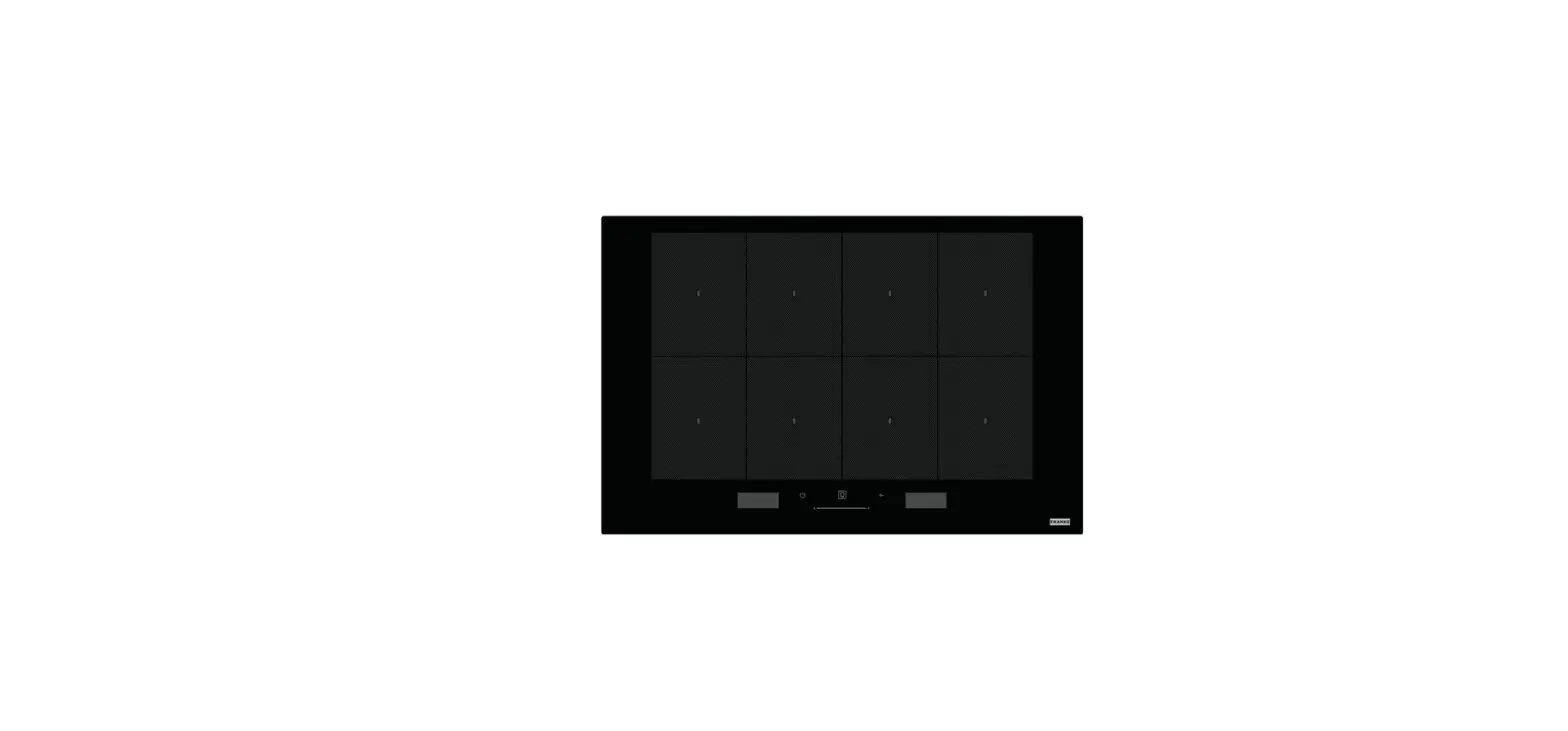
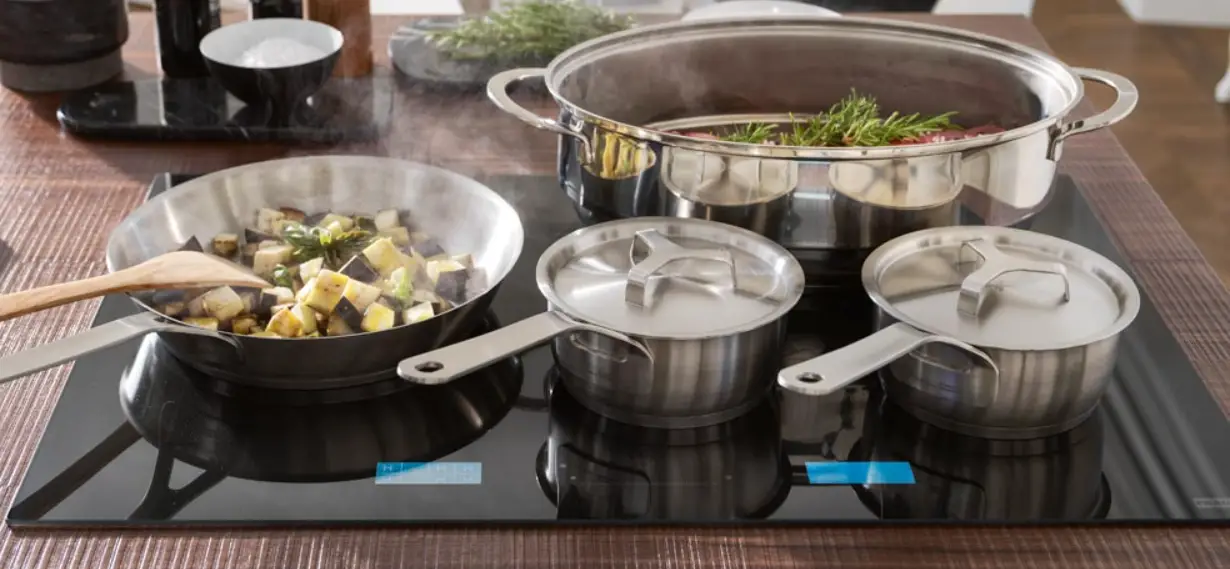
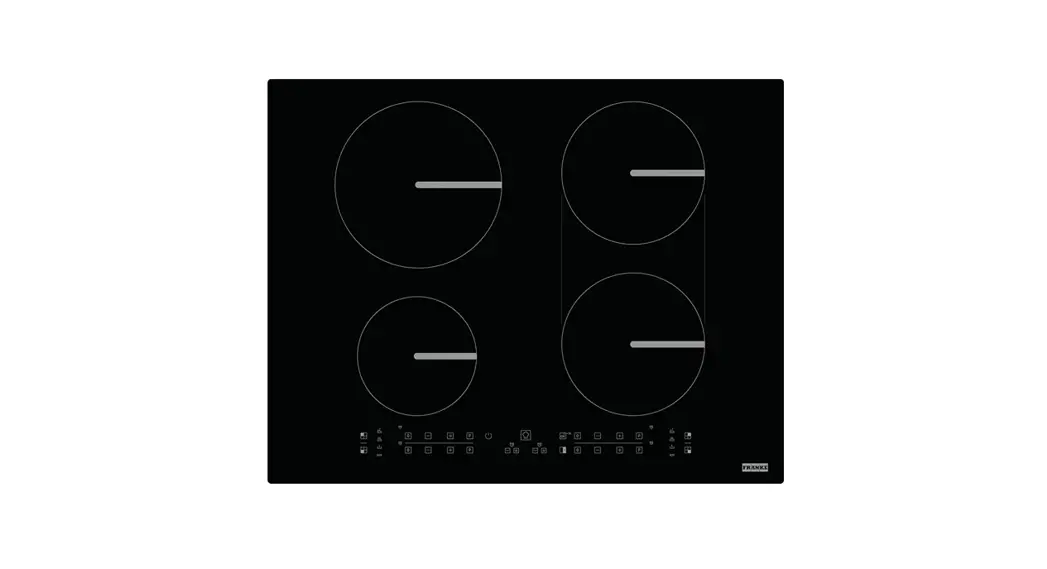
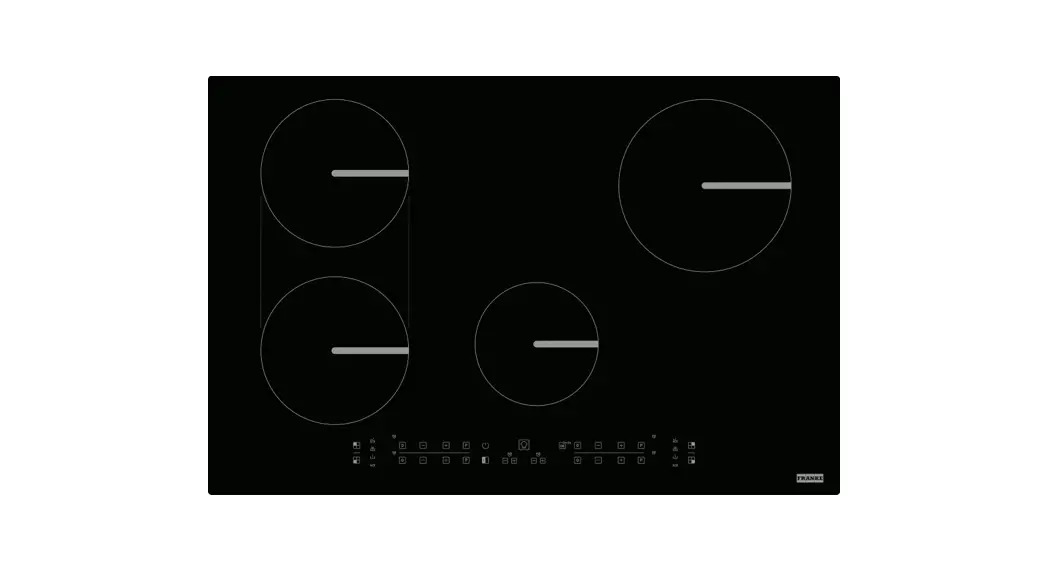
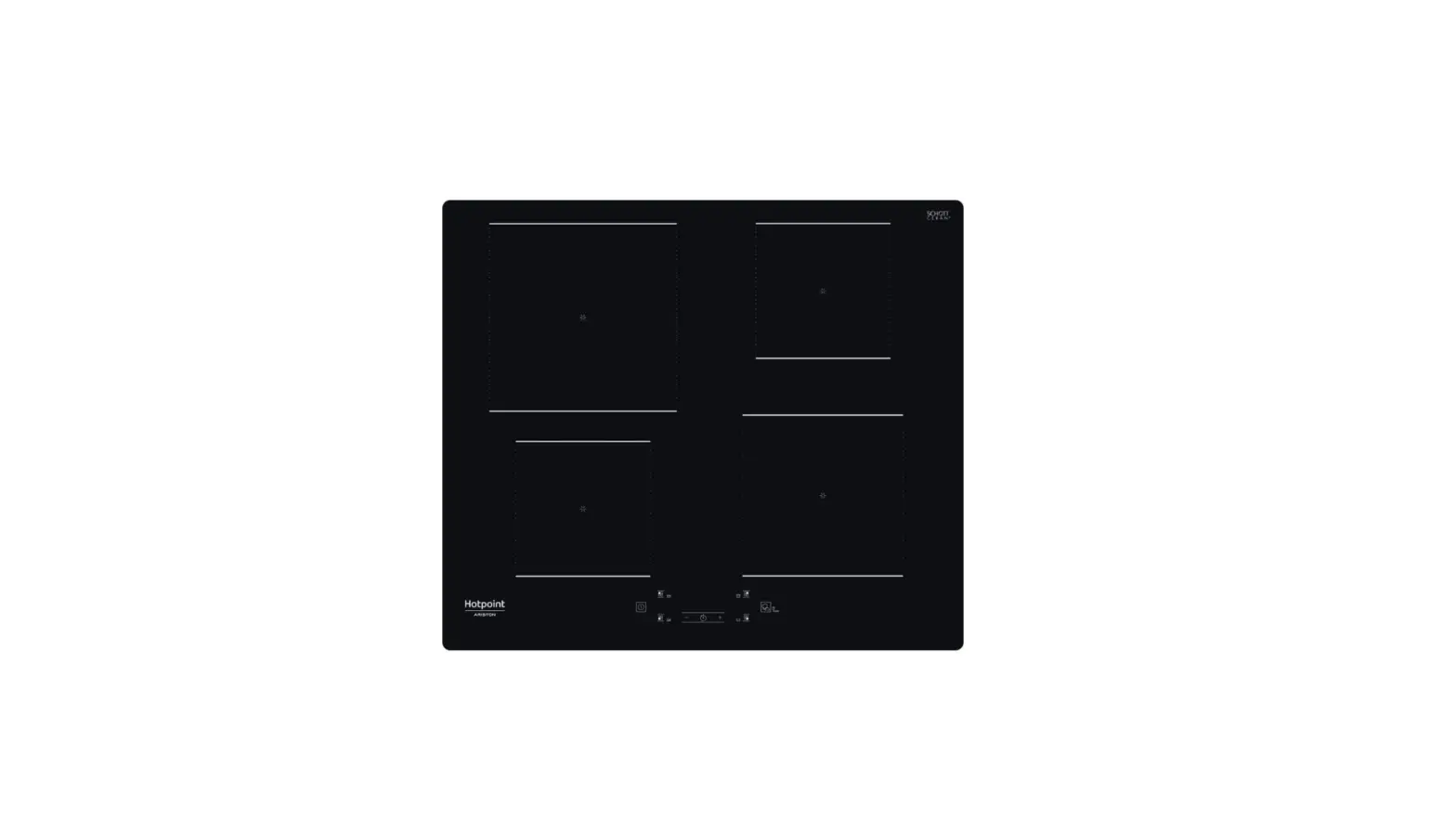
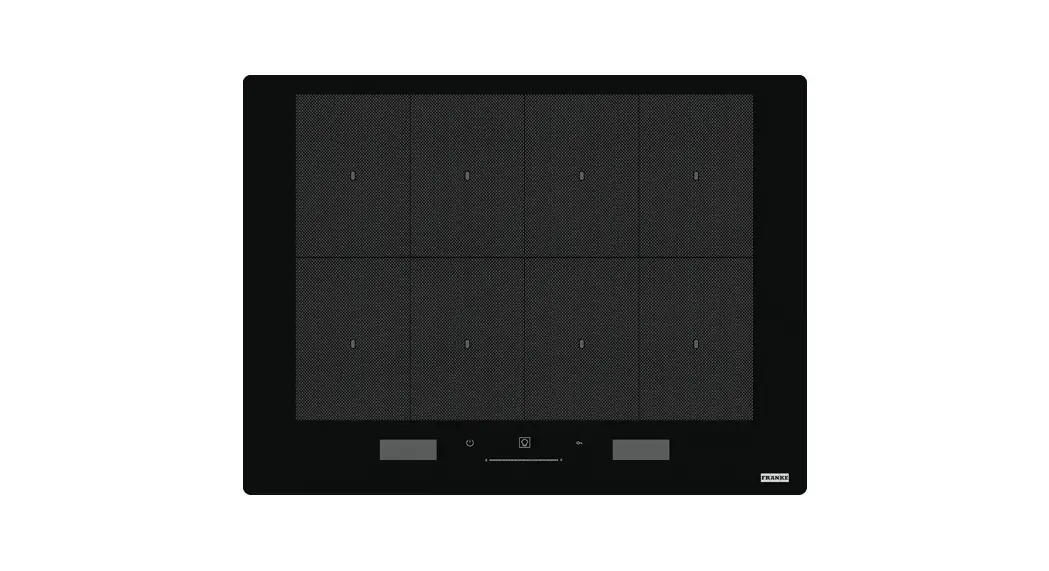
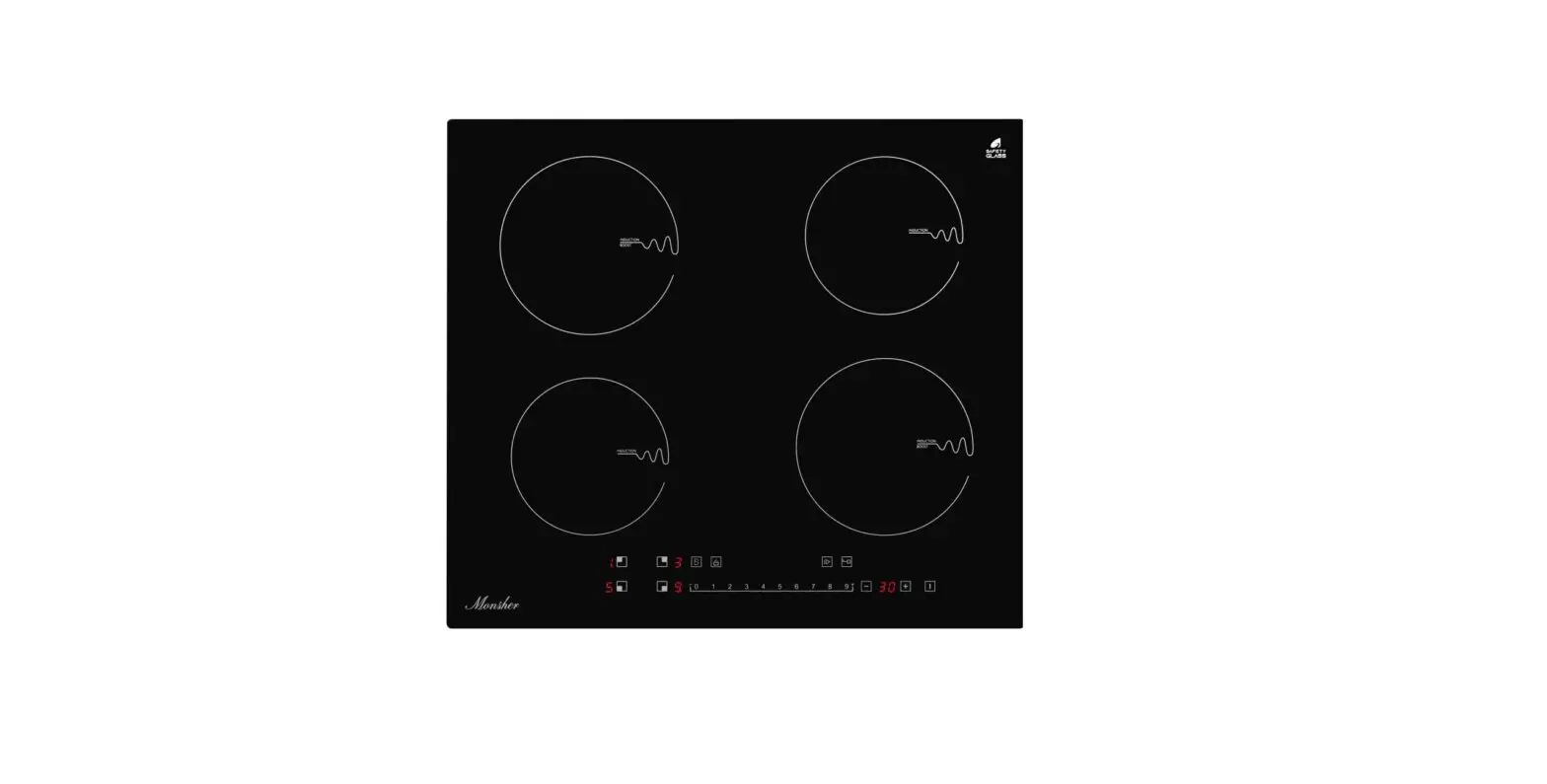
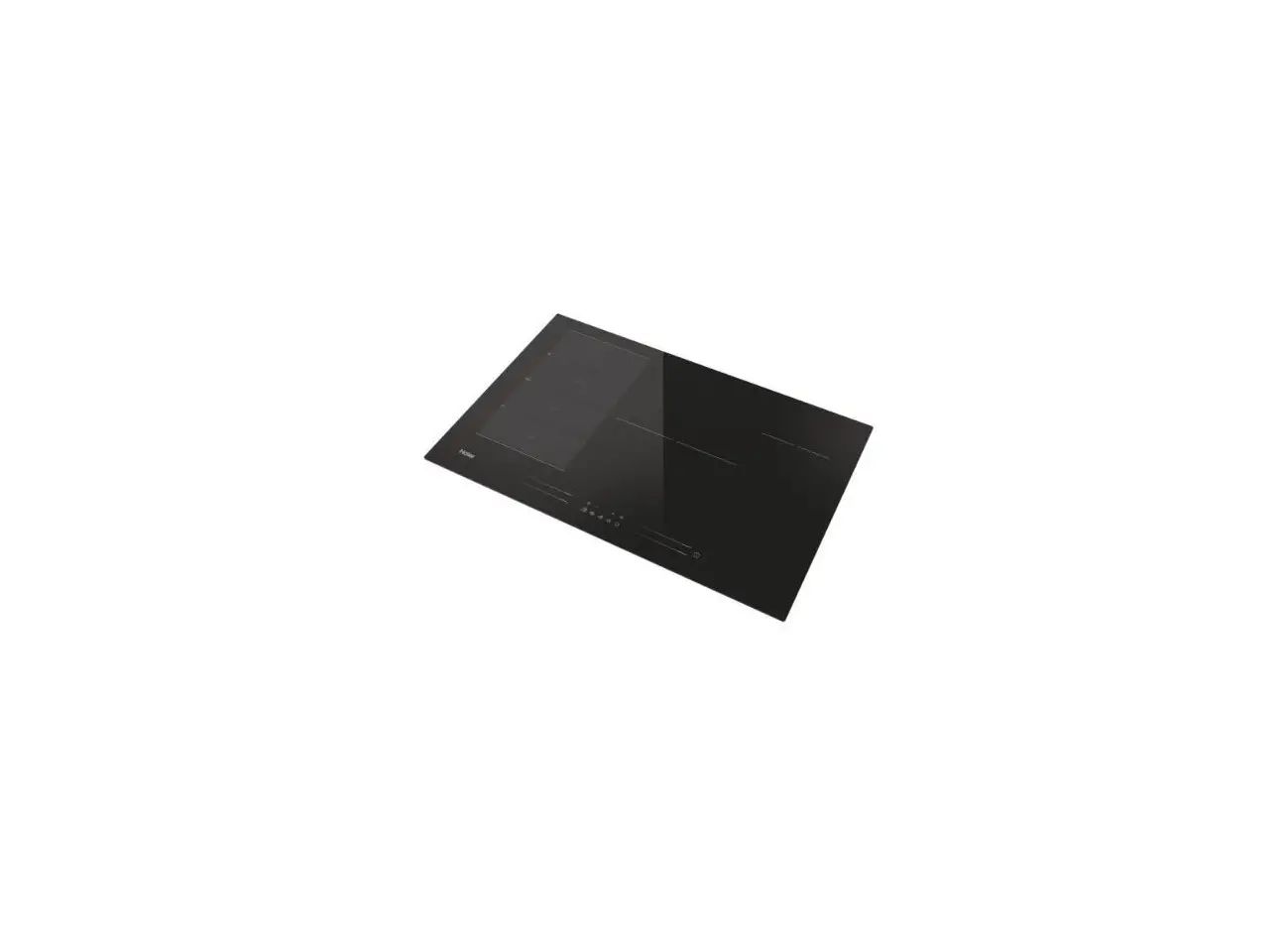
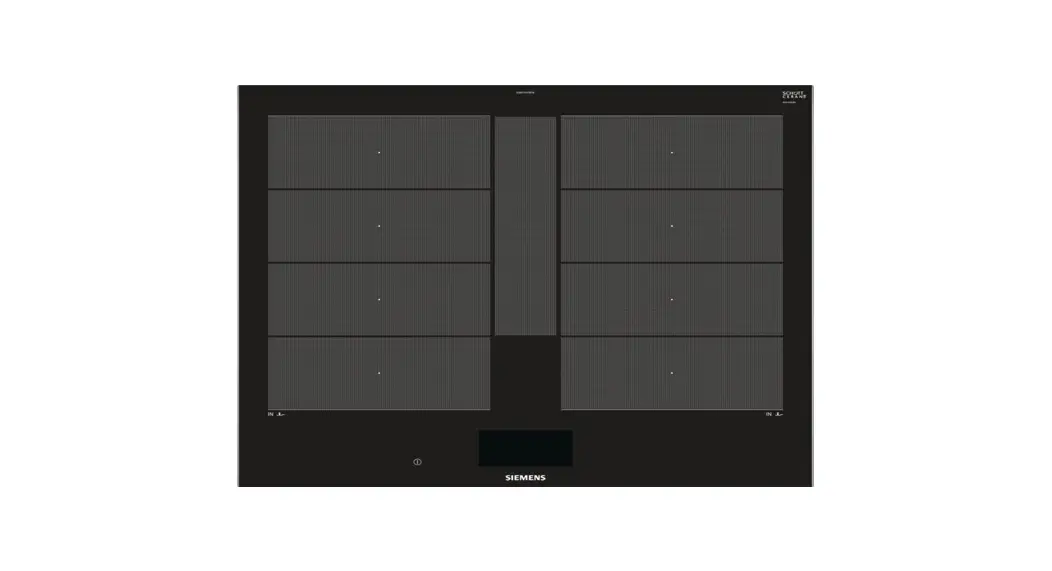
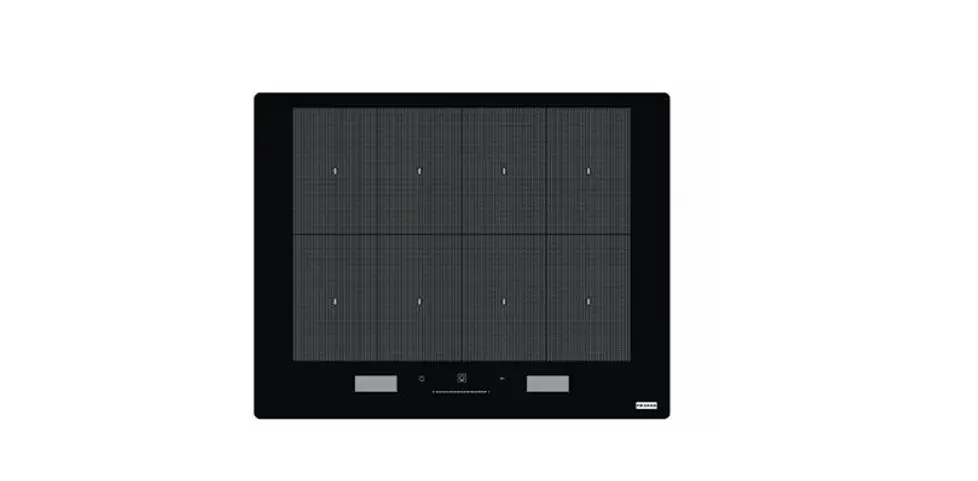
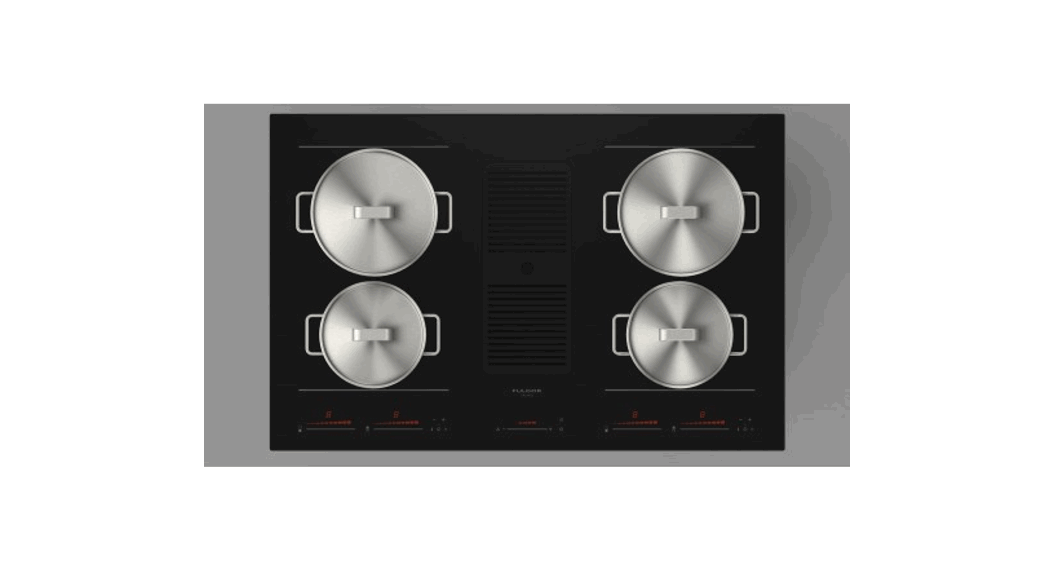
FSH 905 ID WT Induction Hob
Product Information:
The FSH 905 ID WT is an induction hob, designed for efficient
and convenient cooking. It utilizes electromagnetic properties to
create a magnetic field that heats up the cookware placed on top of
it. The hob features a graphical display that provides information
and feedback, making it easy to operate. It has multiple cooking
zones with different power levels, including a Flexi zone that can
be extended for larger cookware. The hob is designed to be safe and
energy-efficient, with automatic shutdown and power limitation
features.
Product Usage Instructions:
- Installation: The installation of the
induction hob, including electrical connections, should be carried
out by qualified personnel according to the applicable regulations.
Please refer to the specific instructions provided for
installers. - Safety Instructions: It is important to ensure
that children do not play with the appliance. Follow the safety
warnings provided in the user manual. - Cookware Selection: Use cookware with a flat
and even bottom, preferably made of materials that distribute heat
evenly, such as stainless steel with a sandwich bottom. Uneven or
engraved bottoms may reduce heat conduction. - Cookware Placement: Refer to figure 2 in the
user manual to correctly position the cookware on the induction
hob. Incorrect placement may lead to malfunctions or damage to the
hob and reduce cooking performance. - Operating the Hob: All functions can be
accessed using the ON/OFF button, the display area, and the back
button. The graphical display provides information and feedback.
The hob also has features like automatic shutdown and individual
zone control.
FSH 905 ID WT
PIANO INDUZIONE INDUCTION HOB INDUKTIONSKOCHFELD PLACA INDUCCION PLYTA INDUKCYJNA
IT INSTALLAZIONE – USO – MANUTENZIONE
EN INSTALLATION – USE – MAINTENANCE
DE INSTALLATION – GEBRAUCH – WARTUNG
ES INSTALLACIÓN – USO – MANTENIMIENTO
PL INSTALACJA – OBSLUGA – KONSERWACJA
RU
–
IT
Caro Cliente, sentitamente La ringraziamo e ci congratuliamo per la scelta da Lei fatta. Questo nuovo prodotto, accuratamente progettato e costruito con materiali di primissima qualità, e stato accuratamente collaudato per poter soddisfare tutte le Sue esigenze di una perfetta cottura. La preghiamo pertanto di leggere e rispettare le facili istruzioni che Le permetteranno di raggiungere eccellenti risultati sin dalla prima utilizzazione. Con questo moderno apparecchio Le formuliamo i nostri più vivi auguri.
IL COSTRUTTORE
INDICE
PAG.
1 – Istruzioni di Sicurezza …………………………………………………………………………………………………………………………………….. 2
2 – Principio di funzionamento ……………………………………………………………………………………………………………………………… 3 Induzione …………………………………………………………………………………………………………………………………… 3 Principio di funzionamento ……………………………………………………………………………………………………………… 3 Recipienti …………………………………………………………………………………………………………………………………… 3
3 – Istruzioni per l’utente ……………………………………………………………………………………………………………………………………… 6 Installazione ………………………………………………………………………………………………………………………………… 6 Funzioni …………………………………………………………………………………………………………………………………….. 6 Manutenzione ……………………………………………………………………………………………………………………………… 15
4 – Istruzioni per l’installatore ………………………………………………………………………………………………………………………………. 16 Installazione ………………………………………………………………………………………………………………………………… 16 Posizionamento ……………………………………………………………………………………………………………………………. 16 Collegamento elettrico …………………………………………………………………………………………………………………… 16 Elenco errori visualizzati …………………………………………………………………………………………………………………. 16
QUESTO PRODOTTO È STATO CONCEPITO PER UN IMPIEGO DI TIPO DOMESTICO.
IL COSTRUTTORE DECLINA OGNI RESPONSABILITÀ NEL CASO DI EVENTUALI DANNI A COSE O PERSONE DERIVANTI DA UNA NON CORRETTA INSTALLAZIONE O DA USO IMPROPRIO, ERRONEO OD ASSURDO.
L’APPARECCHIO NON DEVE ESSERE USATO DA PERSONE (COMPRESI BAMBINI) CON RIDOTTE CAPACITÀ FISICHE, SENSORIALI O MENTALI, O DA PERSONE CHE MANCANO DELL’ESPERIENZA E DELLE CONOSCENZE NECESSARIE SE NON SOTTO LA SUPERVISIONE O DIETRO ISTRUZIONI SULL’USO DELL’APPARECCHIO DA PARTE DI UNA PERSONA RESPONSABILE PER LA LORO SICUREZZA.
I BAMBINI DEVONO ESSERE CONTROLLATI PER ASSICURARSI CHE NON GIOCHINO CON L’APPARECCHIO.
1
IT 1 – Istruzioni di Sicurezza
AVVERTENZE DI SICUREZZA PIANI COTTURA
· L’apparecchio e le sue parti accessibili diventano molto calde durante l’uso. Si deve prestare attenzione a non toccare gli elementi riscaldanti.
· I bambini con meno di 8 anni di età devono essere tenuti lontani se non continuamente sorvegliati.
· Questo apparecchio può essere utilizzato da bambini dagli 8 anni in su e da persone con capacità fisiche, sensoriali o mentali ridotte o con mancanza di esperienza e conoscenza, a condizione che siano sorvegliati o che abbiano ricevuto istruzioni per l’uso dell’apparecchio in modo sicuro per capire i rischi inerenti.
· I bambini non devono giocare con l’apparecchio.
· La pulizia e la manutenzione non devono essere effettuate dai bambini senza supervisione.
· Per il collegamento diretto alla rete, è necessario prevedere un dispositivo che assicuri la disconnessione dalla rete, con una distanza di apertura dei contatti che consenta la disconnessione completa nelle condizioni della categoria di sovratensione III, conformemente alle regole di installazione (il cavo di terra giallo/verde non deve essere interrotto). La presa o l’interruttore devono essere facilmente raggiungibili con l’apparecchiatura installata per permettere la disconnessione dell’apparecchio dalla rete di alimentazione dopo l’installazione.
· Se il cavo di alimentazione è danneggiato, esso deve essere sostituito dal costruttore o dal suo servizio assistenza tecnica o comunque da una persiona con qualifica similare, in modo da prevenire ogni rischio.
ATTENZIONE
· la cottura automatica sul piano di cottura con grasso o olio può essere pericolosa e può provocare incendi. Non cercare di spegnere un eventuale incendio con l’acqua, ma spegnere l’apparecchio e poi coprire la fiamma con un coperchio o una coperta antincendio.
ATTENZIONE
· Pericolo di incendio: non conservare oggetti sulle superfici di cottura.
· Se la superficie è incrinata, spegnere l’apparecchio per evitare la possibilità di scosse elettriche.
· Non utilizzare pulitori a vapore per la pulizia dell’apparecchio.
· Oggetti metallici quali coltelli, forchette, cucchiai o coperchi non dovrebbero essere posti sulla superficie del piano di cottura perché possono scaldarsi.
· L’apparecchio non è destinato ad essere utilizzato per mezzo di un timer esterno o di un sistema separato di controllo remoto.
· L’apparecchio in funzione non deve essere lasciato incustodito.
· Mai lasciare pentole vuote sugli elementi riscaldanti in funzione.
· Non lasciare accesi i bruciatori o elementi riscaldanti elettrici, senza la presenza di una pentola.
· Il processo di cottura deve avvenire sotto controllo. Un processo di cottura breve deve essere costantemente sorvegliato.
· Utilizzare esclusivamente le protezioni progettate dal costruttore del piano, protezioni indicate da esso o protezioni incorporate nell’apparecchio. L’uso di protezioni inadeguate può causare incidenti.
· Dopo l’uso spegnere gli elementi del piano tramite il loro comando senza fare affidamento al rilevatore di pentole.
2
2 – Principio di funzionamento IT
Induzione
Il riscaldamento per induzione è la forma più efficiente, disponibile, per cucinare. Il calore viene prodotto, con un campo elettromagnetico, direttamente sul fondo della pentola o padella utilizzata. La superficie non coinvolta nel contatto rimane pressoché fredda; una volta terminata la cottura e rimosso il contenitore non rimane calore residuo. Efficiente perché non spreca energia per dispersione, come i bruciatori a gas, dal 30 al 50% più rapida dei normali piani con tecnologia HGL, consente risparmi energetici fino al 25%. In presenza di trabocco di liquido dal contenitore non si attacca alla superficie del piano in quanto è tiepido.
Principio di funzionamento
E’ basato sulle proprieta elettromagnetiche della maggior parte dei recipienti per la cottura. Il circuito elettronico governa il funzionamento della bobina (induttore) creante un campo magnetico. Il calore e trasmesso dallo stesso recipiente al cibo. La cottura avviene come sotto descritto.
· minima dispersione (alto rendimento);
· il ritiro della pentola (basta il solo sollevamento) provoca automaticamente l’arresto del sistema;
· il sistema elettronico permette la massima flessibilita e finezza di regolazione.
Fig. 1
Recipienti
Utilizzare esclusivamente stoviglie in materiale ferromagnetico per la cottura a induzione, ad esempio: · stoviglia in acciaio smaltato · stoviglia in ghisa · stoviglia speciale in acciaio inox, adatta alla cottura a
induzione. Per capire se la stoviglia è adatta per l’induzione controllare se il fondo della stoviglia viene attratto da un magnete oppure controllare le indicazioni del produttore. Esistono anche stoviglie a induzione che non dispongono di un fondo in materiale completamente ferromagnetico: · Se il fondo della stoviglia è in materiale solo parzialmente
ferromagnetico, si scalda soltanto la superficie ferromagnetica. Pertanto può succedere che il calore non venga distribuito in maniera uniforme. La zona non in materiale ferromagnetico potrebbe avere una temperatura troppo bassa per la cottura.
· Se il fondo della stoviglia è composto tra l’altro anche da parti in alluminio, viene ridotta anche la superficie in materiale ferromagnetico. Può succedere che tale stoviglia non si scaldi correttamente o che non venga proprio riconosciuta.
1 – Recipiente 2 – Corrente indotta 3 – Campo magnetico
4 – Induttore 5 – Circuito elettronico 6 – Alimentazione elettrica
Recipienti non adeguati Non utilizzare mai diffusori o recipienti di: · acciaio fine normale · vetro · terracotta · rame · alluminio
3
IT
Caratteristiche del fondo della stoviglia
Le caratteristiche del fondo della stoviglia possono influenzare il risultato della cottura. Utilizzare stoviglie di un materiale che distribuisce il calore in maniera uniforme, come ad es. pentole con “fondo sandwich” in acciaio inox in modo da risparmiare tempo ed energia. La soluzione migliore sarebbe quella di utilizzare stoviglie con il fondo completamente piatto. Fondi non uniformi oppure fondi incisi riducono la conduzione di calore.
Stoviglia non presente o dimensione non adeguata
Collocare la stoviglia sempre all’interno dei limiti della superficie di cottura utilizzabile. Se la stoviglia non è collocata correttamente, se non è composta da materiale adatto o se la dimensione non è corretta, il piano cottura segnalerà la mancanza della pentola con il simbolo . Spostare la stoviglia o tentare utilizzando un’altra stoviglia.
Posizione delle pentole
Attenersi scrupolosamente alla figura 2 per posizionare le pentole in modo tale da non provocare malfunzionamenti o danneggiamenti al piano cottura induzione. Inoltre un errato posizionamento potrebbe ridurre le prestazioni di cottura delle pentole.
ATTENZIONE
Oggetti metallici quali coltelli, forchette, cucchiai o coperchi non dovrebbero essere posti sulla superficie del piano di cottura perché possono scaldarsi.
Stoviglia vuota o stoviglia con fondo sottile
Non riscaldare alcuna stoviglia vuota e non utilizzare stoviglie con fondo sottile. Il fondo della stoviglia potrebbe fondersi e danneggiare la piastra in vetro. Non toccare in nessun caso la stoviglia e spegnere il piano cottura. Qualora il piano cottura, una volta raffreddato, non funzionasse più, contattare il servizio di assistenza tecnica.
Riconoscimento della pentola
Il piano cottura riconosce automaticamente la posizione e la forma della stoviglia utilizzata, a seconda del diametro ferromagnetico e del materiale del fondo della stoviglia. Le stoviglie per essere adatte devono avere un diametro del fondo compreso tra 120 e 240 mm. Avvertenza: Gli indicatori della zona di cottura possono differire dalla dimensione e dalla forma effettive della stoviglia. Questo è un fenomeno normale che non compromette il corretto funzionamento del piano cottura.
4
IT
Ø 145 min
Fig. 2 Ø 250 min Ø 125 min
Ø 145 min
2
5
3
1
4
Ø 245 min
2 3
1
Ø 245 min
5 4
5
IT 3 – Istruzioni per l’utente
Installazione
Tutte le operazioni relative all’installazione (allacciamento elettrico) devono essere eseguite da personale qualificato secondo le norme vigenti. Per le istruzioni specifiche vedi parte riservata all’installatore.
IMPORTANTE
NON FISSARE INTENSAMENTE I LED E I DISPLAY.
Funzioni
Tutte le funzioni possono essere eseguite tramite il tasto ON/ OFF, l’area del display e il tasto “back”. Le informazioni e il feedback sono forniti dal display grafico.
Accensione / spegnimento del Touch Control
Dopo aver applicato l’alimentazione, il controllo touch richiede un secondo per essere pronto. Dopo un reset tutti i LED si accendono per un secondo. Trascorso questo tempo tutti i LED si spengono nuovamente. L’interfaccia può ora essere avviata toccando il pulsante di accensione / spegnimento. Sul display compare per 2 secondi il logo, seguito da un segnale di avvertenza di sicurezza Non posizionare tegami caldi sul display.
Area del display
Tasto ON/OFF
Tasto “INDIETRO/BACK”
Dopodiché la modalità di cottura è attiva. Il display mostra tutte le zone di cottura. L’elettronica rimarrà attiva per 20 secondi. Se entro questo tempo non viene eseguita alcuna azione (selezione zona o timer) il piano cottura va in standby indicato da un segnale acustico. Il piano cottura a induzione si accende solo se viene premuto il pulsante on / off. Se viene riconosciuto un altro pulsante, il piano cottura non si accenderà. Lo spegnimento manuale del piano cottura si effettua tenendo premuto il tasto on / off.
Spegnimento automatico
Il piano cottura passa dall’accensione allo spegnimento dopo 20 sec. se nessuna zona di cottura è attivata o viene premuto il tasto multifunzione durante tale tempo.
Accensione / spegnimento di una zona di cottura
Se il controllo è già acceso, è possibile selezionare una zona toccando una delle zone di cottura presenti nel display. Dopo aver selezionato le zone di cottura, il livello di cottura può essere regolato toccando l’area del cursore. Facendo “scorrere” il dito sull’area del cursore è possibile aumentare o diminuire il livello di cottura (0 – P). In alternativa il livello di cottura può essere selezionato direttamente sul cursore senza scorrere. Se il livello di cottura è impostato a 0 la zona di cottura è in modalità “spenta”.
Spegnimento di tutte le zone di cottura
Lo spegnimento immediato di tutte le zone cottura è sempre possibile premendo e tenendo premuto il tasto on / off. Anche se il Touch Control è bloccato lo spegnimento è possibile. Tutte le zone di cottura che hanno lo stato “caldo” presentano un cerchio con tre anelli.
Spegnimento automatico (limitazione del tempo di funzionamento)
A seconda del livello di cottura scelto viene definito un limite massimo di tempo di funzionamento (se non viene effettuato alcun cambiamento del livello di cottura). Se questo tempo massimo di funzionamento viene superato su una zona di cottura, questa viene spenta. In caso di superficie calda viene visualizzato il calore residuo. Dopo ogni operazione dell’utente, il tempo rimanente fino allo spegnimento automatico viene ripristinato al limite di tempo di funzionamento definito di questo livello di cottura. Le impostazioni del timer hanno la priorità sulla limitazione del tempo di funzionamento. Il tempo di funzionamento dettagliato in base al livello di potenza può essere ricavato dalla tabella.
6
A B
A
IT
Fig. 3
A C
B
A
RIF. ELEMENTI ACCESI
A FLEXI singola zona B FLEXI in zona estesa C 180/260
POTENZA NOMINALE (kW)
2,1 3,7 1,85/3,7
POTENZA IN POWER BOOSTER (kW)
3,7 –
3,0/5,5
DIAMETRI RACCOMENDATI PENTOLE (mm)
145 245 125/250
Potenza massima nominale : 11,04 kW
7
IT
Livello di cottura Livello di potenza [%]
0
0
1
3
2
6,5
3
11,0
4
15,5
5
19,0
6
31,5
7
45,0
8
64,5
9
100
Tempo operativo [h] 0 6 6 5 5 4 1,5 1,5 1,5 1,5
Protezione contro l’attivazione involontaria
Il Touch Control si spegne automaticamente in caso di un uso permanente identificato dei tasti di circa 10 secondi. Il Touch Control emette un segnale acustico per 10 sec e il codice di errore “E R 0 3” lampeggia sul display. Se il malfunzionamento supera i 10sec, solo il codice di errore “ER 03” continua a lampeggiare finché si verifica il malfunzionamento e viene identificato come tale. Nel caso in cui la zona di cottura sia in fase “calda” il simbolo si alterna con il codice errore. (Dopo aver pulito il vetro che copre i tasti, tutti i tasti sono pronti per l’uso in pochissimo tempo). Se non riesce ad attivare una zona di cottura entro 10 secondi dopo aver premuto il tasto on / off, il Touch Control viene riportato in modalità standby.
Modalità pulizia superficie
Per permettere di eseguire la pulizia della superficie senza azionare inavvertitamente i tasti, esiste una funzione di “lock”. Premendo il tasto “20s” i comandi andranno in blocco e un contatore conterà i 20sec.
Calore residuo La temperatura del vetro di ciascuna zona di cottura è calcolata e visualizzata da simbolo a cerchio con tre anelli per ogni zona di cottura. Verranno visualizzate le icone con i 3 anelli fino a quando la temperatura non è inferiore a una temperatura di sicurezza (~ 60 ° C). L’indicazione di calore residuo è visualizzata al massimo per circa 50 minuti.
Rilevamento pentola automatico Il rilevamento automatico della pentola consente un utilizzo intuitivo dei piani cottura a induzione. La funzione riconosce automaticamente le pentole e cambia la posizione delle pentole sul piano di cottura. Non appena viene rilevata una pentola, la zona di cottura viene selezionata automaticamente e appare il cursore in modo che l’utente possa facilmente impostare il livello di cottura per questa zona di cottura. Inoltre, è possibile realizzare la funzione ponte semiautomatico.
NOTA: durante il normale funzionamento del piano cottura se si effettuano spostamenti della pentola facendola scorrere invece di sollevarla, può succedere che i sensori presenza pentola rilevino una pentola grande come se fossero 2 pentole piccole separate. Per evitare questa possibilità di identificazione errata della pentola, è sufficiente sollevare la pentola per alcuni secondi e poi riposizionarla sopra i sensori in modo che venga nuovamente riconosciuta come zona unica (ad esempio bridge) e quindi distribuire l’intensità della potenza in maniera uniforme. Se anche questo tentativo non dovesse portare a riconoscere l’area di cottura come una singola area, sollevare la pentola, quindi regolare le impostazioni della zona di cottura a zero, quindi riposizionare la pentola e regolare nuovamente la potenza scelta. Attenzione : se dopo questi tentativi la pentola viene vista ancora come zona cottura separata potrebbe dipendere dal tipo di fondo della pentola. Quindi sostituire la pentola con una adeguata (vedi Recipienti a pag. 3)
IMPORTANTE
Dopo l’uso spegnere gli elementi del piano tramite il loro comando senza fare affidamento al rilevatore di pentole.
8
IT
NOTA : il sistema di rilevamento automatico della presenza pentola, genera ciclicamente un piccolo “click” in sottofondo.
da garantire che dopo la disattivazione del booster venga applicata la potenza nominale.
Livelli di potenza
La potenza delle zone di cottura può essere regolata su 9 livelli + Boost (P) (1-9, + P). Dopo aver selezionato una zona di cottura, compare un cursore sul bordo inferiore del display.
La funzione booster di ciascuna zona di cottura può essere attivata per un tempo limitato di 10 minuti. Se la pentola viene rimossa da una zona di cottura con la funzione booster attiva, la funzione booster non verrà disattivata ma il contatore del tempo booster continuerà a funzionare e non si fermerà. La funzione booster può essere riattivata se la limitazione del tempo booster ha disattivato il booster purché le condizioni termiche lo consentano. Le condizioni termiche sono controllate sia dall’induzione che dall’interfaccia utente. Per visualizzare la disattivazione del booster il display della zona di cottura inizia a mostrare una P lampeggiante tre secondi prima della disattivazione.
Disattivazione del booster: Se la funzione booster è attiva una riduzione del livello di cottura disattiva la funzione booster.
Il livello di cottura viene selezionato toccando direttamente il numero richiesto sul cursore o scorrendo fino al numero richiesto. Quando si solleva il dito, il livello di cottura viene impostato.
Funzione booster
Tutte le zone di cottura induttive hanno una funzione booster (P). Se il booster è attivato, il generatore fornisce una potenza notevolmente superiore alla potenza nominale a una zona di cottura. La funzione booster consente all’utente di riscaldare il cibo in modo estremamente veloce e quindi può aiutare a risparmiare tempo.
Attivazione del booster: Il booster si attiva toccando il livello di cottura più alto (P) nell’area del cursore. Finché il booster è attivo, sul display della zona di cottura viene visualizzata una “P”. Se non è possibile attivare la funzione booster (esempio a causa dei limiti di temperatura) la P lampeggia per 3 secondi e la funzione booster viene quindi disattivata.
Quando la funzione booster è attiva viene terminato un tempo di riscaldamento eventualmente attivo automatico e il livello di potenza viene impostato alla massima potenza in modo
Funzione bollitura automatica
Quando si attiva la funzione bollitura automatica, la potenza della zona di cottura viene portata al 100% per un periodo di tempo dipendente dal livello di cottura selezionato. Non appena il tempo di bollitura è terminato, il livello di cottura continua al livello di cottura precedente.
I tempi di bollitura sono scritti nella tabella sottostante.
Livello di cottura
0 1 2 3 4 5 6 7 8 9
Funzione bollitura automatica (minuti)
0 0,8 2,4 3,8 5,2 6,8 2,0 2,8 3,6 0,25
9
IT
Attivazione della bollitura automatica: · Il Touch Control deve essere acceso e una zona di cottura
selezionata.
· La bollitura automatica si attiva tenendo il dito premuto sul livello di cottura continua desiderato (tra il livello 1 e 8) per 2,5 secondi.
· Il display della zona di cottura visualizza per la bollitura automatica accanto al livello di cottura continua. Al termine della bollitura, viene visualizzato solo il livello di potenza.
· Entro 15 secondi il livello di cottura continua per la funzione di bollitura può essere modificato in un livello di cottura continua superiore o inferiore selezionando la zona di cottura e toccando un altro livello di cottura sul cursore
· È possibile passare a un livello di cottura continua più alto anche dopo 15 secondi. Un livello di cottura inferiore al livello di cottura continua, disattiverà la funzione (vedi disattivazione bollitura automatica).
Se si modifica il livello di cottura continua, verrà ricalcolato il tempo di bollitura (nuovo tempo di bollitura meno il tempo prima azionato mentre era attiva la bollitura automatico)
Bridge manuale (zona estesa) Il sistema presenta anche una funzione per selezionare e attivare manualmente la zone estese. Per attivare questa funzione, premere il tasto “zona estesa/ bridge mode”
Una volta effettuata l’operazione, selezionare una delle zone estese a destra o a sinistra per attivarla. In tal modo la/le pentole presenti sulla zona estesa, funzioneranno come una zona singola.
Selezione automatica doppio circuito circolare L’attivazione della zona piccola o della zona grande dell’elemento doppio circuito avviene in modo automatico. Appoggiando una pentola la cui dimensione sta dentro al cerchio interno, si attiverà nel display la zona interna in grassetto.
Disattivazione della bollitura automatica: · La zona di cottura deve essere selezionata
· Portando il livello di cottura ad un livello inferiore al livello di cottura continua impostato per la bollitura automatica si disattiva la funzione bollitura automatica. In alternativa è possibile spegnere la zona di cottura impostando il livello di cottura a “0”
Mentre se appoggere una pentola grande si vedrà accendersi in grassetto la zona esterna.
Bridge automatico (zona estesa)
Il sistema presenta un sistema automatico di rilevamento della funzione bridge.
Non appena il sistema ha riconosciuto che due sensori di zona sono coperti contemporaneamente da una pentola (ad esempio una pentola ovale di grandi dimensioni), il sistema imposta automaticamente il bridge. Appaiono le parentesi del bridge e il cursore, e l’utente deve solo impostare il livello di cottura.
Disattivazione del ponte semiautomatico: · Togliere la pentola dalla zona interessata
10
IT
Funzione di riscaldamento
Attivazione: La funzione di Riscaldamento è controllata dalla temperatura e disponibile in tre fasi. La potenza viene regolata automaticamente. Per attivare questa funzione è necessario selezionare una zona di cottura, tenendo premuta la stessa zona di cottura per 2 secondi. Apparirà quindi un sottomenù “Funzioni di cottura”, con la possibilità di scegliere fra due funzioni: Timer e Riscaldamento.
e il simbolo pentola mancante . La pentola inizierà la fase di riscaldamento fino a raggiungere la temperatura impostata.
Disattivazione: Per disattivare la funzione riscaldamento, è necessario selezionare la zona di cottura precedentemente scelta e impostare un livello di cottura qualsiasi, oppure portare a valore 0 per spegnerla.
Selezionare quindi “Riscaldamento” e apparirà la scelta fra 3 impostazioni predefinite: 40, 70 e 90°C.
Funzione blocco bambini
Dopo aver acceso l’unità di controllo, è possibile attivare il meccanismo di sicurezza bambini. Dopo l’attivazione del blocco bambini, la modalità blocco bambini è impostata in modo permanente, ciò significa che anche in modalità standby il blocco bambini rimane attivo.
Attivazione del blocco bambini: La modalità blocco bambini è disponibile nel menu delle impostazioni. Si accede al menu impostazioni premendo il tasto multifunzione
. Selezionando il simbolo Blocco nella relativa area slider, viene visualizzato il menu blocco. Il blocco bambini deve essere confermato premendo il simbolo “spegnimento”.
Una volta scelta una delle tre temperature, nel display appariranno, in corrispondenza della zona di cottura precedentemente selezionata un simbolo
Successivamente la modalità “accensione blocco” sarà attivata.
Nel caso non sia ancora presente la pentola in tale zona, lampeggeranno alternativamente il simbolo riscaldamento
Nel caso di spegnimento del piano induzione, alla riaccensione apparirà la seguente schermata
11
IT
Funzione timer La funzione timer è disponibile in due qualità, “Egg Timer” e “Cooking Timer” Timer come contaminuti per uova “Egg Timer”: Se il piano induzione è acceso (tutte le zone di cottura sono in posizione “0”), è possibile attivare il timer autonomo premendo il timer “00m 00s” sul display
Per togliere il blocco far scorrere con il dito il simbolo “chiave” verso il “lucchetto”
NOTA: per eliminare definitivamente il blocco bambini è necessario entrare nel menù impostazioni e disattivare il blocco.
Disattivazione della sicurezza bambini: Per disattivare il blocco bambini, è necessario accedere nuovamente al menu Blocco bambini nello stesso modo descritto in precedenza.
Sblocco temporaneo: Finché la funzione blocco bambini è stata attivata, l’interfaccia utente deve essere sbloccata ogni volta dopo l’accensione del piano cottura. Quando il piano di cottura si accende, viene visualizzata la schermata di sblocco. Ora è possibile sbloccare il piano cottura facendo scorrere il simbolo “chiave” verso il “lucchetto.
Dopo averlo fatto, viene visualizzato il menu del timer. L’utente può impostare un conto alla rovescia con i valori mm : ss, rispettivamente minuti e secondi
In alternativa il valore del timer può essere resettato premendo il simbolo a destra
Feedback acustico (cicalino)
Le seguenti azioni sono indicate dal buzzer: · Tasto normale premuto -> singolo segnale acustico breve · Attivazione erronea di un tasto permanente per un tempo più lungo (> 10s.) -> bip intermittente
Premendo il simbolo “clessidra” si esce dal menu e il timer inizia il conto alla rovescia. Dopo che il contatore è scaduto, viene fornito un feedback acustico e un feedback visivo (“00:00” lampeggiante). Il feedback acustico termina dopo 2 min. o toccando un qualsiasi tasto. Spegnimento del contaminuti per le uova: Il timer può essere spento rientrando nel menu timer e premendo il simbolo ON/OFF.
12
IT
Funzione Pausa e Richiama Attivazione della funzione Pausa: Quando almeno una zona di cottura è in funzione, è possibile attivare la funzione pausa. Per attivare la funzione di pausa è necessario premere il simbolo “||” presente sul display.
Regolazione del contaminuti per uova attivo: Questo può essere fatto reinserendo il timer menu e regolando il valore del timer. Selezionando “la clessidra” nella posizione del relativo cursore, il timer inizia il conto alla rovescia con il nuovo valore del timer.
Timer di cottura:
È possibile impostare il timer della zona di cottura per ogni singola zona di cottura. Non appena il contatore è scaduto, la zona di cottura si spegne automaticamente.
Attivazione del timer di cottura: Per attivare un timer relativo a una zona di cottura, è necessario accendere il piano di cottura e selezionare una zona di cottura. Dopo aver selezionato una zona di cottura è necessario tenere premuta la stessa zona cottura, quindi selezionare il timer dal menu “Funzioni di cottura”. Viene visualizzato il menu del timer, dove i valori possono essere impostati come segue: h: mm: ss Il timer si avvia confermando le impostazioni con “simbolo timer” lampeggiante. In alternativa il valore del timer può essere resettato premendo il simbolo di reset sulla destra. Il tempo rimanente viene visualizzato sulla zona di cottura corrispondente. Il timer attivo può anche essere regolato o interrotto selezionando la zona di cottura e rientrando nel menu del timer. Dopo che il contatore è scaduto, viene fornito un feedback acustico e un feedback visivo (“0:00:00” lampeggiante). Il feedback acustico termina dopo 2 min. o toccando un tasto casuale.
La condizione di pausa può essere attivata anche con errori specifici della zona di cottura – qui la visualizzazione degli errori è nascosta. Anche l’indicazione del calore residuo, i messaggi speciali sono nascosti; la visualizzazione della pausa ha la priorità.
Mentre la funzione Pausa è attiva: Finché la funzione pausa è attiva nessuna potenza verrà emessa su nessuna zona di cottura. Tutti gli stati del sistema verranno mantenuti per tutta la pausa. Dopo la pausa verranno riavviati i contatori del timeout per le zone di cottura senza pentole rilevate (max. 10min). Qualsiasi timer, (anche il timer per le uova) impostato prima della pausa, verrà interrotto durante la pausa e continuerà quando si esce dalla modalità di pausa. Quando la modalità di pausa è attivata, una funzione booster o bollitura automatica selezionata viene terminata. Il calcolo del calore residuo e le limitazioni del tempo massimo di funzionamento non verranno interrotti e continueranno a funzionare in background. La modalità pausa può essere attivata solo per un massimo di 10 min. Se la modalità pausa non viene disattivata entro 10min, il piano cottura si spegne automaticamente. Durante il tempo di pausa è possibile utilizzare il pulsante on / off per spegnere il controllo. In questo caso viene disattivata anche la modalità pausa.
Disattivazione della modalità di pausa: Per disattivare la modalità pausa premere la posizione indicata sullo slider. Ciò riattiverà lo stato precedente all’attivazione della pausa.
Funzione di richiamo: Se il controllo è stato accidentalmente spento tramite l’interruttore principale, tutte le impostazioni possono essere ripristinate utilizzando la funzione di richiamo. Dopo aver spento il controllo dall’interruttore principale, l’utente ha 6 secondi per riaccendere il controllo e quindi le impostazioni verranno ripristinate automaticamente. La funzione di richiamo è utilizzabile solo se era attiva almeno una zona di cottura (livello di cottura> 0).
13
IT
Impostazioni ripristinate: · Livelli di cottura di tutte le zone di cottura. · Minuti e Secondi dei timer relativi alla zona di cottura attiva. · Tempo di riscaldamento automatico e funzione booster. · Stato di blocco bambini.
Blocco del tempo 20 secondi Per attivare la funzione di blocco temporale, è necessario premere brevemente il pulsante 20sec
Mentre il blocco temporale è attivo, viene visualizzato il seguente messaggio e viene eseguito il conto alla rovescia del tempo rimanente.
Selezione della lingua
Per modificare le impostazioni della lingua, accedere al menu delle impostazioni premendo il tasto impostazioni. Successivamente, seleziona il simbolo “globo”. Ora viene visualizzato il menu della lingua. La lingua attualmente selezionata viene mostrata evidenziata in grassetto. Per cambiare la lingua, premere il punto indicato nell’area del cursore. Non appena viene selezionata una lingua, il menu viene lasciato automaticamente. Ulteriori lingue oltre a quelle visualizzate possono essere selezionate premendo il tasto “freccia” a destra, in alto a destra. Verrà visualizzata una ulteriore schermata con le lingue.
Impostazioni generali del piano cottura L’utente ha la possibilità di regolare le impostazioni generali del piano cottura. Queste impostazioni persistono anche dopo lo spegnimento del piano cottura. È possibile regolare le seguenti impostazioni:
· Selezione della lingua
· Luminosità del display
· Controllo del volume Per accedere al menu delle impostazioni premere il tasto a destra
14
IT
Controllo del volume
Per modificare il volume, accedere al menu delle impostazioni. Successivamente, seleziona il simbolo “altoparlante”. Ora viene visualizzato il menu del volume. Per regolare il livello del volume, basta scorrere sull’area del cursore in cui il livello del volume aumenta da sinistra a destra. Per uscire dal menu, premere nuovamente il tasto multifunzione.
Luminosità del display
Per modificare la luminosità del display, accedere al menu delle impostazioni premendo il relativo tasto. Successivamente, seleziona il simbolo “sole”. Ora viene visualizzato il menu Luminosità. Per regolare il livello di luminosità, basta scorrere sull’area del cursore in cui il livello di luminosità aumenta da sinistra a destra. Per uscire dal menu, premere il tasto “indietro”
Tasto INDIETRO/BACK
Manutenzione
Tracce di fogli di alluminio, residui di cibo spruzzi di grasso, zucchero o cibi fortemente saccariferi devono essere immediatamente rimossi dal piano di cottura con un raschietto per evitare possibili danni alla superficie del piano. Successivamente pulire con SIDOL o STANFIX e carta da cucina, quindi risciacquare con acqua e asciugare con uno straccio pulito. In nessun caso usare spugne o strofinacci abrasivi; evitare anche l’uso di detersivi chimici aggressivi come FORNOSPRAY o SMACCHIATORI.
NON UTILIZZARE PULITORI A VAPORE
Fig.5
15
IT 4 – Istruzioni per l’installatore
Installazione
Le presenti istruzioni sono rivolte all’installatore qualificato quale guida all’installazione, regolazione e manutenzione secondo le leggi e le normative in vigore. Gli interventi devono sempre essere effettuati ad apparecchiatura disinserita elettricamente.
Elenco errori visualizzati
In caso di errori o malfunzionamenti del piano cottura potrebbero comparire nel display alcuni codici di errore. L’intervento dovrà essere fatto dall’assistenza tecnica e un tecnico specializzato.
Posizionamento
L’apparecchio è previsto per essere incassato in un piano come illustrato nelle apposite figure (pag. 18). Predisporre su tutto il perimetro del piano il sigillante a corredo. E’ sconsigliabile l’installazione sopra un forno contrariamente accertarsi che:
· il forno sia munito di un efficace sistema di raffreddamento;
· che non avvenga in nessun caso passaggio di aria calda dal forno verso il piano;
· prevedere passaggi d’aria come indicato in figura.
Collegamento elettrico
Prima di effettuare l’allacciamento elettrico accertarsi che:
· le caratteristiche dell’impianto siano tali da soddisfare quanto indicato sulla targa matricola applicata sul fondo del piano;
· che l’impianto sia munito di un efficace collegamento di terra secondo le norme e le disposizioni di legge in vigore. La messa a terra è obbligatoria a termini di legge.
Nel caso in cui l’apparecchiatura non sia munita di cavo e/o di relativa spina utilizzare materiale idoneo per l’assorbimento indicato in targa matricola e per la temperatura di lavoro. Il cavo in nessun punto dovrà raggiungere una temperatura superiore di 50°C a quella ambiente. Per il collegamento diretto alla rete è necessrio interporre un interruttore omnipolare dimensionato per il carico di targa che assicuri la sconnesione della rete con una distanza di apertura dei contatti che consenta la disconnesione completa nelle condizioni della categoria di sovratensione III, conformemente alle regole di istallazione (il cavo di terra giallo/verde non deve essere interrotto). La presa o interrutore omnipolare devono essere facilmente raggiungibili con l’apparecchiatura installata.
N.B.:
· Il costruttore declina ogni responsabilità nel caso che quanto sopra e le usuali norme antinfortunistiche non vengano rispettate.
Se il cavo di alimentazione è danneggiato, esso deve essere sostituito dal costruttore o dal suo servizio assistenza tecnica o comunque da una persona con qualifica similare, in modo da prevenire ogni rischio.
Vedi tabella cavi alimentazione, pag. 20
16
IT
Messaggio di errore
Descrizione
Causa possibile dell’errore
Risoluzione dei problemi
ER03 + Segnale acustico costante ER 20 ER21
ER22 ER31 ER36 ER40
ER47
E2 E6 E7 E8 E9 U 400
E/A
Il tasto rimane sempre acceso,
Acqua o pentole sul vetro sopra
l’interfaccia si spegne dopo 10 sec l’interfaccia
Pulire l’interfaccia
Lampeggiante – guasto
µ C- difettoso
Sostituire l’unità di controllo
L’unità di controllo si spegne a
L’algoritmo di controllo ha
causa della sovratemperatura, per raggiunto la sovratemperatura,
evitare che il sistema di controllo a perché la temperatura ambiente è
sfioramento si danneggi
troppo alta
Lasciare raffreddare il piano di cottura, controllare l’isolamento termico dell’interfaccia utente
Tasto di regolazione difettoso.
Cortocircuito o interruzione della
L’unità di controllo si spegne dopo corrente che alimenta il tasto di
3,5 – 7,5 sec.
regolazione
Sostituire l’unità di controllo
Dati di configurazione errati
Configurazione dell’induzione necessaria
Nuova configurazione
Il valore NTC non rientra nelle
Cortocircuito o spegnimento al
specifiche (valore < 200mV o > raggiungimento del valore NTC
4,9V); l’unità di controllo si spegne
Sostituire l’unità di controllo
Tensione secondaria troppo bassa per 5 minuti (1,8V< Interruzione alimentazione unità < 2,9V)
PTC principale troppo caldo
Scollegare l’interfaccia dall’alimentazione
Errore di comunicazione tra il sistema di induzione e il sistema di comando a sfioramento
Comunicazione assente o errata
Il cavo di collegamento è rotto o non è stato installato correttamente
Sovratemperatura nella zona cottura
Lasciare che il sistema si raffreddi
Guasto dell’unità di alimentazione
Cambiare l’alimentazione
Errore sconosciuto
Sostituire il modulo di induzione
Guasto della ventola
La ventola o l’elettronica di controllo della ventola sono rotte
Sostituire il modulo di induzione
Il sensore di temperatura della serpentina elettrica è rotto
Sostituire il sensore della serpentina elettrica
Tensione secondaria dell’unità di alimentazione troppo alta (principale > 300V). L’unità di controllo si spegne dopo 1 sec emettendo un segnale acustico continuo.
L’unità di controllo non è collegata correttamente.
Collegare alla giusta tensione di rete
Errore della scheda di alimentazione o dell’elemento di alimentazione
Assenza di alimentazione dell’elemento di alimentazione o errore della scheda di alimentazione
1. Controllare il cablaggio 2. Controllare la scheda del
filtro 3. Sostituire la scheda di
alimentazione
17
IT
20 MIN.
Fronte
INDUZIONE
INDUCTION
INDUCCIØINnduzioneINDUÎÍ O
50 MIN.
induzione
aria
100 cm2 MIN.
h=10mm MIN.
ZONA FORNO O ARMADIETTO
ATTENZIONE : il mancato rispetto delle indicazioni costruttive del mobile comportano la perdita della garanzia sul prodotto
50 MIN.
aria
100 cm2 MIN.
h=10mm MIN.
18
47
520
R 3
900
IT
+2 880 0
+2 490 0
4.8 0 521 +1
0
4.8 +0.5
+2 490 0
N.B. Per versione Semifilotop l’abbassamento di 4.8 mm non è necessario
R
3.5
+2 880 0
0 901 +1
N.B. Non incollare o siliconare il vetro nell’abbassamento di 4.8 mm
19
IT
N
L
N L3 L2 L1
Modello
Potenza nominale
Tensione nominale
N N L1 L1
220-240 V
380-415 V 3N
220-230 V
380-400 V 3N
230-240 V
400-415 V 3N
220 V; 230 V; 240 V 380 V 3N; 400 V 3N; 415 V 3N
FSH 905 ID WT 11040 W
380-415 V 3N 380-400 V 3N 400-415 V 3N
380 V 3N 400 V 3N 415 V 3N
220-240/380-415 V 3N
220-230/380-400 V 3N
230-220/400-415 V 3N 220/380 V 3N
a)
230/400 V 3N
240/415 V 3N
—
Max 24 A (x2) 5 x 2,5 mm2
b)
Max 16 A (x3) 5 x 2,5 mm2
Max 16 A (x3) 5 x 2,5 mm2
a) L’apparecchio può essere regolato per diverse tensioni nominali, da 220-240 V (monofase a 5 conduttori) a 380-415 V 3N (trifase a 5 conduttori), ma è provvisto di cavo di alimentazione solo per collegamento 220-240 V ( monofase con 5 conduttori). Lo stesso cavo 5×2,5 mm2 montato in fabbrica per il collegamento monofase, puo’ essere utilizzato per la connessione trifase, semplicemente spostando il filo dal 4 al 3, e togliendo i due ponticelli fra 1-2 e 2-3
b) Collegamento monofase: cavo di alimentazione a 5 conduttori: 2 conduttori per neutro, 2 conduttori per 1 fase, 1 conduttore per terra.
CAVI ALIMENTAZIONE UTILIZZABILI H05RR-F 5×2,5 H05VV-F 5×2,5 H05V2V2-F 5×2,5 H05RNF-F 5×2,5 H05SS-F 5×2,5
SERVIZIO ASSISTENZA TECNICA: 800.305.302 20
EN
Dear Customer, we would like to thank you and congratulate you on your choice. This new product has been carefully designed and built using top quality materials, and meticulously tested to ensure that it meets all your culinary requirements. Please read and observe these simple instructions, which will enable you to achieve excellent results from the very first time you use it. This state-ofthe-art appliance comes to you with our very best wishes.
THE MANUFACTURER
INDEX
PAGE
1 – Safety Instructions …………………………………………………………………………………………………………………………………………. 2
2 – Operating principle ………………………………………………………………………………………………………………………………………. 3 Induction …………………………………………………………………………………………………………………………………….. 3 Operating principle ……………………………………………………………………………………………………………………… 3 Containers ………………………………………………………………………………………………………………………………….. 3
3 – User instructions …………………………………………………………………………………………………………………………………………… 6 Installation ………………………………………………………………………………………………………………………………….. 6 Functions ……………………………………………………………………………………………………………………………………. 6 Maintenance ……………………………………………………………………………………………………………………………….. 15
4 – Installation instructions ………………………………………………………………………………………………………………………………….. 16 Installation ………………………………………………………………………………………………………………………………….. 16 Positioning ………………………………………………………………………………………………………………………………….. 16 Electrical connection ……………………………………………………………………………………………………………………… 16 List of errors displayed ………………………………………………………………………………………………………………….. 16
THIS PRODUCT IS DESIGNED FOR DOMESTIC USE.
THE MANUFACTURER DECLINES ALL RESPONSIBILITY FOR DAMAGES TO THINGS OR PEOPLE DERIVING FROM INCORRECT INSTALLATION OR IMPROPER, ERRONEOUS OR UNSUITABLE USE.
THE APPLIANCE MUST NOT BE USED BY PEOPLE (INCLUDING CHILDREN) WITH PHYSICAL, SENSORIAL OR MENTAL IMPAIRMENTS, OR BY PEOPLE WITHOUT THE NECESSARY EXPERIENCE OR KNOWLEDGE, UNLESS THEY ARE SUPERVISED OR INSTRUCTED IN THE USE OF THE APPLIANCE BY A PERSON RESPONSIBLE FOR THEIR SAFETY.
CHILDREN MUST BE SUPERVISED TO ENSURE THAT THEY DO NOT PLAY WITH THE APPLIANCE.
1
EN 1 – Safety Instructions
COOKING SURFACE SAFETY WARNINGS
· The appliance and its accessible parts become very hot during use. Care should be taken not to touch the heating elements.
· Children under 8 years of age must be kept away if not continually monitored.
· This appliance can be used by children as young as 8 years old and by people with reduced physical, sensory or mental capabilities or lack of experience and knowledge, provided they are supervised or they have been instructed to use the appliance safely and understand the risks involved.
· Children must not play on the appliance.
· Children should not clean or perform maintenance without supervision.
· For direct connection to the grid, it is necessary to provide a device that ensures disconnection from the grid, with a contact opening distance that allows complete disconnection in the conditions of overvoltage category III, in accordance with the installation rules (the earth cable yellow / green must not be interrupted). The socket or switch must be easily accessible with the installed equipment to allow the device to be disconnected from the power supply after installation.
· To avoid all risk, if the power cable becomes damaged, it must only be replaced bu the manufacturer, by an authorised service centre, or by a qualified electrician.
ATTENTION
· Cooking with grease or oil on the automatic cooking surface can be very dangerous and can cause fires. Do not attempt to put out a fire with water but turn off the appliance and then cover the flames with a lid or fire blanket.
ATTENTION
· Danger of fire: do not store objects on the cooking surfaces.
· If the surface is cracked, switch off the appliance to avoid the possibility of electric shock.
· Do not use steam cleaners to clean the appliance.
· Metal objects such as knives, forks, spoons or lids should not be placed on the cooking surface because they can get hot.
· The appliance is not intended for use with an external timer or a separate remote control system.
· The appliance must not be left unattended
· Never leave empty pots on the heating elements when in operation
· Do not leave the burners or electric heating elements on, without the presence of a pot
· The cooking process must take place under controlled conditions. A short cooking process must be constantly monitored.
· Only use the protections designed by the manufacturer of the hob, the protections indicated by it or the protections incorporated in the appliance. The use of inadequate protections can cause accidents.
· After use, turn off the elements of the hob using their command but not using the pan detector.
2
2 – Operating principle EN
Induction
Heating by induction is the most efficient form of cooking available. The heat is generated by an electromagnetic field, directly on the bottom of the pan or pot used. The surface which is free from contact remains virtually cold. When the cooking time is up and the container is removed, there is no residual heat. It is efficient become there is no waste of energy due to dispersion, as happens with gas burners, it is 30 to 50% faster than normal hobs using HGL technology and allows energy savings of up to 25%. If liquid overflow from the container, it does not stick to the surface of the hob, because this is just slightly warm.
Operating principle
This is based on the electromagnetic properties of most cooking containers. The electronic circuit governs the operation of the coil (inductor), creating a magnetic field. The heat is transmitted by the container to the food. Te cooking process takes place as follows:
· minimum dispersion (high performance);
· the removal of the pan (simply lifting it) automatically stops the system;
· the electronic system allows maximum flexibility and precision of regulation.
Fig. 1
Containers
Use only ferromagnetic cookware for induction cooking, for example: · enamelled steel tableware · cast iron cookware · special stainless steel cookware, suitable for induction
cooking. To understand if the cookware is suitable for induction, check if the base of the cookware is attracted by a magnet or check the manufacturer’s instructions. There is also induction cookware that does not have a completely ferromagnetic base: · If the base of the cookware is made of only partially
ferromagnetic material, only the ferromagnetic surface heats up. Therefore it may be the case that the heat is not distributed evenly. The non-ferromagnetic zone may have too low a temperature for cooking.
· If the base of the cookware also consists of aluminium parts, the surface in ferromagnetic material is also reduced. It may be the case that this cookware does not heat up properly or that it is not recognised at all.
1 – Recipient 2 – Induced current 3 – Magnetic field
4 – Inductor 5 – Electronic circuit 6 – Electricity supply
Inadequate containers Never use diffusers or containers made of: · normal fine steel · glass · terracotta · copper · aluminium
3
EN
Characteristics of the base of the cookware
The characteristics of the base of the cookware can influence the cooking result. Use cookware made of a material that distributes heat evenly, such as pans with “sandwich bottom” in stainless steel in order to save time and energy. The best solution would be to use cookware with a completely flat base. Uneven bases or incised bases reduce heat conduction.
Absent or inadequately sized cookware
Always place the cookware within the limits of the usable cooking surface. If the cookware is not placed correctly, if it is not made of suitable material or if the size is incorrect, the hob will indicate the absence of the pan with the symbol . Move the cookware or try using another item of cookware.
Pan position Strictly follow figure 2 to position the pans in such a way as to avoid causing malfunctions or damage to the induction hob. Furthermore, incorrect positioning could reduce the cooking performance of the pans.
ATTENTION
Metal objects such as knives, forks, spoons or lids should not be placed on the hob surface as they can become hot.
Empty cookware or cookware with a thin base
Do not heat any empty cookware and do not use cookware with a thin base. The base of the cookware could melt and damage the glass plate. Never touch the cookware and switch off the hob. If the hob, once cooled, no longer works, contact the technical assistance service.
Pan recognition
The hob automatically recognises the position and shape of the cookware being used, depending on the ferromagnetic diameter and the material of the cookware base. To be suitable, the cookware must have a base diameter of between 120 and 240 mm. Warning: The cooking zone indicators may differ from the actual size and shape of the cookware. This is a normal phenomenon that does not compromise correct functioning of the hob.
4
EN
Ø 145 min
Fig. 2 Ø 250 min Ø 125 min
Ø 145 min
2
5
3
1
4
Ø 245 min
2 3
1
Ø 245 min
5 4
5
EN 3 – User instructions
Installation
All operations relating to installation (electrical connection) must be performed by qualified personnel in accordance with the current regulations. For specific instructions, see the section reserved for the installer
IMPORTANT
DO NOT LOOK AT THE LEDS AND DISPLAYS INTENSELY.
Functions
All functions can be performed using the ON/OFF button, the display area and the “back” button. Information and feedback are provided by the graphic display.
Touch Control on/offl After applying power, the touch control takes a second to be ready. After a reset, all the LEDs light up for one second. After this time all the LEDs go off again. The interface can now be started by touching the on/off button. The logo appears on the display for 2 seconds, followed by a safety warning sign. Do not place hot pans on the display.
Display area
Button ON/OFF
Button “INDIETRO/BACK”
The cooking mode is then active. The display shows all the cooking zones. The electronics will remain active for 20 seconds. If no action is taken within this time (zone or timer selection), the hob goes into standby, indicated by an acoustic signal. The induction hob only switches on if the on/off button is pressed. If another button is recognised, the hob will not turn on. Manual switching off of the hob takes place by keeping the on/off key pressed.
Automatic switch off
The hob changes from switching on to switching off after 20 sec. if no cooking zone is activated or the multifunction button is pressed during this time.
Switching a cooking zone on/off
If the control is already on, it is possible to select a zone by touching one of the cooking zones on the display. After selecting the cooking zones, the cooking level can be adjusted by touching the slider area. By “sliding” your finger on the slider area it is possible to increase or decrease the cooking level (0 – P). Alternatively, the cooking level can be selected directly on the slider without sliding. If the cooking level is set to 0 the cooking zone is in “off” mode.
Switching off all the cooking zones
Immediate switching off of all the cooking zones is always possible by pressing and holding the on/off key. Even if the Touch Control is locked, switching off is possible. All cooking zones that have the “hot” status have a circle with three rings.
Automatic switch-off (operating time limitation)
Depending on the cooking level chosen, a maximum operating time limit is defined (if no cooking level changes are made). If this maximum operating time is exceeded on a cooking zone, it is switched off. If the surface is hot, the residual heat is displayed. After each user operation, the time remaining until automatic switch off is reset to the defined operating time limit of this cooking level. The timer settings have priority over the operating time limitation. The detailed operating time according to the power level can be ascertained from the table.
6
EN
Fig. 3
A
A
C
B
B
A
A
REF. ELEMENTS ON
A FLEXI single zone B FLEXI bridge mode C 180/260
NOMINAL POWER (kW)
2,1 3,7 1,85/3,7
Maximum rated power: 11,04 kW
POWER BOOSTER (kW)
3,7 –
3,0/5,5
RECOMMENDED DIAMETER FOR MANUAL (mm)
145 245 125/250
7
EN
Cooking level
0 1 2 3 4 5 6 7 8 9
Power level [%] 0 3 6.5 11.0 15.5 19.0 31.5 45.0 64.5 100
Operating time [h] 0 6 6 5 5 4 1.5 1.5 1.5 1.5
Residual heat
The glass temperature of each cooking zone is calculated and displayed by a circle symbol with three rings for each cooking zone. The 3-ring icons will be displayed until the temperature is below a safe temperature (~ 60°C). The residual heat indication is displayed for a maximum of approximately 50 minutes.
Protection against involuntary activation
The Touch Control switches off automatically in the event of an identified permanent use of the keys for approximately 10 seconds. The Touch Control beeps for 10 seconds and the error code “E R 0 3” flashes on the display. If the malfunction exceeds 10 sec, only the error code “ER 03” continues to flash during the malfunction time and is identified as such. If the cooking zone is in the “hot” phase, the symbol alternates with the error code. (After cleaning the glass that covers the keys, all the keys are ready for use in a short space of time). If a cooking zone is not activated within 10 seconds after pressing the on/off button, the Touch Control is returned to standby mode.
Surface cleaning mode
To allow cleaning of the surface without inadvertently operating the keys, there is a “lock” function. By pressing the “20s” key the commands will be blocked and a counter will count the 20 sec.
Automatic pan detection
Automatic pan detection allows the intuitive use of induction hobs. The function automatically recognises the pans and changes the position of the pans on the hob. As soon as a pan is detected, the cooking zone is automatically selected and the slider appears so that the user can easily set the cooking level for this cooking zone. Furthermore, it is possible to activate the semi-automatic bridge function.
NOTE: during normal operation of the hob, if the pan is moved by sliding it instead of lifting it, it may happen that the pot presence sensors detect a large pot as if they were 2 separate small pans. To avoid this possibility of incorrect identification of the pot, simply lift the pot for a few seconds and then reposition it above the sensors so that it is again recognized as a single area (for example bridge) and then distribute the intensity of the power evenly. If even this attempt does not lead to recognizing the cooking area as a single area, lift the pot, then adjust the cooking area settings to zero, then reposition the pot and adjust the chosen power again. Warning: if after these attempts the pot is still seen as a separate cooking zone, it could depend on the type of bottom of the pot. Then replace the pan with a suitable one (see Containers on page 3)
ATTENTION
After use, turn off the hob elements using their command without using the pan detector.
NOTE: the automatic pan presence detection system generates a small “click” in the background cyclically
8
EN
Power levels
The power of the cooking zones can be adjusted on 9 levels + Boost (P) (1-9, + P). After selecting a cooking zone, a slider appears on the lower edge of the display.
The booster function of each cooking zone can be activated for a limited time of 10 minutes. If the pan is removed from a cooking zone with the booster function active, the booster function will not be deactivated but the booster time counter will continue to operate and will not stop. The booster function can be reactivated if the booster time limitation has deactivated the booster, provided the thermal conditions allow it. The thermal conditions are controlled both via the induction and the user interface. To view the deactivation of the booster, the cooking zone display starts to show a flashing P three seconds before deactivation.
Deactivating the booster: If the booster function is active, reducing the cooking level deactivates the booster function.
The cooking level is selected by directly touching the required number on the slider or by sliding to the required number. When you lift your finger, the cooking level is set.
Booster function
All the inductive cooking zones have a booster function (P). If the booster is activated, the generator supplies significantly more power than the rated power to a cooking zone. The booster function allows the user to heat food extremely quickly and can therefore help save time.
Activating the booster: The booster is activated by touching the highest cooking level (P) in the slider area. While the booster is active, a “P” appears on the cooking zone display. If it is not possible to activate the booster function (for example due to temperature limits) the P flashes for 3 seconds and the booster function is then deactivated.
When the booster function is active, a possibly active automatic heating time is ended and the power level is set to maximum power in order to ensure that the rated power is applied after the booster is deactivated.
Automatic boiling function
When the automatic boiling function is activated, the cooking zone power is brought to 100% for a period of time depending on the selected cooking level. As soon as the boiling time has finished, the cooking level continues at the previous cooking level. The boiling times are shown in the table below.
Cooking level
0 1 2 3 4 5 6 7 8 9
Automatic boiling function (minutes)
0 0.8 2.4 3.8 5.2 6.8 2.0 2.8 3.6 0.25
Activating automatic boiling: · The Touch Control must be switched on and a cooking zone
selected.
· Automatic boiling is activated by keeping your finger pressed on the desired continuous cooking level (between level 1 and 8) for 2.5 seconds.
9
EN
· The cooking zone display shows for automatic boiling next to the continuous cooking level. When boiling is complete, only the power level is displayed.
· Within 15 seconds, the continuous cooking level for the boiling function can be changed to a higher or lower continuous cooking level by selecting the cooking zone and touching another cooking level on the slider
· It is also possible to switch to a higher continuous cooking level after 15 seconds. A cooking level lower than the continuous cooking level will deactivate the function (see deactivating automatic boiling).
If the continuous cooking level is changed, the boiling time will be recalculated (new boiling time minus the time previously activated while automatic boiling was active).
Manual bridge (extended zone) The system also has a function to manually select and activate extended zones. To activate this function, press the “extended zone/bridge mode” function
Once this has been done, select one of the extended zones on the right or left to activate it. In this way, the pot(s) on the extended zone will work as if on a single zone.
Automatic double circular circuit selection
The small zone or the large zone of the double circuit element is activated automatically. Placing a pot whose size is within the inner circle will activate the inner zone indicated in bold on the display.
Deactivating automatic boiling: · The cooking zone must be selected
· Bringing the cooking level to a level below the continuous cooking level set for automatic boiling deactivates the automatic boiling function. Alternatively, the cooking zone can be switched off by setting the cooking level to “0”.
Automatic bridge
The system features an automatic bridge function detection system.
As soon as the system has recognised that two zone sensors are covered by a pan at the same time (such as a large oval pan), the system automatically sets the bridge. The brackets of the bridge and the slider appear and the user need only set the cooking level.
Deactivation of the semi-automatic bridge: · Remove the pan from the relevant zone
On the other hand, placing a large pot will activate the outer zone indicated in bold on the display.
10
EN
Heating function
Activation: The Heating function is temperature-controlled and available in three stages. The power is adjusted automatically. To activate this function it is necessary to select a cooking zone by pressing and holding the same cooking zone for 2 seconds. A “Cooking functions” sub-menu will then appear, with the possibility of choosing between two functions: Timer and Heating.
Deactivation: To deactivate the heating function, it is necessary to select the previously selected cooking zone and to set any cooking level, or to set it to 0 to switch it off.
Child lock function
After turning on the control unit, it is possible to activate the child safety mechanism. After activation of the child lock, the child lock mode is set permanently. This means that even in standby mode the child lock remains active.
Activating the child lock: The child lock mode is available in the settings menu. The settings menu is accessed by pressing the multifunction button . By selecting the Block symbol in the relevant slider area, the block menu is displayed. The child lock must be confirmed by pressing the “off” symbol.
Then select “Heating” and a choice of 3 predefined settings will appear: 40, 70 and 90°C.
Subsequently the “lock on” mode will be activated.
Once one of the three temperatures has been chosen, a symbol will appear on the display next to the previously selected cooking zone
If the induction hob is switched off, the following screen will appear when switched on again.
If the pan is not yet present in this zone, the heating symbol
and the missing pan symbol
will flash alternately.
The pan will start the heating phase until it reaches the set
temperature.
11
EN
Timer function The timer function is available in two qualities, “Egg Timer” and “Cooking Timer”
“Egg Timer” function: If the induction hob is on (all the cooking zones are in position “0”), it is possible to activate the autonomous timer by pressing the “00m 00s” timer on the display.
To remove the lock, slide the “key” symbol towards the “padlock” with your finger.
NOTE: to permanently delete the child lock it is necessary to enter the settings menu and deactivate the lock.
Deactivating the childproof lock: To deactivate the child lock, it is necessary to enter the Child lock menu again in the same way as described above.
Temporary unlock: During the time the child lock function is activated, the user interface must be unlocked every time after switching on the hob. When the hob turns on, the unlock screen appears. Now it is possible to unlock the hob by sliding the “key” symbol towards the “padlock”.
After this action, the timer menu appears. The user can set a countdown with the values mm : ss, minutes and seconds respectively
Alternatively, the timer value can be reset by pressing the symbol on the right .
Acoustic feedback (buzzer)
The following actions are indicated by the buzzer: · Normal key pressed -> short single beep · Incorrect activation of a permanent key for a longer time (>
10s.) -> intermittent beep
Pressing the “hourglass” symbol exits the menu and the timer starts counting down. After the counter has expired, audible feedback and visual feedback (flashing “00:00”) is provided. The acoustic feedback ends after 2 min. or by touching any key. Switching off the egg timer: The timer can be switched off by re-entering the timer menu and pressing the ON/OFF symbol.
12
EN
Pause and Call up function Activating the Pause function: When at least one cooking zone is in operation, the pause function can be activated. To activate the pause function, press the “||” symbol on the display.
Adjusting the active egg timer: This can be achieved by re-entering the timer menu and adjusting the timer value. By selecting “the hourglass” in the relative slider position, the timer starts counting down with the new timer value.
Cooking timer:
It is possible to set the cooking zone timer for each individual cooking zone. As soon as the counter has expired, the cooking zone switches off automatically.
Activating the cooking timer: To activate a timer for a cooking zone, it is necessary to turn on the hob and select a cooking zone. After selecting a cooking zone, it is necessary to press and hold the same cooking zone, then select the timer from the “Cooking functions” menu. The timer menu appears, where the values can be set as follows: h: mm: ss The timer starts confirming the settings with a flashing “timer symbol”. Alternatively the timer value can be reset by pressing the reset symbol on the right. The remaining time is displayed on the corresponding cooking zone. The active timer can also be adjusted or stopped by selecting the cooking zone and re-entering the timer menu. After the counter has expired, audible feedback and visual feedback (flashing “00:00:00”) is provided. The acoustic feedback ends after 2 min. or by touching a random key.
The pause condition can also be activated with cooking zone specific errors – here the error display is hidden. The indication of residual heat and special messages are also hidden; the pause display has priority.
While the Pause function is active: While the pause function is active, no power will be supplied to any cooking zone. All system states will be maintained throughout the pause. After the pause, the timeout counters will be restarted for the cooking zones without pans detected (max. 10 min). Any timers (including the egg timer) set before the pause will be interrupted during the pause and continue upon exiting pause mode. When the pause mode is activated, a selected booster or automatic boil function is ended. The residual heat calculation and the maximum operating time limitations will not be interrupted and will continue to run in the background. Pause mode can only be activated for a maximum of 10 min. If the pause mode is not deactivated within 10 min, the hob switches off automatically. During the pause time it is possible to use the on/off button to turn off the control. In this case, the pause mode is also deactivated.
Deactivating the pause mode: To deactivate the pause mode, press the position indicated on the slider. This will reactivate the state prior to activation of the pause.
Call up function: If the control has been accidentally turned off via the main switch, all the settings can be restored using the call up function. After turning off the control from the main switch, the user has 6 seconds to turn the control back on and then the settings will be reset automatically. The call up function can only be used if at least one cooking zone was active (cooking level> 0).
13
EN
Settings restored: · Cooking levels of all the cooking zones. · Minutes and Seconds of the timers relating to the active
cooking zone. · Automatic heating time and booster function. · Child lock state.
Time lock 20 seconds To activate the time lock function, it is necessary to briefly press the 20 sec button.
While the time lock is active, the following message is displayed and the remaining time is counted down.
Language selection
To change the language settings, enter the settings menu by pressing the settings button. Next, select the “globe” symbol. The language menu is now displayed. The currently selected language is shown highlighted in bold. To change the language, press the point indicated in the slider area. As soon as a language is selected, the menu automatically closes. Additional languages other than those displayed can be selected by pressing the “arrow” key on the right, in the top right. An additional language screen will appear.
General hob settings The user can adjust the general settings of the hob. These settings persist even after the hob is switched off. It is possible to adjust the following settings:
· Language selection
· Display brightness
· Volume control To access the settings menu, press the button on the right.
14
EN
Volume control
To change the volume, enter the settings menu. Next, select the “speaker” symbol. The volume menu is now displayed. To adjust the volume level, simply slide on the slider area where the volume level increases from left to right. To exit the menu, press the multifunction button again.
Display brightness
To change the brightness of the display, access the settings menu by pressing the relevant key. Next, select the “sun” symbol. The Brightness menu is now displayed. To adjust the brightness level, simply slide on the slider area where the brightness level increases from left to right. To exit the menu, press the “back” button.
Button INDIETRO/BACK
Maintenance
Traces of foil, food residues, splashes of fat, sugar or very sugary foods must be removed immediately from the hob using a scraper to avoid damaging the hob surface. Then clean with SIDOL or STANFIX and kitchen paper, rinse with water and dry with a clean cloth. Never use abrasive sponges or clothes and avoid using aggressive chemical cleansers such as OVEN SPRAYS or STAIN REMOVERS.
DO NOT USE STEAM CLEANERS
Fig.5
15
EN 4 – Installation instructions
Installation
these instructions are aimed at qualified fitters as a guide to installation, adjustment and maintenance in compliance with the laws and standards in force. The operations must always be carried out with the appliance disconnected from the electricity supply.
List of errors displayed
In case of errors or malfunctions of the hob, a number of error codes may appear on the display. The intervention must be performed by technical assistance and by a specialist technician.
Positioning
The appliance is made to be fitted into a counter top, as show in the figures at page 18. Apply the sealant supplied around the whole perimeter of the hob. Installation over an oven is not recommended, but if this is necessary, check that: · the oven has an efficient cooling system; · there is no passage of hot air from the oven to the hob; · allow air passages as shown in the figure.
Electrical connection
Before connecting to the electricity supply, ensure that:
· the characteristics of the system are such as to satisfy that indicated on the registration plate applied to the bottom of the hob;
· the system has an effective earth connection compliant with the standards and laws in force. Connection to earth is compulsory by law.
If the appliance has no cable and/or plug, use material suitable for the absorption indicated on the registration plate and for the working temperature. The cable must not reach a temperature higher than 50°C above room temperature in any point. For direct connection to the network it is necessary to fit an omnipolar switch of a suitable size to ensure disconnection of he network with a contact opening distance that allows complete disconnection in the conditions of the overtension category III, compliant with the installation regulations (the yellow/green earth wire must not be interrupted). The omnipolar socket or switch must be easy to reach when the appliance is installed.
N.B.:
· The manufacturer declines all responsibility if the usual accident prevention standards and the above instructions are not observed.
If the power cable is damaged, it must be replaced by the manufacturer or by the manufacturer’s technical servicing network, or by a similarly qualified operator, to prevent every possible risk.
VSee the power supply cables table, page 20.
16
Error message ER03 + Steady tone ER 20 ER21
ER22 ER31 ER36
ER40 ER47
E2 E6 E7 E8 E9 U 400
E/A
EN
Description
Possible error reason
Troubleshooting
Permanent Key activation, interface shut down at 10s
Water or cookware on the glass Cleaning of the above the interface
Flash – failure
µ C- faulty
Exchange control unit
Control unit shuts down, caused by Control algorithm has reached
Let cooktop cool down, check
overtemperature, to avoid damage overtemperature, because ambient temperature isolation to user
of the touch control
temperature is to high
interface
Defective Key evaluation . Control Short-circuit or discontinuation in Exchange control unit
unit cuts off after 3.5 – 7.5 sec.
the range of the key evaluation
Configuration data is wrong
Configuration of the induction neccessary
New configuration
NTC value is not within its
Short-circuit or cut-off at NTC
specification (value < 200mV or >
4.9V; control unit cuts off
Exchange control unit
Secondary voltage is min.5s to Primary-PTC to hot low (1,8V< UPowerfail< 2,9V)
Disconnect interface from power supply
Communication failure between induction and Touch Control
No or incorrect communication Connection cable broken or incorrect mounted
Overtemperature on the cooking zone
Let the system cool down
Failure of the power unit
Change power
Unknown mistake
Change induction modul
Fan failure
Fan or control electronics of the Change induction modul fan are broken
Broken coil temperature sensor
Change coil sensor
Secondary voltage of the power unit to high (primary > 300V). Control unit cuts off after 1 sec releasing a permanent tone.
Control unit is wrongly connected.
Connect to correct mains voltage
Error on power board or supply element
No power supply of the power 1. Check wiring
element or error on power
2. Check filter board
board
3. Replace power board
17
EN
20 MIN.
Front
INDUZIONE
INDUCTION
INDUCCIØNInductionINDUÎÍ O
50 MIN.
induction
air
100 cm2 MIN.
h=10mm MIN.
OVEN ZONE OR CUPBOARD
ATTENTION: failure to follow the construction instructions for the cabinet will void the product warranty
50 MIN.
air
100 cm2 MIN.
h=10mm MIN.
POSITIONOFSEALANTINTHE SEMIFLUSHW ITHTOPVERSION
POSITIONOFSEALANTINTHE FLUSHWITHTOPVERSION
18
47
520
R 3
900
EN
+2 880 0
+2 490 0
4.8 0 521 +1
0
4.8 +0.5
+2 490 0
NNo.Bte. :PSeer mveifrisloiotonep models dSoemnoiftilonteoepdl’atobbbaessloawmeernetdo bdyi 44..88mmmmnon è necessario
R
3.5
+2 880 0
0 901 +1
NNo.Bte.:NDoon innoctogllaluree oorsisliicliocnoanree tihl e gvleatsrso wnehlel’anblboawsesarimngenbtoy d4i.48.8mmmm
19
EN
N
L
N L3 L2 L1
Model
Rated power [W]
Rated Voltage
N N L1 L1
220-240 V
380-415 V 3N
220-230 V
380-400 V 3N
230-240 V
400-415 V 3N
220 V; 230 V; 240 V 380 V 3N; 400 V 3N; 415 V 3N
FSH 905 ID WT 11040 W
380-415 V 3N 380-400 V 3N 400-415 V 3N
380 V 3N 400 V 3N 415 V 3N
220-240/380-415 V 3N
220-230/380-400 V 3N
230-220/400-415 V 3N 220/380 V 3N
a)
230/400 V 3N
240/415 V 3N
—
Max 24 A (x2) 5 x 2.5 mm2
b)
Max 16 A (x3) 5 x 2.5 mm2
Max 16 A (x3) 5 x 2.5 mm2
a) The appliance can be adjusted for different rated voltages, from 220-240 V (single-phase with 5 conductors) to 380-415 V 3N (three-phase with 5 conductors), but is equipped with a power cable only for 220-240 connection V (single-phase with 5 conductors). The same 5×2.5 mm2 cable mounted in the factory for single-phase connection can be used for three-phase connection, simply by moving the wire from 4 to 3, and removing the two jumpers between 1-2 and 2-3
b) Single-phase connection: 5-conductor power cable: 2 conductors for neutral, 2 conductors for 1 phase, 1 conductor for earth.
USABLE POWER CABLES H05RR-F 5×2.5 H05VV-F 5×2.5 H05V2V2-F 5×2.5 H05RNF-F 5×2.5 H05SS-F 5×2.5
20
DE
Sehr verehrte Kundin, sehr verehrter Kunde, wir danken Ihnen und beglückwünschen Sie zu Ihrer Wahl. Dieses neue, sorgfältig konzipierte und aus erstklassigen Materialien hergestellte Produkt wurde akkurat kontrolliert, um allen Ihren Bedürfnissen für das perfekte Kochen zu entsprechen. Wir bitten Sie deshalb, diese leichten Anleitungen zu lesen und einzuhalten, mit denen Sie schon ab dem ersten Gebrauch herausragende Resultate erzielen werden. Mit diesem modernen Gerät möchten wir Ihnen unsere besten Glückwünsche aussprechen.
DER HERSTELLER
INHALT
Seite
1 – Sicherheitshinweise ……………………………………………………………………………………………………………………………………….. 2
2 – Funktionsprinzip …………………………………………………………………………………………………………………………………………… 3 Induktion …………………………………………………………………………………………………………………………………….. 3 Funktionsprinzip …………………………………………………………………………………………………………………………… 3 Geschirr …………………………………………………………………………………………………………………………………….. 3
3 – Benutzer-Anweisungen ………………………………………………………………………………………………………………………………….. 6 Installation ………………………………………………………………………………………………………………………………….. 6 Funktionen ………………………………………………………………………………………………………………………………….. 6 Instandhaltung …………………………………………………………………………………………………………………………….. 15
4 – Anleitungen für den Monteur ………………………………………………………………………………………………………………………… 16 Installation …………………………………………………………………………………………………………………………………… 16 Positionierung ………………………………………………………………………………………………………………………………. 16 Stromanschluss …………………………………………………………………………………………………………………………….. 16 Liste der angezeigten Fehler …………………………………………………………………………………………………………….. 16
DIESES PRODUKT WURDE FÜR DEN HEIMISCHEN GEBRAUCH KONZIPIERT.
DER HERSTELLER HAFTET NICHT FPR SACH- ODER PERSONENSCHÄDEN, DIE AUS EINER FALSCHEN INSTALLATION ODER DER UNSACHGEMÄSSEN, FALSCHEN ODER ABSURDEN VERWENDUNG DES GERÄTS ENTSTEHEN.
DAS GERÄT DARF NICHT VON PERSONEN (EINSCHLIESSLICH KINDERN) MIT EINGESCHRÄNKTEN KÖRPERLICHEN ODER GEISTIGEN FÄHIGKEITEN ODER EINSCHRÄNKUNG DER SINNE VERWENDET WERDEN ODER VON PERSONEN, DIE NICHT ÜBER DIE NOTWENDIGE ERFAHRUNG ODER KENNTNIS VERFÜGEN, WENN DIESE NICHT VON EINER FÜR IHRE SICHERHEIT VERANTWORTLICHEN PERSON BEAUFSICHTIGT WERDEN.
KINDER MÜSSEN KONTROLLIERT WERDEN UM SICHERZUSTELLEN, DASS SIE NICHT MIT DEM GERÄT SPIELEN.
1
DE 1 – Sicherheitshinweise
SICHERHEITSHINWEISE KOCHFLÄCHEN
· Das Gerät und seine zugänglichen Teile werden bei Gebrauch sehr heiß. Darauf achten, die Heizelemente nicht zu berühren.
· Kinder unter 8 Jahren müssen, wenn sie nicht kontinuierlich beaufsichtigt werden, entfernt gehalten werden.
· Dieses Gerät kann von Kindern ab 8 Jahren und von Personen mit verminderten körperlichen oder geistigen Kapazitäten oder eingeschränkter Wahrnehmung oder mit mangelnder Erfahrung und Kenntnis verwendet werden, wenn diese überwacht werden oder Anweisungen für den sicheren Gebrauch des Gerätes erhalten haben, um die damit verbundenen Risiken zu verstehen.
· Kinder dürfen nicht mit diesem Gerät spielen.
· Reinigung und Instandhaltung dürfen nicht von unbeaufsichtigten Kinder vorgenommen werden.
· Für den direkten Anschluss an das Stromnetz muss eine Vorrichtung vorgesehen werden, welche die Trennung vom Netz gewährleistet, mit einem Kontaktöffnungsabstand, der die vollständige Trennung unter Überspannungsbedingungen der Kategorie III gemäß den Installationsregeln ermöglicht (das gelb/grüne Erdungskabel darf nicht unterbrochen werden). Die Steckdose oder der Schalter muss bei installiertem Gerät leicht zugänglich sein, damit das Gerät nach der Installation vom Netz getrennt werden kann.
· Wenn das Stromversorgungskabel beschädigt ist, muss es vom Hersteller, von einem vom Hersteller beauftragten technischen Kundendienst oder von einer Person mit ähnlicher Qualifikation ausgetaucht werden, um jegliche Risiken zu vermeiden.
ACHTUNG
· Das automatische Garen auf der Kochfläche mit Fett oder Öl kann gefährlich sein und Brand verursachen. Ein ggf. vorhandenen Brand nicht mir Wasser löschen, sondern das Gerät ausschalten und die Flamme mit einem Deckel oder einer Löschdecke abdecken.
ACHTUNG
· Brandgefahr: Keine Gegenstände auf den Kochflächen aufbewahren.
· Wenn die Oberfläche gesprungen ist, das Gerät ausschalten, um mögliche Stromschläge zu vermeiden.
· Zum Reinigen des Geräts keinen Dampf benutzen.
· Keine metallischen Gegenstände wie Messer, Gabeln, Löffel oder Deckel auf der Oberfläche der Kochfläche ablegen, da diese sich erwärmen können.
· Das Gerät ist nicht zur Verwendung mit einem externen Timer oder einer separaten Fernsteuerung geeignet.
· Wenn das Gerät in Betrieb ist, darf es nicht unbeaufsichtigt gelassen werden
· Die leeren Töpfe niemals auf den eingeschalteten Heizelementen lassen
· Die elektrischen Brenner oder Heizelemente nicht eingeschaltet lassen, wenn kein Topf vorhanden ist.
· Der Garvorgang muss unter Aufsicht erfolgen. Ein kurzer Garvorgang muss konstant überwacht werden.
· VerwendenSienurdievomHerstellerdesFußbodens entworfenen Schutzvorrichtungen, die von ihm angegebenen Schutzvorrichtungen oder die in die Ausrüstung integrierten Schutzvorrichtungen. Die Verwendung unzureichender Schutzvorrichtungen kann zu Unfällen führen.
· Schalten Sie nach dem Gebrauch die Elemente des Kochfeldes mit ihrer Steuerung aus, ohne sich auf den Geschirrdetektor zu verlassen.
2
2 – Funktionsprinzip DE
Induktion
Das Erwärmen mit Induktion ist die wirkungsvollste verfügbare Form des Kochens. Die Wärme wird mit einem elektromagnetischen Feld direkt auf dem Boden des benutzten Topfs oder Pfanne erzeigt. Die nicht berührte Oberfläche bleibt fast kalt. Nach dem Ende des Kochvorgangs und wenn der Topf entfernt wird, bleibt keine Restwärme vorhanden. Induktion ist effizient, denn es geht keine Energie verloren, wie beispielsweise bei Gasbrennern und dann ist diese Form des Kochens auch 30 bis 59% schneller als die normalen Kochflächen mit HGL-Technologie und gestattet eine Energieersparnis von bis zu 25%. Wenn Flüssigkeit aus dem Topf überkocht, brennt sie nicht auf der Kochfläche ein, da diese nur lauwarm ist.
Funktionsprinzip
Es basiert auf den elektromagnetischen Eigenschaften der meisten Kochgeschirre. Der Elektronikschaltkreis steuert den Betrieb der Spule (Induktor), die das Magnetfeld erzeugt. Die Wärme wird vom Topf selbst an das Essen übertragen. Das Garen erfolgt wie nachstehend beschrieben.
· Minimale Dispersion (hoher Wirkungsgrad);
· Bei Entfernen des Topfs (einfaches Anheben reicht) wird das System automatisch abgeschaltet;
· Das Elektroniksystem gestattet maximale Flexibilität und Feinheit der Einstellung.
Abb. 1
Geschirr
Verwenden Sie zum Induktionskochen ausschließlich Geschirr aus ferromagnetischem Material, z.B.: · Geschirr aus emailliertem Stahl · Geschirr aus Gusseisen · Spezielle Edelstahlgeschirr, geeignet für Induktionskochen. Um herauszufinden, ob das Geschirr für das Induktionskochen geeignet ist, prüfen Sie, ob der Boden des Gerichts von einem Magneten angezogen wird, oder prüfen Sie die Anweisungen des Herstellers. Es gibt auch Induktionsgeschirr, das keinen vollständig ferromagnetischen Boden hat: · Wenn der Geschirrboden nur teilweise ferromagnetisch
ist, wird nur die ferromagnetische Oberfläche erwärmt. Es kann daher vorkommen, dass die Wärme nicht gleichmäßig verteilt ist. Der nicht-ferromagnetische Bereich kann eine Temperatur haben, die zum Kochen zu niedrig ist.
· Besteht der Geschirrboden u.a. aus Aluminiumteilen, wird auch die ferromagnetische Oberfläche reduziert. Es kann vorkommen, dass sich das Geschirr nicht richtig erwärmt oder überhaupt nicht erkannt wird.
1 – Topf 2 – Induzierter Strom 3 – Magnetfeld
4 – Induktor 5 – Elektronikschaltkreis 6 – Stromzufuhr
Ungeeignetes Geschirr Verwenden Sie niemals Diffusoren oder Geschirr aus: · normalem Feinstahl · Glas · Terrakotta · Kupfer · Aluminium
3
DE
Merkmale des Geschirrbodens
Die Eigenschaften des Geschirrbodens können das Kochergebnis beeinflussen. Verwenden Sie Geschirr aus einem Material, das die Wärme gleichmäßig verteilt, z.B. Kochgeschirr mit einem “Sandwichboden” aus Edelstahl, um Zeit und Energie zu sparen. Die beste Lösung wäre die Verwendung von Geschirr mit einem völlig flachen Boden. Unebene Böden oder gravierte Böden reduzieren die Wärmeleitung.
Nicht konservierungsfähige oder ungeeignete Größe des Geschirrs
Stellen Sie das Geschirr immer innerhalb der Grenzen der
nutzbaren Kochfläche auf. Wenn das Geschirr nicht richtig
positioniert ist, wenn es nicht aus geeignetem Material
hergestellt ist oder wenn die Größe nicht
stimmt, zeigt das Kochfeld das Fehlen des Topfs mit dem
Symbol
an.
Verschieben Sie das Geschirr oder versuchen Sie es mit einem
anderen Geschirr.
Position des kochgeschirrs
Halten Sie sich genau an Abbildung 2, um das Kochgeschirr so zu positionieren, dass keine Fehlfunktionen oder Schäden am Induktionskochfeld entstehen. Außerdem könnte eine falsche Positionierung die Kochleistung des Kochgeschirrs verringern.
ACHTUNG
Metallgegenstände wie Messer, Gabeln, Löffel oder Deckel sollten nicht auf die Oberfläche des Kochfeldes gelegt werden, da sie heiß werden können.
Leeres Geschirr oder Geschirr mit dünnem Boden
Erwärmen Sie kein leeres Geschirr und verwenden Sie kein Geschirr mit dünnem Boden. Der Geschirrboden kann schmelzen und die Glasplatte beschädigen. Berühren Sie unter keinen Umständen das Geschirr und schalten Sie das Kochfeld nicht aus. Wenn das Kochfeld nach dem Abkühlen nicht mehr funktioniert, wenden Sie sich an den technischen Kundendienst.
Anerkennung des Kochgeschirrs
Das Kochfeld erkennt automatisch die Position und Form des verwendeten Geschirrs, abhängig vom ferromagnetischen Durchmesser und dem Material des Geschirrbodens. Um geeignet zu sein, muss das Geschirr einen Bodendurchmesser zwischen 120 und 240 mm haben. Warnung: Die Kochzonenindikatoren können von der tatsächlichen Größe und Form des Geschirrs abweichen. Dies ist ein normales Phänomen, das die korrekte Funktion des Kochfeldes nicht beeinträchtigt.
4
DE
Ø 145 min
Abb. 2 Ø 250 min Ø 125 min
Ø 145 min
2
5
3
1
4
Ø 245 min
2 3
1
Ø 245 min
5 4
5
DE 3 – Benutzer-Anweisungen
Installation
Alle Arbeiten im Zusammenhang mit der Installation (elektrischer Anschluss) müssen von qualifiziertem Personal in Übereinstimmung mit den geltenden Vorschriften durchgeführt werden. Spezifische Anweisungen finden Sie im für den Installateur reservierten Teil.
WICHTIG
SCHAUEN SIE NICHT INTENSIV AUF DIE LEDS UND DISPLAYS.
Funktionen
Alle Funktionen können über die ON/OFF- Taste, den Anzeigebereich und die Taste “Back” ausgeführt werden. Informationen und Rückmeldungen werden durch das grafische Display bereitgestellt.
Ein-/Ausschalten der Touch Control
Nach dem Einschalten dauert es eine Sekunde, bis die Touch Control bereit ist. Nach einem Reset leuchten alle LEDs eine Sekunde lang auf. Nach dieser Zeit erlöschen wieder alle LEDs. Die Schnittstelle kann nun durch Berühren der Ein-/ Ausschalttaste gestartet werden. Das Logo erscheint 2 Sekunden lang auf dem Display, gefolgt von einem Sicherheitswarnsignal. Stellen Sie keine heißen Pfannen auf das Display.
Automatisches Ausschalten
Das Kochfeld schaltet nach 20 Sekunden von ein auf aus, wenn während dieser Zeit keine Kochzone aktiviert ist oder die Multifunktionstaste gedrückt wird.
Ein-/Ausschalten einer Kochzone
Wenn die Kontrolle bereits eingeschaltet ist, können Sie eine Zone auswählen, indem Sie eine der Kochzonen im Display berühren. Nach Auswahl der Kochzonen kann die Kochstufe durch Berühren des Cursorbereichs eingestellt werden. Indem Sie Ihren Finger über den Cursorbereich “gleiten” lassen, können Sie die Kochstufe (0 – P) erhöhen oder verringern. Alternativ kann die Kochstufe direkt auf dem Cursorbereich ohne Durchblättern gewählt werden. Wenn die Kochstufe auf 0 eingestellt ist, befindet sich die Kochzone im “ausgeschalteten” Modus.
Displaybereich
Ausschalten aller Kochzonen
Das sofortige Abschalten aller Kochzonen ist jederzeit durch Drücken und Halten der On/Off-Taste möglich. Auch wenn der Touch Control gesperrt ist, ist ein Ausschalten möglich. Alle Kochzonen im “heißen” Zustand haben einen Kreis mit drei Ringen.
Taste ON/OFF
Taste “RÜCKWÄRTS/BACK”
Der Kochmodus ist dann aktiv. Das Display zeigt alle Kochzonen an. Die Elektronik bleibt 20 Sekunden lang aktiv. Wenn innerhalb dieser Zeit keine Aktion (Zonenwahl oder Timer) durchgeführt wird, geht das Kochfeld in den Bereitschaftszustand, der durch ein akustisches Signal angezeigt wird. Das Induktionskochfeld leuchtet nur auf, wenn die Ein-/ Ausschalttaste gedrückt wird. Wenn eine andere Taste bestätigt wird, schaltet sich das Kochfeld nicht ein. Das Kochfeld wird manuell durch Halten der Ein-/Ausschalttaste ausgeschaltet.
6
Automatisches Ausschalten (Begrenzung der Betriebszeit)
Abhängig von der gewählten Kochstufe wird eine maximale
Begrenzung der Betriebszeit definiert (wenn keine Änderung
der Kochstufe vorgenommen wird). Wird diese maximale
Betriebszeit auf einer Kochzone überschritten, wird diese
ausgeschaltet.
Wenn die Oberfläche heiß ist, wird die Restwärme angezeigt.
Nach jedem Benutzereingriff wird die verbleibende Zeit
bis zur automatischen Ausschaltung auf die definierte
Betriebszeitgrenze dieser Kochstufe zurückgesetzt.
Die Timer-Einstellungen haben
Vorrang vor der
Betriebszeitbegrenzung. Die detaillierte Betriebszeit auf der
Grundlage der Leistungsstufe kann der Tabelle entnommen
werden.
A B
A
Abb. 3 C
DE
A B
A
REF. EINGESCHALTETE ELEMENTE
A FLEXI einzelne Zone B FLEXI Brückenmodus C 180/260
NENN- LEISTUNG (kW)
2,1 3,7 1,85/3,7
LEISTUNG IN POWER LEISTUNG (kW)
3,7 –
3,0/5,5
Maximale Nennleistung: 11,04 kW
EMPFOHLENE TOPFDURCHMESSER (mm)
145 245 125/250
7
DE
Kochstufe
0 1 2 3 4 5 6 7 8 9
Leistungsstufe [%] 0 3 6,5 11,0 15,5 19,0 31,5 45,0 64,5 100
Betriebszeit [h] 0 6 6 5 5 4 1,5 1,5 1,5 1,5
Schutz vor versehentlicher Aktivierung
Die Touch Control schaltet sich automatisch ab, wenn eine identifizierte Dauerbenutzung der Tasten für etwa 10 Sekunden festgestellt wird. Die Touch Control piept 10 Sek lang und der Fehlercode “E R 0 3” blinkt auf der Anzeige. Wenn die Fehlfunktion 10Sek überschreitet, blinkt nur der Fehlercode “ER 03” weiter, bis die Fehlfunktion auftritt und als solche erkannt wird. Wenn sich die Kochzone in der Phase “heiß” befindet, wechselt das Symbol mit dem Fehlercode ab. (Nach der Reinigung des Glases, das die Tasten abdeckt, sind alle Tasten in sehr kurzer Zeit einsatzbereit). Wenn es nicht gelingt, eine Kochzone innerhalb von 10 Sekunden nach dem Drücken der Ein-/Aus-Taste zu aktivieren, wird der Touch Control wieder in den Standby-Modus versetzt.
Oberflächenreinigungs-Modus
Damit Sie die Oberfläche reinigen können, ohne versehentlich die Tasten zu drücken, gibt es eine “Sperr”-Funktion. Durch Drücken der Taste “20s” werden die Befehle gesperrt und ein Zähler zählt die 20Sek.
Restwärme Die Glastemperatur jeder Kochzone wird berechnet und durch ein Kreissymbol mit drei Ringen für jede Kochzone angezeigt. Die Symbole mit den 3 Ringen werden so lange angezeigt, bis die Temperatur unter einer sicheren Temperatur (~60° C) liegt. Die Restwärmeanzeige wird maximal ca. 50 Minuten lang angezeigt.
Automatische Topferkennung Die automatische Topferkennung ermöglicht eine intuitive Nutzung von Induktionskochfeldern. Die Funktion erkennt die Töpfe automatisch und ändert die Position der Töpfe und Pfannen auf dem Kochfeld. Sobald ein Topf erkannt wird, wird die Kochzone automatisch ausgewählt und der Cursor erscheint, so dass der Benutzer die Kochstufe für diese Kochzone einfach einstellen kann. Darüber hinaus kann die halbautomatische Brückenfunktion implementiert werden.
HINWEIS: Wenn Sie während des normalen Betriebs des Kochfeldes das Kochfeld durch Schieben statt durch Anheben bewegen, kann es vorkommen, dass die Anwesenheitssensoren des Kochfeldes ein großes Kochfeld erkennen, als ob es sich um 2 kleine separate Kochfelder handelt. Um diese Möglichkeit der Fehlidentifikation der Pfanne zu vermeiden, heben Sie die Pfanne einfach für einige Sekunden an und legen Sie sie dann über die Sensoren, so dass sie wieder als eine einzige Zone (z.B. Brücke) erkannt wird, und verteilen Sie dann die Leistungsintensität gleichmäßig. Wenn selbst dieser Versuch nicht dazu führt, dass der Kochbereich als eine einzige Zone erkannt wird, heben Sie den Kocher an, stellen Sie die Kochzoneneinstellungen auf Null, positionieren Sie den Kocher neu und stellen Sie die gewählte Leistung erneut ein. Warnung: Wenn das Kochfeld nach diesen Versuchen immer noch als eine separate Kochzone angesehen wird, kann dies von der Art des Bodens des Kochfeldes abhängen. Ersetzen Sie dann den Kocher durch einen geeigneten Kocher (siehe Behälter auf Seite 3)
ACHTUNG
Schalten Sie nach dem Gebrauch die Elemente des Kochfeldes mit ihrer Steuerung aus, ohne sich auf den Geschirrdetektor zu verlassen.
8
DE
HINWEIS: das automatische Topferkennungsystem erzeugt zyklisch ein kleines “Klicken” im Hintergrund
Leistungsstufen
Die Leistung der Kochzonen kann in 9 Stufen + Boost (P) (19, + P) eingestellt werden. Nach Auswahl einer Kochzone erscheint am unteren Rand der Anzeige ein Cursor.
Die Boosterfunktion jeder Kochzone kann für eine begrenzte Zeit von 10 Minuten aktiviert werden. Wenn der Topf aus einer Kochzone mit aktiver Boosterfunktion entfernt wird, wird die Boosterfunktion nicht deaktiviert, aber der Booster-Zeitzähler arbeitet weiter und stoppt nicht. Die Boosterfunktion kann reaktiviert werden, wenn die Boosterzeitbegrenzung den Booster deaktiviert hat, solange die thermischen Bedingungen dies zulassen. Die thermischen Bedingungen werden sowohl durch die Induktion als auch durch die Benutzerschnittstelle gesteuert. Das Kochzonendisplay beginnt drei Sekunden vor der Deaktivierung des Boosters ein blinkendes P anzuzeigen.
Deaktivierung des Boosters: Wenn die Boosterfunktion aktiv ist, deaktiviert eine Absenkung der Garstufe die Boosterfunktion.
Die Kochstufe wird durch direktes Berühren der gewünschten Zahl am Cursor oder durch Blättern zur gewünschten Zahl gewählt. Wenn Sie den Finger heben, wird die Garstufe eingestellt.
Boosterfunktion
Alle induktiven Kochstellen haben eine Boosterfunktion (P). Wenn der Booster aktiviert ist, liefert der Generator deutlich mehr Leistung als die Nennleistung an eine Kochzone. Die Boosterfunktion ermöglicht es dem Benutzer, Lebensmittel extrem schnell zu erhitzen und kann so helfen, Zeit zu sparen.
Aktivieren des Boosters: Der Booster wird durch Berühren der höchsten Garstufe (P) im Cursorbereich aktiviert. Solange der Booster aktiv ist, erscheint auf der Kochzonenanzeige ein “P”. Wenn die Boosterfunktion nicht aktiviert werden kann (z.B. aufgrund von Temperaturgrenzen), blinkt das P 3 Sekunden lang und die Boosterfunktion wird dann deaktiviert.
Wenn die Boosterfunktion aktiviert wird, endet eine eventuell aktive Heizzeit automatisch, und die Leistungsstufe wird auf die maximale Leistung eingestellt, um sicherzustellen, dass nach der Deaktivierung der Boosterfunktion die Nennleistung aufgebracht wird.
Automatische Kochfunktion
Wenn die automatische Kochfunktion aktiviert ist, wird die Leistung der Kochzone je nach gewählter Kochstufe für einen bestimmten Zeitraum auf 100% erhöht. Sobald die Kochzeit abgelaufen ist, geht die Kochstufe auf die vorherige Kochstufe über.
Die Siedezeiten sind in der nachstehenden Tabelle angegeben.
Kochstufe
0 1 2 3 4 5 6 7 8 9
Automatische Siedefunktion (Minuten)
0 0,8 2,4 3,8 5,2 6,8 2,0 2,8 3,6 0,25
Aktivieren des automatischen Siedens: · Der Touch Control muss eingeschaltet und eine Kochzone
ausgewählt sein. · Das automatische Sieden wird aktiviert, indem Sie
9
DE
Ihren Finger 2,5 Sekunden lang auf der gewünschten kontinuierlichen Kochstufe (zwischen Stufe 1 und 8) gedrückt halten.
· Das Kochzonendisplay zeigt
für das automatische
Sieden neben der kontinuierlichen Kochstufe an. Wenn der
Siedevorgang abgeschlossen ist, wird nur die Leistungsstufe
angezeigt.
· Innerhalb von 15 Sekunden können Sie die kontinuierliche Kochstufe für die Siedefunktion auf eine höhere oder niedrigere kontinuierliche Kochstufe ändern, indem Sie die Kochzone auswählen und eine andere Kochstufe auf dem Cursor berühren
· Sie können auch nach 15 Sekunden auf eine höhere kontinuierliche Kochstufe umschalten. Eine niedrigere Kochstufe als die kontinuierliche Kochstufe deaktiviert die Funktion (siehe Deaktivieren des automatischen Kochens).
Wenn Sie die Stufe des kontinuierlichen Kochens ändern, wird die Kochzeit neu berechnet (neue Kochzeit abzüglich der Zeit, die zuvor aktiviert war, während das automatische Kochen aktiv war).
Manuelle Brücke (erweiterter Bereich) Des Weiteren verfügt das System über eine Funktion zur Auswahl und manuellen Aktivierung der erweiterten Bereiche. Zur Aktivierung dieser Funktion, die Taste ,,erweiterter Bereich/ Brücken-Modus” drücken
Nachdem diese Funktion aktiviert wurde, eine der erweiterten Bereiche rechts oder links auswählen, um sie zu aktivieren. Auf diese Weise funktioniert/funktionieren der Topf/die Töpfe im erweiterten Bereich wie in einem einzelnen Bereich.
Automatische Auswahl des doppelten Kreiskreislaufs Die Aktivierung des kleinen oder des großen Bereichs des Doppelkreiselements erfolgt automatisch. Durch Aufstellen eines Topfes, dessen Größe innerhalb des inneren Kreises liegt, wird der innere Bereich fett hervorgehoben auf der Anzeige aktiviert.
Deaktivierung des automatischen Kochens:
· Die Kochzone muss ausgewählt werden.
· Die Einstellung der Kochstufe auf eine Stufe unterhalb der für das automatische Kochen eingestellten Dauerkochstufe deaktiviert die automatische Kochfunktion. Alternativ können Sie die Kochzone ausschalten, indem Sie die Kochstufe auf “0” setzen.
Wird hingegen ein großer Topf aufgestellt, wird der Außenbereich fett hervorgehoben aufleuchten.
Automatische Brücke
Das System verfügt über ein automatisches System zur Erkennung der Brückenfunktion.
Sobald das System erkannt hat, dass zwei Zonensensoren gleichzeitig von einem Topf (z.B. einem großen ovalen Topf) abgedeckt werden, setzt das System automatisch die Brücke. Die Brückenklammern und der Cursor erscheinen, und der Benutzer muss nur noch die Kochstufe einstellen.
Deaktivieren der halbautomatischen Brücke: · Entfernen Sie den Topf aus dem betroffenen Bereich
10
DE
Aufwärmungsfunktion Aktivieren: Die Aufwärmungsfunktion ist temperaturgesteuert und in drei Stufen verfügbar. Die Leistung wird automatisch angepasst. Um diese Funktion zu aktivieren, muss eine Kochzone ausgewählt werden, indem dieselbe Kochzone 2 Sekunden lang gedrückt gehalten wird. Daraufhin erscheint ein Untermenü “Kochfunktionen” mit einer Auswahl von zwei Funktionen: Timer und Aufwärmung.
Wählen Sie dann “Aufwärmung” und es erscheint eine Auswahl von 3 Standardeinstellungen: 40, 70 und 90°C.
Der Topf beginnt sich aufzuwärmen, bis die eingestellte Temperatur erreicht ist.
Deaktivierung: Um die Aufwärmungsfunktion zu deaktivieren, müssen Sie die zuvor gewählte Kochzone wählen und eine beliebige Kochstufe einstellen oder auf 0 setzen, um sie auszuschalten.
Kindersicherungsfunktion
Nach dem Einschalten des Steuergeräts können Sie den Kindersicherungsmechanismus aktivieren. Nach dem Aktivieren der Kindersicherung wird der Kindersicherungsmodus dauerhaft eingestellt, d.h. auch im Standby-Modus bleibt die Kindersicherung aktiv.
Aktivieren der Kindersicherung: Der Kindersicherungsmodus ist im Einstellungsmenü verfügbar. Das Einstellungsmenü wird durch Drücken der Multifunktionstaste
aufgerufen. Durch Auswahl des Sperrsymbols im Schiebereglerbereich wird das Sperrmenü angezeigt. Die Kindersicherung muss durch Drücken des “Ausschalten”-Symbols bestätigt werden.
Dann wird der “Sperre-Einschalten”-Modus aktiviert.
Sobald eine der drei Temperaturen gewählt wurde, erscheint auf dem Display ein Symbol , das der zuvor gewählten Kochzone entspricht.
Wenn der Induktionskochfeld ausgeschaltet ist, erscheint beim Wiedereinschalten folgender Bildschirm
Wenn sich immer noch kein Topf in diesem Bereich befindet,
blinken das Aufwärmungssymbol
und das Symbol für
den fehlenden Topf
abwechselnd.
11
DE
Timer-Funktion Die Timer-Funktion ist in zwei Qualitäten erhältlich: “Egg Timer” und “Cooking Timer”
Timer als Eieruhr “Egg Timer”: Wenn das Induktionskochfeld eingeschaltet ist (alle Kochzonen befinden sich in Position “0”), können Sie den eigenständigen Timer aktivieren, indem Sie den Timer “00m 00s” auf dem Display
Um die Sperre zu entfernen, schieben Sie das “Schlüssel”Symbol mit dem Finger in Richtung des “Vorhängeschlosses”
HINWEIS: Um die Kindersicherung dauerhaft zu entfernen, müssen Sie das Einstellungsmenü aufrufen und die Sperre deaktivieren.
Deaktivieren der Kindersicherung: Um die Kindersicherung zu deaktivieren, müssen Sie das Kindersicherungsmenü auf die gleiche Weise wie oben beschrieben erneut aufrufen.
Vorübergehende Entsperrung: Solange die Kindersicherungsfunktion aktiviert ist, muss die Benutzeroberfläche nach jedem Einschalten des Kochfeldes entsperrt werden. Beim Einschalten des Kochfeldes wird der Entsperungsbildschirm angezeigt. Sie können das Kochfeld jetzt entriegeln, indem Sie das “Schlüssel”-Symbol in Richtung des “Vorhängeschlosses” schieben.
Danach wird das Timer-Menü angezeigt. Der Benutzer kann einen Countdown mit den Werten mm: ss, Minuten und Sekunden einstellen.
Alternativ kann der Timerwert durch Drücken des Symbols auf der rechten Seite zurückgesetzt werden.
Akustische Rückmeldung (Summer)
Die folgenden Aktionen werden durch den Summer angezeigt: · Normale Taste gedrückt -> einzelner kurzer Piepton · Falsche Aktivierung eines permanenten Schlüssels für längere
Zeit (> 10s.) -> intermittierender Piepton
Durch Drücken des Sanduhr-Symbols wird das Menü verlassen und der Timer startet den Countdown. Nach Ablauf des Zählers erfolgt eine akustische und visuelle Rückmeldung (“00:00” blinkt). Die akustische Rückmeldung endet nach 2 Min. oder durch Berühren einer beliebigen Taste. Ausschalten der Eieruhr: Der Timer kann durch erneutes Aufrufen des Timer-Menüs und Drücken des ON/ OFF-Symbols ausgeschaltet werden.
12
DE
Pause- und Rückruffunktion Aktivieren der Pausenfunktion: Wenn mindestens eine Kochzone in Betrieb ist, können Sie die Pausenfunktion aktivieren. Um die Pausenfunktion zu aktivieren, drücken Sie das Symbol “||” auf dem Display.
Eieruhr-Einstellung aktiv: Dies kann durch erneutes Aufrufen des Timer-Menüs und Einstellen des Timer-Wertes erfolgen. Durch Auswahl von “die Sanduhr” an der Position des Sanduhr-Cursors startet der Timer den Countdown mit dem neuen Timerwert.
Timer für das Kochen:
Sie können der Kochzonetimer für jede einzelne Kochzone einstellen. Sobald der Zähler abgelaufen ist, schaltet sich die Kochzone automatisch ab.
Aktivieren des Timers für das Kochen: Um ein Kochzonen-Timer zu aktivieren, müssen Sie das Kochfeld einschalten und eine Kochzone auswählen. Nach der Auswahl einer Kochzone müssen Sie dieselbe Kochzone gedrückt halten und dann den Timer aus dem Menü “Kochfunktionen” wählen. Der Timer-Menü wird angezeigt, in dem die Werte wie folgt eingestellt werden können: h: mm: ss Der Timer beginnt mit der Bestätigung der Einstellungen durch Blinken des “Timer-Symbols”. Alternativ kann der Timerwert durch Drücken des Reset-Symbols auf der rechten Seite zurückgesetzt werden. Die verbleibende Zeit wird auf der entsprechenden Kochzone angezeigt. Der aktive Timer kann auch durch Auswahl der Kochzone und Rückkehr zum Timer-Menü eingestellt oder gestoppt werden. Nach Ablauf des Zählers erfolgt eine akustische und visuelle Rückmeldung (“00:00:00” blinkt). Die akustische Rückmeldung endet nach 2 Min. oder durch Berühren einer zufälligen Taste.
Die Pausenbedingung kann auch bei kochzonenspezifischen Fehlern aktiviert werden – hier wird die Fehleranzeige ausgeblendet. Die Restwärmeanzeige, Sondermeldungen sind ebenfalls ausgeblendet; die Pausenanzeige hat Vorrang.
Während die Pausenfunktion aktiv ist: Solange die Pausenfunktion aktiv ist, wird auf keiner Kochzone Strom ausgegeben. Alle Systemzustände werden während der gesamten Pause aufrechterhalten. Nach der Pause werden die Timeout-Zähler für Kochzonen ohne erkannte Töpfe neu gestartet (max. 10min). Jeder vor der Pause eingestellte Timer (einschließlich der Eieruhr) wird während der Pause unterbrochen und läuft weiter, wenn Sie den Pausenmodus verlassen. Wenn der Pausenmodus aktiviert ist, wird eine ausgewählte Booster- oder automatische Kochfunktion beendet. Die Berechnung der Restwärme und die Begrenzung der maximalen Betriebszeit werden nicht unterbrochen und laufen im Hintergrund weiter. Der Pausenmodus kann nur für maximal 10Min. aktiviert werden. Wenn der Pausenmodus nicht innerhalb von 10min deaktiviert wird, schaltet sich das Kochfeld automatisch ab. Während der Pausenzeit können Sie mit der On-/Off-Taste die Steuerung ausschalten. In diesem Fall ist auch der Pausenmodus deaktiviert.
Deaktivieren des Pausenmodus: Um den Pausenmodus zu deaktivieren, drücken Sie die auf dem Schieberegler angegebene Position. Dadurch wird der Zustand vor der Pausenaktivierung reaktiviert.
Rückruf-Funktion: Falls die Steuerung versehentlich über den Hauptschalter ausgeschaltet wurde, können alle Einstellungen über die Rückruf-Funktion wiederhergestellt werden. Nach dem Ausschalten der Steuerung über den Hauptschalter hat der Benutzer 6 Sekunden Zeit, um die Steuerung wieder einzuschalten, danach werden die Einstellungen automatisch wiederhergestellt. Die Rückruf-Funktion kann nur verwendet werden, wenn mindestens eine Kochzone aktiv war (Kochstufe > 0).
13
DE
Einstellungen wiederhergestellt: · Kochstufen aller Kochzonen. · Minuten und Sekunden der Timer für die aktive Kochzone. · Automatische Aufwärmezeit und Boosterfunktion. · Status der Kindersicherung.
Zeitsperre 20 Sekunden Um die Zeitsperrfunktion zu aktivieren, müssen Sie die Taste 20Sek kurz drücken
Während die Zeitsperre aktiv ist, wird die folgende Meldung angezeigt, und die verbleibende Zeit wird heruntergezählt.
Auswahl der Sprache
Um die Spracheinstellungen zu ändern, rufen Sie das Einstellungsmenü auf, indem Sie die Einstelltaste drücken. Als nächstes wählen Sie das Symbol “Globus”. Das Sprachmenü wird nun angezeigt. Die aktuell ausgewählte Sprache wird fett hervorgehoben dargestellt. Um die Sprache zu ändern, drücken Sie auf den im Cursorbereich angegebenen Punkt. Sobald eine Sprache ausgewählt wird, wird das Menü automatisch verlassen. Weitere Sprachen zusätzlich zu den angezeigten können durch Drücken der Pfeiltaste rechts oben rechts ausgewählt werden. Es wird ein zusätzlicher Bildschirm mit den Sprachen angezeigt.
Allgemeine Kochfeld-Einstellungen Der Benutzer hat die Möglichkeit, die allgemeinen Einstellungen des Kochfeldes anzupassen. Diese Einstellungen bleiben auch nach dem Ausschalten des Kochfeldes erhalten. Sie können die folgenden Einstellungen vornehmen:
· Auswahl der Sprache
· Display-Helligkeit
· Lautstärkeregler
Um auf das Einstellungsmenü zuzugreifen, drücken Sie die rechte Taste
14
DE
Lautstärkeregler
Um die Lautstärke zu ändern, gehen Sie in das Einstellungsmenü. Wählen Sie als nächstes das Symbol “Sprecher”. Das Volumenmenü wird jetzt angezeigt. Um den Lautstärkepegel einzustellen, scrollen Sie einfach zu dem Bereich des Schiebereglers, in dem der Lautstärkepegel von links nach rechts ansteigt. Um das Menü zu verlassen, drücken Sie erneut die Multifunktionstaste.
Display-Helligkeit Um die Helligkeit des Displays zu ändern, rufen Sie das Einstellungsmenü auf, indem Sie die entsprechende Taste drücken. Wählen Sie als nächstes das “Sonne”-Symbol. Das Menü “Helligkeit” wird jetzt angezeigt. Um den Helligkeitspegel einzustellen, scrollen Sie einfach zu dem Cursorbereich, in dem der Helligkeitspegel von links nach rechts zunimmt. Um das Menü zu verlassen, drücken Sie die “Zurück”-Taste.
Taste RÜCKWÄRTS/BACK
Instandhaltung
Spuren von Alufolie, Essensreste, Fettspritzer, Zucker oder stark zuckerhaltiger Lebensmittel müssen sofort mit einem Schaber von der Kochfläche entfernt werden, um mögliche Beschädigungen der Oberfläche zu vermeiden. Anschließend mit SIDOL oder STANFIX und Küchentüchern reinigen, mit Wasser abspülen und mit einem sauberen Tuch trocknen. Auf keinen Fall Scheuerschwämme oder -tücher benutzen. Auch keine aggressiven chemischen Reinigungsmittel wie BACKOFENSPRAY oder FLECKENTFERNER verwenden.
KEINE DAMPFREINIGER BENUTZEN
Abb.5
15
DE 4 – Anleitungen für den Monteur
Installation
Diese Anleitungen sind für den qualifizierten Installateur bestimmt und sollen als Installations-, Einstellungs- und Instandhaltungsanleitung gemäß den einschlägigen Gesetzen und Vorschriften dienen. Die Arbeiten müssen immer bei elektrisch abgetrenntem Gerät ausgeführt werden.
Liste der angezeigten Fehler
Im Falle von Fehlern oder Fehlfunktionen des Kochfeldes können einige Fehlercodes in der Anzeige erscheinen. Der Eingriff muss durch technische Hilfe und einen spezialisierten Techniker durchgeführt werden.
Positionierung
Das Gerät ist so konstruiert, dass es wie in den Abbildungen (Seite 18) dargestellt in einer Ebene versenkt werden kann. Auf dem gesamten Umfang der Kochmulde das mitgelieferte Dichtmittel auftragen. Es wird von einer Installation über dem Ofen abgeraten, ansonsten sicherstellen, dass:
· der Ofen über ein ausreichenden Kühlsystem verfügt;
· die warme Ofenluft auf keinen Fall zur Kochmulde geleitet wird;
· Luftpassagen vorgesehen werden, wie in der Abbildung zu sehen.
Stromanschluss
Vor dem Stromanschluss sicherstellen, dass:
· die Anlagenmerkmale dem Kennschild auf der Unterseite der Kochmulde entsprechen;
· die Anlage angemessen nach den einschlägigen Vorschriften und gesetzlichen Auflagen geerdet ist. Die Erdung ist gesetzlich vorgeschrieben.
Falls das Gerät nicht mit dem Kabel und/oder dem entsprechenden Stecker versehen sein sollte, verwenden Sie Material, das für die auf dem Kennschild genannte Aufnahme und die Arbeitstemperatur geeignet ist. Das Kabel darf auf keinen Fall Temperaturen erreichen, die über 50°C über der Umgebungstemperatur liegen. Für den direkten Anschluss an das Stromnetz muss ein Schaltautomat eingebaut werden, der für die Kennlast bemessen ist und der das Abtrennen vom Stromnetz mit einem Öffnungsabstand der Kontakte für das komplette Abtrennen unter den Bedingungen der Überspannungsklasse III gemäß den Installationsvorschriften gestattet (das gelb-grüne Erdkabel darf nicht unterbrochen werden. Die Steckdose oder der Schaltautomat müssen bei installiertem Gerät leicht zu erreichen sein.
Bitte beachten:
· Der Hersteller haftet nicht, falls die obigen Anleitungen und die üblichen Unfallschutzmaßnahmen nicht eingehalten werden.
Wenn das Netzkabel beschädigt ist, muss es vom Hersteller oder dessen technischen Kundendienst oder in jedem Fall von einer Person mit ähnlicher Qualifizierung ausgewechselt werden, um allen Gefahren vorzubeugen.
Siehe Tabelle Stromkabel, Seite 20
16
Fehlermeldung ER03 + Dauerhafter Ton
ER 20 ER21
ER22 ER31 ER36
ER40 ER47 E2 E6 E7 E8 E9 U 400
E/A
DE
Beschreibung
Mögliche Fehlerursache
Fehlerbehebung
Permanente Schlüsselaktivierung, Abschaltung der Schnittstelle bei 10s
Wasser oder Kochgeschirr auf dem Glas oberhalb der Schnittstelle
Reinigung der
Blitz – Ausfall
µ C- fehlerhaft
Steuereinheit austauschen
Die Steuereinheit schaltet sich aufgrund von Übertemperatur ab, um Schäden an der Berührungssteuerung zu vermeiden
Der Regelalgorithmus hat eine Übertemperatur erreicht, weil die Umgebungstemperatur zu hoch ist
Kochfeld abkühlen lassen, Temperaturisolierung zur Benutzerschnittstelle prüfen
Fehlerhafte Schlüssel-
Kurzschluss oder
Auswertung. Steuereinheit
Unterbrechung im Bereich der
schaltet nach 3,5 – 7,5 sec. ab. Tastenauswertung
Steuereinheit austauschen
Konfigurationsdaten sind falsch Erforderliche Konfiguration der Neue Konfiguration Induktion
Der NTC-Wert liegt nicht innerhalb seiner Spezifikation (Wert < 200mV oder > 4,9V; die Steuereinheit schaltet
Kurzschluss oder Abschaltung beim NTC
Steuereinheit austauschen
Sekundärspannung ist min. 5s zu niedrig (1,8V< UPowerfail< 2,9V)
Primär-PTC zu heiß
Schnittstelle von der Stromversorgung trennen
Kommunikationsfehler zwischen Keine oder falsche Induktion und Touch Control Kommunikation
Anschlusskabel gebrochen oder falsch montiert
Übertemperatur in der Kochzone
Lassen Sie das System abkühlen
Ausfall des Leistungsteils
Leistung austauschen
Unbekannter Fehler
Induktionsmodul austauschen
Ausfall eines Lüfters
Lüfter oder Steuerelektronik des Induktionsmodul austauschen Lüfters sind defekt
Temperatur Spulensensor gebrochen
Spulensensor austauschen
Sekundärspannung des Netzteils zu Die Steuereinheit ist falsch
hoch (primär > 300V).
angeschlossen.
Die Steuereinheit schaltet nach
1 Sekunde ab und gibt einen
Dauerton ab.
An korrekte Netzspannung anschließen
Fehler auf Leistungskarte oder Versorgungselement
Keine Spannungsversorgung des Leistungselements oder Fehler auf der Leistungskarte
1. Verdrahtung prüfen 2. Filterkarte prüfen 3. Leistungskarte austauschen
17
DE
20 MIN.
Vorderseite
INDUZIONE
INDUCTION
INDUCCIØNInduktionINDUÎÍ O
50 MIN.
Induktion
Luft
100 cm2 MIN.
h=10mm MIN.
OFENBEREICH ODER SCHRANK
WARNUNG: Ein Nichtbeachten der konstruktiven Bestimmungen des Möbelstücks führt zum Garantieverlust
50 MIN.
Luft
100 cm2 MIN.
h=10mm MIN.
POSITIONDERDICHTUNGBEI DERVERSIONSEMIFILOTOP
POSITIONDERDICHTUNGBEI DERVERSIONFILOTO P (bündig)
18
47
520
R 3
900
DE
+2 880 0
+2 490 0
4.8 0 521 +1
0
4.8 +0.5
N.B.: Bei der Version
STidSNeeime.fBe4mir..f8liiePlfoimgleoteortmonpvpenvirsloos’taninobeènbi4nean,8sescmaemsmseanrtioo nicht erforderlich.
R
3.5
+2 880 0
0 901 +1
NN..BB..:NDoansinGcloallsanreicohtsialicnodniaereTiiel ferlegung von 4v,e8trmo mnelal’anbkbleabsesnamoednetrovdeir4si.e8gmelmn.
+2 490 0
19
DE
N
L
N L3 L2 L1
Modell
Nennleistung [W]
Nennspannung
N N L1 L1
220-240 V
380-415 V 3N
220-230 V
380-400 V 3N
230-240 V
400-415 V 3N
220 V; 230 V; 240 V 380 V 3N; 400 V 3N; 415 V 3N
FSH 905 ID WT 11040 W
380-415 V 3N 380-400 V 3N 400-415 V 3N
380 V 3N 400 V 3N 415 V 3N
220-240/380-415 V 3N
220-230/380-400 V 3N
230-220/400-415 V 3N 220/380 V 3N
a)
230/400 V 3N
240/415 V 3N
—
Max 24 A (x2) 5 x 2,5 mm2
b)
Max 16 A (x3) 5 x 2,5 mm2
Max 16 A (x3) 5 x 2,5 mm2
a) Das Gerät kann für verschiedene Nennspannungen eingestellt werden, von 220-240 V (einphasig mit 5 Leitern) bis 380-415 V 3N (dreiphasig mit 5 Leitern), aber es wird mit einem Stromversorgungskabel nur für den Anschluss an 220-240 V (einphasig mit 5 Leitern) geliefert. Dasselbe 5×2,5 mm2 Kabel, das werkseitig für den einphasigen Anschluss montiert wurde, kann auch für den dreiphasigen Anschluss verwendet werden, indem man einfach den Draht von 4 auf 3 verschiebt und die beiden Jumper zwischen 1-2 und 2-3 entfernt
b) Einphasiger Anschluss: 5-Leiter-Stromkabel: 2 Leiter für Neutralleiter, 2 Leiter für 1 Phase, 1 Leiter für Erde.
VERWENDBARE STROMKABEL H05RR-F 5×2,5 H05VV-F 5×2,5 H05V2V2-F 5×2,5 H05RNF-F 5×2,5 H05SS-F 5×2,5
20
ES
Estimado cliente, Le agradecemos sinceramente y nos complace que haya escogido uno de nuestros productos. Este nuevo producto, cuidadosamente diseñado y construido con materiales de primera calidad, se ha verificado cuidadosamente para poder satisfacer todas sus exigencias de una perfecta cocción. Por lo tanto, le rogamos que lea y respete estas sencillas instrucciones que le permitirán conseguir resultados excelentes ya desde su primera utilización. Con este moderno aparato le deseamos lo mejor.
EL FABRICANTE
SUMARIO
PAG.
1 – Instrucciones de seguridad …………………………………………………………………………………………………………………………… 2
2 – Principio de funcionamiento ……………………………………………………………………………………………………………………………. 3 Inducción ……………………………………………………………………………………………………………………………………. 3 Principio de funcionamiento ……………………………………………………………………………………………………………… 3 Recipientes …………………………………………………………………………………………………………………………………. 3
3 – Instrucciones para el usuario …………………………………………………………………………………………………………………………… 6 Instalación ………………………………………………………………………………………………………………………………….. 6 Funciones …………………………………………………………………………………………………………………………………… 6 Mantenimiento …………………………………………………………………………………………………………………………….. 15
4 – Instrucciones para el instalador ………………………………………………………………………………………………………………………. 16 Instalación ………………………………………………………………………………………………………………………………….. 16 Emplazamiento ……………………………………………………………………………………………………………………………. 16 Conexión eléctrica ………………………………………………………………………………………………………………………… 16 Lista de errores visualizados …………………………………………………………………………………………………………… 16
ESTE PRODUCTO SE HA CONCEBIDO PARA UN USO DE TIPO EXCLUSIVAMENTE DOMÉSTICO.
EL FABRICANTE DECLINA CUALQUIER RESPONSABILIDAD EN EL CASO DE EVENTUALES DAÑOS A COSAS O PERSONAS QUE DERIVEN DE UNA INSTALACIÓN INCORRECTA O DE UN USO IMPROPIO, ERRÓNEO O ABSURDO.
ESTE APARATO NO PUEDEN UTILIZARLO PERSONAS (INCLUIDOS NIÑOS) CON CAPACIDADES FÍSICAS, SENSORIALES O MENTALES REDUCIDAS, O PERSONAS QUE NO DISPONGAN DE LA EXPERIENCIA Y DE LOS CONOCIMIENTOS NECESARIOS A MENOS QUE SE ENCUENTREN BAJO LA SUPERVISIÓN O HAYAN RECIBIDO LAS INSTRUCCIONES NECESARIAS SOBRE EL USO DEL APARATO POR PARTE DE UNA PERSONA RESPONSABLE DE SU SEGURIDAD.
LOS NIÑOS TIENEN QUE ESTAR CONTROLADOS PARA ASEGURARSE QUE NO JUEGAN CON EL APARATO.
1
ES 1 – Instrucciones de seguridad
ADVERTENCIAS DE SEGURIDAD PLACAS DE
COCCIÓN
· El aparato y sus partes accesibles se calientan mucho durante el uso. Es necesario prestar atención para evitar tocar los elementos de calentamiento.
· Los niños menores de 8 años de edad tienen que mantenerse alejados o estar continuamente vigilados.
· Este aparato puede ser utilizado por niños mayores de 8 años y por personas con capacidades físicas, sensoriales o mentales reducidas o sin experiencia y conocimiento, a condición de que estén vigilados o que hayan recibido las instrucciones de uso del aparato de forma segura para entender los riesgos inherentes a su uso.
· Los niños no pueden jugar con el aparato.
· Los niños no pueden efectuar las operaciones de limpieza y mantenimiento a menos que estén bajo supervisión.
· Para la conexión directa a la red, es necesario prever un dispositivo que asegure la desconexión de la red, con una distancia de apertura de los contactos que permita la desconexión completa en las condiciones de la categoría de sobretensión III, conformemente con las reglas de instalación (el cable de tierra amarillo/verde no debe interrumpirse). La toma o el interruptor deben poder alcanzarse fácilmente con el equipo instalado para permitir la desconexión del equipo de la red de alimentación después de la instalación.
· Si el cable de alimentación está dañado, debe cambiarlo el fabricante o su servicio de asistencia técnica o, en cualquier caso, una persona con una cualificación similar para prevenir cualquier riesgo.
ATENCIÓN
· la cocción automática en la placa de cocción con grasa o aceite puede ser peligrosa y puede provocar incendios. No intentar apagar un eventual incendio con agua, es necesario apagar el aparato y luego cubrir la llama con una tapa o una manta antiincendio.
ATENCIÓN
· Peligro de incendio: no conservar objetos en las superficies de cocción.
· Si la superficie está agrietada, apagar el aparato para evitar la posibilidad de descargas eléctricas.
· Para la limpieza del aparato no utilizar limpiadores de vapor.
· No se pueden poner objetos metálicos como cuchillos, tenedores, cucharas o tapas sobre la superficie de la placa de cocción porque pueden calentarse.
· El aparato no está preparado para ser utilizado mediante un temporizador externo o un sistema separado de control remoto.
· El aparato en funcionamiento no debe ser dejado sin vigilancia
· Nunca dejar ollas vacías en los elementos de calentamiento en funcionamiento
· Nunca dejar encendidos los quemadores o elementos de calentamiento eléctricos, sin la presencia de una olla.
· El proceso de cocción debe realizarse bajo control. Un proceso de cocción breve debe ser constantemente vigilado.
· Utilice exclusivamente las protecciones diseñadas por el fabricante de la placa, protecciones indicadas por este o protecciones incorporadas en el equipo.
· El uso de protecciones inadecuadas puede causar accidentes.
· Después del uso apague los elementos de la placa a través de su mando sin confiarse del detector de ollas.
2
2 – Principio de funcionamiento ES
Inducción
El calentamiento por inducción es la forma más eficiente, disponible en la actualidad, para cocinar. El calor se produce, con un campo electromagnético, directamente debajo de la olla o de la sartén utilizada. La superficie no interesada en el contacto permanece casi fría; después de la cocción y después de haber sacado el recipiente no queda calor restante. Es eficiente porque no malgasta energía por dispersión, como los quemadores de gas, es entre un 30 y un 50% más rápido que las placas de cocción normales con tecnología HGL y permite un ahorro energético de hasta el 25%. Ante un desbordamiento del recipiente el líquido no se engancha a la superficie de la placa de cocción ya que está fría.
Principio de funcionamiento
Se basa en las propiedades electromagnéticas de la mayor parte de los recipientes para la cocción. El circuito electrónico gobierna el funcionamiento de la bobina (inductor) que crea un campo magnético. El calor se transmite desde el recipiente a los alimentos. La cocción se efectúa tal como se describe a continuación.
· mínima dispersión (alta rentabilidad);
· el hecho de retirar la olla (aunque sea sólo levantarla) provoca la parada automática del sistema;
· el sistema electrónico permite la máxima flexibilidad y delicadeza en la regulación.
Fig. 1
Recipientes
Utilice exclusivamente utensilios en material ferromagnético para la cocción por inducción, por ejemplo: · utensilio en acero esmaltado · utensilio en hierro fundido · utensilio especial en acero inoxidable, adecuado para la
cocción por inducción. Para entender si el utensilio es adecuado para la inducción compruebe si el fondo del utensilio es atraído por un imán o revise las indicaciones del fabricante. Existen también utensilios por inducción que no disponen de un fondo en material completamente ferromagnético: · Si el fondo del utensilio es en material solo parcialmente
ferromagnético, se calienta solo la superficie ferromagnética. Por lo tanto puede ocurrir que el calor no sea distribuido de manera uniforme. La zona que no es en material ferromagnético podría tener una temperatura demasiado baja para la cocción.
· Si el fondo del utensilio está compuesto entre otras cosas también por partes en aluminio, se reduce también la superficie en material ferromagnético. Puede suceder que tal utensilio no se caliente correctamente o que de hecho no sea reconocido.
1 – Recipiente 2 – Corriente inducida 3 – Campo magnético
4 – Inductor 5 – Circuito electrónico 6 – Alimentación eléctrica
Recipientes no adecuados No utilice nunca difusores o recipientes de: · acero fino normal · vidrio · terracota · cobre · aluminio
3
ES
Características del fondo del utensilio
Las características del fondo del utensilio pueden influenciar el resultado de la cocción. Utilice utensilios de un material que distribuya el calor de manera uniforme, como por ej. ollas con “fondo sándwich” en acero inoxidable de modo de ahorrar tiempo y energía. La mejor solución sería la de utilizar utensilios con el fondo completamente plano. Fondos no uniformes o fondos incisos reducen la conducción de calor
Utensilio no presente o dimensión no adecuada
Coloque el utensilio siempre en el interior de los límites de la superficie de cocción utilizable. Si el utensilio no está colocado correctamente, si no está compuesto por el material adecuado o si la dimensión no es correcta, la placa de cocción indicará la ausencia de la olla con el símbolo . Mueva el utensilio o intente utilizando otro utensilio.
Posición de las ollas
Aténgase estrictamente a la figura 2 para colocar las ollas de modo tal de no provocar malos funcionamientos o daños a la placa de cocción por inducción. Además un errado posicionamiento podría reducir las prestaciones de cocción de las ollas.
ATENCIÓN
Objetos metálicos como cuchillos, tenedores, cucharas o tapas no deberían colocarse sobre la superficie de la placa de cocción porque pueden calentarse.
Utensilio vacío o utensilio con fondo fino
No caliente ningún utensilio vacío y no use utensilios con fondo fino. El fondo del utensilio puede derretirse y dañar la placa de vidrio. No toque el utensilio bajo ninguna circunstancia y no apague la placa de cocción. Si la placa de cocción, no funciona una vez que se haya enfriado, póngase en contacto con el servicio de asistencia técnica.
Reconocimiento de la olla
La placa de cocción reconoce automáticamente la posición y la forma del utensilio utilizado, según el diámetro ferromagnético y del material del fondo del utensilio. Los utensilios para ser adecuados deben tener un diámetro del fondo comprendido entre 120 y 240 mm. Advertencia: Los indicadores de la zona de cocción pueden diferir de la dimensión y de la forma efectivas del utensilio. Este es un fenómeno normal que no compromete el correcto funcionamiento de la placa de cocción.
4
ES
Ø 145 min
Fig. 2 Ø 250 min Ø 125 min
Ø 145 min
2
5
3
1
4
Ø 245 min
2 3
1
Ø 245 min
5 4
5
ES 3 – Instrucciones para el usuario
Instalación
Todas las operaciones relacionadas con la instalación (conexión eléctrica) deben ser realizadas por personal cualificado de acuerdo con las normas vigentes. Para las instrucciones específicas vea parte reservada al instalador.
IMPORTANTE
NO FIJE INTENSAMENTE LOS LEDES Y LAS PANTALLAS.
Funciones
Todas las funciones se pueden realizar a través de la tecla ON/ OFF, el área de pantalla y la tecla “regreso”. La información y el feedback son proporcionados por la pantalla gráfica.
Encendido / apagado del Control Táctil
Después de haber aplicado la alimentación, el control táctil necesita un segundo para estar listo. Después de un reinicio,