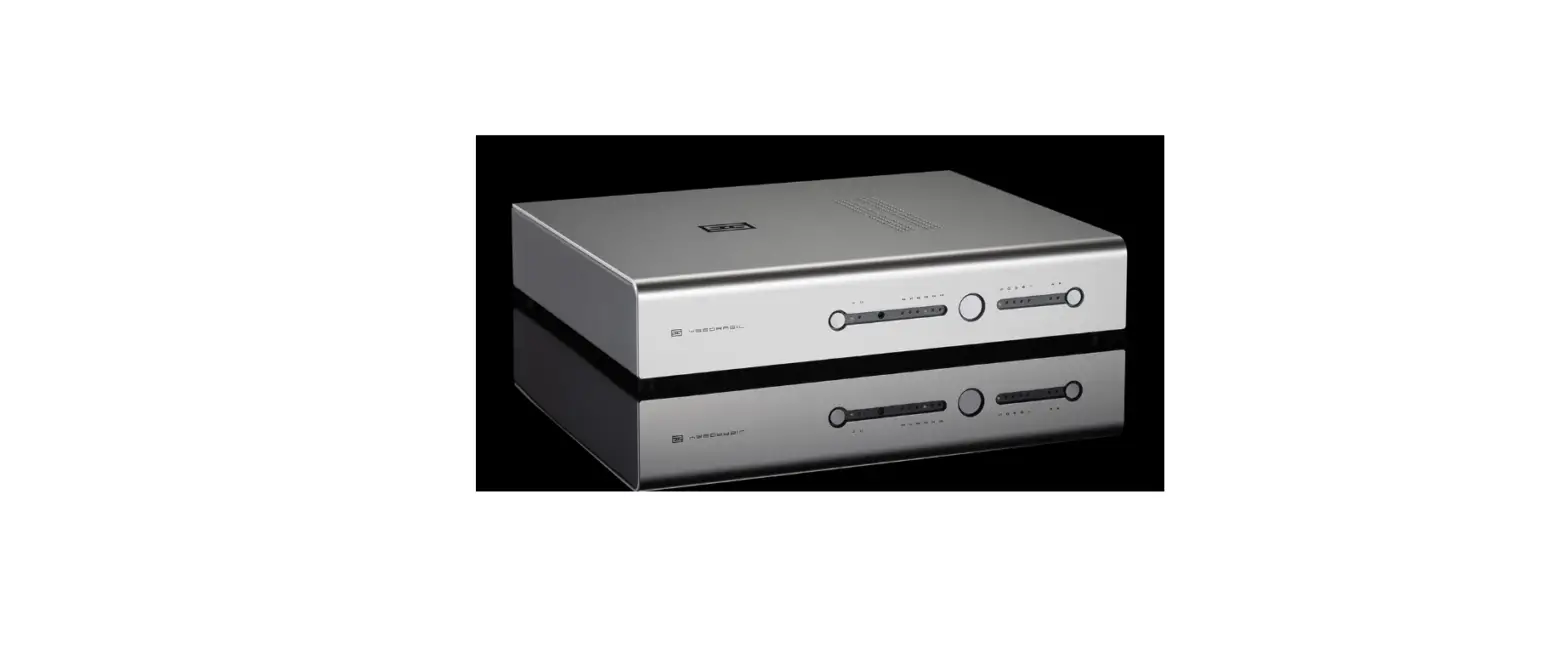
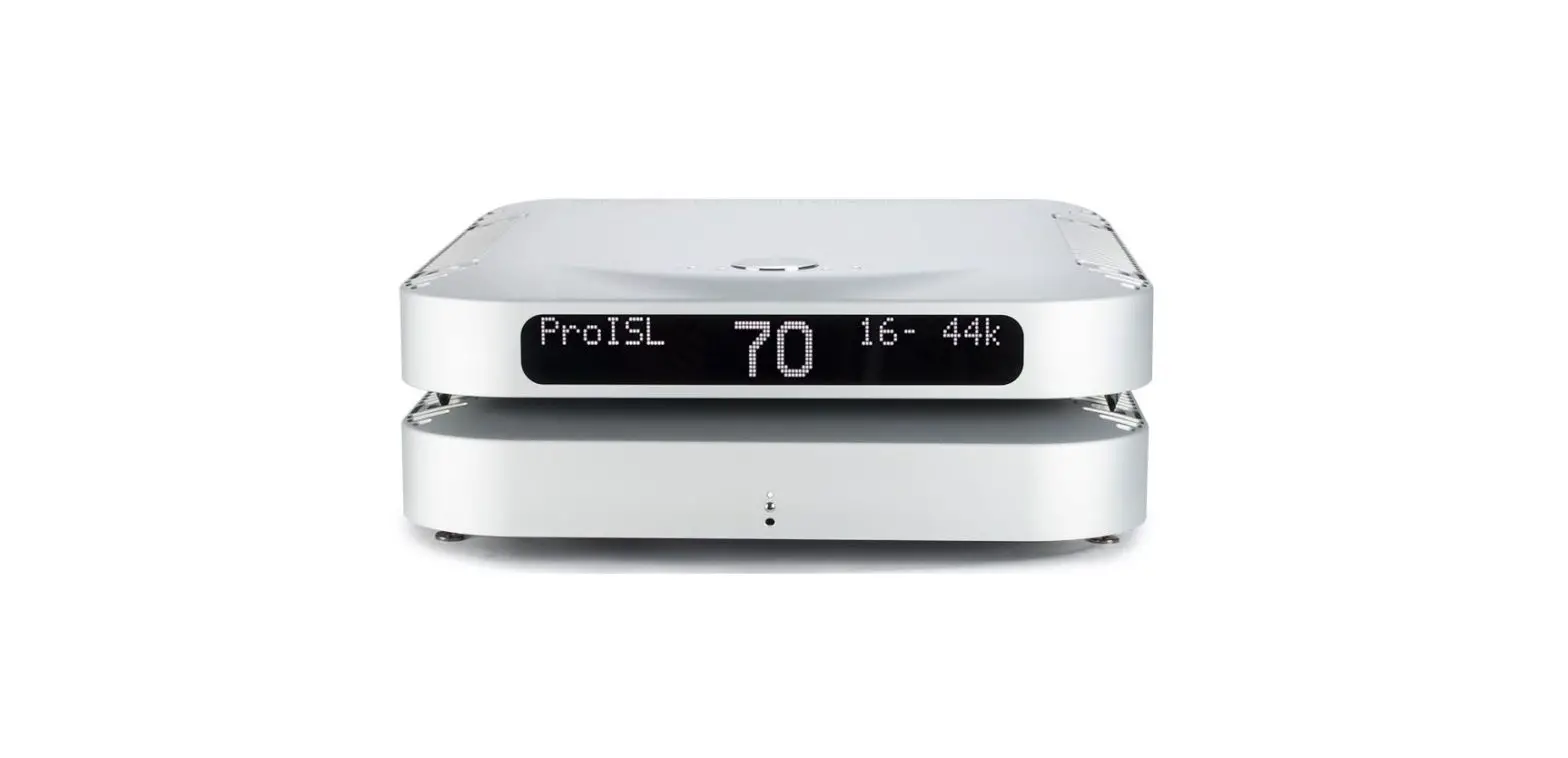
M 200 Series Reference DAC
Product Information
The M 200 is a high-performance audio amplifier designed for use
with loudspeakers. It features a power output of 420 Watts at 4
Ohms and 210 Watts at 8 Ohms. With a signal-to-noise ratio of 113
dB and low distortion levels of less than 0.002%, it delivers
exceptional audio quality.
The M 200 has various input and output options, including
high-level (RCA) and balanced (XLR) connections. It also supports
system linking with the DAC 200 preamplifier using the E2 Link
connection.
Key Features:
- Power Output: 420 Watts @ 4 Ohms, 210 Watts @ 8 Ohms
- Signal-to-Noise Ratio: 113 dB
- Distortion: < 0.002%
- Input Connections: High-level (RCA), Balanced (XLR)
- Output Connections: Loudspeaker terminals
- System Link: Compatible with DAC 200
Product Usage Instructions
Safety Instructions
Please read the safety instructions provided in the user manual
before using the M 200 amplifier.
Installation and Wiring
Installation:
- Place the M 200 amplifier in a well-ventilated area, away from
direct sunlight and heat sources. - Ensure that the speakers connected to the amplifier have an
impedance of at least 4 Ohms.
Connecting the Mains Cable:
- Insert the mains cable into the power socket located on the
rear panel of the amplifier. - Refer to the safety instructions and installation section for
correct power connection guidelines.
Wiring Diagram:
Refer to the provided wiring diagram for the correct connections
of the M 200 amplifier, loudspeakers, and other audio devices.
Controls and Functions
Power On/Off:
- Press the power button to turn on/off the amplifier.
- The power button also activates/deactivates the automatic
power-saving mode. Refer to the energy-saving section for more
details.
Playback
Turning On the Amplifier:
- Press the power button to turn on the M 200 amplifier.
Energiesparmodus / Ein- und Ausschaltautomatik:
The automatic power-saving mode can be enabled/disabled using
the power button. Refer to the user manual for detailed
instructions on configuring this feature.
Protection Circuit
In case of any faults or issues, the protection circuit of the M
200 amplifier will activate. The LED indicators will blink rapidly
in different colors to indicate specific conditions. Refer to the
user manual for a detailed explanation of each LED indication.
Energy Saving Tips
To optimize energy usage, follow these tips:
- Enable the automatic power-saving mode when not in use.
- Ensure proper ventilation and avoid blocking air vents.
- Disconnect the mains cable when the amplifier will not be used
for an extended period.
Connection and Wiring
Refer to the user manual for detailed instructions on connecting
and wiring the M 200 amplifier with other audio devices,
loudspeakers, and system linking with the DAC 200 preamplifier.
Technical Specifications
Here are the technical specifications of the M 200
amplifier:
- Nominal Output Power: 420 Watts @ 4 Ohms, 210 Watts @ 8
Ohms - Power Consumption: max. 500 Watts
- Signal-to-Noise Ratio: 113 dB
- Distortion: < 0.002%
- Dimensions: 5 kg, 11 lbs
For more detailed technical specifications, refer to the user
manual.
M 200
Bedienungsanleitung User manual
2
Deutsch English
Seiten 5 – 21 Pages 23 – 39
3
4
Willkommen
Wir freuen uns, dass Sie sich für ein T+A-Produkt entschieden haben. Mit Ihrem neuen T+A-Endverstärker haben Sie ein Hi-Fi-Gerät der Spitzenklasse erworben, bei dessen Konzeption und Entwicklung den Wünschen des audiophilen Musikliebhabers oberste Priorität eingeräumt wurde. Die innovativen Problemlösungen, die solide, durchdachte Konstruktion und die verwendeten hochwertigen Materialien werden dazu beitragen, dass dieses Gerät höchsten Anforderungen und Ansprüchen über viele Jahre genügen wird. Eine genaue Qualitätsprüfung aller Materialien, die sorgfältige Produktion durch hoch qualifizierte Fachkräfte und eine rechnergesteuerte, voll automatisierte Endkontrolle gewährleisten die hohe Produktqualität und die Einhaltung aller Spezifikationen. In unserer Geräteproduktion wird der Einsatz aller umwelt- und gesundheitsgefährdenden Stoffe, wie
z. B. chlorhaltige Lösungsmittel und FCKWs, vermieden. Darüber hinaus verzichten wir wo irgend möglich auf Kunststoffe (insbesondere auf PVC) als Konstruktionselement. Stattdessen wird auf Metalle oder andere unbedenkliche Materialien zurückgegriffen, die einerseits gut recyclebar sind und andererseits eine sehr gute elektrische Abschirmung ergeben. Durch unsere massiven Ganzmetallgehäuse wird eine Beeinträchtigung der Wiedergabequalität durch äußere Störquellen ausgeschlossen. Die von den Geräten ausgehende elektromagnetische Strahlung (Elektrosmog) wird gut abgeschirmt und auf ein absolutes Minimum reduziert. Wir bedanken uns für Ihr Vertrauen und wünschen Ihnen viel Freude und Hörvergnügen mit Ihrem M 200.
5
Inhaltsverzeichnis
Sicherheitshinweise
8
Aufstellung und Anschluss
10
Aufstellung
10
Vorverstärker anschließen
10
Lautsprecher anschließen
10
Serie 200 Systemverbund
10
Anschluss des Netzkabels
11
Anschlussdiagramm
11
Anschlüsse
12
Symmetrische Anschlüsse (balanced)
12
Asymmetrische Anschlüsse (unbalanced)
12
Steuerung
13
Netzbuchse
13
Bedienelemente und Funktionen
14
Ein- und Ausschalter
14
Dämpfungsfaktor
14
Lautsprecherausgänge
14
Wiedergabe
15
Einschalten
15
Energiesparmodus / Ein- und Ausschaltautomatik
15
Schutzschaltung
15
Funktion
15
Betriebsstörungen
16
Hinweise zum sparsamen Umgang mit Energie
17
Allgemeine Informationen
17
Automatische Abschaltfunktion
17
Anschluss und Verkabelung
18
Technische Daten
21
6
Hinweise
Bedienunganleitung
Mit diesem Symbol gekennzeichnete Textstellen enthalten wichtige Hinweise, die für einen problemlosen und sicheren Betrieb des Gerätes unbedingt beachtet werden müssen.
j Dieses Symbol markiert Textpassagen, die Ihnen zusätzliche Hinweise und Hintergrundinformation geben und das Verständnis erleichtern sollen.
Symbole und Hinweise auf der Rückseite des M 200
Dieses Symbol markiert Wechselspannungen (AC). Die für das Gerät erforderliche Wechselspannung ist dem Aufdruck an der Netzgerätebuchse zu entnehmen. An andere Stromversorgungen darf das Gerät nicht angeschlossen werden.
Dieses Symbol markiert den Schutzleiteranschluss (Erdanschluss). Das Gerät ist für den Betrieb an einer Schutzleitersteckdose vorgesehen.
Das Gerät ist ausgelegt für den Betrieb in gemäßigtem Klima und in Höhen bis zu 2000 m ü. NHN
Das Gerät ist ausgelegt für den Betrieb in gemäßigtem Klima. Zulässiger Betriebstemperaturbereich ist +10 … +35.
Für die spätere Entsorgung dieses Produkts stehen örtliche Sammelstellen für Elektroschrott zur Verfügung.
Alle verwendeten Bauteile entsprechen den geltenden deutschen und europäischen Sicherheitsnormen und standards. Dieses Produkt entspricht den EU-Richtlinien. Die Konformitätserklärung kann bei Bedarf unter www.ta-hifi.com/DoC eingesehen werden.
Die mit diesem Symbol gekennzeichneten Anschlussklemmen können hohe Spannungen führen.
Achtung! Hinweis auf wichtige Sicherheitsinformationen in dieser Anleitung.
7
Sicherheitshinweise
Zu Ihrer eigenen Sicherheit sollten Sie bitte unbedingt diese Betriebsanleitung vollständig lesen und insbesondere die Aufstellungs-, Betriebs- und Sicherheitshinweise genau befolgen.
Die Bedienungsanleitung ist Bestandteil des Gerätes. Heben Sie die Anleitung gut auf und geben Sie sie bei einem evtl. Weiterverkauf zur Verhinderung von Fehlbedienungen und zur Vermeidung von Gefahren an den Käufer weiter.
Das Gerät ist für den Betrieb an einer Schutzleitersteckdose vorgesehen. Schließen Sie es bitte mit dem beiliegenden Netzkabel an eine entsprechende, vorschriftsmäßig geerdete Steckdose an. Die für das Gerät erforderliche Stromversorgung ist dem Aufdruck an der Netzgerätebuchse zu entnehmen. An andere Stromversorgungen darf das Gerät nicht angeschlossen werden.
Dieses Gerät ist solange mit der Netzspannung verbunden, solange das Netzkabel angeschlossen ist. Auch wenn das Gerät ausgeschaltet ist und die Statusanzeigen dunkel sind, führt das Gerät Netzspannung im Innern. Zur Trennung des Gerätes vom Netz, ist der Netzstecker zu ziehen. Bitte achten Sie darauf, dass Stecker ohne Schwierigkeiten zugänglich und benutzbar sind. Auch im Bereitschaftsbetrieb weist das Gerät eine geringe Stromaufnahme auf. Bei längerer Nichtbenutzung sollte das Gerät vom Netz getrennt werden.
Das Gerät ist ausgelegt für den Betrieb in gemäßigtem Klima und in Höhen bis zu 2000 m ü. NHN. Zulässiger Betriebstemperaturbereich ist +10 … +35. C.
Das Gerät ist ausschließlich zur Ton- und/ oder Bildwiedergabe im Heimbereich in trockenen Räumen unter Berücksichtigung aller in dieser Anleitung gemachten Angaben bestimmt. Bei allen anderen Einsatzzwecken, insbesondere in medizinischen oder sicherheitsrelevanten Bereichen, ist vorher die Zulassung und Eignung des Gerätes für diesen Einsatz mit dem Hersteller abzuklären und schriftlich genehmigen zu lassen.
War das Gerät größerer Kälte ausgesetzt (z. B. beim Transport), so ist mit der Inbetriebnahme zu warten, bis sich das Gerät auf Raumtemperatur aufgewärmt hat und das Kondenswasser restlos verdunstet ist.
Vor der Aufstellung des Gerätes auf empfindlichen Lack- oder Holzoberflächen sollte an einer nicht sichtbaren Stelle die Verträglichkeit mit den Gerätefüßen überprüft werden und ggf. eine geeignete Unterlage verwendet werden. Wir empfehlen eine Standfläche aus Stein, Glas, Metall o.Ä.
Beachten Sie das Gewicht des Gerätes. Stellen Sie das Gerät niemals auf einen instabilen Platz. Das Gerät kann herunterfallen und dabei ernsthafte Verletzungen oder Todesfälle verursachen. Viele Verletzungen, vor allem bei Kindern, können bei Beachtung folgender einfacher Vorsichtsmaßnahmen vermieden werden: · Benutzen Sie nur Möbel, welche das Gerät sicher tragen können. · Stellen Sie sicher, dass das Gerät nicht über die Ränder des tragenden Möbelstücks hinausragt. · Platzieren Sie das Gerät nicht auf hohen Möbeln (z.B. Bücherregale) ohne beides, Möbel und Gerät, sicher zu verankern. · Klären Sie Kinder über die Gefahren auf, die beim Klettern auf Möbel zum Erreichen des Gerätes oder seiner Bedienelemente entstehen.
Die Aufstellung darf nur an einem gut belüfteten, trockenen Ort erfolgen, wobei direkte Sonneneinstrahlung und die Nähe von Heizkörpern zu vermeiden sind. Das Gerät darf nicht in der Nähe von wärmeproduzierenden, wärmeempfindlichen oder leicht brennbaren Gegenständen bzw. Geräten aufgestellt werden.
Es dürfen keine wärmeisolierenden Gegenstände (z. B. Decken oder andere Geräte mit ebener Bodenplatte ohne Standfüße) direkt auf das Gehäuse gestellt werden. Die Lüftungsöffnungen dürfen nicht verdeckt oder verschlossen werden. Das Gerät ist nicht geeignet um auf einer weichen Unterlage betrieben zu werden (wie Bettwäsche, Kopfkissen usw.).
Sorgen Sie beim Einbau in Regale oder Schränke unbedingt für ausreichende Luftzufuhr und sorgen Sie dafür, dass die Wärme des Gerätes abgeführt werden kann. Ein Wärmestau beeinträchtigt die Lebensdauer des Gerätes und ist eine Gefahrenquelle. Um das Gerät herum muss ein Freiraum von mindestens 10 cm zur Wärmeabfuhr bleiben.
Durch die Geräteöffnungen dürfen keine Flüssigkeiten oder Fremdkörper in das Gerät gelangen. Im Inneren führt das Gerät Netzspannung, es besteht die Gefahr eines tödlichen elektrischen Schlages. Schützen Sie das Gerät vor Tropf- und Spritzwasser und stellen Sie keine Blumenvasen oder andere Gefäße mit Flüssigkeiten auf das Gerät. Stellen Sie keine offenen Flammen, wie z. B. Kerzen auf das Gerät.
8
Vor Reinigungsarbeiten am Gerät ist der Netzstecker zu ziehen. Die Oberflächen des Gerätes sollten zur Reinigung nur mit einem weichen, trockenen Tuch abgewischt werden. Verwenden Sie keine scharfen Reinigungs oder Lösungsmittel! Vor der Wiederinbetriebnahme muss sichergestellt sein, dass keine Kurzschlüsse an den Anschlussstellen bestehen und dass alle Anschlüsse ordnungsgemäß sind.
War das Gerät eingelagert oder längere Zeit nicht in Betrieb (> 2 Jahre) so sollte unbedingt vor Wiederinbetriebnahme eine Kontrolle in einer Fachwerkstatt durchgeführt werden.
Die mit dem -Symbol gekennzeichneten Anschlussklemmen können hohe Spannungen führen.
Ein Berühren der Anschlussstellen oder der Leiter der daran angeschlossenen Kabel ist zu vermeiden. An diese Anschlussstellen angeschlossene Leitungen erfordern das Verlegen durch eine unterwiesene Person oder die Verwendung von anschlussfertigen Leitungen.
Das Gerät entspricht im Originalzustand allen derzeit gültigen deutschen und europäischen Vorschriften. Es ist zum bestimmungsgemäßen Gebrauch in der EG zugelassen. Durch das am Gerät befindliche Zeichen erklärt T+A die Konformität mit den EG-Richtlinien und den daraus abgeleiteten nationalen Gesetzen. Die Konformitätserklärung kann bei Bedarf unter www.ta-hifi. com/DoC eingesehen werden. Die unveränderte, unverfälschte Werksseriennummer muss außen am Gerät vorhanden und gut lesbar sein! Die Seriennummer ist Bestandteil unserer Konformitätserklärung und damit der Betriebszulassung des Gerätes! Seriennummern am Gerät und in den original T+A Begleitpapieren (insbesondere den Kontroll- und Garantiezertifikaten) dürfen nicht entfernt oder verändert werden und müssen übereinstimmen. Bei Verstoß gegen diese Bestimmungen gilt die Konformitätszusage von T+A als widerrufen und ein Betrieb des Gerätes innerhalb der EG ist untersagt und aufgrund geltender EG und nationaler Gesetze unter Strafandrohung verboten. Durch Umbauten am Gerät oder durch Reparaturen oder sonstige Eingriffe von nicht von T+A autorisierten Werkstätten oder sonstigen Dritten verliert das Gerät seine Zulassung und Betriebserlaubnis. An das Gerät dürfen nur original T+A Zubehörteile oder solche Zusatzgeräte angeschlossen werden, die ihrerseits zugelassen sind und allen geltenden gesetzlichen Vorschriften genügen.
Für die spätere Entsorgung dieses Produkts stehen örtliche Sammelstellen für Elektroschrott zur Verfügung.
Das Gerät darf nur vom qualifizierten Fachmann geöffnet werden. Reparaturen und das Auswechseln von Sicherungen sind von einer autorisierten T+A Fachwerkstatt durchzuführen. Außer den in der Betriebsanleitung beschriebenen Handgriffen dürfen vom Benutzer keinerlei Arbeiten am Gerät vorgenommen werden. Bei Beschädigungen oder bei Verdacht auf eine nicht ordnungsgemäße Funktion des Gerätes sollte sofort der Netzstecker gezogen und das Gerät zur Überprüfung in eine autorisierte T+A Fachwerkstatt gegeben werden.
Überspannungen im Stromversorgungsnetz, dem Kabelnetz oder auf Antennenanlagen, wie sie z. B. bei Gewittern (Blitzschlag) oder statischen Entladungen auftreten können, stellen eine Gefährdung für das Gerät dar. Spezielle Vorschaltgeräte wie Überspannungsprotektoren oder die T+A ,,Power Bar” Netzanschlussleiste bieten einen gewissen Schutz vor Gerätebeschädigungen aus o. g. Gründen. Eine absolute Sicherheit vor Beschädigung durch Überspannungen kann aber nur eine vollständige Trennung des Gerätes vom Netz und den Antennenanlagen gewährleisten. Ziehen Sie zur Trennung sämtliche Netz- und Antennenstecker Ihrer HiFi Anlage bei Überspannungsgefahr (z. B. bei heraufziehenden Gewittern) aus den Steckdosen. Sämtliche Netzversorgungs- und Antennenanlagen, an die das Gerät angeschlossen wird, müssen den geltenden Bestimmungen entsprechen und fachgerecht von einem zugelassenen Installationsbetrieb ausgeführt sein.
Das Gerät ist nicht für die Benutzung durch Kinder konzipiert. Das Gerät darf nicht unbeaufsichtigt betrieben werden. Es ist darauf zu achten, dass es für Kinder unerreichbar ist.
Batterien dürfen nicht übermäßiger Wärme wie Sonnenschein, Feuer oder dergleichen ausgesetzt werden
Sehr lautes dauerhaftes Hören von Programmmaterial über Ohr-, Kopfhörer und Lautsprecher kann zum dauerhaften Verlust des Hörvermögens führen. Beugen Sie Gesundheitsschäden vor und vermeiden Sie dauerhaftes Hören mit hoher Lautstärke.
Lagerung des Gerätes in der Originalverpackung an einem trockenen frostfreien Ort. Lagertemperatur 0…40 °C.
Elektro-Altgeräte Register: WEEE-Reg.-Nr. DE 72473830 9
Aufstellung und Anschluss
Aufstellung
Packen Sie das Gerät vorsichtig aus und heben Sie die Originalverpackung sorgfältig auf. Der Karton und das Verpackungsmaterial sind speziell für dieses Gerät konzipiert und bei späteren Transporten ein sicherer Behälter. Stellen Sie das Gerät an einem geeigneten Ort auf. Beachten Sie bitte alle Hinweise zum Anschluss und zur Aufstellung im Kapitel Sicherheitshinweise (Seite 8 u. 9).
Vorverstärker anschließen
Verbinden Sie jeweils den rechten Vorverstärkerausgang mit der M 200 für den rechten Lautsprecher und den linken Vorverstärkerausgang mit der M 200 für den linken Lautsprecher. Je nach Ausstattung des verwendeten Vorverstärkers, kann die Verbindung entweder über IN 1 (symmetrisch – XLR) oder IN 2 (asymmetrisch – Cinch/RCA) der M 200 erfolgen. Es kann nur jeweils eine Anschlussart benutzt werden. Der unbenutzte Eingang muss frei bleiben. Sind am Vorverstärker beide Anschlussarten vorhanden, empfehlen wir für eine maximale Klangqualität die symmetrische XLR-Verbindung.
Bitte stellen Sie bei Anschluss eines T+A DAC 200 sicher, dass die Lautstärkeregelung des DAC 200
eingeschaltet und die Lautstärke auf einen niedrigen Wert eingestellt ist. Andernfalls können angeschlossene Lautsprecher beschädigt werden.
Lautsprecher anschließen
Es können zwei Lautsprecher angeschlossen werden (SPEAKER A und SPEAKER B). Die angeschlossenen Lautsprecher sollten in ihrer Belastbarkeit dem Verstärker angemessen sein. Bei Anschluss von nur einem Lautsprecher muss die Impedanz mindestens 4 Ohm betragen. Bei Anschluss von zwei Lautsprechern, muss die Impedanz mindestens 8 Ohm pro Lautsprecher betragen. Verwenden Sie für den Anschluss der Lautsprecher, zugelassene, fertig konfektionierte Kabel mit einem Querschnitt von mindestens 1,5 mm². Verbinden Sie die rote mit ,,+” gekennzeichnete Anschlussklemme mit dem am Lautsprecher entsprechend gekennzeichneten Anschluss und die schwarze mit ,,-” gekennzeichnete Klemme entsprechend mit dem ,,-” Anschluss am Lautsprecher. Schrauben Sie die Anschlussklemmen fest und achten Sie darauf, dass keine Kurzschlüsse vorhanden sind. Achten Sie außerdem darauf, dass der M 200, welcher am linken Vorverstärkerausgang angeschlossen ist, mit dem linken Lautsprecher verbunden ist und entsprechend der M 200 am rechten Vorverstärkerausgang mit dem rechten Lautsprecher verbunden ist.
Bei Anschluss von Lautsprechern mit weniger als 4 Ohm Impedanz oder bei zwei Lautsprechern mit
weniger als 8 Ohm Impedanz pro Lautsprecher, können bei längerem Betrieb mit großer Lautstärke die hohen Ströme in den Leistungsendstufen zu einer Überhitzung und damit zum automatischen Abschalten der Lautsprecherausgänge oder des gesamten Gerätes durch die Schutzschaltung führen.
j Schrauben Sie die Lautsprecherklemmen handfest, benutzen Sie keine Zange o. Ä.
Serie 200 Systemverbund
Wird die M 200 in Kombination mit einem DAC 200 betrieben, kann die M 200 über den Systembus E2Link komfortabel und ohne Zeitverzögerung ein- und ausgeschaltet werden. Verbinden Sie hierzu die E2Link-Buchsen mit dem mitgelieferten Buskabel.
10
Anschluss des Netzkabels
Schließen Sie das Netzkabel an die Netzbuchse des M 200 an und verbinden Sie anschließend das Gerät mit der Stromversorgung. Zur Erreichung des maximalen Störabstandes sollte der Netzstecker so in die Netzsteckdose gesteckt werden, dass die Phase an dem Kontakt der Netzeingangsbuchse angeschlossen wird, der mit einem Punkt gekennzeichnet ist. Die Phase der Netzsteckdose kann mit einem dafür geeigneten Messgerät ermittelt werden. Wenden Sie sich hierzu bitte an Ihren Fachhändler.
Schließen Sie den M 200 und die weiteren Komponenten erst an die Stromversorgung an, wenn alle
erforderlichen Verbindungen zwischen den Geräten hergestellt wurden.
Anschlussdiagramm
Rechter Lautsprecher
Linker Lautsprecher
M 200
M 200
*
DAC 200
**
* Verwenden Sie entweder den symmetrischen XLR- (IN 1) oder den unsymmetrischen Cinch-Anschluss (IN 2). Wenn beide Anschlussarten verfügbar sind (z.B. DAC 200), empfehlen wir immer den symmetrischen Anschluss. ** Stehen die beiden M 200 weiter entfernt voneinander, z. B. in der Nähe der Lautsprecher, kann die E2-Link Verbindung vom DAC 200 zu den M 200 auch direkt zu jeder der beiden M 200 erfolgen. Benutzen Sie hierzu den zweiten E2-Link Anschluss am DAC 200.
11
Anschlüsse
In diesem Kapitel werden alle Dinge von grundsätzlicher Bedeutung für den Anschluss und die Inbetriebnahme beschrieben, die nicht für den täglichen Umgang mit dem Gerät relevant sind, die aber trotzdem vor dem ersten Gebrauch gelesen und beachtet werden sollten.
1 Symmetrische Anschlüsse (balanced)
IN 1 OUT 1
Eingang für Vorverstärker mit symmetrischem Ausgang. Verbinden Sie diesen Eingang mit dem entsprechenden Vorverstärkerausgang des DAC 200 oder eines Vorverstärkers.
Symmetrischer Ausgang für den Anschluss eines weiteren M 200 Endverstärkers, z. B. für den Bi-Amping-Betrieb. Diese Buchse stellt das Audiosignal, des am symmetrischen XLR Eingang IN1 angeschlossenen Vorverstärkers, für die Weiterleitung zu einem weiteren Endverstärker bereit.
j Eine Benutzung des Ausgangs OUT 1 ist nur möglich, wenn der M 200 eingangsseitg
ebenfalls über den Eingang IN 1 angeschlossen ist. Ein Betrieb in Kombination mit
dem asymmetrischen Cinch-Eingang IN 2 ist nicht möglich.
Der M 200 ist mit zwei Eingangsvarianten (Cinch/RCA und XLR symmetrisch) ausgestattet. Beim Anschluss darf jeweils nur eine Anschlussvariante gewählt werden. Die jeweils nicht benutzten Eingänge müssen frei bleiben.
2 Asymmetrische Anschlüsse (unbalanced)
IN 2 OUT 2
12
Eingang für Vorverstärker mit asymmetrischem Cinchausgang (RCA-Anschluss). Verbinden Sie diesen Eingang mit dem entsprechenden Vorverstärkerausgang des DAC 200 oder eines Vorverstärkers.
Aymmetrischer Ausgang für den Anschluss eines weiteren M 200 Endverstärkers, z. B. für den Bi-Amping-Betrieb. Diese Buchs stellt das Audiosignal, des am aymmetrischen Cinch-Eingang IN2 angeschlossenen Vorverstärkers, für die Weiterleitung zu einem weiteren Endverstärker bereit.
j Eine Benutzung des Ausgangs OUT 2 ist nur möglich, wenn der M 200 ein-
gangsseitg ebenfalls über den Eingang IN 2 angeschlossen ist. Ein Betrieb in Kombination mit dem symmetrischen XLR-Eingang IN 1 ist nicht
möglich.
Der M 200 ist mit zwei Eingangsvarianten (Cinch/RCA und XLR symmetrisch) ausgestattet. Beim Anschluss darf jeweils nur eine Anschlussvariante gewählt werden. Die jeweils nicht benutzten Eingänge müssen frei bleiben.
3 Lautsprecheranschlüsse
SPEAKER A SPEAKER B
Die M 200 verfügt über Anschlüsse für zwei Lautsprecher (SPEAKER A und SPEAKER B). Diese können auch für den Bi-Wiring-Betrieb genutzt werden. Verbinden Sie die rot markierte mit ,,+” gekennzeichete Klemme der M 200 mit der entsprechenden Klemme Ihres Lautsprechers und in gleicher Weise die schwarz markierte mit ,,-” gekennzeichnete Klemme mit dem Minus-Anschluss des Lautsprechers. Detailierte Informationen zum Anschluss finden Sie in den Anschlussschemas ab Seite 18.
j Für die Benutzung außerhalb von Ländern der EU können die roten/schwarzen Stopfen
aus den Lautsprecherklemmen entfernt werden. Der Anschluss der Lautsprecher kann dann mit Bananensteckern erfolgen. Die Stopfen sind nur in die Klemmen eingesteckt. Sie können mit einem geeigneten Werkzeug (z. B. Messerklinge) nach hinten aus der Klemme gelöst werden.
Die Lautsprecherklemmen dürfen ausschließlich von Hand festgeschraubt und gelöst werden. Benutzen Sie niemals eine Zange o. ä. Werkzeug. Dies beschädigt die Klemmen.
4 Steuerung
E2 Link
Diese Buchse kann zur Steuerung des M 200 durch den DAC 200 genutzt werden. Verbinden Sie diese Buchse mit einer der E2-Link-Buchsen des DAC 200.
5 Netzbuchse
In diese Buchse wird das Netzkabel eingesteckt. Zum korrekten Netzanschluss beachten Sie bitte die Hinweise in den Kapiteln Sicherheitshinweise und Aufstellung und Anschluss.
13
Bedienelemente und Funktionen
1 Ein- und Ausschalter
Kurzes Antippen dieser Taste schaltet das Gerät ein und aus. Bei eingeschaltetem Gerät leuchtet die LED über der Taste.
2 Dämpfungsfaktor
DF LO
Hier kann der Dämpfungsfaktor der Endstufe verringert werden. Die leuchtende LED über der Taste signalisiert den Betrieb mit niedrigerem Dämpfungsfaktor. Ein hoher Dämpfungsfaktor führt tendenziell zu einem eher klaren, sehr präzisen und analytischen Klangbild, wobei ein verringerter Dämpfungsfaktor ein eher warmes und weicheres Klangbild produziert.
j
Da die optimale Einstellung sehr stark von den angeschlossenen Lautsprechern abhängig ist, kann hier keine allgemeingültige Empfehlung gegeben werden. Wählen Sie die
Einstellung nach einem Hörtest und dem persönlichem Hörgeschmack.
Diese Taste dient auch zum Aktivieren/Deaktivieren der Einschaltautomatik. Details im Kapitel Energiesparmodus / Ein- und Ausschaltautomatik auf Seite 17.
Ist der M 200 per E2-Link an einem DAC 200 angeschlossen, kann der Dämpfungsfaktor auch durch langes Drücken der F3-Taste auf der Fernbedienung umgeschaltet werden.
3 Lautsprecherausgänge
A und B
Diese Tasten schalten die Lautsprecher-Ausgänge A bzw. B ein oder aus.
Die LED über den Tasten A bzw. B leuchtet, wenn der entsprechende Lautsprecherausgang eingeschaltet ist.
j
Ist der M 200 per E2-Link an einem DAC 200 angeschlossen, können die Lautsprecherausgänge mit der F3-Taste der Fernbedienung zyklisch durch-
geschaltet werden (A, B, A+B, AUS).
14
Wiedergabe
Einschalten
Automatisches Ein- und Ausschalten in Verbindung mit dem DAC 200. In Kombination mit einem DAC 200 wird der M 200 über die E2-Link-Verbindung automatisch ein- bzw. ausgeschaltet. Während des Einschaltvorgangs dauert es eine gewisse Zeit, bis alle Verstärkerstufen ihre optimalen Arbeitspunkte erreicht haben. In dieser Zeit blinken die Speaker-LEDs (Einschaltverzögerung). Sobald das Gerät betriebsbereit ist, werden die Lautsprecherausgänge eingeschaltet und die Speaker-LEDs leuchten dauerhaft.
Energiesparmodus / Ein- und Ausschaltautomatik
Der M 200 ist mit einer Einschaltautomatik ausgestattet. Ein an seinen Eingängen anliegendes Musiksignal schaltet das Gerät automatisch ein. Bei Musikpausen wird der M 200 automatisch nach etwa 30 Minuten ausgeschaltet.
Die Einschaltautomatik kann wie folgt ein- und ausgeschaltet werden:
· Die Taste DF LO solange drücken, bis die LED über der Taste rot oder grün leuchtet.
· Rot signalisiert ausgeschaltet und grün, dass die Einschaltautomatik aktiv ist.
· Durch erneutes kurzes Antippen der DF LO Taste kann die Einschaltautomatik ein- bzw. ausgeschaltet werden.
· Zum Speichern der Einstellung, die DF LO Taste solange gedrückt halten, bis die LED wieder die Einstellung des Dämpfungsfaktors signalisiert.
j
Wird der M 200 im Verbund mit einem DAC 200 betrieben, ist die Einschaltautomatik nicht erforderlich und sollte deaktiviert bleiben, da der M 200 über die E2-Link-Verbindung ohne Verzögerung zusammen mit dem
DAC 200 ein- und ausgeschaltet wird.
5 Minuten bevor das Gerät automatisch abschaltet, signalisiert die DF LO Anzeige durch Blinken der LED den bevorstehenden Abschaltvorgang. Sollte in dieser Zeit ein Musiksignal erkannt werden, wird der Timer der Abschlaltautomatik zurückgesetzt und startet erneut, sobald das Musiksignal verstummt.
Schutzschaltung
Funktion
Der M 200 verfügt über eine mikroprozessorgesteuerte Schutzschaltung.
Tritt eine Übersteuerung oder Funktionsstörung bei der Wiedergabe auf, so wird das Ausgangssignal sofort abgeschaltet und die Speaker-LEDs blinken. In diesem Fall ist die Lautstärke des Vorverstärkers herabzusetzen. Nach etwa 20 Sekunden sollte sich der M 200 wieder zuschalten und die Speaker-LEDs aufhören zu blinken. Bei Übertemperatur sollte das Gerät vor erneuter Benutzung abkühlen.
LED Störungscode
LED A und LED B blinken schnell rot
LED A und LED B blinken schnell blau
LED über dem Ein- und Ausschalter blinkt blau-violett
LED über dem Ein- und Ausschalter blinkt rot
Fehler
Überlastung oder Kurzschluss der Endstufe
Übersteuerung (Clipping)
Übertemperatur. Die Lautsprecher sind automatisch abgeschaltet worden.
Starke Übertemperatur. Der M 200 hat zum Schutz abgeschaltet.
15
Betriebsstörungen
Viele Betriebsstörungen haben eine einfache Ursache, die sich leicht beheben lässt. Im folgenden Abschnitt sind einige mögliche Störungen sowie Maßnahmen zu deren Behebung aufgeführt. Sollte sich eine aufgetretene Störung durch diese Hinweise nicht beheben lassen, so ziehen Sie bitte umgehend den Netzstecker und wenden sich an eine T+A Fachwerkstatt.
Gerät schaltet nicht ein
Ursache 1: Netzkabel nicht richtig angeschlossen. Abhilfe: Überprüfen und fest einstecken. Ursache 2: Durchgebrannte Netzsicherung. Abhilfe: Die Netzsicherung durch autorisierte Fachwerkstatt ersetzen lassen. Es dürfen nur Sicherungen verwendet werden, deren Bezeichnung mit dem Geräteaufdruck übereinstimmt!
Gerät schaltet in Kombination mit dem DAC 200 verzögert ein
Ursache: E2-Link-Verbindung nicht hergestellt oder Stecker nicht richtig gesteckt. Abhilfe: Verbinden Sie den M 200 mit dem DAC 200 mit Hilfe des mitgelieferten E2-Link Kabels. Überprüfen Sie, ob die Stecker des Kabels eingerastet sind.
Lautes Brummen aus den Lautsprechern
Ursache: Schlechter Kontakt der Cinch-Stecker, XLR-Stecker oder ein defektes Kabel. Abhilfe: Überprüfen Sie bitte genau alle Steckverbindungen und Verbindungskabel
Kein Ausgangs-Signal an den Lautsprechern, die Speaker-LEDs auf der Gerätefront blinken (PROTECTION-Schaltung hat angesprochen)
Ursache 1: Die PROTECTION-Schaltung hat wegen Überhitzung oder Übersteuerung abgeschaltet. Abhilfe: Reduzieren Sie die Lautstärke, wenn sich der Verstärker nach ca. 20 Sekunden nicht wieder einschaltet, ist er zu heiß geworden, und sollte einige Minuten ausgeschaltet bleiben, um abzukühlen. Sollte sich der M 200 nach der Abkühlphase (ca. 30 Minuten.) nicht wieder einschalten lassen, so kontaktieren Sie bitte einen autorisierten T+A Fachhändler. Ursache 2: Kurzschluss in den Lautsprecherleitungen, z. B. durch herausstehende Litzenenden an den Lautsprecherklemmen oder mechanische Beschädigung des Kabels. Abhilfe: Lautsprecherkabel und -klemmen überprüfen, Litzenenden sauber verdrillen, beschädigte Kabel austauschen.
16
Hinweise zum sparsamen Umgang mit Energie
Allgemeine Informationen
Der M 200 entspricht den neuesten Richtlinien zum sparsamen Verbrauch von Energie (EuP Richtlinie). Dazu trägt das moderne Netzteildesign maßgeblich bei. Der interne Mikroprozessor sorgt stets dafür, dass Baugruppen, die momentan nicht benötigt werden, automatisch abgeschaltet werden. Der Mikroprozessor selbst arbeitet Im Standbybetrieb mit einer niedrigeren Taktfrequenz und reagiert nur noch auf den Fernbedienungsempfänger. Im Standbybetrieb beträgt der Stromverbrauch des M 200 deshalb weniger als 0,5 Watt. Wird das Gerät längere Zeit nicht benutzt, sollte das Gerät vom Netz getrennt werden. Zur Netztrennung muss der Netzstecker gezogen werden.
Automatische Abschaltfunktion
Das Gerät verfügt über eine automatische Abschaltfunktion (Auto Power Down). Wird länger als ca. 30 Minuten kein Musiksignal und keine Bedienung erkannt, schaltet der M 200 automatisch in den Standby-Betrieb.
j In Ländern außerhalb der EU in denen die EuP Richtlinie nicht gilt, kann die automatische Abschaltung des
Gerätes bei Bedarf deaktiviert werden. Siehe Kapitel ,,Wiedergabe”.
17
Rechter Lautsprecher
Linker Lautsprecher
Anschluss und Verkabelung
Standard-Anschluss
18
M 200
M 200
DAC 200
Bi-Wiring
19
Rechter Lautsprecher
Linker Lautsprecher
Die Brücken zwischen den Bass- und Mitten/Hochton-Anschlüssen müssen
entfernt werden!
M 200
M 200
DAC 200
Bi-Amping mit M 200 und A 200
20
Die Brücken zwischen den Bass- und Mitten/Hochton-Anschlüssen müssen
entfernt werden!
Rechter Lautsprecher
M 200 für den
Bass rechts
A 200 für den
Mittel- und Hochton
Linker Lautsprecher
M 200 für den
Bass links
Technische Daten
Nominelle Ausgangleistung
Frequenzgang + 0 / – 3 dB Signalrauschabstand Klirrfaktor / Intermodulation Dämpfungsfaktor (HI / LO) Verstärkungsfaktor Nominelle Eingangsempfindlichkeit
Netzanschluss Leistungsaufnahme
Standby Abmessungen (H × B× T) Gewicht Zubehör
420 Watt @ 4 Ohm 210 Watt @ 8 Ohm
1 Hz 60 kHz
113 dB
< 0,002 % / < 0,002 %
800 / > 70
31,4 dB / x37
Hochpegel (RCA) Symmetrisch (XLR)
220 240 V, 50 60 Hz
1,13 Veff / 5,8 kOhm 2,26 Veff / 20 kOhm
max. 500 Watt 25 Watt eingeschaltet ohne Signal
< 0,5 Watts
10 × 32 × 34 cm, 4 x 12.6 x 13.4 inch
5 kg, 11 lbs
Netzkabel, E2-Link-Kabel, Cinchkabel (RCA)
Technische Änderungen vorbehalten. 21
22
Welcome
We are delighted that you have decided to purchase a T+A product. Your new T+A power amplifier is a Hi-Fi unit of the highest quality, designed and developed with a single aim as top priority: to satisfy the requirements of the audiophile music lover. This unit is the embodiment of innovative thinking and solid quality, exploiting the finest materials and components available, and all these factors contribute to a machine which will satisfy you`re most stringent demands and your most searching requirements for a period of many years. Our production areas are supervised by highly qualified expert staff, and all final production units are checked comprehensively by a fully automated, computer-controlled system to ensure uniformly high quality. We guarantee that our products meet our own specifications to the full. At all stages of production we avoid the use of substances which are environmentally unsound or po-
tentially hazardous to health, such as chlorine-based cleaning agents and CFCs. We also aim to avoid the use of plastics in general, and PVC in particular, in the design of our products. Instead we rely upon metals and other non-hazardous materials; metal components are ideal for recycling, and also provide effective electrical screening. Our robust all-metal cases exclude any possibility of external sources of interference affecting the quality of reproduction. From the opposite point of view our products’ electro-magnetic radiation (electro-smog) is reduced to an absolute minimum by the outstandingly effective screening provided by the metal case. We would like to take this opportunity to thank you for the faith you have shown in our company by purchasing this product, and wish you many hours of enjoyment and sheer listening pleasure with your M 200.
23
Content
Safety notes
26
Installation and wiring
28
Installation
28
Connecting a preamplifier
28
Connecting loudspeakers
28
Series 200 – system link
28
Connecting the mains cable
29
Wiring diagram
29
Connections
30
Balanced connections (XLR)
30
Unbalanced connections (RCA)
30
Loudspeaker terminals
31
System link
31
Mains input
31
Controls and functions
32
On / Off switch
32
Damping factor
32
Loudspeaker outputs
32
Playback
33
Switching on and off
33
Energy saving mode / automatic power on and off
33
Protection circuit
33
How it works
33
Troubleshooting
34
Notes on energy saving
35
General information
35
Automatic power down function
35
Connection and wiring
36
Technical Specifications
39
24
Notes
User manual
Text passages marked with this symbol contain important information which must be observed if the machine is to operate safely and without problems.
j This symbol marks text passages which provide supplementary notes and background information; they are intended to help the user understand how to get the best out of the machine.
Symbols and notes on the back of the M 200
This symbol marks alternating voltages (AC). The AC voltage required for the device can be found on the printing at the mains input socket. Do not connect the device to other power supplies.
This symbol marks the protective earth connector (ground connection). The unit is designed for operation at a protective earth conductor socket.
The device is designed to operate in altitudes up to 2000 m above sea level.
The device is designed to operate in a temperate climate. The range of permissible operating temperatures is +10 … +35°C.
The only permissible method of disposing of this product is to take it to your local collection centre for electrical waste.
All the components we use meet the German and European safety norms and standards which are currently valid. This product complies with the EU directives. The declaration of conformity can be downloaded from www.ta-hifi.com/DoC.
The terminals (marked with the -symbol) can carry high voltages.
Attention! Please refer to the important safety information in this manual.
25
Safety notes
For your own safety please consider it essential to read these operating instructions right through, and observe in particular the notes regarding setting up, operation and safety.
The operation instructions, the connection guidance and the safety notes are for your own good – please read them carefully and observe them at all times. The operating instructions are an integral part of this device. If you ever transfer the product to a new owner please be sure to pass them on to the purchaser to guard against incorrect operation and possible hazards.
The device is intended to be connected to a mains outlet with protective earth connector. Please connect it only with the mains cable supplied to properly installed mains outlets with protective earth connector. The power supply required for this unit is printed on the mains supply socket. The unit must never be connected to a power supply which does not meet these specifications.
This device is connected to the power supply as long as the power cord is connected. Even if the device is switched off and the status indicators are dark, the device still carries mains voltage inside. To disconnect the device completely from mains power supply, the mains plugs must be withdrawn from the wall socket. Please make sure that the mains plugs are easily accessible. Even when the unit is in standby mode, it has a low power consumption. If the unit is not to be used for a long period disconnect it from the mains supply at the wall socket.
The device is designed to operate in a temperate climate and altitudes up to 2000 m above sea level. The range of permissible operating temperatures is +10 … +35°C.
This device is designed exclusively for reproducing sound and/or pictures in the domestic environment. It is to be used in a dry indoor room which meets all the recommendations stated in these instructions. Where the equipment is to be used for other purposes, especially in the medical field or any field in which safety is an issue, it is essential to establish the unit’s suitability for this purpose with the manufacturer, and to obtain prior written approval for this usage.
If the unit gets very cold (e. g. when being transported), condensation may form inside it. Please do not switch it on until it has had plenty of time to warm up to room temperature, so that any condensation evaporates completely.
Before placing the unit on sensitive lacquer or wood surfaces please check the compatibility of the surface and the unit`s feet on a non-visible point and if necessary use an underlay. We recommend a surface of stone, glass, metal or the like.
Please consider the weight of the device. Never place the device on an unstable surface; the machine could fall off, causing serious or even fatal injury. Many injuries, especially to children, can be avoided if the following simple safety precautions are observed: ·Use only such items of furniture which can safely bear the weight of the device. ·Ensure that the device does not project beyond the edges of the supporting furniture. ·Do not place the device on tall furniture (e.g. bookshelves) without securely anchoring both items, i.e. furniture and device. ·Explain to children the hazards involved in climbing on furniture to reach the device or its controls.
The unit should be set up in a well ventilated dry site, out of direct sunlight and away from radiators. The unit must not be located close to heat producing objects or devices, or anything which is heat sensitive or highly flammable.
The ventilation openings must not be covered or closed. If the system components are to be stacked then the device must be the top unit. Do not place any object on the top cover. The device is not designed to be operated on a soft surface (such as bedding, pillows, etc.).
When installing the unit on a shelf or in a cupboard it is essential to provide an adequate flow of cooling air, to ensure that the heat produced by the unit is dissipated effectively. Any heat build up will shorten the life of the unit and could be a source of danger. Be sure to leave free space of 10 cm around the unit for ventilation.
Liquid or particles must never be allowed to get inside the unit through the ventilation slots. Mains voltage is present inside the unit, and any electric shock could cause serious injury or death. Never exert undue force on mains connectors. Protect the unit from drips and splashes of water; never place flower vases or fluid containers on the unit. Do not place naked flame sources, such as candle lights on the device.
26
Disconnect the mains plug at the wall socket before cleaning the case. The surfaces of the case should be wiped clean with a soft, dry cloth only. Never use solvent-based or abrasive cleaners! Before switching the unit on again, check that there are no short-circuits at the connections, and that all cables are plugged in correctly.
If the device has been in storage, or has not been used for a protracted period (> two years), it is essential to have it checked by a specialist technician before reuse.
The terminals (marked with the -symbol) can carry high voltages.
Always avoid touching terminals and sockets and the conductors of cables connected to them. Unless ready-made cables are used, all cables connected to these terminals and sockets must always be deployed by a trained person.
In its original condition the unit meets all currently valid European regulations. It is approved for use as stipulated within the EC. By attaching the CE symbol to the unit T+A declares its conformity the EC directives and the national laws based on those directives. The declaration of conformity can be downloaded from www.ta-hifi.com/DoC. The original, unaltered factory serial number must be present on the outside of the unit and must be clearly legible! The serial number is a constituent part of our conformity declaration and therefore of the approval for operation of the device. The serial numbers on the unit and in the original T+A documentation supplied with it (in particular the inspection and guarantee certificates), must not be removed or modified, and must correspond. Infringing any of these conditions invalidates T+A conformity and approval, and the unit may not be operated within the EC. Improper use of the equipment makes the user liable to penalty under current EC and national laws. Any modifications or repairs to the unit, or any other intervention by a workshop or other third party not authorised by T+A, invalidates the approval and operational permit for the equipment. Only genuine T+A accessories may be connected to the unit, or such auxiliary devices which are themselves approved and fulfil all currently valid legal requirements.
The only permissible method of disposing of this product is to take it to your local collection centre for electrical waste.
Registration according to the EU directive “Waste Electrical and Electronic Equipment” WEEE-Reg.-No.: DE 72473830W
The case should only be opened by a qualified specialist technician. Repairs and fuse replacements should be entrusted to an authorised T+A specialist workshop. With the exception of the connections and measures described in these instructions, no work of any kind may be carried out on the device by unqualified persons. If the unit is damaged, or if you suspect that it is not functioning correctly, immediately disconnect the mains plug at the wall socket, and ask an authorised T+A specialist workshop to check it.
The unit may be damaged by excess voltage in the power supply, the mains circuit or in aerial systems, as may occur during thunderstorms (lightning strikes) or due to static discharges. Special power supply units and excess voltage protectors such as the T+A ,Power Bar` mains distribution panel offer some degree of protection from damage to equipment due to the hazards described above. However, if you require absolute security from damage due to excess voltage, the only solution is to disconnect the unit from the mains power supply and any aerial systems. To avoid the risk of damage by overvoltages we recommend to disconnect all cables from this device and your HiFi system during thunderstorms. All mains power supply and aerial systems to which the unit is connected must meet all applicable safety regulations and must be installed by an approved electrical installer.
The device is not designed for use by children. The device must not be operated unsupervised. Make sure that it is out of reach of children.
Batteries shout not be exposed to excessive heat like sunshine, fire or the like.
Very loud continuous listening to program material via earphones, headphones and loudspeakers can lead to permanent loss of hearing. Prevent health risks and avoid permanent hearing at high volume.
If the device has to be stored, place it in its original packaging and store it in a dry, frost-free location. Storage temperature range 0…40 °C
27
Installation and wiring
Installation
Carefully unpack the unit and store the original packing material carefully. The carton and packing are specially designed for this unit and will be needed again if you wish to move the equipment at any time. Install the unit in a suitable location. Please observe all information on connection and installation in chapter Safety notes on pages 26 and 27.
Connecting a preamplifier
Connect the right preamp output to the M 200 which drives the right speaker and the left preamp output to the M 200 for the left speaker. Depending on the preamp used, the connection can be made either via IN 1 (balanced – XLR) or IN 2 (unbalanced – Cinch/RCA) of the M 200. Only one type of connection (balanced XLR or unbalanced RCA) can be used at a time. The unused input must be left free. If both types of connection are available at the preamplifier, for maximum sound quality, we recommend the balanced XLR connection.
When connecting the DAC 200, please make sure that the volume control of the DAC 200 is enabled and
the volume is set to a low value. Otherwise, connected speakers may be damaged.
Connecting loudspeakers
Two loudspeakers can be connected to the amplifier (SPEAKER A and SPEAKER B). The load capacity of the loudspeakers connected to the device must be appropriate to the amplifier. When connecting only one loudspeaker, the speaker impedance must be at least 4 ohms (DIN rating). When connecting two loudspeakers, the impedance must be at least 8 ohms per loudspeaker. The speaker cables and connectors must be insulated in accordance with regulations, and the conductors must have a minimum cross-sectional area of 1.5 mm². Connect the red terminal marked ,,+” to the terminal marked ,,+” on the speaker and the black terminal marked ,,-” corresponding to the ,,-” terminal on the loudspeaker. Screw the terminals tight and make sure that there are no short-circuits. Also make sure that the left output of the M 200 is connected to the left speaker and the right output to the right speaker.
When connecting loudspeakers with less than 4 ohms impedance or two loudspeakers with less than 8
ohms impedance per loudspeaker, the high currents in the power amplifiers may cause their overheating during prolonged operation at high volume, and the protection circuit will then automatically switch off the loudspeaker outputs or the entire device.
j Screw the speaker terminals hand-tight, do not use pliers or similar.
Series 200 – system link
If the M 200 is used in combination with a DAC 200, the M 200 can be switched on and off comfortably and without time delay via the E2-Link system bus. For this purpose, connect the E2-Link sockets with the supplied bus cable.
28
Connecting the mains cable
Connect the power cord to the M 200`s AC power input, then connect the device to the power supply. To achieve maximum possible interference rejection the mains plug should be connected to the mains socket in such a way that phase is connected to the mains socket contact marked with a dot. The phase of the mains socket can be determined using a special meter. If you are not sure about this, please ask your specialist dealer.
Do not connect the M 200 and the other components to the mains until all necessary connections bet-
ween the devices have been established.
Wiring diagram
Right Loudspeaker
Left Loudspeaker
M 200
M 200
* DAC 200
**
* Use either the balanced XLR or the unbalanced RCA connection. If both types of connection are available (e.g. DAC 200), we always recommend the balanced connection. ** If the two M 200s are located further away from each other near the speakers, the E2-Link connection from the DAC 200 to the M 200s can also be made directly to each of the two M 200s. So that the connection does not have to be daisy-chained. For this purpose, use the second E2 link socket at the DAC 200.
29
Connections
This chapter describes all matters of fundamental importance for installation and connection which are not relevant for the daily handling of the device, but which should nevertheless be read and observed before first use.
1 Balanced connections (XLR)
IN 1 OUT 1
Input for pre-amplifiers with symmetrical outputs. Connect the XLR socket to the DAC 200 or pre-amplifier pre-out sockets.
Balanced outputs for connecting an additional M 200 power amplifier, e.g. for bi-amping and other purposes. These sockets provide the audio signal of the preamplifier connected to the balanced XLR inputs IN1 for pass-through to another power amplifier.
j
You can use the OUT 1 output only if the M 200 is also connected on the input side via the IN 1 input. Operation in combination with the RCA input IN 2 is not possible.
The M 200 is equipped with two input types (Cinch/RCA and XLR balanced). Only one connection type can be used at a time. The unused inputs must remain free.
2 Unbalanced connections (RCA)
IN 2 OUT 2
Unbalanced amplifier input (RCA jack) Connect the RCA socket to the RCA output socket of the pre-amplifier.
Unbalanced output for connecting an additional M 200 power amplifier, e.g. for biamping and other purposes. This socket provides the audio signal of the preamplifier connected to the balanced XLR inputs IN1 for pass-through to another power amplifier.
j You can use the OUT 2 output only if the M 200 is also connected on the input side via
the IN 2 input. Operation in combination with the balanced XLR input IN 1 is not possible.
The M 200 is equipped with two input types (Cinch/RCA and XLR balanced). Only one connection type can be used at a time. The unused inputs must remain free.
30
4 Loudspeaker terminals
SPEAKER A SPEAKER B
The M 200 is equipped with connections for two speakers (SPEAKER A and SPEAKER B). These can also be used for bi-wiring operation. Connect the red terminal marked ,,+” of the M 200 to the corresponding terminal of your speaker and in the same way connect the black terminal marked ,,-” to the minus terminal of the speaker. Detailed information regarding the connection can be found in the wiring diagrams from page 36 onwards.
j If the loudspeakers are to be used in countries outside the EU the red/black stoppers can
be removed from the loudspeaker terminals. The speakers can then be connected using banana plugs. The stoppers are simply a push-fit in the terminals, and can be prised out from the rear using a suitable tool such as a knife blade.
The speaker terminals may only be tightened and loosened by hand. Never use pliers or similar tools. This will damage the terminals.
5 System link
E2 Link
This socket can be used to control the M 200 via the DAC 200. Connect this socket to the E2 Link socket of the DAC 200.
6 Mains input
The mains cable is plugged into this socket. For correct connection refer to the sections Installation and Wiring and Safety Notes.
31
Controls and functions
1 On / Off switch
A brief press on this button switches the device on and off. When the unit is switched on the indicator LED above the button lights up.
2 Damping factor
DF LO
The damping factor of the power amplifier can be reduced here.
The lit LED above the button indicates the lower damping factor setting.
A high damping factor tends to produce a more clearly defined, very precise and analytical sound image, whereas a reduced damping factor produces a more warm and softer sound image.
j Since this setting depends very much on the connected speakers, no universal recom-
mendation can be given here. Choose the setting after a listening test and your personal listening preferences.
This button is also used to activate/deactivate the automatic power-on function. Details in the chapter Energy saving mode / Automatic power on and off on the next page.
If the M 200 is connected to a DAC 200 via E2 link, the damping factor can also be changed by a long press on the F3 button on the remote control.
3 Loudspeaker outputs
A and B
These buttons switch the speaker outputs A and B on or off.
The LEDs above the A and B buttons indicate that the corresponding loudspeaker output is switched on.
j
If the M 200 is connected to a DAC 200 via E2 link, the speaker outputs can be selected in sequence (A, B, A+B, OFF) using the F3 button on the remote control handset.
32
Playback
Switching on and off
Automatic power on and off in combination with the DAC 200. In combination with a DAC 200, the M 200 is automatically switched on or off via the E2 link connection. During the power-on process, it takes a period of time for all amplifier stages to reach their optimum operating points. During this time, the speaker LEDs flash (switch-on delay). As soon as the device is ready for operation, the speaker outputs are switched on and the speaker LEDs light up permanently.
Energy saving mode / automatic power on and off
The M 200 is equipped with an automatic switch-on function. If a music signal is detected at the M 200`s inputs, it switches on automatically. During music pauses, the M 200 is automatically switched off after approximately 30 minutes. The automatic power-on function can be switched on and off as follows:
· Press the DF LO button until the LED above lights up red or green. · Red indicates that the function is switched off and green that the automatic power-on function is active. · The automatic power-on function can be switched on or off by a further brief press on the DF LO button. · To store the setting, press and hold the DF LO button until the LED changes to the indication of the set
damping factor.
j
If the M 200 is operated in combination with a DAC 200, the automatic power-on function should be deactivated because the M 200 is switched on and off together with the DAC 200 without delay via E2-Link.
5 minutes before the device switches off automatically, the DF LO LED flashes to inform the user that the device is approaching automatic shutdown. If a music signal is detected during this time, the automatic shutdown timer will be reseted and starts again as soon as the music signal stops the next time.
Protection circuit
How it works
The M 200 is equipped with a microprocessor controlled protection circuit.
In case of an overload, overtemperature or any other malfunction the speakers are switched OFF immediately and the SPEAKER LED starts blinking. In this case please reduce the volume. After about 20 seconds the M 200 should switch ON again.
LED Error code LED A and LED B are flashing quickly in red LED A and LED B are flashing quickly in blue LED above the on/off switch flashes blueviolet LED above the on/off switch flashes red
Fault
Overload or short circuit of the power amplifier
Overload (Clipping)
Overtemperature. The speakers have been switched off automatically.
Extreme overtemperature. The M 200 has switched off to protect itself.
33
Troubleshooting
Many problems have a simple cause and a correspondingly simple solution. The following section describes a few difficulties you may encounter, and the measures you need to take to cure them. If you find it impossible to solve a problem with the help of these notes please disconnect the unit from the mains and ask your authorised T+A specialist dealer for advice.
Device does not switch on
Cause 1: Mains lead not plugged in correctly. Remedy: Check connection, push connector in firmly. Cause 2: Mains fuse burned out. Remedy: Have the mains fuse replaced by an authorised specialist workshop. The rating of the replacement fuse must agree with the specification printed on the unit.
Combined with DAC 200. Machine switches on with a certain time delay
Cause: The E2-Link cable between M 200 and DAC 200 is not or not properly connected. Remedy: Please check and properly install the E2-Link control-cable.
Loud humming noise from the loudspeakers
Cause: Poor contact between the RCA or XLR plugs and sockets, or a faulty cable. Remedy: Please check all connections and cables thoroughly.
No output signal at the loudspeakers; the speaker-LED flashes (the PROTECTION circuit has tripped)
Cause 1: The PROTECTION circuit has tripped due to overheating or overloading. Remedy: Reduce volume and wait for about 20 seconds. If the unit does not switch on again automatically, it has become too hot and should be left switched off for a few minutes to cool down. If the M 200 doesn`t turn on after a cooling period of 30 minutes, then please contact an authorised T+A retailer. Cause 2: Short-circuit in the speaker leads, e. g. stray wire ends touching at the speaker terminals, or mechanical damage to the cables. Remedy: Check speaker leads and terminals, twist wire ends together neatly, replace damaged cables.
34
Notes on energy saving
General information
The M 200 satisfies the requirements of the latest directives concerning energy-saving measures (EuP directive). The modern design of the mains power supply makes an important contribution to this. The internal micro-processor constantly ensures that sub-assemblies which are not currently required are automatically switched off. The micro-processor itself operates in stand-by mode at a relatively low clock speed. In stand-by mode the current drain of the M 200 is less than 0.5 Watt. If you intend not to use the amplifier for a long period, it should be disconnected from the mains socket, i.e. the mains plug should be withdrawn from the wall socket or switch off the main switch.
Automatic power down function
The device features an automatic power-down function. If the M 200 detects no operation or no music signal approximately 30 minutes, it automatically switches to stand-by mode
j In countries outside the EU, in which the EuP directive has no validity, the automatic power-down feature can
be disabled if necessary See chapter ,,Playback”.
35
Right loudspeaker
Left loudspeaker
Connection and wiring
Basic configuration
36
M 200
M 200
DAC 200
Bi-Wiring
37
Right loudspeaker
Left loudspeaker
Remove the links between bass and mid/high inputs!
M 200
M 200
DAC 200
Bi-Amping with A 200 and M 200
38
Remove the links between bass and mid/high inputs!
Right loudspeaker
M 200 for the
right bass range
A 200 for the
midrange and treble
Left loudspeaker
M 200 for the
left bass range
Technical Specifications
Nominal output power
Frequency response + 0 / – 3 dB Signal to noise ratio THD / Intermodulation Damping factor (HI / LO) Gain factor Input sensitivity nominal
Mains Power consumption
Standby Dimensions (H × W× D) Weight Accessories
420 Watts @ 4 Ohms 210 Watts @ 8 Ohms
1 Hz 60 kHz
113 dB
< 0,002 % / < 0,002 %
800 / > 70
31,4 dB / x37
High level (RCA) Balanced (XLR)
220 240 V, 50 60 Hz
1,13 Veff / 5,8 kOhms 2,26 Veff / 20 kOhms
max. 500 Watts 25 Watts while power on and idling with no signal
< 0,5 Watts
10 × 32 × 34 cm, 4 x 12.6 x 13.4 inch
5 kg, 11 lbs
Power cord, E2-Link-cable, RCA cable
We reserve the right to alter technical specifications. 39
Software V 1.0
T+A elektroakustik GmbH & Co. KG Planckstraße 9 11 32052 Herford | Germany
T +49 5221 76760 F +49 5221 767676
[email protected] www.ta-hifi.com
9103 – 0605
 Home
Home Konformitätserklärung