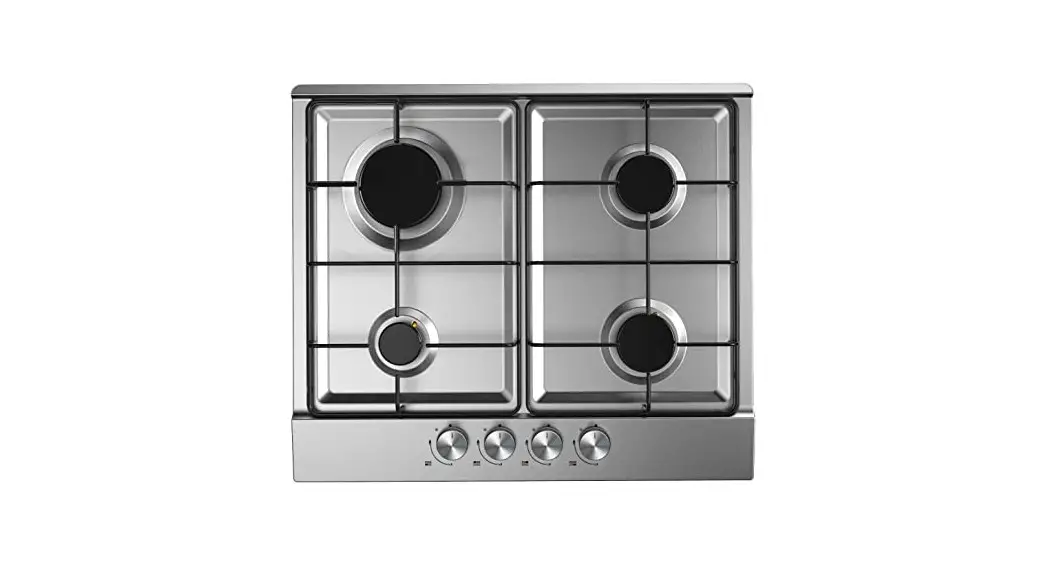
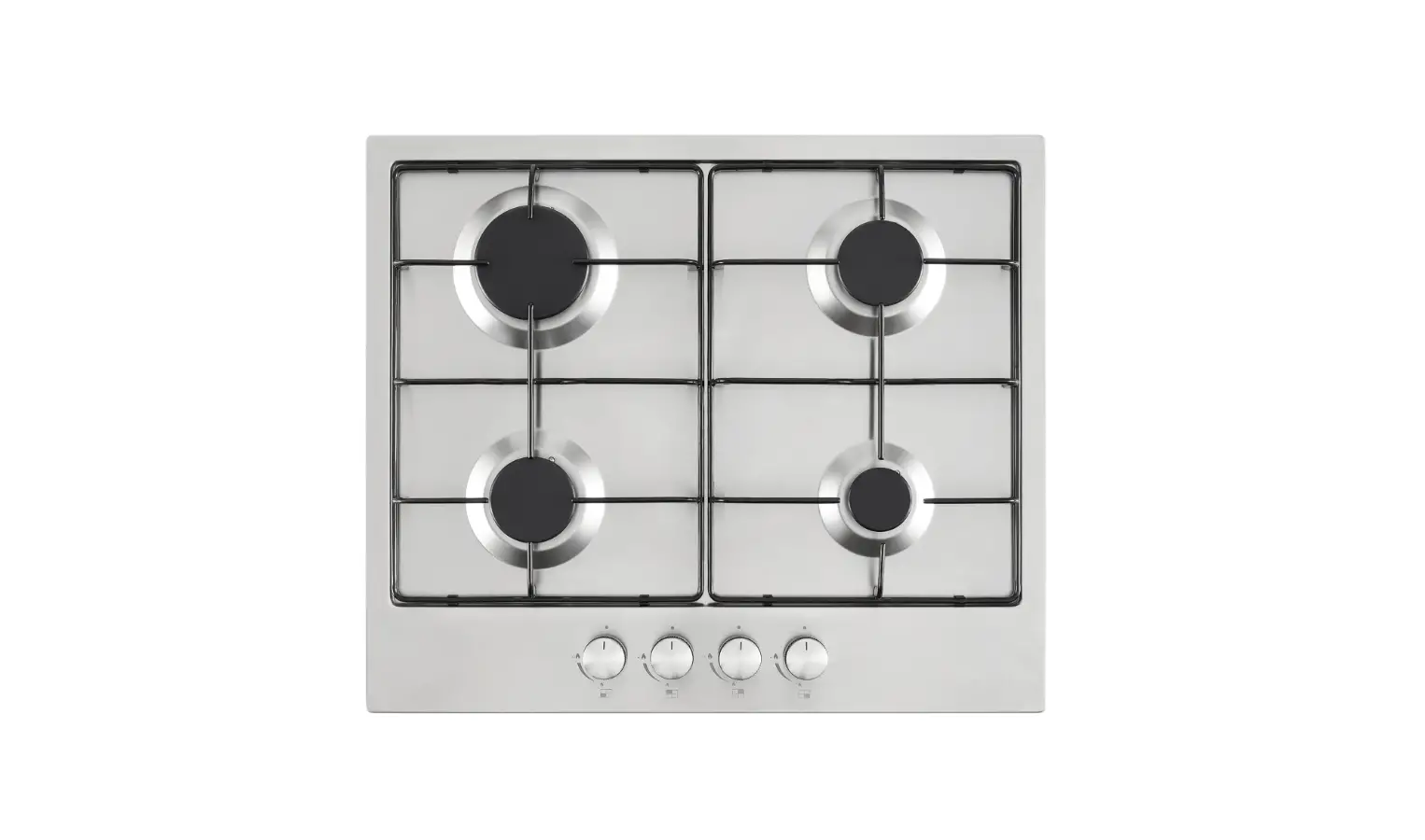
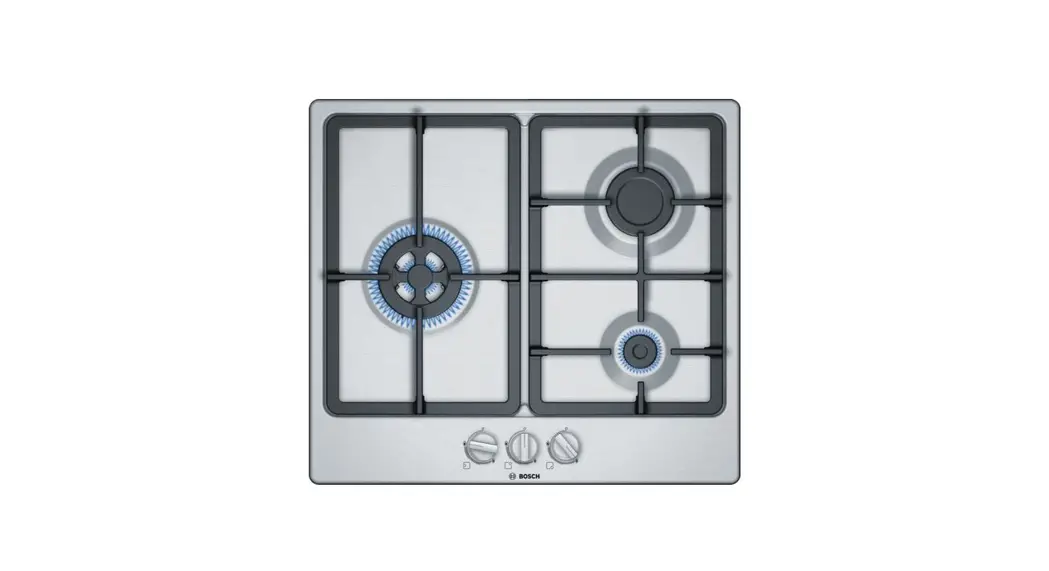
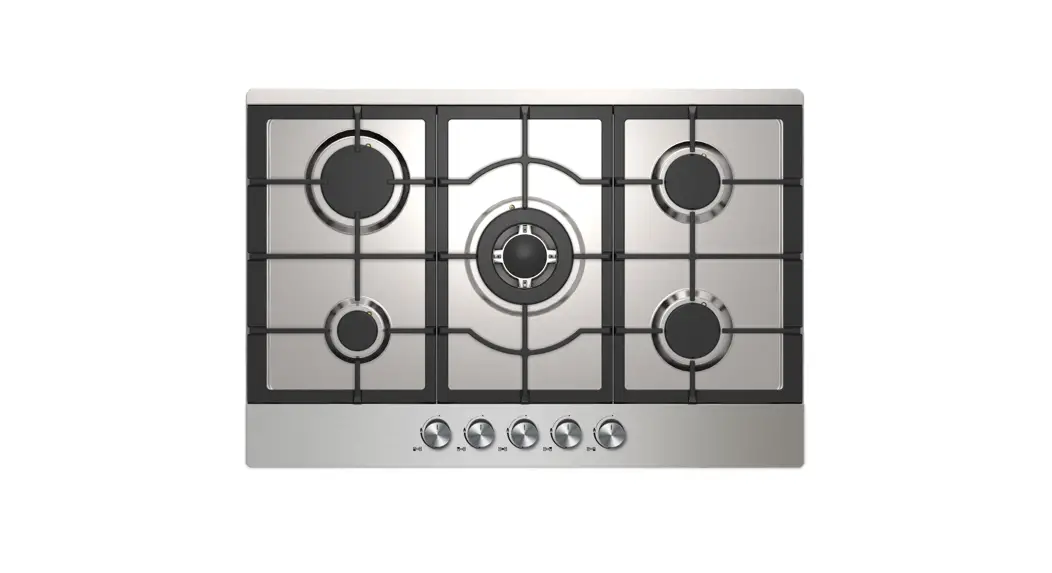
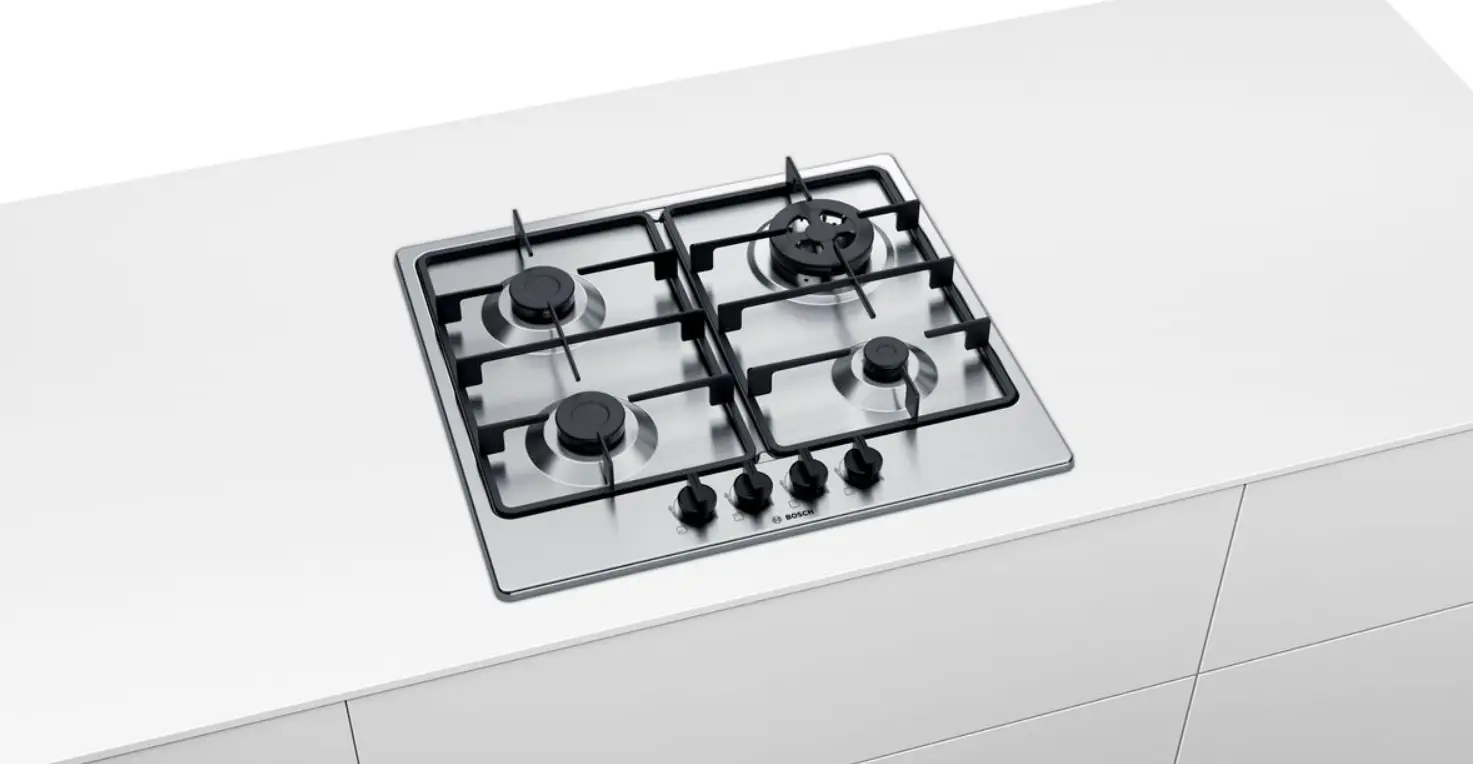
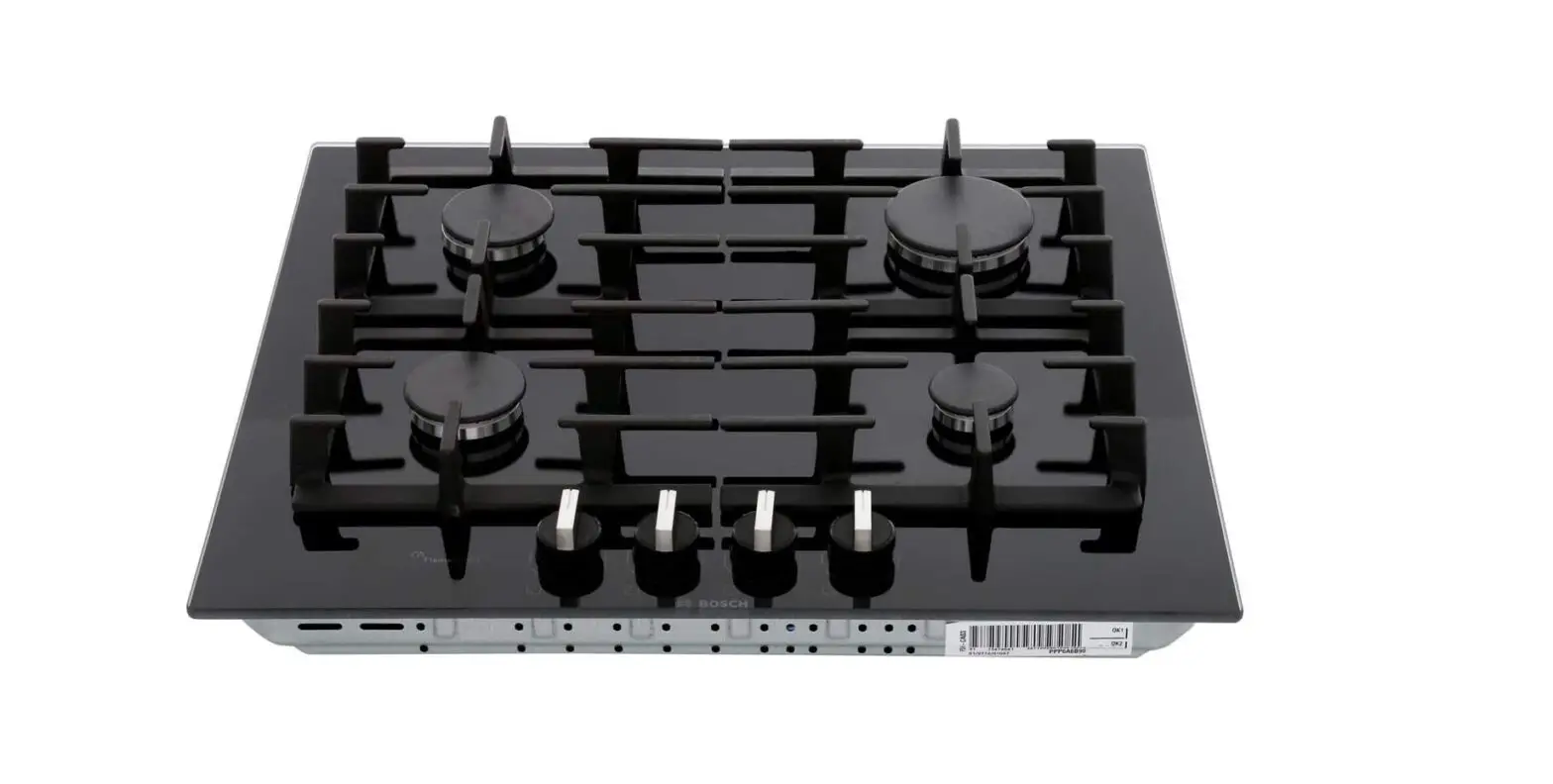
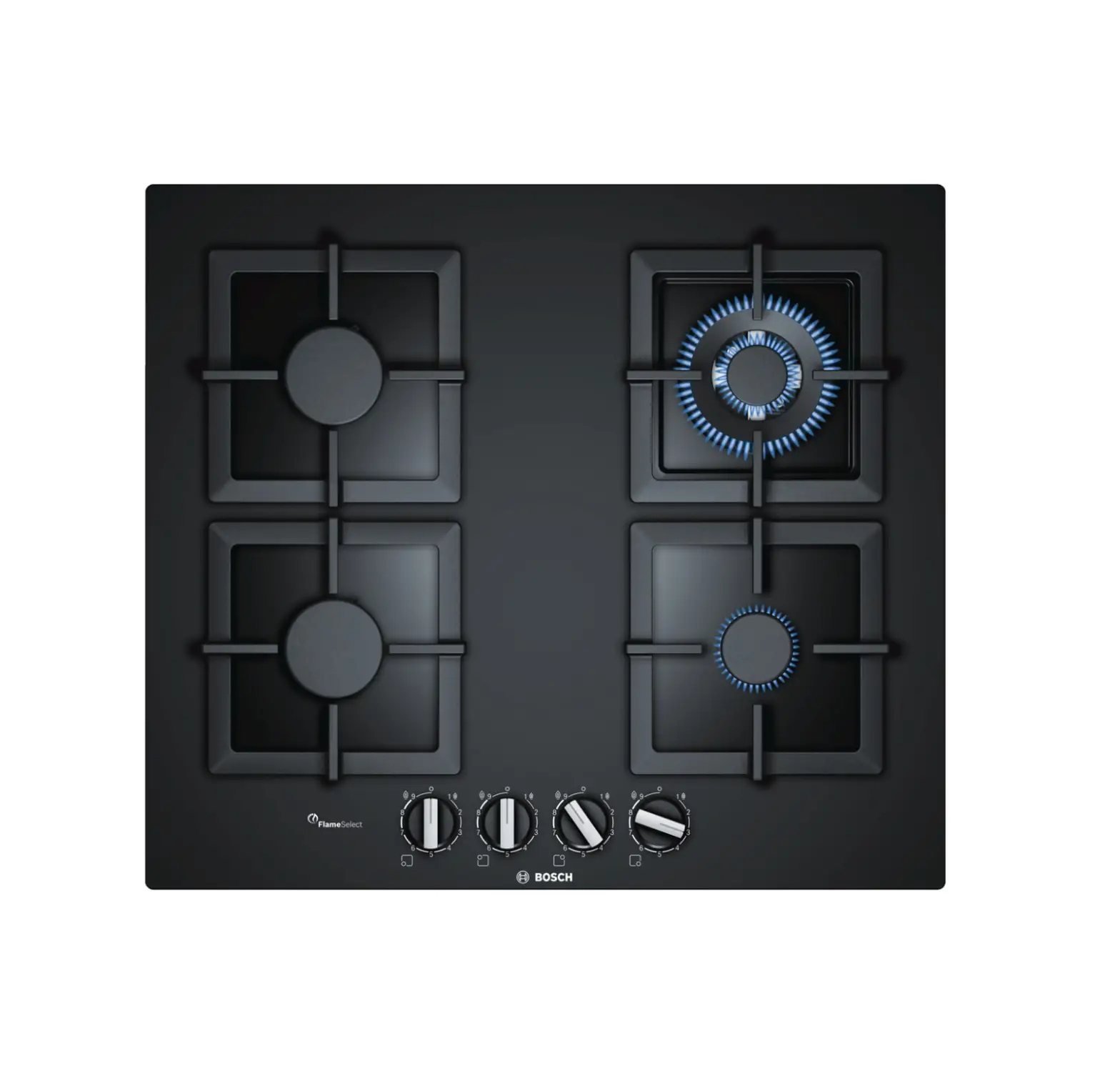
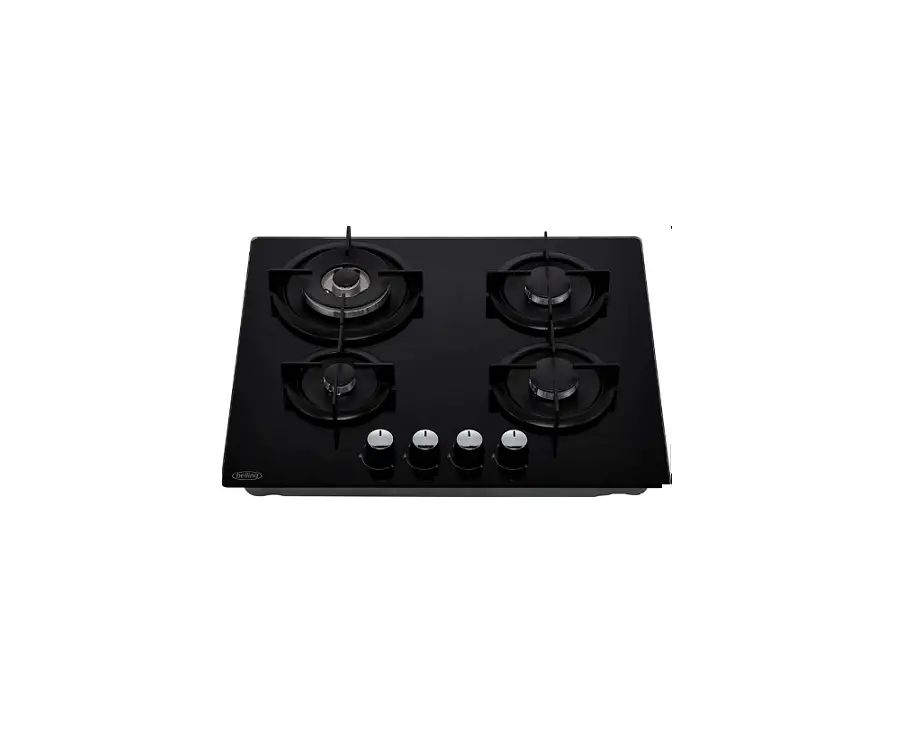
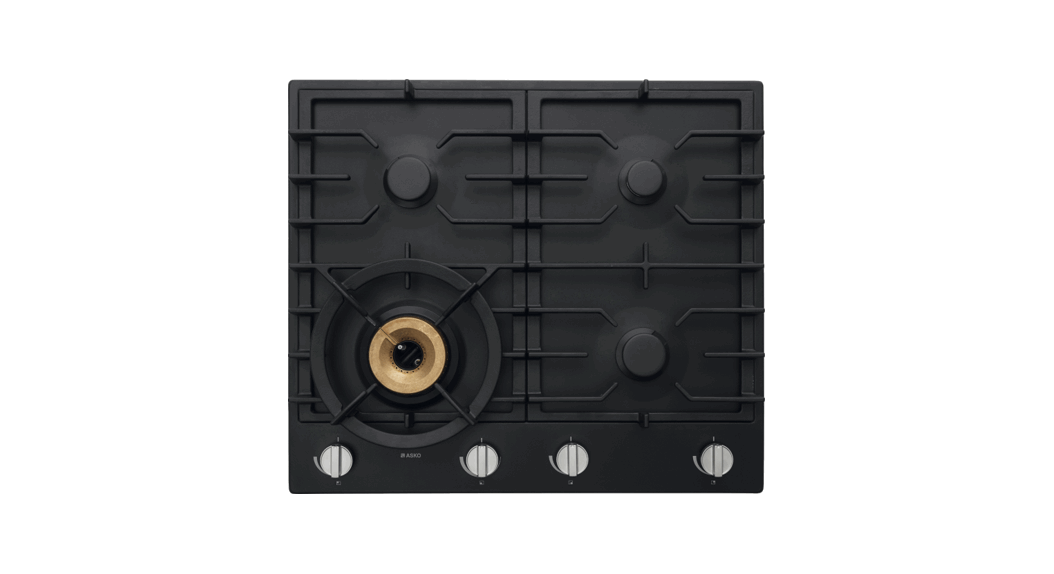
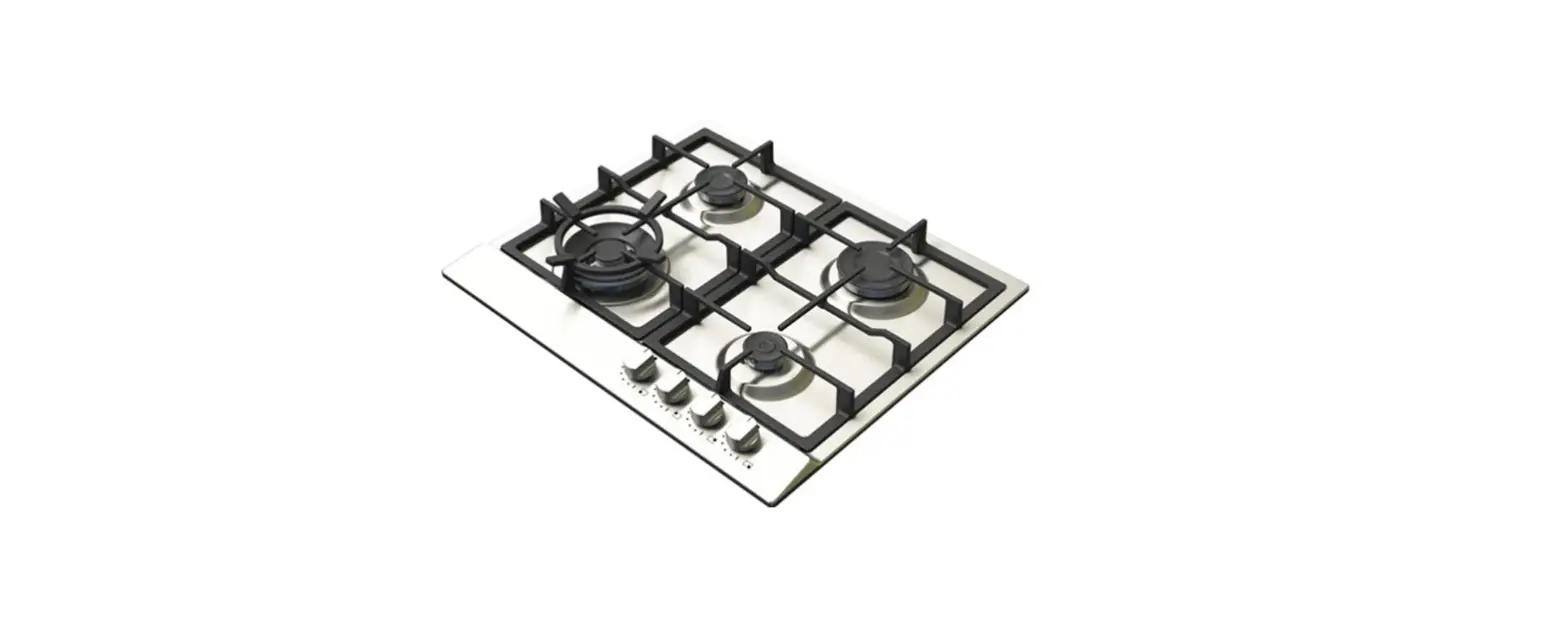
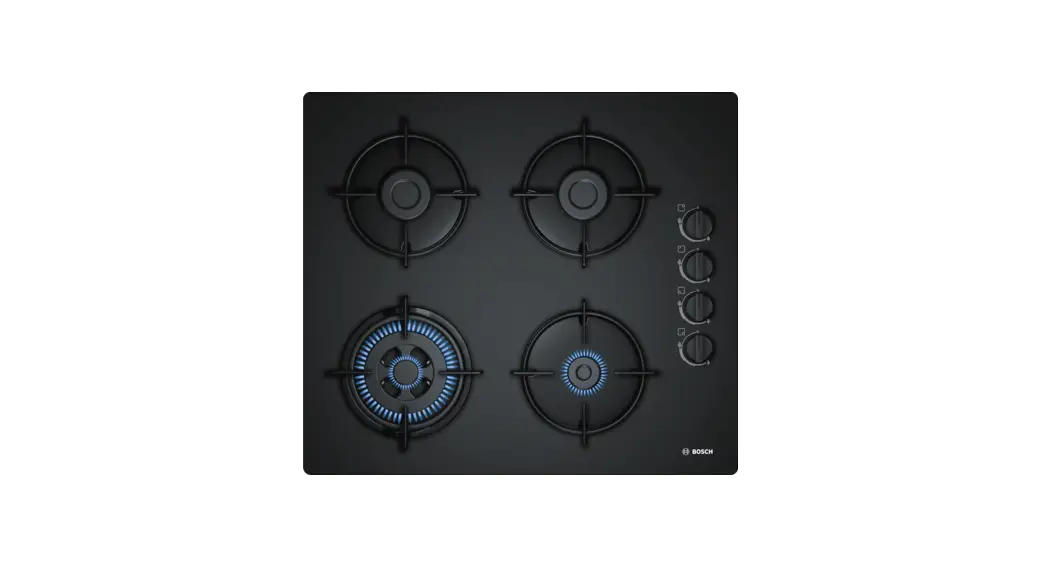
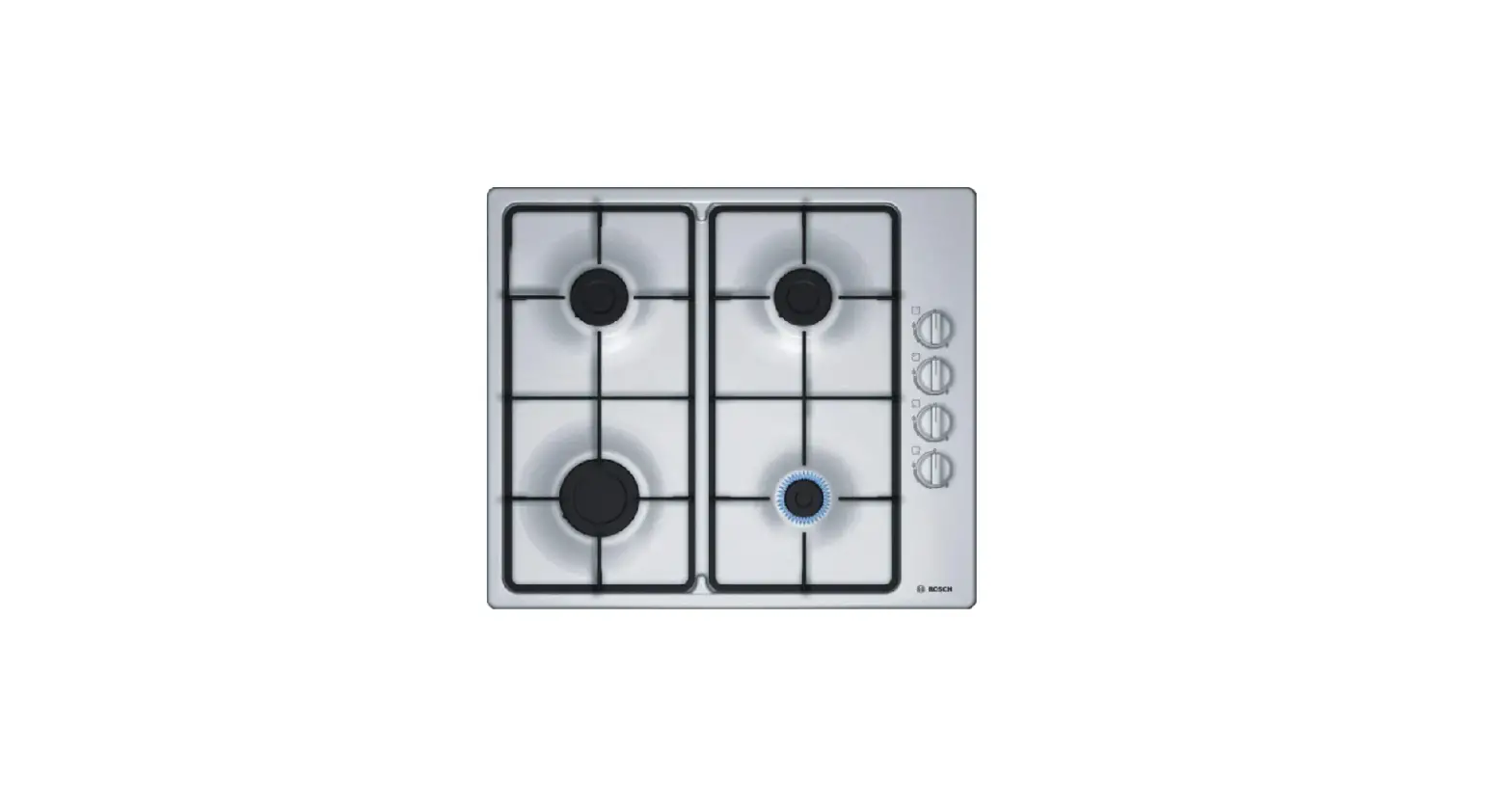
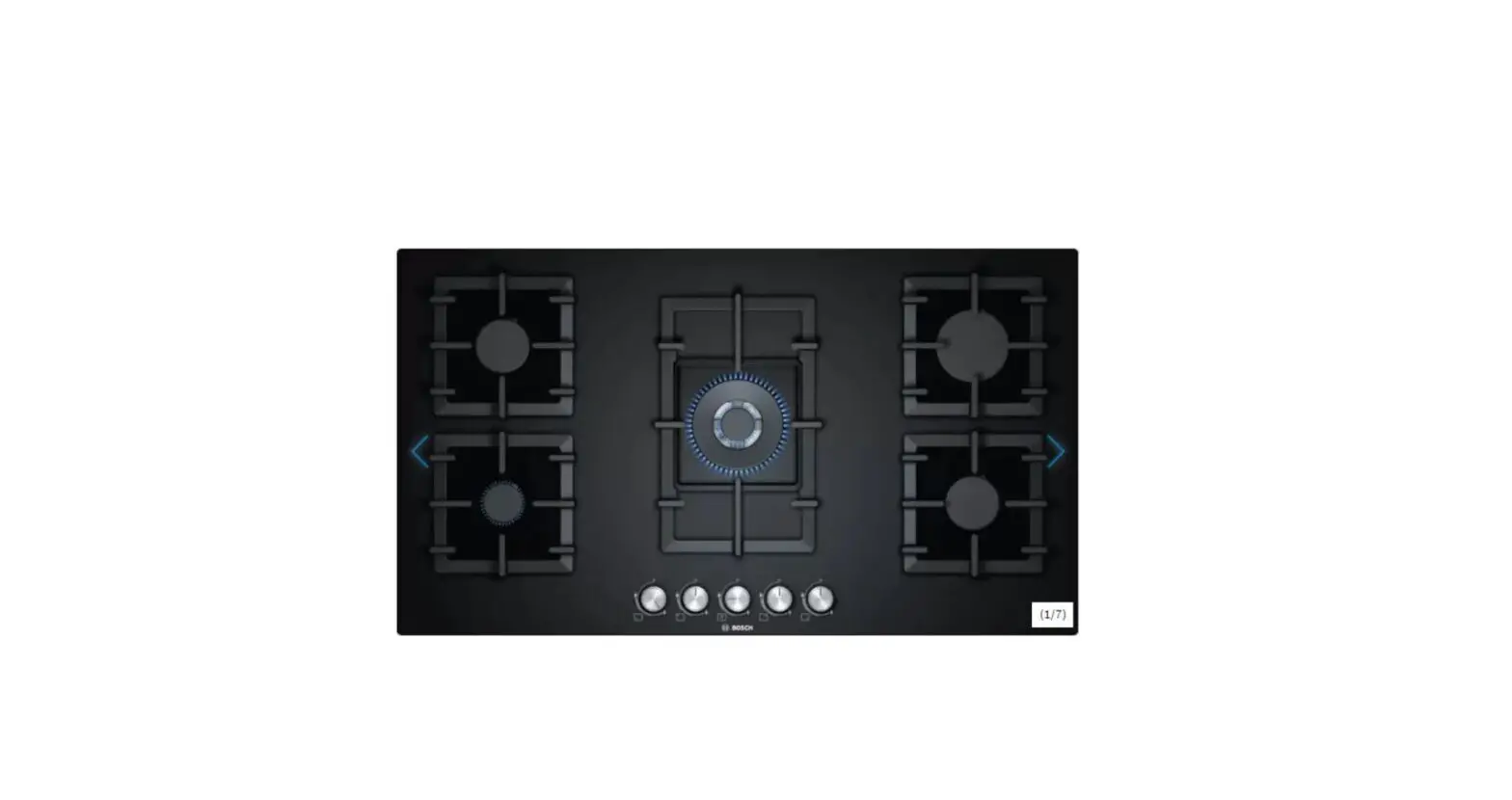
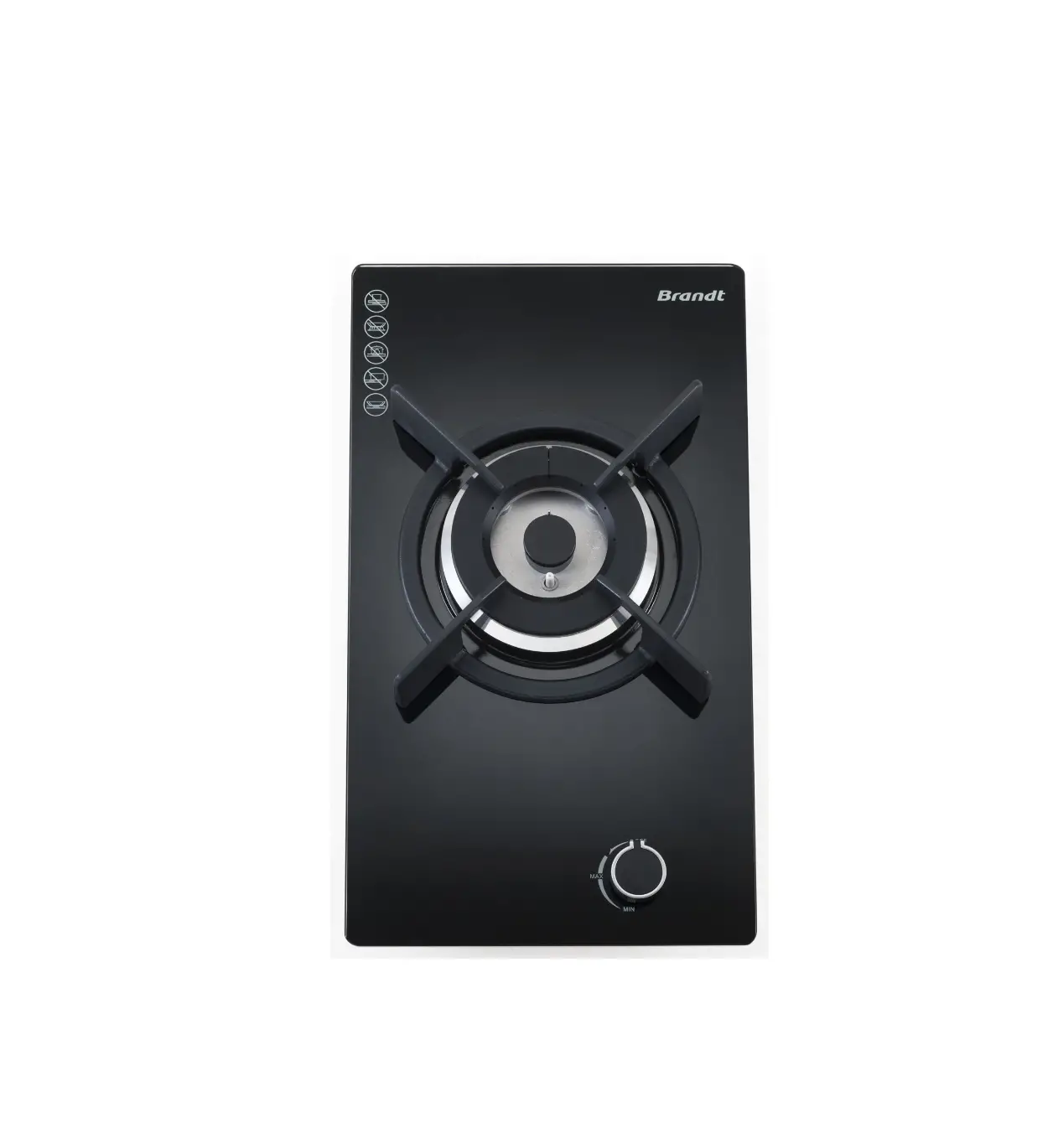
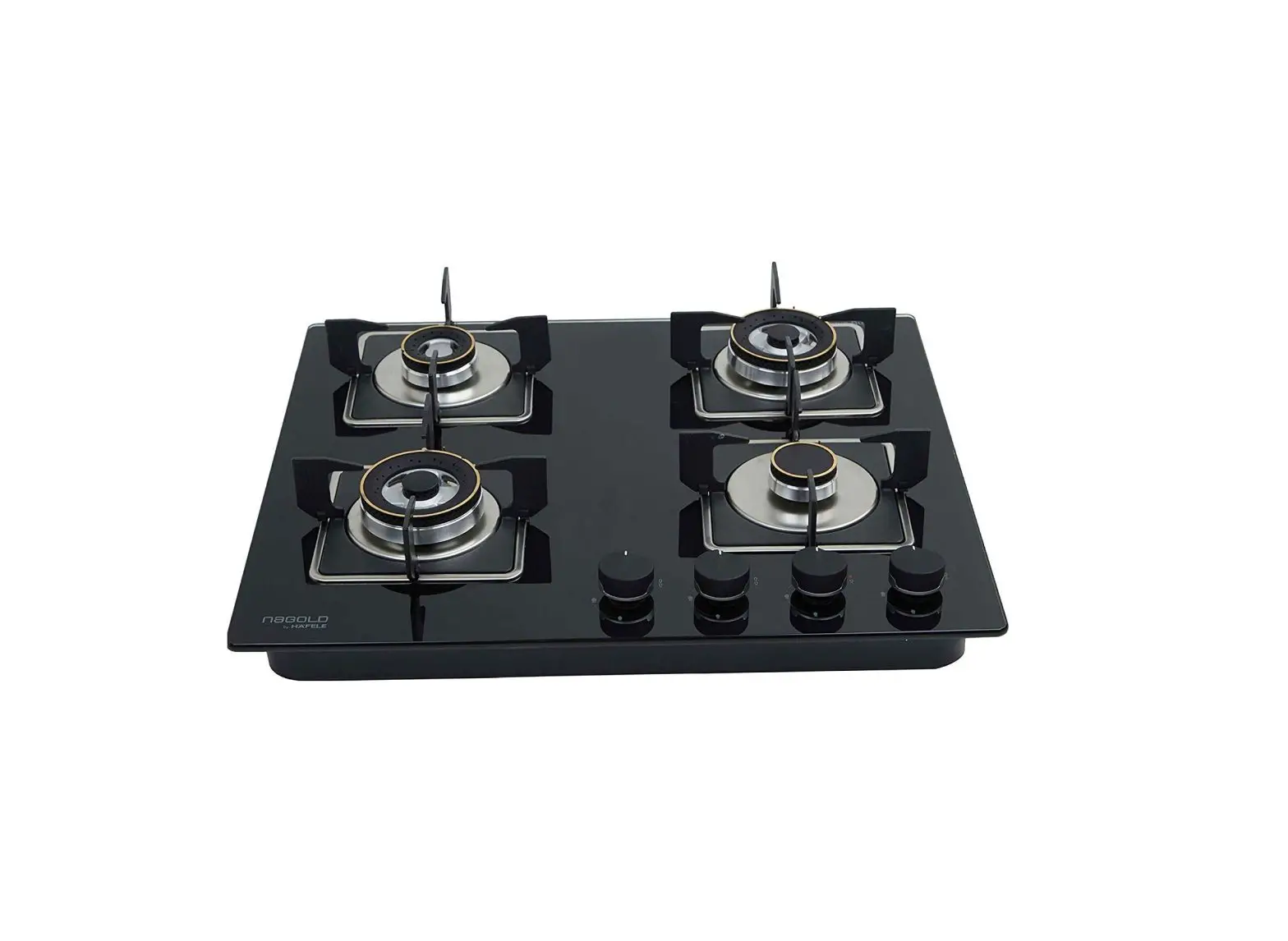
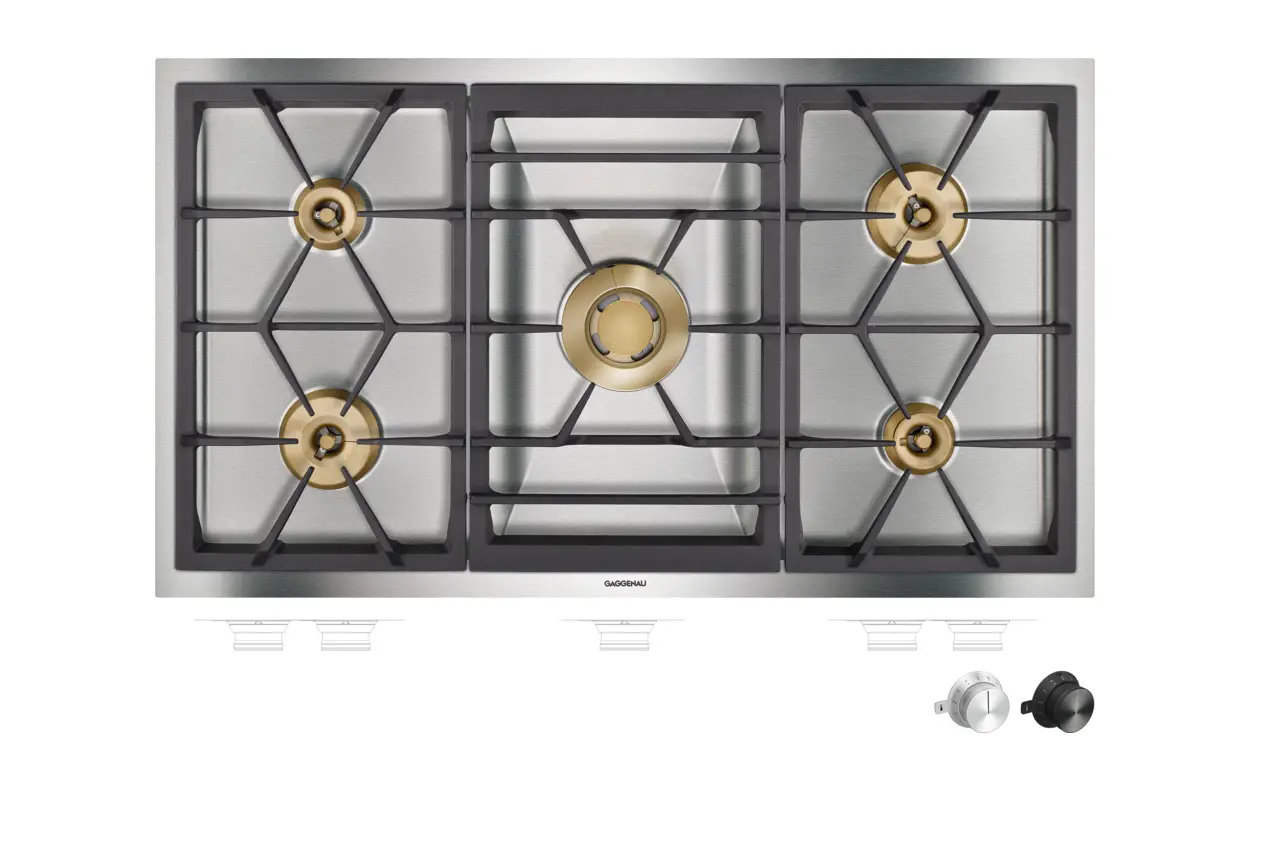
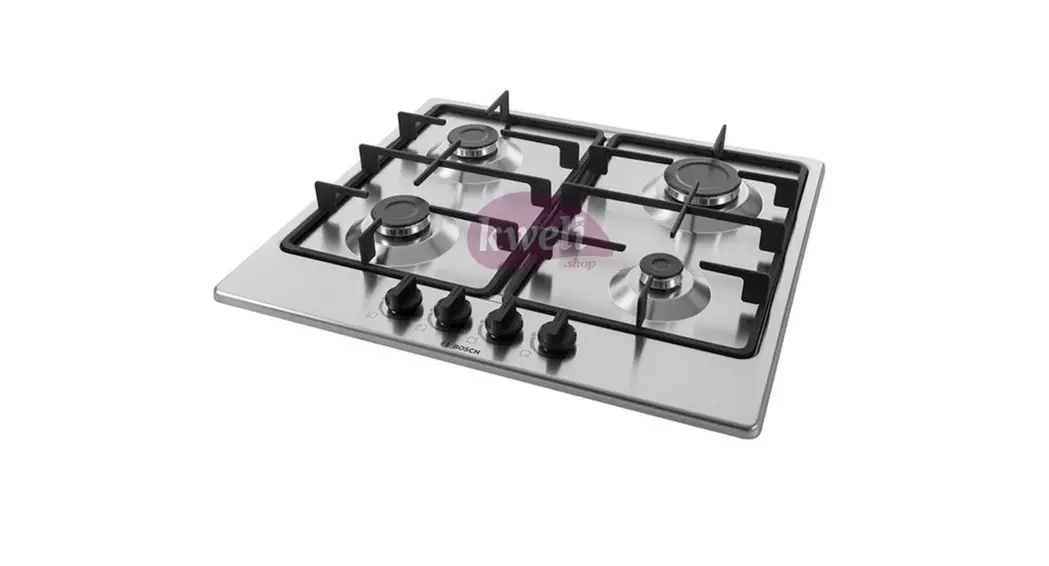
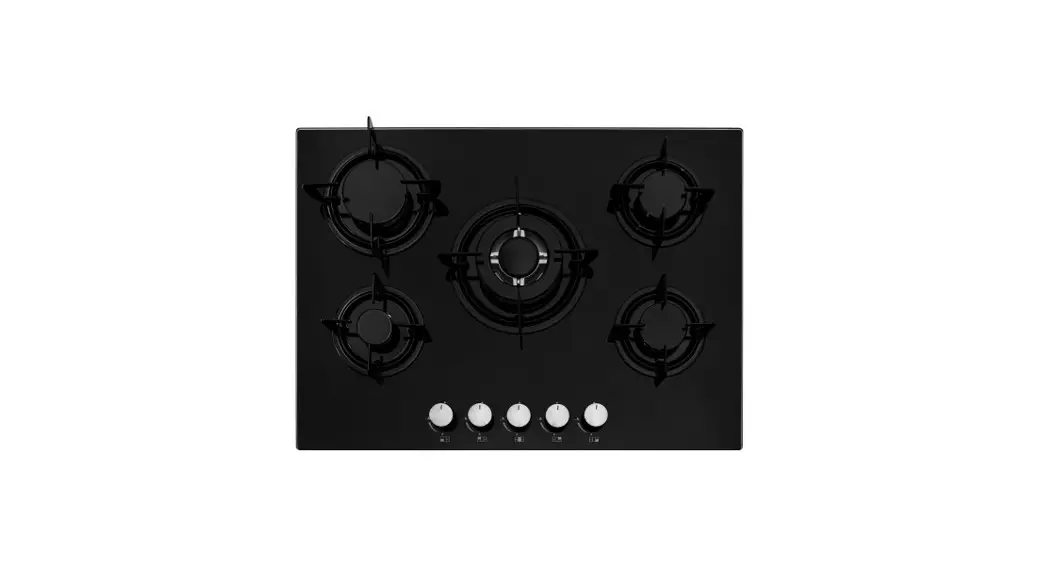
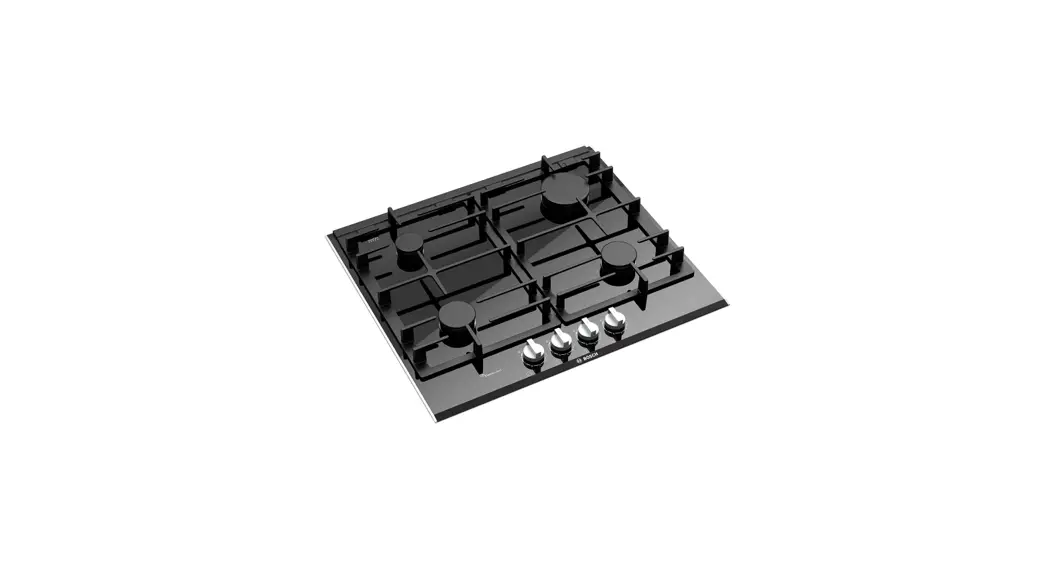
GH604 Built In Gas Hobs
Product Information
This product is a built-in gas hob manufactured by Millar Int’l
Ltd. It is designed for home use and complies with relevant
directives. The hob features various burners including auxiliary
burners, semi-rapid burner, rapid burner, and triple ring wok
burner. It also includes an igniter for gas burners (only on
certain models) and a safety device (only on certain models) that
activates if the flame accidentally goes out.
General Precautions
- Read the instruction handbook carefully before installing and
using the appliance. - Keep the handbook in easy reach of the appliance for future
consultation. - If selling or transferring the appliance to another user, give
them the handbook for correct usage and awareness of warnings.
Close-up View


- Auxiliary Burners
- Semi-rapid burner
- Rapid burner
- Triple ring wok burner
- Igniter for Gas Burners (only on certain models)
- Safety Device (only on certain models) – Activates if the flame
accidentally goes out, interrupting the gas delivery - Control Knobs for Gas Burners and Electric Hot Plates
Product Usage Instructions
Gas Burners
The burners differ in size and power. Choose the most
appropriate one for the diameter of the cookware being used. The
burner can be regulated with the corresponding control knob by
using one of the following settings:
- OFF
- HIGH
- LOW
To turn on one of the burners:
- Place a lighted match or lighter near the burner.
- Press the knob all the way in and turn it in the
counter-clockwise direction to the High setting.
On models fitted with a safety device:
- Press the knob for about 6 seconds, until the device that keeps
the flame lighted warms up.
On models fitted with an igniter:
- Press the knob and turn it in the anti-clockwise direction to
the High setting. The burner will automatically light.
Note: For detailed installation, adjustment,
and adaptation instructions, consult the section of the handbook
reserved for the installer.
Multi language user manual English page 2
Manuel d’utilisation multilingue Français page 25
Manuale utente multilingue Italiano pagina 39
GB
Instruction Manual
For Built-In Gas Hobs
Millar Int’l Ltd Address: 10 Hornby Street, Manchester
M8 8DQ United Kingdom
[email protected] www.millargb.com
1. General Precaution……………………………………………………………………………………….. 4 2. Close-up view ……………………………………………………………………………………………….. 5 2. How to use your appliance …………………………………………………………………………….. 6 3. How to keep your cooktop in shape ……………………………………………………………….. 7 4. Practical advice …………………………………………………………………………………………….. 8 5. Troubleshooting ……………………………………………………………………………………………. 9 6. Health and Safety………………………………………………………………………………………… 10 7. Installation instructions ……………………………………………………………………………….12 8. Table 1: Burners and nozzle specifications …………………………………………………… 16 9. Table 2: How to convert gas source ……………………………………………………………… 17 10. Table 3: Adapting to different types of gas…. …………………………………………….. 18 11. Table 4: Gas source and national comparison table……………………………………..20 11. NOTICE…. ……………………………………………………………………………………………….21
Congratulations on choosing Millar product. We are confident that your new appliance, manufactured with top quality materials, will respond perfectly your requirements. Although you will find this appliance dependable and easy to use, we recommend that you read this manual for best performance and to extend the life of your appliance. Thank you.
3
General Precautions
Please read this instruction handbook carefully before installing and using the appliance. This handbook must be kept in easy reach of the appliance for future consultation. If this appliance is sold or transferred to another user, please give this handbook to the new user so that they can learn how to use it correctly and be aware of the various warnings This is a Class 3 appliance designed for home use. – This appliance complies with the following Directives:
73/23/EEC of 19/02/73 (Low Voltage) and subsequent modification; – 89/336/EEC of 03/05/89 (Electromagnetic compatibility) and subsequent modifications; – 90/396/EEC of 29/06/90 (Gas) and subsequent modifications; – 93/68/EEC of 22/07/93 and subsequent modifications. – The appliance must be installed by a skilled and qualified installer, in conformity with statutory legislation. – This appliance is designed for use by adults. – This appliance is not intended for use by persons (including children) with reduced or impaired physical or mental capabilities, or persons lacking experience and awareness, unless they are supervised or taught how to use the appliance by a responsible carer. – Do not allow children to play with the appliance. – Before powering the appliance, ensure that it is properly adjusted for the type of gas available (see “installation”). – Before carrying out maintenance or cleaning operations, disconnect the appliance from the power supply and allow it to cool. – Ensure air is able to circulate around gas appliances. Insufficient ventilation will lead to depletion of the oxygen in the air in the place of installation. – In case of intense or prolonged use of the appliance, it may be necessary to increase ventilation, for example by opening a window or increasing the power of extractor fans, if present. – Combustion products must be expelled from the place of installation through an extractor hood or extractor fan (see “Installation”). – For any replacements or alterations that may be required, contact an authorised Technical Assistance Centre and insist on the use of original spare parts.
IMPORTANT: The product label, with the serial number, is affixed to the underside of the hob. The Manufacturer cannot be held responsible for damage to property or personal injury resulting from incorrect installation or improper, erroneous or unreasonable use of the appliance
4
Close-up View
( GH604 )
( GH705 )
(GH905)
( GH906)
1. Auxiliary Burners 2. Semi-rapid burner 3. Rapid burner
5
4. Triple ring wok burner 5. Igniter for Gas Burners (only on certain models) 6. Safety Device (only on certain models) – Activates if the flame accidentally goes out (spills, drafts, etc.), interrupting the delivery of gas to the burner 7. Control Knobs for Gas Burners and Electric Hot Plates
NOTICE
The stainless steel grease pan and the cast-iron grill, located in the burner and grate packing box, must be installed, respectively, below and above the electric heating element so that tile element is enclosed between the two.
How To Use Your Appliance
All operations concerning installation, adjustment and adaptation to the available gas type must be carried out by a qualified technician, in compliance with statutory legislation.
The specific instructions are given in the section of the handbook reserved for the installer.
The position of the corresponding gas burner or electric hot plate (if present) is indicated on each control knob.
Gas Burners
The burners differ in size and power. Choose the most appropriate one for the diameter of the cookware being used. The burner can be regulated with the corresponding control knob by using one of the following settings:
OFF
HIGH LOW
To turn on one of the burners, place a lighted match or lighter near the burner, press the knob all the
way in and turn in the counter-clockwise direction to the “High” setting.
On models fitted with a safety device (F), the knob must be pressed in for about 6 seconds, until
the device that keeps the flame lighted warms up.
6
On models fitted with an igniter (D): Press the knob and turn in the anti-clockwise direction to the
“High” setting. The burner will automatically light.
Some models are equipped with an ignition switch incorporated into the control knob. If this is the case, the igniter (D) is present, but not the “E” switch is located near each knob.
To light a burner, simply press the corresponding knob all the way in and, then, turn it in the anti-clockwise direction to the High setting, keeping it pressed in until the burner lights.
Caution: If the burner accidently goes out, turn off the gas with the control knob and try to light it again
after waiting at least 1 minute.
To turn off a burner, turn the knob in the clockwise direction until it stops (it should be on the ” ”
setting).
How to Keep Your Cooktop in Shape
Before cleaning or performing maintenance on your appliance, disconnect it from the electrical power supply. To extend the life of the cooktop, it is absolutely indispensable that it be cleaned carefully and thoroughly on a frequent basis, keeping in mind the following:
Cleaning alloy burners on a gas hob: Wash the alloy burners in warm soapy water – they should never be soaked with other metal parts, as electrolysis will occur and they will be permanently blackened. For stubborn stains use a cream cleaner.
Cleaning pan supports and burner caps: These should be washed in hot soapy water. For stubborn marks, soak or treat with a cream cleaner and brush or a green scourer. Do not put in the dishwasher, as this may cause rusting and won’t remove carbonised stains (i.e. burnt-on fat).
Cleaning enameled parts on a gas hob (if present): These should be washed with warm water without using abrasive powders or corrosive substances which could ruin them;
On cooktops with automatic ignition, the end of the electronic ignition device must be cleaned carefully and frequently, making sure that the gas holes are not clogged;
Stainless steel can be stained if it remains in contact with highly calcareous water or aggressive detergents (containing phosphorous) for an extended period of time. It is recommended that these parts be rinsed thoroughly with water and then dried well. It is also a good idea to clean up any spills;
Before using the ceramic glass module, the surface must be cleaned, using a damp cloth to remove dust or food residues. The ceramic glass surface should be cleaned regularly with a solution of warm water and a non-abrasive detergent. Periodically, special products will need to be used to clean the surface. First, remove all food buildup or grease with a cleaning scraper, e.g.
CERA
(not supplied) (Fig. 1).
Clean the cooking surface when it is still warm with a suitable cleaning product and paper towels. Then rub with a damp cloth and dry. Aluminum foil, plastic items, objects made of synthetic material, sugar or foods with a high sugar content that have melted onto the surface must be removed immediately with a scraper while the cooking surface is still hot. Special cleaning products for ceramic glass surfaces form a transparent protective layer which fights dirty buildup. This also protects the surface from damage caused by food with high sugar content. Do not use abrasive sponges or cleaning products under any
7
circumstances. This holds true for chemically aggressive cleaners, like oven sprays and stain removers (Fig.2);
Fig.1
Fig.2
When cleaning the grill, it is recommended that you do so while it is still hot, using the handles provided
to move it from the cooktop to the sink. To remove the pan beneath the grill, it is a good idea to wait until
the heating element has cooled (roughly after 15 minutes)
Greasing the Gas Valves
Over time, the gas valves may stick or become difficult to turn. If this is the case, they must be cleaned on the inside and then re-greased. N.B.: This procedure must be performed by a technician authorized by the manufacturer.
Practical Advice
Practical Advise on Using the Burners
For best performance, follow these general guidelines: Use the appropriate cookware for each burner (see table) in order to prevent the flame from reaching the
sides of the pot or pan; Always use cookware with a flat bottom and keep the lid on; When the contents come to a boil, turn the knob to “Low”.
Burner Semirapid burner Auxiliary burner Rapid burner Triple ring wok burner
Ø Cookware diameter (cm) 16 – 20 10- 14 16 – 20 24 – 26
To identify the type of burner, refer to the designs in the section entitled “Burner and Nozzle Specifications”.
For best performance, keep in mind the following: All types of casseroles can be used on the ceramic glass cooking surface. However, it is important that
the bottom be perfectly flat. Casseroles with thicker bottoms distribute heat more evenly.
8
Use cookware the diameter of which is at least as large as the cooking area so that all of the heat produced by the heating element is used.
Make sure that the bottom of tile pot is always dry and clean to ensure good contact between the cookware and the cooking surface. This will also increase the life of the pots as well as the ceramic glass surface.
Do not use the same cookware that you use for gas burners because the concentrated heat they produce can deform the bottom of the pot. Therefore, you will not achieve best results when using these pots on the ceramic glass surface.
Notice: The glue used to seal the glass surface may leave traces on the appliance. We recommend that the module be cleaned with a non-abrasive cleaner before being used for the first time. During the first few hours of use, you may detect the smell of rubber. This will disappear after a short time.
Troubleshooting
It may occur that the cooktop does not function, or does not function properly. Before calling customer services for assistance, lets see what can be done.
First of all, check to see that there are no interruptions in the gas and electrical supplies, and, in particular, that the gas valves for the mains are open.
The burner does not light or the flame is not even around the burner. Check to make sure that: The gas holes on the burner are not clogged; All of the movable parts that make up the burner are mounted correctly; There are no draughts around the cooking surface.
The flame does not stay lighted on the model with the safety device. Check to make sure that: You press the knob all the way in; You keep the knob pressed in long enough to activate the safety device. The gas holes are not clogged in the area corresponding to the safety device.
The burner does not remain on when set to “Low”. Check to make sure that:
9
The gas holes are not clogged. There are no draughts near tire cooking surface. The minimum has been adjusted correctly (see the section entitled, “Minimum Regulation”).
The cookware is not stable. Check to make sure that: The bottom of the cookware is perfectly flat. The cookware is centered correctly on the burner or electric hot plate. The support grids have not been inverted. If, despite all of these checks, the cooktop does not function properly and the problem persists, call your supplier’s customer service informing them of: –The type of problem. –The abbreviation used to identify the model (Model number) as indicated on your receipt. Never call upon gas technicians not qualified/authorized, and refuse to accept spare parts that are not original.
Health and Safety
To maintain the EFFICIENCY and SAFETY of this appliance, we recommend: -call only the service centres authorized by the manufacturer -always use original spare parts
This appliance is designed for non-professional use in the home and its features and technical characteristics must not be modified. These instructions are only valid for the countries the symbols for which appear on the manual and the serial plate. The electrical system of this appliance is safe only when it is correctly connected to an adequate earthing system, as required by current safety standards. Prevent children and the disabled from coming into contact or having access to the following, as they are possible sources of danger: – The controls and the appliance in general; – The packaging (plastic bags, polystyrene, nails, etc.); – The appliance, during and immediately after use given the heat generated by its use; – The ceramic glass cooking surface (if present) immediately before and after use, as the cooking surface will remain hot for at least a half hour after being turned off; – The appliance when no longer in installed (in this case, all potentially dangerous parts must be made safe).
The following should be avoided: – Touching the appliance with wet parts of the body;
10
– Using the appliance with bare feet; – Pulling on the appliance or the power supply cord to – Improper and/or dangerous use; – Obstructing the ventilation or heat dissipation slots; – Allowing the power supply cord of small appliances to come into contact with the hot parts of the cooktop; – Exposure to atmospheric agents (rain, sun); – Using flammable liquids nearby; – Using adaptors, multiple outlet plugs and/or extensions; – Using unstable or deformed cookware; – Leaving the electric hobs on (or the ceramic glass cooking surface) without cookware on top of them; – Using the ceramic glass cooking surface (if present) as a counter top; – Turning on the radiant heating elements (if present) when there is aluminium foil or plastic objects on the ceramic glass surface; – Striking the ceramic glass cooking surface (if present) with pointed objects; – Closing the glass top (if present) while the gas burners or electrical hot plates are still hot; – Trying to install or repair the appliance without the assistance of qualified personnel.
The assistance of qualified personnel must be called upon in the following cases: – Installation (in accordance with the manufacturer’s instructions); – When in doubt about the operation of the appliance; – Replacement of the electrical outlet because it is disconnect them from the electrical outlet; incompatible with the plug.
Contact service centers authorized by the – manufacturer in the following cases: When in doubt about the condition of the appliance after having removed the packing; – Damage to or replacement of the power supply cord; – In the case of a breakdown or malfunction: ask for – original spare parts. – In the event the ceramic glass cooking surface breaks. – Disconnect the appliance from the power supply in the event of malfunction and always before cleaning or maintenance; When not in use, disconnect the appliance from the power supply and turn off the gas valve (if present); Disconnect the appliance from the electrical supply in the event the ceramic glass cooking surface breaks. Always check to make sure that the control knobs are on the “·”/”o” setting when the appliance is not in use; It is recommended that you follow the guidelines below: – Only use the appliance to cook food, avoiding all other uses; – Check the condition of the appliance after it has been – Cut the power supply cord after disconnecting it from the electrical mains when you decide to no longer use the appliance.
· The manufacturer will not be held liable for any damages arising out of: incorrect installation or improper, incorrect or unreasonable use.
11
Installation Instructions for built-in Hobs
IMPORTANT NOTICE: THE OPERATIONS INDICATED BELOW MUST BE CARRIED OUT BY QUALIFIED PERSONNEL
ONLY, IN CONFORMITY WITH STATUTORY LEGISLATION. THE MANUFACTURER DECLINES ALL LIABILITY FOR INJURY TO PERSONS OR ANIMALS OR
DAMAGE TO PROPERTY DUE TO FAILURE TO COMPLY WITH THESE PRESCRIPTIONS.
Important: Unplug the electrical connection before performing any maintenance or regulation upkeep work.
Positioning for gas hob Important: this unit may be installed and used only in permanently ventilated rooms according to the British Standards Codes Of Practice: B.S. 6172 / B.S. 5440, Par. 2 and B.S. 6891 Current Editions. The following requirements must be observed: a) The room must be fitted with a ventilation system, which vents smoke and gases from combustion to
the outside. This must be done by means of a hood or electric ventilator that turns on automatically each time the hood is operated.
In a chimney stack or branched flue. (exclusively for cooking appliances)
Directly to the Outside
b) The room must also allow for the influx of the air needed for proper combustion. The flow of air for combustion purposes must not be less than 2 m³/h per kW of installed capacity. The supply of said air can be effected by means of direct influx from the outside through a duct with an inner cross section of at least 100cm² which must not be able to be accidentally blocked. Those appliances which are not fitted with a safety device to prevent the flame from accidentally going out must have a ventilation opening twice the size otherwise required, i.e. a minimum of 200 cm² (Fig. 3). Otherwise, the room can be vented indirectly through adjacent rooms fitted with ventilation ducts to the outside as described above, as long as the adjacent rooms are not shared areas, bedrooms or present the risk of fire (Fig. 4).
12
Detail A
Adjacent Room
Room to be Vented
Examples of ventilation holes for comburant air.
Enlarging the ventilation slot between window and floor
Fig.3
Fig.4
c) Intensive and prolonged use of the appliance may necessitate supplemental ventilation, e.g. opening a
Window or increasing the power of the air intake system (if present).
d) Liquidified petroleum gases are heavier than air and, as a result, settle downwards. Rooms in which
LPG tanks are installed must be fitted with ventilation openings to the outside in order to allow the gas
to escape in the event of a leak. Therefore, LPG tanks, whether empty or partially full, must not be
installed or stored in rooms or spaces below ground level (cellars, ect.). It is also a good idea to keep
only the tank currently being used in the room, making sure that it is not near sources of heat (ovens,
fireplaces, stoves, etc.) that could raise the internal temperature of the tank above 50ºC.
Installation of built-in stove tops
The gas hobs are prepared with protection degree against excessive heating of type X, the appliance can therefore be installed next to cabinets, provided the height does not exceed that of the hob. For a correct installation of the cooking hob the following precautions must be followed: a) The hob may be located in a kitchen, a ketone/diner or bed sitting room, but not in a bathroom or shower
room. b) The furniture standing next to the unit, that is higher than the working boards, must be placed at least
110mm from the edge of the board. c) The cabinets should be positioned next to the hood at a height of at least 460 mm (Fig. 5).
13
d) Should the hob be installed directly under a cupboard or extractor hood, the latter should be at least 650mm from the worktop, as shown in Fig. 5. Should the hob be installed directly under a cupboard, the latter should be at least 700mm from the worktop.
e) The dimensions of the room for the furniture must be those indicated in the figures in the last two pages of the cover. Fixing hooks are provided which allow place the hob plate on worktops that measure 20 to 40 mm in thickness (see Fig. 6). It is advisable to use all the fixings supplied.
Fig.6
Hook position for
Hook position for
Hook position for
H=30mm top
H=40mm top
H=20mm top
N.B: Use the hook contained in the “accessories set”
f) In the event the cooktop is not installed above a built-in oven, a wood panel must be inserted as insulation.
This panel must be placed at least 20 mm from the bottom of the cooktop itself.
lmportant: When installing the hob above a built-in oven, the oven should be placed on two wooden strips;
in the case of a joining cabinet surface, remember to leave a space of at least 45 x 560 mm at the back.
When installing on a built-in oven without forced ventilation, ensure that there are air inlets and outlets for ventilating the interior of the cabinet adequately.
Gas connection for gas hob
14
The Cooker should be connected to the gas-supply by a Gas Safe registered installer. During installation of this product it is essential to fit an approved gas tap to isolate the supply from the appliance for the convenience of any subsequent removal or servicing. Connection of the appliance to the gas mains or liquid gas must be carried out according to the prescribed regulation in force, and only after it is ascertained that it is adaptable to the type of gas to be used. If not, follow the instructions indicated in the paragraph headed “Adaptation to different gas types”. In the case of connection to liquid gas, by tank, use pressure regulators that conform to the regulation in force. Important: For safety, for the correct regulation of gas use and long life of the appliance, ensure that the gas pressure conforms to the indications given in table 1 “Nozzle and burner characteristics”. Connection to non-flexible tube (copper or steel) Connection to the gas source must be done in such a way as to not create any stress points at any part of the appliance. The appliance is fitted with an adjustable, “L” shaped connector and a gasket for the attachment to the gas supply. Should this connector have to be turned, the gasket must be replaced (supplied with the appliance). The feeding connector of the gas to the appliance is threaded 1/2 gas male cylinder. Connection to flexible steel tube The gas feed connector to the appliance is a threaded, male 1/2″ connector for round gas pipe. Only use pipes and sealing gaskets that conform to the standards currently in force. The maximum length of the flexible pipes must not exceed 2000 mm. Once the connection has been made, ensure that the flexible metal tube does not touch any moving parts and is not crushed.
Check the Seal
Once the appliance has been installed, make sure all the connections are properly sealed, using a soapy water solution. Never use a flame.
Electrical Connection
The cooktops fitted with a tripolar electrical supply cord are designed to be used with alternating current according to the indications on the rating plate located under the cooktop. The earthing wire can be identified by its yellow-green colour. In the case of installation over a built-in electric oven, the electrical connections for the cooktop and oven should be independent, not only for safety purposes, but also to facilitate removal of one or both in the future.
Electrical Connection for Gas Cooktop
Fit the supply cord with a standard plug for the demand rate indicated on the rating plate or connect it directly to the electrical mains. In the latter case, a single pole switch must be placed between the appliance and the mains, with a minimum opening between the contacts of 3mm in compliance with current safety codes (the earthing wire must not be interrupted by the switch). The power supply cord must be positioned so that it does not reach a temperature in excess of 50~C above room temperature at any point. Before actual connection make sure that: The fuse and electrical system can withstand the load required by the appliance; That the electrical supply system is equipped with an efficient earth hook-up according to the norms and
regulations prescribed by law; That the plug or switch are easily accessible.
15
Important: the wires in the mains lead are coloured in accordance with the following code:
Green & Yellow – Earth
Blue
– Neutral
Brown
– Live
As the colours of the wires in the mains lead may not correspond with the coloured markings identifying the
terminals in your plug, proceed as follows: Connect the Green & Yellow wire to terminal marked “E”
or or coloured Green or Green & Yellow.
Connect the Brown wire to the terminal marked “L” or coloured Red.
Connect the Blue wire to the terminal marked “N” or coloured Black.
Adapting the Cooktop for Different Types of Gas
Table1
Burners and Nozzle Specifications
G20/ G25
Burner
Thermal
Nozzle
power
1/100
(kW)
(mm)
Auxiliary
1.0
71
(Small) (A)
Semi rapid
1.80 97
(Medium)
G25.1
Thermal power kW
Nozzle 1/100 (mm)
G27
Thermal power kW
Nozzle 1/100 (mm)
G2.350
Thermal power kW
Nozzle 1/100 (mm)
G30
Thermal power kW
Nozzle 1/100 (mm)
Nozzle 1/100 (mm)
1.0 75 1.0 79 1.0
98 1.0
52
47
1.80 105 1.80 106 1.80 125 1.8
67
64
Nozzle 1/100 (mm)
45
59
G31
Thermal power (kW)
Nozzle 1/100
(mm)
1.0
52
1.8
67
Rapid (R)
2.40
110
2.40
118
Triple Ring (TR)
3.40
125
3.40
142
Supply pressures
20mbar
25mbar
At 15°C and 1013 mbar-dry gas
P.C.I.G20
37.78 MJ/m³
P.C.I.G25
32.49 MJ/m³
P.C.I.G2.350 27.20MJ/ m³
2.40 120 2.40 138 2.40 77
72
67
3.40 143 3.40 185 3.40 93
88
82
20mbar
13mbar
30 37 50 mbar mbar mbar
P.C.I.G25.1 P.C.I.G27 P.C.I.G30
32.51 MJ/m³ 30.98 MJ/m³ 49.47MJ/Kg
2.4
77
3.4
93
37 Mbar
Replacement of burner nozzle: loosen the nozzle with a dedicated wrench(7).Fit
the new nozzle, suitable for the required gas type (see table above for reference)
16
After you have converted the cooktop to another gas type, make sure you have placed a label containing that information on the appliance.
Adjustment of the reduced valve flow
TABLE2:
Burners
Flame
Full flame
Regular burners Saving flame
How to convert gas source
Converting the cooktop from LPG to natural gas Replace the burner Nozzle according to the guidelines in table 1 Loosen the adjustment Spindle (see fig.7 below ) And adjust the flame
Converting the Cooktop from natural Gas to LPG Replace the burner Nozzle according to the guidelines in table 1 Loosen the adjustment Spindle (see fig.7 below ) And adjust the flame
Valve adjustment Valve adjustment should be done with the control knob set at Burner ON saving flame position. Remove the knob, and adjust the flame with a tiny screwdriver (see fig.7 below).
Fig.7 Checking the adjusted flame: heat the burner at full open position for 10 minutes. Then turn the knob into the saving setting. The flame should not extinguish nor move to the nozzle. If it goes off or moves over to the nozzle, re-adjust the valves. Note. It is up to the user to request converting the appliance to another gas type if so required by the local conditions at a licensed gas fitter/ service. Flame selection At the burners adjusted correctly, the flames should be light blue, and the inner cone should be clearly visible. The size of flame depends on the position of the related burner control knob.
17
-Burner ON large flame
-Burner ON small flame saxing mode
-Burner OFF
Fig.8
See also fig.8 for various operating options (flame size selection); the burner should be set at a large flame during
the initial phase of cooking to bring the food to boiling, and then the knob should be turned to the saving flame
position to maintain the cooking. It is also possible to adjust the flame size stepless.
It is prohibited to adjust the flame in the range between the Burner OFF and Burner ON large flame positions. Significant quantities of energy can be saved if the appliance is used correctly, parameters set correctly, and appropriate cookware is used. The savings can be as follows · Up to 60 per cent savings when proper pots are used, · Up to 60 per cent savings when the unit is operated correctly and the suitable flame size is chosen.. It is a prerequisite for efficient and energy-saving operation of the cooktop that the burners are kept clean at all times (in particular the flame slots and nozzles).
TABLE 3:
Adapting to different types of gas
APPLIANCE CATEGORY: I2H I2E I2E+ I2L I2HS I2ELS I2ELW I3+ I3B/P I3B/P I3B/P I3P I2H3+ II2E3B/P II2HS3B/P II2ELWLS3B/P II2ELL3B/P
Burner Auxiliary
Type of Gas
Natural G20
Natural G25
Natural G25.1 Natural G27 Natural G2.350
Butane G30
Pressure mbar 20
25 25 20 13 30 37
Nozzle
diameter
1/100mm
g/h
72
—
72 —
75 —
80
—
97
—
52
72.6
47
72.6
Nominal Charge
l/h
kW
95
1.0
1.0 99.7
1.0 99.6
1.0 116
1.0 132
—
1.0
—
1.0
kcal/h 860 860 860 860 860 860 860
Reduced Charge
kW
kcal/h
0.40
344
0.40
344
0.40
344
0.40
344
0.40
344
0.40
344
0.40
344
18
50
Butane G31
37
Natural 20
G20
Natural 25
G25
Natural 25
G25.1
Natural
Semi-rapid
20
G27
Natural 13
G2.350
30
Butane G30
37
50
Butane G31
37
Natural 20
G20
Natural 25
G25
Natural 25
G25.1
Rapid
Natural
20 G27
Natural 13
G2.350
30
Butane G30
37
50
Butane G31
37
Natural
20 G20
Natural 25
G25
Natural 25
G25.1
Triple-ring wok
Natural
20
G27
Natural 13
G2.350
30
Butane G30
37
50
Butane G31
37
45
72.6
—
1.0
860
0.40
52
72.6
—
1.0
860
0.40
97
—
171
1.8
1548
0.60
1548
97
—
199.4
1.8
0.60
1548
105
—
199.4
1.8
0.60
1548
106
—
209
1.8
0.60
1548
124
—
238.2
1.8
0.60
68
130.8
—
1.8
1548
0.60
64
130.8
—
1.8
1548
0.60
59
130.8
—
1.8
1548
0.60
68
130.8
—
1.8
1548
0.60
110
—
228
2.4
2064
0.90
110
—
265.9
2.4
2064
0.90
118
—
265.9
2.4
2064
0.90
120
—
278.8
2.4
2064
0.90
138
—
317.6
2.4
2064
0.90
78
174
—
2.4
2064
0.90
73
174
—
2.4
2064
0.90
67
174
—
2.4
2064
0.90
78
174
—
2.4
2064
0.90
125
—
323
3.4
2924
1.50
125
—
376.7
3.4
2924
1.50
142
—
376.7
3.4
2924
1.50
144
—
395
3.4
2924
1.50
185
—
450
3.4
2924
1.50
93
247
—
3.4
2924
1.50
88
247
—
3.4
2924
1.50
82
247
—
3.4
2924
1.50
93
247
—
3.4
2924
1.50
19
344 344 516
516
516
516
516 516 516 516 516 774
774
774
774
774 774 774 774 774 1290
1290
1290
1290
1290 1290 1290 1290 1290
TABLE 4:
Gas source and national comparison table
Gas group Supply pressure
I2H
G20 20mbar
I2E I2E+ I2L I2HS I2ELS I2ELW I3+
G20 20mbar G20/G25 at 20/25 mbar G25 25mbar G20/G25.1 25 mbar G20 20 mbar,G2.350 13 mbar G20/G27 20 mbar G30-G31 (28-30)-37 mbar
I3B/P
G30 30 mbar
I3B/P I3B/P I3P I2H3+
II2E3B/P II2HS3B/P
II2ELWLS3B/P
II2ELL3B/P
G30 37 mbar G30 50mbar
G31 37 mbar G20 20MBAR, G30-G31(28-30)-37mbar G20 20mbar,g30 30mbar G20/G25.1 25mbar, G30 30mbar G20/G27 20mbar, G2.350 13mbar,G30 37mbar G20 20mbar,G25 25mbar, G30 50mbar
Country
AT, BG, CZ, DK, EE, FI, GR, HR, HU, IS, IE, IT, LV, LT, NO, PT, RO, SK, SI, ES, SE, CH, TR, GB DE, LU BE, FR NL HU PL PL BE, CY, CZ, EE, FR, GR, IE, IT, LT, LU, LV, PT, RO, SK, ES, CH, GB BE, CY, CZ, DK, EE, FI, GR, HR, LV, LT, LU, MT, NL, NO, SK, SI, SE, TR PL AT, DE, HU, CH CH,FR,GR,IE,ES,GB GR,IE,IT,PT,ES,GB,CH,CZ,SI,SK
RO HU
PL
DE
This appliance conforms to the following European Economic Community directives:
– 73/23/EEC of 19/02/73 (Low Voltage) and subsequent modification; – 89/336/EEC of 03/05/89 (Electromagnetic compatibility) and subsequent modifications; – 90/396/EEC of 29/06/90 (Gas) and subsequent modifications; – 93/68/EEC of 22/07/93 and subsequent modifications.
This appliance was manufactured in accordance with the following standards:
– BS EN 30-1-1:2008 + A3:2013 and BS EN 30-2-1:1998
20
NOTICE
A.”prior to installation ensure that the local distribution condition (nature of the gas pressure) and the adjustment of the appliance are compatible.”
B. “The adjustment conditions for this appliance are stated on the label.” C. “This appliance is not connected to combustion products evacuation device. It shall be installed and connected in accordance with current installation regulations. Particular attention shall be given to the relevant requirement regarding ventilation.” D. “CAUTION: The use of a gas cooking appliance results in the production of heat, moisture and products of combustion in the room in which it is installed. Ensure that the kitchen is well ventilated especially when the appliance is in use: keep natural ventilation holes open or install a mechanical ventilation device.
21
This product complies with EU Directive 2002/96/EC.
The crossed-out dustbin symbol reported on the appliance indicates that the appliance must be disposed of separately from other domestic refuse at the end of its useful life. It must therefore be delivered to a waste recycling centre specifically for electric and electronic equipment or returned to the retailer at the moment of purchase of a new equivalent appliance. The user is responsible for delivering the appliance to the appropriate collection centre at the end of its useful life, Failure to do so may result in a fine, as provided for by laws governing waste disposal. Differential collection of waste products for eventual recycling, treatment and environmentally friendly disposal helps reduce possible negative effects on the environment and health, and also enables the materials making up the product to be recycled. For more detailed information on the available refuse collection systems, refer to the local Municipal Solid Waste disposal centre or the shop where the product was purchased. Producers and importers are responsible for fulfilling their obligations as regards recycling, treatment and environmentally friendly disposal by directly or indirectly participating in the collection system.
The manufacturing firm refuses all responsibility for any possible imprecision in this booklet, due to misprints or clerical errors. It reserves the right to make all the changes that it will consider necessary in its own products, without affecting the essential characteristics of functionality and safety.
22
23
MANUEL D’UTILISATION
PLAQUE DE CUISSON
[email protected] www.millargb.com
! 1
SOMMAIRE
1 . DESCRIPTION DE L’APPAREIL……………………………………………………………………………………. 03 2 . COMMENT UTILISER VOTRE APPAREIL…………………………………………………………………… 03 3 . COMMENT GARDER VOTRE TABLE DE CUISSON EN BON ÉTAT …………………………….. 04 4 . CONSEILS PRATIQUES………………………………………………………………………………………………. 05 5 . Y A-T-IL UN PROBLÈME ? ………………………………………………………………………………………. 06 6 . INSTRUCTIONS D’INSTALLATION DE L’APPAREIL…………………………………………07 7 . TABLEAU 1 BRÛLEURS ET INJECTEURS………………………………………………………………..11 8 . TABLEAU 2 COMMENT CONVERTIR LA SOURCE DE GAZ ………………………………………. 12 9 . TABLEAU 3 ADAPTATION AUX DIFFÉRENTS TYPES DE GAZ ……………………………………. 13 11 . CONSEILS ……………………………………………………………………………………………………………..14
! 2
Félicitations pour avoir choisi cet appareil. Pour de meilleures performances et afin de prolonger la vie de votre appareil, nous vous recommandons de lire ce manuel.
DESCRIPTION DE L’APPAREIL
!
1. Brûleurs auxiliaires 2. Brûleur semi-rapide 3. Brûleur rapide 4. Brûleur triple couronne 5. Allumeur pour brûleurs à gaz (sur certains modèles uniquement) 6. Dispositif de sécurité (sur certains modèles uniquement) – Actif si la flamme s’éteint accidentellement (déversements, projection, etc), interrompt l’arrivée de gaz au brûleur. 7. Boutons de contrôle pour brûleurs à gaz
Comment utiliser l’appareil
La position du brûleur à gaz est indiqué sur chaque bouton de commande.
Brûleurs à gaz
Les brûleurs sont différent en fonction de la taille et de la puissance. Choisissez-le plus approprié pour le diamètre de l’ustensile utilisé.
! 3
Le brûleur peut être réglé avec le bouton de commande correspondant en utilisant l’un des icônes de paramètres suivants :
OFF
!
Haut
Bas
Pour allumer l’un des brûleurs, placez une allumette ou un briquet à proximité du brûleur, appuyez
sur le bouton tournez me à fond dans le sens inverse des aiguilles d’une montre pour le réglage “Haut ” .
Sur les modèles équipés d’un dispositif de sécurité ( F ) , le bouton doit être enfoncé pendant
environ 6 secondes , jusqu’à ce que le dispositif qui maintient la flamme allumée chauffe.
Sur les modèles équipés d’un allumeur ( D ) , le bouton d’allumage “E” , identifié par le symbole
! , doit d’abord être pressé puis le bouton correspondant poussé et tourné à fond dans le sens inverse des aiguilles d’une montre pour le réglage “haut”. Certains modèles sont équipés d’un interrupteur d’allumage intégré dans le bouton de commande. Si tel
est le cas, l’allumeur ( D ) est présent, mais pas l’interrupteur “E” ( le symbole ! est situé à proximité de chaque bouton) . Pour allumer un brûleur, appuyez simplement sur le bouton correspondant à fond et, ensuite, tourner dans le sens inverse des aiguilles d’une montre pour le réglage haut, en le maintenant enfoncé jusqu’à ce que le brûleur s’allume.
Attention : Si le brûleur s’éteint accidentellement, tournez le gaz avec le bouton de commande et
essayer de le rallumer après avoir attendu au moins 1 minute.
Pour éteindre un brûleur, tourner le bouton dans le sens des aiguilles d’une montre jusqu’à ce qu’il
s’arrête (il devrait être sur le réglage ” . ” ) .
Comment garder votre table de cuisson en bon état
Avant de nettoyer ou d’effectuer l’entretien de votre appareil, débranchez la prise l’alimentation électrique.
Pour prolonger la durée de vie de la table de cuisson, il est absolument indispensable de la nettoyer soigneusement et minutieusement de manière régulière, en gardant à l’esprit les éléments suivants :
· Les pièces émaillées et le plateau en verre, s’il existe, doivent être lavés à l’eau tiède sans utiliser de poudres abrasives ou corrosives qui pourraient les abîmer;
· Les parties amovibles des brûleurs doivent être lavés fréquemment avec de l’eau chaude et du savon, en veillant à éliminer les substances durcie dessus;
· Sur les tables de cuisson à allumage automatique, le dispositif d’allumage électronique doit être nettoyé soigneusement et fréquemment, en s’assurant que les trous de gaz ne sont pas bouchés;
· L’acier inoxydable peut être taché si il reste en contact avec de l’eau à très forte teneur en calcaire ou des détergents agressifs (contenant du phosphore) durant une période de temps prolongée. Il est recommandé que ces pièces soient soigneusement rincées à l’eau puis bien séchés, Il est également recommandé de nettoyer tout débordement;
· Avant d’utiliser la table de cuisson vitrocéramique, la surface doit être nettoyée avec un chiffon humide pour enlever les résidus de poussière ou de la nourriture. La surface vitrocéramique doit être nettoyée régulièrement avec une solution à base d’eau chaude et un détergent non abrasif. De temps en temps, des produits spécifiques devront être utilisés pour nettoyer la surface. D’abord, enlever tout l’accumulation de nourriture ou de graisse avec un grattoir de nettoyage, par exemple,
CERA ! (Non fourni ) (Fig. 1 ).
Nettoyer la surface de cuisson quand elle est encore chaud avec un produit de nettoyage approprié et des serviettes en papier puis frottez avec un chiffon sec et humide. Le papier aluminium, en plastique, les objets en matière synthétique, le sucre ou des aliments à forte teneur en sucre qui ont fondu sur la surface doivent être retirée immédiatement avec un grattoir tant que la surface de cuisson est encore chaude. Des produits de nettoyage spécifiques pour les surfaces en verre céramique forment une couche
! 4
protectrice transparente qui réduisent de l’accumulation saletés. Cela protège également la surface contre les dommages causés par des aliments à haute teneur en sucre. Ne pas utiliser d’éponges abrasives ou de produits nettoyants en toutes circonstances. Cela est valable pour les nettoyants chimiques agressifs,
comme les décapants pour four (Fi g 2.);
!
!
Fig.1
Fig.2
Lors du nettoyage de la grille, il est recommandé que vous le fassiez alors qu’elle est encore chaude. Pour
retirer la saleté sous la grille, il est recommandé d’attendre jusqu’à ce que la zone de cuisson ait refroidi (à
peu près après 15 minutes)
Graisser les vannes de gaz
Au fil du temps, les vannes de gaz peuvent rester ou devenir difficile à tourner. Si c’est le cas, ils doivent être nettoyés à l’intérieur et graissés,
NB: Cette procédure doit être effectuée par un technicien agréé par le fabricant.
Conseils pratiques
Conseils pratiques sur l’utilisation des brûleurs
Pour de meilleures performances, suivez ces conseils:
·
Utilisez les ustensiles appropriés à chaque brûleur (voir tableau) afin d’empêcher la flamme
d’atteindre les côtés de la casserole;
·
Utilisez toujours des casseroles à fond plat et maintenez le couvercle dessus
·
Lorsque le contenu commence à bouillir, tournez le bouton sur “Bas”.
Brûleur
Brûleur rapide – Semi Brûleur auxiliaire Brûleur rapide Triple couronne
Diamètre ustensile de cuisson Ø (cm) 16 – 20 10 – 14 16 – 20 24-26
Pour identifier le type de brûleur, voir les dessins dans la section intitulée «brûleurs et injecteurs”.
Pour de meilleures performances, gardez à l’esprit les éléments suivants:
· Tous les types de casseroles peuvent être utilisés sur la surface de cuisson en vitrocéramique.
Cependant, il est important que le fond soit parfaitement plat. Les Casseroles à fond épais distribuent
la chaleur de manière plus uniforme.
! 5
! Utilisez un ustensile de cuisson dont le diamètre est au moins aussi grand que la surface de cuisson de telle sorte que toute la chaleur produite par l’élément de chauffage soit utilisée.
! Assurez-vous que le fond de la casserole est toujours propre et sec pour assurer un bon contact entre l’ustensile et la surface de cuisson. Cela permettra également d’augmenter la durée de vie aussi bien des casseroles que de la surface vitrocéramique.
· Ne pas utiliser les mêmes ustensiles de cuisine que vous utilisez pour brûleurs à gaz car la chaleur
concentrée qu’ils produisent peut déformer le fond de la marmite. Par conséquent, vous n’aurez pas les meilleurs résultats lors de l’utilisation de ces casseroles sur la surface vitrocéramique.
Important: La colle utilisée pour sceller la surface du verre peut laisser des traces sur l’appareil. Nous recommandons de nettoyé l’appareil avec un nettoyant non abrasif avant d’être utilisé pour la première fois. Pendant les premières heures d’utilisation, vous pouvez sentir une odeur du caoutchouc; Ce phénomène disparaît après un court laps de temps.
Y AT-IL UN PROBLÈME?
Il se peut que la table de cuisson ne fonctionne pas ou ne fonctionne pas correctement. Avant d’appeler le service après vente, essayez de comprendre d’où vient le problème Tout d’abord, vérifiez qu’il n’y a pas de coupure de gaz ou d’électricité, et, en particulier, que les robinets de gaz sont ouverts.
Le brûleur ne s’allume pas ou la flamme n’est pas uniforme autour du brûleur. Assurez-vous que: Les trous de gaz sur le brûleur ne sont pas obstrués; Toutes les parties mobiles qui constituent le brûleur sont montés correctement; Il n’y a pas de courants d’air autour de la surface de cuisson.
La flamme ne reste pas allumée sur le modèle avec le dispositif de sécurité. Assurez-vous que: Vous appuyez sur le bouton à fond ; Vous gardez le bouton enfoncé assez longtemps pour activer le dispositif de sécurité. Les trous de gaz ne sont pas bouchés dans la zone correspondant au dispositif de sécurité.
Le brûleur ne reste pas allumé, lorsqu’il est réglé sur “Bas”. Assurez-vous que: Les trous de gaz ne sont pas bouchés. Il n’y a pas de courants d’air près de la surface de cuisson. Le réglage minimal a été réglé correctement (voir la section intitulée «réglage minimal»).
! 6
L’ustensile n’est pas stable. Vérifiez sur e que: Le fond de la casserole est parfaitement plat. L’ustensiles de cuisine est correctement centré sur le brûleur ou la plaque chauffante électrique. Les grilles de support n’ont pas été inversées. Si, malgré tous ces contrôles, la table de cuisson ne fonctionne pas correctement et que le problème persiste, appelez le Centre de service client le plus proche pour les informer : – du type de problème.
– de l’abréviation utilisée pour identifier le modèle (Mod. …) comme indiqué sur la garantie de la plaque.
Ne faites jamais appel à des techniciens non agréés par le fabricant, et refusez d’accepter les pièces de rechange qui ne sont pas d’origine.
INSTRUCTIONS D’INSTALLATION POUR L’ENCASTREMENT
Les instructions suivantes sont destinées à l’installateur qualifié, afin que les procédures d’installation et de maintenance soit suivies de la manière la plus professionnelle et experte possible. Important: Débranchez le câble électrique avant toute opération de maintenance ou travaux réglage de l’entretien.
Positionnement pour cuisinière à gaz Important: Cet appareil peut être installé et utilisé que dans des pièces aérées en permanence selon les normes britanniques codes : BS 6172 / B.S. 5440, Par. 2 et B.S. 6891 éditions actuelles. Les exigences suivantes doivent être respectées:
a) La pièce doit être équipée d’un système de ventilation qui évacue la fumée et les gaz de combustion vers l’extérieur. Cela doit être fait au moyen d’une hotte ou d’une VMC (Ventilation Mécanique Contrôlée).
!
!
Dans une cheminée
Directement vers l’extérieur
(Exclusivement pour les appareils de cuisson)
b) La pièce doit également permettre l’afflux de l’air nécessaire à la combustion. Le flux d’air pour la
combustion ne doit pas être inférieure à 2 m³ / h par kW de puissance installée. La fourniture dudit air peut être effectuée au moyen d’afflux direct depuis l’extérieur à travers un conduit ayant une section
transversale interne d’au moins 100 cm ², qui ne doit pas pouvoir être accidentellement obstruée. Les appareils qui ne sont pas équipés d’un dispositif de sécurité pour empêcher les flammes de s’éteindre accidentellement doivent avoir une ouverture de ventilation correspondant au double de la taille requise
habituellement, soit un minimum de 200 cm ² (Fig. 3). La pièce peut aussi être évacuée indirectement par l’intermédiaire des pièces adjacentes équipés de conduits de ventilation vers l’extérieur, comme décrit cidessous, pour autant que ces pièces adjacentes ne communiquent pas avec d’autre zones, telles que les chambres à coucher ou qui présente un risque d’incendie (Fig. 4).
! 7
Détail A
Pièce Adjacente Pièce à ventiler
! Fig.3
! Fig.4
c) L’utilisation intensive et prolongée de l’appareil peut nécessiter une ventilation supplémentaire, par exemple l’ouverture d’une fenêtre ou l’augmentation de la puissance du système d’admission d’air (s’il existe).
d) Les Gaz de pétrole Liquéfiés (GPL) sont plus lourdes que l’air et, par conséquence, stagnent en bas.
Les pièces dans lesquels sont installés les bouteilles de GPL doivent être munis d’orifices de ventilation vers l’extérieur afin de permettre au gaz de s’échapper en cas de fuite. Par conséquent, les bouteilles de
GPL, qu’elles soient vides ou partiellement remplies, ne doivent pas être installées ou entreposés dans
des locaux ou des espaces en sous-sol (caves, etc.). Il est également recommandé de ne garder que le réservoir en cours d’utilisation dans la pièce, et de le tenir loin des sources de chaleur (fours, cheminées, poêles, etc) qui pourraient augmenter la température interne de la cuve au-dessus de 50 ° C.
Installation de la plaque de cuisson intégrée
Les plaques gaz sont conçues avec un degré de protection contre un échauffement excessif de Type X, l’appareil peut donc être installé à côté de meubles, pourvu que la hauteur ne dépasse pas celle de la plaque de cuisson. Pour une installation correcte de la plaque de cuisson les précautions suivantes doivent être respectées:
a) L’appareil peut être situé dans une cuisine, une salle à manger, une chambre salon, mais pas dans une salle de bains ou salle de douche. b) Le mobilier se tenant à côté de l’unité, dont la hauteur est plus importante que le plan de travail, doit être placé à au moins 110 mm à partir du bord du plan. c) Les armoires positionnées à côté de la hotte doit être à une hauteur d’au moins 420 mm (figure 5).
! Fig.5
d) Au cas où la table de cuisson doit être directement installée sous un meuble, celui-ci doit être à au moins 700 mm (millimètres) du plan de travail, comme le montre la figure. C.
e) Les dimensions et la disposition des meubles doivent être ceux indiqués dans les deux schémas suivants. Les crochets de fixation sont prévus et vous permettent de maintenir la plaque de cuisson sur les plans de travail qui mesurent 20 à 40 mm d’épaisseur (voir. schéma 6). Pour bien maintenir la plaque de cuisson, il est conseillé d’utiliser toute les fixations fournies.
! 8
!
! Fig.6
!
Accrochez la fixation pour
H=30mm haut
!
!
Accrochez la fixation pour
Accrochez la fixation pour
H=40mm haut
H=20mm haut
NB: Utilisez les crochets joints au colis
f) Au cas où la table de cuisson n’est pas installé au-dessus d’un four encastré, un panneau de bois doit être inséré comme isolant. Ce panneau doit être placé à au moins 20 mm du fond de la plaque de cuisson elle-même. Important: Lors de l’installation de la plaque de cuisson au-dessus d’un four encastré, le four doit être placé sur deux planches de bois; dans le cas d’une installation dans un meuble, n’oubliez pas de laisser un espace d’au moins 45 x 560 mm à l’arrière.
! 9
!
!
Lors de l’installation au dessus d’un four encastré sans ventilation forcée, Veillez à laisser des entrées et
sorties d’air pour la ventilation de l’intérieur de l’armoire de manière adéquate.
!
!
Raccordement au gaz
La table de cuisson doit être connectée à l’alimentation en gaz par un installateur agréé. Lors de l’installation de ce produit, il est indispensable d’installer un robinet de gaz approuvé pour couper
l’alimentation de l’appareil afin de facilité tout retrait ou l’entretien ultérieur. Le branchement de l’appareil au réseau de distribution de gaz ou de gaz liquide doit être effectué selon la réglementation en vigueur obligatoire, et seulement s’il a été admis qu’il est adaptable au type de gaz à utiliser. Dans le cas contraire, suivez les instructions indiquées dans le paragraphe intitulé “Adaptation aux différents types de gaz”.
Dans le cas d’une connexion au gaz liquide, par bouteille, utilisez des régulateurs de pression conformes
à la réglementation en vigueur.
Important: Par mesure de sécurité, pour la bonne régulation de l’utilisation du gaz et une longue durée de vie de l’appareil, veiller à ce que la pression du gaz soit conforme aux indications données dans le
tableau 1 «caractéristiques des buses et brûleurs”.
Connexion au tube non flexible (Cuivre ou acier) La connexion à la source de gaz doit être faite de telle manière à ne pas créer de points de contrainte sur une partie quelconque de l’appareil. L’appareil est équipé d’un réglage, en “L” en forme de connecteur et une garniture d’étanchéité pour la fixation à l’alimentation en gaz. Si ce connecteur doit être tourné, le joint doit être remplacé (fourni avec l’appareil). Le connecteur d’alimentation du gaz à l’appareil est fileté 1/2 cylindre de gaz mâle.
Connexion au tube flexible en acier Le connecteur d’alimentation de gaz de l’appareil est un connecteur mâle fileté, 1/2″ pour tuyau de gaz rond. Seuls les tuyaux et les joints qui sont conformes aux normes en vigueur (étanchéité) peuvent être utilisés. La longueur maximale des tuyaux flexibles ne doivent pas dépasser 2000 mm. Une fois que la
connexion a été faite, veillez à ce que le tube métallique flexible ne touche pas les pièces mobiles et ne
soit pas écrasé.
Vérifiez le joint
Une fois que l’appareil ait été installé, assurez-vous que toutes les connexions sont correctement scellées, en utilisant une solution d’eau savonneuse. Ne jamais utiliser une flamme.
!10
Raccordement électrique
Les tables de cuisson équipées d’un cordon d’alimentation électrique tripolaire sont conçus pour être utilisés avec du courant selon les indications de la plaque signalétique située sous la table de cuisson. Le
fil de mise à la terre peut être identifié par sa couleur jaune-vert. Dans le cas de l’installation sur un four électrique intégré, les connexions électriques pour la table de cuisson et le four doivent être indépendantes, non seulement pour des raisons de sécurité, mais également pour faciliter le retrait de l’un ou des deux à l’avenir.
Raccordement électrique pour table gaz
Monter le cordon d’alimentation avec une prise standard en prenant soin de vérifier la plaque signalétique ou le connecter directement au réseau électrique. Dans ce dernier cas, un interrupteur unipolaire doit être placé entre l’appareil et le réseau, avec un écart minimal entre les contacts de 3 mm dans le respect des codes de sécurité en vigueur (le fil de terre ne doit pas être interrompu par l’interrupteur). Le cordon d’alimentation doit être placé de sorte qu’il ne peut atteindre une température supérieure à 50 ~
C supérieure à la température ambiante à n’importe quel moment.
Avant la connexion réelle assurez-vous que:
Le fusible et le système électrique peuvent supporter la charge requise par l’appareil;
Que le système d’alimentation électrique est équipé d’une terre efficace de branchement selon les normes et règlements décrits par la loi;
Que la fiche ou l’interrupteur sont facilement accessibles.
Important: les fils du cordon d’alimentation sont colorés selon le code suivant:
Vert et jaune la terre
Bleu
– Neutre
Marron – Phase
Comme les couleurs des fils du cordon d’alimentation peuvent ne pas correspondre aux marques colorées identifiant les bornes de votre fiche, procédez comme suit: Connectez le fil vert et jaune à la
borne marquée «E» ou ! ou vert ou vert et jaune coloré.
Connectez le fil marron à la borne marquée “L” ou de couleur rouge.
Connectez le fil bleu à la borne marquée “N” ou de couleur noire.
Adaptation de la table de cuisson pour différents types de gaz
TABLEAU 1 SPÉCIFICATIONS DES BRÛLEURS ET INJECTEURS
G30
30mbar
Puissance thermique
(KW)
1.0
1.8
2.4
3.4
Injecteur 1/100 (Mm)
52
67
77
93
A 15 °C et 1013 mbar gaz sec
P.C.I.G30
49.47 MJ / kg
! 11
!
Remplacement de l’injecteur du brûleur : desserrer la buse avec une clé adaptée (7).
Monter la nouvelle buse, adaptée pour le type de gaz utilisé (voir tableau ci-dessus à titre de référence).
Après avoir converti la table de cuisson à un autre type de gaz, assurez-vous que vous avez placé une étiquette contenant que des informations sur l’appareil.
Ajustement du débit réduit de la vanne
TABLEAU 2: Conversion source de gaz
Brûleurs
Flamme
Conversion de la table de Conversion de la table de
cuisson à partir du GPL au cuisson à partir du gaz naturel
gaz naturel
au GPL
Brûleurs réguliers
Flamme complet
Economie de flamme
Remplacez la buse du brûleur selon les instructions dans le tableau 1
Desserrer la vis de réglage (voir fig.7 ci-dessous) et régler la flamme
Remplacez la buse du brûleur selon les instructions dans le tableau 1
Desserrer la vis de réglage (voir fig.7 ci-dessous) et régler la flamme
Réglage de la valve Le réglage des valves doit être fait avec le bouton de commande fixé au brûleur sur la position économie de la
flamme. Enlevez le bouton et régler la flamme avec un petit tournevis (voir fig.7 ci-dessous).
!
!
Fig.7
Vérification du réglage de la flamme : chauffer le brûleur en position complètement ouverte pendant 10 minutes.
Tourner le bouton dans le sens inverse des aiguilles d’une montre. La flamme ne doit pas s’éteindre ni se déplacer vers
la buse. Si elle s’éteint ou se déplace au-dessus de la buse, réajuster les valves.
Sélection de la flamme Quand les brûleurs sont correctement réglés, les flammes doivent être bleu clair. La taille de la flamme dépend de la position du bouton de commande du brûleur associé.
!12
!
!
!
Brûleur ON, grande flamme brûleur ON, petite flamme (mode Economie)
Brûleurs OFF
Fig.8
Voir aussi le schéma 8 pour diverses options de fonctionnement (sélection de la taille de la flamme); le brûleur doit être réglé à une grande flamme au cours de la phase initiale de la cuisson pour porter de la nourriture à ébullition,
puis le bouton doit être mis sur la position de la flamme d’économie pour maintenir la cuisson. Il est également possible d’ajuster la variation continue de la taille de la flamme.
D’importantes quantités d’énergie peuvent être économisées si l’appareil est utilisé correctement, si les paramètres sont correctement réalisés, et si des ustensiles de cuisine appropriés sont utilisés. Les économies réalisées sont les suivantes:
· Jusqu’à 60 % d’économies quand des ustensiles de cuisine appropriés sont utilisés, · Jusqu’à 60% d’économies quand l’appareil est utilisé correctement et la taille appropriée de la flamme est
correctement choisie.
Pour un fonctionnement efficace et une économie d’énergie, il est indispensable que la surface de cuisson des brûleurs soit tout le temps propre (en particulier les fentes de flamme et buses).
S’adapter aux différents types de gaz
TABLEAU 3: Adaptation aux différents types de gaz
CATÉGORIE D’APPAREIL: I2H I2E I2E+ I2L I2HS I2ELS I2ELW I3+ I3B/P I3B/P I3B/P I3P I2H3+ II2E3B/P II2HS3B/P II2ELWLS3B/P II2ELL3B/P
Brûleur
Type de Pression gaz
Diamètre de buse
Charge nominale
Réduction de charge
mbar 1/100mm
g / h
l / h
kW
kcal / h
kW
kcal / h
Butane
Auxiliaire
30
52
72,6
G30
1.0
860
–
0. 4 0
344
Butane
1 548
Semi rapide
30
6 8
13 0,8
–
1.8
0. 60
516
G30
Butane
Rapide
30
7 8
1 74
G30
Triple-
Butane
30
9 3
24 7
couronnes
G30
–
2.4
2064
0,90
774
–
3.4
2924
1.50
1290
– Cet appareil est conforme aux Directives Communautaires suivantes:
–
73/23 / CEE du 19/02/73 (Basse Tension) et modifications ultérieures;
–
89/336 / CEE du 03/05/89 (Compatibilité électromagnétique) et modifications suivantes;
–
90/396 / CEE du 29/06/90 (gaz) et modifications successives;
–
93/68 / CEE du 22/07/93 et modifications successives.
!13
CONSEILS:
A. Avant l’installation, assurez-vous que la pression du gaz et le réglage de l’appareil sont compatibles. B. Les conditions de réglage de cet appareil sont indiqués sur l’étiquette. C. Cet appareil doit être installé et raccordé conformément aux règles d’installation en vigueur. Une attention particulière doit être accordée aux instructions en ce qui concerne la ventilation. D. ATTENTION: l’utilisation d’un appareil de cuisson à gaz produit de la chaleur, de l’humidité et des produits de combustion dans la pièce où il est installé. Assurez-vous que la cuisine soit bien ventilée, en particulier lorsque l’appareil est en cours d’utilisation: garder les trous de ventilation naturelle ouvertes ou installez un dispositif de ventilation mécanique (VMC).
Attention :
!
Ce logo apposé sur le produit signifie qu’il s’agit d’un appareil dont le traitement en tant que déchet rentre dans le cadre de la directive 2002/96/CE du 27
janvier 2003, relative aux déchets d’équipements électriques et électroniques (DEEE). La présence de substances dangereuses dans les équipements
électriques et électroniques peut avoir des effets potentiels sur l’environnement et la santé humaine dans le cycle de retraitement de ce produit. Ainsi, lors de la
fin de vie de cet appareil, celui-ci ne doit pas être jeté avec les déchets municipaux non triés.
En tant que consommateur final, votre rôle est primordial dans le cycle de réutilisation, de recyclage et les autres formes de valorisation de cet équipement
électrique et électronique.
Des systèmes de reprise et de collecte sont mis à votre disposition par les collectivités locales (déchetteries) et les distributeurs. Vous avez l’obligation d’utiliser
les systèmes de collecte sélective mise à votre disposition.
!14
MANUALE D’USO E D’INSTALLAZIONE
0359-19
PRIMA DI UTILIZZARE IL MANUALE DI LEGGERE ATTENTAMENTE
ATTENZIONE Questo apparecchio funziona con una tensione di 230 V, per evitare possibili scosse elettriche non tentare di aprirla. Questo dispositivo non ha alcuna parte che può essere riparato da voi. Inoltre, in caso di malfunzionamento non gestisce, contattare un servizio di assistenza autorizzato .
Dopo aver esaurito la vita di questo prodotto elettrico, non gettare rifiuti domestici. Metterla in un contenitore pulito punto della loro località adatta, per il riciclaggio.
Questo prodotto è conforme alla Direttiva Europea RoHS (2011/65 / UE), sulla limitazione dell’uso di determinate sostanze pericolose nelle apparecchiature elettriche ed elettroniche.
INTRODUZIONE MILLAR ti ringrazia per la deferenza che hai avuto durante l’acquisto di questo prodotto. Il modello piastra gas GH7051XX è stato realizzato con materiali di alta qualità, il suo design lo rende adatto a qualsiasi tipo di cucina. Tra gli altri ha le seguenti caratteristiche:
Base in vetro temperato ad alta resistenza 8mm
3 zone di cottura: Ausiliario: per contenitori da 10 a 14 cm Ø / potere calorifico: 1 kW Semi veloce: per contenitori da 16 a 20 cm Ø / potere calorifico: 1,8 kW Triplo anello: per contenitori da 24 a 26 cm Ø / potere calorifico: 3,4 kW Compatibile con gas butano (G30) e gas naturale (G20) Sistema di accensione elettrico Bruciatore e staffe in ghisa
PRIMA DI COLLEGARE LA PIASTRA Leggere attentamente queste istruzioni e conservarle per un uso futuro. Dopo aver rimosso l’imballaggio, controllare che l’apparecchio non sia danneggiato. In caso di dubbio, non usarlo; Contattare lo staff del supporto tecnico. Tutte le operazioni relative all’impianto elettrico e alla fornitura di gas devono essere eseguite da un installatore specializzato e autorizzato. Verificare che la tensione della propria presa sia di 220/240 V ~ 50 Hz e che sia dotata di un collegamento di terra. Il produttore declina ogni responsabilità per danni derivanti da un uso improprio, scorretto o imprudente del dispositivo.
2
La sicurezza elettrica di questo dispositivo è garantita solo se è collegata a una messa a terra efficace, come previsto dalle attuali norme di sicurezza. Il produttore declina ogni responsabilità per danni derivanti dalla mancanza di messa a terra dell’impianto. In caso di dubbio, consultare un elettricista qualificato. I materiali di imballaggio come sacchetti di plastica, polistirolo, ecc. Non devono essere lasciati alla portata dei bambini, in quanto potenziali fonti di pericolo.
MISURE DI SICUREZZA La mancata osservanza di queste precauzioni di sicurezza o avvertenze potrebbe provocare ustioni o gravi lesioni.
I bambini non dovrebbero giocare con questo dispositivo. La pulizia e la manutenzione che devono essere eseguite dall’utente non possono essere eseguite dai bambini, a meno che non abbiano più di 8 anni e siano supervisionate. Assicurarsi che nella stanza in cui è installato il piano cottura a gas, avere una ventilazione adeguata, secondo le normative vigenti Questo dispositivo non può essere utilizzato da bambini (di età inferiore a 8 anni) o persone con o senza esperienza e conoscenza capacità fisiche, sensoriali o mentali ridotte, a meno che non abbiano ricevuto appropriata seguendo le istruzioni dell’apparecchio e alla supervisione di un adulto o persona responsabile. Questo dispositivo è progettato solo per uso domestico e non professionale. MILLAR non accetterà alcuna responsabilità e la garanzia non sarà valida in caso di uso improprio o mancata osservanza delle istruzioni. Questo apparecchio è stato progettato per uso interno, non esporre questo apparecchio a pioggia o umidità e non utilizzarlo all’aperto. Collegamento della fornitura di gas: – Il collegamento dell’alimentazione del gas deve essere effettuato da un
installatore autorizzato in conformità con le normative vigenti. – Verificare che la piastra sia adatta al tipo di gas utilizzato. – Verificare che la pressione di alimentazione del gas rientri nei valori
specificati nella sezione corrispondente del manuale. – Per evitare danni alla parte interna della piastra, collegare l’ingresso del
gas in modo che non sia forzato. – Se è necessario utilizzare il gomito a 90 ° o l’adattatore per il tubo
flessibile, non dimenticare di posizionare i giunti di isolamento e la successiva verifica dell’assenza di perdite di gas. In caso di guasto, anomalie, se la piastra, i bruciatori o i supporti sono caduti e deteriorati, non utilizzare il dispositivo e non tentare di ripararlo da soli. Contattare il servizio tecnico ufficiale MILLAR più vicino.
3
CONTROLLI E FUNZIONI
2 1
3
4
1. Ampia zona di cottura (triplo anello) 2. Zona di cottura media (semi veloce) 3. Piccola cucina (Auxiiar) 4. Comandi delle zone di cottura 5. Accensione elettrica 6. Sensore di sicurezza: attivato se la fiamma viene
accidentalmente spenta (versamenti, spifferi, ecc.), Interrompendo l’alimentazione del gas al bruciatore.
UTILIZZO DEL PIATTO DEL GAS
La posizione di ciascuna zona di cottura è indicata nella parte inferiore del
controllo corrispondente,
grande zona di cottura,
zona di cottura
media e piccola zona di cottura.
Le zone di cottura sono di dimensioni e potenza diverse. Scegli l’area più
adatta al diametro del contenitore utilizzato e regola la fiamma o la potenza del
calore in base ai tuoi gusti o alle tue preferenze.
Accensione e spegnimento di una zona di cottura Premere e tenere premuto per circa 6 secondi il pulsante corrispondente alla zona di cottura scelta (l’avviamento elettrico inizierà a funzionare) e ruotarlo in senso antiorario fino al massimo livello di fiamma ( ), dopo questo tempo smettere di premere il pulsante e la fiamma rimarrà accesa nella posizione di massimo livello di fiamma o massima potenza calorifica.
Per diminuire o aumentare il livello della fiamma o dell’erogazione di calore, ruotare la manopola in senso antiorario fino al livello minimo della fiamma di posizione ( ) o al massimo livello di fiamma della posizione ( ).
Per spegnere una zona di cottura, ruotare il pulsante corrispondente in senso orario nella posizione OFF.
4
DISPOSITIVO DI SICUREZZA La piastra del gas è dotata di un dispositivo di sicurezza che interrompe l’erogazione di gas nel caso in cui la fiamma si spenga. In ogni bruciatore c’è un sensore che controlla lo stato della fiamma e, se per qualsiasi ragione la fiamma si spegne, l’alimentazione del gas del bruciatore viene interrotta. Se la fiamma viene accidentalmente spenta e il dispositivo di sicurezza funziona, spegnere la zona di cottura utilizzando il pulsante di controllo corrispondente e provare a riaccenderlo dopo circa 1 minuto.
CONSIGLI PRATICI Per ottenere i migliori risultati e risparmiare energia, ti consigliamo di seguire i seguenti suggerimenti:
Utilizzare contenitori con fondo piatto e, per quanto possibile, mantenere il coperchio del contenitore.
Scegliere la zona di cottura appropriata al diametro della base del contenitore (vedi tabella) per evitare che la fiamma lasci il bordo del contenitore, risparmiare energia ed evitare danni al contenitore.
Quando il contenuto del contenitore bolle (bollire), riduci la fiamma o il potere calorico, dal momento che deve solo mantenere la temperatura di ebollizione, con una fiamma più piccola sarà suficiente.
Zona di cottura Grande (triplo anello) Medio (semi veloce)
Piccolo (ausiliario)
Diametro della base del contenitore 24 ~ 26 cm Ø
16 ~ 20 cm Ø
10 ~ 14 cm Ø
MANUTENZIONE E PULIZIA Prima di pulire la piastra, scollegarla dalla presa di corrente e assicurarsi che la piastra del gas sia completamente fredda. Non utilizzare alcol o prodotti abrasivi e non permettere che l’apparecchio entri in contatto con agenti volatili come benzina, solventi, insetticidi, ecc.
Per prolungare la vita della piastra del gas, è essenziale che venga accuratamente pulita, accuratamente, e si prega di tener conto di quanto segue:
Bruciatori e supporti in ghisa devono essere lavati con acqua calda e sapone o un prodotto anti-grasso.Non usare alcol o prodotti abrasivi. Assicurarsi di rimuovere eventuali tracce di grasso, per evitare che brucino. Una volta pulito, utilizzare un panno per asciugarli, assicurandosi che siano completamente asciutti prima di posizionarli.
5
Prestare particolare attenzione ai distributori di gas in alluminio, che devono essere lavati con acqua calda e sapone o un prodotto anti-grasso, assicurandosi che le fessure per la circolazione del gas siano completamente pulite e che non vi siano grassi o impurità a ostruirle. Non usare alcol o prodotti abrasivi. Una volta pulito, utilizzare un panno per asciugarli, assicurandosi che siano completamente asciutti prima di posizionarli. Per la superficie in vetro temperato utilizzare acqua calda e sapone o un prodotto anti-grasso, è inoltre possibile utilizzare i prodotti specifici per la pulizia delle lastre in vetroceramica. Non utilizzare spugne abrasive che possono graffiare la superficie, né usare prodotti abrasivi come smacchiatori spray per i forni (Fig. 2). Per rimuovere i residui aderenti più persistenti dalla superficie del vetro, è possibile utilizzare un raschietto non fornito (figura 1). Dopo ogni utilizzo è necessario pulire la piastra, in questo modo si eviterà che i residui aderiti brucino. I resti di alimenti con alto contenuto di zucchero attaccato alla superficie del vetro devono essere rimossi immediatamente per evitare il deterioramento degli stessi. I perni per l’accensione elettrica 5 e i sensori di sicurezza 6, devono essere accuratamente puliti in modo da non danneggiarli, usare un tovagliolo di carta o un panno leggermente inumidito, quindi asciugarli con cura.
RISOLUZIONE DEI PROBLEMI Se il fornello a gas non funziona correttamente o si nota un’anomalia, prima di chiamare il servizio tecnico ufficiale o un installatore autorizzato, eseguire i seguenti controlli di base:
Innanzitutto, controllare e verificare che non vi siano interruzioni nella fornitura di gas ed elettricità, in particolare, se il rubinetto del gas è aperto.
6
Il bruciatore non può essere acceso o la fiamma non è nemmeno intorno al bruciatore. Assicurati che:
I fori per il gas nel bruciatore non sono ostruiti. Tutte le parti mobili dei bruciatori sono fissate correttamente. Non c’è una forte corrente d’aria intorno alla piastra del gas.
La fiamma non rimane accesa. Assicurati che:
Mantiene premuto il pulsante quando ruota in posizione ( ). Continuare a premere il pulsante abbastanza a lungo affinché la fiamma riscaldi il sensore di sicurezza (termocoppia). I fori per il gas non sono bloccati nell’area corrispondente al sensore di sicurezza (termocoppia).
La fiamma si spegne quando il pulsante viene portato nella posizione minima ( ). Assicurati che:
I fori del gas non sono ostruiti. Non c’è una forte corrente d’aria intorno alla piastra del gas. Il livello minimo è stato regolato correttamente (vedere la sezione Regolazione delle valvole).
Los recipientes no son estables o no se asientan bien sobre los soportes. Asegúrese de que: I contenitori non sono stabili o non si posizionano bene sui supporti. Assicurati che:
Il fondo dei contenitori della cucina è perfettamente piatto. I contenitori sono centrati correttamente nel supporto. I supporti sono correttamente posizionati e montati sulla piastra del gas.
I pulsanti di controllo delle zone di cottura non girano uniformemente Nel tempo, le valvole di controllo del gas possono sporcarsi a causa del grasso e della polvere accumulata. In questo caso sarà necessario accedere alle valvole per pulirle e ingrassarle, questo lavoro di pulizia e lubrificazione deve essere eseguito solo da un tecnico autorizzato o dal servizio tecnico ufficiale.
Note: Se dopo questi controlli, si osservano anomalie o se la piastra del gas non funziona correttamente, contattare il servizio di assistenza tecnica ufficiale o consultare un installatore autorizzato.
7
INSTALLAZIONE DELLA PIASTRA DI GAS
Molto importante! L’installazione della piastra del gas deve essere eseguita esclusivamente da un installatore autorizzato. MILLAR non accetterà alcuna responsabilità e la garanzia non sarà valida in caso di installazione errata o errata.
Le seguenti istruzioni sono rivolte all’installatore autorizzato, l’installazione e la manutenzione devono essere sempre eseguite da personale qualificato e / o da tecnici autorizzati.
Avvertenza: scollegare la piastra del gas dalla presa elettrica prima di eseguire qualsiasi intervento di manutenzione.
Stay ventilation Questa piastra del gas deve essere installata e utilizzata in ambienti con ventilazione permanente e adeguata alle normative vigenti. I seguenti requisiti devono essere considerati:
a) La stanza deve essere preparata con un sistema di ventilazione che faciliti l’uscita di fumo e gas di combustione verso l’esterno. In casi specifici è possibile ricorrere a cappe o estrattori elettrici per forzare la ventilazione.
Attraverso un estrattore
Direttamente all’estero
b) Il foro di ingresso dell’aria per la ventilazione deve essere sufficientemente ampio da consentire un flusso d’aria di almeno 2 m³ / h per kW di capacità termica installata. Il condotto di ingresso dell’aria esterna per la ventilazione deve avere un minimo di 100 cm² e non deve poter essere bloccato o ostruito facilmente. Le apparecchiature a gas senza dispositivi di sicurezza devono avere una ventilazione doppia rispetto al volume di un’apparecchiatura protetta. Ad esempio, un minimo di 200 cm² (Fig.3), un’altra opzione (meno consigliabile) sarebbe quella di utilizzare una stanza adiacente con ingresso di ventilazione (Fig.4) in questo caso la porta deve avere abbastanza spazio nella parte inferiore per consentire ventilazione anche se è chiusa.
8
c) Se si intende utilizzare in modo prolungato e continuo la piastra del gas, si consiglia di aumentare il sistema di ventilazione della stanza in cui è installata la piastra del gas.
Posizione della piastra del gas La piastra del gas è progettata per resistere alle alte temperature, quindi può essere installata sopra il forno (lasciando un piccolo spazio per facilitare la corretta ventilazione del forno).
Per una corretta installazione e ventilazione, è necessario rispettare le distanze minime tra la piastra del gas e i diversi mobili e / o apparecchi, attenersi alle seguenti raccomandazioni:
a) La piastra può essere installata in qualsiasi stanza, purché sia sufficientemente ventilata e non presenti
Misure minime raccomandate per l’installazione della piastra del gas.
umidità eccessiva.
b) È necessario lasciare una separazione
laterale di almeno 150 mm tra la piastra
e il mobile o l’elettrodomestico più vicino
c) L’altezza dalla piastra del gas ai mobili
deve avere un’altezza minima di 400
mm.
d) L’altezza dalla piastra del gas alla cappa
deve avere un’altezza minima di 700
mm.
e) Sul retro della piastra del gas, deve
essere lasciato uno spazio tra la piastra
e il muro di almeno 60 mm per facilitare
il collegamento e la manipolazione
dell’ingresso del gas della piastra.
f) Insieme alla confezione della piastra del gas c’è una mascherina in cartone
per il taglio del piano di lavoro, questo modello ha le dimensioni e la forma
del fondo della piastra del gas, usalo per marcare sul piano di lavoro le
linee per il taglio o bozza di esso.
9
g) Prima di fissare la piastra del gas, incollare la guarnizione di tenuta (in dotazione) sul fondo della piastra del gas.
h) Gli accessori di fissaggio (ganci e viti in dotazione) sono utilizzati per fissare la piastra del gas su un piano da 20 a 40 mm di spessore, la seguente illustrazione mostra le tre diverse opzioni.
Tavola spessa 20 mm
Tavola spessa 30 mm
Tavola spessa 40 mm
i) Nel caso di installazione di un forno da inserire sotto la piastra del gas, si consiglia di migliorare la ventilazione intorno al forno, per evitare un eccessivo riscaldamento, posizionare una griglia per l’aspirazione dell’aria dal fondo del forno e un’altra griglia nel forno. parte superiore del piano di cottura (figura 5) o nella parte anteriore-superiore del forno (figura 6).
Fig. 5
Fig. 6
Collegamento dell’alimentazione del gas tramite tubo rigido o flessibile
Molto importante! Il collegamento dell’uscita del gas per entrambi i tubi rigidi e flessibili deve essere effettuato da un installatore autorizzato. La piastra del gas proviene dagli iniettori di gas naturale (G20), nel caso di utilizzo di gas butano (G30) gli iniettori (in dotazione) adatti al gas butano (GPL) devono essere sostituiti. Assicurarsi che la pressione dell’alimentazione del gas rientri nei valori specificati nella tabella 3.
10
Collegamento dell’alimentazione del gas tramite tubo rigido L’uscita del gas deve avere una chiave per tagliare l’alimentazione del gas alla piastra, se è necessario utilizzare l’adattatore del gomito, ricordarsi di inserire le guarnizioni. Dopo l’installazione, controllare che non ci siano perdite di gas.
Collegamento dell’alimentazione del gas tramite tubo flessibile Utilizzare l’adattatore a gomito insieme all’adattatore per il tubo flessibile con le relative guarnizioni di tenuta. Il tubo flessibile deve essere approvato e la sua lunghezza non può superare i 2 metri di lunghezza. Dopo l’installazione, controllare che non ci siano perdite di gas e che il tubo non sia schiacciato o deformato.
Collegamento elettrico Collegare la spina a una presa di rete di 220/240 V ~ 50 Hz e dotata di un collegamento di terra. Posizionare il cavo di alimentazione in modo che non tocchi alcuna superficie che potrebbe acquisire temperature elevate (ad esempio il telaio di un forno).
MODIFICA DEL TIPO DI GAS SUL PIATTO La piastra del gas proviene dalla fabbrica con gli iniettori per GAS NATURAL (G20), se si desidera cambiarla con BUTANE GAS (G30) è necessario utilizzare gli iniettori forniti nella borsa accessori. Gli iniettori sono contrassegnati con il diametro del foro dell’uscita per il gas, ed è molto importante prestare molta attenzione quando li si posiziona in quanto se si confonde si può avere una fiamma molto grande nel piccolo bruciatore o una fiamma molto piccola nel il grande bruciatore.
Installare gli iniettori come indicato nella seguente tabella:
Dimensioni del bruciatore
GAS NATURALE (G20) Marcatura iniettore
BUTANE GAS (G30) Marcatura iniettore
Ausiliaria (piccola)
0.71
0,52
Semi veloce (medio)
0.97
0.67
Triplo anello (grande)
1.25
0.93
Fornire pressione
20 mbar
30 mbar
11
REGOLAZIONE VALVOLE Se la pressione nella fornitura di gas (gas naturale o gas butano) differisce da quella specificata per la piastra del gas, può accadere che la fiamma sia irregolare o si spenga, nel qual caso la regolazione della valvola dovrebbe essere regolata, Per fare ciò, seguire la seguente procedura:
1. Accendere la zona di cottura che si desidera regolare e attendere circa 10 minuti affinché il sensore di sicurezza sia completamente caldo.
2. Girare la manopola in senso antiorario fino alla posizione ( ) livello minimo della fiamma.
3. La fiamma non deve essere spenta o spostata sul bruciatore, se è spenta o si muove verso il bruciatore sarà necessario regolare nuovamente la valvola.
4. Per accedere alla vite di reset della valvola, rimuovere il pulsante corrispondente alla zona di cottura che si desidera regolare tirandola verso l’alto.
5. Utilizzando un cacciavite a lama piatta, regolare la vite sulla parte superiore sinistra della valvola.
6. Ripetere i passaggi da 1 a 5 con le altre zone di cottura.
Caratteristiche dei diversi tipi di gas Categoria dell’applicazione: I2H I2E I2E+ I2L I2HS I2ELS I2ELW I3+ I3B/P I3P I2H3+ II2E3B/P I2HS3B/P II2ELWLS3B/P II2ELL3B/P
Dimensione del
bruciatore
Tipo di gas
Pressione mbar
Diametro del
bruciatore
Naturale Ausiliario G20
20
0.71
(Piccolo) Butane G30
30
0.52
Semi
Naturale G20
20
0.97
veloce (Medium)
Butane G30
30
0.67
Anello
Naturale G20
20
1.25
triplo (Large)
Butane G30
30
0.93
Carico nominale
g/h l/h kW Kcal/h
–
95 1,0 860
72,6 –
1,0 860
– 171 1,8 1548
130,8 –
1,8 1548
– 323 3,4 2924
247
–
3,4 2924
Carico ridotto kW Kcal/h 0,4 344
0,4 344
0,6 516
0,6 516
1,5 1290
1,5 1290
12
CARATTERISTICHE TECNICHE Tensione di alimentazione Compatibile con Categoria di gas Calore a gas naturale (NG)
Triplo anello (grande) Semi veloce (medio) Auxililar (piccolo) Potere calorifico di gas butano (GPL) Triplo anello (grande) Semi veloce (medio) Auxililar (piccolo) Pressione nominale
Diametro della base del contenitore Anello triplo (grande) Semi veloce (medio) Ausiliario (piccolo) Dimensioni Dimensioni hollow fit
220-240 V ~ 50 Hz. gas naturale e butano II 2H3B / P
3,4 kW / 323 l/h 1,8 kW / 171 l/h 1 kW / 95 l/h
3,4 kW / 247 g/h 1,8 kW / 130,8 g/h 1 kW / 72,6 g/h Gas naturale: 20 mbar Gas butano: 30 mbar
24 ~ 26 cm Ø 16 ~ 20 cm Ø 10 ~ 14 cm Ø 600 x 510 x 100 mm (l, La, a) 560 x 480 mm (l, a)
Le specifiche tecniche sono soggette a modifiche senza preavviso.
Questo prodotto è conforme alle Direttive Europee: – 73/23/EEC de 19/02/73 (bassa tensione) e successiva modifica. – 89/336/EEC de 03/05/89 (Compatibilità elettromagnetica) e successiva
modifica. – 90/396/EEC de 29/06/90 (Gas) e successiva modifica. – 93/68/EEC de 22/07/93 e successiva modifica.
13
 Buy Kitchen Appliances Online, Gas Hobs, Cooker Hoods, Ovens.