 POWERCUBE
User Manual
The copyright of this document belongs to Jiangsu Daqin New Energy Technology Co., Ltd.
No part of this documentation may be excerpted, reproduced, translated, annotated, or duplicated in any form or by any means without the prior written permission of Jiangsu Daqin New Energy Technology Co., Ltd. All Rights Reserved.
This product complies with the design requirements of environmental protection and personal safety. The storage, use, and disposal of the products shall be carried out in accordance with the product manual, relevant contract, or relevant laws and regulations.
Customers can check the related information on the website of Jiangsu Daqin New Energy Technology Co., Ltd when the product or technology is updated.
Web URL:http://www.dyness-tech.com/
Please note that the product can be modified without prior notice.
Revision History
| Revision NO. | Revision Date | Revision Reason |
| 1 | 2019.04.22 | First Published |
| 1.1 | 2019.10.24 | Add a new product model |
Safety Precautions and maintenance instructions Warning
- Please do not put the battery into water or fire, in case of an explosion or any other situation that might endanger your life.
- Please connect wires properly while installation, do not reverse connect.
- To avoid short circuits, please do not connect positive and negative poles with a conductor (Wires for instance).
- Please do not stab, hit, trample or strike the battery in any other way.
- Please shut off the power completely when removing the device or reconnecting wires during daily use or it could cause the danger of electric shock.
- Please use a dry powder extinguisher to put out the flame when encountering a fire hazard, liquid extinguisher could result in the risk of secondary disaster.
- For your safety, please do not arbitrarily dismantle any component in any circumstances unless a specialist or an authorized one from our company, device breakdown due to improper operation will not be covered under warranty.
Caution
- We have a strict inspection to ensure the quality when products are shipped out, however, please contact us if their case bulging or if another abnormal phenomenon.
- For your safety, the device shall be ground connected properly before normal use.
- To assure the proper use please make sure parameters among the relevant device are compatible.
- Please do not mixed-use batteries from different manufacturers, different types and models, as well as old and new together.
- Ambient and storage methods could impact the life span and product reliability, please consider the operation environment abundantly to make sure the device works in proper condition.
- For long-term storage, the battery should be recharged once every 6 months, and the amount of electric charge shall exceed 80% of the rated capacity.
- Please charge the battery 18 hours after it discharges fully and starts over-discharging protection.
- The formula of theoretical standby time: T=C/I (T is standby time, C is battery capacity, and I is the total current of all loads).
- The product is affixed with a torn invalid label before leaving the factory. If anyone needs to open the cover to operate, such as set DIP mode, expand the capacity, or do other operations that won’t harm the product, the customer needs to contact DYNESS and inform the product ID. DRYNESS will record the case, confirm the operation can be operated and will authorize it. After the authorization, only professionals are allowed to operate. Contact the DYNESS authorized distributor or agent to get a new torn invalid label. After the operation, re-attach the new torn invalid label at different locations.
Preface
Manual declaration
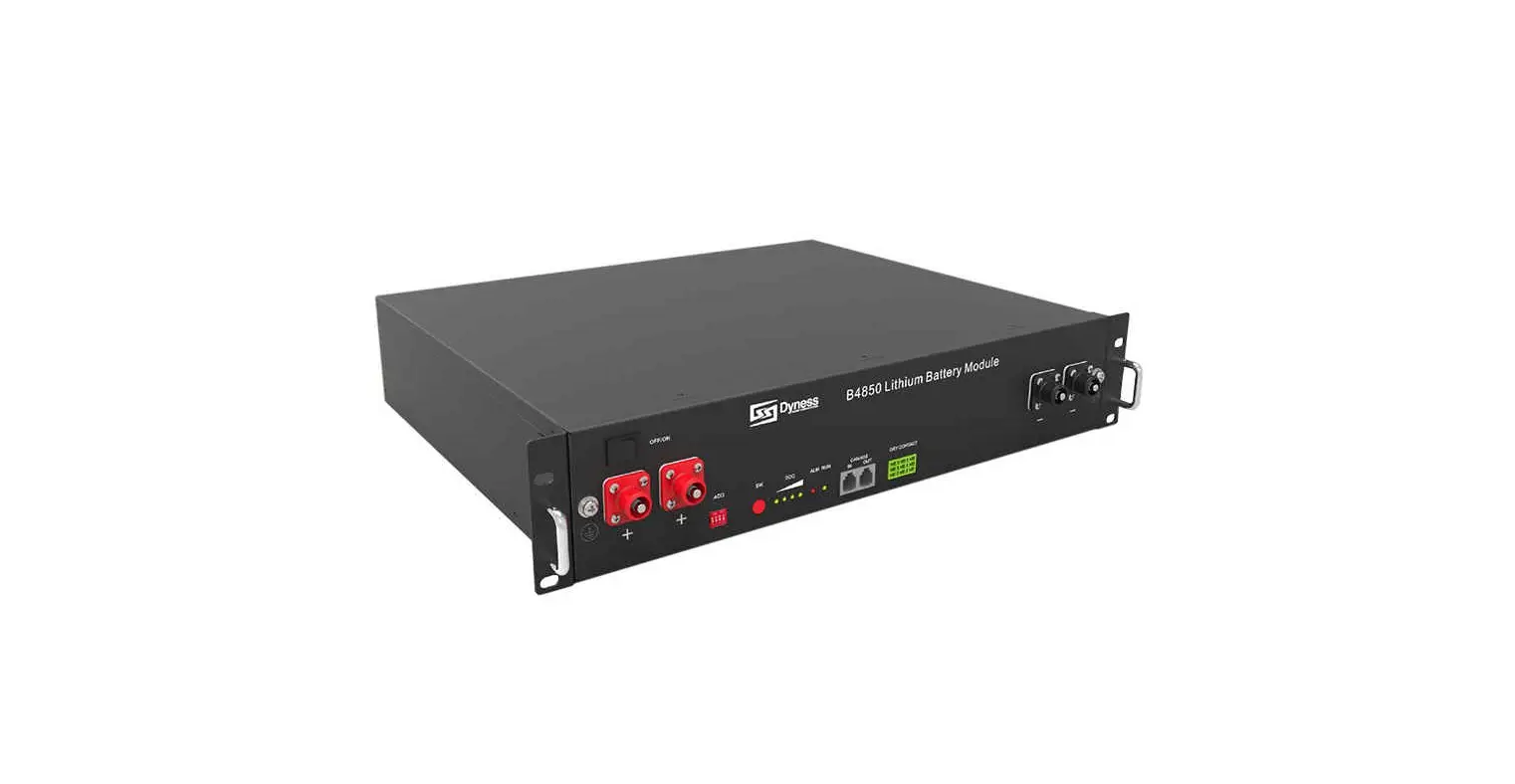
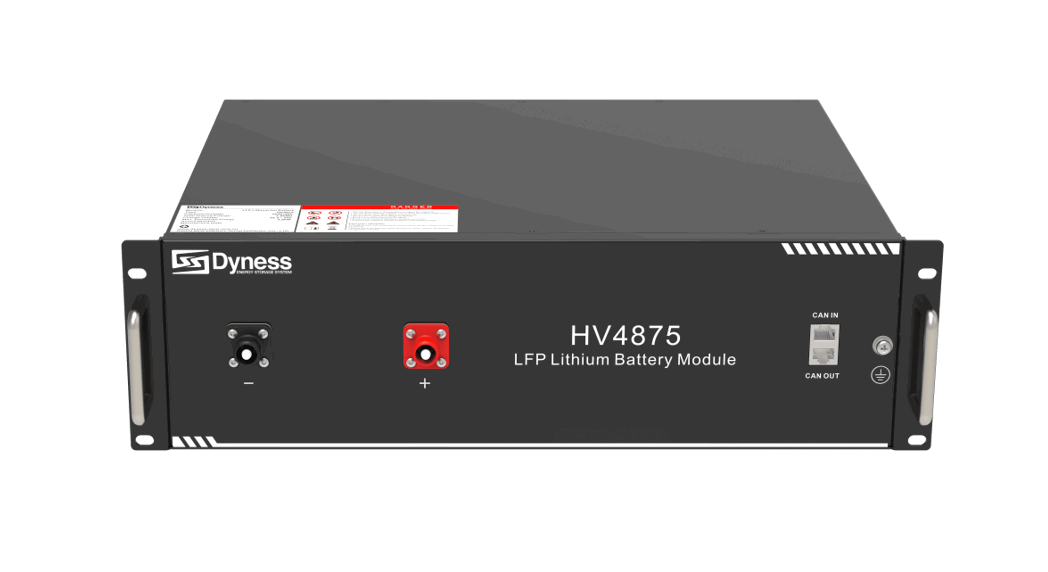
Powercube series energy storage system is composed of several B4850 or B4874 energy storage system units connected in parallel to provide users with energy storage power generation.
During the day, the excess power of photovoltaic power generation can be stored in the battery.
At night or when needed, the stored electrical energy can be used to supply power to the electrical equipment, which can improve the efficiency of photovoltaic power generation, peak load shifting, and emergency power backup.
This user manual describes all kinds of Powercube series. It details the basic structure, parameters, installation, and operation and maintenance of the equipment.
Introduction
1.1 Brief Introduction
The B4850 and B3 lithium iron phosphate battery systems are standard battery system units.
Each module can be connected in parallel to obtain a complete system of certain specifications.
Customers can select the appropriate Powercube specifications according to their needs. The product is especially suitable for energy storage applications with high operating temperatures, limited installation space, long power backup time, and long service life.
1.2 Product Properties
Powercube series energy storage product’s anode materials are lithium iron phosphate, battery cells are managed effectively by BMS with better performance, the system feature as below:
- Comply with European ROHS, Certified SGS, employ non-toxic, non-pollution environment-friendly battery.
- Anode materials are lithium iron phosphate (LiFePO4), safer with a longer life span.
- Carries a battery management system with better performance and possesses protection functions like over-discharge, over-charge, over-current, and abnormal temperature.
- Self-management on charging and discharging, Single core balancing function.
- Intelligent design configures an integrated inspection module, with 3 remote functions (remote-measuring, remote-communicating, and remote-controlling).
- Flexible configurations allow parallel of multi-battery for longer standby time.
- Self-ventilation with lower system noise.
- Less battery self-discharge, the recharging period can be up to 10 months during the storage.
- No memory effect so that battery can be charged and discharged shallowly.
- With a wide range of temperatures for the working environment, -10 ºC ~ +55 ºC, circulation span and discharging performance are well under high temperature.
- Less volume, lighter weight, and longer system backup time.
1.3 Product identity definition
Figure1-1 Battery Energy Storage System nameplate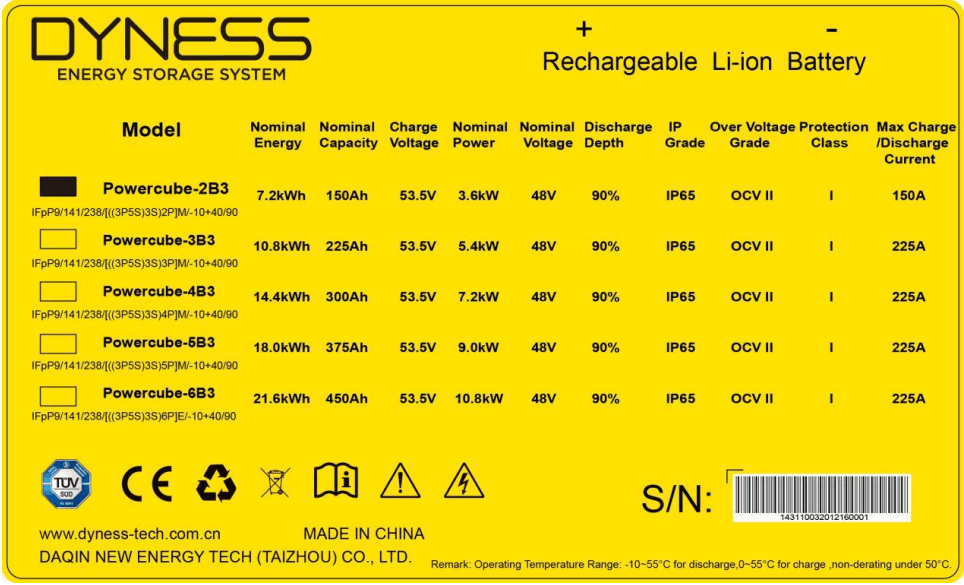
 | Battery voltage is higher than safe voltage, direct contact with electric shock hazard. |
 | Be careful with your actions and be aware of the dangers. |
 | Read the user manual before using. |
 | The scrapped battery cannot be put into the garbage can and must be professionally recycled. |
 | After the battery life is terminated, the battery can continue to be used after it is recycled by the professional recycling organization and do not discard at will. |
 | This battery product meets European directive requirements. |
 | This battery product passed the TUV certification test. |
Product Specification
2.1 Size and Weight
Table 2-1 Powercube series Device Model
| product Series | Dimension (mm) | Nominal Voltage | Nominal Capacity | Weight | IP Level |
| Powercube-2B3 | 600*520*1140 | DC48V | 150Ah | ≈122.5kg | IP65 |
| Powercube-3B3 | DC48V | 225Ah | ≈155kg | IP65 | |
| Powercube-4B3 | DC48V | 300Ah | ≈187.5kg | IP65 | |
| Powercube-5B3 | DC48V | 375Ah | ≈220kg | IP65 | |
| Powercube-6B3 | DC48V | 450Ah | ≈252.5kg | IP65 |
2.2 Performance Parameter
Table 2-2 Powercube series performance parameter
| Product Series | Powercube-2B 3 | Powercube- 3B3 | Powercube-4 B3 | Powercube- 5Box | Powercube- 6Box |
| Nominal Voltage(V) | 48 | 48 | 48 | 48 | 48 |
| Work Voltage Range(V) | 42~54 | 42~54 | 42~54 | 42~54 | 42~54 |
| Nominal Capacity(Ah) | 150 | 225 | 300 | 375 | 450 |
| Nominal Energy(kWh) | 7.2 | 10.8 | 14.4 | 18.0 | 21.6 |
| Nominal Power(kW) | 3.6 | 5.4 | 7.2 | 9.0 | 10.8 |
| Max Power(kW) | 7.2 | 10.8 | 10.8 | 10.8 | 10.8 |
| Maximum charge/ discharging current [Ad.c.] | 150 | 225 | 225 | 225 | 225 |
| 1s Peak Power(kW) | 7.2 | 10.8 | 14.4 | 18 | 21.6 |
| 1s Peak Current(A) | 150 | 225 | 300 | 375 | 450 |
| Charging Current(A) | 75 | 112.5 | 150 | 187.5 | 225 |
| Discharge Current(A) | 75 | 112.5 | 150 | 187.5 | 225 |
| Operating altitude range [m] | ≤2000m | ≤2000m | ≤2000m | ≤2000m | ≤2000m |
| Storage temperature range (°C) | 10~40 | 10~40 | 10~40 | 10~40 | 10~40 |
| Storage humidity range | 5 to 85 % RH | 5 to 85 % RH | 5 to 85 % RH | 5 to 85 % RH | 5 to 85 % RH |
| Protection class | Class I | Class I | Class I | Class I | Class I |
| Discharge Depth | 90% | 90% | 90% | 90% | 90% |
| Over Voltage Grade | OCV II | OCV II | OCV II | OCV II | OCV II |
| Ambient operating temperature range (°C) | (-10~55) for discharge (0~55) for charge non-derating under 50°C | (-10~55) for discharge (0~55) for charge non-derating under 50°C | (-10~55) for discharge 0~55) for charge non-rating under 50°C | (-10~55) for discharge (0~55) for charge non-derating under 50°C | (-10~55) for discharge (0~55) for charge non-derating under 50°C |
2.3 Interface Definition
This section elaborates on the interface functions of the back interface on the Powercube cabinet.
Figure2-1 The sketch of the back interface of Powercube.
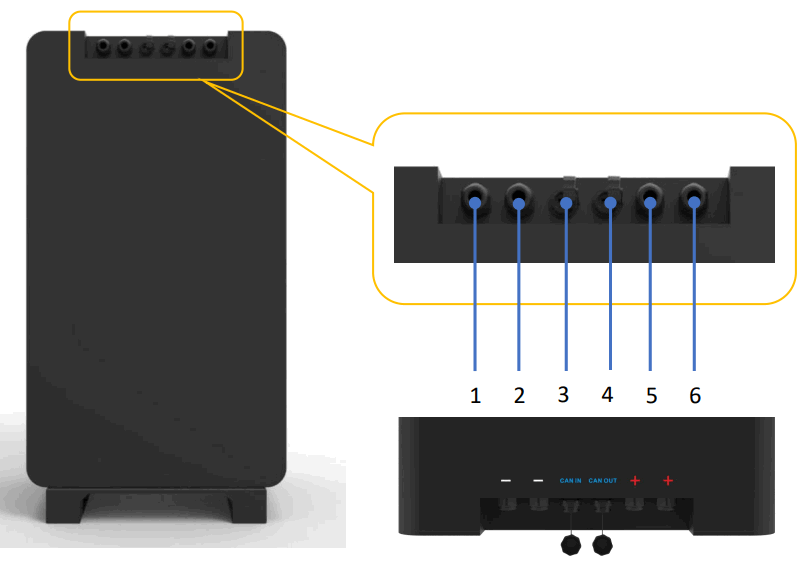 Table 2-3 Interface Definition
| Item | Name | Definition |
| Interface 1 | Power cable- negative waterproof connector | Reserve |
| Interface 2 | Power cable- negative waterproof connector | The battery DC output negative pole |
| Interface 3 | RJ45 network cable connector | Reserve |
| Interface 4 | RJ45 network cable connector | CAN/RS485 communication interface (Factory default CAN communication mode) |
| Interface 5 | Power cable- positive waterproof connector | The battery DC output positive pole |
| Interface 6 | Power cable- positive waterproof connector | Reserve |
The below section elaborates on the interface functions of the front interface of the battery module.
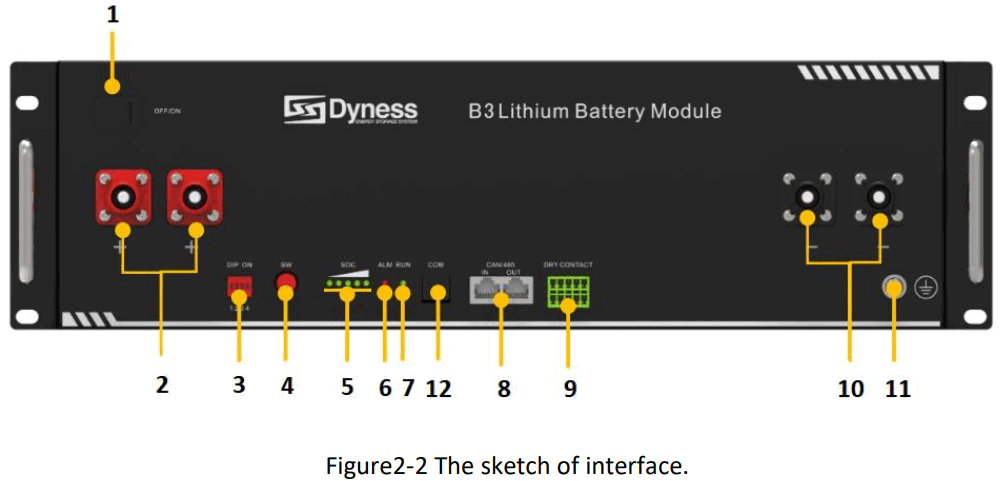
Table 2-4 Interface Definition
| Item | Name | Definition |
| 1 | Power switch | OFF/ON, remains ‘ON when using |
| 2 | Positive socket | Battery output or parallel positive line |
| 3 | ADD | DIP switch |
| 4 | SW (battery wake/sleep Switch) | When the power switch is in ‘ON’, long press SW for 3s to enable the battery to switch on, then switch on the DC breaker between the battery with inverter. If you need to shut down the system, firstly switch off the DC breaker between the battery with the inverter, then press SW for 3s and switch the power button to “OFF”. |
| 5 | SOC | Greenlight, showing battery capacity |
| 6 | ALM | Red lights, flash when warming, always on when Protection. When the condition of triggering protection is removed, the battery can recover automatically |
| 7 | RUN | Greenlight, flashing when standby, always on when discharge, flash when charging |
| 8 | CAN/485 | Communication Port Communication (factory default CAN communication) |
| 9 | DRY CONTACT | / |
| 10 | Negative socket | Battery output or parallel negative line |
| 11 | Grounding | Shell ground connection |
| 12 | COM | Communication cascade port, support RS232 |
2.3.1 DIP switch definition and description
Table 2-5 Interface Definition
| DIP switch position (host communication protocol and baud rate selection) | |||
| #1 | #2 | #3 | #4 |
| spare | Host or slave | Baud rate selection | |
| OFF | OFF: slave | OFF:CAN: 500K,485: 9600 | |
| ON: host | ON:CAN: 250K,485: 115200 | ||
DIP switch description:
The battery pack is connected in parallel in the Powercube, and the battery module that communicates connected to the inverter is defined as the host. The host can communicate with the slave through the CAN interface. The host summarizes the information of the entire battery system and communicates with the inverter through CAN or 485. The connection mode is divided into the following two cases:
Note:
Before opening the cover to change the DIP mode, contact DYNESS to inform the ID, DYNESS will record the battery ID and authorizes the opening operation. Only authorized by Dyness to operate.
Except for changing the DIP mode, any other operations cannot be done.
Figure2-3 DIP switch mode schematic diagram
- If the host is the latest B3 battery with a DIP switch:
- The communication cable from the host CAN into the inverter comm port should be the correct one.
- When the battery works with GOODWE, Solis, LUX, Sofar, DEYE, VICTRON, IMEON, Infinisolar, Sungrow, SMA, RENAC, DELIOS, SAJ(CAN Comm) , Growatt HVM-ES/WPV(CAN port), before starting the battery, you need put the host DIP switch “# 3” to the “ON” position (to the top), then turn on the batteries.

- If the battery communicates with the Expert-king, Expert-VMIII, Growatt SPH/SPA(CAN comm)、GMDE、Saj(485 comm), turn the host DIP switch “#2” to the “ON” position.

- If the battery communicates with the Growatt SPF HVM-P/ES/WPV by RS485 port, turn the host DIP switch “#2” and “#3” to “ON”.

- If the battery module is in communication with the ICC by 485 communication, turn the host DIP switch “#1” and “#4” to “ON”.
 the DIP switch of the slaves needs to turn the “#4” to “ON”.
- The DIP switch of the slaves does not need to be changed.
- If the energy storage system has only one B3, it is the host itself, and still follows the above steps.
Note: For more information on matching inverter brands, please be subject to the latest document <The list of compatibility between Dyness ESS and Inverters >.
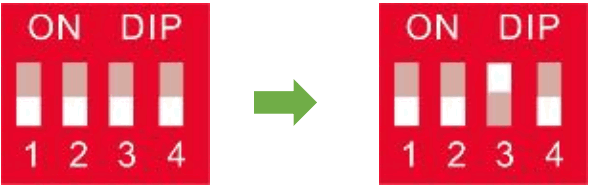
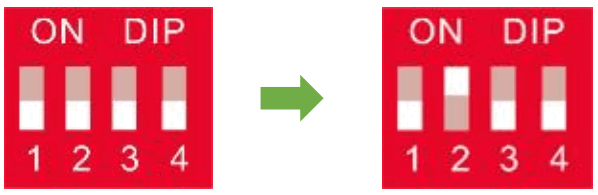
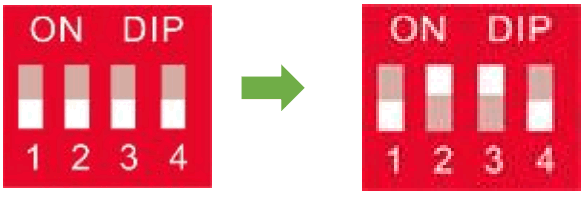
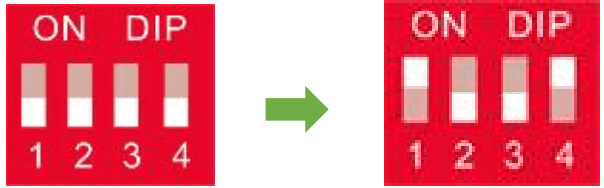 the DIP switch of the slaves needs to turn the “#4” to “ON”.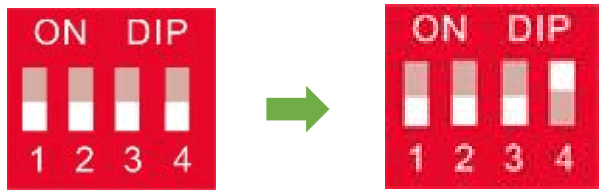
Caution: The DIP switch mode in case (5),1001 is only for ICC(a special communication device of some no-communication inverter), it’s a special firmware in BMS, different from general firmware, so if customers want to use ICC, please contact dryness to confirm.
Note:
- After the whole system connection, set the master DIP mode according to the inverter model first, then start the battery.
- The BAT-INV comms cable is from inverter comm port to master CAN IN port, BAT-BAT cable is from master CAN OUT to slave1 CAN IN,slave1 CAN OUT to slave2 CAN IN.
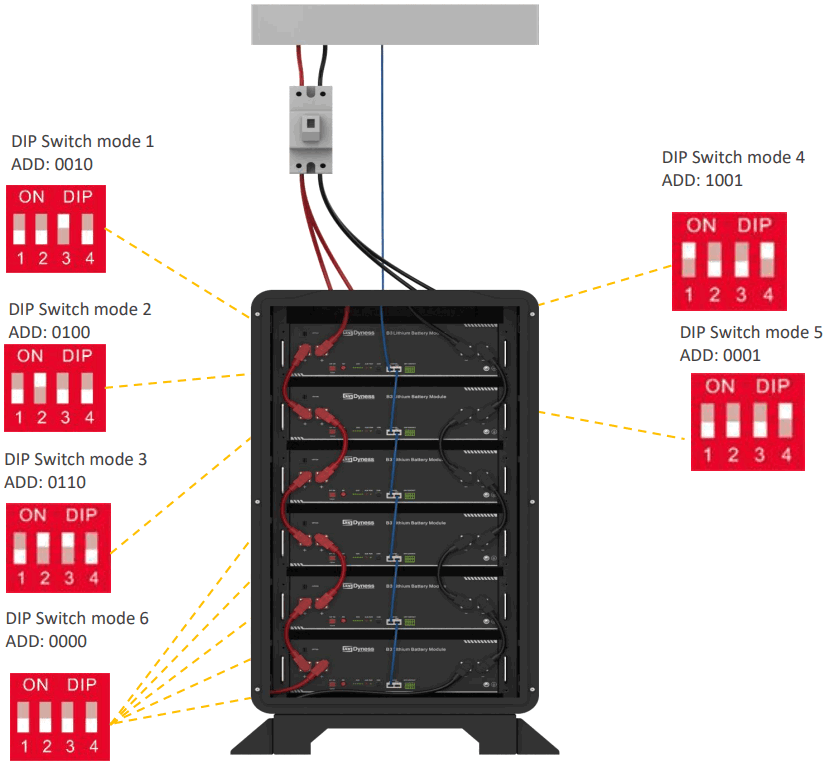
2.4 Battery Management System(BMS)
2.4.1 Voltage Protection
Discharging Low Voltage Protection:
When any battery cell voltage is lower than the protection value during discharging, the over-discharging protection starts and the battery buzzer makes an alarm sound. The battery system stops supplying power to the outside. When the voltage of each cell recovers to the rated return range, the protection is over.
Charging Over Voltage Protection:
When total voltage or any battery cell voltage reaches the protection value during charging, the battery stops charging. When total voltage or a cell recovers to the rated return range, the protection is over.
2.4.2 Current Protection
Over Current Protection in Charging:
When the charging current is greater than the protection value, the battery buzzer alarms and the system stops charging. Protection is released after rated time delaying.
Over Current Protection in Discharging:
When the discharge current is greater than the protection value, the battery buzzer alarms and the system stops discharging. Protection is released after rated time delaying.
Note:
The buzzer sound alarm setting can be manually turned off on the background software, and the factory default is on.
2.4.3 Temperature Protection
Less/Over temperature protection in charging:
When the battery’s temperature is beyond the range of 0 ℃ ~55 ℃ during charging, temperature protection starts, and the device stops charging.
The protection is over when it recovers to the rated return range.
Less/Over temperature protection in discharging:
When the battery’s temperature is beyond the range of -10℃~+55℃ during discharging, temperature protection starts and the device stops supplying power to the outside.
The protection is over when it recovers to the rated return range.
2.4.4 Other Protection
Short Circuit Protection:
When the battery is activated from the shutdown state, if a short circuit occurs, the system starts short-circuit protection for 1 minute.
Self-Shutdown:
When a device connects with no external loads for over 72hours, the device will dormant standby automatically.
Caution
The battery’s maximum discharging current should be more than the load’s maximum working current.
Installation and Configuration
3.1 Ready for installation
Safety Requirement
This system can only be installed by personnel who have been trained in the power supply system and have sufficient knowledge of the power system.
The safety regulations and local safety regulations listed below should always be followed during the installation.
- All circuits connected to this power system with an external voltage of less than 48V must meet the SELV requirements defined in the IEC60950 standard.
- If operating within the power system cabinet, make sure the power system is not charged. Battery devices should also be switched off
- Distribution cable wiring should be reasonable and has protective measures to avoid touching these cables while operating power equipment.
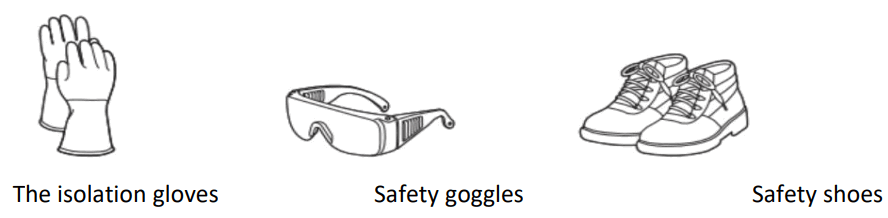
- when installing the battery system, must wear the protective items below:
3.1.1 Environmental requirements
Working temperature: -10 o C ~ +55 o C
- The charging temperature range is 0 o o C~55 C,
- Discharging temperature range is-10 ºC ~ +55 ºC
Storage temperature: 10 ºC ~ 40 ºC
Relative humidity: 5% ~ 85%
RH Elevation: no more than 2000m
Operating environment: Indoor or outdoor installation, sites avoid direct sunlight, no conductive dust, and corrosive gas. - The installation location should be away from the sea to avoid a brine and high humidity environment.
- The ground is flat and level.
- There is no flammable explosive near the installation places.
- The optimal ambient temperature is 15 ºC ~ 30 ºC Keep away from dust and messy zones
3.1.2 Tools and data
Hardware tool
Tools and meters that may be used are shown in table 3-1.
Table 3-1 Tool instrument
Name | |
| Screwdriver (word, cross) | AVO meter |
| Wrench | Clamp meter |
| Inclined pliers | Insulating tape |
| Needle nose pliers | The thermometer |
| Clip forceps | Wrist strap |
| Wire stripper | AVO meter |
| Electric drill | Tape |
3.1.3 Technical preparation
Electrical interface check
Devices that can be connected directly to the battery can be user equipment, power supplies, or other power supplies.
- Confirm whether the user’s PV power generation equipment, power supply, or other power supply equipment has a DC output interface, and measure whether the DC power output voltage meets the voltage range requirements in Table 2-2.
- Confirm that the maximum discharge current capability of the DC power interface of the user’s photovoltaic power generation equipment, power supply or other power supply equipment should be greater than the maximum charging current of the products used in Table 2-2.
- If the maximum discharge capacity of the DC power interface of the user’s photovoltaic power generation equipment is less than the maximum charging current of the products used in Table 2-2, the DC power interface of the user’s photovoltaic power generation equipment shall have a current limiting function to ensure the normal operation of the user’s equipment.
- Verify that the maximum operating current of the battery-powered user equipment (inverter DC input) should be less than the maximum discharge current of the products used in Table 2-2.
The security check
- Firefighting equipment should be provided near the equipment, such as portable dry powder fire extinguishers.
- An automatic fire fighting system shall be provided for the case where necessary.
- No flammable, explosive, or other dangerous articles are placed beside the battery.
3.1.4 Unpacking inspection
- When the equipment arrives at the installation site, loading and unloading should be carried out according to the rules and regulations, to prevent exposure to sun and rain.
- Before unpacking, the total number of packages shall be indicated according to the shipping list attached to each package, and the case shall be checked for good condition.
- In the process of unpacking, handle with care and protect the surface coating of the object.
- Open the package, the installation personnel should read the technical documents, verify the list, according to the configuration table and packing list, and ensure objects are complete and intact, if the internal packing is damaged, should be examined and recorded in detail.
The packing list is as follows:
| Item | Specification (mm) | Quantity | Figure | ||||
| 2B3 | 3B3 | 4B3 | 5B3 | 6B3 | |||
| Cabinet | 600*520*1140 | 1 | 1 | 1 | 1 | 1 | 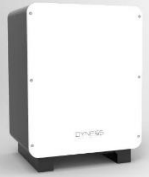 |
| Battery module | B3: 48V745h 480*405×132 | 2 | 3 | 4 | 5 | 6 | 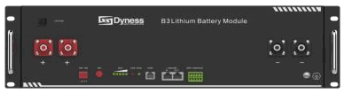 |
| Parallel cable- positive | Red/25mm2/L215 mm | 1 | 2 | 3 | 4 | 5 |  |
| Parallel cable- negative | Black/25mm2/L215 mm | 1 | 2 | 3 | 4 | 5 | 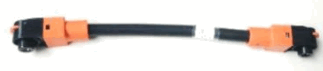 |
| Power cable- positive1 | Red/25mm2/L370 0mm | 1 | 1 | 1 | 1 | 1 | 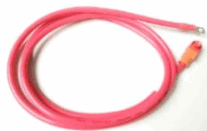 |
| Power cable- positive2 | Red/25mm2/L270 0mm | 1 | 1 | 1 | 1 | 1 | |
| Power cable- negative1 | Black/25mm2/L370 0mm | 1 | 1 | 1 | 1 | 1 | 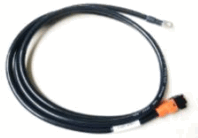 |
| Power cable- negative2 | Black/25mm2/L270 0mm | 1 | 1 | 1 | 1 | 1 | |
| Communicate on parallel cable | Black/250mm/ Double RJ45 plug | 1 | 1 | 3 | 4 |  | |
| Communicate on cable-to inverter-1 | Yellow/L800mm/ Double RJ45 plug | 1 | 1 | 1 | 1 |  | |
| Communicate on cable-to inverter-2 | Black/L2000m m/ Double RJ45 plug | 1 | 1 | 1 | 1 | 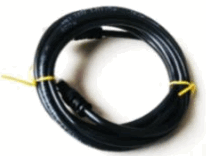 | |
| Ground wire | L500mm,4mm² | 1 | 1 | 1 | 1 | 1 | 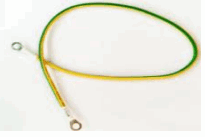 |
3.1.5 Engineering coordination
Attention should be paid to the following items before construction:
- Power line specification.
The power line specification shall meet the requirements of maximum discharge current for each product in table2-2. - Mounting space and bearing capacity.
Make sure that the battery has enough room to install, and that the battery rack and bracket have enough load capacity. - Wiring.
Make sure the power line and ground wire are reasonable. Not easy to short-circuit, water and corrosion. - Circuit breaker.
Install the circuit breaker between the battery system and the inverter, Select the circuit breaker based on the actual battery system usage and installation suggestions.
3.2 Equipment installation
The wall for battery installation shall be solid brick or cement wall with a strong bearing capacity and wall thickness no less than 100mm.
Mounting space requirements: floor installation
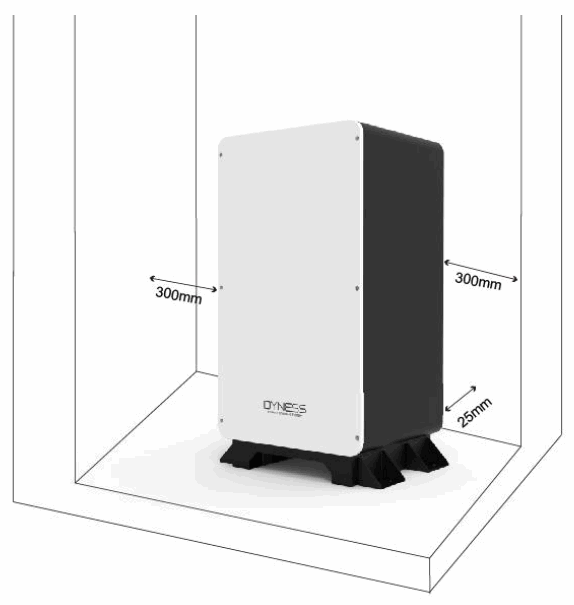
Table 3-2 Installation steps
| Step1 | Installation Preparation | Confirm that the ON/OFF switch on the front panel of each B3 unit is in the “OFF” state to ensure no live operation. |
| Step 2 | Mechanical installation | 1. Cabinet placement position determination |
| 2. Top cables pre-installed | ||
| 3. Battery module installation | ||
| Step3 | Electrical installation | 1. Battery module parallel cable installation |
| 2. Battery module Power cable- positive installation | ||
| 3. Battery module Power cable- negative installation | ||
| 4. Communication parallel cable connection | ||
| Step4 | Battery system self-test | 1. Press the ON/OFF switch to the “ON” state |
| 2. BMS system power-on activation | ||
| 3. Check the system output voltage | ||
| 4. Shut down the system | ||
| Step5 | Connect to the inverter | 1. Wiring the battery system Power cable- positive and Power cable- positive to the circuit breaker between the inverter and battery system. |
| 2. Connect the Communication cable to the inverter |
3.2.1 Installation Preparation
- Prepare equipment and tools for installation
- Check the cabinet and confirm that the ON/OFF switch on the front panel of each battery module is in the “OFF” state to ensure no live operation.
3.2.2 Mechanical installation
- Fix the Powercube cabinet to the mounting position and remove the front cover.
Please refer to 3.2 to place the cabinet on the ground.
Pass the total positive cable and the total negative cable (Power cable- positive1, Power cable- positive2 and Power cable-negative1,
Power cable-negative2) through the waterproof connector (Interface1,2,5,6)on the back of the cabinet, and insert the external CAN cable(Communication cable-to inverter2) into the RJ45 network cable connector(Interface 4).
 Table 3-3 Interface Definition
Item Name Definition Interface1 Power cable- negative waterproof connector Reserve Interface 2 Power cable- negative waterproof connector The battery DC output negative pole Interface 3 RJ45 network cable connector Reserve Interface 4 RJ45 network cable connector CAN/RS485 communication interface (Factory default CAN communication mode) Interface 5 Power cable- positive waterproof connector The battery DC output positive pole Interface 6 Power cable- positive waterproof connector Reserve - Place the battery unit on the cabinet bracket as shown in the figure and push it into the cabinet to the installation position.

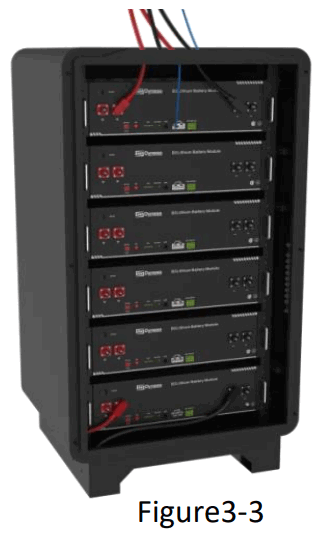
- Fix the battery unit in the cabinet with nuts through the top of the mounting holes on the hanging ears of the battery module front panel. The other units are in this order, as shown in Figure3-6.

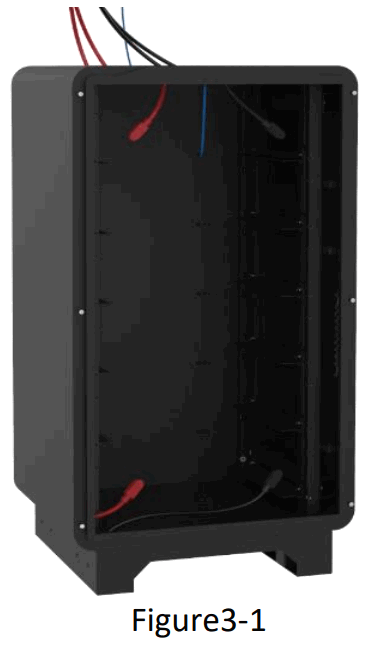
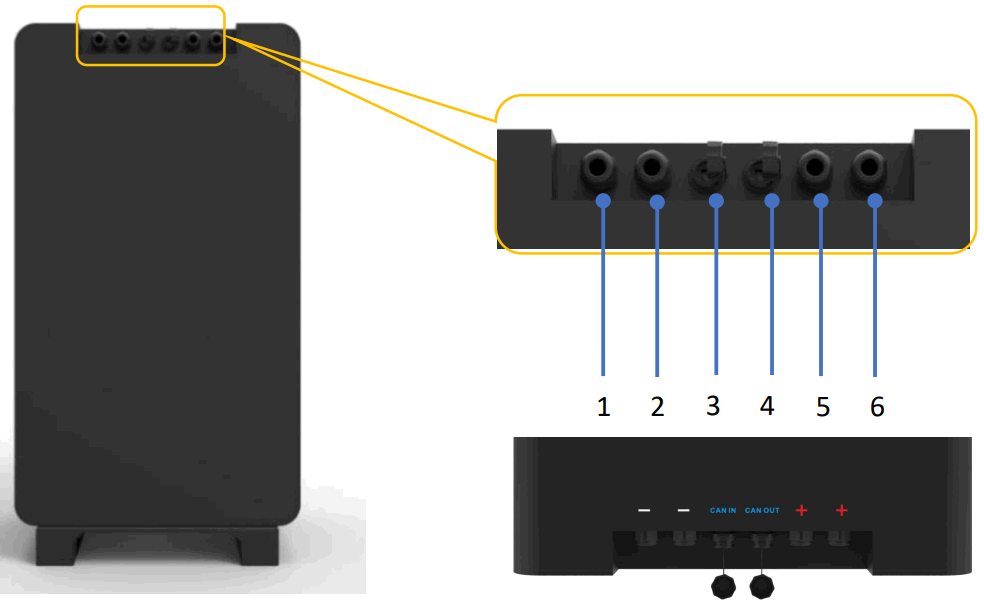 Table 3-3 Interface Definition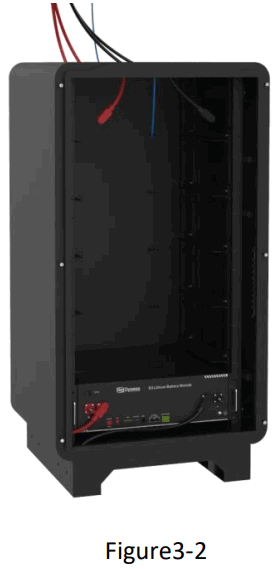
3.2.3 Electrical installation
Statement: For the Australian market, installations should be conducted in accordance with AS/NZS 3000 and AS/NZS 5139”.
Before connecting the power cables, use a multimeter to measure cable continuity, short circuit, confirm positive and negative, and accurately mark the cable labels.
Measuring method:
- Cable availability: Select the buzzer and use the probe to measure the ends of the same color cable. If the buzzer calls, it means the cable is available.
- Short circuit judgment: choose multimeter resistor file, probe the same end of positive and negative pole, if the resistor shows infinity, means that the cable is available.
- After visual testing of the power line is connected well, the positive and negative poles of the battery shall be connected respectively to the positive and negative poles of the opposite terminal.
It is better to add a circuit breaker between the inverter and the battery system. The selection of the circuit breaker requires: Voltage: U>60V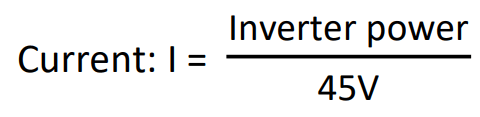
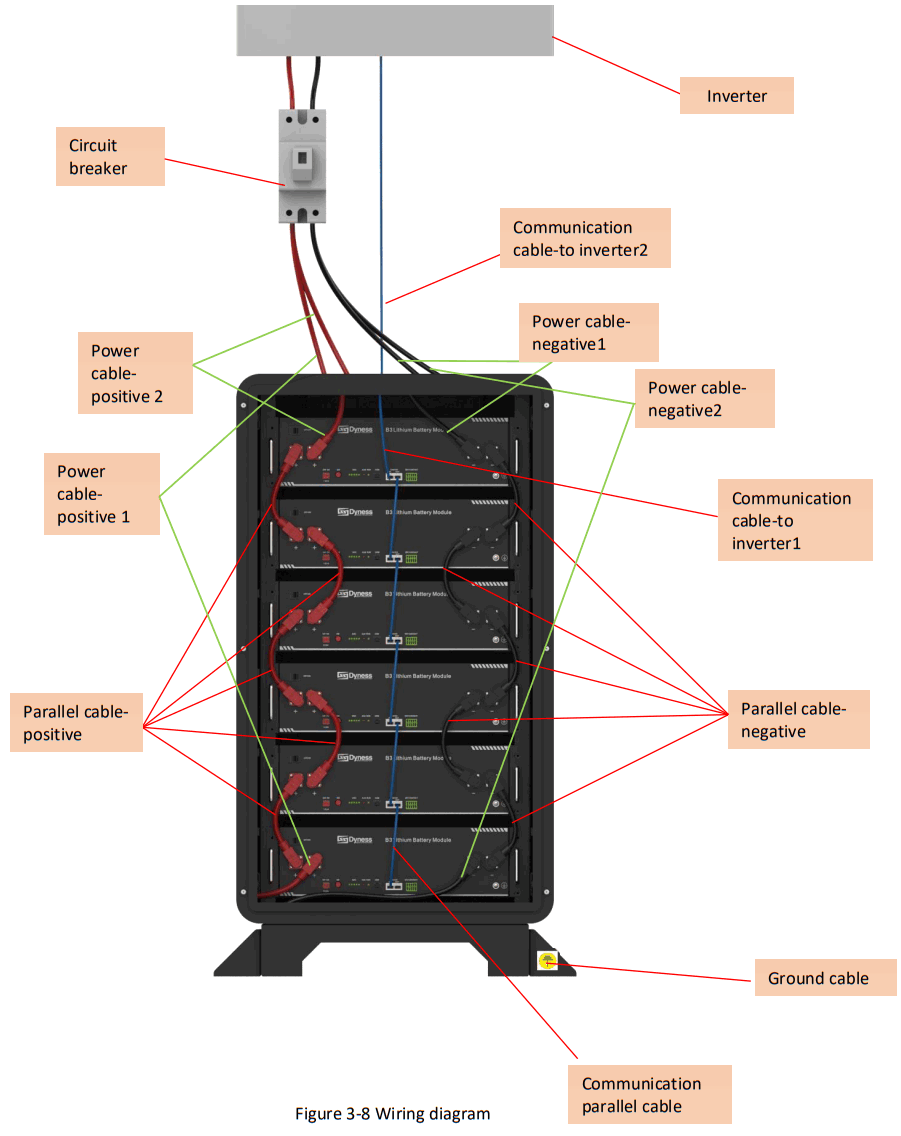
The circuit breaker is installed between the battery module and the inverter, as shown in Figures 3-8:
Caution
Note: If you have any questions during installation, please contact your dealer to avoid damage to the equipment.
- Install the power cable
Install the Parallel cable- negative and the Parallel cable- positive as shown in Figures 3-8, then connect the positive cable and the total negative cable (use Power cable- positive1, Power cable- positive2 and Power cable- negative1, Power cable- negative2).
Among them, the Power cable- positive1, Power cable- positive2 are red, and Power cablenegative1, Power cable- negative2 are black. - Install the communication line
Insert the Communication cable-to inverter 1 into the IN-communication port of the uppermost No. 1 battery module, take a Communication parallel cable, insert one end
into the OUT-communication port of No. 1 battery module, and the other end into the IN-communication port of No. 2 battery module on the next layer.
Connect all communication lines in this order.
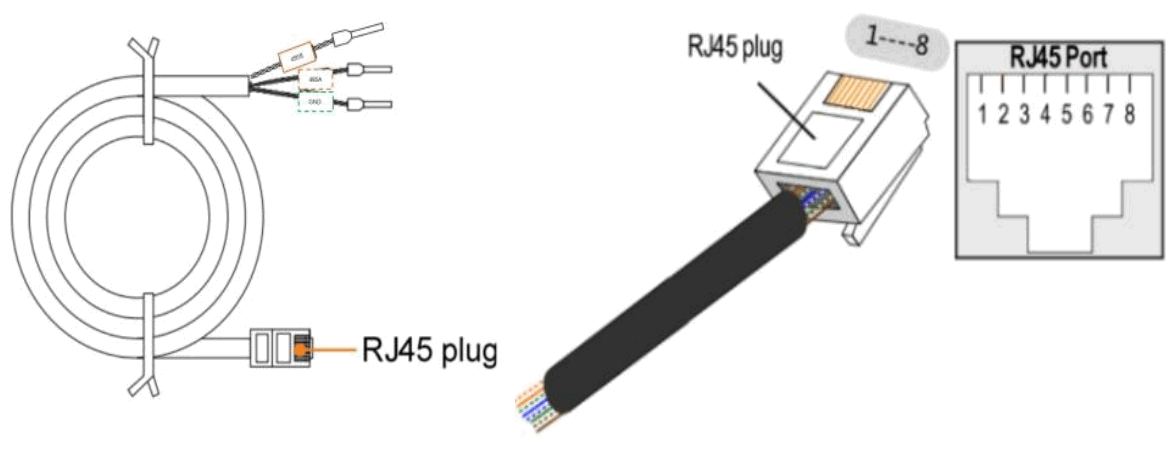
Foot position Color Definition PIN1 Orange/white 485B PIN2 Orange 485A PIN3 Green/white GND PIN4 Blue CANH PIN5 Blue/white CANAL PIN6 Green Reserve PIN7 Brown/white XIN PIN8 Brown Reserve PIN9 Orange/white Reserve PIN10 Orange Reserve PIN11 Green/white GND PIN12 Blue CANH PIN13 Blue/white CANAL PIN14 Green Reserve PIN15 Brown/white XOUT PIN16 Brown Reserve The Pin definition of COM port

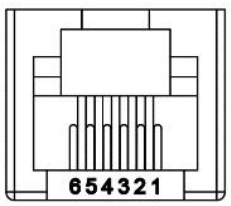
Foot position Definition PIN1 Reserve PIN2 GND PIN3 TXD PIN4 RDX PIN5 GND PIN6 Reserve Note: Please pay attention of the communication com definition of the inverter, in order to avoid voltage in the port to affect communication.
- Connect to the inverter
Connect the total positive cable(Power cable- positive1 and Power cable- positive2) and the total negative cable(Power cable- negative1 and Power cable- negative2) that are
pulled out from the outside of the cabinet to the circuit breaker(the other end of the circuit breaker is connected to the inverter), and the external CAN communication line 2(Communication cable-to-inverter2) is connected to the inverter. Complete as shown in Figures 3-8.
Batteries and inverters must be installed in accordance with the compatibility list in the “Dryness compatible list-Final-LV&HV-F-2022V2-Y”;
Dryness compati
bal list-F-2022V2-Y.pdf

Use, maintenance, and troubleshooting
4.1 Battery system usage and operation instructions
After completing the electrical installation, follow these steps to start the battery system.
- Press the ON/OFF button to the ON position, and press and hold the SW button for 3 seconds.
After the indicator self-test, the RUN indicator will light and the SOC indicator will be on (100% SOC status in Figure 4-1).
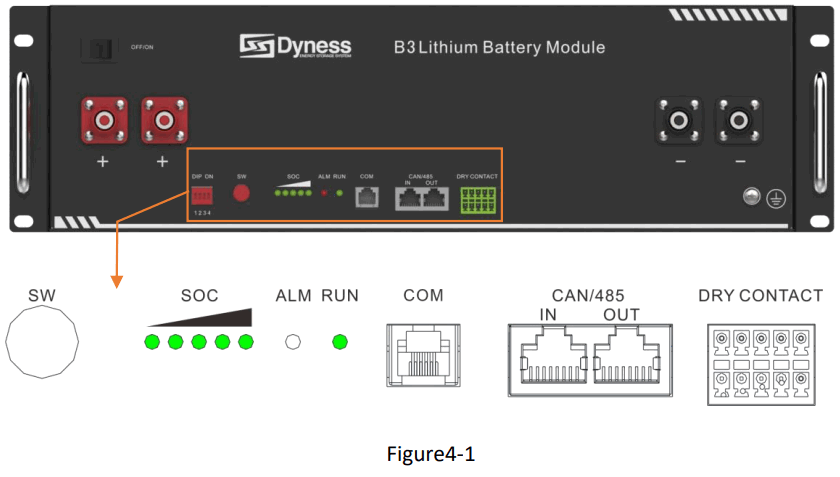
Note: If you need to shut down the system, firstly switch off the DC breaker between the battery with the inverter, then press SW for 3s and switch the power button to “OFF”.
Caution:
- After pressing the power button, if the battery status indicator on the front panel continues to be red, please refer to the “4.2 Alarm description and processing “. If the failure cannot be eliminated, please contact the dealer timely.
- Use a voltmeter to measure whether the voltage of the circuit breaker battery access terminal is higher than 42V and check whether the voltage polarity is consistent with the inverter input polarity. If the circuit breaker battery input terminal has a voltage output that is greater than 42V, then the battery begins to work normally.
- After confirming that the battery output voltage and polarity are correct, turn on the inverter, and close the circuit breaker.
- Check if the indicator of the inverter and battery connection (communication indicator and battery access status indicator) is normal. If it is normal, successfully complete the connection between the battery and the inverter. If the indicator light is abnormal, please refer to the inverter manual for the cause or contact the dealer.
4.2 Alarm description and processing
When protection mode is activated or system failure occurred, the alarm signal will be given through the working status indicator on the front panel of the B3. The network management can query the specific alarm categories.
If the fault such as single cell overvoltage, charging over-current, under-voltage protection, high-temp protection, and other abnormalities which affect the output, please deal with it according to Table 4-1.
Table 4-1 Main alarm and Protection
| Statue | Alarm category | Alarm indication | Processing |
| Charge state | Over-current | RED Buzzer start | Stop charging and find out the cause of the trouble |
| High temp | RED | Stop charging | |
| Discharge state | Over-current | RED Buzzer start | Stop discharging and find out the cause of the trouble |
| High temp | RED | Stop discharging and find out the cause of the trouble | |
| Total voltage undervoltage | RED Buzzer start | Start charging | |
| Cell voltage undervoltage | RED Buzzer start | Start charging |
4.3 Analysis and treatment of common faults
Analysis and treatment of common faults in Table 4-2:
Table 4-2 Analysis and treatment of common faults
| No. | Fault phenomenon | Reason analysis | Solution |
| 1 | The indicator does not respond after the power on | Total voltage lower than 35V | Check the total voltage |
| 2 | No DC output | The battery data status is abnormal. The battery gets into over-discharged protection | Read the battery information on the monitor. |
| 3 | The DC power supply time is too short | Battery capacity becomes smaller | Storage battery replacement or add more modules |
| 4 | The battery can’t be fully charged to 100% | The charging voltage is too low | Adjust charging voltage at 53.5V or 54V |
| 5 | The power cable sparks once power is on and ALM light RED | Power connection short-circuit | Turn off the battery, check the cause of the short circuit |
| 6 | Communication fault | The DIP setting of the host is wrong/ the battery type of the inverter is wrong/ Communication cable is used incorrectly/ The communication cable is incorrectly connected at the battery communication port or the inverter communication port/ The battery firmware version is too low to support the inverter | Check these possible causes one by one |
If you need any technical help or have any questions, please contact the dealer in time.

DAQIN NEW ENERGY TECH(TAIZHOU)Co., LTD
Address: Building 13, Jiangyan Industrial Park, Sanshui Street,
Jiangyan District, Taizhou City, Jiangsu Province,225500
Email: [email protected]
Website: www.dyness-tach.com
 Dyness