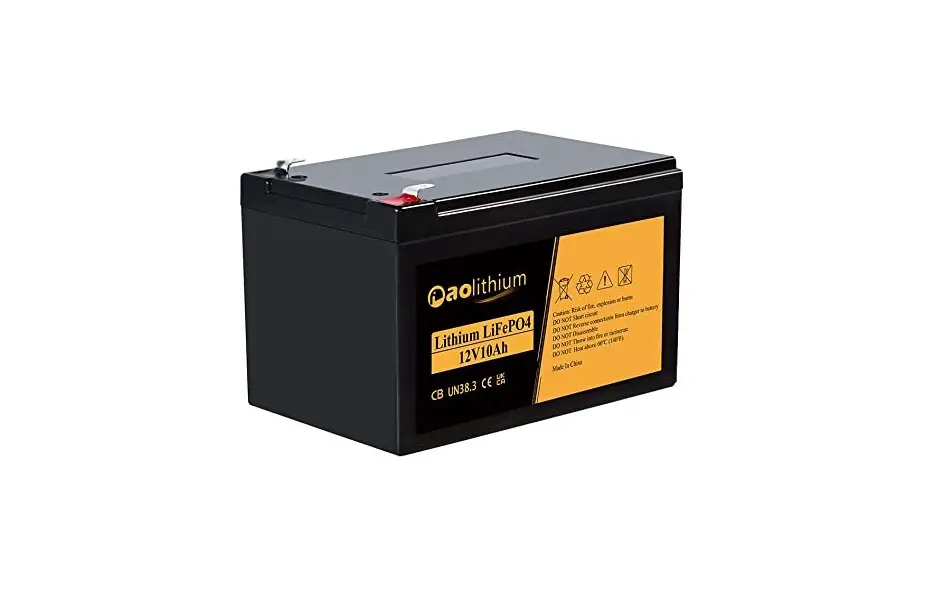
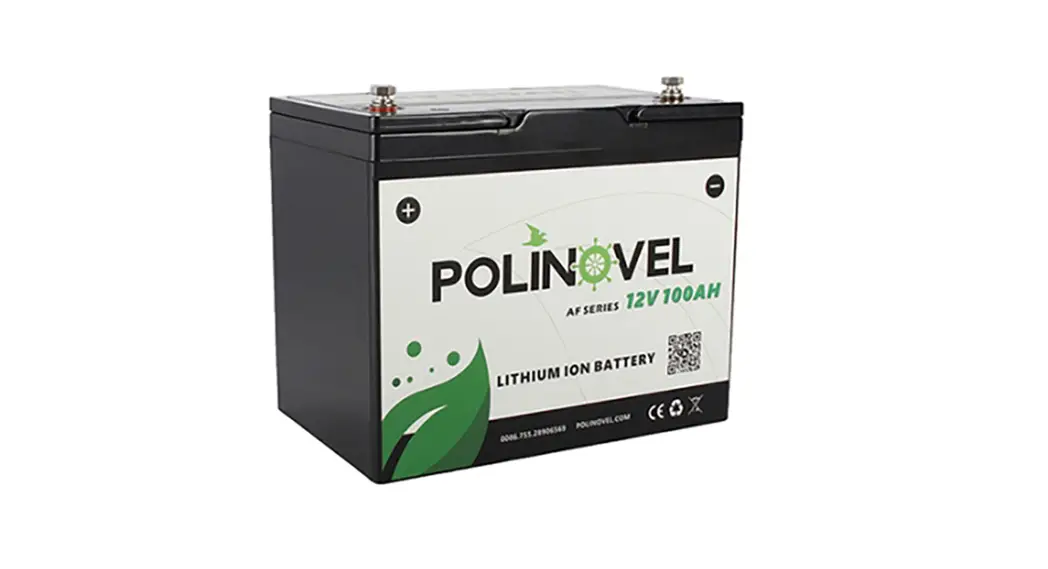
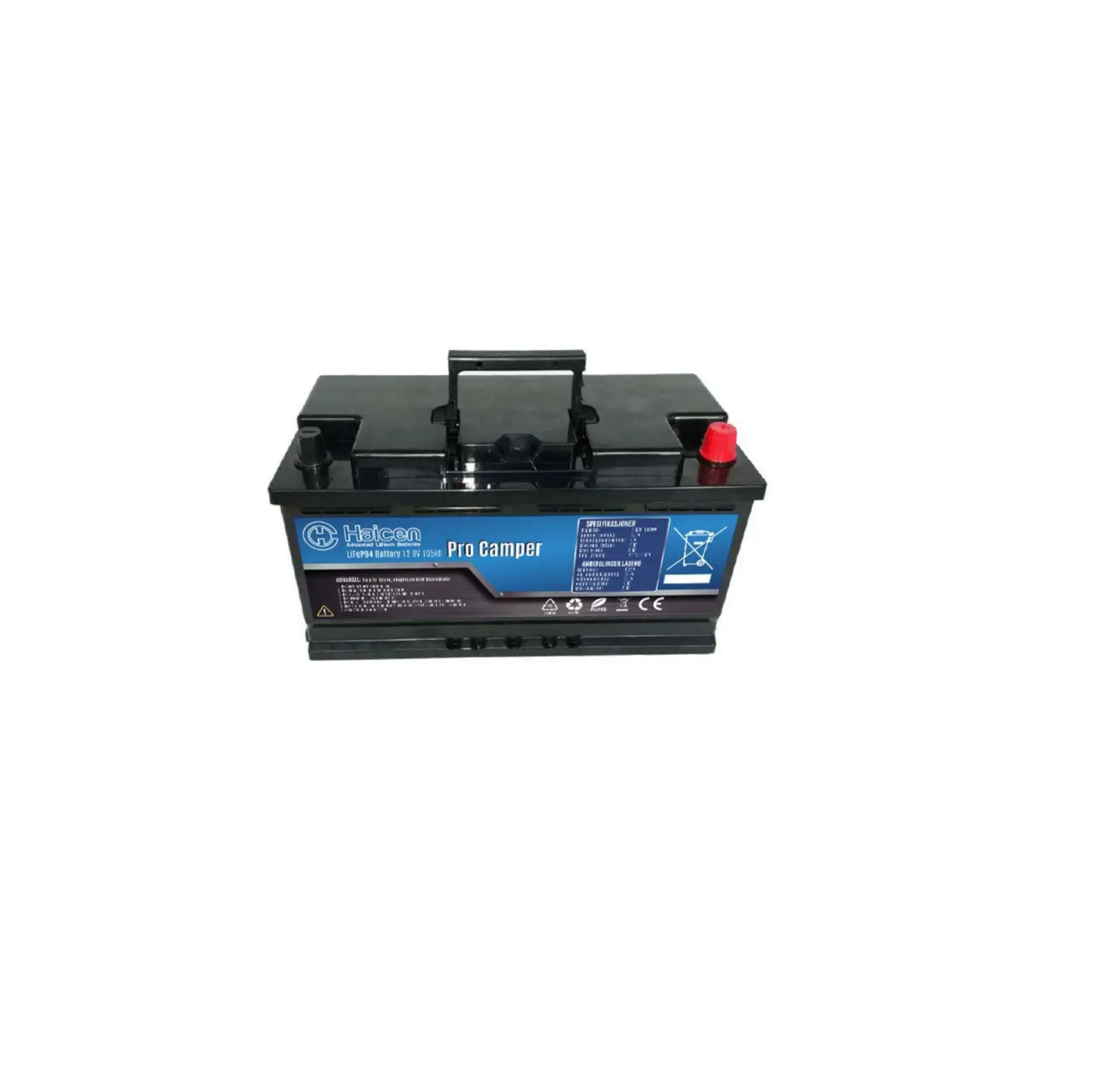
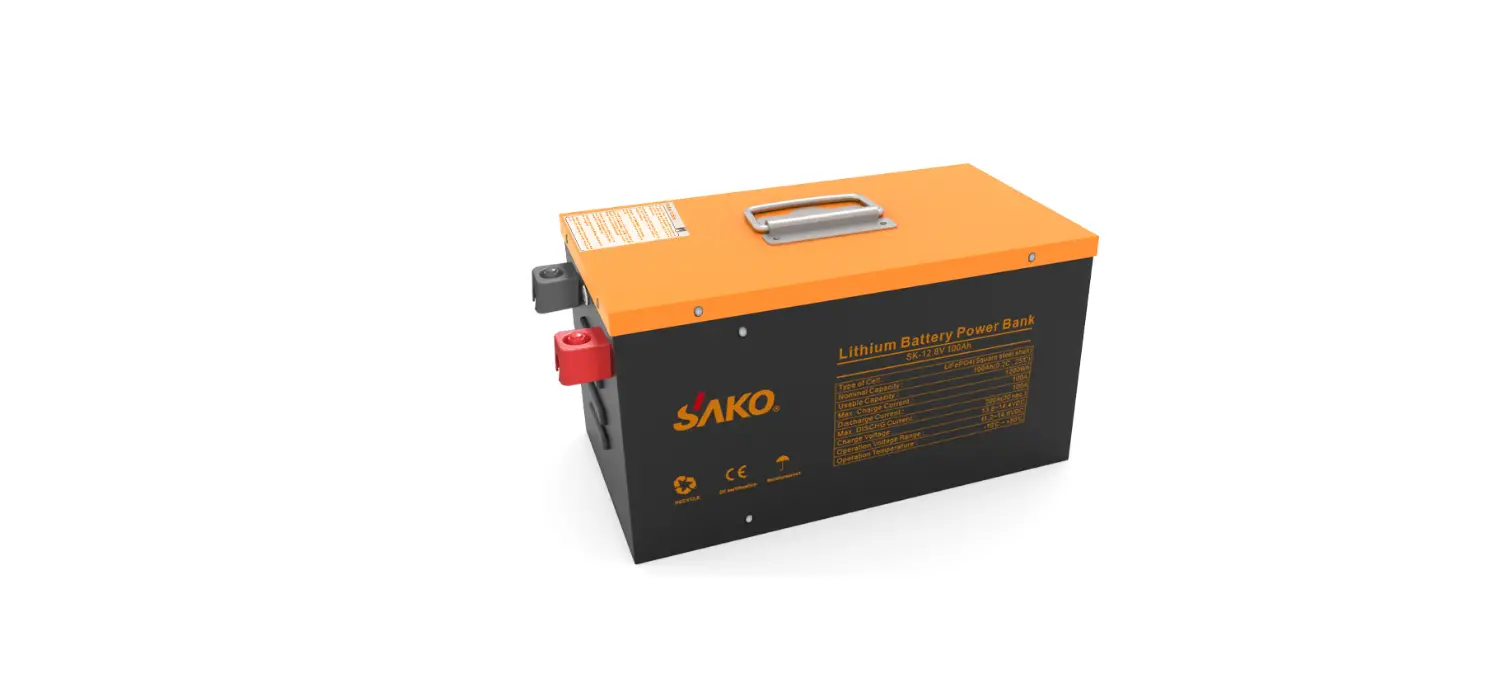
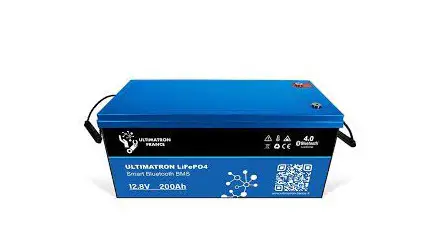
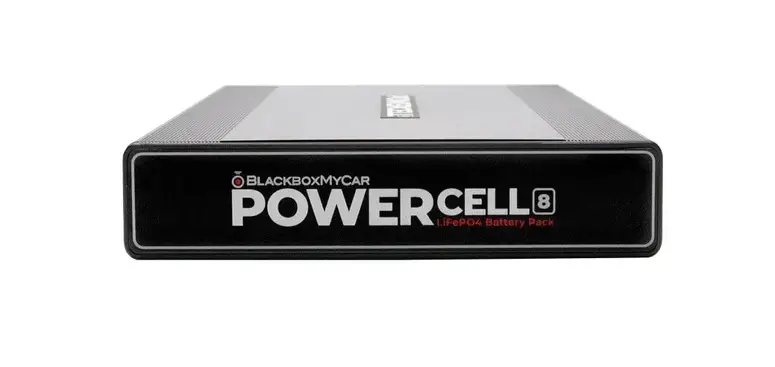
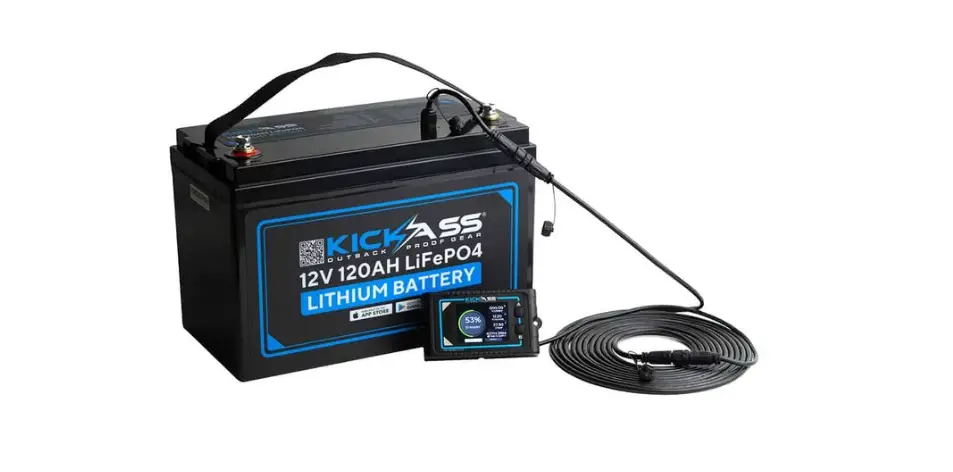
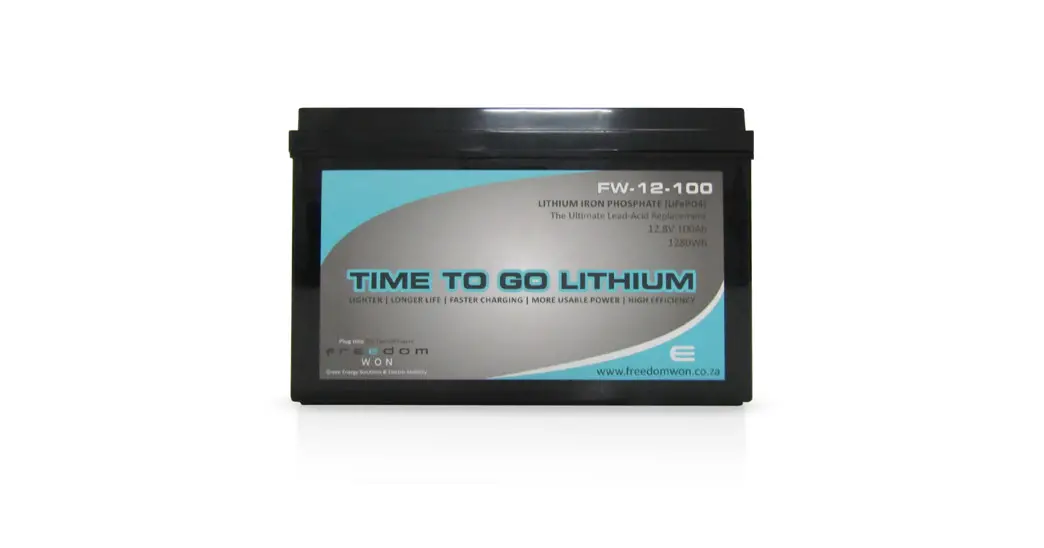
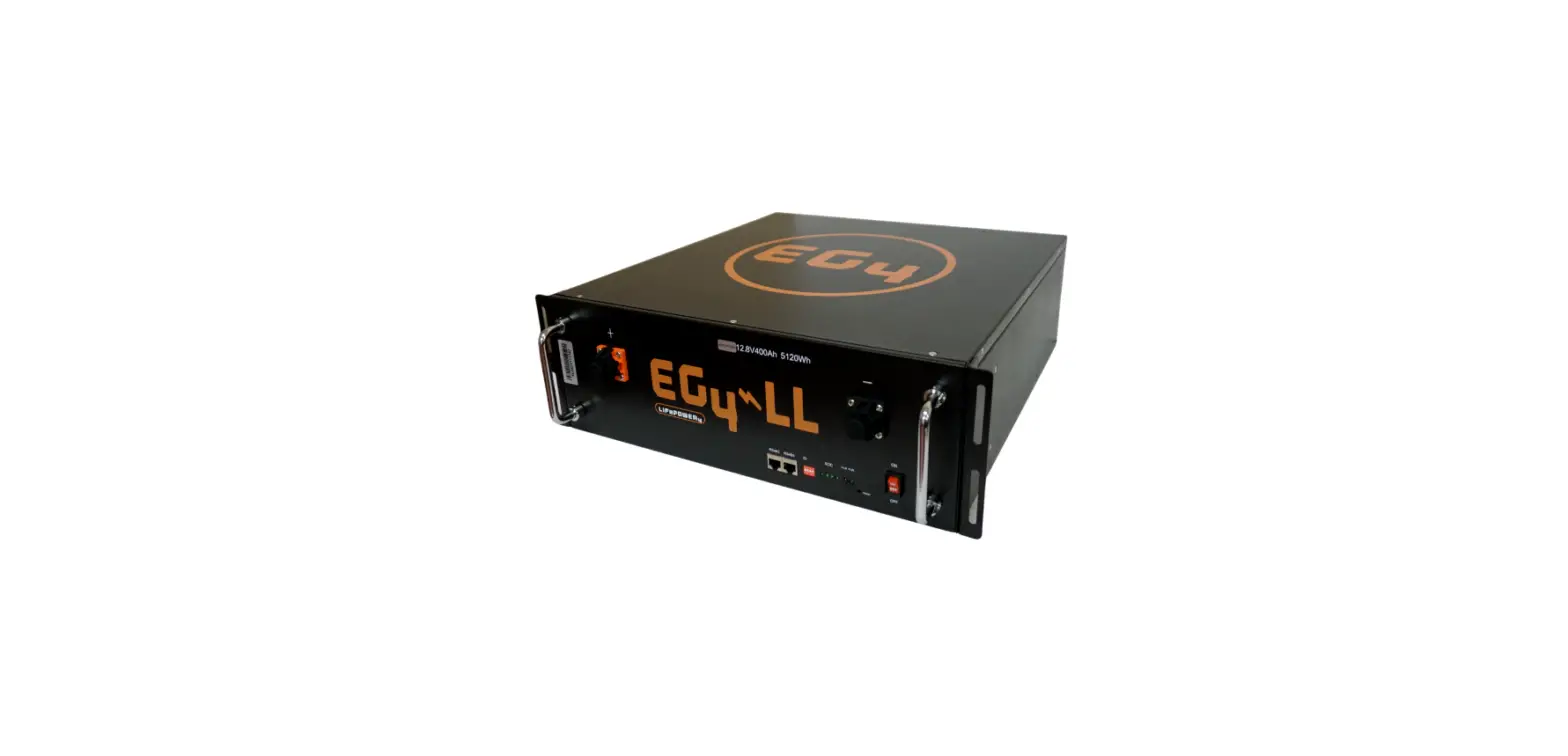
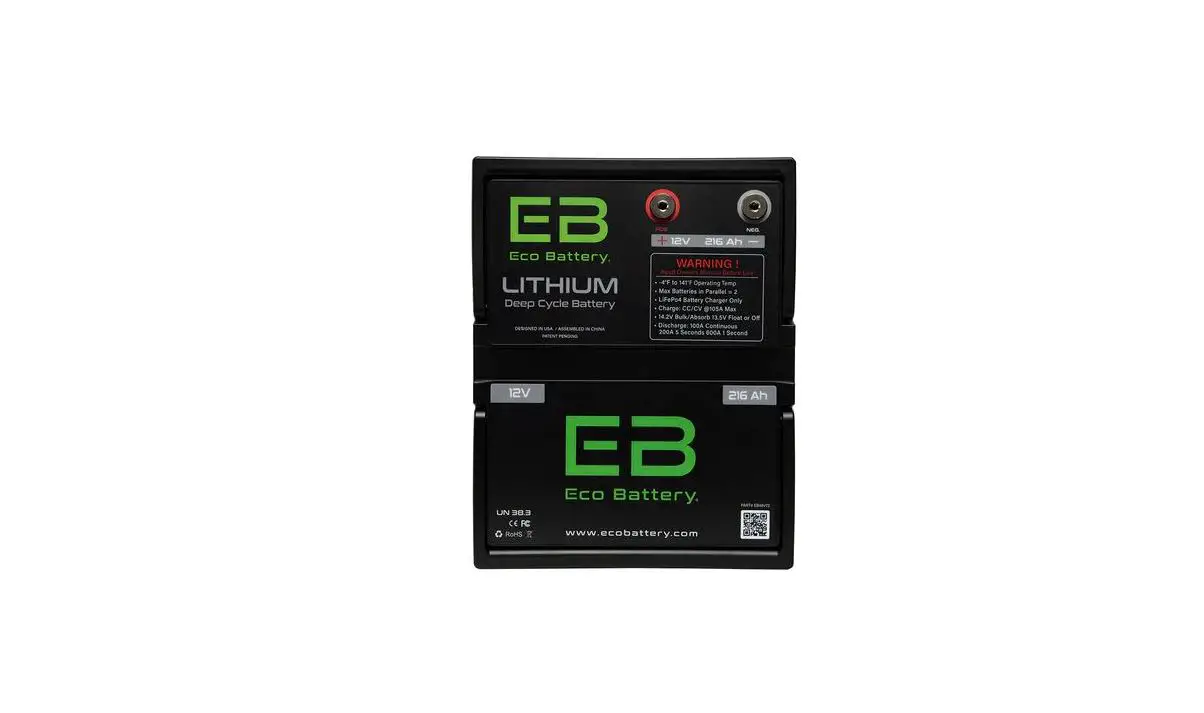
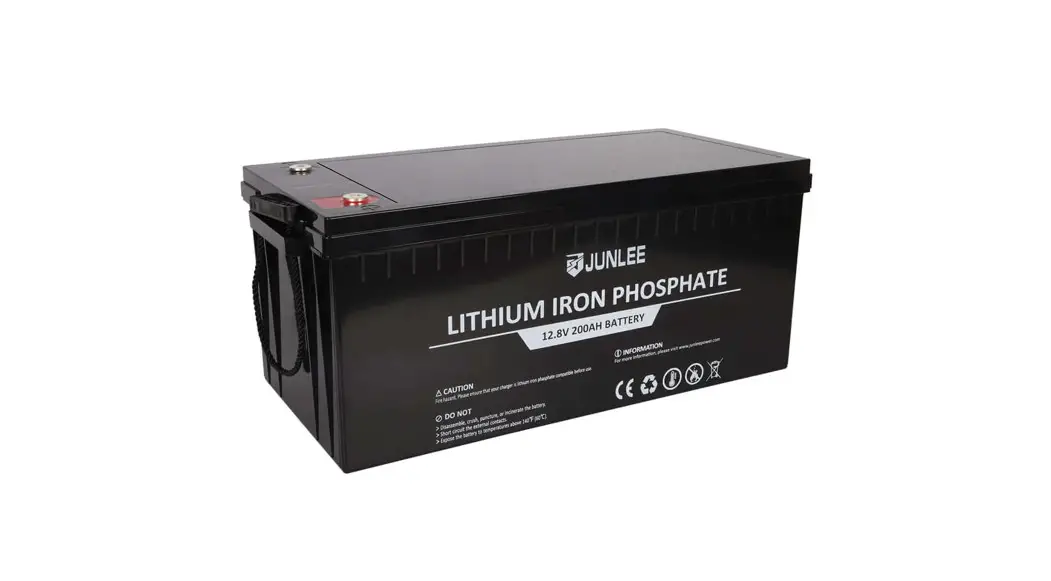
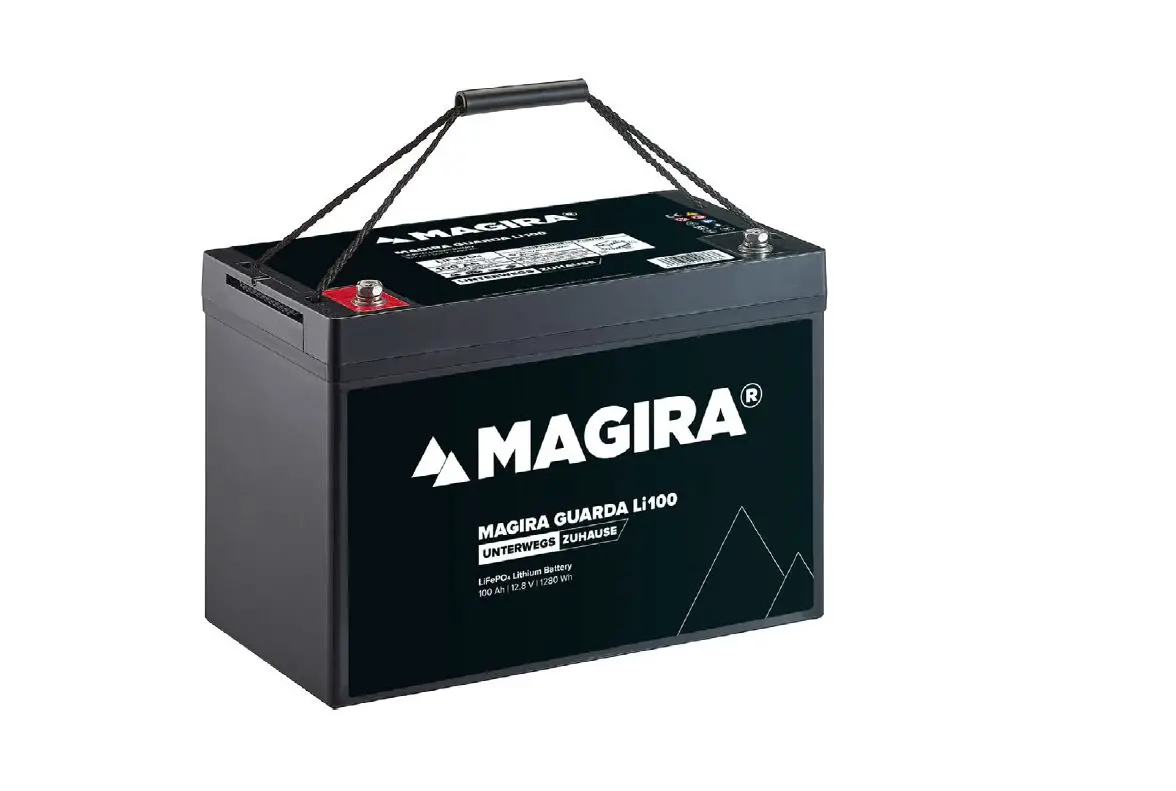
12.8V100Ah LiFePO4 Battery Pack
Product Information: – Product Name: LiFePO4 Battery Pack –
Model: 12V100Ah – Nominal Capacity: 100Ah – Nominal Voltage: 12.8V
– Max. Charge Voltage: Not specified – Min. Discharge Cut-off
Voltage: Not specified – Standard Charge: Charge to 3.65V, followed
by a constant voltage charge until current tapers to 0.05C (0.2A) –
Standard Discharge: Not specified – Standard Charge Current: Not
specified – Standard Discharge Current: Not specified – Max.
Continuous Charge Current: 2C (8A) – Max. Continuous Discharge
Current: Not specified – Weight: 93g – Storage Temperature: Store
at 40%-60% State of Charge (SOC) – Operating Temperature (Battery
Surface Temperature): Not specified – Impedance: 20m (AC), 40m (DC)
– Battery Case Material: Nickel plated steel shell – Cell
Manufacturer: EVPS Anhui Power Battery Co., Ltd. – BMS Function:
Over discharge, over charge, over current, short circuit, over
temperature, and low temperature protection Product Usage
Instructions: 1. Charge: – Connect the charging terminal to the
appropriate charger. – Ensure the charging terminal polarity is
correct to avoid damaging the internal circuit board. – Follow the
standard charge procedure, which involves charging the battery pack
to 3.65V, followed by a constant voltage charge until the current
tapers to 0.05C (0.2A). 2. Discharge: – Connect the discharge
terminal of the battery pack to the load using connectors. – Ensure
the discharge terminal polarity is correct to prevent any damage. –
Follow the standard discharge procedure; however, specific details
are not provided in the manual. 3. BMS Function: – The battery pack
is equipped with a Battery Management System (BMS) that provides
various protections, including over discharge, over charge, over
current, short circuit, over temperature, and low temperature
protection. 4. Extra Tips: – If you encounter any difficulties or
have questions, please contact the manufacturer for assistance. –
Avoid machining the circuit board as any damage may lead to
functional failure of the internal circuit. – Do not apply force or
deform the product as it may damage electronic components or lines
and make the product unstable. – Do not disassemble the shell to
avoid unnecessary damage. – Pay attention to the charging terminal
polarity to prevent burning the internal circuit board. Please note
that the provided information is based on the text extract from the
user manual and some details may be missing.
Product Manual
NO. : 202305015 REV A/0
LiFePO4 Battery Pack
12.8V100Ah
Product Manual
Customer Name
Model
12V100Ah
Version Revision
A/0 2023-05-19
Prepared by Xsy
Revision History
N.O
Revision
1
A/0
Checked Zhenlai Li
Approved by Chengbo Miao
Description Issued
Check Xsy
Date 2023-05-19
Note
0
Product Manual
NO. : 202305015 REV A/0
TABLE OF CONTENTS
1 Cell Specification …………………………………………………… 3 2 Product Specification ……………………………………………… 5 3 Characteristics Curve ………………………………………………6 4 User’s Manual ……………………………………………………….. 6 5 BMS function ………………………………………………………….6 6 Extra Tips ……………………………………………………………… 8 7 Tests …………………………………………………………………….. 8 8 Cautions ……………………………………………………………….. 9 9 Other Technical Indicators …………………………………….. 12 10 Products Liability …………………………………………………….
1
Product Manual
NO. : 202305015 REV A/0
1. Cell Specification
No.
Items
1
Nominal Capacity
2
Minimum Capacity
Specification 4.0Ah 4.0Ah
Remark 0.5C@25°C±2°C 0.5C@25°C±2°C
3
Nominal Voltage
3.2V
Average for Std. discharge
4
Max. Charge Voltage
5
Min. Discharge Cut-off Voltage
3.65±0.05V 2.0±0.05V
25°C±2°C, 0.5C(2.0A) constant
6
Standard Charge
current charge to 3.65V, followed by 3.65V constant voltage charge
until current taper to 0.05C(0.2A)
7
Standard Discharge
8
Standard Charge Current
9
Standard Discharge Current
10 Max. Continuous Charge Current
11
Max. Continuous Discharge Current
25°C±2°C, 0.5C 2A) constant current discharge to 2.0V. 0.5C(2.0A) 0.5C(2.0A) 1C (4.0A)
2C(8A)
12
Weight
93g
Within 1 year – 20 ~ 25°C
13
Storage Temperature
Within 3 months -20 ~ 45°C
Storage at 40%-60%SOC
Operating Temperature (Battery
Charge 0°C ~ 55°C
14
Surface Temperature)
Discharge -20°C ~ 55°C
Impedance 15
Battery Case Material
20m (AC) 40m (DC) Nickel plated steel shell
25, 50%SOC, 2C(8A) discharge 10s
16
Cell manufactuer:
EVPS Anhui Power Battery Co.,
Ltd.
Drawing
2
Product Manual
NO. : 202305015 REV A/0
3
Product Manual
NO. : 202305015 REV A/0
2 Product Specification
No.
Items
1
Product Model
2
Normal Voltage
3
Rated Capacity
4
Energy
5
Weight
6
Size
7
Internal Resistance(AC)
8
Charge Voltage
9
Standard Cu toff Voltage
10
Charge Current
11
Standard Discharge Current
12
Max Discharge Current
13
Passive Protection Function
14
Charging Terminal
15
Discharge Terminal
16
Cycle Life
Specification 12.8V100Ah26650-4000mAh-3.2V-4S25P
12.8V 100Ah(C5) 1.28KWh About 12kg±1kg 260*173*220±2mm 15m 14.4±0.2V About 10V
50A 50A 100A Over charge protection, Over discharge protection, Temperature protection, Balanced function
M8
3,[email protected]/1C100%DOD 6,[email protected]/1C80%DOD Drawing
4
Product Manual
3 Characteristics Curve
NO. : 202305015 REV A/0
4 User’s Manual
4.1 Charge
Charging terminal of battery pack is connected to charger appropriate with it, and then charge. Charge voltage is 14.4±0.2V. Do not reverse.
4.2 Discharge
Discharge terminal of battery pack is connected to load with connectors, and then discharge. Do not reverse.
5 BMS function
This battery pack has a battery management system (BMS), providing over discharge, over charge, over current, short circuit, over temperature and low temperature protection.
6 Extra Tips
You encounter difficulties, please contact us, we will try our best to provide you with service and help.
Please do not be machined on the circuit board, any damage may cause functional failure of the internal circuit;
Please do not make the force and deformation to the product, any damage to electronic components or lines may make the product unstable.
Please do not disassemble the shell, lest you cause unnecessary damage to you; The charging terminal polarity is reversed, and it burn internal circuit board, please
pay attention to the port when connect.
7 Tests
5
Product Manual
NO. : 202305015 REV A/0
Single cell and Protection Circuit Specification are only results of standard test, this is for your reference only.
7.1 Standard Test Requirements
Battery test must be within 1 month after production. All tests in this specification should be at standard atmospheric conditions. (Temperature: 25± 2, relative humidity: 65± 20%).Charge voltage is 14.4±0.05V, Standard cutoff voltage is about 10 V; Standard current is I5 (A).
7.2 Standard Charge
Charge the battery with Lithium ion battery special test cabinet, supply standard voltage, standard current until current down to 0.05I5(A).
7.3 Standard Discharge
Discharge the battery at standard current with special detection device, constant discharging to standard discharge cutoff voltage or until the battery stop.
7.4 Capacity Retention Rate
Test Methods Standard charge, in standard test conditions on hold for 28 days, standard discharge.
Test Standards capacity retention rate80%
7.5 Cycle Life
Cycles Life3,000 cycles, capacity retention rate80%). (Standard charge at 0.5C, rest 0.5~1h; discharge at 1C to cut off voltage, rest 0.5~1h, repeat the above steps until 3,000 cycles.)
8 Cautions
Please pay attention to followings in case of battery will have leakage, heat etc. Do not immerse the battery in water or seawater, and keep the battery in a cool dry
surrounding if it stands by. Do not use or leave the battery at high temperature as fire or heater. Otherwise,
it can overheat or fire or its performance will be degenerate and its service life will be decreased. Do not reverse the positive and negative terminals. Do not reverse polarity charging. Do not connect the battery electrodes to an electrical outlet. Do not short circuit. Otherwise it will cause serious damage of the battery. Do not transport or store the battery together with metal objects such as hairpins, necklaces, etc. Do not strike, trample, throw, fall and shock the battery.
6
Product Manual
NO. : 202305015 REV A/0
Do not directly solder the battery and pierce the battery with a nail or other sharp objects.
Do not use the battery in the location where static electricity and magnetic field is great, otherwise, the safety devices may be damaged, causing hidden trouble of safety.
Do not overload with battery Please use special charger for charging. Please charge the battery within 24 hours after fully discharged. If the battery leaks and the electrolyte gets into the eyes, do not rub the eyes,
instead, rinse the eyes with clean water, and immediately seek medical attention. Otherwise, it may injure eyes. If the battery gives off strange odor, generates heat, becomes discolored or deformed, or in any way appears abnormal during use, recharging or storage, immediately stop charging, using, and remove it from the device. In case the battery terminals are dirty or oxidation, clean the terminals with a dry cloth before use. Otherwise poor performance may occur due to the poor connection with the instrument. Tape the discarded battery terminals to insulate them.
8.1 Battery Checking
After receiving the battery, you should first check the packing carefully. During the handling process, please ensure there’s no shock on the battery.
Please check the battery case and accessories if there’s any damage or leakage, if so, please contact us immediately.
Please check the output connector is correct or not, measuring the voltage between positive and negative, if it’s within the normal standard.
8.2 Installation and Precautions
No smoking or fire during installation to avoid short-circuit of battery and prevent equipment damage or personal injury.
The battery should be installed under the condition with well-ventilated and no sunlight. Don’t put it under place with possible flooding.
When fastening battery terminals, please don’t use excessive force, or the terminals could be damaged.
Clean the surface of battery with dry cloth, please don’t use oil or other volatile organic solvents to clean, or it may damage it.
7
Product Manual
NO. : 202305015 REV A/0
Please make sure that the positive (+) & negative (-) polarity is correct connected, or
it may fire or damage the battery and load. Start testing the equipment if it could be well working with battery. Using and maintenance
8.3 Battery Using and Maintenance
Charging current should be less than maximum charge current specified in the Product Specification, charging current bigger than recommended current may damage the battery.
Discharging current should be less than maximum discharge current specified in the Product Specification; discharging current bigger than recommended current may damage the battery.
Discharge temperature:-20~+60.Humidity:RH85%.When the temperature is higher than 45, please note ventilation. When the environment humidity is higher than 85%, please pay attention to protection. Charging temperature:0~+45.Humidity: RH85%, When the environment humidity is higher than 85%, please pay attention to protection; storage temperature: 0~40 (Best temperature is 15~25 in dry environment). Temperature affects the capacity of battery obviously, it’s normal.
When the battery power is low, please charge it in time. This could ensure longer cycle life. If the battery can’t be charged in time and let it under power shortage condition, it may affect the cycle life.
The lithium-ion battery charge discharge shallow is beneficial to improve the cycle life, proposal user each discharge is put to the nominal capacity of 80%.
It should be noted that the cell would be possible to be at the over-discharged state by its self-discharge characteristics in case the cell is not used for long time. In order to prevent over-discharging, the cell shall be charged periodically to maintain
a certain voltage range 13.2V~13.6V, 2months one cycleOver-discharging may
causes loss of cell performance, characteristics, or battery functions. But for battery packs with commnunication fuction, please maintain it once in 1 month. Don’t use organic solvents to clean the battery case. If for battery fire accident, please use dry powder fire extinguisher or sand. Battery is a consumable product with limited cycle life. Please charge it in time when the capacity can’t reach the requirement to avoid any loss of the user.
8.4 Battery Common Troubles and Solutions
Battery voltage is too low after fully charged. Battery was in long-term storage with no usage, not in accordance with the provisions
for maintenance either. Solution: charge the battery can be solved. Battery disconnected Solution: remove the battery to check whether the line is broken or not, the solder
8
Product Manual
NO. : 202305015 REV A/0
joints come off or not, nickel belt breaks or not, and then repair according to the damage situation. Protection circuit does not work Solution: first, make sure the cable is contact with the protection circuit well, then, observe solder is off or not. If the above conditions are normal, please test voltage between B+/B- and P+/ P- voltage, then the board would be failed if the voltage difference is very high. Then please do testing in detail on protection circuit, if not pass, please change another new protection circuit. Battery suffered fierce collision, with character-external battery case damaged or with electrolyte odor. Solution: It’s not in the scope of maintenance generally. If needing maintenance, we need the confirmation of the problem whether on the output line or the battery itself. First, open the battery case, check the battery P + / C + and P- / C- lines or joints damaged or not. If damaged, it needs to be replaced. Then, instigating smell odors method to determine the battery, if there is irritation electrolyte odor, indicating that the battery has been leaking. You need to test the voltage of each series. If the voltage of one series is very different with much lower voltage, then this series needs to be replaced. Insufficient capacity Solution: To charge and discharge the battery with 3~5 cycles generally. Battery voltage instability or cannot charge or discharge normally. Faulty soldering Solution: To test the resistance with the internal resistance tester, and confirm the internal resistance of the battery exceeding a predetermined value or not. If not, the battery would be in faulty soldering condition, the battery needs to be unpacked to be welded again. Protection circuit abnormal
Solution: replace the protection circuit. Connector or terminals in poor contact condition
Solution: replace the terminals or connectors Battery works properly in charging but could not discharge or discharging well
but could not charge.
Solution: The protection circuit is damaged; you need to replace the protection
circuit.
9 Other Technical Indicators
If you need battery protection parameters and other related parameters, please contact
our sales or technical staff, we will provide you as soon as possible.
10 Products Liability
Our company is not responsible for the incident caused by not obeying the Manual. Before
9
Product Manual
NO. : 202305015 REV A/0
using the battery, you should read the specifications, usage instruction and some attentions carefully to learn its application method and areas. If the phenomenon such as incorrect using method or wrong circuit connection, or input power data, working index are inconsistent with the Manual, cause damage to product, load and its accessories, we are not responsible for it. FCC Warning This device complies with part 15 of the FCC Rules. Operation is subject to the following two conditions: (1) This device may not cause harmful interference, and (2) this device must accept any interference received, including interference that may cause undesired operation. Any Changes or modifications not expressly approved by the party responsible for compliance could void the user’s authority to operate the equipment. Note: This equipment has been tested and found to comply with the limits for a Class B digital device, pursuant to part 15 of the FCC Rules. These limits are designed to provide reasonable protection against harmful interference in a residential installation. This equipment generates uses and can radiate radio frequency energy and, if not installed and used in accordance with the instructions, may cause harmful interference to radio communications. However, there is no guarantee that interference will not occur in a particular installation. If this equipment does cause harmful interference to radio or television reception, which can be determined by turning the equipment off and on, the user is encouraged to try to correct the interference by one or more of the following measures: -Reorient or relocate the receiving antenna. -Increase the separation between the equipment and receiver. -Connect the equipment into an outlet on a circuit different from that to which the receiver is connected. -Consult the dealer or an experienced radio/TV technician for help. This equipment complies with FCC radiation exposure limits set forth for an uncontrolled environment. This equipment should be installed and operated with minimum distance 20cm between the radiator & your body
10
 charger是什么意思_charger的翻译_音标_读音_用法_例句_爱词霸在线词典