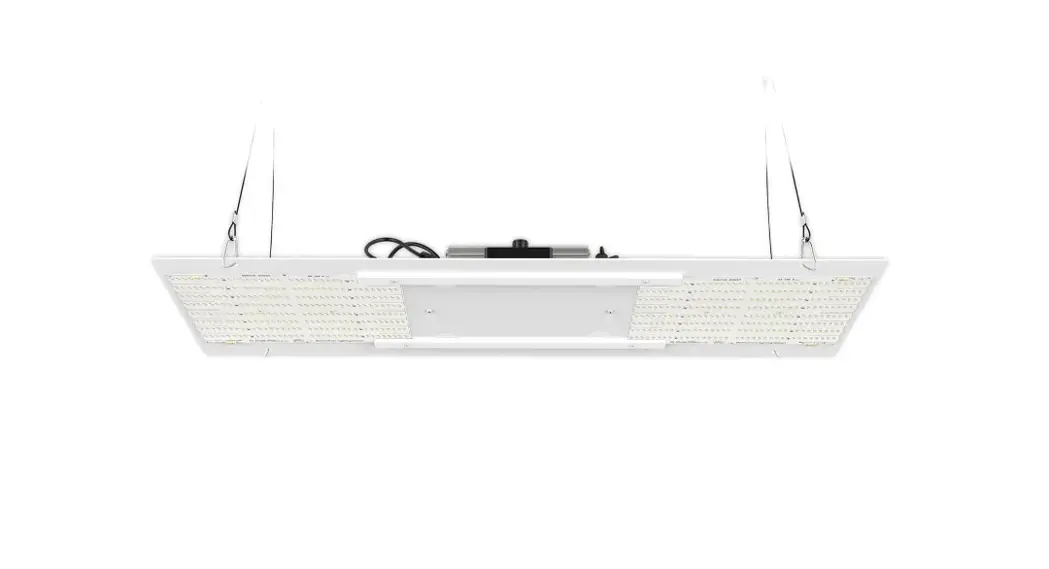
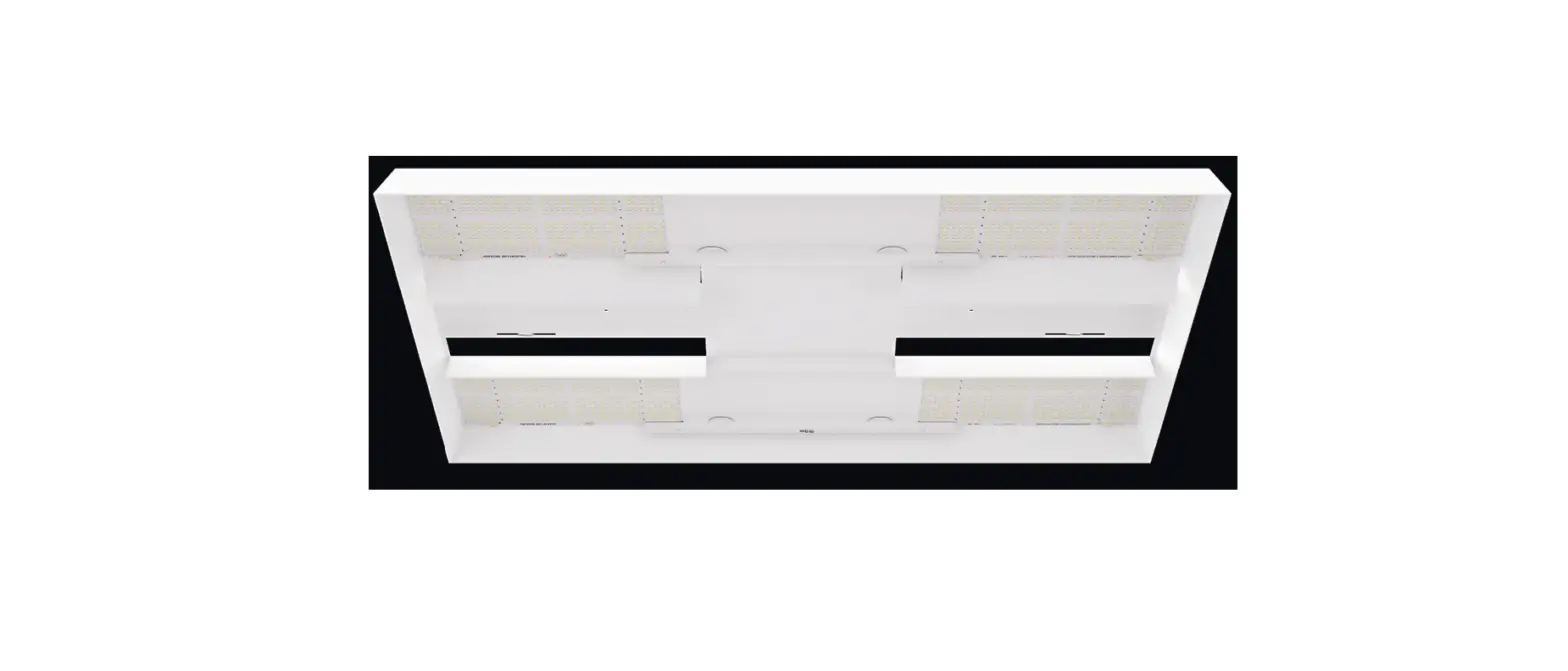
700 GrowFlux
Product Information
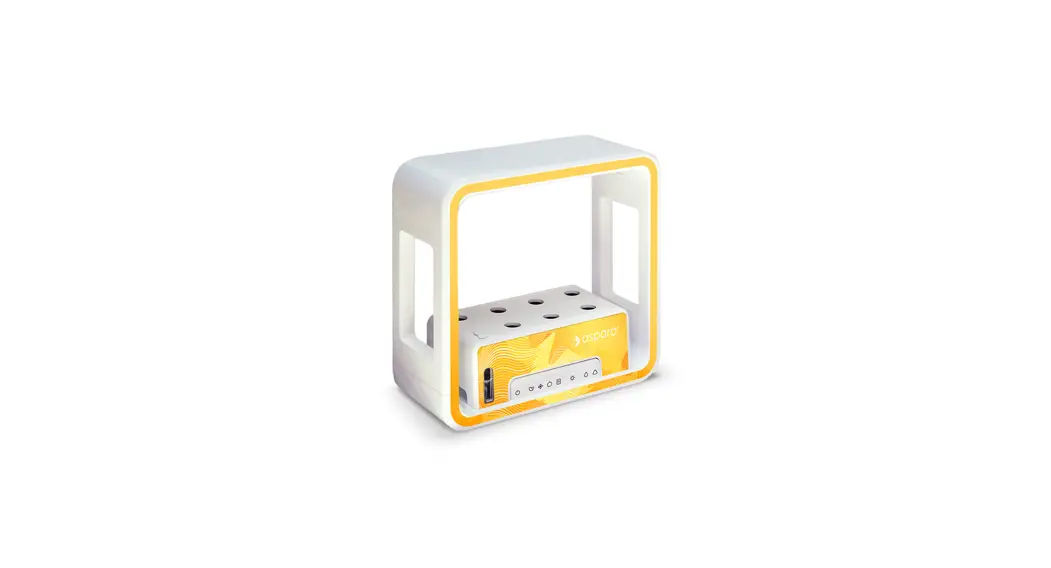
The GrowFlux Access Point is a WiFi-enabled smart-phone
controlled device that serves as the foundation for the on-site
GrowFlux Mesh. It provides high reliability wireless mesh for
lighting controls, sensing, and other devices. The Access Point
acts as a bridge between the GrowFlux Mesh devices and GrowFlux
cloud applications. It requires an Android or iOS device for setup,
but any device with any GrowFlux cloud application can be used to
interact with devices once the Access Point is set up. The Access
Point is powered by a CR2032 Lithium coin cell battery, which
powers the internal clock to keep date and time in the event of
power and Internet connectivity loss.
Product Usage Instructions
Setting up the Access Point:
- Ensure you have an Android or iOS device.
- Download and install the GrowFlux cloud application on your
device. - Follow the instructions provided by the application to set up
the Access Point.
Wireless scheduling & Dimming:
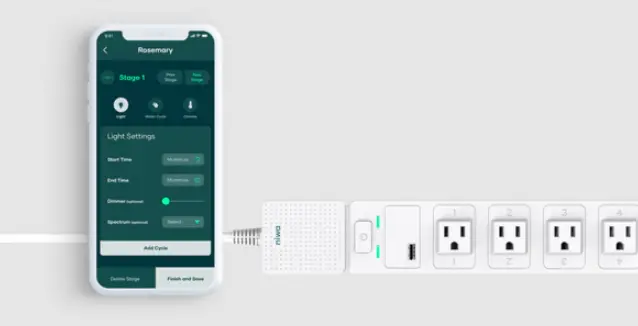
Your HLG light includes a wireless lighting controller that can
be paired with the GrowFlux Access Point for connected control. To
set up wireless scheduling and dimming:
- Ensure your HLG light is connected to the GrowFlux Access
Point. - Open the GrowFlux cloud application on your device.
- Navigate to the lighting control section and follow the
instructions provided to schedule and dim the lights
wirelessly.
Connecting lights to the Access Point:
You can connect up to 200 lights to the GrowFlux Access Point.
To connect lights:
- Purchase and install the GrowFlux Access Point.
- Ensure your lights are compatible with the GrowFlux
system. - Follow the instructions provided with your lights to pair them
with the GrowFlux Access Point.
Understanding lighting requirements for greenhouse crops:
| Crop | Moles of Light per Day | Lighting Intensity |
|---|---|---|
| Hemp | 30-35 | Very High |
| Tomatoes | 20-30 | High |
| Peppers | 20-30 | High |
| Cucumbers | 15-30 | Mid-High |
| Strawberries | 17-20 | Medium |
| Greens | 12-17 | Medium |
| Floriculture | 10-30 | Low-High |
| Herbs | 10-12 | Low |
The table above shows the minimum amount of light per day needed
to profitably cultivate various greenhouse crops. The Daily Light
Integral (DLI) is measured in moles of light per day and is
quantified in the number of photons in the PAR spectrum. The
lighting intensity ranges from Very High to Low based on the crop’s
requirements.
Regulating light timing for flowering crops:
For flowering crops like hemp and tomatoes, the timing of light
is important to regulate the flowering cycle. Hemp crops are
typically lit for 12 hours per day during flowering. Non-flowering
crops like lettuce and leafy greens are less sensitive to the
timing of light and are often lit for 18-22 hours per day.
Supplemental light requirements for greenhouses:
Supplemental light is needed for greenhouses to ensure optimal
growth of crops. The specific areas where supplemental light may be
required can vary based on the greenhouse setup and crop type. It
is recommended to refer to research and high-resolution maps for
guidance on the Daily Light Integral (DLI) required for different
regions.
Energy consumption of horticultural lighting:
The energy consumption of horticultural lighting can vary based
on the type of facility. In all-electric indoor facilities,
lighting consumes around 70% of the energy, while HVAC (heating,
ventilation, and air conditioning) consumes 26%. In natural gas
indoor facilities, lighting consumes around 49% of the energy,
while HVAC consumes 28%. In natural gas greenhouse facilities,
horticultural lighting consumes around 34% of the energy, while
HVAC consumes 12%.
GROW
INCREASE YOUR
®
KNOWLEDGE. EFFICIENCY. OPPORTUNITY. SAVINGS. CONTROL.
WIFI- ENABLED SMART-PHONE CONTROLLED
ZONE CONTROLLED
HLG
POWERED BY
Take control of your
GROW.
HOW THE ACCESS POINT WORKS: The GrowFlux Access Point is an always-on wireless device that serves as the foundation for your on-site GrowFlux Mesh, a high reliability wireless mesh for lighting controls, sensing, and other devices.
The Access Point functions as a bridge between your GrowFlux Mesh devices and GrowFlux cloud applications. An Android or iOS device is required to set up the Access Point, however any device with any GrowFlux cloud application can be used to interact with devices once the Access Point is set up.
DATA CONFIDENCE: CR2032 Lithium coin cell battery; powers internal clock to keep date and time in the event of powerand Internet connectivity loss
GET STARTED HERE:
Wireless scheduling & Dimming
Your HLG light includes a wireless lighting controller that easily pairs with the GrowFlux Access Point for connected control. Reliable and secure mesh networking built into your light enables control from any device, from anywhere. Connect up to 200 lights to the GrowFlux Access Point, sold separately.
HOW CONNECTED CONTROL WORKS:
Module Quick Start
Video:
How much light do crops need?
CROP
MOLES OF LIGHT PER DAY
LIGHTING INTENSITY
Hemp
30-35
Tomatoes
20-30
Peppers
20-30
Cucumbers 15-30
Strawberries 17-20
Greens
12-17
Floriculture 10-30
Herbs
10-12
Very High High High Mid-High Medium Medium Low-High Low
The table above shows the minimum amount of light per day needed to profitably cultivate various greenhouse crops. Daily Light Integral (DLI) is measured in moles of light per day, and is quantified in the number of photons in the PAR spectrum.
For flowering crops like hemp and tomatoes, the timing of light is important to regulate the flowering cycle. During flowering, hemp crops are typically lit for 12 hours per day. Non-flowering crops like lettuce and leafy greens are far less sensitive to the timing at which the crop receives light, and are often lit for 18-22 hours per day.
State regulations throughout the US often require that medicinal hemp is grown indoors, State regulations throughout the US often require that medicinal hemp is grown indoors, requiring the entirety of the crop’s light input as sole source electric lighting.
How much energy does horticultural lighting consume within farms?
Misc plug loads 4%
HVAC Natural Gas
0%
HVAC – kWh 26%
Lighting 70%
All electric indoor
Misc plug loads 3%
Fans 5%
HVAC Natural Gas
20%
HVAC – kWh 28%
Lighting 49%
Natural gas indoor
Misc plug and production area loads
1%
HVAC Natural Gas
48%
Horticultural Lighting 34%
HVAC kWh 12%
Natural Gas Greenhouse
Graphs from left: Energy Mix of All-Electric Indoor, Natural Gas Indoor, and Greenhouse Facilities in a Cold Climate SOURCE: RESOURCE INNOVATION INSTITUTE
Where is supplemental light needed for greenhouses?
Source: Faust, J.E., and J. Logan. 2018. “Daily Light Integral: A Research Review and High-Resolution Maps of the United States,” HortScience 53(9):1250-1257.
· Greenhouse films and glass reduce light levels by 10-20%, further necessitating supplemental lighting
· The entirety of the continental United States does not have enough natural light to cultivate hemp, tomatoes, and peppers year-round without supplemental lighting
· Some greenhouses opt for less than year-round cultivation to reduce the amount of supplemental lighting needed
How much energy does horticultural
lighting consume overall?
Average Electricity Consumption High Pressure Sodium (HPS) LED LED with precision controls
Technology Adoption by industry High Pressure Sodium (HPS) LED LED with precision controls
Total Grow Area 2019 Annual Energy Consumption
UNITS
INDOOR VERTICAL GREENHOUSE NON-STACKED
FARMING
INDOOR & HEMP
N/A
11
56
W/ft2
15
7
35
13
5
28
%
Million ft2 GWh/year
N/A 90% 10% 0.85
81
98% 1.5% 0.5%
6.6 1,2028
86% 8% 3% 31.9 ,307
SOURCE: US Department of Energy & GrowFlux, Inc.
How do connected horticultural lighting controls work?
Connected lighting control systems use on-site wireless networking and Internet connectivity to enable energy savings. Wireless mesh networking significantly reduces the need for control wiring and control cabinets within agriculture facilities. Increasingly, smart grid features are being incorporated into connected lighting control systems to save energy and manipulate energy loads. Horticultural lighting has greater potential for load shedding schedules and demand response, while other loads like HVAC have more limited potential.
Fully wireless controllers provide individual wireless control for each luminaire and entirely eliminate control signal wiring from the system. Fully wireless controls provide the added benefit of software based zoning within farms, allowing growers to re-configure their farms with a few clicks rather than re-configuring wiring.
Modern control systems allow for control from any device, including smartphone apps. Growers increasingly are demanding remote management solutions in horticultural controls since many are managing multiple facilities, and monitoring of critical systems is a 24/7 task.
GrowFlux Mesh Lighting Adapter
HVIN: 3.4d FVIN: HLG-650-R, HLG-S-DIABLO FCC ID: 2AY24-GFX-HG01 IC: 27912-LAHG01
REGULATORY STATEMENTS
This device complies with Part 15 of the FCC Rules. Operation is subject to the following two conditions: (1) this device may not cause harmful interference, and (2) this device must accept any interference received, including interference that may cause undesired operation.
FCC Statement
Changes or modifications not expressly approved by the party responsible for compliance could void the user’s authority to operate the equipment. This equipment has been tested and found to comply with the limits for a Class B digital device, pursuant to Part 15 of the FCC Rules. These limits are designed to provide reasonable protection against harmful interference in a residential installation. This equipment generates, uses and can radiate radio frequency energy and, if not installed and used in accordance with the instructions, may cause harmful interference to radio communications. However, there is no guarantee that interference will not occur in a particular installation. If this equipment does cause harmful interference to radio or television reception, which can be determined by turning the equipment off and on, the user is encouraged to try to correct the interference by one or more of the following measures:
— Reorient or relocate the receiving antenna. — Increase the separation between the equipment and receiver. — Connect the equipment into an outlet on a circuit different from that to which the receiver
is connected. — Consult the dealer or an experienced radio/TV technician for help.
This equipment complies with FCC radiation exposure limits set forth for an uncontrolled environment. This equipment should be installed and operated with minimum distance 20cm between the radiator and your body. This transmitter must not be co-located or operating in conjunction with any other antenna or transmitter.
Canada Statement
This device complies with Industry Canada license-exempt RSS standard(s). Operation is subject to the following two conditions: (1) this device may not cause interference, and (2) this device must accept any interference, including interference that may cause undesired operation of the device. Le présent appareil est conforme aux CNR d’Industrie Canada applicables aux appareils radio exempts de licence. L’exploitation est autorisée aux deux conditions suivantes : (1) l’appareil ne doit pas produire de brouillage, et (2) l’utilisateur de l’appareil doit accepter tout brouillage radioélectrique subi, même si le brouillage est susceptible d’en compromettre le fonctionnement. This equipment complies with FCC/IC RSS-102 radiation exposure limits set forth for an uncontrolled environment. This equipment should be installed and operated with minimum distance 20cm between the radiator & your body. Ce matériel est conforme aux limites de dose d’exposition aux rayonnements, fac / ic rss-102 énoncée dans un autre environnement. Cette equipment devrait être installé et exploité avec distance minimale de 20 entre le radiateur et votre corps.
Desktop control at https://panel.growflux.com Requires Internet connection for connected control. Requires Android or iOS device & GrowFlux App for setup. Use of this product is subject to registration with GrowFlux, Inc. and the GrowFlux Terms of Service, located at growflux. com/tos. Some advanced features require subscription; see pricing at growflux.com.
GrowFlux is a registered trademark of GrowFlux, Inc. App Store is a registered trademark of Apple, Inc. Google Play and the Google Play logo are trademarks of Google LLC.
Mating connector end view Mates to GrowFlux Lighting Adapter
Socket 4: DIM+
Socket 1: -V supply *see note
Socket 3: DIM-
*see note
Socket 2: +12V supply
*Note: DIM- and -V supply are internally connected inside Lighting Adapter
MATING CONNECTOR: LLT female M12 4P with push lock and female sockets Mates to GrowFlux Lighting Adapter
Horticulture Lighting Group 752 North State St, #208 Westerville, OH 43082 (1-877-445-4533) [email protected] [email protected]
®
07/18/2022 Specifications subject to change without notice.
www.HLG.com
© 2022 Horticulture Lighting Group®
 Grow Light Dimmers and Schedulers – GrowFlux
 Horticulture Lighting Group Premium LED Grow Lights for Agriculture
 GrowFlux - Login