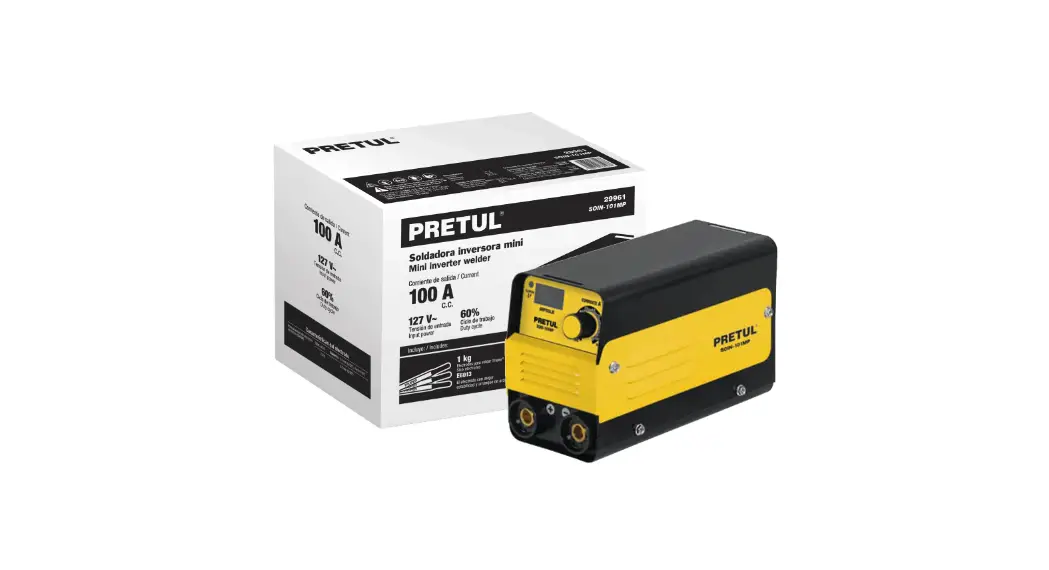
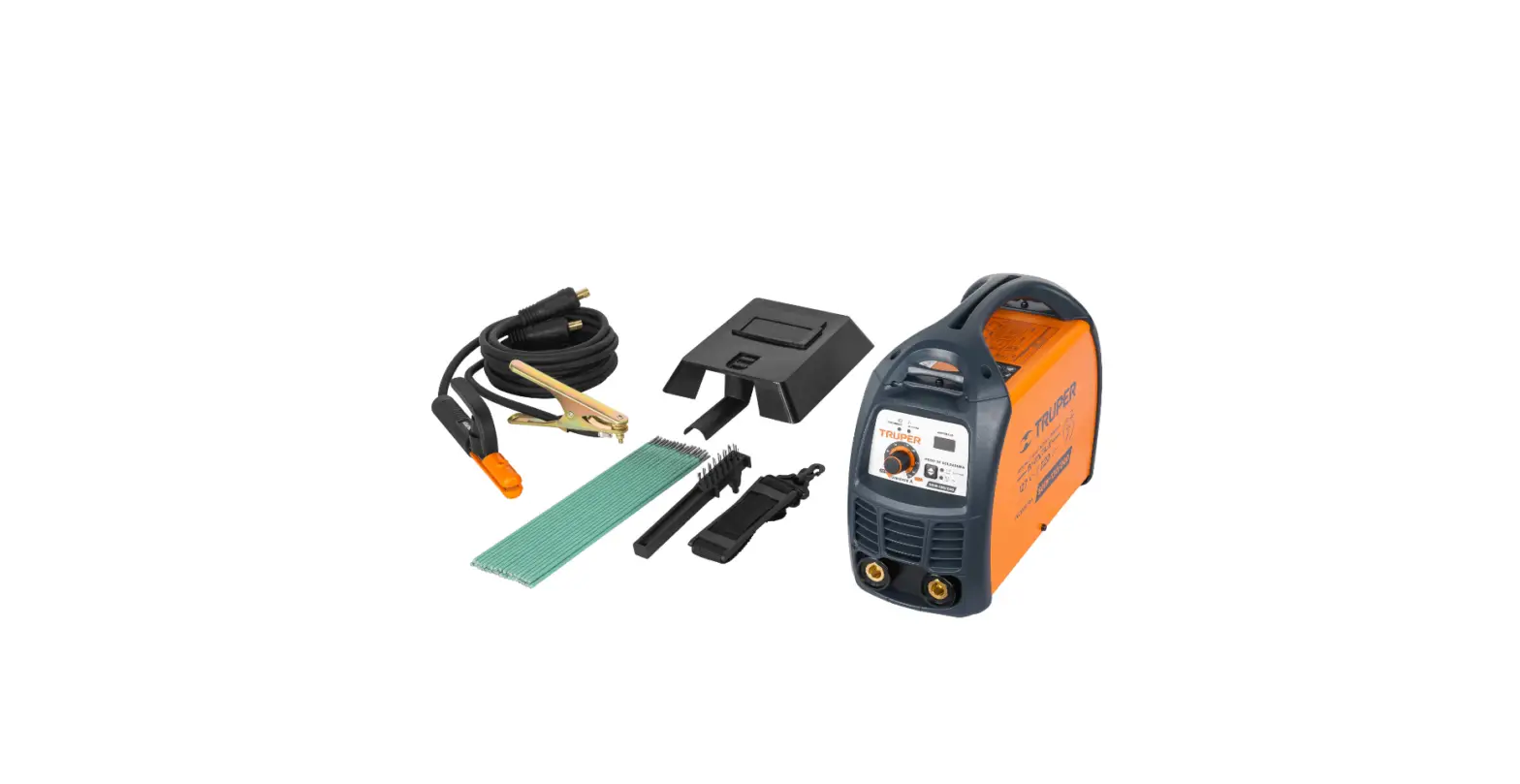
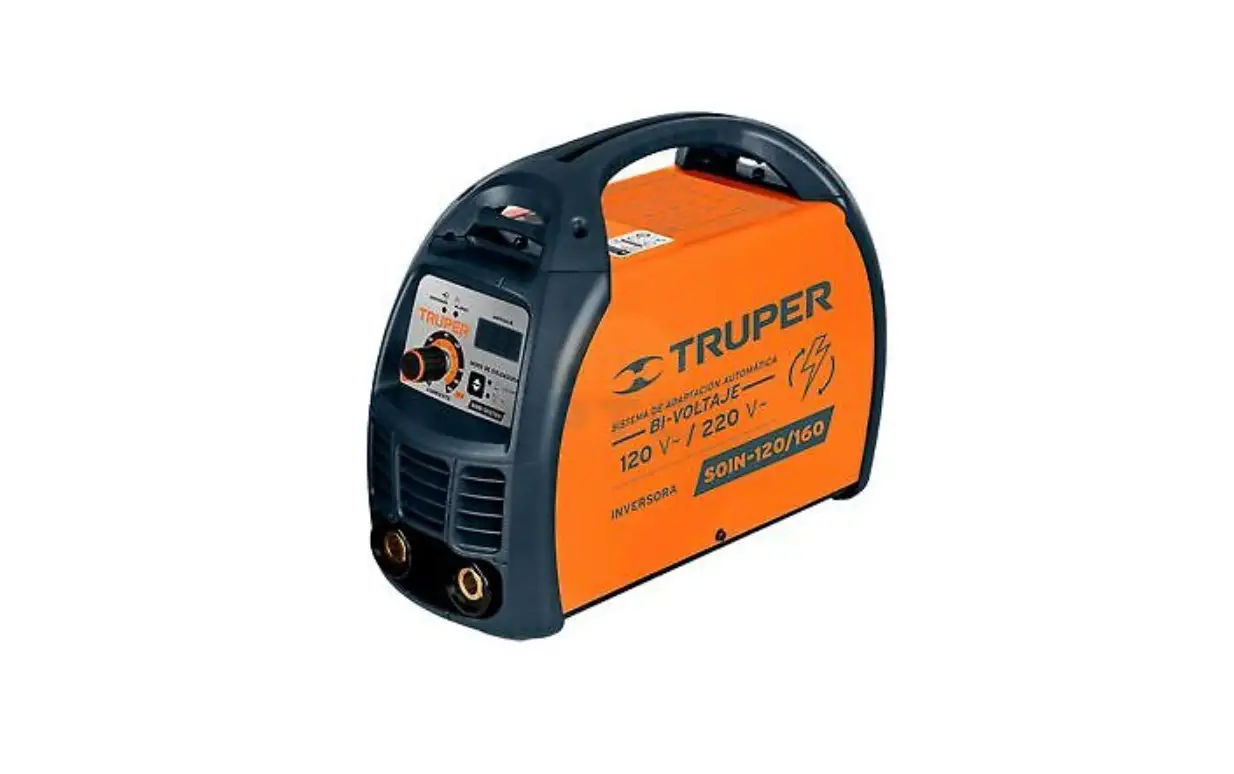
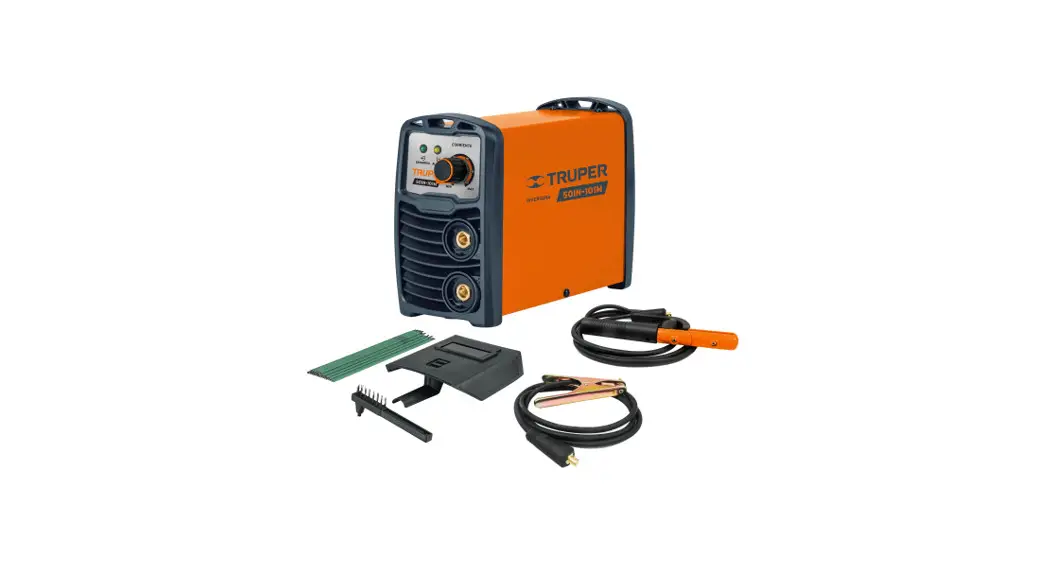
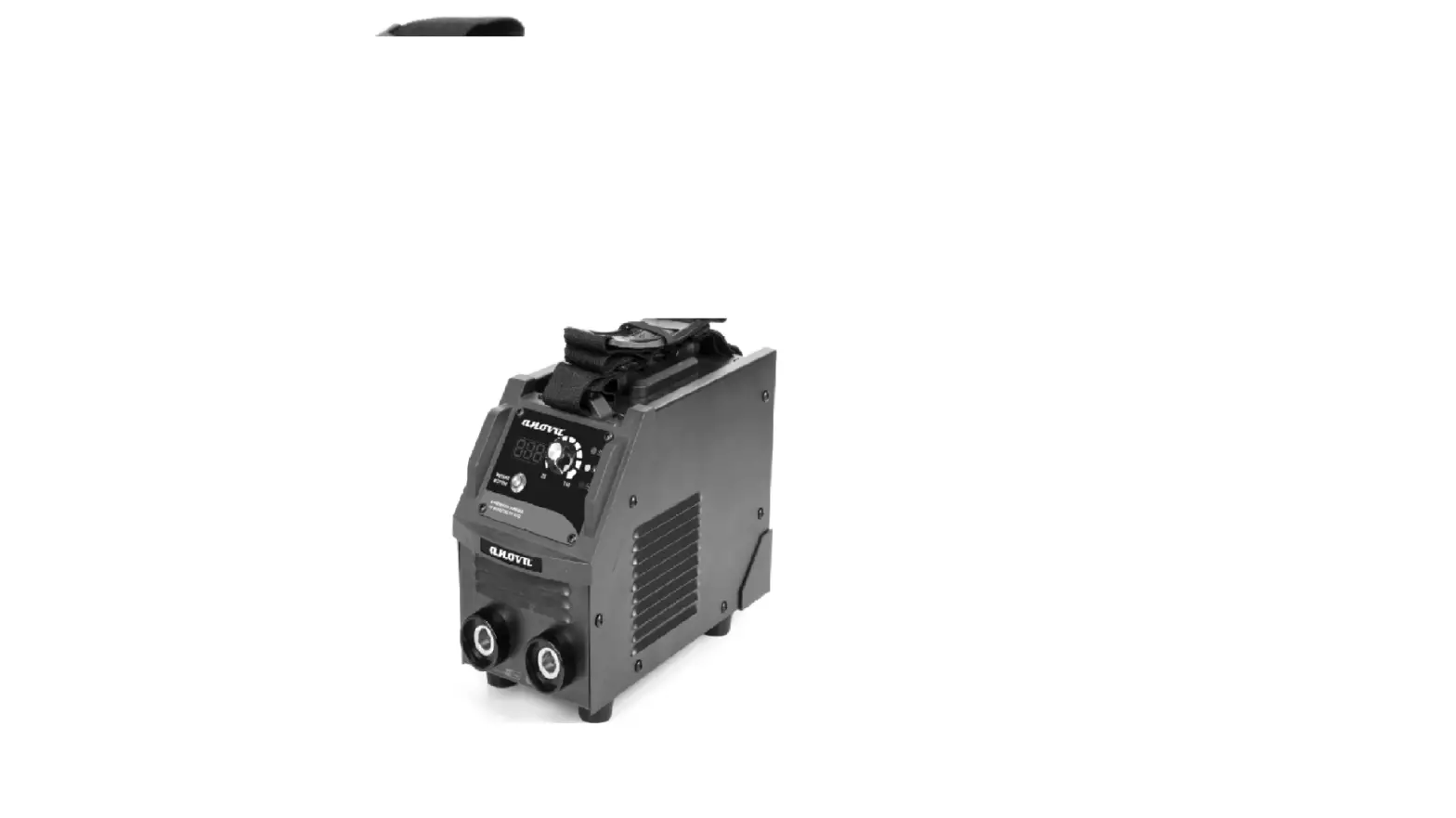
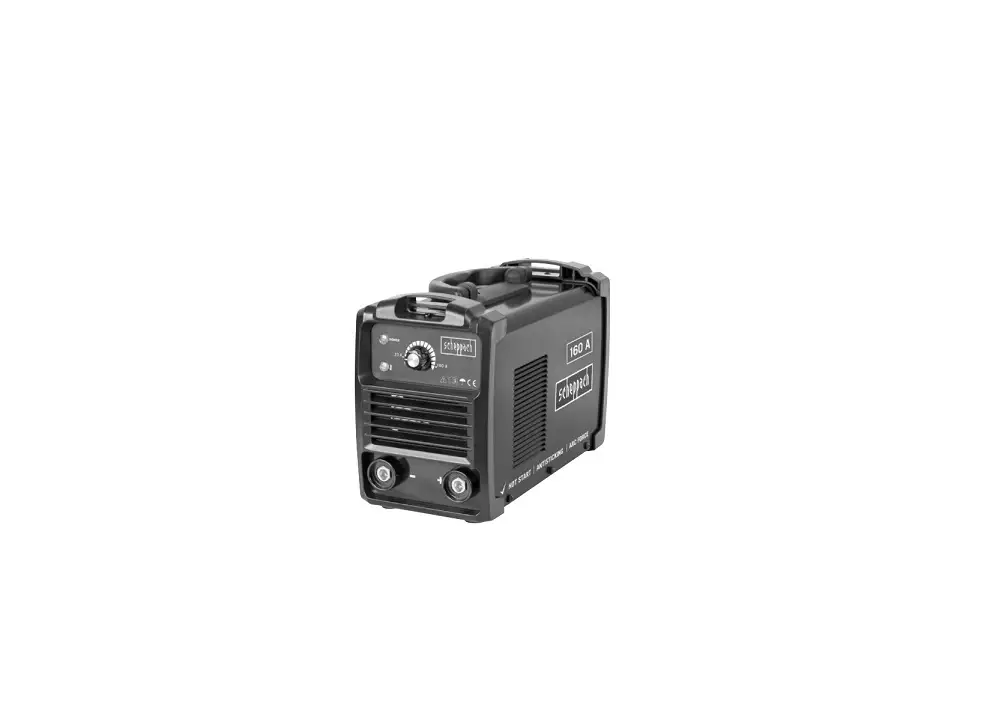
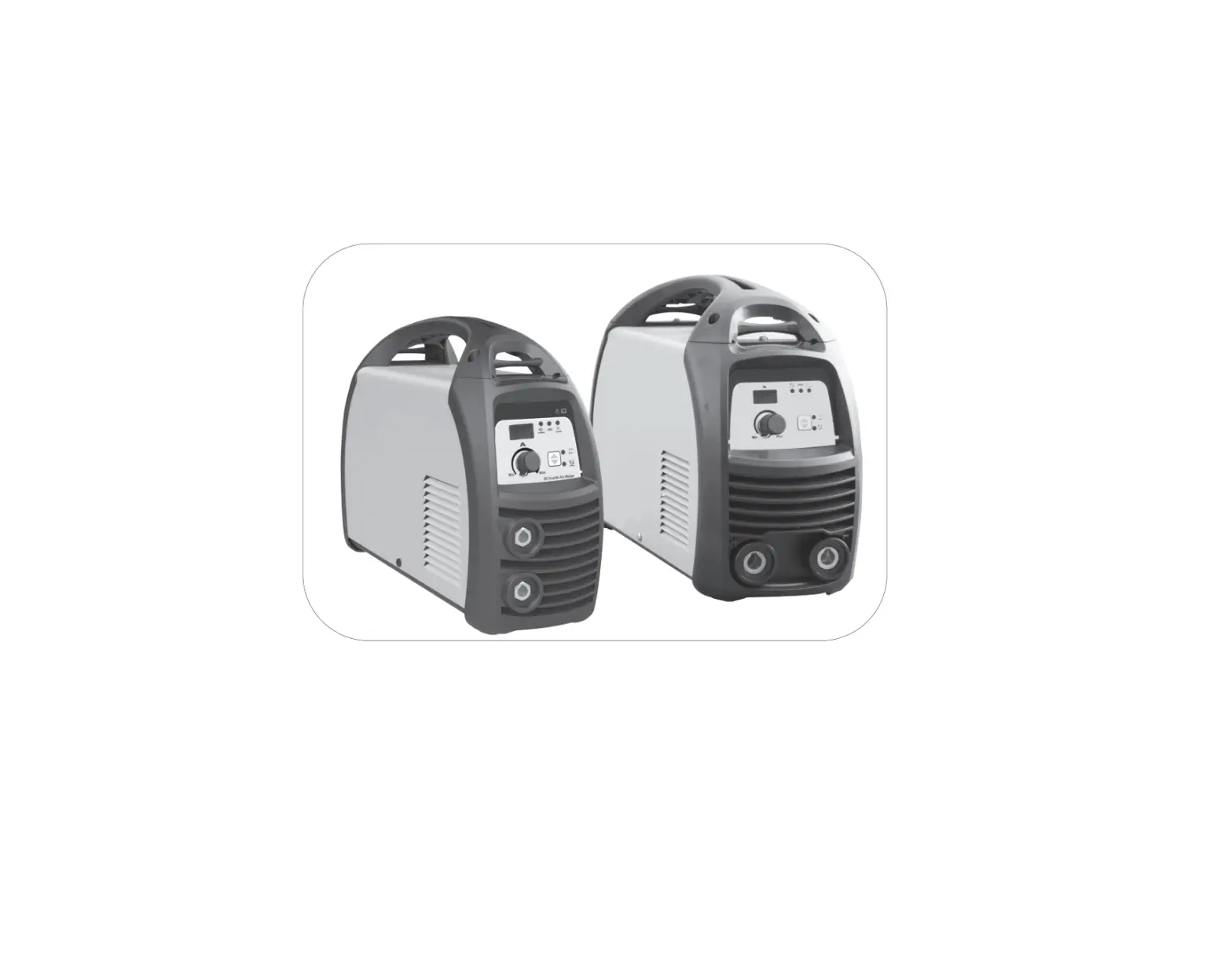
SOIN-130P Inverter Welder
Product Information
The Inverter Welder, Model 27225 SOIN-130P, is a power tool
designed for welding applications. It operates on a power input of
127 V~ and 50 Hz / 60 Hz frequency. The welder has a current rated
input capacity of 37 A and a power factor of 0.73. The maximum
no-load voltage is 69 V~. The current range for welding is 20 A to
130 A. The welder has a rated duty cycle of 40%, which means it can
work continuously for 4 minutes and then requires a rest of 6
minutes. The tool is suitable for working with electrodes of
dimensions 3/32, 1/8, 5/32, and 3/32. It has insulation conductors
of Class I and an IP21S protection grade against solid foreign
objects.
Product Usage Instructions
Before using the Inverter Welder, it is important to read the
manual thoroughly and follow the safety instructions provided. Here
are some key points to keep in mind:
- Ensure the tool is connected to an independent charging center
using a 10 AWG (5.26 mm2) extension cord. - During operation, if the welder overheats, it will
automatically turn off and a LED light will turn on. In such cases,
allow the welder to cool down for 15 minutes before turning it back
on. - Perform periodic maintenance on the machine as specified in the
manual. - Avoid exposing the tool to rain, liquids, or dampness to
prevent damage and ensure safety. - If the power cable gets damaged, it should only be replaced by
the manufacturer or at an Authorized Service Center to avoid the
risk of electric shock or severe injury. - Before gaining access to the terminals, always disconnect all
power sources to reduce the risk of electric shock. - The build quality of the electric insulation can be compromised
if spills or liquid enter the tool while in use. Avoid exposing the
tool to any liquids during operation. - Ensure proper grounding by connecting the plug into a power
outlet installed and grounded according to local codes. - Do not modify the plug supplied with the tool. If the plug does
not fit the socket, have a qualified electrician install a suitable
socket.
Following these instructions will help you use the Inverter
Welder safely and ensure its optimal performance and longevity.
INGLÉS
ESPAÑOL
Manual
Inverter Welder
Applies for: Code Model 27225 SOIN-130P
40%
Work Cycle
CAUTION
Read this manual thoroughly before using the tool.
Technical specifications
3
Power Requirements
3
General Power Tools Safety Warnings
4
Safety Warnings for Inverter Welders
5
Parts
6
Installation (SMAW)
7
Installation (TIG)
8
Start Up
9
Maintenance
11
Troubleshooting
11
Notes
12
Authorized Service Centers
13
Warranty Policy
14
Contents
CAUTION
To gain the best performance of the tool, prolong the duty life,
make the Warranty valid if necessary, and to avoid hazards of fatal injuries please read and understand this Manual before
using the tool.
Keep this manual for future references. The illustrations in this manual are for reference only. They might be different from the real tool.
Use and care recommendations
The tool has a THERMAL PROTECTOR that in case of overheating turns the welder off and a LED light turns on. If this happens, let the welder cool for 15 minutes and turn it back on. It is recommended to use a 10 AWG (5.26 mm2) extension cord and connect it to an INDEPENDENT CHARGING CENTER. Perform periodic MAINTENANCE to your machine. (Page 11)
2 ENGLISH
Technical specifications
Código Descripción Input Voltage
Current Rated Input Capacity
Power Factor Max No Load Voltage
Current Range Rated Duty Cycle
Electrode Dimension Insulation Conductors
SOIN-130P 27225
Inverter Welder
127 V~ / 50 Hz / 60 Hz
37 A
4.7 kVA
Cos 0.73
69 V~
20 A – 130 A
40% 4 minutes’ work per 6 minutes’ rest.
This duty cycle is for use at a temperature of 20 ºC (68 °F), for higher temperatures the working time must be reduced
3/32″ – 1/8″ – 5/32″ – 3/32″
11.4″ x 4.3″ x 9″
Class I
IP Grade
IP21S
12 AWG x 3C with 221 °F insulation temperature
Power cord grips: Type “Y”. Build quality: Basic insulation. Thermal insulation on motor winding: Class H
WARNING Avoid the risk of electric shock or severe injury. When the power cable gets damaged
it should only be replaced by the manufacturer or at a
Authorized Service Center.
The build quality of the electric insulation is altered if spills or liquid gets into the tool while in use.
Do not expose to rain, liquids and/or dampness.
WARNING Before gaining access to the terminals all power sources should be disconnected.
Power Requirements
WARNING If faults or breakdowns happen. Ground connection offers a trajectory with minimum resistance for electric power. It reduces the risk of electric shock. This tool is built with a power cable with an earth conductor and a plug with ground connection. The plug shall be connected into a power outlet installed and grounded according to all local codes.
WARNING Do not modify the plug supplied. If the plug cannot be fitted to the socket, have a qualified electrician to install the suitable socket.
· When using the welder together with more tools using the same ground connect those in parallel, never connect a series.
CAUTION · The gauge of the ground conductor cable shall not be of a smaller gauge than the power supply cable. CAUTION · Connection to the power supply shall only be carried out by a professional electrician. CAUTION · Double check the input connection voltage stipulated in the welder nameplate matches the power supply voltage. CAUTION · The power supply cord shall meet the following requisites:
Switch Fuse (Work Rated Current) Electric Wire
30 A 30 A (*) 2.5 mm2
* The current for fuse fusion is double of its rated current.
· If extensions between the welder and the work piece are needed, the soldering cable gauge shall be increased to keep the welder energy output with a potential drop not higher than 4 V
ENGLISH 3
General Power Tools Safety Warnings
WARNING! Read carefully all safety warnings and instructions listed below. Failure to comply with any of these warnings may result in electric shock, fire and / or severe damage. Save all warnings and instructions for future references.
Work area Keep your work area clean, and well lit. Cluttered and dark areas may cause accidents.
Never use the tool in explosive atmospheres, such as in the presence of flammable liquids, gases or dust. Sparks generated by power tools may ignite the flammable material.
Keep children and bystanders at a safe distance while operating the tool. Distractions may cause loosing control.
Electrical Safety The tool plug must match the power outlet. Never modify the plug in any way. Do not use any adapter plugs with grounded power tools. Modified plugs and different power outlets increase the risk of electric shock.
Avoid body contact with grounded surfaces, such as pipes, radiators, electric ranges and refrigerators. The risk of electric shock increases if your body is grounded.
Do not expose the tool to rain or wet conditions. Water entering into the tool increases the risk of electric shock.
Do not overreach. Keep proper footing and balance at all times. This enables a better control on the tool during unexpected situations.
Dress properly. Do not wear loose clothing or jewelry. Keep hair, clothes and gloves away from the moving parts. Loose clothes or long hair may get caught in moving parts.
If you have dust extraction and recollection devices connected onto the tool, inspect their connections and use them correctly. Using these devices reduce dust-related risks.
Power Tools Use and Care Do not force the tool. Use the adequate tool for your application. The correct tool delivers a better and safer job at the rate for which it was designed.
Do not use the tool if the switch is not working properly. Any power tool that cannot be turned ON or OFF is dangerous and should be repaired before operating.
Disconnect the tool from the power source and / or battery before making any adjustments, changing accessories or storing. These measures reduce the risk of accidentally starting the tool.
Do not force the cord. Never use the cord to carry, lift or unplug the tool. Keep the cord away from heat, oil, sharp edges or moving parts. Damaged or entangled cords increase the risk of electric shock.
Store tools out of the reach of children. Do not allow persons that are not familiar with the tool or its instructions to operate the tool. Power tools are dangerous in the hands of untrained users.
When operating a tool outdoors, use an extension cord suitable for outdoor use. Using an adequate outdoor extension cord reduces the risk of electric shock.
If operating the tool in a damp location cannot be avoided, use a ground fault circuit interrupter (GFCI) protected supply. Using a GFCI reduces the risk of electric shock.
Personal safety Stay alert, watch what you are doing and use common sense when operating a tool. Do not use a power tool while you are tired or under the influence of drugs, alcohol or medication. A moment of distraction while operating the tool may result in personal injury.
Use personal protective equipment. Always wear eye protection. Protective equipment such as safety glasses, anti-dust mask, non-skid shoes, hard hats and hearing protection used in the right conditions significantly reduce personal injury.
Service the tool. Check the mobile parts are not misaligned or stuck. There should not be broken parts or other conditions that may affect its operation. Repair any damage before using the tool. Most accidents are caused due to poor maintenance to the tools.
Keep the cutting accessories sharp and clean. Cutting accessories in good working conditions are less likely to bind and are easier to control.
Use the tool, components and accessories in accordance with these instructions and the projected way to use it for the type of tool when in adequate working conditions. Using the tool for applications different from those it was designed for, could result in a hazardous situation.
Service
Repair the tool in a
Authorized Service Center
using only identical spare parts.
This will ensure that the safety of the power tool is maintained.
Prevent unintentional starting up. Ensure the switch is in the “OFF” position before connecting into the power source and / or battery as well as when carrying the tool. Transporting power tools with the finger on the switch or connecting power tools with the switch in the “ON” position may cause accidents.
Remove any wrench or vice before turning the power tool on. Wrenches or vices left attached to rotating parts of the tool may result in personal injury.
This tool is in compliance with the Official Mexican Standard (NOM – Norma Oficial Mexicana).
4 ENGLISH
Safety Warnings for Inverter Welders
Protection Equipment for Welding
WARNING · Wear a welding mask to protect eyes and face when soldering. Assure the mask protective glass shade is adequate for the soldering process to carry out.
CAUTION · Wear leather gloves specially made for welding as well as leather dungarees and gaiter. · Wear robust clothing and long sleeves made of fire-resistant materials such as wool or leather. · Use special screens or curtains to insulate the work place from passersby, to protect them from sparks, flares and slag originated by the soldering process. · Benches and work tables where work pieces shall rest, must have orifices or slots that can easily let through residues originated by the soldering process.
Prevent Electric Shock
CAUTION · Verify there is a safe connection for the input and output cables. They shall be correctly insulated and the connections in good repair (check and eliminate any possibility of electric shock).
CAUTION · Double check the welder is plugged to a reliable ground connection.
CAUTION · Do not expose the welder to rain or humidity. CAUTION · The user shall be insulated from the work piece and ground connection stepping onto insulating and dry mats. DANGER · For any reason touch the two poles in the welder circuit (welding stick and work piece). WARNING · Do not try to adjust the welder current when carrying out a soldering job. CAUTION · Connect the ground clamp to the work piece as close as possible to the welding zone. This prevents the current to flow long distances and eliminate the possibility of short circuit. WARNING · The work piece shall make contact with the ground connection clamp before operating the welder. Do not disconnect until finishing welding because it can lead to an electric discharge and severe injury. WARNING · Disconnect the welder from the power supply before carrying any maintenance jobs.
Fire Prevention
CAUTION · Have always handy a fire extinguisher in good conditions.
WARNING · There shall not be flammable or explosive materials in the work area (no less than 36′). Do not carry out soldering jobs where the sparks can reach or fall onto flammable or explosive materials.
Prevent Health Risks
WARNING · Vapor and gases produced while soldering is dangerous to your health. Work in well ventilated areas or with adequate ventilation systems.
WARNING · Do not breath in smokes and gasses emanated from the soldering process. Keep your head away from vapors.
DANGER · If ventilation is poor use an adequate autonomous breathing device because the gases generated when soldering may displace air and cause a fatal accident.
CAUTION · Do not operate the welder near de-greasing agents, cleaning products or aerosol containers. Heat and radiation from the welding process may react to those vapors forming toxic gases.
CAUTION · Avoid soldering metals covered in lead, zinc or cadmium. Those materials generate toxic gases. Otherwise, remove the covering from the welding area. Make sure the work area is well ventilated or wear an adequate autonomous breathing device.
Prevent Injuries and Accidents
WARNING · Risks of electric shock:
An electric shock coming from the soldering electrode may
cause death. Do not weld under rain or snow. Do not touch the
electrode with your bare hands. Do not wear damp or damaged
gloves. Personal protection against electric shock: insulation from the
work piece. Do not open the equipment enclosure. Do not weld on
top of drums or any closed container.
WARNING · Soldering sparks may cause explosion
or fire.
WARNING · Risks generated by the welding arc:
Radiation coming out from the arc my burn eyes and damage skin.
Wear face mask and protection glasses. Wear hearing
protection and protective clothes that protect skin up to
the neck. Wear full-body protective clothes.
WARNING · Risk induced by electro-magnetic fields:
Welding current produces electro-magnetic fields. Do not
use this power source if having a medical implant. Never roll up the
welding cable around your body. Set together and parallel both
welding cables so the fields of each cable counteract.
WARNING · Do not use the welder power source to de-ice pipes.
CAUTION · Never allow unexperienced people to dismount or
regulate the welder.
WARNING · Double check that the operator and the welder
are away from the sparks and residues trajectory originated by the
soldering process.
· The welder shall be operated in a place protected from sun and
rain. Away from places where violent vibrations are present.
· Store the welder in a place free of humidity with a range of
temperature from -13 °F to 131 °F
· There shall be a 11.8″ space around the welding machine to allow
good ventilation.
CAUTION · Double check no foreign metal piece is inside the
welder.
WARNING · Any problem with the welder that cannot be fixed
by the operator making the adjustments needed for a good welding
job shall be carry out in a
Authorized Service
Center. For any reason try to open the welder housing to carry out
any type of maintenance.
Use of Compressed Gas Cylinders
WARNING · Compressed gas cylinders are widely used in many welding processes. If not stored, handled, inspected and used adequately compressed gas cylinders may be fatal. Can explode or turn into missiles, drawing such force they can even break brick walls.
CAUTION · Inspect the cylinders. Look for external corrosion, indentation, lumps, holes of wells. If in doubt about any imperfection observed is acceptable for those guidelines, stop using the cylinder. Consult the gas safety page before using it.
CAUTION · Many compressed gases not only represent a physical hazard but also dangerous to your health. Be sure you learn the danger to your health and how to be protected. Always follow the use and handling caution measures provided in the safety page.
CAUTION · Never set the cylinders next to heat or flame or where they can be part of an electric circuit. Do not use them as a source of ground during the electric welding process.
WARNING · Wear safety glasses and a protective mask when connecting and disconnecting regulators and lines to the cylinder.
CAUTION · Close the cylinder valve to release pressure before removing the regulator and when not in use. Cylinders shall be stored with a visible identification and with the protection valve cap fitted.
ENGLISH 5
Hammer-Brush for Slag Removal
VRD Security System
Welding Process Selector (SMAW or TIG)
Positive Connection ( + )
Welding Process Indicator Lights ON Lights
Parts
Carrying Handle
Current Control
Negative Connection ( – )
Grounding Clamp to the Work Piece
Power Cord
Switch
Protective Mask
6 ENGLISH
Electrode Holder
Ventilation Slots
TIG soldering torch AN-SI-12/16/20 (not included)
To get better results use a
Brand
cable set with soldering clamp CAB-200 and
TIG soldering torch AN-SI-12/16/20
Installation (SMAW)
Connections
CAUTION To prevent an electric shock, the user must
see the information in “Power Requirements” in page 3 and 5.
· The fast connections of the electrode holder and the ground
clamp are inserted and turned one quarter of a turn in a
clockwise direction in the outlets set in the front panel to
secure perfectly.
· Press the process selector to
set the welder working in
SMAW mode (coated
electrode).
NOTE The upper LED in the selector will light on.
ELECTRODO
Reverse Polarity (A) · Connect the grounding clamp cable to the negative (-)
output clamping screw of the welder. · Connect the grounding clamp (C) to the work piece. · Connect the electrode holder cable to the positive (+)
output clamping screw of the welder.
This configuration generates more heat in the electrode,
which produce more penetration with basic electrodes,
making it ideal to weld thick pieces.
Direct Polarity (B) · Connect the grounding clamp cable to the positive (+)
output. · Connect the grounding clamp (C) to the work piece. · Connect the electrode holder cable to the negative (-) output.
This configuration generates more heat in the work piece, thus
producing less malformation in the work piece and narrower joints
making it ideal for thin pieces.
· Connect the power cable (D) to the power network to the work voltage (127 V ).
Reverse Polarity A
C
Direct Polarity
C
B
Set the electrode
that is adequate
for the job into the electrode holder
D
C
Metal Work Table
ENGLISH 7
Installation (TIG)
TIG Connection
· This inverter welder can also be used for TIG welding, a high-quality welding process with non-consumable tungsten electrodes and arch protected with inert gas like argon gas o helium. · TIG welding is ideal to weld stainless steel, iron and copper. · With this process, a AN-SI-12/16/20 torch and a can of protective gas are required (not included). · Press the lower arrow in the process selector to set the welder into the TIG mode. (Tungsten electrode).
NOTE The LED facing down will turn ON.
TIG
D
· The connection shall be set in direct polarity:
· Connect the clamp cable to ground the positive outlet
terminal (+) of the welder and the grounding clamp to
the work piece.
· Connect the torch cable (A) to the negative outlet
terminal (-) of the welder.
· Connect the torch gas input (B) to the output
valve of the regulator (C) of the protection gas.
· Turn torch valve (D) to open gas flow. Turn
C
the knob (E) of the regulator to adjust the
E
gas flow until obtaining an approximate flow in L / min of 6 times the diameter
B
of the electrode.
A
· To start the arch, set the nozzle making an angle onto the
work piece (1).
· Lift the torch, not separating it from the work piece to
approach the electrode to the work piece (2).
· When starting the electric arc, lift the torch so that the
electrode tip is 0.08″ away from the work piece (3) and start
welding.
· It is advisable to keep the
electrode 90° vertical during the
1
2
3
welding to guarantee the protection
of the gas.
8 ENGLISH
Start Up
Preparation
· Only through experience, practice and care a good welding process can be guaranteed. · The factors arousing in the welding process are many: current required, distance between the electrode and the work piece, speed and direction of the welding, thickness and type of material, position of the work piece and welding direction, and also, the gauge, material and covering of the electrode. Thus, it is advisable that before carrying out a weld, try to practice in scrap material to determine which are the specific requirements for the job ahead. · The area in the work pieces where the weld is to be applied shall be clean, free of oxidation and paint. · The joints between sheets with calibers larger than 1/8″ shall be beveled so the weld will be adequate (A).
A
VRD security system
· Activate the VRD (Voltage Reduction Device) system by pressing the button (F) to reduce voltage during the bait phase to prevent possible discharge to the operator. · It is recommended to activate it in risky situations, such as when welding in confined spaces, wet environments, working in heights and in mining industry. · When the VRD system is activated it is necessary to force contact between the electrode and the workpiece for up to two seconds to generate the arc and start welding.
VRD
F
45°
45°
60°
60° 45°
60°
Welding
· Set the switch (B) in the ON position I. · Adjust the current control adjustment (C) until reaching the adequate arch current and intensity suitable for the job. Current is indicated in the panel screen (D). · Hold the electrode holder or torch in the most comfortable position possible. Be aware that during the welding process, the angle, movement and distance with regards to the work piece shall be constant and uniform. · Aim the electrode tip towards the joint to be welded to generate the electric arch and be able to start welding. · Once the arch is ON start welding, keeping always the electrode tip 0,08″ away from the work piece. If welding with the electrode onto the work piece, it could stick and the weld would have a poor quality. · In the event of overheating, the welder will stop working and the two thermal protection indicating lights (E) will be ON. Do not turn OFF the welder. Wait for the indicator lights turns OFF to use it again.
E
D
B
C
Slag Removal
· Upon finishing the welding job, use a wire brush to remove slag from the welding joint surface.
CAUTION · Wait until the slag has cooled down and hardened to be able to remove it. · When hitting or brushing slag to remove it, there can be particles shooting out. Wear eye protection and keep bystanders away.
Electrode Replacement
SMAW: · When the electrode has burned 0.4″ to 0.7″ from the electrode holder, replace wit with a new one to be able to keep on welding.
CAUTION · The electrode burns in high temperatures. Do not try to handle the electrode remains with your hand. Put the remains in a metal container. · Open the electrode holder tong to hold the uncovered end of the new electrode. Do not hold the electrode in the covered part.
TIG: · Tungsten electrodes shall be sharpened to guarantee the weld quality in a longitudinal direction. · The tungsten electrode tip gets deformed due to the heat. Therefore, when the tip is not showing an angle, it is recommended to sharpen it again.
Welding Current (A) 20
20 – 100 100 – 200
Electrode Angle 30º
60º – 90º 90º – 120º
ENGLISH 9
Examples of welding
Start Up
Electrode
Correctly Applied Welding
Electrode movement too fast and / or very low current.
Electrode movement too slow and / or very high current.
Thin Sheets
Spiral movement.
Electrode too separated from the work piece.
Bevel Angle welding of thin sheets to thick sheets.
Half-Moon movement.
Thick Sheets
Zigzag Movement.
Angle welding of thick sheets.
10 ENGLISH
Overlapped Joint.
Spot Weld.
Maintenance
· The correct use and regular cleansing extend the useful life of the welder. CAUTION · Only qualified personnel shall carry out repairs. We recommend visiting a
Authorized Service Center to repair your welder, get supplies or accessories.
Regular Maintenance
· Clean dust from the welder with compressed air. If there is too much dust present, clean immediately. Under normal conditions clean once a year. If the welder is exposed to a lot of dust, cleaning should be carried out every three months. · Altogether with cleaning make a checkup to assure there are no loose parts or components in the welder. · Keep the welder wiring in good repair. · The plug shall be checked before each use.
Storage
· In the event the welder will be stored a long period of time, keep it in a dry, well ventilated place to prevent humidity getting inside, or to generate rust or toxic gas. Storage temperature vary between -13 °F to 131 °F and relative humidity shall not be over 90%.
Troubleshooting
Problem
Cause
Solution
The thermal protection · The welder has no adequate ventilation. · Keep the welder least 11.8″ away from any walls at to
light is ON.
allow air circulation.
· Environment temperature is too high. · The welder will recuperate once the temperature gets
back to the right range to operate.
· The welder has been used longer than the · The welder will recuperate once the temperature gets
recommended work cycle.
back to the right range to operate.
The current adjusting · The potentiometer is broken. control is not working.
· Go to a
Authorized Service Center
to replace the potentiometer.
The fan is not working · Faulty switch. or turns very slowly.
· Faulty fan.
· Fault in the connections.
· Go to a to replace the switch. · Go to a to repair the fan. · Check all the connections.
Authorized Service Center Authorized Service Center
There is no open circuit voltage.
· High Voltage, low voltage or one phase is missing. · The welder is overheating. · Faulty switch.
· The welder will recuperate once the temperature is
back into the adequate range to operate.
· Go to a
Authorized Service Center
to replace the switch.
The electrode holder is · The electrode capacity is too low. too hot; connections + · The cable gauge is too small. and – are hot.
· Loose connections. · More resistance between the electrode holder and the cable.
· Replace the electrode holder with another one with more capacity. · Replace the cable with another one within the requirements (see page 3). · Clean the rust accumulation and tighten the connections. · Clean the rust accumulation and tighten the connections.
Energy source is off. · The welder is hover-heated.
· There is no fault. It is normal that power supply gets cut when the welder goes above its normal working temperature. Wait until the temperature is back to the adequate working range to turn it on again.
Big splash.
· The connection of Output is wrong.
· Exchange the Output line.
If after all the recommended actions have been carried out the problems persist,
contact a
Authorized Service Center.
ENGLISH 11
Notes
12 ENGLISH
Authorized Service Centers
In the event of any problem contacting a Truper Authorized Service Center, please see our webpage www.truper.com to get an updated list, or call our toll-free numbers 800 690-6990 or 800 0187-8737 to get information about the nearest Service Center.
AGUASCALIENTES DE TODO PARA LA CONSTRUCCIÓN GRAL. BARRAGÁN #1201, COL. GREMIAL, C.P. 20030, AGUASCALIENTES, AGS. TEL.: 449 994 0537
BAJA SUCURSAL TIJUANA CALIFORNIA AV. LA ENCANTADA, LOTE #5, PARQUE INDUSTRIAL EL
FLORIDO II, C.P 22244, TIJUANA, B.C. TEL.: 664 969 5100 BAJA FIX FERRETERÍAS CALIFORNIA SUR FELIPE ÁNGELES ESQ. RUIZ CORTÍNEZ S/N, COL. PUEBLO NUEVO, C.P. 23670, CD. CONSTITUCIÓN, B.C.S. TEL.: 613 132 1115 CAMPECHE TORNILLERÍA Y FERRETERÍA AAA AV. ÁLVARO OBREGÓN #324, COL. ESPERANZA C.P. 24080 CAMPECHE, CAMP. TEL.: 981 815 2808 CHIAPAS FIX FERRETERÍAS AV. CENTRAL SUR #27, COL. CENTRO, C.P. 30700, TAPACHULA, CHIS. TEL.: 962 118 4083 CHIHUAHUA SUCURSAL CHIHUAHUA AV. SILVESTRE TERRAZAS #128-11, PARQUE INDUSTRIAL BAFAR, CARRETERA MÉXICO CUAUHTÉMOC, C.P. 31415, CHIHUAHUA, CHIH. TEL. 614 434 0052 CIUDAD DE FIX FERRETERÍAS MÉXICO EL MONSTRUO DE CORREGIDORA, CORREGIDORA # 22, COL. CENTRO, C.P. 06060, CUAUHTÉMOC, CDMX. TEL: 55 5522 5031 / 5522 4861 COAHUILA SUCURSAL TORREÓN CALLE METAL MECÁNICA #280, PARQUE INDUSTRIAL ORIENTE, C.P. 27278, TORREÓN, COAH. TEL.: 871 209 68 23 COLIMA BOMBAS Y MOTORES BYMTESA DE MANZANILLO BLVD. MIGUEL DE LA MADRID #190, COL. 16 DE SEPTIEMBRE, C.P. 28239, MANZANILLO, COL. TEL.: 314 332 1986 / 332 8013 DURANGO TORNILLOS ÁGUILA, S.A. DE C.V. MAZURIO #200, COL. LUIS ECHEVERRÍA, DURANGO, DGO.TEL.: 618 817 1946 / 618 818 2844 ESTADO DE SUCURSAL CENTRO JILOTEPEC MÉXICO PARQUE INDUSTRIAL # 1, COL. PARQUE INDUSTRIAL JILOTEPEC, JILOTEPEC, EDO. DE MÉX. C.P. 54257 TEL: 761 782 9101 EXT. 5728 Y 5102 GUANAJUATO CÍA. FERRETERA NUEVO MUNDO S.A. DE C.V. AV. MÉXICO – JAPÓN #225, CD. INDUSTRIAL, C.P. 38010, CELAYA, GTO. TEL.: 461 617 7578 / 79 / 80 / 88 GUERRERO CENTRO DE SERVICIO ECLIPSE CALLE PRINCIPAL MZ.1 LT. 1, COL. SANTA FE, C.P. 39010, CHILPANCINGO, GRO. TEL.: 747 478 5793 HIDALGO FERREPRECIOS S.A. DE C.V. LIBERTAD ORIENTE #304 LOCAL 30, INTERIOR DE PASAJE ROBLEDO, COL. CENTRO, C.P. 43600, TULANCINGO, HGO. TEL.: 775 753 6615 / 775 753 6616 JALISCO SUCURSAL GUADALAJARA AV. ADOLFO B. HORN # 6800, COL: SANTA CRUZ DEL VALLE, C.P.: 45655, TLAJOMULCO DE ZUÑIGA, JAL. TEL.: 33 3606 5285 AL 90 MICHOACÁN FIX FERRETERÍAS AV. PASEO DE LA REPÚBLICA #3140-A, COL. EX-HACIENDA DE LA HUERTA, C.P. 58050, MORELIA, MICH. TEL.: 443 334 6858
MORELOS FIX FERRETERÍAS CAPITÁN ANZURES #95, ESQ. JOSÉ PERDIZ, COL. CENTRO, C.P. 62740, CUAUTLA, MOR. TEL.: 735 352 8931
NAYARIT HERRAMIENTAS DE TEPIC MAZATLAN #117, COL. CENTRO, C.P. 63000, TEPIC, NAY. TEL.: 311 258 0540
NUEVO LEÓN SUCURSAL MONTERREY CARRETERA LAREDO #300, 1B MONTERREY PARKS, COLONIA PUERTA DE ANÁHUAC, C.P. 66052, ESCOBEDO, NUEVO LEÓN, TEL.: 81 8352 8791 / 81 8352 8790
OAXACA FIX FERRETERÍAS AV. 20 DE NOVIEMBRE #910, COL. CENTRO, C.P. 68300, TUXTEPEC, OAX. TEL.: 287 106 3092
PUEBLA SUCURSAL PUEBLA AV PERIFÉRICO #2-A, SAN LORENZO ALMECATLA, C.P. 72710, CUAUTLACINGO, PUE. TEL.: 222 282 8282 / 84 / 85 / 86
QUERÉTARO ARU HERRAMIENTAS S.A DE C.V. AV. PUERTO DE VERACRUZ #110, COL. RANCHO DE ENMEDIO, C.P. 76842, SAN JUAN DEL RÍO, QRO. TEL.: 427 268 4544
QUINTANA ROO FIX FERRETERÍAS CARRETERA FEDERAL MZ. 46 LT. 3 LOCAL 2, COL EJIDAL, C.P. 77710 PLAYA DEL CARMEN, Q.R. TEL.: 984 267 3140
SAN LUIS FIX FERRETERÍAS POTOSÍ AV. UNIVERSIDAD #1850, COL. EL PASEO, C.P. 78320, SAN LUIS POTOSÍ, S.L.P. TEL.: 444 822 4341
SINALOA SUCURSAL CULIACÁN AV. JESÚS KUMATE SUR #4301, COL. HACIENDA DE LA MORA, C.P. 80143, CULIACÁN, SIN. TEL.: 667 173 9139 / 173 8400
SONORA FIX FERRETERÍAS CALLE 5 DE FEBRERO #517, SUR LT. 25 MZ. 10, COL. CENTRO, C.P. 85000, CD. OBREGÓN, SON. TEL.: 644 413 2392
TABASCO SUCURSAL VILLAHERMOSA CALLE HELIO LOTES 1, 2 Y 3 MZ. #1, COL. INDUSTRIAL, 2A ETAPA, C.P. 86010, VILLAHERMOSA, TAB. TEL.: 993 353 7244
TAMAULIPAS VM ORINGS Y REFACCIONES CALLE ROSITA #527 ENTRE 20 DE NOVIEMBRE Y GRAL. RODRÍGUEZ, FRACC. REYNOSA, C.P. 88780, REYNOSA, TAMS. TEL.: 899 926 7552
TLAXCALA SERVICIOS Y HERRAMIENTAS INDUSTRIALES PABLO SIDAR #132, COL . BARRIO DE SAN BARTOLOMÉ, C.P. 90970, SAN PABLO DEL MONTE, TLAX. TEL.: 222 271 7502
VERACRUZ LA CASA DISTRIBUIDORA TRUPER BLVD. PRIMAVERA. ESQ. HORTENSIA S/N, COL. PRIMAVERA C.P. 93308, POZA RICA, VER. TEL.: 782 823 8100 / 826 8484
YUCATÁN SUCURSAL MÉRIDA CALLE 33 #600 Y 602, LOCALIDAD ITZINCAB Y MULSAY, MPIO. UMÁN, C.P. 97390, MÉRIDA, YUC. TEL.: 999 912 2451
ENGLISH 13
Warranty policy
Code 27225
Model SOIN-130P
Brand
This product is guaranteed for 1 year. To make the warranty valid or purchase parts and components you must present the product in Corregidora 22, Col. Centro, Alc. Cuauhtémoc, CDMX C.P. 06060 or at the establishment where you purchased it, or at any Truper® Service Center listed in the annex to the warranty policy and/or in www.truper.com . Transportation costs resulting from compliance of this warranty will be covered by For questions or comments, call 800-690-6990. Made in China. Imported by Truper S.A. de C.V. Parque Industrial 1, Parque Industrial Jilotepec, Jilotepec, Edo. de Méx. C.P. 54257
1
YEAR
Stamp of the business. Date of purchase:
14 ENGLISH
www.truper.com 01-2022
Póliza de Garantía
Código 27225
Modelo SOIN-130P
Marca
Este producto está garantizado por 1 año. Para hacer válida la garantía o adquirir piezas y componentes deberá presentar el producto en Corregidora 22, Col. Centro, Alc. Cuauhtémoc, CDMX C.P. 06060 o en el establecimiento donde lo compró, o en algún Centro de Servicio Truper® de los enlistados en el anexo de la póliza de garantía y/o en www.truper.com . Los gastos de transportación que resulten para su cumplimiento serán cubiertos por Para dudas o comentarios, llame al 800-690-6990. Hecho en China. Importado por Truper S.A. de C.V. Parque Industrial 1, Parque Industrial Jilotepec, Jilotepec, Edo. de Méx. C.P. 54257
1
AÑO
Sello del establecimiento comercial. Fecha de compra:
14 ESPAÑOL
www.truper.com 01-2022
Centros de Servicio Autorizados
En caso de tener algún problema para contactar un Centro de Servicio Autorizado Truper® consulte nuestra página www.truper.com donde obtendrá un listado actualizado, o llame al: 800 690-6990 ó 800 0187-8737 donde le informarán cuál es el Centro de Servicio más cercano.
AGUASCALIENTES DE TODO PARA LA CONSTRUCCIÓN GRAL. BARRAGÁN #1201, COL. GREMIAL, C.P. 20030, AGUASCALIENTES, AGS. TEL.: 449 994 0537
BAJA SUCURSAL TIJUANA CALIFORNIA AV. LA ENCANTADA, LOTE #5, PARQUE INDUSTRIAL EL
FLORIDO II, C.P 22244, TIJUANA, B.C. TEL.: 664 969 5100 BAJA FIX FERRETERÍAS CALIFORNIA SUR FELIPE ÁNGELES ESQ. RUIZ CORTÍNEZ S/N, COL. PUEBLO NUEVO, C.P. 23670, CD. CONSTITUCIÓN, B.C.S. TEL.: 613 132 1115 CAMPECHE TORNILLERÍA Y FERRETERÍA AAA AV. ÁLVARO OBREGÓN #324, COL. ESPERANZA C.P. 24080 CAMPECHE, CAMP. TEL.: 981 815 2808 CHIAPAS FIX FERRETERÍAS AV. CENTRAL SUR #27, COL. CENTRO, C.P. 30700, TAPACHULA, CHIS. TEL.: 962 118 4083 CHIHUAHUA SUCURSAL CHIHUAHUA AV. SILVESTRE TERRAZAS #128-11, PARQUE INDUSTRIAL BAFAR, CARRETERA MÉXICO CUAUHTÉMOC, C.P. 31415, CHIHUAHUA, CHIH. TEL. 614 434 0052 CIUDAD DE FIX FERRETERÍAS MÉXICO EL MONSTRUO DE CORREGIDORA, CORREGIDORA # 22, COL. CENTRO, C.P. 06060, CUAUHTÉMOC, CDMX. TEL: 55 5522 5031 / 5522 4861 COAHUILA SUCURSAL TORREÓN CALLE METAL MECÁNICA #280, PARQUE INDUSTRIAL ORIENTE, C.P. 27278, TORREÓN, COAH. TEL.: 871 209 68 23 COLIMA BOMBAS Y MOTORES BYMTESA DE MANZANILLO BLVD. MIGUEL DE LA MADRID #190, COL. 16 DE SEPTIEMBRE, C.P. 28239, MANZANILLO, COL. TEL.: 314 332 1986 / 332 8013 DURANGO TORNILLOS ÁGUILA, S.A. DE C.V. MAZURIO #200, COL. LUIS ECHEVERRÍA, DURANGO, DGO.TEL.: 618 817 1946 / 618 818 2844 ESTADO DE SUCURSAL CENTRO JILOTEPEC MÉXICO PARQUE INDUSTRIAL # 1, COL. PARQUE INDUSTRIAL JILOTEPEC, JILOTEPEC, EDO. DE MÉX. C.P. 54257 TEL: 761 782 9101 EXT. 5728 Y 5102 GUANAJUATO CÍA. FERRETERA NUEVO MUNDO S.A. DE C.V. AV. MÉXICO – JAPÓN #225, CD. INDUSTRIAL, C.P. 38010, CELAYA, GTO. TEL.: 461 617 7578 / 79 / 80 / 88 GUERRERO CENTRO DE SERVICIO ECLIPSE CALLE PRINCIPAL MZ.1 LT. 1, COL. SANTA FE, C.P. 39010, CHILPANCINGO, GRO. TEL.: 747 478 5793 HIDALGO FERREPRECIOS S.A. DE C.V. LIBERTAD ORIENTE #304 LOCAL 30, INTERIOR DE PASAJE ROBLEDO, COL. CENTRO, C.P. 43600, TULANCINGO, HGO. TEL.: 775 753 6615 / 775 753 6616 JALISCO SUCURSAL GUADALAJARA AV. ADOLFO B. HORN # 6800, COL: SANTA CRUZ DEL VALLE, C.P.: 45655, TLAJOMULCO DE ZUÑIGA, JAL. TEL.: 33 3606 5285 AL 90 MICHOACÁN FIX FERRETERÍAS AV. PASEO DE LA REPÚBLICA #3140-A, COL. EX-HACIENDA DE LA HUERTA, C.P. 58050, MORELIA, MICH. TEL.: 443 334 6858
MORELOS FIX FERRETERÍAS CAPITÁN ANZURES #95, ESQ. JOSÉ PERDIZ, COL. CENTRO, C.P. 62740, CUAUTLA, MOR. TEL.: 735 352 8931
NAYARIT HERRAMIENTAS DE TEPIC MAZATLAN #117, COL. CENTRO, C.P. 63000, TEPIC, NAY. TEL.: 311 258 0540
NUEVO LEÓN SUCURSAL MONTERREY CARRETERA LAREDO #300, 1B MONTERREY PARKS, COLONIA PUERTA DE ANÁHUAC, C.P. 66052, ESCOBEDO, NUEVO LEÓN, TEL.: 81 8352 8791 / 81 8352 8790
OAXACA FIX FERRETERÍAS AV. 20 DE NOVIEMBRE #910, COL. CENTRO, C.P. 68300, TUXTEPEC, OAX. TEL.: 287 106 3092
PUEBLA SUCURSAL PUEBLA AV PERIFÉRICO #2-A, SAN LORENZO ALMECATLA, C.P. 72710, CUAUTLACINGO, PUE. TEL.: 222 282 8282 / 84 / 85 / 86
QUERÉTARO ARU HERRAMIENTAS S.A DE C.V. AV. PUERTO DE VERACRUZ #110, COL. RANCHO DE ENMEDIO, C.P. 76842, SAN JUAN DEL RÍO, QRO. TEL.: 427 268 4544
QUINTANA ROO FIX FERRETERÍAS CARRETERA FEDERAL MZ. 46 LT. 3 LOCAL 2, COL EJIDAL, C.P. 77710 PLAYA DEL CARMEN, Q.R. TEL.: 984 267 3140
SAN LUIS FIX FERRETERÍAS POTOSÍ AV. UNIVERSIDAD #1850, COL. EL PASEO, C.P. 78320, SAN LUIS POTOSÍ, S.L.P. TEL.: 444 822 4341
SINALOA SUCURSAL CULIACÁN AV. JESÚS KUMATE SUR #4301, COL. HACIENDA DE LA MORA, C.P. 80143, CULIACÁN, SIN. TEL.: 667 173 9139 / 173 8400
SONORA FIX FERRETERÍAS CALLE 5 DE FEBRERO #517, SUR LT. 25 MZ. 10, COL. CENTRO, C.P. 85000, CD. OBREGÓN, SON. TEL.: 644 413 2392
TABASCO SUCURSAL VILLAHERMOSA CALLE HELIO LOTES 1, 2 Y 3 MZ. #1, COL. INDUSTRIAL, 2A ETAPA, C.P. 86010, VILLAHERMOSA, TAB. TEL.: 993 353 7244
TAMAULIPAS VM ORINGS Y REFACCIONES CALLE ROSITA #527 ENTRE 20 DE NOVIEMBRE Y GRAL. RODRÍGUEZ, FRACC. REYNOSA, C.P. 88780, REYNOSA, TAMS. TEL.: 899 926 7552
TLAXCALA SERVICIOS Y HERRAMIENTAS INDUSTRIALES PABLO SIDAR #132, COL . BARRIO DE SAN BARTOLOMÉ, C.P. 90970, SAN PABLO DEL MONTE, TLAX. TEL.: 222 271 7502
VERACRUZ LA CASA DISTRIBUIDORA TRUPER BLVD. PRIMAVERA. ESQ. HORTENSIA S/N, COL. PRIMAVERA C.P. 93308, POZA RICA, VER. TEL.: 782 823 8100 / 826 8484
YUCATÁN SUCURSAL MÉRIDA CALLE 33 #600 Y 602, LOCALIDAD ITZINCAB Y MULSAY, MPIO. UMÁN, C.P. 97390, MÉRIDA, YUC. TEL.: 999 912 2451
ESPAÑOL 13
Notas
12 ESPAÑOL
Mantenimiento
· El uso correcto y una limpieza regular prolongan la vida útil de la soldadora.
ATENCIÓN · Sólo personal calificado debe hacer las reparaciones. Se recomienda visitar un Centro de Servicio
Autorizado
para reparar la soldadora, adquirir suministros o accesorios.
Mantenimiento regular
· Se debe limpiar el polvo de la soldadora con aire comprimido. En caso haber mucho polvo, se debe limpiar de inmediato. Bajo condiciones normales se requiere limpieza una vez al año, en caso de que la soldadora esté expuesta a mucho polvo, la limpieza debe realizarse cada tres meses. · Junto con la limpieza se debe realizar una revisión para asegurar que no haya partes o componentes sueltos en la soldadora. · Mantenga los cables de la soldadora en buen estado. · Las terminales deben revisarse antes de cada uso.
Almacenamiento
· En caso que la soldadora vaya a estar almacenada por un periodo largo de tiempo, se debe mantener en un sitio seco y bien ventilado para evitar que le entre humedad, se genere óxido o gases tóxicos. La temperatura de almacenaje varía de -25 °C a 55 °C, y la humedad relativa no debe ser superior a 90%.
Solución de problemas
Problema
La luz de protección térmica está encendida.
Causa
· La soldadora no cuenta con ventilación adecuada. · Temperatura ambiente muy alta.
· La soldadora se utilizó por más tiempo del recomendado en su ciclo de trabajo.
Solución
· Mantenga la soldadora apartada de cualquier pared al menos 30 cm para permitir que el aire circule. · La soldadora se recuperará una vez que la temperatura regresa al rango adecuado para operar. · La soldadora se recuperará una vez que la temperatura regresa al rango adecuado para operar.
El control de ajuste de · El potenciómetro está roto. corriente no funciona.
· Acuda a un Centro de Servicio Autorizado para reemplazar el potenciómetro.
El ventilador no funciona o gira muy lentamente.
· Interruptor descompuesto. · Ventilador descompuesto.
· Falla en las conexiones.
· Acuda a un Centro de Servicio Autorizado para remplazar el interruptor.
· Acuda a un Centro de Servicio Autorizado para reparar el ventilador.
· Revise las conexiones.
No hay tensión de circuito abierto.
· Tensión alta, tensión baja o falta una fase. · La soldadora se recuperará una vez que la temperatura
· La soldadora se está sobrecalentando. regresa al rango adecuado para operar.
· Interruptor descompuesto.
· Acuda a un Centro de Servicio Autorizado
para remplazar el interruptor.
El porta electrodo se · La capacidad del porta electrodo es · Reemplace el porta electrodo por otro de mayor capacidad.
calienta demasiado; muy baja.
las conexiones + y – se · La medida del cable es muy pequeña. · Reemplace el cable por otro dentro de los requerimientos
calientan.
· Conexiones flojas.
(consulte la página 3).
· Mayor resistencia entre el porta
· Limpie la acumulación de óxido y apriete las conexiones.
electrodo y el cable.
· Limpie la acumulación de óxido y apriete las conexiones.
La fuente de energía · La soldadora se ha sobrecalentado. se corta.
· No hay falla. Es normal que el suministro de energía se corte cuando la soldadora sobrepasa su temperatura normal de trabajo. Espere a que la temperatura regrese a al rango adecuado de trabajo para poder encenderla de nuevo.
Chorro grande
· La conexión de polaridad de salida no · Cambie la línea de salida. es correcta.
Si los problemas persisten a pesar de realizar las acciones correctivas recomendadas,
contacte a un Centro de Servicio Autorizado
.
ESPAÑOL 11
Ejemplos de soldadura
Puesta en marcha
Electrodo
Soldadura aplicada correctamente
Movimiento muy rápido del electrodo y/o
corriente muy baja. Movimiento muy lento del electrodo y/o corriente muy alta.
Láminas delgadas
Movimiento en espiral.
Electrodo muy separado de la pieza de trabajo.
Bisel Soldadura en ángulo de láminas delgada a gruesa.
Movimiento en media luna.
Láminas gruesas
Movimiento en zigzag.
Soldadura en ángulo de láminas gruesas.
10 ESPAÑOL
Unión traslapada.
Soldadura por puntos.
Puesta en marcha
Preparativos
· Sólo con experiencia, práctica y cuidado se puede garantizar un buen trabajo de soldadura. · Los factores que intervienen en el proceso de soldadura son muchos: corriente requerida, distancia entre el electrodo y la pieza de trabajo, velocidad y dirección de soldeo, grosor y tipo del material, posición de la pieza de trabajo, ángulo del electrodo y además el calibre, material y recubrimiento del electrodo. Por lo que es recomendable que antes de realizar una soldadura realice prácticas en material de desecho para determinar cuáles son los requerimientos específicos del trabajo a realizar. · El área de las piezas de trabajo donde será aplicada la soldadura debe de estar limpia, libre de óxido y pintura. · Las uniones entre láminas con calibres mayores de 1/8″ (3 mm) deben de ser biseladas para que la soldadura sea adecuada (A).
Sistema de seguridad VRD
· Active el sistema VRD (Voltage Reduction Device)
presionando el botón (F) para reducir la tensión durante la
fase de cebado y así evitar una posible descarga al
operador.
· Se recomienda activarlo en situaciones de riesgo, como
al realizar soldadura en espacios confinados, en ambientes
húmedos, trabajos en altura y en
la industria minera.
· Cuando el sistema VRD está
activado es necesario forzar el
contacto entre el electrodo y la
pieza de trabajo hasta por dos
segundos para generar el arco y
VRD
comenzar a soldar.
F
45°
A
45°
60°
60° 45°
60°
Soldadura
· Coloque el interruptor (B) en posición de encendido I. · Ajuste las perillas de control de corriente (C) hasta alcanzar la corriente e intensidad de arco adecuados para el trabajo. La corriente se indica en la pantalla del panel (D). · Sostenga el porta electrodo o antorcha de la manera más cómoda posible. Tome en cuenta que durante el proceso de soldado, el ángulo, movimiento y distancia con respecto a la pieza de trabajo deben de ser constantes y uniformes. · Dirija la punta del electrodo hacia la unión a trabajar para generar el arco eléctrico y comience a soldar. · Una vez que el arco encienda comience a soldar, manteniendo siempre la punta del electrodo a 2 mm de la pieza de trabajo. Si realiza la soldadura con el electrodo apoyado en la pieza de trabajo podría adherirse y la soldadura sería de mala calidad. · En caso de sobrecalentamiento la soldadora dejara de funcionar y las luces indicadoras de protección térmica (E) se encenderán, no apague la soldadora y espere a que las luces indicadoras se apaguen para volverla a utilizar.
E D
Retiro de escoria
· Al terminar el trabajo de soldado, utilice un cepillo de alambre para retirar la escoria de la superficie del cordón de soldado.
ATENCIÓN · Espere a que la escoria se haya enfriado y endurecido para poder retirarla. · Al golpear o cepillar la escoria para retirarla pueden salir partículas despedidas. Utilice protección para los ojos y mantenga a las personas alejadas.
Reemplazo de electrodo
SMAW: · Cuando el electrodo se ha consumido de 1 cm a 2 cm del porta electrodo, es necesario cambiarlo por uno nuevo para poder seguir soldando.
ATENCIÓN · El electrodo se quema a alta temperatura. No intente manipular los restos del electrodo con la mano. Ponga los restos en un contenedor de metal. · Abra la tenaza del porta electrodo para sostener el electrodo nuevo por el extremo sin recubrimiento. No sostenga el electrodo por la parte recubierta.
TIG: · Los electrodos de Tungsteno deben ser afilados para garantizar la calidad de la soldadura en su dirección longitudinal. · La punta del electrodo de Tungsteno tiende a deformarse debido al calentamiento, es por eso que una vez que la punta no presente el ángulo recomendado, debe afilarse nuevamente.
Corriente de soldadura (A) Ángulo de electrodo
B
C
20
30º
20 – 100
60º – 90º
100 – 200
90º – 120º
ESPAÑOL 9
Instalación (TIG)
Conexión TIG
· Esta soldadora inversora puede ser utilizada también para soldadura TIG: proceso de soldadura de muy alta calidad con electrodos de tungsteno no consumibles y arco protegido por gas inerte como argón o helio. · La soldadura TIG es ideal para soldar acero inoxidable, hierro y cobre. · Para este proceso se requiere una antorcha AN-SI-12/16/20 y un tanque o lata de gas de protección no incluidos. · Presione la flecha inferior del selector de proceso, para que la soldadora trabaje en modalidad TIG (Electrodo de tungsteno)
NOTA El led inferior del selector se encenderá.
TIG
D
· La conexión debe hacerse en polaridad directa:
· Conecte el cable de la pinza para aterrizar al borne de
salida positiva (+) de la soldadora, y la pinza para
aterrizar a la pieza de trabajo.
· Conecte el cable de la antorcha (A) al borne de
salida negativa (-) de la soldadora.
· Conecte la entrada de gas de la antorcha (B) a la
válvula de salida del regulador (C) del gas de
protección.
C
· Gire la válvula de la antorcha (D) para abrir el
E
paso del gas. Gire la perilla (E) del regulador para ajustar el flujo del gas hasta obtener un
B
flujo aproximado en L/min de 6 veces el
diámetro del electrodo.
A
· Para iniciar el arco apoye en ángulo la boquilla sobre la
pieza de trabajo (1).
· Levante la antorcha sin separar la boquilla de la pieza de
trabajo para acercar el electrodo a la pieza de trabajo (2).
· Cuando inicie el arco eléctrico levante la antorcha para
que la punta del electrodo quede a 2 mm de la pieza de
trabajo (3) y comience a soldar.
· Se recomienda mantener el
1
2
3
electrodo a 90° vertical durante el
soldeo para garantizar la protección
del gas.
8 ESPAÑOL
Instalación (SMAW)
Conexiones
ATENCIÓN Para evitar descargas eléctricas es necesario
consultar la información de la sección “Requerimientos
eléctricos” en las páginas 3 y 5.
· Las conexiones rápidas del porta electrodo y la pinza para
aterrizar se insertan y giran un cuarto de vuelta en sentido
horario en las salidas del pánel frontal para quedar bien
aseguradas.
· Presione el selector de proceso,
para que la soldadora trabaje en
modalidad SMAW (Electrodo
revestido).
NOTA El led superior del
selector se encenderá.
ELECTRODO
Polaridad inversa (A)
· Conecte el cable de la pinza para aterrizar al borne de salida negativa (-) de la soldadora. · Conecte la pinza para aterrizar (C) a la pieza de trabajo.
· Conecte el cable del porta electrodo al borne de salida positiva (+) de la soldadora.
Esta configuración genera más calor en el electrodo, lo que
produce mayor penetración con electrodos básicos, que la
hacen ideal para soldar piezas gruesas.
Polaridad directa (B) · Conecte el cable de la pinza para aterrizar a la salida positiva (+). · Conecte la pinza para aterrizar (C) a la pieza de trabajo. · Conecte el cable del porta electrodo a la salida negativa (-).
Esta configuración genera más calor en la pieza de trabajo, lo que
produce menor deformación de la pieza y cordones más
estrechos, que la hacen ideal para soldar piezas delgadas.
· Conecte el cable de alimentación (D) a la red de alimentación a la tensión de trabajo (127 V ).
Polaridad inversa A
C
Polaridad directa
C
B
Coloque un electrodo
C
adecuado para el trabajo en el porta electrodo.
D
Mesa de trabajo de metal
ESPAÑOL 7
Cepillo-martillo para retirar escoria
Partes
Luces indicadoras de proceso de soldadura
Mango de transporte
Luces indicadoras de protección térmica y VRD
Botón para activar el sistema de
seguridad VRD
Selector de proceso de soldadura (SMAW o TIG)
Conexión positiva ( + )
Control de corriente
Pinza para aterrizar la pieza de trabajo
Conexión negativa ( – )
Cable de alimentación
Interruptor
Porta electrodo
Careta protectora
6 ESPAÑOL
Para mejores resultados utilice Juego de cables con pinza para soldar CAB-200 y Antorcha para soldar TIG AN-SI-12/16/20 marca
Ranuras de ventilación Antorcha para soldadura TIG AN-SI-12/16/20 (no incluida)
Advertencias de Seguridad para uso de soldadoras inversoras
Equipo de protección para soldadura
ADVERTENCIA · Use careta para soldar para proteger sus ojos y su cara cuando trabaje con la soldadora. Asegúrese que el lente de sombra de la careta sea el adecuado para el proceso de soldadura a realizar.
ATENCIÓN · Utilice guantes de cuero especiales para soldar, así como petos y polainas de cuero. · Utilice ropa de confección robusta y manga larga, de materiales resistentes a la flama como lana o cuero. · Utilice biombos o cortinas especiales para aislar el lugar de trabajo del paso de transeúntes y protegerlos de las chispas, destellos y escorias originados por el proceso de soldadura. · Los bancos y mesas de trabajo donde descansen las piezas a trabajar deberán de contar con orificios o ranuras que dejen pasar con facilidad los residuos originados por el proceso de soldadura.
Para evitar descargas eléctricas
ATENCIÓN · Verifique que exista una conexión segura de los cables de entrada y salida, que estén correctamente aislados y con sus conexiones en buen estado (revise y elimine cualquier posibilidad de corto circuito).
ATENCIÓN · Confirme que la soldadora tenga una conexión a tierra confiable.
ATENCIÓN · No exponga la soldadora a la lluvia o condiciones de humedad.
ATENCIÓN · Manténgase aislado de la pieza de trabajo y tierra pisando tapetes aislantes y secos.
PELIGRO · Por ningún motivo toque los dos polos del circuito de la soldadora (varilla y pieza de trabajo).
ADVERTENCIA · No intente ajustar la corriente de la soldadora cuando esté realizando el trabajo de soldadura.
ATENCIÓN · Conecte la pinza de tierra a la pieza de trabajo lo más cerca posible de la zona de soldadura para evitar que la corriente fluya por grandes distancias y así eliminar la posibilidad de un corto circuito.
ADVERTENCIA · La pieza de trabajo debe hacer contacto con la pinza de conexión a tierra antes de operar la soldadora y no debe desconectarse hasta terminar de soldar, ya que puede recibir una descarga y lesiones de gravedad.
ADVERTENCIA · Desconecte la soldadora de la fuente de alimentación antes de darle mantenimiento.
Para evitar incendios
ATENCIÓN · Tenga siempre a mano un extintor en buenas condiciones.
ADVERTENCIA· No debe haber materiales inflamables o explosivos en el área de trabajo (a no menos de 11 metros). No realice trabajos de soldadura en lugares en donde las chispas puedan alcanzar o caer sobre material inflamable o explosivo.
ADVERTENCIA · Las chispas de soldadura pueden causar explosión o incendio.
Para evitar riesgos para la salud
ADVERTENCIA · Los vapores y gases producidos durante el trabajo de soldadura son peligrosos para la salud. Trabaje en sitios ventilados o con sistemas de ventilación adecuados.
ADVERTENCIA · No respire los humos y gases del proceso de soldadura, mantenga la cabeza alejada de las emanaciones.
PELIGRO · Si la ventilación es pobre utilice un respirador autónomo adecuado, ya que los gases de protección generados por la soldadura pueden desplazar el aire y causar un accidente fatal.
ATENCIÓN · No opere la soldadora cerca de desengrasantes, limpiadores o envases de aerosol, ya que el calor y radiación del proceso de soldadura pueden reaccionar con los vapores formando gases tóxicos.
ATENCIÓN · Evite realizar soldaduras en metales recubiertos con plomo, zinc o cadmio, ya que generan gases tóxicos. De lo contrario remueva el recubrimiento del área de soldadura, asegúrese de que el área esté bien ventilada o utilice un respirador autónomo adecuado.
Para evitar lesiones y accidentes
ADVERTENCIA · Riesgo de choque eléctrico:
Un choque eléctrico o proveniente del electrodo de
soldadura puede causar la muerte. No soldar en la lluvia o en la nieve. No
tocar el electrodo con las manos desnudas. No utilice guantes húmedos o
dañados. Protección de personas contre choque eléctrico: aislarse de la pieza
de trabajo. No abra el envolvente del equipo.
No soldar sobre tambos o cualquier contenedor cerrado.
ADVERTENCIA · Riesgo generado por el arco:
Las radiaciones de arco pueden quemar los ojos y dañar
la piel. Utilizar careta y gafas de protección. Utilizar protección
para los oídos y ropa de protección de manera que se proteja la piel hasta
la altura del cuello. Utilice protección completa del cuerpo.
ADVERTENCIA · Riesgo inducido por campos
electromagnéticos: La corriente de soldadura produce
campo electromagnético. No utilizar la fuente de poder con implantes
médicos. Nunca enrollar los cables de la soldadura alrededor del cuerpo.
Colocar juntos y paralelos los dos cables de soldadura de forma que los
campos de cada uno se contrarresten.
ADVERTENCIA · No utiliza la fuente de poder de soldadura para
descongelar tubería.
ATENCIÓN · Nunca permita que personas sin experiencia
desmonten o regulen el aparato de soldar.
ADVERTENCIA · Asegúrese que tanto el operador como la
soldadora estén fuera de la trayectoria de caída de las chispas y residuos
originados por el proceso de soldadura.
· La soldadora se debe operar en un sitio protegido del sol y la lluvia, alejada
de sitios donde haya vibraciones violentas.
· La soldadora se debe almacenar en un sitio sin humedad con un rango de
temperatura de -25 °C a 55 °C
ATENCIÓN · La base de la fuente de poder de soldadura debe estar
inclinada como máximo 10º para evitar volcaduras.
· Debe haber un espacio de 30 cm alrededor de la soldadora para que tenga
buena ventilación.
ADVERTENCIA · Rango de temperatura ambiente al realizar
trabajos de soldadura: -10 °C a 40 °C
ATENCIÓN · Asegúrese que ningún objeto extraño de metal esté
dentro de la soldadora.
ADVERTENCIA · Cualquier problema con la soldadora que no
pueda ser resuelto por el operador haciendo los debidos ajustes para un
buen proceso de soldadura deben de ser solucionados en un Centro de
Servicio Autorizado
, por ningún motivo intente abrir la
cubierta de la soldadora para realizar cualquier tipo de mantenimiento.
Uso de cilindros de gas comprimido
ADVERTENCIA · Los cilindros de gas comprimido son usados ampliamente en muchos procesos de soldadura. Si no se almacenan, manejan, inspeccionan y usan apropiadamente, los cilindros de gas comprimido pueden ser mortales. Pueden explotar o convertirse en misiles, emitiendo tal fuerza que pueden romper hasta paredes de ladrillo.
ATENCIÓN · Inspeccione los cilindros en busca de corrosión exterior, hendiduras, bultos, agujeros o pozos. Si no está seguro si alguna imperfección observada es aceptable bajo estos lineamientos, entonces, deje de usar el cilindro. Consulte la hoja de seguridad del gas antes de usarlo.
ATENCIÓN · Muchos gases comprimidos no solamente representan un peligro físico, sino también un peligro a la salud. Asegúrese de conocer los peligros a la salud y de cómo protegerse a sí mismo. Siempre siga las precauciones de uso y manejo provistas en el hoja de seguridad.
ATENCIÓN · Nunca coloque los cilindros a un lado de recursos de calor o cerca de flamas o puedan convertirse en parte de un circuito eléctrico o los use para hacer tierra durante el proceso de soldadura eléctrica.
ADVERTENCIA · Use lentes de seguridad y una máscara protectora cuando conecte y desconecte los reguladores y las líneas al cilindro.
ATENCIÓN · Cierre la válvula del cilindro para liberar la presión antes de remover el regulador del mismo y cuando el cilindro no se esté usando. Los cilindros deben ser almacenados con una visible identificación y con la tapa de la válvula de protección puesta.
ESPAÑOL 5
Advertencias generales de seguridad para herramientas eléctricas
¡ADVERTENCIA! Lea detenidamente todas las advertencias de seguridad y todas las instrucciones que se enlistan a continuación. La omisión de alguna de ellas puede dar como resultado un choque eléctrico, incendio y/o daño serio. Conserve las advertencias y las instrucciones para futuras referencias.
Área de trabajo Mantenga el área de trabajo limpia y bien iluminada. Las áreas desordenadas y obscuras son propensas a accidentes.
No maneje la herramienta en ambientes explosivos, como en presencia de líquido, gas o polvo inflamables. Las herramientas eléctricas producen chispas que pueden encender material inflamable.
Mantenga alejados a los niños y curiosos cuando opere la herramienta. Las distracciones pueden hacer que pierda el control.
Seguridad eléctrica La clavija de la herramienta debe coincidir con el tomacorriente. Nunca modifique una clavija. No use ningún tipo de adaptador para clavijas de herramientas puestas a tierra. Clavijas modificadas y enchufes diferentes aumentan el riesgo de choque eléctrico.
Evite el contacto del cuerpo con superficies puestas a tierra como tuberías, radiadores, cocinas eléctricas y refrigeradores. Hay un mayor riesgo de choque eléctrico si el cuerpo está puesto a tierra.
No exponga la herramienta a la lluvia o condiciones de humedad. El agua que ingresa en la herramienta aumenta el riesgo de choque eléctrico.
No fuerce el cable. Nunca use el cable para transportar, levantar o desconectar la herramienta. Mantenga el cable lejos del calor, aceite, orillas afiladas o piezas en movimiento. Los cables dañados o enredados aumentan el riesgo de choque eléctrico.
Cuando maneje una herramienta en exteriores, use una extensión especial para uso en exteriores. El uso de una extensión adecuada para exteriores reduce el riesgo de choque eléctrico.
Si el uso de la herramienta en un lugar húmedo es inevitable, use una alimentación protegida por un interruptor de circuito de falla a tierra (GFCI). El uso de un GFCI reduce el riesgo de choque eléctrico.
No sobrepase su campo de acción. Mantenga ambos pies bien asentados sobre el suelo y conserve el equilibrio en todo momento. Esto permite un mejor control de la herramienta en situaciones inesperadas.
Vista adecuadamente. No vista ropa suelta o joyas. Mantenga su pelo, su ropa y guantes alejados de las piezas en movimiento. La ropa o el pelo sueltos o las joyas pueden quedar atrapados en las piezas en movimiento.
En caso de contar con dispositivos de extracción y recolección de polvo conectados a la herramienta, verifique sus conexiones y úselos correctamente. El uso de estos dispositivos reduce los riesgos relacionados con el polvo.
Uso y cuidados de la herramienta No fuerce la herramienta. Use la herramienta adecuada para el trabajo a realizar. La herramienta adecuada hace un trabajo mejor y más seguro cuando se usa al ritmo para el que fue diseñada.
No use la herramienta si el interruptor no funciona. Cualquier herramienta eléctrica que no pueda encenderse o apagarse es peligrosa y debe repararse antes de ser operada.
Desconecte la herramienta de la fuente de alimentación y/o de la batería antes de efectuar cualquier ajuste, cambiar accesorios o almacenarla. Estas medidas reducen el riesgo de arrancar la herramienta accidentalmente.
Almacene las herramientas fuera del alcance de los niños y no permita su manejo por personas no familiarizadas con las herramientas o con las instrucciones. Las herramientas eléctricas son peligrosas en manos no entrenadas.
Déle mantenimiento a la herramienta. Compruebe que las partes móviles no estén desalineadas o trabadas, que no haya piezas rotas u otras condiciones que puedan afectar su operación. Repare cualquier daño antes de usar la herramienta. Muchos accidentes son causados por el escaso mantenimiento de las herramientas.
Seguridad personal Esté alerta, vigile lo que está haciendo y use el sentido común cuando maneje una herramienta. No la use si está cansado o bajo la influencia de drogas, alcohol o medicamentos. Un momento de distracción mientras maneja la herramienta puede causar un daño personal.
Use equipo de seguridad. Use siempre protección para los ojos. El uso de equipo de seguridad como lentes de seguridad, mascarilla antipolvo, zapatos antideslizantes, casco y protección para los oídos en condiciones apropiadas, reduce de manera significativa los daños personales.
Evite arranques accidentales. Asegúrese de que el interruptor está en posición “apagado” antes de conectar a la fuente de alimentación y/o a la batería o transportar la herramienta. Transportar herramientas eléctricas con el dedo sobre el interruptor o conectar herramientas eléctricas que tienen el interruptor en posición de “encendido” puede causar accidentes.
Retire cualquier llave o herramienta de ajuste antes de arrancar la herramienta eléctrica. Las llaves o herramientas que quedan en las partes rotativas de la herramienta pueden causar un daño personal.
Mantenga los accesorios de corte afilados y limpios. Los accesorios de corte en buenas condiciones son menos probables de trabarse y más fáciles de controlar. Use la herramienta, sus componentes y accesorios de acuerdo con estas instrucciones y de la manera prevista para el tipo de herramienta, en condiciones de trabajo adecuadas. El uso de la herramienta para aplicaciones diferentes para las que está diseñada podría causar una situación de peligro. Servicio Repare la herramienta en un Centro de Servicio Autorizado
usando sólo piezas de repuesto idénticas. Para mantener la seguridad de la herramienta.
Esta herramienta cumple con la Norma Oficial Mexicana (NOM).
4 ESPAÑOL
Especificaciones técnicas
Código Descripción Voltaje de entrada
Corriente Capacidad de entrada nominal
Factor de potencia Voltage máximo sin carga
Rango de corriente
SOIN-130P 27225
Soldadora inversora 127 V~ / 50 Hz / 60 Hz
37 A 4.7 kVA Cos 0.73 69 V~ 20 A – 130 A
Ciclo de trabajo nominal
40% 4 min de trabajo por 6 min de descanso.
Este ciclo de trabajo es para el uso a una temperatura de 20 ºC, para temperaturas mayores se debe reducir el tiempo de trabajo
Electrodo
2.5 mm – 3 mm – 4 mm – 2.5 mm
Medidas
29 cm x 11 cm x 23 cm
Aislamiento
Clase I
Grado IP
IP21S
Conductores
12 AWG x 3C con temperatura de aislamiento de 105 °C
El cable de alimentación tiene sujeta-cables tipo: Y La clase de construcción de la herramienta es: Aislamiento básico. La clase de aislamiento térmico de los devanados del motor: Clase H.
ADVERTENCIA Si el cable de alimentación se daña, éste debe ser reemplazado por el fabricante o Centro de
Servicio Autorizado
, con el fin de evitar algún riesgo de descarga o accidente considerable.
La construcción del aislamiento eléctrico de esta herramienta es alterado por salpicaduras o
derramamiento de líquidos durante su operación. No la exponga a la lluvia, líquidos y/o humedad.
ADVERTENCIA Antes de obtener acceso a las terminales, todos los circuitos de alimentación deben ser
desconectados.
Requerimientos eléctricos
ADVERTENCIA En el caso de fallas o averias, la conexión a tierra provee una trayectoria con resistencia mínima para la corriente eléctrica, lo que reduce el riesgo de sufrir una descarga eléctrica. Esta herramienta está equipada con un cable eléctrico que tiene un conductor a tierra y una clavija con conexión a tierra. La clavija debe estar conectada a una entrada que se encuentre instalada y aterrizada de acuerdo con todos los códigos locales.
ADVERTENCIA No modifique la clavija provista. Si la clavija no ajusta a la salida, adquiera la salida apropiada instalada por un electricista calificado.
ATENCIÓN
· Si utiliza la soldadora junto a más herramientas con la misma tierra conéctelas en paralelo, nunca en serie. ATENCIÓN · El calibre del cable conductor de tierra no puede ser de menor calibre que el cable de suministro eléctrico. ATENCIÓN · La conexión a la fuente de energía debe realizarse por un profesional en electricidad. ATENCIÓN · Confirme siempre que el voltaje de la conexión de entrada, estipulado en la placa de información de
la soldadora, coincida con el voltaje del suministro eléctrico. ATENCIÓN · El calibre del cable del suministro eléctrico debe cumplir con los siguientes requisitos:
Interruptor
30 A
Fusible (Corriente nominal de trabajo) Alambre eléctrico
320.5Am(*m) 2
* La corriente de fusión del fusible es el doble de su corriente nominal.
· En caso de requerir extensiones entre la soldadora y la pieza de trabajo se debe aumentar el calibre del cable de soldar para mantener la salida de energía de la soldadora con una caída potencial no mayor a 4 V
ESPAÑOL 3
Especificaciones técnicas
3
Requerimientos eléctricos
3
Advertencias generales de seguridad
para herramientas eléctricas
4
Advertencias de Seguridad para uso de
soldadoras inversoras
5
Partes
6
Instalación (SMAW)
7
Instalación (TIG)
8
Puesta en marcha
9
Mantenimiento
11
Solución de problemas
11
Notas
12
Centros de Servicio Autorizados
13
Póliza de Garantía
14
Índice
ATENCIÓN
Para poder sacar el máximo provecho de la herramienta, alargar su vida útil, hacer válida
la garantía en caso de ser necesario y evitar riesgos o lesiones graves, es fundamental
leer este instructivo por completo antes de usar la
herramienta.
Guarde este instructivo para futuras referencias.
Los gráficos de este instructivo son para referencia, pueden variar del aspecto real de la
herramienta.
Recomendaciones de uso y cuidados
La máquina cuenta con un PROTECTOR TÉRMICO que en caso de sobrecalentamiento apaga la soldadora y enciende la luz LED de protección térmica. Si esto sucede, deje enfriar la soldadora por 15 minutos y vuelva a encenderla. Se recomienda utilizar una extensión calibre 10 AWG (5.26 mm2) y conectar en un CENTRO DE CARGA INDEPENDIENTE Realice MANTENIMIENTO periódico a su máquina (página 11).
2 ESPAÑOL
ESPAÑOL
ENGLISH
Instructivo de
Soldadora inversora
Este instructivo es para: Código Modelo 27225 SOIN-130P
40%
Ciclo de trabajo
ATENCIÓN
Lea este instructivo por completo antes de usar la herramienta.
 Truper® - Es mucha herramienta