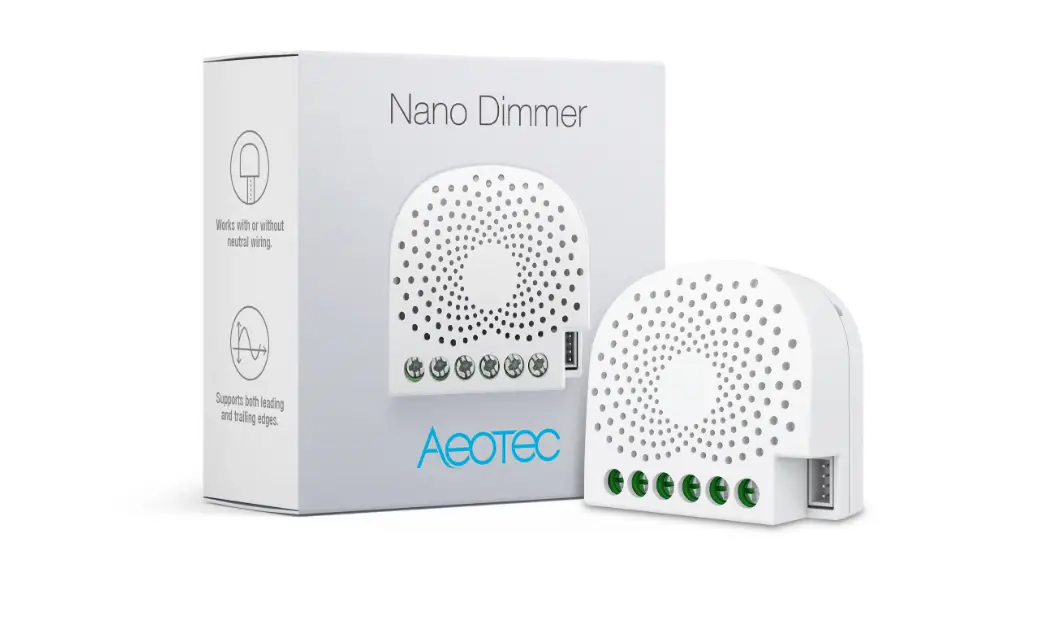
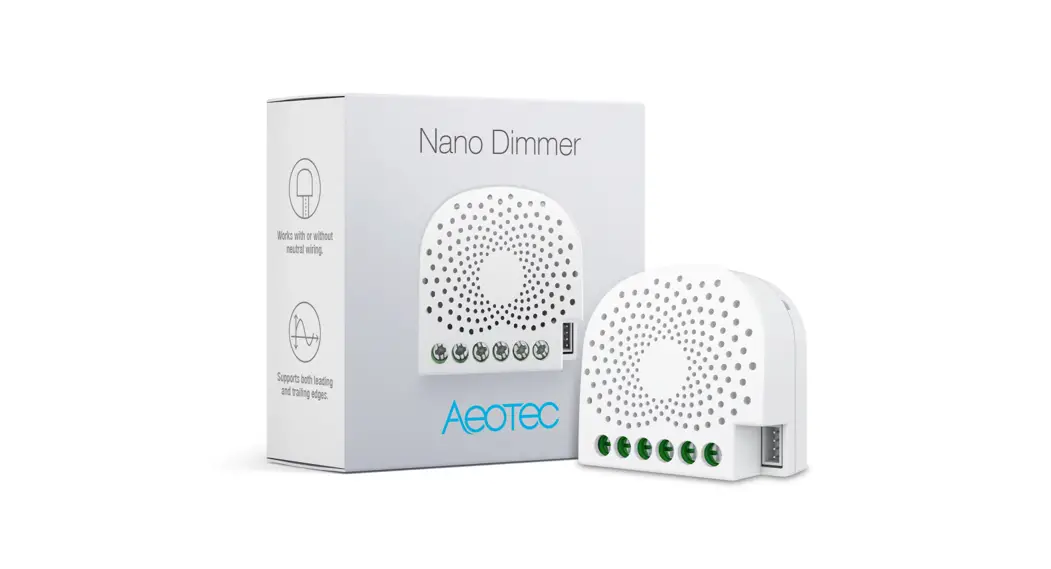
AEOEZW111 Secure Light Nano Dimmer
Product Information
- Product Name: Aeotec Nano Dimmer
- SKU: AEOEZW111
- Description: This is a secure Light Dimmer for Europe that uses
Z-Wave technology to ensure reliable communication.
Important Safety Information
- Please read the manual carefully before using the product.
- Failure to follow the recommendations in the manual may be
dangerous or may violate the law. - Use this equipment only for its intended purpose and follow the
disposal instructions. - Do not dispose of electronic equipment or batteries in a fire
or near open heat sources.
Product Usage Instructions
- Before installing the product, read the user manual
carefully. - In order to include (add) a Z-Wave device to a network, it must
be in factory default state. Reset the device to factory default by
performing an exclusion operation as described in the manual. It is
recommended to use the primary controller of the previous network
to ensure the device is excluded properly from that network. - To reset the device without any involvement of a Z-Wave
controller, press and hold the Action button on the product housing
for 20 seconds and then release. This procedure should only be used
when the primary controller is missing or inoperable. - Connect the device to your mains power supply.
- Turn the primary controller of your Z-Wave network into
inclusion mode. - Short press the Action button on the product housing to add it
to your network. The Action button can be found on the product
housing.
Note: Only authorized technicians under
consideration of the country-specific installation guidelines/norms
may do works with mains power. Prior to the assembly of the
product, the voltage network has to be switched off and ensured
against re-switching.
30-09-2020 12:35
Aeotec
Nano Dimmer
SKU: AEOEZW111
Quickstart
This is a secure Light Dimmer for Europe. To run this device please connect it to your mains power supply. Turn the primary controller of Z-Wave network into inclusion mode, short press the products Action button that you can find on the product”s housing.
Important safety information
Please read this manual carefully. Failure to follow the recommendations in this manual may be dangerous or may violate the law. The manufacturer, importer, distributor and seller shall not be liable for any loss or damage resulting from failure to comply with the instructions in this manual or any other material. Use this equipment only for its intended purpose. Follow the disposal instructions. Do not dispose of electronic equipment or batteries in a fire or near open heat sources.
What is Z-Wave?
Z-Wave is the international wireless protocol for communication in the Smart Home. This device is suited for use in the region mentioned in the Quickstart section.
Z-Wave ensures a reliable communication by reconfirming every message (two-way communication) and every mains powered node can act as a repeater for other nodes (meshed network) in case the receiver is not in direct wireless range of the transmitter.
This device and every other certified Z-Wave device can be used together with any other certified Z-Wave device regardless of brand and origin as long as both are suited for the same frequency range.
If a device supports secure communication it will communicate with other devices secure as long as this device provides the same or a higher level of security. Otherwise it will automatically turn into a lower level of security to maintain backward compatibility.
For more information about Z-Wave technology, devices, white papers etc. please refer to www.z-wave.info.
Product Description
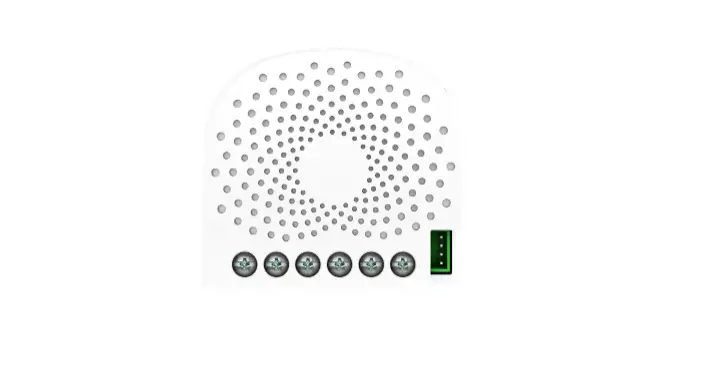
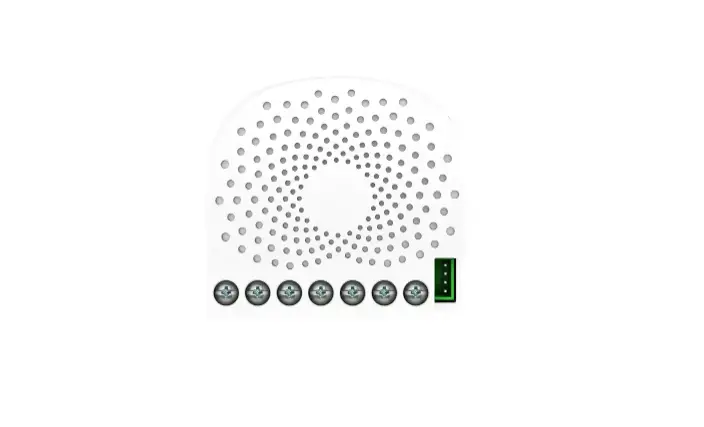
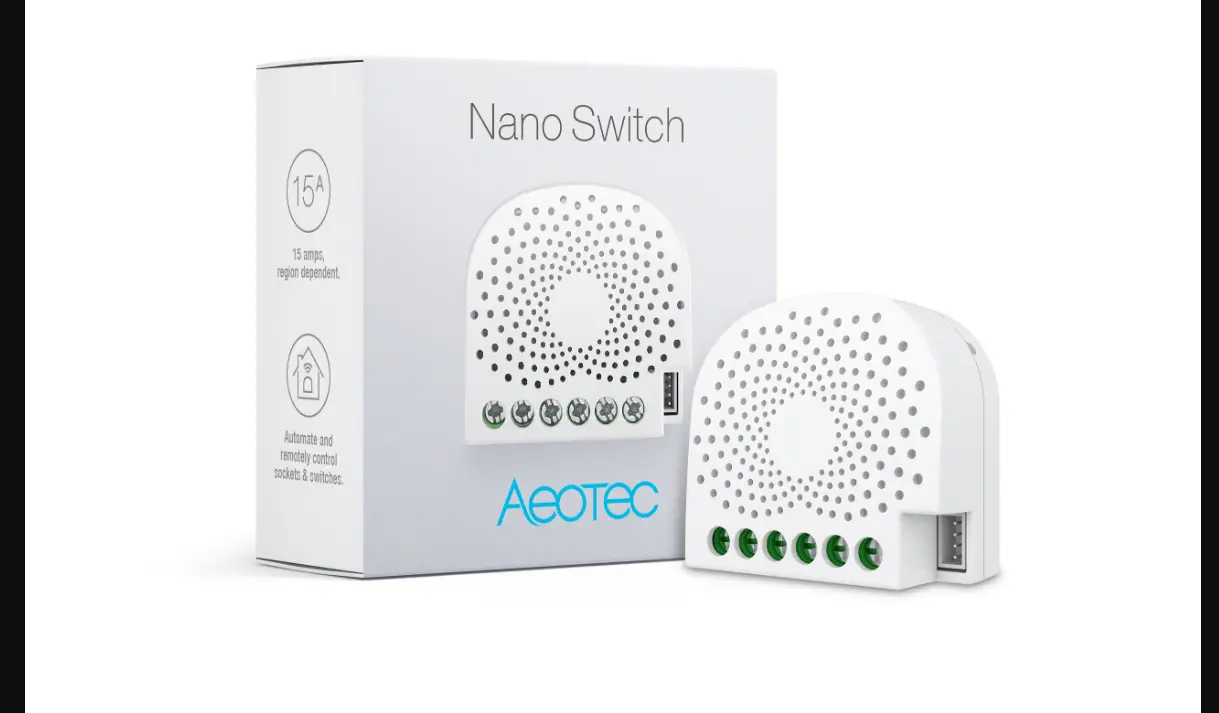
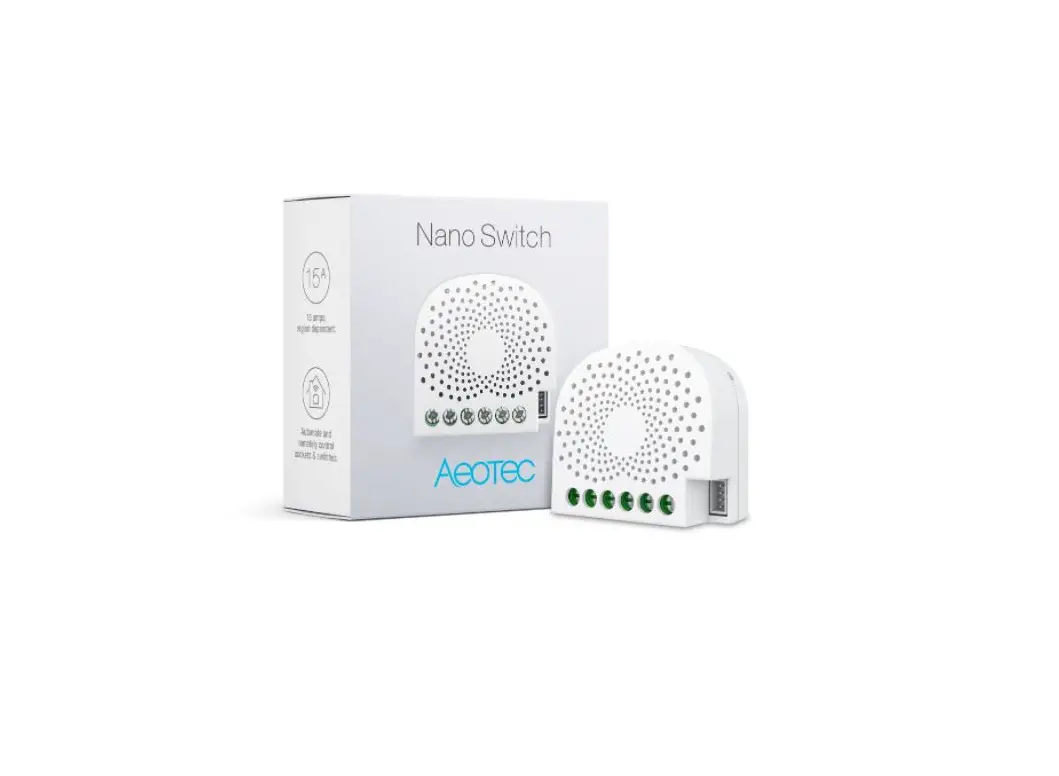
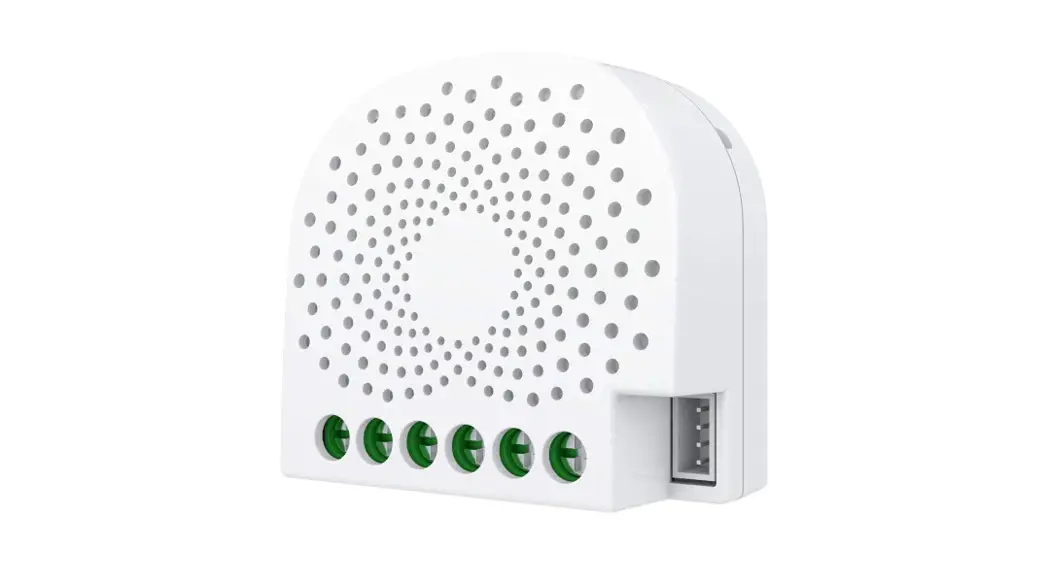
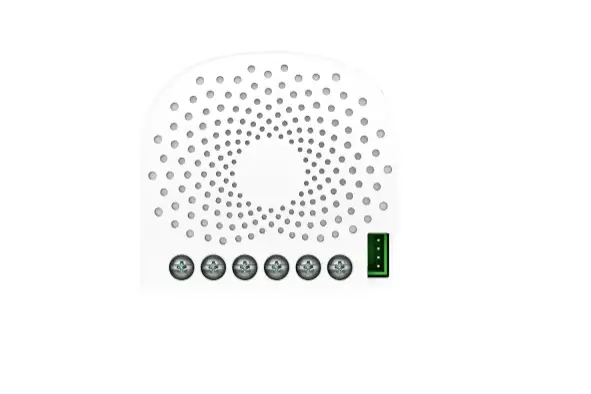
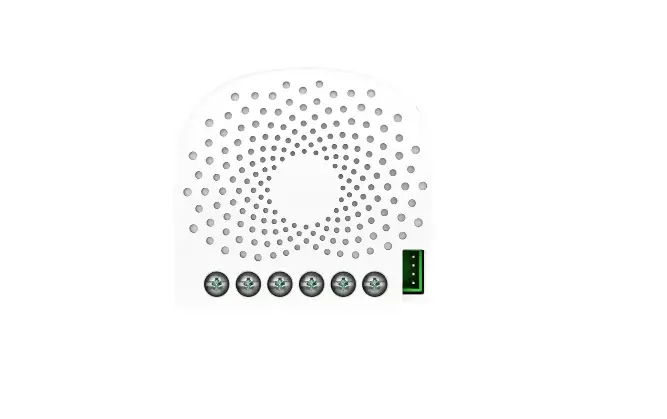
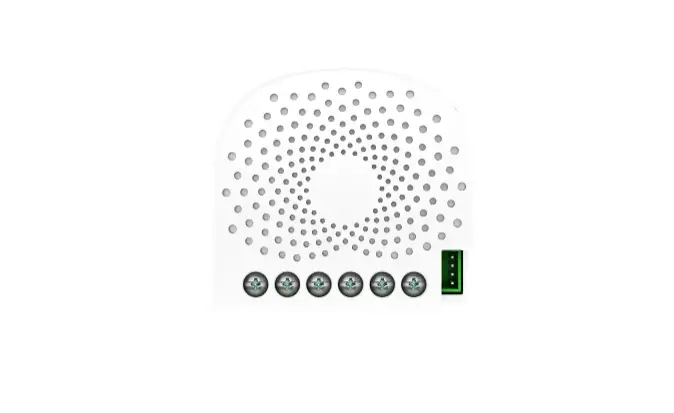
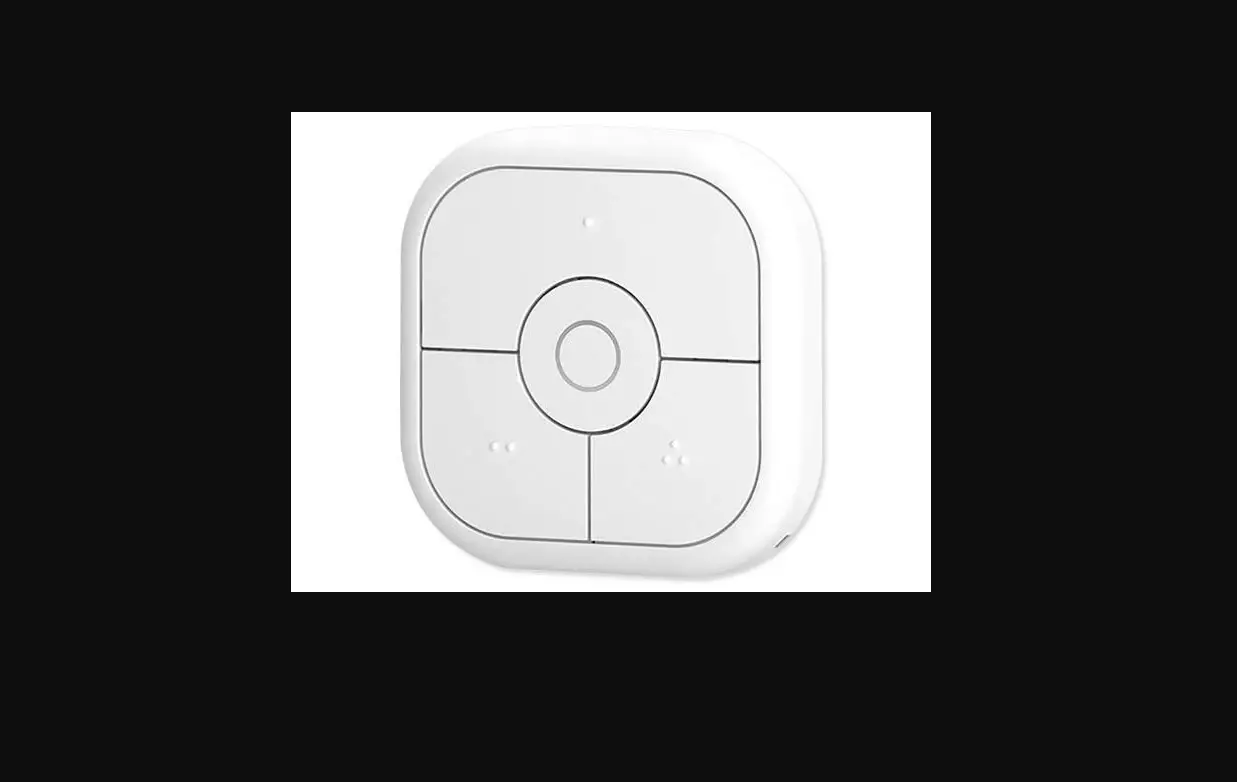
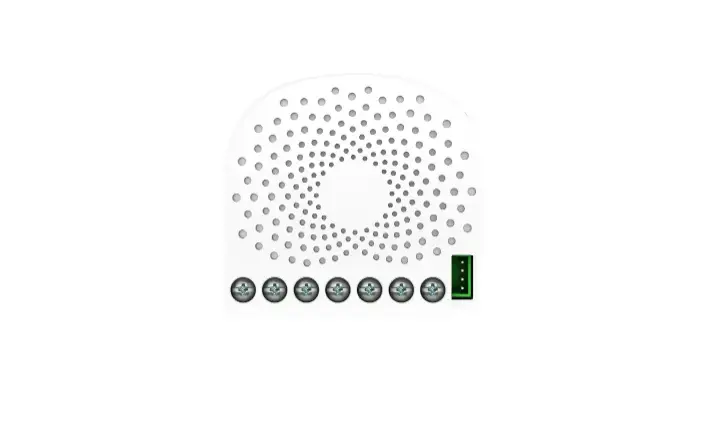
Aeotec Nano Dimmer is a Z-Wave Smart Dimmer specifically used to enable Z-Wave command and control (on/off/dim) of any wall switches. It can report immediate wattage consumption or kWh energy usage over a period of time. In the event of power failure, non-volatile memory retains all programmed information relating to the units operating status. It can connect to 2 external manual switches to control the load ON/OFF independently. Its surface has a pin socket, which can be used for connecting to the touch panel, so you can also use the touch panel to control the Nano Dimmer. The Nano Dimmer is also a security Z-Wave plus device and supports Over The Air (OTA) feature for the products firmware upgrade.
Prepare for Installation / Reset
Please read the user manual before installing the product.
In order to include (add) a Z-Wave device to a network it must be in factory default state. Please make sure to reset the device into factory default. You can do this by performing an Exclusion operation as described below in the manual. Every Z-Wave controller is able to perform this operation however it is recommended to use the primary controller of the previous network to make sure the very device is excluded properly from this network.
Reset to factory default
This device also allows to be reset without any involvement of a Z-Wave controller. This procedure should only be used when the primary controller is inoperable.
Press and hold the Action button that you can find on the product”s housing for 20 seconds and then release. This procedure should only be used when the primary controller is missing or inoperable.
Safety Warning for Mains Powered Devices
ATTENTION: only authorized technicians under consideration of the country-specific installation guidelines/norms may do works with mains power. Prior to the assembly of the product, the voltage network has to be switched off and ensured against re-switching.
Installation
1. Shut off the main circuit breaker of your home for safety during the installation and ensure the wires are not short circuited during the installation which will cause damage to the Nano Dimmer 2. Preparing connection wires 14 AWG or 12 AWG power wires for Input/Output. 18 AWG copper wires for external manual switch. Use the wire stripper cut the metallic part of the connection wire and make sure the length of the metallic part is about 5mm. Note: All connection wires need to be flexible cable
http://manual.zwave.eu/backend/make.php?lang=en&sku=AEOEZW111
Pagina 1 van 10
30-09-2020 12:35
You may need to connect a small power load (E.g. a LED light or a compact fluorescent lamp) to be controlled. In this case, the Nano Dimmer may not get enough power from the AC power supply, so a bypass can be added to act as a dummy load to keep your Nano Dimmer get enough power from the power supply. It can also keep your light from flickering when diming off the light.
The below diagram will show you that the Nano Dimmer uses the SPDT (Single-Pole Double-Throw) switches as the external manual switch.
http://manual.zwave.eu/backend/make.php?lang=en&sku=AEOEZW111
Pagina 2 van 10
30-09-2020 12:35
Since the S1 port and S2 port can be used to control the load separately, you can choose to connect the SPDT switches to the S1 or S2.
Inclusion/Exclusion
On factory default the device does not belong to any Z-Wave network. The device needs to be added to an existing wireless network to communicate with the devices of this network. This process is called Inclusion.
Devices can also be removed from a network. This process is called Exclusion. Both processes are initiated by the primary controller of the Z-Wave network. This controller is turned into exclusion respective inclusion mode. Inclusion and Exclusion is then performed doing a special manual action right on the device.
Inclusion
1. Install the device according to the instructions. 2. Press the button 2 times within 1 second on the Nano Dimmer.
Exclusion
1. Press the button once on the Nano Dimmer.
Quick trouble shooting
Here are a few hints for network installation if things dont work as expected.
1. Make sure a device is in factory reset state before including. In doubt exclude before include. 2. If inclusion still fails, check if both devices use the same frequency. 3. Remove all dead devices from associations. Otherwise you will see severe delays. 4. Never use sleeping battery devices without a central controller. 5. Dont poll FLIRS devices. 6. Make sure to have enough mains powered device to benefit from the meshing
Association – one device controls an other device
Z-Wave devices control other Z-Wave devices. The relationship between one device controlling another device is called association. In order to control a different device, the controlling device needs to maintain a list of devices that will receive controlling commands. These lists are called association groups and they are always related to certain events (e.g. button pressed, sensor triggers, …). In case the event happens all devices stored in the respective association group will receive the same wireless command wireless command, typically a ‘Basic Set’ Command.
Association Groups:
Group Number 1
Maximum Nodes
Description
5
Z-Wave Plus Lifeline.When the load state of Nano Dimmer (on/off/dim the load ) is changed, the Hail
CC, Switch Multilevel Report and Basic Report (configured by parameter 80) can be sent to the
associated nodes in this group.
2
5
Forward the Basic Set, Switch Binary Set, Switch Multilevel Start Level Change, Switch Multilevel Stop
Level Change, Switch Multilevel Set, Switch all to the associated nodes in Group 2 when the Nano
Dimmer receives the Basic Set, Switch Binary Set, Switch Multilevel Start Level Change, Switch
Multilevel Stop Level Change, Switch Multilevel Set, Switch all commands from main controller.
3
5
Send Basic Set (configured by parameter 0x51 ) to the associated nodes in Group 3 when the external
switch S1 is operated
4
5
Send Basic Set (configured by parameter 0x52) to the associated nodes in Group 4 when the external
switch S2 is operated
Configuration Parameters
Z-Wave products are supposed to work out of the box after inclusion, however certain configuration can adapt the function better to user needs or unlock further
http://manual.zwave.eu/backend/make.php?lang=en&sku=AEOEZW111
Pagina 3 van 10
30-09-2020 12:35
enhanced features.
IMPORTANT: Controllers may only allow configuring signed values. In order to set values in the range 128 … 255 the value sent in the application shall be the desired value minus 256. For example: To set a parameter to 200it may be needed to set a value of 200 minus 256 = minus 56. In case of a two byte value the same logic applies: Values greater than 32768 may needed to be given as negative values too.
Parameter 3: Current Overload Protection.
Output Load will be turned off automatically after 30 seconds and if the current overrun 1.5A. Size: 1 Byte, Default Value: 1
Setting 0 1
Description Disable Enable
Parameter 4: Overheat protection.
Output Load will be turned off automatically after 30 seconds and if the temperature of product inside exceeds 100°C.
Size: 1 Byte, Default Value: 0
Setting 0 1
Description Disable Enable
Parameter 20: Configure the output status after re-power on it.
Configure the output status after re-power on it.
Size: 1 Byte, Default Value: 0
Setting 0 1 2
Description Last status Always on Always off
Parameter 80: To set which notification would be sent to the associated devices (Group 1)
To set which notification would be sent to the associated devices (Group 1) when the state of Nano Dimmers load is changed.
Size: 1 Byte, Default Value: 0
Setting 0 1 2 3 4
Description Send Nothing Send Hail CC Send Basic CC report Send Multilevel Switch report Send Hail CC when using the manual switch to change the load state.
Parameter 81: To set which notification would be sent to the associated nodes in association group 3
To set which notification would be sent to the associated nodes in association Group 3 when using the external switch 1 to switch the loads.
Size: 1 Byte, Default Value: 1
Setting 0 1
Description Send Nothing Send Basic Set CC
Parameter 82: To set which notification would be sent to the associated nodes in association group 4
To set which notification would be sent to the associated nodes in association Group 4 when using the external switch 2 to switch the loads.
Size: 1 Byte, Default Value: 1
Setting 0 1
Description Send Nothing Send Basic Set CC
Parameter 85: Set appointment 1
Set the ON time of output load.
Size: 4 Byte, Default Value: 1573017
http://manual.zwave.eu/backend/make.php?lang=en&sku=AEOEZW111
Pagina 4 van 10
Setting 0 – 99 256 – 316 65536 – 65560 16777215 – 16777222
Description The brightness level The minute value of ON time The hour value of ON time The day value (Mon to Sun)
Parameter 86: Set appointment 2
Set the ON time of output load.
Size: 4 Byte, Default Value: 2293760
Setting 0 – 99 256 – 316 65536 – 65560 16777215 – 16777222
Description The brightness level The minute value of ON time The hour value of ON time The day value (Mon to Sun)
Parameter 90: Enables/disables parameter 91 and 92 below:
Enables/disables the function of parameter 91 and 92.
Size: 1 Byte, Default Value: 0
Setting 0 1
Description Disable Enable
Parameter 91: Set the threshold value of wattage.
Threshold change in wattage (in terms of wattage) to induce an automatic report.
Size: 2 Byte, Default Value: 25
Setting 0 – 60000
Description The thershold value range is 0 to 60000
Parameter 92: Set the threshold value of wattage.
Threshold change in wattage (in terms of percentage) to induce an automatic report.
Size: 1 Byte, Default Value: 5
Setting 0 – 100
Description The thershold value range is 0 to 100
Parameter 100: Set parameter 101-103 to default value.
Set parameter 101-103 to default value.
Size: 1 Byte, Default Value: 0
Setting 0
Description Reset the parameter 101-103
Parameter 101: To set which reports need to be sent in Report group 1.
To set which reports need to be sent in Report group 1.
Size: 4 Byte, Default Value: 0
Setting 1 2 4 8
Description Send Meter Report of voltage (V) Send Meter Report of current (A) Send Meter Report of wattage (W) Send Meter Report of energy (kWh)
Parameter 102: To set which reports need to be sent in Report group 2.
To set which reports need to be sent in Report group 2.
Size: 1 Byte, Default Value: 0
http://manual.zwave.eu/backend/make.php?lang=en&sku=AEOEZW111
30-09-2020 12:35 Pagina 5 van 10
Setting 1 2 4 8
Description Send Meter Report of voltage (V) Send Meter Report of current (A) Send Meter Report of wattage (W) Send Meter Report of energy (kWh)
Parameter 103: To set which reports need to be sent in Report group 3.
To set which reports need to be sent in Report group 3.
Size: 1 Byte, Default Value: 0
Setting 1 2 4 8
Description Send Meter Report of voltage (V) Send Meter Report of current (A) Send Meter Report of wattage (W) Send Meter Report of energy (kWh)
Parameter 110: Set parameter 111-113 to default value.
Set parameter 111-113 to default value.
Size: 1 Byte, Default Value: 0
Setting 0
Description Reset the parameter 111-113
Parameter 111: Set the interval of automatic report for Report group 1.
Set the interval of automatic report for Report group 1.
Size: 4 Byte, Default Value: 3
Setting 1 – 2147483647
Description The range of interval time is 1 to 2147483647.
Parameter 112: Set the interval of automatic report for Report group 2.
Set the interval of automatic report for Report group 2.
Size: 4 Byte, Default Value: 600
Setting 1 – 2147483647
Description The range of interval time is 1 to 2147483647.
Parameter 113: Set the interval of automatic report for Report group 2.
Set the interval of automatic report for Report group 3.
Size: 4 Byte, Default Value: 600
Setting 1 – 2147483647
Description The range of interval time is 1 to 2147483647.
Parameter 120: Configure the external switch mode for S1.
Configure the external switch mode for S1.
Size: 1 Byte, Default Value: 0
Setting 0 1 2 3
Description Enter automatic identification mode 2-state switch mode 3 way switch mode Momentary push button mode
Parameter 121: Configure the external switch mode for S2.
Configure the external switch mode for S2.
Size: 1 Byte, Default Value: 0
http://manual.zwave.eu/backend/make.php?lang=en&sku=AEOEZW111
30-09-2020 12:35 Pagina 6 van 10
Setting 0 1 2 3
Description Enter automatic identification mode 2-state switch mode 3 way switch mode Momentary push button mode
Parameter 122: Get the state of touch panel port
Get the state of touch panel port
Size: 1 Byte, Default Value: 0
Setting 0 5
Description the touch panel is not connected. the touch panel is connected.
Parameter 123: Set the control destination for external switch S1
Set the control destination for external switch S1
Size: 1 Byte, Default Value: 3
Setting 1 2 3
Description control the output loads of itself. control the other nodes control the output loads of itself and other nodes.
Parameter 124: Set the control destination for external switch S2
Set the control destination for external switch S2.
Size: 1 Byte, Default Value: 3
Setting 1 2 3
Description control the output loads of itself. control the other nodes. control the output loads of itself and other nodes
Parameter 125: Set the default dimming rate.
Set the default dimming rate.
Size: 1 Byte, Default Value: 3
Setting 1 – 255
Description The value range is 1 to 255 seconds.
Parameter 128: Get the current working mode
Get the current working mode.Note: This parameter is a Get-only parameter.
Size: 1 Byte, Default Value: 0
Setting 0 1 2
Description Unknown working mode. 2-wire mode 3-wire mode
Parameter 129: Set the dimming principle
Set the dimming principle.
Size: 1 Byte, Default Value: 1
Setting 0 1
Description Trailing edge mode Leading edge mode
Parameter 130: To get what type of load the Dimmer is connected to.
To get what type of load the Dimmer is connected to.Note: This parameter is a Get-only parameter.
Size: 1 Byte, Default Value: 0
http://manual.zwave.eu/backend/make.php?lang=en&sku=AEOEZW111
30-09-2020 12:35 Pagina 7 van 10
Setting 0 1 2 3
Description Unknown load. Resistive load Capacitive load Inductive load
Parameter 131: Set the min brightness level that the load can reach to.
Set the min brightness level that the load can reach to.
Size: 1 Byte, Default Value: 0
Setting 0 – 99
Description The level range is 0 to 99.
Parameter 132: Set the max brightness level that the load can reach to. Note:
Set the max brightness level that the load can reach to.Note:
Size: 1 Byte, Default Value: 99
Setting 0 – 99
Description The level range is 0 to 99.
Parameter 249: Set the recognition way of load
Set the recognition way of load
Size: 1 Byte, Default Value: 2
Setting 0 1 2
Description Never recognize the load when power on Only recognize once when first power on Recognize the load once power on
Parameter 252: Lock/unlock configuration parameters
Lock/unlock configuration parameters.
Size: 1 Byte, Default Value: 0
Setting 0 1
Description Unlock Lock
Parameter 255: Reset the Nano Dimmer
Reset the Nano Dimmer to factory default.
Size: 4 Byte, Default Value: 0
Setting 0 1431655765
Description Reset all configuration parameters to factory default setting Reset to factory default setting and removed from the z-wave network
Technical Data
30-09-2020 12:35
http://manual.zwave.eu/backend/make.php?lang=en&sku=AEOEZW111
Pagina 8 van 10
30-09-2020 12:35
Dimensions Weight Hardware Platform EAN IP Class Voltage Load Device Type Network Operation Z-Wave Version Certification ID Z-Wave Product Id Frequency Maximum transmission power
0.0420000×0.0395000×0.0200000 mm 26.62 gr ZM5101 1220000013971 IP 20 230 V 276W Light Dimmer Switch Always On Slave 6.51.09 ZC10-17015388 0x0086.0x0003.0x006F Europe – 868,4 Mhz 5 mW
Supported Command Classes
Switch All Association Grp Info Association V2 Basic Clock Configuration Device Reset Locally Firmware Update Md V3 Manufacturer Specific V2 Meter V3 Notification V4 Powerlevel Scene Activation Scene Actuator Conf Security Switch Binary Switch Multilevel V3 Version V2 Zwaveplus Info V2
Controlled Command Classes
Basic Hail
Explanation of Z-Wave specific terms
Controller — is a Z-Wave device with capabilities to manage the network. Controllers are typically Gateways,Remote Controls or battery operated wall controllers. Slave — is a Z-Wave device without capabilities to manage the network. Slaves can be sensors, actuators and even remote controls. Primary Controller — is the central organizer of the network. It must be a controller. There can be only one primary controller in a Z-Wave network. Inclusion — is the process of adding new Z-Wave devices into a network. Exclusion — is the process of removing Z-Wave devices from the network. Association — is a control relationship between a controlling device and a controlled device.
http://manual.zwave.eu/backend/make.php?lang=en&sku=AEOEZW111
Pagina 9 van 10
Wakeup Notification — is a special wireless message issued by a Z-Wave device to announces that is able to communicate. Node Information Frame — is a special wireless message issued by a Z-Wave device to announce its capabilities and functions.
30-09-2020 12:35
(c) 2020 Z-Wave Europe GmbH, Antonstr. 3, 09337 Hohenstein-Ernstthal, Germany, All rights reserved, www.zwave.eu. The template is maintained by Z-Wave Europe GmbH. The product content is maintained by Z-Wave Europe GmbH , Supportteam, [email protected]. Last update of the product data: 2020-01-23
09:18:03
http://manual.zwave.eu/backend/make.php?lang=en&sku=AEOEZW111
Pagina 10 van 10
 manual.zwave.eu/backend/make.php?lang=en&sku=AEOEZW111
 Z-Wave Europe - The leading european distributor for Smart Home products.
 Z-Wave Europe - The leading european distributor for Smart Home products.