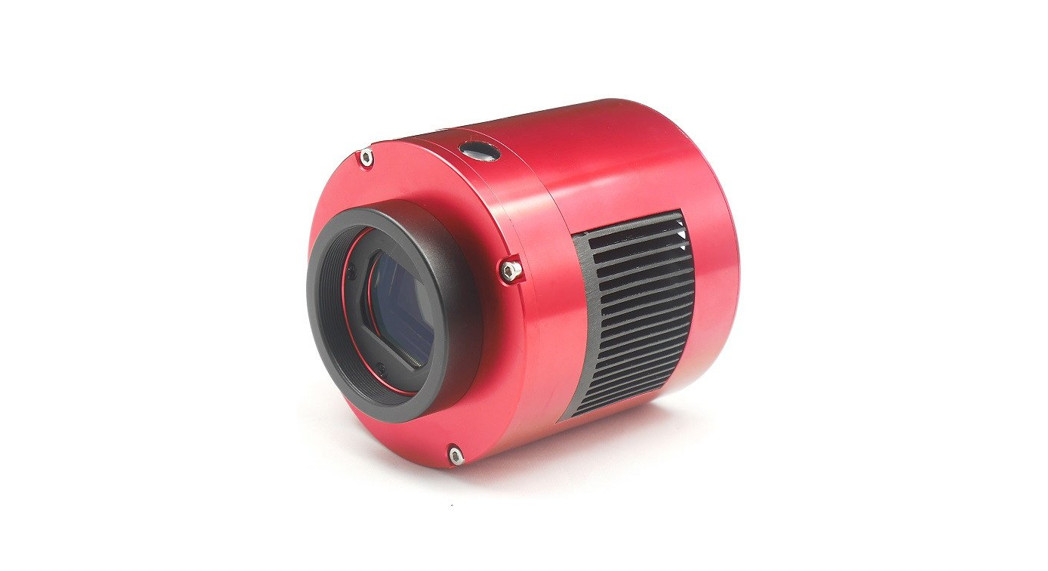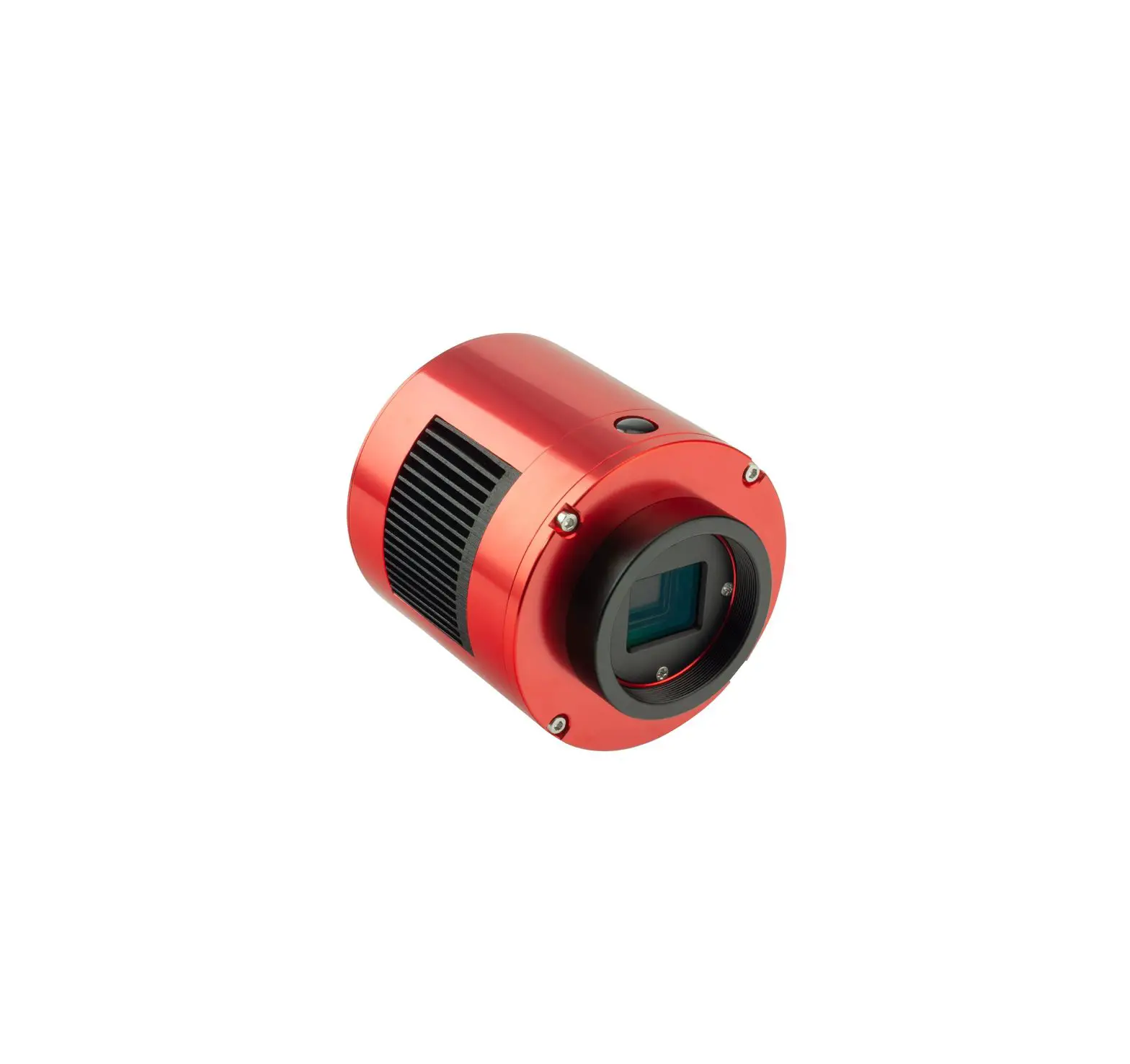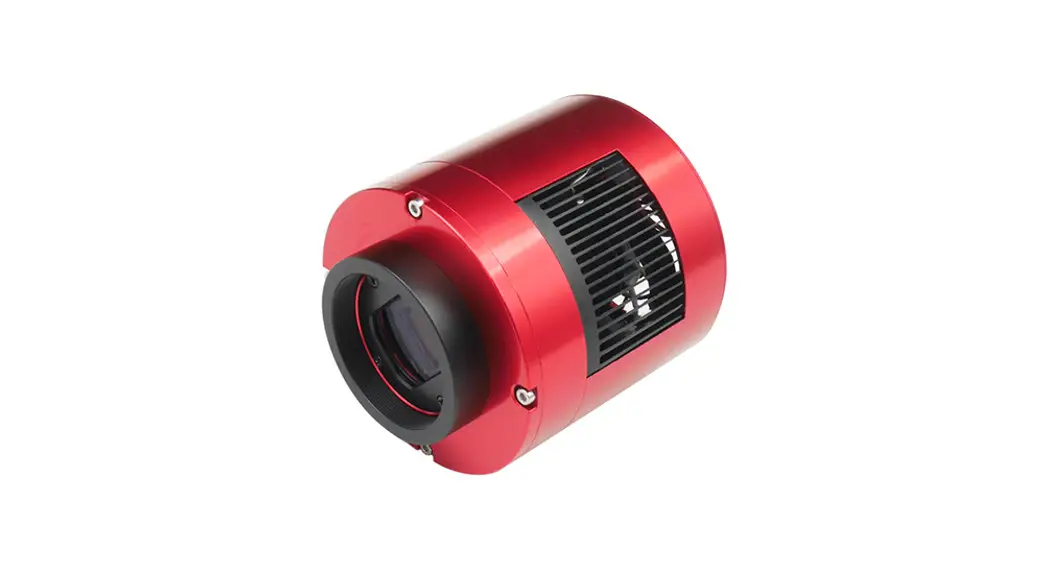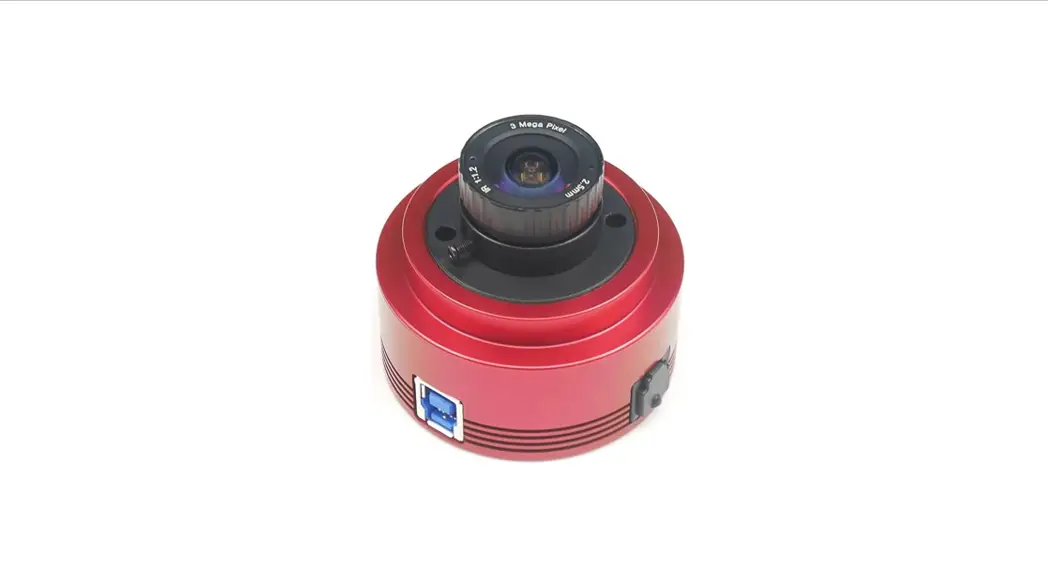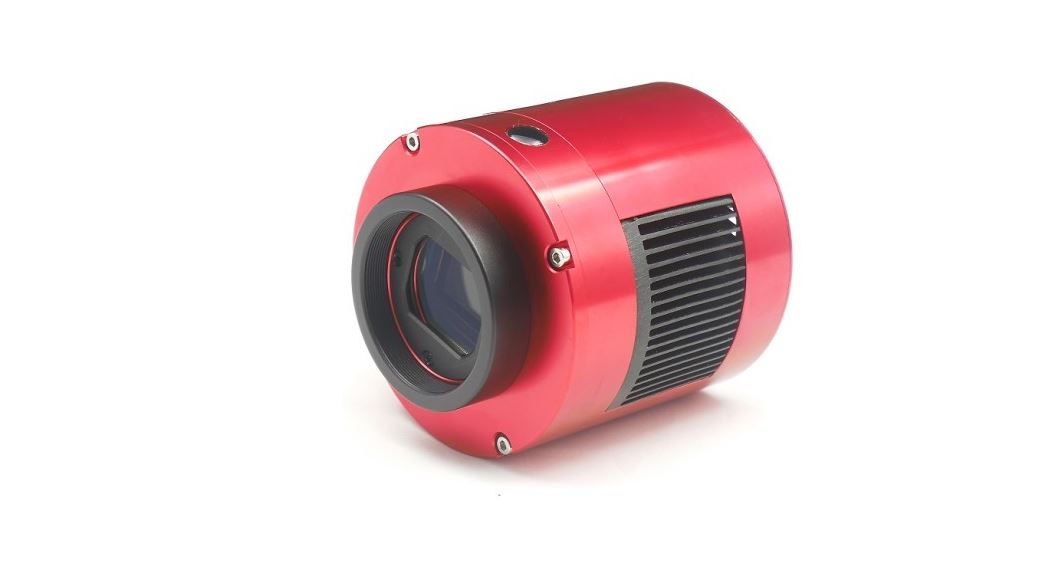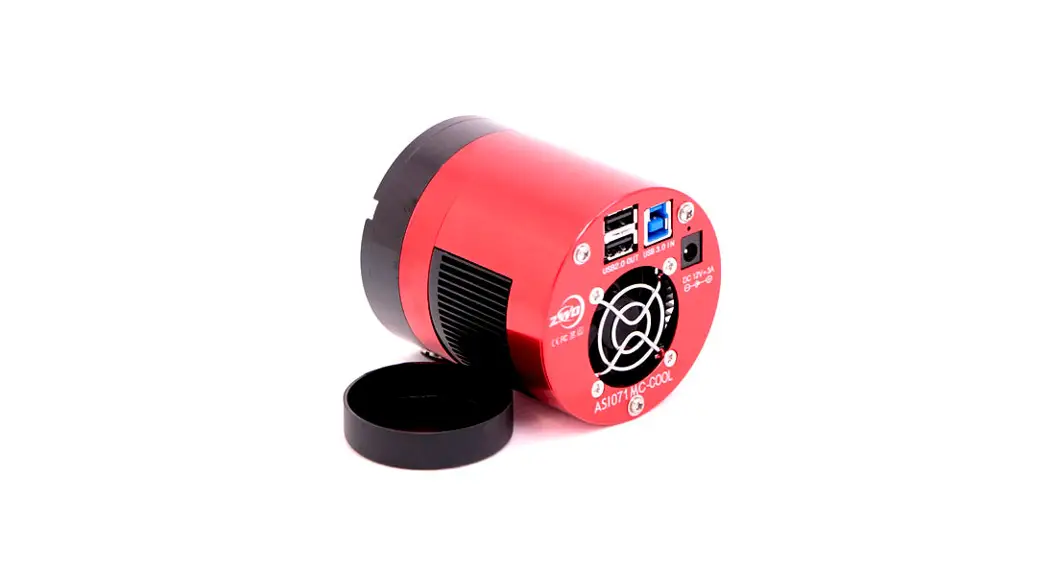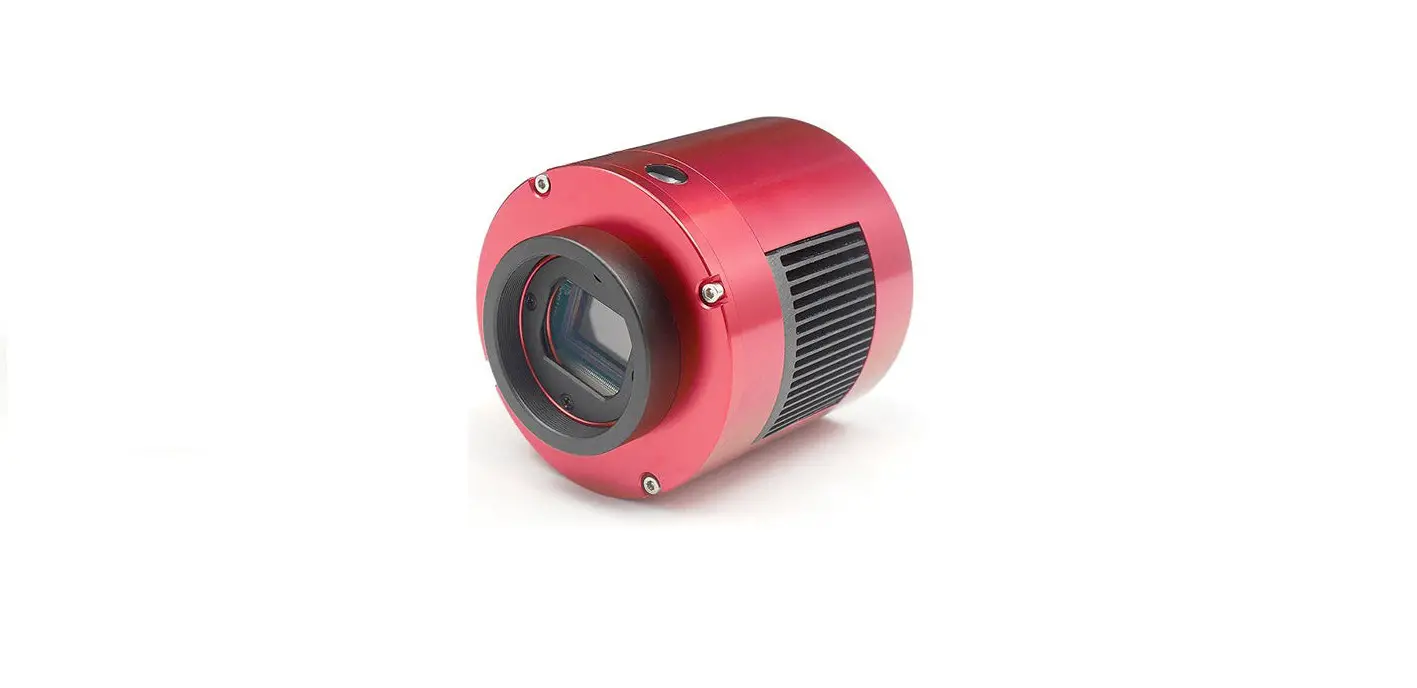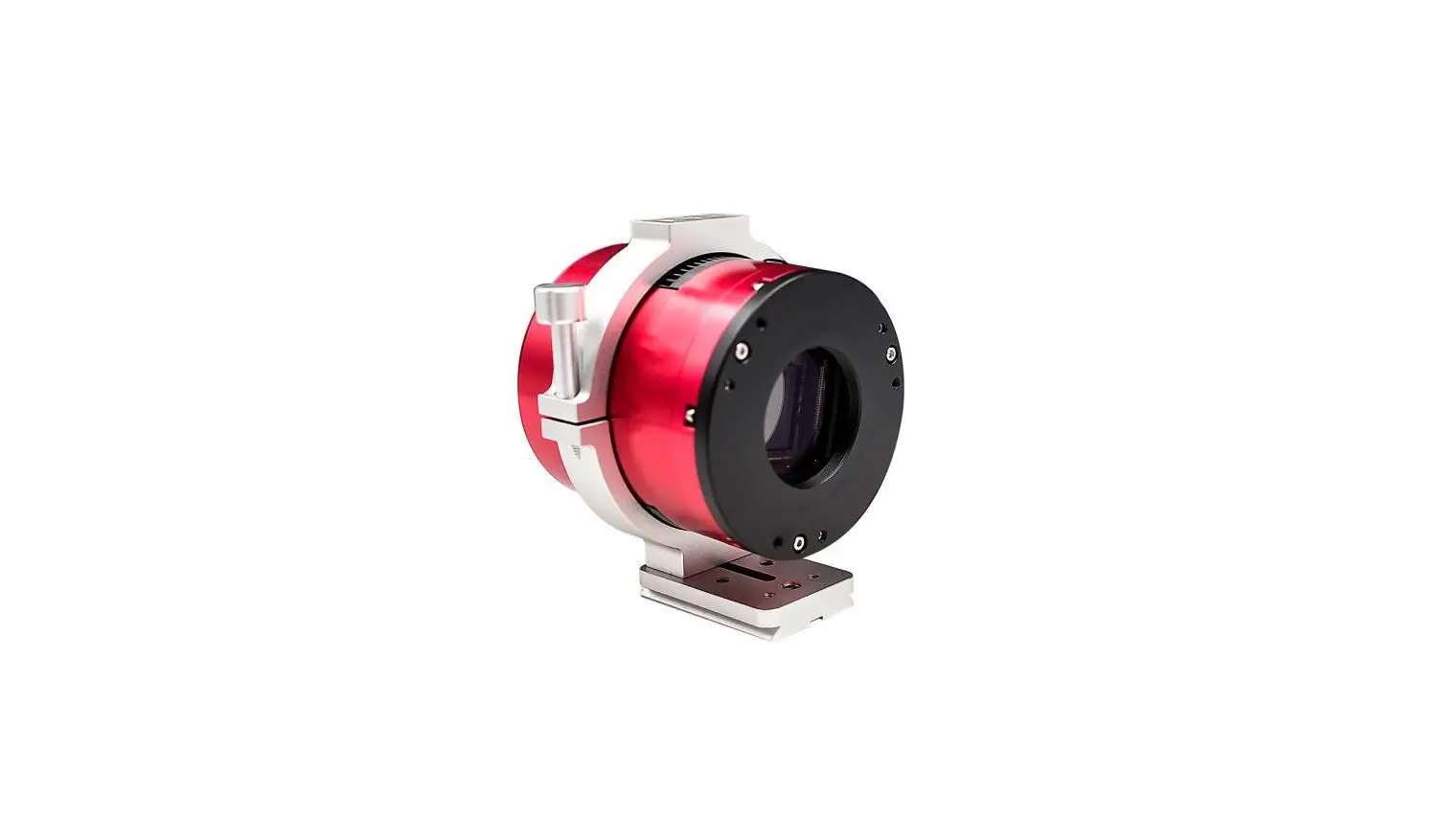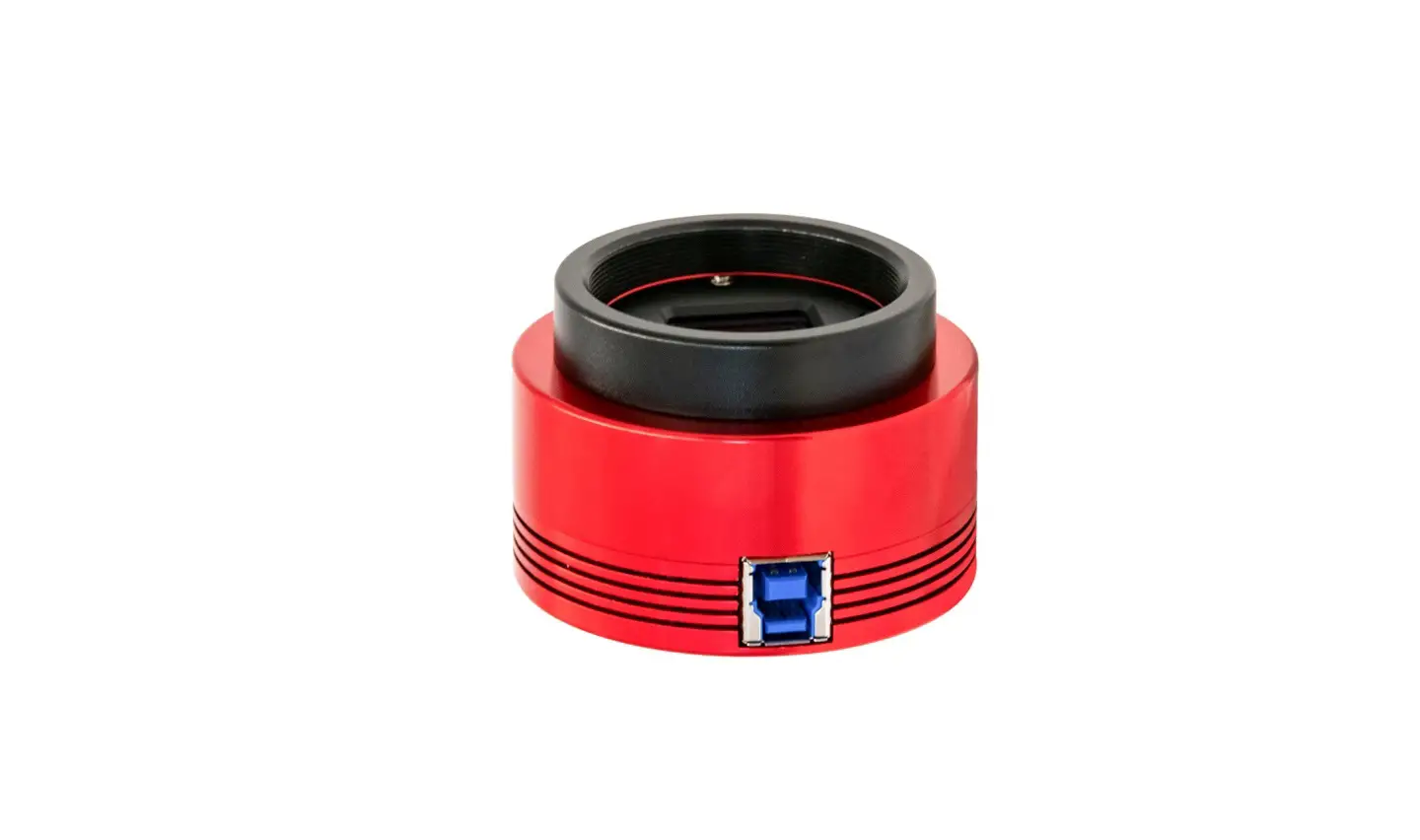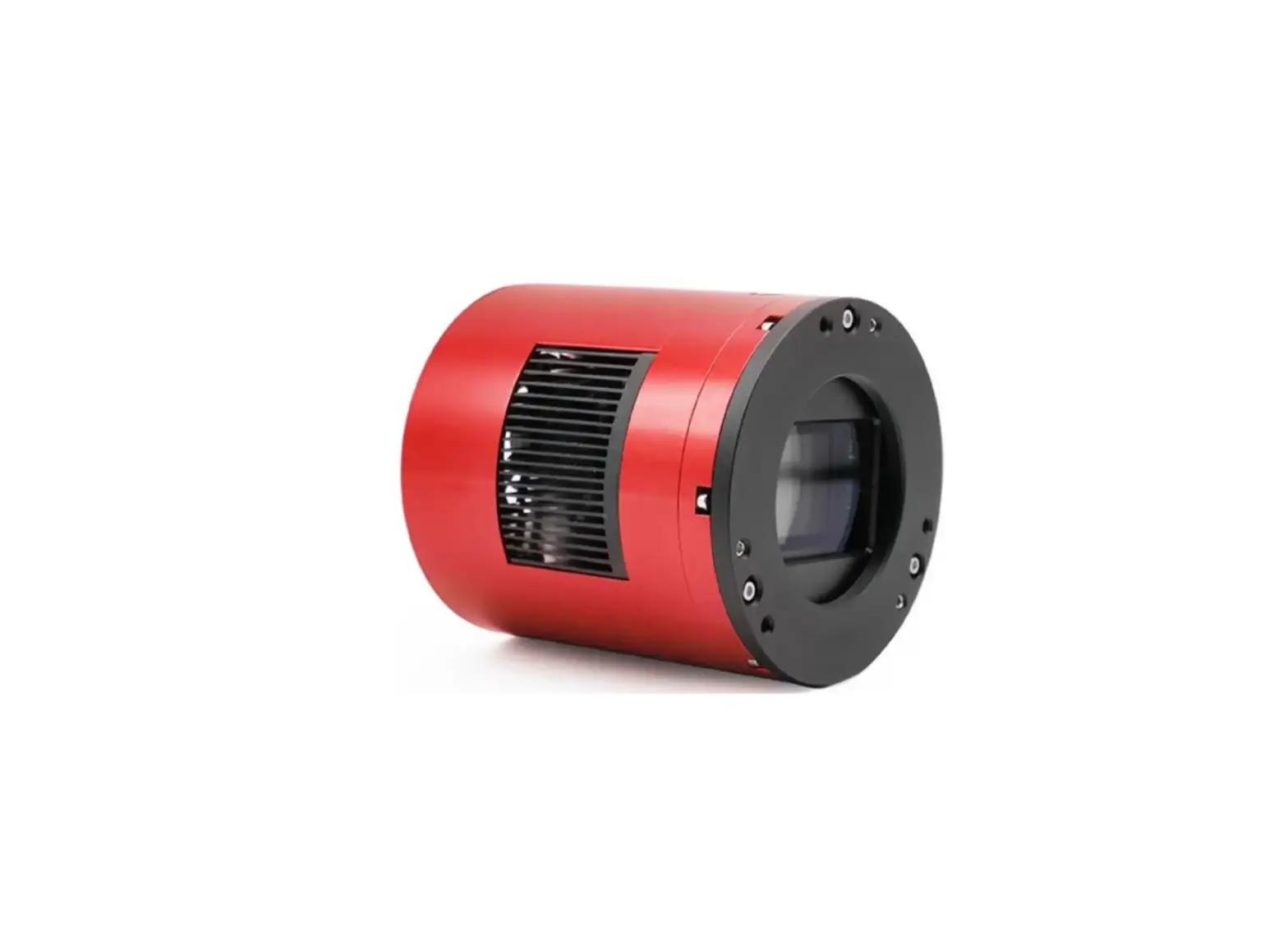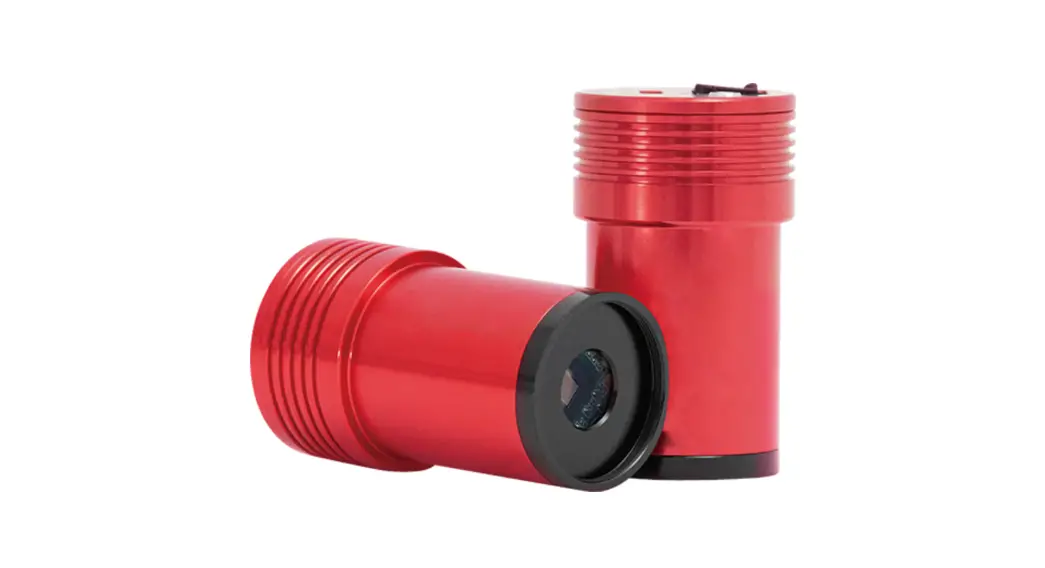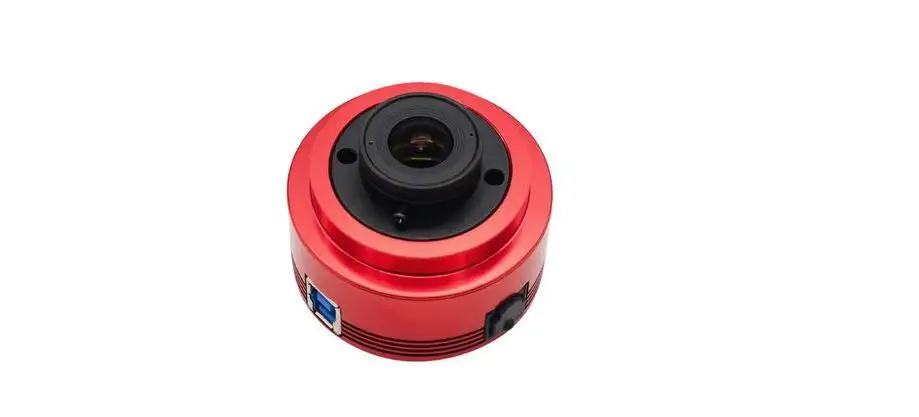

ZWO ASI224 MC-Color Camera
Instruction
Congratulations and thank you for buying one of our ASI Cameras This manual will give you a brief introduction to your ASI camera. Please read it thoroughly. If you have any other questions, please feel free to contact us. [email protected]
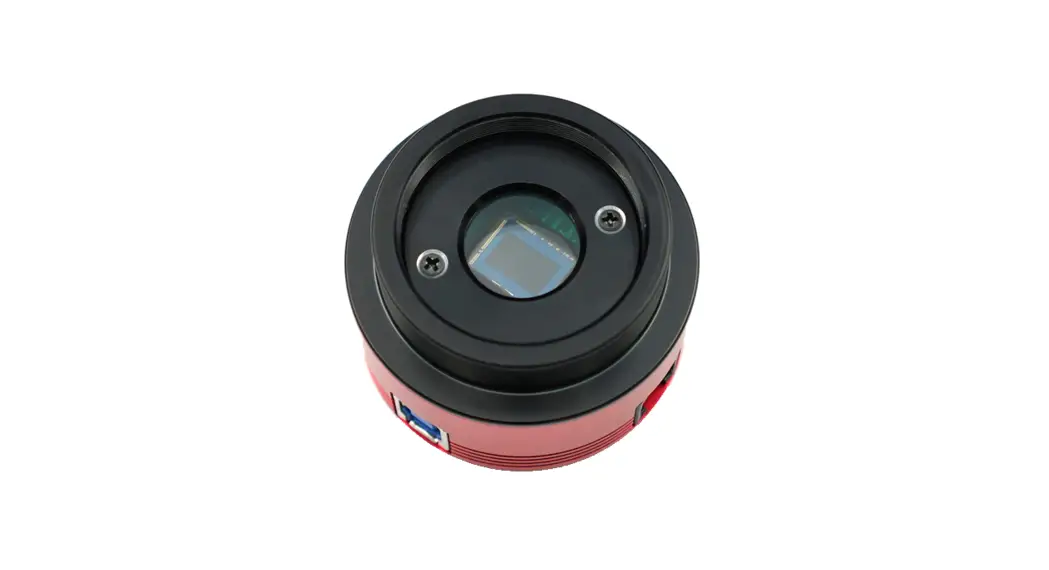
ASI224 Cameras are designed for astronomical photography. Its excellent performance and multifunctional usage will impress you a lot! For software installation instructions and other technical information please refer to “Support” on our official website. https://astronomy-imaging-camera.com/
Camera Models and Sensor Type
There are 2 types of ASI224 models:
| Models | Mono or Color | Regulated TEC Cooling | Sensor |
| ASI224MC | Color | No | IMX224 / IMX225 |
| ASI224MC-COOL (Discontinued) | Color | Yes | IMX224 / IMX225 |
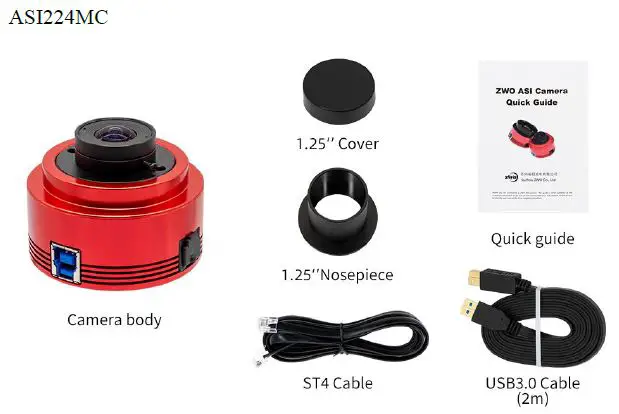
What’s in the box?
Camera technical specifications
| Sensor | 1/3″ CMOS IMX224/IMX225 |
| Diagonal | 6.09mm |
| Resolution | 1.2Mega Pixels 1304X976 |
| Pixel Size | 3.75μm |
| Image area | 4.8mm*3.6mm |
| Max FPS at full resolution | 150FPS |
| Shutter | Rolling shutter |
| Exposure Range | 32μs-1000s |
| Read Noise | 0.8~3.2e |
| QE peak | TBD |
| Full well | 19.2k e |
| ADC | 12 bit |
| Interface | USB3.0/USB2.0 |
| Adapters | 2″ / 1.25″ / M42X0.75 |
| Protect window | AR window |
| Dimensions | 62mm |
| Weight | 100g |
| Back Focus Distance | 12.5mm |
| Supported OS | Windows, Linux & Mac OSX |
| Working Temperature | -5°C —45°C |
| Storage Temperature | -20°C —60°C |
| Working Relative Humidity | 20%—80% |
| Storage Relative Humidity | 20%—95% |
QE Graph & Read Noise
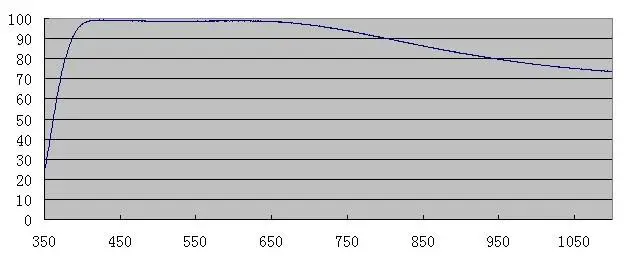
QE and Read Noise are the most important parameters to measure the performance of a camera. Higher QE and lower Read Noise are needed to improve the SNR of an image. Color 224 sensor Relative QE Curve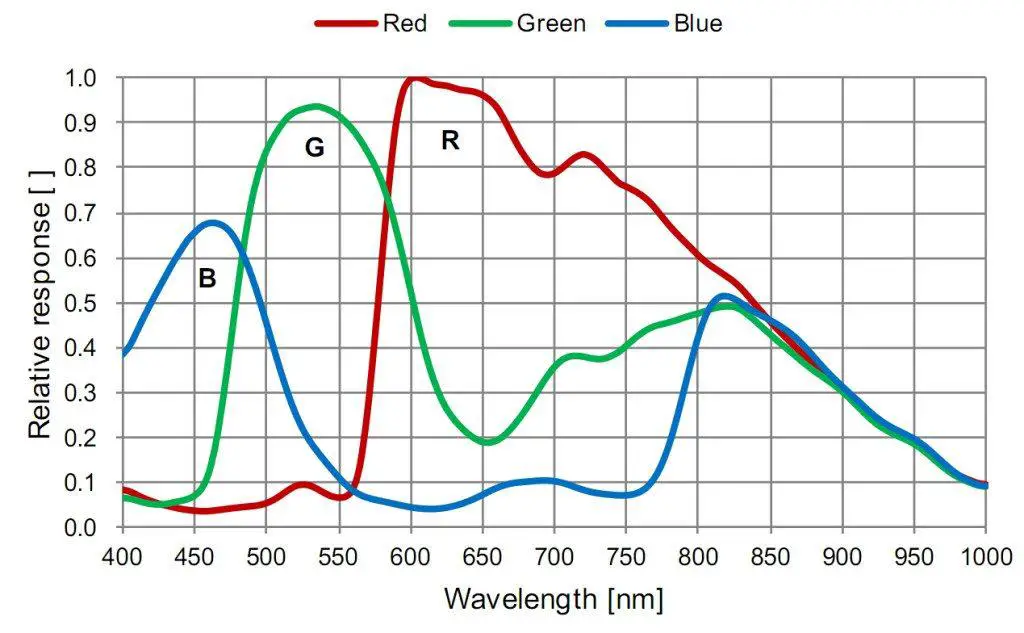
Read Noise includes pixel diode noise, circuit noise, and ADC quantization error noise, and the lower the better. The Read Noise of the ASI224 cameras is extremely lower when compared with traditional CCD cameras. It is even lower when the camera is set at a higher gain. Depending on your target, you can set the Gain lower for a higher Dynamic Range (longer exposure) or set the Gain higher for lower noise (such as short exposure or lucky imaging).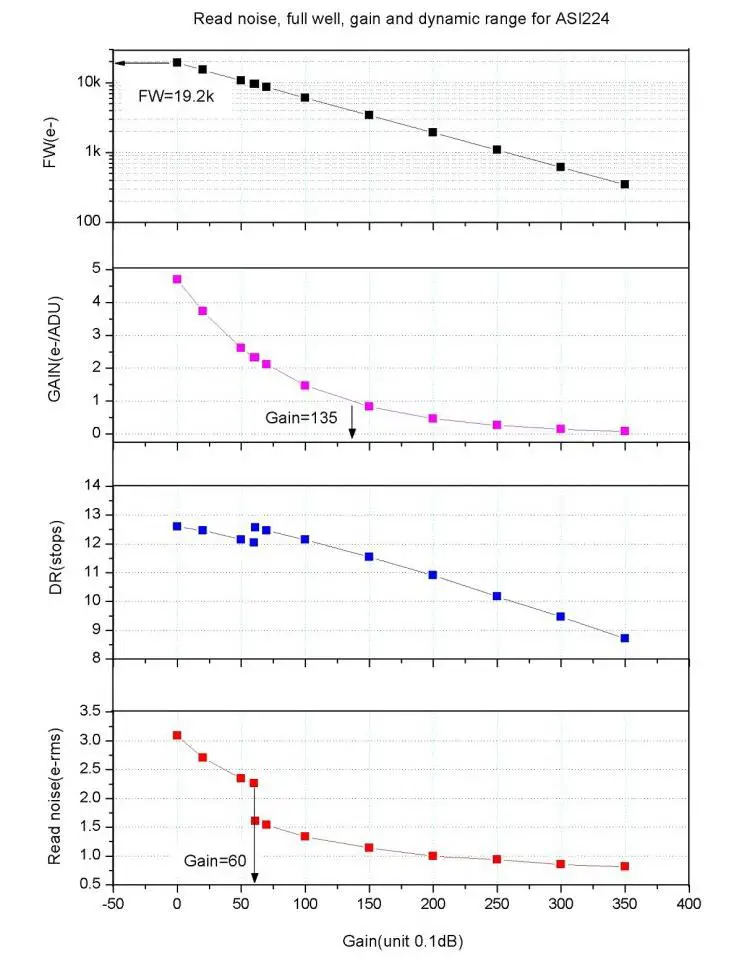
Getting to know your camera
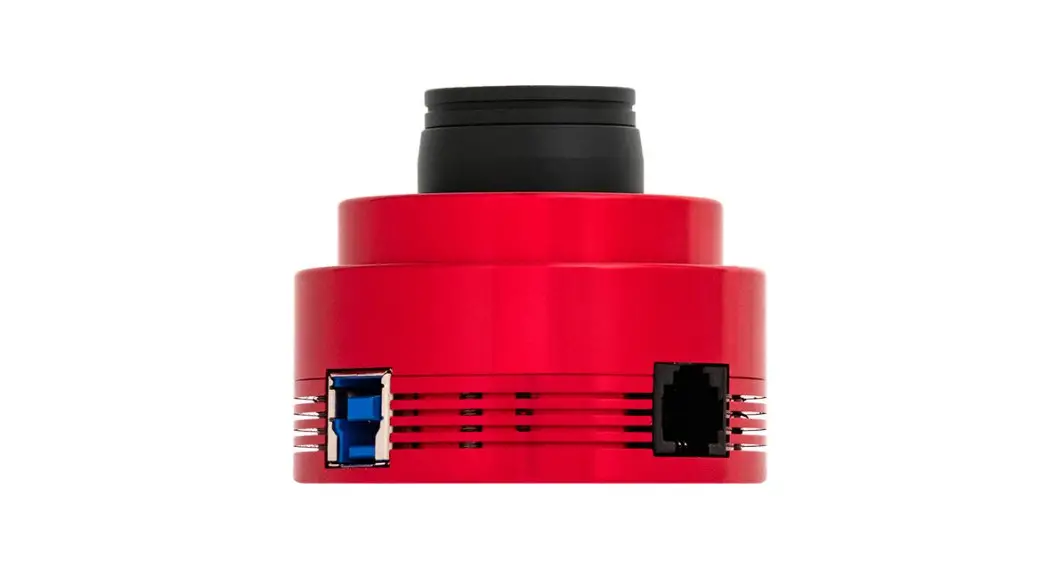
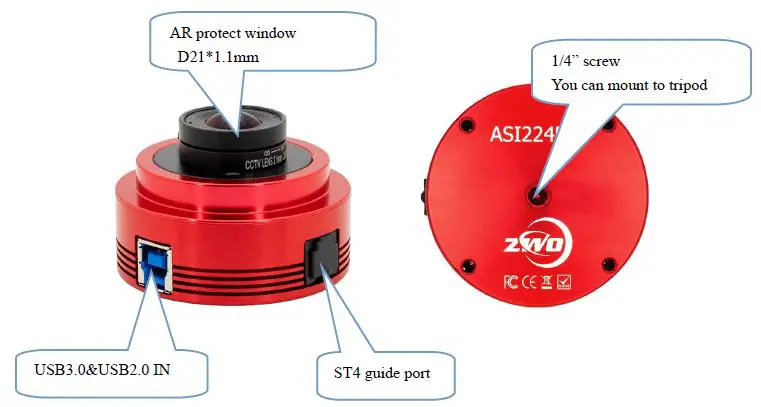
- External View

- Power consumption: ASI cameras are designed to have very low power consumption which is around 160ma@5V. You only need the USB cable to power up the camera.
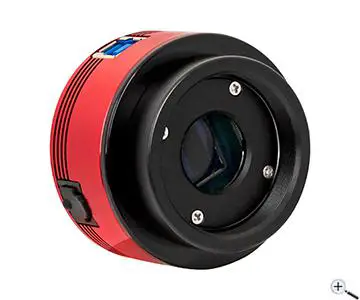
- Protect Window There is a protect window before the sensor of the ASI224 camera. It’s an AR-AR coated BK7 glass, diameter is 21mm, thickness is 1.1 mm.

Analog to Digital Converter (ADC)
The ASI224 camera records in 12bit ADC and 10bit ADC. You can image at a faster fps rate if you choose to use 10bit ADC (high-speed mode). This camera also supports ROI (region of interest) shooting, and this smaller ROI has faster fps.
Here is the maximum speed of ASI224 running at 10bit ADC and 12bit ADC.
| Resolution | USB3.0 | |
| 12Bit ADC | 10Bit ADC | |
| 1304×976 | 64 fps | 150 fps |
| 1280×960 | 65 fps | 152.4 fps |
| 800×600 | 102.9 fps | 241.2 fps |
| 640×480 | 127.6 fps | 299.4 fps |
| 320×240 | 256.4 fps | 577.9 fps |
Binning The ASI224 camera supports software bin2 mode. You should use 10bit ADC. We recommend customers use software binning if they don’t care about speed.
How to use your camera
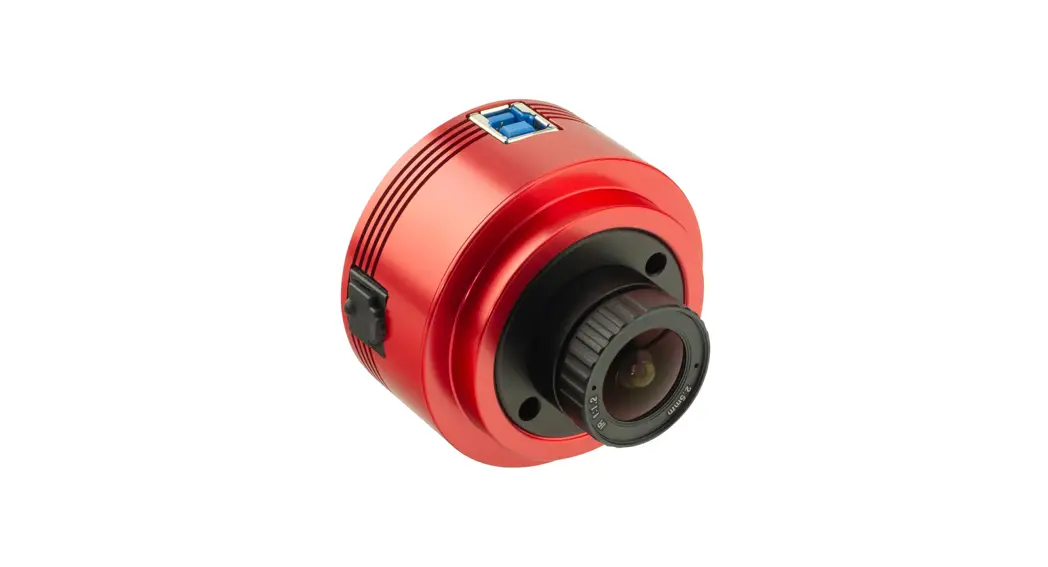
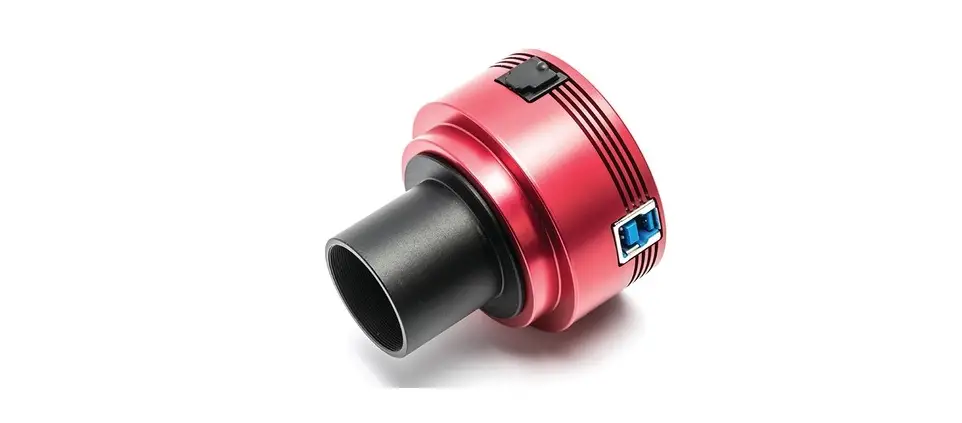
There are many adapters available for this camera for connecting to your scope or lens. Some are included with the camera and others you can order from our site: https://astronomy-imaging-camera.com/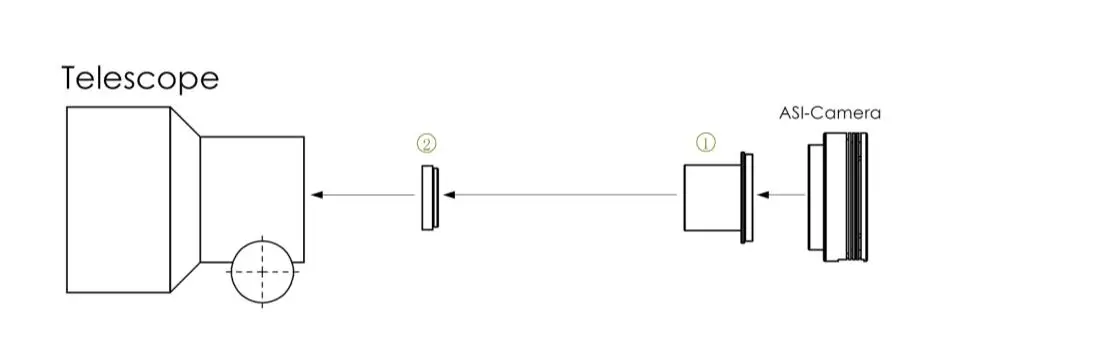
Clean the camera and redry desiccant
The camera comes with an AR protect window, which can protect the sensor from dust and humidity. Should you need to clean the sensor, it’s better to do so during the daytime. To see the dust, you just need to set up your telescope and point it to a bright place. A Barlow is required to see these dusts clear. Then attach the camera and adjust the exposure to make sure not overexposed. You can see an image like below if it’s dirty.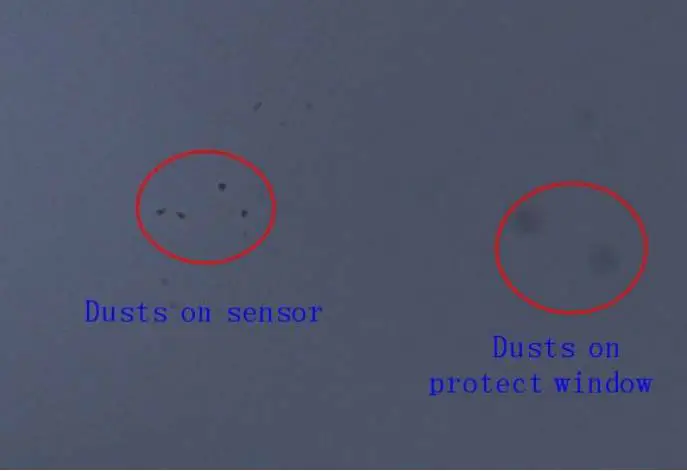
The big dim spot on the image (at right ) are the shadows of dust on the protected window. The very small but very dark spot in the image (at left) are the shadows of the dust on the sensor. The suggested way to clean them is try to blow them away with a manual air pump. To clean the dust on the sensor you will need to open the camera chamber. We have very detailed instructions on our website:https://astronomy-imaging-camera.com/manuals/How_to_clean_ASI_camera_and_redry_the_desi ccant.pdf
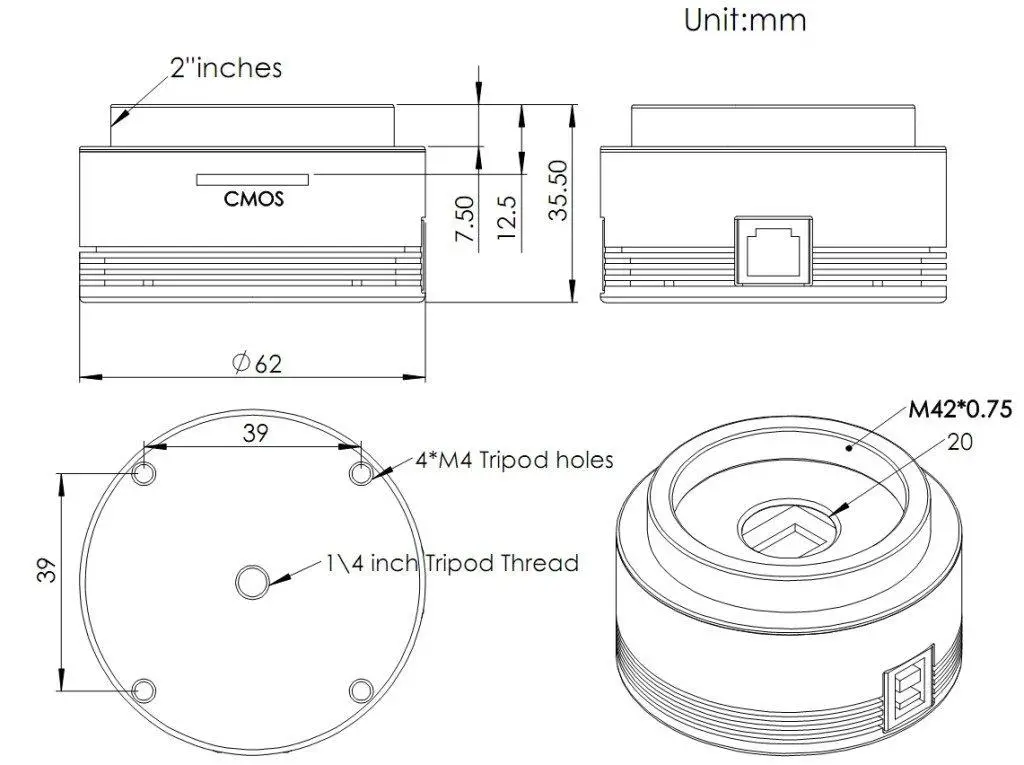
Mechanical drawing
Servicing
For software upgrades please refer to “Support-manual and software” on our official website. https://astronomy-imaging-camera.com/ For repairs and consultation: https://support.astronomy-imaging-camera.com/ For customers who bought the camera from your local dealer, the dealer is responsible for the customer service.
Warranty
We provide a 2-year warranty for our products. We offer repair service or replacement for free if the camera doesn’t work within the warranty period. After the warranty period, we continue to provide repair support and service on a charged basis. This warranty does not apply to damage that occurred as a result of abuse or misuse or caused by a fall or any other transportation failures after purchase. The customer must pay for shipping when shipping the camera back for repair or replacement.