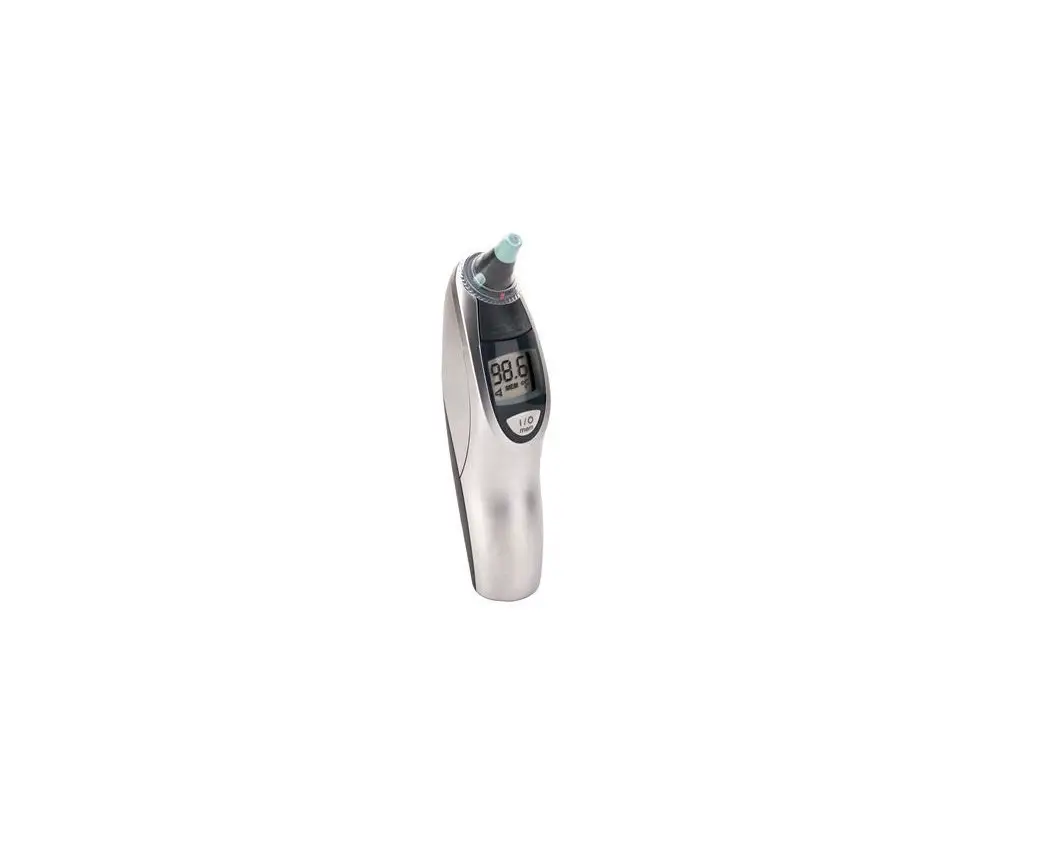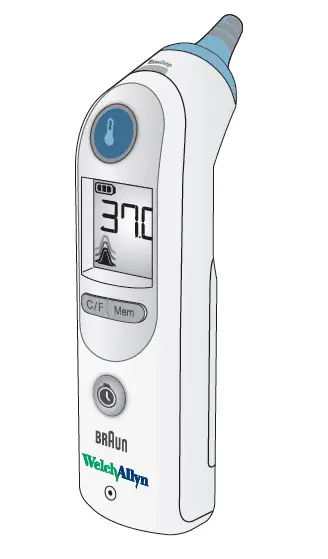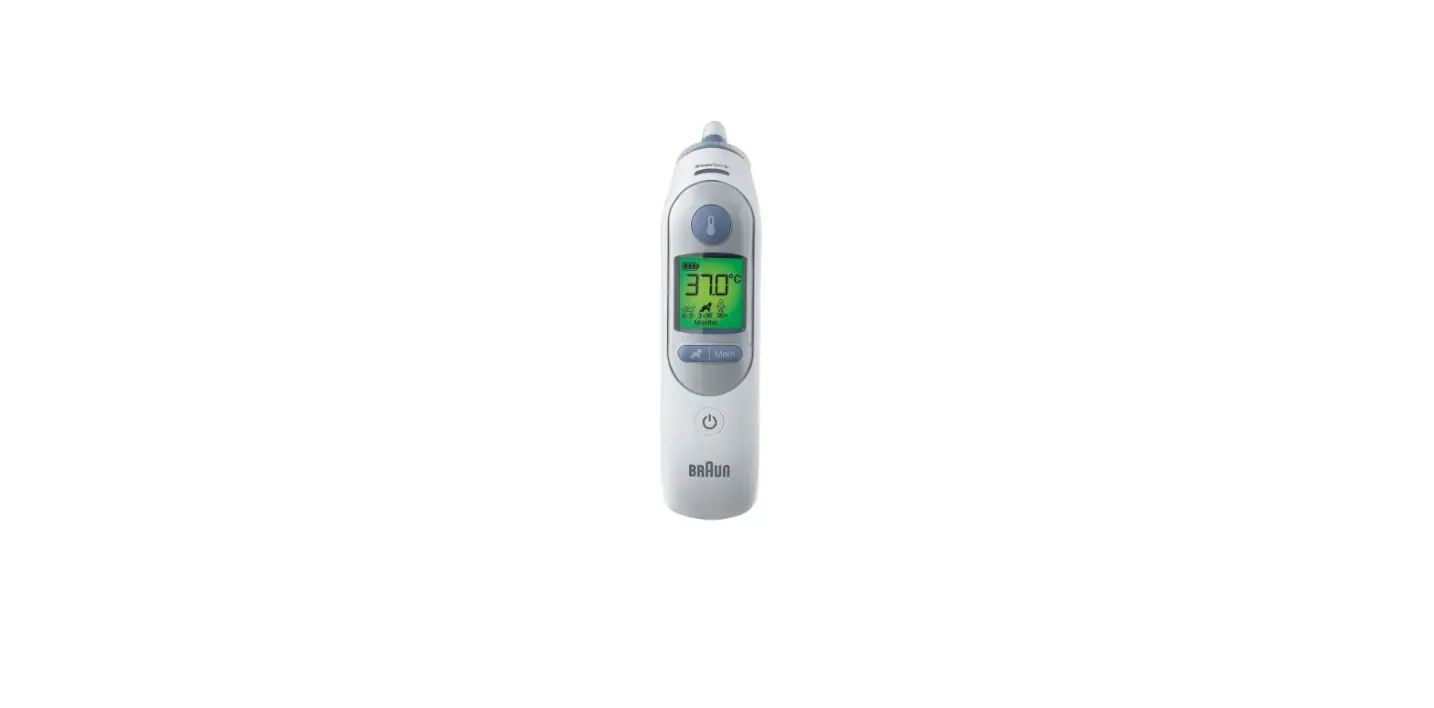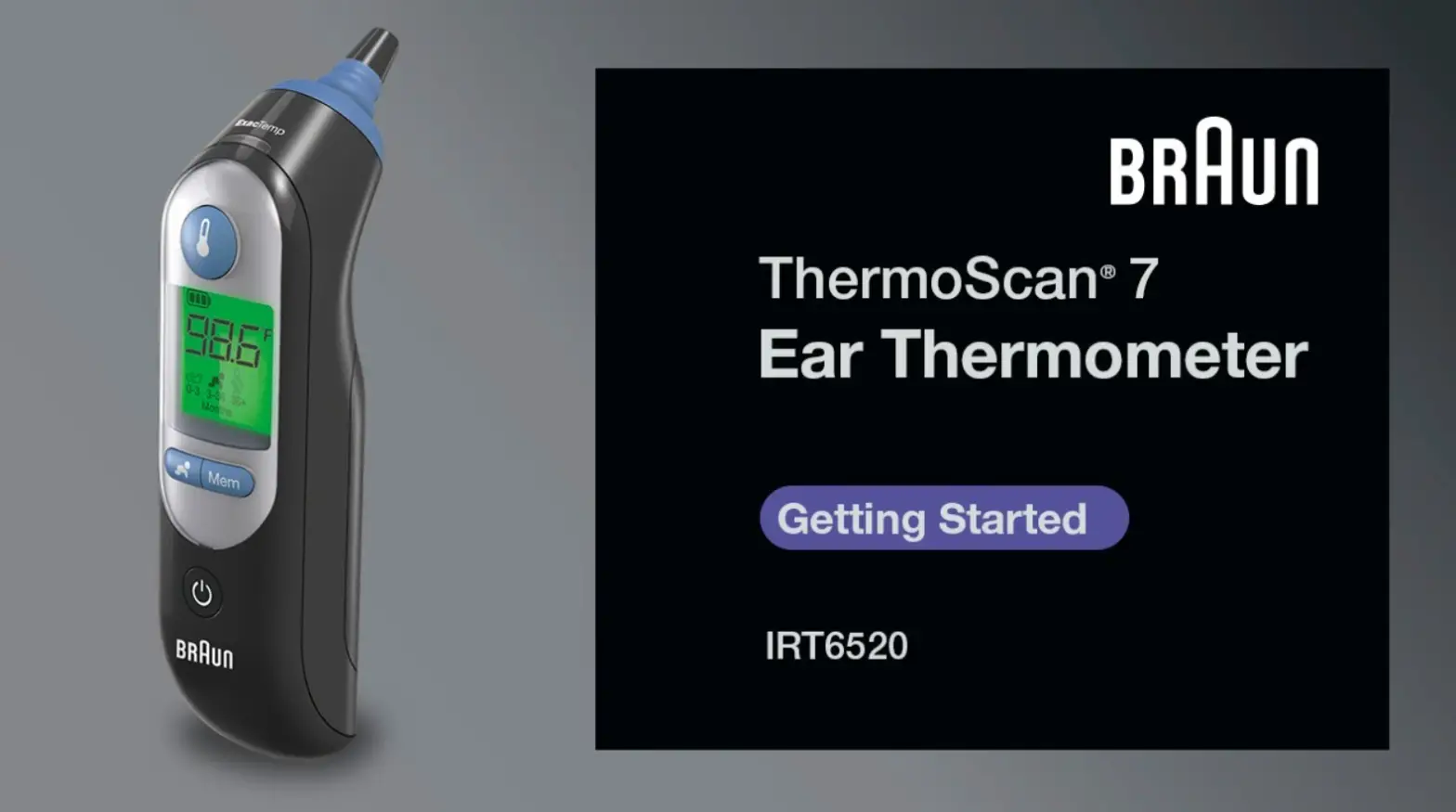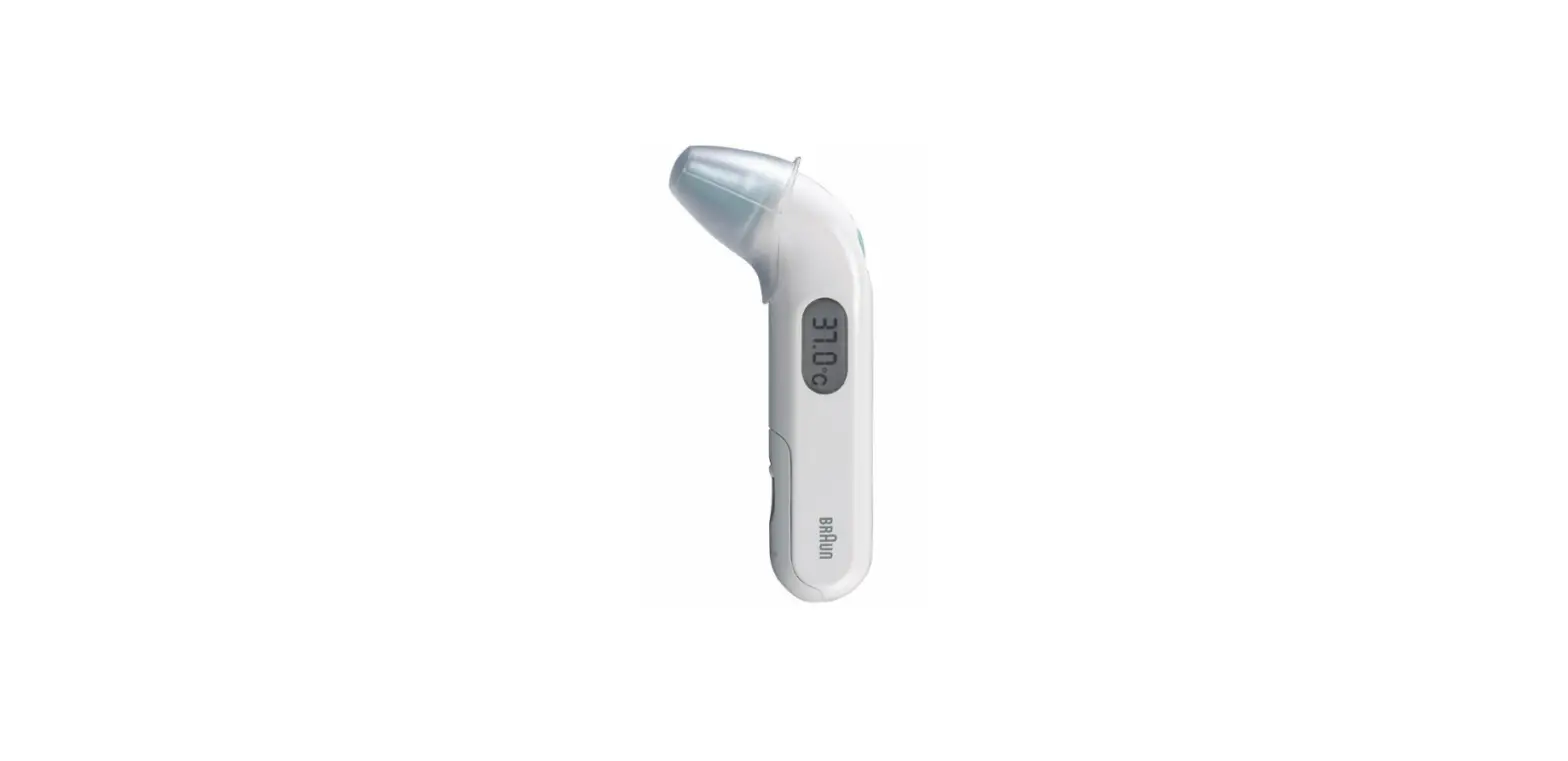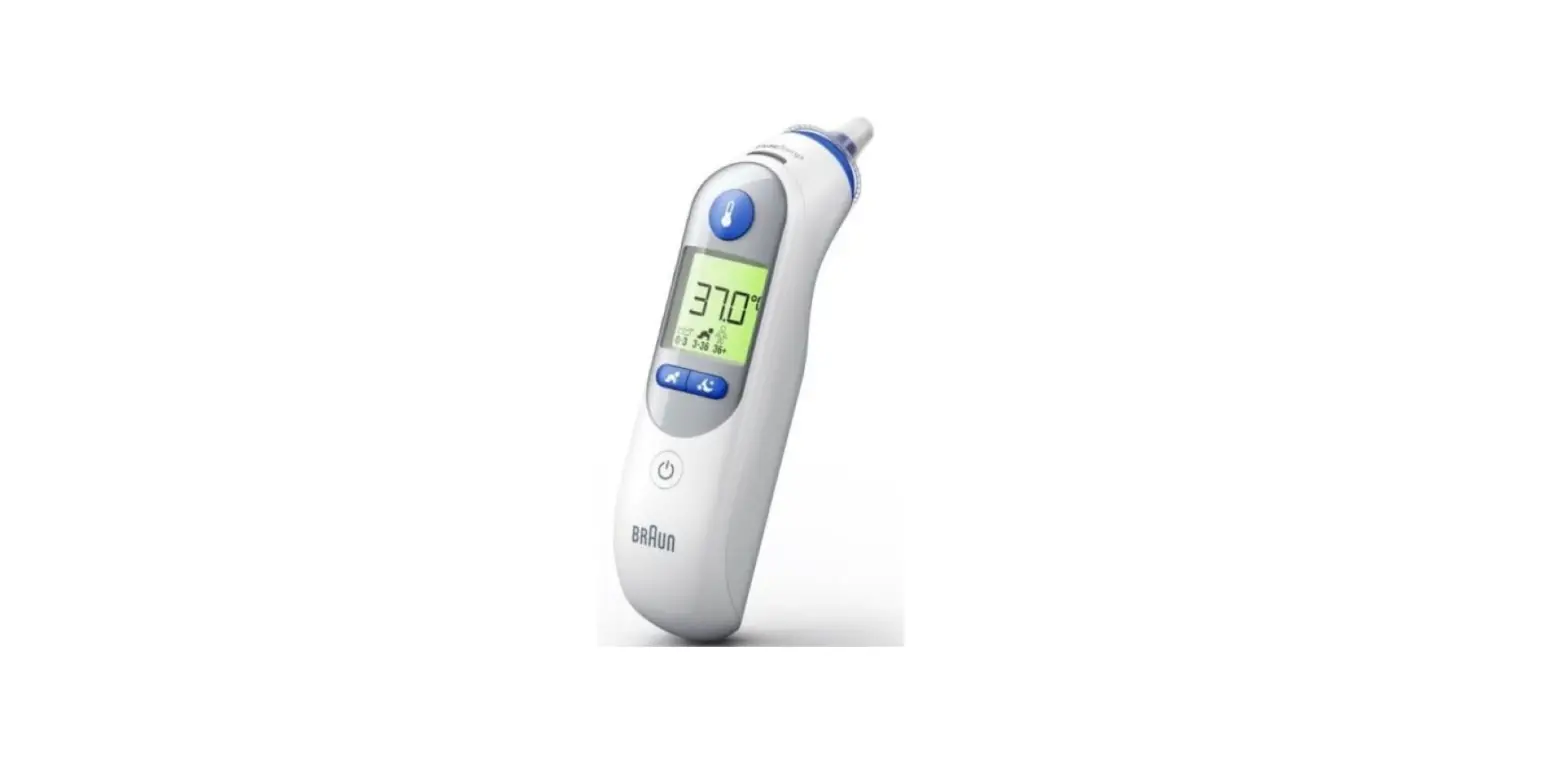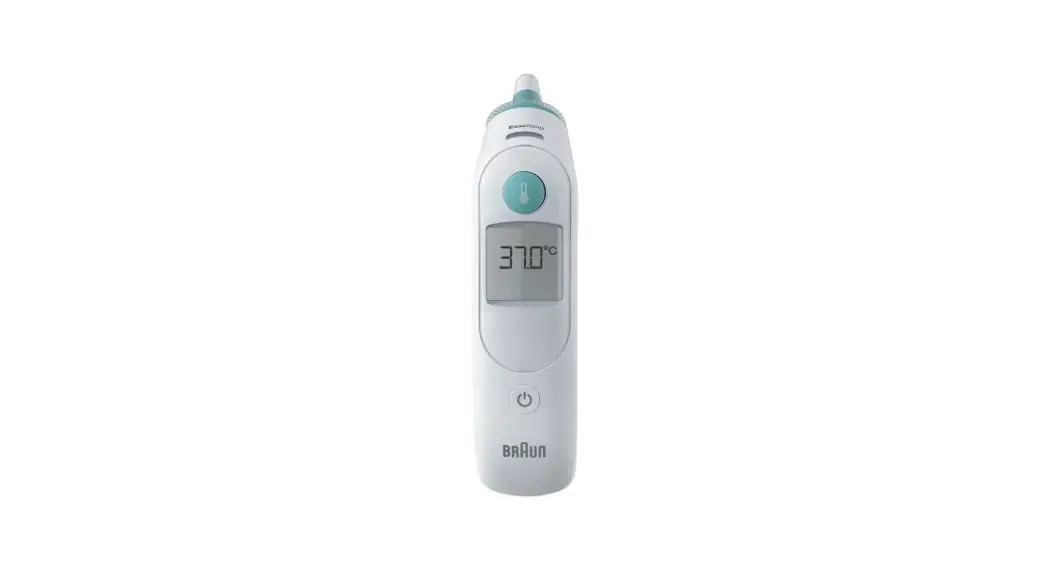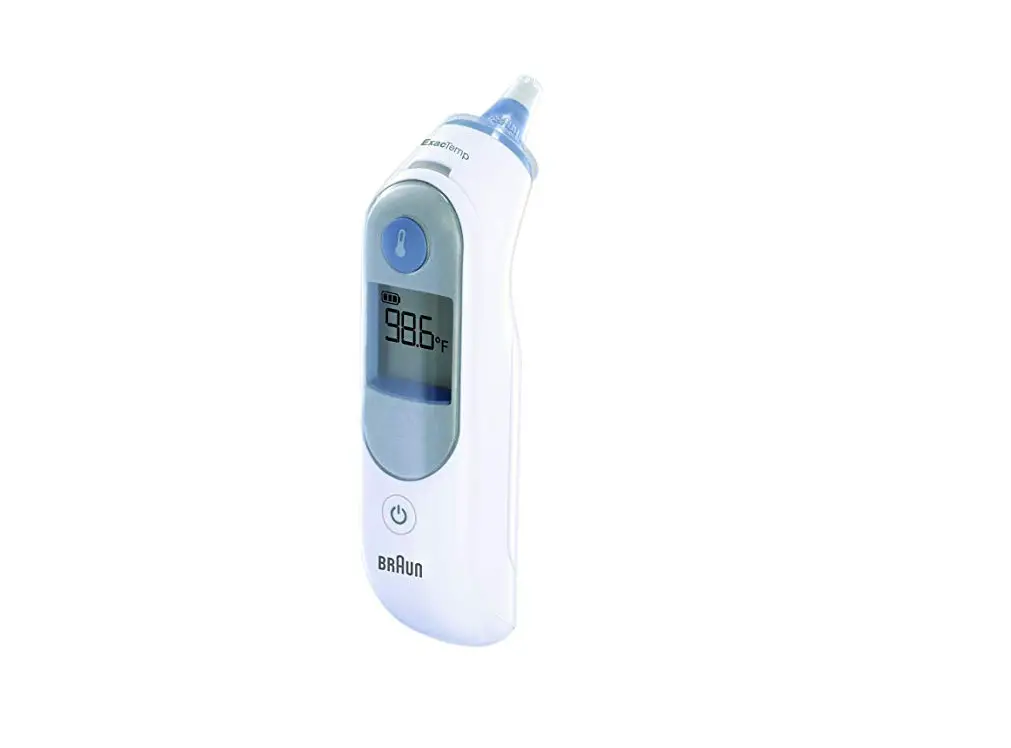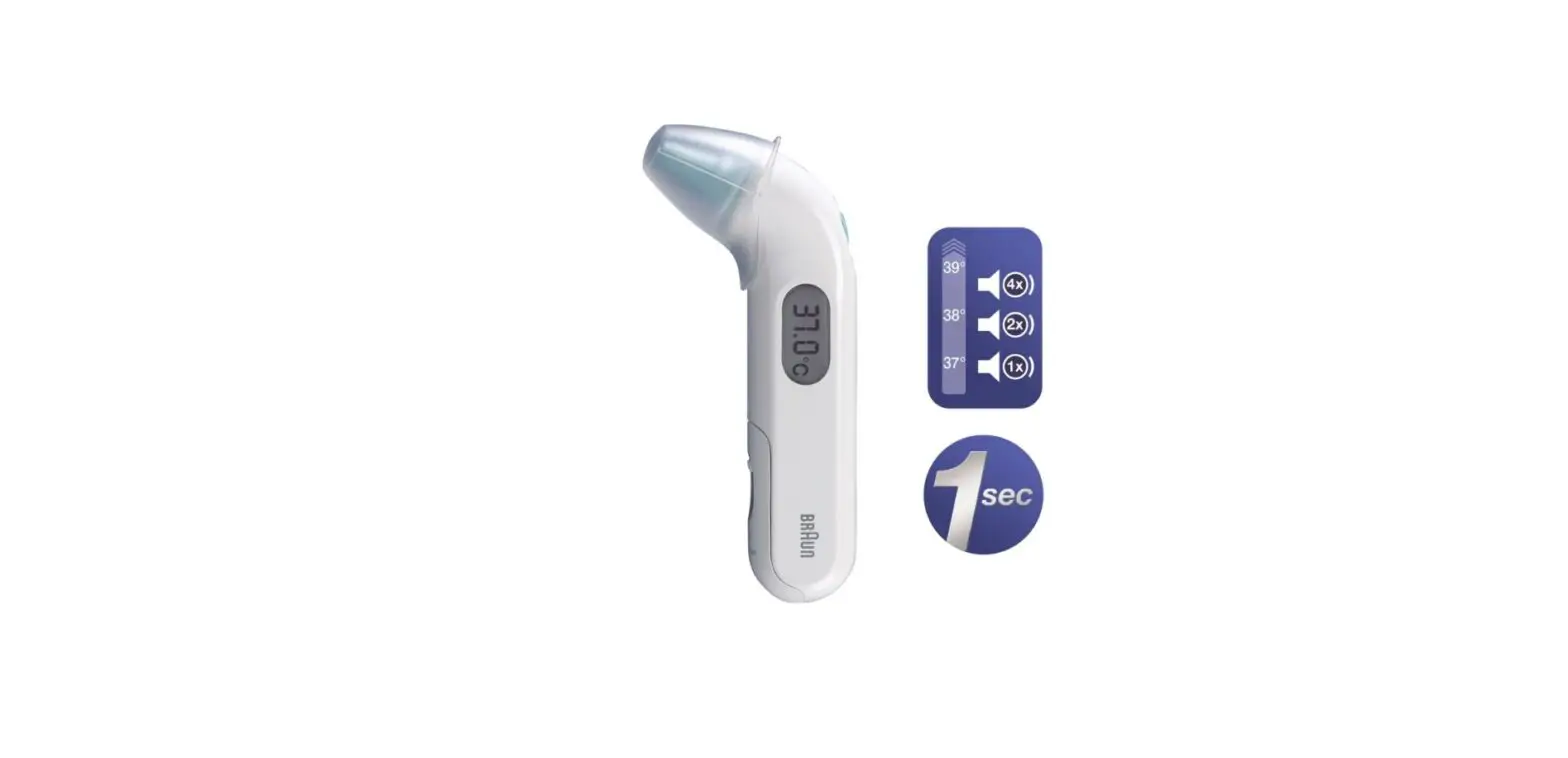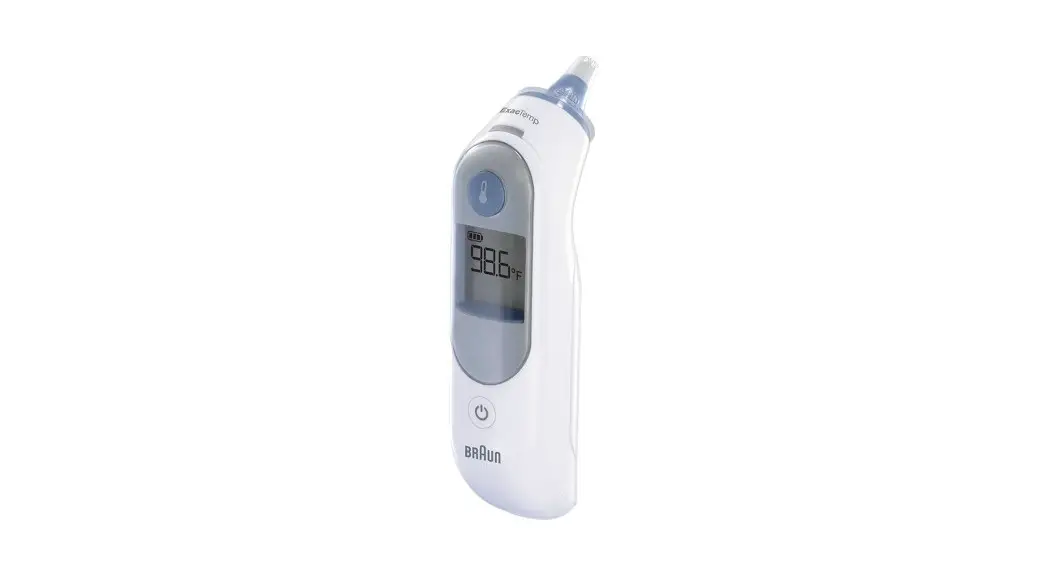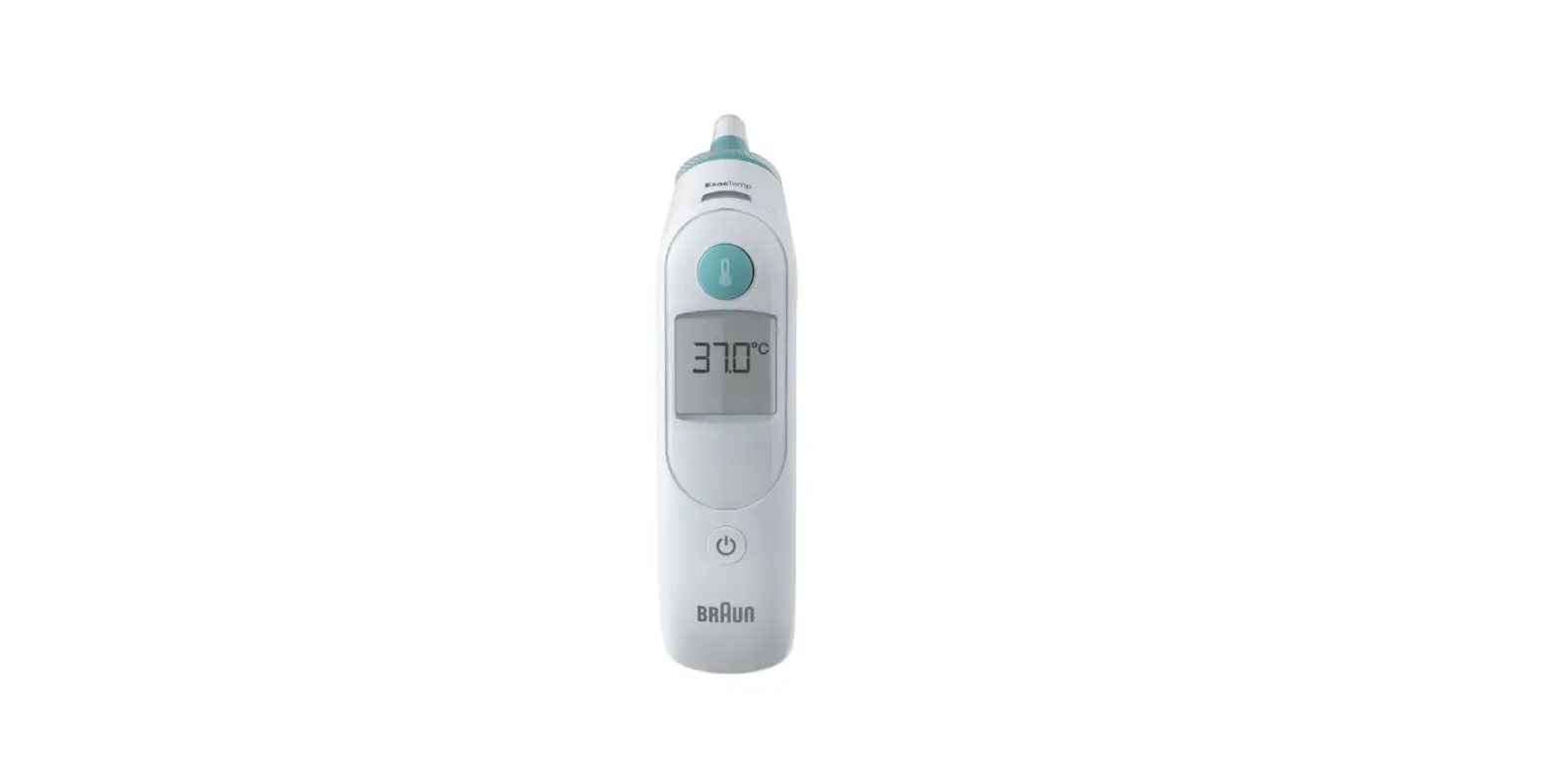

BRAUN ThermoScan Ear Thermometer
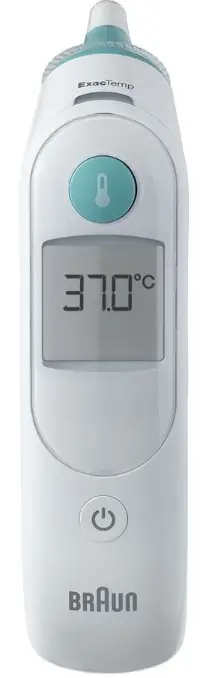
How to measure correctly with Braun ThermoScan®?
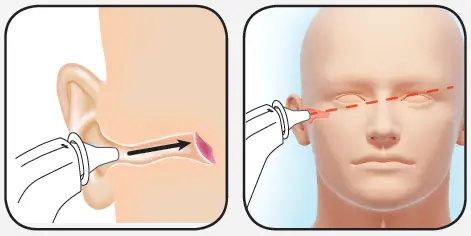
- In clinical studies, precision and accuracy of ear thermometer measurement has been shown to be influenced by variability in user technique. Correct probe placement is essential for accurate measurements. Place the ear probe snugly in ear canal and direct it towards opposite temple.
- Keep the thermometer steady in the ear canal.
- Temperature in right and left ear differs, always compare measurements from the same ear.
- The natural physiological difference may reach 0.2 °C. In the absence of confounding factors, in high-risk populations (like infants or immunosuppressed people) use the highest of the two to interpret the patient’s condition.
External factors may influence ear temperatures, including
| Factor | Affected | Not affected |
| Used Hygiene cap | • | |
| Ambient temperature | • | |
| Wet/dirty/damaged lens | • | |
| Heering aid | • | |
| Lying on pillow | • | |
| Moderate cerumen (ear wax) | • | |
| Otitis media (ear infection) | • | |
| Tympanostomy tuba | • |
In the event of lying on a pillow, wearing ear plugs or hearing aids, remove them and allow 30 minutes before taking the temperature.
INSTRUCTION
Be an expert at interpreting temperature reading
- When comparing the measurement from different sites and different thermometer types (e.g. rectal vs. ear), be an expert and consider that there are different factors which you need to bear in mind:
- Body temperature measured at different body site differs physiologically. For instance, an average physiological difference between oral and underarm temperature is 0.1 to 0.2 °C, underarm temperature being lower. And it can be vastly influenced by the environment’s temperature.
- Braun ThermoScan® does not show actual temperature of ear tissues, but is converting the reading into oral equivalent (meaning that it shows temperature value as if measured orally). I.e. when the patient’s temperature is stable, the temperature displayed on Braun ThermoScan® may be 0.1 – 0.2 °C higher than temperature measured underarm using stick thermometers which don’t convert to oral reading, or 0.5 °C lower than temperature measured rectally.
- However, when temperature of the patient is changing, the difference in temperature between ear and other sites can be much larger than average physiological difference at times when the temperature of the patient is stable. This is due to the fact that underarm and rectal temperature will react slower than tympanic temperature.
- On top of physiological difference, you need to take standard technical deviation in mind. Every device you use to measure temperature has a standard technical deviation of ±0.1 °C to ±0.2 °C.
- Temperature in right and left ear differs. The natural physiological difference may reach ±0.2 °C. All these factors are adding up.