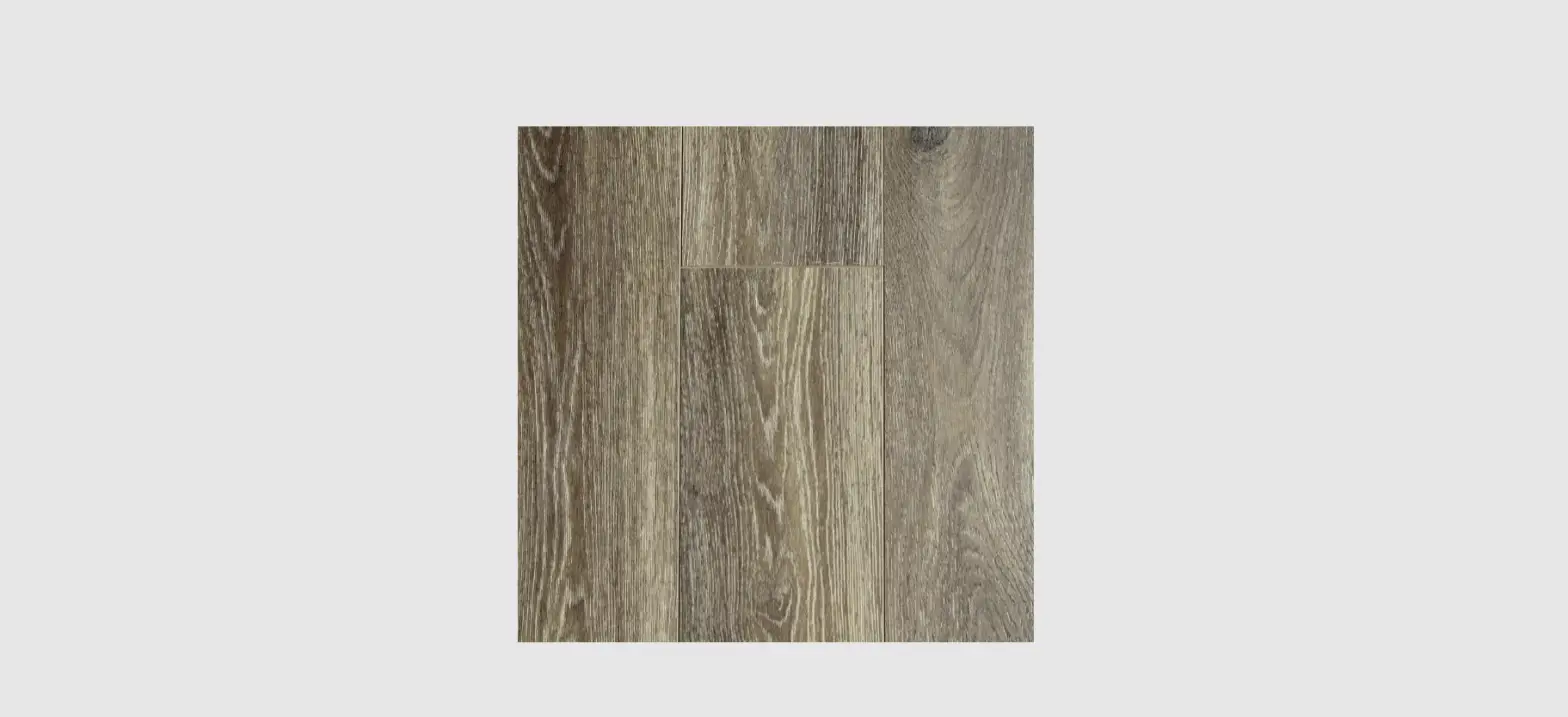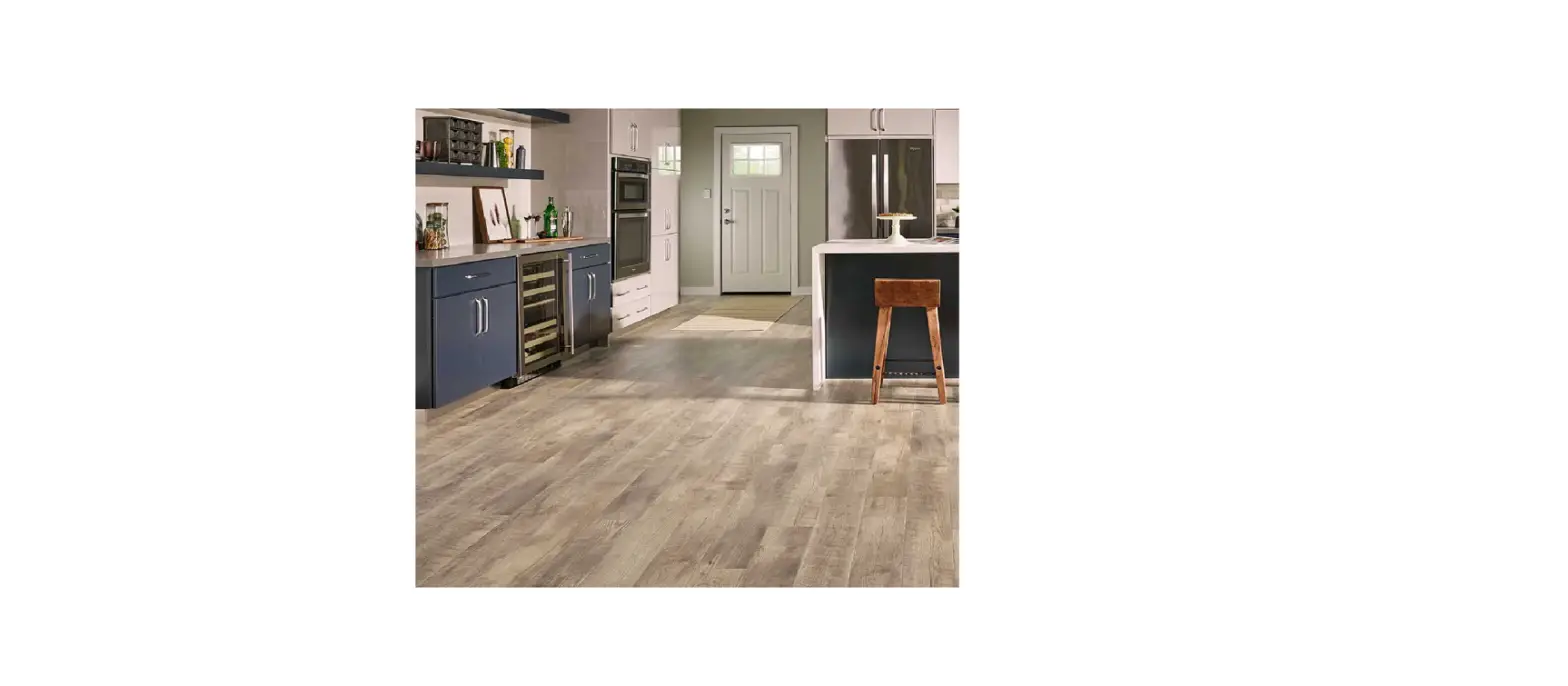

Pergo Outlast Laminate Flooring

For Pergo Outlast+ Only
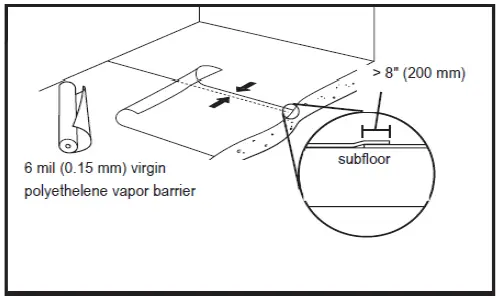
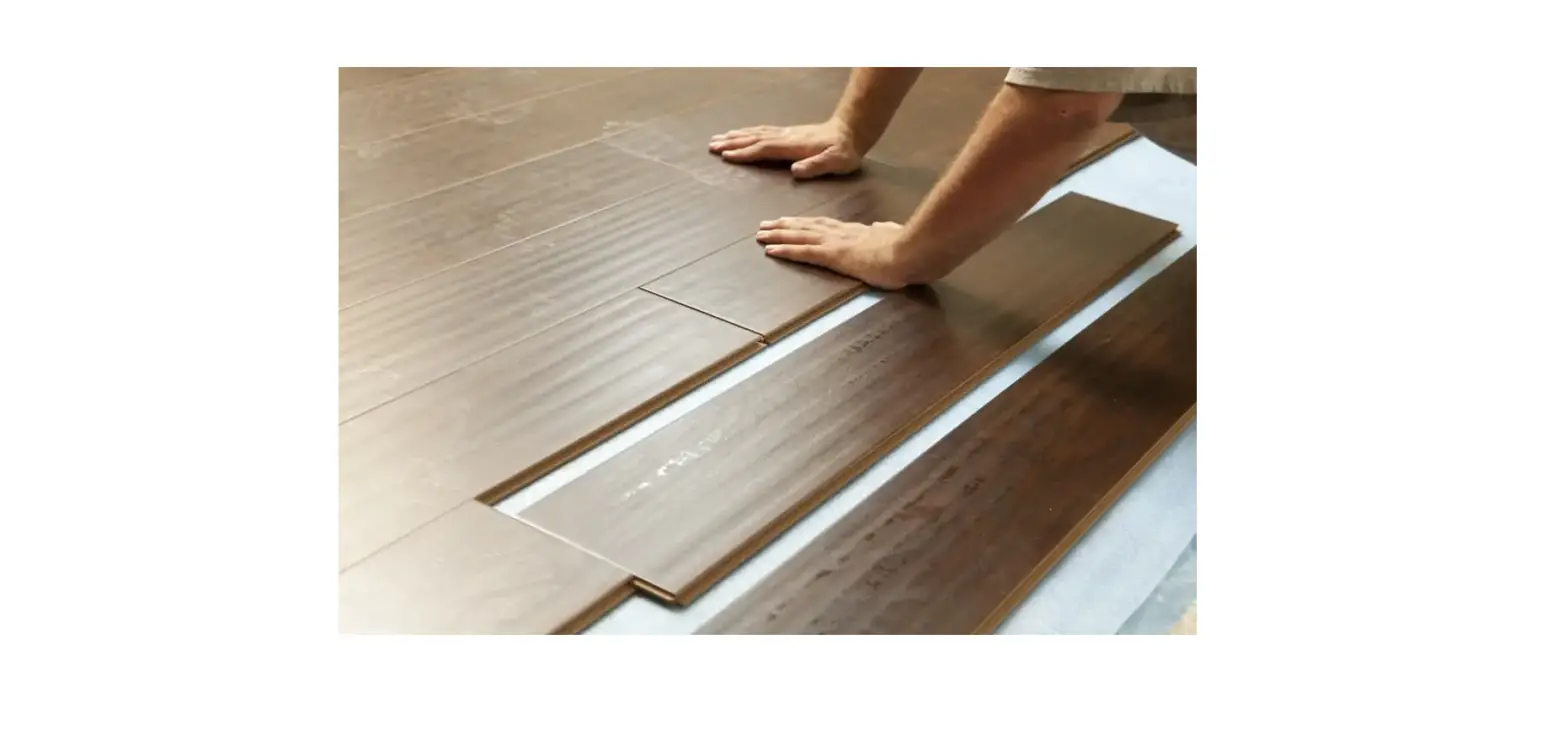
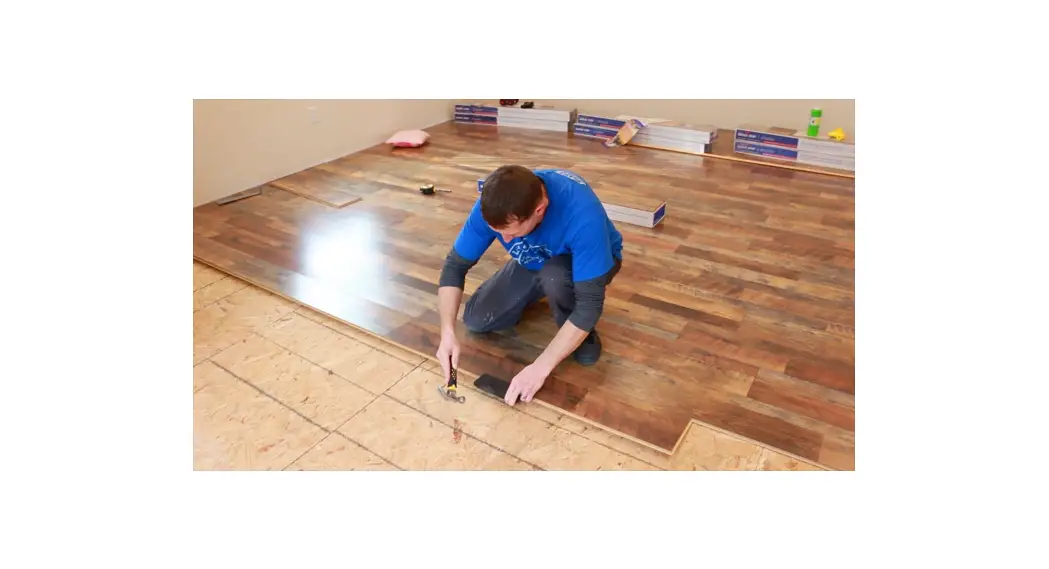
FLOATING FLOOR: Pergo Outlast+ is designed to be installed as a floating floor — thus it is not nailed or glued to the subfloor. Instead, planks are fastened together utilizing unique tongues and grooves to create a durable, easy-to-maintain floor surface. Because Pergo Outlast+ flooring expands and contracts with temperature/humidity changes — it is essential that a 3⁄ 8″ expansion space be left around the floor’s perimeter. Depending your home’s subfloor type, you may also be required to install a 6-mil. (.15mm) non-recycled (100% virgin) resin polyethylene film as a vapor barrier beneath your Pergo Outlast+ floor. Please refer to the detailed installation instructions by subfloor type that follow. The illustrated example below shows the proper installation of the vapor barrier over a concrete subfloor.
WHAT YOU NE E D TO KNOW
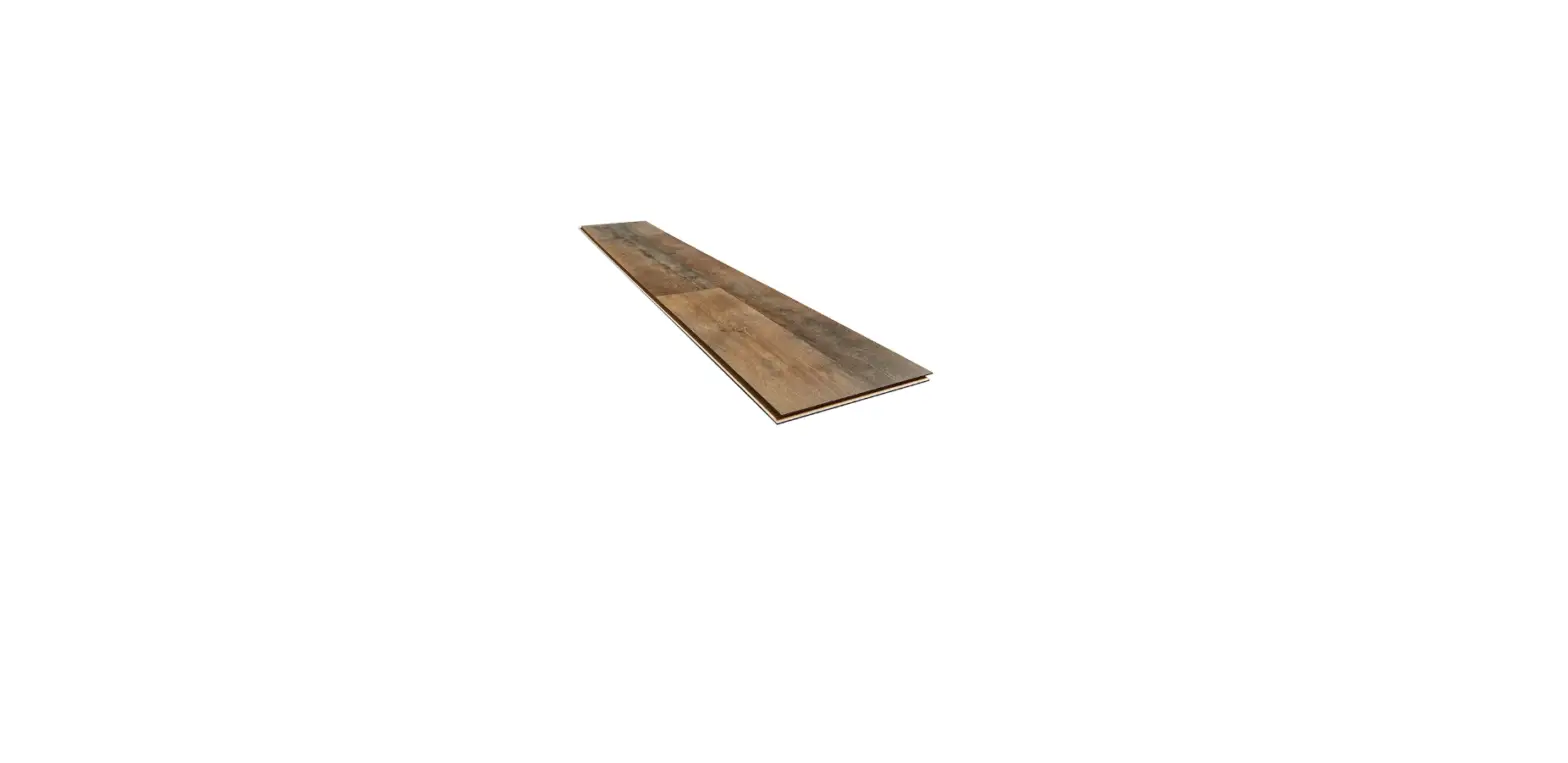
Pergo Outlast+ flooring consists of planks made from a durable laminate surface, a wood-based core and a balancing backing. The planks are clicked together to form a long-lasting, easy-to-maintain surface. Like almost all materials in the home, Pergo Outlast+ flooring expands and contracts due to changes in temperature and humidity. You must allow unopened cartons of Pergo Outlast+ flooring to lay flat in the room where they will be installed to acclimate for at least 48 hours before beginning installation. A 3⁄8″ expansion space must be left around the perimeter of the floor to allow for movement. Failure to meet these requirements can result in floor buckling.
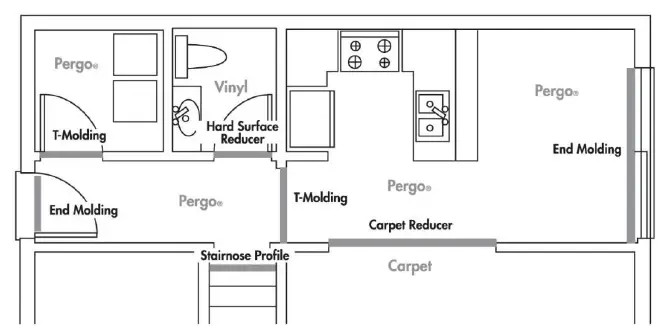
Pergo Outlast+ flooring is part of a complete flooring system that includes a wide range of coordinating moldings and transition strips designed to cover the 3⁄8″ expansion space at the walls, doorways and transitions to another flooring. Specialized tools, required to properly install Pergo Outlast+ flooring, are available at The Home Depot or at homedepot.com.
BE FORE STARTING: Before beginning a Pergo Outlast+ installation project, it is critical that you 1) fully acquaint yourself with the detailed installation instructions for your specific flooring and subfloor type and 2) conduct a complete job site evaluation (see section 6, Job Site Evaluation).
- For appropriate installation information, review this guide and the assembly instructions provided within each carton of flooring you purchased. If you prefer speak to a person regarding installation, call 1-800-33-PERGO (1-800-337-3746).
- Make a complete job site evaluation (see section 6, Job Site Evaluation) to assure that environmental conditions are acceptable for installing Pergo Outlast+ flooring.
- Determine the quantity of Pergo Outlast+ planks, flooring transitions and wall trim needed for your installation. Add 10% to your square footage for standard installations. For diagonal installations, add 15%. Depending on the type of room and the type of subfloor you are working with, you may also need glue and a 6 mil (.15mm) non-recycled (100% virgin) resin polyethylene film as a vapor barrier.
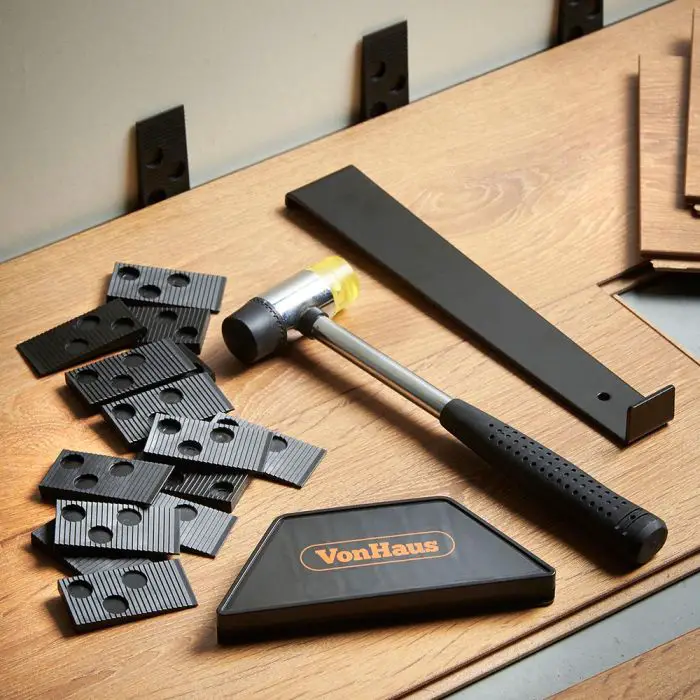
- Make sure you have the appropriate installation tools, an installation kit and additional spacers (used to maintain expansion space). For Pergo Outlast+ you will also need 3/8” compressible PE foam backer rod and clear 100% silicone sealant to properly seal the perimeter of the installation.
- Acclimation — Allow unopened cartons of Pergo Outlast+ planks to lay flat in the room where they will be installed for at least 48 hours, depending upon climate, before beginning installation. During this time, the planks adjust to the specific temperature and humidity conditions of the room.
A BASIC OVERVIEW
- Remove any existing quarter-round molding. The existing quarter round can be repainted and installed after the Pergo Outlast+ installation or you can select a new, prefinished, color-coordinated quarter round available at your retailer.
- Always remove carpet, pad and tack strips.
- Remove wood flooring if it is installed over a concrete subfloor.
- Be sure the surface of the subfloor is flat, clean, dry and sound before starting. (Refer to Subfloor Requirements Sections 7, 8, 9, 10, & 11.)
- On concrete subfloors, use Pergo Moisturbloc™, a non-recycled 6-mil. (.15mm) non-recycled (100% virgin) resin polyethylene film as a vapor barrier, overlapping edges 8″, or follow the directions for installation of an equivalent vapor barrier.
- Foam underlayment is pre-attached to Pergo Outlast+. No additional underlayment is required for proper performance. Do not install Pergo Outlast+ over multiple layers of foam underlayment.
- Inspect every plank for any shipping damage when removing from the carton.
INSTALLATION REQUIREMENTS
- Pergo Outlast+ is intended only for indoor use.
- Acclimation Allow the Pergo Outlast+ planks to lay flat in unopened cartons, at least two feet from walls where they will be installed, for at least 48 hours before starting the installation. In very dry or very humid climates, allow 96 hours (4 days). For acclimation, the relative humidity should be 35-65%. The temperature should be 60-85°F for product acclimation, as well as during and after installation
- Pergo Outlast+ must be installed as a floating floor and must not be fixed to the subfloor. A 3⁄8″ expansion space must be provided around the perimeter of the room and any fixed objects such as pipes or, columns. Door-jambs and casings must be undercut. The Pergo Outlast+ flooring must be placed at least a 3⁄8″ beneath the undercut jambs and casings. A 3⁄8″ expansion space must also be included beneath the undercut jambs and casings. Areas greater than 40 feet in length or width, i.e. (one room; two or more rooms with adjoining archway greater than 4 feet; large room with an extended hallway) must have a T-molding installed across the width of the room, archway or at the beginning of the hallway to provide additional expansion space. Doorways of less than 4 feet must always have a T-molding or another transition molding regardless of floor length or width.
- Pergo Outlast+ can be installed above, on or below grade, however, below grade must not have a sump pump.
- When installing over concrete, a 6-mil. (.15mm) non-recycled (100% virgin) resin polyethylene vapor barrier is required.
- Use approved safety equipment to provide proper protection based on each given task. Always be careful when handling the planks as the cut edge of the laminate can be sharp.
- Important: Always inspect each plank to make sure it is not damaged prior to installation.
- JOB SITE E VALUATION: Exterior conditions and how they can influence the interior of a home.
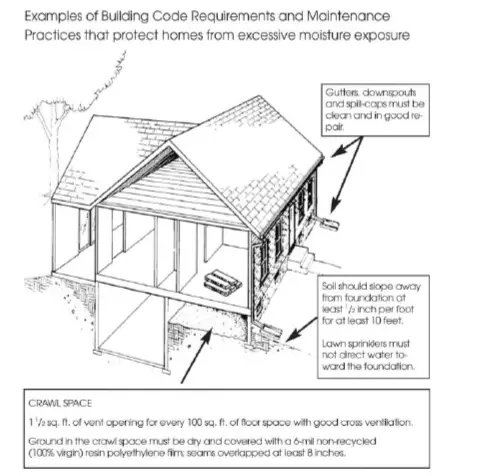
- Building codes are established to provide a safe living space. There are nationally recognized building codes, such as BOCA — Building Officials and Code Administrators International, Inc., and ICBO — International Conference of Building Code Officials as well as others. There are state and local building codes that also provide the same service and interest assuring a safe and consistently built living or working space. There are specific building codes that are designed to prevent excessive moisture from damaging the building materials. There are also maintenance practices that are required to prevent excessive moisture from damaging the building materials.
- Water drainage from adjoining properties, changes to your home site or incorrect building procedures or damage can allow excessive water or moisture to penetrate basement walls, flow beneath concrete slabs and basement floors and into crawl spaces. High water tables can necessitate the use of sump pumps to pump water that is flowing beneath a concrete floor. Pergo Outlast+ flooring should not be installed over any floor with a sump pump or in a room with a floor drain.
MOISTURE TEST
A moisture test is recommended on all concrete subfloors and wood subfloors constructed over a crawl space or basement. Maximum acceptable moisture readings for wood subfloors is 12%. When using a calcium chloride moisture test for concrete subfloors (ASTM 1869), values must be ≤ 5 lbs/1000ft2/24-hr or <80% with an in situ probe (ASTM F2170). If your moisture readings exceed those listed above, we do not recommend installing Pergo Outlast+.
IMPORTANT NOTE: During a dry season, you may find that you get an acceptable moisture reading even if other job site conditions are not acceptable. Before installing Pergo Outlast+ floors, you must be sure that your job site conditions as well as your moisture readings are acceptable year around.
JOB SITE CONDITIONS
- For concrete subfloors, vapor barriers, such as the recommended Pergo Moisturbloc™ 6-mil. polyethylene film installed correctly, 8-inch overlap at seams, installed up to the edge of the wall base or wall, will protect the finished floor from normal water vapor that is emitted through the concrete from a correctly constructed, maintained and undamaged building and correctly graded site that prevents excessive water exposure.
- For wood subfloors, a vapor barrier is not required on the surface of the wood subfloor. When there is a basement, the basement floor and walls must be dry. When there is a crawl space the soil in the crawl space must be covered by a 6 mil (.15mm) non-recycled (100% virgin) resin polyethylene film with seams overlapping at least 8 inches or more. Cover the surface of concrete in crawl spaces with a vapor barrier. Vents should be located throughout the foundation. They must provide good cross ventilation and no dead air space. There must be minimum vent openings equal to 1.5% of the square footage within the crawl space. Example, 100 square feet of crawl space must have at least 1.5 square feet of open vents. The building must be correctly constructed, maintained and undamaged with a correctly graded site that prevents excessive water exposure.
- Grading: Inspect the outside surroundings for improper drainage or obvious sources of moisture. The soil should slope away from the foundation (at least 1⁄2 inch per foot for at least 10 feet). Walkways and driveways should direct water away from the foundation. Adjoining properties should drain water away from the building site.
- Maintenance:: Ensure the eaves are in good repair, gutters, downspouts and spills caps are clear and directing rainwater away from the foundation.
- Floor drains or Sump Pumps: do not use Pergo Outlast+ in any room with a floor drain. Pergo Outlast+ must not be installed over any floor that has a sump pump — i.e. should there be a floor at a below grade level or an on-grade level concrete slab in the home and a sump pump is located in that below-grade level flooring or in the on-grade level slab, then Pergo Outlast+ flooring cannot be installed anywhere on that floor.
- Moisture Tests: Moisture tests and job site conditions are inseparable. The results of any moisture reading from meters or other test methods cannot be separated from the above job site conditions. An acceptable moisture reading can be obtained with incorrect job site conditions during a dry season. An acceptable moisture reading must be accompanied with the correct job site conditions to prevent excessive moisture from damaging any finished floor covering.
SUBFLOOR REQUIREMENTS GENERAL
- The surface of the subfloor must be flat. The flatness requirement is defined as follows: the maximum difference between two high points and the intermediate low point is 3⁄16 of an inch in a 10-foot radius. Surface flatness can also be measured with a 3 foot straight edge with a flatness requirement of 1⁄16 of an inch.
- Fill excessive voids or low areas using a Portland cement and latex-based leveling compound. Allow the leveling compound to dry thoroughly before beginning the Pergo Outlast+ flooring installation. Follow the manufacturer’s instructions to be sure it is appropriate for the application. High areas can be sanded, ground down or floated over with an approved self-leveling compound.
- The subfloor must not slope more than 1 inch in 6 feet.
- The surface of the subfloor must be clean.
- Any existing wood flooring on concrete subfloors must be removed prior to Pergo Outlast+ installation.
- Carpet, pad and tack strips must always be removed.
- If there is any question about the suitability of the subfloor or its moisture content, contact the Pergo Technical Support Service at 1-800-33-PERGO (1-800-337-3746).
WOOD SUBFLOOR REQUIREMENTS
- These average moisture content measurements for interior wood are based on a well-ventilated building without excessive moisture. Department of Agriculture Forest Products Laboratory. Wood handbook — Wood as an Engineering Material.
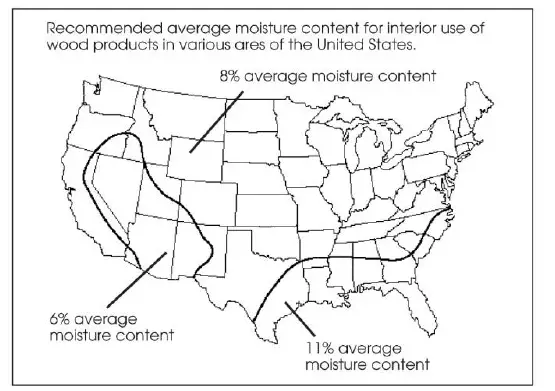
When installing Pergo Outlast+ flooring the maximum acceptable moisture reading for wood subfloors is 12%.
- Wood based products, once acclimated to the interior of home, have a stabilized moisture content* relative to the geographic area where they are being installed.
- Most areas in the United States will average 8% moisture content — Range 6 to 10%.
- Dry southwestern areas will average 6% moisture content — Range 4 to 9%. New Mexico, Arizona, Nevada and areas in Colorado, Wyoming and Idaho and eastern California.
- Damp, warm coastal areas will average 11% moisture content — Range 8 to 13%. Gulf coast and southern Atlantic coast, Texas, Louisiana, Mississippi, Alabama, Florida, Georgia, and the Carolinas.
- Plywood or other wood materials for subflooring should meet the building code requirements.
- Creaking subfloors must be repaired before installation of the finished floor covering.
- If the subfloor sags, inspect the joists below for twists or weakness.
- If the subfloor is cupped or is uneven at the joints take moisture readings and inspect for sources that may be allowing excessive moisture into the building.
- Check for excessive moisture in the crawl space or basement and look for other signs of a potential water problem. (See Job Site Evaluation, section 6.)
- High areas, such as peaked joints in the subfloor or other ridges in the wood subfloor must be sanded or planed and low areas repaired or filled with a Portland cement and latex based leveling compound or covered with a rigid underlayment. When using a leveling compound, be sure to follow the manufacturer’s recommendations, and allow the compound to dry completely before starting to install the Pergo Outlast+ Flooring. See Subfloor Requirements/ General, section 7, paragraph a.
- Pergo Moisturbloc™ or equivalent polyethylene film is not required on the top of a wooden floor or wood subfloor. These products are only required on concrete subfloors.
- When the subfloor is wooden, Pergo Outlast+ laminate flooring can be installed over parquet, planks or other wood flooring or wood based flooring installed on the wood subfloor.
- If you have questions or doubts about how to proceed in your situation, call us at 1-800-33-PERGO (1-800-337-3746).
IMPORTANT NOTE: During a dry season, you may find that you get an acceptable moisture reading even if other job site conditions are not acceptable. Before installing Pergo Outlast+ floors, you must be sure that your job site conditions as well as your moisture readings are acceptable.
- Should excessive moisture be present or if the job site conditions are not correct consult a waterproofing or flooring contractor for further moisture testing or abatement before installing a Pergo Outlast+ floor.
- CONCRETE AND TE RRAZZO SUBFLOOR REQUIREMENTS: When installing Pergo Outlast+ flooring, the maximum acceptable moisture levels must be considered. When using a calcium chloride moisture test for concrete subfloors (ASTM 1869), values must be ≤ 5 lbs/1000ft2/24-hr or <80% with an in situ probe (ASTM F2170).
- Concrete and terrazzo release moisture long after it is poured and can transfer dampness from wet soil and the air, i.e., elevated concrete floors in apartment and office buildings. New concrete must cure for 60 days before any flooring is installed.
- Check the floor for flatness. If the concrete or terrazzo subfloor has excessive voids or variations, a leveling compound can be used to bring it up to specifications. (See Subfloor Requirements/General.) Low areas greater than 3⁄16″ in a 10′ radius should be filled in using a Portland cement and latex-based floor leveler. Follow the manufacturer’s directions for mixing the filler, and be sure to allow it to dry completely. High spots or ridges above 3⁄16″ within a 10′ radius (or 1⁄16 of an inch within a 3 foot radius) must be ground down.
- When installing Pergo Outlast+ over a concrete or terrazzo subfloor you must use a 6-mil. (.15mm) non- recycled (100% virgin) resin polyethylene film such as Pergo MoisturblocTM to form a vapor barrier. Pergo Outlast+ has attached underlayment foam, so use only a vapor barrier with this product when installing over a concrete subfloor. The edges of the vapor barrier must overlap by at least 8 inches (200mm) or when using an equivalent, non-recycled, polyethylene film, follow the manufacturer’s direction for installation. Vapor barrier underlayments are required over all subfloors containing concrete, even if the concrete is covered by vinyl, linoleum VCT (resilient tile), terrazzo or ceramic tile.
- Evaluation of moisture conditions for concrete or terrazzo subfloors. (Also see Job Site Evaluation–exterior and interior moisture conditions–section 6.) If there is excessive moisture in the concrete or the job site conditions are not correct then Pergo Outlast+ flooring cannot be installed.
- When a resilient tile is installed over concrete subfloors and there are visible salt deposits at any of the joints of the tile there is reason to believe that excessive moisture is present.
- A precise moisture reading can be obtained using the calcium chloride test. Three tests must be used for the first 1000 sq. ft. and one additional test for each 1000 sq. ft. or fraction thereof (ASTM 1869-03). The results of the test must not exceed 5 lbs/1000ft2/24-hr (not to exceed five pounds of water vapor being emitted from 1000 square feet of flooring over a period of 24 hours).
- Alternatively, acceptable concrete moisture readings include <80% with an in situ probe (ASTM F2170).
- Do not install Pergo Outlast+ flooring in a room with a floor drain.
- Do not install Pergo Outlast+ flooring over a floor with a sump pump. Pergo Outlast+ flooring must not be installed over any floor that has a sump pump, i.e. should there be a floor at a below grade or an on-grade level concrete slab in the home and a sump pump is located in that below-grade level flooring or in the on-grade level slab, then Pergo Outlast+ flooring cannot be installed anywhere on that floor.
- IMPORTANT NOTE: During a dry season, you may find that you get an acceptable moisture reading even if other job site conditions are not acceptable. Before installing Pergo Outlast+ floors, you must be sure that your job site conditions as well as your moisture readings are acceptable.
- Should excessive moisture be present or the job site conditions are not correct, consult a waterproofing or flooring contractor for further moisture testing or abatement before installing a Pergo Outlast+ floor.
OTHER SUBFLOOR RE QUIREM E NTS
- Vinyl sheet goods, linoleum and resilient (VCT) tiles: Old vinyl and linoleum tiles or sheet goods normally do not need to be removed. Some older vinyl sheet goods and tile contain asbestos. Should you choose to remove these older floor coverings, consult a floor covering retailer or the manufacturer of the vinyl floor covering regarding the contents. Should it contain asbestos special precautions must be taken for your safety.
- When Pergo Outlast+ flooring is installed over vinyl, linoleum sheet goods, over resilient tiles or ceramic tiles and the subfloor is concrete, a vapor barrier is always required.
- Ceramic tiles and terrazzo: Old ceramic tiles normally don’t need to be removed. Usually, Pergo Outlast+ flooring can be installed directly over ceramic tiles and terrazzo providing they are smooth, sound and dry. These flooring materials must be smooth and flat to within 3⁄16″ in a 10′ radius. (See Subfloor Requirements/General, section 7.)
- Use Pergo MoisturblocTM, or equivalent, if the subfloor is concrete.
- Pergo Outlast+ has an attached foam underlayment. Use only a vapor barrier when installing over a concrete subfloor.
- When installing Pergo Outlast+ with attached underlayment foam over a wood subfloor, no other additional foam underlayment is required.
NEW CONSTRUCTION REQUIREMENTS: There are several special considerations that must be evaluated before installing Pergo Outlast+ flooring in new construction.
- As with all wood-based flooring products, the installation should be scheduled as late in the building cycle process as possible. This will prevent any unnecessary damage from occurring as a result of other trades involved with the construction process. Always protect the floor if other trades will be walking on the floor after installation.
- The house/building must be closed and the climate controls should be in operation for at least two weeks. The temperature should be maintained between 60°F and 85°F during these two weeks and the relative humidity should average between 35% and 65%.
- Close attention must be paid to the condition of the subfloor. (See sections 7 through 10 for your specific subfloor requirements.)
- Moisture in the wood or concrete subfloor, foundation walls, basement, or crawl space must be checked and verified to be in compliance with the subfloor requirements. (See Job Site Evaluation, section 6 — exterior/interior moisture conditions and sections 7 through 10 for your specific subfloor requirements.)
- Kitchen cabinets should be installed before the floor is installed. However, cabinets may be installed after the floor is in place providing the cabinets, island cabinets, etc. are not fixed/attached to the Pergo Outlast+ floor. Island cabinets can be anchored to the subfloor. The holes for the anchoring bolts or screws must be 3⁄4″ on center, larger than the diameter of the bolts or screws — this allows for the 3⁄8″ expansion space needed for a floating floor to move without being obstructed by the fastener. Other cabinets must be fastened to walls or to the subfloor as described for island cabinets.
- The perimeter of the installation must be sealed. Create a watertight seal by applying flexible 100% silicone sealant to the entire perimeter of the installation. Do not use acrylic sealant.
- First fill all expansion spaces with 3/8” compressible PE foam backer rod and cover with 100% silicone sealant. Be sure the silicone completely covers the expansion space from the edge of the floor to the vertical surface, with no gaps or spaces.
- Prior to installing the moldings, apply 100% silicone sealant to the portion of the molding or transition that will contact directly with the laminate flooring surface.
- Install moldings and immediately wipe away any excess silicone sealant.
- Apply 100% silicone sealant at connections to doorframes or any other fixed objects.
BATHROOM INSTALLATIONS
Because the Pergo Outlast+ surface is resistant to water, it can be installed in bathrooms. However, it is very important to prevent water or moisture from getting under the floor.
Installation in bathrooms must be made in accordance with the following instructions:
- All expansion spaces, between the Pergo Outlast+ flooring and walls, the doorway transition or other fixed objects such as pipes for radiators, sinks, water supply to water closet or toilet flanges MUST be filled with 3/8” compressible PE foam backer rod and covered with 100% silicone sealant.
- The space around the perimeter of the Pergo Outlast+ floor must be 3⁄8″ wide and sealed prior to installing the wall trim. The 3⁄8″ expansion space must be completely filled with 3/8” compressible PE foam backer rod and covered with 100% silicone sealant. Be sure the silicone completely covers the expansion space from the edge of the floor to the vertical surface, with no gaps or spaces. Also apply a thin bead of silicone to the bottom portion of the wall trim that will contact the laminate flooring surface and wipe away any excess silicone after installing the wall trim.
- When Pergo Outlast+ flooring is installed in a bathroom and an adjoining hall or room, a T-Molding must be installed in the doorway between the rooms or hall-way and the expansion space under the T-Molding must be sealed. Fill the expansion space on both sides of the T-Molding track with 3/8” compressible PE foam backer rod and cover with 100% silicone sealant. Place backer rod and silicone sealant in the expansion space of any flooring transition in the doorway of a bathroom. Also apply a thin bead of silicone to the bottom portion of the transition that will contact the laminate flooring surface and wipe away any excess silicone after installing the transition.
- Pergo Outlast+ must not be installed in rooms with a floor drain.
- Pergo Outlast+ must not be installed over any floor that has a sump pump i.e. should there be a bathroom at a below grade level or on-grade concrete slab in the home and a sump pump is located on that below grade level flooring or on the on-grade level subfloor, then Pergo Outlast+ flooring cannot be installed anywhere on that floor.
- Wipe up liquids immediately. Do not allow topical moisture to remain on the floor for longer than 24 hours.
KITCHEN INSTALLATIONS
It is recommended that kitchen cabinets be installed prior to installing Pergo Outlast+ flooring. Install the planks up to the kick plate of the cabinet, leaving a 3⁄8″ expansion space. Fill the expansion space with 3/8” compressible PE foam backer rod and cover with 100% silicone sealant. Be sure the silicone completely covers the expansion space from the edge of the floor to the vertical surface, with no gaps or spaces. Then cover the expansion space with a quarter round molding. Apply a thin bead of silicone to the bottom portion of the quarter round molding that will contact the laminate flooring surface and wipe away any excess silicone after installing the quarter round molding.
When installing Pergo Outlast+ in kitchens, pay special attention to the following areas:
- Cabinet with kitchen sink: The 3⁄8″ expansion space in front of the cabinets that house the dishwasher and kitchen sink MUST be filled with 3/8” compressible PE foam backer rod and covered with 100% silicone sealant.
- Dishwashers: When installing Pergo Outlast+ flooring in the dishwasher space beneath cabinets, be sure to properly seal the perimeter expansion spaces where the dishwasher is sitting. When flooring abuts the dishwasher, fill the expansion space with 3/8” compressible PE foam backer rod and cover with 100% silicone sealant.
- Refrigerators: When installing Pergo Outlast+ flooring in the refrigerator space, be sure to properly seal the perimeter expansion spaces where the refrigerator is sitting. Also be sure to seal around openings for water supply lines to the icemaker of the refrigerator.
- NOTE: For built-in refrigerators, follow instructions for sealing as for dishwashers.
- Exterior doors: The expansion space in front of any exterior door MUST be filled with 3/8” compressible PE foam backer rod and covered with 100% silicone sealant.
- Use Pergo MoisturblocTM or equivalent 6-mil. (.15mm) non- recycled (100% virgin) resin polyethylene film as a vapor barrier when installing over a concrete subfloor.
- Pergo Outlast+ must not be installed in rooms with a floor drain.
- Pergo Outlast+ must not be installed over any floor that has a sump pump— i.e. should there be a kitchen at a below grade level or on-grade concrete slab in the home and a sump pump is located in that below- grade level subfloor or in the on-grade level subfloor, then Pergo Outlast+ flooring cannot be installed anywhere on that floor.
All reference to sealant means 100% silicone sealant.
LAUNDRY ROOM INSTALLATIONS
All expansion spaces in a laundry room MUST be filled with 3/8” compressible PE foam backer rod and covered with 100% silicone sealant. Be sure the silicone completely covers the expansion space from the edge of the floor to the vertical surface, with no gaps or spaces.
- Pergo Outlast+ must not be installed in rooms with a floor drain.
- Pergo Outlast+ must not be installed over any floor that has a sump pump — i.e. should there be a laundry room at a below grade level or on-grade concrete slab in the home and a sump pump is located in that below-grade level subfloor or in the on-grade level subfloor, then Pergo Outlast+ flooring cannot be installed anywhere on that floor.
- The expansion space around the perimeter of the Pergo Outlast+ floor must be 3⁄8″ wide and sealed prior to installing the wall trim. The 3⁄8″ expansion space must be completely filled with 3/8” compressible PE foam backer rod and covered with 100% silicone sealant. Be sure the silicone completely covers the expansion space from the edge of the floor to the vertical surface, with no gaps or spaces. Also apply a thin bead of silicone to the bottom portion of the wall trim that will contact the laminate flooring surface and wipe away any excess silicone after installing the wall trim.
- The expansion space in front of any exterior door MUST be filled with 3/8” compressible PE foam backer rod and covered with 100% silicone sealant.
- Use Pergo MoisturblocTM or equivalent 6-mil. (.15mm) non-recycled (100% virgin) resin polyethylene film as a vapor barrier when installing over a concrete subfloor.
- When Pergo Outlast+ flooring is installed in a laundry room and an adjoining hall or room, a T-Molding must be installed in the doorway between the rooms or hallway and the expansion space under the T-Molding must be sealed. Fill the expansion space on both sides of the T-Molding track with 3/8” compressible PE foam backer rod and cover with 100% silicone sealant. Place backer rod and silicone sealant in the expansion space of any flooring transition in the doorway of a laundry room. Also apply a thin bead of silicone to the bottom portion of the transition that will contact the laminate flooring surface and wipe away any excess silicone after installing the transition.
RADIANT FLOOR HEATING
Pergo Outlast+ flooring can be used in combination with many types of in-floor heating. The heating system can be cast in a concrete floor or in a thin layer of filler on the surface of a concrete subfloor. It can also be installed under a wood subfloor or installed on the surface of the subfloor as an electrical matting as long as it meets the floor flatness requirements.
- Follow the instructions from the supplier of the floor heating system.
- Concrete subfloors must be installed and cured with no heat transfer for a minimum of 60 days.
- The heating system must be in operation for at least two weeks before installation. The system may be turned off or set to a suitable installation temperature (65 to 72°F).
- The flooring surface temperature, which is the surface of the subfloor or the heat radiating from electric heating mats, should not exceed 84°F (29°C).
COTTAGES AND ROOMS WITHOUT CLIMATE CONTROL
Pergo Outlast+ can be installed in homes or rooms without climate control with the following conditions:
- Pergo Outlast+ installation essentials must be met.
- The crawl spaces must be enclosed and vented and meet all requirements and the job site conditions must be correct.
- Insulation of the floor in the crawl space is recommended.
- The floor must not be installed in an area where it will be exposed to constant dampness or extremely high or low humidity. Relative humidity must range between 35-65%. The temperature should be at least 60°F for the product acclimation and at least 60°F two days after the installation.
COMMERCIAL APPLICATIONS: (Only for those products that are designated for commercial use by Pergo)
In commercial applications, an expansion space of 3⁄8″ is required at all walls, pillars, pipes and other fixed objects. Areas greater than 40 feet in length or width, and consecutive multiples of 40 feet, i.e. (one room; two or more rooms with adjoining archways greater than 4 feet; large room with extended hallway) must have a T-Molding installed across the width of the room, archway or at the beginning of the hallway to provide additional expansion space. When fastening fixtures to a floating floor, the anchoring bolts or fasteners must have the same expansion space (3⁄8 inch) around each bolt or fastener as required for walls, pillars, pipes and other fixed objects.
Commercial flooring transitions that accommodate a 3⁄8″ expansion space are strongly recommended.
INSTALLING PERGO OUTLAST+ FLOORING ON STEP DOWN AND STAIR TREAD APPLICATIONS
Stair nosing is used to finish stair edges or step-down applications. Prior to beginning the installation, any loose or damaged treads or risers should be repaired or replaced. The stairs must be cleaned thoroughly from any loose paint, debris or old adhesives.
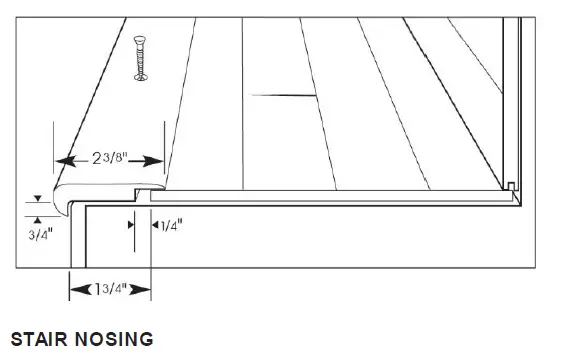
Due to the many varieties of stairs available in North America, a professional stair contractor may be required for certain installations. Check local building codes before altering dimensions of stair tread, riser and nosing. Should there be any questions regarding the application of Pergo on stairs, please call our Customer Help line at 1-800 33-PERGO (1-800-337-3746).
Step down from a floating floor
Cut the stair nosing to the desired length. The nosing must be fastened with screws (i.e. finishing screw #6 by at least 11⁄8″). A quality construction adhesive should also be used. A 3/8″ expansion space must be maintained between the nosing and the floating floor. For step sown (from a floating floor) to a lower level or at the top of a flight of stairs: Adhere the stair nosing with a quality construction adhesive and with #6 finishing screws 11⁄8″ in length. Place screws 2 additional screws at intervals no greater than 8 inches along the length of the nosing.
- Use shims beneath the stair nosing as needed to match the thickness of Pergo Outlast+ planks. Adhere the shim to the nosing with construction adhesive and adhere the shim and nosing to the subfloor with construction adhesive and fasten with screws.
Stair Treads only: Adhere the stair nosing with a quality construction adhesive and fasten with #6 finishing screw 11/8″ in length. Place screws 2 inches from each end of the nosing and space additional screws at intervals no greater than 8 inches along the length of the nosing.
Use shims beneath the stair nosing as needed to match the thickness of Pergo Outlast+ planks. Adhere the shim to the nosing with construction adhesive and adhere the shim and nosing to the subfloor with construction adhesive and fasten with screws.
This illustration shows the step down from a floating floor. The step down shows the tread flush or even with the riser.
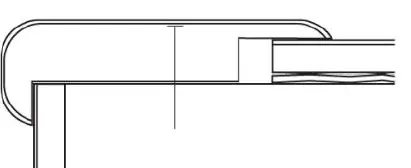
Tread flush or even with the riser
The riser must be installed before the stair nosing is fit into place. If installing from a floating floor, follow the above instructions. When installing on a stair tread, the nosing will be installed after the tread and riser are glued into place.
Tread with an extended round edge nosing
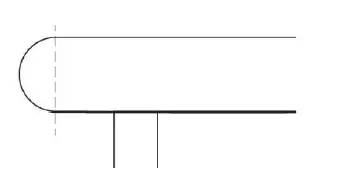
The rounded portion of the extended nosing will need to be squared. Leave as much of the extending nose of the tread as possible, removing only the radius (the rounded portion). On the edge of the squared nosing, glue a narrow strip of Pergo Outlast+. Remove the attached underlayment before gluing. This will finish the exposed edge of the tread. After installing the tread and riser the nosing will be installed, finishing the nose of the tread. The illustration shows a step with an extended round edge nosing. On the illustration, a dotted line will show where to cut the rounded portion of the extended nosing.
Tread with an extended and square edge nosing
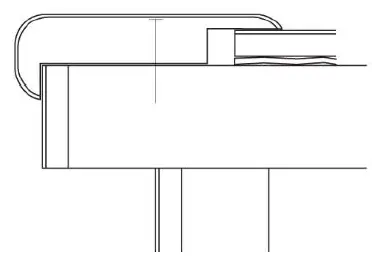
On this style of tread, simply cut a narrow strip of Pergo Outlast+ and glue it on the edge of the existing tread. Install the tread and riser and finish the edge with a nosing. The illustration at right shows square edge nosing with Pergo Outlast+ on the edge, and installed Pergo Outlast+ on the tread and riser with a nosing finishing the nose of the tread.
PERG O OUTLAST+ ON STAIR TREADS AND RISERS
- Dry fit the Pergo Outlast+ planks net, or snug, stringer to stringer (from left to right side). Remember that the depth of Pergo Outlast+ tread material will be cut to accommodate the width of the nosing which overlaps either a riser of Pergo Outlast+ or the piece of Pergo Outlast+ which is glued on the edge of the step.
- One plank of Pergo Outlast+ will finish most risers; however, two planks of Pergo Outlast+ will be needed for the tread since tread depth exceeds the width of one Pergo Outlast+ plank.
- Personal preference will determine your choice to install the riser or the tread first. In either event, the joint between the tread and riser should be sealed with 100% silicone sealant. Quarter round can also be used.
- After dry fitting, the Pergo Outlast+ planks must be adhered to the stair treads in one of the following ways:
- Fully spread a premium quality parquet adhesive on the tread and riser. This should be performed in accordance with the manufacturer’s specifications. Remove the attached underlayment before gluing. Make sure to press the Pergo Outlast+ into the adhesive to get proper bonding. Allow the recommended amount of time for the adhesive to fully set up before using the stairs.
- Remove the attached underlayment before gluing. Apply several continuous beads of a premium quality construction adhesive across the full width of the tread and riser. This should be performed in accordance with the adhesive manufacturer’s specifications. Firmly press the Pergo Outlast+ into the adhesive to ensure proper bonding. Allow the recommended amount of time for the adhesive to fully set up before using the stairs.
NOTE: On wood or concrete surfaces, stair nosing must be fastened with construction adhesive and screws to the treads. A stair application is the ONLY time that a Pergo Outlast+ floor is glued directly to a substrate. Pergo Outlast+ is installed as a floating floor for a step down and all other applications.
- Mechanical Fasteners for Stair Nosing Over Wood Subfloors: Use a premium grade of construction adhesive and trim screws at least 11/8″ in length. Drill holes in the molding for the fasteners. Countersink the screws and fill with color-matched finishing putty. When fastening the stair nosing, space screws 2 inches from each baseboard or stringer and a maximum distance of 8 inches apart down the length the nosing.
- Concrete Subfloors: Drill into the concrete subfloor with a carbide drill bit. Insert an appropriate plug into the concrete to accommodate the fastener then follow the procedure above.
For questions regarding this installation information, you can call: 1-800-PERGO (1-800-337-3746).