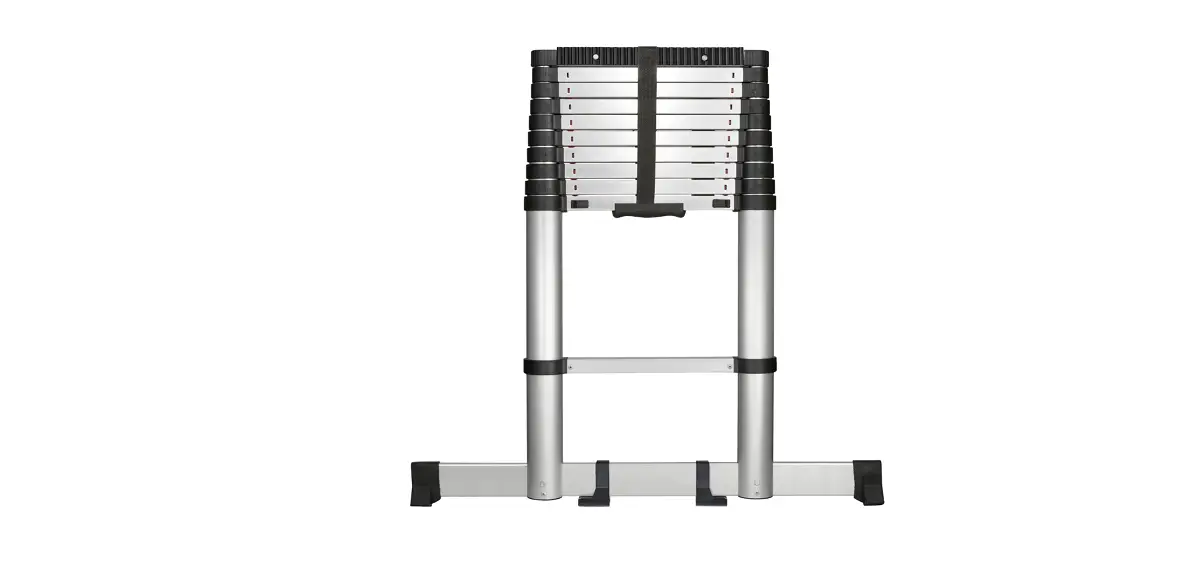
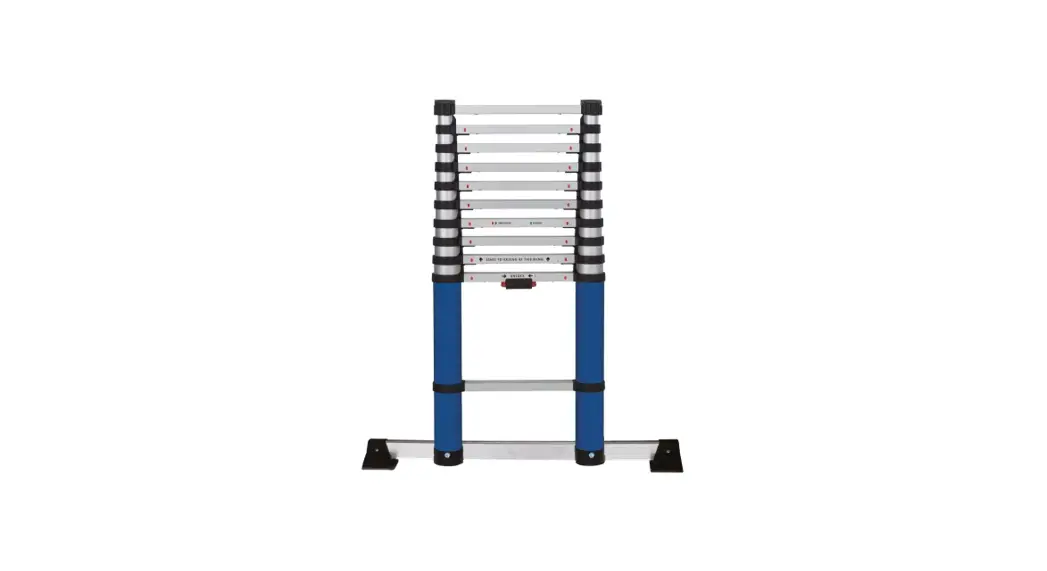
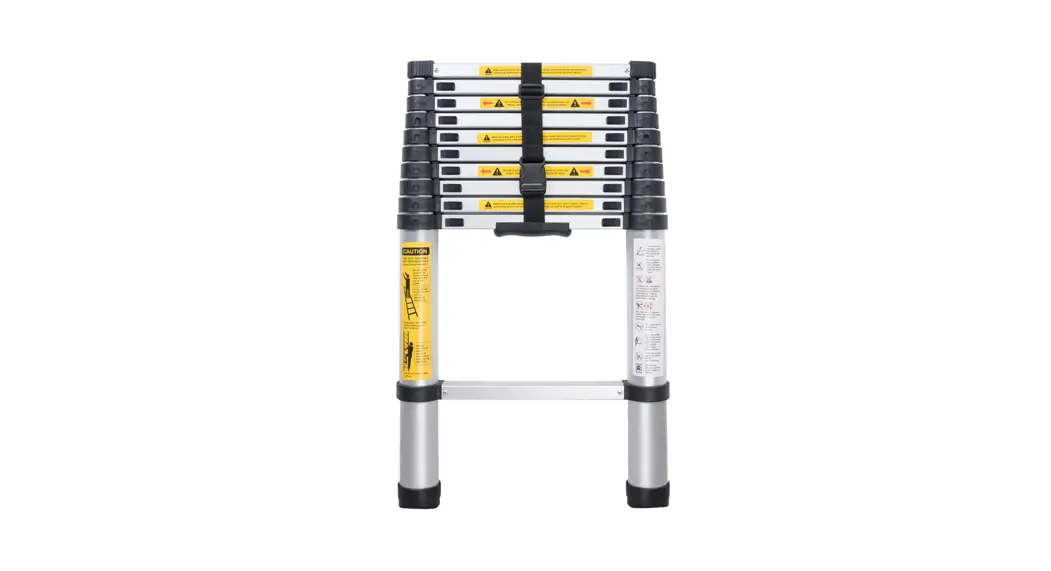
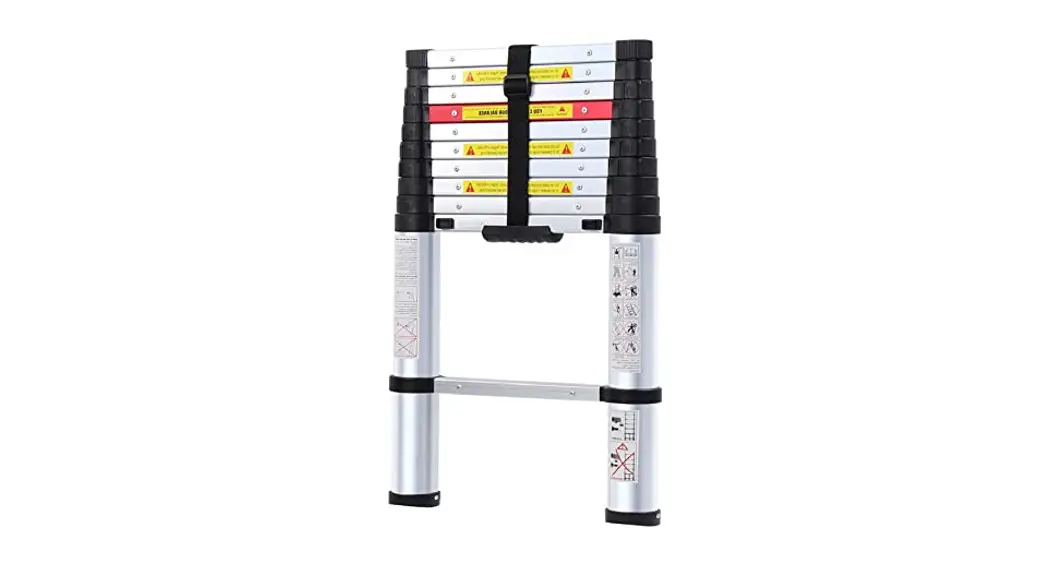
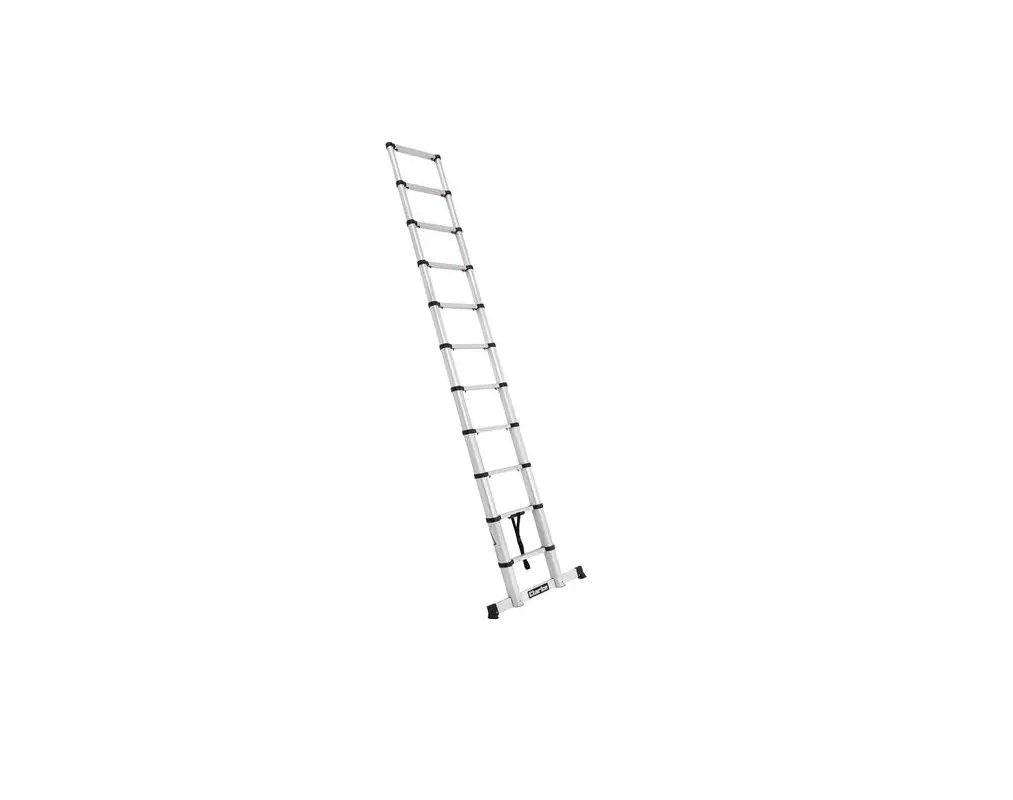
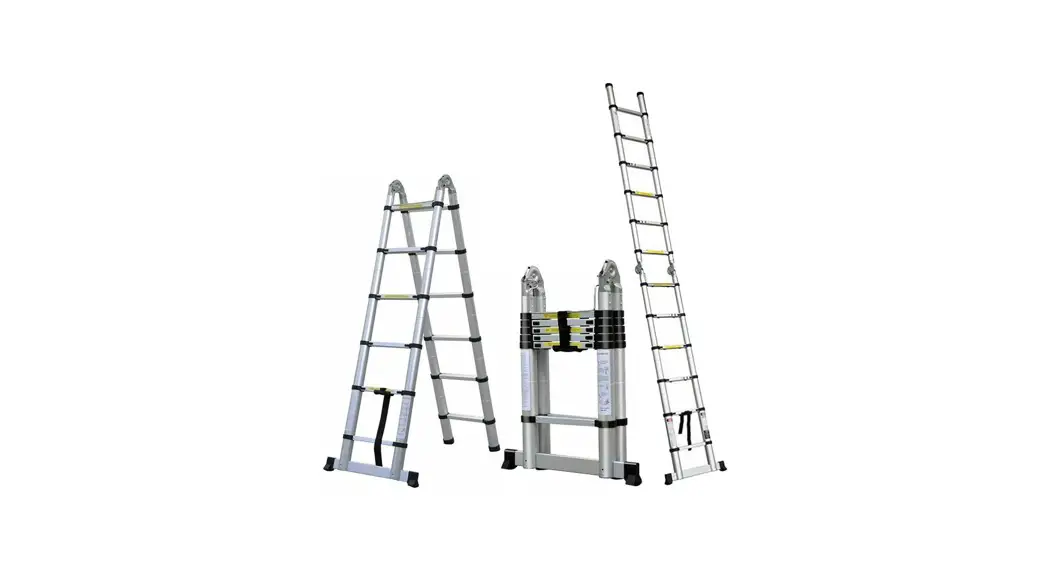
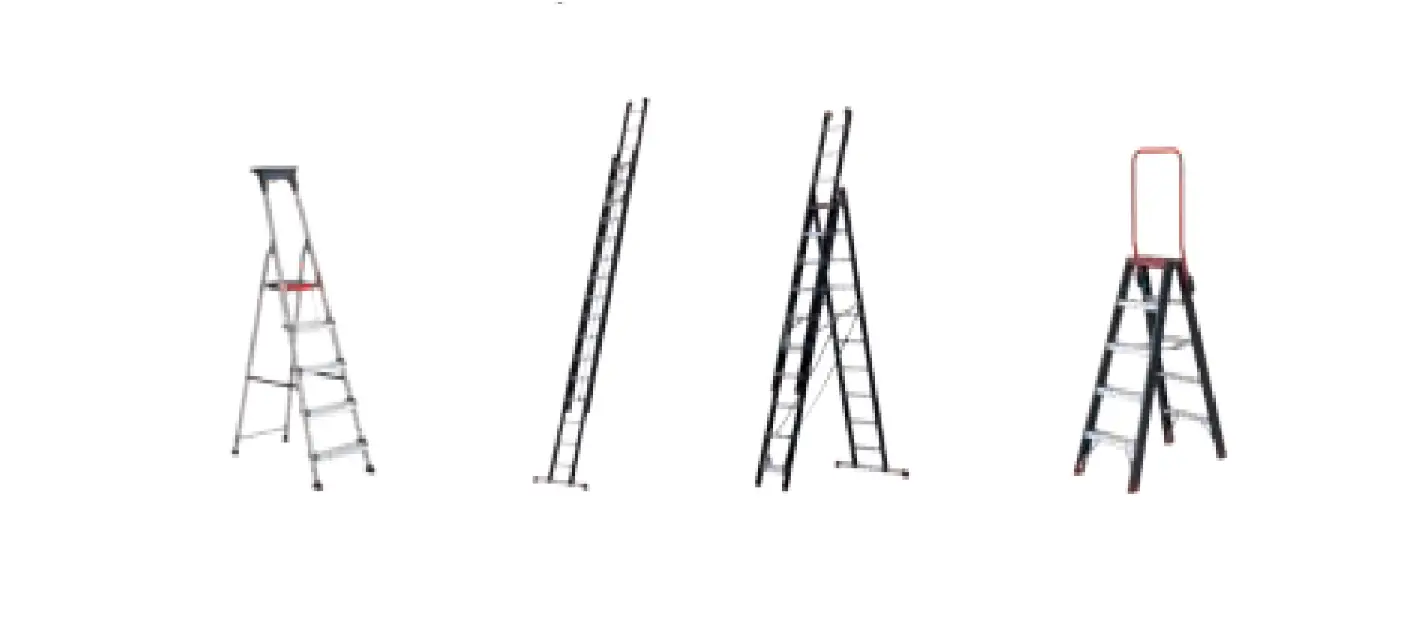
ML-1032H Telescopic Ladder
Product Information:
This is the Operating & Safety Instructions for a Type/Typ
ML-1032H ladder. The ladder is approximately 2.04m in height and
comes with a stabilizer bar that needs to be installed for safe
usage. The maximum load for the ladder is not specified.
Product Usage Instructions:
- Before using the ladder:
- Ensure that you are fit enough to use a ladder. Certain medical
conditions or medication, alcohol or drug abuse could make ladder
use unsafe; - When transporting ladders on roof bars or in a truck, ensure
they are suitably placed to prevent damage; - Inspect the ladder after delivery and before first use to
confirm condition and operation of all parts; - Visually check the ladder at the start of each working day when
the ladder is to be used; - For professional users regular periodic inspection is
required; - Ensure the ladder is suitable for the task;
- Do not use a damaged ladder;
- Do not use the ladder if contaminated, e.g. with wet paint,
mud, oil or snow; - For professional use a risk assessment shall be carried out
respecting the legislation in the country of use; - Do not modify the ladder design.
- Ensure that you are fit enough to use a ladder. Certain medical
- Positioning and erecting the ladder:
- The ladder shall be erected at the correct position, such as on
a level and stable base; - A leaning ladder should lean against a flat non-fragile surface
and should be secured before use, e.g. tied or use of a suitable
stability device; - The ladder shall never be repositioned from above;
- When positioning the ladder take into account risk of collision
with the ladder e.g. from pedestrians, vehicles or doors; Secure
doors (not fire exits) and windows where possible in the work
area; - Warning, electricity hazard. Identify any electrical risks in
the work area, such as overhead lines or other exposed electrical
equipment; - The ladder shall be stood on its feet, not the rungs or
treads; - Ladders shall not be positioned on slippery surfaces (such as
ice, shiny surfaces or significantly contaminated solid surfaces)
unless additional effective measures are taken to prevent the
ladder slipping or ensuring contaminated surfaces are sufficiently
clean.
- The ladder shall be erected at the correct position, such as on
- Using the ladder:
- Do not use the ladder on an unlevel or unstable base;
- Do not overreach;
- Ensure ground is free from contaminants;
- Ladders used for access to a higher level shall be extended at
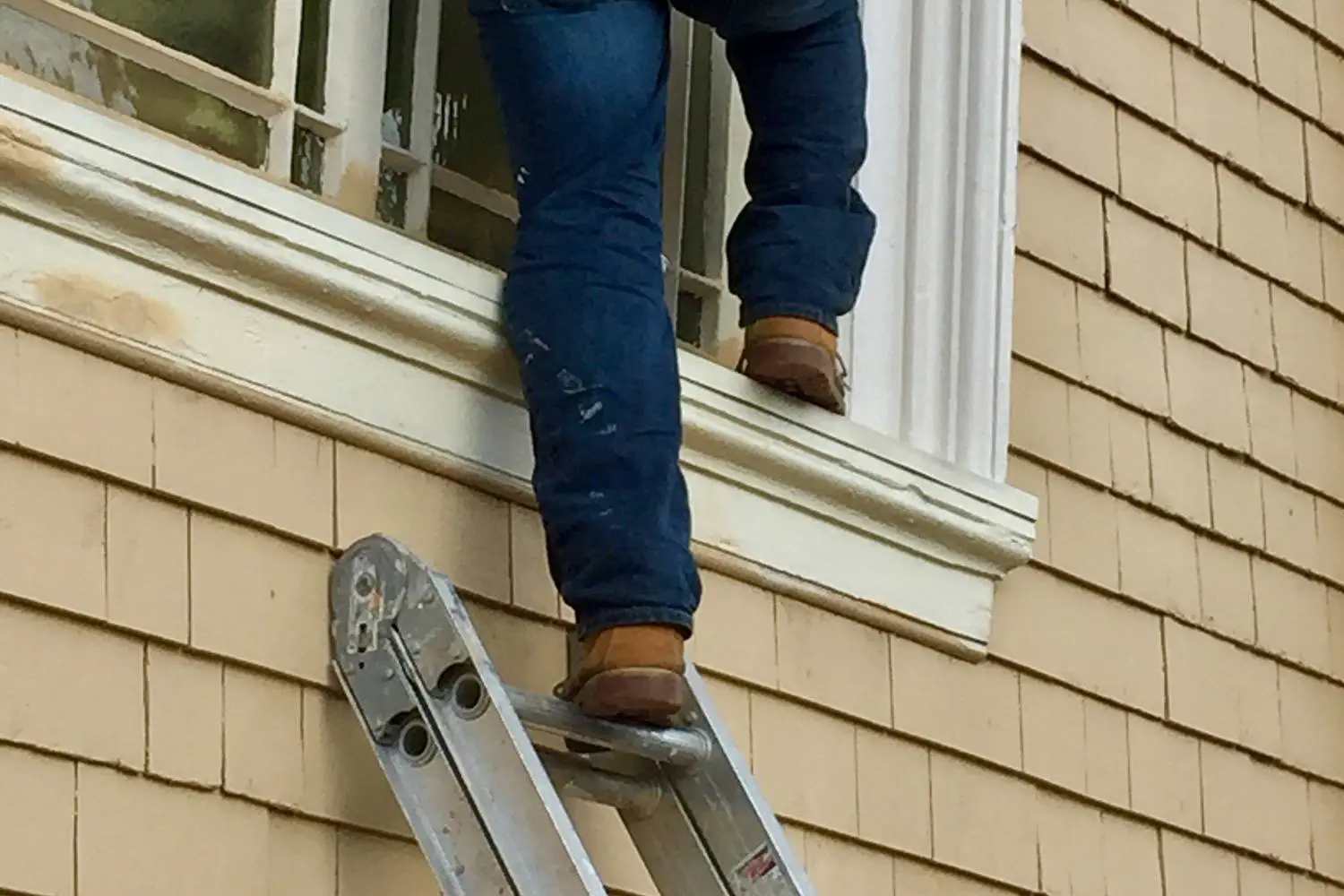
least 1m above the landing point and secured, if necessary; - Do not step off the side of a ladder;
- Do not use the ladder as a bridge;
- Be aware of electrical hazards when transporting ladder;
- Face ladder when ascending or descending ladder;
- Do not stand on the three top rungs of a leaning ladder (Top
bar is not regarded as a rung).
- Installing the stabilizer bar:
- Insert the stabilizer bar into the slots of the stiles.
- Pass the bolts through the legs and the stabilizer bar.
- Fix nuts and tighten securely.
- Always use the stabilizer bar!
English Deutsch –
Operating & Safety Instructions Bedienungs- und Sicherheitsanleitung
Type/Typ ML-1032H
Warning! Fall from the ladder
Read the instructions Maximum load
Correct erection angle (65°-75°)
1
English Deutsch –
Operating & Safety Instructions Bedienungs- und Sicherheitsanleitung
Type/Typ ML-1032H
Do not use the ladder on an unlevel or unstable base
Do not overreach Ensure ground is free from contaminants
Ladders used for access to a higher level shall be extended at least 1m above the landing point and secured, if necessary
2
English Deutsch –
Operating & Safety Instructions Bedienungs- und Sicherheitsanleitung
Type/Typ ML-1032H
Do not step off the side of a ladder
Do not use the ladder as a bridge
Be aware of electrical hazards when transporting ladder
Face ladder when ascending or descending ladder
3
English Deutsch –
Operating & Safety Instructions Bedienungs- und Sicherheitsanleitung
Type/Typ ML-1032H
Maximum number of users on ladder
Do not lean the ladder against unsuitable surfaces
INTRODUCTION Install the stabilizer Bar
1. Insert the stabilizer bar into the slots of the stiles. 2. Pass the bolts through the legs and the stabilizer bar. Fix nuts and tighten securely.
Always use the stabilizer bar!
Technical data Maximum permissible load: 150kg Inclination angle: 65°-75° Maximum number of user: 1 Professional use Model ML-1032H Maximum length: 3,31m Weight: 12,2kg Max. Standing height:
4
English Deutsch –
Operating & Safety Instructions Bedienungs- und Sicherheitsanleitung
approx. 2,04m
Type/Typ ML-1032H
Do not stand on the three top rungs of a leaning ladder (Top bar is not regarded as a rung).
1. Check before using the ladder
a) Ensure that you are fit enough to use a ladder. Certain medical conditions or medication, alcohol or drug abuse could make ladder use unsafe;
b) When transporting ladders on roof bars or in a truck, ensure they are suitably placed to prevent damage;
c) Inspect the ladder after delivery and before first use to confirm condition and operation of all parts;
d) Visually check the ladder at the start of each working day when the ladder is to be used;
e) For professional users regular periodic inspection is required;
f) Ensure the ladder is suitable for the task; g) Do not use a damaged ladder; h) Do not use the ladder if contaminated, e.g. with wet paint,
mud, oil or snow; i) For professional use a risk assessment shall be carried out
respecting the legislation in the country of use. j) Do not modify the ladder design. 2. Positioning and erecting the ladder a) The ladder shall be erected at the correct position, such as
the correct angle for a leaning ladder (65-75º angle of inclination, approximately 1:4) with the rungs or treads level and complete opening of a standing ladder; b) Locking devices, if fitted, shall be fully secured before use; c) The ladder shall be on an even, level and unmovable base;
d) A leaning ladder should lean against a flat non-fragile surface and should be secured before use, e.g. tied or use of
5
English Deutsch –
Operating & Safety Instructions Bedienungs- und Sicherheitsanleitung
Type/Typ ML-1032H
a suitable stability device;
e) The ladder shall never be repositioned from above;
f) When positioning the ladder take into account risk of collision with the ladder e.g. from pedestrians, vehicles or doors; Secure doors (not fire exits) and windows where possible in the work area.
g) Warning, electricity hazard. Identify any electrical risks in the work area, such as overhead lines or other exposed electrical equipment;
h) The ladder shall be stood on its feet, not the rungs or treads;
i) Ladders shall not be positioned on slippery surfaces (such as ice, shiny surfaces or significantly contaminated solid surfaces) unless additional effective measures are taken to prevent the ladder slipping or ensuring contaminated surfaces are sufficiently clean.
j) Ladder shall never be moved from the top.
3. Using the ladder
a) Do not exceed the maximum permissible load for the type of ladder;
b) Do not overreach; users should keep their belt buckle (navel) inside the stiles and both feet on the same step/rung throughout the task;
c) Do not step off a leaning ladder at a higher level without additional security, such as tying off or use of a suitable stability device;
d) Do not use standing ladders for access to another level;
e) Do not stand on the top four rungs of a leaning ladder;
f) Ladders should only be used for light work of short duration;
g) Use non-conductive ladders for unavoidable live electrical work;
6
English Deutsch –
Operating & Safety Instructions Bedienungs- und Sicherheitsanleitung
Type/Typ ML-1032H
h) Do not use the ladder outside in adverse weather conditions, such as strong wind;
i) Take precautions against children playing on the ladder;
j) Secure doors (not fire exits) and windows where possible in the work area;
k) Do not ascend or descend unless you are facing the ladder;
l) Keep a secure grip on the ladder when ascending and descending; maintain a handhold whilst working from a ladder or take additional safety precautions if you cannot.
m) Do not use the ladder as a bridge;
n) Do not wear unsuitable footwear when climbing a ladder;
o) Avoid excessive side loadings e.g. drilling brick and concrete;
p) Do not spend long periods on a ladder without regular breaks (tiredness is a risk);
q) Leaning ladders used for access to a higher level should be extended at least 1 m above the landing point;
r) Do not carry equipment which is heavy or difficult to handle while using a ladder.
s) Avoid work that imposes a sideways load on ladders, such as side-on drilling through solid materials (e.g. brick or concrete);
7
English –
Operating & Safety Instructions
Deutsch –
Bedienungs- und Sicherheitsanleitung
Type/Typ ML-1032H
t) Maintain a handhold whilst working from a ladder or take
additional safety precaution if you cannot;
u) Do not move a ladder while standing on it.
v) For outdoor use caution to the wind.
w)Only use the ladder in the direction as indicated, only if necessary due to design of ladder.
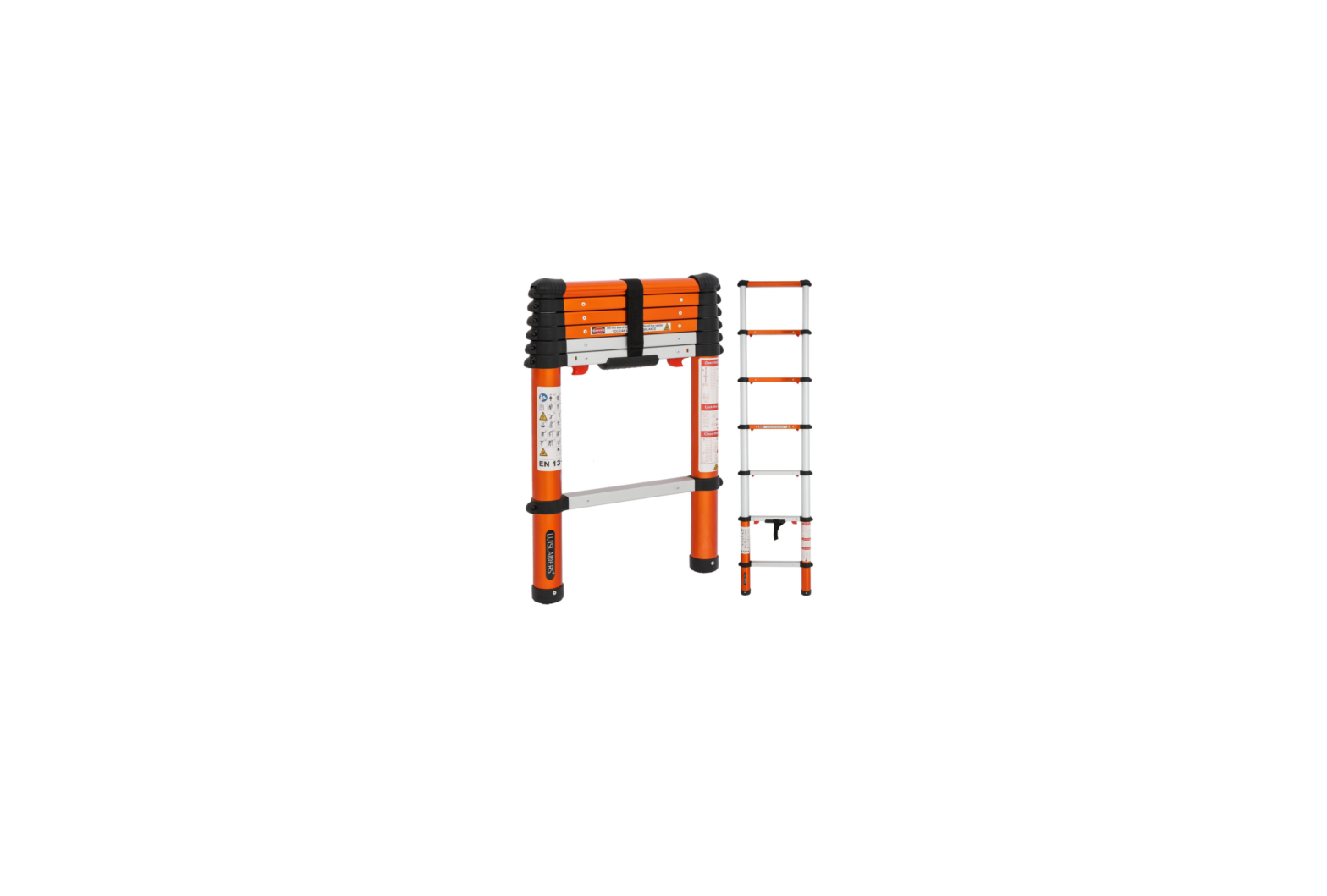
Extending the ladder Extending several rungs only If you do not want to extend the whole length of ladder to use, please ensure that the rung sections that are not extended shall be stacked on top end of the ladder.
Please extend the ladder from bottom to top, one by one up to the desired length.
Extending the ladder to whole length
Please extend the ladder from bottom to top until the whole length is extended.
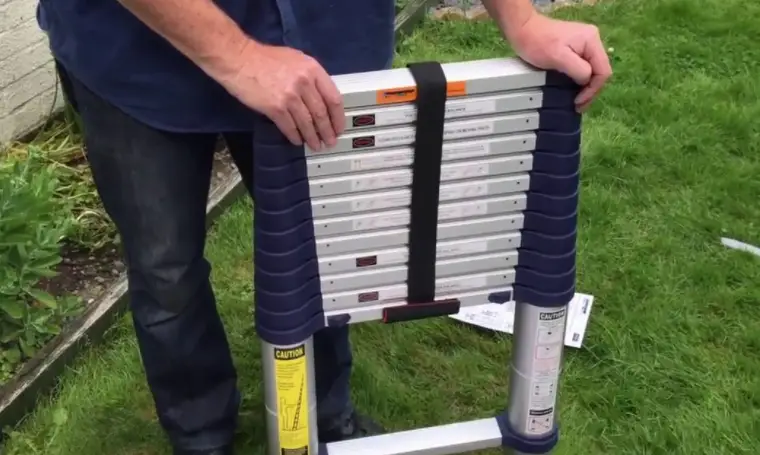
Pay attention that after extending the ladder to the whole length, all the rungs are locked. Closing the ladder When you push the locking button, all the above rungs will be automatically unlocked and folded together.
4. Additional warning for telescopic ladder
8
English Deutsch –
Operating & Safety Instructions Bedienungs- und Sicherheitsanleitung
Type/Typ ML-1032H
a) All locking mechanisms for all extended rungs/steps shall
be locked before use.
b) Instruction for handling of locking mechanisms including indication of locked and unlocked position.
Locked
Unlocked
Lean the ladder on the this side
X
Do not lean the ladder on this side
c) Position of hands when bringing the ladder from extended to storage position. When closing the ladder, the hands must hold the outer profile of the stiles and at no time, during the closing process, put your hands on the rungs.
9
English Deutsch –
Operating & Safety Instructions Bedienungs- und Sicherheitsanleitung
Type/Typ ML-1032H
d) In the leaning ladder position, it is not allowed to climb
higher than the last metre of the ladder.
e) The ladder shall be inspected after delivery and before every use to confirm condition and operation of all parts.
f) Before using the ladder, it shall be checked that all locking mechanisms are working properly. If the mechanism is not working properly, do not use the ladder.
5. Repair, maintenance and storage
Repairs and maintenance shall be carried out by a competent person and be in accordance with the producer’s instruction. NOTE: A competent person is someone who has the skills to carry out repairs or maintenance, e.g. by a training by the manufacturer. For repair and replacement of parts, e.g. feet, if necessary contact the producer or distributor.
For repair and replacement of parts, e.g. feet, if necessary contact the producer or distributor.
Ladder should be stored in accordance with the producer’s instructions.
Ladders made of or using thermoplastic, thermosetting plastic and reinforced plastic materials should be stored out of direct sunlight.
Ladders made of wood should be stored in a dry place and shall not be coated with opaque and vapour-tight paints.
The important considerations when storing a ladder (not in use) should include the following:
– Is the ladder stored away from areas where its condition could deteriorate more rapidly (e.g. dampness, excessive heat, or exposed to the elements)?
– Is the ladder stored in a position which helps it to remain straight (e.g. hung by the stiles on proper ladder brackets or laid on a flat clutter free surface)?
10
English Deutsch –
Operating & Safety Instructions Bedienungs- und Sicherheitsanleitung
Type/Typ ML-1032H
– Is the ladder stored where it cannot be damaged by vehicles, heavy objects, or contaminants?
– Is the ladder stored where it cannot cause a trip hazard or an obstruction?
– Is the ladder stored securely where it cannot be easily used for criminal purposes?
– If the ladder is permanently positioned (e.g. on scaffolding), is it secured against unauthorized climbing (e.g. by children)?
MAINTENANCE AND STORING YOUR LADDER:
Keep the ladder in a clean, dry place.
Hold the ladder firmly when carrying it.
Never store materials on your ladder.
Keep your ladder clean and free from any foreign matter.
Clean the ladder after each use.
Regularly check the parts and hinges of the ladder. Oil the hinges regularly but do so carefully to ensure no oil drips on the rungs or side rails.
For regular inspection, the following items shall be taken into account: — check that the stiles/legs (uprights) are not bent, bowed, twisted, dented, cracked, corroded or rotten;
— check that the stiles/legs around the fixing points for other components are in good condition;
— check that fixings (usually rivets, screws or bolts) are not missing, loose, or corroded; — check that rungs/steps are not missing, loose, excessively worn, corroded or damaged;
11
English Deutsch –
Operating & Safety Instructions Bedienungs- und Sicherheitsanleitung
Type/Typ ML-1032H
— check that the hinges between front and rear sections are
not damaged, loose or corroded;
— check that the locking stays horizontal, back rails and corner
braces are not missing, bent, loose, corroded or damaged;
— check that the rung hooks are not missing, damaged, loose
or corroded and engage properly on the rungs;
— check that guide brackets are not missing, damaged, loose
or corroded and engage properly on the mating stile;
— check that rubber feet / end caps are not missing, loose,
excessively worn, corroded or damaged;
— check that the entire ladder is free from contaminants (e.g.
dirt, mud, paint, oil or grease);
— check that locking catches (if fitted) are not damaged or
corroded and function correctly;
— check that the platform (if fitted) has no missing parts or
fixings and is not damaged or corroded.
If any of the above checks cannot be fully satisfied, you should NOT use the ladder.
For special ladder types, further items identified by the manufacturer shall be taken into account.
Reasons for accidents
The following list of hazards and examples of their causes, which is not exhaustive, are common reasons for accidents encountered when using ladders and are the basis on which the information in this manual has been developed:
a) Loss of stability:
1) Incorrect positioning of the ladder (such as incorrect angle for leaning ladder or not fully opening a standing ladder);
2) slide outwards at the bottom (such as bottom of the ladder sliding away from the wall)
3) side slip, falling sideways and top flip for leaning ladders (such as overreaching or fragile top contact surface);
4) condition of the ladder (such as missing anti-slip feet);
12
English –
Operating & Safety Instructions
Deutsch –
Bedienungs- und Sicherheitsanleitung
Type/Typ ML-1032H
5) stepping off an unsecured ladder at height;
6) ground conditions (such as unstable soft ground, sloping ground, slippery surfaces or contaminated solid surfaces);
7) adverse weather conditions (such as windy conditions); 8) collision with the ladder (such as vehicle or door); 9) incorrect choice of ladder (such as too short, unsuitable
task). b)From handling:
1) Transferring the ladder to the work position; 2) erecting and dismantling the ladder;
3) carrying items up the ladder.
c) Slip trip and fall of user:
1) Inappropriate footwear;
2) contaminated rungs or Stepps;
3) unsafe user practices (such as climbing 2 rungs at a time, sliding down stiles).
d)Structural failure of ladder:
1) condition of the ladder (such as damaged stiles);
2) overloading the ladder;
3) Unintended use. e)Electrical hazards:
1) Unavoidable live working (e. g. fault finding);
2) positioning ladders too close to live electrical equipment (such as overhead power lines);
13
English Deutsch –
Operating & Safety Instructions Bedienungs- und Sicherheitsanleitung
Type/Typ ML-1032H
3) ladders damaging electrical equipment (such as covers or protective insulation);
4) incorrect selection of type of ladder for electrical work.
For more detailed information (e.g. for inspection of items) please contact:
Manufacturer Zhejiang Smile Tools Co., Ltd.
No. 51 Donggang Road 2, Quzhou Economic Development Zone, Zhejiang, P. R. China
Production Date: 01/ 2020
14