
Viper Standard Darts
Standard Darts Instructions
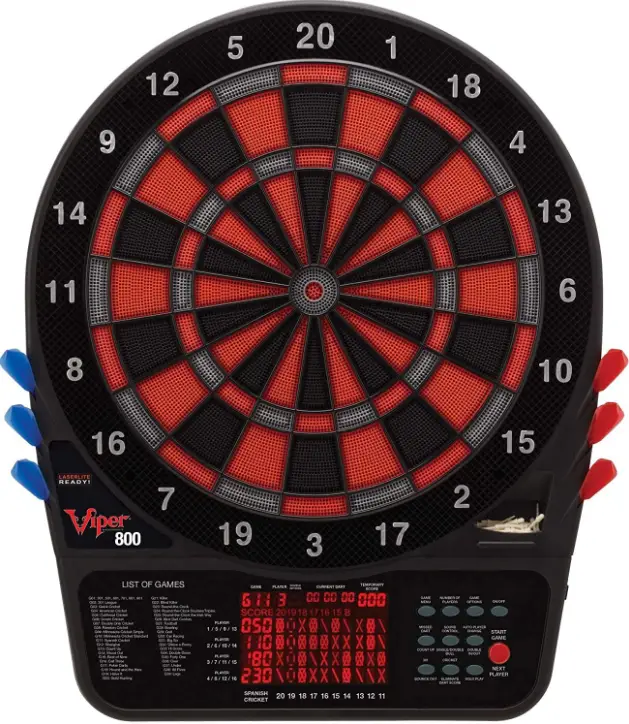
Dartboard
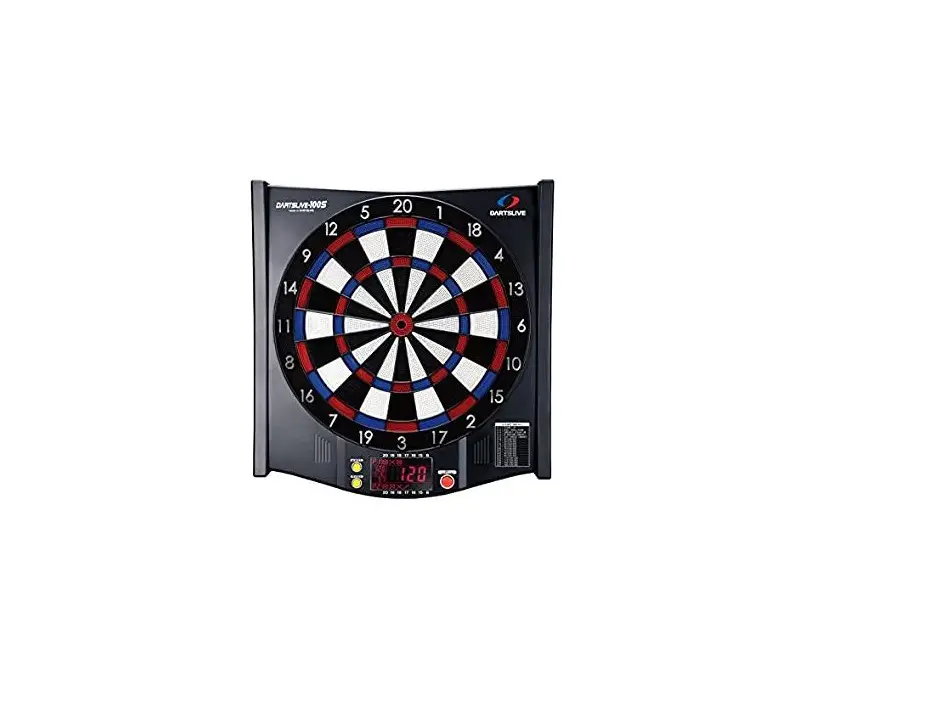
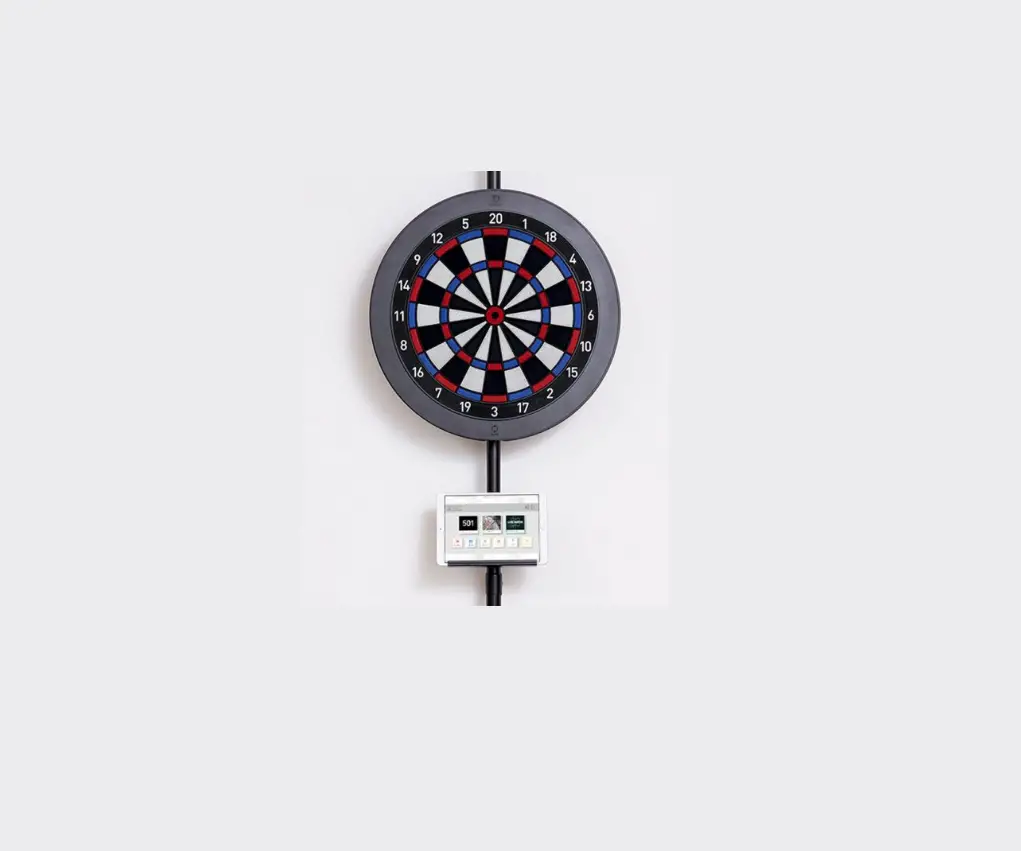
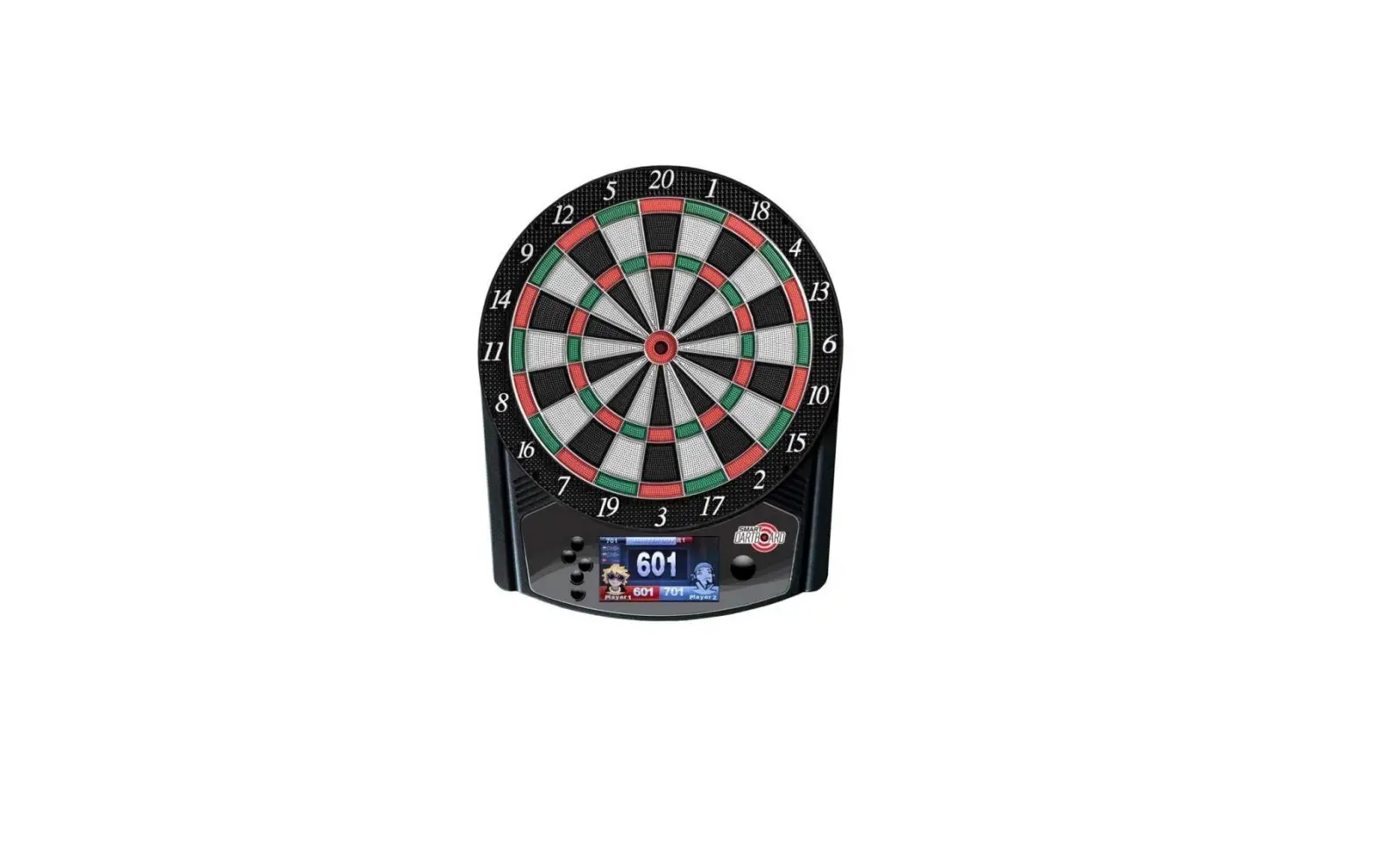
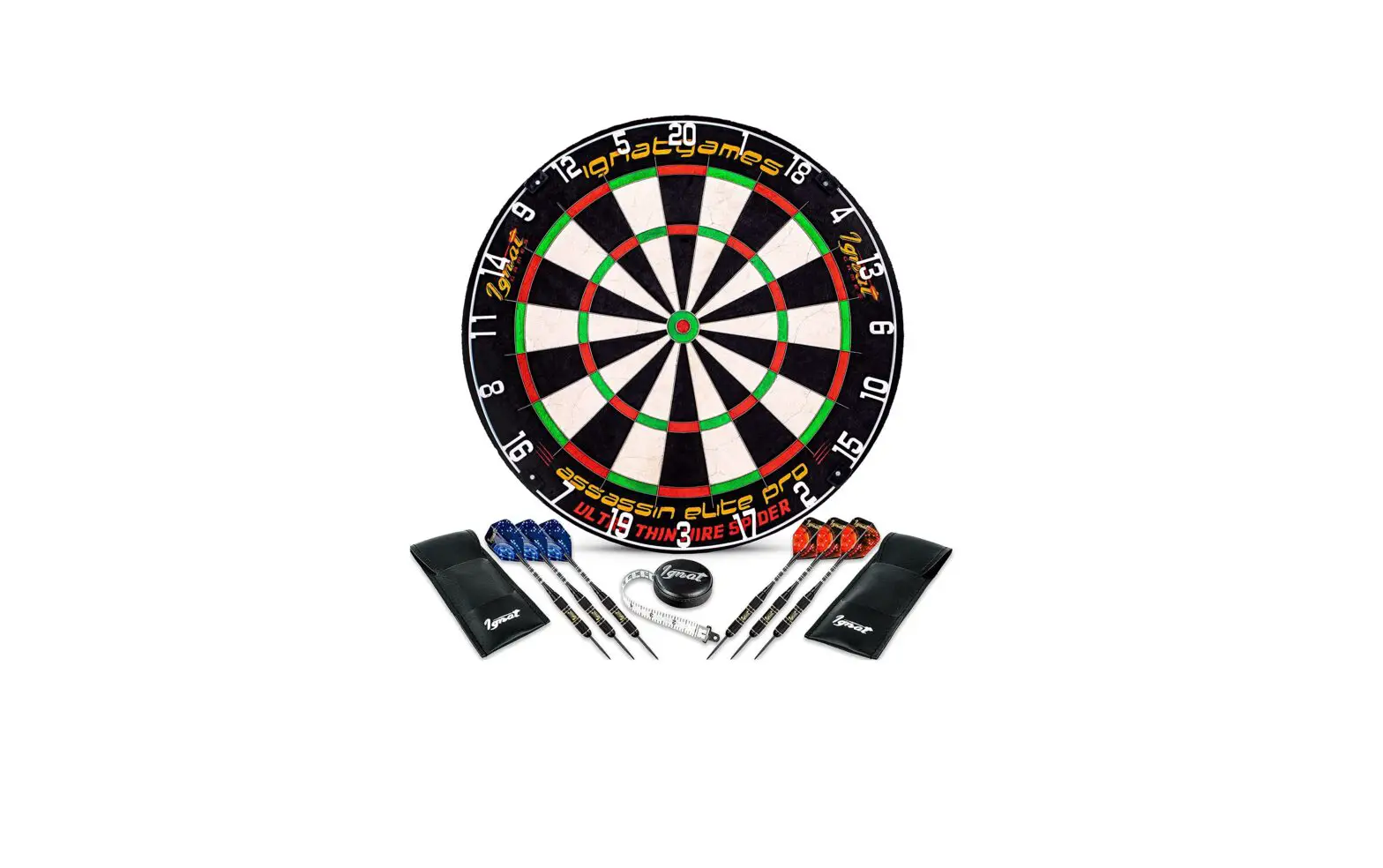
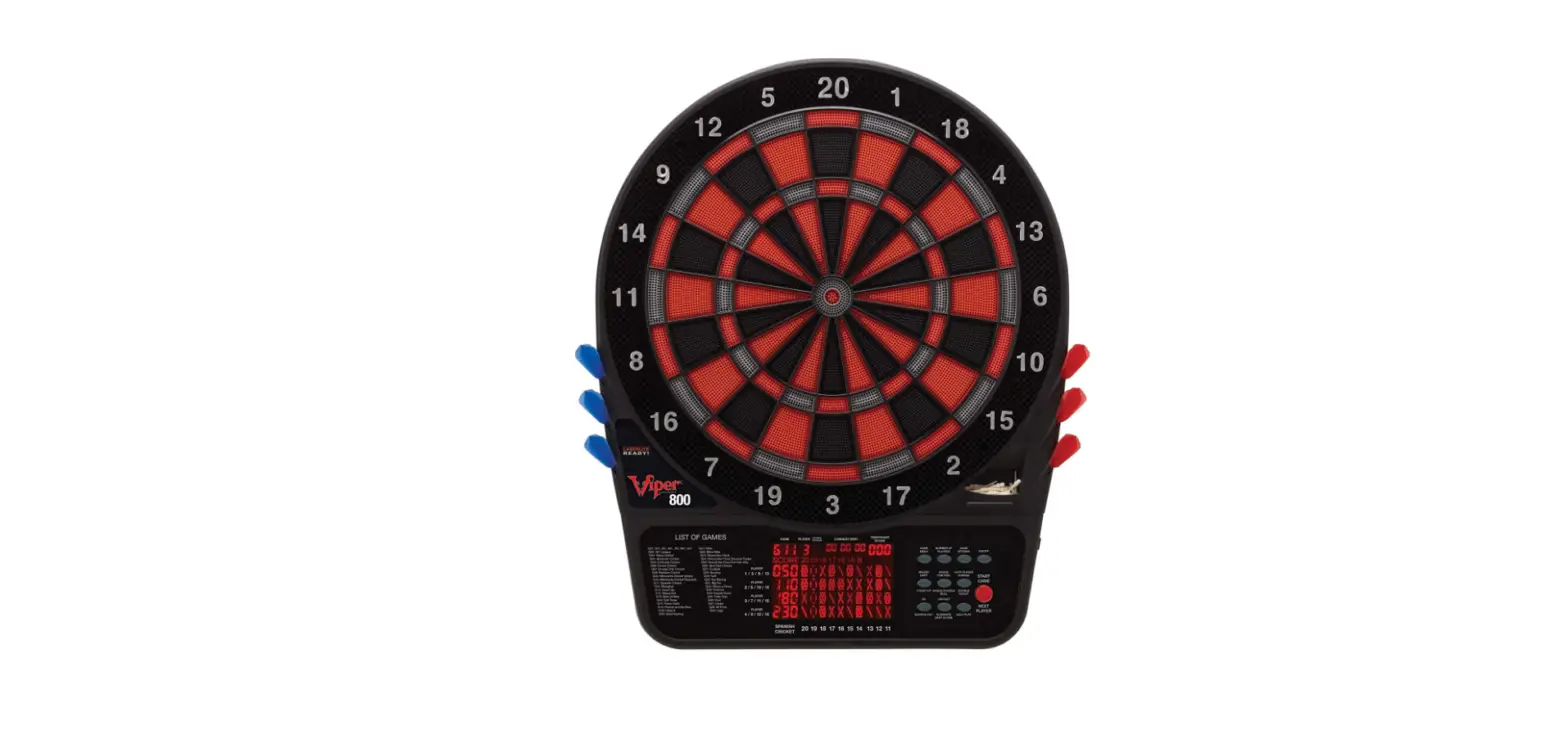
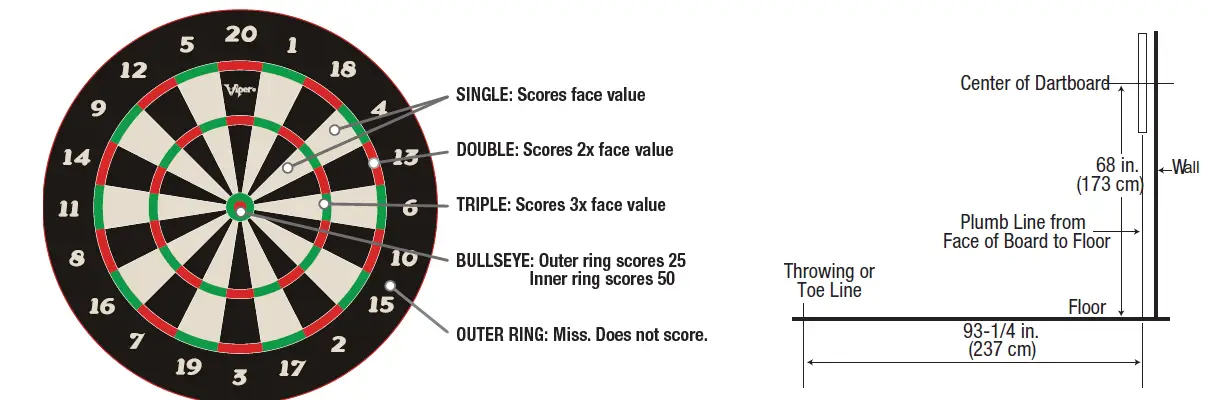
The dartboard is divided into 20 numbered segments and a bullseye. Each segment has 4 scoring areas: 2 single, 1 triple and 1 double. The bullseye has an outer ring (single bull – 25 points) and an inner ring (double bull – 50 points). The center of the dartboard must be hung 68 inches above the floor. Players throw from a distance of 93¼ inches away from the face of the board (not the wall behind the board). This distance is often marked with a throw line on the floor.
Games
In general:
- The player who throws first is usually determined by each player throwing one dart. The player closest to the bullseye goes first.
- Each player throws three darts each turn.
- Any dart that falls, bounces out of the board, or misses the board counts and receives no score.
- The color of the segment does not determine the score. Only the tip of the dart and its location on the board determines the scoring segment. There are many different games to be played. With a small amount of imagination you can even make up your own. The most popular three games are: 301 Countdown, 501 Countdown, and Cricket. The easiest game is to simply throw the darts and add up your score.
301 and 501 Countdown
- The starting score for each player is 301 or 501. The game can be played in variants of X01, such as 701 and 901.
- The value of each scoring dart will be deducted. The first player who reaches exactly zero (0) wins. You must go out with the exact number. If you go over zero the turn does not count. For example, if your score is 15 and you hit a 20, your turn is over and your score remains 15 until successfully lowered to exactly 0.
Cricket
- The object of Cricket the game is to hit each scoring segment from 15 through 20 a total of three times. This is known as “closing” a number. Scoring segments from 1 to 14 do not count toward players’ scores.
- A single segment counts as one hit, a double segment counts as two hits, and a triple segment counts as three hits.
- The first player to close each number by scoring in each segment three times is the winner.
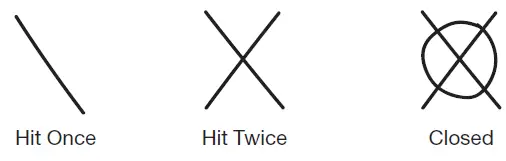
- A good way to keep score is using two lines and a circle:

Additional Games
Count Up
- Count Up is a great game for beginners and experienced darters alike.
- Players add their score each round, counting up from zero.
- The first player to reach a predetermined score (such as 1000 points) or the player with the highest score after a predetermined number of rounds (such as 10 rounds) wins.
Around the Clock
- This game uses the whole dartboard, so it is great practice for darters who want to improve their accuracy.
- The object of the game is to hit every number on the board in numerical order and finish before the other players.
- Only darts that hit the intended number count
Baseball Darts Instructions
Introduction:
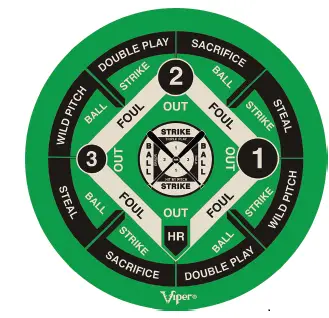
Baseball Darts is a special darts game that combines the fun of America’s Pastime and your favorite game of skill – playable exclusively on this board. Use the green side of the Double Play dartboard to play this game. Two sides play against each other over the course of nine innings, either individually, or as part of a team. If playing with teams, decide your batting order and which team will be the home team and start throwing! The visiting team throws first.
Innings:
Baseball darts is usually played over nine innings. For quicker action, you might play with 7, 5 or 3 innings. An inning consists of two halves. In each half, one team bats until three outs are made. A full inning consists of six outs, three for each team. The first half-inning is called the top half of the inning; the second half-inning, the bottom half. The visiting team is on offense during the top half of the inning, the home team is on offense during the bottom half.
Scoring:
When it is a team’s turn to throw, they are at the plate, batting and trying to score. Because the visiting team bats in the top half of an inning, they will throw first. Each throw represents a single pitch thrown by the defense. Where the dart lands indicates what the batter did with that pitch, as indicated by the Simple Rules chart. Each hit puts a player “on-base.” Unless otherwise indicated, the player is at first base – they can stop at another base by hitting the 2, 3, double or triple space. Each hit advances the runners already on base by the number of bases earned by the hit. When a base runner reaches home, they score a run for the throwing team. Players make outs with their at-bats by landing in the out section, or by accruing 3 strikes (3 strikes makes 1 out). Once 3 outs are made, the half inning is over and the other team gets a chance to bat. After 9 innings are finished, the game is over. The team with more runs wins.
Notes Apply all standard rules and terminology of baseball to Baseball Darts. For example, the first two foul balls count as strikes, but the third foul does not count as a strike.
Simple Rules
Location of Hit Result
- Single hit, advance all runners 1 base
- Double, advance all runners 2 bases
- Triple, advance all runners 3 bases
- HR Home Run, score all runners plus the batter
- Strike Gain 1 Strike (3 Strikes makes 1 out)
- Ball Gain 1 Ball (4 Balls make a walk, add a runner
- Foul Gain 1 Strike, but it cannot be the third strike
- Out Gain 1 Out
- Steal Advance a runner of your choice 1 base choice
- Double Play Gain 2 outs and lose a base runner
- Safe Hit Single hit, only advance baserunners if forced
- Wild Pitch Advance all runners.
Advanced Rules
- Triple Play Gain 3 Outs
- Error Advance a runner of your choice
- Balk Advance all runners
GLD Customer Service:
Email: [email protected] / www.gldproducts.com
FOLLOW US ON: