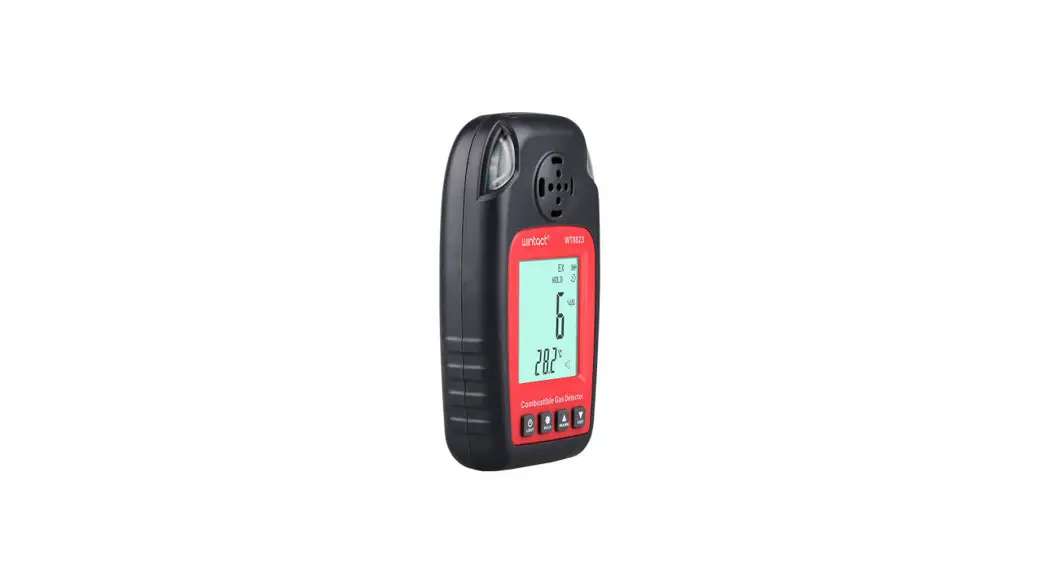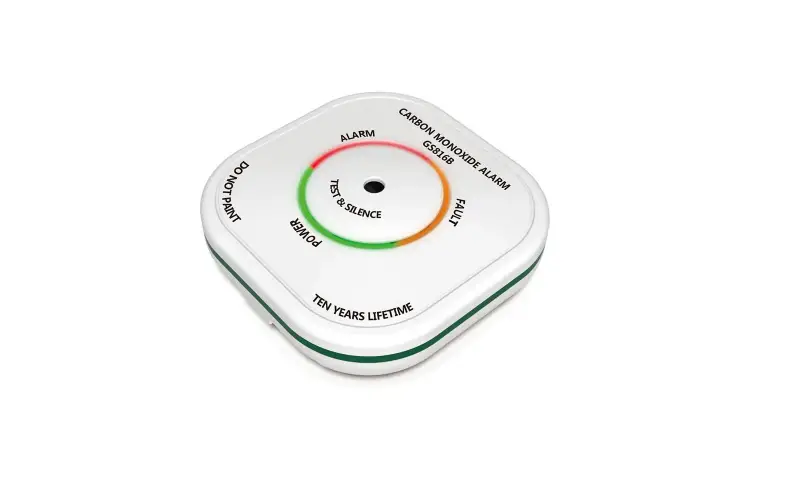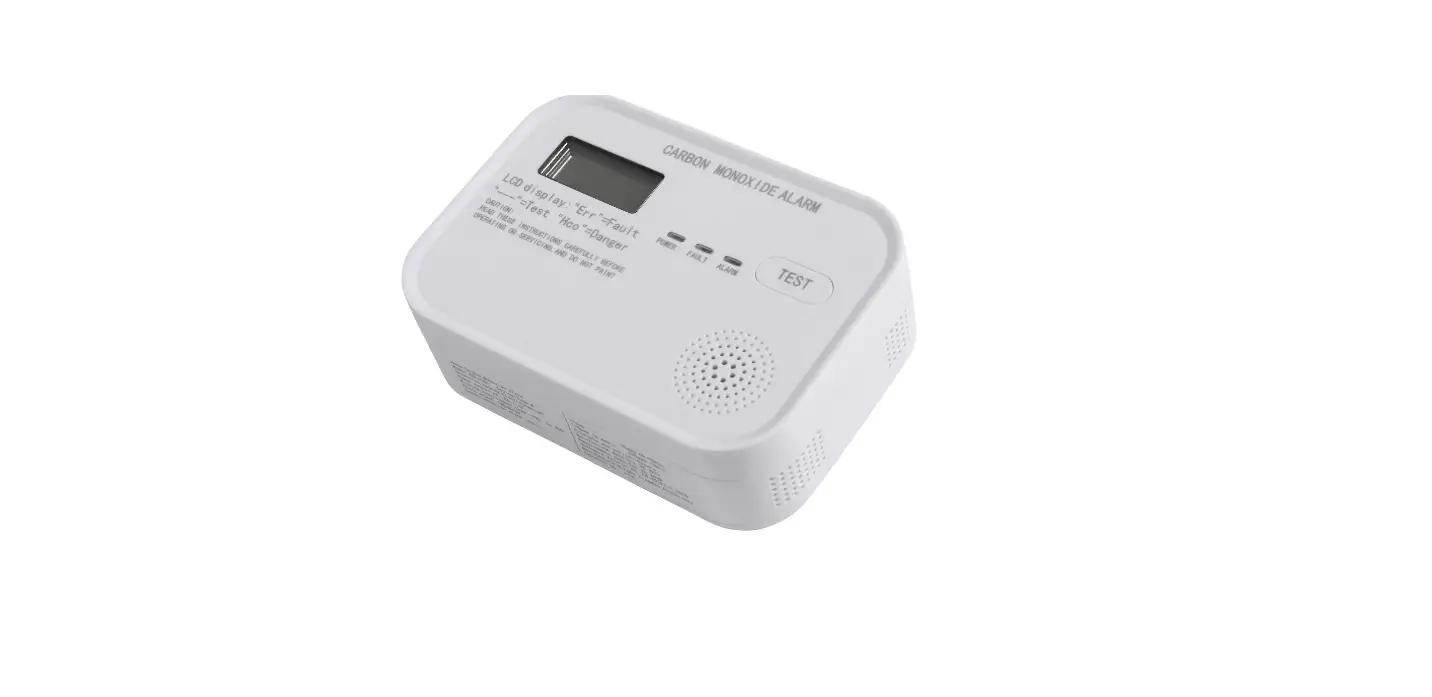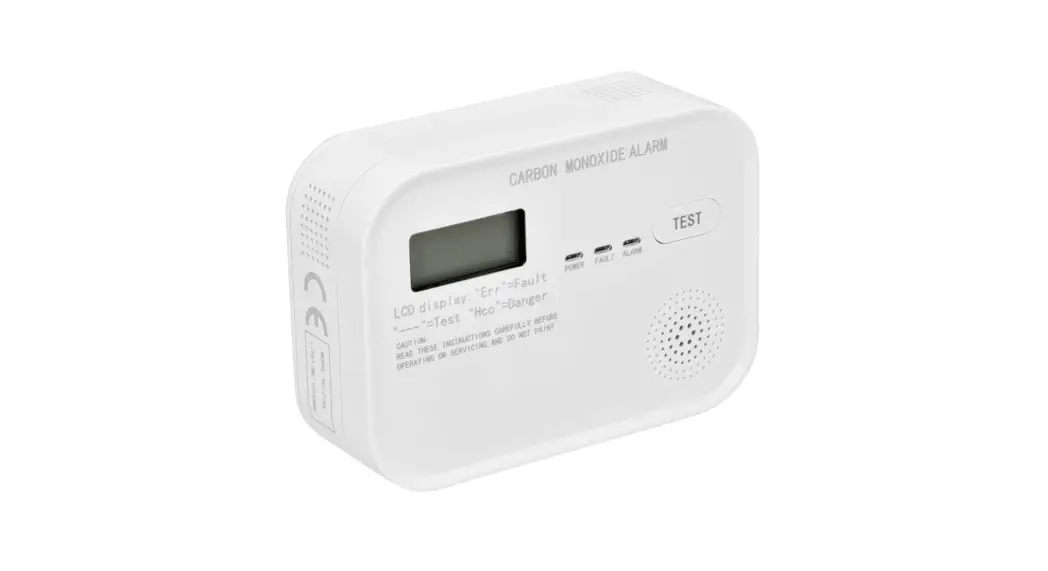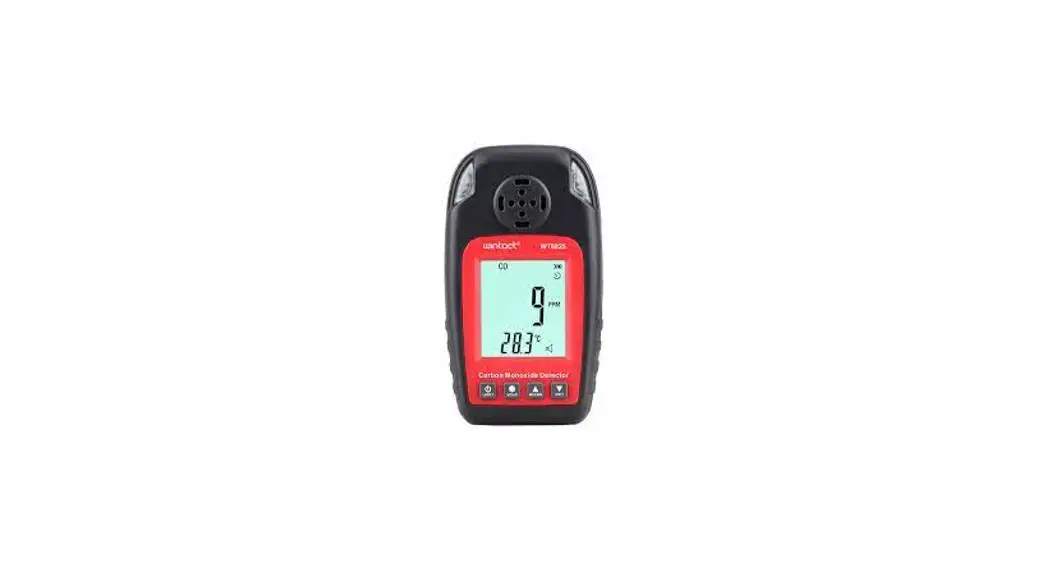

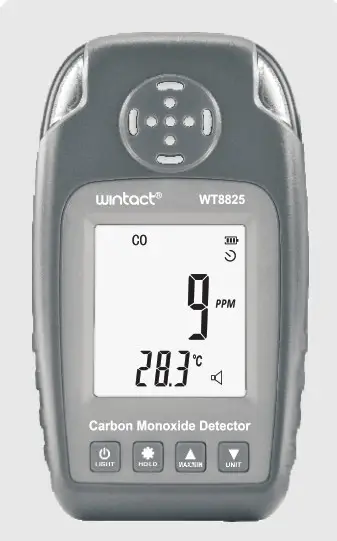
MODEL WT8825
Carbon Monoxide Detector
Instruction manual
Standard: 0./HTY 007-2018
Version: WT8825-EN-00
A. Introduction
Pure carbon monoxide (CO) is colorless, odorless and non-irritant gas: molecular weight: 28.01; density: 1.2500;freezing point: -207°C: boiling point: -190°C. Its solubility in water is quite low, but it dissolves instantly in ammonia water. The air mixed explosion limit is between 12.5% and 74%. After entering the human body, carbon monoxide will combine with hemoglobin in the blood, making the hemoglobin not able to combine with oxygen, which causes oxygen deficit to organism organization, leading to death from suffoca-tion. Therefore, carbon monoxide is toxic and is colorless, odorless, and tasteless, which is easy to be ignored and thus causes poisoning. Gas perniciousness: carbon monoxide can harm human health, and serious carb-on monoxide would cause death. Therefore, people should pay attention to safe gas use, and people working in factories should pay attention to carbon monoxide concentration.
A carbon monoxide detector can detect carbon monoxide concentration, observing concentration values all the time. It has quite a clear large LCD screen and voice and light alarm indication, making sure that it can detect dangerous gas and inform operators of precautions under adverse situations. It is widely used in petroleum, chemistry, coal mine, metallurgy, papermaking,fire-fighting, municipal administration, telecommunication, food, textile, and other industries.
B. Functions
- HOLD data holding
- MAX maximum value / MIN minimum value
- UNIT switch units among %VOL, %LEL, PPM, (mg/M3)
- Alarm setting
- Calibration
- On/Off (Timed Shutdown)
C. Safety instruction
1. Understand and know the toxicity of carbon monoxide.
| 0-1 PPM | Normal |
| 9PPM | ASHRAE 62-1989 regulated standard living area |
| 5OPPM | Average for staying for eight hours in OSHA closed space |
| 10OPPM | OSHA exposure limit |
| 200PPM | Light headache, tired, sick, and dizzy |
| 800PPM | Dizzy, sick and hyperplasia, and die in two or three hours |
| US Department of Labor regulates in Article 24 of the 1917 OSHA that: carbon monoxide concentration in any closed space should be not higher than 5OPPM (0.005%). If carbon monoxide concentration exceeds 10OPPM (0.01%), it is necessary for workers to transfer their sites. | |
Please do not use this table only in personal safety inspections.
2. Carbon monoxide and tools fault: Typical problems of highly-concentrated carbon monoxide that may be generated is indicated in the following table.
| Tool | Fuel | Typical Problem |
| Gas stove indoor heater | Petrol Natural gas Liquefied gas | 1. Damaged heat exchanger 2. The air is not sufficient to support the normal burning of fuel 3. Pipe damage or blocking 4. Fire stove imbalance 5. House is improperly pressed |
| Central furnace | Coal Kerosene | 1. Damaged heat exchanger 2. The air is not sufficient to support the normal burning of fuel 3. Fireplace damage |
| Indoor heater Central heater | Kerosene | 1. Adjustment error 2. Wrong fuel (not K-1) 3. Wrong lamp wick or lamp wick0 height 4. The air is not sufficient to support the normal burning of fuel 5. Abnormal system exhausting |
| Water heater | Natural gas Liquefied gas | 1. The air Is not sufficient to support the normal burning of fuel 2. Pipe damage or blocking 3. Heating stove imbalance 4. House is improperly pressed |
| Wave oven | Natural gas Liquefied gas | 1. The air is not sufficient to support the normal burning of fuel 2. Heating stove imbalance 3. Wrongly used as an indoor warm heater 4. Abnormal system exhausting |
| Stove Fireplace | Gas Wood Coal | 1. The air is not sufficient to support the normal burning of fuel 2. Pipe damage or blocking 3. Green or processed rice material 4. Damaged heat exchanger 5. Damaged heating room |
3. Normal source of potentially dangerous carbon monoxide:
- Stoves, gas stoves,s, or fireplaces lack maintenance.
- Blocked exhaust pipe for the chimney.
- Gas, petrol, or kerosene tools lack maintenance.
- Combustion motor (such as auto, grass mower, and blower).
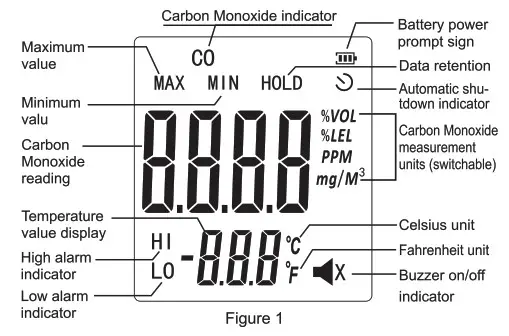
D. LCD Display (Figure 1)
E. Name of Each Component (Figure 2)
 Power, and backlight on/off button.
 Measurement data holding and setting button.
 Maximum/minimum value mode-locking/ Up button.
 Down button.
- LCD display.
- Sensor hole.
- LED alarm light.
- Sticker spot for the nameplate.
- Battery door.
 Power, and backlight on/off button.
 Measurement data holding and setting button.
 Maximum/minimum value mode-locking/ Up button.
 Down button.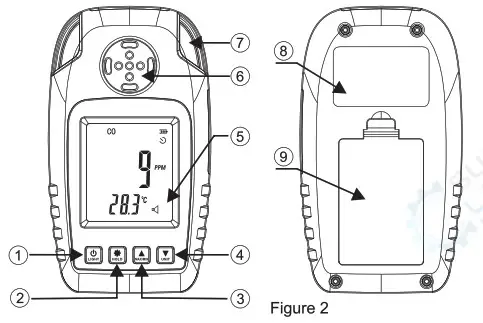
F. Operating Instructions
- Power on/off: Short press to start up, perform normal measurement after 10 seconds, long press to shut down.
- Data holding: Short press it again to exit. it
- Maximum/minimum value mode: Short press Ext for maximum value, short press it again for minimum value, short press it again to exit.
- Unit switch: Short press, and (mg/M3).
- Setting: long press to enter setting mode, short pressto switch setting items short press, and to switch on/off, long press to exit.
a. “ELE” temperature unit switch
b. “OFF” timed shutdown switch
c. “bu2” buzzer switch
d. “HI/LO” alarm value setting
e. “CAL” calibration
Note:
- Temperature refers to the temperature of the carbon monoxide sensor.
- The timed shutdown is set as 10 minutes.
- Buzzer switch refers to button pressing soun• d alarm sound.
- Alarm value setting: Short press and switch between high. and low alarm point, long press and to set alarm to oint value, short press to switch setting digit, short press, and to set alarm value, long press to save and exit.
- Short press and to switch calibration point. Users can calibrate 0 points under an airy environment (in normal temperature) by long-pressing to start calibration. When calibration is finished, “PASS” will be displayed automatically; if not, “Err” will be displayed. if not, “Err” will be displayed. “40” calibration point is calibrated by the factory and needs to be operated in a closed environment filled with CO concentration. Long press to start calibration. After a while, “PASS” will be displayed WAN automatically for successful calibration; and “ERR” for failed calibration. After successful calibration, long press to fine-tune calibration value (by short pressing and ) and long press again to save calibration value.
- Lock: long press to lock the operation.
(6) Unlock: Under the power-off state, short press and at the same time to enter unlock interface. Short press to switch setting digit. Short press and to set value. The user needs to ask the original factory for the password, and long press to unlock and restart.
G. Specifications
| Measurement range | 0-1000ppm; 0-0.1%VOL; 0-0.8%LEL; 0-1250mg1M3; |
| Maximum overload | 2000PPM |
| Response time | < 30 s |
| Using environment temperature range | 0~50°C (32~122ºF) |
| Using environment humidity range | 15~90%RH |
| Power supply | 3*1.5V AAA batteries |
| Dimensions | 67. 98*28. 47*119. 98mm |
| Weight | 111. 9g(Without battery) |
 Warning: prohibit charging or disassembling batteries in an explosive environment.
Special Statement:
Our company shall hold no responsibility resulting from using output from this product as direct or indirect evidence. this company reserves the right of changing the product design and contents of instruction if changed the separate notice isn’t given.