
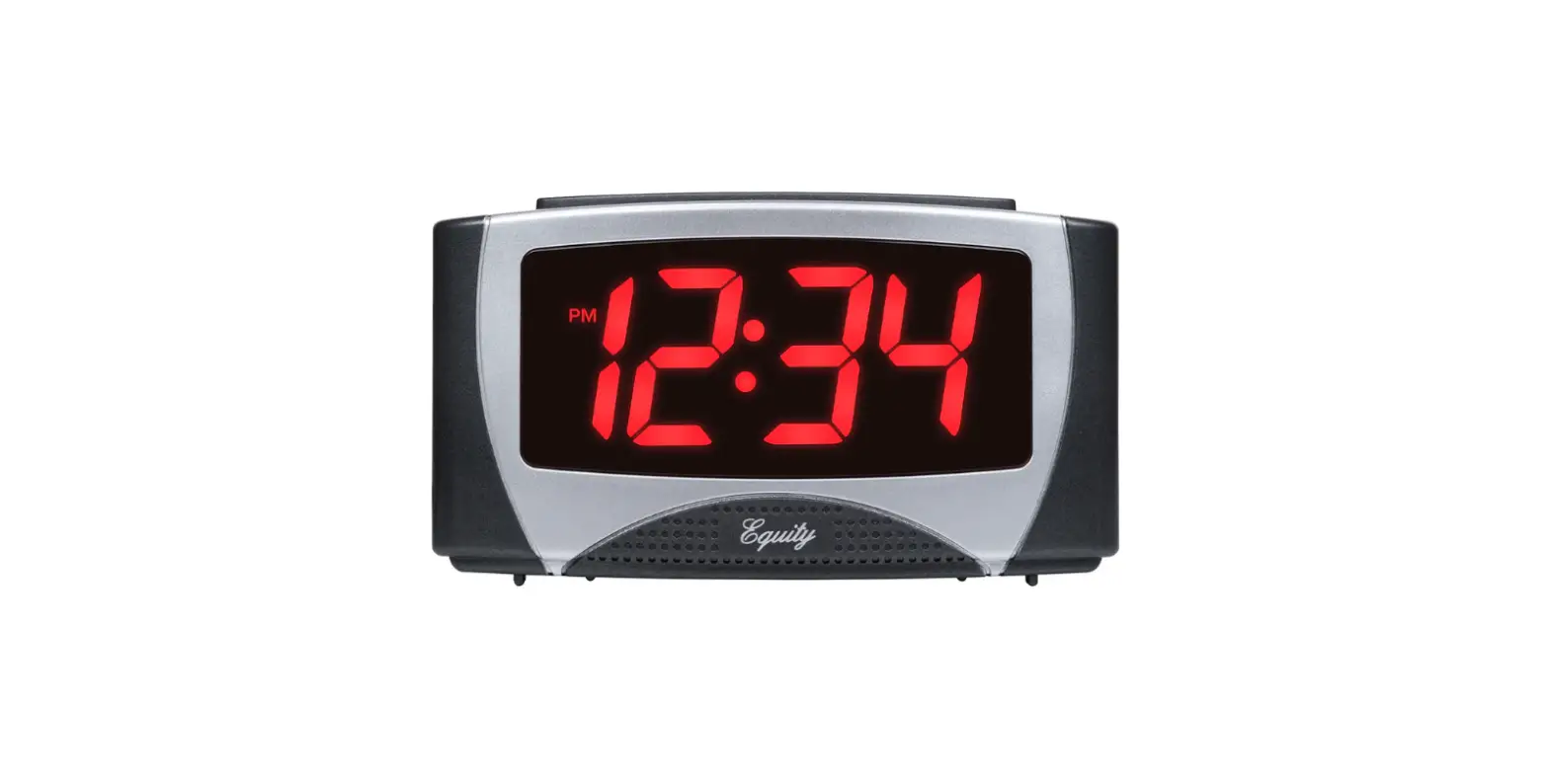
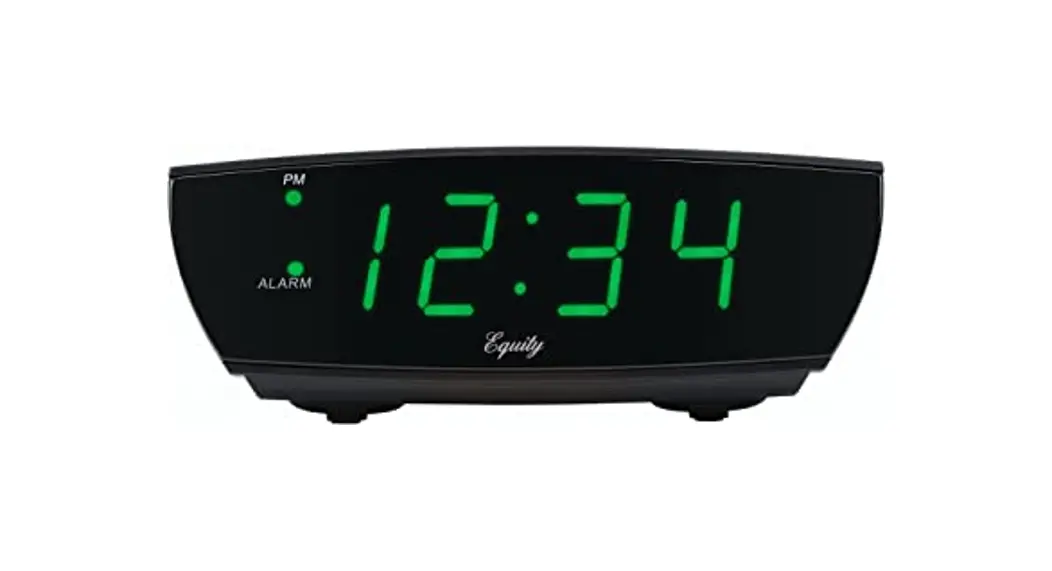
Equity by La Crosse 30228 LED Alarm Clock, Black

Specifications
- BRAND: Equity by La Crosse
- COLOR: Black
- DISPLAY TYPE: Digital
- POWER SOURCE: Corded Electric, Battery Powered
- AGE RANGE (DESCRIPTION): Adult
- SHAPE: Rectangular
- MATERIAL: Plastic
- NUMBER OF ITEMS: 1
- OPERATION MODE: Electrical
- PRODUCT DIMENSIONS: 3 x 5 x 2.5 inches
- ITEM WEIGHT: 7.2 ounces
- NUMBER OF PIECES: 24
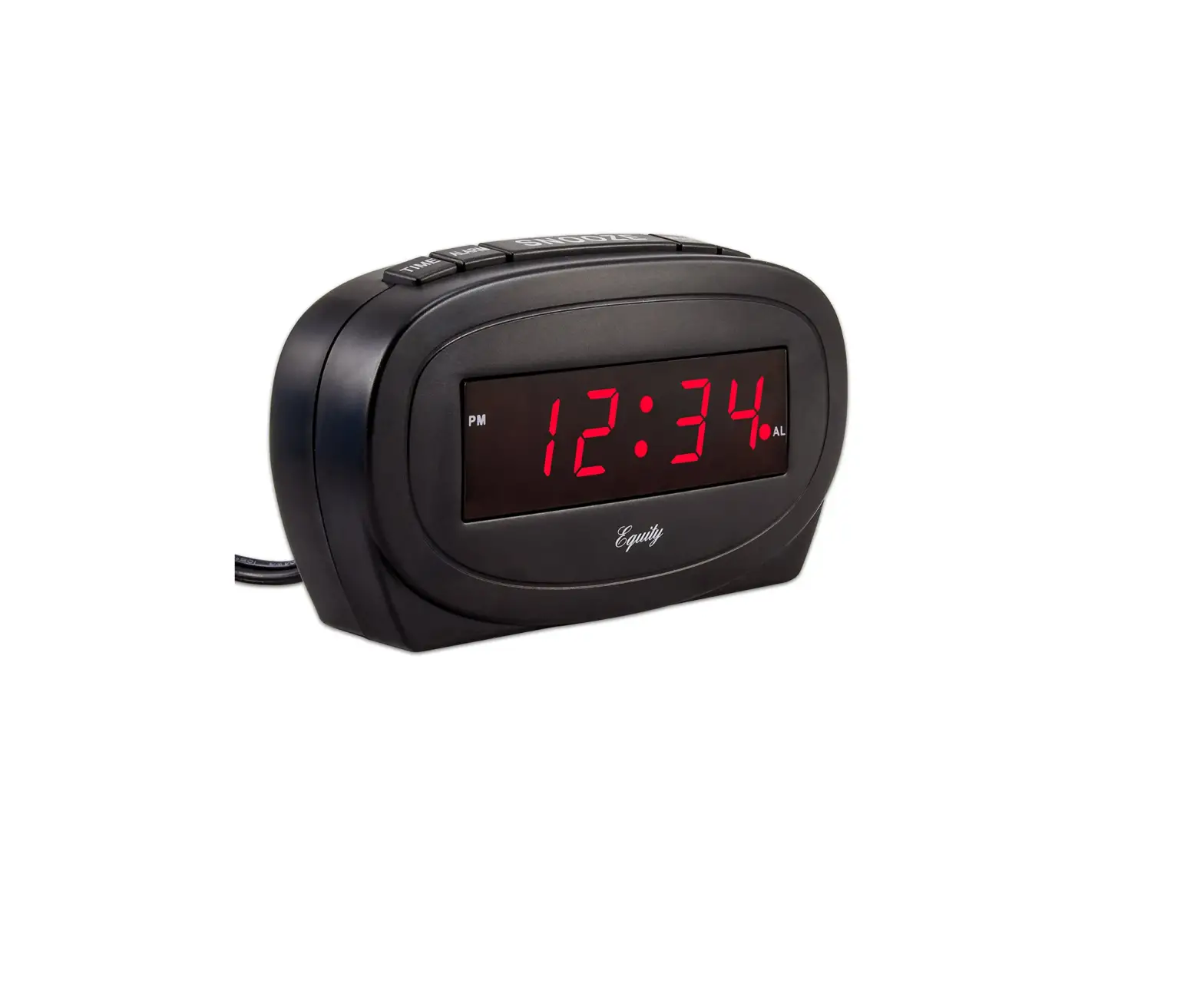
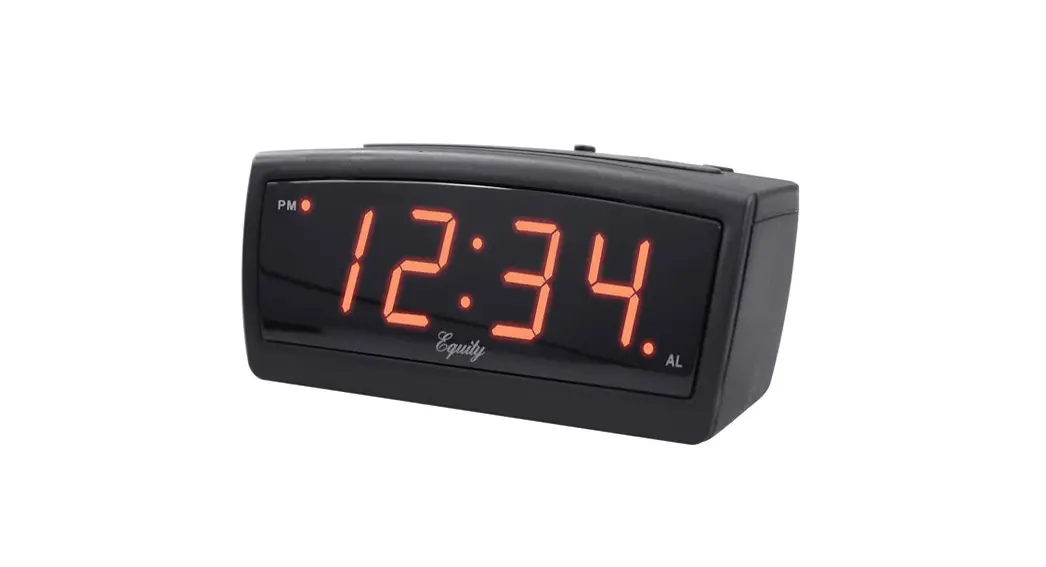
The bright red LED of the Equity 30228 shows the time, AM/PM, and whether or not the alarm is on. The alarm has a snooze feature that plays the alarm again after nine minutes. You won’t need to reset the time after power failures because the clock is AC powered with battery backup.
HOW TO SETUP
- Slide the AL position on the LOCK/ALARM/DATE/TIME switch. ALARM position is set.
- To set the hour, use the HOUR/MONTH button. Please double-check the AM/PM setting; the PM indicator will show up on the display for PM time.
- To set the minute, use the MINUTE/DATE button.
HOW TO STOP ALARM CLOCK FROM BEEPING
- Exclude danger. To ensure there is no actual threat, check the house alarm control panel, as well as every smoke and carbon monoxide detector. …
- Refresh the batteries. …
- Examine the wiring. …
- Switch off the alarm. …
- Avoid the problem area and call your service provider instead.
HOW TO SET TIME
Use the “up” and “down” buttons to change the hour after holding down the “alarm” button until the hour numbers flash. a. The hour you choose in the 12-hour format will determine whether your alarm goes off in the morning or the evening. Only the letters “AL” for alarm should display above the time if you want your alarm to go off in the morning.
FAQs
It’s a loud noise. Even on the low setting, you’ll probably be content with it.
The standard alarm time on an Android is 10 minutes. Unlike the iPhone, an Android alarm’s ring time can be adjusted. The “silences after” setting is adjustable in the alarm’s settings tab.
You can choose from red, amber, green, blue, or white in the majority of sizes. Most people believe that red is the hue that is most noticeable in everyday settings. Amber and green are typically more calming and less disturbing in low light.
However, since most individuals spend most of their time indoors, they are frequently exposed to blue light produced artificially. Blue light is produced by several devices, including computers, televisions, LED lights, tablets, smartphones, digital alarm clocks, smart watches, and even the Peloton screen.
Analog clocks are less feature-rich than digital ones. Countdown timers, Wi-Fi compatibility, and the capacity to synchronize all clocks on a system are some of these features.
Analog alarm clocks are less precise than digital ones. Additionally, they include a snooze feature, which is perfect for people who need to wake up early but don’t want to continually be awakened by an alarm clock.
When using the 12-hour format, the digital clock will display the time with a dot in the upper left corner of the display to show that it is now PM, and without a dot when it is AM. The 24-hour format is the second choice for displaying the time.
Yes, to answer briefly. Alarm clocks typically shut off on their own.
Radiated emissions become a bigger issue with digital clock frequencies higher than 100 MHz The digital clock and signals originating from the clock produce the most electromagnetic radiation in contemporary integrated circuits.
This is one of the uses of a colon. A colon appears.
Digital clocks often use a 32,768 hertz crystal oscillator similar to a quartz clock or the 50 or 60 hertz oscillation of AC electricity to keep time.
When using the 12-hour format, the digital clock will display the time with a dot in the upper left corner of the display to show that it is now PM, and without a dot when it is AM.
Digital clocks utilize an electronic timebase to count off the seconds and maintain the time accurately rather than a pendulum or an oscillating wheel. Digital clocks use a “counter” in place of gears, and, of course, the face of the clock uses an LED or LCD to display the numbers instead of hands and a painted surface.
Nothing is different about a digital clock. Simply put, electronic processing replaces mechanical processing for these functions. Consequently, a digital clock has an electrical power source (either a battery or 120-volt AC power from the wall). A known and precise rate is “ticked” by an electronic timebase.
The circadian clock is unaffected by red light, therefore you can use a soft red light at night. You can use a very faint yellow or orange light at night because they have no impact on the clock.


![Emerson Alarm Clock [cks1507 W/ Radio] User Manual](https://static-data1.manualsee.com/1/img/275/8730/2020/10/Emerson-Alarm-Clock-CKS1507.png "Emerson Alarm Clock [cks1507 W/ Radio] User Manual")