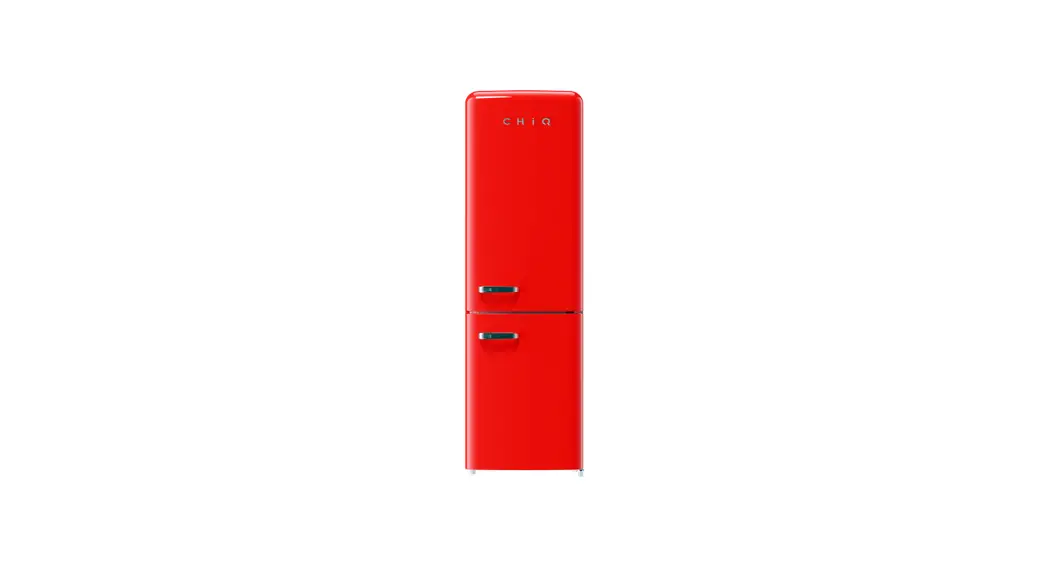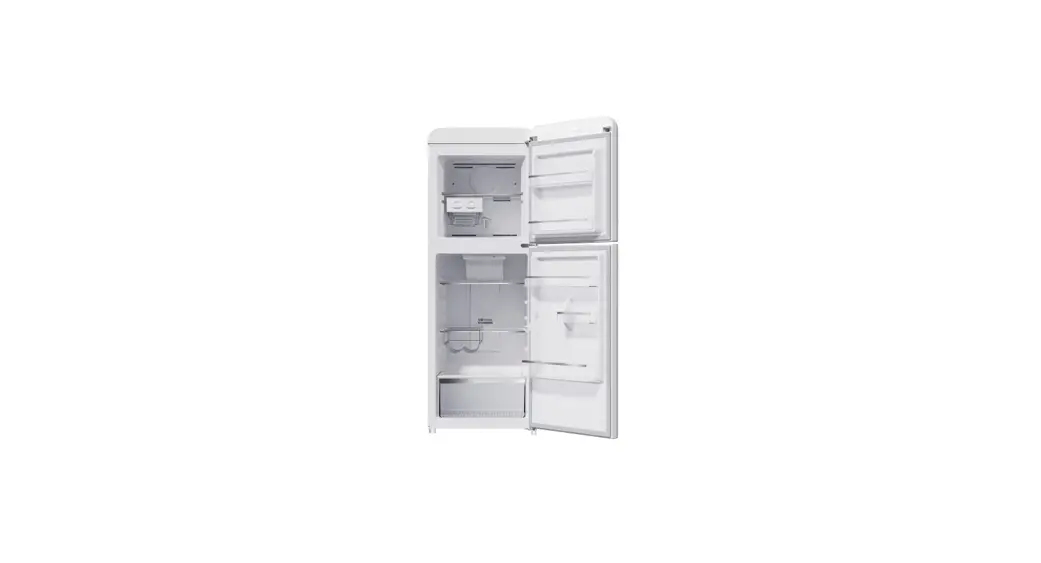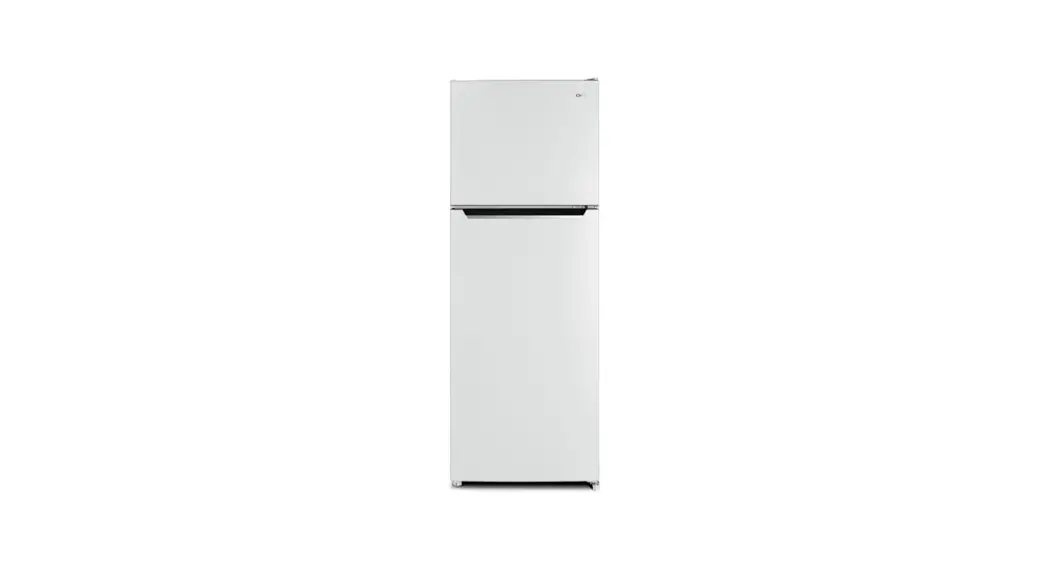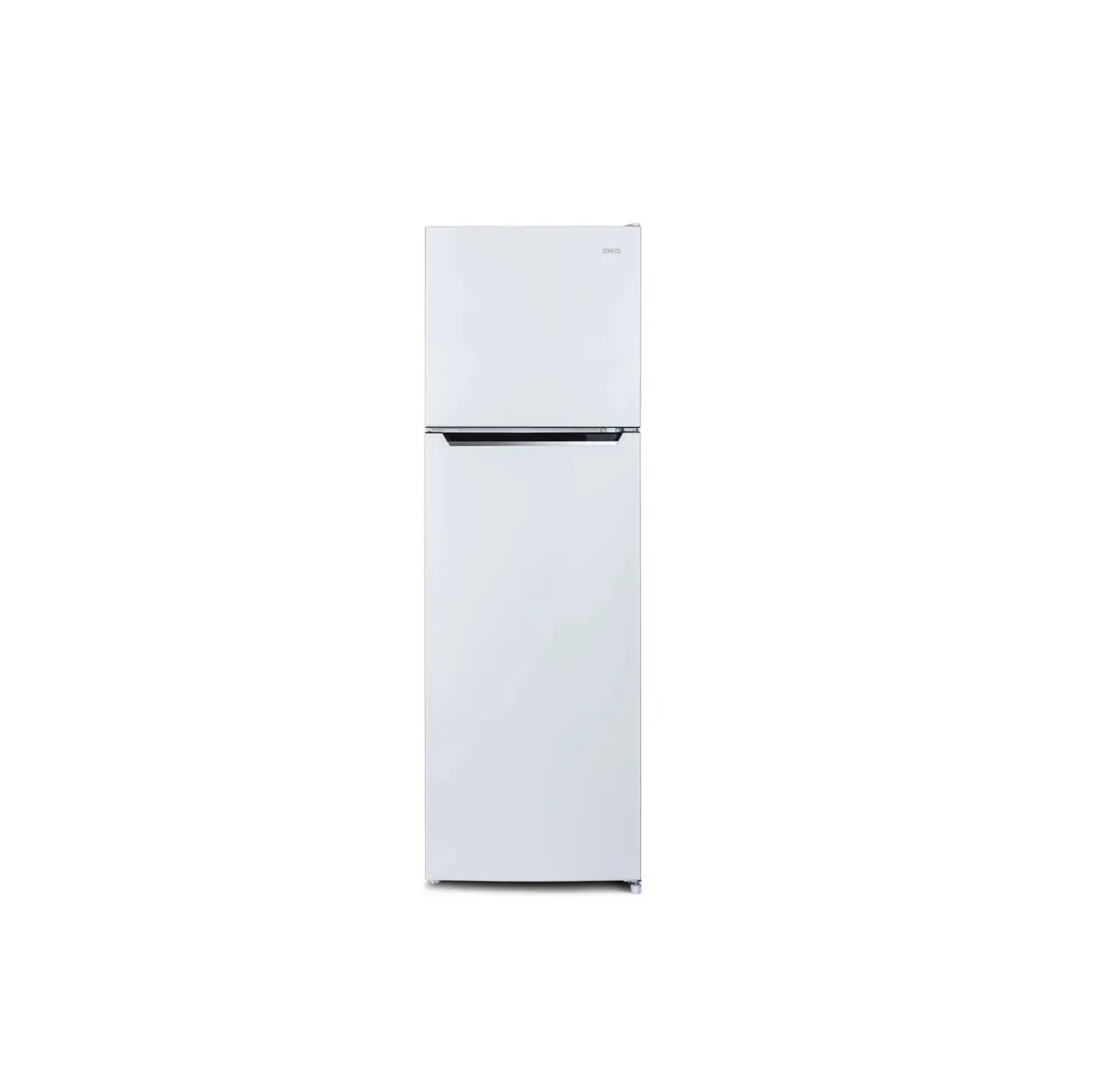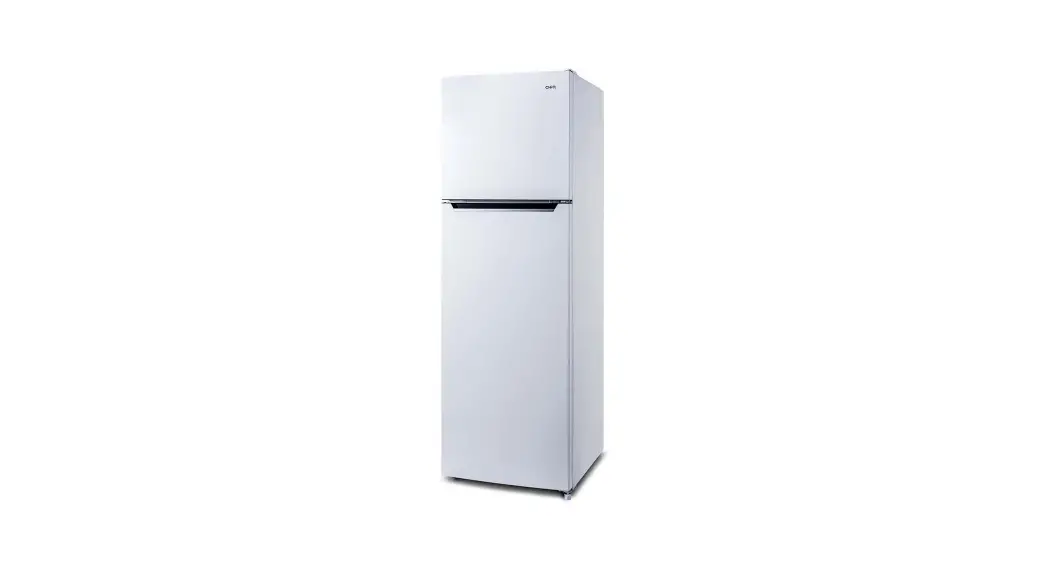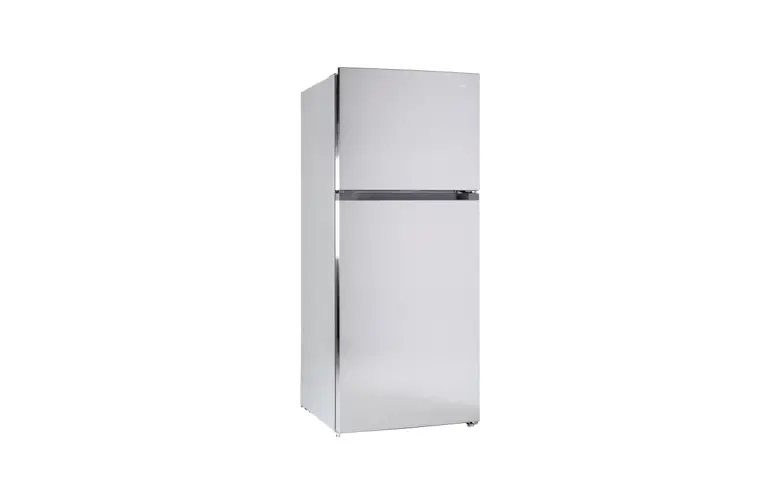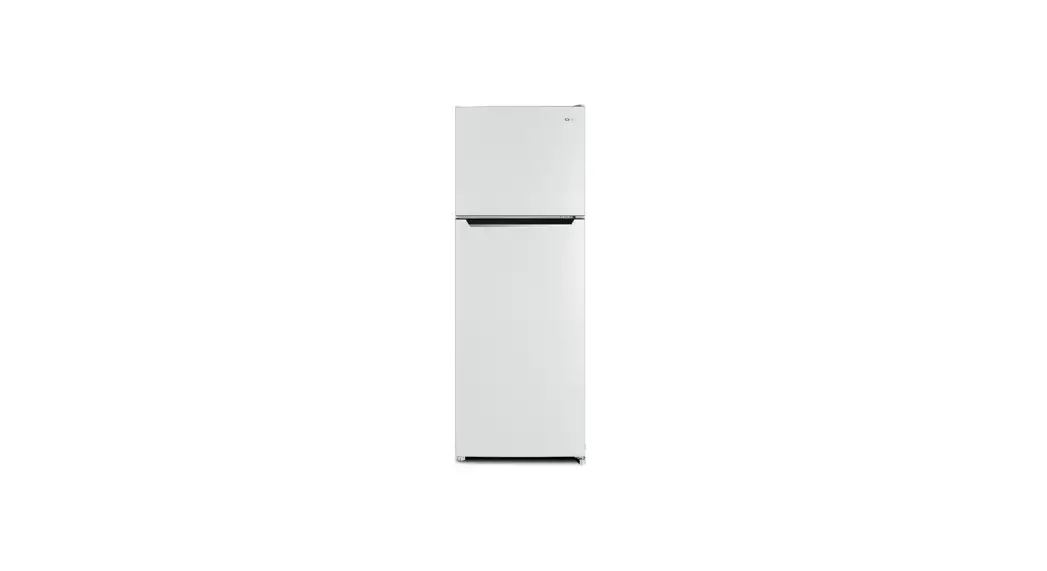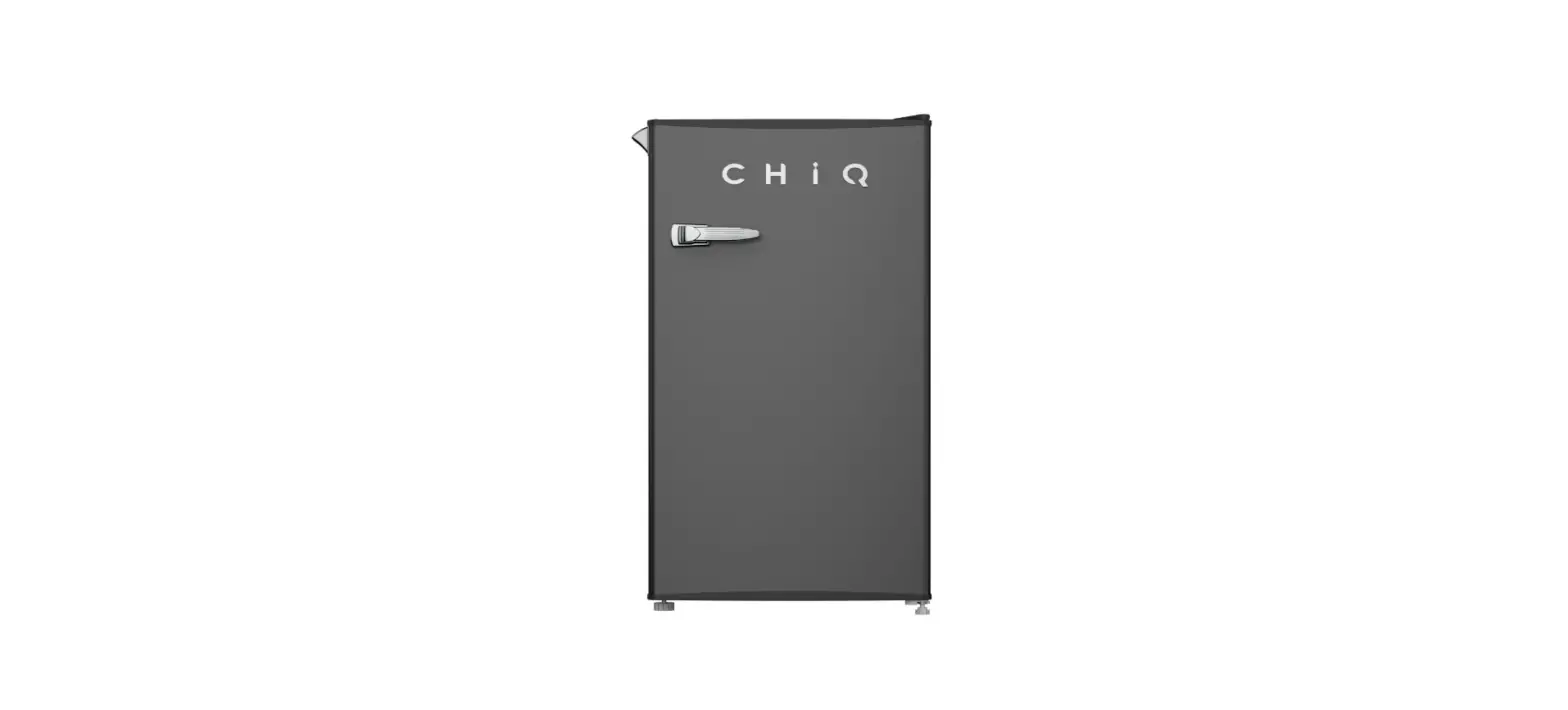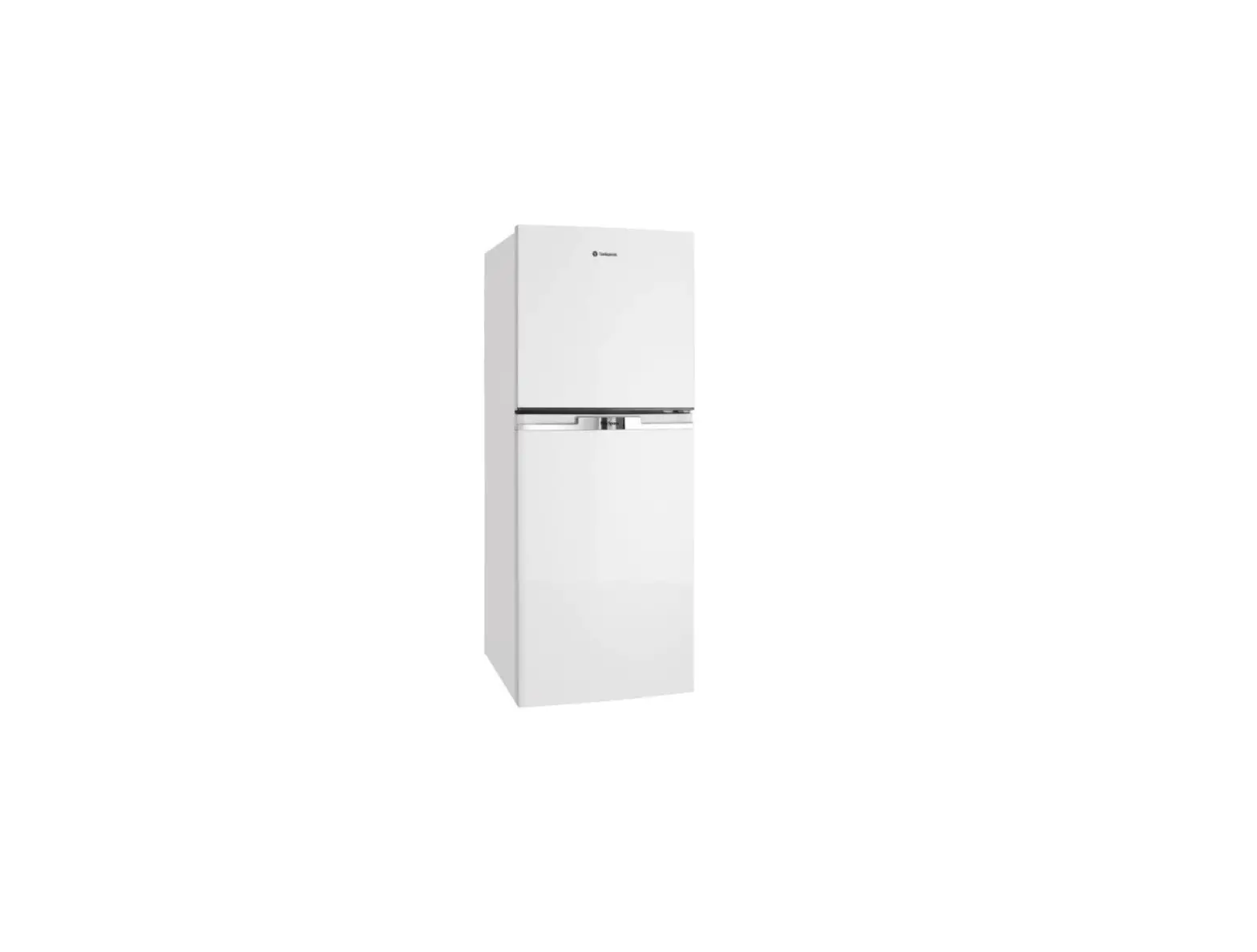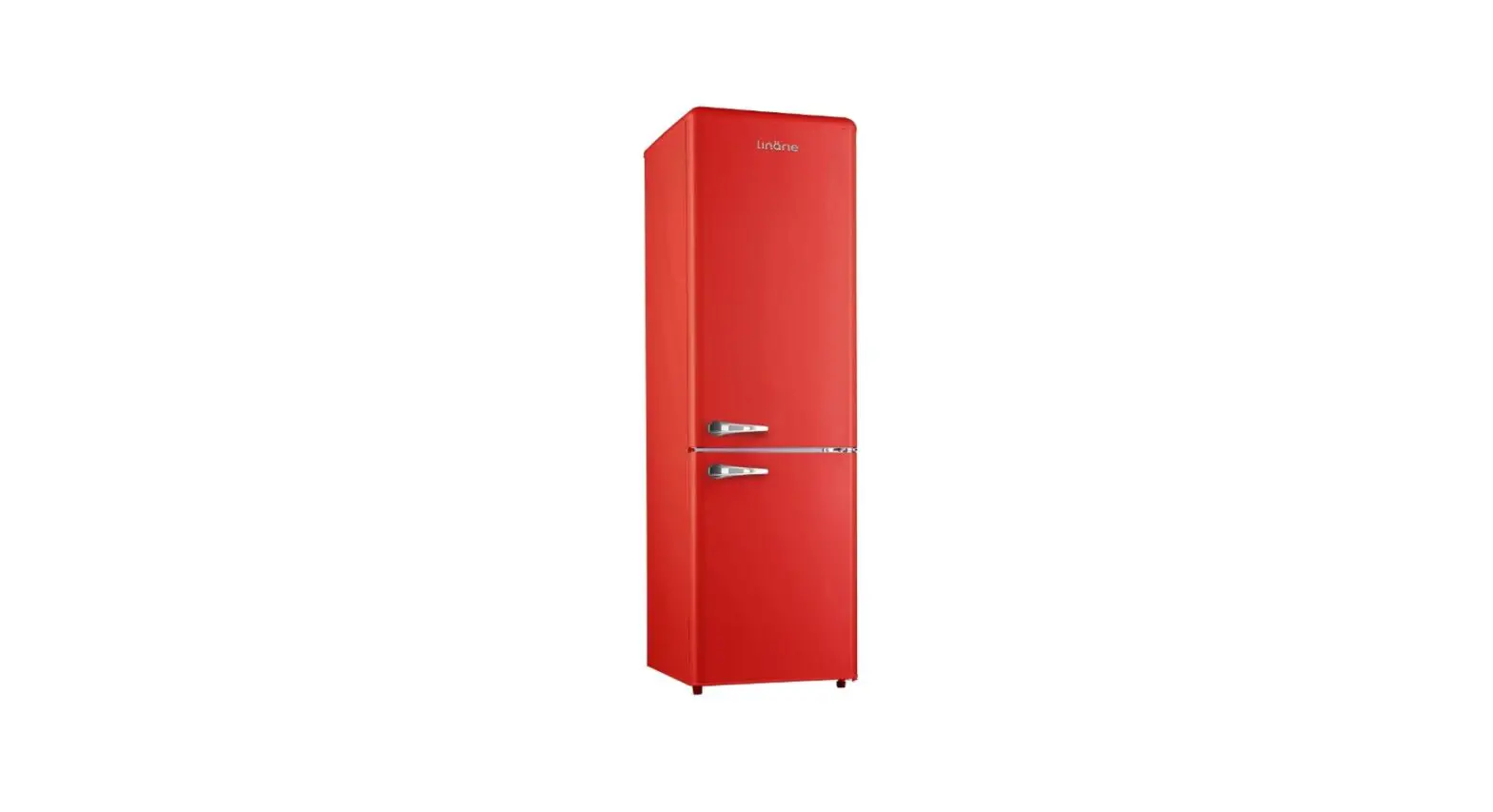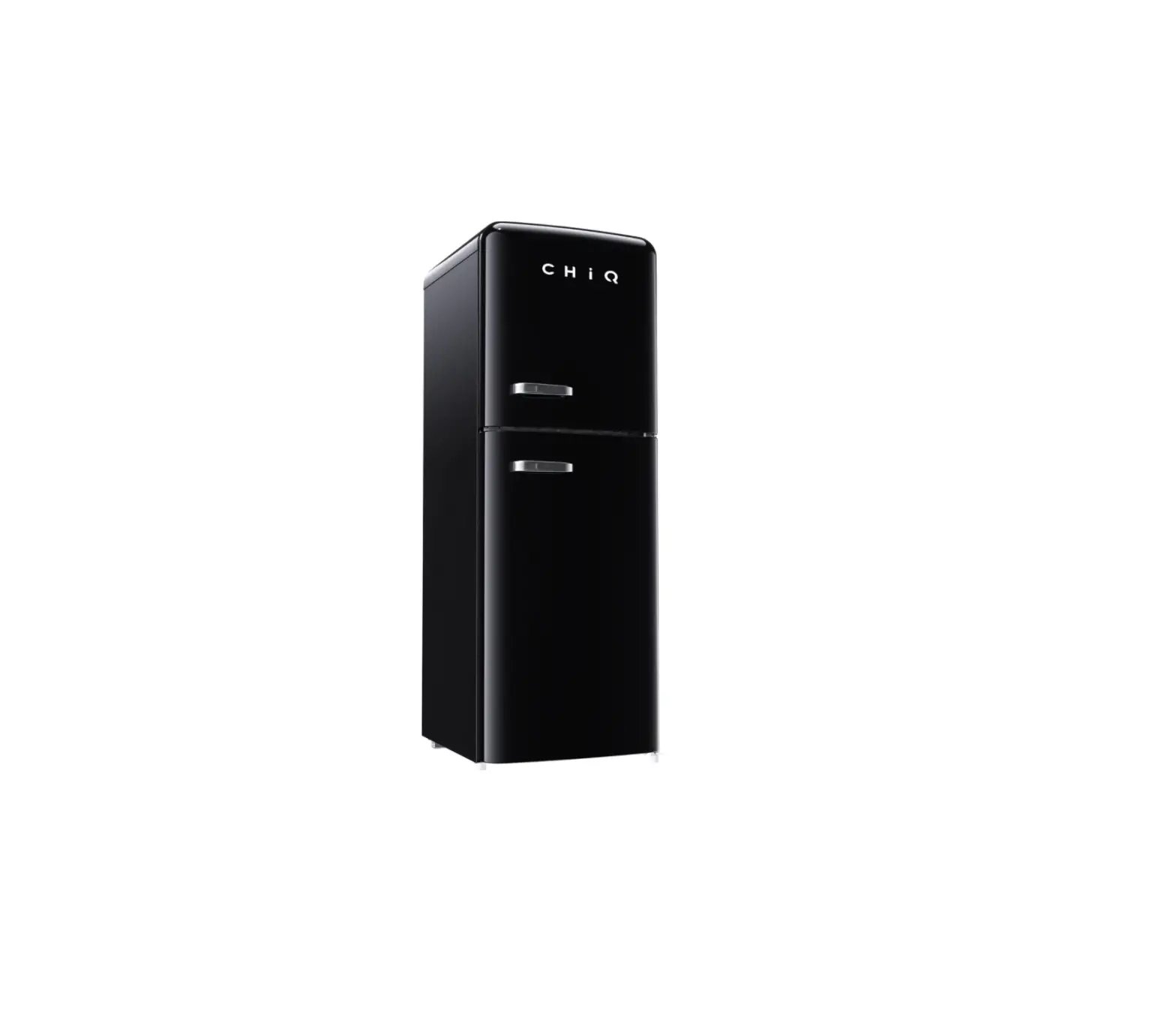
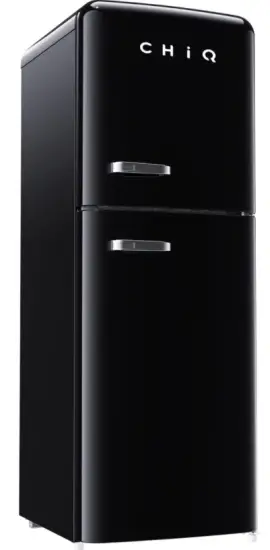
CHiQ CRTM198NB 202L Retro Top Mount Fridge
PART NAMES AND LOCATIONS
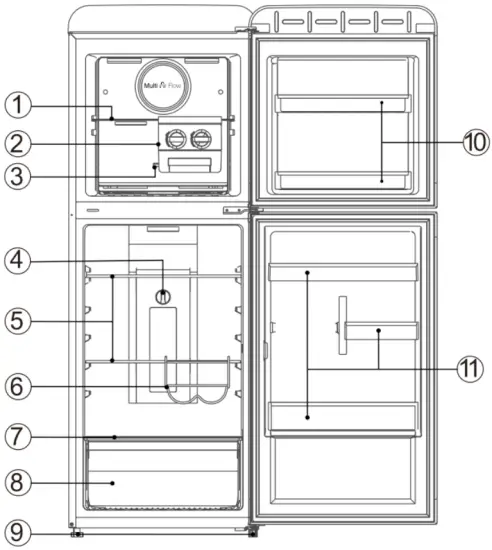
No | Description |
1 | Freezer Shelf |
2 | Rotating Ice Box |
3 | Freezer Temperature Control |
4 | Refrigerator Temperature Control |
5 | Refrigerator Glass Shelves |
6 | Wine Rack |
7 | Crisper Cover |
8 | Crisper |
9 | Adjustable Feet |
10 | Freezer Racks |
11 | Refrigerator Door Racks |
IN ACCESSORY BAG: USER MANUAL, WARRANTY CARD & DOOR STOPPER (small plastic parts for door reverse purpose ONLY)
As the manufacturer holds the authority to redesign or modify its products without notice:
Any modifications or upgrades of our products will result in this refrigerator varying slightly from this manual but the functionality will remain the same to that as set out within this manual.
IMPORTANT SAFETY INSTRUCTIONS
 | Follow these basic precautions to reduce the risk of fire, electrical shock hazards or injury when operating the refrigerator: |
| |
R600a WARNINGS
NOTE: This model uses R600a flammable refrigerant in its sealed system. The following must be observed for your safety:
R600a Refrigerant Warning
- This appliance contains 0.039kg R600a refrigerant which is environmentally friendly, but flammable. It does not damage the ozone layer, nor does it increase the greenhouse effect.
- During transportation and installation, ensure that the tubing of the refrigerant circuit is not damaged.
- Leaking refrigerant can ignite and may damage the eyes.
- In the event any damage does occur, avoid exposure to open fires and any device which creates a spark. Disconnect the appliance from the mains power.
- Thoroughly ventilate the room in which the appliance is located for several minutes.
- Notify Customer Service for necessary action and advice.
- The room for installing the appliance must be at least 1 cubic metre per 8 grams of refrigerant. The refrigerant quantity contained in this appliance is listed above in grams; it is also noted on the Rating Plate of the appliance.
* Do not store explosive substances such as aerosol cans with a flammable propellant in this appliance.
It is hazardous for anyone other than an Authorised Service Person to carry out servicing or repairs to this appliance. In Queensland the authorized person must hold a Gas Work Authorisation for hydrocarbon refrigerants, before carrying out servicing or repairs which involve the removal of covers.
- Keep ventilation openings, in the appliance enclosure or in the built-in structure, clear of obstruction.
- Do not use mechanical devices or other means to accelerate the defrosting process, other than those recommended by the manufacturer.
- Do not damage the refrigerant circuit.
- Do not use electrical appliances inside the food storage compartments of the appliance, unless they are of the type recommended by the manufacturer.
- Do not store explosive substances such as aerosol cans with a flammable propellant in the appliance.
Disposal
The environment and personal safety must be considered when disposing of this appliance. Please ensure the appliance is taken to a recycle center for safe recycling. DO NOT dispose of the appliance in land fill as the insulation and refrigerant gas contained in these appliances are flammable.
INSTALLATION INSTRUCTIONS
Before Using the Refrigerator
- Remove the exterior and interior packing.
- Before connecting the refrigerator to a power source, let the unit stand upright for approximately 4 hours to mitigate the possibility of a malfunction in the cooling system from improper handling during transportation.
- Clean the interior surface with lukewarm water using a soft cloth. (Refer to the cleaning instruction on page 5)
Installing the Refrigerator
- This appliance is designed to be free standing only, and should not be recessed or built-in.
- Place the refrigerator on a leveled/even floor surface that is strong enough to support the weight of the refrigerator when it is fully loaded to prevent vibrations and allow water to properly drain. The front feet can be adjusted to level the appliance properly.
- The leveling feet should only be used in forward and backward motions and never side to side.
- Allow at least 5cm of space between the back and sides of the refrigerator to allow proper air ventilation. Adjust the two front feet to keep the refrigerator leveled or elevated.
- Situate the refrigerator away from direct sunlight and sources of direct heat (stove, heater, radiator, etc.). Direct sunlight may also affect the acrylic coating and heat sources may cause an increase electrical consumption. Ambient temperature below 50°F or above 85°F will hinder the performance of this appliance.
- This unit is not designed for outside installation.
- Avoid situating the refrigerator in moist OR pest infestation areas.
- Plug the refrigerator into dedicated, properly installed-grounded wall outlet. Do not under any circumstances cut or remove the third (ground) prong from the power cord. Any questions concerning power and/or grounding should be directed toward a certified electrician or an authorized service center.
- After plugging the appliance into a wall outlet, turn the unit on and allow the unit to cool down for 2~3 hours before placing food in the refrigerator or freezer compartment.
- Do not place items on the top of this appliance.
ENERGY SAVING TIPS
- Allow hot foods to cool to room temperature before placing in the refrigerator. Overloading the refrigerator forces the compressor to work harder. Foods that freeze too slowly may lose quality, or spoil.
- Do not adjust the temperatures colder than necessary. Refer to page 4 for temperature instructions.
- Be sure to wrap foods properly, and wipe containers dry before placing them in the refrigerator. This cuts down on frost build-up inside the refrigerator.
- Organize and label food to reduce door openings and extended searches. Remove as many items as needed at one time, and close the door as soon as possible.
- Refrain from leaving the door/s open for a long time to conserve energy.
OPERATING INSTRUCTIONS
START
– The temperature inside the refrigerator is controlled by the potentiometer installed in the refrigerated room. The temperature inside the refrigerator varies depending on the opening and closing doors of the refrigerator, the ambient temperature, and the place of placement.
– Under normal conditions, considering the food preservation and refrigerator energy saving, spring and summer, we recommend the use of refrigerated room temperature adjustment in the “MED” file.
– In winter, the freezer can be placed between MED and MAX.
Fridge temperature adjustment
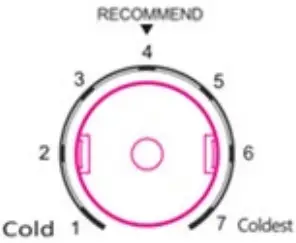
The fridge temperature can be adjusted by means of the temperature control knob switch.
- The temperature gets gradually decreased as you dial the temperature control knob switch from the position “1” to “7”.
- To set the knob switch at the “4” position can meet the daily normal use.
- When you need to strengthen cooling of the fresh food compartment, dial the temperature control knob switch in the Coldest direction, so as to extend the compressor running time, with the temperature decreased accordingly.
Note: It is not recommended to set the temperature control knob at the “Coldest” position for a long time.
Freezer temperature adjustment
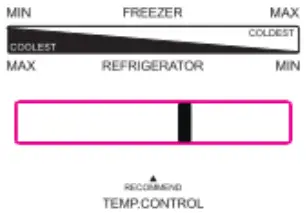
- When the temperature mode keeps unchanged, adjust the air regulating rod from left to right, the fridge temperature gets increased while the freezer temperature decreased.
- When the temperature mode keeps unchanged, adjust the air regulating rod from right to left, the fridge temperature gets decreased while the freezer temperature increased .
- It is recommended to adjust the air regulating rod in the middle position. When the user needs a lower freezer temperature, adjust the air regulating rod to the right properly, then the freezer temperature decreases while the fridge temperature rises. When the temperature meets the requirement, adjust the air regulating rod back to the middle position again in a timely manner.
The fridge thermostat and the air regulating rod should be used in combination.
Temperature adjustment | |||
| Use environment | Recommended thermostat mode setting | Recommended air regulating rod position | Notes |
| Higher than 35℃ | 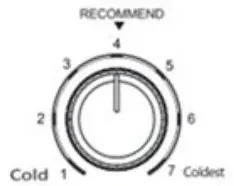 | 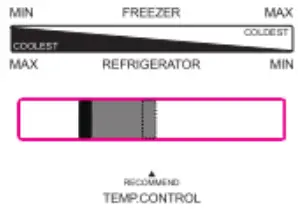 | 1) It is recommended to set at the middle mode. 2) The temperature modes can be adjusted as recommended in the left table in case of change to the ambient temperature around the refrigerator |
| 16℃-35℃ | | 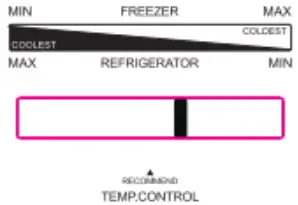 | |
| Lower than 16℃) | 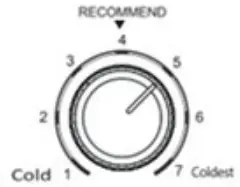 | 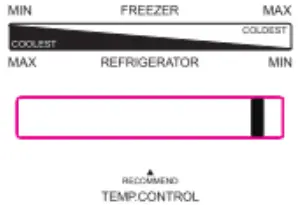 | |
- When the ambient temperature around the refrigerator is higher than 35 , do not set the thermostat at Mode coldest and adjust the air regulating rod to the rightmost position, so as not to affect the normal refrigeration of the refrigerator.
- Do not set the thermostat at Mode coldest and adjust the air regulating rod to the leftmost position, in order to avoid the fridge compartment undercooling.
- If the fridge temperature is not cool or undercooled, set the thermostat at the middle mode and adjust the air regulating rod in the middle position.
Note: During the actual use, the freezer air regulating lever may be frozen due to high humidity or frequent opening of the door. In such case, do not adjust the regulating lever by force; Instead, you are recommended to use a hot towel to heat it locally, so that the frozen air regulating lever gets thawed before being adjusted to avoid damage.
Please note different sections of refrigerator compartment may be warmer or cooler than others typically the back wall and bottom lowest shelf will be the coolest, the top door rack will be the warmest. To avoid frost bite, please don’t put raw vegetables too close to the coolest area.
Fault
- Changing the light
The LED lamp is used by the refrigerator for lighting, which features low energy consumption and long service life. In case of any abnormality, please contact the after-sales personnel for visiting service.The LED lamps can only be replaced by the after-sales personnel. - In the case of the LED light flashing, it indicates the refrigerator gets failed. Please contact the after-sales staff for on-site service as soon as possible
GENERAL CARE AND MAINTENANCE
Cleaning the Refrigerator
- Upon installation of your new appliance, it is recommended that it be cleaned thoroughly and properly maintained thereafter.
- Turn off the refrigerator and then unplug the unit from the wall outlet.
- Remove all food content before washing the inside with a damp cloth soaked in lukewarm water and baking soda solution. The solution should be about 2 tablespoons of baking soda to a litre of water.
- Be sure to keep the door gasket (seal) clean to keep the unit running efficiently as improper cleaning can cause the seal to dislodge and tear.
- The exterior of the refrigerator should be cleaned with mild detergent and warm water. (door and side of the units only.
- Dry the interior and exterior with a soft cloth.
- The condenser coils should be vacuumed when they are dusty or dirty. The condenser is an internal tube, non-serviceable.
- Don’t need to remove the water tray above compressor to empty water that will be evaporated by heat from compressor.
Vacation Time
- Turn off the refrigerator first and then unplug the unit from the wall outlet.
- Remove all food.
- Clean the refrigerator.
- Leave the lid open slightly to avoid possible formation of condensation, mold, or odors.
- Use extreme caution in the case of children. The unit should not be accessible to child’s play.
- Short vacations: Leave the refrigerator operating during vacations of less than three weeks.
- Long vacations: If the appliance will not be used for several months, remove all food and unplug the power cord. Clean and dry the interior thoroughly. To prevent odour and mold growth, leave the door open slightly: blocking it open if necessary or have the door removed.
Repositioning and Relocating the Refrigerator
- Turn off the refrigerator first and then unplug the unit from the wall outlet.
- Remove all the food and drinks.
- Securely tape down all loose items inside your refrigerator.
- Tape the doors shut.
- Be sure the refrigerator stays in the upright position during transportation.
TROUBLESHOOTING GUIDE
Many common refrigerator problems can be easily, saving you the cost of a possible service call. Try the suggestions below to see if you can solve the problem before calling for service.
PROBLEM | POSSIBLE CAUSES |
Refrigerator does not operate. |
|
The light is not working. |
|
Compressor runs all the time |
|
Temperature inside the refrigerator is too warm. |
|
Temperature inside the refrigerator is too cold. |
|
Temperature of external refrigerator surface is warm. |
|
Popping or cracking sound when compressor comes on. |
|
Bubbling or gurgling sound, like water boiling. |
|
Vibrations. |
|
Moisture forms on inside refrigerator walls. |
|
Moisture forms on outside of refrigerator. |
|
The doors will not close properly. |
|
For any enquiries, please call the CHiQ Cusotmer care on: 1300 796 688.
Customer Service 1300 796 688
www.chiq.com.au
©Changhong Electric (Australia) P/L all rights reserved.