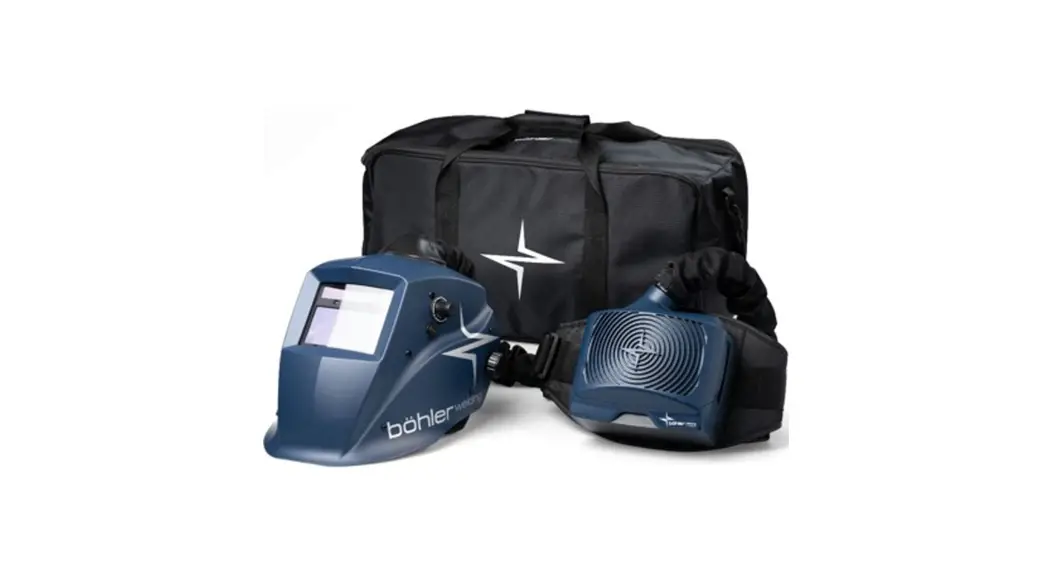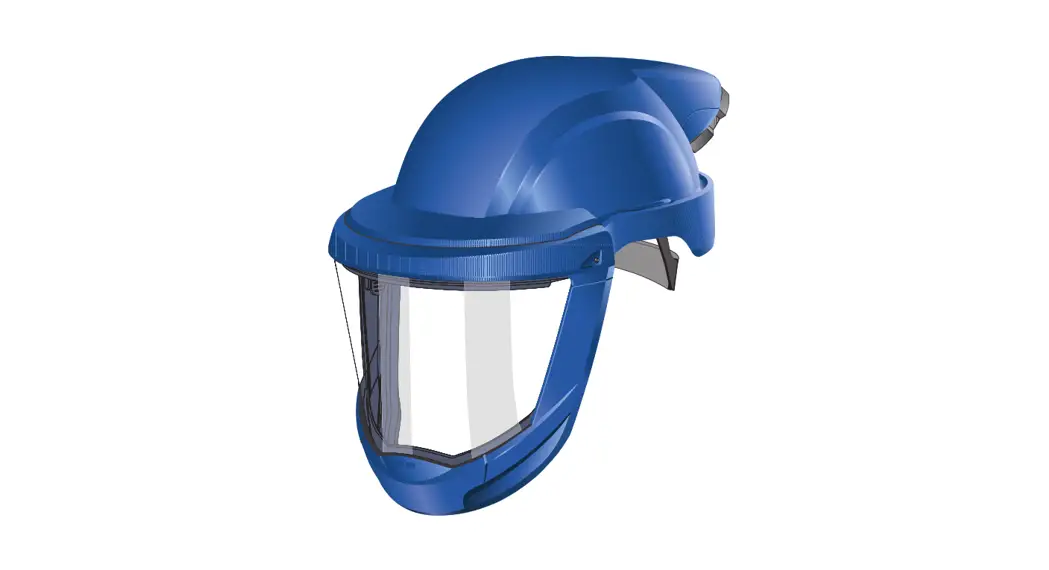

SR 580
Head-top for fan SR 500 / SR 500 EX and
compressed air attachment SR 507.
INSTRUCTIONS FOR USE
Illustrations
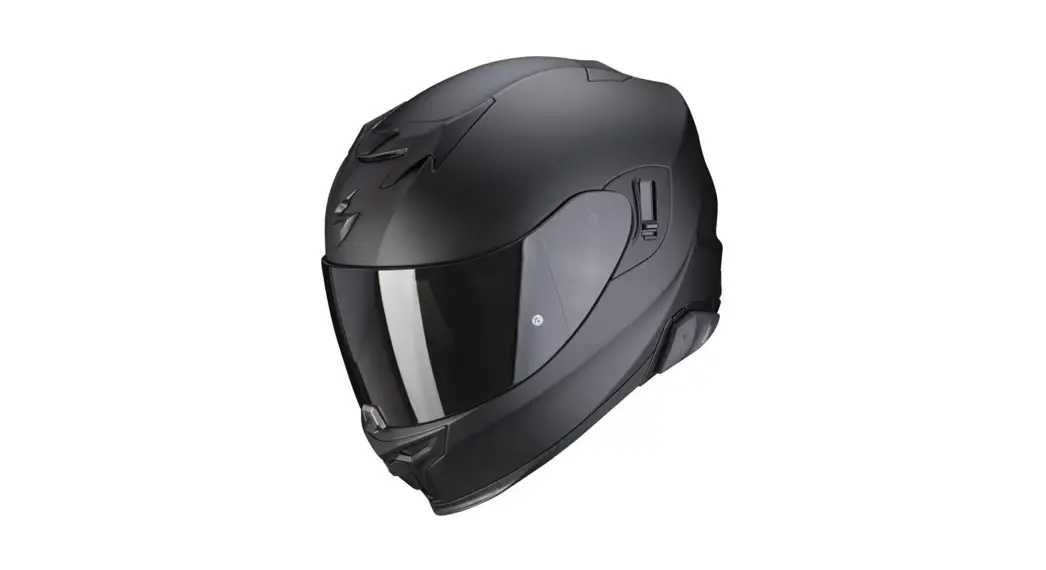
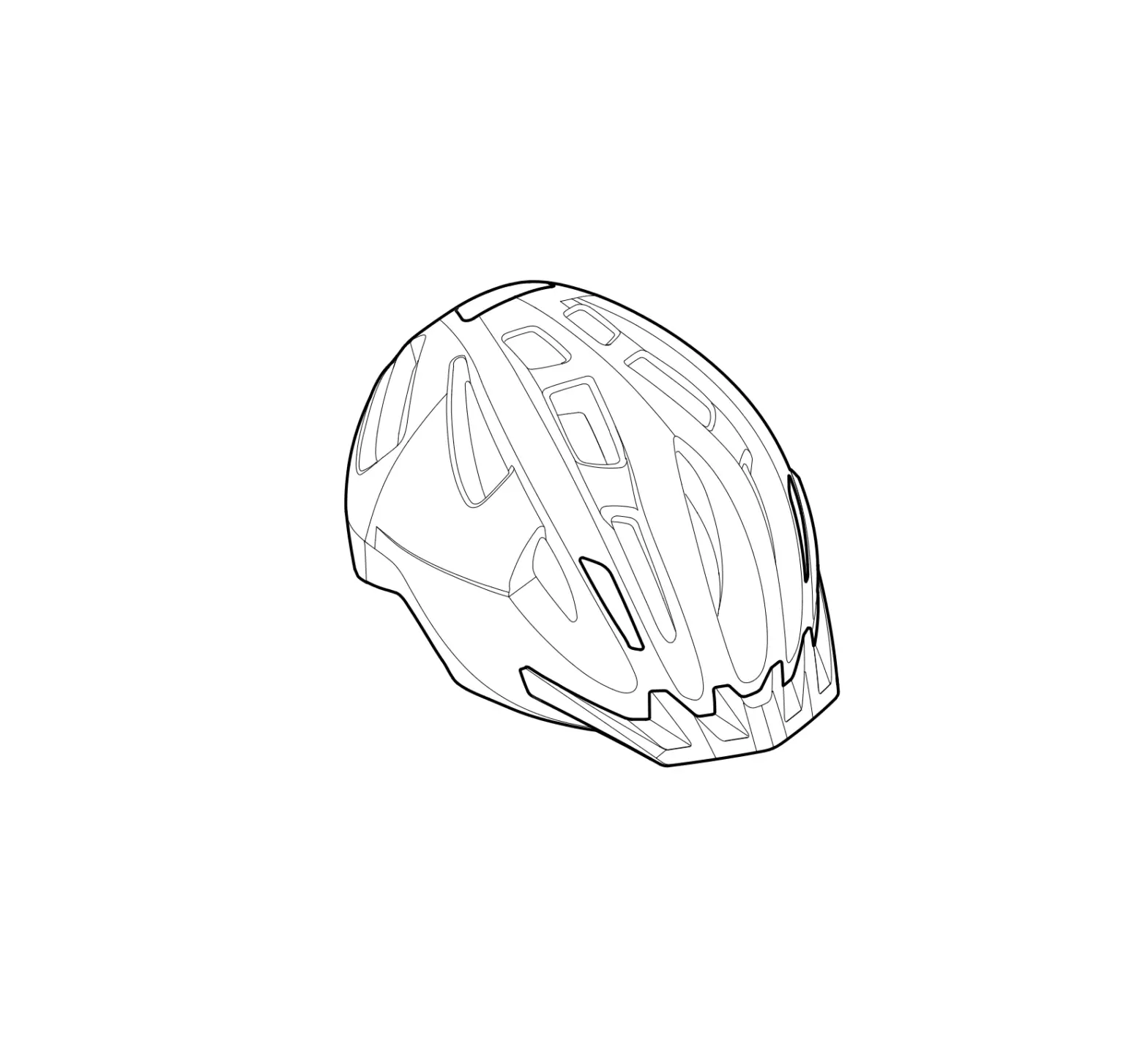
SR 580 Helmet with Visor
- General information
- Parts
- Use
- Maintenance
- Technical specification
- Key to symbols
- Approval
General information
Use of a respirator must be part of the respiratory protection program. For advice see EN 529:2005 or AS/NZS 1715:2009. The guidance contained in these standards highlights important aspects of a respiratory protective device program but does not replace national or local regulations.
If you feel uncertain about the selection and care of the equipment, consult your work supervisor or get in touch with the sales outlet. You are also welcome to get in touch with the Technical Service Department at Sundstrom Safety AB.
1.1 System description
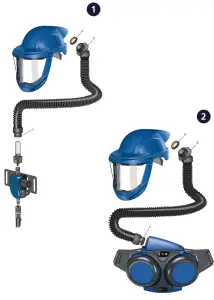
SR 580 together with the fan unit SR 500/SR 500 EX and approved filters are included in the Sundstrom fan-assisted respiratory protective device system conforming to EN 12941:1998 and the Powered Air Purifying Respirator (PAPR) system conforming to AS/NZS 1716:2012. (fig. 2). SR 580 can be used together with fan unit SR 500 EX in explosive atmospheres. The breathing hose must be connected to the fan unit equipped with filters. The above atmospheric pressure generated in the head-top prevents particles and other pollutants from being admitted into the breathing zone. SR 580 can also be used together with compressed air attachment SR 507 (fig. 1). This combination forms a breathing apparatus designed for continuous air flow, for connection to a compressed air supply in accordance with EN 14594:2005.
1.2 Applications
The SR 580 together with fan SR 500/SR 500 EX or SR 507 compressed air attachment can be used as an alternative to filtering respirators in all situations in which these are recommended. This applies particularly to work that is hard, warm, or of long duration. When selecting the head top, some of the factors
that must be taken into account are as follows:
- Type of pollutants
- Concentrations
- Work intensity
- Protection requirements in addition to the respiratory protective device.
The helmet/visor must only be used when carrying out the work it is intended for. The helmet provides limited protection by reducing the force of falling objects that strike or penetrate the top of the helmet shell.
The visor provides protection for the eyes and the face from various hazards such as flying objects, impact, splashes, and airborne debris.
The risk analysis should be carried by a person who has suitable training and experience in the area.
1.3 Warnings/Limitations
Note that there can be national differences in the regulations for use of respiratory protective equipment.
Warnings
The equipment must not be used
- If the fan is not running. In this abnormal situation, the equipment will provide no protection. In addition, there is a risk of carbon dioxide quickly accumulating in the head top, which would lead to oxygen deficiency
- if the pollutants are unknown,
- in environments that are immediately dangerous to life and health (IDLH),
- in environments where the ambient air is oxygen-enriched air or does not have a normal oxygen content,
- if you find it difficult to breathe,
- if you smell or taste pollutants,
- if you experience dizziness, nausea, or another discomfort.
Materials that come into contact with the skin of sensitive people may cause allergic reactions. Damaged or scratched oculars must immediately be replaced. Eye-protectors against high-speed particles worn over standard ophthalmic spectacles may transmit impacts, thus creating a hazard to the wearer.
Where the markings on the visor and visor frame are different, the lowest applies.
The eye protection according to EN 166:2001 and AS/NZS 1337.1:2010 is valid at temperature -5 °C to +55 °C.
The head protection according to EN 397:2012 is valid at temperature -30 °C to +55 °C.
The head protection according to AS/NZS 1801:1997 is valid at temperature -10 °C to +50 °C.
If protection against high-speed particles at extremes of temperature is required, the letter T must be written immediately after the impact letter, i.e.
BT. If not, the eye-protector shall only be used against high-speed particles at room temperature.
Limitations
- The head-tops must not be used together with peel-offs in a potentially explosive atmosphere.
- If the face seal is not firmly in contact with the face, the pressure necessary for maintaining the correct protection factor will not be established.
- If the user is exposed to very high work intensity, negative pressure may occur in the device during the inhalation phase, which may involve the risk of leakage into the head-top.
- The protection factor may be reduced if the equipment is used in surroundings in which high wind speeds occur.
- The seal of the head-top against the face must be assured. This may be difficult to achieve if the user has a beard or sideboards.
- Be aware that the breathing hose might make a loop and get caught up by something in your surrounding.
- Never lift or carry the equipment by the breathing hose.
- The helmet is not designed to withstand penetrative impacts from the front, sides or back, but can provide protection against less severe impacts against those surfaces.
- Avoid contact with electrical wiring when using the helmet.
- When gluing items to the helmet, only rubber or acrylic-based adhesives may be used. The helmet must not be painted.
Parts
2.1 Delivery check
Check that the equipment is complete in accordance with the packing list and undamaged.
Packing list
- Helmet
- Breathing hose
- User instructions
- Cleaning tissue
2.2 Accessories / Spare parts
| Designation | Order no. |
| Helmet, incl. air duct | R06-0811 |
| Upper frameset | R06-0823 |
| Lower frameset | R06-0803 |
| Head harness | R06-0804 |
| Face seal | R06-0805 |
| Leaf spring | R06-0806 |
| Set of valves | R06-0807 |
| Visor, PC | R06-0822 |
| Sweatband | R06-0809 |
| Breathing hose for SR 580 | R06-0810 |
| O-ring for hose, fig. 1c/2c | R06-0202 |
| Gasket SR 200/SR 580, fig 1a/2a | R01-1205 |
| Peel of set SR 582* | T06-0801 |
| Cleaning wipes. 50/box | H09-0401 |
* Must not be used in a potentially explosive atmosphere.
Use
- 3.1 Installation
Also see the user manual for the SR 500/SR 500 EX fan and the SR 507 compressed air attachment, whichever is used.
Breathing hose
One end of the hose has a ø42 mm thread (fig. 1b/2b), whilst the other is fitted with an O-ring (fig. 1c/2c). The threaded end is to be connected to the helmet.
3.2 Donning
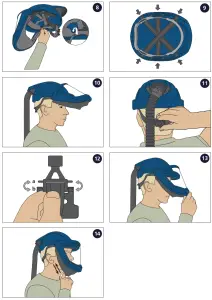
Also, see the user instructions for the SR 500/SR 500 EX fan and the SR 507 compressed air attachment, whichever is used. - Check that the 6-point harness is secured correctly (fig. 9).
- Raise the visor and put on the helmet (fig. 10).
- If necessary, adjust the width of the helmet using the knob located at the rear of the harness (fig. 11).
- To adjust the height of the helmet interior, move the pins between positions a and b (fig. 12). If the interior is attached to pin a, the helmet will sit lower, and on pin b the helmet will be higher. To achieve the best fit, this adjustment can be made at both the front and back of the helmet.
- Lower the visor by pulling the face seal down below your chin. A ‘click’ indicates that the visor is fully lowered (fig. 13).
- Insert a finger inside the face seal and move it along the length of the contact surface to check the fit (fig. 14).
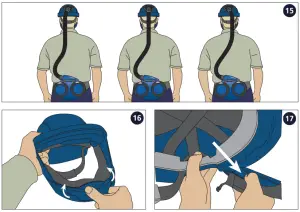
- Make sure that the breathing hose runs down your back and is not twisted. You can adjust the angle of the helmet connection as required (fig. 15).
3.3 Doffing
See the user manual for the SR 500/SR 500 EX fan and the SR 507 compressed air attachment, whichever is going to be used.
Maintenance
The person responsible for cleaning and maintaining the equipment must have suitable training and be well acquainted with work of this type.
4.1 Cleaning
Sundström cleaning tissues SR 5226 are recommended for daily care.
If the equipment is more heavily fouled, use a soft brush or sponge moistened with a solution of water and dishwashing detergent or the like. Rinse the equipment and leave it to dry. If necessary, spray the helmet with 70 % ethanol or isopropanol solution for disinfection.
NOTE! Never use a solvent for cleaning.
4.2 Storage
After cleaning, store the equipment, dry and clean, at room temperature. The SR 580 should be stored with the visor either fully raised or fully lowered. Keep out of direct sunlight.
4.3 Maintenance schedule
Recommended minimum requirements on maintenance routines so you will be certain that the equipment will always be in usable condition.
| Before use | After use | Annually | |
| Visual inspection • | • | • | |
| Performance check • | • | ||
| Cleaning | • | • | |
| Replacement of hose O-ring | • | ||
| Replacement of gasket in helmet | • | ||
| Replacement of exhalation membrane | • | ||
At the first signs of wear, impact marks, damage, or aging of the material, the helmet shell or harness must be replaced in order to ensure the protective ability of the helmet is maintained. This must be checked on a regular basis.
A helmet that shows signs of damage, e.g. cracks or scratches, that may reduce its protective ability must be discarded. The helmet must also be discarded if it has been exposed to stresses during an accident or near accident, even if there is no visible damage.
The helmet should be used within 5 years after the date of production or within 3 years of being taken into use, whichever of these dates is earlier.
4.4 Change parts
Always use Sundström genuine parts. Do not modify the equipment.
The use of non-genuine parts or modifications may reduce protective function and put at risk the approvals received by the product.
4.4.1 To change the exhalation membrane
The exhalation membrane is fitted on a pin inside the valve cover. The cover must be replaced at the same time as the membrane. Do the following:
- Remove the valve cover from the valve seat (fig. 16).
- Pull out the membrane.
- Check and, if necessary, clean the seal groove in the valve seat.
- Press the new membrane securely on the pin. Carefully check that the membrane is fully in contact with the valve seat.
- Press the valve cover firmly back into position. A ‘snap’ indicates that it is locked in position.
4.4.2 To change the visor
No tools are required to replace the visor. Do the following:
- Unhook the face seal from the harness (fig. 8).
- Remove the lower visor frame (fig. 17).
- Remove the visor.
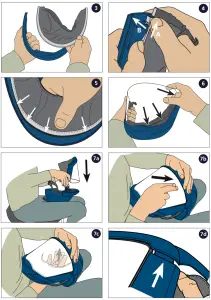
- Fit the visor into the lower visor frame. Applying a little water to the seal will make fitting easier (fig.6).
- Fit the lower visor frame to the helmet by sliding it into position. A ‘click’ indicates that is locked in position (fig. 7a-7d).
- Check that the visor has achieved a full seal around the entire visor frame.
- Attach the hooks in the harness (fig. 8).
- 4.4.3 To change the face seal
The face seal plastic frame has a groove in which a flange on the lower visor frame fits. The frame locks into position using two pins – one at either end -, which fit into a hole in the visor.
The face seal covering has hooks at either end that attach to the head harness. Do the following: - Unhook the face seal from the head harness (fig. 8).
- Remove the lower visor frame (fig. 17).
- Unfasten the face seal by pulling its frame until the pins release from the holes in the visor (fig. 5).
- Remove the face seal.
- Fit the face seal on the inner flange in the lower visor frame (fig. 3) Start at one side, push the pin upwards, and control that the lip is fastened in the lower visor frame. (fig. 4).
- Push along the face seal frame so it is securely fastened on the lower visor frame (fig. 5). Control that the pin and lip are fastened on both sides (fig. 4).
- Fit the lower visor frame to the helmet by sliding it into position. A ‘click’ indicates that it is locked in position (fig. 7a-7d).
- Attach the hooks in the head harness (fig. 8).
4.4.4 To change the sweatband
The sweatband is attached to the forehead strap with Velcro tape. Do the following:
- Unhook the face seal from the head harness (fig. 8).
- Remove the sweatband.
- Fit the Velcro tape with the rough side towards the forehead
strap and the groove facing upwards. - Attach the face seal hooks in the head harness (fig. 8).
4.4.5 To change the gasket
The gasket is located inside the helmet (fig 1a/2a). Do the following:
- Unscrew the hose from the helmet.
- Remove the gasket from the flange and fit the new gasket.
4.5 Transport
There are no special requirements concerning packaging and transport.
Technical specification
Weight
Weight is approximately 1200 g.
Materials
Plastic components are marked with a material code.
Temperature range
- Storage temperature: from -20 °C to +40 °C at a relative humidity below 90 %.
- Service temperature: from -10 °C to +55 °C at a relative humidity below 90 %.
- Service temperature, when used together with fan SR 500 EX, is -10 °C to +40 °C.
Shelf life
The equipment has a shelf life of 5 years from the date of manufacture.
Key to symbols
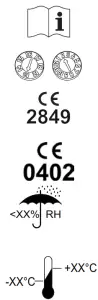 >XX+XX< | See user instructions |
| Date wheel | |
| CE approved by INSPEC International B.V. | |
| CE approved by rising Certification | |
| Relative humidity | |
| Temperature range | |
| Material designation |
Approval
- SR 580 with SR 500/SR 500 EX: EN 12941:1998, class TH3.
- SR 580 in combination with fan SR 500 EX is approved in
accordance with ATEX Directive 2014/34/EU and IECEx
Scheme. - SR 580 with SR 507 and compressed air hose SR 358 or
SR 359: EN 14594:2005, class 3A, 3B. - SR 580 with SR 507 and compressed air hose SR 360:
EN 14594:2005, class 3A.
Helmet: EN 397:2012, -30 °C, MM, 440 Vac.
-30 °C Use at low temperatures
MM Molten metal splash
440 Vac Current leakage test, electrical insulation
Visor
The PC visor is approved in accordance with EN 166:2001.
Marked: SR 1 B 3 9.
Visor frame
The visor frame is approved in accordance with EN 166:2001.
Marked: SR EN 166 3 9 B.
SR Sundström Safety AB
1 optical class
B high-speed particles 120 m/s at room temperature
3 liquid splash
9 molten metal splash
Type approval in accordance PPE Regulation (EU) 2016/425in agreement with EN 12941:1998 and EN 166:2001 has been issued by Notified Body No. 2849. INSPEC International B.V.,Beechavenue 54-62, 1119 PW, Schiphol-Rijk, The Netherlands.
Type approval in accordance PPE Regulation (EU) 2016/425in agreement with EN 397:2012 has been issued by NotifiedBody No. 0402. RISE, Brinellgatan 4, 504 62 Borås, Sweden.
The EU declaration of conformity is available at
www.srsafety.com
ATEX-codes: II 2 G Ex ib IIA T3 GbII 2 D Ex ib IIIC T195°C Db
Key to ATEX markings:Explosion protection mark.
II Equipment Group (explosive atmospheres other than mines with firedamp).
2 G Equipment category (2 = High level of protection for Zone 1, G = Gas).
2 D Equipment category (2 = High level of protection for Zone 21, D = Dust).
Ex Explosion protected.
ib Type of protection (Intrinsic safety).
IIA Gas group (Propane).
IIIC Dust material group (zone with conductive dust).
T3 Temperature class, gas (maximum surface temperature +200°C).
T195°C Temperature class, dust (maximum surface temperature +195°C).
Gb Equipment Protection Level, gas (high protection).
Db Equipment Protection Level, dust (high protection).
IECEx codes:
Ex ib IIA T3 Gb
Ex ib IIIC T195°C Db
Key to IECEx markings:
Ex Explosion protected.
ib Type of protection (Intrinsic safety).
IIA Gas group (Propane).
IIIC Dust material group (zone with conductive dust).
T3 Temperature class, gas (maximum surface temperature +200°C).
T195°C Temperature class, dust (maximum surface temperature +195°C).
Gb Equipment Protection Level, gas (high protection).
Db Equipment Protection Level, dust (high protection
Type approvals in accordance with ATEX Directive have been issued by Notified Body No. 0470. Nemko AS, Phillip Pedersens vei 11, N-1366 Lysaker, Norway.
Type approvals in accordance with the IECEx scheme have been issued by Notified Body No. 2460. DNV GL Presafe AS, Veritasveien 3, N-1363 Hovik, Norway.
Australian StandardsMark
The helmet with visor SR 580 is tested according to AS/NZS 1716:2012, AS/NZS 1337.1:2010, and AS/NZS 1801:1997.
The StandsMark is issued under license by SAI Global Certification ServicesPty Limited Lic No.766 (ACN 108 716
669) (“SAI Global”).
Visor
The PC visor has been tested to AS/NZS 1337.1.2010, high impact V.
Occupational protective helmet
The helmet has been tested to AS/NZS 1801:1997.
Type 1 – general industrial safety helmets.
NOTES
The head-top SR 580 is manufactured within a quality
management system accepted by
Notified Bodies: 2849: INSPEC International B.V.,
Beechavenue 54-62, 1119 PW, Schiphol-Rijk,
The Netherlands.
0402: RISE, Brinellgatan 4, 504 62 Borås, Sverige
Sundström Safety AB
SE-341 50 Lagan • Sweden
Tel: +46 10 484 87 00
[email protected] • www.srsafety.com
L67-8009 Rev 06 20210301