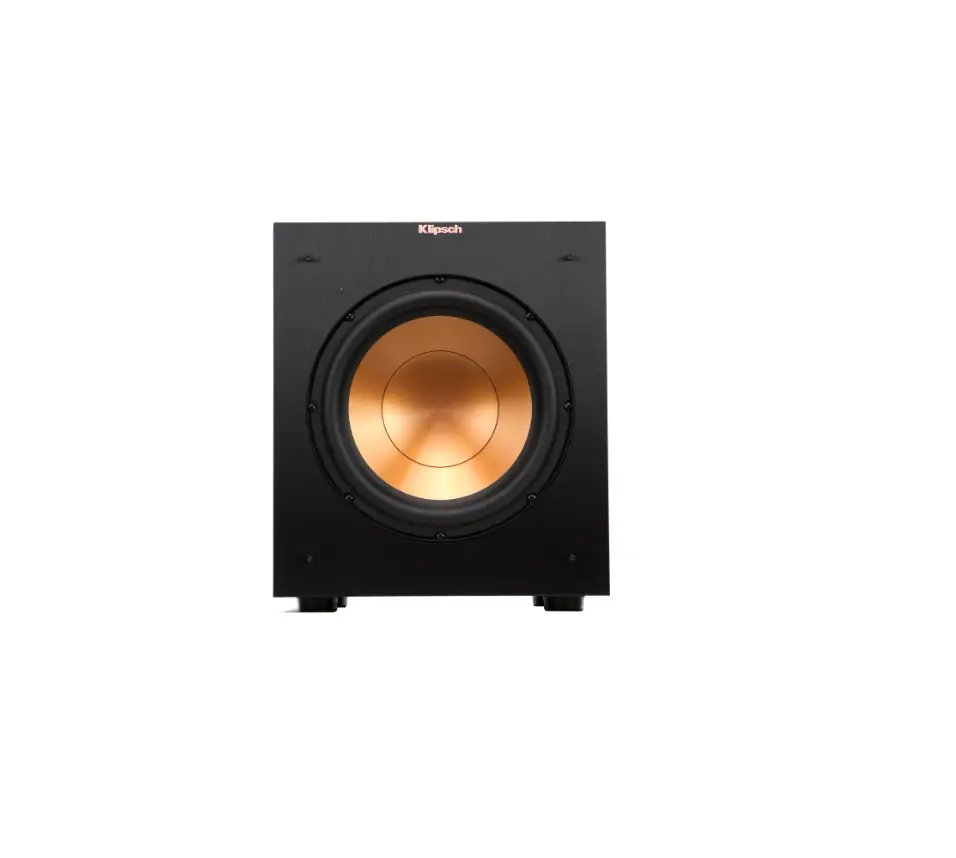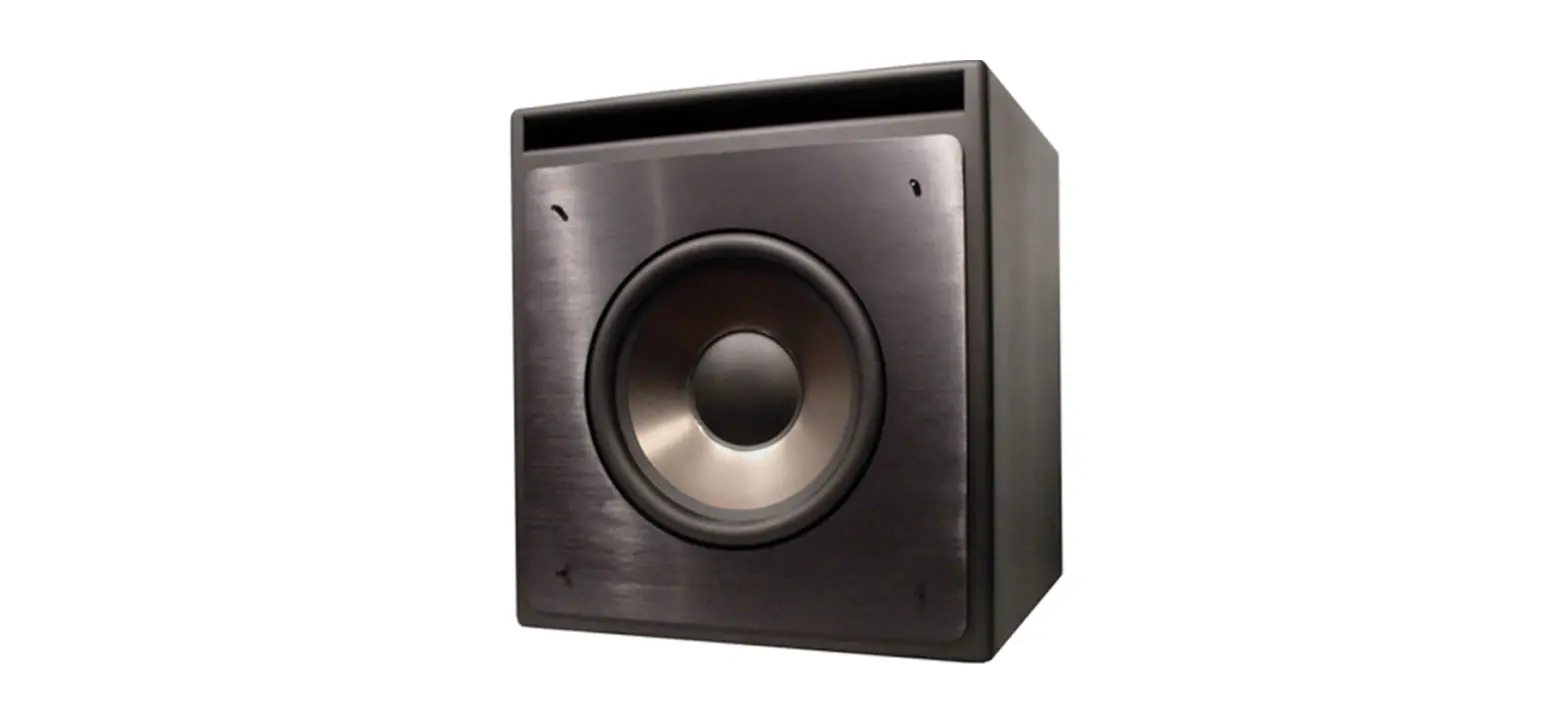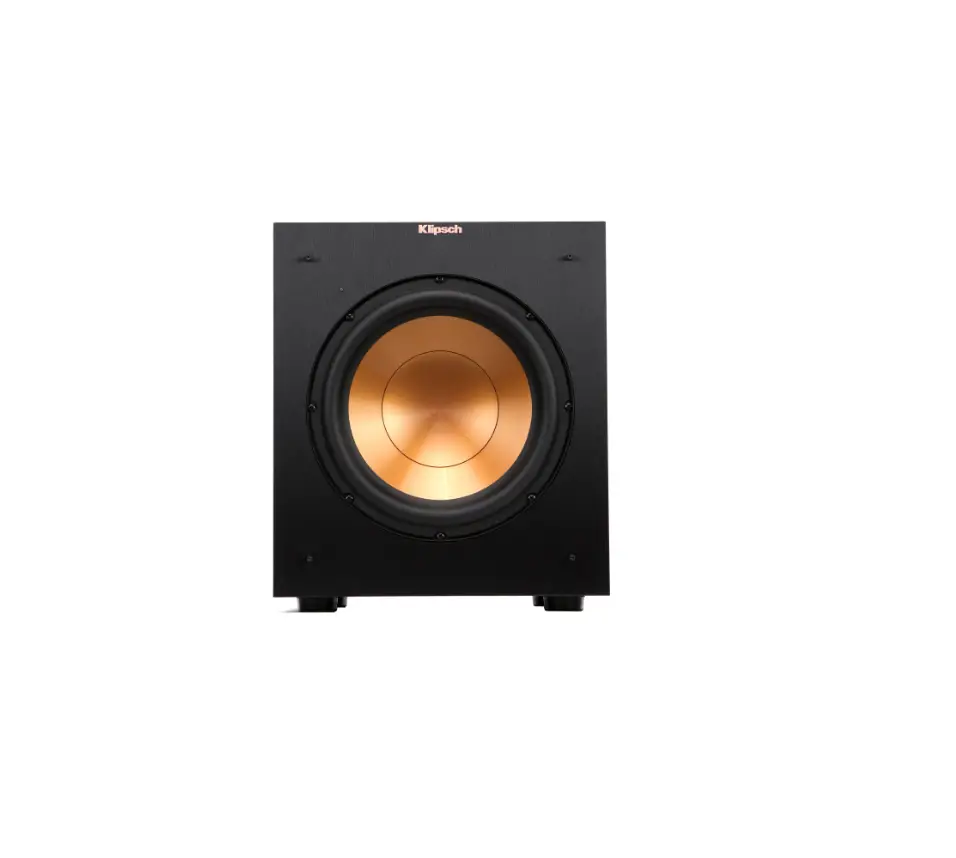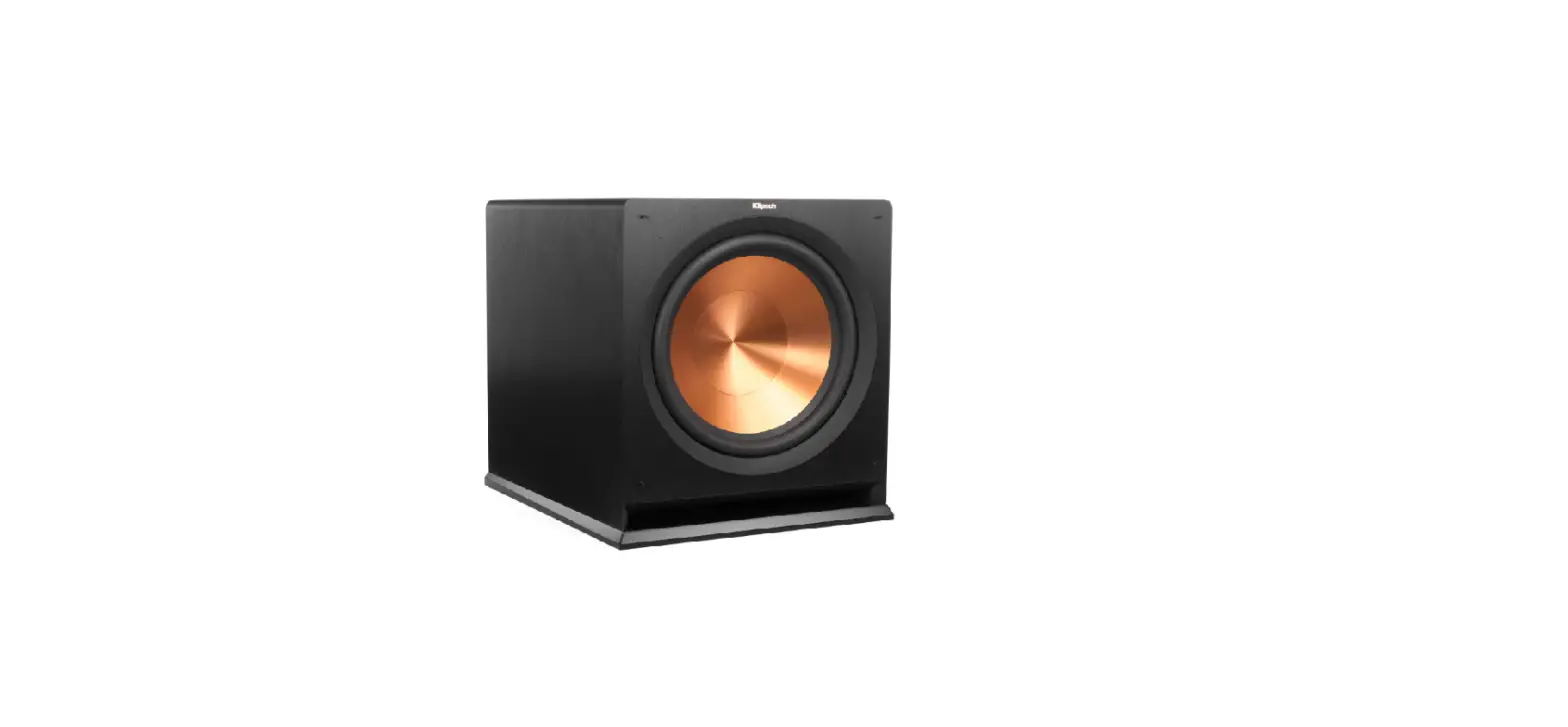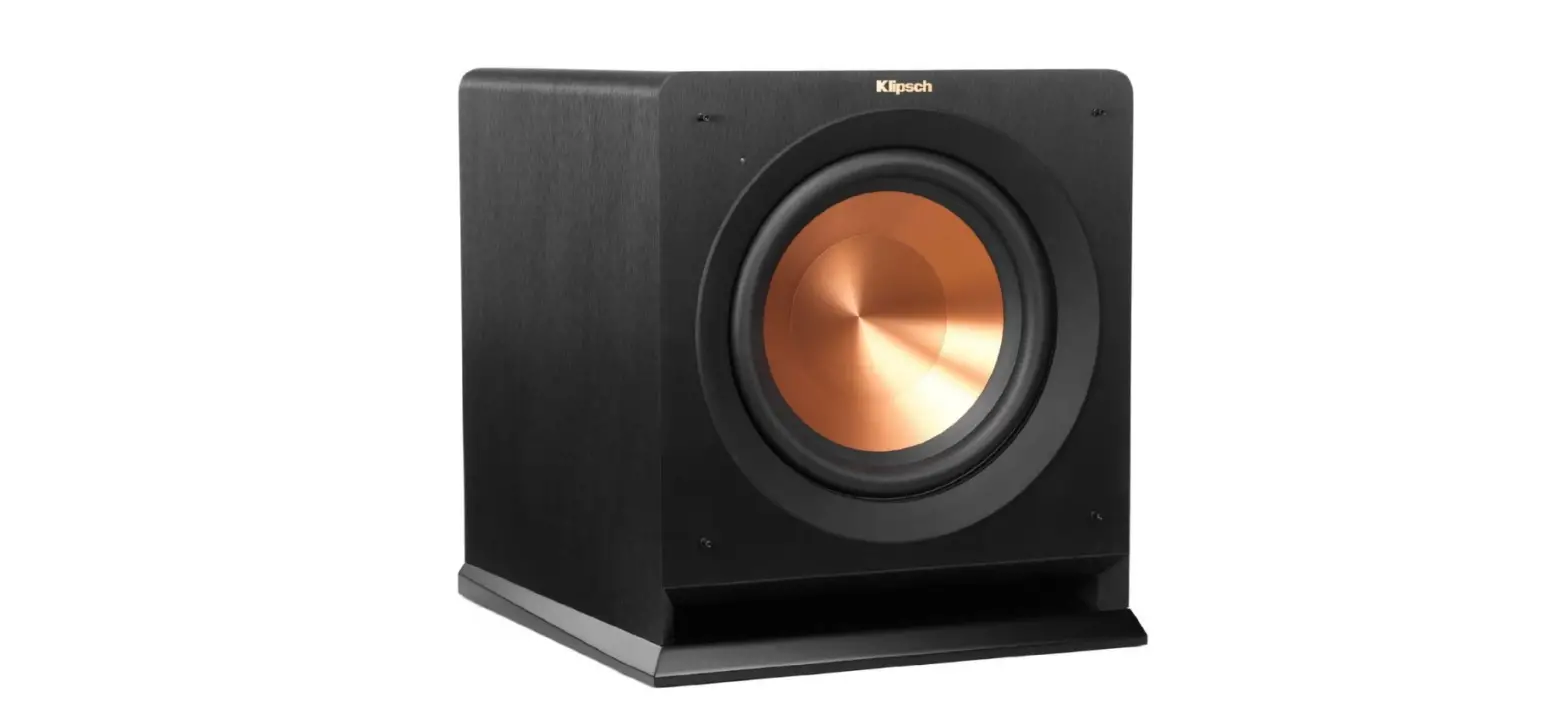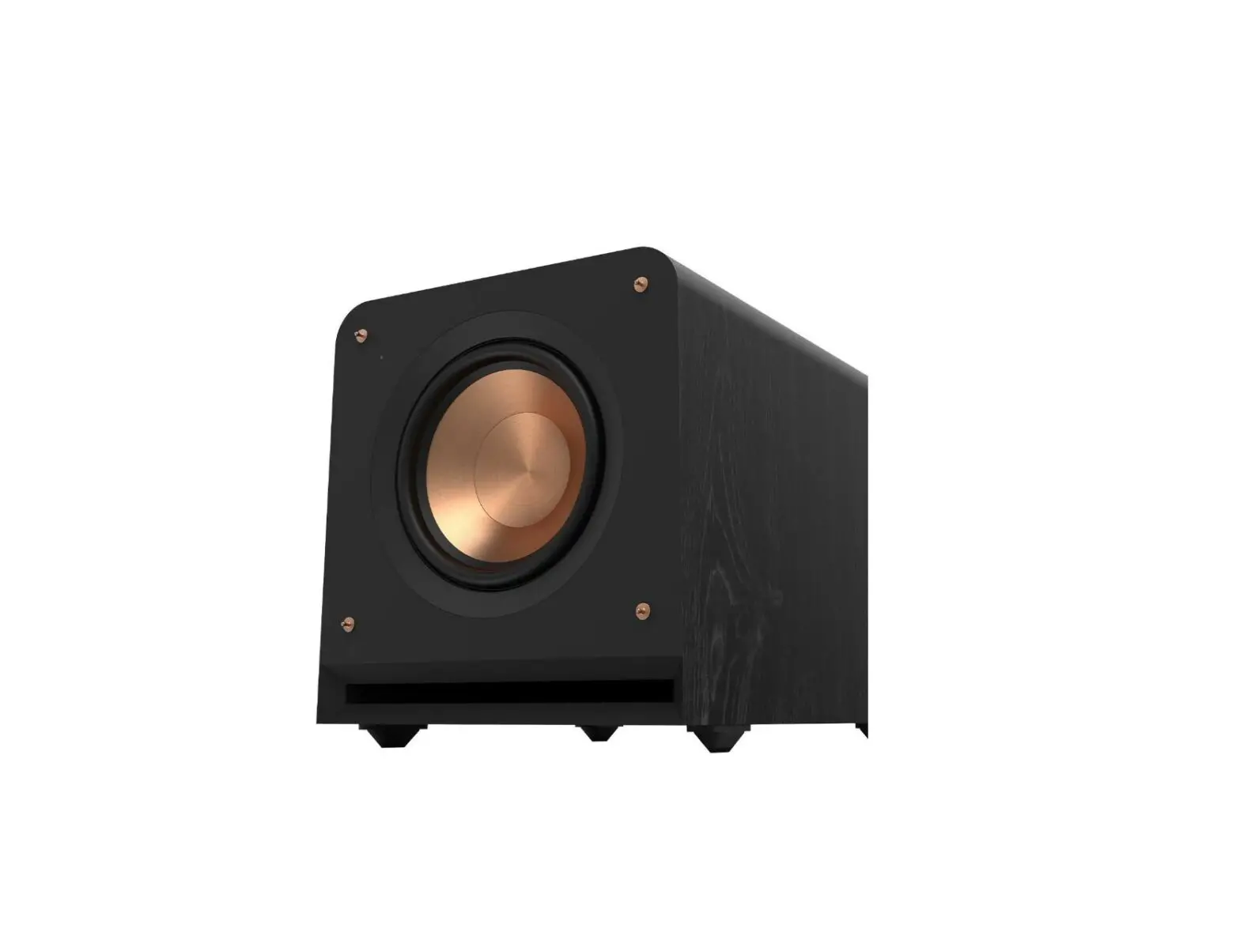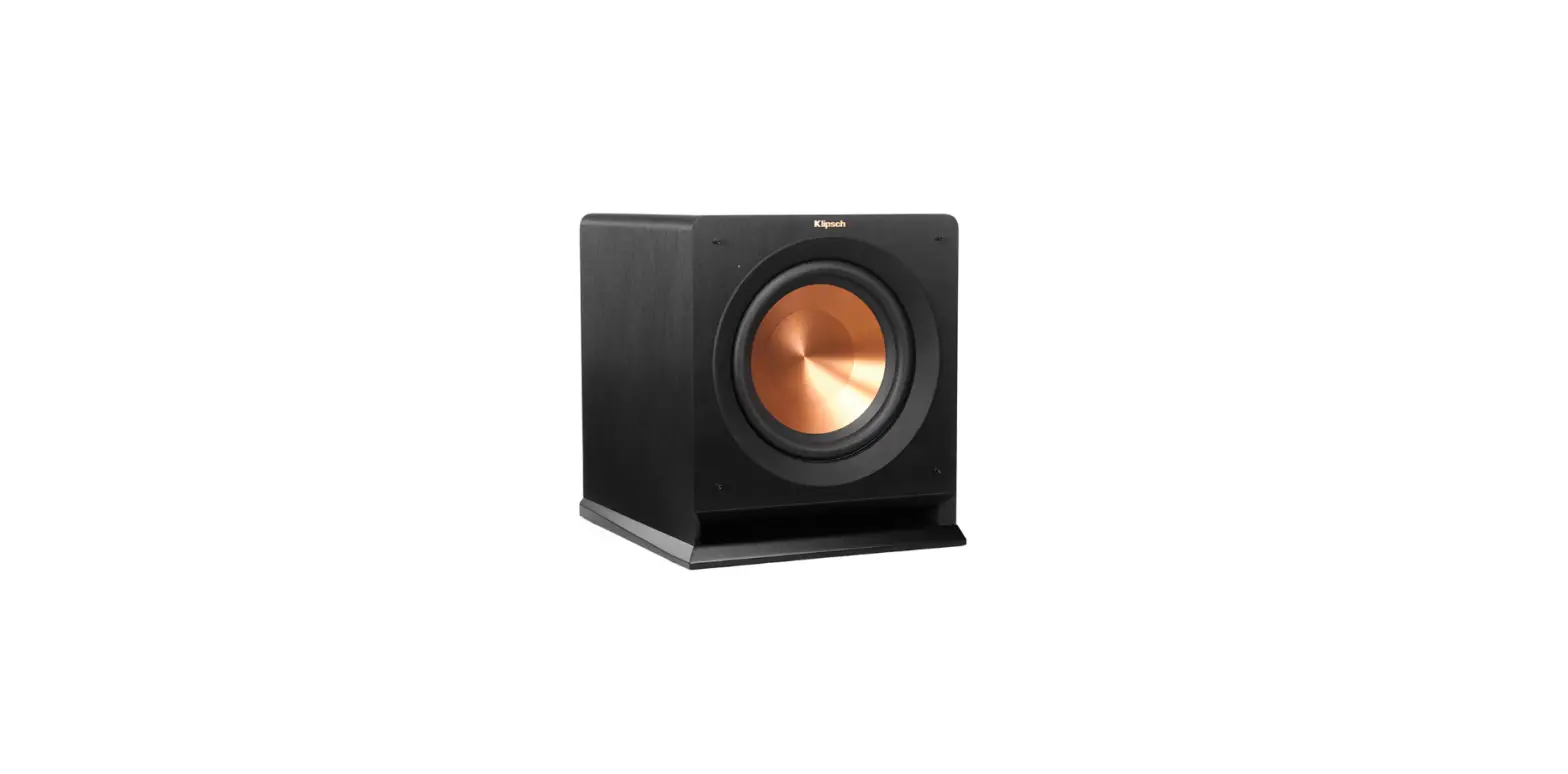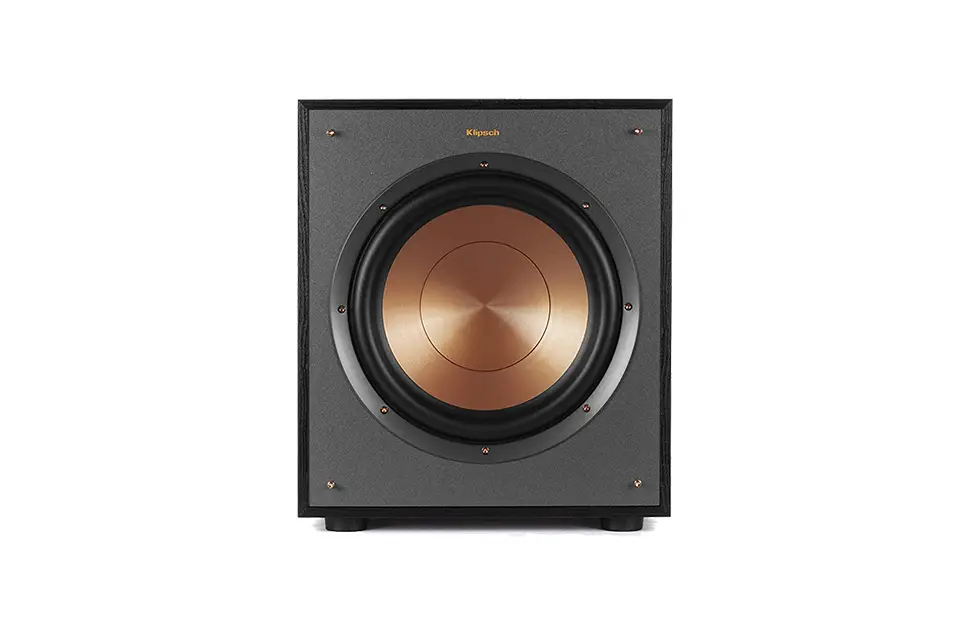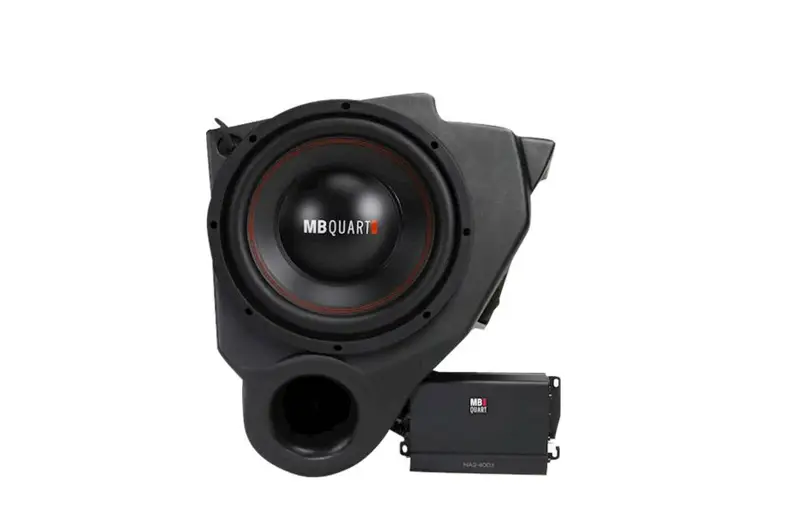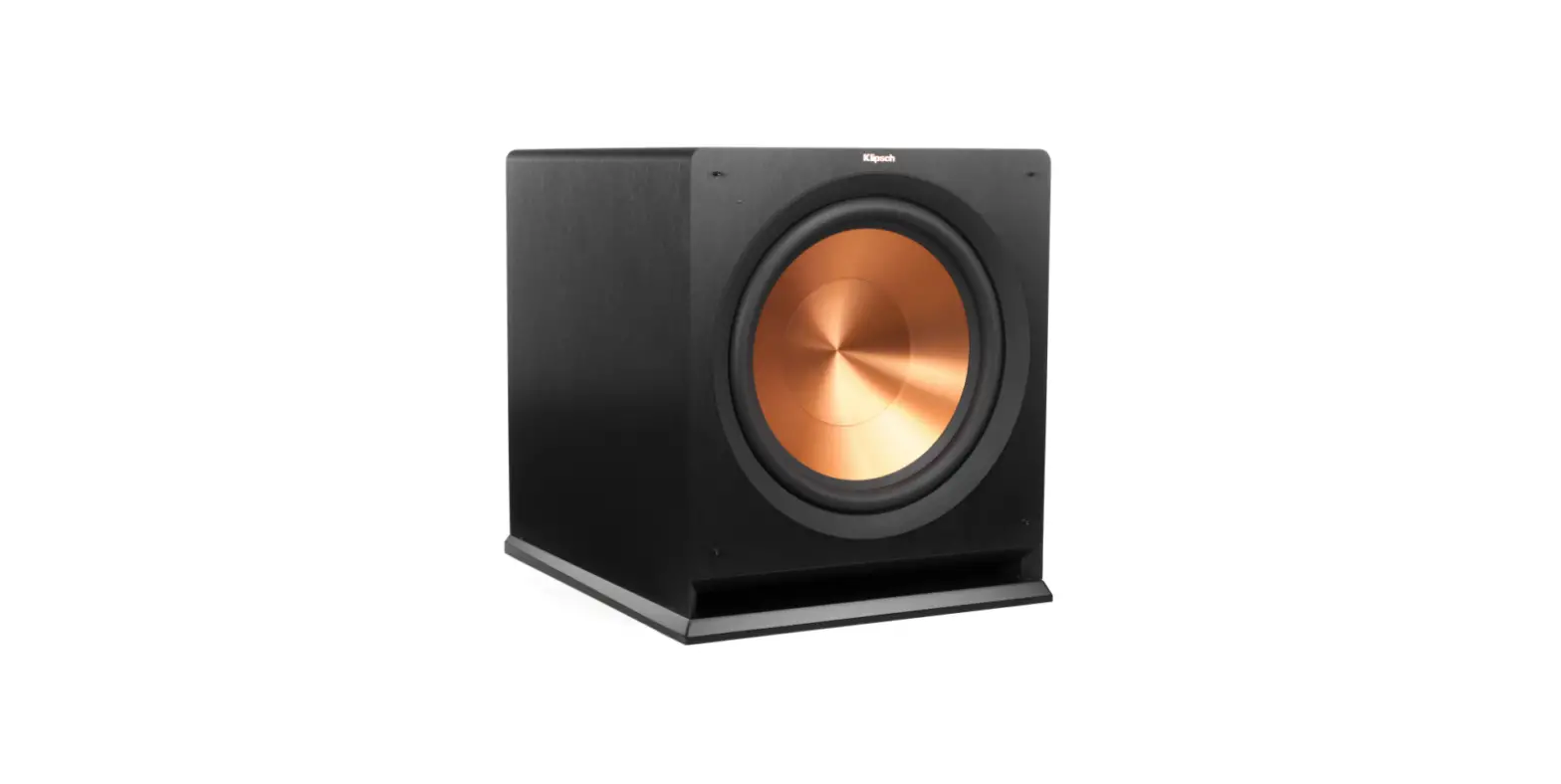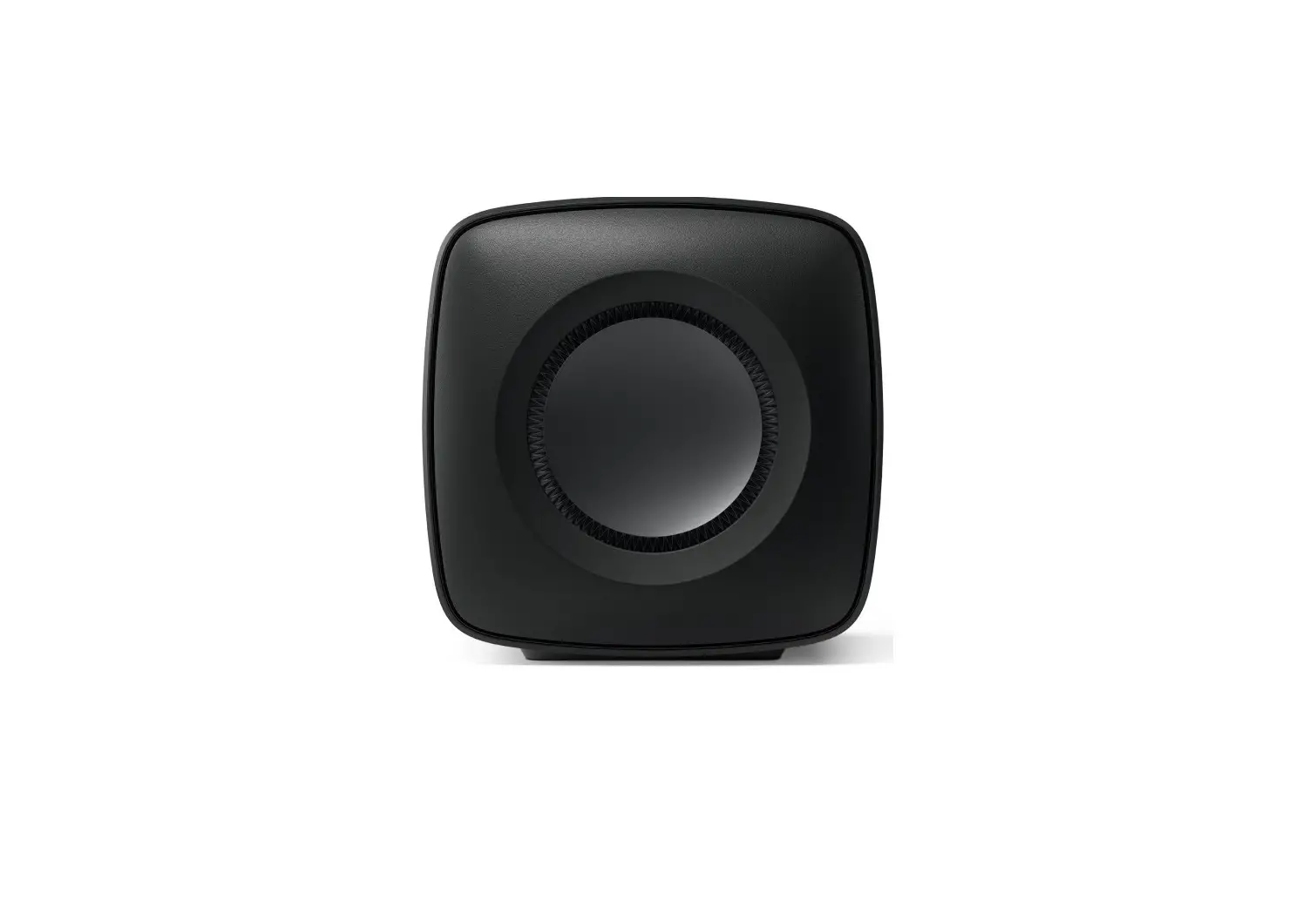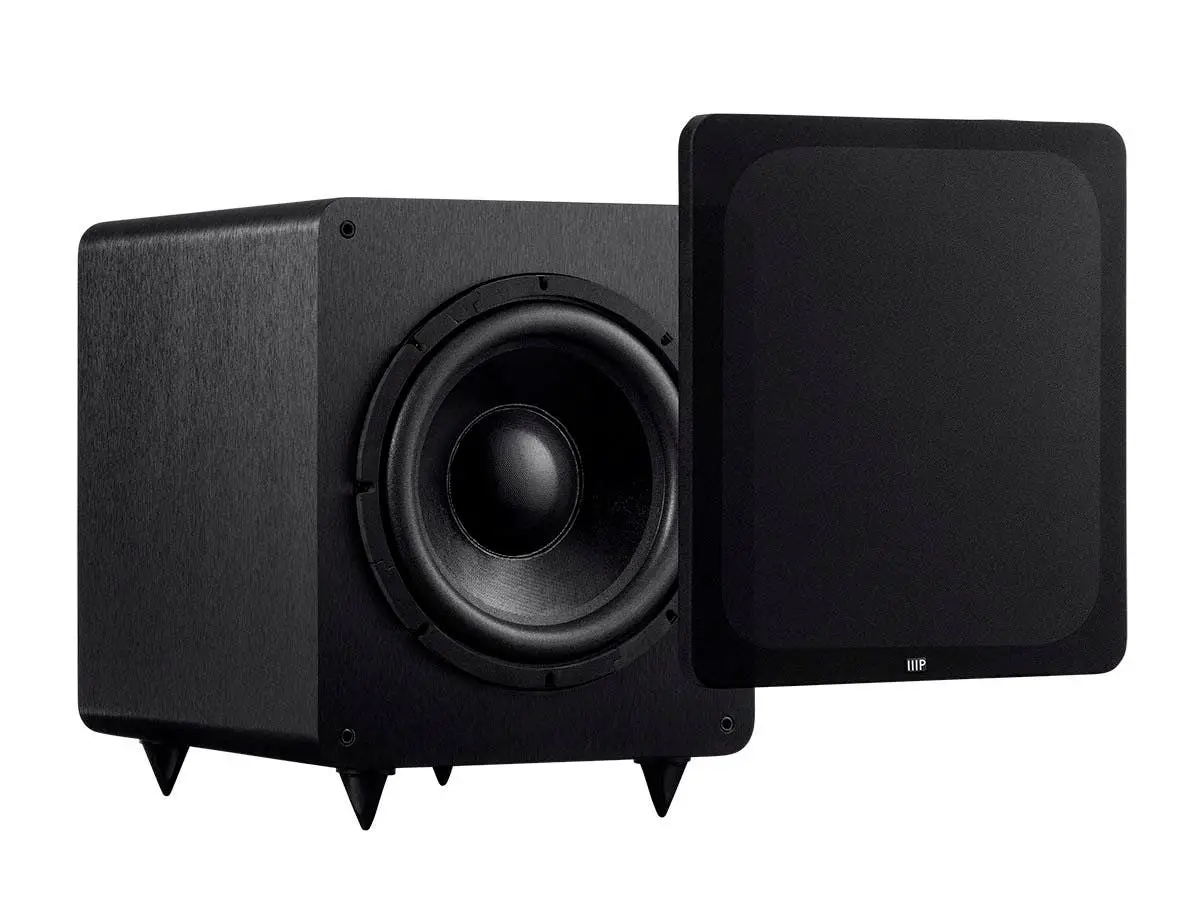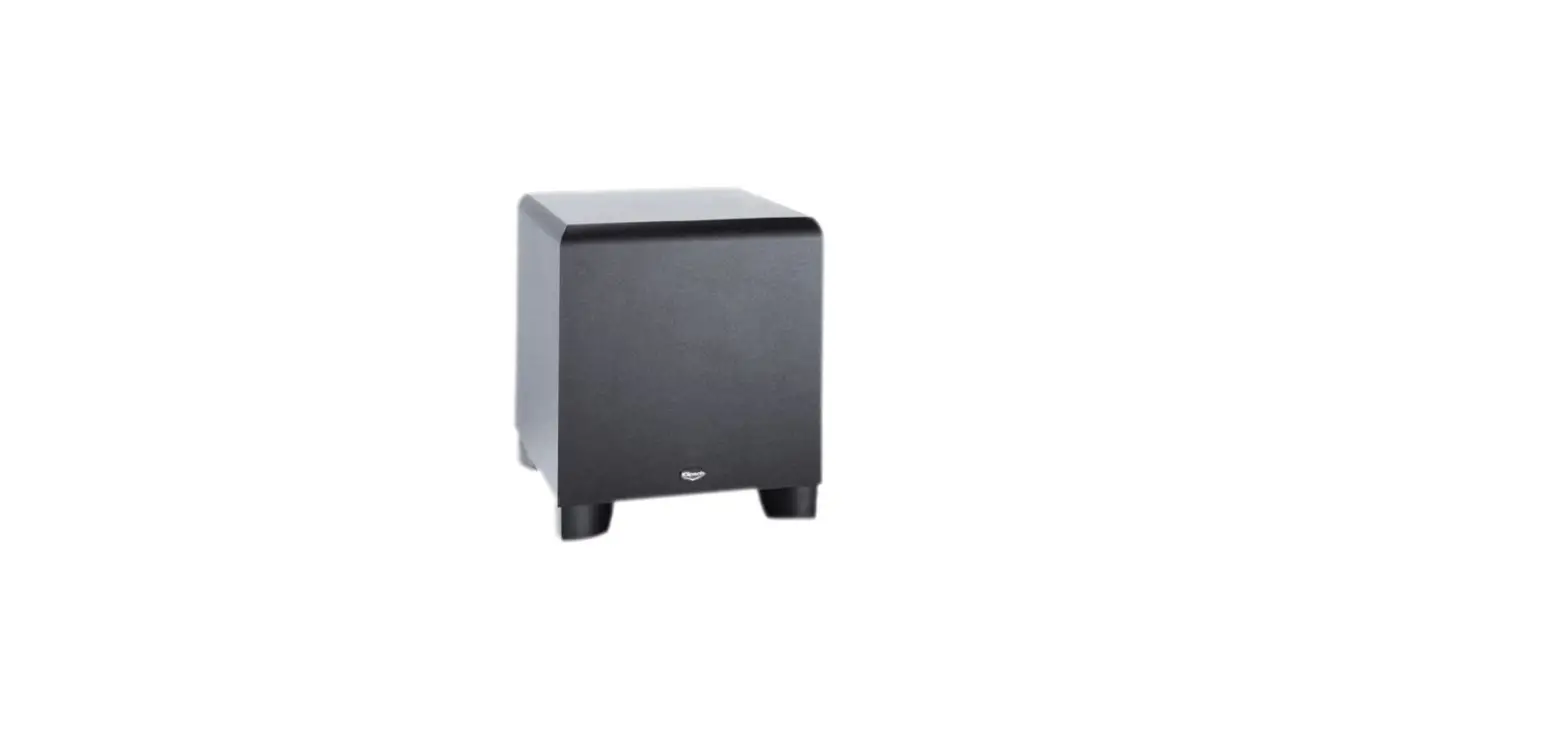
 Klipsch KSW-10 10-Inch 225-Watt Subwoofer
 Klipsch KSW-10 10-Inch 225-Watt Subwoofer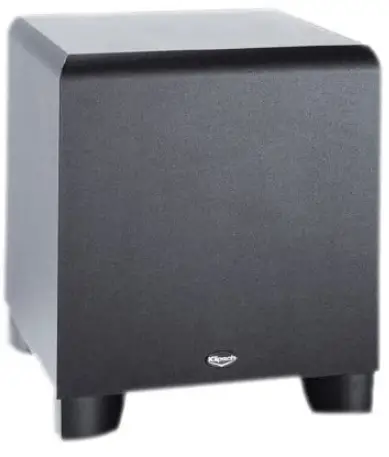
Instructions
CAUTION:
RISK OF ELECTRIC SHOCK! DO NOT OPEN!
CAUTION! To reduce the risk of electric shock and fire, do not remove the cover or back plate of this device. There are no user-serviceable parts inside. Refer repairs to a Klipsch-authorized service center.
CAUTION! The international symbol of a lightning bolt inside a triangle is intended to caution you to uninsulated “dangerous voltage” within the device’s enclosure. The international symbol of an exclamation point inside a triangle is intended to alert you to the presence of important operating, maintenance and servicing information in the manual accompanying the device.
CAUTION! To prevent electrical shock, match the wide blade of the plug on the power cord to the wide slot on the power outlet and insert fully.
CAUTION! To reduce the risk of electrical shock, do not expose this equipment to rain or moisture.
- Read Instructions. All safety and operating instructions should be read before operating the device.
- Retain Instructions. The safety and operating instructions should be retained for future reference.
- Heed Warnings. All warnings on the device and in the operating instructions should be adhered to.
- Follow instructions. All operating and safety instructions should be followed.
- Water and Moisture. The device should never be used in, on or near water due to risk of fatal shock.
- Carts and Stands. The device should only be used on carts or stands recommended by the manufacturer.
- Wall and Ceiling Mounting. The device should be mounted on a wall or ceiling only as recommended by the manufacturer.
- The device should always be located in such a way that it maintains proper ventilation. It should never be placed in a built-in installation or anywhere that may impede the flow of air through its heat sink or ventilation openings.
- Never locate the device near heat sources such as a radiator, floor register, stove or other heat generating device.
- Power Supply. The device should only be connected to a power supply of the type described in the operating instructions or as marked on the device.
- This product is equipped with a polarized line plug that has one blade wider than the other. To prevent electrical shock, match the wide blade of the plug with the wide blade slot of the receptacle and insert fully.
- Power Cord Protection. Power cables should be routed so they are unlikely to be stepped on or crushed by items placed on or against them. Pay special attention to where the plug enters a socket or fused strip and to where the cord enters the device.
- The device should be cleaned in accordance with the manufacturer’s instructions.
- Periods of Non-Use. The device should be unplugged from the wall outlet when it is not in use for extended periods.
- Dangerous Entry. Care should be taken that no foreign objects or liquids fall or are spilled inside the device.
- Damage Requiring Service. The device should be serviced by a Klipsch authorized service center when:
- The plug or power supply cord has been damaged.
- Objects have fallen or liquid spilled inside of the device.
- The device has been exposed to moisture.
- The device does not appear be operating properly or exhibits a marked change in performance.
- The device has been dropped or the cabinet has been damaged.
- The user should not attempt to service the device beyond what is described in the operating instructions. All other servicing should be referred to qualified personnel. If dealer service is not available, contact Klipsch customer service for a return authorization (RA) number before shipping.
- Klipsch Customer Service: 800-554-7724
- All return shipments should be made to: Klipsch, L.L.C. 137 County Road #278 Hope, AR 71801 RA#…(return authorization number required
Component Specifications
KSW 15
- Type: 15″ bass reflex, tuned port enclosure
- Amplifier: Peak output power 800 watts into 16 ohms
- FTC Rated Power: 265 watts into 16 ohms 22-100Hz @ 1%THD maximu
- Auto Power On: 2 second ON delay, 15 minutes OFF delay Frequency Response: 24-120Hz±3dB
- Maximum Acoustic Output: 121dB 1/8 space 1 meter
- Low Pass Crossover: Continuously variable from 40-120Hz, 24dB/octave slope above 120Hz
- Inputs: 2) Line level RCA phono jacks 1) Line level dedicated LFE channel input (non-filtered) 2) High level speaker terminals
- Outputs: 2) Line level RCA phono jacks with switchable high pass filter between 50 and 100Hz 2) High level speaker terminals with fixed high pass at 100Hz, 6dB/octave slope
- Phase: Switchable 0-180 degrees
- Drive Component: K-1072-K 15″ (38.1cm) driver
- Net Weight: 45 lbs. (20.45kg)
- Height: 19.5″ (49.53cm)
- Width: 17.5″ (44.45cm)
- Depth: 17.5″ (44.45cm)
- Cabinet: Medium density fiber board construction (MDF) Finish: Matte finish black vinyl
- Voltage: 110/120 VAC 60Hz – Export Version 230 VAC 50/60Hz
KSW 10
- Type: 10″ bass reflex, tuned port enclosure
- Amplifier: Peak output power 225 watts into 4 ohms
- FTC Rated Power: 55 watts continuous, 22-125Hz @ 1% THD m a x i m u m
- Auto Power On: 2 second ON delay, 15 minutes OFF delay Frequency Response: 29-120Hz±3dB
- Maximum Acoustic Output: 110dB 1/8 space 1 meter
- Low Pass Crossover: Continuously variable from 40-120Hz, 24dB/octave slope above 120Hz
- Inputs: 2) Line level RCA phono jacks 2) High level speaker terminals
- Phase: Switchable 0-180 degrees
- Drive Component: K-1070-K 10″ (25.4cm) driver
- Net Weight: 29 lbs. (13.18kg)
- Height: 15.5″ (39.37cm)
- Width: 13.5″ (34.3cm)
- Depth: 13.5″ (34.3cm)
- Cabinet: Medium density fiber board construction (MDF) Finish: Matte finish black vinyl
- Voltage: 110/120 VAC 60Hz – Export Version 230 VAC 50/60Hz
KSW 12
- Type: 12″ bass reflex, tuned port enclosure Amplifier: Peak output power 441 watts into 4 ohms FTC Rated Power: 105 watts continuous into 4 ohms, 22-100Hz @ 1% THD maximum
- Auto Power On: 2 second ON delay, 15 minutes OFF delay Frequency Response: 26-120Hz±3dB
- Maximum Acoustic Output: 113dB 1/8 space 1 meter
- Low Pass Crossover: Continuously variable from 40-120Hz, 24dB/octave slope above 120Hz
- Inputs: 2) Line level RCA phono jacks, 2) High level speaker terminals
- Outputs: 2) High level speaker terminals, High pass filtered at 100Hz, 6dB/octave slope
- Phase: Switchable 0-180 degrees
- Drive Component: K-1071-K 12″ (30.5cm) driver
- Net Weight: 35 lbs. (15.9kg)
- Height: 17″ (43.18cm)
- Width: 15″ (38.1cm)
- Depth: 15″ (38.1cm)
- Cabinet: Medium density fiber board construction (MDF) Finish: Matte finish black vinyl
- Voltage: 110/120 VAC 60 Hz – Export Version 230 VAC 50/60Hz
“SPEAKER IN” / ALL MODELS
For parallel connection of the subwoofer and main speaker wires (main speakers full range), connect the subwoofer input wires to the main channel, right and left, speaker outputs of your amplifier or to a secondary set of main speaker terminals (speaker B) if your amplifier is so equipped. Refer to Figure A. Alternately, you can connect the wires from your main speakers, along with the sub-woofer’s input wires, to the “SPEAKER IN” terminals on the subwoofer. This may be more convenient if the subwoofer is closer to your speakers than it is to your electronics. Please consult your dealer for details regarding connection of multiple speaker cables to a common set of speaker out-puts. For optimal performance, use equal lengths (left and right inputs) of the same high-quality speaker cable that you are using to connect your main speakers. Consult your Klipsch dealer for recommendations. Refer to “About Speaker Wire Connections” for more detail.
“SPEAKER OUT” / KSW 12 AND 15
If a bass limited signal (high pass filtered) is being sent to your main speakers, connect them to the “SPEAKER OUT” terminals on the subwoofer instead of to your amplifier. Refer to the righthand side of Figure B. The high pass filter on these outputs will remove the bass frequencies below 100Hz from your main speakers, lowering distortion and increasing their dynamic range. Also refer to the “LOW PASS” section for more detail.
Note: Do not connect another subwoofer to these outputs as they are high pass filtered (bass frequencies removed).
ABOUT SPEAKER WIRE CONNECTIONS
When making any type of speaker wire connection be sure to observe proper polarity (+ to + and -to -). If the polarity of one of the subwoofer input wires is reversed, the output of the subwoofer will be diminished. Most speaker wire is color-coded or has some distinguishing feature differentiating the two conductors. Speaker wire connectors on most loudspeakers and amplifiers are also color-coded. Typically, RED is positive (+) and BLACK is negative (-), or ground. It does not matter which wire conductor is connected to the positive or negative connection of your equipment as long as you are consistent. Be sure that the connections from the amp to all of the speakers in your system are connected in a like manner. If this is not done, the quantity of bass will be reduced and the stereo image will be compromised. Be careful to avoid excess bare wire or loose strands of wire at the connections. This could cause a shorting condition between adjacent positive and negative terminals, damaging your speakers and amplifier.
LINE LEVEL CONNECTIONS
These connections should be made using high-quality shielded interconnect cables terminated with RCA phono plugs. These cables should be as short as possible and kept away from noise-generating electrical equipment such as digital electronics or electric motors. Consult your Klipsch dealer for specific cable recommendations.
“LINE IN” / ALL MODELS
For best results, these jacks should be connected to a non-filtered (full-range) subwoofer or main channel pre-amp output on your receiver or pre-amp/processor. Refer to the left hand side of Figure B. This input signal should contain the normal bass information present in the main left and right channels. When connecting to a component that has only a single pair of pre-amp outputs, “Y” adapters (splitters) may be used to feed a signal to both the subwoofer and the power amplifier.
“LINE IN” / KSW 10 and 12 ONLY
You can connect a mono subwoofer output on your electronics to the “L/LFE” input using a single interconnect cable. If there is an inadequate amount of subwoofer volume even with the level control set to maximum, add a “Y” cord to the subwoofer end of the cable and connect to both line inputs. This will provide a significant (6dB) increase in the subwoofer’s output level.
“LINE OUT” / KSW 15 ONLY
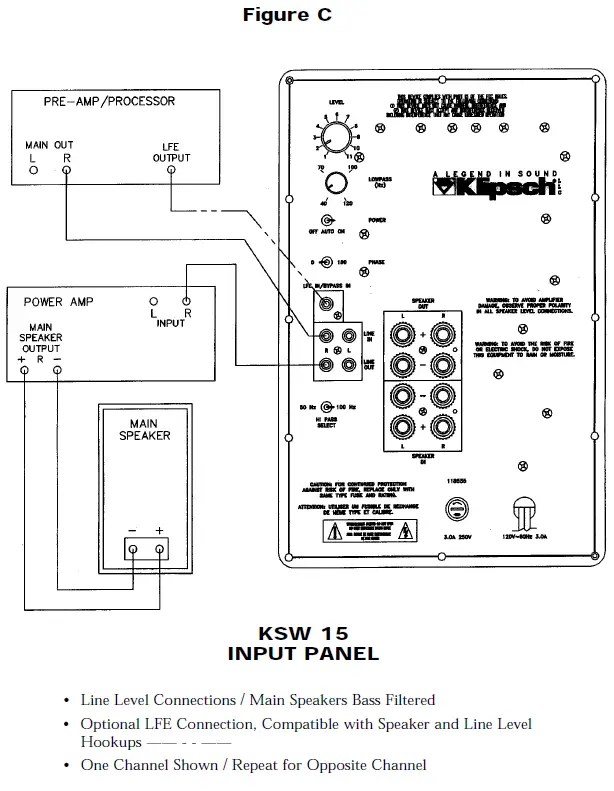
If a bass limited (high pass filtered) signal is to be sent to your main speakers, connect the “LINE OUT” jacks on the subwoofer to the line level inputs on your main channel power amplifier.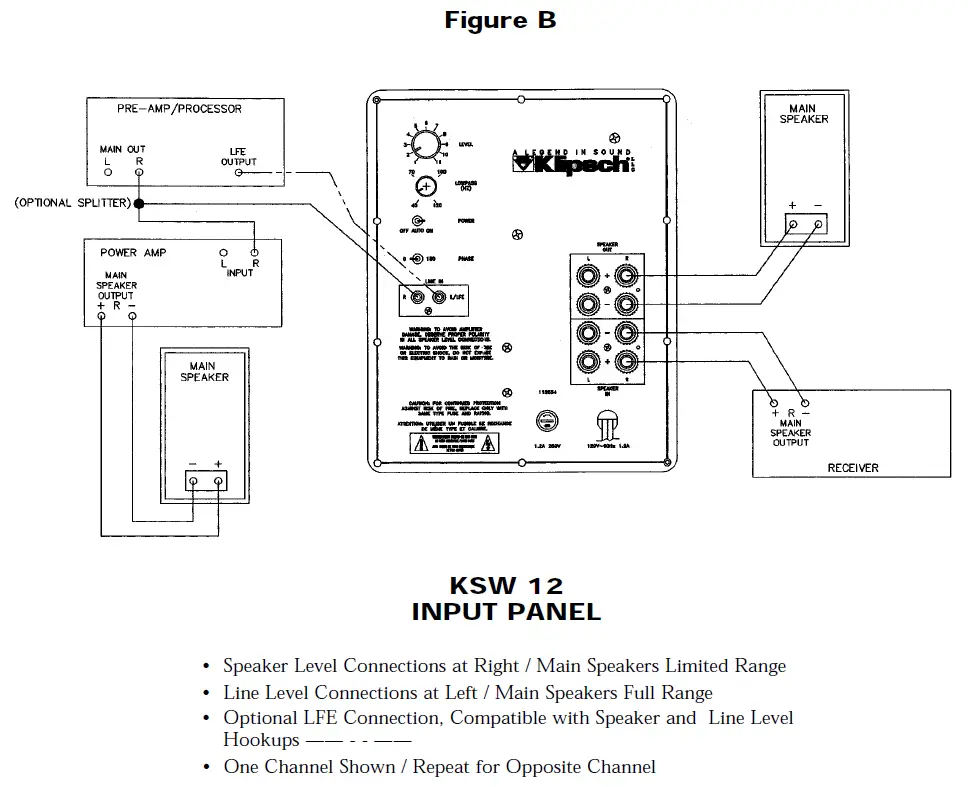
Subwoofer Placement
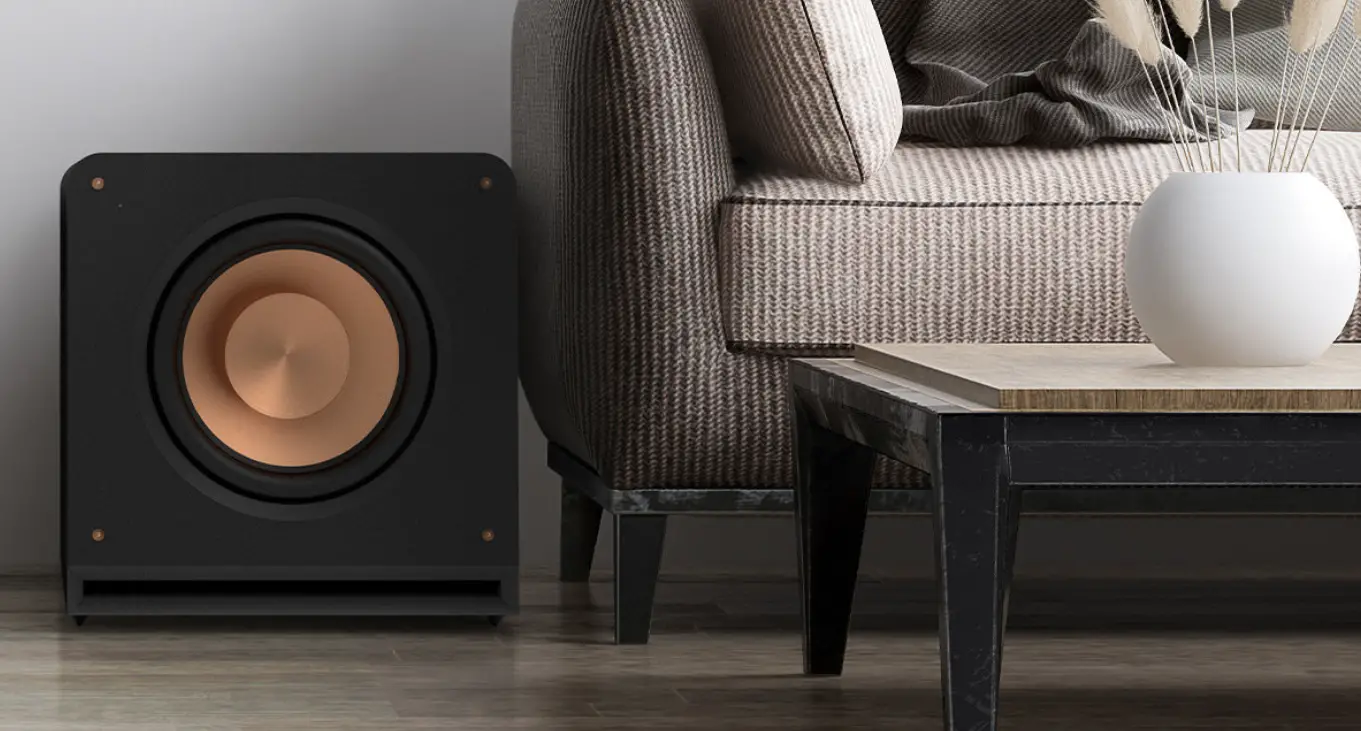
Your Klipsch subwoofer is designed to operate at frequencies below 120Hz, which are essentially omnidirectional (difficult to localize). There may be several options for placement of the subwoofer in your room that will effect its frequency response and output level. Corner placement improves the acoustic loading of the subwoofer, increasing its output and dynamic range capabilities. Placing the subwoofer away from walls or in the center of the room will result in the least amount of output. Asymmetrical placement of two subwoofers in a room may improve low frequency reproduction by providing a smoother and more consistent response pattern. Since even minor repositioning will result in an audible performance change due to room acoustics, Klipsch recommends experimentation with the subwoofer placement in the room.
A general rule of thumb is to place your subwoofer in the vicinity of the speakers with which it is being paired. For example, a subwoofer reproducing front channel bass will generally perform better when placed in the same end of the room as the main speakers. As well, a subwoofer connected to the rear channels of a surround system performs best when positioned in the rear of the room.
If the subwoofer is installed near your television and color distortion is noted, simply move the sub-woofer farther away from your television until the interference disappears.
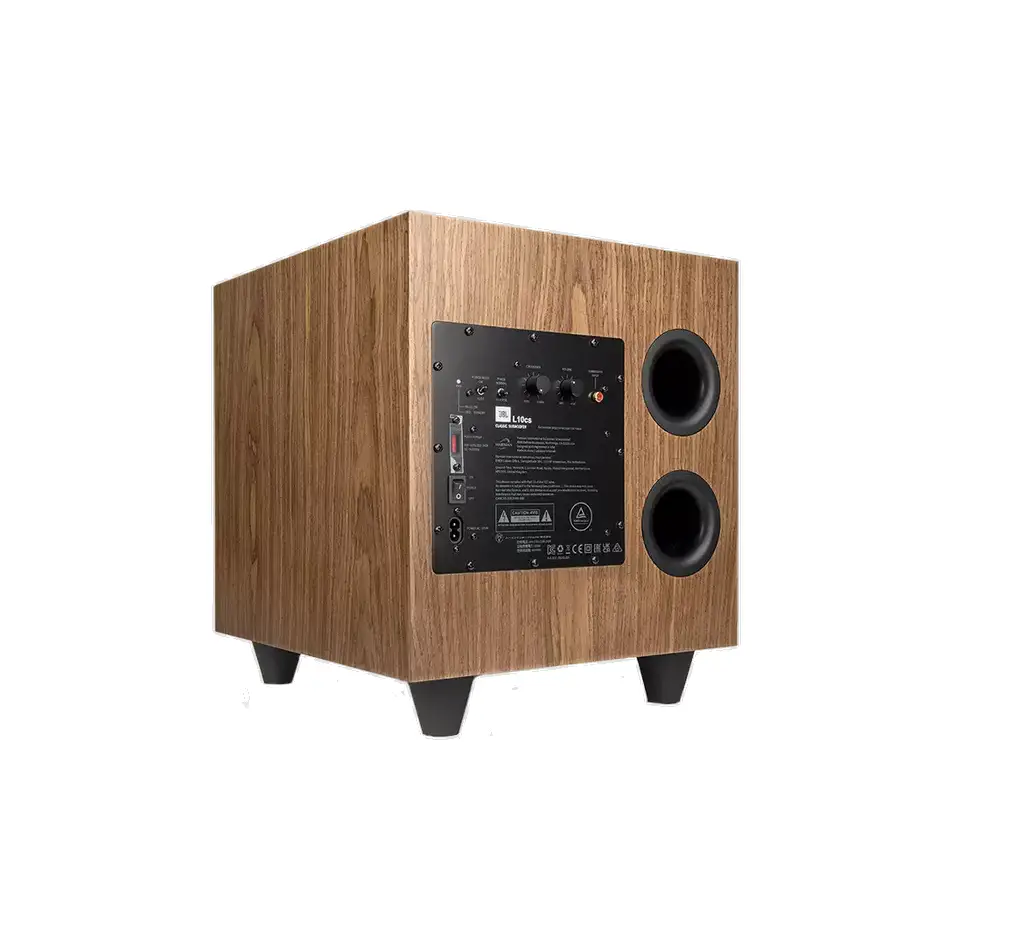
If your subwoofer is placed in an enclosed cabinet, provisions must be made to ventilate the heat radiated by the enclosed amplifier. Additionally, since some of the acoustic output is generated by the sub’s rear firing port, a minimum of several inches of space should be provided around the sub-woofer. If the front of the cabinet is acoustically open, the back of the subwoofer, with the port and amplifier controls, should be oriented in this direction.
If your subwoofer will be used on a hard, non-carpeted surface, attach the enclosed rubber pads to the subwoofer’s feet to prevent vibration and marring.
How to Connect Your KSW Series Subwoofer
AC Power
Since your KSW subwoofer has an internal power amplifier, it must be plugged into a nearby AC wall outlet. The subwoofer should be unplugged from the AC power with the power switch in the OFF position during hookup and installation. To eliminate a tripping hazard, all connections should be unplugged from the back panel of the subwoofer if it is being moved. Avoid extremely long extension cords of small gauge since they may impair the performance of the subwoofer amplifier and present a potential fire hazard. If the subwoofer will not be used for an extended period of time, unplug the power cord from the AC power outlet.
Note: 230-volt models are not supplied with an AC power cord, but are equipped with an IEC-type power cord socket.
CAUTION: SINCE YOUR KLIPSCH SUBWOOFER HAS BUILT-IN ELECTRONICS, DO NOT PLACE IT NEAR SOURCES OF HEAT OR MOISTURE! TAKE CARE TO ROUTE THE POWER CORD SO THAT IT WILL NOT BE CUT, DAMAGED OR PINCHED.
Types of Connections
Your subwoofer may be installed using either the SPEAKER LEVEL or LINE LEVEL connection, but not both. The LFE connection is an optional line level connection that can be used in conjunction with either type of hookup. Refer to the “LFE IN / BYPASS IN” and “BASS MANAGEMENT” sections for more detail. You can connect the subwoofer so that your main speakers will reproduce a full range signal (all models) or a limited range (bass filtered) signal (KSW 12 and KSW 15 only). Speaker level connections are used when connecting to a receiver or integrated amplifier that lacks line level subwoofer or pre-amp output jacks. Line level connections are often the best choice when connecting the subwoofer to a system comprised of a separate pre-amp/processor and power amplifier. This also applies to any receiver or integrated amplifier that possesses main channel pre-amp or subwoofer outputs. The type of connection configuration used depends upon the capabilities of your equipment and your performance goals.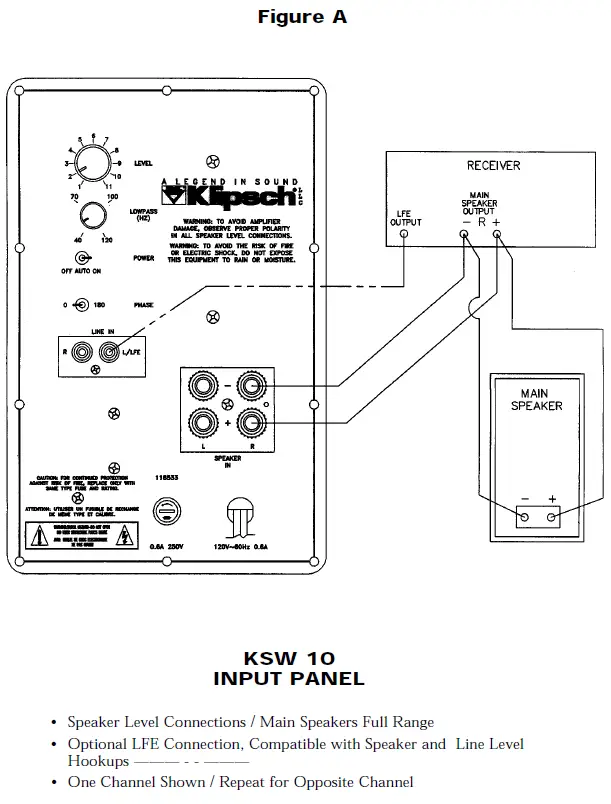
Refer to Figure C. Depending upon the setting of the “HIGH PASS SELECT” switch, these outputs will remove frequencies below 50Hz or 100Hz from your main speakers. This type of hookup creates a bi-amplified system, lowering distortion and increasing dynamic range.
“LFE IN”/ “BYPASS IN” / KSW 15 ONLY
This input should ideally be connected to a low pass filtered LFE subwoofer output jack on your electronics. Refer to Figure C. It is typically used with the newest 5.1 (six channel) surround sound systems. Signals coming into this jack are not affected by the subwoofer’s adjustable “LOW PASS (HZ)” filter. The “LFE IN”/ “BYPASS IN” input and “LINE IN” inputs are summed together so both connections may be used concurrently if your electronics provide you with both outputs. The “LFE IN”/“BYPASS IN” may also be used in conjunction with speaker level inputs.
BASS MANAGEMENT
Most surround sound electronics are equipped with a bass management system that permits the selection of either a full or limited range (filtered) operation for each speaker, including the sub-woofer. When using either the subwoofer’s “LINE IN” or “SPEAKER IN” inputs, configure the main channels of your surround processor for the “Large” or “Full Range” setting. If the subwoofer output on your electronics has a “non-defeatable” low pass filter, set the “LOW PASS (HZ)” control on the subwoofer to its highest setting (120Hz). The dedicated LFE input on the KSW 15 is the exception to this rule. Refer to “LFE IN”/ “BYPASS IN” / KSW 15 ONLY.
The “.1” or LFE (Low Frequency Effects) channel contains a different signal than the bass frequencies present in the other channels. This information can be up to 10 decibels louder than the bass signals in the other channels, so caution should be exercised when connecting to this output and initially adjust-ing the subwoofer’s level control.
Operating Controls
“LEVEL” / ALL MODELS
The “LEVEL” control adjusts the volume of the subwoofer relative to your main speakers. Use this control to compensate for room acoustics, subwoofer placement and the sensitivity of your main speakers. This control effects the signals that are connected to any of the subwoofer’s inputs. It does not affect the volume level of your main speakers.
Suggested control position for initial setup: 10 to 12 o’clock.
“LOW PASS (HZ)” / ALL MODELS
The “LOW PASS (HZ)” control is a variable filter that controls the upper frequency limit of the sub-woofer. Use this control to compensate for room acoustics, subwoofer placement, type of hookup and the capabilities of your main speakers. The filter is continuously variable from 40 to 120Hz. Proper adjustment of this control helps smooth the transition in the bass frequencies between your main speakers and the subwoofer. Setting the filter too high will cause an overlap in the bass frequencies reproduced by your main speakers resulting in muddy and indistinct bass. Setting this control too low may cause the output of the subwoofer to sound disconnected from the bass range being reproduced by the main speakers. In light of this, we encourage you to experiment with various settings.
If your main speakers are being high pass filtered with an external filter, the “LOW PASS (HZ)” control on the subwoofer should initially be set near the frequency of this filter.
In some cases, you may elect to feed your main speakers a full range signal. In these situations, the “LOW PASS” control should be set near the low frequency limit of your main speakers (typically at the lowest setting of the control with larger, full-range speakers). In all cases, experiment due to variability in speaker placement, room acoustics and associated equipment.
HIGH PASS FILTERING, SPEAKER LEVEL / KSW 12 AND 15 ONLY
If your speakers are connected to the “SPEAKER OUT” terminals on the subwoofer, they are being fed a bass limited (high pass filtered) signal. The “LOW PASS (HZ)” control should initially be set near 100Hz.
“HIGH PASS SELECT” / KSW 15 ONLY
This switch selects either “50Hz” or “100Hz” as the bass cutoff frequency for your main speakers when using line level connections. Refer to Figure C. This requires that your KSW 15 be connected to a system utilizing both the preamp output and the power amp input jacks. Typically, the higher
“100Hz” setting is used for smaller bookshelf speakers to relieve them of the strain of reproducing loud, deep bass frequencies. The “50Hz” setting is typically selected for larger floorstanding speakers as they are better able to handle bass energy, needing reinforcement only at the lowest frequencies.
The subwoofer’s high pass filter has a gentle cutoff so there is still some audible signal content in your main speakers below the circuit’s cutoff frequency.
“POWER” / ALL MODELS
This switch has conventional power “ON” and “OFF” positions, as well as an automatic setting. In the “AUTO” position, the subwoofer will turn itself on when it receives a signal from your system. If no signal is sent for a period of 15 minutes, the sub will turn itself off. A red power light indicates a standby mode in which the amplifier will turn on when it senses a signal. Green indicates the sub-woofer is on and receiving a signal.
“PHASE” / ALL MODELS
This switch is used to reverse the polarity (phase) of the subwoofer relative to your main speakers, allowing you to compensate for any acoustic cancellation of bass energy caused by the listening room. Audition a recording with a prominent, repetitive bass line in your listening chair. Use the set-ting that yields the greatest quantity of bass (0 or 180). The proper setting of this control is affected by room acoustics and the placement of the subwoofer in the room. You may need to repeat this procedure if the subwoofer is repositioned.
Troubleshooting
If your subwoofer has little or no output:
- Double check your power (AC) and system connections.
- Make sure that the “LEVEL” control is turned up.
- Make sure that the “POWER” switch on the rear control panel is in the “ON” or “AUTO” position.
- Ensure that the “POWER” light on the front of the cabinet is lit. If it is not, check the AC fuse. When changing the AC main’s power fuse, unplug the power cord first. To access the fuse, use the appropriate screwdriver to unscrew the flush cap on the amplifier’s fuse receptacle. If the fuse is blown (the filament inside the glass tube is burned through), replace it with the same type and value printed on the amplifier panel next to the fuse holder. NEVER INSTALL A LARGER FUSE THAN THE VALUE INDICATED ON THE AMPLIFIER PANEL. If the fuse blows again when the subwoofer is powered up, return the unit to your authorized Klipsch dealer for servicing by qualified personnel. If dealer service is not available, contact Klipsch customer service for a Return Authorization number before shipping (REQUIRED).
- Klipsch Customer Service: 800-554-7724
- All KSW powered subwoofer amplifiers are protected by a thermal sensor. If they run for extended periods beyond their designated power rating, the thermal sensor will engage and shut down the subwoofer. If this occurs, turn the “POWER” switch off, reduce the volume level on your electronics and wait five minutes before restarting the system.
- If the “HI LEVEL” connections are in use, a polarity reversal of one of the speaker wires coming from your amplifier will result in diminished output from the subwoofer. Refer to “About Speaker Wire Connections.”
- If you experience a noticeable hum when the subwoofer is connected to your system, and if your system includes video equipment, disconnect the cable television line (if present) from the system. If the hum disappears, consult your Klipsch dealer for a ground isolator for the cable line. If this does not solve the problem, contact your Klipsch dealer for further advise.
- If you connect the subwoofer to a second set of speaker terminals (i.e. speaker B), and there is a dramatic loss of volume from your main speakers, hook the subwoofer to the same terminals as your main speakers on your amplifier. Alternately, you can hook your main speakers to the “SPEAKER IN” terminals on the subwoofer, along with the subwoofer’s input cables, or switch to a line level connection if your electronics permit. If you are still experiencing difficulties, consult your authorized Klipsch dealer.
- Regardless of your amplifier’s rated capacity, do not operate the system at the full output (highest volume): Amplifiers can create extremely high levels of distortion when operated at full output and can damage your loudspeakers.
If you have any questions regarding the installation or connection of your subwoofer, please contact your Klipsch dealer or contact us directly at 800-554-7724.
Care and Cleaning of Your Subwoofer
Your KSW Series subwoofer has a durable matte vinyl finish that should require only dry dusting or cleaning with a damp cloth. Avoid the use of abrasive or solvent-based cleaners and harsh detergents.
Klipsch Limited Warranty
KLIPSCH, L.L.C. (“KLIPSCH”) warrants this product to be free from defects in materials and workmanship (subject to the terms set forth below). For a period of five (5) years from the date of purchase, KLIPSCH will repair or replace (at KLIPSCH’s option) this product or any defective parts (excluding electronics and amplifiers) in this product. For products that have electronics or amplifiers, the warranty on those parts is for a period of two (2) years from the date of purchase.
To obtain warranty service, please contact the KLIPSCH authorized dealer from which you purchased this product. If your dealer is not equipped to perform the repair of your KLIPSCH product, it can be returned, freight paid, to KLIPSCH for repair. Please call KLIPSCH at 1-800-KLIPSCH for instructions. You will need to ship this product in either its original packaging or packaging affording an equal degree of protection.
Proof of purchase in the form of a bill of sale or receipted invoice, which is evidence that this product is within the warranty period, must be presented to obtain warranty service.
This Warranty is invalid if (a) the factory applied serial number has been altered or removed from this product or (b) this product was not purchased from a KLIPSCH authorized dealer. You may call 1-800-KLIPSCH to confirm that you have an unaltered serial number and/or you purchased from a KLIPSCH authorized dealer.
This Warranty does not cover cosmetic damage or damage due to acts of God, accident, misuse, abuse, negligence, commercial use, or modification of, or to any part of, the product. This Warranty does not cover damage due to improper operation, maintenance or installation, or attempted repair by anyone other than KLIPSCH or a KLIPSCH dealer which is authorized to do KLIPSCH warranty work. Any unauthorized repairs will void this Warranty. This Warranty does not cover products sold AS IS or WITH ALL FAULTS.
REPAIRS OR REPLACEMENTS AS PROVIDED UNDER THIS WARRANTY ARE THE EXCLUSIVE REMEDY OF THE CONSUMER. KLIPSCH SHALL NOT BE LIABLE FOR ANY INCIDENTAL OR CONSEQUENTIAL DAMAGES FOR BREACH OF ANY EXPRESS OR IMPLIED WARRANTY ON THIS PRODUCT. EXCEPT TO THE EXTENT PROHIBITED BY LAW, THIS WARRANTY IS EXCLUSIVE AND IN LIEU OF ALL OTHER EXPRESS AND IMPLIED WARRANTIES WHATSOEVER, INCLUDING BUT NOT LIMITED TO, THE WARRANTY OF MERCHANTABILITY AND FITNESS FOR A PRACTICAL PURPOSE.
Some states do not allow the exclusion or limitation of incidental or consequential damages or implied warranties so the above exclusions may not apply to you. This Warranty gives you specific legal rights, and you may have other rights which vary from state to state.
We Want Your Klipsch Product to Look and Sound as Good as When it Left the Factory. Please Check Promptly for Transit Damage.
Each Klipsch product is individually tested for sonic quality and inspected for superior appearance before it leaves the Hope, Arkansas factory. Your loudspeaker left the factory in perfect condition in packaging carefully engineered to protect both the working parts and finish. However, in certain extreme circumstances, the products may be damaged in transit.
To ensure that your loudspeaker is in its original condition, please inspect it immediately. If damage is discovered, notify the authorized Klipsch dealer that the unit was purchased from or the transportation company responsible for safe delivery. In the latter case, make a request for inspection from the transportation company and hold the product in its original shipping carton for the inspector. After a joint inspection report is made, file a claim with the transportation company.
FREQUENTLY ASKED QUESTIONS
How is the fuse holder opened?
Once the fuse holder has been found, carefully open the fuse chamber with a flat-head screwdriver and remove the fuse. The fuse chambers could be a little stiff and require extra energy to remove if they have never been changed.
Is Klipsch high-end?
For more than 50 years, Klipsch has been a leader in the high-end speaker industry, and its products are renowned for their excellent sound, high quality, and dependability.
Are Klipsch subwoofers good for music?
In order to effectively integrate bass tones with other speakers in your typical home theatre, the subwoofer also offers phase controls. The Klipsch is a deal, according to reviews, given its powerful, resonant sound.
Do movie theaters use Klipsch speakers?
The powerful, intricate soundtracks of today’s demanding films must be played back on the highest caliber, horn-loaded speakers, according to Mulhearn. “Perhaps that explains why Klipsch cinema equipment are installed in one of every two new theatres in North and South America.”
What size subwoofer is best for sound quality?
The best subwoofers for the majority of people are 10-inch and 12-inch models because they are reasonably priced and capable of producing passable sound. 15″ subwoofers are the greatest option if you enjoy listening to music louder because they will provide you with the best overall performance.
What DB is best for bass?
The range of desired bass levels among individual listeners is 17 dB, ranging from -3 dB (listener 346) to 14.1 dB (listener 400).” This discovery surprised me, not only for the vast variation in bass levels of 17 dB, but also for the fact that someone out there favored a bass cut of -3 dB.
Why do Klipsch sound so good?
They think its audio and musical reproduction is excellent. In addition to prioritizing great sensitivity, wide dynamic range, low distortion, smooth frequency response, and strong bass, Klipsch appears to catch live music well.
Which class of subwoofer is best?
A class AB or class H amplifier is the finest amplifier for a subwoofer. Class D amplifiers cannot keep up with repeating bass because they are too sluggish.
Should subwoofer be same brand as speakers?
The subwoofer, which adds low sound, is a prominent exception to the matching rule. In reality, other from aesthetics, there are very few reasons to continue using the same brand of subwoofer and primary speakers.
Why does Klipsch use horns?
Horns can lessen audible distortion by increasing efficiency when used properly (Klipsch’s law). Additionally, they can focus the audio on the listener directly (controlled directivity) rather than waste energy dispersing sound around the entire space.
Does Klipsch have Dolby Atmos?
You can easily add the Dolby Atmos experience to your current floorstanding or bookshelf speaker with Klipsch Dolby Atmos® capable elevation speakers. For an aerial, lifelike experience, Klipsch’s patented controlled directivity effectively reflects sound off the ceiling and down to the listening area.
What are Klipsch speakers known for?
While a Klipsch center-channel speaker amplifies mid-range frequencies, such as conversation, Klipsch floor speakers provide genuine, full-range sound for your movies and music. Of course, you want to get a potent Klipsch subwoofer so that you can feel and hear the thunderous lows from your favorite action flicks.
How many dB is a good subwoofer?
Most people find that a playback level of 70 or 75 dB on their SPL meter at their listening position is pleasant.