J3190 Cholesterol Ester Glo Assay
Product Information
Description
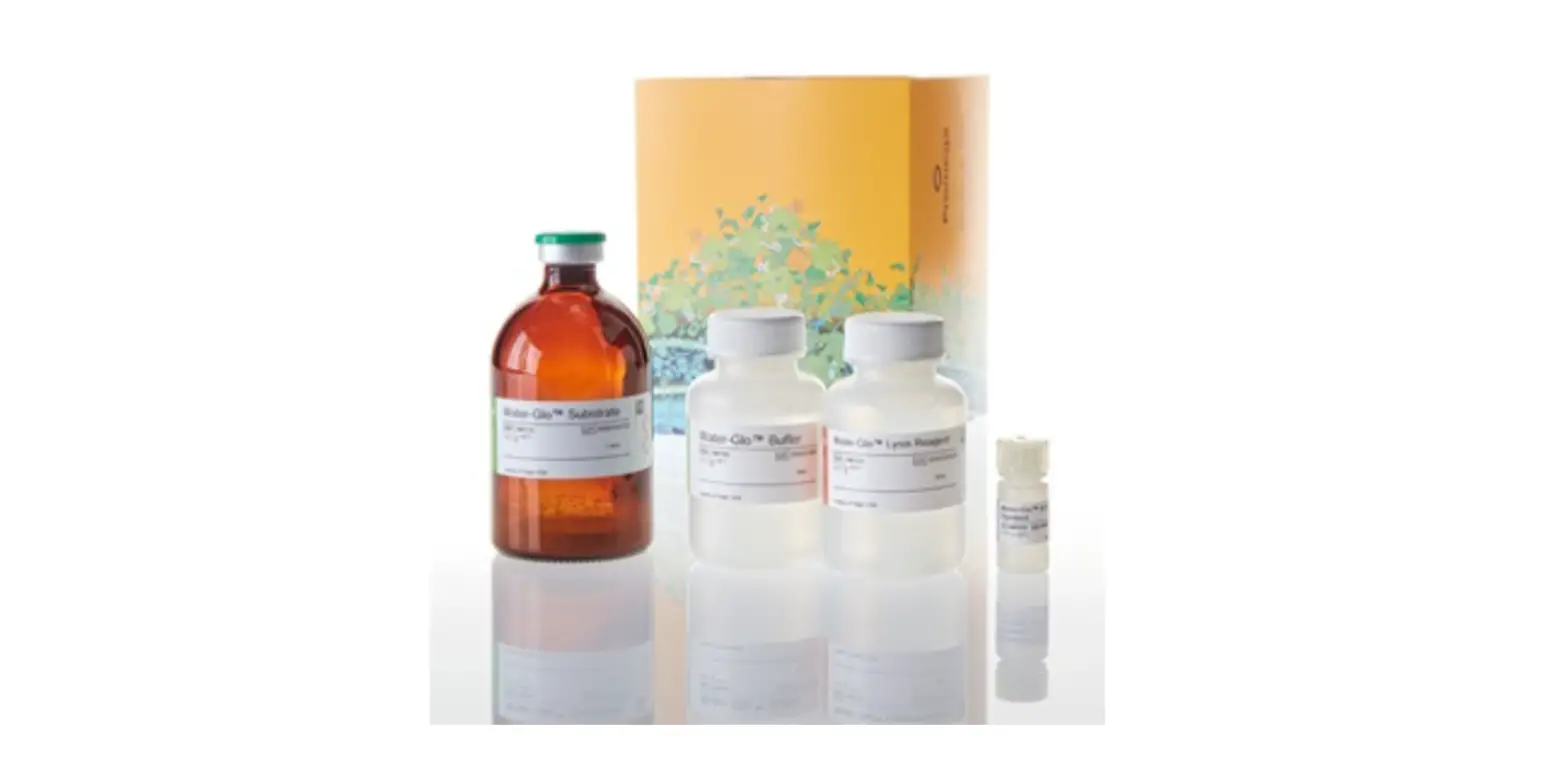
The Cholesterol/Cholesterol Ester-GloTM Assay is a biochemical
assay used to measure the amount of cholesterol in a sample. The
assay utilizes cholesterol esterase, cholesterol dehydrogenase,
reductase substrate, NADH, luciferin, Ultra-GloTM Luciferase, ATP,
and Mg2+ to convert cholesterol esters to cholesterol and generate
light proportional to the amount of cholesterol present in the
sample.
Product Components and Storage Conditions
The Cholesterol/Cholesterol Ester-GloTM Assay is available in
two sizes:
- 5ml (Catalog Number J3190): Contains sufficient reagents to
perform 100 reactions in 96-well plates. Includes 10ml Cholesterol
Lysis Solution, 5ml Cholesterol Detection Solution, 55l Reductase
Substrate, 500l Cholesterol Standard (20mM), and 50l Cholesterol
Esterase. - 50ml (Catalog Number J3191): Contains sufficient reagents to
perform 1000 reactions in 96-well plates. Includes 50ml Cholesterol
Detection Solution, 500l Cholesterol Standard (20mM), and 500l
Cholesterol Esterase.
Product Usage Instructions
Assay Principle
The Cholesterol/Cholesterol Ester-GloTM Assay utilizes a series
of enzymatic reactions to measure the amount of cholesterol in a
sample. The steps involved in the assay are as follows:
- Prepare the Cholesterol Lysis Solution.
- Add the Cholesterol Lysis Solution to the samples.
- Prepare the Reductase Substrate.
- Add the Cholesterol Detection Reagent to the samples.
- Incubate the samples at room temperature for 60 minutes.
- Read the samples on a plate-reading luminometer.
Note: For measurement of total cholesterol, include cholesterol
esterase in the cholesterol detection reagent. For measurement of
free cholesterol, omit cholesterol esterase from the cholesterol
detection reagent. Perform measurements in separate wells
simultaneously to calculate the amount of cholesterol esters from
the difference between free and total cholesterol.
TECHNICAL MANUAL
Cholesterol/Cholesterol Ester-GloTM Assay
Instructions for Use of Products J3190 and J3191
Revised 6/23 TM601
Cholesterol/Cholesterol Ester-GloTM Assay
All technical literature is available at: www.promega.com/protocols/ Visit the web site to verify that you are using the most current version of this Technical Manual. E-mail Promega Technical Services if you have questions on use of this system: [email protected]
1. Description……………………………………………………………………………………………………………………. 2
2. Product Components and Storage Conditions ……………………………………………………………………………4
3. Measuring Total and Free Cholesterol …………………………………………………………………………………….4 3.A. Materials to Be Supplied By the User………………………………………………………………………………4 3.B. Reagent Preparation ………………………………………………………………………………………………….5 3.C. Assay Protocol ………………………………………………………………………………………………………..5
4. Example Experiments ……………………………………………………………………………………………………….. 8 4.A. Measuring Cholesterol and Cholesterol Esters in Lipoproteins………………………………………………..8 4.B. Measuring Cholesterol in Mouse Liver Tissue …………………………………………………………………. 10 4.C. Extraction of Cholesterol with -Cyclodextrins ………………………………………………………………….. 11
5. Appendix…………………………………………………………………………………………………………………….. 12 5.A. Signal Stability ……………………………………………………………………………………………………… 12 5.B. Cholesterol Solutions ………………………………………………………………………………………………13 5.C. Temperature and Reagent Compatibility ………………………………………………………………………..13 5.D. Plates and Equipment ………………………………………………………………………………………………13 5.E. Multiplexing and Normalization …………………………………………………………………………………..13 5.F. References …………………………………………………………………………………………………………..14 5.G. Related Products…………………………………………………………………………………………………….14
6. Summary of Changes ………………………………………………………………………………………………………16
Promega Corporation · 2800 Woods Hollow Road · Madison, WI 53711-5399 USA · Toll Free in USA 800-356-9526 · 608-274-4330 · Fax 608-277-2516 1
www.promega.com
TM601 · Revised 6/23
1. Description
The Cholesterol/Cholesterol Ester-GloTM Assay(a) provides a luminescent method for measuring cholesterol and cholesterol esters in cultured cell lysates and other biological samples such as lipoprotein fractions, cell culture medium, serum and tissue homogenates. Cholesterol is an essential lipid involved in steroidogenesis, bile acid synthesis, cell signaling and maintenance of membrane structure. However, excessive levels of cholesterol contribute to inflammation, atherosclerosis, metabolic disease and cancer. In fact, the cholesterol content of lipoproteins is routinely used as an indicator of cardiovascular risk.
The Cholesterol/Cholesterol Ester-GloTM Assay measures cholesterol using a cholesterol dehydrogenase that links the presence of cholesterol to the production of NADH and the activation of a proluciferin that produces light with luciferase (Figure 1). For measuring Cholesterol Ester, the assay includes a cholesterol esterase that will remove the fatty acid from cholesterol esters to produce one molecule of cholesterol per molecule of ester. The amount of cholesterol esters is determined from the difference of cholesterol measured in the absence (free cholesterol) and presence (total cholesterol) of esterase.
The Cholesterol/Cholesterol Ester-GloTM Assay is part of a bioluminescent metabolite assay platform that offers rapid and sensitve metabolite detection in many sample types (12). The assay can be performed in 96- and 384-well plates, and the detection reagents are added directly to samples without the need for organic extraction, making it convenient for high-throughput applications (Figure 2).
Cholesterol Ester
Cholesterol Esterase 1 FFA
Cholesterol
Product
16247MA
Cholesterol Dehydrogenase
NAD+
Reductase Substrate
NADH
Reductase
Luciferin
Ultra-GloTM Luciferase
+ ATP + Mg2+ + O2
Light
Figure 1. Schematic diagram of the Cholesterol/Cholesterol Ester-GloTM Assay principle. Cholesterol esterase converts cholesterol esters to cholesterol. Cholesterol Dehydrogenase is used to generate NADH. In the presence of NADH, Reductase enzymatically reduces a pro-luciferin Reductase Substrate to luciferin. Luciferin is detected in a luciferase reaction using Ultra-GloTM Luciferase and ATP, and the amount of light produced is proportional to the amount of cholesterol in the sample.
2 Promega Corporation · 2800 Woods Hollow Road · Madison, WI 53711-5399 USA · Toll Free in USA 800-356-9526 · 608-274-4330 · Fax 608-277-2516
TM601 · Revised 6/23
www.promega.com
Cholesterol Lysis Solution
Prepare Cholesterol Detection Reagent
Add Cholesterol Lysis Solution to Samples
Incubate for 30 minutes at 37°C
Reductase Substrate
Add Cholesterol Detection Reagent to Samples
Cholesterol Detection Solution
Incubate 60 minutes at room temperature
+/
Cholesterol Esterase
(for measuring cholesterol esters)
Read on plate-reading luminometer
16248MA
Figure 2. Cholesterol/Cholesterol Ester-GloTM Assay reagent preparation and protocol. The protocol above is for measurement of total cholesterol. For measurement of free cholesterol, omit cholesterol esterase from the cholesterol detection reagent. Measurements in the absence and presence of esterase are performed in separate wells simultaneously to calculate the amount of cholesterol esters from the difference between free and total cholesterol.
Promega Corporation · 2800 Woods Hollow Road · Madison, WI 53711-5399 USA · Toll Free in USA 800-356-9526 · 608-274-4330 · Fax 608-277-2516 3
www.promega.com
TM601 · Revised 6/23
2. Product Components and Storage Conditions
PRODUCT
SIZE
C AT. #
Cholesterol/Cholesterol Ester-GloTM Assay
5ml
J3190
This system contains sufficient reagents to perform 100 reactions in 96-well plates (50l of sample + 50l of cholesterol detection reagent). Includes:
·
10ml Cholesterol Lysis Solution
·
5ml Cholesterol Detection Solution
·
55l Reductase Substrate
·
500l Cholesterol Standard (20mM)
·
50l Cholesterol Esterase
PRODUCT
SIZE
C AT. #
Cholesterol/Cholesterol Ester-GloTM Assay
50ml
J3191
This system contains sufficient reagents to perform 1000 reactions in 96-well plates (50l of sample + 50l of cholesterol detection reagent). Includes:
· 100ml Cholesterol Lysis Solution
·
50ml Cholesterol Detection Solution
· 2 × 275l Reductase Substrate
·
500l Cholesterol Standard (20mM)
·
500l Cholesterol Esterase
Storage Conditions: Store complete kits at less than 65°C. Alternatively, store the Cholesterol Detection Solution and Reductase Substrate at less than 65°C, store the Cholesterol Esterase at less than 10°C and store the Cholesterol Standard and Cholesterol Lysis Solution at less than +10°C.The kit components can be freeze-thawed three times with no effect on assay performance. As needed, dispense kit components into single-use aliquots to minimize freeze-thaw cycles.
!
Note: Use personal protective equipment and adhere to your institution’s safety guidelines and disposal requirements when working with biohazardous materials such as cells and cell culture reagents.
3. Measuring Total and Free Cholesterol
3.A. Materials to Be Supplied By the User · PBS · 96- or 384-well assay plates (opaque white-walled with clear or white bottom) compatible with a standard plate reader · single- and multichannel pipettors, tips and reagent reservoirs · plate-reading luminometer (e.g., GloMax® Discover, Cat.# GM3000) · water bath
4 Promega Corporation · 2800 Woods Hollow Road · Madison, WI 53711-5399 USA · Toll Free in USA 800-356-9526 · 608-274-4330 · Fax 608-277-2516
TM601 · Revised 6/23
www.promega.com
3.B. Reagent Preparation
This protocol is for a reaction with 50l of prepared sample and 50l of cholesterol detection reagent in a 96-well plate. The assay can be adapted to other volumes provided the 1:1 ratio of cholesterol detection reagent volume to sample volume is maintained (e.g., 20l of sample and 20l of cholesterol detection reagent in a 384-well format).
1. Thaw all components in a 22°C water bath and mix to ensure homogeneous solutions prior to use. Place the Reductase Substrate and Cholesterol Esterase on ice; all other components can be held at 22°C until use.
2. Determine the amount of cholesterol detection reagent necessary for your current experiment. Use the reagent on the day it is prepared; do not store it for later use.
3. To prepare cholesterol detection reagent, add 10l of Reductase Substrate per ml of Cholesterol Detection Solution and mix by inversion. Cholesterol detection reagent without Cholesterol Esterase is used to measure free cholesterol.
4. To prepare cholesterol detection reagent with Esterase, add 10l of Reductase Substrate and 10l Cholesterol Esterase per ml of Cholesterol Detection Solution and mix by inversion. Cholesterol detection reagent with Esterase is used to measure total cholesterol.
3.C. Assay Protocol
This protocol is for measuring free (without esterase) and total (with esterase) cholesterol. The quantity of cholesterol esters can be calculated as the difference between total and free cholesterol, determined in separate wells simultaneously.
Since cholesterol levels can vary significantly in different samples (see Table 2), samples may need to be diluted to a concentration below 80M to fit within the linear range of the assay. Twice as much lysis solution as detection solution has been included in the assay for this purpose.
This kit includes a 20mM Cholesterol Standard that can be used to generate a standard curve (Figure 3) to confirm that samples are within the linear range of the assay and to calculate cholesterol concentration. If the sample relative light unit (RLU) values fall outside the linear range of the cholesterol standard curve, the sample dilutions should be adjusted and re-assayed. It is important to prepare standards in the same buffers used for preparing samples and to follow the same assay protocol. Since the esterase reaction releases one molecule of cholesterol per molecule of ester, free and total cholesterol can be calculated from the cholesterol standards in the presence and absence of esterase; a cholesterol ester standard is not required.
Promega Corporation · 2800 Woods Hollow Road · Madison, WI 53711-5399 USA · Toll Free in USA 800-356-9526 · 608-274-4330 · Fax 608-277-2516 5
www.promega.com
TM601 · Revised 6/23
3.C. Assay Protocol (continued) 1. For each sample, standard or background control, prepare wells for measurement with and without esterase as
needed.
For Medium, Serum and Homogenized Tissue Samples: i. Dilute samples in Cholesterol Lysis Solution to bring their cholesterol concentrations below 80M.
Transfer 25l of sample, standard or background control to a 96-well plate. Refer to Table 2 for dilution recommendations.
ii. Add 25l of Cholesterol Lysis Solution, shake briefly and incubate for 30 minutes at 37°C. For Adherent Cells and 3D Cultures: i. Remove medium from cells in a 96-well plate. Wash cells twice with 100l of PBS.
ii. Add 50l of Cholesterol Lysis Solution, shake briefly and incubate for 30 minutes at 37°C.
iii. If needed, dilute samples in Cholesterol Lysis Solution to bring their cholesterol concentrations below 80M. Transfer 50l of any diluted samples, standards or background controls to empty wells in a 96-well white-walled assay plate.
2. Add 50l of cholesterol detection reagent with or without Esterase as prepared in Section 3.B to all wells.
3. Shake the plate for 3060 seconds by hand or at a low rpm on a plate shaker.
4. Incubate at room temperature for 1 hour.
5. Record luminescence using a plate-reading luminometer such as the GloMax® Discover. Note: The light signal continues to increase until all cholesterol is consumed and the signal plateaus. At any time point the signal is directly proportional to cholesterol concentration.
6. Calculate free and total cholesterol by comparison of the luminescence of samples and standards assayed under the same conditions (See Figure 3).
6 Promega Corporation · 2800 Woods Hollow Road · Madison, WI 53711-5399 USA · Toll Free in USA 800-356-9526 · 608-274-4330 · Fax 608-277-2516
TM601 · Revised 6/23
www.promega.com
10,000,000 8,000,000 6,000,000
1,600,000 1,200,000
800,000 400,000
0 0 2 4 6 8 10 12
R²=0.9957
Luminescence (RLU)
16249MA
4,000,000 2,000,000
cholesterol
0
0
20
40
60
80
100
Analyte (µM)
Figure 3. Cholesterol standard curves. Dilutions of the provided Cholesterol Standard (20mM, in ethanol) were prepared in Cholesterol Lysis Solution, beginning with a 2l aliquot of Cholesterol Standard into 498l of Cholesterol Lysis Solution. (Refer to Table 1 for concentrations of Cholesterol Standard used in standard curve.) A 50l aliquot of cholesterol detection reagent was added to 50l of each standard in triplicate and the luminescence was read after 1 hour. Concentration was plotted against average RLU at each standard point and a linear curve was fit. The Cholesterol/Cholesterol Ester-GloTM Assay can detect less than 1µM cholesterol and has an upper limit of 80µM cholesterol. See Sections 4.A and 4.B for other ways to convert luminescence into concentration.
Table 1. Cholesterol Titration Data.
Cholesterol
(µM)
80
60
40
20
10
5
2
1
0
RLU
8,343 6,685 4,825 2,537 1,389
745
444
293
134
(thousands)
STDEV
229
277
285
31
35
8
7
2
3
(thousands)
CV
2.7%
4.1%
5.9%
1.2%
2.5%
1.0%
1.6%
0.7% 2.5%
S/B
62.5
50.1
36.1
19.0
10.4
5.6
3.3
2.2
1.0
S/N
2,416.5 1,928.5 1,381.2 707.4 369.6 180.1
91.5
46.8
Note: Coefficient of variation (CV) is 100 × STDEV/RLU. Signal-to-background ratio (S/B) is mean signal from samples divided by the mean signal from negative controls. Signal-to-noise ratio (S/N) is the net signal (mean signal minus mean negative control) divided by the standard deviation of the negative control.
Promega Corporation · 2800 Woods Hollow Road · Madison, WI 53711-5399 USA · Toll Free in USA 800-356-9526 · 608-274-4330 · Fax 608-277-2516 7
www.promega.com
TM601 · Revised 6/23
3.C. Assay Protocol (continued) Table 2. Recommendations for Sample Preparation.
Sample Type Cell culture medium (extracellular) Cell lysates (intracellular)
Differentiated adipocytes
Tissues
Plasma and serum Purified lipoproteins
Expected Cholesterol Concentration in Sample Preparation Recommendations
Variable
·Dilute medium samples in Cholesterol Lysis Solution
Variable
·Remove media from cells and wash with PBS ·Add Cholesterol Lysis Solution ·Further dilution may be necessary
10100s of M
· Remove media from cells and wash with PBS
· Add Cholesterol Lysis Solution
· Further dilution may be necessary
e.g., 100s of M in a 25 mg/ ml mouse liver homogenate
· Homogenize tissue with Tissue Tearor or other homogenization device
· Add Cholesterol Lysis Solution
· Further dilution (e.g., 10-fold) may be necessary
100s of M
· Dilute plasma or serum samples (e.g., 10-fold or more) in Cholesterol Lysis Solution
mM levels in mg/ml · Dilute lipoproteins (e.g., 200-fold) in Cholesterol Lysis
amounts of lipoprotein
Solution
4. Example Experiments
4.A. Measuring Cholesterol and Cholesterol Esters in Lipoproteins
It is important to note that if the amount of free cholesterol is significantly greater than the amount of esterified cholesterol, it may not be possible to detect the ester. We have found this to be true with a number of cancer cell lines. In contrast, lipoproteins have significant amounts of cholesterol esters, and it is easy to detect them.
In Figure 4, esterified and unesterified cholesterol concentrations were measured using a single standard for quantification. Signals from a lipoprotein sample (sample RLU), a cholesterol standard (standard RLU) of known concentration (STD) and a negative control (background RLU) containing no cholesterol were applied to the following formula:
standard × (sample RLU background RLU) (standard RLU background RLU)
8 Promega Corporation · 2800 Woods Hollow Road · Madison, WI 53711-5399 USA · Toll Free in USA 800-356-9526 · 608-274-4330 · Fax 608-277-2516
TM601 · Revised 6/23
www.promega.com
Considering the data in Figure 4, and 250- or 500-fold dilutions of high density lipoprotein (HDL) or low density lipoprotein (LDL), respectively, this formula yields free and total cholesterol concentrations of 2.2mM and 6.8mM for HDL and 7.4mM and 17.7mM for LDL, respectively. The difference between free and total corresponds to cholesterol ester concentrations of 4.6mM in HDL and 10.3mM in LDL.
Luminescence (RLU in millions)
16416MA
16 13.70
14
12
10
12.09 9.27
8
6
5.11
4
2.98
2 0.04
0
Background Standard HDL
HDL+
LDL
LDL+
esterase
esterase
Figure 4. Cholesterol detection in human lipoproteins using a single cholesterol standard. Human high density lipoprotein (HDL, 10mg/ml) and human low density lipoprotein (LDL, 5mg/ml) were purchased from Kalen Biomedical. The HDL and LDL samples were diluted 250- and 500-fold into Cholesterol Lysis Solution, respectively, and 50µl aliquots were assayed per the protocol, with and without esterase. 40µM and 0µM of cholesterol in Cholesterol Lysis Solution were assayed as the standard and background controls, respectively. The RLU value (in millions) is listed at the top of each bar.
Promega Corporation · 2800 Woods Hollow Road · Madison, WI 53711-5399 USA · Toll Free in USA 800-356-9526 · 608-274-4330 · Fax 608-277-2516 9
www.promega.com
TM601 · Revised 6/23
4.A. Measuring Cholesterol and Cholesterol Esters in Lipoproteins (continued)
The relative amounts of lipoproteins in serum samples can also be determined by quantifying total cholesterol. An important feature of such an experiment is to have a way to separate the different lipoprotein fractions; an example using PEG8000 is shown in Figure 5.
120%
100%
% Total Cholesterol
16252MA
80%
60%
LDL/VLDL
HDL 40%
20%
0% Bovine
Human
Figure 5. Relative amounts of high vs. low and very low density lipoproteins (VLDL) in sera. Samples of bovine and human sera were mixed 5:2 with 20% PEG8000, incubated for 20 minutes at room temperature and then centrifuged for 30 minutes at 10,000 × g. HDL in the supernatant was transferred to a fresh tube and the LDL/VLDL in the precipitate was resuspended in PBS. Each lipoprotein fraction was diluted 100-fold into Cholesterol Lysis Solution and then assayed for total cholesterol (unesterified + esterified) as per the standard protocol.
4.B. Measuring Cholesterol in Mouse Liver Tissue
Cholesterol concentrations in a mouse liver homogenate were measured using a cholesterol standard spike for quantification (Figure 6). Signals from mouse liver samples minus (sample RLU) or plus (sample + spike RLU) of an added amount of cholesterol (spike) and from a negative control (background RLU) containing no cholesterol were applied to the following formula:
spike × (sample RLU background RLU) (sample + spike RLU sample RLU)
Using the data in Figure 6, and accounting for a 10-fold dilution in Cholesterol Lysis Solution, this formula yields a value of 102µM cholesterol in a 25mg/ml mouse liver homogenate.
Note that the homogenate itself does not interfere with the detection chemistry because the RLU ± 10µM cholesterol is the same in the absence (standard RLU background RLU = 5.12 million RLU) or presence (sample + spike RLU sample RLU = 5.30 million RLU) of the diluted homogenate.
10 Promega Corporation · 2800 Woods Hollow Road · Madison, WI 53711-5399 USA · Toll Free in USA 800-356-9526 · 608-274-4330 · Fax 608-277-2516
TM601 · Revised 6/23
www.promega.com
Luminescence (RLU in millions)
16417MA
15
12
10.80
9
5.50 6
5.22
3
0.10 0
Background
Sample
Sample + Spike
Cholesterol Standard
Figure 6. Cholesterol detection in mouse liver using a cholesterol spike. 25mg of mouse liver was placed in 1ml of PBS and homogenized with a Tissue Tearor (BioSpec Cat.# 985370-07) for 30 seconds. A 5µl aliquot of the homogenate was diluted into 45µl of Cholesterol Lysis Solution in the presence (sample + spike) or absence (sample) of an additional 10µM of cholesterol. These diluted samples were incubated for 30 minutes at 37°C and assayed per the standard protocol for free cholesterol. Cholesterol (10µM and 0µM) in Cholesterol Lysis Solution were assayed as the standard and background controls, respectively. The RLU value (in millions) is listed at the top of each bar.
4.C. Extraction of Cholesterol with -Cyclodextrins
Some researchers choose to manipulate the cholesterol levels in their biological systems prior to starting an experiment by incubation with -cyclodextrins. These molecules have a hydrophobic core that is roughly the size of cholesterol, and hence they can “extract” cholesterol from cells. However, extraction of too much cholesterol can lead to cell death, so it is important to control the amount of -cyclodextrin and the time of incubation. In the experiment shown in Figure 7, HCT116 colon cancer cells were incubated with and without methyl–cyclodextrin, and samples of the medium were removed over time and assayed with the Cholesterol/Cholesterol Ester-GloTM Assay. To monitor cell viability, RealTime-GloTM MT Cell Viability Reagent was added to the cells and luminescence was measured over time. Cytotoxicity was also measured by removing samples of medium over time and assaying for lactate dehydrogenase (LDH) release with the LDH-GloTM Cytotoxicity Assay.
Promega Corporation · 2800 Woods Hollow Road · Madison, WI 53711-5399 USA · Toll Free in USA 800-356-9526 · 608-274-4330 · Fax 608-277-2516 11
www.promega.com
TM601 · Revised 6/23
4.C. Extraction of Cholesterol with -Cyclodextrins (continued)
120%
120
140%
Relative Viability Cholesterol (µM) Relative Toxicity
16253MA
100% 80% 60% 40% 20%
– CD + CD
100
– CD
80
+ CD
60
40
20
120% 100% 80% 60% 40% 20%
– CD + CD
0%
0
2
4
6
8
Time (Hours)
0
0
2
4
6
8
Time (Hours)
0%
0
2
4
6
8
Time (Hours)
Figure 7. Multiplexing viability and cytotoxicity measurements with the Cholesterol/Cholesterol Ester-GloTM Assay during extraction of cholesterol by -cyclodextrin. Twenty-thousand HCT116 colon cancer cells per well were plated in a 96-well plate and incubated overnight. The cells were washed twice with PBS, and 100l of medium was added containing DMEM, 2% BSA and 1X RealTime-GloTM Reagent, in the absence (blue) or presence (red) of 20mM methyl-cyclodextrin. At the indicated times, luminescence from the RealTime-GloTM Assay was measured, and aliquots of medium were collected to measure the amount of extracted cholesterol. These aliquots were diluted 20-fold into Cholesterol Lysis Solution for the Cholesterol/Cholesterol Ester-GloTM Assay and 100-fold into LDH Storage Buffer for the LDH-GloTM Assay. The latter two assays were performed once all samples were collected per their standard protocols. Viability was normalized to the luminescent value measured at 2 hours, cholesterol was calculated from a standard curve
and toxicity was normalized to a maximum release sample (via addition of 0.2% Triton X-100).
5. Appendix
5.A. Signal Stability
After addition of the cholesterol detection reagent to a sample, the Cholesterol/Cholesterol Ester-GloTM Assay yields a signal that is stable over several hours (Figure 8).
20,000,000
Luminescence (RLU)
16254MA
16,000,000
12,000,000
8,000,000
4,000,000
0
0
1
2
3
4
5
6
Time (Hours)
Figure 8. Signal Stability of the Cholesterol/Cholesterol Ester-GloTM Assay. An equal volume of cholesterol detection reagent was added to 40M of cholesterol in Cholesterol Lysis Solution and the luminescence was read over time. After 5 hours, the signal was >50% of the signal at 1 hour, which is convenient for use in high-throughput applications.
12 Promega Corporation · 2800 Woods Hollow Road · Madison, WI 53711-5399 USA · Toll Free in USA 800-356-9526 · 608-274-4330 · Fax 608-277-2516
TM601 · Revised 6/23
www.promega.com
5.B. Cholesterol Solutions
Cholesterol is not very soluble or stable in aqueous solution, and it can adhere to plastic surfaces. Thus, it is important to store cholesterol in a nonaqueous solution and in glass containers. Our Cholesterol Standard is supplied as an ethanol solution in a glass vial. Significant concentrations of detergents are included in our lysis and detection solutions to maintain cholesterol concentrations while performing the assays, but cholesterol is not stable in these solutions over extended periods of time.
5.C. Temperature and Reagent Compatibility
The intensity and stability of the luminescent signal is temperature sensitive. For consistent results, equilibrate the reagents and samples to room temperature before use. Avoid the use of DTT and other reducing agents in the samples to be tested. Reducing agents will react with the Reductase Substrate and increase background.
5.D. Plates and Equipment
Most standard plate readers designed for measuring luminescence are suitable for this assay. Some instruments do not require gain adjustment, while others may require optimization of the gain settings to achieve sensitivity and dynamic range. An integration time of 0.51 second per well should serve as guidance. For exact instrument settings, consult your instrument manual. For optimum performance, use opaque-walled, white multiwell plates that are compatible with your luminometer (e.g., Corning Costar® #3917 96-well or Costar® #3570 384-well plates). Luminescence signal is diminished in black plates and increased well-to-well crosstalk is observed in clear plates. The RLU values shown in the figures of this technical manual vary depending on the plates and luminometers used to generate the data. Although relative luminescence output will vary with different instruments, this variation does not affect assay performance.
5.E. Multiplexing and Normalization
The Cholesterol/Cholesterol Ester-GloTM Assay can be multiplexed to normalize for changes in viability and to account for well-to-well variation. If a sample of media is removed for assay, the remainder of the sample can be assayed with RealTime-GloTM, CellTiter-FluorTM or CellTiter-Glo® Cell Viability Assays, following the protocols provided with the respective assays. If multiplexing with intracellular cholesterol detection, RealTime-GloTM and/or CellTiter-FluorTM reagents can be added to the medium and measured prior to media removal.
To determine if a treatment is toxic to cells, the LDH-GloTM Cytotoxicity Assay may be multiplexed with the Cholesterol/Cholesterol Ester-GloTM Assay. A small (25l) sample of medium can be removed for the LDH-GloTM Cytotoxicity Assay to a separate plate, and the remaining cells and medium can be used for cholesterol detection. Refer to Section 4.C for example data.
Promega Corporation · 2800 Woods Hollow Road · Madison, WI 53711-5399 USA · Toll Free in USA 800-356-9526 · 608-274-4330 · Fax 608-277-2516 13
www.promega.com
TM601 · Revised 6/23
5.F. References
1. Vidugiriene, J. et al. (2014) Bioluminescent cell-based NAD(P)/NAD(P)H assays for rapid dinucleotide measurement and inhibitor screening. Assay Drug Dev. Technol. 12, 51456.
2. Leippe, D. et al. (2017) Bioluminescent assays for glucose and glutamine metabolism: High-throughput screening for changes in extracellular and intracellular metabolites. SLAS Discovery. 22, 36677.
3. Glucose Uptake-GloTM Assay Technical Manual #TM467.
5.G. Related Products Energy Metabolism Assays
Product Glycerol-GloTM Assay Triglyceride-GloTM Assay Glucose Uptake-GloTM Assay Glutamate-GloTM Assay Glutamine/Glutamate-GloTM Assay Glucose-GloTM Assay Lactate-GloTM Assay NAD(P)H-GloTM Detection System NAD/NADH-GloTM Assay NADP/NADPH-GloTM Assay Mitochondrial ToxGloTM Assay Other sizes are available.
Size 5ml 5ml 5ml 5ml 5ml 5ml 5ml 10ml 10ml 10ml 10ml
Cat.# J3150 J3160 J1341 J7021 J8021 J6021 J5021 G9061 G9071 G9081 G8000
Viability Assays
Product RealTime-GloTM MT Cell Viability Assay CellTiter-Glo® 2.0 Assay CellTiter-Glo® Luminescent Cell Viability Assay CellTiter-Glo® 3D Cell Viability Assay CellTiter-FluorTM Cell Viability Assay Other sizes are available.
Size 100 reactions
10ml 10ml 10ml 10ml
Cat.# G9711 G9241 G7570 G9681 G6080
14 Promega Corporation · 2800 Woods Hollow Road · Madison, WI 53711-5399 USA · Toll Free in USA 800-356-9526 · 608-274-4330 · Fax 608-277-2516
TM601 · Revised 6/23
www.promega.com
Cytotoxicity Assays
Product LDH-GloTM Cytotoxicity Assay CellToxTM Green Cytotoxicity Assay CytoTox-GloTM Cytotoxicity Assay CytoTox-FluorTM Cytotoxicity Assay Other sizes are available.
Multiplex Viability and Cytotoxicity Assays
Product MultiTox-Glo Multiplex Cytotoxicity Assay MultiTox-Fluor Multiplex Cytotoxicity Assay Other sizes are available.
Oxidative Stress Assays
Product ROS-GloTM H2O2 Assay GSH-GloTM Glutathione Assay GSH/GSSG-GloTM Assay Other sizes are available.
Detection Instruments
Product GloMax® Discover System GloMax® Explorer System
Size 10ml 10ml 10ml 10ml
Cat.# J2380 G8741 G9290 G9260
Size 10ml 10ml
Cat.# G9270 G9200
Size 10ml 10ml 10ml
Cat.# G8820 V6911 V6611
Size 1 each 1 each
Cat.# GM3000 GM3500
Promega Corporation · 2800 Woods Hollow Road · Madison, WI 53711-5399 USA · Toll Free in USA 800-356-9526 · 608-274-4330 · Fax 608-277-2516 15
www.promega.com
TM601 · Revised 6/23
6. Summary of Changes The following changes have been made to the 6/23 revision of this document: 1. The legend for Figure 3 was updated. 2. Equations were reformatted and miscellaneous text edits were made. 3. The font was updated.
(a)U.S. Pat. Nos. 9,273,343 and 9,951,372, European Pat. No. 2751089, Japanese Pat. No. 6067019 and other patents pending.
© 20202023 Promega Corporation. All Rights Reserved.
CellTiter-Glo and GloMax are registered trademarks of Promega Corporation. CellTiter-Fluor, CellTox, CytoTox-Fluor, CytoTox-Glo, Cholesterol/Cholesterol Ester-GloTM, Glucose-Glo, Glucose Uptake-Glo, Glutamate-Glo, Glutamine/Glutamate-Glo, Glycerol-Glo, GSH-Glo, GSH/GSSG-Glo, Lactate-Glo, LDH-Glo, Mitochondrial ToxGlo, NAD/NADH-Glo, NAD(P)H-Glo, NADP/NADPH-Glo, RealTime-Glo, ROS-Glo and Triglyceride-Glo are trademarks of Promega Corporation.
Products may be covered by pending or issued patents or may have certain limitations. Please visit our Web site for more information.
All prices and specifications are subject to change without prior notice.
Product claims are subject to change. Please contact Promega Technical Services or access the Promega online catalog for the most up-to-date information on Promega products.
16 Promega Corporation · 2800 Woods Hollow Road · Madison, WI 53711-5399 USA · Toll Free in USA 800-356-9526 · 608-274-4330 · Fax 608-277-2516
TM601 · Revised 6/23
www.promega.com
 Promega Corporation