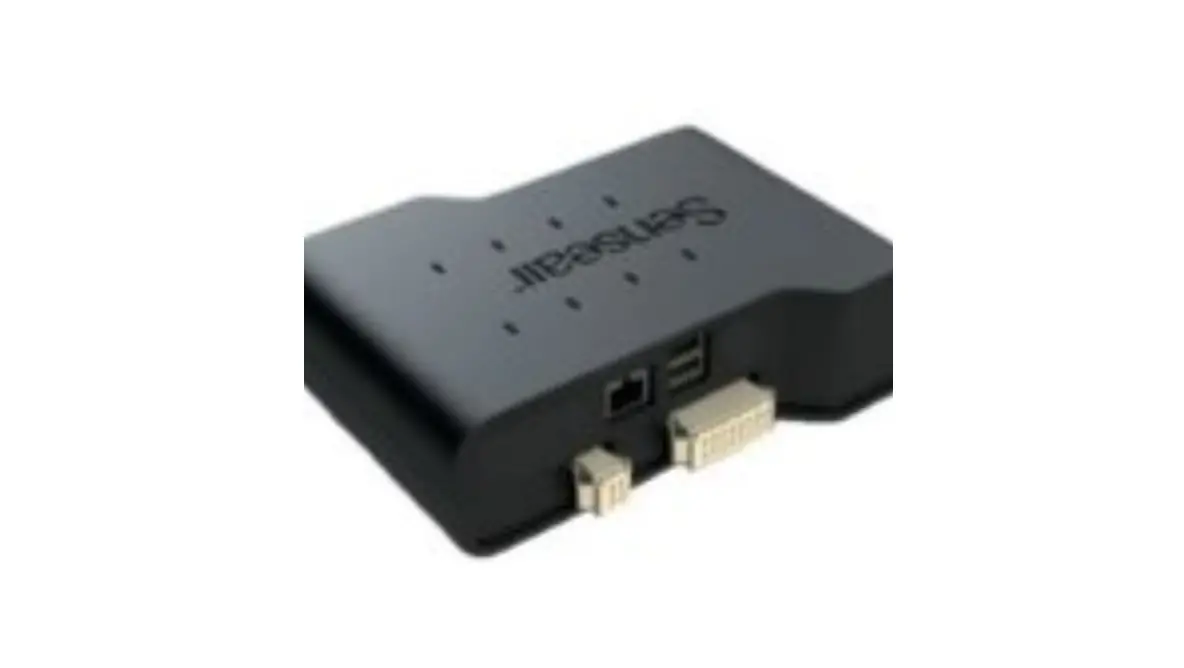
Visteon BRFM Battery Radio Frequency Module Instructions
BRFM features
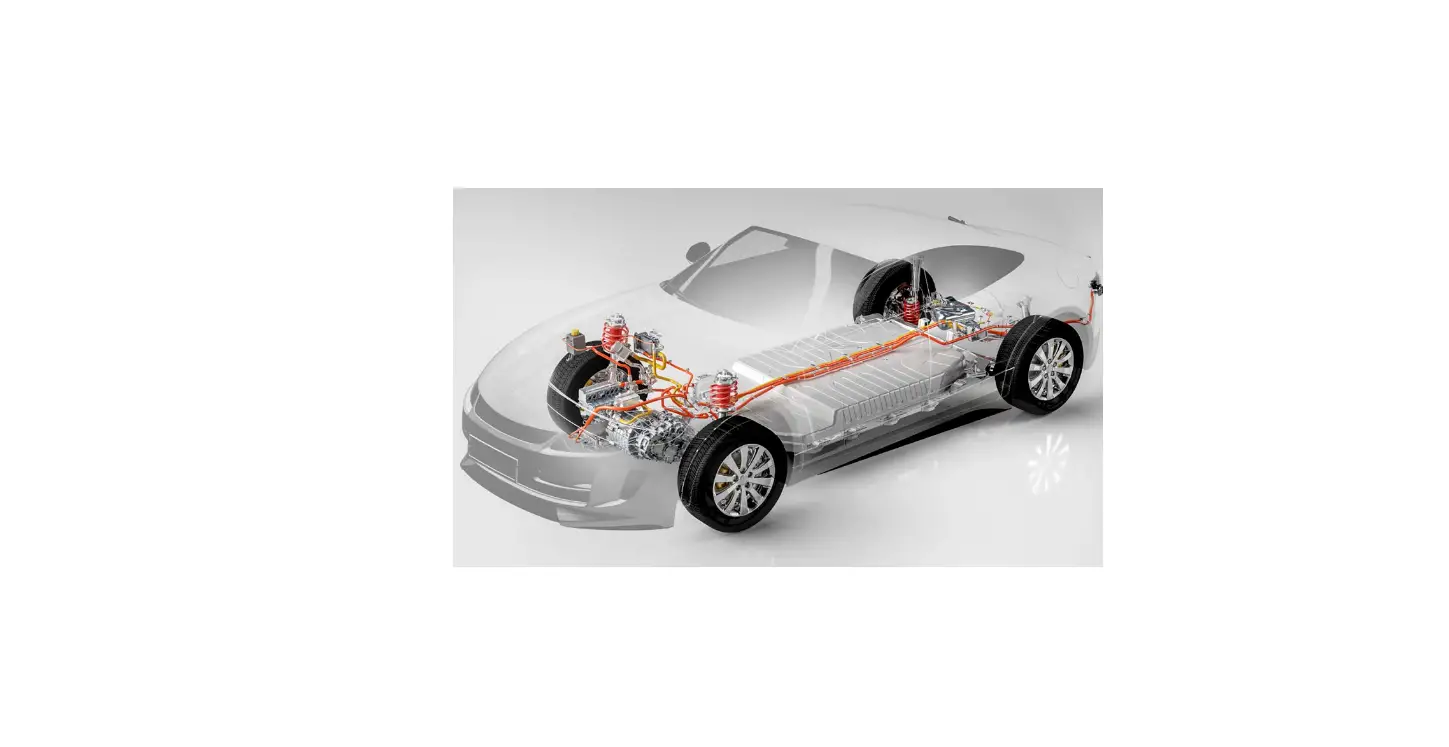
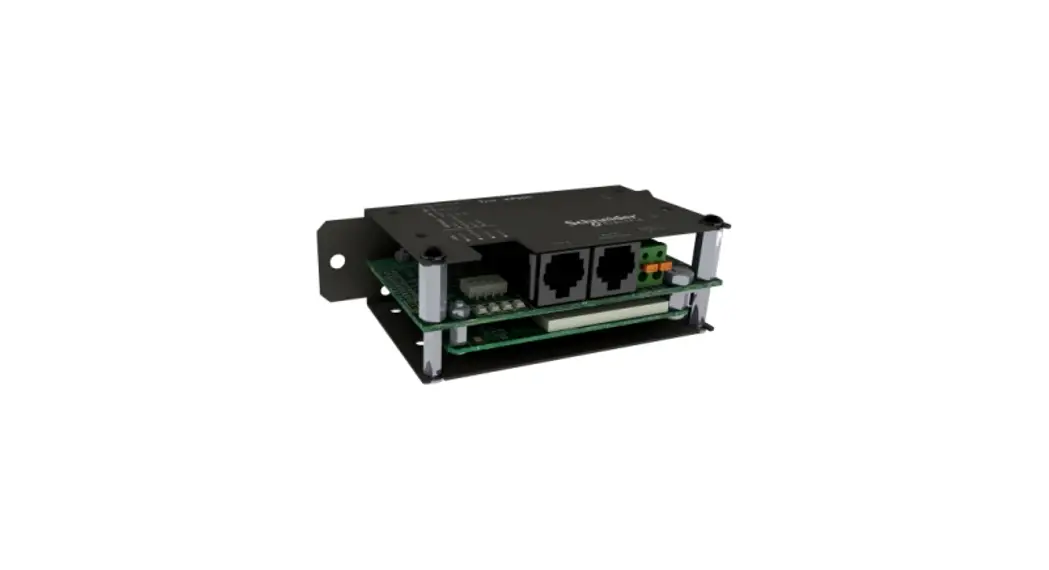
The BRFM is an electronic module intended to aggregate data from up to 24 CMU units and module temperatures from the High Voltage battery bus in addition to pack voltage and current data collected form the Battery Disconnect Signal Board (BDSB) and from multiple Cell Monitoring Units (CMUs) to communicate them to the Vehicle Integration Control Module (VICM3).
All cell voltages, module temperatures, pack voltage and current are reported directly to the VICM3 on a regular periodic basis.
There are two variants of the BRFM:
- Application 1 has a single wireless RFIC (Pinnacle) and one antenna.
- Application 2 has two wireless RFICs (Pinnacle) and two antennas.
The BRFM implements a Pinnacle IC (ADRF8850), this is an IC that provides wireless communication between the Battery Cell Monitoring chip and the Battery Management System Controller.
The BRFM includes a voltage supervisor/windowed watchdog (TPS3850) counter which generates a wake up signal to the VICM3 when any of the battery cells reports a critical condition when the VICM3 is sleeping.
The BRFM has two redundant sets of sensors that monitor the battery pack for excessive temperature, pressure, or hydrogen concentration that indicate a battery cell thermal runaway or thermal propagation.
System interaction
| Module-to-Vehicle Electrical Interface | |
| Analog Input | VICM3 provides power to BRFM module. Power nominal value is 5.4V Minimum voltage expected is 5.2V and maximum is 5.6V. |
| Analog Output | BDSB Power Output is provided or enabled by BRFM module depending on variant. BDSB Power is provided by Single BRFM variant. BDSB Power nominal value is 5V. Minimum voltage expected is 4.2V and maximum is 5.5V |
| Digital (discrete state) Output | BDSB Power Output is provided or enabled by BRFM module depending on variant. BDSB Power is enabled by sending commands through the Dual BRFM variant. BDSB Power nominal value is 5V. Minimum voltage expected is 4.2V and maximum is 5.5V |
| Communication Bus | isoSPI communication serves as interface between BRFM and VICM3, as well as BRFM and BDSB. isoSPI lines shall be monitored to ensure proper performance. Amplitude and timing measurements should be captured. 1Mbps nominal is expected. |
| RF Link(s) | ISM Band (2.4GHz to 2.5GHz) used to communicate with CMU modules. Rx sensitivity shall be around 50% of PER, where each measurement shall vary by no more than +/- 2.0dB from the golden sample. Tx output power shall vary by no more than +/-2.5dB from the golden sample. Radio frequency reference shall be within ± 20PPM from desired frequency (2.44GHz, channel 7). |
| Module-to-Vehicle Non-Electrical Interface | |
| Pressure Sensors -> Values shall be between 50kPa and 150kPa ± 1% (0 – 150C) and ±2% (-40C – 0C) Hydrogen Sensors -> Values shall be between 0PPM and 65,000PPM ± 100PPM (5% of accuracy) Temperature Sensors -> Detection range shall be between -40C and 150C ± 1% of measured value | |
| Internal Interface | |
| Note: For these internal I/O, monitoring shall only occur via communication bus data or via indirect methods. Direct monitoring using attachments leads to external monitoring devices shall not be included. | |
| Switching & Clock Frequency Content | SPI communication shall be 1Mbps nominal. Used to communicate between RF manager to Sensors ASIC and RF Manager to isoSPI Transceiver. RF Manager IC XTAL frequency shall be 40MHz nominal. Pressure sensor frequency shall be 20kHz. Hydrogen sensor frequency shall be 24.5kHz. UART communication between RF Manager 1 and RF Manager 2 for Dual BRFM variant. These shall be 1Mbps nominal. |
| Analog Output | 3.3V voltage output from U7/U9 shall be within the following range: +3.25V < VOUT < +3.35V Main power supply (U30001) shall have an output voltage of 3.3V with ±5mV peak-to-peak ripple voltage |
| Digital (discrete state) Output | |
| Communication Bus | |
| Note: This section assumes that production software is not mandatory; the use of specialized software is acceptable. Note: Software diagnostic timers should be reset to minimum detection values, to facilitate assertion of potential diagnostic flags during the RF exposure time (maximum 2 seconds). Note: States/faults/issues shall be reported directly over the communication bus (i.e., Class 2, Controller Area Network (CAN), etc.) or indirectly if the communication bus is not available via the cycling of output(s) (e.g., PWM duty cycle change, telltale flash rate change, etc.) Note: Unless otherwise specified in the EMC Test Plan, in order to ensure a refreshed value, all information related to data monitoring (such as analog input voltages, operating states, etc.) shall be via parameter requests (e.g., Parameter ID (PID)) and not via scheduled, or periodic, broadcast messages. This ensures bi-directional communications during immunity testing. | |
Harness Pinout, Capacities, and Use
| Connector ID /+ Cavity # | Name | Description | Wire Gauge (AWG) Used in Vehicle | Twist w/ Cavity # | Shield ed w/ Cavity # | Applicable Bands | |||
| Termination (R-L-C) etc. | Required for Module Operation | External Antenna Band WiFi | External Antenna Band YYYY | ||||||
| X1-1 | BUF5V I | 5V Input Power from VICM | 16 | n/a | n/a | Yes | n/a | n/a | |
| X1-2 | NC | NC | n/a | n/a | n/a | n/a | n/a | n/a | |
| X1-3 | NC | NC | n/a | n/a | n/a | n/a | n/a | n/a | |
| X1-4 | VICM_ WU_SI G | Vehicle Integration Control Module Wake Up Signal | Connect to 5V | 16 | n/a | n/a | Yes | n/a | n/a |
| X1-5 | BUF5V O | 5V Output Power to BDSB | BDSB or simulator | 16 | n/a | n/a | Yes | n/a | n/a |
| X1-6 | NC | NC | n/a | n/a | n/a | n/a | n/a | n/a | |
| X1-7 | RTN_5 VO | Ground to BDSB | 16 | n/a | n/a | Yes | n/a | n/a | |
| X1-8 | RTN_5 VI | Ground to VICM | 16 | n/a | n/a | Yes | n/a | n/a | |
| X1-9 | BRFM_ SPLY_ V_2 | Battery Radio Frequency Module Supply Voltage 2 | 16 | n/a | n/a | Yes | n/a | n/a | |
| X1-10 | NC | NC | n/a | n/a | n/a | n/a | n/a | n/a | |
| X1-11 | ISOSPI _PV2 | isoSPI Positive 2 to VICM | 100 ohm cross positive and negative | 20 | n/a | n/a | Yes | n/a | n/a |
| X1-12 | ISOSPI _NV2 | isoSPI Negative 2 to VICM | |||||||
| X1-13 | ISOSPI _PV1 | isoSPI Positive 1 to VICM | 100 ohm cross positive and negative | 20 | n/a | n/a | Yes | n/a | n/a |
| X1-14 | ISOSPI _NV1 | isoSPI Negative 1 to VICM | |||||||
| X1-15 | ISOSPI _PB1 | isoSPI Positive 1 to BDSB 1 | 100 ohm cross positive and negative | 20 | n/a | n/a | Yes | n/a | n/a |
| X1-16 | ISOSPI _NB1 | isoSPI Negative 1 to BDSB 1 | |||||||
| X1-17 | ISOSPI _PB2 | isoSPI Positive 2 to BDSB 2 | 100 ohm cross positive and negative | 20 | n/a | n/a | Yes | n/a | n/a |
| X1-18 | ISOSPI _NB2 | IsoSPI Negative 2 to BDSB 2 | |||||||
| X1-19 | NC | NC | n/a | n/a | n/a | n/a | n/a | n/a | |
| X1-20 | BRFM_ RTN_2 | Battery Radio Frequency Module Return 2 | BDSB or simulation | 16 | n/a | n/a | Yes | n/a | n/a |
The following information shall also be included in the case of radio equipment intentionally emitting radio waves:
- Frequency band : 2.4 – 2.5 GHz
- Maximum radio-frequency power transmitted in the frequency band(s) in which the radio equipment operates. Max output power = 10dB
FCC
(U.S.A. and Canada)
This device complies with Part 15 of the FCC Rules. Operation is subject to the following two conditions:
- This device may not cause harmful interference, and
- The device must accept any interference received, including interference that may cause undesired operation.
Changes or modifications not expressly approved by the party responsible for compliance could void the user’s authority to operate the equipment.
RF exposure safety
This device complies with the FCC RF exposure limits and has been evaluated in compliance with portable exposure conditions.
The equipment must be installed and operated and was evaluated with minimum distance of 11 cm of the human body. This distance or greater is maintained by vehicle design and ensures compliance by normal use of the vehicle.
ISED CANADA
This device complies with Industry Canada License-exempt RSS standard(s). Operation is subject to the following two conditions:
- This device may not cause harmful interference, and
- The device must accept any interference received, including interference that may cause undesired operation.
RF exposure safety
This device complies with ISED RF exposure limits and has been evaluated in compliance with portable exposure conditions.
The equipment must be installed and operated and was evaluated with minimum distance of 11 cm of the human body. This distance or greater is maintained by vehicle design and ensures compliance by normal use of the vehicle.
Part 15 — Interference Statement (On Part and in Owners Manual, or in Owners Manual)
NOTE: When the device is so small or for such use that it is not practicable to place the Interference Statement on it (e g TPMS), the below statement shall be placed in the Owners Manual ‘This device complies with part 15 of the FCC Rules Operation is subject to the following two conditions
- This device may not cause harmful interference and
- this device must accept any interference received including interference that may cause undesired operation “
Interference Statement (On Part and in Owners Manual, or in Owners Manual)
Licence-exempt radio apparatus shall contain the following or equivalent notice in a conspicuous location in the user manual or alternatively on the device or both This device complies with Innovation Science. and Economic Development Canada (ISED) licence-exempt RSS standard(s) Operation is subject to the following two conditions
- this device may not cause interference and
- this device must accept any interference including interference that may cause undesired operation of the device
Model Name: BRFM
Type of product: Battery Radiofrequency Module
Brand Name: Visteon
Manufacturer: Visteon Corporation
Manufacturer Address: One Village center drive, Van Buren Township 48111-5711 Michigan
United States of America