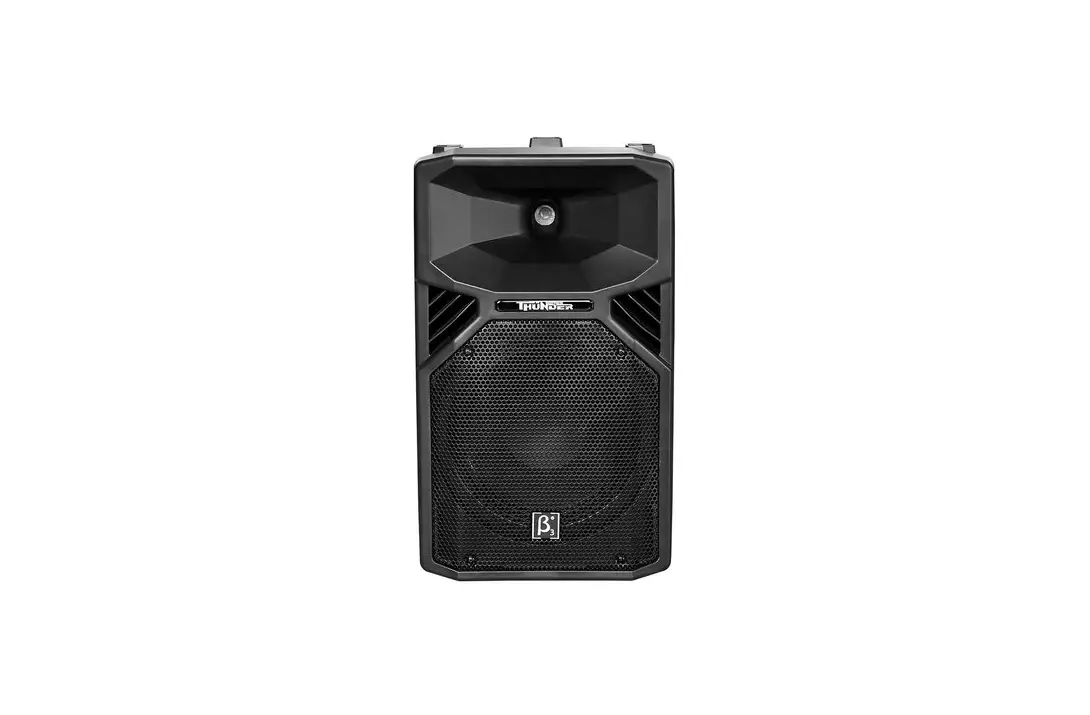
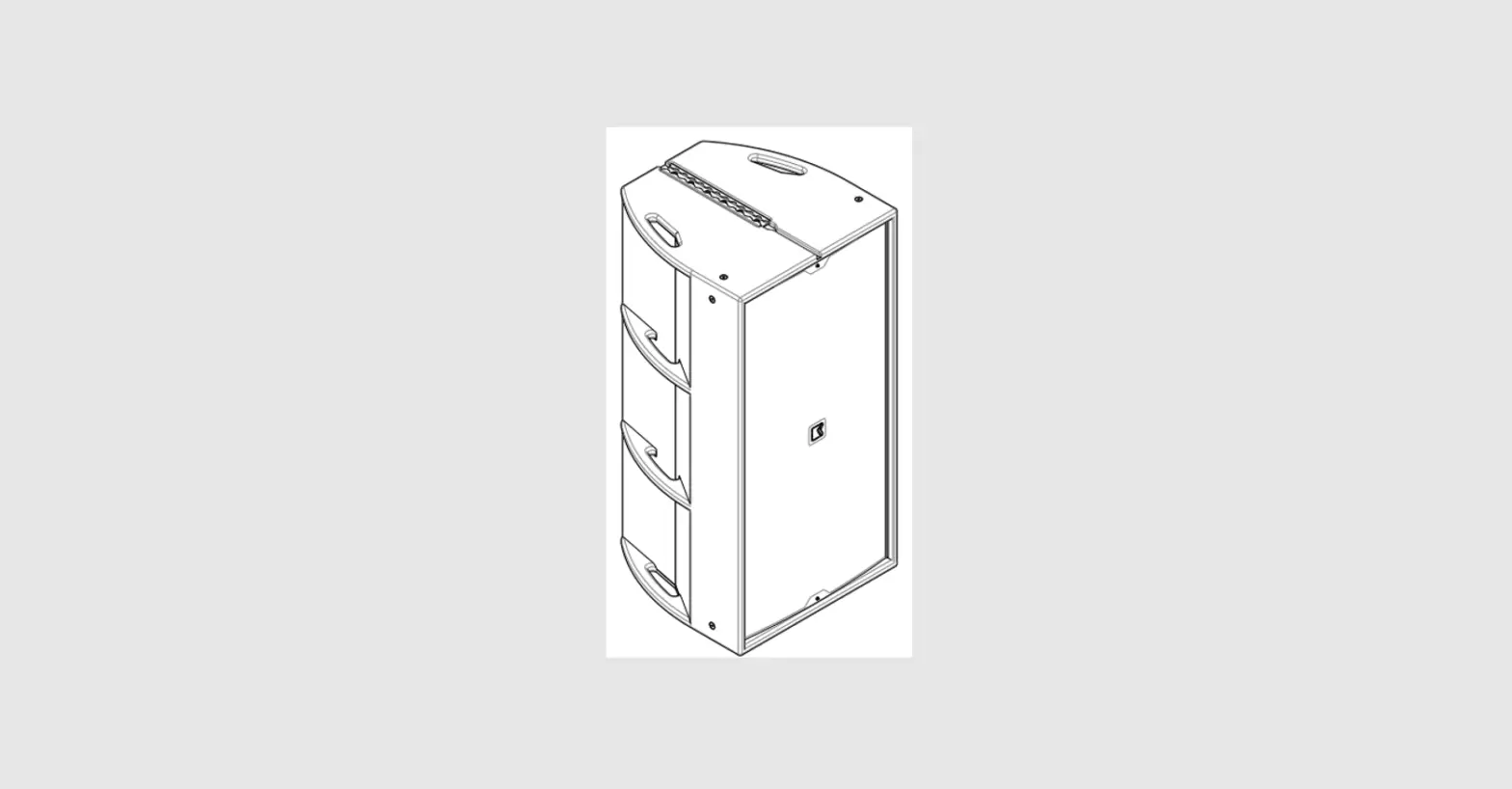
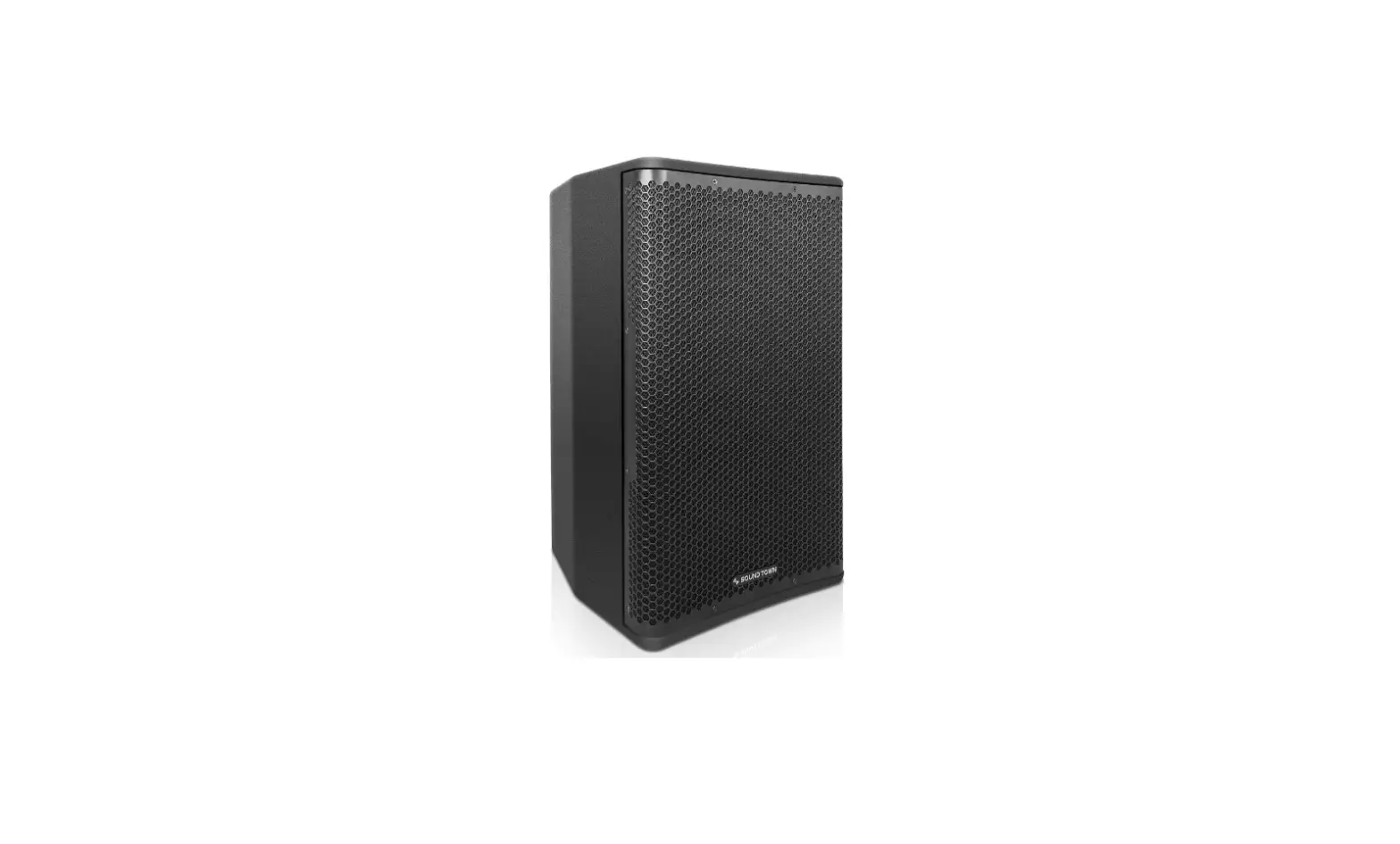
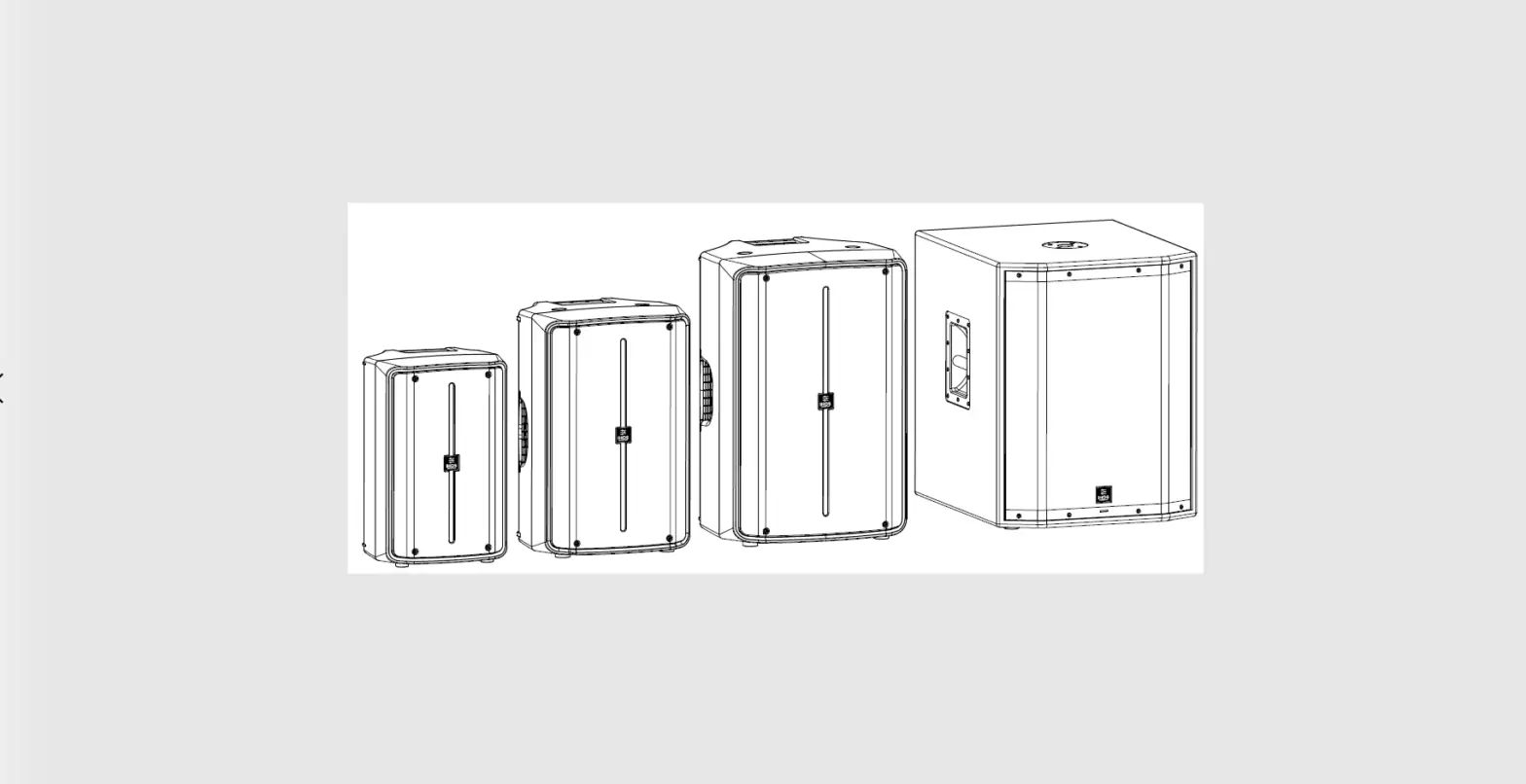
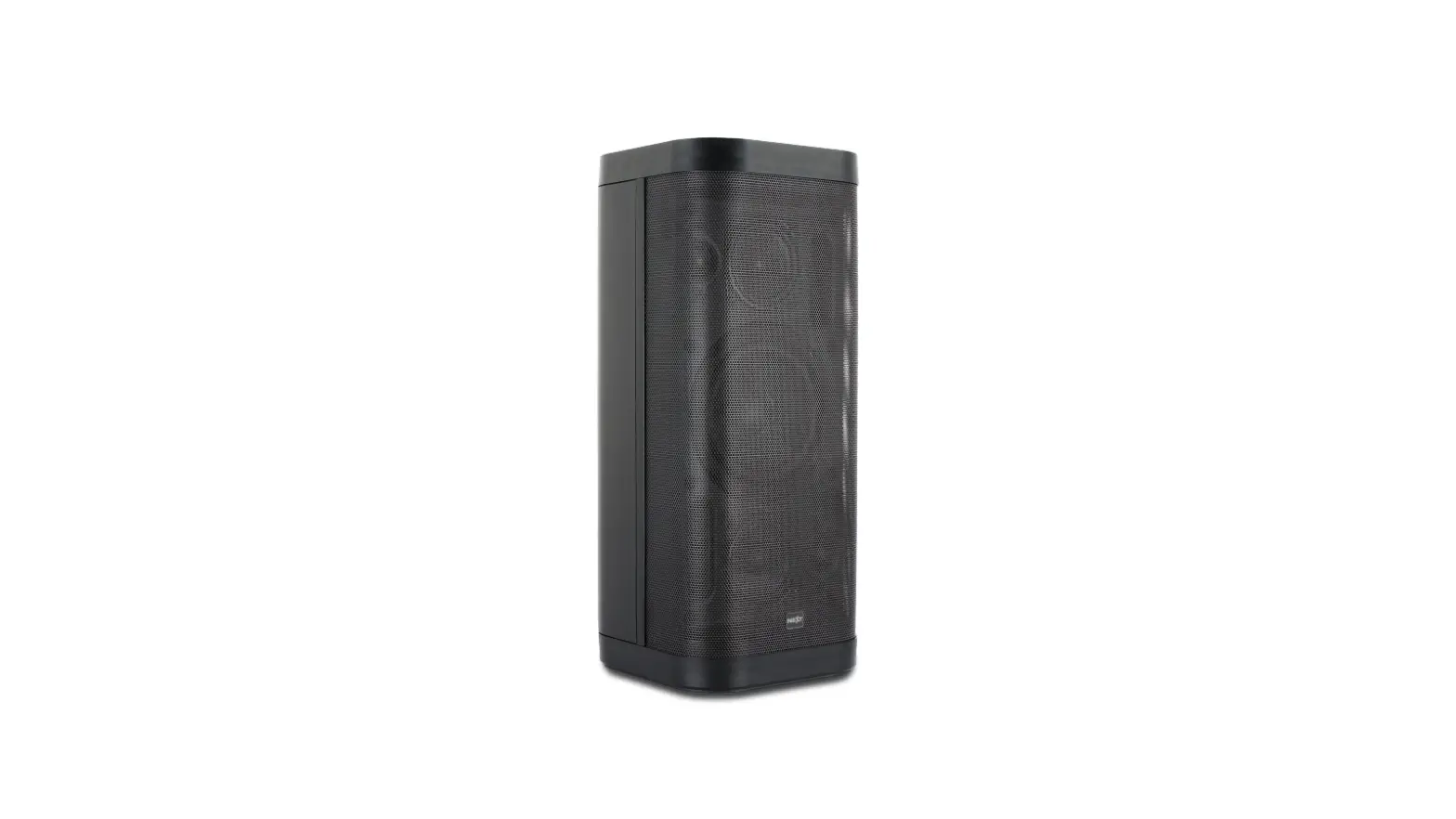
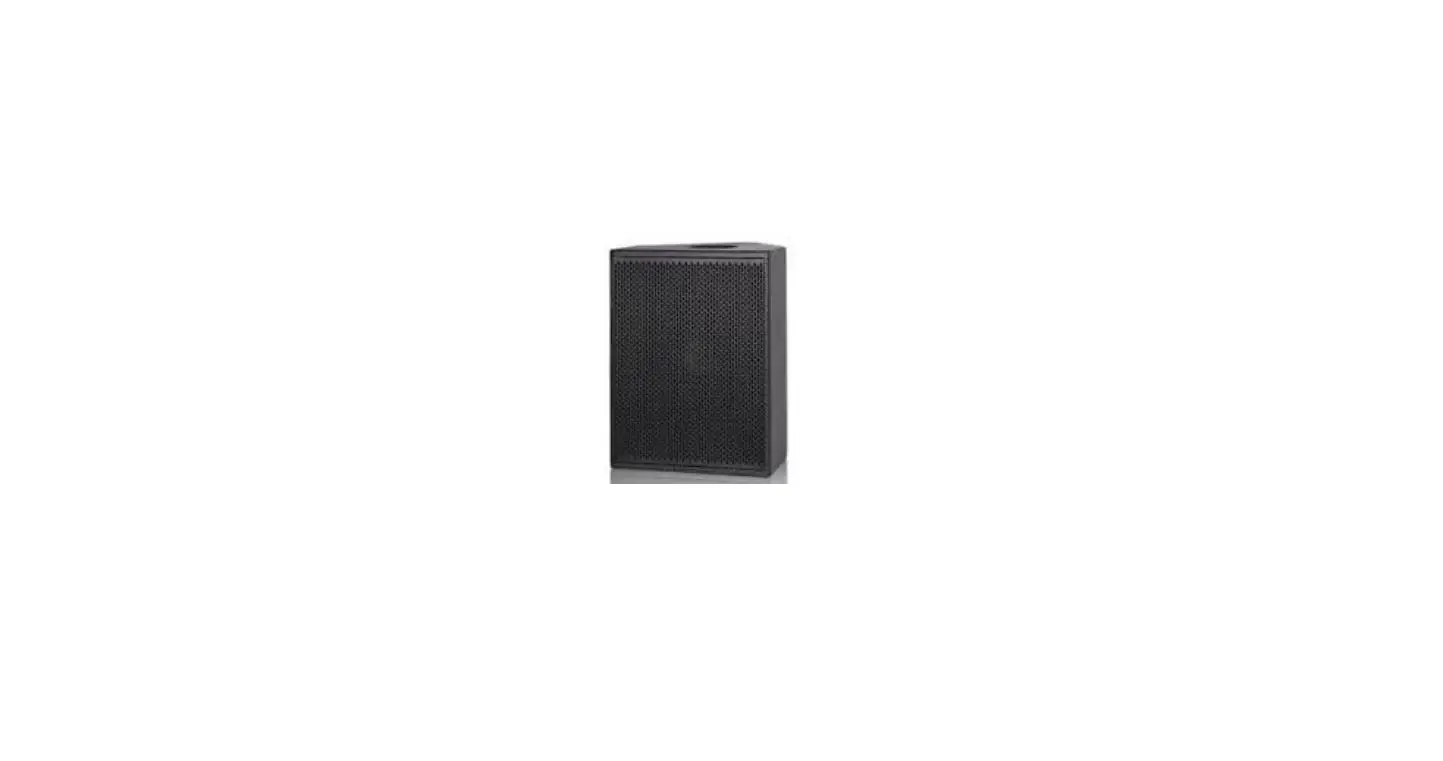
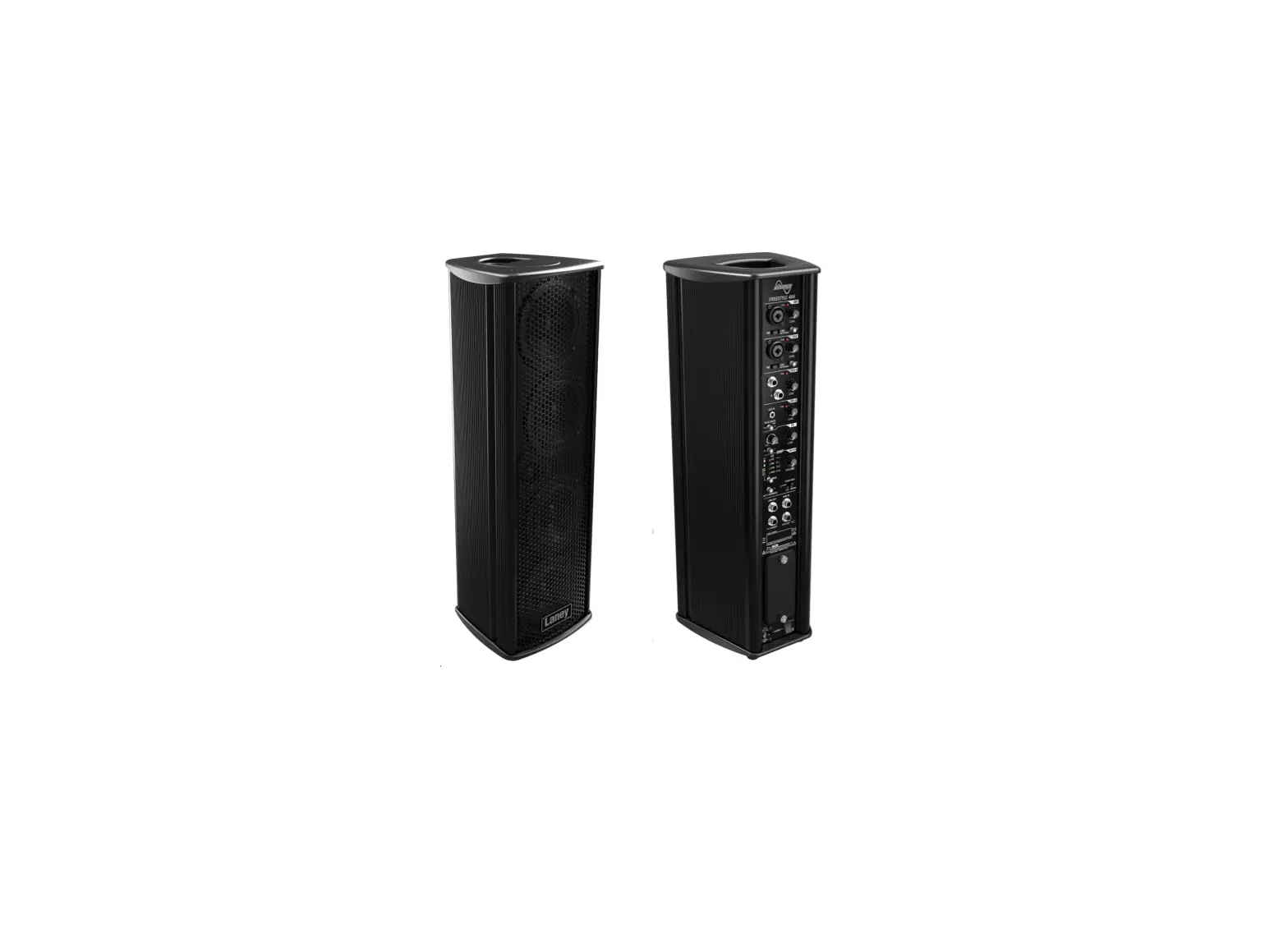
S15P 15 Inch Two Way Active Self Powered Range
Product Information
User’s manual
Date: April 2023
Product Name: NITID S15P
Safety Instructions
- All safety instructions must be read before using this
device. - Keep and follow these instructions.
- Heed all warnings.
- The exclamation mark in the triangle indicates internal
components which if replaced can affect safety. - The lightning symbol within the triangle indicates the presence
of dangerous uninsulated voltages. - Only clean the device with a dry cloth.
- Do not block any ventilation openings. Install in accordance
with the manufacturer’s instructions. - Do not install the device near heat sources such as radiators,
heaters or other heat-emitting elements. - Protect the power cord from being walked on or pinched,
particularly at plugs, convenience receptacles, and the point where
they exit from the apparatus. - The equipment must be repaired by qualified technical service
personnel when:- The mains supply cable is damaged.
- Any object or liquid has damaged the device.
- The equipment does not function normally or correctly.
- The equipment has been exposed to the rain.
- The chassis is damaged.
- Disconnect the device in the case of electric storms or during
long periods of disuse. - The equipment shall not be exposed to dripping or splashing and
no objects filled with liquids, such as vases, shall be placed on
the device. - For hanging and installation, use manufacturer recommended
accessories only.
Product Usage Instructions
Connections
Connection description
A) SPEAKON: The S15P uses two NL4MP Speakon
terminals and are duly prepared for a perfect connection in a
parallel system. Terminal Pins +1/-1 must be always used,
disregarding the +2/-2 which are not internally connected. Respect
always the polarity +/-.
It is strongly recommended to use a two-conductor high-quality
wire, non-shielded and two-colored. We recommend using a minimum
section of 4 mm2 for each conductor. Avoid long wire distances as
they induce important power and quality losses.
Configurations
Full-range stereo configuration
Connect each output of the amplifier LEFT/RIGHT to each cabinet
using two independent wires.

Full-Range parallel stereo configuration
Connect the amplifier’s output to the Speakon’s input of the
first cabinet, always respecting the polarity positive +1, negative
-1. Then, make a bridge from the first cabinet to the second
one.

Connect one of the outputs of the amplifier to the subwoofer
through a wire. Then, make a bridge from the link Speakon connector
of the subwoofer to its respective mid-high top unit, always
respecting the correct polarity between both systems. Do the same
with the other channel.
It is also correct, if the installation requires so, to make the
connection in the opposite way, that is, from the amplifier to the
top cabinet and then to the subwoofer.

A wire with the maximum available section (4mm2 minimum) should
link the low frequencies output channel of the amplifier to one of
the subwoofers. Two subwoofers can also be connected by bridging
one to another, as long as the polarity is strictly respected.
User’s manual
April 2023
NITID S15P
Apr 2023
Safety Instructions
1. All safety instructions must be read before using this device.
2. Keep and follow these instructions
3. Heed all warnings
4. The exclamation mark in the triangle indicates internal components which if replaced can affect safety.
5. The lightning symbol within the triangle indicates the presence of dangerous uninsulated voltages.
6. Only clean the device with a dry cloth.
7. Do not block any ventilation openings. Install in accordance with the manufacturer’s instructions.
8. Do not install the device near heat sources such as radiators, heaters or other heat-emitting elements.
9. Protect the power cord from being walked on or pinched, particularly at plugs, convenience receptacles, and the point where they exit from the apparatus
10. The equipment must be repaired by qualified technical service personnel when: A. The mains supply cable is damaged, or B. Any object or liquid has damaged the device; or C. The equipment does not function normally or correctly; or D. The equipment has been exposed to the rain; or E. The chassis is damaged
11. Disconnect the device in the case of electric storms or during long periods of disuse.
12. WARNING To reduce the risk of fire or electric shock, do not expose this device to rain or moisture
13. The equipment shall not be exposed to dripping or splashing and no objects filled with liquids, such as vases, shall be placed on the device.
14. For hanging and installation, use manufacturer recommended accessories only.
2
Amate Audio
NITID S15P
Apr 2023
1. INTRODUCTION
1.1. General Amate Audio would like to thank you for your confidence in our NÍTID Series. We suggest you to carefully read the following instructions in order to obtain the best results in performance.
1.2. Features and presentation
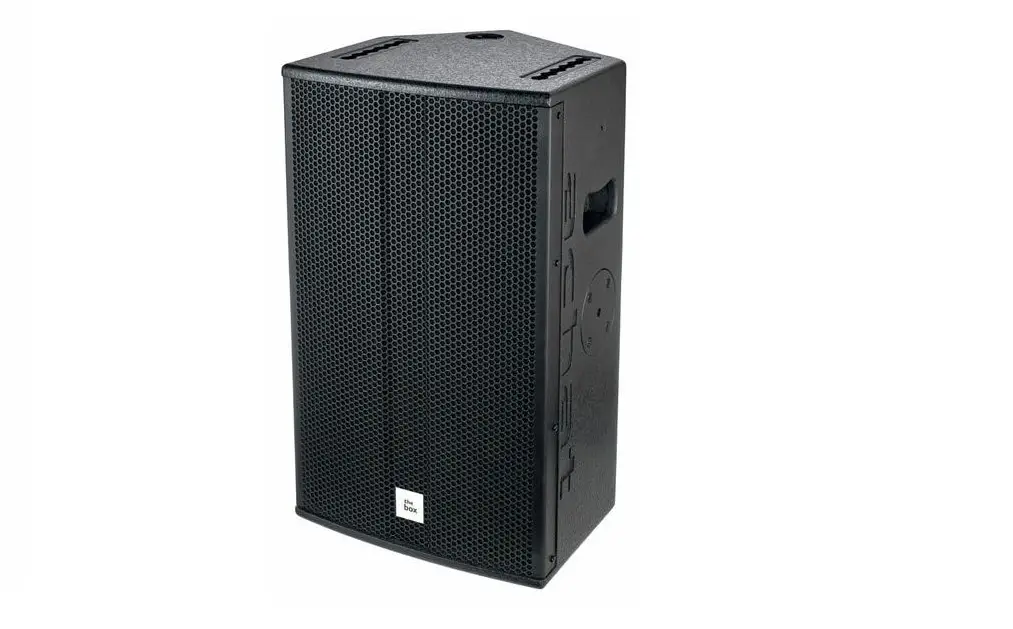
S15P Passive acoustic system NL4MP Speakon input & parallel output 800 W program power Sensitivity 1 W / 1 m: 99 dB 15″ woofer with 3″ voice coil 1.4″ polyester diaphragm driver 50º to 100º (H) x 55º (V) asymmetrical dispersion horn Nominal impedance 8
2. CONNECTIONS
2.1. Connection description
A) SPEAKON: The S15P uses two NL4MP Speakon terminals and are duly prepared for a perfect connection in a parallel system. Terminal Pins +1/-1 must be always used, disregarding the +2/-2 which are not internally connected. Respect always the polarity +/-.
A A
Fig. 1. NÍTID passive connectors
It is strongly recommended to use a two-conductor high quality wire, nonshielded and two-coloured. We recommend using a minimum section of 4 mm2 for each conductor. Avoid long wire distances as they induce to important power and quality losses.
2.2. Configurations
2.2.1. Full-range stereo configuration Connect each output of the amplifier LEFT/RIGHT to each cabinet using two independent wires.
Fig. 2. Full-range stereo configuration
3
Amate Audio
NITID S15P
2.2.2. Full-Range parallel stereo configuration Connect the amplifier’s output to the Speakon’s input of the first cabinet, always respecting the polarity positive +1, negative -1. Then, make a bridge from the first cabinet to the second one.
Apr 2023
Fig. 3. Full-range parallel stereo configuration
2.2.3. Passive configuration with subwoofer There will be times when you will be interested in reinforcing your NÍTID Systems with subwoofer units, in passive mode. In this case only one amplifier will be used for the whole system.
Connect one of the outputs of the amplifier to the subwoofer through a wire. Then, make a bridge from the link Speakon connector of the subwoofer to its respective mid-high top unit, always respecting the correct polarity between both systems. Do the same with the other channel.
It is also correct, if the installation requires so, to make the connection in the opposite way, that is, from the amplifier to the top cabinet and then to the subwoofer.
Fig. 4. Passive configuration with subwoofer
4
Amate Audio
NITID S15P
2.2.4. Bi-Amplified configuration with subwoofer A wire with the maximum available section (4mm2 minimum) should link the low frequencies output channel of the amplifier to one of the subwoofers. Two subwoofers can be also connected by bridge one to another, as long as the polarity is strictly respected.
Connect the other output of the amplifier to the Full-Range cabinets.
It is also possible to use only one amplifier for the low reinforcement, connecting each one of the subwoofers to the two outputs of the amplifier and consequently, connecting the Full Range cabinets to a second amplifier.
Fig. 5. Bi-amplified with subwoofer configuration (option 1)
Apr 2023
Fig. 6. Bi-amplified with subwoofer configuration (option 2)
In order to allow a bridge connection between cabinets, each one of them has been provided with two Speakon connectors that allow the Input / Output function indistinctly. Terminal Pins +1/-1 must be always used, disregarding the +2/-2 which are not internally connected.
5
Amate Audio
NITID S15P
Apr 2023
3. MOUNTING AND PLACEMENT Flying an S15P system is easy, fast and secure. To perform any operations related to flying the system, read the present document, and act on the warnings and advice given.
Only experienced installers with adequate knowledge of the system and local safety regulations should fly speaker cabinets.
It is the user’s responsibility to ensure that the systems to be flown and the flying accessories (such as chains, eyebolts, lock pins…) comply with state and local regulations. They should be regularly inspected and replaced if in doubt.
When flying enclosures from ceiling support structures, extreme care should be taken to assure the load bearing capabilities of the structures. Do not fly systems from unsafe structures.
All flying accessories that are not supplied by Amate Audio are the user’s responsibility. Use at your own risk. Remember that no risks should be taken with regards to public safety.
3.1. Placement When possible, cabinets should be located in a high position, slightly inclined to the audience. If the loudspeakers are located too low, the listeners at the end of the room will not hear a good sound quality.
Fig. 7. Flying placement
3.2. S15P with subwoofer The S12P is equipped with a 35 mm socket for mounting the speaker on a subwoofer (use SP/CRTL bar) or on a tripod. Be careful not to use this system on non-flat surfaces as it may become unstable.
Fig. 8. S15P 35 mm bottom socket
6
Amate Audio
NITID S15P
Apr 2023
Fig. 9. Use with subwoofer or tripod
3.3. Asymmetrical and rotatable horn The S15P incorporates an asymmetrical dispersion horn, which will optimise coverage.
To rotate the horn, unscrew the frontal grille, and then, unscrew the four fixing screws of the horn. Rotate it 180 degrees taking care of the wires. Screw the horn again and finally place the frontal grille in its right position.
Good coverage of audiences often is a conflicting combination of:
wide coverage for the closest audience (short throw) narrow coverage for distant areas (long throw)
The asymmetrical dispersion horn coverage varies from “short throw” to “long throw” along the vertical axis (keeping a constant vertical directivity). In conclusion, directivity feature of (50º to 100º(H), 55º(V)) can be seen as if the horn itself had “two” horizontal directivities, which depend on the distance. For short distances, the horn should be used with its “wide” dispersion (100º). For long distances, the horn should be used with its “narrow” dispersion (50º). We suggest you to pay attention to the following examples.
3.3.1. Vertical-Positioned Cabinets (Flown and aiming to the audience) We need wide coverage (100º) for the closest listeners and narrow coverage for the distant audience.
7
Amate Audio
NITID S15P
Apr 2023
50º
50º
LONG THROW
100º
SHORT THROW
Nearfield 100º
Fig. 10. Vertical position
3.3.2. Horizontal-Positioned Cabinets (Flown and aiming to the audience) We need wide coverage (100º) for the closest listeners and narrow coverage for the distant audience.
50º
50º
LONG THROW
100º
SHORT THROW
Fig. 11. Horizontal position
Nearfield 100º
The horns have the “Nearfield” mark printed on the 100º horizontal coverage side.
Fig. 12. “Near Field” logo
8
Amate Audio
NITID S15P
Apr 2023
3.3.3. Stage monitor use
Case 1 We need wider coverage (100º) when musicians are closer to the cabinet than when they move away from it (50º).
100º
SHORT THROW
50º
LONG THROW
Nearfield 100º
50º
Fig. 13. Stage monitor use (case 1) Case 2 We need wider coverage (100º) when performers move away from the cabinet (long stages) than when they are close to it (50º).
50º
SHORT THROW
100º
LONG THROW
50º
Fig. 14. Stage monitor use (case 2) 3.4. Rotatable logo All grille’s logo can be rotated.
9
Nearfield 100º
Amate Audio
NITID S15P
3.5. Stage monitor use The wedge shape of S15P allows for use as onstage monitor without the need of incorporating any other accessory. Remember to use the MONITOR preset on your external processor.
Apr 2023
Fig. 15. Use as on-stage monitor
3.6. Flying Only experienced people should fly speaker cabinets. Extreme care should be taken to assure the load bearing capabilities of the structures where the cabinets will be placed. Hanging hardware (as chains, eyebolts, lock pins…) should be regularly inspected and replaced if in doubt.
DO NOT SUSPEND THE CABINETS FROM THE HANDLES
3.6.1. Vertical flying with HR-LU and HRLU/GT bar The HR-LU and the HR-LU/GT are some optional accessories for flying on truss or ceiling (vertical orientation) one unit of S15P. Refer to “HR-LU instructions manual” and “HR-LU/GT instructions manual” for more information.
Fig. 16. HR-LU and HR-LU/GT flying bar for S15P
3.6.2. Vertical flying with SP-WHR The SP-WHR is an optional accessory for mounting on wall (vertical orientation) one unit of S15P. Refer to “SPWHR instructions manual” for more information.
10
Amate Audio
NITID S15P
Apr 2023
Fig. 17. SP-WHR bracket for S15P 3.6.3. Flying with ACRM8 The S15P provides several M8 flying points. Their correct use will permit the flying in
vertical position or horizontal position.
Horizontal flying Vertical Flying
S15P 3&6 or 4&7 or 1&8 or 2&9 (front rigging points) 5 (back tilt point)
1&2 or 3&4 (front rigging points) 5 (back tilt point)
Fig. 18. S15P rigging points
3.6.4. Horizontal flying with UB-L The UB-L is an optional accessory for mounting on wall (horizontal orientation) one unit of S15P. Refer to “UB-L instructions manual” for more information.
Fig. 19. U-BL bracket for S15P
11
Amate Audio
NITID S15P
Apr 2023
4. TECHNICAL FEATURES
Impedance Nominal Power R.m.s Program Connectors
S15P
8
400 W 800 W 1 x Speakon NL4MP input 1 x Speakon NL4MP link
Audio Performance Frequency response (-10 dB usable bandwidth) SPL (1W / 1m) Nominal directivity (-6dB) Components LF HF Cabinet Type Height Width Depth Weight (net) Material Finish
50 Hz 19k Hz
99 dB 50º to 100º x 55º
15″ woofer (3″ voice coil) 1 x 1.4″ polyester diaphragm driver
Bass-reflex 733 mm 423 mm 460 mm 24.8 Kg
Multilayer birch plywood Hi-resistance black matt Polyurea coating. 1.5 mm steel front grille with black acoustic mesh
Note: Specifications subjected to change without prior notice.
12
Amate Audio
The NÍTID loudspeaker systems have been designed, engineered and manufactured in Barcelona SPAIN by
Amate Audio S.L.
Perpinyà, 25 · Polígon Industrial Nord · 08226 Terrassa T. +34 93 735 65 65 F. +34 93 735 60 48 [email protected] R&D and FACTORY: Violinista Vellsolà, 18 · 08222 Terrassa T. +34 93 736 23 90 F. +34 93 786 47 00
Barcelona SPAIN
www.amateaudio.com
© Copyright 2023 by Amate Audio S.L.
 Amate Audio - Great sound from Barcelona since 1972