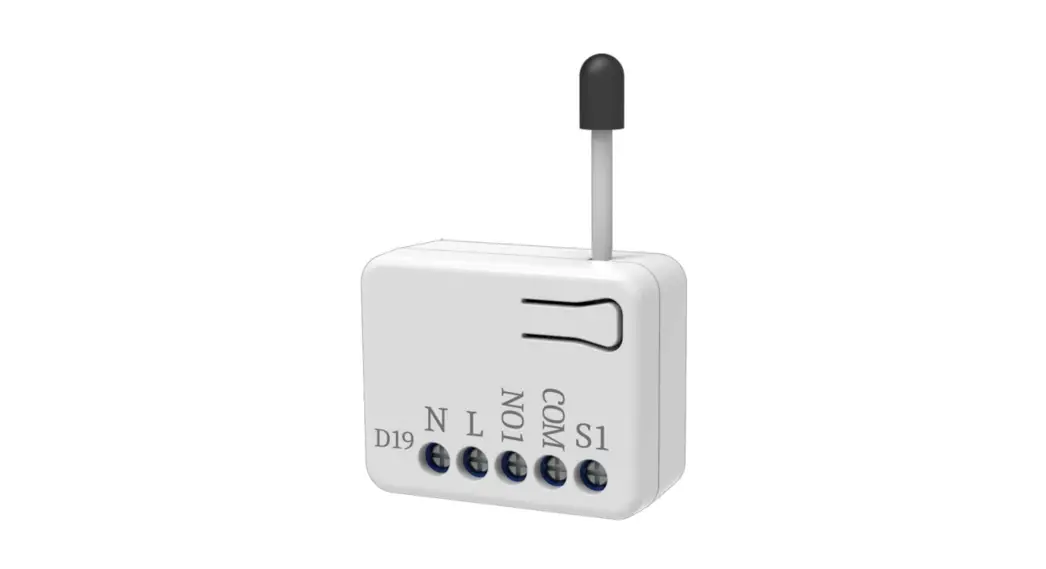
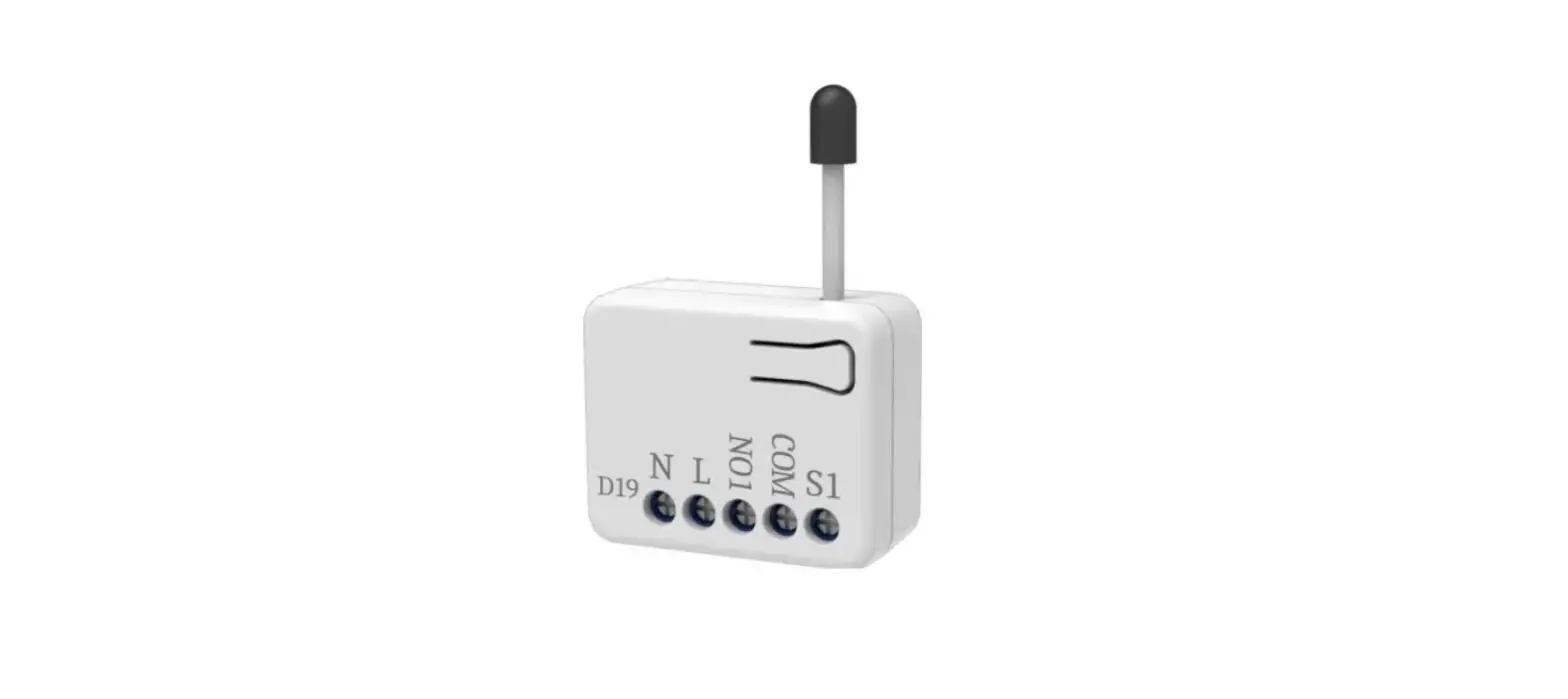
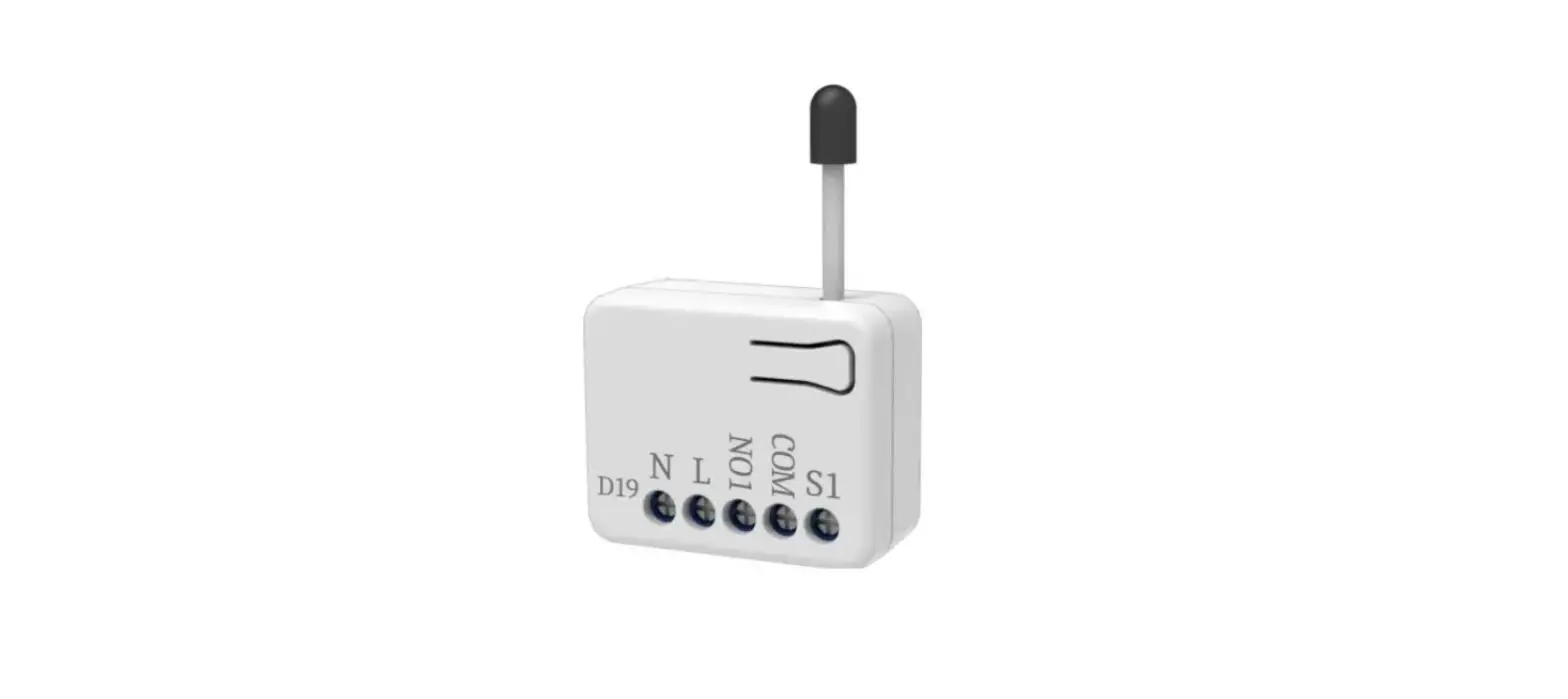
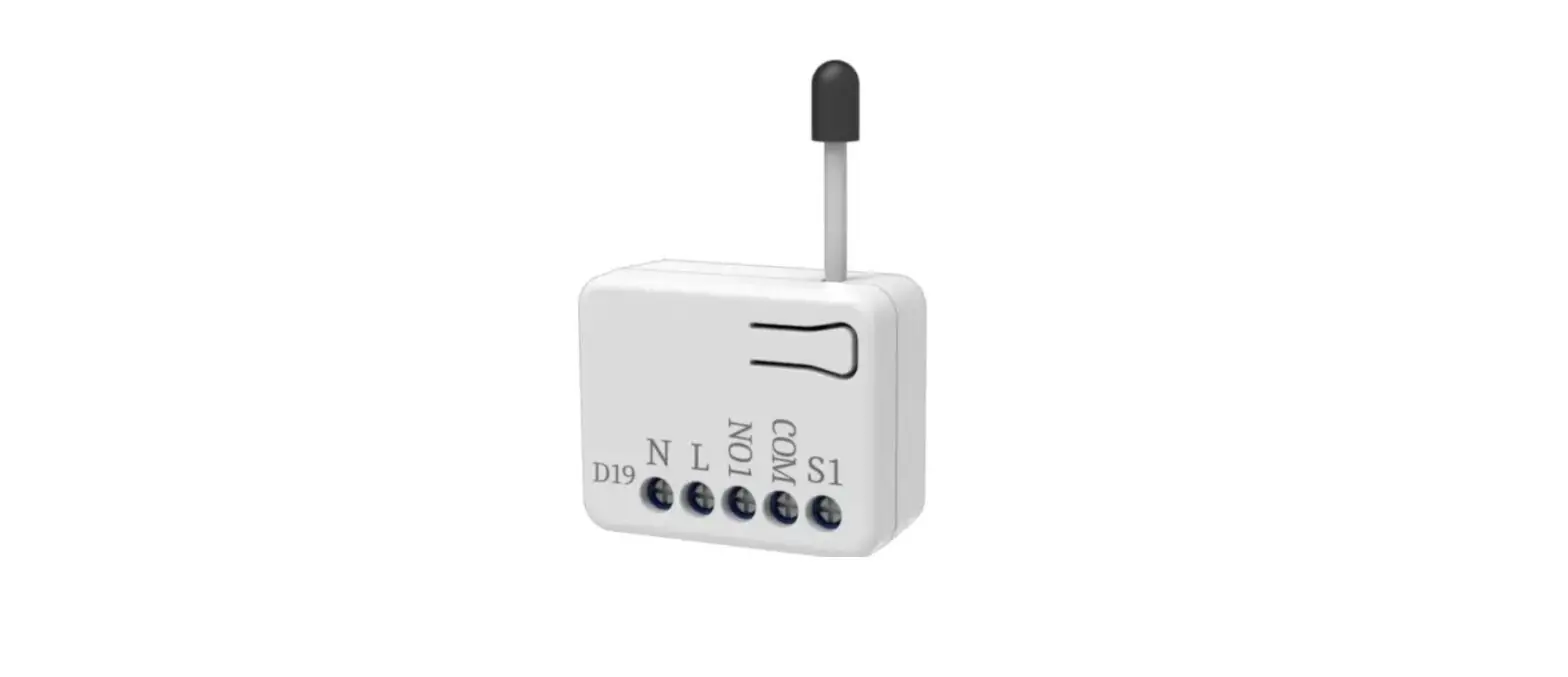
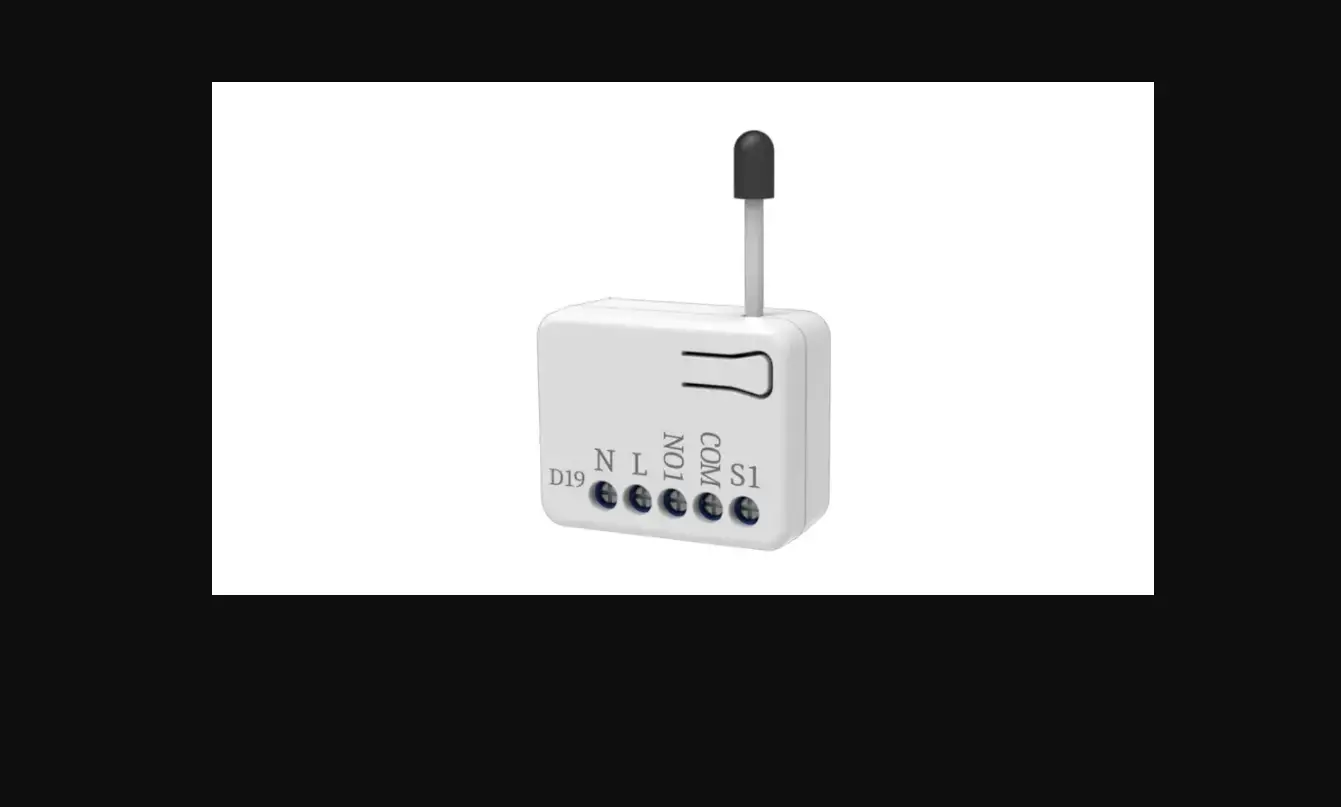
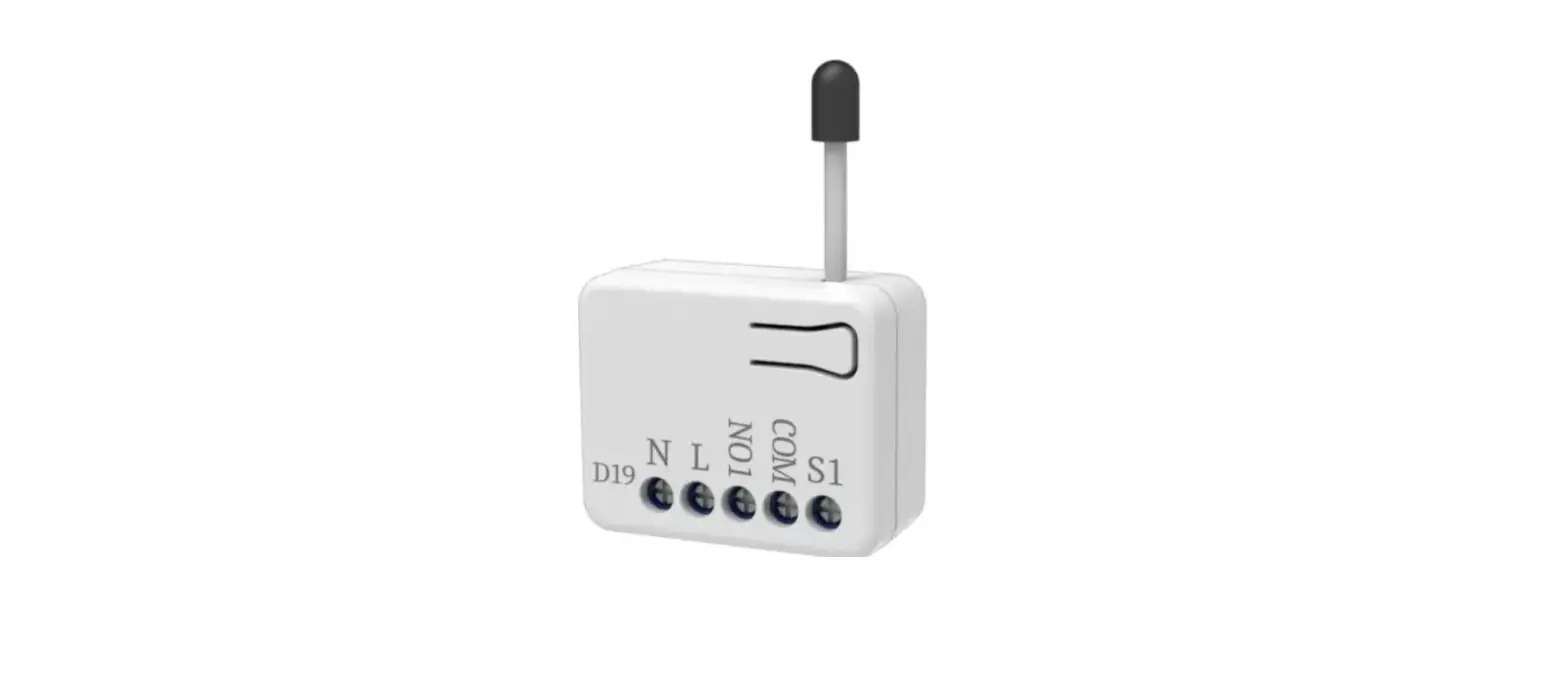
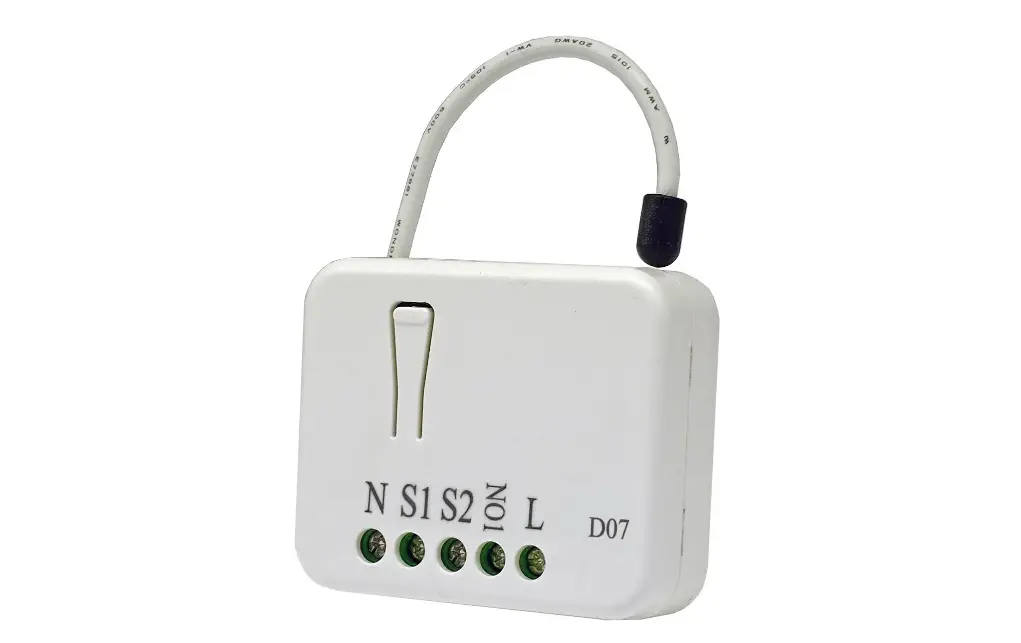
PAD19 In Wall Micro Dimmer
Product Information
The PAD19 is a dimmer switch module that can be used with
dimmable LED bulbs or incandescent lamps. It has an operating
voltage rating of 100-240Vac and a load output of max. 0.7A
(100-240VAC). Additionally, it has a built-in thermal cut-off fuse
protection and a minimum load requirement of 20W for dimmable LED
bulbs to prevent flickering. The device is suitable for indoor use
only and has a maximum humidity tolerance of 85%. It operates on
frequency ranges of 868.40MHz, 869.85MHz EU, 908.4MHz, 916.0MHz US,
922.5MHz, 923.9MHz, 926.3MHz (JP), and 920.9MHz, 921.7MHz, 923.1MHz
(TW/KR/Thai/SG) with a maximum power transmission range of OTA
dimensions wire.
Product Usage
Installation Steps:
Before installing the PAD19 dimmer switch module, ensure that
the power to the lighting circuit is turned off at the circuit
breaker or fuse box to avoid electrical shock. Check your local
codes as they apply to your situation. There are two wiring methods
for PAD19:
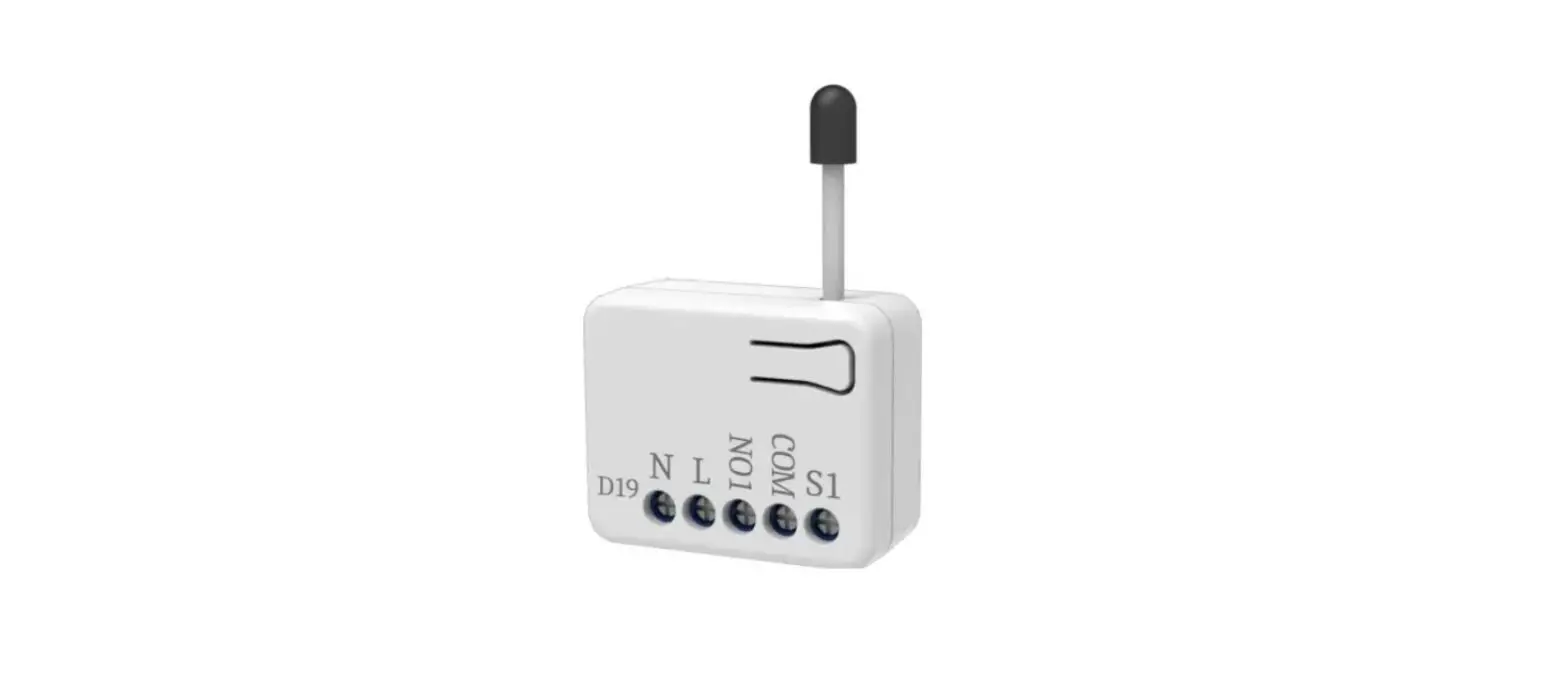
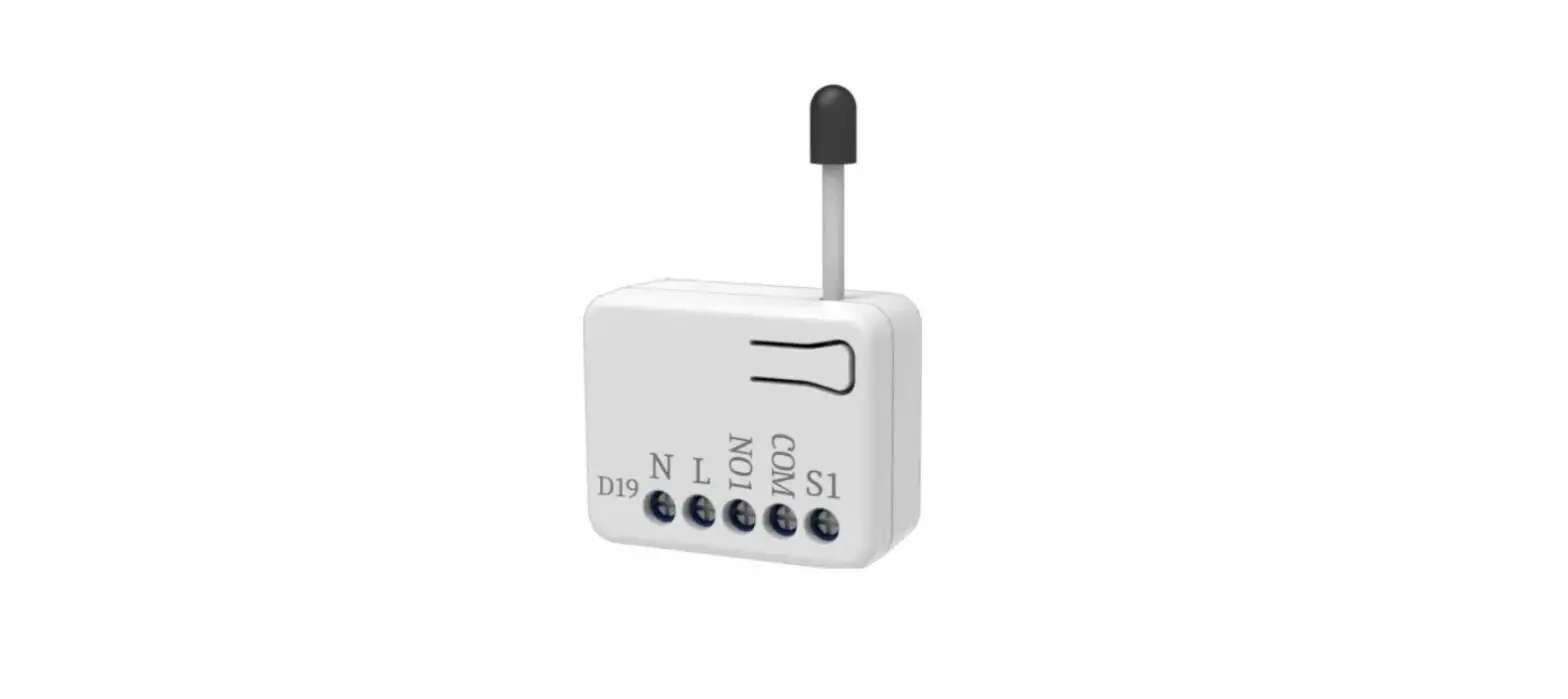
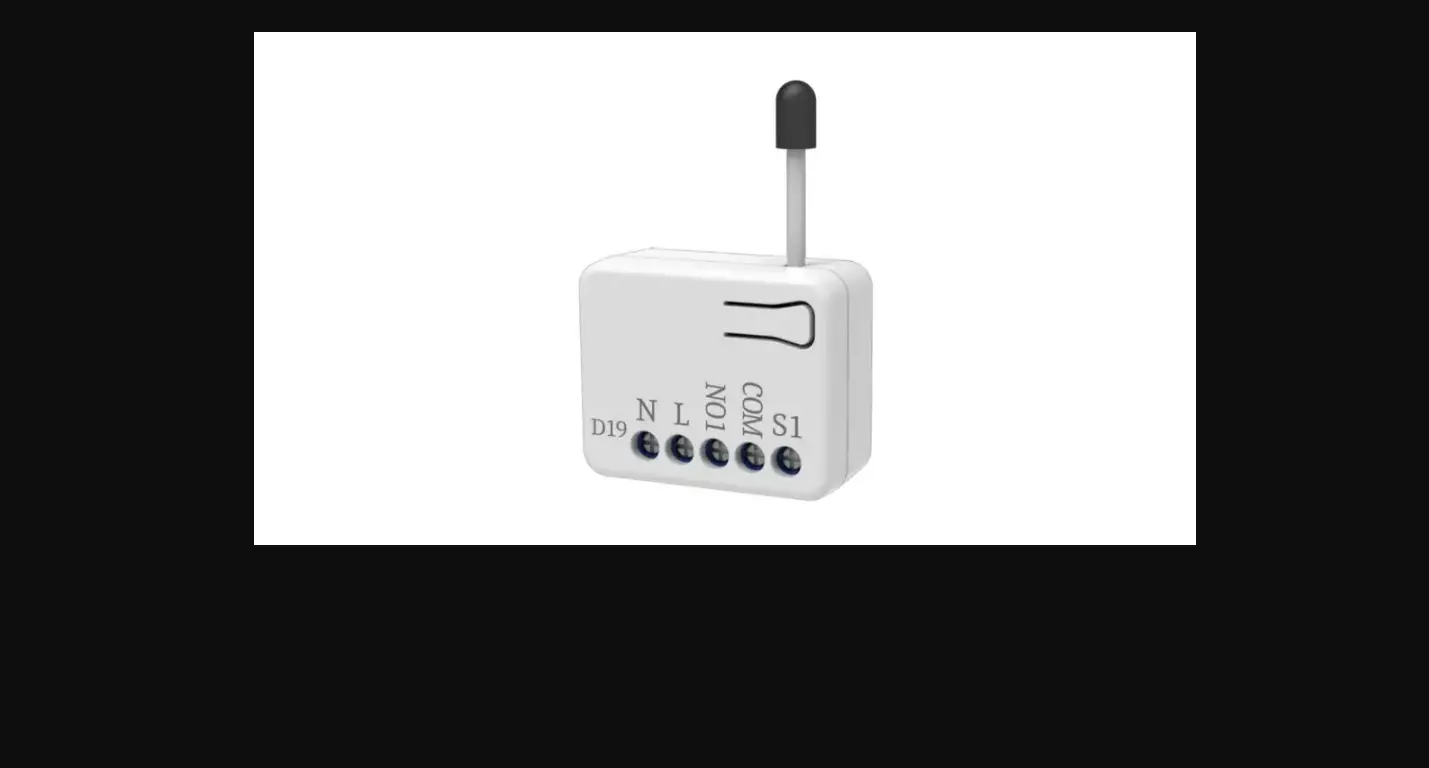
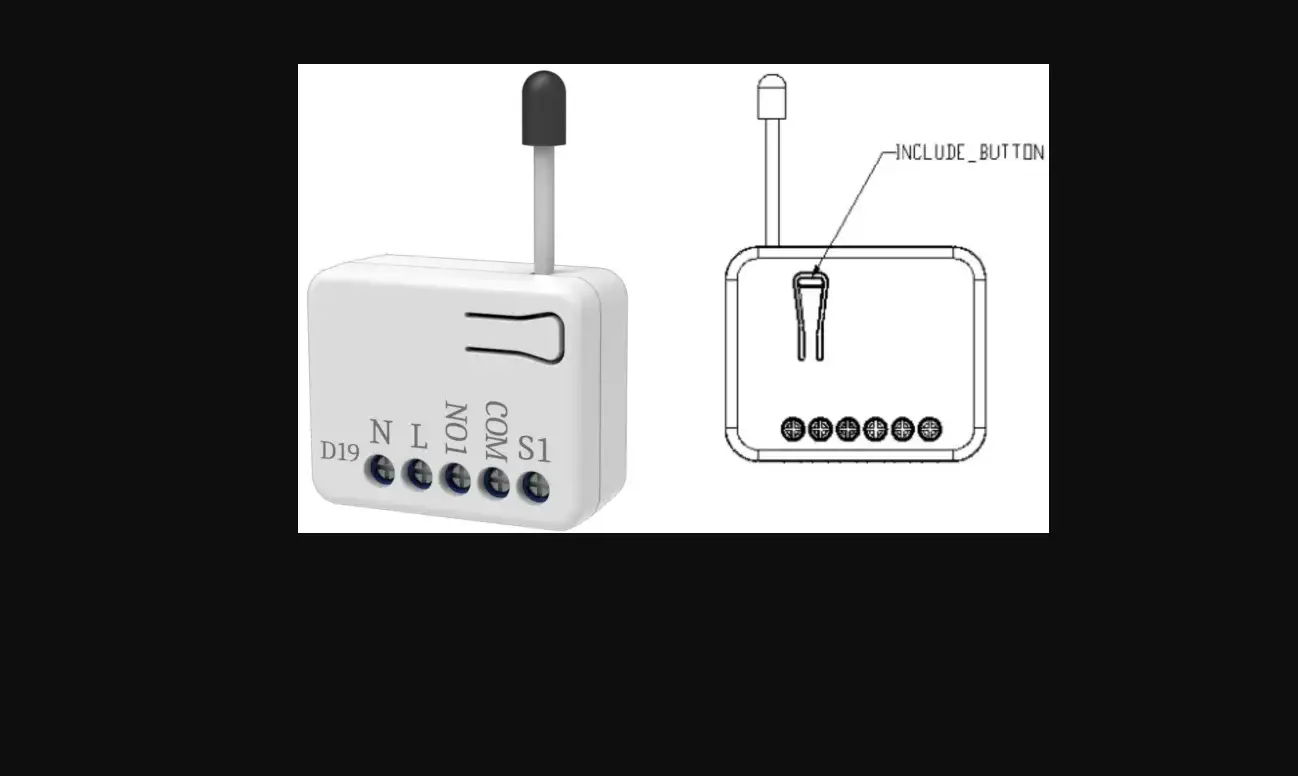
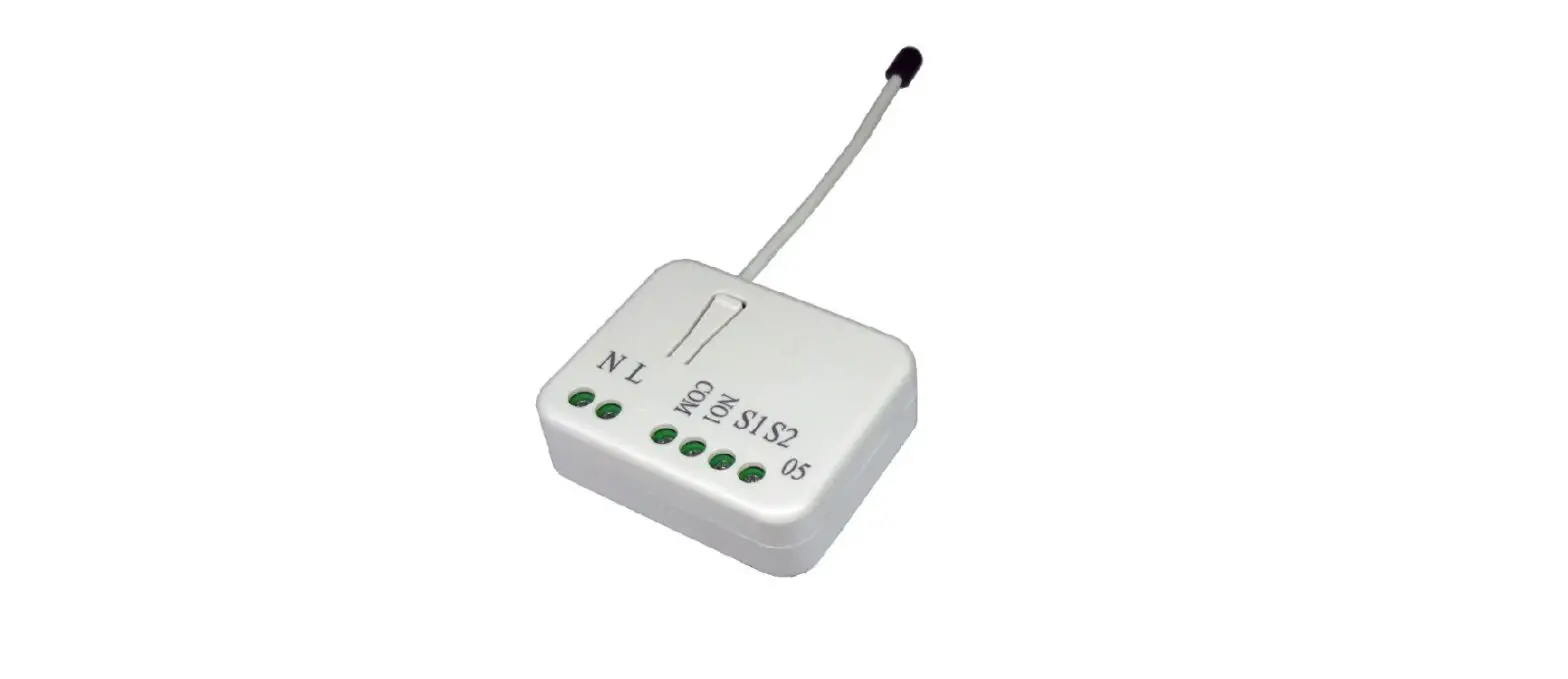
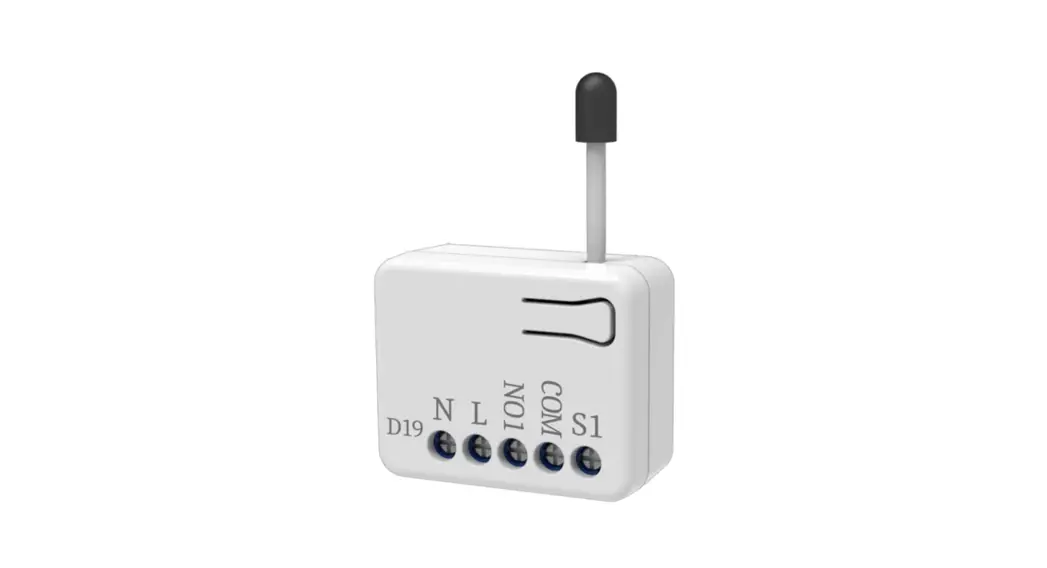
- A. Connect the AC L line and the bulb load end.
- B. S1 can be connected externally switches.
- C. COM is for S1 connect port.
Troubleshooting:
If the dimmer does not work and the LED does not turn off
properly, check the power connections and ensure that the
electrical wire is connected correctly. If the dimmer breaks down,
do not open it up and send it for repair.
If the device cannot join the Z-WaveTM network, exclude the
device and then include it again. If the LED flashes during
dimming, replace the larger load as the minimum load is less than
20W.
Choosing a Suitable Location:
Do not place the PAD19 module/device direct under sunlight, in a
humid place, or in any location where they may contact moisture,
dirt, or dust. Do not place the module/device where combustible
substances or any source of heat, fires, radiators, boiler, etc.
exist. When the module/device is used, it might get warm. This is a
normal condition. After putting it into use, the body of Module
will become a little bit hot of which phenomenon is normal.
Adding to Z-WaveTM Network:
The PAD19 dimmer switch module can be operated in any Z-WaveTM
network with other Z-WaveTM certified devices from other
manufacturers. All non-battery operating nodes within the network
will act as repeaters regardless of the vendor in order to increase
reliability of the network. The device’s LED light will flash on
and off alternately and repeatedly at 1-second intervals when
powered for the first time, indicating that no node ID has been
assigned, and auto-inclusion is ready to start.
PAD19 In Wall Micro Dimmer
· Main features of Philio’s In Wall Micro dimmer, · Compatible with any Z-WaveTM or Z-WaveTM Plus Controller, · Supports Z-WaveTM network Security Modes: S2, · To be installed with LED dimmer or incandescent lamp, · A single live without neutral lead, · To be installed in-wall switch boxes.
Specification
Operating Rated
100-240Vac 50Hz-60Hz 0.7A
Output load
Max. 0.7A (100-240VAC)
160W (Dimmable LED bulbs or Incandescent
lamp)(230Vac)
80W (Dimmable LED bulbs or Incandescent
Description and features
It can only needs to connect two wires, single wire (L) and load (NO1),or three wires, two wire (LN) and load (NO1) This device is a security enabled Z-Wave PlusTM product that uses encrypted Z-Wave PlusTM messages to communicate to other security enabled Z-Wave PlusTM products. Z-WaveTM enabled devices displaying the Z-WaveTM logo can also be used with this device regardless of the manufacturer, and this device can also be used in other manufacturer’s Z-WaveTM enabled networks. All mains operated nodes within the network will act as repeaters regardless of vendor to increase reliability of the network. The product supports an Over the Air (OTA) feature for the products firmware upgrade
lamp)(120Vac)
Fuse information
Built-in Thermal Cut-off Fuses protection.
Rated Temperature :150 °C; Rated: 2A 250V.
LED minimum
Min. 20W for Dimmable LED bulb not flickering
Operating Temperature 0°C – 40°C
Humidity
Up to 85% max
Storage Temperature -20°C – 60°C
Location
Indoor use only
Frequency Range
868.40MHz, 869.85MHz EU
908.4MHz, 916.0MHz US,
922.5MHz, 923.9MHz, 926.3MHz (JP)
920.9MHz, 921.7MHz, 923.1MHz
(TW/KR/Thai/SG)
1
RF Maximum Power Transmission Range
OTA Dimensions Wire
+10dBm (Peak), -10dBm (Average) Up to 40m indoors or up to 100m outdoors (depending on building materials) Support 47.5x39x16 mm 0.75mm² ; 18AWG
** Specifications are subject to change and improvement without notice.
Installation steps
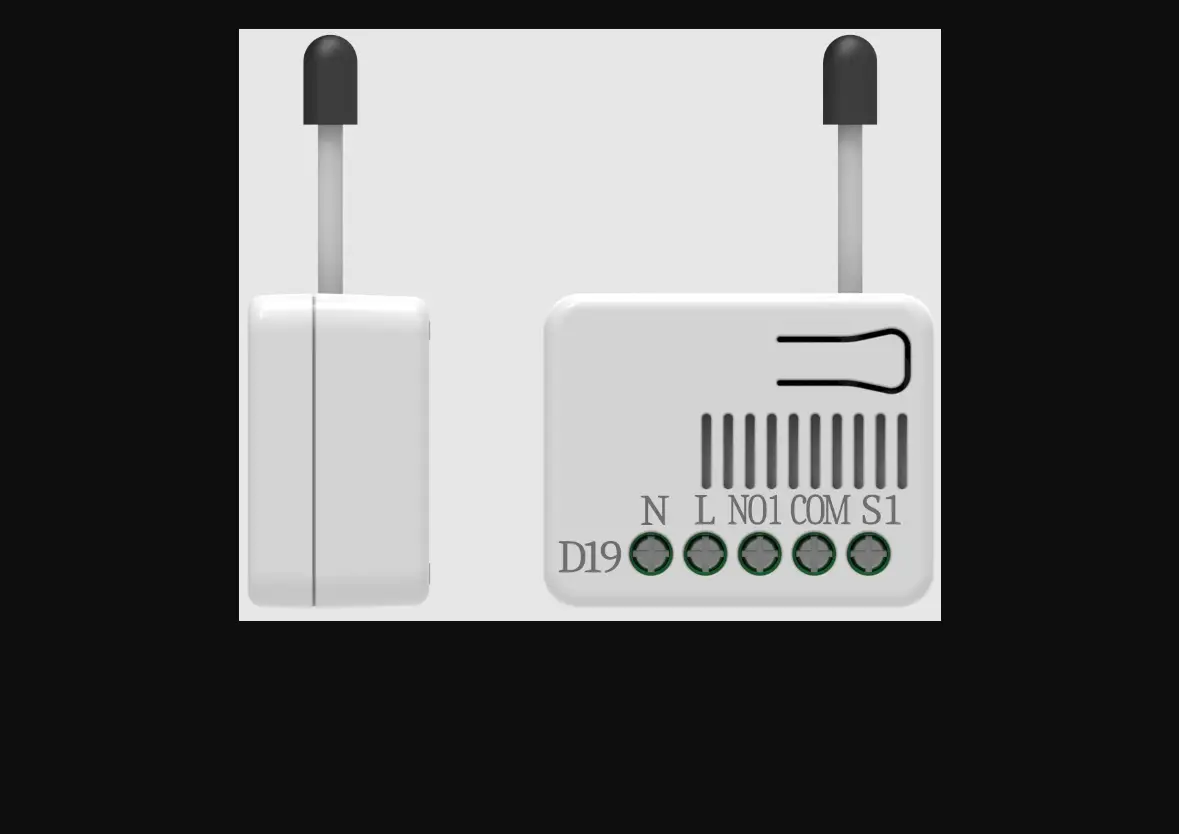
There are two wiring methods for PAD19. A. Connect the AC L line and the bulb load end. B. S1 Can be connect externally switches.C. COM is for S1 connect port.
Troubleshooting
Symptom
Cause of Failure
Recommendation
The dimmer does 1.The dimmer does 1. Check power connections
not work and LED not connect the 2. Don’t open up the dimmer
off
electrical wire
and send it for repair.
properly
2.The dimmer break
down
The device can The device may in a Exclude the device then include
not join to Z-
Z-WaveTM network. again.
WaveTM network
Flashing during Minimum load is
dimming
less than 20W
Replace larger load
2
Fig 1. Assembling & Wiring
Fig 2. Assembling & Wiring Important: Read all instructions prior to installation
IMPORTANT
Installation must be performed by skilled technicians who are informed about the standards and technical requirements of the appliance and its proper installation. Check your local codes as they apply to your situation. If the house wiring is of aluminum, consult with an electrician about proper wiring methods. Before proceeding with the installation, TURN OFF THE POWER TO THE LIGHTING CIRCUIT AT THE CIRCUIT BREAKER OR FUSE BOX TO AVOID ELECTRICAL SHOCK.
For Instruction to http://www.philio-tech.com
Danger Danger of electrocution!
All works on the device may be performed only by a qualified and licensed electrician. Observe national regulations. Any works introducing changes into the configuration must be always performed with disconnected voltage.
Choosing a Suitable Location 1. Do NOT place the module/device direct under sunlight, in a humid place or in any location where they may contact moisture, dirt, dust. 2. Do NOT place the module/device where exists combustible substance or any source of heat, fires, radiators, boiler etc. 3. When the module/device be used, the module/device might get warm. This is a normal condition. 4. After putting it into use. The body of Module will bexome a little bit hot of which phenomenon is normal.
Adding to Z-WaveTM Network
In the front of the device, there is an on/off button with an LED light indicator which is used to dim on and off, carry out inclusion, exclusion, reset or association. When powered for the first time, the device’s LED light will flash on and off alternately and repeatedly at 1 second intervals. This implies that no node ID has been assigned, and auto inclusion is ready to start.
3
This product can be operated in any Z-WaveTM network with other Z-WaveTM certified devices from other manufacturers. All non-battery operating nodes within the network will act as repeaters regardless of the vendor in order to increase reliability of the network.
The table below provides a summary of operations of basic Z-WaveTM functions. Please refer to the instructions for your Z-WaveTM Certified Primary Controller to access the Setup function, and to Add/Remove/associate devices.
Function No node ID
Description
The Z-WaveTM Controller does not allocate a
node ID to the Switch.
Add
1. Put your Z-WaveTM controller into inclu-
(Classic Inclu-
sion mode by following the instructions
sion)
provided by the controller manufacturer.
Annotation LED light flashes once every one second and last for 30 seconds.
2. Press the include button three times within 3 seconds to enter inclusion mode.
SmartStart
1. The product has a DSK string. Key in the first five digits to initiate the SmartStart process, or scan QR code. Ex: DSK: 18112-24021- 48001-6225957092-27453-08187-47408
2. SmartStart enabled products can be added
into a Z-WaveTM network by scanning the Z-WaveTM QR Code on the product, with
a controller providing SmartStart inclusion. No further action is required and the SmartStart product will be added automatically to the closest network within 10 minutes of being switched on. Notice: The QR Code can be found on the device PAD19 or in the box.
Remove (Exclusion)
1. Put your Z-WaveTM controller into exclu-
sion mode by following the instructions provided by the controller manufacturer.
2. Press the include button three times within 3 seconds to enter exclusion mode.
Reset
3. Node ID will be excluded.
1. Press the include button four times within 3 seconds and hold on the button press without releasing.
LED light flashes once every one second and last for 30 seconds LED light will be on status
4
2. Keep pressing the button for 3 seconds then LED will be off, release the button within 2 seconds.
3. Device has been reset.
LED light flashes once every one second and last for 30 seconds.
Adding a node ID allocated by Z-WaveTM Controller means inclusion. Removing a node ID allocated by Z-WaveTM Controller means exclusion.
Failed or success in including/excluding the node ID can be viewed from the ZWaveTM Controller.
Function Reset: Please use this procedure only when the network primary controller is missing or otherwise inoperable.
Over-load LED flashes one time every 0.4 seconds.
Manual dim level control:
Long press the button, the light will increase the lighting slowly. Short press the button, the light will be on/off.
You can set Z-WaveTM Configuration 1 as value 2, S1 only increasing the light.
key Type Learn button S1
Config 6 set
0 1
Long Press DIMMER DIMMER TOGGLE
Short Press ON/OFF ON/OFF
LED Light Indication
To identify what mode the switch is in, view the following table for LED light identification.
Over-load
When overload occurred, device will launch protection mechanism and cut off power of loading. LED will quick flash one time every 0.4 seconds. Device will also send “Over-load detected” as Z-WaveTM Notification. Device will not accept any control until AC off/on.
State Type LED Indication
No node ID Under normal operation, when the Switch has not been allocated a node ID,
the LED light will flash on and off alternately at 1-second intervals. By press-
ing the On/Off button, LED light will stop flashing temporarily.
Learning
Flashes when learning is successful
Z-WaveTM Function
Basic Command Class/Multilevel Switch Command Class
5
The dimmer will respond to BASIC and MULTILEVEL SWITCH commands that are
part of the Z-WaveTM system. If PAD19 is included as a secured node, it will only re-
spond to the security encapsulation command of BASIC and MULTILEVEL SWITCH. The Basic Command Class is mapped according to the following table.
Basic Command
Mapped Command
Basic Set (Value)
Multilevel Switch Set (Value)
Basic Report (Current Value, Duration)
Multilevel Switch Report (Value, Duration).
Z-WaveTM Association Groups
The PAD19 can be set to send reports to associated Z-WaveTM devices. It supports one association group with five nodes support for group 1. For group 1, the dimmer will report MULTILEVEL_SWITCH_REPORT, NOTIFICATION_REPORT and DEVICE_RESET_LOCALLY_NOTIFICATION. 1. Grouping 1 Lifeline (Maximum 5 nodes).
2. MULTILEVEL_SWITCH_REPORT When “on” or “off” state has been changed, it will send Multilevel Switch Report to the nodes of Grouping 1.
Z-WaveTM configuration
No.
Name
Size Default Value
(Byte)
1
Power-on recov- 1
0
0~2
ery status set
Description (Info)
To set dimmer level when AC power on.
2
RF report set 1
1
0~1
Setting value: 0: OFF-0% 1: ON-last level 2: ON-100%
To set if device send Multilevel Switch report to gateway when dimming finished.
Setting value: 1: report ON 0: report OFF
3. NOTIFICATION_REPORT When overload occurred.
4. DEVICE_RESET_LOCALLY_NOTIFICATION When PAD19 is reset manually, it will send DEVICE_RESET_LOCALLY_NOTIFICATION to the nodes of group 1.
3
Maximum level 1
99
(Minimum To set dimming level maximum
level+1)~99 value. Dimming level will not over
the setting value.
Setting value: Cannot be lower than the Mini6
4
Minimum level 1
0
5
Basic duration 1
2
set
mum level
0~(Maxi- To set dimming level minimum
mum level- value. Dimming level will directly
1)
go to 0% when dimming value is
lower than the setting value.
Setting value:
Cannot be higher than the Maxi-
mum level
0~127
Unit: second To set dimming finished duration time when physical switch used.
6
Switch Set
1
1
0~1
Ex: When setting is 2, it will take 2 seconds from switch on action to dimming finished.
0: Long Press:dimmer Short Press:ON/OFF
1: Toggle(no dimmer function)
Notice 1: Always remove a Z-WaveTM device before trying to add it to a Z-WaveTM network.
Notice 2: This product can be operated in any Z-WaveTM network with other Z-WaveTM certified devices from other manufacturers. All non-
battery operated nodes within the network will act as repeaters regardless of vendor to increase reliability of the network.
Over The Air Firmware Update
The device support the Z-WaveTM firmware update via OTA. Let the Z-WaveTM Controller into the firmware update mode, choose the hex file to update. Wait for 10~15 minutes. At that time, please don’t remove the power, otherwise it will cause the firmware broken, and the device will no function. Result will show in Z-WaveTM Controller log.
Z-WaveTM Supported Command Class
Command Class
Version Required Security Class
Z-WaveTM Plus Info
2
None
Security
1
None
Security 2
1
None
Supervision
1
None
Transport Service
2
None
Association
2
Highest granted Security Class
Association Group Informa- 3
Highest granted Security Class
tion
Device Reset Locally
1
Highest granted Security Class
Firmware Update Meta Data 5
Highest granted Security Class
Indicator
3
Highest granted Security Class
Manufacturer Specific
2
Highest granted Security Class
7
Multi Channel Association 3
Powerlevel
1
Version
3
Configuration
4
Notification
8
Multilevel Switch
4
Basic
2
Highest granted Security Class Highest granted Security Class Highest granted Security Class Highest granted Security Class Highest granted Security Class Highest granted Security Class Highest granted Security Class
Disposal
This marking indicates that this product should not be disposed with other household wastes throughout the EU. To prevent possible harm to the environment or human health from uncontrolled waste disposal, recycle it responsibly to promote the sustainable reuse of material resources. To return your used device, please use the return and collection systems or contact the retailer where the product was purchased. They can take this product for environmentally safe recycling. Philio Technology Corporation 8F., No.653-2, Zhongzheng Rd., Xinzhuang Dist., New Taipei City 24257, Taiwan(R.O.C)
www.philio-tech.com
FCC Interference Statement
This equipment has been tested and found to comply with the limits for a Class B digital device, pursuant to Part 15 of the FCC Rules. These limits are designed to provide reasonable protection against harmful interfer-
ence in a residential installation. This equipment generates, uses and can radiate radio frequency energy and, if not installed and used in accordance with the instructions, may cause harmful interference to radio communications. However, there is no guarantee that interference will not occur in a particular installation. If this equipment does cause harmful interference to radio or television reception, which can be determined by turning the equipment off and on, the user is encouraged to try to correct the interference by one of the following measures: · Reorient or relocate the receiving antenna. · Increase the separation between the equipment and receiver. · Connect the equipment into an outlet on a circuit different from that to which the receiver is connected. · Consult the dealer or an experienced radio/TV technician for help. This device complies with Part 15 of the FCC Rules. Operation is subject to the following two conditions: (1) This device may not cause harmful interference, and (2) This device must accept any interference received, including interference that may cause undesired operation. FCC Caution: Any changes or modifications not expressly approved by the party responsible for compliance could void the user’s authority to operate this equipment. This transmitter must not be co-located or operating in conjunction with any other an tenna or transmitter.
:
8
9
 philio-tech.com