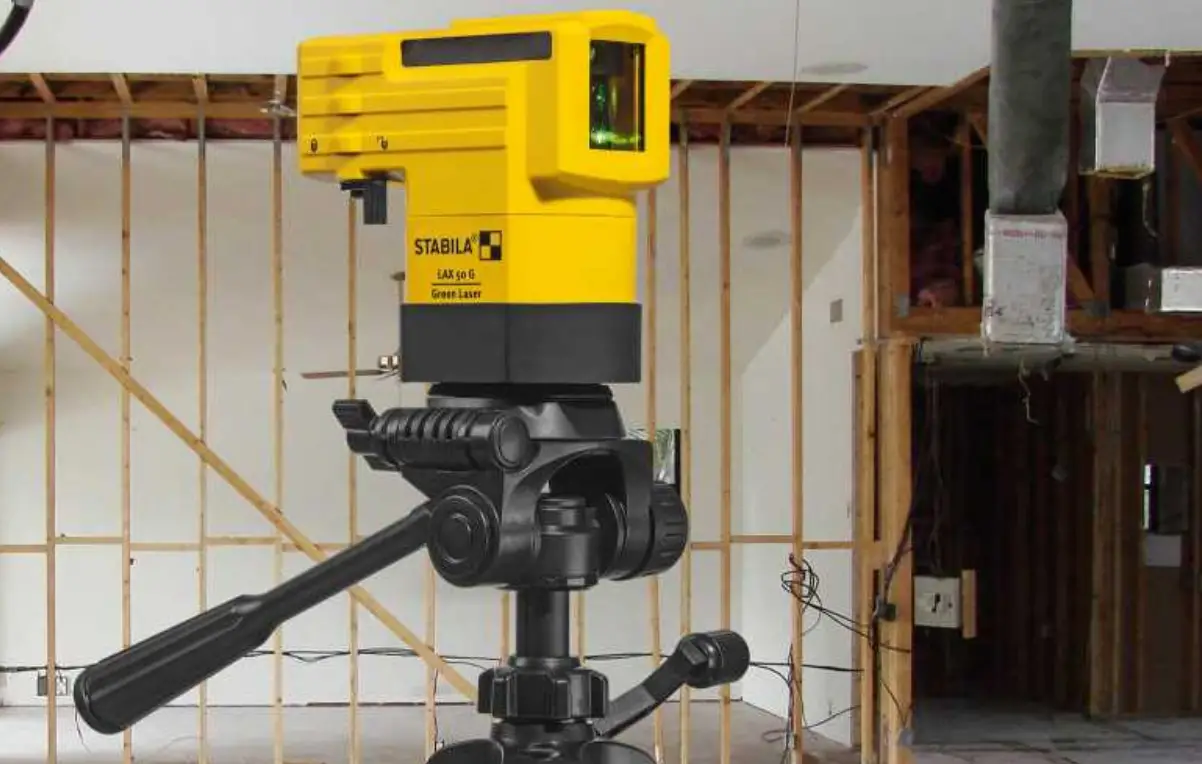
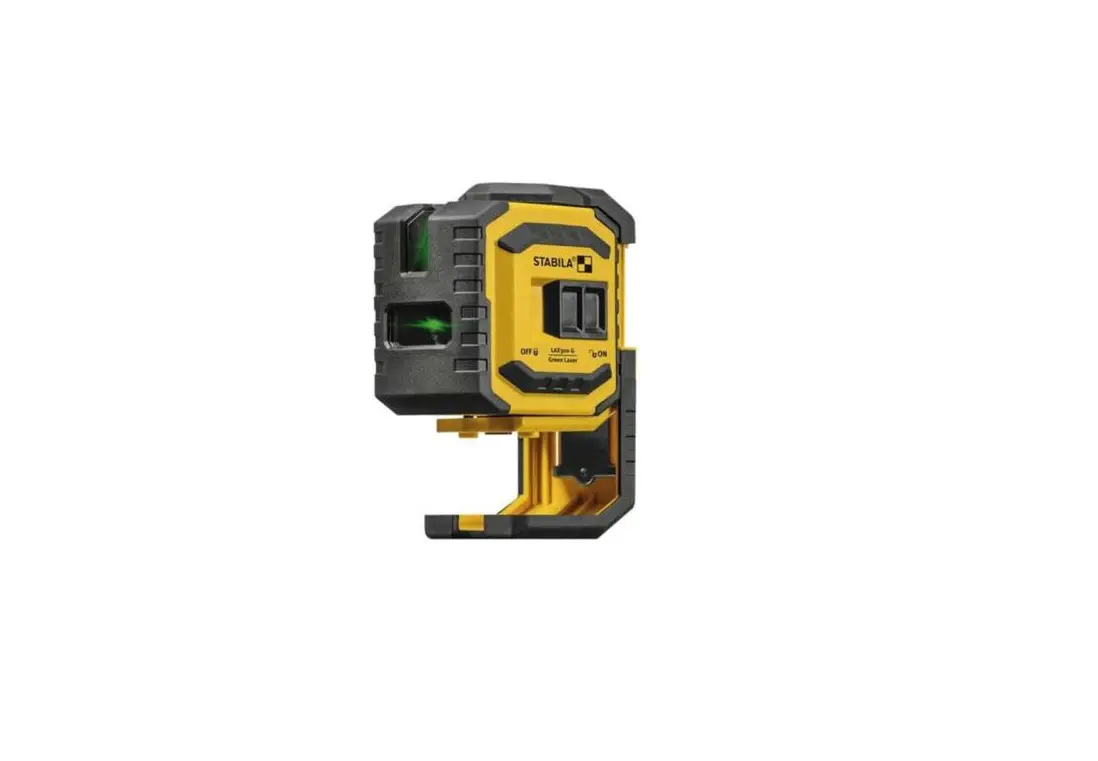
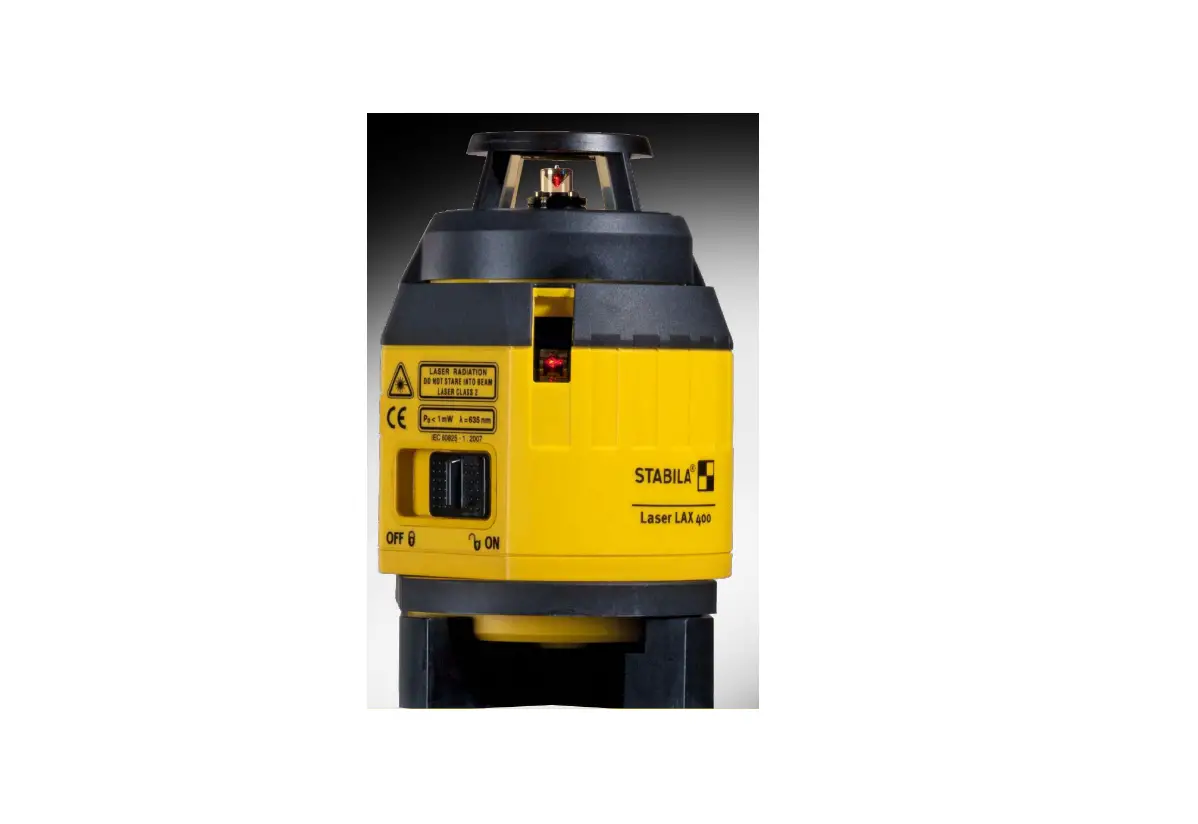
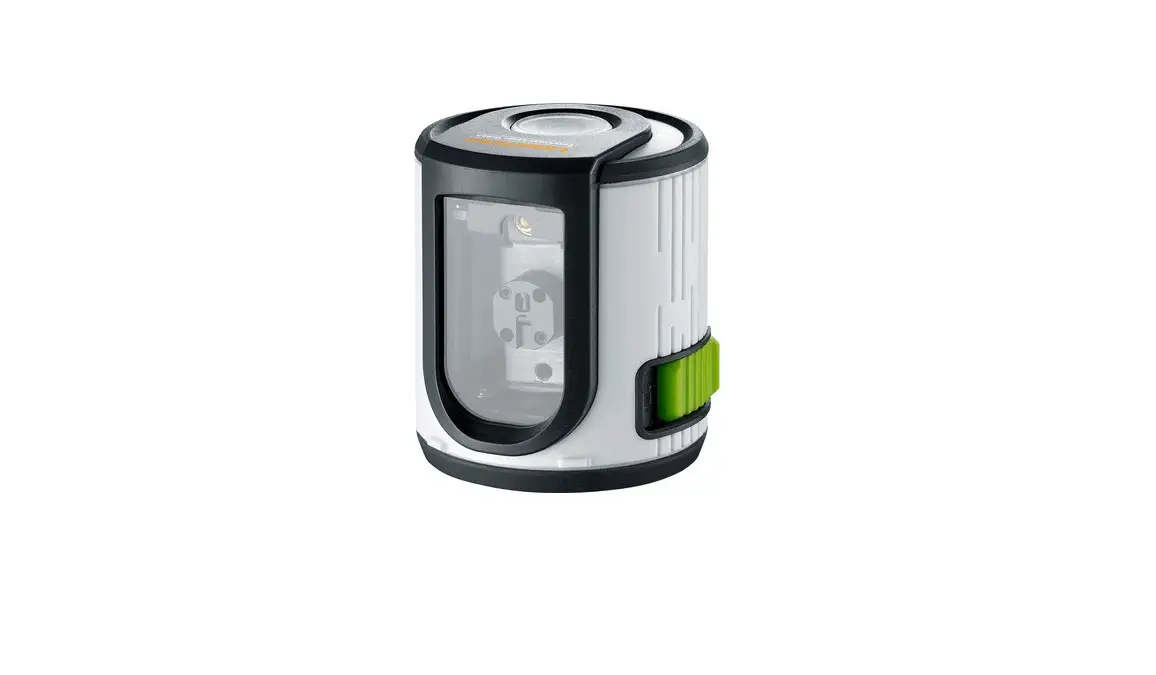
Laser LAX 50 Cross Line Green Beam Laser System
Product Information: Laser LAX 50
The Laser LAX 50 is a Class II laser equipment that is designed
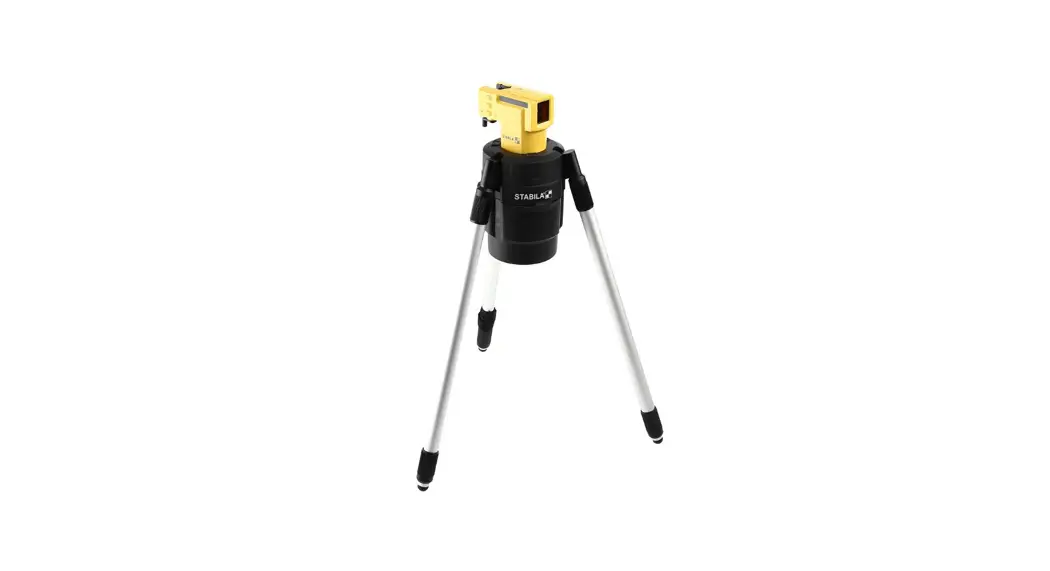
for levelling with tripod function. It has a telescopic pole that
can be assembled for variable heights up to 2.75 metres using the
threaded sleeves. The laser automatically levels itself and flashes
if the inclination is too great. The unit should be checked before
starting any new tasks and after an impact, throughout its whole
self-levelling range.
It comes with laser goggles that are not safety goggles but are
designed to make the laser light easier to see. The main components
of the set include a spring unit, securing plate, and base
unit.
Product Usage Instructions:
Opening the Set:
- Unpack the Laser LAX 50 set.
- Remove all the parts from the package.
Erecting the Tripod:
- Unscrew the telescopic poles from the base unit.
- Assemble the telescopic poles for a room height of up to 2.75
metres using the threaded sleeves. - Secure the instrument firmly between the floor and ceiling
using the spring unit, securing plate, and base unit. - Position the laser. To secure in position, turn the locking
lever until it is tight.
Commissioning:
The instrument is switched on with the on/off switch (4).
Vertical and horizontal lines will appear after switching on. The
laser will automatically level itself. It is necessary to center
the unit by using the vial. The laser will flash if the inclination
is too great.
Checking the Calibration:
Vertical Check:
- Fasten a plumbline near to the wall to create a reference for
the test. - Set up the laser unit in front of the reference mark (distance
Y) and compare the vertical laser line with it. - The discrepancy between the center of the laser line and the
reference mark should be no greater than 1 mm over a length of 2
m.
Horizontal Check – Line Level:
- Two parallel wall surfaces at least 5 m apart are required for
the horizontal check. - Set the Laser LAX 50 on a smooth level surface or on the tripod
with the front facing the wall. - Mark the position of the visible laser line cross on the wall B
(point 2). - Move the unit directly in front of wall B.
- Set the unit’s height so that the laser dot’s height matches
that of point 2. - Measure the vertical distance between point 1 and point 3. The
difference must not be greater than the maximum permissible
figure.
Horizontal Check – Inclination of the Laser Line:
To check the inclination of the laser line, follow the same
steps as above.
Laser LAX 50
en Operating instructions
B1
B2
B3
2.
3.
3. 1.
1.
2.
C1
C2
C3
2.
1.
2,75 m
3. 2.
1.
A
3
2 1 4 9
8 10
5
14
6 7
15
12 11
13
D1
D2
2m
1 mm D3
E1
2m
E2
E3
X = 5m
E4
F1
1,5 mm
1,5 mm
F2
F3
> 5m
s
> 16
2 3
ft
F4
F5
en
Operating instructions
The STABILA-LAX-50 is an easy-to-use crossed line laser. It is self-levelling in the range ± 4.5° and enables levels to be determined quickly and accurately. The vertically and horizontally projected laser lines provide exact alignment / working . The different parts of this set enable a tripod or a long support pole to be constructed to suspend the instrument between the floor and the ceiling. We have endeavoured to explain the unit’s handling and functioning in as clear and comprehensible manner as possible. If, however, you still have any unanswered questions, we should be pleased to provide advice over the telephone at any time on the following telephone number: +49 / 63 46 / 3 09 – 0
A Main components
(1) The LAX-50 laser (2) Exit aperture for the horizontal and vertical laser lines (3) Rough adjustment vial (4) On/off switch (5) Clamp (6) Locking lever for clamp (7) Battery compartment cover (8) Base unit (9) 360° scale (10) Carrying case (11) Telescopic poles (12) Locking screws (13) Securing strap (14) Securing plate (15) Spring
NB:
In Class II laser equipment, your eyes
are protected from accidental, short-
term exposure to the laser beam by the
lid-closing reflex and/or the reflex reac-
tion to turn one’s head. This equipment can therefore be used without additional protective measures. Nevertheless, you should not look directly into the
EN 60825-1 : 03 10
Do not let the unit fall into children’s hands!
laser beam.
The laser goggles enclosed with these units
are not safety goggles. They are designed
to make the laser light easier to see.
Main applications:
Levelling with tripod function
I. Opening the set.
B1
II. Remove the parts.
B2
III. Erect the tripod with the required height. IV. Position the laser.
B3
Levelling at variable heights up to 2.75 metres
I. Unscrew the telescopic poles from the base unit. II. Assemble the telescopic poles for a room height of up to C1
2.75 metres using the threaded sleeves. III. Secure the instrument firmly between the floor and cei- C2
ling using the spring unit, securing plate and base unit. IV. Position the laser. To secure in position, turn the locking C3
lever until it is tight.
Commissioning
The instrument is switched on with the on/off switch (4). Vertical and horizontal lines will appear after switching on. The laser will automatically level itself.
The laser will flash if the inclination is too great.
360° scale
The vertical laser line indicates the angular displacement of the laser unit and the laser line on the 360° scale of the base unit.
Tip:
It’s necessary to center the unit by using the vial!
Checking the calibration
The LAX-50 crossed line laser is designed for use on construction sites and was perfectly adjusted when it left our factory. As with any precision instrument, however, its calibration must be regularly checked. The unit should be checked before starting any new tasks, particularly when the unit has been exposed to strong vibrations. After an impact, the unit should be checked throughout its whole self-levellling range.
Vertical check
D1 You must create a reference to perform this test. Fasten a plumbline near to the wall.
D2 The laser unit should now be set up in front of this reference mark (distance Y) and the vertical laser line compared with it.
D3 The discrepancy between the centre of the laser line and the reference mark should be no greater than 1 mm over a length of 2 m.
Horizontal checking
1. Horizontal checking – Line level
Two parallel wall surfaces at least 5 m apart are required for the horizontal check. F1 1. Set the LAX-50 on a smooth level surface or on the tripod with the front
facing the wall.
2. Switch the unit on. F2 3. Mark the position of the visible laser line cross on the wall A (point 1). F3 4. Turn the complete unit 180° without altering the height of the laser.
5. Mark the position of the visible laser line cross on the wall B (point 2).
F4 6. Now move the unit directly in front of wall B.
7. Set the unit’s height so that the laser dot’s height matches that of point 2.
F5 8. Without changing the height of the laser, rotate it 180° to place the beam near the mark on the first wall (step 3 / point 1 ).
Measure the vertical distance between point 1 and point 3. The difference must not be greater than
S Maximum permissible figure
5 m 5,0 mm 10 m 10,0 mm 15 m 15,0 mm
2. Horizontal checking – inclination of the laser line
Check the laser line for inclination and perfectly straight projection.
Calculate the centre line between point 1 and point 3 and mark it (point M). E1 Place the instrument in front of wall A – distance X = 5 m. Using the horizontal laser line, align the instrument with point M.
E2 Rotate the instrument through 45°. The distance of the laser line (= point 4) from point M must not exceed 1,5 mm.
E3 Rotate the instrument through 90°. The distance of the laser line (= point 5) from point M must not exceed 1,5 mm.
X Maximum permissible figure.
E4
Maximum tolerances at
5 m 1,5 mm
different distances.
10 m 3,0 mm
15 m 4,5 mm
Replacing the
batteries
7
Slide the battery cover (7) in the direction of the arrow and insert new batteries in accordance with the symbols in the battery compartment.
3 x 1,5V alkaline mignoncells, size AA, LR6
Mignon, AA , LR6
Suitable batteries can also be used.
Tip:
Remove the batteries if the unit will not be used for a long period!
Do not submerge the laser.
Do not store the laser when wet. Dry the laser and case before putting the laser away.
laser beam flashing
-> The unit is inclined too much + is outside the self-levelling range + the laser cannot level itself automatically
Recycling programme for our EU customers:
In accordance with the WEEE regulations, STABILA provides a disposal programme for electronic products at the end of their service life. For more details, please contact: +49 / 6346 / 309-0
Care and maintenance
· Dirty lens glass on the beam emitter detracts from the quality of the beam. It should be cleaned with a soft cloth.
· Clean the laser unit with a damp cloth. Do not spray or immerse the unit! Do not use solvents or thinners!
Like any precision instrument, handle the LAX-50 crossed line laser carefully and cautiously.
Technical data
Laser type: Output:
Self-levelling range:
Red diode laser, wavelength 635 nm
< 1 mW, Laser Class 2 to EN 60825-1:03-10
ca. ± 4,5°
Levelling accuracy: Batteries: Operating life:
± 0,5 mm/m 3 x 1,5 V mignoncells alkaline, size AA, LR6 approx. 30 hours (alkaline)
Operating temperature range: -10 °C to +50 °C
Storage temperature range:
-20 °C to +60 °C
Subject to technical modifications.
09 2022
STABILAMessgeräte Gustav Ullrich GmbH Landauer Str. 45 76855 Annweiler Germany
www.stabila.com
 Languages - STABILA Messgeräte Gustav Ullrich GmbH (EN-US)