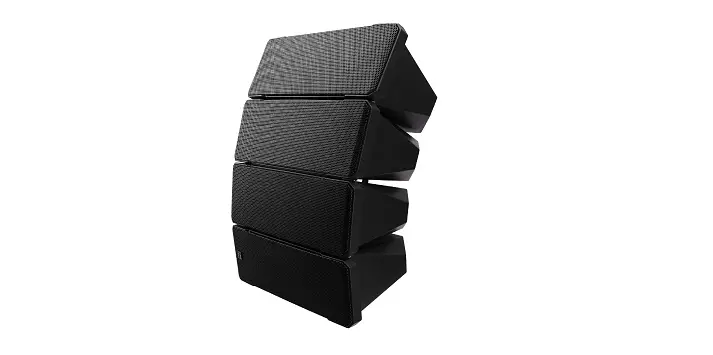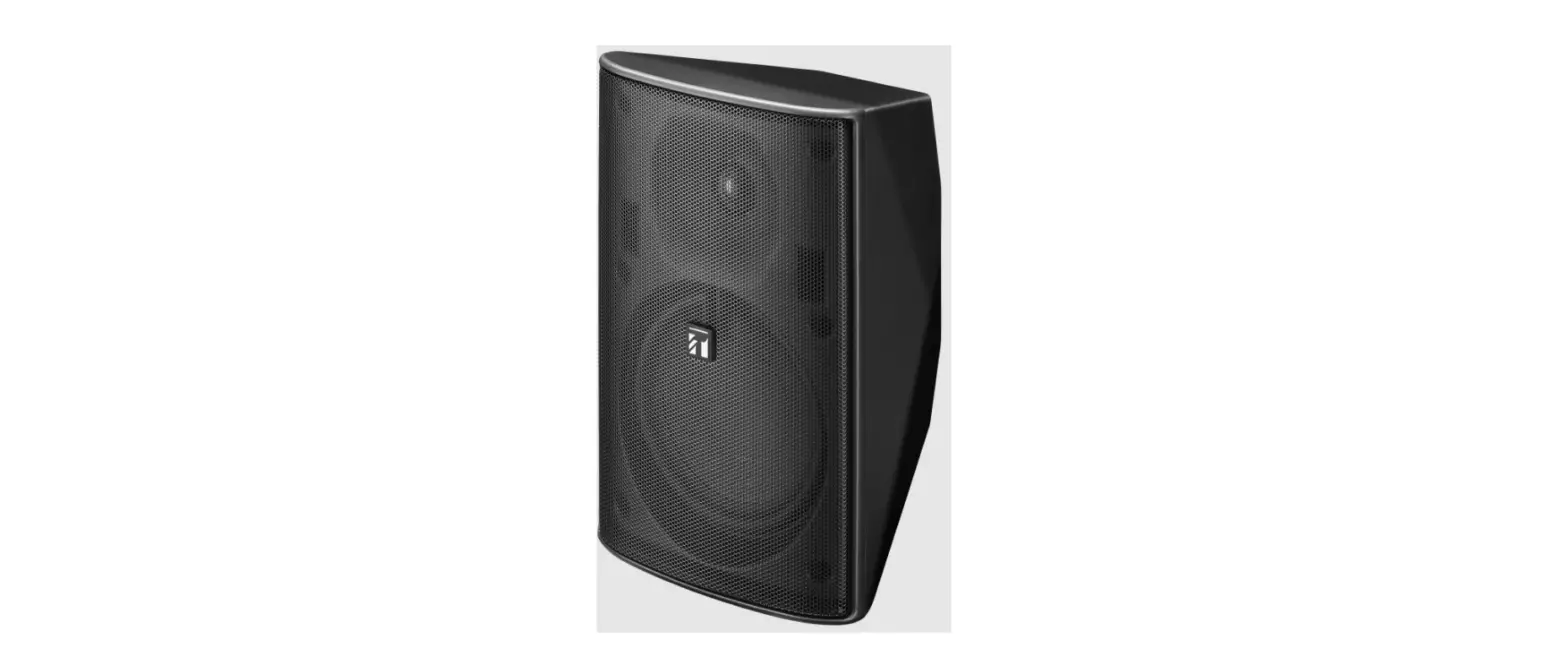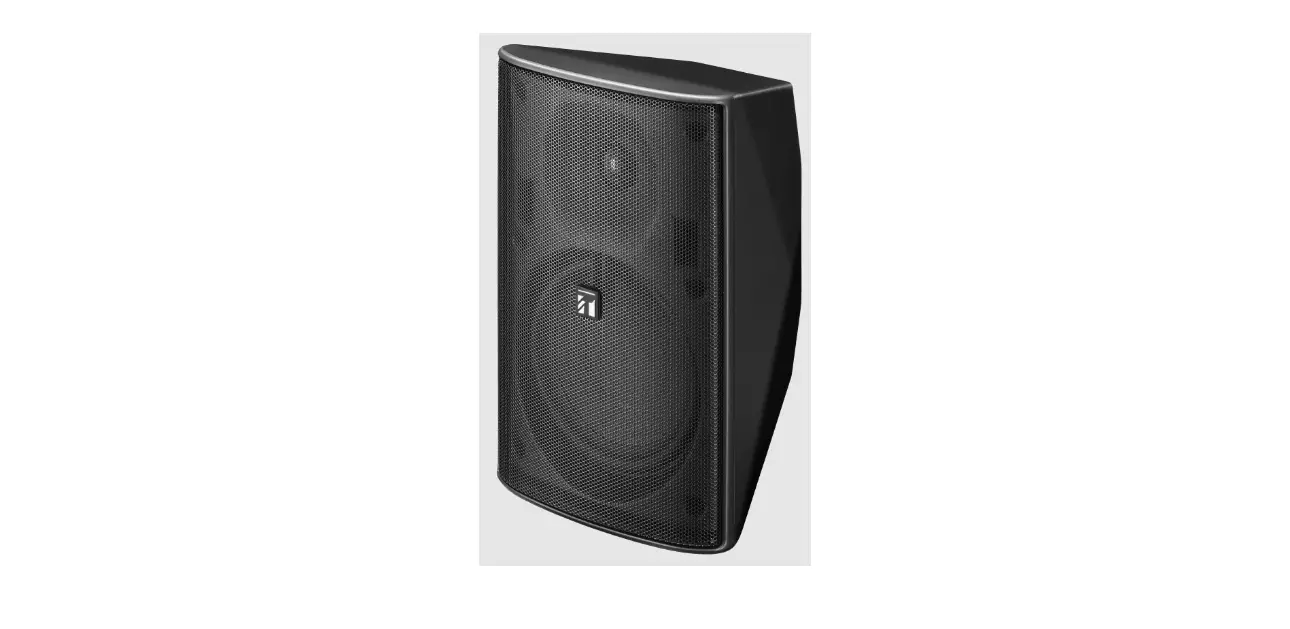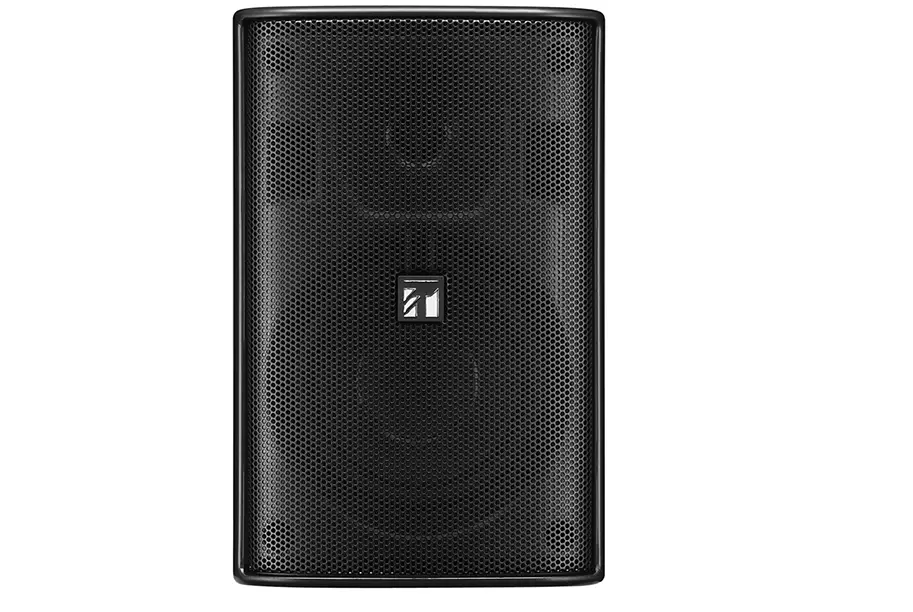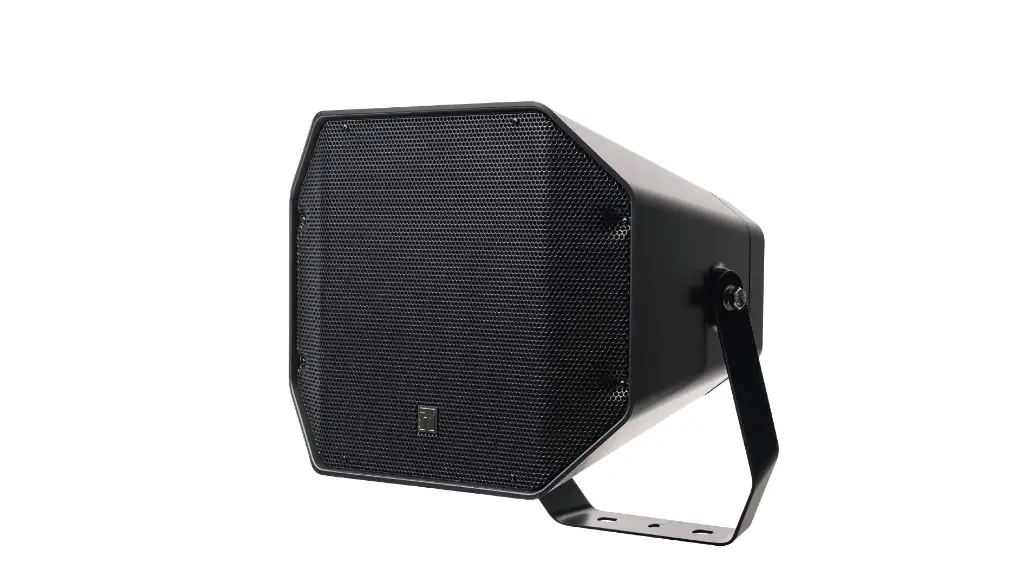
 TOA HS-1500BT 2-Way Coaxial Array Speaker
 TOA HS-1500BT 2-Way Coaxial Array Speaker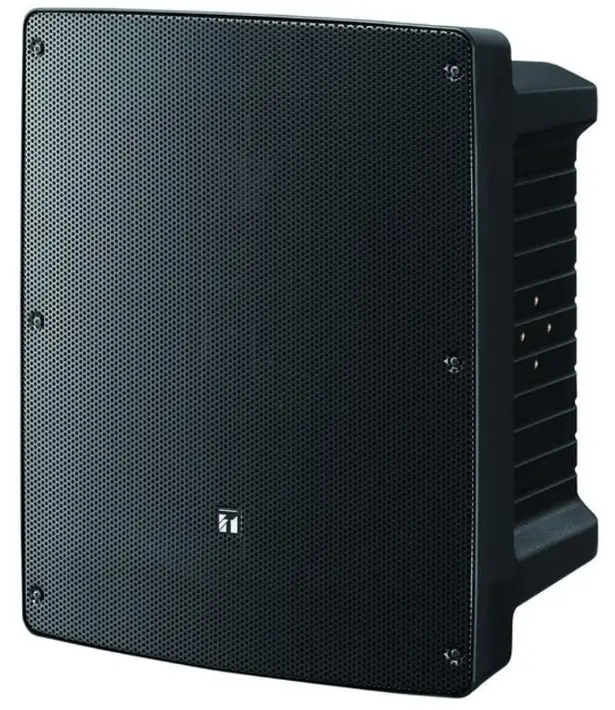
INTRODUCTION
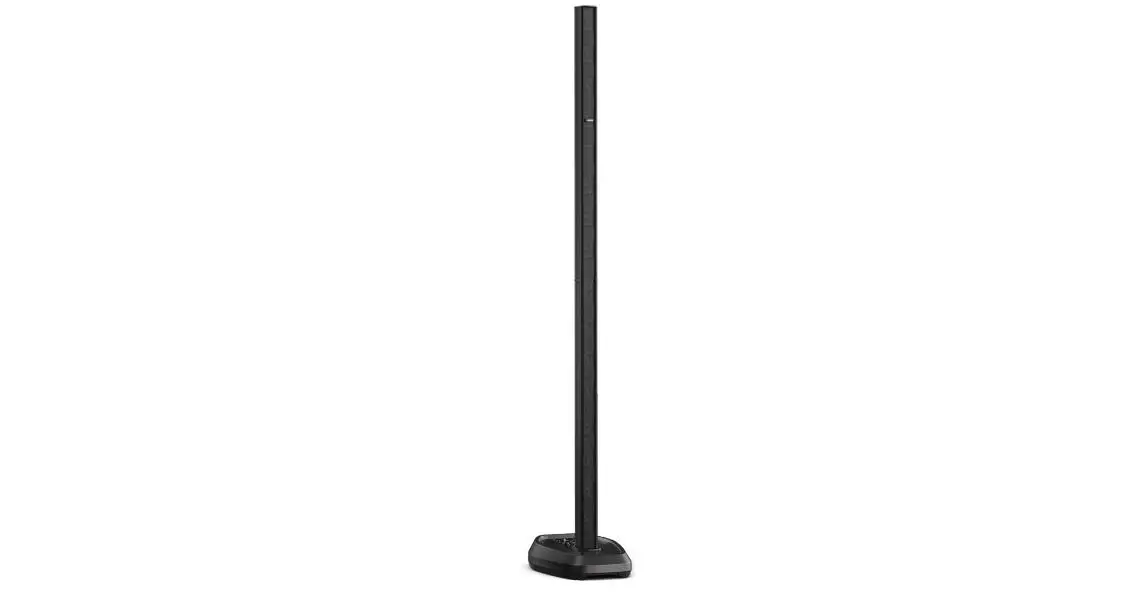
Black, 60W Rated Power, 300W Continuous Power Handling, Either Vertical or Horizontal Installation, Easy to Carry with a Handy Handle TOA HS-1500BT HS-Series 15″ 2-Way Coaxial Array Speaker
The HS-1500BT speaker systems are made to deliver excellent sound and dependable performance for audio/visual applications in restaurants, shops, conference rooms, lecture halls, schools, sports facilities, and houses of worship. Features include a coaxial tweeter array with six balanced dome tweeters, a two-way bass-reflex design, and a sturdy polypropylene housing with a 12″ or 15″ low frequency driver.
SAFETY PRECAUTIONS
- Before installation or use, be sure to carefully read all the instructions in this section for correct and safe operation.
- Be sure to follow all the precautionary instructions in this section, which contain important warnings and/or cautions regarding safety.
- After reading, keep this manual handy for future reference.
Safety Symbol and Message Conventions
Safety symbols and messages described below are used in this manual to prevent bodily injury and property damage which could result from mishandling. Before operating your product, read this manual first and understand the safety symbols and messages so you are thoroughly aware of the potential safety hazards.
When Installing the Unit
- Avoid installing or mounting the unit in unstable locations, such as on a rickety table or a slanted surface. Doing so may result in the unit falling down and causing personal injury and/or property damage.
- Install the unit only in a location that can structurally support the weight of the unit and the mounting bracket. Doing otherwise may result in the unit falling down and causing personal injury and/or property damage.
- Since the unit is designed for in-door use, do not install it outdoors. If installed outdoors, the aging of parts causes the unit to fall off, resulting in personal injury. Also, when it gets wet with rain, there is a danger of electric shock.
- Owing to the unit’s size and weight, be sure that at least two persons are available to install the unit. Failure to do so could result in personal injury.
- Do not use other methods than specified to mount the bracket. Extreme force is applied to the unit and the unit could fall off, possibly resulting in personal injuries.
- Use screws that are appropriate for the ceiling’s or wall’s structure and composition. Failure to do so may cause the unit to fall, resulting in personal injury.
- Ensure that all screws are securely tightened. If they are not tightened or firmly secured after installation, the unit could fall down, possibly resulting in personal injury.
- Use the specified mounting bracket in combination. Doing otherwise may cause the unit or component to fall off, resulting in personal injury.
- Do not mount the unit in locations exposed to constant vibration. The mounting bracket can be damaged by excessive vibration, potentially causing the unit to fall, which could result in personal injury.
When Installing the Unit
- When unpacking or installing the unit, be sure to handle it with two or more persons. Falling or dropping the unit may cause personal injury.
- Avoid touching the unit’s sharp metal edge to prevent injury.
- To avoid electric shocks, be sure to switch off the amplifier’s power when connecting speakers.
When the Unit is in Use
- Do not place heavy objects on the unit as this may cause it to fall or break which may result in personal injury and/or property damage. In addition, the object itself may fall off and cause injury and/or damage.
- Make sure that the volume control is set to minimum position before power is switched on. Loud noise produced at high volume when power is switched on can impair hearing.
- Do not operate the unit for an extended period of time with the sound distorting. This is an indication of a malfunction, which in turn can cause heat to generate and result in a fire.
GENERAL DESCRIPTION
TOA’s HS-1200 series and HS-1500 series speakers are 2-way speaker systems made of resin, and feature a large diameter woofer. They can be installed in many different applications with combined use of the supplied handles and the optional mounting brackets.
FEATURES
- Tweeter array realizes a 90° horizontal x 40° vertical directivity control at high frequencies
- Compact and lightweight with its high frequency tweeter array arranged in front of the low frequency woofer
- Built-in overload protection circuitry for the tweeters
- Both permanent and temporary installations available
- Either vertical or horizontal speaker installation available for the permanent installation
- Easy to carry with a handy handle
- Both high- and low-impedance applications available by a rotary switch
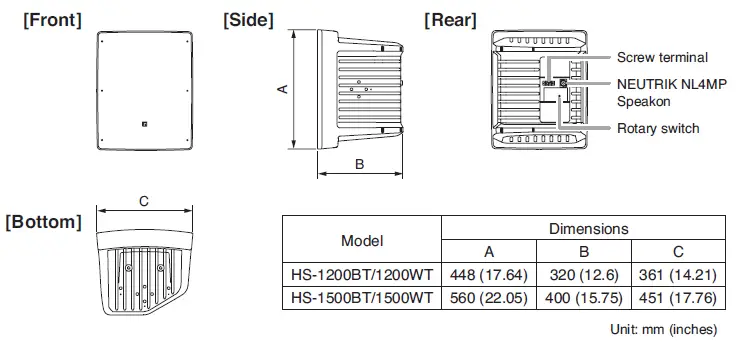
DIMENSIONAL DIAGRAM
INPUT TERMINAL SECTION
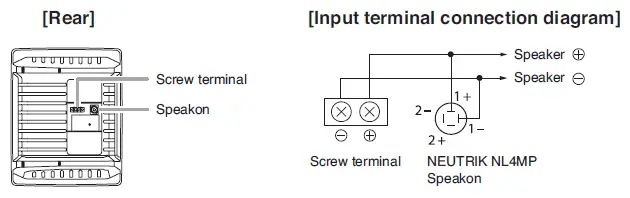
- As the Speakon connector is internally connected in parallel to the screw terminal as shown below, you can use either of the two.
- The usable connector (on the cable end) that matches the NEUTRIK NL4MP Speakon is NEUTRIK NL4FX Speakon.
- Input terminal connection diagram is as shown below.

IMPEDANCE CHANGE
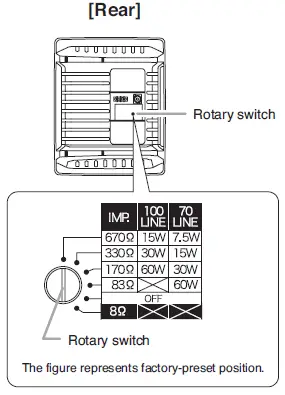
To change the impedance, use a standard screwdriver to rotate the rotary switch on the speaker’s rear panel to select the desired input power.
This switch is factory-preset to 670 Ω.
Note
When using a high-impedance amplifier, never select 8 Ω, as this will damage the speaker and the amplifier.
Be sure to turn the rotary switch to 8 Ω when using a low-impedance amplifier.
ABOUT THE INPUT OVERLOAD PROTECTION CIRCUIT
The speaker system has a built-in input overload protection circuitry. If an excessive input signal is applied to the speaker, the protection circuitry is activated and cuts off the signal input to the tweeters. A sudden drop of the sound volume level during speaker operation indicates that the protection circuitry has been activated. In such a case, reduce the amplifier volume and wait. The protection circuitry is automatically reset after approximately 10 seconds. After the circuitry is reset, set the volume at a lower level than before.
Note
This input overload protection circuitry does not completely protect the speaker component. Depending on the nature of the excessive input signal applied to the speaker, there may be damage to the speaker components before protection circuitry can operate. Also, if the excessive input signal is applied to the speaker for extended periods of time, the protection circuitry may be damaged and will not recover. Take special care that the excessive input signal is not applied to the speaker during use.
INSTALLATION
- Installing to a Ceiling or Wall
Install the speaker system to a ceiling or wall using the optional mounting brackets shown below.
Note
Refer to the instruction manual enclosed with the HY-1200 series or HY-1500 series Mounting Bracket for its mounting details.- HY-1200VB, HY-1200VW, HY-1500VB and HY-1500VW Mounting Brackets (For vertical speaker mounting)
These brackets are designed to mount HS series speakers to ceilings or walls vertically. HY-1200VB and HY-1200VW: For the HS-1200 series speaker system HY-1500VB and HY-1500VW: For the HS-1500 series speaker system
They allow the speaker’s vertical angle to be adjusted. (Ceiling: From 15° upward to 90° downward, Wall: From 15° upward to 60° downward)
Note: They also permit speaker’s horizontal angle to be adjusted in conjunction with the optional HY-C0801 or HY-C0801W Ceiling Mount Bracket, or the HY-W0801 or HY-W0801W Wall Mount Bracket.
- HY-1200HB, HY-1200HW, HY-1500HB and HY-1500HW Mounting Brackets (For horizontal speaker mounting)
These brackets are designed to mount HS series speakers to ceilings or walls horizontally. HY-1200HB and HY-1200HW: For the HS-1200 series speaker system HY-1500HB and HY-1500HW: For the HS-1500 series speaker system
They allow speaker’s vertical angle to be adjusted. (Ceiling: From 0° horizontal to 90° downward, Wall: From 15° upward to 60° downward)
Note: They also permit speaker’s horizontal angle to be adjusted in conjunction with the optional HY-C0801 or HY-C0801W Ceiling Mount Bracket, or the HY-W0801 or HY-W0801W Wall Mount Bracket.
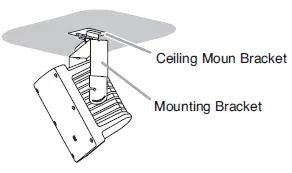
- HY-C0801 and HY-C0801W Ceiling Mount Brackets (For ceiling installation, horizontal angle adjustable)
Installing the HS series speaker to a ceiling in conjunction with the HY-1200 series or HY-1500 series Mounting Bracket permits the speaker’s horizontal angle to be adjusted. The figure at right shows an example of vertical speaker installation.
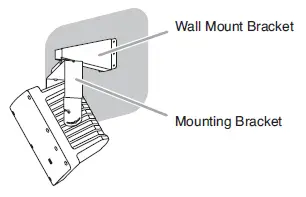
- HY-W0801 and HY-W0801W Wall Mount Brackets (For wall installation, horizontal angle adjustable)
Installing the HS series speaker to a wall in conjunction with the HY-1200 series or HY-1500 Series Mounting Bracket permits the speaker’s horizontal angle to be adjusted. The figure at right shows an example of vertical speaker installation.
Safety wire installation (For speaker fall prevention)
When mounting the speaker system to the ceiling or wall, install a safety wire as needed. When installing the safety wire, be sure to follow the instructions below. Failure to do so may cause the speaker to fall off, resulting in personal injury- Use a wire rope of 2 mm (0.08″) or more in diameter. (The safety wire is not supplied.)
- Tighten the safety wire to take up the slack. Otherwise, impact shock at speaker fall may cause the wire-connected parts or wire itself to break.
- Install the safety wire to a place that can structurally support the full weight of load.
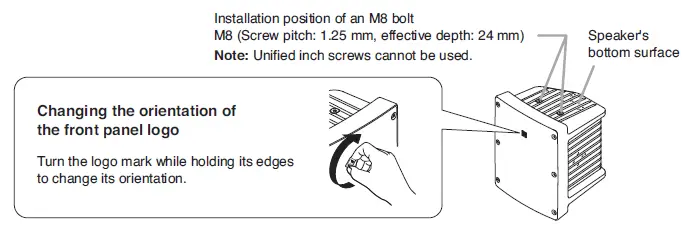
- Screw a speaker suspension bolt (M8) into one of the screw holes on the speaker’s bottom surface. Then, connect the safety wire to the bolt.

- HY-1200VB, HY-1200VW, HY-1500VB and HY-1500VW Mounting Brackets (For vertical speaker mounting)
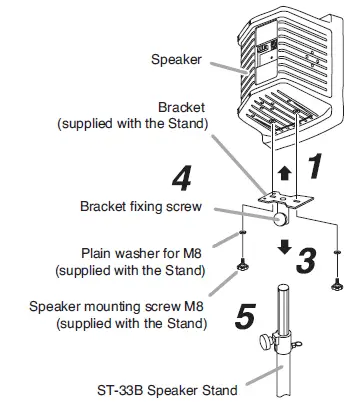
- Mounting on the ST-33B Speaker Stand (optional)



Note
Refer to the instruction manual enclosed with the Speaker Stand for its mounting details.
- Fix the bracket supplied with the speaker stand to the speaker.
- Spread the tripod legs of the stand to their full extension.
Note: Spread the tripod legs until the stays extend horizontally. - Mount the speaker with the bracket fixed onto the stand.
- Determine the speaker direction, and tighten the bracket fixing screw.
- Adjust the stand height.
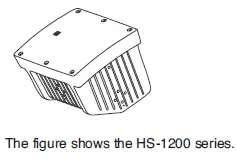
Using as a Floor Monitor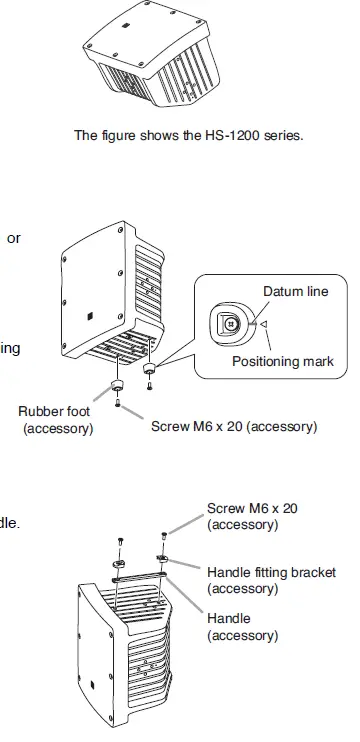
Notes
- When installing the speaker system on slippery floor, put a non-slip mat under the speaker.
- Do not kick or stand on the speaker system, as this will damage the speaker.
Attaching the Supplied Rubber Feet
Attach the rubber feet in the case of speaker storage or on-floor speaker installation.
Note
the rubber foot has a direction (back and forth). Align the datum line on the rubber foot with the positioning mark on the speaker unit as shown at right.
Attaching a Handle
The speaker system comes with a handy carrying handle. Attach the handle on the speaker’s top surface.
EQUALIZING BY THE DIGITAL SIGNAL PROCESSOR
The speaker system is capable of providing high-efficiency and wide range reproduction without using an equalizer, however more clear and dynamic sound quality can be reproduced by using our digital signal processor and performing its settings as shown in the tables below.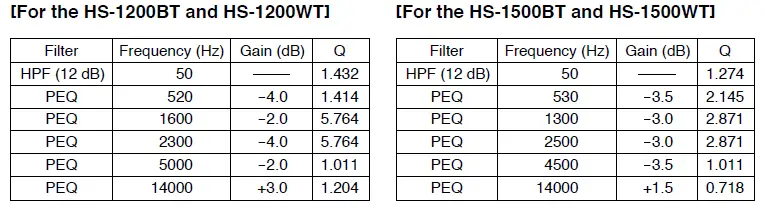
SPECIFICATIONS
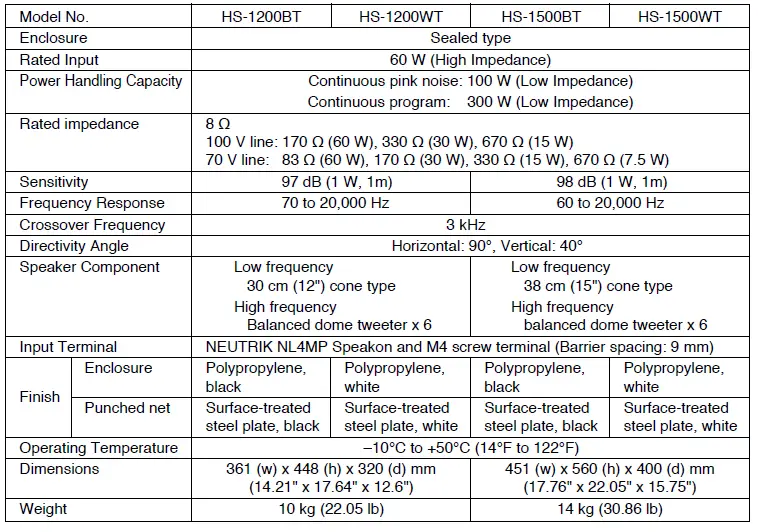
Accessories
- Handle :1
- Handle fitting bracket: 2
- Rubber foot : 2
- Screw M6 x 20 (Used for attaching a handle and rubber foot.) : 4
Optional products
- Mounting bracket (For vertical speaker mounting): HY-1200VB, HY-1200VW, HY-1500VB, HY-1500VW
- Mounting bracket (For horizontal speaker mounting): HY-1200HB, HY-1200HW, HY-1500HB, HY-1500HW
- Ceiling mount bracket: HY-C0801, HY-C0801W
- Wall mount bracket: HY-W0801, HY-W0801W
- Speaker stand: ST-33B
FREQUENTLY ASKED QUESTIONS
Are line array speakers good?
Column speakers and vertical line arrays typically offer good vertical coverage control at the expense of a fixed horizontal. Point source speakers may perform better than a line array in this situation, depending on the aspect ratio of the room and the nature of the horizontal reverberation in the area.
What is an array speaker?
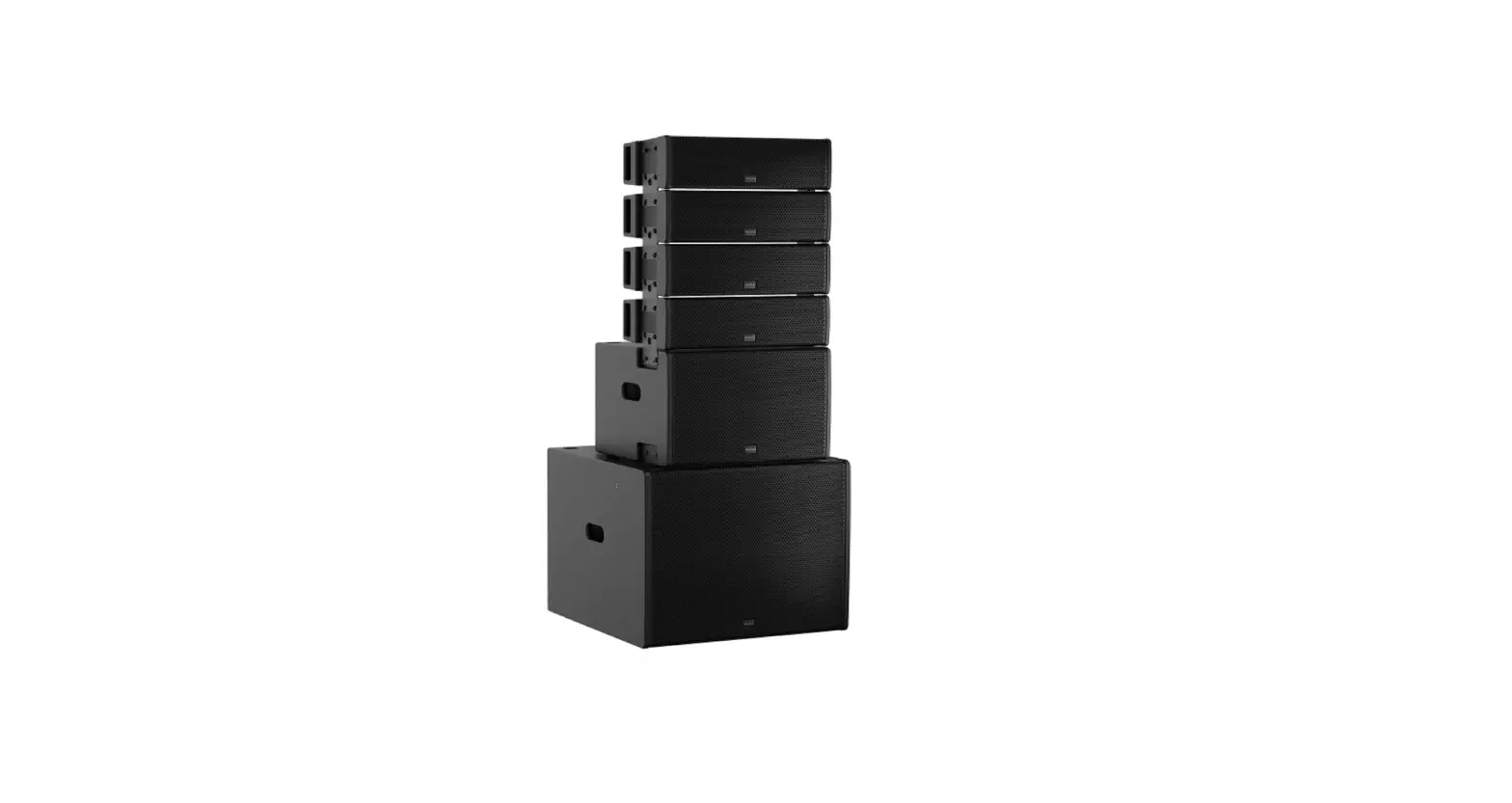
A line array is just a group of speakers that all operate in the same frequency range that are arranged in a line, usually vertically. Since the speakers are positioned at somewhat different vertical angles, they may cover a larger area than a single speaker could.
What are the 4 types of speakers?
Traditional loudspeakers, in-wall/ceiling speakers, soundbars, and subwoofers are the four basic speaker kinds now available in homes. Each variety of speaker has a distinct function and is advantageous in certain contexts.
What is the highest watts in a speaker?
This amazing speaker has a maximum sound output level of 165 dB. As simple as it may sound, the manufacturer of this speaker claims that its primary purpose was to produce noise. This speaker has a 30,000-Watt output and a 165dB sound level, which might be harmful to your health.
What are line array speakers for?
A line array speaker system is often made up of a series of passive or active (powered) speakers that are suspended from a truss, winch, or beam on either side of a stage in order to provide the audience with loud, clear, and high-quality sound.
Why do line arrays sound different?
Lowering the level from the lower cabinets will give a lower sound-pressure level to the front of the audience since those rows are considerably closer to the lower cabinets of the array than they are to the top cabinets.
When would you use a line array?
A line array system projects sound in a more cylindrical-like shape. Because of this, much less sound energy is vertically projected (to the ceiling and floor). Reduced vertical dispersion is advantageous for two reasons.
Is 2 way or 4-way speakers better?
Two parts, a tweeter for high frequency and a mid-range, make up a two-way speaker. The 4-way speaker is slightly better for high range sound than the 2 way since it has a bass and a mid-range component in addition to 2 tweeters, but it is not significantly better overall.
Is 20 watts louder than 10 watts?
The 20-watt amp has twice the power of the 10-watt amp, although this power increase only results in a 3 dB SPL increase. A 20W amplifier will sound substantially louder than a 10W amp, but it won’t sound twice as loud because an increase of 10dB is required to sound “twice as loud.”
How many watts is loud enough?
Most people won’t need more than 50 watts, yet Denon’s most affordable receiver, the AVR-1513, has a 110 watts per channel rating.
How many watts do you need for good sound?
A lot depends on how well you listen and how well you speak. If your speakers are 90 dB efficient and you enjoy listening to loud, uncompressed music, 200 Watts should be more than plenty for you. 50 Watts is plenty if all you listen to is jazz and light classical music and you don’t expect them to rock the house.
What are the drawbacks of linear array?
An array’s capacity for storing elements should be predetermined. As a static structure, an array (which means the array is of fixed size). The array’s size cannot be changed after it has been declared.
Do you need tweeters with 4-way speakers?
Any audio system that wants to produce high frequencies up to the upper limit of human hearing needs tweeters. Any audio system without them is merely inadequate and constrained. Installing tweeters will improve the overall sound quality and help the music have a sense of presence and space.