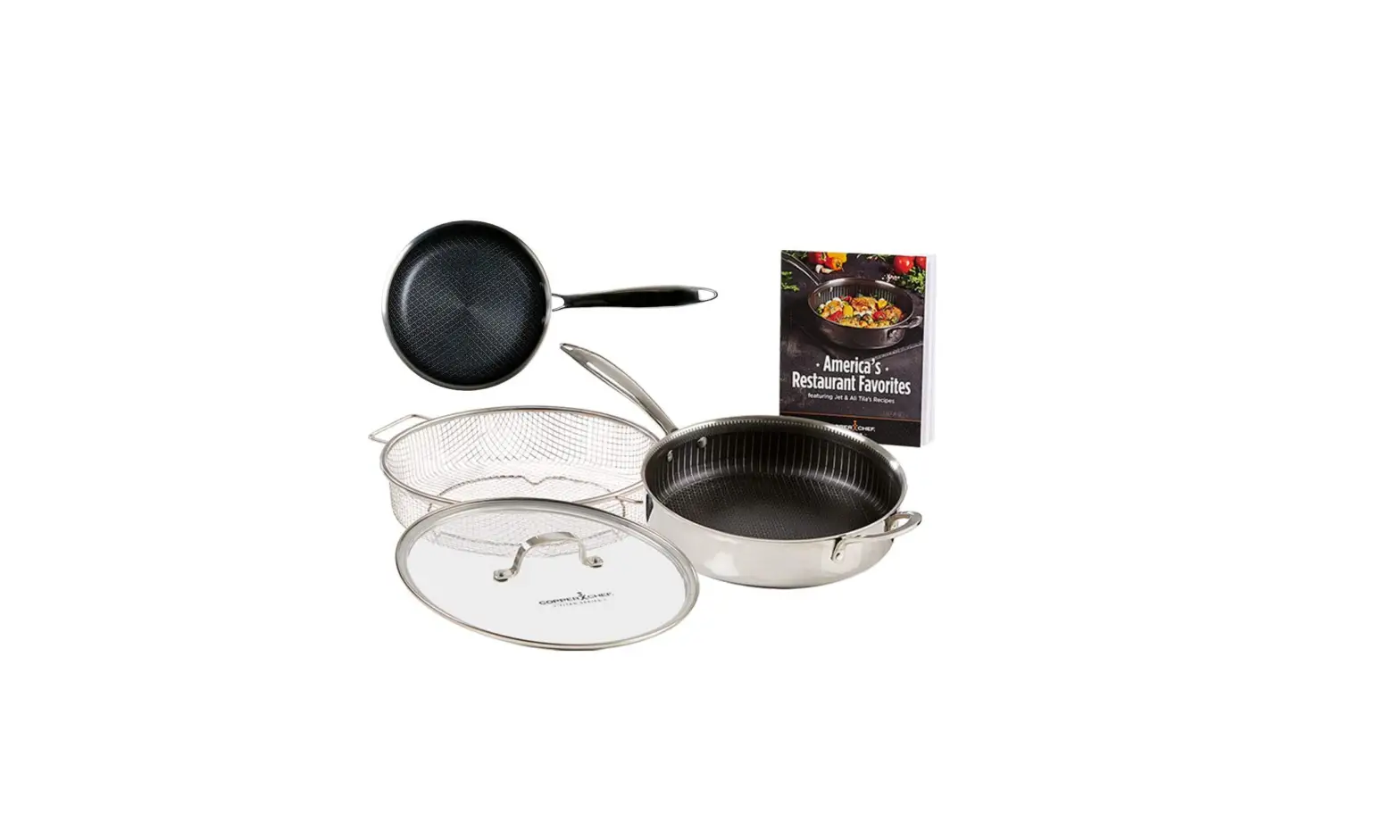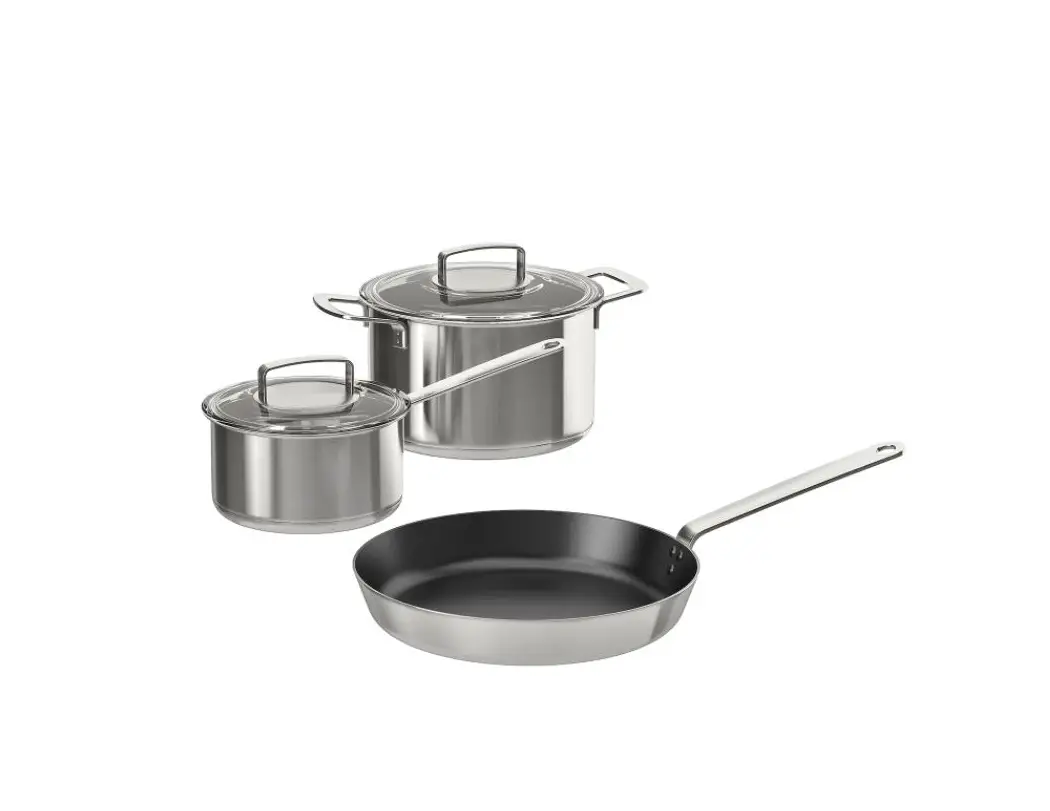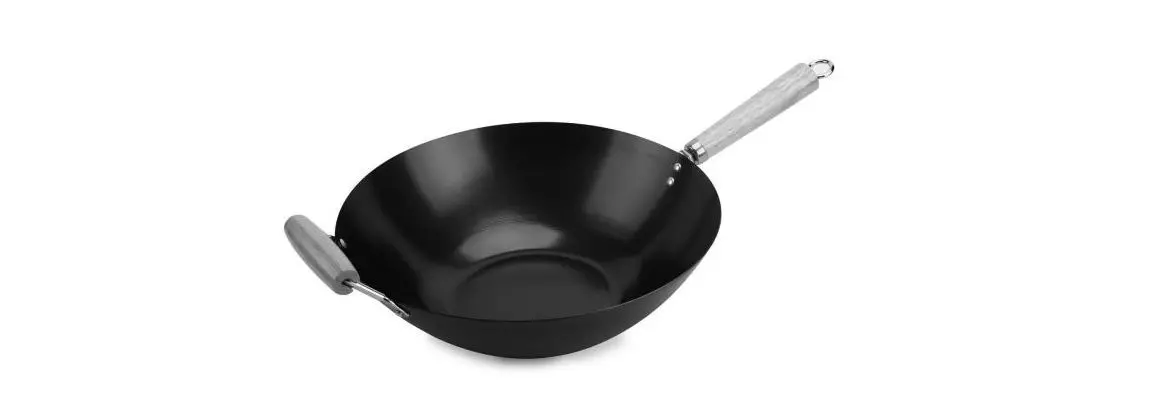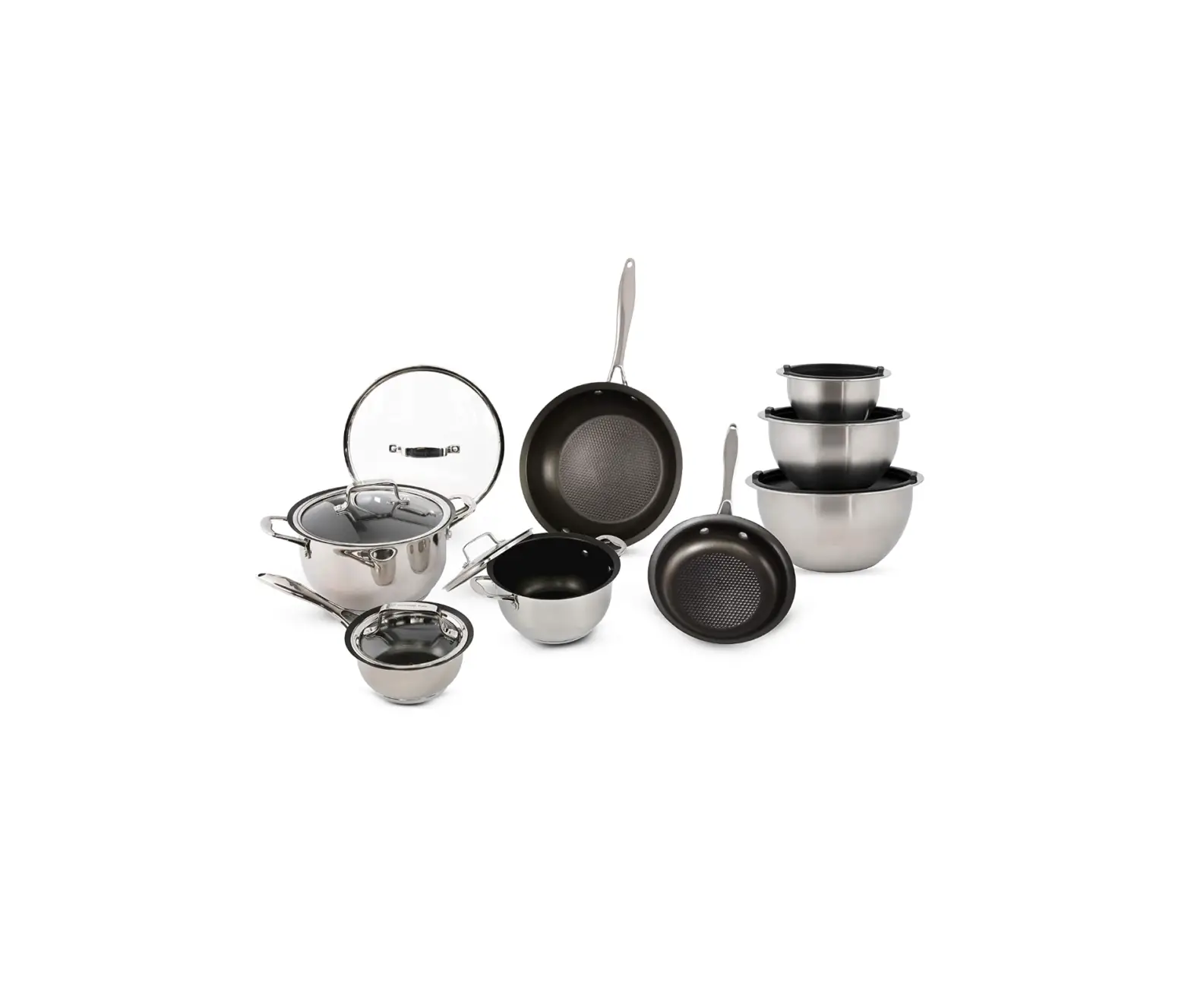

all-clad stainless steel cookware
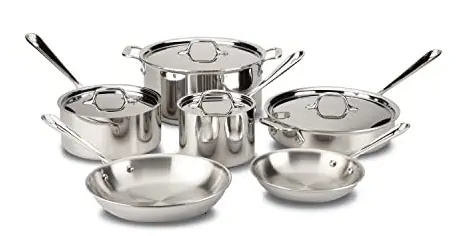
How should I use my All-Clad cookware?
If you have never cooked with All-Clad before, you may be surprised by how efficient it is. Start using your All-Clad on a low flame for all applications except boiling. Because our cookware is built to hold heat and distribute it well, you will find that low temperatures using All-Clad are comparable to medium to medium-high settings using other cookware brands. When preparing to sauté or fry, preheat your cookware a minute or two on a low setting. Test the heat by lightly tapping the top edge of your pan with your palm. If the pan feels warm to the touch you are ready to cook. Put cold oil in your preheated pan. This helps to form a natural barrier that prevents food from sticking. Now add your food. There should be a sizzling sound when your food touches the preheated pan, indicating that the browning or searing process has begun. Leave the food for approx 1 minute to sear do not try to push it around the pan too soon otherwise the food may tear and then stick to the pan (see below – ‘how do you prevent sticking’). Medium to low heat is all you will need.
How do you Fry without Natural Fats?
Add oil, butter, or margarine to the pot or pan, just enough to cover the bottom surface. Heat pot or pan for one to two minutes over low or medium heat. Add food for frying.
What do I do if the food is sticking?
Check to make sure the pan is level, and clean and the heat is not set too high. Low to medium heat is recommended for optimal cooking performance.
Will salt damage my cookware?
Yes. To avoid the formation of small white dots or pits, bring liquids to a boil before adding salt, then stir well. Or, add salt after food has started to cook. Pitting does not interfere with cooking performance but can diminish the beauty of the stainless steel.
Do I need to rinse the pan before the first use?
Yes. Before using for the first time, wash in hot, soapy water with a sponge or dishcloth. Rinse in hot water and dry thoroughly.
Can I use metal utensils on nonstick cookware?
No. We recommend you use wood or nylon utensils.
How do you care for nonstick pans?
- Always cook on a low or low-medium heat.
- Never use a nonstick pan under a grill.
- Never leave any pan unattended on top of the stove or in the oven.
- Do not use metal utensils.
- Do not use abrasive cleaners or metallic scrubbing pads or brushes.
- Do not use aerosol spray oils on your nonstick cookware.
- Do not put your nonstick cookware in the dishwasher.
- Clean any cooking residue with a mixture of baking soda and water.
How do I clean the nonstick coating?
Do not put your non-stick cookware in the dishwasher because high heat and harsh detergents will corrode and dry out the surface. Almost all non-stick problems are related to a build up of visible and/or invisible layer of cooking residue on the non-stick surface. We recommend cleaning the non-stick with a paste made of equal parts bicarbonate of soda and water. Rub in a circular motion with a non-metallic scrubbing/cleaning padrecommended as being safe for use on non-stick surfaces, or perhaps a soft brush such as a vegetable brush. Then rinse well with water. If the bicarbonate of soda mixture starts turning brown, you are on the right track. Rinse well with cool water and dry. Then condition the non-stick surface by wiping a little vegetable oil around the surface with a paper kitchen towel. Wipe off any excess.
Do the handles get hot?
The long handles are cast stainless steel, which conducts or distributes heat poorly. The shape of the handles and the stainless steel rivets also provide a safe grip and prevent the handle from becoming too hot on the stove top. However, in the oven or grill, handles will get hot. Always keep oven gloves handy to prevent burning your hand
Can All-Clad cookware be used on a ceramic range?
Yes. In fact, All-Clad is one of the best choices for this type of range since our cookware is balanced and the contact surfaces are smooth (the exceptions are our grill pans). The bonded construction and superior heat distribution help prevent scorching, which can be a problem with this style of stovetop when using other brands of cookware.
How can I prevent sticking when cooking?
A preheated pan and lower flames are the key to stick-free stainless steel cooking. Preheat your pan on low or medium heat for one to two minutes. Tap the upper edge of your pan to test the heat. (If it is too hot, remove from the burner for a couple of minutes.) Pour 2-3 teaspoons of cold oil in your preheated pan-or enough to cover the bottom of the cooking surface. Add food, making sure that there is an even sizzling sound when your food touches the pan. This indicates that your food is cooking on contact and creating a natural barrier to prevent sticking. Allow food to cook without disturbing it until the correct doneness is achieved. The natural sugars in your food caramelize on the cooked surface, developing great flavours and lifting your food off of the cooking surface naturally. If the sound that food makes on initial contact with the pan is more of a crackle than a sizzle, your heat is too high and sticking may occur. All-Clad recommends low to medium heat for frying, braising, sautéing and simmering because All-Clad is ideally crafted to hold heat.
What heat setting should I use when cooking?
All-Clad recommends low to medium heat for frying, braising, sautéing and simmering because All-Clad is ideally crafted to hold heat.
Is All-Clad dishwasher safe?
The ‘Stainless Steel’ collection is completely dishwasher-safe. It is recommended that before you use your Stainless Steel All-Clad you wash it in the dishwasher first to remove any manufacturing residues and this will help to keep it shiny. Do not put your non-stick cookware in the dishwasher because high heat and harsh detergents will corrode and dry out the surface. ‘Copper-Core’ can be put in the dishwasher but it may result in some tarnishing of the copper band around the exterior. Prevent this by either hand-washing or drying the copper band immediately after the wash cycle in the dishwasher has finished.
How do I clean my All-Clad?
For daily cleaning, warm, soapy water is sufficient. Clean your All-Clad thoroughly after each use. Food films left on the pan may cause discoloration and sticking. To get rid of stuck-on food or discolouration, and stains from using too high a heat, we recommend cleaning your All-Clad with a specialist stainless steel cleaning product called ‘Bar Keeper’s Friend’. To use the Bar Keeper’s Friend, simply use a soft cloth or sponge and water and make into a soupy paste. This can be used on the interior, as well as the exterior of your All-Clad. If your water has high iron content, you may notice a rusty discolouration. Use ‘Bar Keeper’s Friend’ to remove this. Please also refer to the ‘Use & Care’ section of this page.
How do I prevent water spotting?
After washing, rinse in hot water and dry immediately.
Why is my pan discolored after use?
Overheating can cause brown or blue stains. Food films, if not removed, will cause discoloration on the pot when it is reheated. Large amounts of iron content in your water may cause your pot to look rusty.
How do I clean the interior of my pan?
Immerse in warm water. Use a fine powder cleanser with water to form a paste. Apply paste using a soft cloth. Rub in a circular motion from the centre outward. Wash in hot, soapy water, dry immediately. DO NOT USE oven cleaners or cleansers with chlorine bleach. DO NOT USE steel wool.
How do I clean the exterior of my pan?
The polished stainless steel exterior of All-Clad Stainless requires very little care. It may be polished with one of the available commercial stainless steel cleaners, rubbing in a circular motion. Rinse in lukewarm water. We do not recommend using steel wool, steel scouring pads or harsh detergents. Nylon scrubbing pads are safe to use. You may wash Stainless in the dishwasher.