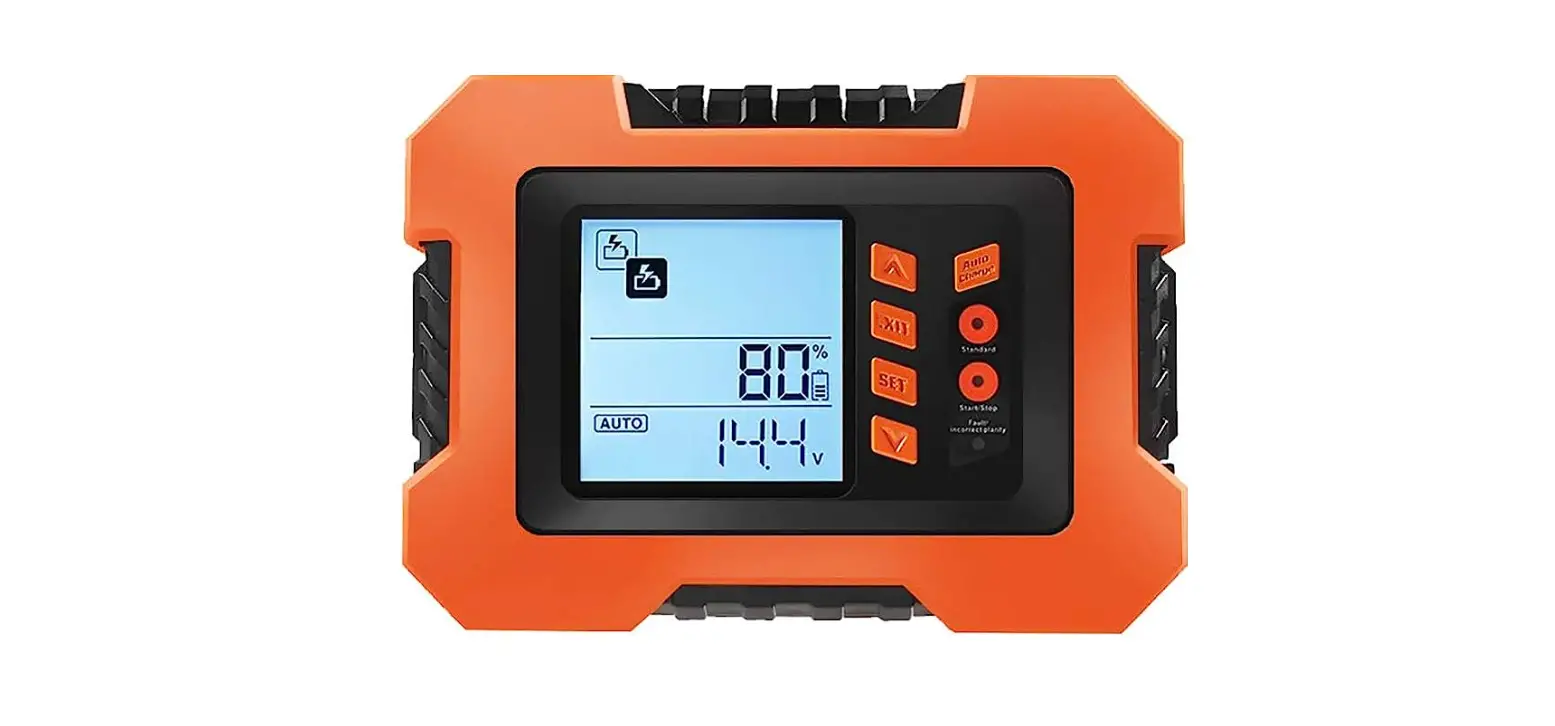
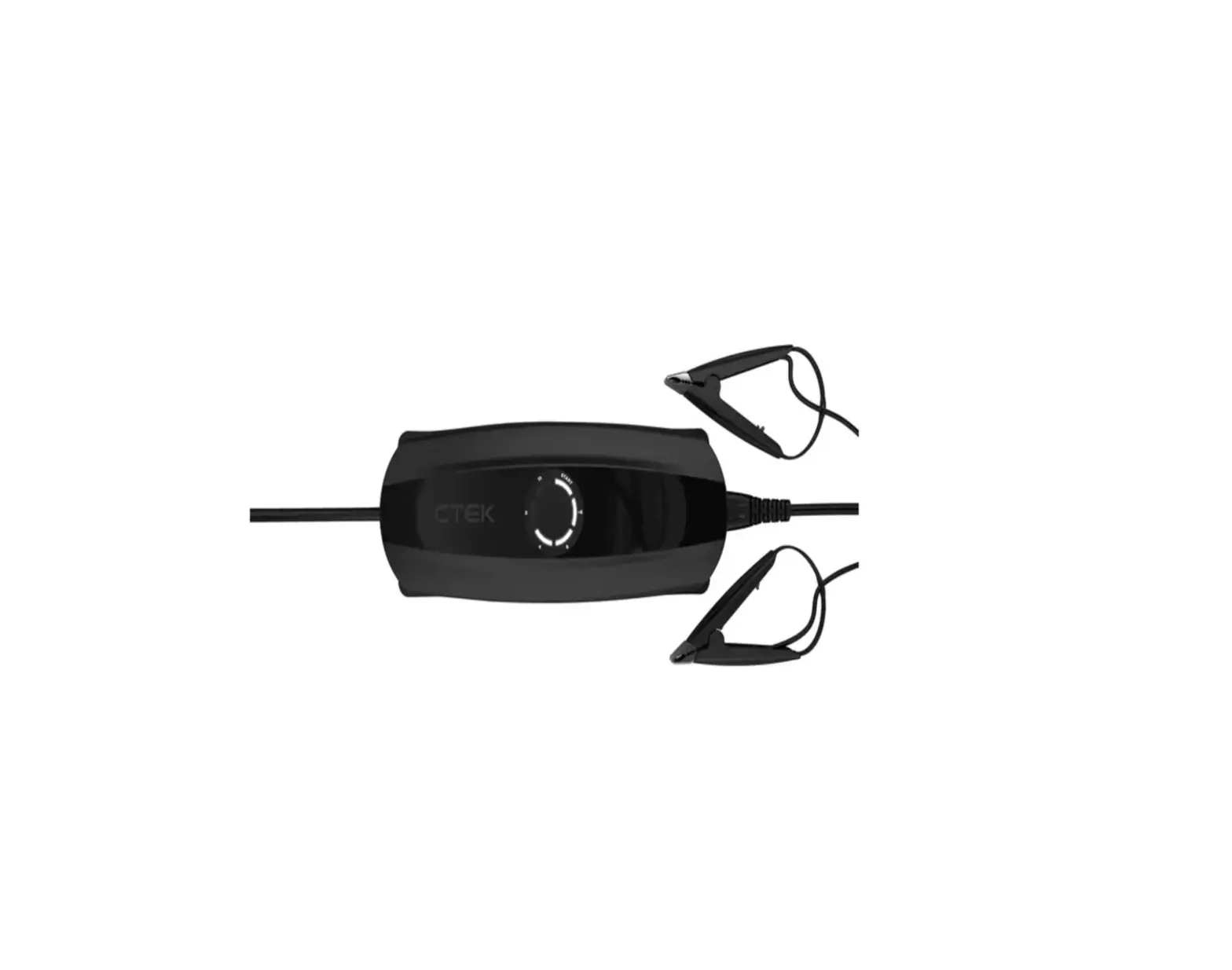
PNI C120 Car Battery Charger
Product Information:
The PNI C120 is a battery charger with multiple charging modes
and testing functions. It is designed to charge and maintain lead
acid batteries, including AGM (Absorbent Glass Mat) batteries. The
charger has a LCD screen and navigation keys for easy operation. It
also features an auto charge/memory function and standard vehicle
settings for lead acid batteries. The charger has an error/reversed
polarity indicator to ensure safe usage.
Charging Modes:
| Charging Stage | Description |
|---|---|
| Desulfation | The automatic desulfation stage charges the battery to break down the build up of lead sulfate crystals. This stage is activated when the battery has been discharged or left unused for a certain period of time. |
| Soft Start | A slow steady increase of the charging process that limits the applied charging current until the battery voltage is over 12V. |
| Bulk Charge | The main stage in the loading process when 80% of the required loading is achieved. |
| Absorption | The battery is charged to full capacity with a steady decrease in charging current to allow the battery to absorb more power. |
| Battery Test | The Smart Charge function performs an automatic discharge test. If further charging is required, the battery reconditioning function is automatically selected. The battery will enter the float stage if it is fully charged. |
| Reconditioning | An additional automatic charging stage to recover deeply discharged batteries. |
| Float | The float stage keeps the battery 100% charged, avoiding overcharging or damage. It is ideal for batteries used only intermittently, such as seasonally used batteries for motorcycles, caravans, boats, and classic cars. |
Product Usage Instructions:
Connection:
Before connecting or disconnecting the charger, make sure to
disconnect it from the engine block and fuel lines.
To disconnect the charger from the battery, follow these
steps:
- Disconnect the charger from the engine block.
- Disconnect the charger from the battery.
Battery Charging:
To charge the battery, follow these steps:
- Select the desired charging mode using the arrow keys on the
charger and press SET. - Select the desired loading mode using the arrow keys on the
charger and press SET.
Charging Modes:
| Charging Mode | Description |
|---|---|
| Normal Battery Charging (up to 12A) | This is the default charging mode for standard vehicles. |
| Maintenance Charging (0.8A) | This mode is ideal for long-term seasonal connection. It provides a low charging rate. |
| Winter Charging | This mode applies a controlled increased charging voltage to allow recovery of deeply discharged batteries. |
| Battery Reconditioning | This mode is used to recondition deeply discharged batteries. |
| Start/Stop Vehicles | This mode is specifically designed for AGM batteries used in start/stop vehicles. |
| Standard Vehicles | This mode is the default charging mode for standard vehicles with lead acid batteries. |
If you press the EXIT button, you will return to the main menu
page.
Pressing the Auto Charge button will automatically select the
fastest charge rate that the connected battery can safely take.
Once this mode is selected, the corresponding icon will appear on
the screen.
Battery Analysis:
The charger has a battery analysis function that can be
performed with or without the rectifier connected to the AC power
source. To perform a battery analysis, follow these steps:
- Press the arrow keys on the charger to select the battery
analysis icon and press SET. - Select the desired type of analysis using the arrow keys on the
charger and press SET.
Battery Analysis Parameters:
| Parameter | Description |
|---|---|
| Battery Voltage | Displays the voltage of the battery. |
| Battery Start Power | Indicates the start power of the battery. |
| Alternator Output | Shows the output of the alternator. |
| Battery Capacity | Displays the capacity of the battery. |
The battery analysis function is automatically activated when
the charger clips are connected to the battery.
PNI C120
Car battery charger/ / Ladegerät für Autobatterien / Cargador de batería de coche / Chargeur de batterie
de voiture / Autó akkumulátor tölt / Caricabatterie per auto / Auto acculader / Ladowarka do akumulatorów samochodowych / Incarcator si redresor pentru acumulatori auto
EN User manual ………………………………………………… 3 BG ……………………….. 11 DE Benutzerhandbuch ………………………………………. 21 ES Manual de usuario ……………………………………….. 30 FR Manuel utilisateur ……………………………………….. 39 HU Használati utasítás ………………………………………. 48 IT Manuale utente ………………………………………….. 57 NL Handleiding ……………………………………………….. 66 PL Instrukcja obslugi ……………………………………….. 75 RO Manual de utilizare ……………………………………… 84
English
Keys and functions
1 3
4 2
5
6
1. LCD screen 2. Navigation keys (Up/Down), EXIT, SET 3. Auto Charge/Memory 4. Standard vehicle settings with lead acid battery (14.4V) 5. Start/Stop (AGM) vehicle settings (14.6V) 6. Error/Reversed polarity
Icons and functions
Charging modes
Testing modes
3
User manual
Charging stages
English
1. Desulfation – the automatic desulfation stage charges the battery to break down the build up of lead sulfate crystals. These crystals occur when the battery has been discharged or left unused for a certain period of time.
2. Soft Start – a slow steady increase of the charging process that limits the applied charging current until the battery voltage is over 12V.
3. Bulk Charge- is the main stage in the loading process when 80% of the required loading is achieved.
4. Absorption – the battery is charged to full capacity with a steady decrease in charging current to allow the battery to absorb more power.
5. Battery test – the Smart Charge function performs an automatic discharge test. If further charging is required, the battery reconditioning function is automatically selected. The battery will enter the “float” stage if it is fully charged.
6. Reconditioning – an additional automatic charging stage to recover deeply discharged batteries.
7. Float – the “float” stage keeps the battery 100% charged, avoiding its overcharging or damage, allowing the charger to be left connected to the battery for an indefinite period. Ideal for battery used only intermittently, such as seasonally used batteries for motorcycles, caravans, boats and classic cars.
Connection
1. Make sure the AC adapter is not connected to the AC mains supply. 2. a. For batteries inside the vehicle: · Attach the red (+) clip to the red (+) terminal of the battery. · Attach the black (-) clip to a bolt or bracket on the engine block, away
from the battery and fuel lines.
User manual
4
English
2. b. For batteries outside the vehicle: · Attach the red (+) clip to the red (+) terminal of the battery. · Attach the black (+) clip to the black (+) terminal of the battery. Note: If you have reversed the polarity, the LED on the charger will light up. 3. Connect the mains plug to the AC mains supply. 4. After charging the battery, disconnect the charger from the mains supply.
Disconnect the charger from the engine block and then from the battery.
Battery charging
Select the required charging mode:
Normal battery Maintenance
charging
charging
* (up to 12A) (0.8A)
* Default charging modes
Winter charging
Battery recondition
Start/Stop vehicles
Standard vehicles *
1. Select the vehicle battery type: · Standard vehicles that use lead acid battery (14.4V applied) · Start/Stop vehicles that use AGM battery type (14.6V applied)
2. Press the arrow keys on the charger to select the icon charging). Then, press SET.
(Battery
3. Press the arrow keys on the charger to select the icon corresponding to the desired loading mode, then press the SET button.
·
– Battery charging mode
Recommended mode for standard batteries and for charging at temperatures higher than 5°C. Increases the battery voltage to 14.4V (standard vehicles) or 14.6V (start/stop vehicles).
·
– Maintenance mode
Low charging rate 0.8A, ideal for long term seasonal connection.
5
User manual
English
·
– Winter mode
Recommended mode to charge the batteries in very low temperature conditions (-20 ° C ~ + 5 ° C). Increase battery voltage to 14.6V (for standard vehicle) or 14.8V (start/stop vehicles).
·
– Recondition mode
Apply a controlled increased charging voltage to allow recovery of deeply discharged batteries.
If you press the EXIT button, you return to the main menu page.
Pressing Auto Charge button it will automatically be selected the fastest
charge rate the connected battery can safely take. Once this mode is selected,
the icon
will appear on the screen.
Charging is complete when on the screen appears the icon
Battey analysis
Battery voltage
Battery start power
Alternator output
Battery capacity
The battery analysis function works with or without the rectifier connected to the AC power source. By connecting the charger clips to the battery, it automatically activates the charger.
1. Press the arrow keys on the charger to select the icon . Then press the SET button.
1. Press the arrow keys on the charger to select the icon corresponding to the type of analysis you want to perform, then press the SET button.
·
– Battery voltage
User manual
6
Displays the battery voltage and the percentage of its capacity.
English
12.7V-100% 12.4V-80% 12.2V-60% 12.5V-90% 12.3V-70% 12.1V-50%
11.9V-40% 11.8V-30%
11.6V-20% 11.3V-10%
·
– Battery start power
Measures the voltage drop during engine starting to identify potential starting problems due to battery failure.
When A1 appears on the screen, press the SET button to measure the static battery voltage. When A2 appears on the screen, turn the ignition key to start the vehicle engine.
·
– Battery capacity
Measures battery capacity to determine its ability to start a vehicle’s engine.
Use the arrow keys to select CCA or EN + SET button.
CCA + SET + arrow keys to enter the CCA standard of the battery (marking on the battery will state the battery standard and value) EN + SET + arrow keys to enter the EN standard of the battery (marking on the battery will state the battery standard and value)
If CCA or EN values not stated, select CCA and use below table:
1000-1299cc 1300-1599cc 1600-1999cc 2000-2999cc 3000-3500cc
300 CCA 400 CCA 500 CCA 700 CCA 800 CCA
Actual battery value is displayed plus the capacity (%).
7
User manual
English
Also, it is displayed the status: OK (>74%), Check (50-74%) or Low/Bad (<50%):
·
– Alternator output
Measures battery capacity to determine its ability to start a vehicle’s engine.
When A1 appears on the display, rev the engine to 3000rpm * + SET. Keep the engine running at 3000rpm for 10 seconds until the timer on the screen reaches 0. When A2 appears on the screen, rev the engine at 2000rpm ** + SET. Keep the engine running at 2000rpm for 10 seconds until the timer on the screen reaches 0.
* 3000 rpm no battery loading (for example, no lights, AC etc.) ** 2000 rpm no battery loading (for example, no lights, AC etc.)
Memory function
The memory function allows saving audio and electrical settings when the vehicle battery is removed.
1. Connect the charger’s clips to the vehicle battery terminals. 2. Connect the charger to the AC mains, then press the Auto Charge
button for 5 seconds. Memory Saver mode is activated if MEM appears on the screen. 3. Remove the vehicle battery.
Note: Connect the charger and the battery correctly (red to + and black to -) before pressing the Smart Charge button, to make sure you do not lose the electrical and audio settings of the vehicle.
User manual
8
English
Error codes
Code F01 F02 F03 F04
Details The battery voltage is below 12V, after charging for 300 min. If after 20 hours (five times in reconditioning mode), due to a faulty battery, the battery does not enter the “float” stage. The battery voltage is too high.
Actual charging rate exceeds the set charge rate.
The charger temperature is too high.
Reason The battery is defective or a load is connected to the battery. Battery is sulfated beyond reconditioning.
Battery rated above. Error during charging process or interference from another device.
The charger is located in a location with too high a temperature and without ventilation.
Action Replace the battery. Disconnect the load from the battery. Replace the battery.
Check the battery rating. Disconnect the charger from the AC mains and restart. If the problem persists, the rectifier is defective. Disconnect devices that may cause interference. Select a lower charging current to continue charging or allow the charger to cool for 30 min. Leave at least 10 cm around the charger for its ventilation.
9
User manual
English
Disconnect the
The charging current charger from the
F05
The charger does not enter “float” state within 24 hours.
is too low. A load is connected to the battery. The battery is
AC mains, restart and select a higher charging current. Remove the load
defective.
from the battery.
Replace the battery.
F06 Reversed polarity.
The charger’s clips were connected incorrectly.
Reconnect the chargers clips correctly.
F07
The charging voltage is too high during the alternator test.
Poor functioning regulator.
Check the regulator.
The charging voltage Belt may be loose.
F08 is too low during the Poor functioning
alternator test.
alternator.
Check the belt and the alternator.
Technical specifications
Input voltage
Charging voltage
Charging current Types of batteries Dimensions Weight Operating temperature
200-240VAC, 50Hz 14.4V (winter 14.6V) – standard vehicles 14.6V (winter 14.8V) – START/ STOP (AGM) vehicles Up to 12A Lead acid, Gel, Calcium, AGM, EFB 25-300Ah (charging) 195 x 138 x 78 mm 1.51 kg -26°C ~ +80°C
User manual
10
1 3
4 2
5
6
1. LCD 2. (/), EXIT, SET 3. / 4. –
(14,4 V) 5. / (AGM) (14,6 V) 6. /
Charging modes
Testing modes
11
1. – , . , .
2. – , , 12V.
3. – , 80% .
4. – , .
5. – Smart Charge . , . “float” , .
6. – .
7. – ,,float” 100% , , . , , , , .
12
1. , .
2. . : · (+) (+)
. · (-)
, .
2. b. : · (+) (+)
. · (+) (+) .
: , .
3. . 4. ,
. .
:
* (up to 12A) (0.8A)
*
/
*
1. : · , –
( 14,4 V) · / ,
AGM ( 14,6 V)
13
2. , ( ). SET.
3. , , , SET.
·
–
– 5°C. 14,4 V ( ) 14,6 V (/ ).
·
–
0,8 A, .
·
–
(-20°C ~ + 5°C). 14,6 V ( ) 14,8 V (/ ).
·
–
, .
EXIT, .
– ,
14
. ,
.
,
, . , .
1. , . SET.
2. , , , , SET.
·
–
.
12.7V-100% 12.4V-80% 12.2V-60% 12.5V-90% 12.3V-70% 12.1V-50%
11.9V-40% 11.8V-30%
11.6V-20% 11.3V-10%
·
–
, .
15
A1 , SET, . A2 , , .
·
–
, .
, CCA EN + SET.
CCA + SET + CCA ( ) EN + SET + EN ( )
CCA EN , CCA -:
1000-1299cc 1300-1599cc 1600-1999cc 2000-2999cc 3000-3500cc
300 CCA 400 CCA 500 CCA 700 CCA 800 CCA
(%). : OK (>74%), (50-74%) / (<50%):
·
–
16
, .
A1 , 3000 / * + . 3000 / 10 , 0. A2 , 2000rpm ** + SET. 2000 / 10 , 0.
* 3000 rpm ( , .) ** 2000 rpm ( , .)
, .
3. .
4. , 5 . , MEM.
5. .
: ( + -), Smart Charge, , .
17
.
12V,
300 .
.
.
20
.
F01 (
),
,
,,float”.
F02
.
– .
.
F03 .
.
,
.
.
,
.
18
F04
.
.
– , , 30 . 10 .
F05
“” 24 .
. . .
, – . . .
F06
.
.
.
F07
.
.
.
19
F08
.
.
.
.
200-240VAC, 50Hz
14.4V ( 14.6V) – 14.6V ( 14.8V) – START/STOP (AGM)
12
, , , AGM, EFB 25-300Ah ()
195 x 138 x 78 mm
1.51 kg
-26°C ~ +80°C
20
Deutsche
Beschreibung der Schlüssel
1 3
4 2
5
6
1. LCD Bildschirm 2. Navigationstasten (Auf/Ab), EXIT (Beenden), SET (Bestätigung) 3. Automatisches Laden/Speichern 4. Standard-Fahrzeugeinstellungen mit Blei-Säure-Batterie (14,4 V) 5. Start/Stopp-Einstellungen (AGM) Fahrzeug (14,6V) 6. Fehler/Polarität vertauscht
Bildschirmbeschreibung
Charging modes
Testing modes
21
Benutzerhandbuch
Ladestufen
Deutsche
1. Desulfatierung Die automatische Desulfatierungsstufe lädt die Batterie auf, um die Ansammlung von Bleisulfatkristallen aufzulösen. Diese Kristalle lagern sich ab, wenn die Batterie entladen ist oder eine bestimmte Zeit lang nicht genutzt wurde.
2. Soft Start ein konstanter langsamer Anstieg des Ladevorgangs, der den angelegten Ladestrom begrenzt, bis die Batteriespannung über 12 V liegt.
3. Laden (Massenladung) ist die Hauptphase des Ladevorgangs, wenn 80 % der erforderlichen Ladung abgeschlossen sind.
4. Absorption Der Akku wird mit einer konstanten Verringerung des Ladestroms auf die maximale Kapazität aufgeladen, damit der Akku mehr Energie aufnehmen kann.
5. Batterietest (Batterietest) Die Smart Charge-Funktion führt einen automatischen Entladetest durch. Ist eine anschließende Aufladung erforderlich, wird automatisch die Batterie-Rekonditionierungsfunktion ausgewählt. Wenn der Akku vollständig geladen ist, geht er in die ,,Erhaltungs”-Phase über.
6. Rekonditionierung eine zusätzliche automatische Ladestufe zur Wiederherstellung extrem entladener Batterien.
7. Float die ,,Float”-Stufe hält die Batterie zu 100 % geladen, verhindert Überladung oder Beschädigung und ermöglicht, dass der Gleichrichter für einen unbestimmten Zeitraum an die Batterie angeschlossen bleibt. Ideal für Batterien, die nur zeitweise verwendet werden, z. B. Batterien, die saisonal für Motorräder, Wohnwagen, Boote usw. verwendet werden.
Gleichrichter anschließen
1. Stellen Sie sicher, dass das Netzteil nicht an eine Wechselstromquelle angeschlossen ist.
Benutzerhandbuch
22
Deutsche
2. a. Für die im Fahrzeug befindlichen Batterien: · Verbinden Sie die rote (+) Klemme des Gleichrichters mit dem roten (+)
Anschluss der Batterie. · Verbinden Sie die schwarze (-) Klemme des Gleichrichters mit
einer Schraube am Motorblock, entfernt von der Batterie und den Kraftstoffleitungen. 2. b. Für Batterien, die außerhalb des Fahrzeugs platziert sind · Verbinden Sie die rote (+) Klemme des Gleichrichters mit dem roten (+) Anschluss der Batterie. · Verbinden Sie die schwarze (-) Klemme des Gleichrichters mit dem schwarzen (-) Anschluss der Batterie. Hinweis: Wenn Sie die Polarität vertauscht haben, leuchtet die LED am Gleichrichter. 3. Schließen Sie das Netzteil an eine Wechselstromquelle an und schalten Sie den Gleichrichter ein. 4. Trennen Sie nach dem Laden der Batterie den Gleichrichter von der Stromquelle. Trennen Sie dann den Gleichrichter vom Motorblock und dann von der Batterie.
Batterieladung
Wählen Sie den Batterielademodus:
Normales Laden Erhaltungsladung
* (bis zu 12A) (0.8A) * Standardlademodi
Laden im Winter
Batterie überholung
Fahrzeugstart/- Standard
stopp
fahrzeuge
*
1. Wählen Sie den Batterietyp des Fahrzeugs aus: · Standardfahrzeug mit Blei-Säure-Batterie (14,4 V) · Fahrzeug mit AGM-Batterie (14,6 V) starten/stoppen
2. Drücken Sie die Pfeiltasten am Gleichrichter, um das Symbol auszuwählen
(Laden des Akkus). Drücken Sie dann die SET-Taste.
3. Drücken Sie die Pfeiltasten am Gleichrichter, um das Symbol auszuwählen,
23
Benutzerhandbuch
Deutsche
das dem gewünschten Lademodus entspricht, und drücken Sie dann die SET-Taste.
·
– Lade- und Wartungsmodus.
Empfohlener Modus für Standardbatterien und zum Laden bei
Temperaturbedingungen über 5 °C. Erhöhen Sie die Batteriespannung auf
14,4 V (Standardfahrzeuge) oder 14,6 V (Start-/Stopp-Fahrzeuge).
·
– Erhaltungslademodus
Laden mit 0,8 A, ideal für lange Verbindungen.
·
– Winterlademodus
Empfohlener Modus zum Laden von Batterien bei sehr niedrigen Temperaturen (-20 °C ~ +5 °C). Erhöhen Sie die Batteriespannung auf 14,6 V (für Standardfahrzeuge) oder 14,8 V (für Start/Stopp-Fahrzeuge)..
·
– Reparaturmodus
Es legt kontrolliert eine erhöhte Ladespannung an, um die Wiederherstellung tiefentladener Batterien zu ermöglichen.
Wenn Sie die EXIT-Taste drücken, kehren Sie zur Hauptmenüseite zurück.
Durch Drücken der Auto Charge-Taste wird automatisch der schnellste
und sicherste Lademodus für den Akku ausgewählt. Sobald dieser Modus
ausgewählt ist, erscheint das Symbol auf dem Bildschirm
.
Der Ladevorgang ist abgeschlossen, wenn auf dem Bildschirm angezeigt wird
Batterieanalyse
Batteriespannung
Startleistung des Motors Generatorausgang
Batteriekapazität
Die Batterieanalysefunktion funktioniert mit oder ohne an die
Benutzerhandbuch
24
Deutsche
Wechselstromquelle angeschlossenen Gleichrichter. Durch den Anschluss des Gleichrichters über Klemmen an die Batterie wird der Gleichrichter automatisch aktiviert. 1. Drücken Sie die Pfeiltasten am Gleichrichter, um das Symbol auszuwählen
(Batterieanalysator). Drücken Sie dann die SET-Taste. 2. Drücken Sie die Pfeiltasten am Gleichrichter, um das Symbol auszuwählen,
das der Art der Analyse entspricht, die Sie durchführen möchten, und drücken Sie dann die SET-Taste.
·
– Analyse der Batteriespannung.
Es zeigt die Batteriespannung und den Prozentsatz ihrer Kapazität an.
12.7V-100% 12.4V-80% 12.2V-60% 12.5V-90% 12.3V-70% 12.1V-50%
11.9V-40% 11.8V-30%
11.6V-20% 11.3V-10%
·
– Analyse der Batteriestartleistung
Es misst den Abfall der Batteriespannung während des Motorstarts, um mögliche Startprobleme aufgrund eines Batterieausfalls zu erkennen.
Wenn A1 auf dem Bildschirm erscheint, drücken Sie die SET-Taste, um die statische Spannung der Batterie zu messen. Wenn A2 auf dem Bildschirm erscheint, drehen Sie den Schlüssel im Zündschloss, um den Motor des Fahrzeugs zu starten.
·
– Analyse der Batteriekapazität
Es misst die Fähigkeit der Batterie, den Motor eines Fahrzeugs zu starten.
Wählen Sie mit den Pfeiltasten CCA oder EN + SET-Taste aus.
CCA + SET + Pfeiltasten zur Auswahl des CCA-Standards der Batterie (er ist auf der Batterie markiert)
25
Benutzerhandbuch
Deutsche
EN + SET + Pfeiltasten zur Auswahl der EN-Norm der Batterie (diese ist auf der Batterie markiert) Wenn Sie keine Informationen zum CCA- oder EN-Wert haben, wählen Sie CCA auf dem Bildschirm aus und verwenden Sie die Tabelle unten:
1000-1299cc 1300-1599cc 1600-1999cc 2000-2999cc 3000-3500cc
300 CCA 400 CCA 500 CCA 700 CCA 800 CCA
Der tatsächliche Wert und die Kapazität (%) des Akkus werden auf dem Bildschirm angezeigt.
Außerdem wird der Status angezeigt: OK (>74 %), Prüfen (50-74 %) oder Niedrig/Schlecht (<50 %):
·
– Analyse der Generatorleistung
Es misst die Fähigkeit der Batterie, den Motor eines Fahrzeugs zu starten.
Wenn A1 auf dem Bildschirm erscheint, drehen Sie den Motor auf 3000 U/ min* + SET. Lassen Sie den Motor 10 Sekunden lang laufen, bis der Timer auf dem Bildschirm 0 erreicht. Wenn A2 auf dem Bildschirm erscheint, drehen Sie den Motor auf 2000 U/ min** + SET. Lassen Sie den Motor 10 Sekunden lang laufen, bis der Timer auf dem Bildschirm 0 erreicht.
* 3000 U/min ohne Verbraucher an der Batterie (z. B. ohne eingeschaltetes Licht oder Klimaanlage) ** 2000 U/min ohne Verbraucher an der Batterie (z. B. ohne eingeschaltetes Licht oder Klimaanlage)
Benutzerhandbuch
26
Speicherfunktion
Deutsche
Die Memory-Funktion ermöglicht das Speichern der Audio- und Elektroeinstellungen bei entnommener Fahrzeugbatterie. 1. Verbinden Sie die Klemmen des Gleichrichters mit den Anschlüssen der
Fahrzeugbatterie. 2. Schließen Sie den Gleichrichter an eine Wechselstromquelle an
und drücken Sie dann 5 Sekunden lang die Auto-Charge-Taste am Gleichrichter. Der Speichersparmodus wird aktiviert, wenn MEM auf dem Bildschirm angezeigt wird. 3. Entfernen Sie die Fahrzeugbatterie. Hinweis: Schließen Sie die beiden Geräte korrekt an (rot an + und schwarz an -), bevor Sie die Smart Charge-Taste drücken, um sicherzustellen, dass Sie die elektrischen und Audioeinstellungen des Fahrzeugs nicht verlieren.
Fehlercodes
Code
Einzelheiten Die Batteriespannung liegt nach einer Ladezeit von 300 Minuten unter 12 V.
Grund Die Batterie ist defekt oder ein Verbraucher ist an die Batterie angeschlossen.
Aktion Ersetzen Sie die Batterie. Trennen Sie den Verbraucher von der Batterie.
Wenn die Batterie Die Batterie ist nach Ersetzen Sie die
F01 nach 20 Stunden der Überholung
Batterie.
(fünfmal im
sulfatiert.
Rekonditionierungs
modus) aufgrund
einer defekten
Batterie nicht in die
,,Erhaltungsphase”
übergeht
F02
Batteriespannung ist Die Batterie hat
zu hoch.
mehr als 12V.
Überprüfen Sie die Batteriespannung.
27
Benutzerhandbuch
Deutsche
Die tatsächliche
F03
Laderate überschreitet die
eingestellte Rate.
Gleichrichter F04 temperatur ist zu
hoch.
Der Gleichrichter wechselt nicht F05 innerhalb von 24 Stunden in den ,,Float”-Modus.
Benutzerhandbuch
Fehler beim Ladevorgang oder Störung durch ein anderes Gerät.
Trennen Sie den Gleichrichter von der Wechselstromquelle und starten Sie ihn neu. Wenn das Problem weiterhin besteht, ist der Gleichrichter defekt. Trennen Sie Geräte, die Störungen verursachen könnten
Der Gleichrichter befindet sich an einem Ort mit zu hoher Temperatur und ohne Belüftung.
Wählen Sie einen niedrigeren Ladestrom, um den Ladevorgang fortzusetzen, oder warten Sie 30 Minuten, bis der Gleichrichter abgekühlt ist. Sorgen Sie für einen Freiraum von mindestens 10 cm rund um den Gleichrichter. für seine Belüftung.
Trennen Sie den
Gleichrichter von der
Der Ladestrom ist zu Wechselstromquelle,
niedrig.
starten Sie ihn neu
An die Batterie ist und wählen Sie einen
ein Verbraucher
höheren Ladestrom.
angeschlossen.
Entfernen Sie den
Die Batterie ist
Verbraucher von der
defekt.
Batterie.
Ersetzen Sie die
Batterie.
28
Deutsche
Die Gleichrichter F06 Polarität vertauscht. klemmen waren
Schließen Sie die Zange wieder richtig
falsch angeschlossen. an.
F07
Beim Lichtmaschinentest ist die Ladespannung zu hoch.
Der Regler ist schlecht funktionsfähig.
Überprüfen Sie den Regler.
F08
Beim Lichtmaschinentest ist die Ladespannung zu niedrig.
Die Lichtmaschine ist schlecht funktionsfähig.
Überprüfen Sie die Lichtmaschine.
Technische Spezifikationen
Versorgungsspannung
Ladespannung
Der Ladestrom Kompatibler Akku Größe Gewicht
200-240VAC, 50Hz 14,4 V (Winter 14,6 V) für Standardfahrzeuge 14,6 V (14,8 V im Winter) für Fahrzeuge START/STOP (AGM) Bis 12A Bleisäure, Gel, Kalzium, AGM, EFB 25-300Ah (Laden) 195 x 138 x 78 mm 1.51 kg
29
Benutzerhandbuch
Español
Descripción de las llaves
1 3
4 2
5
6
1. Pantalla LCD 2. Teclas de navegación (Arriba/Abajo), EXIT (Salir), SET (Confirmación) 3. Carga automática/memoria 4. Configuración estándar del vehículo con batería de plomo ácido (14,4 V) 5. Ajustes de arranque/parada (AGM) vehículo (14,6 V) 6. Error/Polaridad invertida
Descripción de la pantalla
Charging modes
Testing modes
Manual de usuario
30
Etapas de carga
Español
1. Desulfatación: la etapa de desulfatación automática carga la batería para descomponer la acumulación de cristales de sulfato de plomo. Estos cristales se depositan cuando la batería se ha descargado o se ha dejado sin utilizar durante un determinado periodo de tiempo.
2. Arranque suave: un aumento lento y constante del proceso de carga que limita la corriente de carga aplicada hasta que el voltaje de la batería supera los 12 V.
3. Carga (carga a granel): es la etapa principal en el proceso de carga cuando se completa el 80% de la carga requerida.
4. Absorción: la batería se carga a su máxima capacidad con una disminución constante de la corriente de carga para permitir que la batería absorba más energía.
5. Prueba de batería (Battery test): la función Smart Charge realiza una prueba de descarga automática. Si se requiere una carga posterior, la función de reacondicionamiento de la batería se selecciona automáticamente. Si la batería está completamente cargada, entrará en la etapa de “float”.
6. Reacondicionamiento: una etapa de carga automática adicional para la recuperación de baterías extremadamente descargadas.
7. Flotación – la etapa de “float” mantiene la batería 100% cargada, evitando sobrecargarla o dañarla, permitiendo que el rectificador se conecte a la batería por tiempo indefinido. Ideal para baterías de uso intermitente, como baterías de uso estacional para motos, caravanas, barcos, etc.
Conexión del rectificador
1. Asegúrese de que el adaptador de CA no esté conectado a una fuente de alimentación de CA.
2. a) Para las baterías colocadas en el vehículo:
31
Manual de usuario
Español
· Conecte la pinza roja (+) del rectificador al terminal rojo (+) de la batería. · Conecte la abrazadera negra (-) del rectificador a un perno en el bloque
del motor, lejos de la batería y las líneas de combustible.. 2. b. Para baterías colocadas fuera del vehículo · Conecte la pinza roja (+) del rectificador al terminal rojo (+) de la batería. · Conecte la pinza negra (-) del rectificador al terminal negro (-) de la
batería. Nota: Si invirtió la polaridad, el LED del rectificador se encenderá. 3. Conecte el adaptador de CA a una fuente de alimentación de CA y
encienda el rectificador. 4. Después de cargar la batería, desconecte el rectificador de la fuente de
alimentación. Luego, desconecte el rectificador del bloque del motor y luego de la batería.
Bateria cargando
Seleccione el modo de carga de la batería:
Carga normal
Carga de
Cargando en
mantenimiento invierno
* (pana la 12A) (0.8A)
* Modos de carga predeterminados
Reacondi cionamiento de batería
Arranque/ parada del vehículo
Vehículos estándar *
1. Seleccione el tipo de batería del vehículo: · Vehículo estándar con batería de plomo ácido (14,4 V) · Arrancar/Parar vehículo con batería AGM (14,6 V)
2. Pulse las teclas de flecha del rectificador para seleccionar el icono (Bateria cargando). Luego presione el botón CONFIGURAR.
3. Presione las teclas de flecha en el rectificador para seleccionar el icono correspondiente al modo de carga deseado, luego presione el botón SET.
·
– Modo de carga y mantenimiento (charging and maintenance).
Manual de usuario
32
Español
Modo recomendado para baterías estándar y para carga en condiciones de temperatura superiores a 5°C. Aumente el voltaje de la batería a 14,4 V (vehículos estándar) o 14,6 V (vehículos con arranque/parada).
·
– Modo de carga de mantenimiento (maintenance charge)
Carga a 0.8A, ideal para largas conexiones.
·
– Modo de carga de invierno (winter charge)
Modo recomendado para cargar baterías en condiciones de muy baja temperatura (-20°C ~ +5°C). Aumente el voltaje de la batería a 14,6 V (para vehículos estándar) o 14,8 V (para vehículos Start/Stop).
·
– Modo de reacondicionamiento (repair)
Aplica un mayor voltaje de carga de manera controlada para permitir la recuperación de baterías muy descargadas.
Si presiona el botón SALIR, volverá a la página del menú principal.
Al presionar el botón de carga automática, se seleccionará automáticamente
el modo de carga más rápido y seguro para la batería. Una vez seleccionado
este modo, aparecerá el icono en la pantalla
.
La carga se completa cuando aparece en la pantalla
Análisis de batería
Voltaje de la batería
Potencia de arranque del motor
Salida del alternador
Capacidad de la batería
La función de análisis de batería funciona con o sin el rectificador conectado a la fuente de alimentación de CA. Conectando el rectificador mediante pinzas a la batería, se activa automáticamente el rectificador. 1. Pulse las teclas de flecha del rectificador para seleccionar el icono
(Analizador de Baterías). Luego presione el botón CONFIGURAR.
33
Manual de usuario
Español
2. Presione las teclas de flecha en el rectificador para seleccionar el icono correspondiente al tipo de análisis que desea realizar, luego presione el botón SET.
·
– Análisis de voltaje de la batería (battery voltage).
Muestra el voltaje de la batería y el porcentaje de su capacidad.
12.7V-100% 12.4V-80% 12.2V-60% 12.5V-90% 12.3V-70% 12.1V-50%
11.9V-40% 11.8V-30%
11.6V-20% 11.3V-10%
·
– Análisis de potencia de arranque del motor (battery start power)
Mide la caída de tensión de la batería durante el arranque del motor para identificar posibles problemas de arranque por fallo de la batería.
Cuando aparezca A1 en la pantalla, presione el botón SET para medir el voltaje estático de la batería. Cuando aparezca A2 en la pantalla, gire la llave en el encendido para arrancar el motor del vehículo.
·
– Análisis de capacidad de la batería (battery capacity)
Mide la capacidad de la batería para arrancar el motor de un vehículo.
Use las teclas de flecha para seleccionar CCA o EN + botón SET.
CCA + SET + teclas de flecha para seleccionar el estándar CCA de la batería (está marcado en la batería) EN + SET + teclas de flecha para seleccionar el estándar EN de la batería (está marcado en la batería)
Si no tiene información sobre el valor CCA o EN, seleccione CCA en la pantalla y use la tabla a continuación:
Manual de usuario
34
Español
1000-1299cc 1300-1599cc 1600-1999cc 2000-2999cc 3000-3500cc
300 CCA 400 CCA 500 CCA 700 CCA 800 CCA
El valor real y la capacidad (%) de la batería se muestran en la pantalla.
También se muestra el estado: OK (>74%), Check (50-74%) o Low/Bad (<50%):
·
– Análisis de salida del alternador (alternator output)
Mide la capacidad de la batería para arrancar el motor de un vehículo.
Cuando aparezca A1 en la pantalla, gire el motor a 3000rpm* + SET. Mantenga el motor en marcha durante 10 segundos, hasta que el temporizador de la pantalla llegue a 0. Cuando aparezca A2 en la pantalla, gire el motor a 2000 rpm** + SET. Mantenga el motor en marcha durante 10 segundos, hasta que el temporizador de la pantalla llegue a 0.
* 3000 rpm sin consumidores en la batería (por ejemplo, sin luces encendidas o aire acondicionado) ** 2000 rpm sin consumidores en la batería (por ejemplo, sin luces encendidas o aire acondicionado)
Función de memoria
La función de memoria permite guardar los ajustes eléctricos y de audio cuando se extrae la batería del vehículo. 3. Conecte las pinzas del rectificador a los terminales de la batería del
vehículo. 4. Conecte el rectificador a una fuente de CA, luego presione el botón
35
Manual de usuario
Español
de carga automática en el rectificador durante 5 segundos. El modo de ahorro de memoria se activa si MEM aparece en la pantalla. 5. Retire la batería del vehículo.
Nota: Conecta los dos dispositivos correctamente (rojo a + y negro a -) antes de presionar el botón Smart Charge, para asegurarte de no perder la configuración eléctrica y de audio del vehículo.
Códigos de error
Detalles
Razón
Acción
El voltaje de la batería es La batería está
Reemplace la batería.
inferior a 12 V, después defectuosa o hay
Desconecte el
de una carga de 300 un consumidor
consumidor de la
min.
conectado a la
batería.
F01
Si después de 20 horas (cinco veces en modo
batería.
Reemplace la batería.
reacondicionamiento), La batería se
debido a una batería
sulfató después del
defectuosa, la batería no reacondicionamiento.
entra en la etapa “float”
F02
El voltaje de la batería es La batería tiene más
demasiado alto.
de 12V.
Comprobar el voltaje de la batería.
Desconecte el
rectificador de la
fuente de CA y
La tasa de carga F03 real excede la tasa
establecida.
Error durante el proceso de carga o interferencia de otro dispositivo.
reinicie. Si el problema persiste, el rectificador está defectuoso. Desconecte los
dispositivos que
puedan causar
interferencia.
Manual de usuario
36
Español
Seleccione una
corriente de carga más
baja para continuar
El rectificador está con la carga o espere
La temperatura
ubicado en un lugar 30 minutos para
F04 del rectificador es
con temperatura
que el rectificador
demasiado alta.
demasiado alta y sin se enfríe. Deje un
ventilación..
espacio de al menos
10 cm alrededor del
rectificador. por su
ventilación.
Desconecte el
La corriente de carga rectificador de la
es demasiado baja. fuente de CA, reinicie
El rectificador no entra Un consumidor F05 en el modo “flotante” en está conectado a la
y seleccione una corriente de carga más
24 horas.
batería.
alta.
La batería está
Retire el consumidor
defectuosa..
de la batería.
Reemplace la batería.
F06 Polaridad invertida.
Las pinzas del rectificador se conectaron incorrectamente.
Vuelva a conectar los alicates correctamente.
F07
El voltaje de carga es demasiado alto durante la prueba del alternador.
El regulador funciona mal.
Revisa el regulador.
F08
El voltaje de carga es demasiado bajo durante la prueba del alternador.
El alternador funciona mal.
Revisa el alternador.
37
Manual de usuario
Español
Especificaciones técnicas
Tensión de alimentación
Voltaje de carga
la corriente de carga Batería compatible Dimensiones Peso
200-240VAC, 50Hz 14,4 V (invierno 14,6 V) – para vehículos estándar 14,6V (14,8V en invierno) – para vehículos START/STOP (AGM) Hasta las 12A Plomo ácido, gel, calcio, AGM, EFB 25-300Ah (carga) 195 x 138 x 78 mm 1.51 kg
Manual de usuario
38
Français
Description des clés
1 3
4 2
5
6
1. Écran LCD 2. Touches de navigation (haut/bas), EXIT (sortie), SET (confirmation) 3. Charge/Mémoire automatique 4. Réglages standard du véhicule avec batterie au plomb (14,4 V) 5. Paramètres de démarrage/arrêt (AGM) véhicule (14,6 V) 6. Erreur/Polarité inversée
Descriere ecran
Charging modes
Testing modes
39
Manuel utilisateur
Étapes de chargement
Français
1. Désulfatation – l’étape de désulfatation automatique charge la batterie pour décomposer l’accumulation de cristaux de sulfate de plomb. Ces cristaux se déposent lorsque la batterie est déchargée ou n’a pas été utilisée pendant un certain temps.
2. Soft Start – une augmentation lente et constante du processus de charge qui limite le courant de charge appliqué jusqu’à ce que la tension de la batterie soit supérieure à 12V.
3. Charge (Bulk Charge) – est l’étape principale du processus de charge lorsque 80% de la charge requise est terminée.
4. Absorption – la batterie est chargée à sa capacité maximale avec une diminution constante du courant de charge pour permettre à la batterie d’absorber plus de puissance.
5. Test de batterie (test de batterie) – la fonction Smart Charge effectue un test de décharge automatique. Si une charge ultérieure est nécessaire, la fonction de reconditionnement de la batterie est automatiquement sélectionnée. Si la batterie est complètement chargée, elle entrera dans la phase “float”.
6. Reconditionnement – une étape de charge automatique supplémentaire pour la récupération des batteries extrêmement déchargées.
7. Float – l’étape “float” maintient la batterie chargée à 100%, évitant de la surcharger ou de l’endommager, permettant au redresseur d’être connecté à la batterie pendant une durée indéterminée. Idéal pour les batteries utilisées uniquement par intermittence, telles que les batteries utilisées de façon saisonnière pour les motos, les caravanes, les bateaux, etc.
Manuel utilisateur
40
Raccordement du redresseur
Français
1. Assurez-vous que l’adaptateur secteur n’est pas connecté à une source d’alimentation secteur.
2. a. Pour les batteries placées dans le véhicule : Connectez la pince rouge (+) du redresseur à la borne rouge (+) de la batterie. Connectez la pince noire (-) du redresseur à un boulon sur le bloc moteur, loin de la batterie et des conduites de carburant. 2. b. Pour les batteries placées à l’extérieur du véhicule Connectez la pince rouge (+) du redresseur à la borne rouge (+) de la batterie. Connectez la pince noire (-) du redresseur à la borne noire (-) de la batterie. Remarque : Si vous avez inversé la polarité, la LED du redresseur s’allumera. 3. Connectez l’adaptateur secteur à une source d’alimentation secteur et
allumez le redresseur. 4. Après avoir chargé la batterie, débranchez le redresseur de la source
d’alimentation. Ensuite, débranchez le redresseur du bloc moteur puis de la batterie.
Chargement de la batterie
Sélectionnez le mode de charge de la batterie:
Chargement normal
Charge d’entretien
* (jusqu’à
(0.8A)
12A)
* Modes de chargement par défaut
Chargement en Recondi
hiver
tionnement de
la batterie
Démarrage/ arrêt du véhicule
Véhicules standards *
1. Sélectionnez le type de batterie du véhicule: · Véhicule standard utilisant une batterie au plomb (14,4 V) · Démarrage/arrêt du véhicule à l’aide de la batterie AGM (14,6 V)
2. Appuyez sur les touches fléchées du redresseur pour sélectionner l’icône
41
Manuel utilisateur
Français
(Batterie en charge). Appuyez ensuite sur le bouton SET.
3. Appuyez sur les flèches du redresseur pour sélectionner l’icône correspondant au mode de charge souhaité, puis appuyez sur le bouton SET.
·
– Mode chargement et maintenance (charging and maintenance).
Mode recommandé pour les batteries standard et pour la charge dans des conditions de température supérieures à 5°C. Augmenter la tension de la batterie à 14,4 V (véhicules standard) ou 14,6 V (véhicules start/stop).
·
– Mode de charge d’entretien (maintenance charge)
Chargement à 0,8 A, idéal pour une longue connexion.
·
– Mode de charge d’hiver (winter charge)
Mode recommandé pour charger les batteries dans des conditions de très basse température (-20°C ~ +5°C). Augmenter la tension de la batterie à 14,6 V (pour les véhicules standard) ou 14,8 V (pour les véhicules Start/Stop).
·
– Mode reconditionnement (repair)
Il applique une tension de charge accrue de manière contrôlée pour permettre la récupération des batteries profondément déchargées.
Si vous appuyez sur le bouton EXIT, vous reviendrez à la page du menu principal.
En appuyant sur le bouton Auto Charge, le mode de charge le plus rapide et le
plus sûr pour la batterie sera automatiquement sélectionné. Une fois ce mode
sélectionné, l’icône apparaîtra à l’écran
.
Le chargement est terminé lorsque apparaît à l’écran
Manuel utilisateur
42
Français
Analyse de la batterie
Voltage de batterie
Puissance de démarrage du moteur
Sortie alternateur
Capacité de la batterie
La fonction d’analyse de la batterie fonctionne avec ou sans le redresseur connecté à la source d’alimentation CA. La connexion du redresseur à la batterie via des pinces active automatiquement le redresseurl.
1. Appuyez sur les touches fléchées du redresseur pour sélectionner l’icône (Analyseur de batterie). Appuyez ensuite sur le bouton SET.
2. Appuyez sur les touches fléchées du redresseur pour sélectionner l’icône correspondant au type d’analyse que vous souhaitez effectuer, puis appuyez sur le bouton SET.
·
– Analyse de la tension de la batterie (battery voltage).
Il affiche la tension de la batterie et le pourcentage de sa capacité.
12.7V-100% 12.4V-80% 12.2V-60% 12.5V-90% 12.3V-70% 12.1V-50%
11.9V-40% 11.8V-30%
11.6V-20% 11.3V-10%
·
– Analyse de la puissance de démarrage du moteur(battery start
power)
Il mesure la chute de tension de la batterie lors du démarrage du moteur afin d’identifier d’éventuels problèmes de démarrage dus à une panne de batterie.
Lorsque A1 apparaît à l’écran, appuyez sur le bouton SET pour mesurer la tension statique de la batterie. Lorsque A2 apparaît à l’écran, tournez la clé dans le contact pour démarrer le moteur du véhicule.
43
Manuel utilisateur
Français
·
– Analyse de la capacité de la batterie (battery capacity)
Il mesure la capacité de la batterie à démarrer le moteur d’un véhicule.
Utilisez les touches fléchées pour sélectionner CCA ou EN + bouton SET.
CCA + SET + touches fléchées pour sélectionner la norme CCA de la batterie (elle est marquée sur la batterie) EN + SET + touches fléchées pour sélectionner la norme EN de la batterie (elle est marquée sur la batterie)
Si vous ne disposez pas d’informations sur la valeur CCA ou EN, sélectionnez CCA à l’écran et utilisez le tableau ci-dessous:
1000-1299cc 1300-1599cc 1600-1999cc 2000-2999cc 3000-3500cc
300 CCA 400 CCA 500 CCA 700 CCA 800 CCA
La valeur réelle et la capacité (%) de la batterie sont affichées à l’écran.
L’état est également affiché: OK (>74%), Check (50-74%) ou Low/Bad (<50%):
·
– Analyse de la sortie de l’alternateur (alternator output)
Il mesure la capacité de la batterie à démarrer le moteur d’un véhicule.
Lorsque A1 apparaît à l’écran, tournez le moteur à 3000 tr/min* + SET. Laissez tourner le moteur pendant 10 secondes, jusqu’à ce que la minuterie à l’écran atteigne 0. Lorsque A2 apparaît sur l’écran, tournez le moteur à 2000tr/min** + SET. Laissez tourner le moteur pendant 10 secondes, jusqu’à ce que la minuterie à
Manuel utilisateur
44
Français
l’écran atteigne 0. * 3000 tr/min sans consommateurs sur la batterie (par exemple, sans feux allumés ni climatisation) ** 2000 tr/min sans consommateurs sur la batterie (par exemple, sans feux allumés ni climatisation)
Fonction mémoire
La fonction mémoire permet de sauvegarder les paramètres audio et électriques lorsque la batterie du véhicule est retirée. 3. Connectez les pinces du redresseur aux bornes de la batterie du
véhicule. 4. Connectez le redresseur à une source CA, puis appuyez sur le bouton
Auto Charge du redresseur pendant 5 secondes. Le mode d’économie de mémoire est activé si MEM apparaît à l’écran. 5. Retirer la batterie du véhicule. Remarque : Connectez correctement les deux appareils (rouge au + et noir au -) avant d’appuyer sur le bouton Smart Charge, pour vous assurer de ne pas perdre les paramètres électriques et audio du véhicule.
Codes d’erreur
Détails
Raison
Action
La tension de la
La batterie est
batterie est inférieure défectueuse ou un
Remplacez la batterie. Débranchez le
à 12V, après une charge de 300 min.
consommateur est
consommateur de la
connecté à la batterie. batterie.
Si au bout de
F01
20 heures (cinq fois en mode
La batterie est sulfatée après
Remplacer la batterie.
reconditionnement), reconditionnement. du fait d’une batterie
défectueuse, la batterie n’entre pas en
phase “float”
45
Manuel utilisateur
Français
La tension de la F02 batterie est trop
élevée.
La batterie a plus de 12V.
Vérifiez la tension de la batterie.
Débranchez le
redresseur de la source
CA et redémarrez. Si
F03
Le taux de chargement réel dépasse le taux défini.
Erreur lors du processus de charge ou interférence d’un autre appareil.
le problème persiste, le redresseur est défectueux. Déconnectez
les appareils qui
pourraient causer des
interférences.
Sélectionnez un
courant de charge
inférieur pour
Le redresseur est situé continuer à charger ou
La température du
dans un endroit où
attendez 30 minutes
F04 redresseur est trop
la température est
que le redresseur
élevée.
trop élevée et sans
refroidisse. Prévoir
ventilation.
un espace d’au moins
10 cm autour du
redresseur. pour son
aération.
Déconnectez le
redresseur de la source
Le courant de charge AC, redémarrez
F05
Le redresseur n’entre pas en mode “float” en 24 heures.
est trop faible. Un consommateur est connecté à la batterie. La batterie est
et sélectionnez un courant de charge plus élevé. Retirez le
défectueuse
consommateur de la
batterie.
Remplacer la batterie.
F06 Polarité inversée.
Les pinces du redresseur étaient mal connectées.
Rebranchez correctement la pince.
Manuel utilisateur
46
Français
La tension de charge
F07
est trop élevée pendant le test de
l’alternateur.
La tension de charge
F08 est trop faible lors du
test de l’alternateur.
Regulatorul este slab functional.
Alternatorul este slab functional.
Vérifiez le régulateur. Vérifiez l’alternateur.
Spécifications techniques
Tension d’alimentation
Tension de charge
Le courant de charge Batterie compatible Dimension Poids
200-240VAC, 50Hz 14,4 V (hiver 14,6 V) – pour les véhicules standard 14,6 V (14,8 V en hiver) – pour les véhicules START/STOP (AGM) Jusqu’à 12A Acide de plomb, gel, calcium, AGM, EFB 25-300Ah (charge) 195 x 138 x 78 mm 1.51 kg
47
Manuel utilisateur
Magyar
A kulcsok leírása
1 3
4 2
5
6
1. LCD képerny 2. Navigációs gombok (Fel/Le), EXIT (Kilépés), SET (Megersítés) 3. Automatikus töltés/memória 4. Standard jármbeállítások ólomakkumulátorral (14,4 V) 5. Start/Stop beállítások (AGM) járm (14,6V) 6. Hiba/polaritás megfordítva
Képerny leírása
Charging modes
Testing modes
Használati utasítás
48
Betöltési szakaszok
Magyar
1. Deszulfátmentesítés az automatikus szulfátmentesítési fokozat tölti az akkumulátort, hogy lebontsa az ólom-szulfát kristályok felhalmozódását. Ezek a kristályok akkor rakódnak le, amikor az akkumulátor lemerült vagy egy bizonyos ideig használaton kívül volt.
2. Lágy indítás – a töltési folyamat állandó lassú növekedése, amely korlátozza az alkalmazott töltáramot, amíg az akkumulátor feszültsége 12 V fölé nem emelkedik.
3. Töltés (Bulk Charge) – a töltési folyamat f szakasza, amikor a szükséges töltés 80%-a befejezdött.
4. Abszorpció az akkumulátor a maximális kapacitásig töltdik a töltáram állandó csökkenésével, hogy az akkumulátor több energiát vegyen fel.
5. Akkumulátorteszt (Akkumulátorteszt) – a Smart Charge funkció automatikus lemerülési tesztet hajt végre. Ha utólagos töltésre van szükség, automatikusan az akkumulátor-felújítási funkció kerül kiválasztásra. Ha az akkumulátor teljesen fel van töltve, akkor ,,Float” szakaszba lép.
6. Felújítás – egy további automatikus töltési fokozat a rendkívül lemerült akkumulátorok helyreállításához.
7. Float az ,,Float” fokozat az akkumulátort 100%-ban töltve tartja, elkerülve a túltöltést vagy a sérülést, így az egyenirányító határozatlan ideig csatlakoztatható az akkumulátorhoz. Ideális csak idszakosan használt akkumulátorokhoz, például motorkerékpárokhoz, lakókocsikhoz, csónakokhoz stb.
Az egyenirányító csatlakoztatása
1. Gyzdjön meg arról, hogy a váltóáramú adapter nincs váltóáramú
áramforráshoz csatlakoztatva.
2. a) A jármben elhelyezett akkumulátorokhoz:
49
Használati utasítás
Magyar
· Csatlakoztassa az egyenirányító piros (+) bilincsét az akkumulátor piros (+) kivezetéséhez.
· Csatlakoztassa az egyenirányító fekete (-) bilincsét egy csavarhoz a motorblokkon, távol az akkumulátortól és az üzemanyag-vezetékektl.
2. b) A jármvön kívül elhelyezett akkumulátorokhoz · Csatlakoztassa az egyenirányító piros (+) bilincsét az akkumulátor piros (+)
kivezetéséhez. · Csatlakoztassa az egyenirányító fekete (-) bilincsét az akkumulátor fekete
(-) kivezetéséhez. Megjegyzés: Ha megfordította a polaritást, az egyenirányítón lév LED kigyullad. 3. Csatlakoztassa a váltóáramú adaptert egy váltóáramú áramforráshoz, és
kapcsolja be az egyenirányítót. 4. Az akkumulátor feltöltése után válassza le az egyenirányítót az
áramforrásról. Ezután válassza le az egyenirányítót a motorblokkról, majd az akkumulátorról.
Akkumulátor töltés
Válassza ki az akkumulátor töltési módját:
Normál töltés
Karbantartási töltés
* (12A-ig)
(0.8A)
* Alapértelmezett betöltési módok
Rakodás télen
Akkumulátor felújítás
Járm Start/ Stop
Szabványos jármvek *
1. Válassza ki a járm akkumulátorának típusát: · Normál járm ólomakkumulátorral (14,4 V) · Járm indítása/leállítása AGM akkumulátorral (14,6 V)
2. Nyomja meg az egyenirányító nyílbillentyit az ikon kiválasztásához (Akkumulátor töltés). Ezután nyomja meg a SET gombot.
3. (Akkumulátor töltés). Ezután nyomja meg a SET gombot.
Használati utasítás
50
Magyar
·
– Betöltési és karbantartási mód (charging and maintenance).
Normál akkumulátorokhoz és 5°C-nál magasabb hmérsékleti körülmények között történ töltéshez ajánlott üzemmód. Növelje az akkumulátor feszültségét 14,4 V-ra (normál jármvek) vagy 14,6 V-ra (indító/leállító jármvek)
·
– Karbantartó töltési mód (maintenance charge)
Töltés 0,8 A, ideális hosszú kapcsolathoz.
·
– Téli töltési mód (winter charge)
Az akkumulátorok nagyon alacsony hmérsékleten (-20°C ~ +5°C) történ töltéséhez ajánlott mód. Növelje az akkumulátor feszültségét 14,6 V-ra (normál jármvek esetén) vagy 14,8 V-ra (Start/Stop jármvek esetén).
·
– Felújítási mód (repair)
Ellenrzött módon megnövelt töltési feszültséget alkalmaz, hogy lehetvé tegye a mélyen lemerült akkumulátorok helyreállítását.
Ha megnyomja az EXIT gombot, visszatér a fmenü oldalára.
Az Auto Charge gomb megnyomásával a rendszer automatikusan kiválasztja
az akkumulátor leggyorsabb és legbiztonságosabb töltési módját. A mód
kiválasztása után a ikon jelenik meg a képernyn
.
A betöltés befejezdött, amikor megjelenik a képernyn
Akkumulátor elemzés
Akkumulátor feszültség
Akkumulátor feszültség
Generátor kimenet
Akkumulátor-kapacitás
Az akkumulátorelemzés funkció a váltakozó áramú áramforráshoz
51
Használati utasítás
Magyar
csatlakoztatott egyenirányítóval vagy anélkül is mködik. Az egyenirányító bilincsekkel az akkumulátorhoz való csatlakoztatása automatikusan aktiválja az egyenirányítót. 1. Nyomja meg az egyenirányító nyílbillentyit az ikon kiválasztásához
(Akkumulátor analizátor). Ezután nyomja meg a SET gombot. 2. Az egyenirányító nyílgombjaival válassza ki az elvégezni kívánt elemzés
típusának megfelel ikont, majd nyomja meg a SET gombot.
·
– Akkumulátor feszültség elemzése (battery voltage).
Megjeleníti az akkumulátor feszültségét és a kapacitás százalékos arányát.
12.7V-100% 12.4V-80% 12.2V-60% 12.5V-90% 12.3V-70% 12.1V-50%
11.9V-40% 11.8V-30%
11.6V-20% 11.3V-10%
·
– Motor indítási teljesítmény elemzése (battery start power)
Méri az akkumulátorfeszültség csökkenését a motor indítása során, hogy azonosítsa az akkumulátor meghibásodása miatti esetleges indítási problémákat.
Amikor az A1 megjelenik a képernyn, nyomja meg a SET gombot az akkumulátor statikus feszültségének méréséhez. Amikor az A2 meg jelenik a képernyn, fordítsa el a kulcsot a gyújtáskapcsolóban a járm motorjának beindításához.
·
– Akkumulátor kapacitás elemzése (battery capacity)
Azt méri, hogy az akkumulátor képes-e elindítani a járm motorját.
Használja a nyílbillentyket a CCA vagy az EN + SET gomb kiválasztásához.
CCA + SET + nyílbillentyk az akkumulátor CCA szabványának kiválasztásához
(az akkumulátoron van jelölve)
Használati utasítás
52
Magyar
EN + SET + nyílbillentyk az akkumulátor EN szabványának kiválasztásához (az akkumulátoron van jelölve) Ha nincs információja a CCA vagy EN értékrl, válassza a CCA lehetséget a képernyn, és használja az alábbi táblázatot:
1000-1299cc 1300-1599cc 1600-1999cc 2000-2999cc 3000-3500cc
300 CCA 400 CCA 500 CCA 700 CCA 800 CCA
A képernyn megjelenik az akkumulátor aktuális értéke és kapacitása (%).
Az állapot is megjelenik: OK (>74%), Check (50-74%) vagy Low/Bad (<50%):
·
– Generátor kimenet elemzése (alternator output)
Azt méri, hogy az akkumulátor képes-e elindítani a járm motorját.
Amikor az A1 megjelenik a képernyn, forgassa a motort 3000 ford./perc* + SET-re. Járassa a motort 10 másodpercig, amíg az idzít el nem éri a 0-t a képernyn. Amikor az A2 meg jelenik a képernyn, forgassa a motort 2000 ford./percre** + SET. Járassa a motort 10 másodpercig, amíg az idzít el nem éri a 0-t a képernyn.
* 3000 ford./perc fogyasztók nélkül az akkumulátoron (például ég világítás vagy légkondicionáló nélkül) ** 2000 ford./perc fogyasztók nélkül az akkumulátoron (például ég világítás vagy légkondicionáló nélkül)
53
Használati utasítás
Magyar
Memória funkció
A memória funkció lehetvé teszi a hang- és elektromos beállítások mentését, ha a járm akkumulátorát eltávolítják. 1. Csatlakoztassa az egyenirányító bilincseit a járm akkumulátorának
kivezetéseihez. 2. Csatlakoztassa az egyenirányítót váltóáramú forráshoz, majd nyomja meg az
egyenirányító Auto Charge gombot 5 másodpercig. A Memóriatakarékos mód akkor aktiválódik, ha a MEM megjelenik a képernyn. 3. Távolítsa el a járm akkumulátorát.
Megjegyzés: A Smart Charge gomb megnyomása eltt csatlakoztassa helyesen a két eszközt (piros a +-hoz és fekete a -hez), hogy ne veszítse el a járm elektromos és hangbeállításait..
Hibakódok
Részletek
Ok
Akció
Az akkumulátor
Az akkumulátor
Cserélje ki az
feszültsége 12V alatt hibás, vagy fogyasztó akkumulátort.
van, 300 perc töltés csatlakozik az
után.
akkumulátorhoz.
Válassza le a fogyasztót az
akkumulátorról.
F01 Ha 20 óra elteltével (ötször felújítási
Az akkumulátor felújítás után szulfatált. Cserélje ki az
módban) egy hibás akkumulátor miatt az
akkumulátort.
akkumulátor nem lép ,,float” állapotba
F02
Az akkumulátor
Az akkumulátor több
feszültsége túl magas. mint 12V-os.
Ellenrizze az akkumulátor feszültségét.
Használati utasítás
54
Magyar
Válassza le az
egyenirányítót az AC forrásról, és indítsa
F03
A tényleges töltési sebesség meghaladja a beállított sebességet.
Hiba a töltési folyamat során vagy interferencia egy másik eszköztl.
újra. Ha a probléma továbbra is fennáll, az egyenirányító hibás. Válassza le azokat az
eszközöket, amelyek interferenciát
okozhatnak.
Válasszon alacsonyabb
töltáramot a töltés
Az egyenirányító F04 hmérséklete túl
magas.
Az egyenirányító túl magas hmérséklet és szellzés nélküli helyen van.
folytatásához, vagy várjon 30 percet, amíg az egyenirányító lehl. Az egyenirányító körül legalább 10 cm szabad helyet kell hagyni.
szellztetéséhez.
Válassza le az
A töltáram túl
egyenirányítót az AC forrásról, indítsa újra,
Az egyenirányító 24 F05 órán belül nem lép
,,float” üzemmódba.
alacsony. Egy fogyasztó csatlakozik az akkumulátorhoz. Az akkumulátor hibás.
és válasszon nagyobb töltáramot. Távolítsa el a fogyasztót az akkumulátorról.
Cserélje ki az akkumulátort.
F06
A polaritás megfordult.
Az egyenirányító bilincsei rosszul voltak csatlakoztatva.
Csatlakoztassa újra a fogót megfelelen.
F07
A töltfeszültség túl magas a generátorteszt során.
A szabályozó rosszul mködik.
Ellenrizze a szabályozót.
55
Használati utasítás
Magyar
Tensiunea de incarcare
F08
este prea mica in timpul testului de
Alternatorul este slab functional.
Verificati alternatorul.
alternator.
Mszaki adatok
Tápfeszültség
Töltési feszültség
A töltáram Kompatibilis akkumulátor Méretek Súly
200-240VAC, 50Hz 14,4 V (téli 14,6 V) – szabványos jármvekhez 14,6 V (téli 14,8 V) – START/STOP (AGM) jármvekhez 12A-ig Ólomsav, gél, kalcium, AGM, EFB 25-300Ah (töltés) 195 x 138 x 78 mm 1.51 kg
Használati utasítás
56
Italiano
Descrizione tasti
1 3
4 2
5
6
1. Schermo a cristalli liquidi 2. Tasti di navigazione (su/giù), EXIT, SET 3. Ricarica automatica/Memoria 4. Impostazioni veicolo standard con batteria al piombo (14,4 V) 5. Impostazioni avvio/arresto veicolo (AGM) (14,6 V) 6. Errore/polarità inversa
Descrizione schermo
Modalità di ricarica
Modalità di prova
57
Manuale dell’utente
Fasi di caricamento
Italiano
1. Desolfatazione (Desulfation) – la fase di desolforazione automatica carica la batteria per decomporre l’accumulo di cristalli di solfato di piombo. Questi cristalli si depositano quando la batteria è scarica o lasciata inutilizzata per un certo periodo di tempo.
2. Avvio lento (Soft Start) – un lento aumento costante nel processo di carica che limita la corrente di carica applicata fino a quando la tensione della batteria non supera i 12V.
3. Caricamento (Bulk Charge)- è la fase principale del processo di caricamento quando viene raggiunto l’80% del carico richiesto.
4. Assorbimento (Absorption) – la batteria viene caricata a piena capacità con una diminuzione costante della corrente di carica per consentire alla batteria di assorbire più energia.
5. Test della batteria (Battery test) – la funzione Smart Charge esegue un test di download automatico. Se è necessaria un’ulteriore carica, la funzione di ricondizionamento della batteria viene selezionata automaticamente. Se la batteria è completamente carica, entrerà nella fase di “float”.
6. Ricondizionamento (Reconditioning) – una fase aggiuntiva di ricarica automatica per recuperare le batterie estremamente scariche.
7. Float – lo stadio “float” mantiene la batteria carica al 100%, evitandone il sovraccarico o il danneggiamento, consentendo il collegamento del caricabatterie alla batteria per un periodo indefinito. Ideale per batterie usate in modo intermittente, come batterie usate stagionalmente per motocicli, roulotte, barche, ecc.
Il collegamento del caricabatterie
1. Verificare che l’adattatore AC non sia collegato a una fonte di alimentazione AC.
Manuale dell’utente
58
Italiano
2. a. Per batterie collocate nel veicolo: · Collegare le pinze rosse (+) del caricabatterie al terminale rosso (+) della
batteria. · Collegare le pinze del caricabatterie nere (-) a una vite sul blocco motore,
lontano dalla batteria e dai tubi del carburante. 2. b. Per batterie situate all’esterno del veicolo · Collegare le pinze rosse (+) del caricabatterie al terminale rosso (+) della
batteria. · Collegare le pinze nere (-) del caricabatterie al terminale nero (-) della
batteria. Nota: se è stata invertita la polarità, il LED sul caricabatterie si accenderà. 3. Collegare l’adattatore AC a una fonte di alimentazione AC e accendere il
caricabatterie. 4. Dopo aver caricato la batteria, scollegare il caricabatterie dalla fonte di
alimentazione. Quindi scollegare il caricabatterie dal blocco motore e quindi dalla batteria.
Ricarica della batteria
Selezionare come caricare la batteria:
Caricamento normale
Caricamento di Caricamento manutenzione di inverno
* (fino a 12A) (0.8A)
* Modalità di caricamento predefinite
Ricondizionamento batteria
Avviamento/ arresto del veicolo
Veicoli standard *
1. Selezionare il tipo di batteria del veicolo: · Veicolo standard che utilizza una batteria al piombo (14.4V) · Veicolo Start/Stop che utilizza una batteria AGM (14.6V)
2. Premere i tasti freccia sul caricabatterie per selezionare l’icona (Ricarica batteria). Quindi, premere il tasto SET.
3. Premere i tasti freccia sul caricabatterie per selezionare l’icona
59
Manuale dell’utente
Italiano
corrispondente alla modalità di caricamento desiderata, quindi premere il pulsante SET.
·
– Modalità di ricarica e manutenzione (charging and maintenance).
Consigliato per batterie standard e per la ricarica a temperature superiori a
5°C. Aumenta la tensione della batteria a 14,4 V (veicoli standard) o 14,6 V
(veicoli con avvio/arresto).
·
– Modalità di ricarica di manutenzione (maintenance charge)
Ricarica a 0,8 A, ideale per connessioni per tempi lunghi.
·
– Modalità di ricarica invernale (winter charge)
Modo consigliato per caricare le batterie in condizioni di temperatura molto bassa (-20°C ~ + 5°C). Aumentare la tensione della batteria a 14,6 V (per veicoli standard) o 14,8 V (per veicoli Start/Stop).
·
– Modalità ricondizionamento (repair)
Applicare una tensione di carica controllata per consentire il recupero di batterie molto scariche.
Se si preme il pulsante EXIT, si torna alla pagina del menu principale.
Premendo il pulsante Auto Charge si seleziona automaticamente la modalità
di ricarica più veloce e sicura per la batteria. Una volta selezionata questa
modalità, l’icona apparirà sullo schermo
.
La ricarica è completa quando viene visualizzato sullo schermo
Analisi della batteria
Tensiune baterie
Putere de pornire motor Iesire alternator
Capacitate baterie
La funzione di analisi della batteria funziona con o senza il caricabatterie
Manuale dell’utente
60
Italiano
collegato alla fonte di alimentazione AC. Collegando il caricabatterie con una pinza alla batteria, attiva automaticamente il caricabatterie. 1. Premere i tasti freccia sul caricabatterie per selezionare l’icona
(Analizor baterie). Quindi, premere il tasto SET. 1. Premere i tasti freccia del caricabatterie per selezionare l’icona
corrispondente al tipo di analisi che si desidera eseguire, quindi, premere il tasto SET.
·
– Analisi della tensione della batteria (battery voltage).
Visualizza la tensione della batteria e la percentuale della sua capacità.
12.7V-100% 12.4V-80% 12.2V-60% 12.5V-90% 12.3V-70% 12.1V-50%
11.9V-40% 11.8V-30%
11.6V-20% 11.3V-10%
·
– Analisi della potenza di avviamento del motore (battery start
power)
Misura la diminuzione della tensione della batteria durante l’avviamento del motore per identificare possibili problemi di avviamento dovuti a guasto della batteria.
Quando sullo schermo appare A1, premere il pulsante SET per misurare la tensione della batteria statica. Quando A2 appare sul display, girare la chiave per avviare il motore del veicolo.
·
– Analisi della capacità della batteria (battery capacity)
Misura la capacità della batteria di avviare il motore di un veicolo.
Utilizzare i tasti freccia per selezionare CCA oppure EN + il tasto SET.
CCA + SET + i tasti freccia per selezionare lo standard CCA della batteria (è segnato sulla batteria)
61
Manuale dell’utente
Italiano
EN + SET + i tasti freccia per selezionare lo standard EN della batteria (contrassegnato sulla batteria)
Se non si dispone di informazioni sul valore BCC o EN, selezionare la schermata BCC e utilizzare la tabella seguente:
1000-1299cc
300 CCA
1300-1599cc
400 CCA
1600-1999cc
500 CCA
2000-2999cc
700 CCA
3000-3500cc
800 CCA
Il valore effettivo e la capacità (%) della batteria vengono visualizzati sullo schermo.
Viene visualizzato anche lo stato: OK (>74%), Check (50-74%) oppure Low/ Bad (<50%):
·
– Analisi della potenza dell’alternatore (alternator output)
Misura la capacità della batteria di avviare il motore di un veicolo.
Quando sullo schermo appare A1, gira il motore a 3000 giri/min * + SET. Tenere il motore acceso per 10 secondi, finché il timer sullo schermo non raggiunge lo 0. Quando sullo schermo appare A2, gira il motore a 2000 giri/min ** + SET. Tenere il motore acceso per 10 secondi, finché il timer sullo schermo non raggiunge lo 0.
* 3000 rpm senza utenze di batteria (ad esempio, nessuna luce accesa o aria condizionata) ** 2000 rpm senza utenze di batteria (ad esempio, senza luci o aria condizionata)
Manuale dell’utente
62
Italiano
Funzione di memoria
La funzione di memoria consente di salvare le impostazioni audio ed elettriche quando la batteria del veicolo viene rimossa. 1. Collegare le pinze del caricabatterie ai terminali della batteria del veicolo. 2. Collegare il caricabatterie a una fonte AC, quindi premere il pulsante di
ricarica automatica sul caricabatterie per 5 secondi. La modalità Memory Savera è attivata se MEM appare sullo schermo. 3. Rimuovere la batteria del veicolo.
Nota: collegare correttamente i due dispositivi (rosso a + e nero a -) prima di premere il pulsante Smart Charge per essere sicuri di non perdere le impostazioni elettriche e audio del veicolo.
Codici di errore
Codice Detagli La tensione della batteria è inferiore a 12V, dopo una carica di 300 min.
Causa La batteria è difettosa o un’utenza è collegata alla batteria.
Azione Sostituisci la batteria. Scollegare il consumatore dalla batteria.
Se dopo 20 ore F01 (cinque volte
in modalità
La batteria è solfatata dopo il ricondizionamento.
Sostituisci la batteria.
ricondizionamento), a causa di una batteria difettosa, la
batteria non entra nella fase di “float”.
La tensione della F02 batteria è troppo
alta.
La batteria ha più di Verificare la tensione
12V.
della batteria.
63
Manuale dell’utente
Italiano
Scollegare il
caricabatterie
dalla sorgente AC
F03
La velocità di caricamento effettiva supera la velocità impostata.
Errore durante il processo di ricarica o interferenza da un altro dispositivo.
e riavviare. Se il problema persiste, il caricabatterie è difettoso. Scollegare i
dispositivi che
potrebbero causare
interferenze.
Selezionare una
corrente di carica
inferiore per
F04
La temperatura del caricabatterie è troppo alta.
Il caricabatterie si trova in un luogo con una temperatura troppo alta e senza ventilazione.
continuare a caricare o attendere 30 minuti affinché il caricabatterie si raffreddi. Fare uno spazio di almeno
10 cm attorno al
caricabatterie. per la
sua ventilazione.
Scollegare il
F05
Il caricabatterie non entra in modalità “float” entro 24 ore.
La corrente di carica è troppo bassa. Un consumatore è collegato alla batteria. La batteria è difettosa.
raddrizzatore dalla fonte CA, riavviare e selezionare una corrente di carica più alta. Rimuovere il consumatore dalla batteria.
Sostituisci la batteria.
F06 Polarità inversa.
Le pinze del caricabatterie sono collegate in modo errato.
Ricollegare le pinze correttamente.
Manuale dell’utente
64
Italiano
La tensione di
F07
carica è troppo alta durante il test
Il controller funziona Verificare il
male.
controller.
dell’alternatore.
La tensione di
F08
carica è troppo
L’alternatore
bassa durante il test funziona male.
dell’alternatore.
Verificare l’alternatore.
Specifiche tecniche
Tensione di alimentazione
Tensione di carica
Corrente di carica Batteria compatibile Dimensioni Peso
200-240VAC, 50Hz 14.4V (di inverno 14.6V) – per i veicoli standard 14.6V (di inverno 14.8V) – per i veicoli START/STOP (AGM) Fino a 12A Con piombo acido, gel, calcio, AGM, EFB 25-300Ah (caricamento) 195 x 138 x 78 mm 1.51 kg
65
Manuale dell’utente
Nederlands
Beschrijving van sleutels
1 3
4 2
5
6
1. LCD scherm 2. Navigatietoetsen (omhoog/omlaag), EXIT (afsluiten), SET (bevestiging) 3. Automatisch opladen/geheugen 4. Standaard voertuiginstellingen met loodzuuraccu (14,4 V) 5. Start/Stop instellingen (AGM) voertuig (14.6V) 6. Fout/polariteit omgekeerd
Schermbeschrijving
Charging modes
Testing modes
Handleiding
66
Stadia laden
Nederlands
1. Desulfatie – de automatische desulfatiefase laadt de batterij op om de opeenhoping van loodsulfaatkristallen af te breken. Deze kristallen zetten zich af wanneer de batterij leeg is of een bepaalde tijd niet is gebruikt.
2. Soft Start – een constante langzame toename van het laadproces dat de toegepaste laadstroom beperkt totdat de accuspanning boven de 12V komt.
3. Opladen (Bulk Charge) – is de belangrijkste fase in het laadproces wanneer 80% van het vereiste opladen is voltooid.
4. Absorptie – de batterij wordt tot maximale capaciteit opgeladen met een constante afname van de laadstroom, zodat de batterij meer stroom kan opnemen.
5. Batterijtest (Batterijtest) – de Smart Charge-functie voert een automatische ontlaadtest uit. Als aansluitend opladen nodig is, wordt automatisch de batterijreconditioneringsfunctie geselecteerd. Als de batterij volledig is opgeladen, komt deze in de “float” -fase.
6. Reconditionering – een extra automatische oplaadfase voor het herstel van extreem ontladen accu’s.
7. Float – de “float”-fase houdt de batterij 100% opgeladen, voorkomt overladen of beschadiging ervan, waardoor de gelijkrichter voor onbepaalde tijd op de batterij kan worden aangesloten. Ideaal voor accu’s die slechts af en toe worden gebruikt, zoals accu’s die seizoensgebonden worden gebruikt voor motorfietsen, caravans, boten, enz.
De gelijkrichter aansluiten
1. Zorg ervoor dat de AC-adapter niet is aangesloten op een ACvoedingsbron.
2. a. Voor de accu’s die in het voertuig zijn geplaatst:
67
Handleiding
Nederlands
· Sluit de rode (+) klem van de gelijkrichter aan op de rode (+) pool van de accu.
· Sluit de zwarte (-) klem van de gelijkrichter aan op een bout op het motorblok, weg van de accu en brandstofleidingen.
3. b) Voor accu’s die buiten het voertuig zijn geplaatst · Sluit de rode (+) klem van de gelijkrichter aan op de rode (+) pool van de
accu. · Sluit de zwarte (-) klem van de gelijkrichter aan op de zwarte (-) pool van
de accu. Let op: Als u de polariteit omdraait, gaat de LED op de gelijkrichter branden. 4. Sluit de AC-adapter aan op een AC-voedingsbron en schakel de
gelijkrichter in. 5. Koppel na het opladen van de batterij de gelijkrichter los van de
stroombron. Koppel vervolgens de gelijkrichter los van het motorblok en vervolgens van de accu.
Batterij opladen
Selecteer de oplaadmodus van de batterij:
Normale belading
Onderhoud opladen
* (tot 12A)
(0.8A)
* Standaard laadmodi
Laden in de winter
Recondi
Voertuig
Standaard
tionering van de starten/stoppen voertuigen
batterij
*
1. Selecteer het type accu van het voertuig: · Standaard voertuig met loodzuuraccu (14,4 V) · Start/stop voertuig met AGM-accu (14,6 V)
2. Druk op de pijltoetsen op de gelijkrichter om het pictogram te selecteren (Batterij opladen). Druk vervolgens op de SET-knop.
3. Druk op de pijltjestoetsen op de gelijkrichter om het pictogram te selecteren dat overeenkomt met de gewenste oplaadmodus en druk
Handleiding
68
Nederlands
vervolgens op de knop SET.
·
– Laad- en onderhoudsmodus (charging and maintenance).
Aanbevolen modus voor standaardbatterijen en voor opladen bij temperaturen hoger dan 5°C. Verhoog de accuspanning tot 14,4V (standaard voertuigen) of 14,6V (start/stop voertuigen).
·
– Onderhoudslaadmodus (maintenance charge)
Opladen met 0,8A, ideaal voor lange verbindingen.
·
– Winterlaadmodus (winter charge)
Aanbevolen modus voor het opladen van batterijen bij zeer lage temperaturen (-20°C ~ +5°C). Verhoog de accuspanning tot 14,6 V (voor standaardvoertuigen) of 14,8 V (voor Start/Stop-voertuigen).
·
– Reconditioneringsmodus (repair)
Het past op een gecontroleerde manier een verhoogde laadspanning toe om het herstel van diep ontladen batterijen mogelijk te maken.
Als u op de EXIT-knop drukt, keert u terug naar de hoofdmenupagina.
Door op de Auto Charge-knop te drukken, wordt automatisch de snelste
en veiligste oplaadmodus voor de batterij geselecteerd. Zodra deze modus is
geselecteerd, verschijnt het pictogram
op het scherm .
Het laden is voltooid wanneer op het scherm verschijnt
Batterij analyse
Batterij voltage
Motor startvermogen
Dynamo uitgang
Batterij capaciteit
De batterijanalysefunctie werkt met of zonder de gelijkrichter die is
69
Handleiding
Nederlands
aangesloten op de wisselstroombron. Door de gelijkrichter via klemmen op de accu aan te sluiten, wordt de gelijkrichter automatisch geactiveerd.
1. Druk op de pijltoetsen op de gelijkrichter om het pictogram te selecteren (Batterijanalysator). Druk vervolgens op de SET-knop.
2. Druk op de pijltoetsen op de gelijkrichter om het pictogram te selecteren dat overeenkomt met het type analyse dat u wilt uitvoeren en druk vervolgens op de knop SET.
·
– Analyse van batterijspanning (battery voltage).
Het toont de batterijspanning en het percentage van zijn capaciteit.
12.7V-100% 12.4V-80% 12.2V-60% 12.5V-90% 12.3V-70% 12.1V-50%
11.9V-40% 11.8V-30%
11.6V-20% 11.3V-10%
·
– Analyse van het startvermogen van de motor (battery start
power)
Het meet de daling van de accuspanning tijdens het starten van de motor om mogelijke startproblemen als gevolg van een accustoring te identificeren.
Wanneer A1 op het scherm verschijnt, drukt u op de knop SET om de statische spanning van de batterij te meten. Wanneer A2 op het scherm verschijnt, draait u de sleutel in het contact om de motor van het voertuig te starten.
·
– Analyse van de batterijcapaciteit (battery capacity)
Het meet het vermogen van de batterij om de motor van een voertuig te starten.
Gebruik de pijltjestoetsen om CCA of EN + SET-knop te selecteren.
CCA + SET + pijltoetsen om de CCA-standaard van de batterij te selecteren (deze staat op de batterij aangegeven)
Handleiding
70
Nederlands
EN + SET + pijltjestoetsen om de EN-norm van de batterij te selecteren (deze staat aangegeven op de batterij). Als u geen informatie heeft over de CCA- of EN-waarde, selecteert u CCA op het scherm en gebruikt u onderstaande tabel:
1000-1299cc 1300-1599cc 1600-1999cc 2000-2999cc 3000-3500cc
300 CCA 400 CCA 500 CCA 700 CCA 800 CCA
De werkelijke waarde en capaciteit (%) van de batterij worden weergegeven op het scherm.
Ook wordt de status weergegeven: OK (>74%), Check (50-74%) of Low/Bad (<50%):
·
– Dynamo-uitgangsanalyse (alternator output)
Het meet het vermogen van de batterij om de motor van een voertuig te starten.
Wanneer A1 op het scherm verschijnt, zet u de motor op 3000 tpm* + SET. Laat de motor 10 seconden draaien totdat de timer op het scherm op 0 staat. Wanneer A2 op het scherm verschijnt, zet u de motor op 2000 tpm** + SET. Laat de motor 10 seconden draaien totdat de timer op het scherm op 0 staat.
* 3000 toeren zonder verbruikers op de accu (bijvoorbeeld zonder verlichting of airco) ** 2000 toeren zonder verbruikers op de accu (bijvoorbeeld zonder verlichting of airco)
71
Handleiding
Nederlands
Geheugenfunctie
Met de geheugenfunctie kunnen de audio- en elektrische instellingen worden opgeslagen wanneer de voertuigaccu wordt verwijderd. 1. Sluit de klemmen van de gelijkrichter aan op de klemmen van de
voertuigaccu. 2. Sluit de gelijkrichter aan op een wisselstroombron en druk vervolgens
gedurende 5 seconden op de Auto Charge-knop op de gelijkrichter. De Memory Saver-modus wordt geactiveerd als MEM op het scherm verschijnt. 3. Verwijder de accu van het voertuig.
Opmerking: verbind de twee apparaten correct (rood met + en zwart met -) voordat u op de Smart Charge-knop drukt, om ervoor te zorgen dat u de elektrische en audio-instellingen van het voertuig niet kwijtraakt.
Foutcodes
Details
Reden
Actie
De accuspanning is De accu is defect of er Vervang de batterij.
lager dan 12V, na een is een verbruiker op de Koppel de verbruiker
oplaadtijd van 300 accu aangesloten.
los van de accu.
min.
De batterij is
Vervang de batterij.
Als de batterij na
gesulfateerd na
F01
20 uur (vijf keer in reconditio
reconditionering.
neringsmodus) door
een defecte batterij
niet in de “float”-fase
komt
F02
Accuspanning is te hoog.
De accu heeft meer dan 12V.
Controleer de accuspanning.
Handleiding
72
F03
F04
F05 F06 F07 F08
73
De werkelijke laadsnelheid overschrijdt de ingestelde snelheid.
De temperatuur van de gelijkrichter is te hoog.
De gelijkrichter gaat niet binnen 24 uur in de “float” -modus.
Polariteit omgekeerd.
De laadspanning is te hoog tijdens de dynamotest. De laadspanning is te laag tijdens de dynamotest.
Koppel de gelijkrichter
Fout tijdens het opladen of interferentie van een ander apparaat.
los van de AC-bron en start opnieuw op. Als het probleem aanhoudt, is de gelijkrichter defect. Ontkoppel apparaten
die interferentie kunnen veroorzaken.
Selecteer een lagere laadstroom om door
De gelijkrichter bevindt zich op een plaats met een te hoge temperatuur en zonder ventilatie.
te gaan met opladen of wacht 30 minuten totdat de gelijkrichter is afgekoeld. Zorg voor een ruimte van minimaal 10 cm rond
de gelijkrichter. voor
zijn ventilatie.
Ontkoppel de
De laadstroom is te laag.
gelijkrichter van de AC-bron, herstart en
Op de accu is een verbruiker
selecteer een hogere laadstroom.
aangesloten.
Haal de verbruiker uit
De accu is defect.
de accu. Vervang de batterij.
De gelijkrichterklemmen Sluit de tang weer
waren verkeerd aangesloten.
correct aan.
De regelaar werkt slecht.
Controleer de regelaar.
De alternator werkt slecht.
Controleer de dynamo.
Handleiding
Nederlands
Nederlands
Technische specificaties
Voedingsspanning
Laadspanning
De laadstroom Compatibele batterij Dimensies Gewicht
200-240VAC, 50Hz 14.4V (winter 14.6V) – voor standaard voertuigen 14,6 V (winter 14,8 V) – voor START/STOP (AGM) voertuigen Tot 12A Loodzuur, gel, calcium, AGM, EFB 25-300Ah (opladen) 195 x 138 x 78 mm 1.51 kg
Handleiding
74
Polskie
Opis klawiszy
1 3
4 2
5
6
1. Ekran LCD 2. Klawisze nawigacyjne (góra/dól), EXIT (wyjcie), SET (potwierdzenie) 3. Automatyczne ladowanie/pami 4. Standardowe ustawienia pojazdu z akumulatorem kwasowo-olowiowym
(14,4 V) 5. Ustawienia Start/Stop (AGM) pojazd (14,6 V) 6. Bld/odwrócona polaryzacja
Opis ekranu
Charging modes
Testing modes
75
Instrukcja obslugi
Etapy ladowania
Polskie
1. Odsiarczanie — etap automatycznego odsiarczania laduje akumulator w celu rozbicia nagromadzonych krysztalów siarczanu olowiu. Krysztaly te osadzaj si, gdy akumulator zostal rozladowany lub nie byl uywany przez okrelony czas.
2. Soft Start – stale powolne zwikszanie procesu ladowania ograniczajce podawany prd ladowania do momentu, gdy napicie akumulatora przekroczy 12V.
3. Ladowanie (Ladowanie luzem) – jest glównym etapem procesu ladowania, gdy 80% wymaganego ladowania jest zakoczone.
4. Absorpcja – akumulator jest ladowany do maksymalnej pojemnoci ze stalym spadkiem prdu ladowania, aby akumulator mógl wchlon wicej mocy.
5. Test akumulatora (Battery test) funkcja Smart Charge przeprowadza automatyczny test rozladowania. Jeli wymagane jest póniejsze ladowanie, funkcja regeneracji baterii jest wybierana automatycznie. Jeli akumulator jest w pelni naladowany, przejdzie w faz ,,plywania”.
6. Regeneracja – dodatkowy automatyczny etap ladowania w celu regeneracji skrajnie rozladowanych akumulatorów.
7. Float – faza “float” utrzymuje akumulator w 100% naladowany, unikajc przeladowania lub uszkodzenia, umoliwiajc podlczenie prostownika do akumulatora na czas nieokrelony. Idealny do akumulatorów uywanych sporadycznie, takich jak akumulatory uywane sezonowo do motocykli, przyczep kempingowych, lodzi itp.
Podlczenie prostownika
1. Upewnij si, e zasilacz sieciowy nie jest podlczony do ródla prdu zmiennego.
Instrukcja obslugi
76
Polskie
2. a. Dla akumulatorów umieszczonych w pojedzie: · Podlcz czerwony (+) zacisk prostownika do czerwonego (+) zacisku
akumulatora. · Podlcz czarny zacisk (-) prostownika do ruby na bloku silnika, z dala od
akumulatora i przewodów paliwowych. 3. b. Dla akumulatorów umieszczonych na zewntrz pojazdu · Podlcz czerwony (+) zacisk prostownika do czerwonego (+) zacisku
akumulatora. · Podlcz czarny (-) zacisk prostownika do czarnego (-) zacisku akumulatora. Uwaga: W przypadku odwrócenia biegunowoci dioda LED na prostowniku zawieci si. 4. Podlcz zasilacz sieciowy do ródla prdu zmiennego i wlcz prostownik. 5. Po naladowaniu akumulatora odlcz prostownik od ródla zasilania.
Nastpnie odlcz prostownik od bloku silnika, a nastpnie od akumulatora.
Ladowanie baterii
Wybierz tryb ladowania baterii:
Normalne ladowanie
Ladowanie
Zaladunek zim Regeneracja
podtrzymujce
baterii
* (do 12A)
(0.8A)
* Domylne tryby ladowania
Uruchamianie/ zatrzymywanie pojazdu
Standardowe pojazdy *
1. Wybierz typ akumulatora pojazdu: · Standardowy pojazd z akumulatorem kwasowo-olowiowym (14,4 V) · Uruchamianie/zatrzymywanie pojazdu przy uyciu akumulatora AGM
(14,6 V)
2. Nacinij klawisze strzalek na prostowniku, aby wybra ikon (Ladowanie baterii). Nastpnie nacinij przycisk SET.
3. Za pomoc klawiszy strzalek na prostowniku wybierz ikon odpowiadajc danemu trybowi ladowania, a nastpnie nacinij przycisk SET.
77
Instrukcja obslugi
Polskie
·
– Tryb ladowania i konserwacji (charging and maintenance).
Tryb zalecany dla akumulatorów standardowych oraz do ladowania w temperaturze powyej 5°C. Zwiksz napicie akumulatora do 14,4 V (pojazdy standardowe) lub 14,6 V (pojazdy start/stop).
·
– Tryb ladowania podtrzymujcego (maintenance charge)
Ladowanie przy 0,8 A, idealne do dlugiego polczenia.
·
– Zimowy tryb ladowania (winter charge)
Tryb zalecany do ladowania akumulatorów w warunkach bardzo niskich temperatur (-20°C ~ +5°C). Zwiksz napicie akumulatora do 14,6 V (dla pojazdów standardowych) lub 14,8 V (dla pojazdów z systemem Start/Stop)
·
– Tryb regeneracji (repair)
W kontrolowany sposób przyklada zwikszone napicie ladowania, aby umoliwi regeneracj glboko rozladowanych akumulatorów.
Jeli naciniesz przycisk EXIT, powrócisz do strony menu glównego.
Nacinicie przycisku Auto Charge spowoduje automatyczne wybranie
najszybszego i najbezpieczniejszego trybu ladowania akumulatora. Po wybraniu
tego trybu na ekranie pojawi si ikona
.
Ladowanie jest zakoczone, gdy na ekranie pojawi si
Analiza baterii
Napicie baterii
Moc rozruchu silnika
Wyjcie alternatora
Pojemno baterii
Funkcja analizy baterii dziala z lub bez prostownika podlczonego do ródla prdu przemiennego. Podlczenie prostownika za pomoc zacisków do
Instrukcja obslugi
78
Polskie
akumulatora powoduje automatyczne zalczenie prostownika. 1. Nacinij klawisze strzalek na prostowniku, aby wybra ikon (Analizator
baterii). Nastpnie nacinij przycisk SET. 2. Nacinij klawisze strzalek na prostowniku, aby wybra ikon odpowiadajc
rodzajowi analizy, któr chcesz wykona, a nastpnie nacinij przycisk SET.
·
– Analiza napicia baterii (battery voltage).
Wywietla napicie baterii i procent jej pojemnoci.
12.7V-100% 12.4V-80% 12.2V-60% 12.5V-90% 12.3V-70% 12.1V-50%
11.9V-40% 11.8V-30%
11.6V-20% 11.3V-10%
·
– Analiza mocy rozruchowej silnika (battery start power)
Mierzy spadek napicia akumulatora podczas rozruchu silnika, aby zidentyfikowa moliwe problemy z rozruchem spowodowane awari akumulatora.
Gdy na ekranie pojawi si A1, nacinij przycisk SET, aby zmierzy napicie statyczne akumulatora. Gdy na ekranie pojawi si A2, przekr kluczyk w stacyjce, aby uruchomi silnik pojazdu.
·
– Analiza pojemnoci baterii (battery capacity)
Mierzy zdolno akumulatora do uruchomienia silnika pojazdu.
Za pomoc klawiszy strzalek wybierz CCA lub przycisk EN + SET.
CCA + SET + klawisze strzalek do wyboru standardu CCA akumulatora (jest on oznaczony na akumulatorze) EN + SET + klawisze strzalek do wyboru normy EN baterii (jest ona zaznaczona na baterii)
79
Instrukcja obslugi
Polskie
Jeli nie masz informacji o wartoci CCA lub EN, wybierz na ekranie CCA i skorzystaj z poniszej tabeli:
1000-1299cc 1300-1599cc 1600-1999cc 2000-2999cc 3000-3500cc
300 CCA 400 CCA 500 CCA 700 CCA 800 CCA
Rzeczywista warto i pojemno (%) baterii s wywietlane na ekranie.
Wywietlany jest równie stan: OK (>74%), Check (50-74%) sau Low/Bad (<50%):
·
– Analiza wyjcia alternatora (alternator output)
Mierzy zdolno akumulatora do uruchomienia silnika pojazdu.
Kiedy na ekranie pojawi si A1, ustaw silnik na 3000rpm* + SET. Utrzymuj silnik wlczony przez 10 sekund, a zegar na ekranie osignie 0. Gdy na ekranie pojawi si A2, ustaw silnik na 2000 obr./min** + SET. Utrzymuj silnik wlczony przez 10 sekund, a zegar na ekranie osignie 0.
* 3000 obr./min bez odbiorników na akumulatorze (na przyklad bez wlczonych wiatel lub klimatyzacji) ** 2000 obr./min bez odbiorników na akumulatorze (na przyklad bez wlczonych wiatel lub klimatyzacji)
Funkcja pamici
Funkcja pamici umoliwia zapisanie ustawie audio i elektrycznych po wyjciu akumulatora pojazdu.
1. Podlczy zaciski prostownika do zacisków akumulatora pojazdu.
Instrukcja obslugi
80
Polskie
2. Podlcz prostownik do ródla prdu przemiennego, a nastpnie nacinij przycisk automatycznego ladowania na prostowniku przez 5 sekund. Tryb oszczdzania pamici jest wlczany, gdy na ekranie pojawia si MEM.
3. Wyjmij akumulator pojazdu.
Uwaga: Podlcz prawidlowo oba urzdzenia (czerwone do + i czarne do -) przed naciniciem przycisku Smart Charge, aby nie utraci ustawie elektrycznych i audio pojazdui.
Kody bldów
Detale
Powód
Dzialanie
Napicie akumulatora Akumulator jest spadlo poniej 12 V po uszkodzony lub
Wymie bateri. Odlcz odbiornik od
ladowaniu przez 300 odbiornik jest
min.
podlczony do
akumulatora.
Jeli po 20 godzinach akumulatora.
F01 (pi razy w trybie
Akumulator jest
Wymie bateri.
regeneracji), z powodu wadliwego
zasiarczony po regeneracji.
akumulatora, akumulator nie
przejdzie w faz ,,float”
F02
Napicie akumulatora Akumulator ma ponad Sprawd napicie
jest zbyt wysokie.
12 V.
akumulatora.
Odlcz prostownik
od ródla prdu
przemiennego i
F03
Rzeczywista szybko ladowania przekracza ustawion prdko.
Bld podczas procesu ladowania lub zaklócenia z innego urzdzenia.
uruchom ponownie. Jeli problem nie ustpi, prostownik jest uszkodzony.
Odlcz urzdzenia,
które mog powodowa zaklócenia.
81
Instrukcja obslugi
Polskie
Wybierz niszy
prd ladowania, aby kontynuowa
F04
Temperatura prostownika jest zbyt wysoka.
Prostownik znajduje si w miejscu o zbyt wysokiej temperaturze i braku wentylacji.
ladowanie lub odczekaj 30 minut, a prostownik ostygnie. Zapewnij co najmniej 10 cm wolnej
przestrzeni wokól
prostownika. do jego
wentylacji.
Odlcz prostownik
Prostownik nie
F05
przechodzi w tryb ,,float” w cigu 24
godzin.
Prd ladowania jest zbyt niski. Konsument jest podlczony do akumulatora. Bateria jest
od ródla prdu przemiennego, uruchom ponownie i wybierz wyszy prd ladowania. Usu konsumenta z
uszkodzona.
akumulatora. Wymie bateri.
F06
Odwrócona polaryzacja.
Zaciski prostownika zostaly podlczone nieprawidlowo.
Ponownie podlcz szczypce prawidlowo.
Napicie ladowania
F07
jest zbyt wysokie podczas testu
Regulator jest slabo funkcjonalny.
Sprawd regulator.
alternatora.
F08
Napicie ladowania jest zbyt niskie podczas testu alternatora.
Alternator jest slabo sprawny.
Sprawd alternator.
Instrukcja obslugi
82
Polskie
Specyfikacja techniczna
Napicie zasilania
Napicie ladowania
Prd ladowania Kompatybilna bateria Wymiary Waga
200-240VAC, 50Hz 14,4 V (zima 14,6 V) – dla pojazdów standardowych 14,6 V (zima 14,8 V) – dla pojazdów START/STOP (AGM) Do 12A Kwas olowiowy, el, wap, AGM, EFB 25-300Ah (ladowanie) 195 x 138 x 78 mm 1.51 kg
83
Instrukcja obslugi
Romana
Descriere taste
1 3
4 2
5
6
1. Ecran LCD 2. Taste navigare (Sus/Jos), EXIT (Iesire), SET (Confirmare) 3. Auto Charge/Memorie 4. Setari vehicul standard cu baterie cu plumb acid (14.4V) 5. Setari Start/Stop (AGM) vehicul (14.6V) 6. Eroare/Polaritate inversata
Descriere ecran
Moduri Incarcare
Moduri Testare
Manual de utilizare
84
Stadii de incarcare
Romana
1. Desulfatare (Desulfation) – stadiul de desulfatare automata incarca bateria pentru a descompune acumularea de cristale de sulfat de plumb. Aceste cristale se depun cand bateria s-a descarcat sau a fost lasata nefolosita o anumita perioada de timp.
2. Pornire lenta (Soft Start) – o crestere lenta constanta a procesului de incarcare care limiteaza curentul de incarcare aplicat pana cand tensiunea bateriei este peste 12V.
3. Incarcare (Bulk Charge)- este stadiul principal din procesul de incarcare cand se realizeaza 80% din incarcarea necesara.
4. Absorbtie (Absorption) – bateria este incarcata la capacitatea maxima cu o scadere constanta a curentului de incarcare pentru a permite bateriei sa absoarba mai multa putere.
5. Testare baterie (Battery test) – functia Smart Charge efectueaza un test automat de descarcare. Daca este necesara incarcare ulterioara, functia de reconditionare a bateriei este selectata automat. Daca bateria este complet incarcata, ea va intra in stadiul “float”.
6. Reconditionare (Reconditioning) – un stadiu suplimentar de incarcare automata pentru recuperarea bateriilor extrem de descarcate.
7. Float – stadiul “float” pastreaza bateria incarcata 100%, evitand supraincarcarea sau deteriorarea acesteia, permitand lasarea redresorului conectat la baterie pentru o perioada nedefinita. Ideal pentru bateriile utilizate doar intermitent, cum ar fi bateriile utilizate sezonier pentru motociclete, rulote, barci etc.
Conectarea redresorului
1. Asigurati-va ca alimentatorul AC nu este conectat la o sursa de curent AC.
85
Manual de utilizare
Romana
2. a. Pentru bateriile amplasate in vehicul: · Conectati clestele rosu (+) al redresorului la terminalul rosu (+) al bateriei. · Conectati clestele negru (-) al redresorului la un surub pe blocul motor,
departe de baterie si de conductele cu combustibil. 2. b. Pentru bateriile amplasate in afara vehiculului · Conectati clestele rosu (+) al redresorului la terminalul rosu (+) al bateriei. · Conectati clestele negru (-) al redresorului la terminalul negru (-) al
bateriei. Nota: Daca ati inversat polaritatea, ledul de pe redresor se va aprinde. 3. Conectati alimentatorul AC la o sursa de curent AC si porniti redresorul. 4. Dupa incarcarea bateriei, deconectati redresorul de la sursa de curent.
Apoi, deconectati redresorul de la blocul motor si dupa aceea de la baterie.
Incarcarea bateriei
Selectati modul de incarcare al bateriei:
Incarcare normala
Incarcare de intretinere
* (pana la 12A) (0.8A)
* Moduri implicite de incarcare
Incarcare iarna
Reconditionare baterie
Pornire/Oprire vehicul
Vehicule standard *
1. Selectati tipul de baterie al vehiculului: · Vehicul standard care foloseste baterie cu plumb acid (14.4V) · Vehicul Start/Stop care foloseste baterie AGM (14.6V)
2. Apasati pe tastele cu sageti de pe redresor pentru a selecta pictograma (Incarcare baterie). Apoi, apasati butonul SET.
3. Apasati pe tastele cu sageti de pe redresor pentru a selecta pictograma corespunzatoare modului de incarcare dorit, dupa care apasati butonul SET.
·
– Modul incarcare si intretinere (charging and maintenance).
Mod recomandat pentru baterii standard si pentru incarcare in conditii de
Manual de utilizare
86
Romana
temperatura mai mare de 5°C. Creste tensiunea bateriei la 14.4V (vehicule standard) sau 14.6V (vehicule start/stop).
·
– Modul incarcare de intretinere (maintenance charge)
Incarcare la 0.8A, ideal pentru conexiune indelungata.
·
– Modul incarcare pe timp de iarna (winter charge)
Mod recomandat pentru incarcarea bateriilor in conditii de temperatura foarte scazuta (-20°C ~ +5°C). Creste tensiunea bateriei la 14.6V (pentru vehicule standard) sau 14.8V (pentru vehicule Start/Stop).
·
– Modul de reconditionare (repair)
Aplica o tensiune de incarcare marita in mod controlat pentru a permite recuperarea bateriilor foarte descarcate.
Daca apasati butonul EXIT, va intoarceti la pagina principala din meniu.
Apasand butonul Auto Charge, se va selecta automat modul de incarcare cel
mai rapid si mai sigur pentru baterie. Odata selectat acest mod, pe ecran va
aparea pictograma
.
Incarcarea este completa cand pe ecran apare
Analiza bateriei
Tensiune baterie
Putere de pornire motor Iesire alternator
Capacitate baterie
Functia de analiza a bateriei functioneaza cu sau fara redresorul conectat la sursa de curent AC. Conectand redresorul prin clesti la baterie, activeaza automat redresorul.
1. Apasati pe tastele cu sageti de pe redresor pentru a selecta pictograma (Analizor baterie). Apoi, apasati butonul SET.
87
Manual de utilizare
Romana
2. Apasati pe tastele cu sageti de pe redresor pentru a selecta pictograma corespunzatoare tipului de analiza pe care doriti sa-l efectuati, dupa care apasati butonul SET.
·
– Analiza tensiune baterie (battery voltage).
Afiseaza tensiunea bateriei si procentul din capacitatea sa.
12.7V-100% 12.4V-80% 12.2V-60% 12.5V-90% 12.3V-70% 12.1V-50%
11.9V-40% 11.8V-30%
11.6V-20% 11.3V-10%
·
– Analiza putere de pornire motor (battery start power)
Masoara scaderea tensiunii bateriei in timpul pornirii motorului pentru a identifica eventuale probleme de pornire datorate defectarii bateriei.
Cand pe ecran apare A1 apasati butonul SET pentru a masura tensiunea statica a bateriei. Cand pe ecran apare A2, rotiti cheia in contact pentru a porni motorul vehiculului.
·
– Analiza capacitate baterie (battery capacity)
Masoara capacitatea bateriei de a porni motorul unui vehicul.
Folositi tastele cu sageti pentru a selecta CCA sau EN + butonul SET.
CCA + SET + tastele cu sageti pentru a selecta standardul CCA al bateriei (este marcat pe baterie) EN + SET + tastele cu sageti pentru a selecta standardul EN al bateriei (este marcat pe baterie)
Daca nu aveti informatii despre valoarea CCA sau EN, selectati pe ecran CCA si folositi tabelul de mai jos:
Manual de utilizare
88
Romana
1000-1299cc 1300-1599cc 1600-1999cc 2000-2999cc 3000-3500cc
300 CCA 400 CCA 500 CCA 700 CCA 800 CCA
Valoarea reala si capacitatea (%) bateriei sunt afisate pe ecran.
De asemenea, este afisat statusul: OK (>74%), Check (50-74%) sau Low/Bad (<50%):
·
– Analiza iesire alternator (alternator output)
Masoara capacitatea bateriei de a porni motorul unui vehicul.
Cand pe ecran apare A1, turati motorul la 3000rpm* + SET. Pastrati motorul turat timp de 10 secunde, pana cand cronometrul de pe ecran ajunge la 0. Cand pe ecran apare A2, turati motorul la 2000rpm** + SET. Pastrati motorul turat timp de 10 secunde, pana cand cronometrul de pe ecran ajunge la 0.
* 3000 rpm fara consumatori pe baterie (de exemplu, fara lumini aprinse sau aer conditionat) ** 2000 rpm fara consumatori pe baterie (de exemplu, fara lumini aprinse sau aer conditionat)
Functia de memorie
Functia de memorie permite salvarea setarilor audio si electrice cand se scoate bateria vehiculului.
1. Conectati clestii redresorului la terminalele bateriei vehiculului. 2. Conectati redresorul la o sursa AC, dupa care apasati timp de 5 secunde
butonul Auto Charge de pe redresor. Modul Memory Saver este activat daca pe ecran apare MEM. 3. Scoate bateria vehiculului.
89
Manual de utilizare
Romana
Nota: Conectati corect cele doua dispozitive (rosu la + si negru la -) inainte de a apasa butonul Smart Charge, pentru a va asigura ca nu pierdeti setarile electrice si audio ale vehiculului.
Coduri eroare
Cod Detalii Tensiunea bateriei este sub 12V, dupa o incarcare de 300 min.
Motiv Bateria este defecta sau un consumator este conectat la baterie.
Actiune Inlocuiti bateria. Deconectati consumatorul de la baterie.
F01 Daca dupa 20 de ore Bateria este sulfatata Inlocuiti bateria. (de cinci ori in modul dupa reconditionare. de reconditionare), datorita unei baterii defecte, bateria nu intra in stadiul “float”
F02
Tensiunea bateriei este prea mare.
Bateria are peste 12V.
Verificati tensiunea bateriei.
Rata reala de F03 incarcare depaseste
rata stabilita.
Eroare in timpul procesului de incarcare sau interferente de la un alt dispozitiv.
Deconectati redresorul de la sursa AC si reporniti. Daca problema persista, redresorul este defect. Deconectati dispozitivele care ar putea produce interferente.
Manual de utilizare
90
Romana
Temperatura F04 redresorului este
prea mare.
Redresorul este amplasat intr-o locatie cu temperatura prea ridicata si fara ventilatie.
Selectati un curent de incarcare mai mic, pentru a continua incarcarea sau asteptati 30 de minute ca redresorul sa se raceasca. Asigurati in jurul redresorului un spatiu de cel putin 10 cm. pentru ventilarea acestuia.
Redresorul nu intra F05 in modul “float” in
24 de ore.
Deconectati
Curentul de incarcare este prea scazut. La baterie este conectat un consumator. Bateria este defecta.
redresorul de la sursa AC, reporniti si selectati un curent de incarcare mai mare. Scoateti consumatorul de la baterie.
Inlocuiti bateria.
Clestii redresorului F06 Polaritate inversata. au fost conectati in
mod gresit.
Reconectati clestii in mod corect.
Tensiunea de
F07
incarcare este prea mare in timpul
Regulatorul este slab functional.
Verificati regulatorul.
testului de alternator.
Tensiunea de
F08
incarcare este prea mica in timpul
Alternatorul este slab functional.
testului de alternator.
Verificati alternatorul.
91
Manual de utilizare
Romana
Specificatii tehnice
Tensiunea de alimentare
Tensiunea de incarcare
Curentul de incarcare Baterie compatibila Dimensiuni Greutate
200-240VAC, 50Hz 14.4V (iarna 14.6V) – pentru vehiculele standard 14.6V (iarna 14.8V) – pentru vehiculele START/STOP (AGM) Pana la 12A Cu plumb acid, cu gel, cu calciu, AGM, EFB 25-300Ah (incarcare) 195 x 138 x 78 mm 1.51 kg
Manual de utilizare
92
EN: EU Simplified Declaration of Conformity SC ONLINESHOP SRL declares that PNI C120 battery charger complies with the Directive EMC 2014/30/EU. The full text of the EU declaration of conformity is available at the following Internet address: https://www.mypni.eu/products/7157/download/certifications
BG: SC ONLINESHOP SRL , PNI C120 EMC 2014/30/EU. : https://www.mypni.eu/products/7157/download/certifications
DE: Vereinfachte EU- Konformitätserklärung SC ONLINESHOP SRL erklärt, dass das PNI C120 Batterieladegerät der Richtlinie EMC 2014/30/EU. Sie finden den ganzen Text der EU-Konformitätserklärung an der folgenden Internetadresse: https://www.mypni.eu/products/7157/download/certifications
ES: Declaración UE de conformidad simplificada SC ONLINESHOP SRL declara que el Cargador de batería PNI C120 cumple con la Directiva EMC 2014/30/EU. El texto completo de la declaración de conformidad de la UE está disponible en la siguiente dirección de Internet: https://www.mypni.eu/products/7157/download/certifications
FR Déclaration de conformité simplifiée de l’UE SC ONLINESHOP SRL déclare que Chargeur de batterie PNI C120 est conforme à la directive EMC 2014/30/EU. Le texte complet de la déclaration de conformité UE est disponible à l’adresse Internet suivante: https://www.mypni.eu/products/7157/download/certifications
HU: Egyszersített EU Megfelelési Közlemény SC ONLINESHOP SRL kijelenti azt, hogy a PNI C120 akkumulátortölt megfelel az EMC 2014/30/EU irányelvnek. Az EU-megfelelségi nyilatkozat teljes szövege a következ internetes címen érhet el: https://www.mypni.eu/products/7157/download/certifications
IT: Dichiarazione UE di conformità semplificata SC ONLINESHOP SRL dichiara che il Caricabatterie PNI C120 è conforme alla direttiva EMC 2014/30/UE. Il testo completo della dichiarazione di conformità europea è disponibile al seguente indirizzo Internet: https://www.mypni.eu/products/7157/download/certifications
NL: Vereenvoudigde EU-conformiteitsverklaring SC ONLINESHOP SRL verklaart dat PNI C120 batterijlader voldoet aan de richtlijn EMC 2014/30/EU. De volledige tekst van de EU-conformiteitsverklaring is beschikbaar op het volgende internetadres: https://www.mypni.eu/products/7157/download/certifications
PL: Uproszczona deklaracja zgodnoci UE SC ONLINESHOP SRL owiadcza, e Ladowarka akumulatorów PNI C120 jest zgodny z dyrektyw EMC 2014/30/EU. Pelny tekst deklaracji zgodnoci UE dostpny jest pod nastpujcym adresem internetowym: https://www.mypni.eu/products/7157/download/certifications
RO: Declaratie UE de conformitate simplificata SC ONLINESHOP SRL declara ca Incarcator si redresor PNI C120 este in conformitate cu Directiva EMC 2014/30/EU. Textul integral al declaratiei UE de conformitate este disponibil la urmatoarea adresa de internet: https://www.mypni.eu/products/7157/download/certifications
 mypni.eu/products/7157/download/certifications