
audio
ZEN CAN
User Guide

Introducing the ZEN CAN
The TL; DR
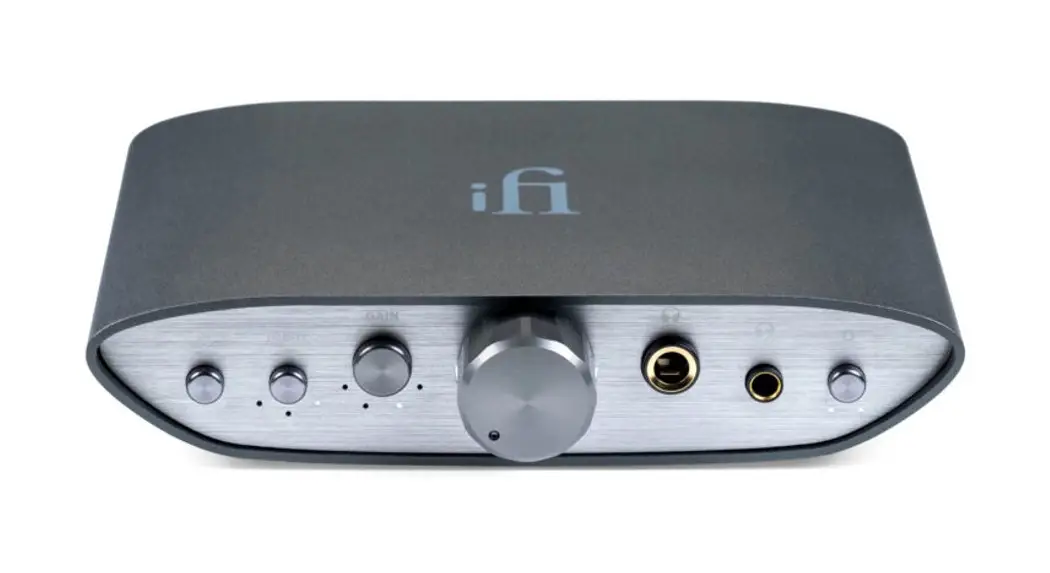
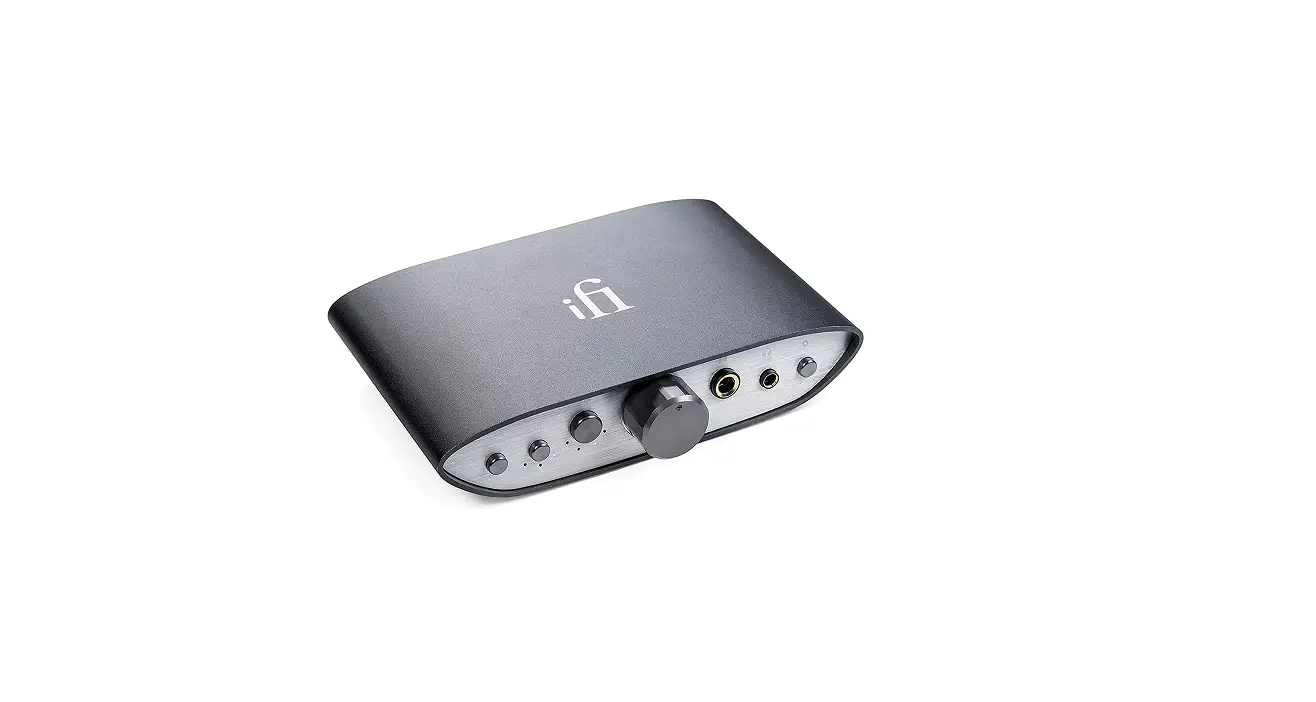
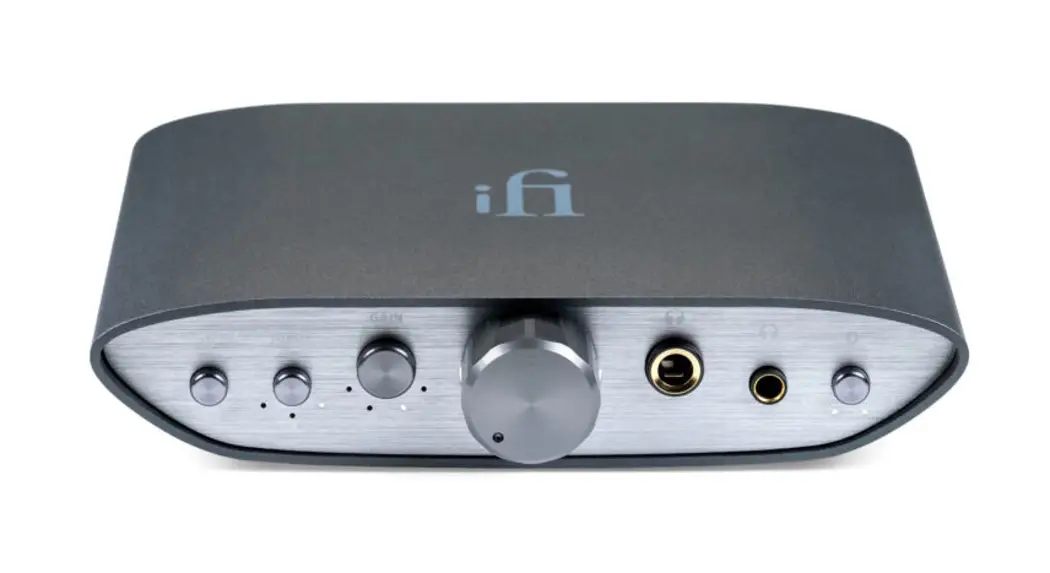
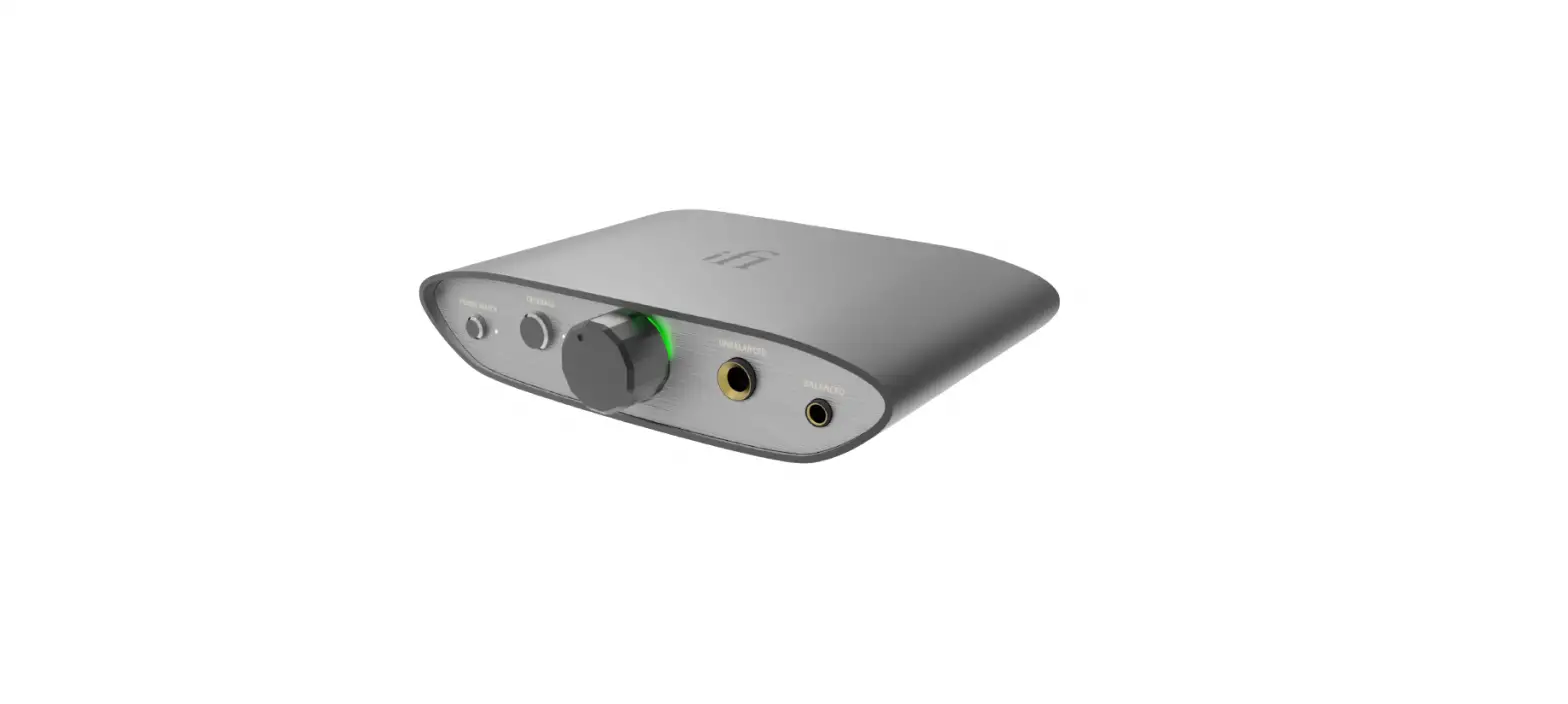
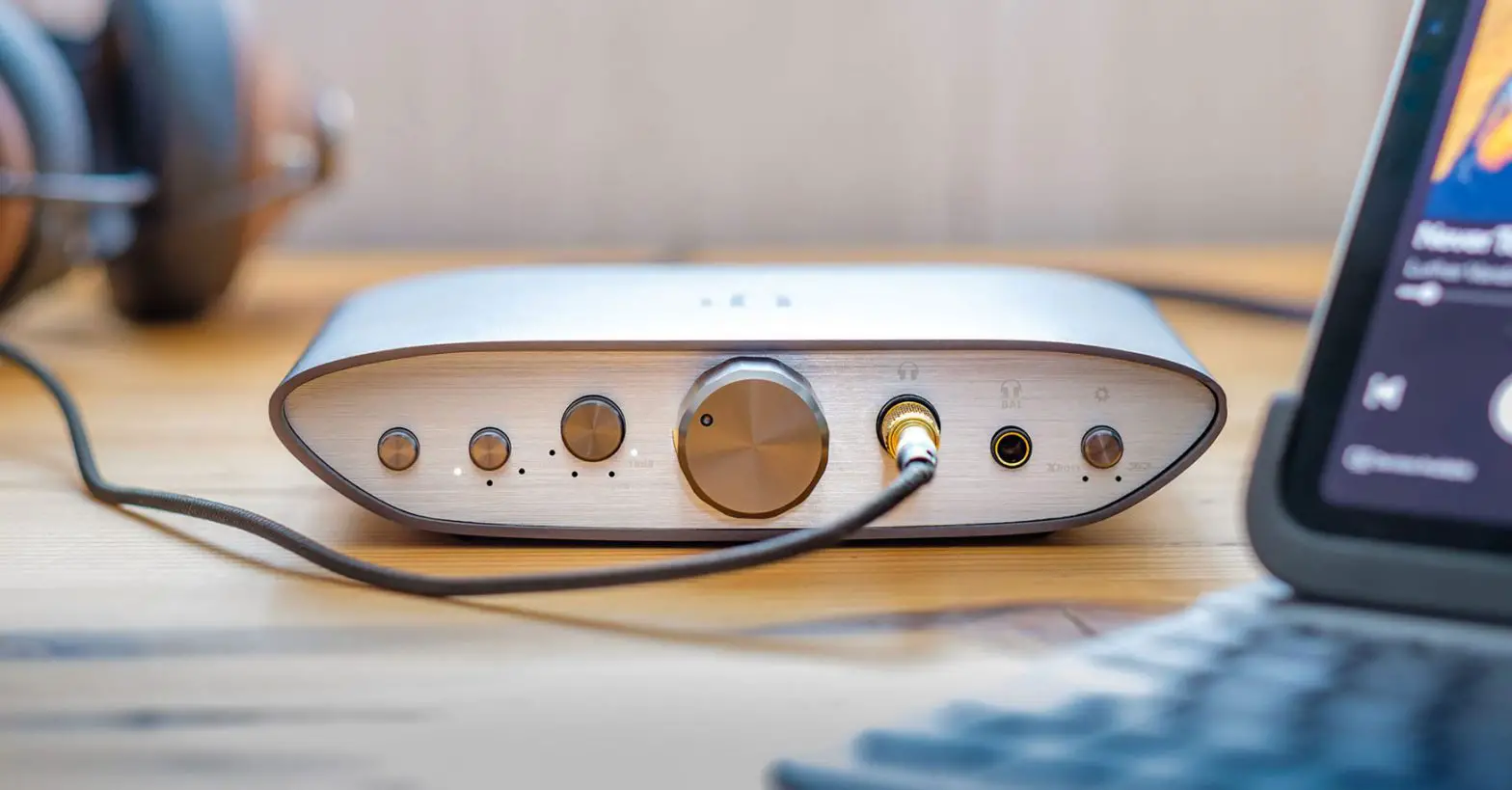
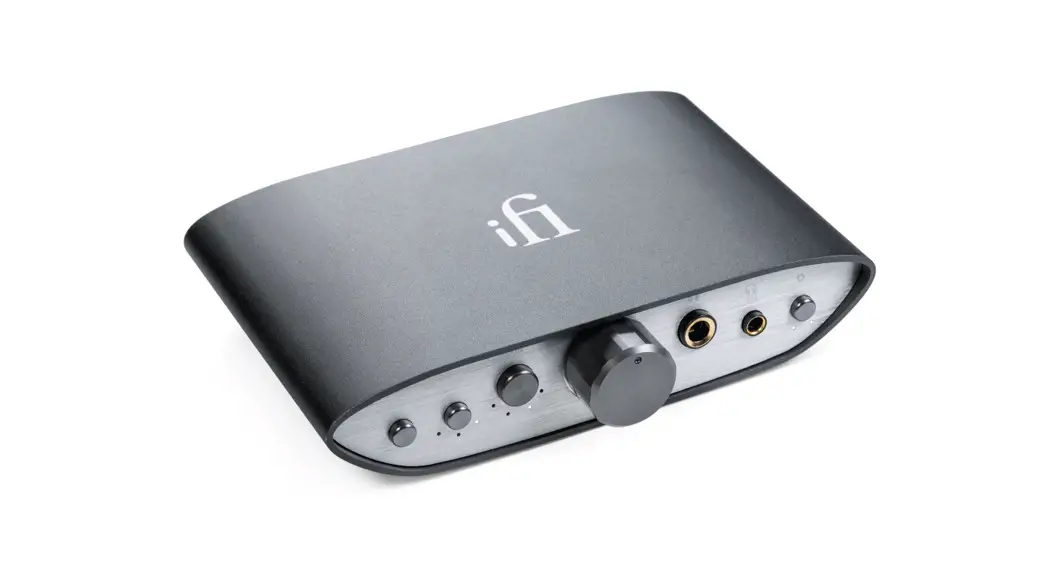
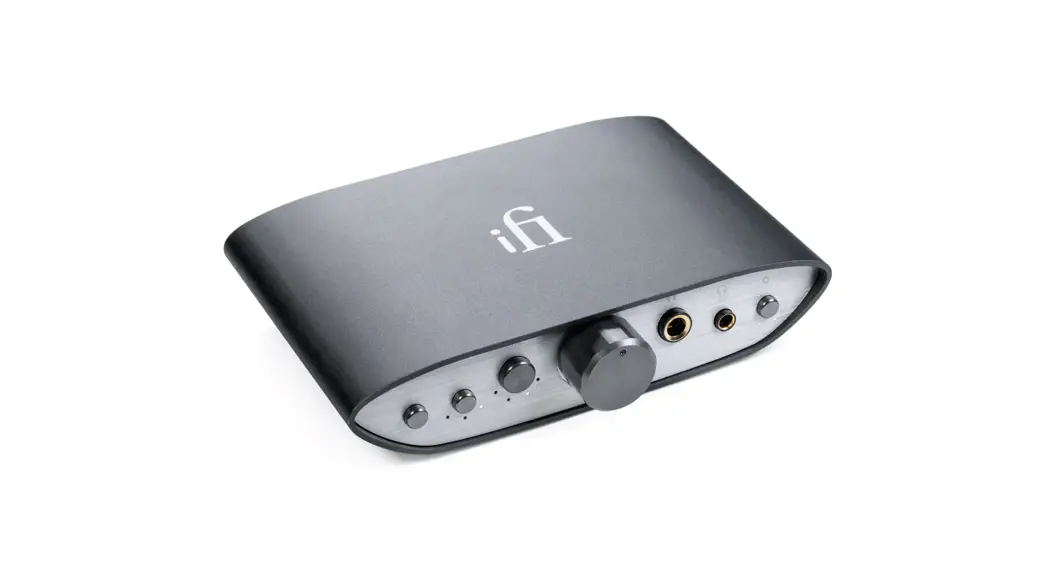
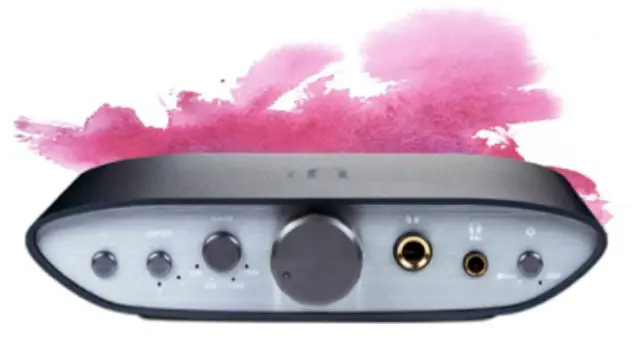
The iFi audio ZEN CAN is a fully symmetric dual-mono headphone amp based on our Pro iCAN’s circuit, with latest 4.4mm Pentaconn connections on input and output, and in-built 3D and XBass analogue signal circuits.
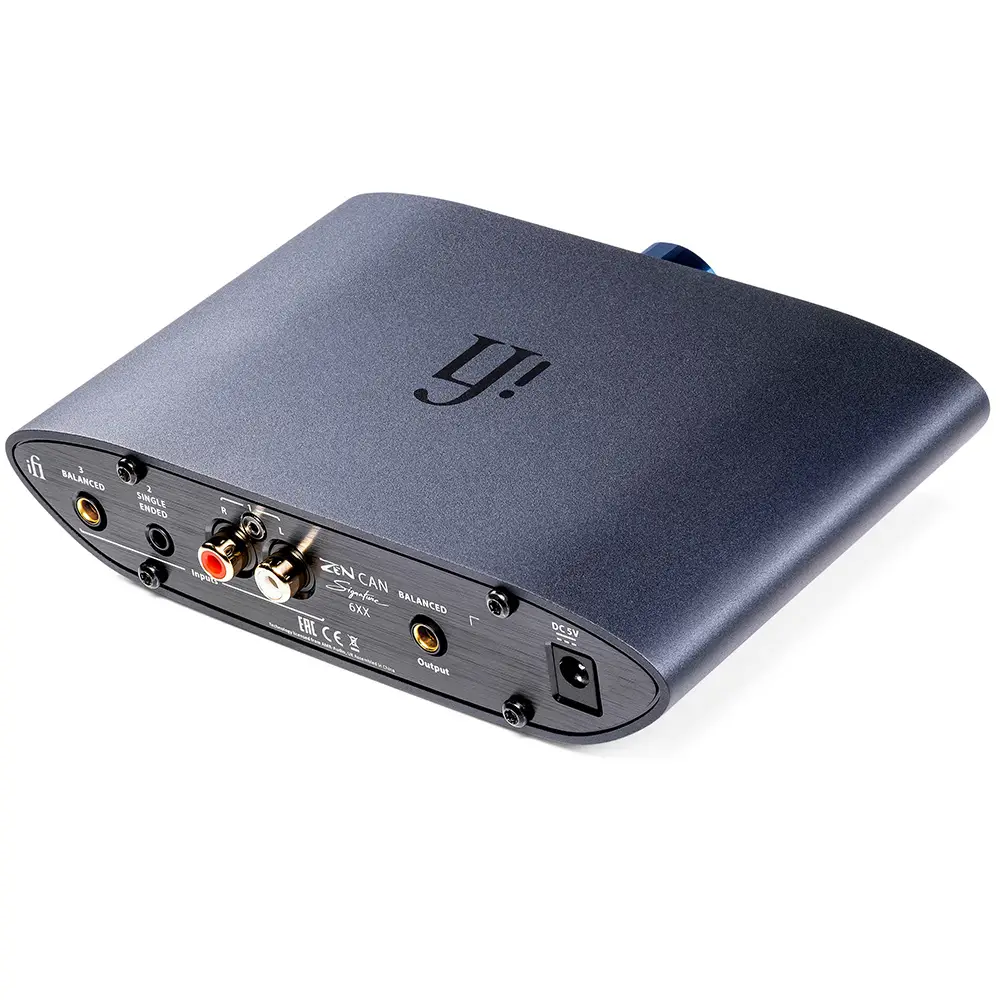
iFi audio ZEN CAN versus ZEN CAN Signature 6XX
The ZEN CAN Signature 6XX amp launched recently in the US market via the DROP platform was tailored specifically for Sennheiser 6XX headphones, whereas the ZEN CAN amp was designed to drive ALL headphones.
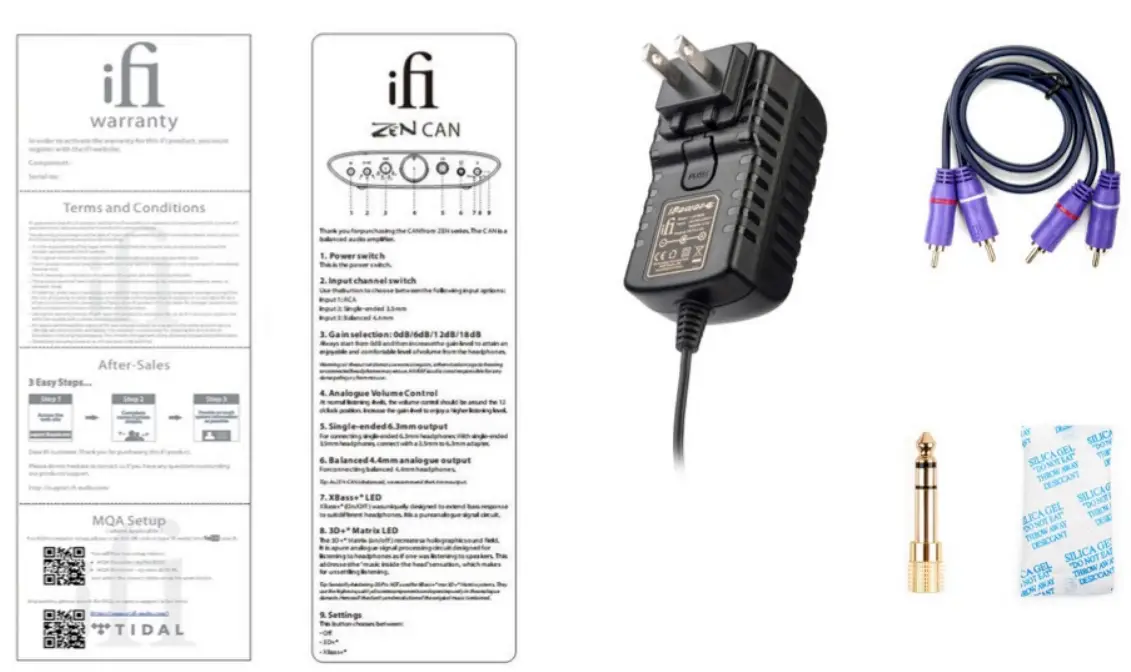
What’s in the box?
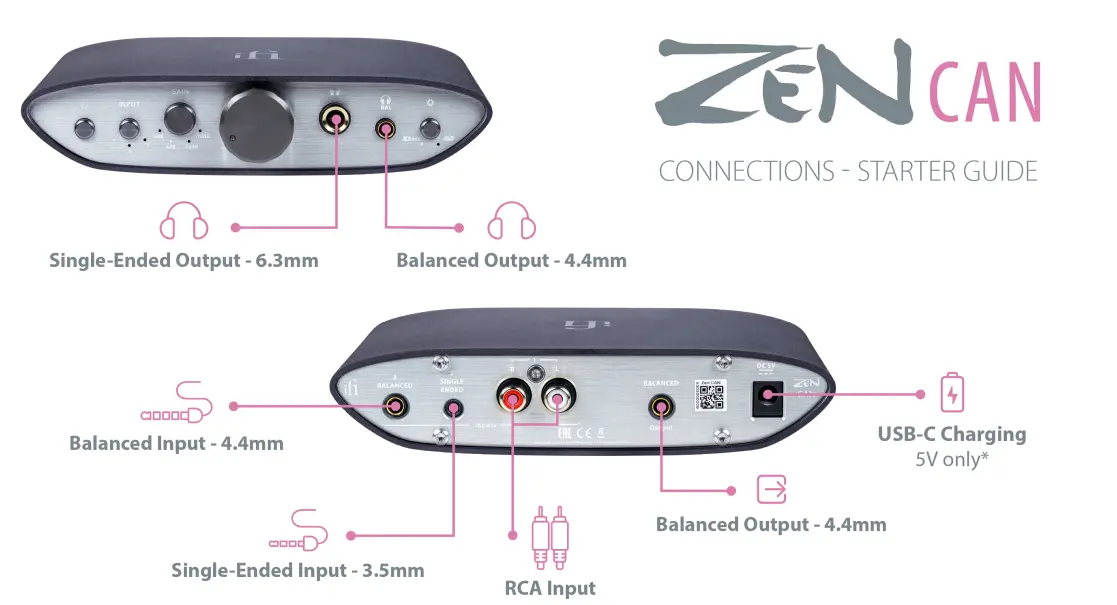
Connections
Technologies
Topology
iFi audio ZEN CAN’s amplification circuit is the same as used in Pro iCAN. It features a balanced discrete Class A output buffer combined with a J-FET Op-Amp (OV2637A). Its FET input doesn’t load volume control, which means exceptionally low distortion/noise, whereas low impedance feedback enhances overall performance and avoids resistor noise. The ZEN CAN’s internal amp also fully protects itself and headphones from overloads/shorts. Its four-step output gain factor is set at +6dB.
XBass and 3D
XBass adds back lost bass for headphones (especially open-backed), whereas 3D provides in-room speakers alike listening sensation for them. Both these features are based on fully analog circuits.

Power supply
The ZEN CAN’s power supply is based on Pro iCAN’s stealth mode voltage conversion circuit with heavy LC (resistor-inductor) filtering to separate the audio path from the internal PSU. 4,000uF capacitance acts as a huge ‘power reservoir’ for short transient (i.e. music) signals.
Inputs
The Fi audio ZEN CAN features two inputs; single-ended RCA (1M Ohm) and balanced 4.4mm (24k Ohm). The ZEN CAN’s dedicated input stage adjusts its input levels to match connected sources, but at the same time, it avoids loading them and allows for constant Class A operation and the lowest distortion.
Technologies
MCU optimizations
To keep noise contamination to an absolute minimum, the ZEN CAN’s MCU (a microcontroller unit to manage key functions of the product) and LEDs are in ‘wake mode’ only when actioned. Otherwise, they’re put into ‘sleep mode, even during listening to music. All switches inside the product are FET-based for full sonic transparency, ability to handle enormously high peak signals, and distortion/ noise levels below Audio Precision 2’s measurements.
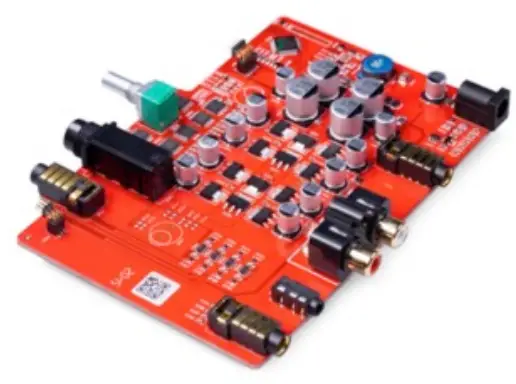
Premium components inside
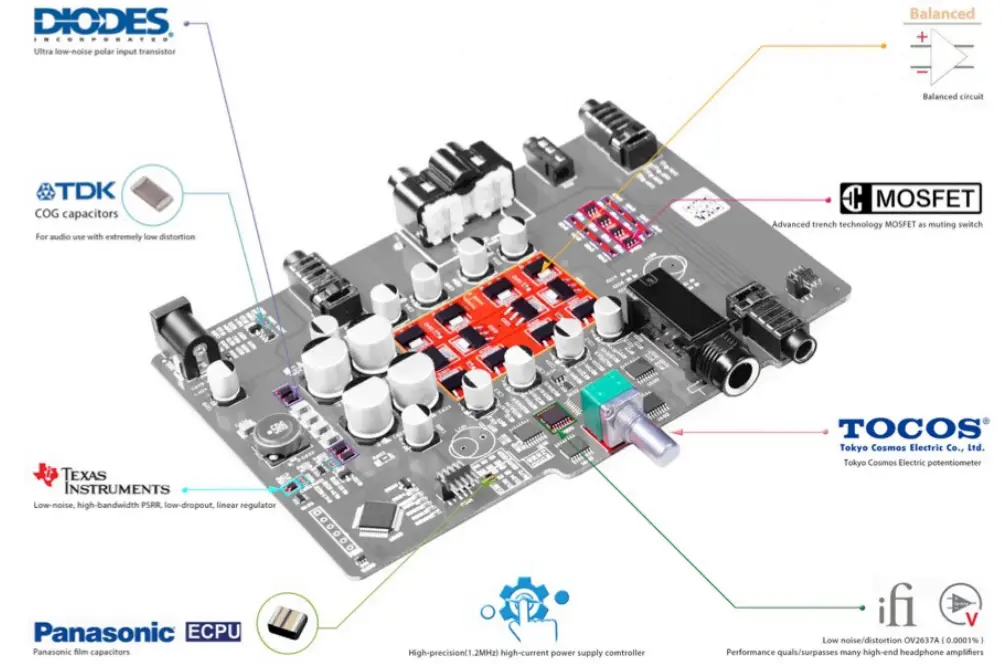
The iFi audio ZEN CAN features the following boutique parts:
 Panasonic ECPU
Each ECPU capacitor consists of ~3,500 >0.5μm thick dielectric layers, and boasts class-leading Equivalent Series Resistance (ESR), low impedance, frequency stability and vanishingly low distortion. A total of 6 pieces are used.
 Class 1 ceramic
TDK C0G These highly stable low-loss capacitors are used in our LC circuit application to further reduce capacitor-induced distortion.
 iFi/AMR ‘OV’ ICs
Four independent OV2637A J-FET op-amps are used in the ZEN CAN’s internal ‘folded cascode’ design. Each IC is based on HCOFC copper lead-frames, 4N gold bond-wire, and features wide bandwidth, extremely low noise and distortion (0.0001%).
 Texas Instruments
ICs These low-noise/distortion parts offer great unity gain bandwidth, high output drive capability, Common-mode and Power Supply Rejection Ratios above 100 dB, wide maximum-output-swing bandwidth and high slew rate.
BiCMOS technology
To further reduce noise, and have excellent transient response and PSRR performance (rejection of power supply noise), the iFi audio ZEN CAN features Bipolar CMOS (BiCMOS) semiconductor technology, which integrates two separate semiconductor types and makes the best of them.
TOCOS potentiometer
Tokyo Cosmos Electric Co. (TOCOS) multi-track potentiometer provides close channel matching tolerance for optimal performance, even at quiet listening levels.
 SMT (Surface Mount Technology)
The SMT assembly eliminates load-outs and terminations as possible sources of noise and distortion. It also dramatically improves most mounted components’ performance by minimizing parasitic elements created by manual soldering.
 Why balanced?
In a single-ended three-wire headphone connection, ground is shared between left and right channels. That’s why both channels’ wires and connectors have extra resistance, which causes unwanted crosstalk between them. A four-wire balanced connection eliminates this issue completely.
The iFi audio ZEN CAN’s balanced circuitry completely separates both channels, and its line inputs will work with balanced output sources and professional equipment. It features a Pentaconn connector type because off its high-quality build and low contact resistance.
XBass
Many open-backed headphones have sub-100Hz bass invariably rolled off due to their open ear cups which let out all frequencies instead of trapping and redirecting them back to our ears, just as closed headphones with good bass response do. Open-backed products also don’t cup up the midrange as their closed types, hence the former is famed for natural sound, but the bass extension was never a strong suit. The ZEN CAN’s XBass equalization benefits all headphone types, consists of active and passive components, and its frequency response curve corrects low-end response problems with precision and exclusively in the analog domain. The correction process itself shapes the output without altering the midrange, worsening SNR or increasing distortion. The result moves any headphones closer to a neutral presentation with less midrange over-emphasis, with a full and natural bass and no veil over the treble.
 3D for Headphones
In most cases music recordings are mixed and mastered for speakers. Played through headphones it results in a sound-field perspective of playback inside our heads, which leads to an unnatural, fatiguing and stressful listening experience.
iFi audio ZEN CAN incorporates 3D analog filtering technology that:
- creates stereo image truly out of your head, with spatially realistic depth and width
- doesn’t introduce any coloration or resolution loss
- is based solely on analog circuitry (no DSP!) o works regardless of a listener’s anatomy and hearing.
Components
FAQs
– Those inputs are balanced 4.4mm Pentaconn, a single-ended 3.5mm and a single-ended RCA. If your DAC has balanced outputs, then ZEN DAC’s balanced input is the one to use. Otherwise, each ZEN DAC’s single-ended input will do just fine.
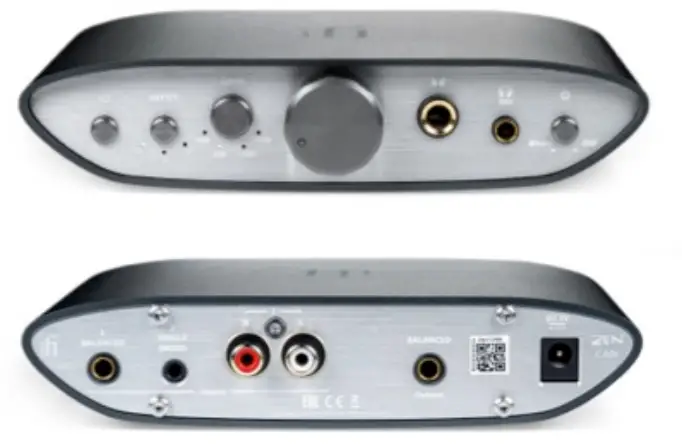
– To take full advantage of ZEN CAN’s balanced architecture, it features only a 4.4mm Pentaconn output.
– Any external power supply able to provide DC 5V/2.5A will work. For optimal results please use our iPower X/iPower. If USB outputs in your computer/laptop are within listed specs, it’s possible to power the ZEN CAN from these ports as well, and thus avoid the usage of an external power supply.
It’s worth knowing that the ZEN CAN appreciates more than 2.5A, and can handle up to 4A peaks.
– The ZEN CAN was designed to operate as a high-quality headphone amplifier, but also as a fully-balanced preamplifier, which is why its balanced output is regulated.
– Please connect a cable of choice from your DAC to the ZEN CAN’s suitable input, and engage via the input selector button on the product’s front. Single-ended cables will work with 3.5mm and RCA inputs, whereas a balanced cable will work with 4.4mm Pentaconn input.
– You can have cables connected to each ZEN CAN’s input, but only one can be active.
– All available inputs are labeled respectively and can be seen just below the input selection button on the ZEN CAN’s front. A currently engaged input will be highlighted by a white LED.
– Yes, you can.
– It matches the headphone amplifier gain to the headphone. Headphones have very widely varying sensitivity, so a good match in gain is important, too low gain and headphones will not play loud enough, too much gain and there will be excessive noise and distortion with very little usable volume range.
– Use the lowest gain setting that gives you a good comfortable listening level with the volume control at around 12 o’clock. If you can’t go higher in volume as music becomes too loud before reaching 12 o’clock at the lowest gain setting, you may want to test the iFi iEMatch product to see if this helps to match your headphones better to the ZEN CAN’s a headphone output.
How are the ZEN CAN’s two headphone outputs different?
– The ZEN CAN’s 6.3mm socket is meant to be used with unbalanced headphone cables, whereas its 4.4mm Pentaconn headphone output will work with balanced cables.
– The ZEN CAN will convert the unbalanced input into a balanced signal and drive connected headphones in balanced mode.
Can I have two headphones connected at the same time?
– It is not recommended.
What does the XBass/3D button do?
– This button cycles between two analog features inside of the ZEN CAN. Please see https://bit.ly/3DHolographic and https://bit.ly/TotallyAddictedToBass
– Yes, they can. Simply press the 3D/XBass button until both white LEDs are on.
– Yes, it can. But if not used it should be powered off. Let’s go a bit easier on the planet!
– Several exceptions and electrostatic products aside, the ZEN CAN’s internal amplifier circuit is powerful enough to effortlessly drive the vast majority of headphones available on the market.
– The ZEN CAN works well with standard RCA cables, but to get the very best out of it, you’ll need to use the 4.4mm Pentaconn input on its rear.
– Check all connections, power, input, and headphone.
– Make sure the ZEN CAN is turned on (input & gain LEDs will light up).
– Make sure the correct input is selected (check the number on the back).
– Make sure music is actually being played via your source.
Lifestyle desktop systems
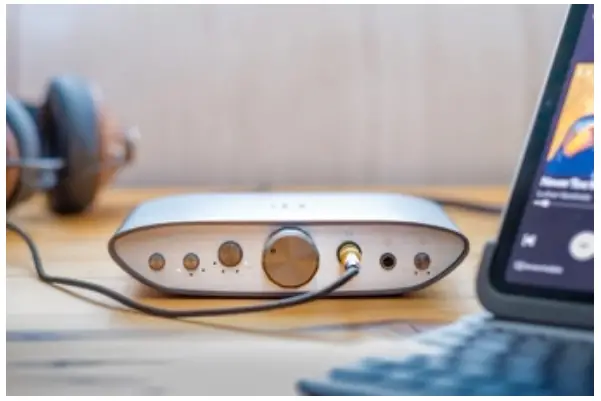
Standalone
- Analog x 3 sources
- BALANCED 4.4mm > 4.4mm line out
- BALANCED 4.4mm headphones
- SE 6.3mm headphones
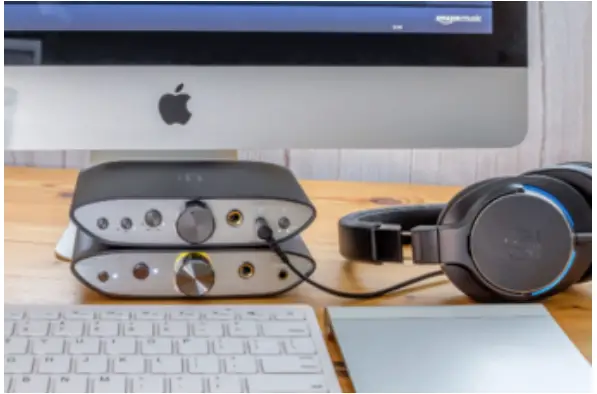
With ZEN DAC
- DAC input for digital
- Analog x 2 extra sources
- BALANCED 4.4mm > 4.4mm interconnect
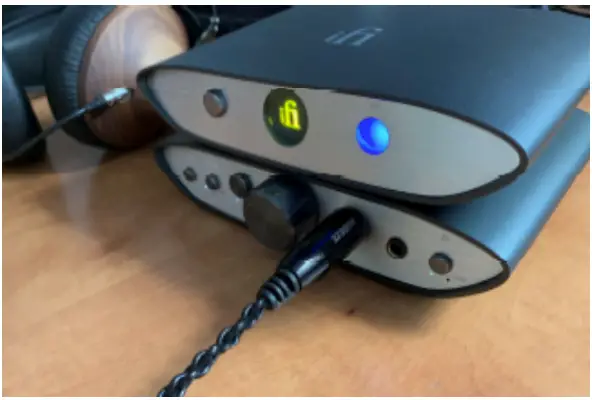
With ZEN Blue
- Bluetooth streamer input
- Analog x 2 extra sources
- BALANCED 4.4mm > 4.4mm interconnect
- BALANCED 4.4mm > Pre amp Output
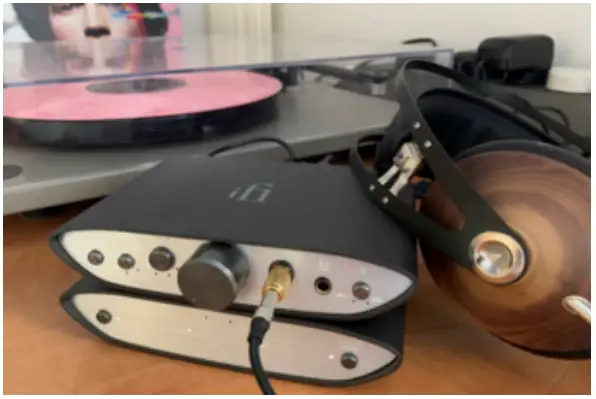
With ZEN Phono
- Creates a lifestyle vinyl system
- Compact desktop headphone system
- Future expansion with active speakers
- BALANCED 4.4mm > Pre amp output
- MM & MC compatible RIAA Phono input
- BALANCED 4.4mm >4.4mm interconnect

With ZEN DAC & ZEN Blue
Creates a ‘semi-pro’ BALANCED system for under £500
- Bluetooth streamer input
- DAC input for Hi-Res 44.1/16 – 192/24 and DXD
- Analog x 2 extra sources
- BALANCED 4.4mm > 4.4mm interconnect
- BALANCED 4.4mm headphone output
- 6.3mm Pro gauge headphone output
- BALANCED 4.4mm > Pre amp Output
- 3D for non-fatiguing extended listening
 Specifications
 Specifications
| Inputs | 4.4mm BAL RCA L/R Socket SE 3.5mm Jack SE | 4.0V nominal @ 0dBFS, 24 kOhm Zin 2.0V nominal @ 0dBFS, 1 MegOhm Zin 1.0V nominal @ 0dBFS, 1 MegOhm Zin |
| Max Output | Balanced SE | >15.1V/385 mW (@ 600 Ohm) >11.0V/1890 mW (@ 64 Ohm) >7.6V/196 mW (@ 300 Ohm) >7.2V/1600 mW (@ 32 Ohm) |
| THD & N | Balanced SE | < 0.0007% (4V out, 600 Ohm, 1kHz) <0.006% (@ 100 mW/1.27V 16 Ohm) |
| SNR | Balanced SE | >120dBA (@ 15.2V) >118dBA (@ 7.6V) |
| Max Input | Balanced RCA 3.5mm | 7.4V RMS 3.8V RMS 1.92V RMS |
| Gain | 0dB, 6dB, 12dB and 18dB | |
| Frequency Response | 20Hz – 20kHz (+0dB / -0.03dB) | |
| Power consumption | No Signal Max Signal | ~5W ~13W |
| Input voltage | DC 5V/2.5A AC 100 -240V 50/60Hz | |
| Dimensions | 158 x117 x35 mm 6.2″ x 4.6″ x 1.4″ | |
| Net weight | 515g 1.14 Ibs |

ifi-audio.com/products/zen-can
 ZEN CAN by iFi audio Super-affordable headphone amp from iFi audio
 bit.ly/3DHolographic