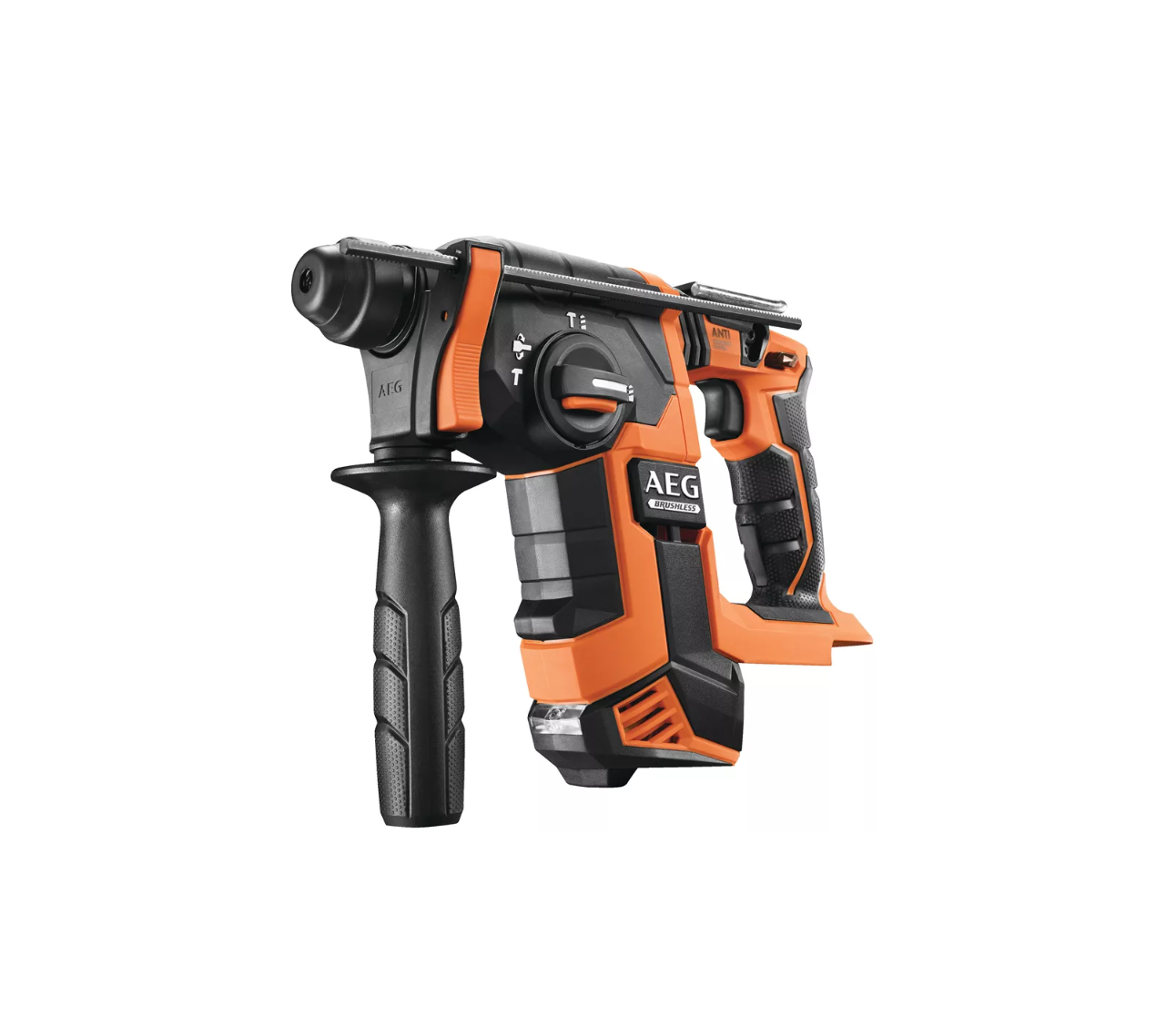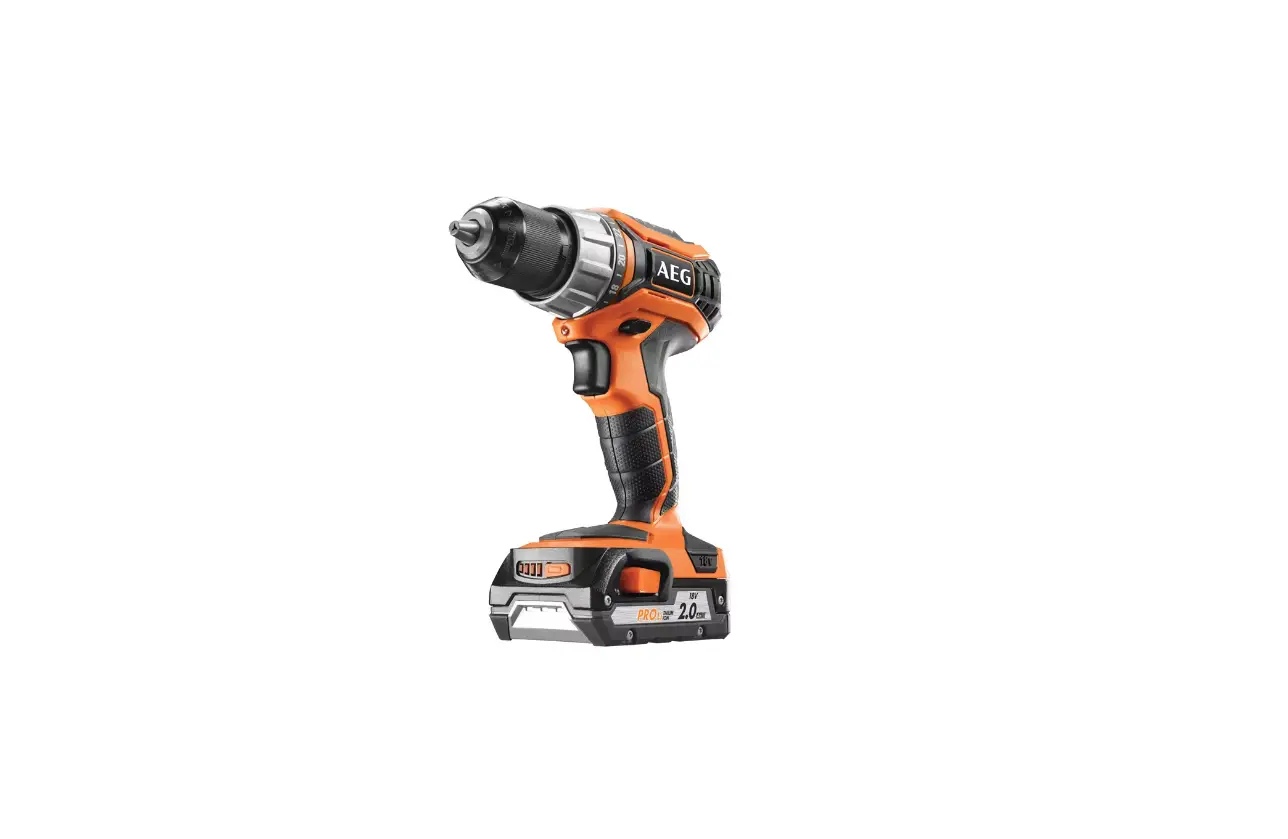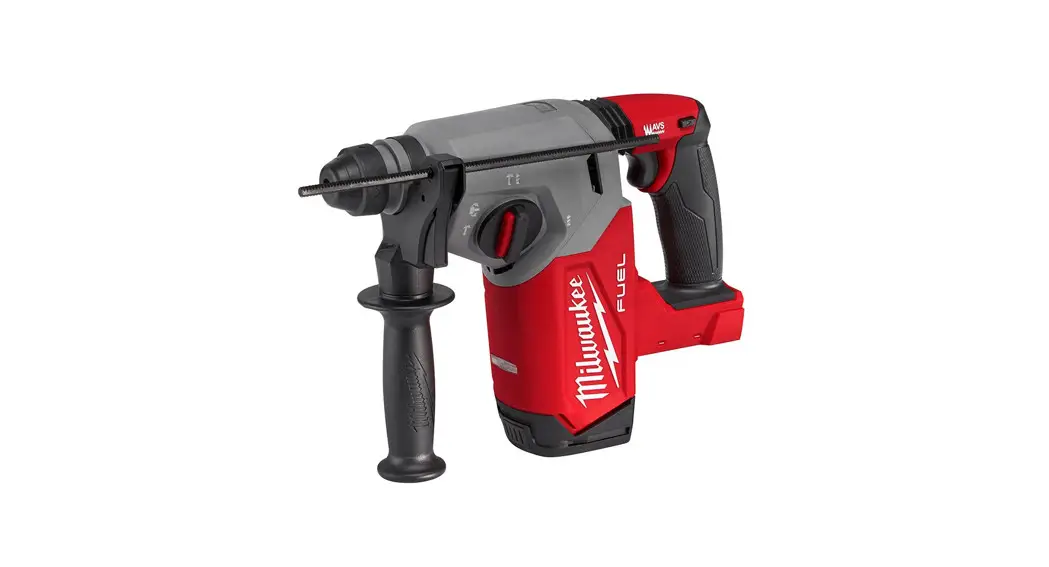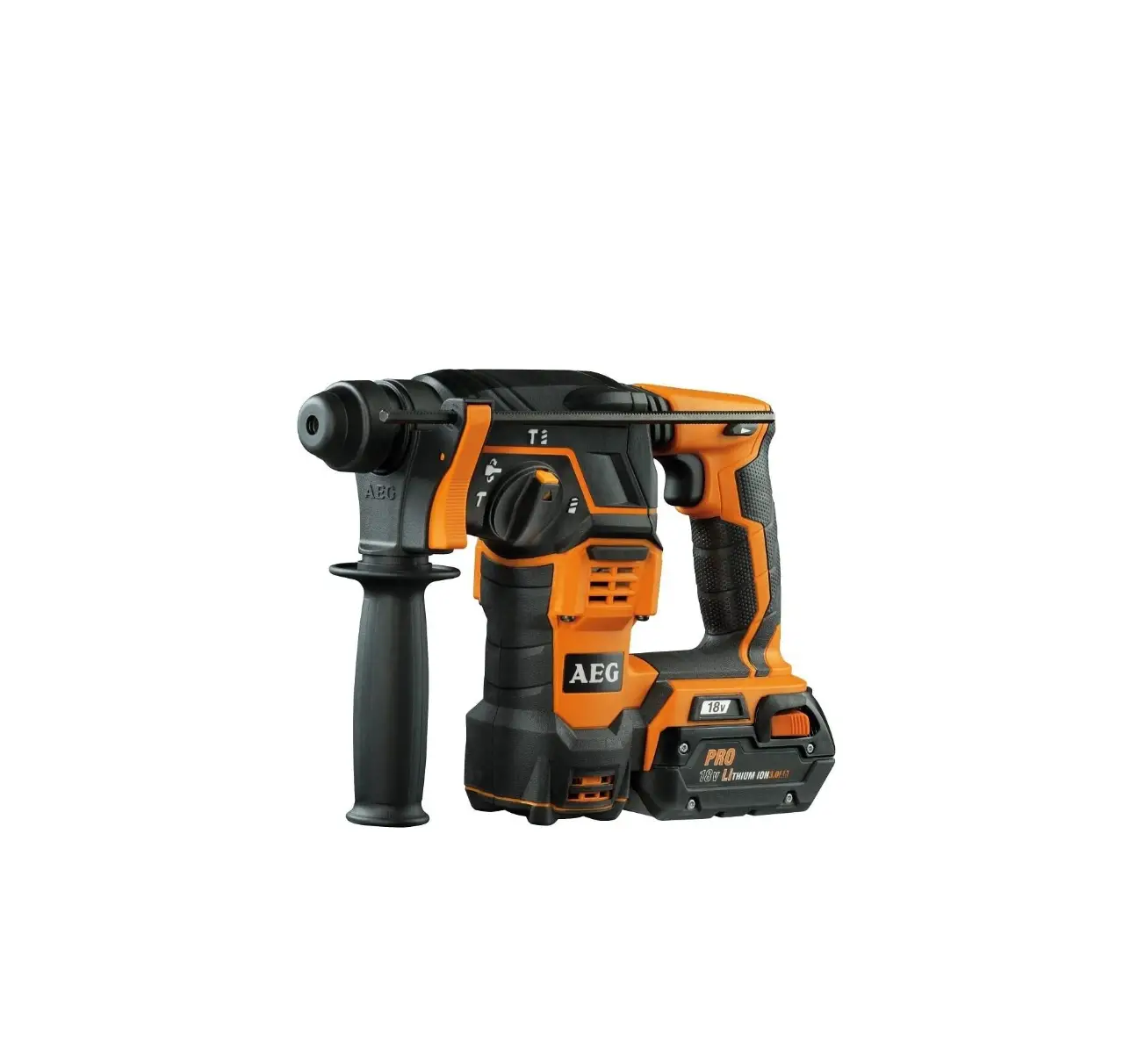
AEG BBH18BL2 2-0 Rotary Drill Sds Plus 18V Brushles
Operation instructions
Remove the battery pack before starting any work on the product.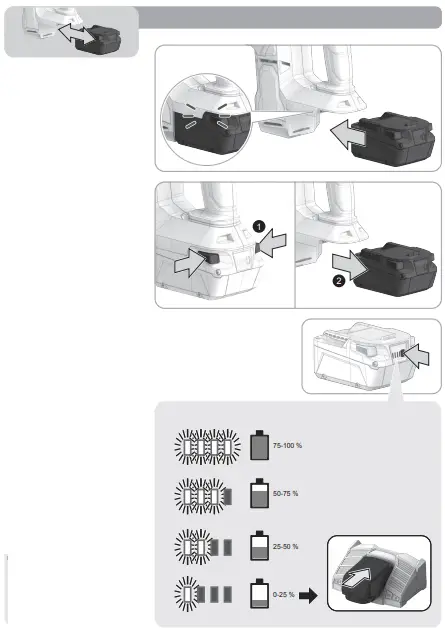
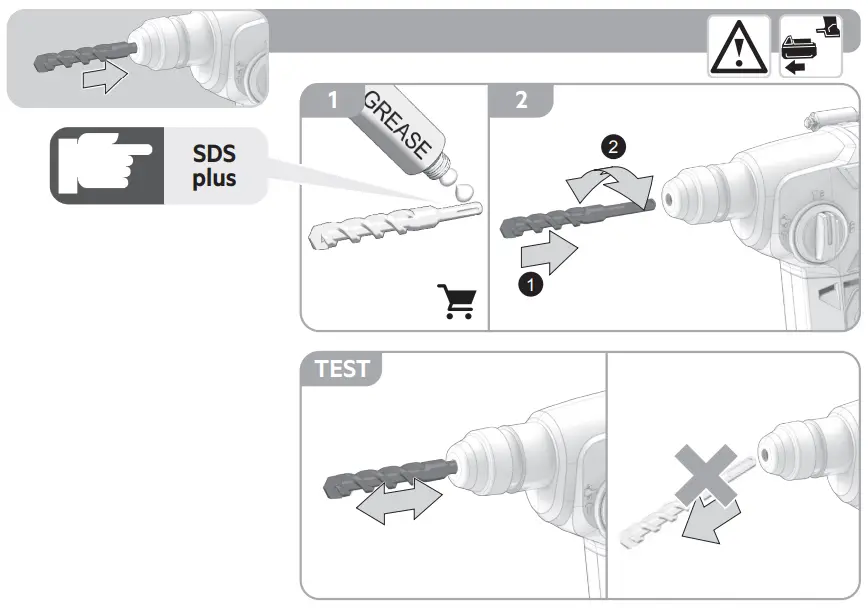
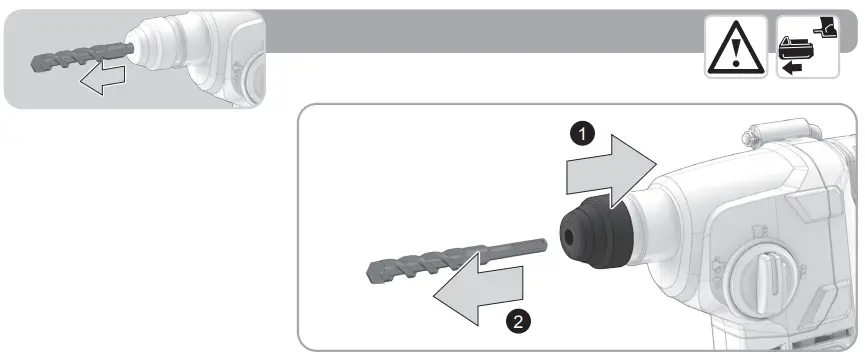
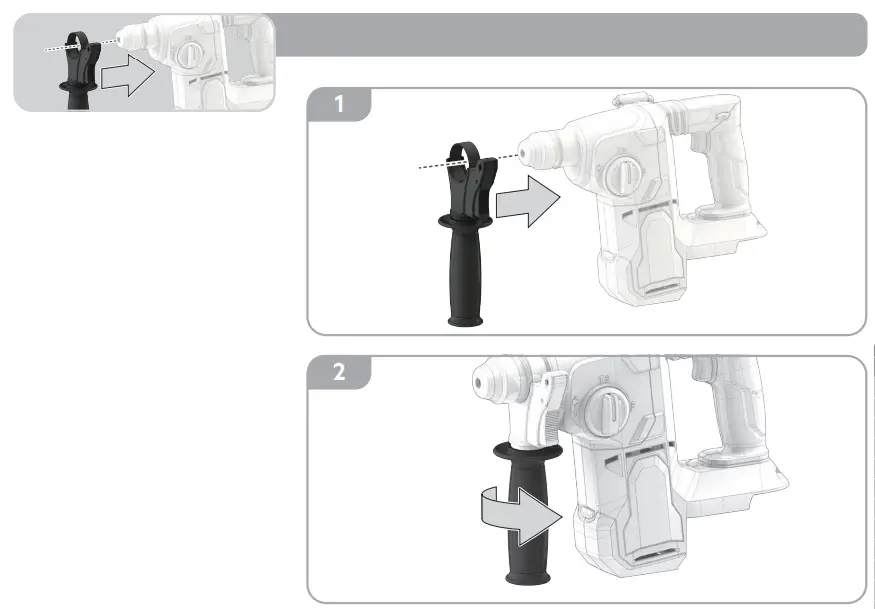
SPECIFIED CONDITIONS OF USE
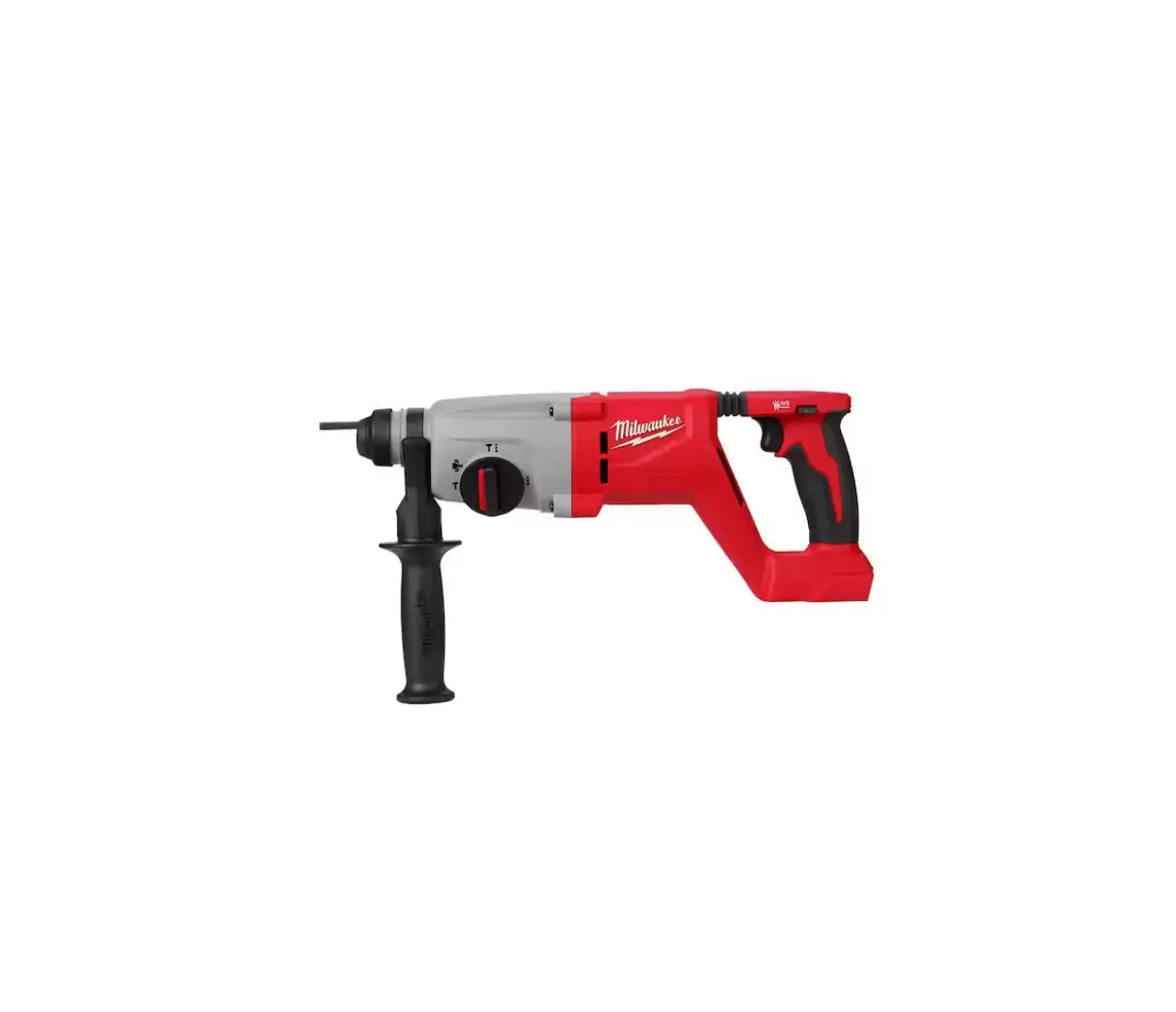
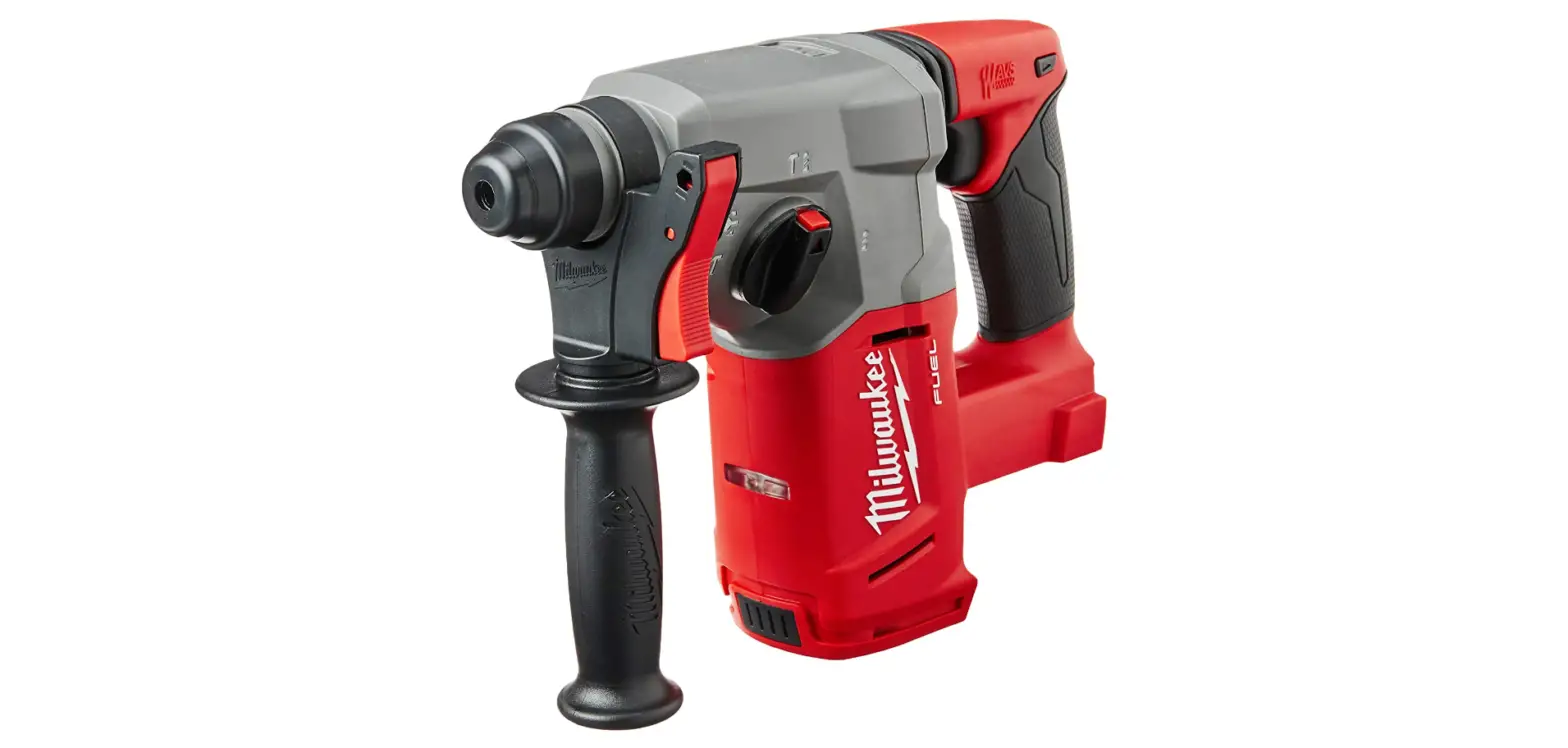
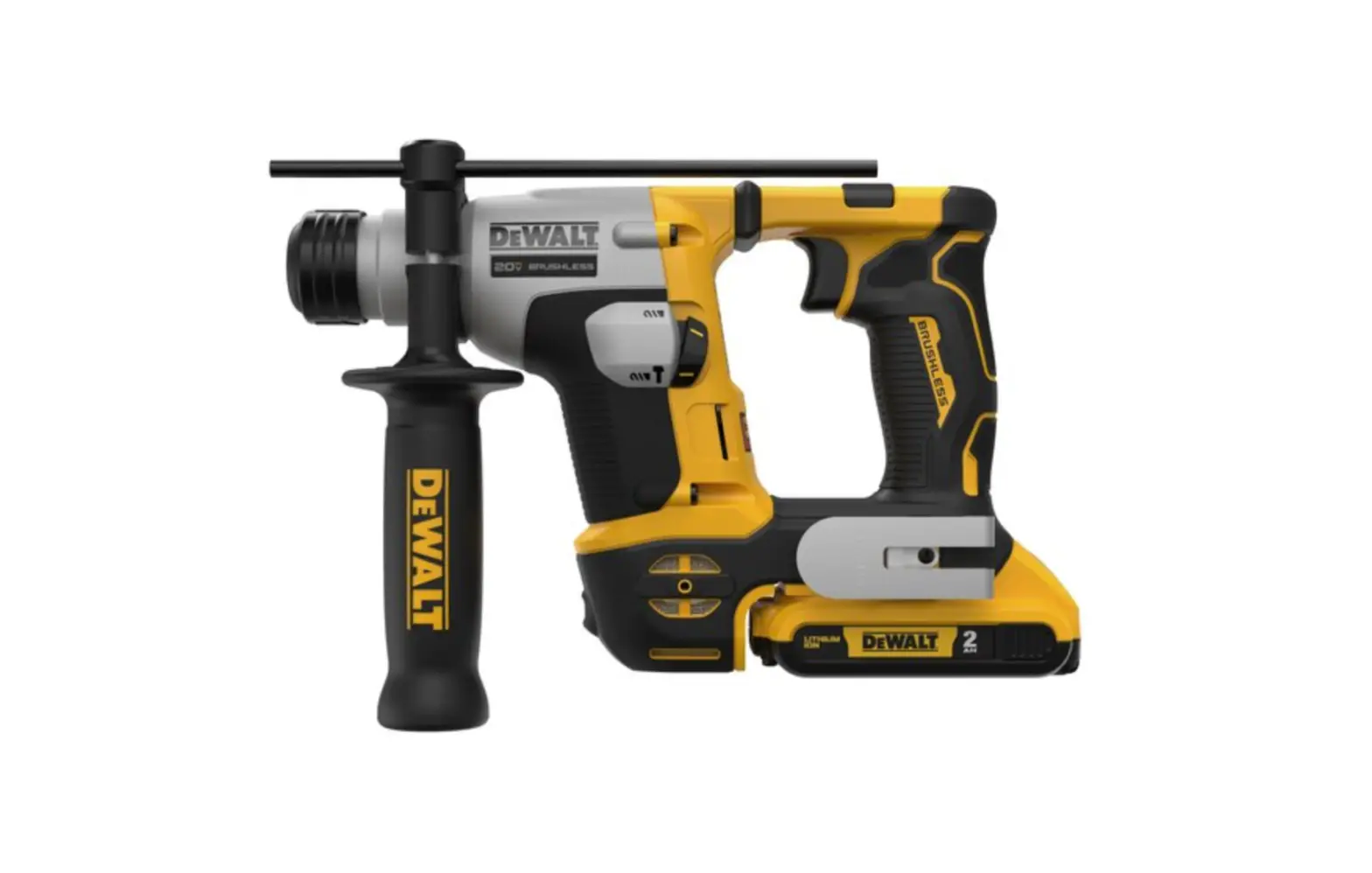
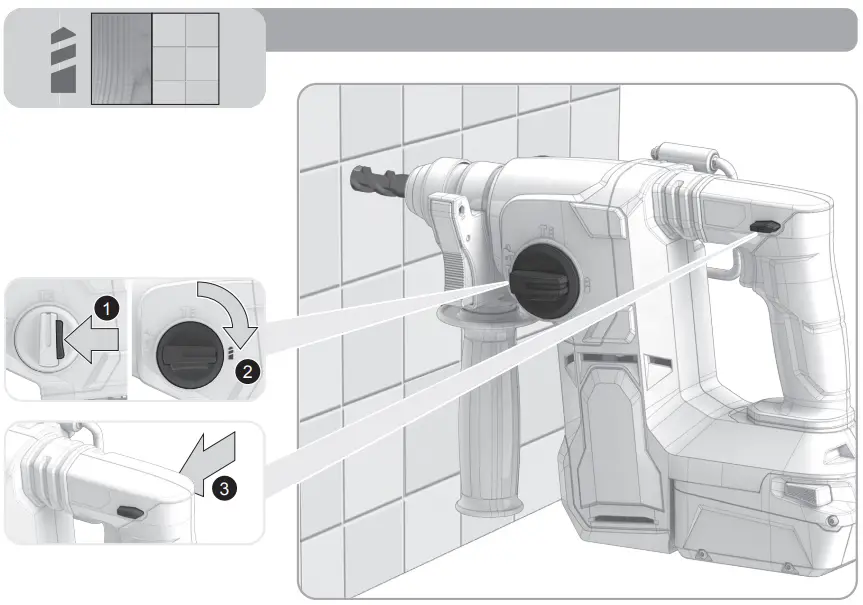
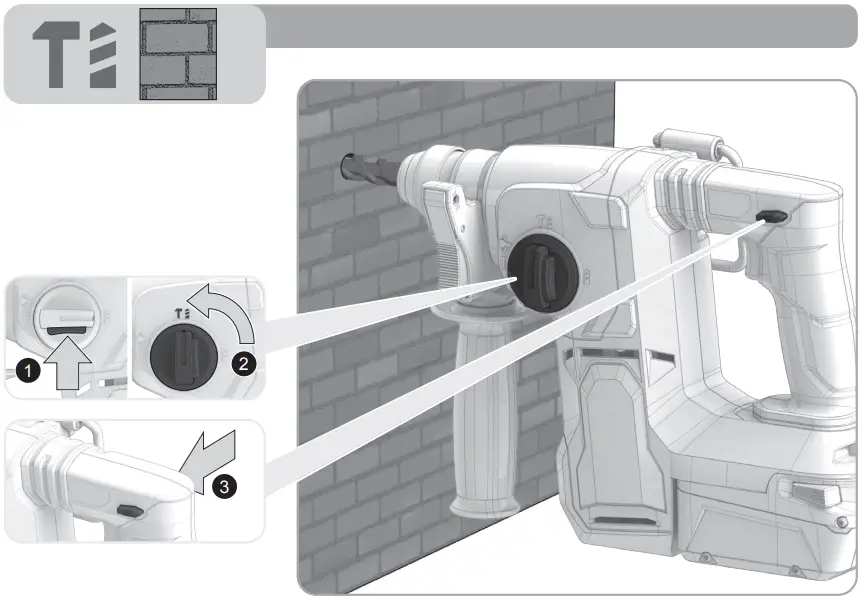
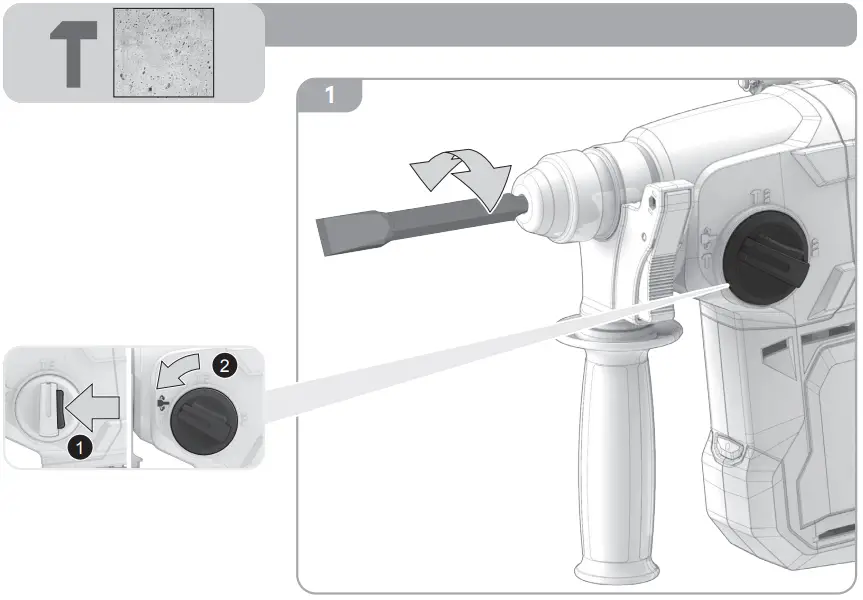
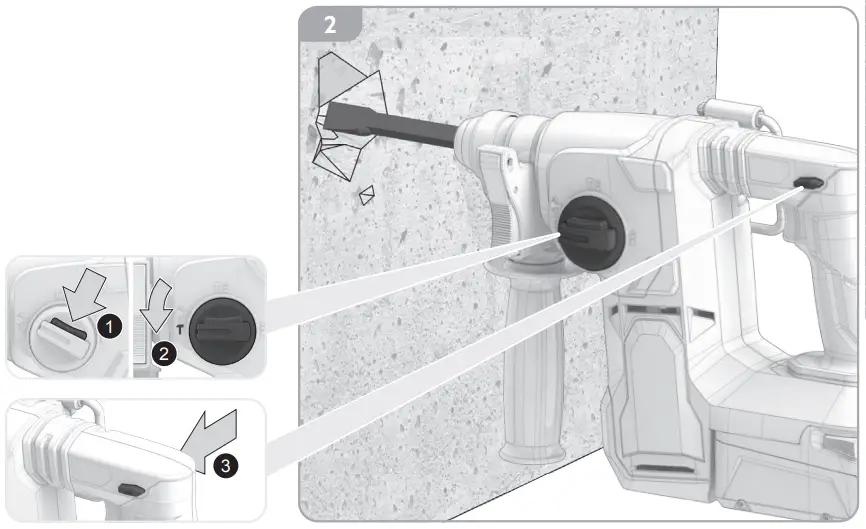
The rotary hammer can be used for hammer drilling, chiseling in stone and concrete, and drilling in wood, metal, and plastic.
Do not use the product for any other purpose. WARNING! Read all safety warnings, instructions, illustrations and specifications provided with this power tool.
Failure to follow all instructions listed below may result in electric shock, fire and/or serious injury.
Save all warnings and instructions for future reference.
HAMMER SAFETY WARNINGS
SAFETY INSTRUCTIONS FOR ALL OPERATIONS
Wear ear protectors. Exposure to noise can cause hearing loss.
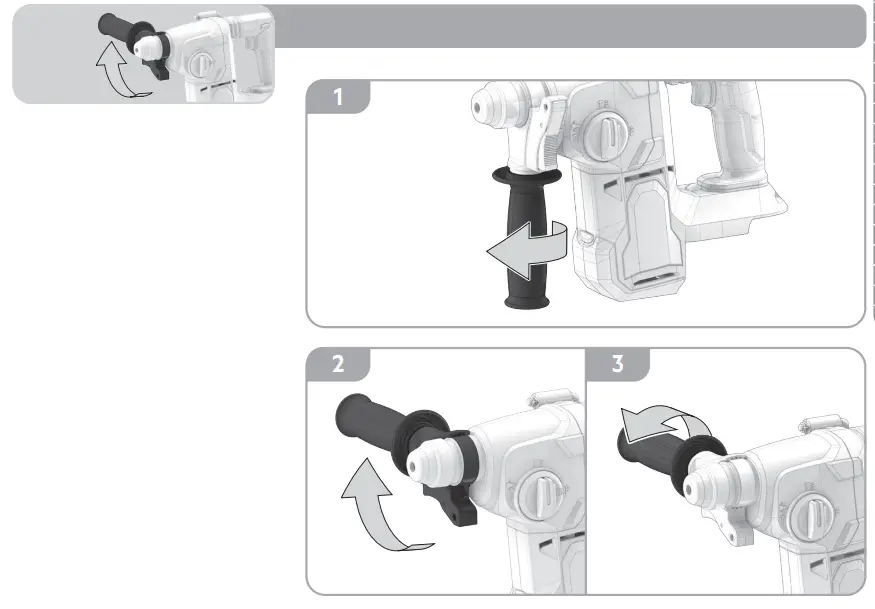
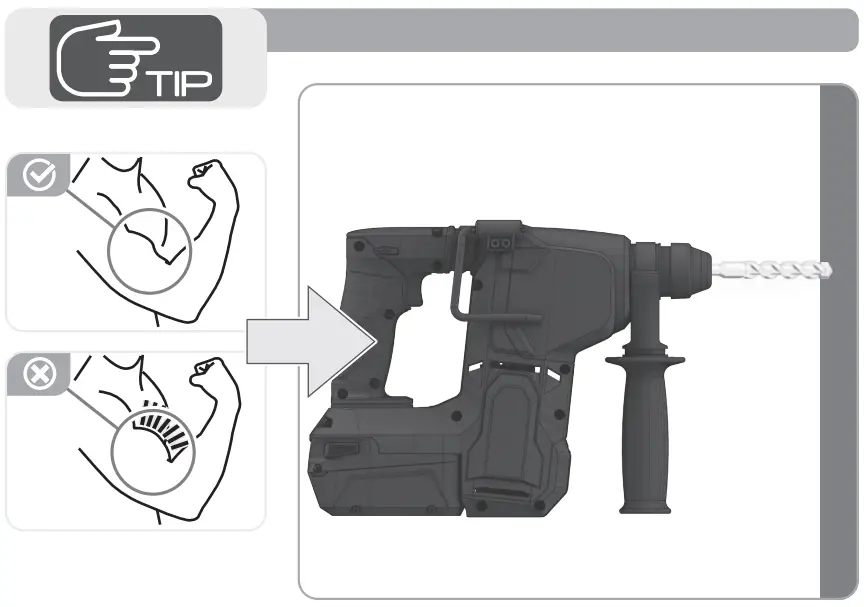
Use auxiliary handle(s), if supplied with the tool. Loss of control can cause personal injury.
Brace the tool properly before use. This tool produces a high output torque and without properly bracing the tool during operation, loss of control may occur resulting in personal injury.
Hold the power tool by insulated gripping surfaces when performing an operation where the cutting accessory may contact hidden wiring. Cutting accessory contacting a “live” wire may make exposed metal parts of the power tool “live” and could give the operator an electric shock.
SAFETY INSTRUCTIONS WHEN USING LONG DRILL BITS WITH ROTARY HAMMERS
Always start drilling at low speed and with the bit tip in contac1with the workpiece. At higher speeds, the bit is likely to bend if allowed to rotate freely without contacting the workpiece, resulting in personal injury.
Apply pressure only in direct line with the bit and do not apply excessive pressure. Bits can bend, causing breakage or loss of control, resulting in personal injury.
ADDITIONAL SAFETY AND WORKING INSTRUCTIONS
Use the dust collection device or connect a dust extraction vacuum when operating the product.
Clamp the workpiece with a clamping device. Unclamped workpieces can cause severe injury and damage. The product will restart automatically if stalled. Turn off the product immediately if it stalls.
Do not switch on the product again after it has stalled. Switching it on again can cause a kickback with high reaction force. Determine why the product has stalled and rectify it, paying heed to the safety instructions. The dust produced when using the product may be harmful to health. Do not inhale the dust. Wear a suitable dust protection mask. Remove the battery pack before starting any work on the product.
ADDITIONAL BATTERY SAFETY WARNINGS
WARNING! To reduce the risk of fire, personal injury, and product damage due to a short circuit, never immerse your tool, battery pack, or charger in fluid or allow fluid to flow inside them. Corrosive or conductive fluids, such as seawater, certain industrial chemicals, and bleach or bleach containing products, etc., can cause a short circuit.
Do not dispose of used battery packs in the household refuse or by burning them. AEG distributors offer to retrieve old batteries to protect our environment.
Battery packs that have not been used for some time should be recharged before use.
For an optimum lifetime, the battery packs have to be fully charged after use.
For battery pack storage longer than 30 days:
- Store the battery pack where the temperature is below 27°C and away from moisture.
- Store the battery packs in a 30% – 50% charged condition.
- Every six months of storage, charge the pack as normal.
Battery pack protection
The battery pack has overload protection that protects it from being overloaded and helps to ensure long life.
Under extreme stress, the battery electronics turn off the product automatically. To restart, turn the product off and then on again. If the product does not start up again, the battery pack may have discharged completely. Recharge the battery pack.
Transporting lithium batteries
Lithium-ion batteries are subject to the Dangerous Goods Legislation requirements.
Transportation of those batteries has to be done in accordance with local, national, and international provisions and regulations.
- Batteries can be transported by road without further requirement.
- Commercial transport of lithium-ion batteries by third parties is subject to Dangerous Goods regulations. Transport preparation and transport are exclusively to be carried out by appropriately trained persons and the process has to be accompanied by corresponding experts.
When transporting batteries:
- Ensure that the battery contact terminals are protected and
insulated to prevent short circuit. - Ensure that the battery pack is secured against movement within
the packaging. - Do not transport batteries that are cracked or leaking.
- Check with the forwarding company for further advice.
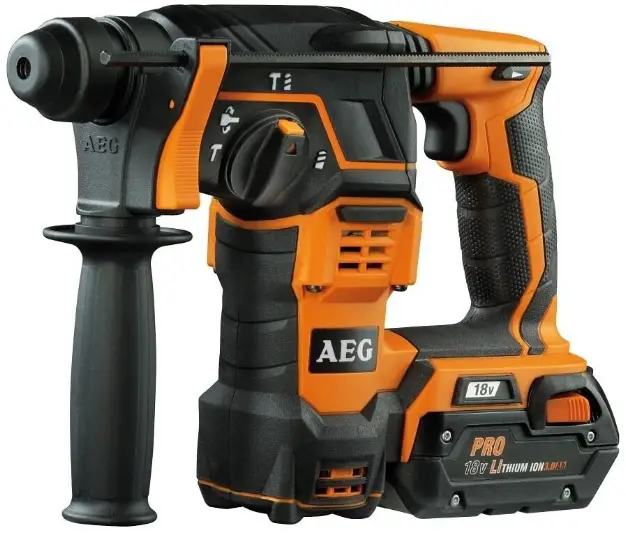
KNOW YOUR PRODUCT
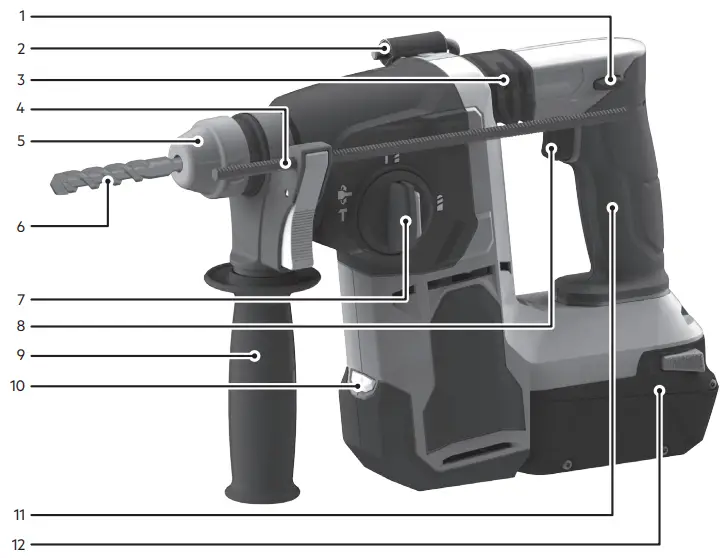
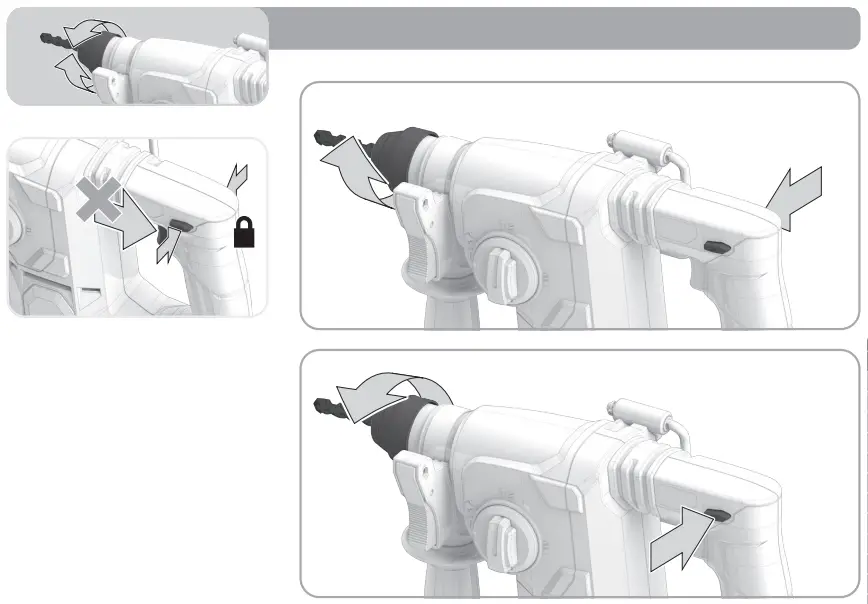
- Direction of rotation selector
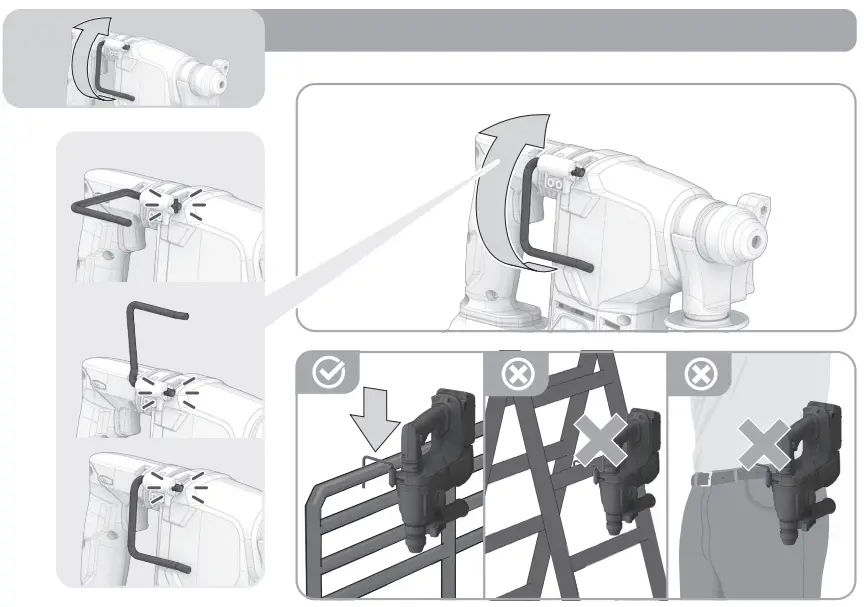
- Rafter hook
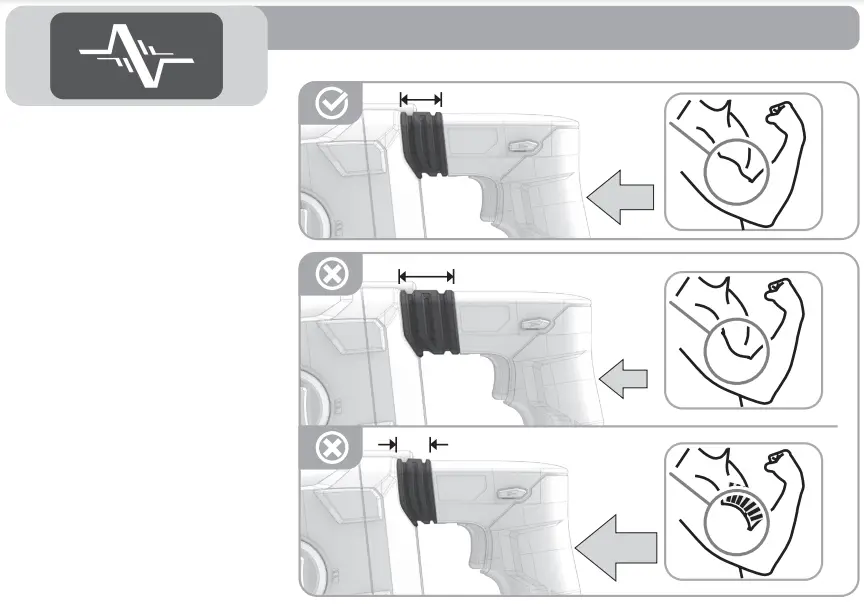
- Anti-vibration system
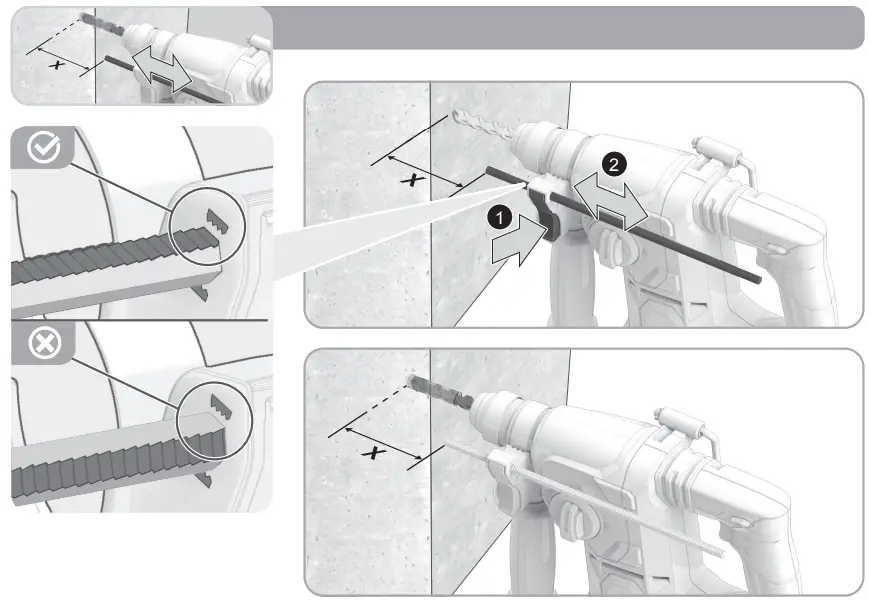
- Depth guide rod
- SOS chuck
- Drill bit
- Mode selector
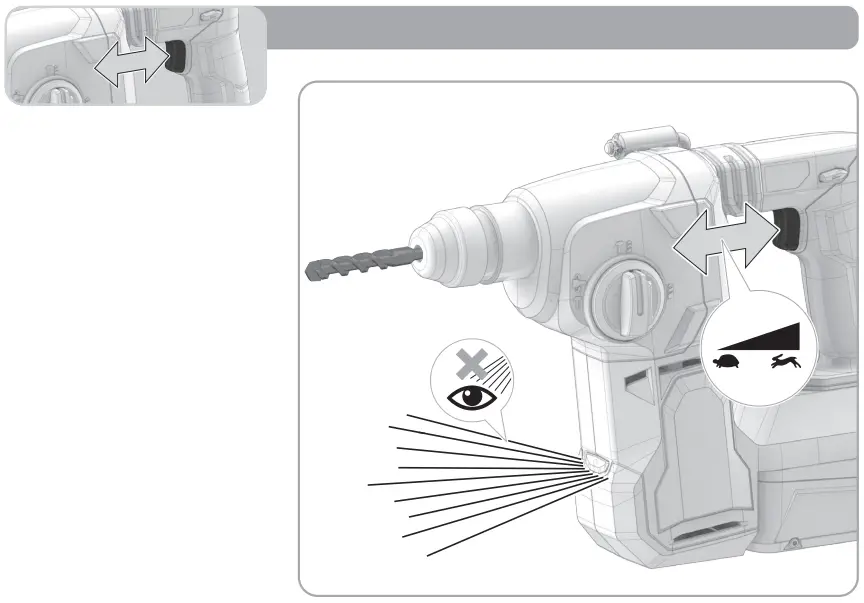
- Variable speed switch trigger
- Auxiliary handle, insulated gripping surface
- LED light
- Handle, insulated gripping surface
- Battery pack
MAINTENANCE
Avoid using solvents when cleaning plastic parts. Most plastics are susceptible to various types of commercial solvents and may be damaged by their use. Use clean cloths to remove dirt, carbon dust, etc.
Use only AEG accessories and spare parts. Should components that have not been described need to be replaced, contact one of our AEG service agents (see our list of guarantee/service addresses).
If needed, an exploded view of the product can be ordered. State the product type and the serial number printed on the label, and order the drawing at your local service agents or directly at: Techtronic Industries GmbH, Max-Eyth-Straf1e 10, 71364 Winnenden, Germany.
SYMBOLS
 | Read the instructions carefully before starting the product. |
| CAUTION! WARNING! DANGER! |
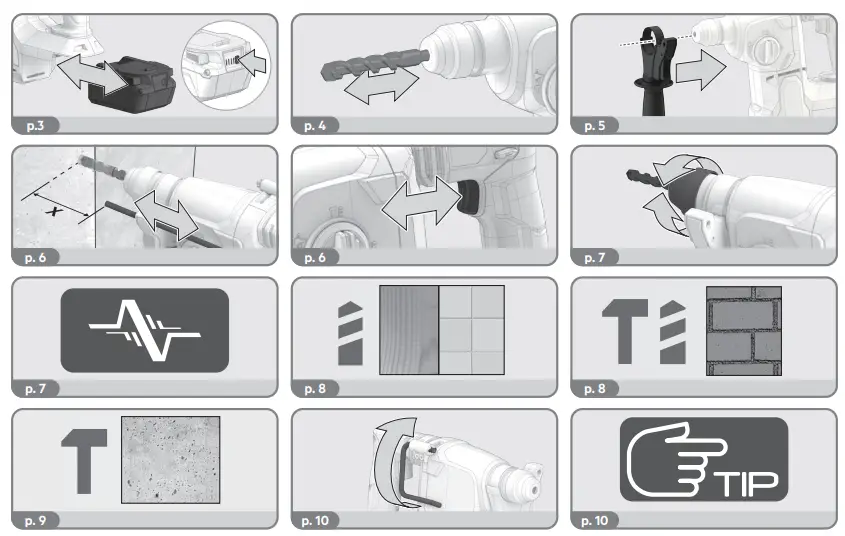
 | Anti-vibration system |
 | Hammer mode |
 | Hammer drill mode |
 | Drill mode |
 | Chisel adjustment |
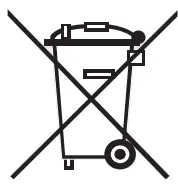 | Do not dispose of waste batteries, waste electrical and electronic equipment as unsorted municipal waste. Waste batteries and waste electrical and electronic equipment must be collected separately. Waste batteries, waste accumulators, and light sources have to be removed from the equipment. Check with your local authority or retailer for recycling advice and collection point. According to local regulations, retailers may have an obligation to take back waste batteries and waste electrical and electronic equipment free of charge. Your contribution to the reuse and recycling of waste batteries and waste electrical and electronic equipment helps to reduce the demand of raw materials. Waste batteries, in particular containing lithium, and waste electrical and electronic equipment contain valuable and recyclable materials, which can adversely impact the environment and the human health if not disposed of in an environmentally compatible manner. Delete personal data from waste equipment, if any. |
 | No-load speed |
 | Volts |
 | Direct current |
 | European Conformity Mark |
 | Ukraine Conformity Mark |
 | EurAsian Conformity Mark |
Technical Data
| Drilling capacity concrete steel wood |
| ight core cutter in bricks and limestone |
| No-load speed |
| Rate of percuss.ion under load |
| Impact energy per stroke according to EPTA-Procedure 05/2009 |
| Chuck neck diameter |
| Battery voltage |
| Weight without battery pack |
| Weight according to EPTAProcedure 01/2014 (2.0 Ah … 9.0Ah) |
| Recommended ambient operating temperature |
| Recommended battery type |
| Recommended charger |
| Noise Information |
| Measured values determined according to EN 62841 |
| A-weighted sound pressure level / Uncertainty |
| A-weighted sound power level / Uncertainty |
| Wear ear protection! |
| Vibration Information |
| Total vibration values (vector sum ,in the three axes} determined according to EN 62841 |
| Hammer-drilling in concrete/ Uncertainty |
| Chiselling / Uncertainty |
| Chiseling on loading device / Uncertainty |
| Chiseling, no load/ Uncertainty |
WARNINGI
The declared vibration total values and the declared noise emission values given in this instruction manual have been measured in accordance with a standardized test and may be used to compare one tool with another. They may be used for a preliminary assessment of exposure.
The declared vibration and noise emission values represent the main applications of the tool. However, if the tool is used for different applications, used with different accessories, or poorly maintained, the vibration and noise emission may differ.
These conditions may significantly increase the exposure levels over the total working period. An estimation of the level of exposure to vibration and noise should take into account the times when the tool is turned off or when it is running idle.
These conditions may significantly reduce the exposure level over the total working period.
Identify additional safety measures to protect the operator from the effects of vibration and noise, such as maintaining the tool and the accessories, keeping the hands warm (in case of vibration), and organizing work patterns.
Cordless rotary hammer
Brand: AEG I Manufacturer’ I Model number2 I Production code3
We declare as the manufacturer under our sole responsibility that the product described under Technical Data fulfills all the relevant provisions of the following European Directives, European Regulations and harmonized standards..
Authorised to compile the technical ·file.5
- Techtronic Industries GmbH Max-Eyth-StraBe 10, 71364 Winnenden, Germany
- BBH18BL2
- 48613001000001-999999
- 2011/65/EU (RoHS) 2014/30/EU 2006/42/EC
EN 62841-1 :2015
EN IEC 62841-2-6:2020+A 11 :2020
EN IEC 55014-1 :2021
EN IEC 55014-2:2021
EN IEC 63000:2018
Customer Support
Todd Chipner
Vice President, Quality – Asia
Winnenden, 2022-04-15
Alexander Krug, Managing Director
Techtronic Industries GmbH
Max-Eyth-StraBe 10,
71364 Winnenden,
Germany
htronic Industries GmbH
Max-Eyth-Straße 10
71364 Winnenden
Germany
www.aeg-powertools.eu
(05.22)
961096899-01A

 AEG - AEG Powertools