Turtle 2 Airbag Vest
Product Information
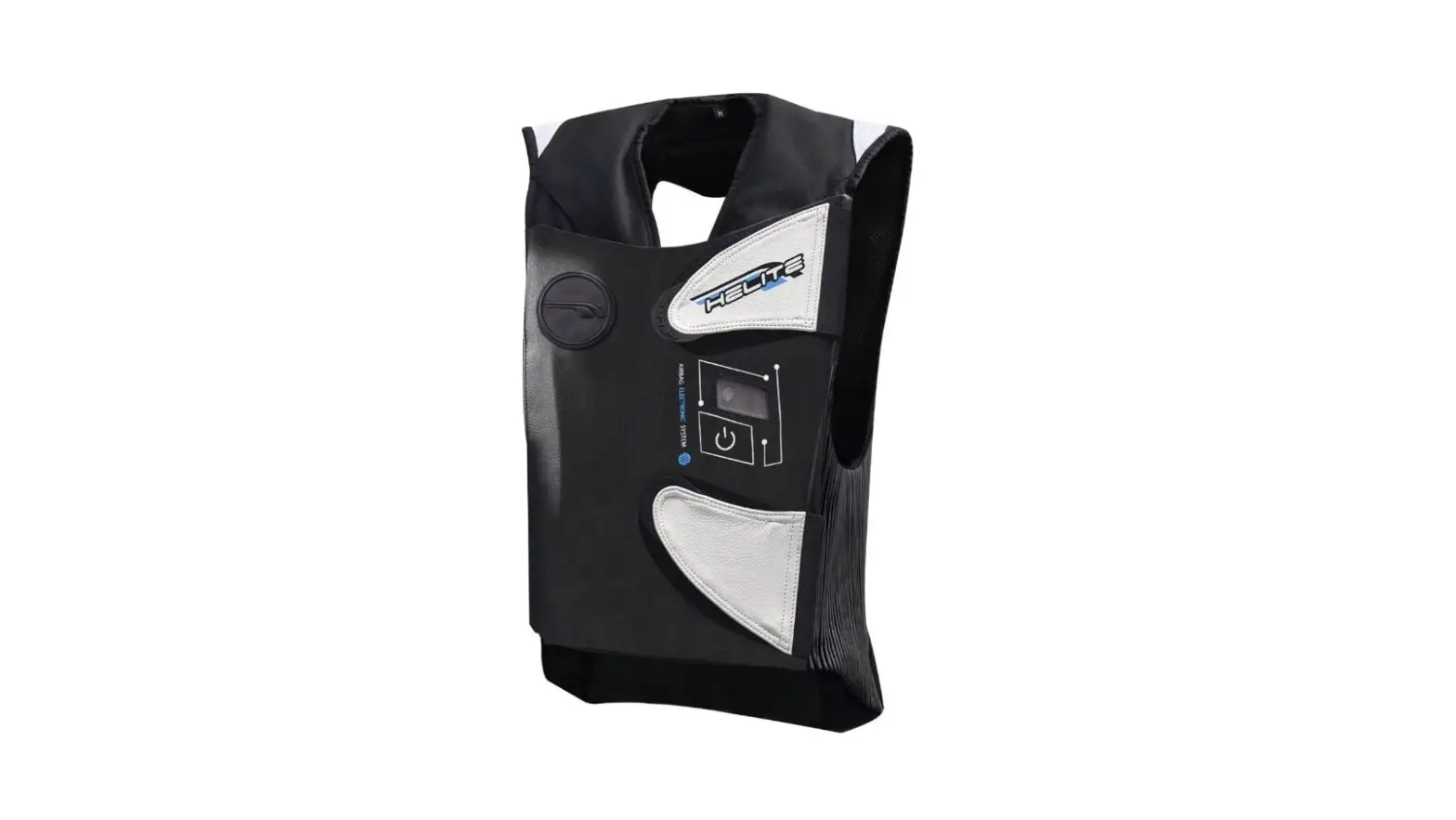
Airbag e-Turtle 2 (TURTLE II ELECTRONIC)
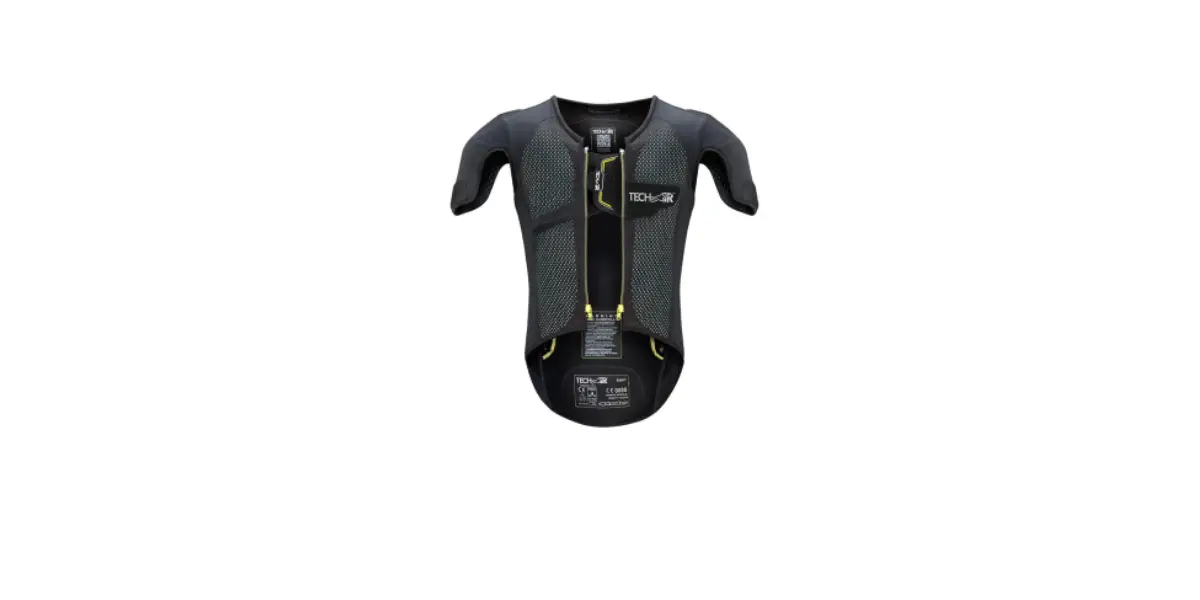
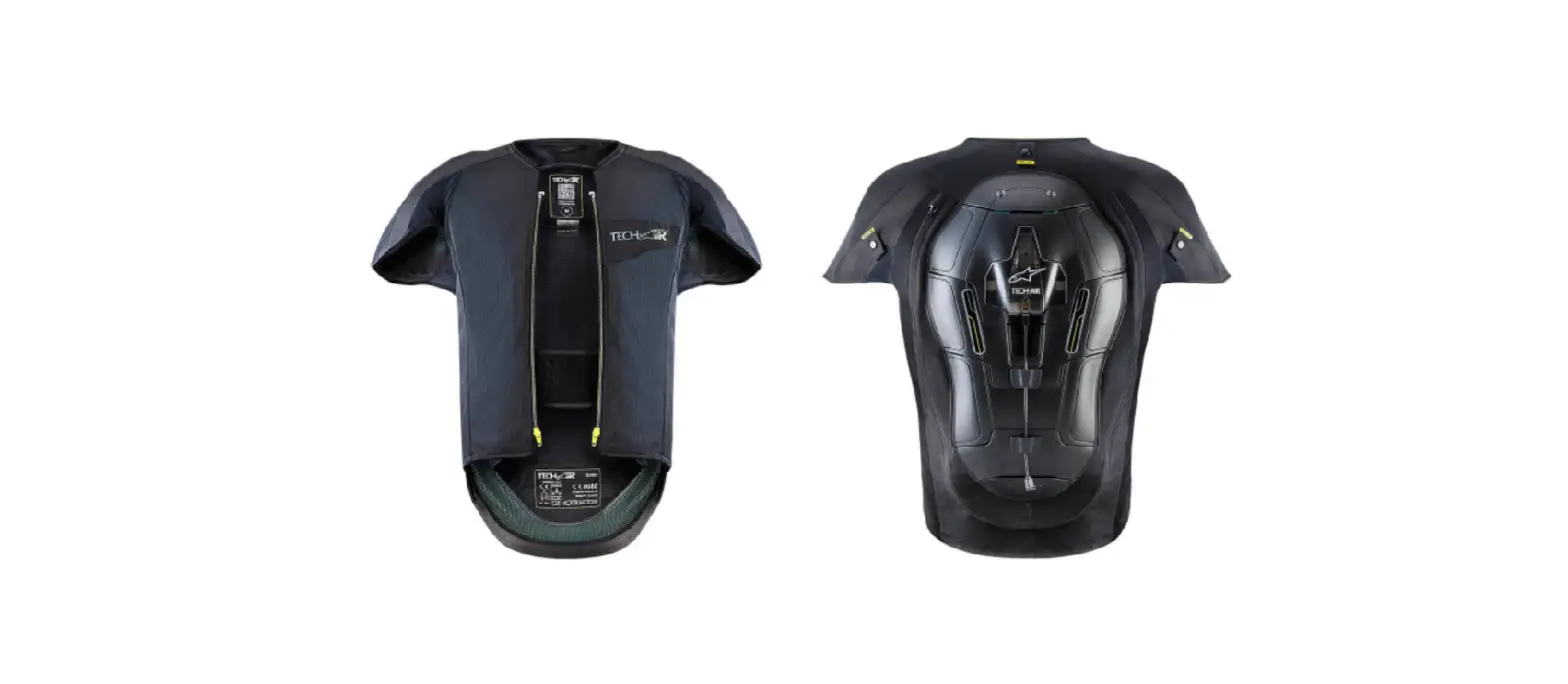
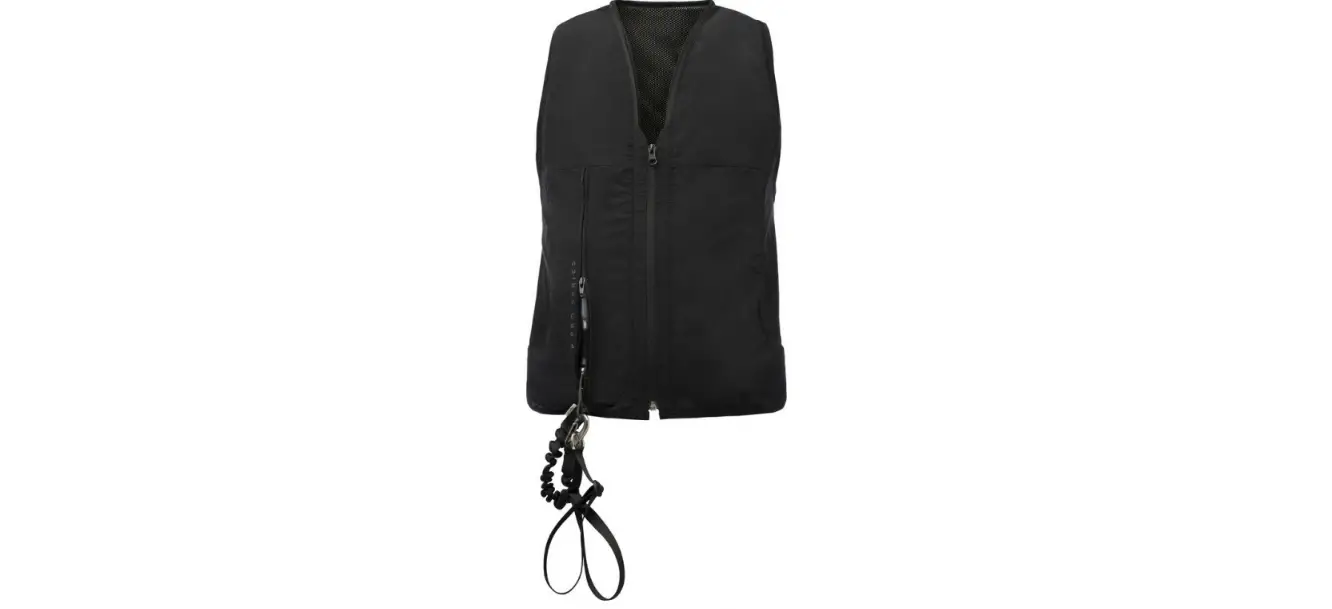
The Airbag e-Turtle 2 is a protective airbag vest designed for
use while riding motorcycles. It comes with two cartridge options:
e-60 cc and e-100 cc. The size of the cartridge varies depending on
the size of the vest. The airbag vest is available in the following
sizes:
| Size | Height | Chest Circumference | Cartridge Size |
|---|---|---|---|
| XS | 145-165 cm | 80-95 cm | e-60 cc |
| S | 155-170 cm | 85-95 cm | e-60 cc |
| M | 165-178 cm | 90-100 cm | e-60 cc |
| L | 170-185 cm | 95-105 cm | e-60 cc |
| L-L | 170-185 cm | 100-120 cm | e-100 cc |
| XL | 180-195 cm | 100-110 cm | e-60 cc |
| XL-L | 180-195 cm | 105-140 cm | e-100 cc |
The airbag vest provides protection in specific areas and has a
rechargeable battery.
Product Usage Instructions
1. Pairing the Fork Sensor SDU with the Airbag Vest
(optional)
- Turn on the airbag vest by quickly pressing the ON/OFF button
three times. A beep will sound, and a green LED will flash. - Install the Fork Sensor SDU on your motorcycle (optional).
2. Charging the Airbag Vest Battery
If the battery is low, an orange LED will flash. To recharge the
battery:
- Connect the airbag vest to a standard USB charger (5 VDC). Use
a charger with a current output of 1A (symbol for direct
current). - Plug the USB charger into a power outlet.
- The orange LED will remain steady to indicate that the battery
is charging.
3. Storing and Transporting the Airbag Vest
When not in use, properly store and transport the airbag vest to
protect it from damage.
4. Reconditioning the Airbag Vest
Refer to the CDU (Control and Display Unit) for instructions on
reconditioning the airbag vest.
5. LED and Beep Functions
| LED + Beeps | Status | Action |
|---|---|---|
| Flashing green LED + No beep | Normal Operation | The airbag vest is active and functioning correctly. It can be used. |
| Flashing orange LED + No beep | Low Battery | Recharge the airbag vest. Approximately 2 hours of battery life remaining. |
| Steady orange LED + No beep | Battery Charging | The airbag vest is being charged. |
| Steady blue LED + 1 beep every 5 seconds for 30 seconds | Fork Sensor SDU Pairing in Progress | You have 30 seconds to place the magnet on the Fork Sensor SDU. |
| Steady blue LED + 2 beeps | Fork Sensor SDU Pairing Active | The airbag vest and Fork Sensor SDU are successfully paired. |
6. Maintenance and Care of the Airbag Vest
Refer to the user manual for instructions on washing,
maintenance, and recycling of the airbag vest.
7. Warranty and Customer Support
For warranty information and customer support, refer to the user
manual.
Airbag e-Turtle 2
(TURTLE II ELECTRONIC)
MANUEL D’UTILISATION – FR USER GUIDE – EN
BEDIENUNGSANLEITUNG – DE MANUAL DE INSTRUCCIONES – ES
MANUALE D’USO – IT
HELITE SAS 1 rue de la Petite Fin 21121 Fontaine-Lès-Dijon FRANCE Tel.: +33 (0)3 80 35 48 26 www.helite.com
Airbag certifié Certified airbag Zertifizierter Airbag
2 Français
NOUS VOUS REMERCIONS POUR VOTRE ACHAT Afin d’utiliser correctement votre produit, vous devez lire attentivement ce manuel d’utilisation. Il concerne l’airbag TURTLE II ELECTRONIC (e-Turtle 2) fabriqué par Helite et utilisant un système de déclenchement électronique. Ce manuel d’utilisation peut être amené à évoluer, veuillez-vous référer à la page du produit sur le site internet helite.com
pour obtenir la dernière version. Les photos et images utilisées dans ce manuel sont non contractuelles et peuvent être modifiées sans qu’une notification ne soit envoyée au préalable. Vous devez conserver votre manuel d’utilisation.
1. Certifications ………………………………………………………………………………………………. p 3 2. Avertissements ……………………………………………………………………………………………. p 3 3. Présentation du produit ……………………………………………………………………………… p 4 4. Précautions d’utilisation ……………………………………………………………………………… p 8 5. Avant la première utilisation ………………………………………………………………………. p 8 6. Utilisation au quotidien …………………………………………………………………………….. p 10 7. Réutiliser l’airbag après un gonflage …………………………………………………………. p 14 8. Signification des LED et des bips ………………………………………………………………..p 17 9. Entretien et maintenance …………………………………………………………………………. p 18 10. Garantie et SAV ………………………………………………………………………………………. p 19 11. Avis de non-responsabilité ……………………………………………………………………… p 20
3
1. CERTIFICATIONS
Le produit TURTLE II ELECTRONIC est certifié CE par ALIENOR CERTIFICATION (Zone du Sanital, 21 Rue Albert Einstein CHATELLERAULT-France) organisme notifié n° 2754 suivant le protocole AMC-012 : 02/2020. Ce produit est conforme aux exigences du règlement UE 2016/425. La déclaration UE de conformité peut être consultée sur le site helite.com.
La carte électronique CDU est certifiée IEC 62368-1 / EN-62368-1 / UL62368-1 / CSA62368-1 par TÜV Rheinland (Tillystr. 2, 90431 Nürnberg, Germany) organisme notifié n° 0197.
Helite déclare que la carte électronique CDU est conforme aux exigences essentielles et aux autres dispositions pertinentes des directives RED (Radio Equipment Directive) 2014/53/EU et RoHS 2011/65/EU.
Déclaration ISED : L’émetteur exempt de licence contenu dans le présent appareil est conforme aux CNR d’Innovation, Sciences et Développement économique Canada applicables aux appareils radio exempts de licence. L’exploitation est autorisée aux deux conditions suivantes : (1) L’appareil ne doit pas produire de brouillage ; (2) L’appareil doit accepter tout brouillage radioélectrique subi, même si le brouillage est susceptible d’en compromettre le fonctionnement.
2. AVERTISSEMENTS
· L’utilisateur doit s’assurer du bon fonctionnement de son airbag avant de l’utiliser. · Toute mauvaise utilisation de l’airbag peut réduire dangereusement ses performances voire empêcher son fonctionnement. · L’airbag n’est pas conçu pour être utilisé par des enfants ou des personnes dont les capacités physiques, sensorielles ou mentales sont réduites sauf s’ils sont surveillés ou qu’ils ont reçu des instructions de la part d’une personne responsable concernant l’utilisation de l’appareil en toute sécurité. L’airbag n’est pas un jouet et ne doit donc pas être utilisé comme tel, il convient de surveiller les enfants pour s’assurer qu’ils ne jouent pas avec. · L’airbag a été conçu pour être utilisé dans le cadre de la pratique urbaine de la moto uniquement. Il ne doit pas être utilisé pour toute autre application notamment : motocross, trial, freestyle, pitbike, circuit, figures accrobatiques (cabrages, wheeling, embardées), vélo, trotinette, équitation, ski, etc. · Porter un airbag ne doit pas encourager à dépasser ses limites ou à prendre des risques supplémentaires. · L’utilisateur doit respecter les limitations de vitesse et le code de la route en vigueur dans le pays où il circule. · L’airbag ne peut en aucun cas être considéré comme un substitut aux équipements de protection tels que le casque, les gants, les vêtements moto, etc.
4 Français
RESTRICTIONS : LES PERSONNES NE POUVANT PAS PORTER L’AIRBAG
· Les personnes ayant un stimulateur cardiaque (pacemaker) ou d’autres appareils électromédicaux ne doivent pas utiliser l’airbag sans demander l’avis de leur médecin. Le risque d’interférence avec ces appareils n’a pas été testé.
· Les personnes souffrant de pathologies ou qui ont subi des interventions récentes situées sur les zones couvertes par l’airbag (abdomen, thorax, dos, cervicales, …) ne doivent pas utiliser l’airbag sans demander l’avis de leur médecin.
· Les personnes ayant des prothèses mammaires ne doivent pas utiliser l’airbag sans demander l’avis de leur médecin.
· L’utilisation de l’airbag est interdite aux femmes enceintes.
· Les enfants trop jeunes et trop petits n’ayant pas la morphologie requise (aucune taille correspondante), ne doivent pas porter l’airbag. Dans le cas contraire, pour une utilisation correcte de l’airbag, un enfant doit toujours être accompagné d’un adulte responsable.
3. PRÉSENTATION DU PRODUIT a) Les éléments de l’airbag TURTLE II ELECTRONIC (e-Turtle 2)
1
2
3
4
5
6
1 Le gilet airbag Il intègre la carte électronique CDU, la e-cartouche, le système airbag et la dorsale SAS-TEC niveau 2. Il se porte par-dessus votre équipement moto.
2 Carte électronique CDU Elle analyse la situation en temps réel (position du motard dans l’espace, mouvement, vitesse, …) et détecte les accidents ou les chutes. Elle intègre une batterie non amovible (Lithium Ion Cylindrical Battery 3.70V 2600mAh). Elle a 2 câbles : un câble pour recharger sa batterie et un câble pour brancher la e-cartouche (connecteur à verrou). La carte électronique CDU doit être utilisée exclusivement dans le gilet airbag.
5
Vous ne devez pas la retirer, l’utiliser à l’extérieur, seule ou dans un autre textile. Caractéristiques RF : 868MHz -916MHz (0dBm). Fréquence réception GPS : 1565.42 – 1585.42MHz (GPS) / 1602 – 1610 MHz (GNSS).
3 E-cartouche avec système de déclenchement pyrotechnique
Elle est composée de gaz CO2 sous pression, d’un système de déclenchement
pyrotechnique et d’un connecteur à verrou
. Le gilet airbag est vendu avec
une cartouche neuve déjà installée et prête à l’emploi. Si une chute ou un accident
est détecté, le système de déclenchement pyrotechnique intégré à la cartouche va
percer son opercule et libérer le gaz qui va gonfler l’airbag. La cartouche est rem-
plaçable par vous-même facilement et rapidement (voir page 15). Il est conseillé de
toujours prévoir une cartouche de rechange.
Il existe 2 références de e-cartouche pour le produit TURTLE II ELECTRONIC
(e-Turtle 2) : e-60 cc et e-100 cc. La taille de la cartouche varie en fonction de la
taille du gilet airbag pour un volume de protection optimal qui s’adapte à votre
morphologie. Pour connaître la référence de votre cartouche, merci de vous référer
à son étiquette, au marquage se trouvant à côté de la cartouche sur le gilet airbag
ou en consultant le tableau de taille de votre produit (voir page 6).
PRÉCAUTIONS D’UTILISATION DE LA CARTOUCHE
· La cartouche est à usage unique et doit être remplacée après chaque gonflage par une cartouche neuve ayant la même référence. · Utiliser uniquement des cartouches de la marque Helite disponibles chez votre revendeur ou helite.com. · Les cartouches de gaz sont considérées comme des matières dangereuses, elles doivent être conservées hors de la portée des enfants et utilisées avec précaution. · Ne jamais brancher la cartouche avant qu’elle ne soit complètement vissée dans son emplacement. · Si des taches de rouille ou des signes de détérioration apparaissent sur la cartouche, remplacez-la immédiatement et contactez votre revendeur ou Helite à sav@ helite.com. · La cartouche doit être stockée à des températures comprises entre 0 °C (32 °F) et 45 °C (113 °F). Elle doit être stockée à l’abri de l’humidité et de la lumière. · Si la cartouche a été stockée à des températures inférieures à 0°C (32 °F), nous vous conseillons de la laisser plusieurs minutes à température ambiante avant d’utiliser votre gilet airbag afin d’éviter tout dysfonctionnement. · N’exposez pas les cartouches pendant une longue période à des températures élevées (en plein soleil dans une voiture, près d’un radiateur, …), près d’une surface ou d’objets inflammables. · Ne pas donner des coups sur la cartouche, ne pas la laisser tomber, ne pas la couper ou la perforer, ne pas la jeter dans le feu. · Attention, le gaz à l’intérieur de la cartouche est comprimé à très haute pression. · Retrouver les informations à propos de la vérification annuelle de la cartouche page 18, de son recyclage page 19 et de sa garantie page 19.
6 Français
4 Dorsale SAS-TEC niveau 2 Elle est intégrée dans le gilet airbag et apporte une nette amélioration au niveau de la protection (TURTLE Technologie).
5 Câble USB Il permet de recharger la batterie de la carte électronique CDU du gilet airbag (voir page 12). Attention : seul le câble USB est fourni, il faudra ensuite le brancher à un chargeur USB standard (5 VDC).
6 Capteur fourche SDU (en option) Il détecte les mouvements anormaux de la moto et communique avec la carte électronique CDU par radiofréquence. Il s’installe sur la fourche de la moto. Dans des conditions optimales, le capteur fourche SDU a une autonomie d’environ 5 ans. Il n’est pas rechargeable. Nous vous conseillons de vérifier au moins 1 fois par mois son état de fonctionnement. Un aimant est fourni avec le capteur fourche SDU. Il est utilisé pour réaliser l’appairage entre le gilet airbag et le capteur fourche SDU (voir page 8) ainsi que pour les contrôles réguliers. Pour tout savoir sur le capteur fourche SDU et connaître ses conditions d’utilisation, merci de vous référer à sa notice dédiée.
b) Taille du gilet airbag
Pour une protection optimale, veillez à bien choisir la taille du gilet airbag en fonction de votre morphologie. Ce tableau (en cm) représente la zone de protection couverte par l’airbag et les références des cartouches à utiliser.
Gilet Airbag
XS
S
M
L
L-L
XL
XL-L
Hauteur
Tour de poitrine
Longueur taille-épaule
Référence cartouche
145-165 80-95 38-46 e-60 cc
155-170 85-95 40-50 e-60 cc
165-178 90-100 43-53 e-60 cc
170-185 95-105 47-57 e-60 cc
170-185 100-120
47-57 e-100 cc
180-195 100-110
51-61 e-60 cc
180-195 105-140
51-61 e-100 cc
7
c) Les zones de protection de l’airbag
L’airbag préserve les zones vitales en cas de chute ou d’accident (thorax, abdomen, cervicales, dos, hanches, sacrum). Son volume de protection permet d’absorber efficacement les chocs et sa forme stabilise le buste limitant ainsi le risque d’hyperflexion de la colonne vertébrale.
ATTENTION L’airbag ne peut pas offrir une protection totale contre les blessures mais il réduit les risques. Les parties du corps qui ne sont pas couvertes par l’airbag ne sont pas protégées. La protection de l’airbag n’est assurée qu’à l’état gonflé.
d) La détection des accidents et des chutes Le système électronique Helite détecte plusieurs configurations d’accidents ou de chutes. Il analyse les mouvements, la vitesse, les impacts et utilise un signal GPS. · Quand la moto est à l’arrêt ou roule à une vitesse inférieure à 18 km/h à condition d’utiliser le capteur fourche SDU (en option) : moto se faisant percuter (de face, de côté ou par l’arrière). ATTENTION, si vous n’avez pas installé le capteur fourche SDU ou que vous ne l’utilisez pas correctement alors vous ne serez pas protégé à l’arrêt ou à une vitesse inférieure à 18 km/h. · Quand la moto roule à une vitesse supérieure à 18 km/h : moto se faisant percuter (de face, de côté ou par l’arrière), moto percutant un obstacle conséquent (véhicule, mur, poteau, …), perte de contrôle de la moto, glissade, high side, low side.
ATTENTION · En cas d’altération ou d’absence de signal GPS (tunnel, parking souterrain …) nous ne pouvons pas garantir la détection de l’accident ou de la chute. · Dans les cas de chutes ou d’accidents trop lents ou d’amplitude trop faible, il se peut que la détection ne se fasse pas à temps voire pas du tout. · Le système électronique est sensible aux mouvements brusques, n’exécutez pas volontairement des manoeuvres qui ne correspondent pas à une conduite urbaine normale. · Il est important de ne pas provoquer intentionnellement de chocs sur le capteur fourche SDU, cela pourrait l’endommager et provoquer des déclenchements intempestifs. · Dans certaines situations extrêmes, le système électronique pourrait se déclencher sans chute de l’utilisateur.
8 Français
e) Autonomie
Dans des conditions optimales, le gilet airbag a une autonomie d’environ 25h lorsqu’il est allumé et actif (hors mode veille). Il passe en mode veille automatiquement quand aucun mouvement n’est détecté pendant environ 45 secondes et se réveille dès le premier mouvement. Il est conseillé de le recharger toutes les semaines (voir page 12).
Dans des conditions optimales, le capteur fourche SDU a une autonomie d’environ 5 ans. Il n’est pas rechargeable. Nous vous conseillons de vérifier au moins 1 fois par mois son état de fonctionnement, veuillez-vous référer à sa notice.
f) Mise à jour
Le système électronique Helite peut être amené à évoluer. En cas de mise à jour importante, vous serez contacté par votre revendeur ou Helite.
4. PRÉCAUTIONS D’UTILISATION
· Le gilet airbag doit exclusivement s’utiliser à des températures comprises entre -10 °C (14 °F) et + 45 °C (113 °F). Une exposition prolongée du gilet airbag à des températures extérieures à cette plage peut l’endommager et compromettre son fonctionnement. · Ne modifier et ne supprimer aucun élément du gilet airbag. · Ne pas coudre ou coller quoi que ce soit sur le gilet airbag. · Ne pas appliquer de transfert à chaud sur le gilet airbag. · Ne rien laisser dans les poches du gilet airbag notamment s’ils sont pointus ou tranchants. En cas de gonflage, cela pourrait endommager l’airbag ou vos objets. · Tout élément porté sur le gilet airbag peut ralentir ou empêcher son gonflage ainsi qu’exercer une très forte pression sur les zones couvertes par l’airbag.
5. AVANT LA PREMIÈRE UTILISATION
a) Appairer le capteur fourche SDU avec le gilet airbag (en option)
Avant d’utiliser le gilet airbag pour la première fois, vous devez l’associer avec le capteur fourche SDU. Pour réaliser la procédure d’appairage, vous aurez besoin du capteur fourche SDU, de l’aimant et du gilet airbag. Si vous avez perdu l’aimant, vous pouvez utiliser un aimant similaire (de même puissance). Si vous avez d’autres gilets airbag qui sont associés à ce capteur fourche SDU alors ils doivent être éteints.
À SAVOIR · On peut appairer jusqu’à 5 capteurs fourche SDU au gilet airbag (par exemple si vous avez plusieurs motos). Pour chacun, il faudra réaliser la procédure d’appairage. · On peut appairer un nombre illimité de gilets airbag à un seul capteur fourche SDU.
x3
1
3sec
9
3
2
1 Allumer le gilet airbag en appuyant rapidement 3 fois sur le bouton ON/OFF (voir page 11). Un bip retentit et une LED verte clignote.
2 Appuyer pendant 3 secondes sur le bouton ON/OFF , la LED devient bleue fixe et un bip retentit. Relâcher le bouton et passer à l’étape suivante.
3 Poser l’aimant sur le capteur fourche SDU au niveau du rond. Attention vous avez 30 secondes pour effectuer cette manipulation. · Si 1 bip long retentit : l’appairage a réussi. · Si 2 bips courts retentissent : le gilet airbag et le capteur fourche SDU sont déjà appairés. Pas besoin de recommencer la procédure. · Si la LED devient rouge et une série de bips courts retentit : l’appairage a échoué. Soit vous avez mis plus de 30 secondes à poser l’aimant sur le capteur fourche SDU, dans ce cas recommencez la procédure d’appairage. Soit vous avez trop de capteurs fourche SDU appairés (5 maximum), dans ce cas vous devez effacer les capteurs fourche SDU associés au gilet airbag. Pour effacer tous les capteurs fourche SDU appairés au gilet airbag, allumer-le et appuyer pendant 8 secondes sur le bouton ON/OFF .
VÉRIFIER L’APPAIRAGE Nous vous recommandons de vérifier au moins 1 fois par mois l’appairage du gilet airbag au capteur fourche SDU. Si vous avez perdu l’aimant, vous pouvez utiliser un aimant similaire (de même puissance). Allumer le gilet airbag (voir page 11). Il suffit de poser l’aimant sur le capteur fourche SDU au niveau du rond : · Sur la carte électronique CDU située sur le gilet airbag, La LED devient bleue et 2 bips courts retentissent : appairage actif. · Sur la carte électronique CDU située sur le gilet airbag, rien ne se passe : appairage inactif. Veuillez effectuer la procédure d’appairage.
b) Installer le capteur fourche SDU sur votre moto (en option)
Pour une détection optimale des accidents ou des chutes, nous vous recommandons d’installer le capteur fourche SDU sur votre moto. Veuillez suivre les instructions de la notice fournie avec le capteur fourche SDU pour l’installer correctement.
10 Français
c) Recharger la batterie du gilet airbag Avant la première utilisation du gilet airbag, nous vous conseillons de recharger complètement sa batterie (voir page 12).
d) Vérifier le branchement de la e-cartouche
Avant la première utilisation du gilet airbag, nous vous demandons de vérifier que la e-cartouche soit correctement branchée à la carte électronique CDU. Ouvrir la poche située sur le côté droit du gilet airbag. Vérifier le branchement : connecteur dans le bon sens et verrouillé. Refermer la poche.
Si vous rencontrez un problème avant la première utilisation, veuillez-vous référer à la section “Signification des LEDs et des bips” (voir page 19) ou à la section “Service après-vente” (voir page 19).
6. UTILISATION AU QUOTIDIEN a) Vérification rapide avant utilisation Nous vous demandons de vérifier les points suivants avant chaque utilisation de l’airbag pour être correctement protégé : Le gilet airbag est en bon état, sans déchirure ou usure. La e-cartouche est neuve et branchée (voir page 10). Le gilet airbag est porté correctement (voir page 10). La batterie du gilet airbag est suffisamment chargée (voir page 12). Le gilet airbag est allumé, une LED verte clignote (voir page 11). En option : le capteur fourche SDU est appairé au gilet airbag (voir page 8).
b) Porter le gilet airbag ATTENTION Le gilet airbag se porte par-dessus votre équipement de moto (blouson, veste,… ).
11
· Vous devez ajuster votre gilet airbag en fonction de l’équipement de moto que vous portez. Ouvrer la grande poche située sur le côté gauche du gilet airbag (poche velcro). Régler la largeur du gilet airbag à l’aide des 3 sangles (velcro). Refermer la poche. Pour vérifier si le gilet airbag est correctement ajusté, vous devez avoir un espace suffisant pour passer votre poing en-dessous. · Vous devez fermer correctement le gilet airbag en verrouillant ses 3 boucles centrales afin de maintenir l’airbag en cas de gonflage. Si vous ne fermez pas correctement le gilet airbag, nous ne pouvons pas garantir une bonne protection. · Le gilet airbag est déperlant, vous pouvez donc l’utiliser par temps de pluie ou de neige. Veillez à le faire sécher correctement après son utilisation (voir page 18). · Il est possible de porter un sac à dos sur le gilet airbag en desserrant suffisamment ses bretelles afin de laisser l’espace nécessaire pour l’airbag à l’état gonflé. Attention, un mauvais positionnement de la bretelle du sac à dos pourrait venir gêner la carte électronique CDU (sur le côté ou sous la carte électronique CDU) et provoquer des déclenchements intempestifs. Nous vous recommandons de faire passer la bretelle du sac à dos bien à plat sur la carte électronique CDU. · Le gilet airbag peut être porté par le conducteur de la moto et par son passager.
c) Allumer et éteindre le gilet airbag
x3
· Allumer le gilet airbag : appuyer rapidement 3 fois sur le bouton ON/OFF situé sur le côté droit du gilet airbag, 3 bips retentissent et une LED verte clignote. · Mode veille : après 45 secondes d’inactivité, le gilet airbag passe en mode veille automatiquement. Il se réveille dès le moindre mouvement. · Éteindre le gilet airbag : appuyer rapidement 3 fois sur le bouton ON/OFF situé sur le côté droit du gilet airbag, 3 bips retentissent et la LED s’éteint.
12 Français
QUAND DOIT-ON ÉTEINDRE LE GILET AIRBAG ?
· Lorsque vous prenez un moyen de transport autre que la moto avec le gilet airbag (voiture, métro, tramway, train, bus, avion, bateau, …) afin d’éviter de provoquer tout déclenchement intempestif.
· Lorsque vous n’utilisez pas le gilet airbag pour éviter d’user la batterie.
d) Recharger la batterie du gilet airbag
Dans des conditions optimales, le gilet airbag a une autonomie d’environ 25h lorsqu’il est allumé et actif (hors mode veille). Il est conseillé de le recharger toutes les semaines et de vérifier son niveau de batterie avant chaque utilisation.
Batterie faible LED orange clignotante
Recharger le gilet airbag, 2 h de batterie restantes.
Batterie très faible 3 bips quand vous allumez/éteignez
l’airbag. Quand l’airbag est allumé, LED
orange clignotante.
Recharger le gilet airbag, 30 min de batterie restantes.
Le gilet airbag se recharge avec le câble USB fourni. Seul le câble est fourni, il faudra
ensuite le brancher sur un chargeur USB standard (5 VDC). Vous devez utiliser un
chargeur USB certifié IEC 62368-1 / EN-62368-1 / UL62368-1 / CSA62368-1.
Caractéristiques électriques : 5 VDC
1A (
est le symbole courant continu).
ATTENTION
· N’utiliser pas de chargeur à charge rapide car cela pourrait endommager le système électronique. · Ne jamais brancher au gilet airbag un appareil électrique ou une batterie externe avec une tension de plus de 5VDC. · Le temps de charge, entre 5h à 7h, est indicatif et varie en fonction des conditions de charge. · Pendant la charge, le gilet airbag n’est pas fonctionnel. Vous ne devez pas le recharger en roulant à moto. · Vous devez recharger le gilet airbag à des températures comprises entre 0 °C (32 °F) et 45 °C (113 °F). · Ne pas recharger le gilet airbag près de surfaces ou d’objets inflammables, ni en plein soleil. · Vous devez recharger le gilet airbag en intérieur.
13
COMMENT RECHARGER LA BATTERIE DU GILET AIRBAG ? Vous devez éteindre le gilet airbag avant de le recharger (voir page 11).
5VDC
1 Ouvrir la poche située sur le côté droit du gilet airbag.
2 Sortir le câble de charge de la batterie relié à la carte électronique CDU (attention, ne pas confondre avec le câble de la e-cartouche). Brancher le câble de charge au chargeur USB (non fourni).
3 Brancher le chargeur USB sur une prise secteur.
Batterie en charge LED orange fixe
Entre 5h à 7h de charge dans des conditions optimales.
Batterie chargée LED verte fixe
Débrancher le chargeur. Vous pouvez utiliser le gilet airbag.
4 Quand la charge est terminée, débrancher le chargeur USB, remettre les câbles dans la poche du gilet airbag et refermer-la.
e) Ranger le gilet airbag
Après chaque utilisation, ranger le gilet airbag en respectant les consignes suivantes : · Éteindre le gilet airbag. · Stocker le gilet airbag à des températures comprises entre 0 °C (32 °F) et 30 °C (86 °F). · Ranger le gilet airbag dans un endroit à l’abri de l’humidité et de la lumière. · Ne pas laisser le gilet airbag à proximité de surfaces ou d’objets inflammables. · Ne pas ranger d’objets lourds sur le gilet airbag. · Ne pas laisser le gilet airbag plié ou enroulé. · Mettre le gilet airbag sur un cintre ou un porte-manteau. · Ne pas laisser le gilet airbag à la portée de rongeurs ou d’autres animaux. · Tenir le gilet airbag hors de portée des enfants.
14 Français
f) Transporter le gilet airbag
ATTENTION · Vous ne devez pas utiliser le gilet airbag si vous prenez un moyen de transport autre que la moto. · Quand vous transportez le gilet airbag, il doit impérativement être éteint afin d’éviter tout déclenchement intempestif.
En voiture, métro, tramway, train, bus, bateau, … : vous pouvez transporter le gilet airbag mais éteint. D’un point de vue réglementaire, il n’existe pas de restrictions particulières.
En avion : vous pouvez transporter le gilet airbag mais éteint. D’un point de vue réglementaire, des restrictions existent. Pour connaître les dernières recommandations en vigueur merci de consulter la documentation disponible sur helite.com dans la partie FAQ. Nous vous recommandons de joindre au gilet airbag, le manuel d’utilisation ainsi que le documents IATA relatif au transport des matières dangereuses en avion. Nous vous conseillons de demander une approbation préalable écrite à la compagnie aérienne. Helite ne peut pas être tenu responsable si la compagnie aérienne ou le service de sécurité de l’aéroport refuse le transport du gilet airbag. Le transport du gilet airbag est systématiquement soumis à leur autorisation.
7) RÉUTILISER L’AIRBAG APRÈS UN GONFLAGE
Après un gonflage, nous vous demandons de vérifier l’état du gilet airbag (airbag visible, déchirure, abrasion). Le gilet airbag se dégonfle progressivement tout seul en quelques minutes. Un dommage sur le gilet airbag peut être détecté par un dégonflage très rapide (inférieur à 5 secondes). En cas de problème ou de doute sur l’état du gilet airbag, contactez votre revendeur ou le service client Helite à sav@ helite.com.
ATTENTION · Un mauvais reconditionnement du gilet airbag pourrait empêcher son fonctionnement. Vous devez suivre scrupuleusement l’ordre des étapes ci-dessous. · Vous devez reconditionner le gilet airbag dans un environnement propre (à l’abri de la poussière, pas à même le sol, …). · Après un gonflage, la cartouche est percée et donc vide. Vous ne devez pas la réutiliser. Il faut la remplacer par une cartouche neuve Helite de même référence. · Les personnes dont les capacités physiques, sensorielles ou mentales sont réduites ou les enfants qui portent le gilet airbag doivent toujours être accompagnés d’un adulte responsable pour le reconditionner afin d’éviter toute erreur.
15
COMMENT RECONDITIONNER LE GILET AIRBAG ?
Vous aurez besoin du gilet airbag et d’une cartouche neuve Helite de même référence (e-60 cc ou e-100 cc selon la taille de votre gilet airbag, voir page 6).
1 Le gilet airbag vient de se gonfler. Une LED rouge clignote et des bips retentissent. Le gilet airbag va s’éteindre automatiquement au bout de 30 secondes. Si ce n’est pas le cas, éteignez-le, appuyez 3 fois sur le bouton ON/OFF (voir page 11). Dès que vous êtes en sécurité, vous pouvez l’enlever. Vérifier l’état du gilet airbag, notamment en cas d’impact sur un objet tranchant ou pointu : déchirure, trou.
2 Retirer la cartouche vide. Pour y accéder, ouvrir la poche située sur le côté
droit du gilet airbag. Débrancher la cartouche
(ATTENTION, déve-
rouiller le clip), retirer l’élastique et dévisser la cartouche.
3 Évacuer le gaz. Aplatir le gilet airbag à l’aide de vos mains.
16 Français
4 Installer une cartouche neuve Helite de même référence. Insérer le câble de la cartouche dans le cylindre, attention il doit être bien droit (ne pas le tordre, le vriller ou le plier pendant le vissage, cela pourrait l’endommager). Visser la cartouche au maximum, attention à ne pas la visser de travers. Replacer l’élastique sur la cartouche. Brancher la cartouche à la carte électronique
CDU
(connecteur à verrou), attention au sens de branchement.
MAX
5 Remettre les éléments en place et refermer la poche.
6 Allumer le gilet airbag Appuyez 3 fois sur le bouton ON/OFF (voir page 11) : · Si une LED verte clignote, la cartouche
est correctement installée. Vous pouvez x3
utiliser le gilet airbag. · Si une LED rouge clignote et des bips retentissent, il y a un problème (cartouche vide, câble mal branché…). Dans ce cas, vérifier à nouveau l’installation de la cartouche et l’état du gilet airbag. Si le problème persiste, contacter votre revendeur ou le service client Helite à [email protected].
17
8) FONCTIONNEMENT DES LEDS ET DES BIPS
Si vous avez un doute ou un problème avec le fonctionnement du gilet airbag, veuillez-vous référer au tableau descriptif des LED et des bips émanant de la carte électronique CDU. Si vous ne trouvez aucune solution, merci de contacter votre revendeur ou le service client Helite à [email protected].
À SAVOIR Une perte du signal GPS peut modifier la vitesse du clignotement de la LED (clignotement plus rapide).
LED + Bips
Statut
Fonctionnement normal LED verte clignotante + pas de bip
Batterie faible LED orange clignotante + pas de bip
Batterie très faible 3 bips quand vous allumez/éteignez l’airbag. Quand l’airbag est allumé, LED orange clignotante.
Batterie en charge LED orange fixe + pas de bip
Action Le gilet airbag est actif et fonctionne correctement, vous pouvez l’utiliser.
Recharger le gilet airbag, 2 h de batterie restantes.
Recharger le gilet airbag, 30 min de batterie restantes.
Attendre la charge totale du gilet airbag.
Batterie chargée LED verte fixe + pas de bip
Débrancher le chargeur, vous pouvez utiliser le gilet airbag.
Avec option capteur fourche SDU Appairage en cours LED bleue fixe + 1 bip toutes les 5 s. pendant 30 s.
Vous avez 30 s. pour poser l’aimant sur le capteur fourche SDU.
Avec option capteur fourche SDU Appairage réussi LED bleue fixe + 1 bip long de 2 s.
Le gilet airbag et le capteur fourche SDU sont désormais appairés.
Avec option capteur fourche SDU Le gilet airbag et le capteur
Appairage actif
fourche SDU sont bien
LED bleue fixe + 2 bips
appairés.
18 Français
Avec option capteur fourche SDU Appairage manqué LED rouge fixe + 4 bips
Airbag non fonctionnel LED rouge clignotante + série de bips. ATTENTION, un problème est survenu.
Recommencer la procédure d’appairage ou effacer tous les capteurs fourche SDU déjà appairés.
– Cartouche débranchée : brancher correctement la cartouche. – Cartouche vide, câble endommagé : remplacer par une cartouche neuve. – Autre cas : veuillez contacter le service client.
9) ENTRETIEN ET MAINTENANCE
a) Lavage et entretien du gilet airbag
Merci de suivre les instructions suivantes afin de ne pas endommager l’aibag et le système électronique. Ne pas laver en machine, ne pas immerger dans l’eau et ne pas nettoyer à sec. La seule possibilité pour nettoyer le gilet airbag est d’utiliser un chiffon doux légèrement humidifié et du savon. Ne pas utiliser de produits détergents ou d’agents de blanchiment. Ne pas mettre au sèche-linge ou sur un radiateur. Ne pas repasser. Nous vous conseillons de les faire sécher sur un cintre dans un endroit à l’abri de l’humidité.
b) Vérification annuelle de la e-cartouche
Nous vous conseillons de faire une vérification annuelle du poids et de l’état de la cartouche. Le gilet airbag doit être éteint. Débranchez la cartouche puis dévissez-la. Pesez la cartouche sur une balance précise au gramme près. Il faut s’assurer que le poids de la cartouche soit à +/- 3 g pour la e-60 cc et +/- 5 g pour la e-100 cc par rapport au poids indiqué sur son étiquette. Vérifiez l’aspect de la cartouche : fil du connecteur en bon état, pas de corrosion, pas de bosse. Si rien n’est à signaler, réinstaller la cartouche (voir page 15). En cas de problème, contactez votre revendeur ou le service client Helite à [email protected].
c) Durée de vie du gilet airbag
Le gilet airbag n’a pas un nombre de gonflages maximum ni une durée de vie limitée, tout dépend de ses conditions d’utilisation et de son entretien. Même si le gilet airbag fonctionne correctement, nous vous recommandons de faire une révision tous les ans à partir de sa première utilisation. Pour faire une révision merci de contacter votre revendeur ou le service client Helite à [email protected].
19
d) Recyclage
Le symbole ci-contre signifie que, conformément aux lois et réglementations locales, vous ne devez pas jeter votre gilet airbag et/ou ses composants avec vos ordures ménagères. Pour éviter toute nuisance à l’environnement ou à la santé, merci de consulter vos règles de tri local sur les déchets (électronique, métallique, plastique, textile, …). Si votre gilet airbag et/ou ses composants sont en fin de vie, apportez-les à un point de collecte désigné par les autorités locales (municipalité, déchetterie…). Vous pouvez également renvoyer votre gilet airbag et/ou ses composants à : Helite, 1 rue de la Petite Fin, 21121 Fontaine-Lès-Dijon, FRANCE.
10) GARANTIE ET SAV
a) Garantie
Le gilet airbag et ses composants sont couverts par une garantie légale de 2 ans contre tout défaut de fabrication à compter de sa date d’achat. Helite vous offre une extension de garantie gratuite de 2 ans supplémentaire sur le gilet airbag (hors textile, carte électronique CDU et capteur fourche SDU) à compter de sa date d’achat en vous enregistrant sur le site my.helite.com. Helite vous offre une garantie de 10 ans sur ses cartouches. Ces garanties ne s’appliquent pas en cas d’abus, négligence, manque d’attention, dégradations volontaires, modifications, mauvaises conditions de stockage, entretien incorrect, transport inapproprié, mauvaise installation, ajustement incorrect, mauvaise utilisation ou utilisation de manière non conforme et contraire au présent manuel.
b) Service après-vente
Si vous rencontrez l’un des problèmes décrits ci-dessous ou si vous avez le moindre doute quant à la bonne utilisation du gilet airbag, merci de contacter votre revendeur ou le service client helite à [email protected] : · si vous venez d’avoir un accident ou de faire une chute et que vous ne savez pas si le gilet airbag est encore en bon état de fonctionnement ; · si le gilet airbag présente des signes de détérioration (visible, percé ou déchiré) ; · si la e-cartouche, la carte électronique CDU ou le capteur fourche SDU présentent des signes de détérioration (fissure, cassure, corrosion) ; · si le gilet airbag ne s’allume plus alors que la batterie est suffisamment chargée ; · si la batterie du gilet airbag ne recharge plus ; · si vous détectez toute usure anormale du gilet airbag.
ATTENTION Si vous faites appel à un réparateur non agréé, le gilet airbag et ses composants ne seront plus sous garantie et nous déclinerons toute responsabilité quant à son bon fonctionnement. Il est interdit de réparer ou remplacer le gilet airbag et/ou ses composants avec toute autre partie ou accessoire qui ne soit pas un élément original.
20 Français
11) AVIS DE NON-RESPONSABILITÉ
Vous devez lire attentivement ce manuel afin d’utiliser correctement l’airbag TURTLE II ELECTRONIC (e-Turtle 2). · L’airbag ne doit être utilisé qu’à l’usage pour lequel il est destiné. · Aucun airbag ne peut fournir une protection complète contre les blessures, les lésions graves ou le décès de l’utilisateur. · L’airbag ne couvre pas 100% des risques et ne garantit pas la détection de 100% des chutes ou accidents. · Les parties du corps qui ne sont pas couvertes par l’airbag ne sont pas protégées. · La protection de l’airbag n’est assurée qu’à l’état gonflé.
HELITE NE POURRA PAS ÊTRE TENU RESPONSABLE · Si l’airbag ne se gonfle pas. · De lésions et de leurs conséquences survenues lors d’accidents, que l’airbag se soit gonflé ou non, quelle qu’en soit la raison. · Si l’airbag se détériore ou se perce lors d’une chute (ex : s’il percute un objet tranchant ou pointu). · Des déclenchements intempestifs de l’airbag : dans certaines situations le système pourrait se déclencher sans chute de l’utilisateur. · D’un mauvais reconditionnement de l’airbag après un gonflage. · D’une mauvaise installation, de l’usage incorrect et de l’entretien non conforme de l’airbag. · Des dégâts matériels pouvant survenir lors de l’utilisation de l’airbag. · Du mauvais fonctionnement de l’airbag suite à une modification, un remplacement ou une réparation de l’airbag qui n’est pas effectué par un prestataire agréé.
21
THANK YOU FOR YOUR PURCHASE In order to correctly use your product, please read this user guide carefully. It concerns the airbag TURTLE II ELECTRONIC (e-Turtle 2) using an electronic trigger system made by Helite. This user guide may change over time, please refer to the product section of the website www.helite.com for the latest version. The pictures and images used in this user guide are not contractual and can be modified without any prior notification. Please make sure to store your user guide in a safe place.
1. Certifications ……………………………………………………………………………………………..p 22 2. Warnings ……………………………………………………………………………………………………p 23 3. Product presentation …………………………………………………………………………………p 24 4. Precautions for use ……………………………………………………………………………………p 27 5. Before first use …………………………………………………………………………………………..p 28 6. Daily use …………………………………………………………………………………………………….p 30 7. Reusing the airbag system after inflation ……………………………………………………p 33 8. Meaning of LEDs and beeps ……………………………………………………………………….p 36 9. Servicing and maintenance ………………………………………………………………………..p 37 10. Warranty and after sales service ………………………………………………………………. p 38 11. Disclaimer ………………………………………………………………………………………………..p 39
22 English
1. CERTIFICATIONS
The product TURTLE II ELECTRONIC (e-Turtle 2) is CE certified by ALIENOR CERTIFICATION (Zone du Sanital, 21 Rue Albert Einstein CHATELLERAULT-France) notified body n° 2754 following the CRITT-SL protocol n° AMC-012 : 02/2020. This product complies with the requirements of the EU regulation 2016/425. The EU declaration of conformity can be consulted on the helite.com website.
The CDU electronic card is certified IEC 62368-1 / EN-62368-1 / UL62368-1 / CSA62368-1 by TÜV Rheinland (Tillystr. 2, 90431 Nürnberg, Germany) notified body no. 0197.
Helite declares that the CDU electronic card complies with the essential requirements and other relevant provisions of the RED (Radio Equipment Directive) 2014/53/EU and RoHS 2011/65/EU.
ISED Statement: For general products, this device contains licence-exempt transmitter(s) that comply with Innovation, Science and Economic Development Canada’s licence-exempt RSS(s). Operation is subject to the following two conditions: (1) this device may not cause interference ; (2) this device must accept any interference, including interference that may cause undesired operation of the device.
FCC Statement: For general product, this device complies with part 15 of the FCC Rules. Operation is subject to the following two conditions: (1) This device may not cause harmful interference; (2) this device must accept any interference received, including interference that may cause undesired operation. NOTE: This equipment has been tested and found to comply with the limits for a Class B digital device, pursuant to part 15 of the FCC Rules. These limits are designed to provide reasonable protection against harmful interference in a residential installation. This equipment generates, uses and can radiate radio frequency energy and, if not installed and used in accordance with the instructions, may cause harmful interference to radio communications. However, there is no guarantee that interference will not occur in a particular installation. If this equipment does cause harmful interference to radio or television reception, which can be determined by turning the equipment off and on, the user is encouraged to try to correct the interference by one or more of the following measures: –Reorient or relocate the receiving antenna. –Increase the separation between the equipment and receiver. –Connect the equipment into an outlet on a circuit different from that to which the receiver is connected. –Consult the dealer or an experienced radio/TV technician for help. Changes or modifications not expressly approved by the party responsible for compliance could void the user’s authority to operate the equipment.
23
2. WARNINGS
· The user must ensure that the airbag is functioning properly before using it. · Improper use of the airbag can dangerously reduce its performance or even prevent it from functioning. · The airbag is not intended for use by persons (including children) with reduced physical, sensory or mental capabilities, unless they have been given supervision or instruction concerning use of the appliance by a person responsible for their safety. Children should be supervised to ensure that they do not play with the airbag system. · The airbag has been designed to be used for urban motorcycle use only. It must not be used for any other application including: motocross, trial, freestyle, pit bike, race track, acrobatic tricks (rearing, wheeling, swerving), bicycle, horse riding, skiing,… and other sports. · Wearing an airbag should not encourage you to exceed your limits or take additional risks. · The user must respect the speed limits and traffic regulations in force in the country where he or she is driving. · The airbag can in no way be considered a substitute for protective equipment such as helmet, gloves, motorcycle clothing, etc.
RESTRICTIONS: PEOPLE WHO CANNOT WEAR THE AIRBAG · People with pacemakers or other medical devices should not use the airbag without consulting their doctor. The risk of interference with these devices has not been tested. · People with medical conditions or who have recently undergone surgery in the areas covered by the airbag (abdomen, thorax, back, cervicals, etc.) should not use the airbag without consulting their doctor. · People with breast implants should not use the airbag without consulting their doctor. · Pregnant women are not allowed to use the airbag. · Children who are too young or too small and who do not have the required size (no corresponding size) must not wear the airbag. Otherwise, for proper use of the airbag, a child must always be accompanied by a responsible adult.
24 English
3. PRODUCT PRESENTATION a) The elements of the TURTLE II ELECTRONIC (e-Turtle 2)
1
2
3
4
5
6
1 Airbag vest It integrates the CDU electronic card, the e-cartridge, the airbag system and the SASTEC back protector level 2 . It is worn over your motorcycle garment.
2 CDU electronic card
It analyzes the situation in real time (position of the rider in space, movement,
speed, etc.) and detects accidents or falls. It incorporates a non-removable Lithium
Ion Cylindrical Battery 3.70V 2600mAh. It has 2 cables: a cable to recharge the bat-
tery and a cable to connect the e-cartridge
(locking connector). The CDU
electronic card must be used exclusively inside the airbag vest. You must not re-
move it from the airbag vest, use it outside, alone or in another textile.
RF characteristics: 868MHz -916MHz (0dBm).
GPS reception frequency: 1565.42 – 1585.42MHz (GPS) / 1602 – 1610 MHz (GNSS).
3 E-cartridge with pyrotechnic triggering system
It consists of pressurized CO2 gas, a pyrotechnic triggering system and a locking
connector
. The airbag vest comes with a new cartridge already installed
and ready to use. If a fall or accident is detected, the pyrotechnic triggering system
integrated in the cartridge will pierce its cover and release the gas that will inflate
the airbag. The cartridge can be replaced easily and quickly by the user (see page
33). It is recommended to always have a spare cartridge.
The TURTLE II ELECTRONIC (e-Turtle 2) has 2 cartridge references : e-60 cc and
e-100 cc. The size of the cartridge varies according to the size of the airbag vest for
an optimal protection volume that adapts to your body type. To find out the refe-
rence of your cartridge, please refer to its label, to the marking next to the cartridge
on the airbag vest or by consulting the size chart of your product (see page 26).
25
PRECAUTIONS FOR USING THE CARTRIDGE
· The cartridge is for single use only and must be replaced after each inflation with a new cartridge of the same reference. · Use only Helite brand cartridges available from your dealer or on the helite.com website. · Gas cartridges are considered hazardous materials and should be kept out of reach of children and used with care. · Never plug in the cartridge until it is completely screwed into its slot. · If rust stains or signs of deterioration appear on the cartridge, replace it immediately and contact your dealer or Helite at [email protected]. · The cartridge should be stored at temperatures between 0°C (32°F) and 45°C (113°F). It should be stored away from moisture and light. · If the cartridge has been stored at temperatures below 0°C (32°F), we recommend keeping it at ambient temperature for several minutes before using your airbag vest to avoid malfunction of the airbag. · Do not expose the cartridge for a long period of time to high temperatures (in full sun in a car, near a radiator, etc.) near a surface or flammable objects. · Do not hit the cartridge, do not drop it, do not cut or pierce it, and do not throw it into fire. · Caution, the gas inside the cartridge is compressed to a very high pressure. · Find more information about the annual verification of the cartridge on page 37, its recycling on page 38 and its warranty on page 38.
4 SAS-TEC back protector level 2 It is integrated into the airbag vest and provides a big improvement in protection (TURTLE Technology).
5 USB cable It allows to recharge the battery of the airbag vest CDU electronic card (see page 31). Please note: only the USB cable is supplied, you will then have to connect it to a standard USB charger (5 VDC).
6 SDU fork sensor (optional) It detects abnormal movements of the motorcycle and communicates with the CDU electronic card by radio frequency. It is installed under the fork of the motorcycle. Under optimal conditions, the SDU fork sensor has an autonomy of about 5 years. It is not rechargeable. We advise you to check its working condition at least once a month. It is supplied with the SDU fork sensor. A magnet is provided to pair the airbag vest with the SDU fork sensor (see page 28) and for regular checks. To learn more about the SDU fork sensor and its conditions of use, please refer to its dedicated user guide.
26 English
b) Size of the airbag vest
For optimal protection, be sure to choose the right size of the airbag vest for your body type. This chart (in cm) shows the area of protection covered by the airbag and the cartridge references to be used.
Airbag vest
XS
S
M
L
L-L
XL
XL-L
Height
145-165 155-170 165-178 170-185 170-185 180-195 180-195
Chest line
80-95
85-95 90-100 95-105 100-120 100-110 105-140
Shoulder to weight distance
38-46
40-50
43-53
47-57
47-57
51-61
51-61
Cartridge reference
e-60 cc e-60 cc e-60 cc e-60 cc e-100 cc e-60 cc e-100 cc
c) Airbag protection areas
The airbag protects vital areas in the event of a fall or accident (thorax, abdomen, neck, back, hips, sacrum). Its protection volume effectively absorbs shocks and its shape stabilizes the chest, thus limiting the risk of hyperflexion of the spine.
CAUTION The airbag cannot provide total protection against injury but it reduces the risk. Body parts that are not covered by the airbag are not protected. The protection of the airbag is only guaranteed in the inflated state.
d) Detection of accidents and falls
The Helite electronic system detects several configurations of accidents or falls. It analyzes movements, speed, impacts and uses a GPS signal. · When the motorcycle is stationary or moving at a speed of less than 18 km/h when using the SDU fork sensor: motorcycle being hit (front, side or rear). WARNING, if you have not installed the SDU fork sensor or if you do not use it correctly, then you will not be protected at a standstill or at a speed lower than 18 km/h. · When the motorcycle is moving at a speed greater than 18 km/h: motorcycle being hit (front, side or rear), motorcycle hit a significant obstacle (vehicle, wall, pole, etc.), loss of control of the motorcycle, slipping, high side, low side.
27
CAUTION · In case of alteration or absence of GPS signal (tunnel, underground parking, etc.) the detection of an accident or fall cannot be guaranteed. · In cases of falls or accidents that are too slow or of a too low amplitude, it is possible that the detection is not done in time or not at all. · The electronic system is sensitive to sudden movements. Do not intentionally perform movements that do not correspond to normal urban riding. · It is important not to intentionally cause shocks to the SDU fork sensor, as this could damage it and cause unexpected triggers. · In some extreme situations, the electronic system could be triggered without the user falling.
e) Autonomy
Under optimal conditions, the airbag vest has an autonomy of approximately 25 hours when it is switched on and active (excluding sleep mode). It switches to sleep mode automatically when no movement is detected for about 45 seconds and wakes up at the first movement. It is recommended to recharge it every week (see page 31).
Under optimal conditions, the SDU fork sensor has a battery life of about 5 years. It is not rechargeable. We advise you to check its working condition at least once a month, please refer to its manual for further information.
f) Update
The Helite electronic system may be subject to change. In case of an important update, you will be contacted by your dealer or Helite.
4. PRECAUTIONS FOR USE
· The airbag vest should only be used in temperatures between -10 °C (14 °F) and + 45 °C (113 °F). Prolonged exposure of the airbag vest to temperatures outside this range may damage it and affect its function. · Do not modify or remove any part of the airbag vest. · Do not sew or glue anything to the airbag vest. · Do not apply heat transfer to the airbag vest. · Do not leave objects in the pockets of the airbag vest, especially if they are sharp or pointed. In case of inflation, this could damage the airbag or your objects. · Anything worn on the airbag vest can slow down or prevent the airbag from inflating, as well as put a lot of pressure on the areas covered by the airbag.
28 English
5. BEFORE FIRST USE a) Pairing the SDU fork sensor with the airbag vest (optinal) Before using the airbag vest for the first time, you must pair it with the SDU fork sensor. To complete the pairing procedure you will need the SDU fork sensor, the magnet and the airbag vest. If you have lost the magnet you can use a similar magnet (of the same type). If you have other airbag vests that are associated with this SDU fork sensor they must be turned off.
GOOD TO KNOW · Up to 5 SDU fork sensors can be paired to the airbag vest (i.e. if you have several motorcycles). For each one, you will need to complete the pairing procedure. · An unlimited number of airbag vests can be paired to a single SDU fork sensor.
x3
3
1
3sec
2
1 Turn on the airbag vest by pressing the ON/OFF button 3 times quickly (see page 31). A beep will sound and a green LED will flash. 2 Press and hold the ON/OFF button for 3 seconds, the LED will turn blue and a beep will sound. Release the button and go to the next step. 3 Place the magnet on the SDU fork sensor over the round sign. Be careful, you have 30 seconds for this operation. · If you hear 1 long beep: the pairing was successful. · If you hear 2 short beeps: the airbag vest and the SDU fork sensor are already paired. No need to repeat the procedure. · If the LED turns red and you hear a series of short beeps: the pairing has failed. Either you have taken more than 30 seconds to place the magnet on the SDU fork sensor. In this case please restart the pairing procedure. Or you have too many SDU fork sensors paired (5 maximum). In this case you need to delete the SDU fork sensors paired with the airbag vest. To delete all the SDU fork sensors paired with the airbag vest, turn on the airbag vest and press the ON/OFF button for 8 seconds.
CHECK THE PAIRING We recommend that you check the pairing of the airbag vest to the SDU fork sensor at least once a month. If you have lost the magnet, you can use a similar magnet (of the same type).
29
Turn on the airbag vest (see page 31). Simply place the magnet on the SDU fork sensor over the round sign: · On the CDU electronic card located on the airbag vest, the LED turns blue and 2 short beeps sound: pairing active. · On the CDU electronic card located on the airbag vest, nothing happens: pairing inactive. Please complete the pairing procedure.
b) Install the SDU fork sensor on your motorcycle (optional) For optimal accident or fall detection, we recommend that you install the SDU fork sensor on your motorcycle. Please follow the instruction of the manual provided with the SDU fork sensor to install it correctly. c) Recharge the battery of airbag vest Before using the airbag vest for the first time, we recommend that you fully recharge the battery (see page 31). d) Check the e-cartridge connection
Before using the airbag vest for the first time, please check that the cartridge is connected to the CDU electronic card. Open the pocket on the right side of the airbag vest. Check the connection: connector in the right direction and locked. Close the pocket. If you encounter a problem before the first use, please refer to the section «Meaning of LEDs and Beeps» (see page 36) or to the section «After Sales Service» (page 38).
30 English
6. DAILY USE
a) Quick check before use
Please check the following points before each use of the airbag vest to be properly protected: The airbag vest is in good condition with no tears or wear. The e-cartridge is new and connected (see page 29). The airbag vest is properly fitted and closed (see page 30). The airbag vest battery is sufficiently charged (see page 31). The airbag vest is switched on, a green LED is flashing (see page 31). Optional : the SDU fork sensor is paired with the airbag vest (see page 28).
b) Wearing the airbag system
CAUTION The airbag vest must be worn over your motorcycle equipment (jacket, vest, …).
· You must adjust your airbag vest according to the motorcycle equipment you are wearing. Open the large pocket located on the left side of the airbag vest (velcro pocket). Adjust the width of the airbag vest with the 3 straps (velcro). Close the pocket. To check if the airbag vest is correctly adjusted, you must have enough space to put your fist under it.
· You must close the airbag vest properly by locking its 3 central buckles in order to keep the airbag inflated. If you do not close the airbag correctly, we cannot guarantee the protection.
· The airbag vest is water repellent, so you can use it in rain or snow. Be sure to dry the airbag system properly after use (see page 37). · It is possible to wear a backpack over the airbag vest provided that the shoulder straps are loosened sufficiently to leave the necessary space for the airbag in case of inflation. Caution: incorrect positioning of the backpack shoulder strap could interfere with the CDU electronic card (on the side or underneath the CDU electronic card) and cause unexpected triggers. We recommend that you place the backpack strap flat on the CDU electronic card. · The airbag vest can be worn by the motorcycle driver and passenger.
31
c) Switching the airbag vest on and off
x3
· Switching on the airbag vest: press the ON/OFF button located on the right side of the airbag vest 3 times quickly, you will hear 3 beeps and a green LED will flash. · Sleep mode: after 45 seconds of inactivity, the airbag vest automatically goes into sleep mode. It wakes up at the slightest movement. · Switching off the airbag vest: press the ON/OFF button located on the right side of the airbag vest 3 times quickly, you will hear 3 beeps and the LED will turn off.
WHEN DO I NEED TO SWITCH THE AIRBAG VEST OFF?
· When you take a means of transport other than the motorcycle with the airbag vest (car, metro, streetcar, train, bus, plane, boat, etc.) to avoid causing any unexpected triggering.
· When you are not using the airbag vest to avoid draining the battery.
d) Recharging the battery of airbag vest
Under optimal conditions, the airbag vest has a battery life of approximately 25 hours when it is switched on and active (excluding sleep mode). It is recommended to recharge it every week and to check its battery level before each use.
Battery low The LED flashes orange.
Recharge the airbag vest, 2 h of battery remaining.
Battery very low 3 beeps when switching the
airbag on/off. When the airbag is active,
the LED flashes orange.
Recharge the airbag vest, 30 min of battery remaining.
The airbag vest can be recharged with the supplied USB cable. Only the cable is
supplied, then you have to connect it to a standard USB charger (5 VDC). You must
use an IEC 62368-1 / EN-62368-1 / UL62368-1 / CSA62368-1 certified USB charger.
Electrical characteristics: 5 VDC
1A (
is the direct current symbol).
32 English
CAUTION · Do not use a fast charge charger as this could damage the electronic system. · Never connect to the airbag vest an electrical device or an external battery with a voltage of more than 5VDC. · The charging time, between 5h and 7h, is approximate and varies according to the charging conditions. · During charging, the airbag vest is not functional. You must not recharge it while riding. · You need to charge the airbag vest at temperatures between 0 °C (32°F) and 45°C (113°F). · Do not charge the airbag vest near flammable surfaces or objects, or in direct sunlight. · You must recharge the airbag vest indoors.
HOW TO RECHARGE THE BATTERY OF THE AIRBAG VEST? You must switch off the airbag vest before charging it (see page 31).
5VDC
1 Open the pocket located on the right side of the airbag vest.
2 Take out the battery charging cable connected to the CDU electronic card (be careful not to confuse it with the cartridge cable). Connect the charging cable to the USB charger (not supplied).
3 Connect the USB charger to a power socket.
Battery is charging The LED turns orange.
Between 5h to 7h of charge under optimal conditions.
Battery is charged The LED turns green.
Unplug the charger. You can use the airbag vest.
4 When charging is complete, unplug the USB charger, put the cables back into the airbag vest pocket and close it.
33
e) Storing the airbag vest
After each use, store the airbag vest according to the following instructions: · Switch the airbag vest off. · Store the airbag vest at temperatures between 0 °C (32 °F) and 30 °C (86 °F). · Store the airbag vest in a place protected from moisture and light. · Do not leave the airbag vest near flammable surfaces or objects. · Do not place heavy objects on the airbag vest. · Do not leave the airbag vest folded or rolled up. · Put the airbag vest on a hanger or coat rack. · Do not leave the airbag vest within the reach of rodents or other animals. · Keep the airbag vest out of the reach of children.
f) Carrying the airbag vest
CAUTION · You must not use the airbag vest if you are using any means of transportation other than a motorcycle. · When carrying the airbag vest, it must be switched off to prevent unexpected triggering.
By car, subway, streetcar, train, bus, boat, etc.: you can carry the airbag vest but switched off. From a regulatory point of view, there are no particular restrictions.
By airplane: you can carry the airbag vest but switched off. From a regulatory point of view, there are restrictions. For the latest recommendations, please consult the documentation available on helite.com in the FAQ section. We recommend that you include the user’s manual and the IATA document on the transport of dangerous goods in airplane with the airbag vest. We advise you to ask the airline for prior written approval. Helite cannot be held responsible if the airline or airport security refuses to transport the airbag vest. The transport of the airbag vest is always subject to their approval.
7) REUSING THE AIRBAG SYSTEM AFTER INFLATION
After an inflation, please check the condition of the airbag vest (airbag visible, important tear, abrasion,… ). The airbag vest will gradually deflate by itself in a few minutes. Damage to the airbag vest can be detected by a very rapid deflation (less than 5 seconds). If you have any problems or doubts about the condition of the airbag vest, contact your dealer or Helite customer service at [email protected].
34 English
CAUTION · Improper reconditioning of the airbag vest could prevent it from working properly. You must carefully follow the order of the steps below. · The airbag vest must be reconditioned in a clean environment (away from dust, not on the floor, etc). · After an inflation, the cartridge is pierced and therefore empty. You must not reuse it. It must be replaced by a new Helite cartridge with the same reference. · Persons (including children) with reduced physical, sensory or mental capabilities wearing the airbag vest should always be accompanied by a responsible adult when repacking it to avoid any mistakes.
HOW TO RECONDITION THE AIRBAG VEST? You will need the airbag vest and a new Helite cartridge of the same reference (e-60 cc or e-100 cc depending on the size of your airbag vest, see page 26).
1 The airbag vest has just inflated. A red LED will flash and you will hear beeps. The airbag vest will automatically switch off after 30 seconds. If it does not, switch it off by pressing the ON/OFF button
3 times (see page 31). As soon as you are safe, you can remove the airbag vest. Check the condition of the airbag vest, especially in case of impact with a sharp object: tear, hole.
2 Remove the empty cartridge. To access it, open the pocket located on the right
side of the airbag vest. Unplug the cartridge
(CAUTION, unlock the clip),
remove the elastic band and unscrew the cartridge.
35
3 Remove the gas. Flatten the airbag vest with your hands.
4 Install a new Helite cartridge of the same reference. Insert the cartridge cable
into the cylinder. Be careful not to twist or bend it while screwing it in, as this
could damage it. Screw the cartridge as far as possible. Be careful not to screw
it in crooked. Put the elastic band back on the cartridge. Connect the cartridge
to the CDU electronic card
(locking connector), caution plug in the
connector in the right way .
MAX
5 Put the elements back in place and close the pocket.
36 English
6 Switch the airbag vest on
Press the ON/OFF button 3 times (see page 31): · If a green LED flashes, the cartridge is
correctly installed. You can use the airbag x3
vest. · If a red LED is flashing and you hear beeps, something is wrong (empty cartridge, cable not properly connected, etc). In this case, recheck the cartridge installation and the condition of the airbag vest. If the problem persists, contact your dealer or Helite customer service at [email protected].
8) MEANING OF LEDS AND BEEPS
If you have any doubts or problems with the operation of the airbag vest, please refer to the table describing the LEDs and beeps coming from the CDU electronic card. If you cannot find a solution, please contact your dealer or Helite Customer Service at [email protected].
GOOD TO KNOW A loss of GPS signal can change the speed of the LED flashing (faster flashing).
LED + Bips
Statut
Proper functioning The LED flashes green + no beep.
Battery low The LED flashes orange + no beep.
Battery very low 3 beeps when switching the airbag on/off. When the airbag is active, the LED flashes orange.
Battery is charging The LED turns orange + no beeps.
Action The airbag vest is active and works properly, you can use it.
Recharge the airbag vest, 2 h of battery remaining.
Recharge the airbag vest, 30 min of battery remaining.
Wait until the airbag vest is completely charged.
37
Battery is charged The LED turns green + no beep.
With SDU fork sensor option Pairing in progress The LED turns blue + 1 beep every 5 s. during 30 s.
With SDU fork sensor option Pairing successful The LED turns blue + 1 long beep for 2 s.
With SDU fork sensor option Pairing active The LED turns blue + 2 beeps.
With SDU fork sensor option Pairing failed The LED turns red + 4 beeps.
Airbag not working The LED flashes red + series of beeps. ATTENTION, a problem has occurred.
Unplug the charger, you can use the airbag vest.
You have 30 s. to place the magnet over the SDU fork sensor.
The airbag vest and the SDU fork sensor are now paired.
The airbag vest and the SDU fork sensor are correctly paired.
Repeat the pairing procedure or delete all the SDU fork sensors already paired.
– Cartridge disconnected: connect the cartridge. – Empty cartridge, damaged cable: replace with a new cartridge. – Other cases: please contact the customer service.
9) SERVICING AND MAINTENANCE
a) Washing the airbag vest
Please follow these instructions to avoid damage to the aibag and the electronic system. Do not machine wash, do not immerse in water or dry clean. The only way to clean the airbag vest is with a soft cloth slightly soaked in soap. Do not use detergents or bleach. Do not put in the dryer or on a radiator. Do not iron. We recommend that you dry them on a hanger in a dry place.
b) Annual e-cartridge check
We recommend an annual check of the weight and condition of the cartridge. The airbag vest must be switched off. Unplug the cartridge and unscrew it. Weigh the cartridge on an accurate kitchen scale. Make sure the weight of the cartridge is within +/- 3 grams for e-60 cc and +/- 5 grams for e-100 cc of the weight indicated on the cartridge label. Check the appearance of the cartridge: connector wire in good condition, no corrosion, no dents. If nothing to report, reinstall the cartridge (see
38 English
page 33). If you encounter any problems, contact your dealer or Helite Customer Service at [email protected].
c) Duration of life of the airbag vest
The airbag vest does not have a maximum number of inflations or a limited duration of life. It all depends on the conditions of use and maintenance. Even if the airbag vest is functioning properly, we recommend that you have it serviced every year after its first use. To have the airbag serviced, please contact your dealer or the Helite customer service department at [email protected].
d) Recycling
The symbol on the right means that, in accordance with local laws and regulations, you must not dispose of your airbag vest and/or its components with your household waste. To avoid any harm to the environment or health, please consult your local waste sorting rules (electronic, metal, plastic, textile, etc). If your airbag vest and/or its components are at the end of their life, bring them to a collection point designated by the local authorities (municipality, waste disposal center, etc). You can also return your airbag vest and/or its components to Helite, 1 rue de la Petite Fin, 21121 Fontaine-Lès-Dijon, FRANCE.
10) WARRANTY AND AFTER SALES SERVICE
a) Warranty
The airbag vest and its components are covered by a 2-year legal warranty against any manufacturing defect from the date of purchase. Helite offers you a free 2 year warranty extension on the airbag vest (excluding textile, CDU electronic card and SDU fork sensor) from the date of purchase by registering on the my.helite.com website. Helite offers a 10 year warranty on its e-cartridges. These warranties do not apply in the event of abuse, neglect, carelessness, intentional damage, alterations, improper storage, improper maintenance, improper transportation, improper installation, improper adjustment, misuse, or use contrary to this manual.
b) After sales service
If you encounter any of the problems described below or have any doubts about the proper use of the airbag vest, please contact your dealer or Helite Customer Service at [email protected]: · if you have just had an accident or fall and are unsure if the airbag vest is still in good condition; · if the airbag vest shows signs of deterioration (visible, pierced or torn); · if the cartridge, the CDU electronic card or the SDU fork sensor show signs of
39
deterioration (cracks, breaks, corrosion); · if the airbag vest no longer switches on even though the battery is sufficiently charged; · if the airbag vest battery stops charging; · if you detect any abnormal wear of the airbag vest.
CAUTION If you use an unauthorized service technician, the airbag vest and its components will no longer be under warranty and Helite will not be responsible for its proper functioning. Do not repair or replace the airbag vest and/or its components with any other non-original part or accessory.
11) DISCLAIMER
Please read the user guide carefully in order to use the airbag TURTLE II ELECTRONIC (e-Turtle 2) correctly: · The airbag must only be used for its intended purpose. · No airbag can provide complete protection against injury, serious harm or death to the user. · The airbag does not cover 100% of the risks and does not guarantee 100% detection of falls or accidents. · Parts of the body that are not covered by the airbag are not protected. · The protection of the airbag is only guaranteed in the inflated state.
HELITE WILL NOT BE HELD RESPONSIBLE: · If the airbag fails to inflate. · For injuries and their consequences in accidents, whether or not the airbag has inflated, for whatever reason. · If the airbag is damaged or pierced during a fall (e.g. if it hits a sharp object). · Unexpected triggering of the airbag: in certain situations the system could be triggered without the user falling. · Improper reconditioning of the airbag after inflation. · Improper installation, improper use and improper maintenance of the airbag. · Damage to property that may occur when using the airbag. · Malfunction of the airbag due to modification, replacement or repair of the airbag not performed by an authorized service provider.
40 Deutsch
WIR BEDANKEN UNS BEI IHNEN FÜR DEN KAUF Um Ihr produkt funktionsgemäß zu nutzen, bitten wir Sie die Bedienungsanleitung aufmerksam zu lesen. Sie betrifft das Airbag TURTLE II ELECTRONIC (e-Turtle 2) welches von Helite hergestellt wurde mit elektronischem Auslösemechanismus.
Diese Bedienungsanleitung kann Änderungen unterliegen. Um die aktuelle Version zu erhalten, gehen Sie bitte auf den Produktbereich der Website www.helite.com. Die in der Anleitung verwendeten Bilder und Abbildungen
sind nicht verbindlich und können ohne vorherige Ankündigung geändert werden. Bitte bewahren Sie Ihre
Bedienungsanleitung sorgfältig auf.
1. Zertifizierungen …………………………………………………………………………………………p 41 2. Sicherheitshinweise ……………………………………………………………………………………p 41 3. Produktvorstellung …………………………………………………………………………………… p 42 4. Vorsichtsmaßnahmen bei der Verwendung ……………………………………………… p 46 5. Vor dem ersten Gebrauch ………………………………………………………………………… p 47 6. Nutzung im Alltag …………………………………………………………………………………….. p 49 7. Reaktivierung der Airbag-Weste nach einer Auslösung ……………………………… p 53 8. Bedeutung der LEDs und Signaltöne ………………………………………………………….p 56 9. Lagerung und Wartung …………………………………………………………………………….. p 57 10. Garantie und Kundenservice ………………………………………………………………….. p 58 11. Haftungsausschluss ……………………………………………………………………………….. p 59
41
1. ZERTIFIZIERUNGEN
Das Produkt TURTLE II ELECTRONIC ist CE-zertifiziert durch ALIENOR CERTIFICATION (Zone du Sanital, 21 Rue Albert Einstein CHATELLERAULT-Frankreich) mit der Nummer 2754 gemäß dem Protokoll AMC-012 : 02/2020. Dieses Produkt entspricht den Anforderungen der EU-Verordnung 2016/425. Die EU-Konformitätserklärung kann auf der Website www.helite.com eingesehen werden.
Die elektronische CDU-Karte ist nach IEC 62368-1 / EN-62368-1 / UL62368-1 / CSA62368-1 durch den TÜV Rheinland (Tillystr. 2, 90431 Nürnberg, Deutschland) mit der Nummer 0197 zertifiziert.
Helite erklärt, dass die elektronische CDU-Karte den zentralen Anforderungen und sonstigen geltenden Bestimmungen der RED-Richtlinie (Radio Equipment Directive) 2014/53/EU und der RoHS-Richtlinie (Restriction of Hazardous Substances) 2011/65/EU entspricht.
2. SICHERHEITSHINWEISE
· Der Nutzer muss vor jeder Nutzung den einwandfreien Zustand seines Airbag-Systems sicherstellen. · Eine falsche Verwendung des Airbag-Systems kann seine Leistung stark beeinträchtigen oder sogar seine Funktion verhindern. · Das Airbag-System ist nicht dafür bestimmt, durch Personen (einschließlich Kindern) mit eingeschränkten physischen, sensorischen oder geistigen Fähigkeiten, es sei denn, sie werden durch eine für ihre Sicherheit zuständige Person beaufsichtigt oder erhielten von dieser Anweisungen, wie das Airbag-System rechtmäßig zu benutzen ist. Das Airbag-System ist kein Spielzeug und darf daher nicht als solches verwendet werden. Kinder sollten beaufsichtigt werden, um sicherzustellen, dass sie nicht damit spielen. · Das Airbag-System wurde ausschließlich für die Verwendung im städtischen Bereich des Motorradfahrens entwickelt. Es darf nicht für andere Zwecke verwendet werden, insbesondere nicht für: Motocross, Trial, Freestyle, Pitbike, akrobatische Tricks (Rearing, Wheeling, Swerving), Fahrrad, Roller, Reiten, Skifahren oder andere Sportarten. · Das Tragen eines Airbag-Systems darf nicht dazu verleiten, die eigenen Grenzen zu überschreiten oder zusätzliche Risiken einzugehen. · Der Benutzer muss die in dem jeweiligen Land geltenden Geschwindigkeitsbegrenzungen und Verkehrsregeln einhalten. · Der Airbag darf nicht als Ersatz für Schutzausrüstung wie Helm, Handschuhe, Motorradbekleidung usw. angesehen werden.
42 Deutsch
EINSCHRÄNKUNGEN: FOLGENDE PERSONEN DÜRFEN DAS AIRBAG-SYSTEM NICHT BENUTZEN
· Personen, die einen Herzschrittmacher (Pacemaker) oder andere elektromedizinische Geräte verwenden, sollten das Airbag-System nicht ohne Rücksprache mit ihrem Arzt verwenden. Das Risiko von Interferenzen mit diesen Geräten wurde nicht getestet. · Personen mit Erkrankungen oder kürzlich durchgeführten Eingriffen, die sich in den vom Airbag abgedeckten Bereichen befinden (Bauch, Brust, Rücken, Halswirbelsäule usw.), sollten das Airbag-System nicht ohne Rücksprache mit ihrem Arzt verwenden. · Personen mit Brustprothesen sollten das Airbag-System nicht benutzen, ohne ihren Arzt zu fragen. · Schwangeren Frauen ist die Benutzung des Airbags nicht gestattet. · Zu kleine und zu junge Kinder, die nicht die erforderliche Körpergröße haben (keine passende Größe), dürfen das Airbag-System nicht tragen. Ein Kind muss für die korrekte Verwendung des Airbag-Systems immer von einem verantwortungsbewussten Erwachsenen begleitet werden.
3. PRODUKTVORSTELLUNG
a) Die Elemente des Produkts TURTLE II ELECTRONIC (e-Turtle 2)
1
2
3
4
5
6
1 Helite Airbag-Weste Sie enthält die elektronische CDU-Karte, die e-Kartusche, das Airbag-System und das SAS-TEC Level 2 Rückenprotektor. Sie wird über der Motorradausrüstung zu tragen.
43
2 Elektronische CDU-Karte
Sie analysiert die Situation in Echtzeit (Position des Motorradfahrers, Bewegung,
Geschwindigkeit usw.) und erkennt Unfälle oder Stürze. Sie enthält einen nicht
entnehmbaren Akku (Lithium Ion Cylindrical Battery 3.70V 2600mAh).
Sie hat 2 Kabel: ein Kabel zum Aufladen des Akkus und ein Kabel zum Anschließen
der E-Kartusche
(Verbinder mit Verriegelung). Die elektronische
CDU-Karte kann nur im Inneren der Helite Airbag-Weste verwendet werden. Sie
darf nicht aus der Helite Airbag-Weste entferntoder im Freien verwendet werden,
weder allein noch in einem anderen Textil.
HF-Eigenschaften: 868MHz -916MHz (0dBm).
GPS-Empfangsfrequenz: 1565.42 – 1585.42MHz (GPS) / 1602 – 1610 MHz (GNSS).
3 E-Kartusche mit pyrotechnischem Auslösemechanismus
Die HeSie besteht aus unter Druck stehendem CO2-Gas, einem pyrotechnischen
Auslösemechanismus und einem Verbinder mit Verriegelung
. Die
Helite Airbag-Weste wird mit einer neuen Kartusche geliefert, die bereits
eingebaut und einsatzbereit ist. Wird ein Sturz oder ein Unfall erkannt, durchsticht der
pyrotechnische Auslösemechanismus in der Kartusche den Deckel der Kartusche
und setzt Gas frei, welches den Airbag aufbläst. Die Kartusche kann vom Nutzer
selbst schnell und einfach ausgetauscht werden (siehe Seite 53). Es ist ratsam,
immer eine Ersatzpatrone mitzuführen.
Es gibt 2 Referenzen von E-Kartusche für das Produkt TURTLE II ELECTRONIC
(e-Turtle 2): e-60 cc und e-100 cc. Die Größe der Kartusche variiert je nach Größe der
Helite Airbag-Weste, um ein optimales Schutzvolumen zu gewährleisten, das sich
an die Körperform anpasst. Die Referenz der Kartusche ist dem Kartuschen-Etikett,
der Markierung neben der Kartusche auf der Helite Airbag-Weste oder der
Größentabelle des Produkts (siehe Seite 45) zu entnehmen.
VORSICHTSMASSNAHMEN FÜR DIE VERWENDUNG DER KARTUSCHE
· Die Kartusche ist nur für den einmaligen Gebrauch bestimmt und muss nach jeder Auslösung durch eine neue Kartusche der gleichen Referenz ausgetauscht werden.
· Verwenden Sie nur Kartuschen der Marke Helite, die bei Ihrem Händler, auf www.helite.com erhältlich sind.
Gaskartuschen gelten als Gefahrgut, sie sollten außerhalb der Reichweite von Kindern aufbewahrt und mit Vorsicht verwendet werden.
· Schließen Sie die Kartusche niemals an, bevor sie nicht vollständig in den Behälter eingeschraubt ist.
· Sollten Rostflecken oder Anzeichen von Beschädigung auf der Kartusche auftreten, tauschen Sie sie sofort aus und wenden Sie sich an Ihren Händler oder an Helite unter [email protected].
· Die Kartusche sollte bei Temperaturen zwischen 0 °C (32 °F) und 45 °C (113 °F) aufbewahrt werden. Sie sollte vor Feuchtigkeit und Licht geschützt aufbewahrt werden.
44 Deutsch
· Wurde die Kartusche bei Temperaturen unter 0°C (32 °F) gelagert, wir empfehlen Ihnen, die Kartusche vor dem Gebrauch Ihrer Helite Airbag-Weste mehrere Minuten bei Raumtemperatur aufzubewahren, um eine Fehlfunktion des Airbag-Systems zu vermeiden. · Setzen Sie die Kartusche nicht über einen längeren Zeitraum hohen Temperaturen (in der prallen Sonne im Auto, in der Nähe eines Heizkörpers usw.), in der Nähe von brennbaren Oberflächen oder Gegenständen aus. · Schlagen Sie nicht auf die Kartusche, lassen Sie sie nicht fallen, schneiden oder durchstechen Sie sie nicht, und werfen Sie sie nicht ins Feuer. · Achtung: Das Gas in der Kartusche wird unter sehr hohem Druck komprimiert. · Informationen über die jährliche Überprüfung der Kartusche finden Sie auf Seite 57, über das Recycling der Kartusche auf Seite 58 und über die Garantie auf Seite 58.
4 SAS-TEC Level 2 Rückenprotektor Sie ist in die Helite Airbag-Weste integriert und bringt eine deutliche Verbesserung des Schutzes (TURTLE Technologie).
5 USB-Kabel Das USB-Kabel dient zum Laden des Akkus der elektronischen CDU-Karte (siehe Seite 51). Achtung: Es wird nur das USB-Kabel mitgeliefert. Sie müssen dies anschließend an ein Standard-USB-Ladegerät (5 VDC) anschließen.
6 SDU-Gabelsensor (Optional) Er erkennt abnormale Bewegungen des Motorrads und kommuniziert über Radiofrequenz mit der elektronischen CDU-Karte. Der Gabelsensor wird an der Motorradgabel befestigt. Unter optimalen Bedingungen hat der SDU-Gabelsensor eine Lebensdauer von circa 5 Jahren. Er ist nicht wiederaufladbar. Wir empfehlen Ihnen, die Funktionsfähigkeit mindestens einmal im Monat zu überprüfen. Ein Magnet wird zusammen mit dem SDU-Gabelsensor geliefert. Er wird verwendet, um die Kopplung zwischen der Helite Airbag-Weste und dem SDU-Gabelsensor durchzuführen (siehe Seite 47) sowie für regelmäßige Kontrollen. Um alles über den SDU-Gabelsensor und seine Nutzungsbedingungen zu erfahren, lesen Sie bitte die entsprechende Bedienungsanleitung.
b) Größe der Helite Airbag-Weste
Um einen optimalen Schutz zu gewährleisten, achten Sie darauf, die Größe der Helite Airbag-Weste entsprechend Ihres Körperbaus zu wählen. Diese Tabelle (in cm) stellt den von der Helite Airbag-Weste abgedeckten Schutzbereich und die Referenz der zu verwendenden Kartusche dar.
45
Helite Airbag-Weste
XS
S
M
L
L-L
XL
XL-L
Körpergröße
145-165 155-170 165-178 170-185 170-185 180-195 180-195
Brustumfang
80-95
85-95 90-100 95-105 100-120 100-110 105-140
SchulterTaillen-Abstand
38-46
40-50
43-53
47-57
47-57
51-61
51-61
Referenz Kartusche
e-60 cc e-60 cc e-60 cc e-60 cc e-100 cc e-60 cc e-100 cc
c) Der Schutzbereich der Helite Airbag-Weste
Die Helite Airbag-Weste schützt die lebenswichtigen Bereiche bei einem Sturz oder Unfall (Brustkorb, Bauch, Halswirbelsäule, Rücken, Hüften, Kreuzbein). Ihr Schutzvolumen fängt Stöße wirksam ab und ihre Form stabilisiert den Oberkörper, wodurch das Risiko einer Überbiegung der Wirbelsäule verringert wird.
ACHTUNG
Der Airbag kann keinen vollständigen Schutz vor Verletzungen bieten aber er verringert das Risiko. Körperteile, die nicht vom Airbag abgedeckt werden, sind nicht geschützt. Der Schutz des Airbags ist nur im aufgeblasenen Zustand gegeben.
d) Die Erkennung von Unfällen und Stürzen
Das elektronische System von Helite erkennt verschiedene Konfigurationen von Unfällen oder Stürzen. Es analysiert Bewegungen, Geschwindigkeit, Aufprall und nutzt ein GPS-Signal. · Wenn das Motorrad steht oder eine Geschwindigkeit von weniger als 18 km/h aufweist, vorausgesetzt, Sie verwenden den SDU-Gabelsensor: Das Motorrad wird angefahren (von vorne, von der Seite oder von hinten). ACHTUNG: Wenn Sie den SDU-Gabelsensor nicht installiert haben oder ihn nicht richtig verwenden, sind Sie bei stehendem Motorrad oder bei Geschwindigkeiten unter 18 km/h nicht geschützt. · Wenn das Motorrad eine Geschwindigkeit von mehr als 18 km/h aufweist: Das Motorrad wird angefahren (von vorne, von der Seite oder von hinten), Motorrad fährt gegen ein größeres Hindernis (Fahrzeug, Mauer, Pfosten usw.), Verlust der Kontrolle über das Motorrad, Rutschen, High-Side, Low-Side.
46 Deutsch
ACHTUNG · Bei verändertem oder fehlendem GPS-Signal (Tunnel, Tiefgarage usw.) kann nicht garantiert werden, dass ein Unfall oder Sturz erkannt wird. · Bei Stürzen oder Unfällen, die zu langsam sind oder eine zu geringe Amplitude haben, kann es vorkommen, dass die Erkennung nicht rechtzeitig oder gar nicht erfolgt. · Das elektronische System reagiert empfindlich auf plötzliche Bewegungen. Führen Sie daher nicht absichtlich Bewegungen aus, die nicht dem normalen Stadtverkehr entsprechen. · Es ist wichtig, dass Sie nicht absichtlich Stöße auf den SDU-Gabelsensor ausüben, da dies den Sensor beschädigen und zu Fehlauslösungen führen kann. · In bestimmten Extremsituationen kann es vorkommen, dass das elektronische System ausgelöst wird, ohne dass ein Sturz oder Unfall vorliegt.
e) Autonomie
Unter optimalen Bedingungen hat die Helite Airbag-Weste eine Betriebsdauer von ca. 25 Stunden, wenn es eingeschaltet und aktiv ist (außer im Schlafmodus). Es wechselt automatisch in den Schlafmodus, wenn etwa 45 Sekunden lang keine Bewegung erkannt wird, und aktiviert sich bei der ersten Bewegung wieder. Es wird empfohlen, das System jede Woche aufzuladen (siehe Seite 51).
Unter optimalen Bedingungen hat der SDU-Gabelsensor eine Lebensdauer von etwa 5 Jahren. Er ist nicht wiederaufladbar. Es wird empfohlen, seine Funktionsfähigkeit mindestens einmal im Monat zu überprüfen (siehe Bedienungsanleitung SDU-Gabelsensor).
f) Softwareaktualisierung
Das elektronische System von Helite kann sich weiterentwickeln. Im Falle einer größeren Softwareaktualisierung werden Sie von Ihrem Händler oder Helite kontaktiert.
4. VORSICHTSMASSNAHMEN BEI DER VERWENDUNG
· Die Helite Airbag-Weste darf nur bei Temperaturen zwischen -10 °C (14 °F) und + 45 °C (113 °F) genutzt werden. Wird es über einen längeren Zeitraum Temperaturen außerhalb dieses Bereichs ausgesetzt, kann es beschädigt und seine Funktion beeinträchtigt werden. · Verändern oder entfernen Sie keine Teile der Helite Airbag-Weste. · Nähen oder kleben Sie nichts auf die Helite Airbag-Weste. · Bringen Sie keine Transfers durch Wärmeübertragung auf der Helite Airbag-Weste an. · Nichts in den Taschen der Helite Airbag-Weste zurücklassen, insbesondere wenn sie spitz oder scharf sind. Dies könnte beim Aufblasen den Airbag-System oder Ihre Gegenstände beschädigen.
47
· Alle Gegenstände, die über der Helite Airbag-Weste getragen werden, können das Aufblasen des Airbags verlangsamen oder verhindern und sehr starken Druck auf die vom Airbag abgedeckten Bereiche ausüben.
5. VOR DEM ERSTEN GEBRAUCH a) Kopplung des SDU-Gabelsensors mit der Helite Airbag-Weste (Optional) Bevor Sie die Helite Airbag-Weste zum ersten Mal verwenden, müssen Sie dieses mit dem SDU-Gabelsensor koppeln. Um den Kopplungsvorgang durchzuführen, benötigen Sie den SDU-Gabelsensor, den Magneten und die Helite Airbag-Weste. Wenn Sie den Magneten verloren haben, können Sie einen ähnlichen Magneten (mit der gleichen Stärke) verwenden. Wenn Sie andere Helite Airbag-Westen haben, die mit diesem SDU-Gabelsensor verbunden sind, so müssen diese ausgeschaltet sein.
GUT ZU WISSEN · Es können bis zu 5 SDU-Gabelsensoren mit der Helite Airbag-Weste gekoppelt werden (z. B. wenn Sie mehrere Motorräder haben). Für jeden dieser Sensoren müssen Sie das Kopplungsverfahren einzeln durchführen. · Es können beliebig viele Helite Airbag-Westen mit einem SDU-Gabelsensor gekoppelt werden.
x3
3
1
3sec
2
1 Schalten Sie die Helite Airbag-Weste durch dreimaliges schnelles Drücken der ON/OFF-Taste ein (siehe Seite 50). Es erfolgt ein Piepton und die LED blinkt grün. 2 Halten Sie die ON/OFF-Taste 3 Sekunden lang gedrückt, die LED leuchtet blau und es erfolgt ein Piepton. Lassen Sie die Taste los und gehen Sie zum nächsten Schritt über. 3 Platzieren Sie den Magneten auf dem SDU-Gabelsensor an der runden Stelle. Bitte beachten Sie, dass Sie für diesen Vorgang 30 Sekunden Zeit haben. · Ein langer Piepton erfolgt: Die Kopplung war erfolgreich. · Zwei kurze Pieptöne erfolgen: Die Helite Airbag-Weste und der SDU-Gabelsensor wurden bereits gekoppelt. Sie müssen den Vorgang nicht wiederholen.
48 Deutsch
· Die LED leuchtet rot und eine Reihe von kurzen Pieptönen erfolgt: Die Kopplung ist fehlgeschlagen. Entweder haben Sie mehr als 30 Sekunden gebraucht, um den Magneten am SDU-Gabelsensor anzubringen, dann wiederholen Sie den Kopplungsvorgang. Oder Sie haben zu viele SDU-Gabelsensoren gekoppelt (maximal 5), in diesem Fall müssen Sie die mit der Helite Airbag-Weste verbundenen SDU-Gabelsensoren löschen. Um alle mit der Helite Airbag-Weste gepaarten SDU-Gabelsensoren zu löschen, schalten Sie die Helite Airbag-Weste ein und drücken Sie 8 Sekunden lang die ON/OFF-Taste .
ÜBERPRÜFUNG DER KOPPLUNG Es wird empfohlen, mindestens einmal im Monat zu überprüfen, ob die Helite Airbag-Weste mit dem SDU-Gabelsensor gekoppelt ist. Wenn Sie den Magneten verloren haben, können Sie einen ähnlichen Magneten (mit der gleichen Stärke) verwenden. Schalten Sie die Helite Airbag-Weste ein (siehe Seite 50). Platzieren Sie den Magneten auf dem SDU-Gabelsensor an der runden Stelle: · Auf der elektronischen CDU-Karte die sich auf der Airbag-Weste befindet die LED blau und es ertönen zwei kurze Pieptöne: Die Kopplung ist aktiv. · Auf der elektronischen CDU-Karte die sich auf der Airbag-Weste befindet passiert nichts: Die Kopplung ist inaktiv. Bitte führen Sie den Kopplungsvorgang durch.
b) Installieren des SDU-Gabelsensors an Ihrem Motorrad (Optional)
Um eine optimale Erkennung von Unfällen oder Stürzen zu erhalten, müssen Sie den SDU-Gabelsensor an Ihrem Motorrad anbringen. Für die richtige Installation, befolgen Sie bitte die Anweisungen in der mit dem SDU-Gabelsensor gelieferten Anleitung.
c) Aufladen der Helite Airbag-Weste
Bevor Sie die Helite Airbag-Weste zum ersten Mal benutzen, sollten Sie seinen Akku vollständig aufladen (siehe Seite 51).
d) Überprüfung des Anschlusses der e-Kartusche
49
Bevor Sie die Helite Airbag-Weste zum ersten Mal benutzen, überprüfen Sie bitte, ob die Kartusche an die elektronische CDU-Karte angeschlossen ist. Öffnen Sie die Tasche auf der rechten Seite der Helite Airbag-Weste. Überprüfen Sie den Anschluss: Verbinder in die richtige Richtung und verriegelt. Schließen Sie die Tasche wieder.
Wenn Sie vor der ersten Verwendung ein Problem feststellen, lesen Sie bitte den Abschnitt ,,Bedeutung der LEDs und Töne» (Seite 56) oder den Abschnitt ,,Kundenservice» (Seite 58).
6. NUTZUNG IM ALLTAG
a) Schnelle Überprüfung vor dem Gebrauch
Bitte überprüfen Sie vor jeder Nutzung des Airbag-Systems folgende Punkte, um ordnungsgemäß geschützt zu sein: Die Helite Airbag-Weste ist in einem einwandfreien Zustand, d.h. ohne Risse und Abnutzungsspuren. Die e-Kartusche ist neu und angeschlossen (siehe Seite 48). Die Helite Airbag-Weste sitzt gut und ist richtig geschlossen (siehe Seite 49). Der Akku der Helite Airbag-Weste ist ausreichend geladen (siehe Seite 51). Die Helite Airbag-Weste ist eingeschaltet, die LED blinkt grün (siehe Seite 50). Optional: der SDU-Gabelsensor ist mit der Helite Airbag-Weste gekoppelt (siehe Seite 47).
b) Tragen der Helite Airbag-Weste
ACHTUNG Die Helite Airbag-Weste wird über Ihrer Motorradausrüstung (Jacke, Lederkombi, … ) getragen.
· Sie müssen Ihre Helite Airbag-Weste an die Motorradausrüstung anpassen, die Sie tragen. Öffnen Sie die große Tasche auf der linken Seite der Helite Airbag-Weste (Klettverschlusstasche). Stellen Sie die Weite der Helite Airbag-Weste mit Hilfe die 3 Gurte (Klettverschluss) ein. Schließen Sie die Tasche wieder. Um zu überprüfen, ob die Helite Airbag-Weste richtig sitzt, müssen Sie genug Platz haben, um Ihre Faust darunter zu stecken.
· Sie müssen die Helite Airbag-Weste richtig schließen, indem Sie die 3 mittleren Schnallen verriegeln, um den Airbag während des Aufblasens an Ort und Stelle zu halten. Wenn Sie die Helite Airbag-Weste nicht richtig schließen, können wir keinen guten Schutz garantieren.
50 Deutsch
· Die Helite Airbag-Weste ist Wasserabweisend und kann damit bei Regen und Schnee verwendet werden. Achten Sie darauf, die Helite Airbag-Weste nach dem Gebrauch richtig zu trocknen (siehe Seite 57). · Es ist möglich, einen Rucksack über der Helite Airbag-Weste zu tragen, wenn die Schultergurte so weit gelockert werden, dass der Airbag im aufgeblasenen Zustand Platz hat. Bitte beachten Sie, dass ein falscher Sitz des Rucksackträgers die elektronsiche CDU-Karte behindern kann (seitlich oder unter der elektronischen CDU-Karte), was zu Fehlauslösungen führen kann. Wir empfehlen Ihnen, den Rucksackgurt flach über die elektronische CDU-Karte zu führen. · Die Helite Airbag-Weste kann sowohl vom Motorradfahrer als auch vom Sozius genutzt werden.
c) Ein- und Ausschalten der Helite Airbag-Weste
x3
· Einschalten der Helite Airbag-Weste: Drücken Sie 3 Mal schnell die ON/OFFTaste auf der rechten Seite der Helite Airbag-Weste. Es erfolgen 3 Pieptöne und die LED blinkt grün. · Schlafmodus: Nach 45 Sekunden Inaktivität, schaltet die Helite Airbag-Weste automatisch in den Schlafmodus. Bei der kleinsten Bewegung wird es reaktiviert. · Ausschalten der Helite Airbag-Weste: Drücken Sie 3 Mal schnell die ON/OFFTaste auf der rechten Seite der Helite Airbag-Weste. Es erfolgen 3 Pieptöne und die LED geht aus.
IN FOLGENDEN SITUATIONEN IST DIE HELITE AIRBAG-WESTE AUSZUSCHALTEN · Wenn Sie mit der Helite Airbag-Weste mit einem anderen Verkehrsmittel als dem Motorrad fahren (Auto, U-Bahn, Straßenbahn, Zug, Bus, Flugzeug, Schiff usw.), um eine ungewollte Auslösung zu vermeiden. · Wenn Sie die Helite Airbag-Weste nicht benutzen, um eine Abnutzung des Akkus zu vermeiden.
d) Aufladen der Helite Airbag-Weste Unter optimalen Bedingungen hat die Helite Airbag-Weste eine Betriebsdauer von ca. 25 Stunden, wenn es eingeschaltet und aktiv ist (außer im Schlafmodus). Bitte laden Sie die Helite Airbag-Weste wöchentlich auf und überprüfen Sie vor jedem Gebrauch den Akkustand.
51
Akku schwach Die LED blinkt orange.
Akku sehr schwach 3 Pieptöne, beim Ein- bzw. Ausschalten der Helite Airbag-Weste. Wenn Die Airbag-Weste ist aktiv, die LED blinkt orange.
Laden Sie die Helite Airbag-Weste auf, 2 Stunden Akkulaufzeit verbleibend.
Laden Sie die Helite Airbag-Weste auf, 30 Minuten Akkulaufzeit verbleibend.
Die Helite Airbag-Weste wird mit dem mitgelieferten USB-Kabel aufgeladen. Es
wird nur das Kabel geliefert, welches dann an ein Standard-USB-Ladegerät (5 VDC)
angeschlossen werden muss. Sie müssen ein USB-Ladegerät verwenden, das nach
IEC 62368-1 / EN-62368-1 / UL62368-1 / CSA62368-1 zertifiziert ist.
Elektrische Daten: 5 VDC
1A (
steht für Gleichtstrom).
ACHTUNG
· Verwenden Sie kein Ladegerät mit Schnellladefunktion, da dies die Elektronik beschädigen kann.
· Schließen Sie niemals ein elektrisches Gerät oder eine externe Batterie mit einer Spannung von mehr als 5 VDC an die Helite Airbag-Weste an.
· Die Ladezeit von 5 bis 7 Stunden ist ein Richtwert und variiert je nach Ladebedingungen.
· Während des Ladevorgangs ist die Helite Airbag-Weste nicht funktionsfähig. Sie dürfen es nicht während der Fahrt aufladen.
· Sie sollten die Helite Airbag-Weste bei Temperaturen zwischen 0 °C (32° C) und 45° C (113 °F) aufladen.
· Laden Sie die Helite Airbag-Weste nicht in der Nähe von brennbaren Oberflächen oder Gegenständen oder in direktem Sonnenlicht auf.
· Sie sollten die Helite Airbag-Weste in geschlossenen Räumen aufladen.
AUFLADEN DER HELITE AIRBAG-WESTE Bitte schalten Sie die Helite Airbag-Weste vor dem Ladegang aus (siehe Seite 50).
5VDC
52 Deutsch
1 Öffnen Sie die Tasche auf der rechten Seite der Helite Airbag-Weste.
2 Nehmen Sie das Batterieladekabel heraus, das mit der elektronischen CDU-Karte verbunden ist (Achtung, nicht mit dem Kartuschenkabel verwechseln). Stecken Sie das Ladekabel in das USB-Ladegerät (nicht im Lieferumfang enthalten).
3 Schließen Sie das USB-Ladegerät an eine Netzsteckdose an.
Der Akku wird geladen Die LED leuchtet orange.
Zwischen 5 und 7 Stunden Ladezeit unter optimalen Bedingungen.
Der Akku ist geladen Die LED leuchtet grün.
Ziehen Sie das Ladegerät ab. Sie können die Helite Airbag-Weste verwenden.
4 Wenn der Ladevorgang abgeschlossen ist, ziehen Sie das USB-Ladegerät ab, legen Sie die Kabel wieder in die Tasche der Helite Airbag-Weste und schließen Sie diese.
e) Verstauen der Helite Airbag-Weste
Verstauen Sie die Helite Airbag-Weste nach jedem Gebrauch wie folgt: · Schalten Sie die Helite Airbag-Weste aus. · Lagern Sie die Helite Airbag-Weste bei Temperaturen zwischen 0 °C (32 °F) und 30 °C (86 °F). · Bewahren Sie die Helite Airbag-Weste an einem Ort auf, der vor Feuchtigkeit und Licht geschützt ist. · Lassen Sie die Helite Airbag-Weste nicht in der Nähe von brennbaren Oberflächen oder Gegenständen liegen. · Legen Sie keine schweren Gegenstände auf die Helite Airbag-Weste. · Lassen Sie die Helite Airbag-Weste nicht gefaltet oder zusammengerollt liegen. · Hängen Sie die Helite Airbag-Weste auf einen Kleiderbügel oder einen Kleiderständer. · Lassen Sie die Helite Airbag-Weste nicht in Reichweite von Nagetieren oder anderen Tieren. · Halten Sie die Helite Airbag-Weste von Kindern fern.
f) Transportieren der Helite Helite Airbag-Weste
ACHTUNG · Sie dürfen die Helite Airbag-Weste nicht verwenden, wenn Sie ein anderes Transportmittel als das Motorrad benutzen. · Wenn Sie die Helite Airbag-Weste transportieren, muss es unbedingt ausgeschaltet sein, um eine ungewollte Auslösung zu vermeiden.
53
Mit dem Auto, der U-Bahn, der Straßenbahn, dem Zug, dem Bus, dem Schiff usw: Sie können die Helite Airbag-Weste im ausgeschalteten Zustand mitnehmen. Aus rechtlicher Sicht gibt es keine besonderen Einschränkungen.
Mit dem Flugzeug: Sie können die Helite Airbag-Weste transportieren, wenn es ausgeschaltet ist. Aus rechtlicher Sicht gibt es einige Einschränkungen. Die aktuellen Richtlinien finden Sie in der Dokumentation auf www.helite.com im FAQ-Bereich. Wir empfehlen Ihnen, der Helite Airbag-Weste die Bedienungsanleitung und die IATA-Dokumente über die Beförderung gefährlicher Güter in Flugzeugen beizulegen. Wir empfehlen Ihnen, bei der Fluggesellschaft eine schriftliche Genehmigung einzuholen. Helite kann nicht haftbar gemacht werden, wenn die Fluggesellschaft oder der Sicherheitsdienst des Flughafens den Transport der Helite Airbag-Weste verweigert. Der Transport der Helite Airbag-Weste ist grundsätzlich von deren Genehmigung abhängig.
7) REAKTIVIERUNG DER AIRBAG-WESTE NACH EINER AUSLÖSUNG
Bitte überprüfen Sie nach einer Auslösung den Zustand der Helite Airbag-Weste (Airbag sichtbar, starker Riss, Abrasion). Der Helite Airbag entleert sich nach und nach von selbst innerhalb weniger Minuten. Ein Schaden am Helite Airbag kann durch ein sehr schnelles Ablassen der Luft (weniger als 5 Sekunden) erkannt werden. Bei Problemen oder Zweifeln über den Zustand der Helite Airbag-Weste wenden Sie sich bitte an Ihren Händler oder an den Helite Kundenservice unter [email protected].
ACHTUNG · Eine falsche Reaktivierung der Helite Airbag-Weste könnte seine Funktion verhindern. Sie müssen die Reihenfolge der unten aufgeführten Schritte genau einhalten. · Die Helite Airbag-Weste ist in einer sauberen Umgebung wiederaufzubereiten (staubfrei, nicht auf dem Boden usw). · Nach dem Aufblasen ist die Kartusche durchlöchert und somit leer. Sie dürfen sie nicht wieder verwenden. Sie muss durch eine neue Helite Kartusche mit derselben Referenz ersetzt werden. · Personen (einschließlich Kindern) mit eingeschränkten physischen, sensorischen oder mentalen Fähigkeiten, die Helite Airbag-Weste tragen, sollten immer von einem verantwortlichen Erwachsenen bei der Wiederaufbereitung des Airbags begleitet werden, um Fehler zu vermeiden.
REAKTIVIERUNG DER HELITE AIRBAG-WESTE
Sie benötigen die Helite Airbag-Weste und eine neue Helite Kartusche mit der gleichen Referenz (e-60 cc oder e-100 cc je nach Größe Ihres Helite Airbag-Weste, siehe Tabelle auf Seite 45).
54 Deutsch
1 Der Helite Airbag-Weste hat sich gerade
aufgeblasen. Eine rote LED blinkt und
Pieptöne ertönen. Der Helite Airbag-Weste
wird sich nach 30 Sekunden automatisch
abschalten. Ansonsten schalten Sie ihn
aus, indem Sie dreimal auf die ON/OFF-
Taste
drücken (siehe Seite 50). Sobald
Sie in Sicherheit sind, können Sie die Helite
Airbag-Weste ausziehen. Überprüfen Sie
den Zustand der Helite Airbag-Weste,
insbesondere bei einem Aufprall auf einen
scharfen oder spitzen Gegenstand: Riss, Loch.
2 Entnehmen Sie die leere Kartusche. Um an die Kartusche zu gelangen, öffnen Sie die rechte Tasche der Helite Airbag-Weste. Ziehen Sie die Kartusche ab
(Achtung, Entriegeln des Clips), entfernen Sie das Gummiband und schrauben Sie die Kartusche ab.
3 Lassen Sie das Gas entweichen. Drücken Sie die Helite Airbag-Weste mit den Händen flach.
55
4 Setzen Sie eine neue Helite Kartusche mit der gleichen Referenz ein. Führen Sie das Kartuschenkabel in den Zylinder ein. Achtung, das Kabel muss gerade verlaufen (verbiegen, knicken oder verdrehen Sie es nicht während des Einschraubens, da es sonst beschädigt werden kann). Schrauben Sie die Kartusche so weit wie möglich ein, achten Sie darauf, dass Sie sie nicht schief einschrauben. Schließen
Sie die Kartusche an die elektronische CDU-Karte an Verriegelung), Achtung, steck den Verbinder richtig herum ein.
(Verbinder mit
MAX
5 Setzen Sie die Elemente wieder ein und schließen Sie die Tasche.
6 Schalten Sie die Helite Airbag-Weste ein Drücken Sie dreimal auf die ON/OFF-Taste (siehe Seite 50): · Blinkt die LED grün, ist die Kartusche
korrekt eingesetzt. Sie können die Helite x3
Airbag-Weste verwenden. · Blinkt die LED rot und es ertönen Pieptöne, liegt ein Problem vor (leere Kartusche, falsches Kabel o.a). Überprüfen Sie in diesem Fall noch einmal den Einbau der Kartusche und den Zustand der Helite Airbag-Weste. Wenn das Problem weiterhin besteht, wenden Sie sich an Ihren Händler oder an den HeliteKundenservice unter [email protected].
56 Deutsch
8) BEDEUTUNG DER LEDS UND SIGNALTÖNE
Wenn Sie Zweifel oder ein Problem mit der Funktion der Helite Airbag-Weste haben, finden Sie in der Tabelle eine Beschreibung der LEDs und Pieptöne, die von der elektronischen CDU-Karte ausgehen. Wenn Sie keine Lösung finden, wenden Sie sich bitte an Ihren Händler oder den Helite Kundenservice unter [email protected].
GUT ZU WISSEN Ein Verlust des GPS-Signals kann die Blinkgeschwindigkeit der LED verändern (schnelleres Blinken).
LED + Pieptöne Status
Handlung
Normale Funktionsweise Die LED blinkt grün + kein Piepton.
Die Helite Airbag-Weste ist aktiv und funktioniert ordnungsgemäß, es kann verwendet werden.
Akku schwach Die LED blinkt orange + kein Piepton.
Laden Sie die Helite Airbag-Weste auf, 2 Stunden Akkulaufzeit verbleibend.
Akku sehr schwach 3 Pieptöne, beim Ein- bzw.
Ausschalten der Helite
Airbag-Weste. Wenn Die Airbag-Weste ist
aktiv, die LED blinkt orange.
Laden Sie die Helite Airbag-Weste auf, 30 Minuten Akkulaufzeit verbleibend.
Akku wird aufgeladen Die LED leuchtet orange + kein Piepton.
Bitte warten Sie bis der Akku vollständig geladen ist.
Akku geladen Die LED leuchtet grün + kein Piepton.
Trennen Sie das Ladegerät, Sie können die Helite Airbag-Weste verwenden.
Mit der Option SDU-Gabelsensor Kopplungsvorgang aktiv Die LED leuchtet blau + 1 Piepton alle 5 Sekunden während 30 Sekunden.
Sie haben 30 Sekunden, um den Magneten über dem SDU-Gabelsensor zu platzieren.
Mit der Option SDU-Gabelsensor Kopplung erfolgreich Die LED leuchtet blau + 1 langer Piepton von 2 Sekunden.
Die Helite Airbag-Weste und der SDU-Gabelsensor wurden erfolgreich gekoppelt.
57
Mit der Option SDU-Gabelsensor Kopplung aktiv Die LED leuchtet blau + 2 Pieptöne.
Mit der Option SDU-Gabelsensor Kopplung fehlgeschlagen Die LED leuchtet rot + 4 Pieptöne.
Airbag nicht funktionsfähig Die LED blinkt rot + Reihe von Pieptönen. ACHTUNG, ein Problem ist aufgetreten.
Die Helite Airbag-Weste und der SDU-Gabelsensor sind gekoppelt.
Wiederholen Sie den Kopplungsvorgang oder löschen Sie alle bereits gekoppelten SDU-Gabelsensoren.
– Kartusche nicht angeschlossen: Schließen Sie die Kartusche richtig an. – Kartusche leer, Kabel beschädigt: Ersetzen Sie die Kartusche durch eine neue. – Anderes: Bitte wenden Sie sich an den Kundenservice.
9) LAGERUNG UND WARTUNG
a) Waschen
Bitte befolgen Sie die folgenden Anweisungen, um Schäden am Aibag und am elektronischen System zu vermeiden. Nicht in der Waschmaschine waschen, nicht in Wasser eintauchen oder chemisch reinigen. Die einzige Möglichkeit, sie zu reinigen, besteht darin, ein weiches, leicht angefeuchtetes Tuch und Seife zu verwenden. Verwenden Sie keine Waschmittel oder Bleichmittel. Wir empfehlen, die Helite Airbag-Weste auf einem Bügel an einem vor Feuchtigkeit geschützten Ort zu trocknen. Nicht bügeln.
b) Jährliche Überprüfung der e-Kartusche
Es wird empfohlen, das Gewicht und den Zustand der Kartusche jährlich zu überprüfen. Die Helite Airbag-Weste muss hierzu ausgeschaltet sein. Ziehen Sie den Stecker aus der Kartusche und schrauben Sie sie dann ab. Wiegen Sie die Kartusche auf einer präzisen Waage auf das Gramm genau. Stellen Sie sicher, dass das Gewicht der Kartusche innerhalb von +/- 3 g für e-60 cc und +/- 5 g für e-100 cc des Gewichts liegt, das auf dem Etikett der Kartusche angegeben ist. Überprüfen Sie den Zustand der Kartusche: Kabel des Anschlusses in gutem Zustand, keine Korrosion, keine Dellen. Ist alles in Ordnung, setzen Sie die Kartusche wieder ein (siehe Seite 54). Bei Problemen wenden Sie sich bitte an Ihren Händler oder an den Helite Kundenservice unter [email protected].
58 Deutsch
c) Lebensdauer der Helite Airbag-Weste
Die Helite Airbag-Weste hat keine maximale Anzahl von Auslösungen oder eine begrenzte Lebensdauer, alles hängt von den Bedingungen ab, unter denen es verwendet und gepflegt wird. Auch wenn die Helite Airbag-Weste einwandfrei funktioniert, empfehlen wir Ihnen, es ab dem ersten Gebrauch jedes Jahr überprüfen zu lassen. Für eine Überprüfung kontaktieren Sie bitte Ihren Händler oder den Helite Kundenservice unter [email protected].
d) Recycling
Das nebenstehende Symbol bedeutet, dass Sie Ihre Helite Airbag-Weste und/oder seine Bestandteile gemäß den örtlichen Gesetzen und Vorschriften nicht mit dem Hausmüll entsorgen dürfen. Um Umwelt- und Gesundheitsschäden zu vermeiden, beachten Sie bitte die örtlichen Mülltrennungsvorschriften (Elektronik, Metall, Kunststoff, Textil usw). Wenn Ihre Helite Airbag-Weste und/oder seine Bestandteile das Ende ihrer Lebensdauer erreicht haben, bringen Sie sie zu einer von den örtlichen Behörden bestimmten Sammelstelle (Gemeinde, Mülldeponi, o.a). Sie können Ihre Helite Airbag-Weste und/oder seine Bestandteile auch an folgende Adresse schicken: Helite, 1 rue de la Petite Fin, 21121 Fontaine-Lès-Dijon, FRANKREICH.
10) GARANTIE UND KUNDENSERVICE
a) Garantie
Die Helite Airbag-Weste und seine Bestandteile unterliegen einer gesetzlichen Garantie von 2 Jahren gegen alle Herstellungsfehler ab dem Kaufdatum. Helite bietet Ihnen eine kostenlose Garantieverlängerung um weitere 2 Jahre auf die Helite Airbag-Weste (ohne Textilien, elektronische CDU-Karte und SDU-Gabelsensor) ab dem Kaufdatum, wenn Sie sich auf der Website my.helite.com registrieren. Helite bietet Ihnen eine 10-jährige Garantie auf Helite Kartuschen. Diese Garantien gelten nicht bei Missbrauch, Fahrlässigkeit, Unachtsamkeit, mutwilliger Beschädigung, Modifikationen, falscher Lagerung, falscher Pflege, unsachgemäßem Transport, falscher Installation, falscher Anpassung, Missbrauch oder einer Verwendung, die nicht mit dieser Anleitung übereinstimmt bzw. Dieser widerspricht.
b) Kundenservice
Wenn eines der folgenden Probleme auftritt oder Sie Zweifel an der richtigen Funktionsweise der Helite Airbag-Weste haben, wenden Sie sich bitte an Ihren Händler oder den Helite Kundenservice unter [email protected]: · Wenn Sie gerade einen Unfall hatten oder gestürzt sind und nicht wissen, ob die Helite Airbag-Weste noch funktionstüchtig ist. · Wenn die Helite Airbag-Weste Anzeichen einer Beschädigung aufweist (sichtbar, durchstochen oder zerrissen).
59
· Wenn die Kartusche, die elektronische CDU-Karte oder der SDU-Gabelsensor Anzeichen einer Beschädigung aufweisen (Risse, Brüche, Korrosion). · Wenn sich die Helite Airbag-Weste nicht mehr einschalten lässt, obwohl der Akku ausreichend geladen ist. · Wenn der Akku der Helite Airbag-Weste nicht mehr aufgeladen wird. · Wenn Sie einen anormalen Verschleiß der Helite Airbag-Weste feststellen.
ACHTUNG Wenn Sie eine nicht autorisierte Reparaturwerkstatt beauftragen, entfällt die Garantie für die Helite Airbag-Weste und seine Bestandteile, und es wird keine Haftung für seine Funktionstüchtigkeit übernommen. Es ist nicht erlaubt, die Helite Airbag-Weste und seine Bestandteile mit anderen Teilen oder Zubehör zu reparieren oder zu ersetzen, die keine Originalteile sind.
11) HAFTUNGSAUSSCHLUSS
Sie müssen diese Anleitung sorgfältig lesen, um das Airbag-System TURTLE II ELECTRONIC (e-Turtle 2) richtig zu verwenden. · Das Airbag-System darf nur für den Zweck verwendet werden, für den es bestimmt ist. · Kein Airbag-System kann einen vollständigen Schutz vor Verletzungen, schweren Verletzungen oder dem Tod des Benutzers bieten. · Das Airbag-System deckt nicht 100 % der Risiken ab und garantiert nicht, dass 100 % aller Stürze oder Unfälle erkannt werden. · Körperteile, die nicht durch den Airbag-System abgedeckt werden, sind nicht geschützt. · Der Schutz des Airbag-Systems ist nur im aufgeblasenen Zustand gewährleistet.
HELITE KANN NICHT HAFTBAR GEMACHT WERDEN: · Wenn der Airbag-System nicht aufgeblasen wird. · Verletzungen bei einem Unfall auftreten, egal, ob der Airbag-System aufgeblasen wurde oder nicht. · Wenn der Airbag bei einem Sturz beschädigt wird oder ein Loch aufweist (z. B. wenn er gegen einen scharfen oder spitzen Gegenstand prallt). · Ungewollte Auslösung des Airbag-Systems: In bestimmten Situationen kann das System auch ohne Sturz des Nutzers ausgelöst werden. · Falsche Reaktivierung des Airbag-Systems nach einer Auslösung. · Falsche Installation, falsche Verwendung und nicht ordnungsgemäße Wartung des Airbag-Systems. · Sachschäden, die bei der Verwendung des Airbag-Systems entstehen können. · Fehlfunktionen des Airbag-Systems aufgrund von Änderungen, Austausch oder Reparaturen des Airbags, die nicht von einem autorisierten Dienstleister durchgeführt wurden.
60 Español
GRACIAS POR SU COMPRA Para utilizar correctamente su producto, debe leer detenidamente este manual de instrucciones. Trata del airbag TURTLE II ELECTRONIC (e-Turtle 2) fabricada por la empresa Helite y que utiliza un sistema de activación electrónica. Este manual de instrucciones puede llegar a cambiar, así que consulte la página del producto en el sitio web helite.com para obtener la última versión. Las fotos e imágenes utilizadas en este manual no son contractuales y pueden estar sujetas a modificaciones sin previo aviso. Debe conservar su
manual de instrucciones.
1. Certificaciones …………………………………………………………………………………………..p 61 2. Advertencias ………………………………………………………………………………………………p 61 3. Presentación del producto ……………………………………………………………………….. p 62 4. Precauciones de uso ………………………………………………………………………………… p 66 5. Antes del primer uso ………………………………………………………………………………… p 66 6. Uso diario …………………………………………………………………………………………………. p 68 7. Reutilizar el airbag después de un inflado ………………………………………………… p 71 8. Funcionamiento de los leds y de los pitidos ……………………………………………….p 74 9. Mantenimiento y conservación …………………………………………………………………. p 75 10. Garantía y servicio de atención al cliente ………………………………………………… p 76 11. Certificado de no responsabilidad ………………………………………………………….. p 77
61
1. CERTIFICACIONES
El producto TURTLE II ELECTRONIC está certificado CE por ALIENOR CERTIFICATION (Zona del Sanital, 21 Rue Albert Einstein CHATELLERAULT-Francia) organismo notificado n° 2754 según el protocolo AMC-012 : 02/2020. Este producto cumple con los requisitos del reglamento UE 2016/425. La declaración UE de conformidad se puede encontrar en el sitio helite.com.
La tarjeta electrónica CDU está certificada IEC 62368-1 / EN-62368-1 / UL62368-1 / CSA62368-1 por TÜV Rheinland (Tillystr. 2, 90431 Nürnberg, Alemania), organismo notificado nº 0197.
Helite declara que la tarjeta electrónica CDU cumple con los requisitos esenciales y otras disposiciones relevantes de las instrucciones RED (Radio Equipment Directive) 2014/53/EU y RoHS 2011/65/EU.
2. ADVERTENCIAS
· El usuario debe asegurarse de que el airbag funciona correctamente antes de utilizarlo. · Cualquier uso incorrecto del airbag puede reducir de manera peligrosa su eficacidad o incluso impedir que funcione. · El airbag no está destinado a ser utilizado por niños o personas con capacidades físicas, sensoriales o mentales reducidas, a menos que sean supervisados o instruidos por una persona responsable en cuanto al uso seguro del dispositivo. El airbag no es un juguete y no debe ser utilizado como tal, los niños deben ser supervisados para asegurase de que no jueguen con él. · El airbag ha sido diseñado para ser utilizado únicamente en el marco de la conducción urbana de motos. No debe utilizarse para ninguna otra aplicación, incluyendo entre otras cosas: motocross, trial, freestyle, pitbike para niños, circuito, figuras acrobáticas (wheelies, caballitos, giros cerrados), ciclismo, patinete, equitación, esquí, etc. · Llevar un airbag no debe incitarle a sobrepasar sus límites o a asumir riesgos adicionales. · El usuario debe respetar los límites de velocidad y las normas de tráfico vigentes en el país por el que transita. · El airbag no debe considerarse nunca como un sustituto del equipo de protección, como cascos, guantes, ropa especial de moto, etc.
RESTRICCIONES: PERSONAS QUE NO PUEDEN LLEVAR EL AIRBAG · Las personas con marcapasos u otros dispositivos electro-médicos no deben utilizar el airbag sin consultar a su médico. No se ha comprobado el riesgo de interferencia con estos dispositivos. · Las personas con patologías médicas o que hayan sido operadas recientemente en las zonas cubiertas por el airbag (abdomen, tórax, espalda, cuello, …) no deben utilizar el airbag sin consultar a su médico.
62 Español
· Las personas con implantes mamarios no deben utilizar el airbag sin consultar a su médico. · Está prohibido el uso de airbag a las mujeres embarazadas. · Los niños demasiado jóvenes o pequeños que no tienen la morfología requerida (ninguna talla requerida) no deben usar el airbag. En caso contrario, para un uso correcto del airbag, el niño debe ir siempre acompañado de un adulto responsable.
3. PRESENTACIÓN DEL PRODUCTO
a) Los componentes del airbag TURTLE II ELECTRONIC (e-Turtle 2)
1
2
3
4
5
6
1 El chaleco airbag Integra la tarjeta electrónica CDU, el cartucho electrónico, el sistema de airbag y el protector de espalda SAS-TEC de nivel 2. Se lleva arriba del equipamiento moto.
2 Tarjeta electrónica CDU Analiza la situación en tiempo real (posición del motociclista en el espacio, movimiento, velocidad, …) y detecta los accidentes o las caídas. Cuenta con una batería no extraíble (Lithium Ion Cylindrical Battery 3,70V 2600mAh). Tiene 2 cables: uno para recargar la batería y otro para conectar el cartucho electrónico (conector de cerrojo). La tarjeta electrónica CDU debe utilizarse exclusivamente en el chaleco del airbag. No hay que sacarla, usarla al aire libre, sola o en otro textil. Características RF: 868MHz -916MHz (0dBm). Frecuencia recepción GPS: 1565,42 – 1585,42MHz (GPS) / 1602 – 1610 MHz (GNSS).
3 Cartucho electrónico con sistema de activación pirotécnica Consta de gas CO2 presurizado, de un sistema de activación pirotécnica y de un conector de cerrojo. El airbag se vende con un cartucho nuevo ya instalado y listo para su uso. Si detecta una caída o un accidente, el sistema de activación pirotécnica integrado en el cartucho perforará su tapa y liberará el gas que inflará el airbag.
63
El cartucho puede ser sustituido fácil y rápidamente por usted mismo (ver página 71). Se aconseja llevar siempre un cartucho de repuesto. Existen 2 referencias de cartuchos electrónicos para el producto TURTLE II ELECTRONIC (e-Turtle 2): e-60 cc y e-100 cc. El tamaño del cartucho varía según el tamaño del chaleco airbag para un volumen óptimo de protección que se adapta a su morfología. Para conocer la referencia de su cartucho, remítase a su etiqueta, a la marca junto al cartucho en el chaleco del airbag o consultando la tabla de tallas de su producto (ver página 64).
PRECAUCIONES DE USO DEL CARTUCHO · El cartucho es de un solo uso y debe ser sustituido después de cada inflado por un nuevo cartucho de la misma referencia. · Utilizar sólo cartuchos de la marca Helite disponibles en su distribuidor o en helite.com. · Los cartuchos de gas se consideran materiales peligrosos y deben mantenerse fuera del alcance de los niños y utilizarse con cuidado. · No conectar nunca el cartucho hasta que esté completamente enroscado en su lugar. · Si aparecen manchas de óxido o signos de deterioro en el cartucho, sustitúyalo inmediatamente y póngase en contacto con su distribuidor o con Helite en [email protected]. · El cartucho debe almacenarse a temperaturas entre 0°C (32°F) y 45°C (113°F). Debe almacenarse lejos de la humedad y de la luz. · Si el cartucho ha sido almacenado a temperaturas inferiores a 0°C (32°F), le recomendamos que lo deje a temperatura ambiente durante varios minutos antes de utilizar su airbag para evitar cualquier fallo. · No exponga los cartuchos durante un largo periodo de tiempo a altas temperaturas (a la luz directa del sol en un coche, cerca de un radiador, …), ni cerca de una superficie u de objetos inflamables. · No golpear el cartucho, ni dejarlo caer, ni cortarlo o perforarlo, ni arrojarlo al fuego. · Precaución: el gas dentro del cartucho está comprimido a muy alta presión. · Consultar la información sobre las revisiones anuales de los cartuchos en la página 76, sobre su reciclaje en la página 76 y sobre la garantía en la página 76.
4 Protector de espalda SAS-TEC de nivel 2 Está integrado en el chaleco del airbag y proporciona una mejora significativa de la protección (tecnología TURTLE).
5 Cable USB Se utiliza para recargar la batería de la tarjeta electrónica CDU del chaleco airbag (ver página 69). Nota: sólo se proporciona el cable USB, que debe conectarse a un cargador USB estándar (5 VDC).
64 Español
6 Opcional : sensor horquilla SDU Detecta los movimientos anormales de la moto y comunica con la tarjeta electrónica CDU por radiofrecuencia. Se instala en la horquilla de la moto. En condiciones óptimas, el sensor de horquilla SDU tiene una duración de aproximadamente 5 años. No es recargable. Le aconsejamos que compruebe su funcionamiento al menos una vez al mes. El sensor de horquilla SDU viene con un imán. Se utiliza para emparejar el chaleco del airbag con el sensor de horquilla SDU (ver página 66) y para los controles periódicos. Para conocer todo sobre el sensor de horquilla SDU y saber más sobre sus condiciones de uso, consulte su manual específico.
b) Tamaño del chaleco airbag
Para una protección óptima, asegúrese de elegir el chaleco airbag de la talla adecuada según su morfología. Esta tabla (en cm) muestra el área de protección cubierta por el airbag y las referencias de los cartuchos a utilizar.
Chaleco airbag Helite
XS
S
M
L
L-L
XL
XL-L
Altura
145-165
Tamaño del busto
Longitud cintura-hombros
Referencia cartucho
80-95 38-46 e-60 cc
155-170 85-95 40-50 e-60 cc
165-178 90-100 43-53 e-60 cc
170-185 95-105 47-57 e-60 cc
170-185 100-120
47-57 e-100 cc
180-195 100-110
51-61 e-60 cc
180-195 105-140
51-61 e-100 cc
c) Las zonas de protección del airbag
El airbag protege zonas vitales en caso de caída o de accidente (tórax, abdomen, cuello, espalda, caderas, sacro). Su volumen de protección le permite absorber eficazmente los impactos y su forma estabiliza el busto, limitando así el riesgo de hiperflexión de la columna vertebral.
ATENCIÓN
El airbag no puede ofrecer una protección total contra las lesiones, pero permite reducir los riesgos. Las partes del cuerpo que no están cubiertas por el airbag no están protegidas. La protección del airbag sólo está garantizada al estar inflado.
65
d) Detección de los accidentes y de las caídas
El sistema electrónico Helite detecta varios patrones de accidentes o de caídas. Analiza el movimiento, la velocidad, el impacto y utiliza una señal GPS. · Cuando la moto está parada o circula a una velocidad inferior a 18 km/h siempre que se utilice el sensor de horquilla SDU (opcional): moto chocada (de forma frontal, lateral o trasera). ATENCIÓN, si usted no ha instalado el sensor de horquilla SDU o si no lo utiliza correctamente, no estará protegido cuando esté parado o a una velocidad inferior a 18 km/h. · Cuando la moto circula a una velocidad superior a 18 km/h: moto chocada (de forma frontal, lateral o trasero), choque de la moto contra un obstáculo importante (vehículo, muro, poste, …), pérdida de control de la moto, resbalamiento, parte alta, parte baja.
ATENCIÓN · En caso de alteración o de ausencia de señal GPS (túnel, aparcamiento subterráneo, …) no podemos garantizar la detección del accidente o de la caída. · En el caso de caídas o accidentes demasiado lentos o de una amplitud demasiado pequeña, la detección puede no producirse a tiempo o incluso no producirse en absoluto. · El sistema electrónico es sensible a los movimientos bruscos, por lo que no se debe realizar deliberadamente maniobras que no correspondan con una conducción urbana normal. · Es importante no golpear intencionadamente el sensor de horquilla SDU, ya que podría dañarlo y provocar una activación inoportuna. · En algunas situaciones extremas, el sistema electrónico podría activarse sin caída del usuario.
e) Autonomía
En condiciones óptimas, el chaleco airbag tiene una autonomía de aproximadamente unas 25 horas cuando está encendido y activo (excluyendo el modo de espera). Entra en modo de espera automáticamente al no detectarse ningún movimiento durante unos 45 segundos y se reactiva con el primer movimiento. Se aconseja recargarlo cada semana (ver página 69).
En condiciones óptimas, el sensor de horquilla SDU tiene una batería que dura unos 5 años. No es recargable. Le aconsejamos que compruebe su estado de funcionamiento al menos una vez al mes, para eso consulte su manual.
f) Actualización
El sistema electrónico Helite puede estar sujeto a cambios. En caso de actualización importante, su distribuidor o Helite se pondrán en contacto con usted.
66 Español
4. PRECAUCIONES DE USO · El airbag sólo debe utilizarse a temperaturas comprendidas entre -10 °C (14 °F) y + 45 °C (113 °F). La exposición prolongada del airbag a temperaturas fuera de este rango puede dañar el airbag y perjudicar su funcionamiento. · No modifique ni sacar ningún elemento del airbag. · No coser ni pegar nada al airbag. · No aplique ninguna transferencia de calor al airbag. · No deje nada en los bolsillos del chaleco airbag, especialmente si es afilado o puntiagudo. Si se infla, podría dañar el airbag o sus otros objetos. · Cualquier cosa que se ponga sobre el airbag puede ralentizar o incluso impedir que se infle, además de ejercer una presión muy elevada sobre las zonas cubiertas por el airbag.
5. ANTES DEL PRIMER USO a) Opcional: emparejar el sensor de horquilla SDU con el chaleco airbag Antes de utilizar el chaleco airbag por primera vez, se debe emparejarlo con el sensor de horquilla SDU. Para llevar a cabo el procedimiento de emparejamiento, necesitará el sensor de horquilla SDU, el imán y el chaleco del airbag. Si ha perdido el imán, se puede utilizar un imán similar (de misma potencia). Si tiene otros chalecos de airbag que estén asociados a este sensor de horquilla SDU, deben ser apagados.
IMPORTANTE SABER · Se pueden emparejar hasta 5 sensores de horquilla SDU con el chaleco airbag (por ejemplo, si tiene varias motos). Para cada uno de ellos hay que repetir el procedimiento de emparejamiento. · Se puede emparejar un número ilimitado de chalecos airbag con un único sensor de horquilla SDU.
x3
3
1
3sec
2
1 Conecte el chaleco airbag pulsando el botón ON/OFF 3 veces rápidamente (ver página 69). Sonará un pitido y un LED verde parpadeará. 2 Mantenga pulsado el botón ON/OFF durante 3 segundos, el LED se volverá azul fijo y se escuchará un pitido. Suelte el botón y pase al siguiente paso.
67
3 Coloque el imán en el sensor de horquilla SDU a la altura del círculo. Cuidado, tiene 30 segundos para realizar esta operación. · Si se oye un pitido largo: el emparejamiento se ha realizado con éxito. · Si se oyen 2 pitidos cortos: el airbag y el sensor de horquilla del SDU ya están emparejados. No es necesario repetir el procedimiento. · Si el LED se vuelve rojo y se escucha una serie de pitidos cortos: el emparejamiento ha fallado. O bien ha tardado más de 30 segundos en colocar el imán en el sensor de horquilla SDU, en este caso deberá repetir el procedimiento de emparejamiento. O tiene demasiados sensores de horquilla SDU emparejados (5 como máximo), en este caso debe eliminar los sensores de horquilla SDU asociados al chaleco de airbag. Para eliminar todos los sensores de horquilla SDU emparejados con el chaleco airbag, enciéndalo y pulse el botón ON/OFF durante 8 segundos.
COMPROBAR EL EMPAREJAMIENTO Le recomendamos que compruebe el emparejamiento del chaleco airbag con el sensor de horquilla SDU al menos una vez al mes. Si ha perdido el imán, se puede utilizar un imán similar (de misma potencia). Encender el chaleco airbag (ver página 69). Simplemente coloque el imán en el sensor de horquilla SDU a la altura del círculo: · En la tarjeta electrónica CDU ubicada en el chaleco airbag, el LED se vuelve azul y suenan 2 pitidos cortos: emparejamiento activo. · No ocurre nada en la tarjeta electrónica CDU ubicada en el chaleco airbag: emparejamiento inactivo. Realice el procedimiento de emparejamiento.
b) Opcional: instale el sensor de horquilla SDU en su moto
Para una detección óptima de los accidentes o de las caídas, le recomendamos que instale el sensor de horquilla SDU en su moto. Por favor, siga las instrucciones proporcionadas con el sensor de horquilla SDU para instalarlo de forma correcta.
c) Recargar la batería del chaleco airbag
Antes de utilizar el chaleco airbag por primera vez, le recomendamos que recargue completamente la batería (ver página 69).
d) Comprobar la conexión del cartucho electrónico
68 Español
Antes de utilizar el chaleco airbag por primera vez, le pedimos que compruebe que el cartucho electrónico esté correctamente conectado a la tarjeta electrónica CDU. Abra el bolsillo del lado derecho del chaleco airbag. Compruebe la conexión: conector en el sentido correcto y seguro. Cierra el bolsillo.
Si encuentra algún problema antes de la primera utilización, consulte la sección «Funcionamiento de los leds y de los pitidos» (ver página 74) o la sección «Atención al cliente» (ver página 77).
6. USO DIARIO
a) Comprobación rápida antes del uso
Le pedimos que compruebe los siguientes puntos antes de cada uso del airbag para estar correctamente protegido: El chaleco airbag está en buen estado, sin desgarros ni desgastes. El cartucho electrónico es nuevo y está conectado (ver página 67). El chaleco airbag está correctamente colocado (ver página 68). La batería del chaleco airbag está suficientemente cargada (ver página 69). El chaleco airbag está encendido, un LED verde parpadea (ver página 69). Opcional: el sensor de horquilla SDU está emparejado con el chaleco airbag (ver página 66).
b) Llevar puesto el chaleco airbag
ATENCIÓN El chaleco airbag se lleva puesto sobre el equipo de moto (chaqueta, chaleco, …).
· Debe ajustar tu chaleco airbag al equipo de moto que lleva puesto. Abra el bolsillo grande del lado izquierdo del chaleco airbag (bolsillo de velcro). Ajuste la colocación del chaleco airbag con las 3 correas (velcro). Cierra el bolsillo. Para comprobar si el chaleco airbag está correctamente ajustado, debe tener espacio suficiente para meter el puño debajo.
· Debe cerrar el airbag correctamente, cerrando las 3 hebillas centrales para mantener el airbag en su lugar al inflarse. Si no cierra el chaleco airbag correctamente, no podemos garantizar una buena protección. · El chaleco airbag es repelente al agua, por lo que puede utilizarlo con lluvia o nieve. Asegúrese de secarlo adecuadamente después de su uso (ver página 75). · Es posible llevar una mochila sobre el chaleco airbag aflojando sus correas lo suficiente para dejar el espacio necesario para el airbag en estado inflado. Precaución: Si una correa de la mochila no está colocada correctamente, podría interferir con la tarjeta electrónica CDU (en el lateral o debajo de la tarjeta
69
electrónica CDU) y provocar una activación involuntaria. Le recomendamos que coloque la correa de la mochila de manera plana en la tarjeta electrónica CDU. · El chaleco airbag puede ser utilizado por el conductor y el pasajero de la moto.
c) Encender y apagar el chaleco airbag
x3
· Encender el chaleco airbag: pulse rápidamente 3 veces el botón ON/OFF situado en el lado derecho del chaleco airbag, sonarán 3 pitidos y parpadeará un LED verde. · Modo reposo: tras 45 segundos de inactividad, el chaleco airbag pasa automáticamente al modo reposo. Se despierta con el menor movimiento.
· Apagar el chaleco airbag: pulse rápidamente 3 veces el botón ON/OFF situado en el lado derecho del chaleco airbag, sonarán 3 pitidos y el LED se apagará.
¿CUÁNDO SE DEBE APAGAR EL CHALECO AIRBAG?
· Al usar otro medio de transporte distinto a la moto con el airbag puesto (coche, metro, tranvía, tren, autobús, avión, barco, …) para evitar cualquiera activación inoportuna. · Cuando no se utiliza el chaleco airbag para evitar el desgaste de la batería.
d) Recargar la batería del chaleco airbag
En condiciones óptimas, el chaleco airbag tiene una duración de batería de aproximadamente 25 horas cuando está encendido y activo (excluyendo el modo espera). Se aconseja recargarlo cada semana y comprobar el nivel de la batería antes de cada uso.
Batería baja LED naranja intermitente
Recargar el chaleco airbag, quedan 2 horas de batería.
Batería muy baja 3 pitidos al encender/apagar el
airbag. Cuando el airbag está conectado,
el LED naranja parpadea.
Recargar el chaleco airbag, quedan 30 minutos de batería.
70 Español
El chaleco airbag se puede cargar con el cable USB suministrado. Sólo se
suministra el cable, que debe conectarse a un cargador USB estándar (5 VDC).
Se debe utilizar un cargador USB certificado según IEC 62368-1 / EN-62368-1 /
UL62368-1 / CSA62368-1. Características eléctricas: 5 VDC
1A (
es el sím-
bolo de la corriente continua).
ATENCIÓN
· No utilice un cargador rápido ya que puede dañar el sistema electrónico. · No conecte nunca al airbag un dispositivo eléctrico o una batería externa con una tensión superior a 5VDC. · El tiempo de carga, entre 5h y 7h, es informativo y varía según las condiciones de carga. · Durante la carga, el chaleco airbag no funciona. No se debe
 Helite - Site Officiel - Expert en protection airbag
 - My Helite
 Helite - Site Officiel - Expert en protection airbag